




Abstract
Abstract
Decolorization and organics removal in palm oil mill effluent (POME) were investigated with the Fenton process. Decolorization efficiency obtained was 66.5% at 5 min and >90.0% at 30 min of reaction time. The process removed 82.0% of soluble chemical oxygen demand at 1 h of reaction time with optimized conditions: [H2O2]=50 mM, [Fe2+]=1.0 mM, and pH=3.0±0.2. The kinetics rate constants (k) of decolorization and dissolved organic carbon removal were found at 6.20×10⁻² min−1 and 2.19×10⁻⁴ (mg/L)−1 min−1, respectively. However, the UV irradiation did not obviously enhance the decolorization and organic removal of POME. Humic and fulvic acid-like substances were identified at Ex/Em of 315/415 and 260/445 nm, respectively. By fluorescence excitation-emission matrix (FEEM), spectroscopy could create colors in POME. Reduction of FEEM intensity was 98.61%, which was related to the decolorization.
Introduction
Biodegradation system is the most popular method used for POMW treatment, but it does not always decolorize effectively that result nondischargeable palm oil mill effluent (POME). Therefore, the physical-chemical methods such as advanced oxidation processes (AOPs), separation, precipitation, and adsorption processes are being considered in further decolorization of the organic pigments. The AOPs offer greater efficiency due to their ability to diminish various pollutants such as aniline, phenol, and dimethyl sulfoxide in the wastewater (Li et al., 2010; Huang et al., 2011a, 2011b). They are based on the generation of hydroxyl radicals (•OH) that have powerful oxidizing capabilities. Among the AOPs, Fenton's reagent is an attractive one, because the ferrous ions (Fe2+) and hydrogen peroxide (H2O2) are widely available and easy to handle, and excess decomposition is not harmful to the environment. The Fenton process involves several sequential reaction steps as follows (Yoon et al., 2001):
This process has shown a promising applicable prospect in the treatment of several kinds of organic or dye pigments contaminating wastewaters, including those discharges from livestock (Lee and Shoda, 2008), azo dye (Meriç et al., 2004) and olive oil mills (Ugurlu and Kula, 2007).
The purposes of this study are to investigate the Fenton process expressed in terms of the decolorization, organics removal efficiencies, and their kinetics in order to determine optimal conditions for the Fenton's reagent.
Materials and Methods
Palm oil mill effluent
POME grab samples were collected from the final pond of the stabilization pond wastewater treatment system in a palm oil factory located in Trang province, Thailand. They were placed in a thermal-resistant plastic container and were then refrigerated at a temperature lower than 4°C.
Reagents
Analytical-grade chemicals used during experiments included a H2O2 solution (30% w/w), sodium hydroxide (NaOH), and 98% of sulfuric acid (H2SO4). Ferrous sulfate hepthahydrate (FeSO4·7H2O) was used as a source of Fe2+. Deionized water was used throughout the study.
Experimental setup
The experiments were performed in a stirred glass batch reactor containing 250 mL of POME at 26°C±1°C and under atmospheric pressure. POME samples were filtrated through a Whatman grade GF/C glass microfiber filters in order to remove suspended particles before the experiment. The pH of the samples was adjusted by adding H2SO4, and NaOH was constantly controlled throughout the experiment.
Oxidation by Fenton reagents
A predetermined amount of catalytic FeSO4·7H2O was added to the reactor, and the mixture was vigorously stirred until it dissolved. The Fenton oxidation began with the addition of a H2O2 solution. Samples were withdrawn from the reactor at predetermined time intervals. For the analysis of soluble chemical oxygen demand (SCOD), excess amounts of NaOH were added (to adjust pH to 7–10) after 1 h of reaction in order to terminate the Fenton reaction by ferric hydroxo complexes (Fe(OH)3) precipitation, followed by heating for 1 h and then left overnight at an ambient temperature in order to withdraw the residual H2O2 (Kang et al., 1999). The samples were then (I) filtrated through GF/C before analyzing color and SCOD, and (II) filtrated through a GF/F glass microfiber filters before measuring the fluorescence excitation-emission matrix (FEEM).
The Fenton condition used was estimated from pretest experiments and other researches (Meriç et al., 2004).
The photo-Fenton reaction was performed under 6 Watt UV lamp power (UVP model UVGL-58) providing wavelengths ranging from 254 to 365 nm.
Analytical methods
BOD5, COD, TSS, oil and grease, dissolved organic carbon (DOC), and pH were analyzed according to the Standard Methods 5210B, 5220A, 2540D, 5520B, 5310B, and 4500H, respectively (APHA, 2005). Duplications of all analyses were carried out for each filtered POME sample. The [H2O2] was measured with the potassium permanganate method (Mendham et al., 2000). Decolorization of POME was determined by measuring the absorption intensity of the samples at wavelengths of 475 nm (Prasongsuka et al., 2009) using UV-visible spectrophotometry. FEEMs were measured using a spectrofluorometer. The FEEM spectra of deionized water was subtracted from the FEEM spectra of all samples, and converted to quinine sulfate units (QSU). 10 QSU is equivalent to the fluorescence spectra of 10 μg L−1 quinine sulfate solution at 450 nm with an excitation wavelength of 345 nm.
Results and Discussion
POMW and POME characteristics
The characteristics of POMW and POME are presented in Table 1. The POME remained organic with a low BOD5/COD. The absorbance spectrum of the POME at a wavelength range of 200 to 800 nm is presented in Fig. 1, of which the peak intensity was not evident. This characteristic corresponded to the spectrum of natural water containing organic matters. The UV absorbance at 254 nm (UV-254) value was not available. This indicated that the POME contained high quantities of organic matter, especially of aromatic structures. The FEEM peak intensities of POME were identified at Ex/Em of 315/415 nm (peak A), and 260/445 nm (peak B) as shown in Fig. 2. The appearance of fluorescent peaks A and B indicated respectively the existence of humic and fulvic acid-like substances, respectively (Musikavong et al., 2007), which caused colors in the POME, and not only from tannin and lignin.
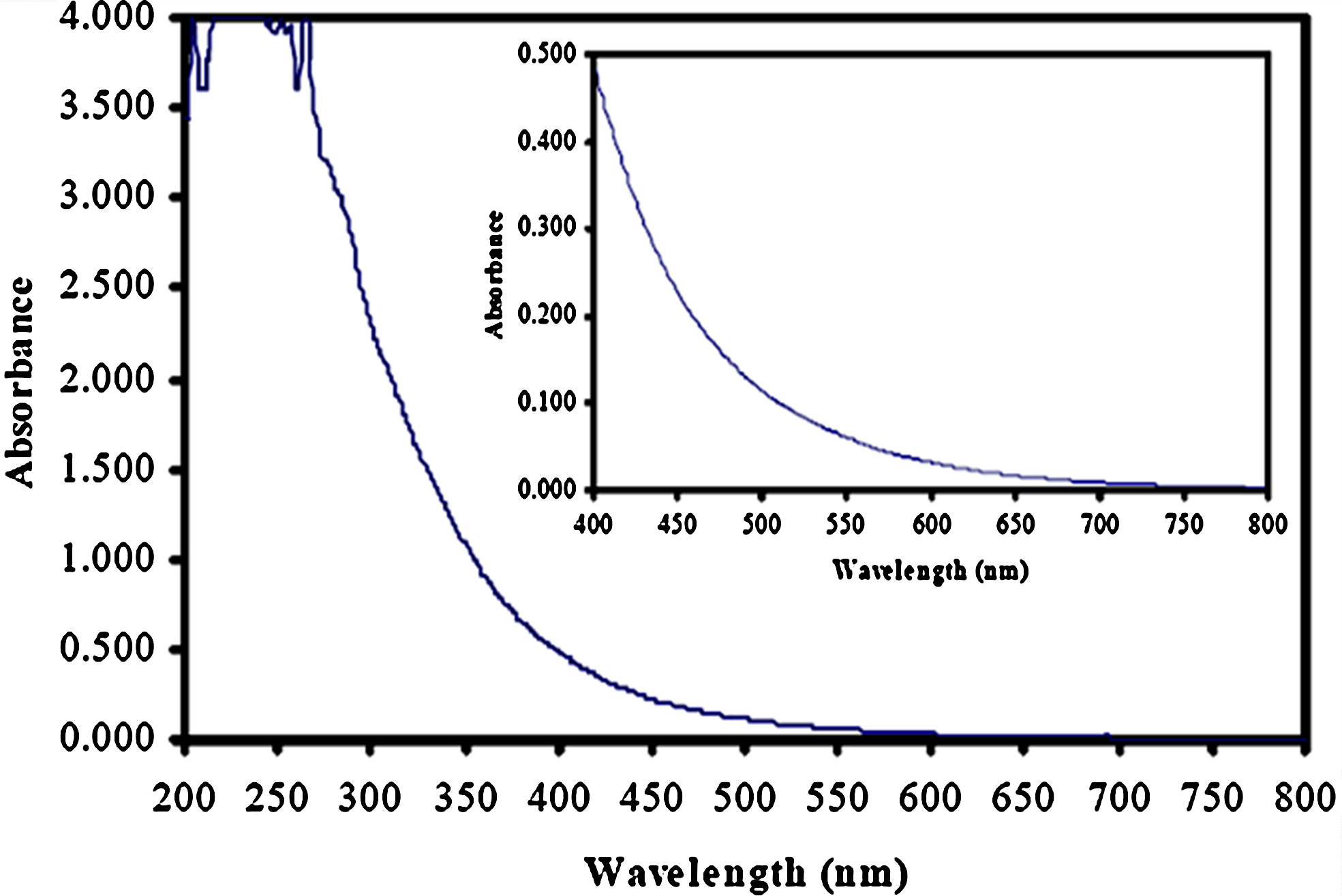
Absorbance spectra of POME at a wavelength range of 200 to 800 nm. POME, palm oil mill effluent.
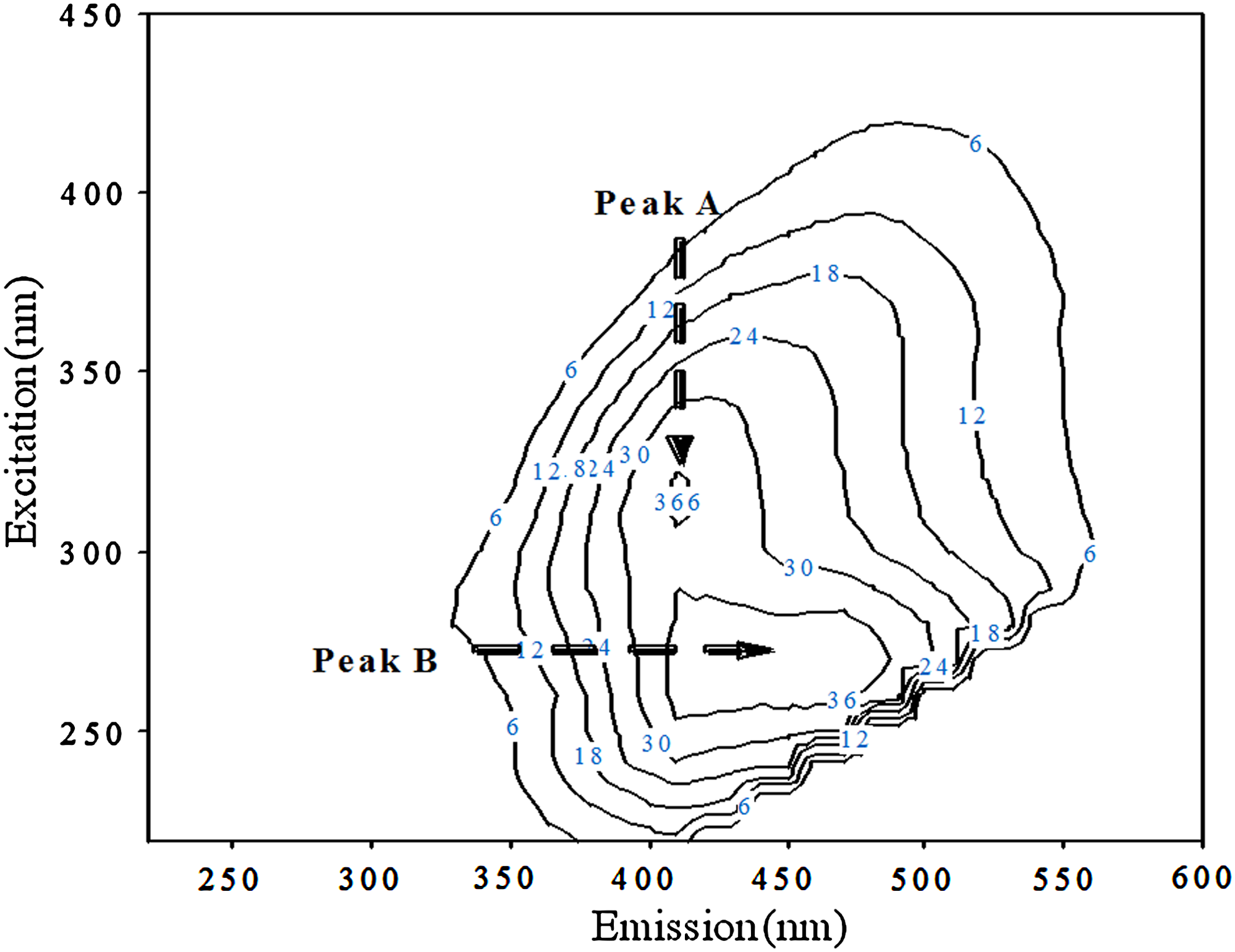
FEEM patterns of POME. Peak A: humic acid-like substances; Peak B: fulvic acid-like substances. FEEM, fluorescence excitation-emission matrix.
POMW, palm oil mill wastewater; POME, palm oil mill effluent; BOD5, biochemical oxygen demand; COD, chemical oxygen demand; DOC, dissolved organic carbon; TSS, total suspended solids.
The role of H2O2 and Fe2+dosage
The effect of [H2O2] in the range of 10 to 150 mM was investigated at a pH value of 3±0.2, [Fe2+], 1.0 mM, and 5 min reaction time decolorization, and 1 h for SCOD removal. The relationships between the decolorization and SCOD removal efficiencies are shown in Figs. 3 and 4. It was found that the decolorization and SCOD removal of POME depended on the initial [H2O2]. The optimum efficiencies for both decolorization and SCOD removal were obtained at 50 mM of [H2O2]. This indicated that •OH increased with increasing of initial [H2O2] up to a certain limit (Burbano et al., 2005). This is due to the decrease of [•OH] as demonstrated in Equations (4), (5), and (10), respectively. The decolorization was faster than the SCOD removal, because the breakdown of bond cleavage in the chromophore group by the reaction of •OH is rather fast and easier than the transfromation of organic substances to carbondioxide, as Fe2+ is a catalytic agent in the Fenton process that generates the •OH. The [H2O2] 50 mM with [Fe2+] varying from 0.2 to 2.5 mM were studied and shown in Figs. 3 and 4. It is indicated that the color and SCOD removal efficiency increased with initial Fe2+ concentrations in the range of 0.2 to 1.0 mM. Above 1 mM of [Fe2+], the reaction was inhibited. This is because •OH and
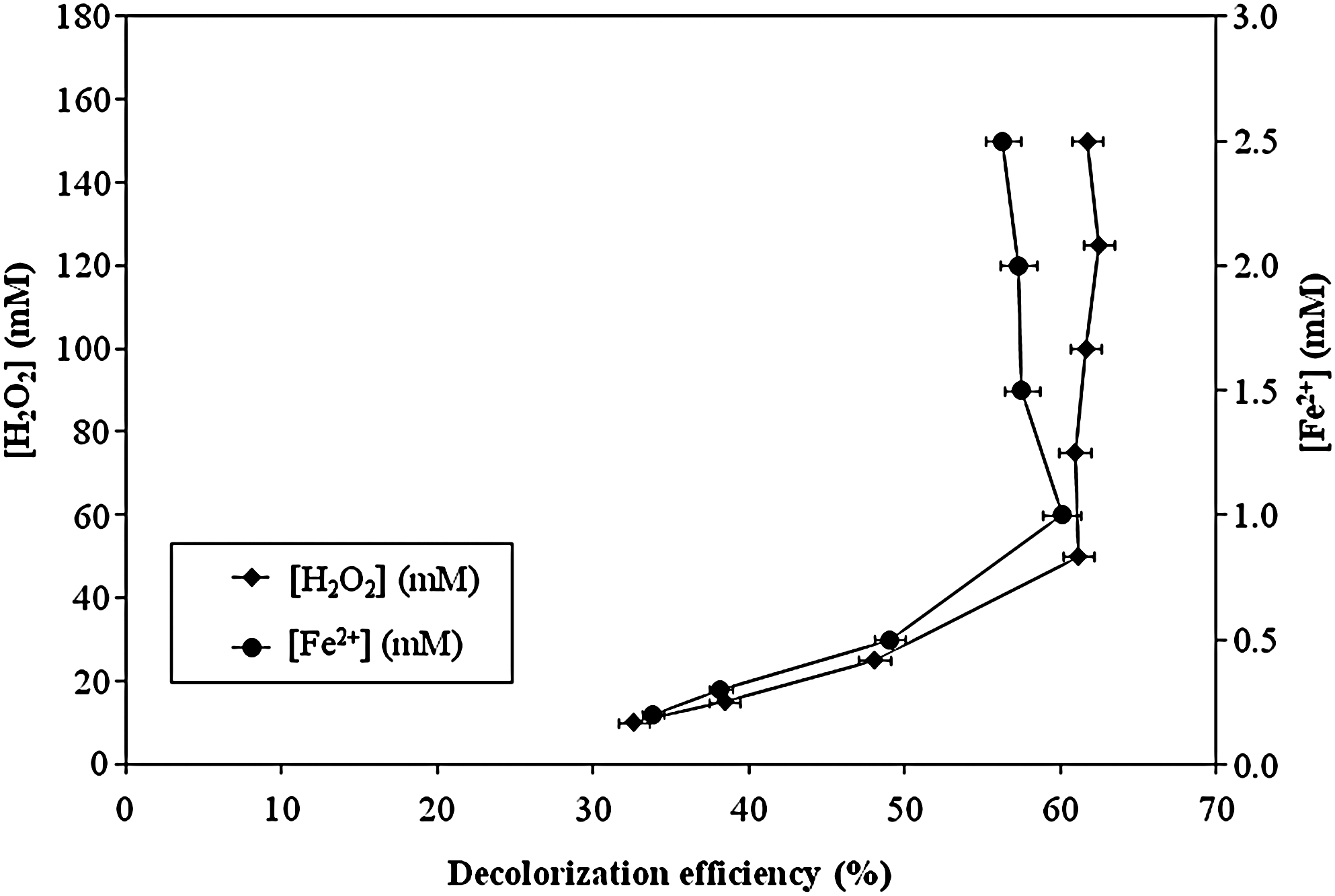
Effect of [H2O2] and [Fe2+] on the decolorization (conditions: pH=3.0±0.2; reaction time 5 min; at 475 nm). H2O2, hydrogen peroxide; Fe2+, ferrous ions.
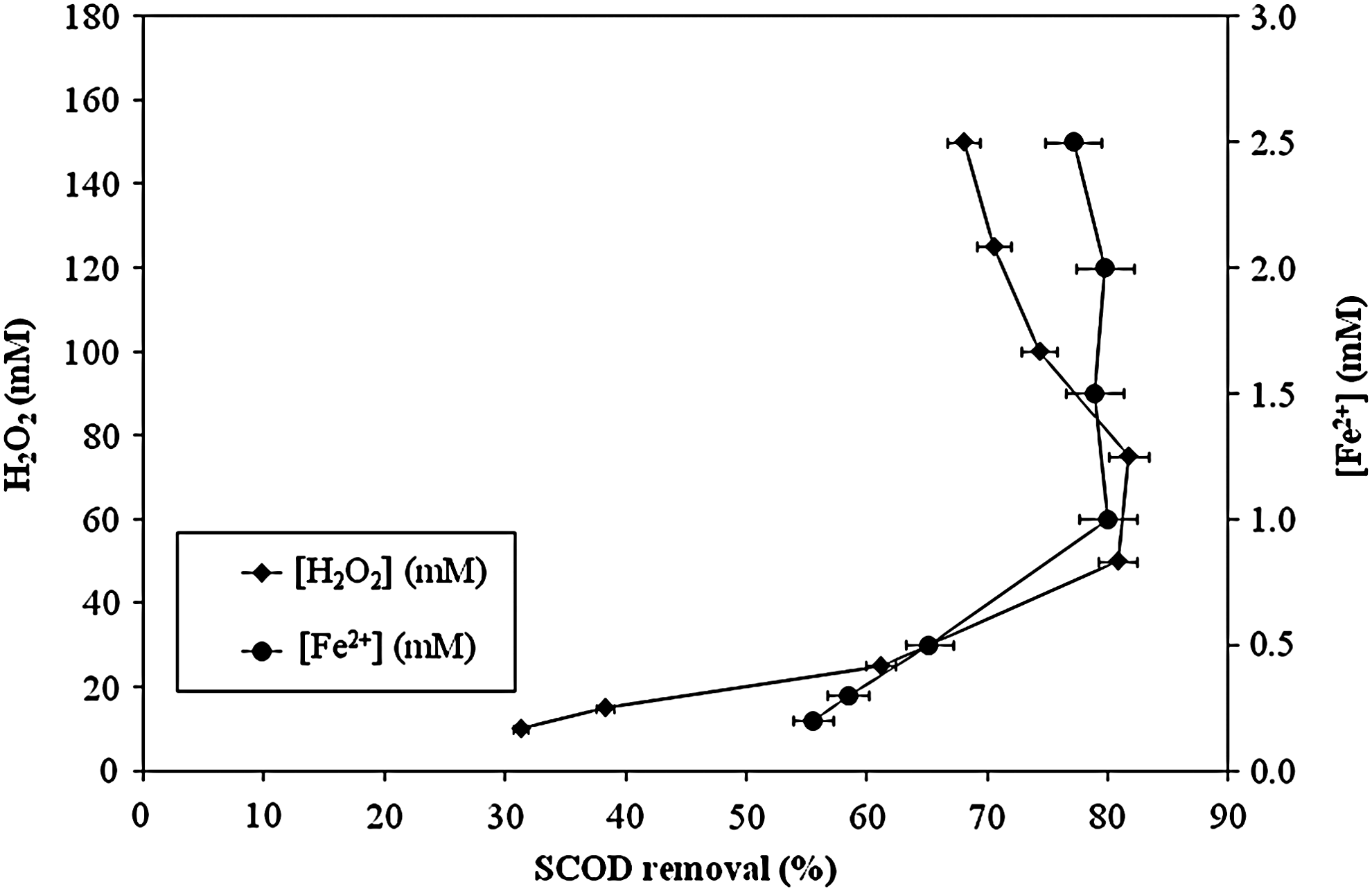
Effect of [H2O2] and [Fe2+] on the SCOD removal (conditions: pH=3.0±0.2; reaction time 1 h). SCOD, soluble chemical oxygen demand.
The role of pH
The effects of pH on the POME color removal at various times are presented in Fig. 5. The operation at pH 3±0.2 with 50–75 mM of [H2O2] and 1.0 mM of [Fe2+] yielded the maximum reaction rate. The color and SCOD removal efficiencies of the POME decreased from 58.5% to 34.2% with an increasing of pH value. This is because increasing in pH value above 3.0 leads to the precipitation of Fe(OH3), resulting in the inhibition of catalytic oxidation (Neamtu et al., 2003).
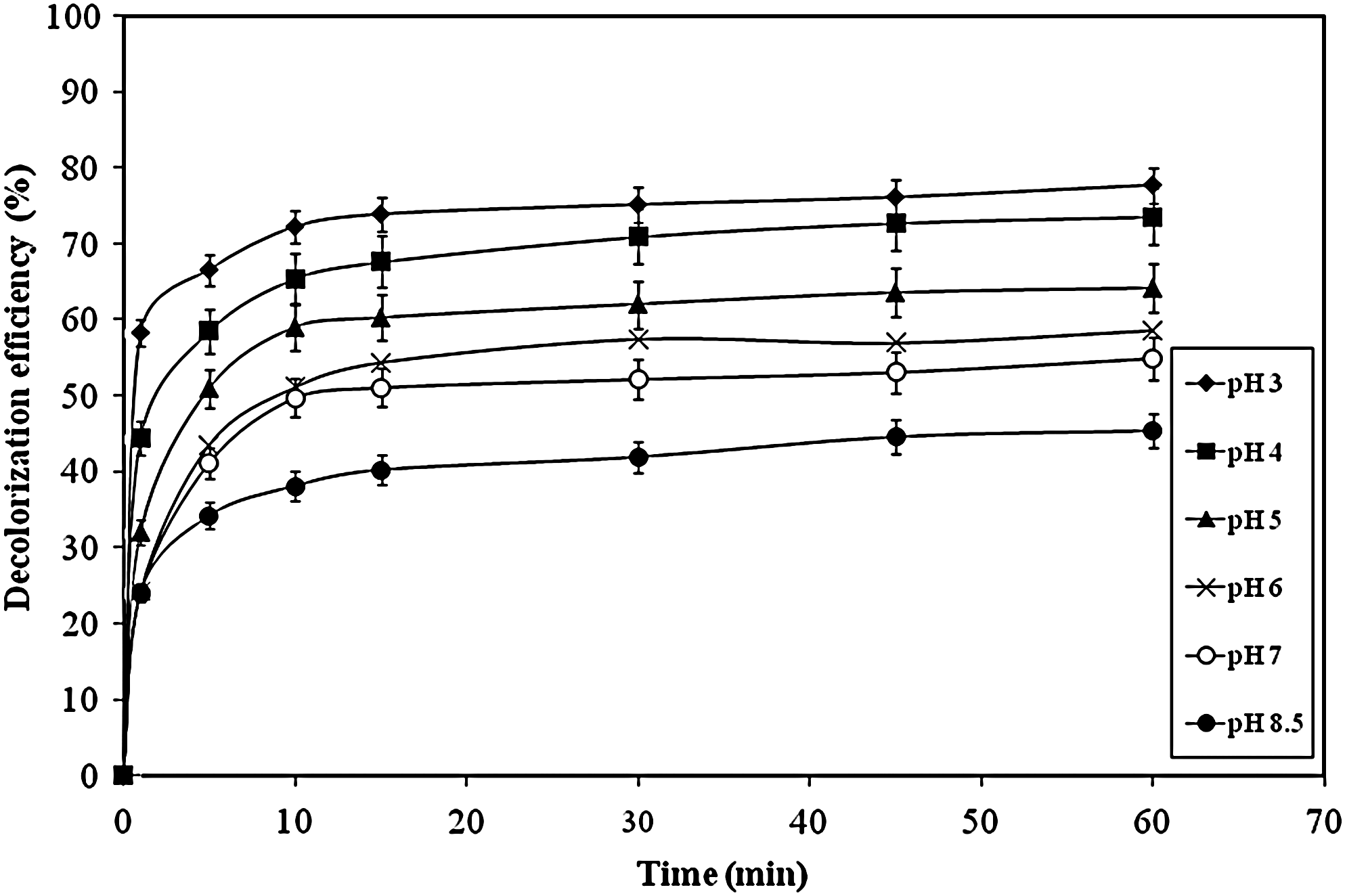
Effect of pH on the decolorization at various times (conditions: [H2O2] 50 mM; [Fe2+] 1.0 mM; pH=3.0±0.2; at 475 nm).
The role of UV irradiation
The effect of UV on the POME decolorization is shown in Fig. 6. The color removal efficiencies obtained by using UV at wavelengths of 254 and 365 nm were 81.0 and 80.9%, respectively. Although the UV can stimulate the oxidation reaction according to Equation (11), the organic substances can be oxidized not only by production of Fe2+ but also by reactive oxidants of •OH as shown in Equation (12) (Sun et al., 2009). In this study, the use of differing UV wavelengths yielded no significant changes in decolorization. This is because oxidation reaction in the presence of UV wavelength 254 nm generated a small amount of •OH, whereas no •OH was produced by the 365 nm UV.

Effect of UV and oxidation processes on the decolorization (conditions: [H2O2] 50 mM; [Fe2+] 1.0 mM; pH=3±0.2; at 475 nm).
Monitoring of color, SCOD, and organic substances by FEEM spectroscopy
Results were shown in Fig. 7. It was found that the efficiencies of humic and fulvic acid-like substances reduction were 93.7% to 99.6%, respectively, which corresponded to the decrease of color in the POME at 475 nm. This is due to the breakdown of bond cleavage of organic pigments by •OH, but it was different from the reduction of SCOD, because most of the humic and fulvic acid-like structures were broken down but only certain organic molecule can be oxidized and released as carbon dioxide (Wu et al., 2010).
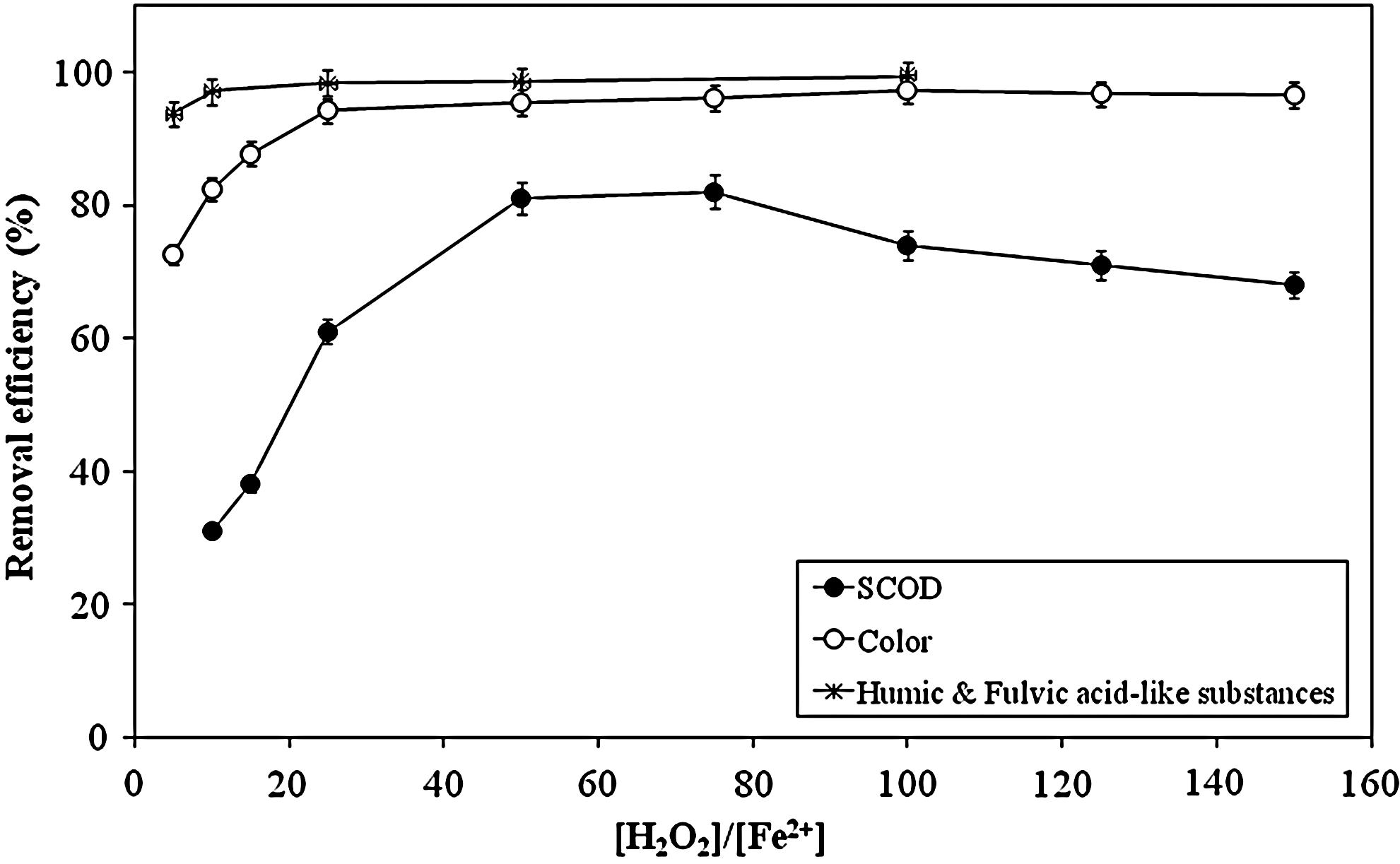
Removal efficiency of color, SCOD, humic, and fulvic acid-like substances (conditions: [H2O2]/[Fe2+]=0.5–150; pH=3±0.2; and reaction time 1 h.).
Kinetics studies
The kinetics of the POME decolorization reaction based on the relationship between color intensity and reaction time by using the first oxidation step (Lu et al., 1999) was examined. It was found that the color reduction was a pseudo-first-order reaction. A calculation of k was obtained with a good relationship (R2≥0.8) for all [H2O2]/[Fe2+] ratios (Fig. 8). The k increased with the increasing of [H2O2]/[Fe2+] ratios up to a certain limit with a color removal efficiency of 61.11%. The DOC value after treatment decreased with the increase of the treatment period (Fig. 9). The DOC removal efficiencies were 37.0%, 64.0%, and 85.0% at the treatment periods of 15, 60 min, and 24 h, respectively. The DOC removal reaction found was of a pseudo-second-order form. This is due to the remaining organic matter in the POME after oxidation; the organic removal reaction then was slower than the decolorization. The k of DOC removal reaction calculated was 2.19×10⁻⁴ (mg/L)−1 min−1.

Decolorization kinetics of POME.

DOC decrease of POME (conditions: [H2O2] 50 mM; [Fe2+] 1.0 mM; pH=3.0±0.2). DOC, dissolved organic carbon.
Conclusions
The optimum Fenton conditions for color and organic matter removal of POME obtained from this study were pH 3±0.2 and [H2O2]=50 mM with [Fe2+]=1.0 mM. Under these conditions, more than 90% of color removal at 30 min and 82.0% of SCOD removal at 1 h was obtained. The k value of decolorization and DOC removal was 6.20×10⁻² min−1, and 2.19×10⁻⁴ (mg/L)−1 min−1, respectively. The presence of UV showed no effect on decolorization. The existence of humic and fulvic acid-like substances caused colors in the POME, and not only from tannin and lignin. The reduction of FEEM intensity peak was highly related to the color reduction.
Footnotes
Acknowledgments
The authors appreciate combined financial supports from the Faculty of Engineering, Prince of Songkla University (PSU), Thailand (contract reference number ENG-53-2-7-02-0002-S-1), the Green Technology Research Unit, and the PSU Graduate School. In addition, kind suggestions from Assoc. Prof. Dr. Jin Anotai are greatly acknowledged.
Author Disclosure Statement
No competing financial interests exist.