




Abstract
Abstract
This article present results on the preparation, characterization, and application of fibrous polymer mat–supported Fe(III) mesotetraphenylporphyrin (FeTPP)/TiO2 photocatalysts for the photodegradation of azo-dyes. Scanning electron microscope results showed that the mean diameters of FeTPP/TiO2/polymer mats were in the range of 246.0–305.6 nm. Photocatalytic activities of these hybrid nanofibers were evaluated by the photocatalytic degradation of methyl orange in an aqueous environment under the visible light irradiation. Results showed that chlorinated polyvinyl chloride and poly(styrene) (PS) fibrous mats were the two best supporting materials for the FeTPP/TiO2 photocatalyst. PS fibrous mats supported the fact that the FeTPP/TiO2 photocatalyst (FeTPP/TiO2/PS mat) could degrade methyl orange up to 98.5% in 5 h. Furthermore, the FeTPP/TiO2/PS mat also exhibited high and stable photocatalytic activity toward four other azo-dyes. The FeTPP/TiO2/PS mat might find application in the preparation of a membrane photo-reactor for continuous wastewater treatment.
Introduction
Electrospinning is a facile method to fabricate organic, inorganic, and hybrid fibers with diameters ranging from tens of nanometers to several micrometers. Such thin fibers are widely used in nanofiber textiles, sensors, biomaterials, and catalyst carriers due to their unique high surface area-to-volume ratios (Teo and Ramakrishna, 2006). Since higher surface area of the carrier possibly leads to a higher adsorption capacity, which is the prerequisite of degradation reaction, these electrospun mats are promising carriers for the photocatalyst. When the photocatalyst is electrospun into the polymer mat matrix, the active molecular species are anchored on both the surface and in the interior of the nanofiber. Due to the low diffusion resistance of the mat fiber network, the substrate can diffuse on the surface and into the fiber easily, and all the active species of the catalyst are fully used.
In this work, a series of polymer fibrous mat–supported FeTPP/TiO2 photocatalysts were prepared by electrospinning, and their photocatalytic activity toward methyl orange was carefully investigated. Further, the photodegradation of four other commonly used azo-dyes by the FeTPP/TiO2/polystyrene mat was also studied to examine the photocatalytic activity and limitation of this photocatalyst. It is worth noting that these FeTPP/TiO2/polymer mat photocatalysts can be easily recovered by simple filtration and reused, which could eliminate a second pollution of water and elevate the efficiency of the photocatalyst.
Experimental Part
Materials
Azo-dyes (methyl orange, reactive orange, reactive red, reactive black, and reactive blue, shown in Fig. 1) were kindly supplied by Zhejiang Runtu Co., Ltd. TiO2 (anatase) was purchased from Shanghai Reagent Plant. Polystyrene (PS, Mn=97,000) was obtained from Yanshan Chemical Co., Ltd. Poly(methyl methacrylate) (PMMA, Mn=51,000) was purchased from Sumitomo Chemical., Ltd. Chlorinated polyvinyl chloride (CPVC, Mn=85,000) was supplied by Hangzhou Qianjing Chemical Co., Ltd. FeTPP and polyacryolonitrile (PAN) ([η]=157 mL/g) were synthesized and purified according to the literature (Wan et al., 2006). Since electrons from the conduction band of TiO2 and porphyrin could reduce H2O2 into •OH radical, which is a strong oxidant and more reactive than other commonly presented radicals, such as peroxyl hydroxyl and superoxide anions radicals (Chan and Chu, 2005; Chen et al., 1998; Bandy et al., 2009; Dostanić et al., 2011), H2O2 was chosen as the oxidant. H2O2 (30 vol.%) was purchased from Sinopharm Chemical Reagent Co., Ltd.
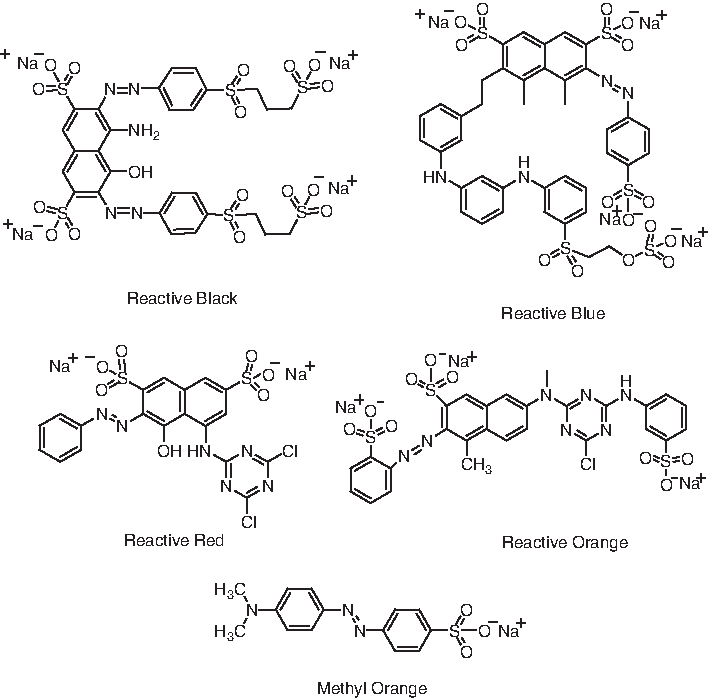
Molecular structures of the azo-dyes.
Fabrication of FeTPP/TiO2/polymer fibrous mat
FeTPP and TiO2 were mixed with various polymers in a certain weight ratio (1:10). The mixtures were then dissolved in N,N-dimethylformide (DMF) (CPVC: 6 wt.%; PS: 7 wt.%; PMMA: 15 wt.%; PAN: 6 wt.%). The electrospinning procedure was carried out on a self-made electrospinning equipment (Shao et al., 2010). The mixture solution in DMF (20 mL) was placed in a plastic syringe (20 mL) with a metal syringe needle (0.8 mm inner diameter), which was connected with a high voltage power supply (GDW-a, Tianjin Dongwen High-voltage Power Supply Plant). A voltage of 18 kV was applied to the mixture solution. A sheet of aluminum foil, connected to the ground, was placed under the syringe as a collector with the distance between the syringe tip and the collector being 12 cm. The feed rate of the mixture solution was kept at 1 mL/min by a micro-infusion pump (WZ-502C, Zhejiang University Medical Instrument Co., LTD). The resultant mats were dried under reduced pressure at room temperature to remove the residual solvent, and then directly used as a photocatalyst.
General procedure for the photodegradation reaction
The photodegradation reaction was carried out on a photochemical reactor (XPA-7, Nanjing Xujiang Electromech-anical Plan) (Shao et al., 2010). The reaction mixture containing 10 mg mat and 15 mL azo-dye solution (50 m/L) was magnetically stirred in a tubular reactor. After stirred in the dark for 1 h, the reactor was irradiated with a 40W incandescent bulb at 35°C, and 1.0 mL H2O2 (10.4 mmol) was immediately added to the solution. The progress of the reaction was monitored by UV-Vis spectroscopy. The degradation rate of dye is calculated according to Equation (1):
where A0 and At represent the absorbances of the azo-dye solution before and after irradiation, respectively.
Recovery and recycling of photocatalyst
After the completeness of the reaction, the mat was removed from the reaction solution by filtration, and was then directly used in the next photodegradation reaction. The procedure of the following catalyzing cycles was the same with the first cycle.
Characterizations
The UV-Vis spectra of FeTPP and azo-dyes in solution were measured by using a UV-1800PC spectrometer (Mapada). The morphologies of the electrospun mats were characterized by Scanning Electron Microscopy (SEM) (Jeol, Jsm-6360lv) after gold sputtering. The diameters of the fibers were calculated by measuring fiber diameters from the SEM images and averaging them.
Results and Discussion
Due to the strong visible light absorption of porphyrin and Fenton effect of iron, Fe(III) mesotetraphenylporphyrin (FeTPP) (Fig. 2) was chosen as the photosensitizer of TiO2 in this article. The UV-Vis spectrum characterization showed that the FeTPP has a strong absorption peak at 414 nm (Soret band) and two less intensive peaks at 530 and 688 nm (Q band), which is consistent with our previous report (Shao et al., 2010) and literature (Gouterman, 1978).
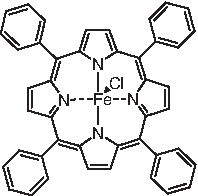
Molecular structure of FeTPP.
Morphology of the electrospun fiber mats is known to be dependent on many factors, including electrical voltage, tip-target distance, flow rate, and polymer substrate concentration. Among them, concentration plays an important role in electrospinning (Deitzel et al., 2001; McKee et al., 2004). If the concentration was too low, the electrospinning process generated a mixture of fiber and droplet; if the concentration was too high, the solution was extremely difficult to be injected through the syringe needle. After examining a series of concentrations, the FeTPP/TiO2/polymer fibrous mats were obtained with mean fiber diameters in the range of 246.0–305.6 nm (Fig. 3, Table 1). Since the concentrations and properties of polymers were different, the mean fiber diameters and distributions of FeTPP/TiO2/polymer mats also varied (Table 1, Fig. 4).
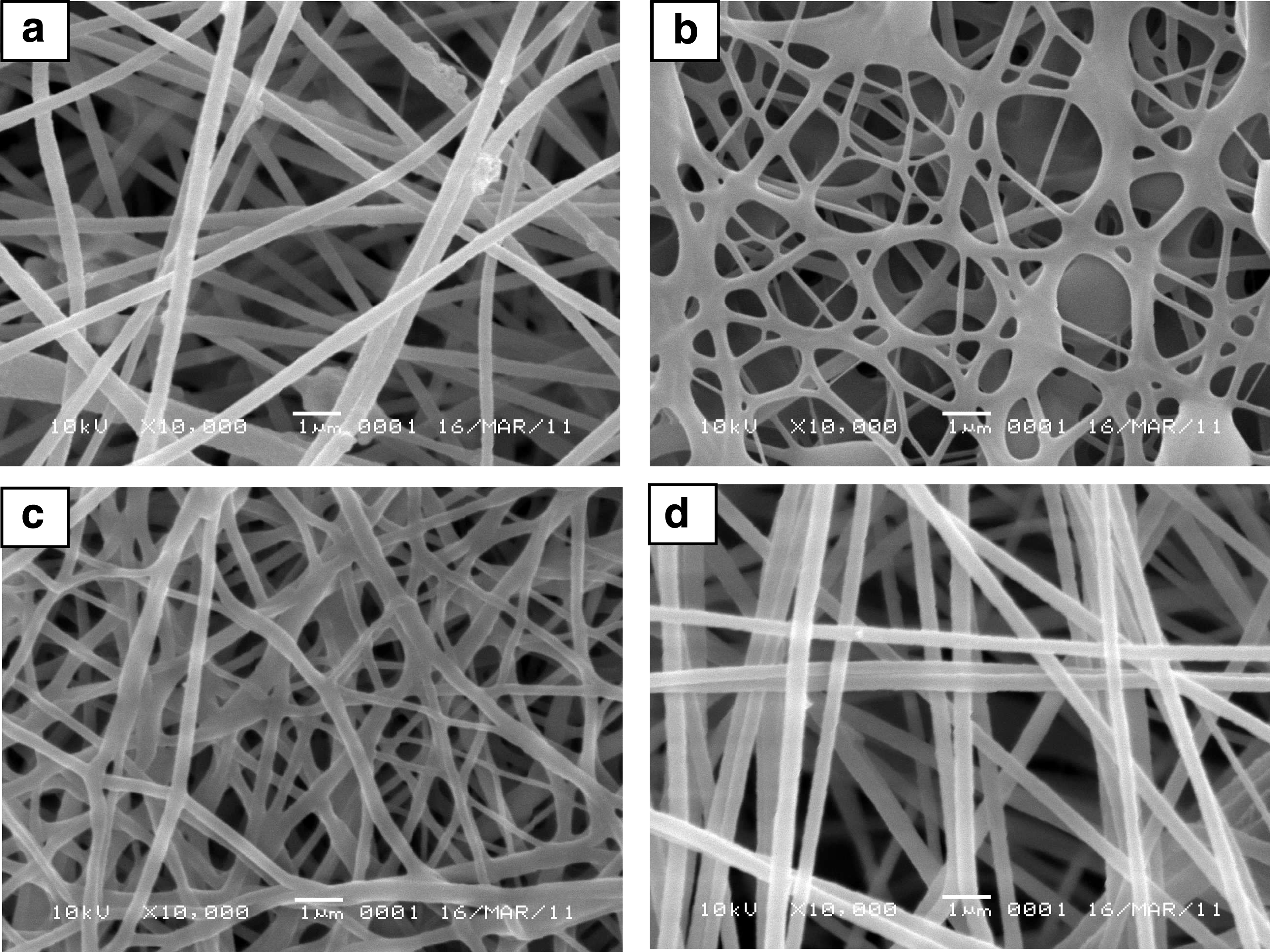
SEM images of TiO2/FeTPP/PAN
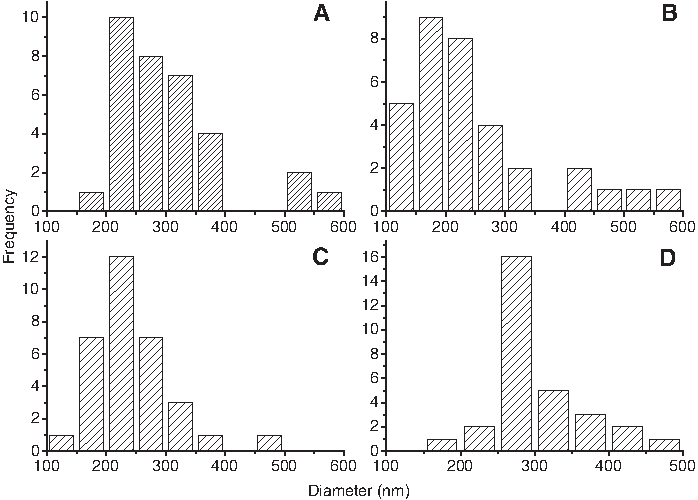
Fiber diameter distributions of TiO2/FeTPP/PAN
CPVC, chlorinated polyvinyl chloride; PAN, polyacryolonitrile; PS, polystyrene; PMMA, poly(methyl methacrylate).
Since methyl orange has the framework of azo-dyes, photocatalytic activities of these electrospun mats were examined by photodegrading methyl orange under visible light in an aqueous solution (Fig. 5). It was found that the macro structures of the fibrous mats were almost the same as the original, especially the FeTPP/TiO2/PS mat. The weight losses of FeTPP/TiO2/polymer photocatalysts were measured to verify the stability of these fibrous photocatalysts. Table 2 shows that the weight losses of these photocatalysts were very little, indicating that these polymers were suitable as the supporting materials of the FeTPP/TiO2 photocatalyst.
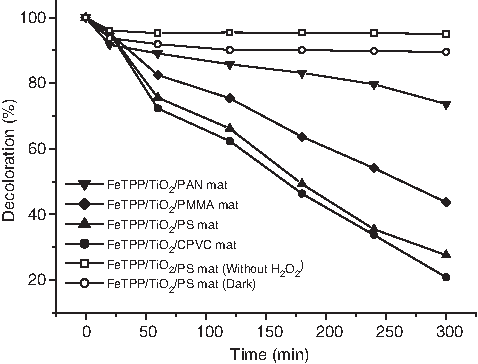
Photodegradation of methyl orange as a function of irradiation time with FeTPP/TiO2/polymer fibrous mats as the photocatalyst. FeTPP/TiO2/polymer mat: 10 mg; H2O2: 0.65 mol/L; methyl orange: 15 mL; lamp: 40W incandescent bulb.
Although the PAN fibrous mat is widely used as catalyst-supporting materials due to their excellent chemical stability and spinnability, the PAN is the poorest supporting material for the FeTPP/TiO2 photocatalyst among the four employed polymers. For the other three polymers, CPVC is a little better than the PS mat, which, in turn, is much better than PMMA as the supporting material of FeTPP/TiO2.
In order to verify the influence of absorption and photo-Fenton effect on the decoloration of dyes, a photolysis reaction was carried out in dark or in the absence of H2O2 (Fig. 4). It was found that the amount of absorbed methyl orange was 4.6% and the discoloration in the dark was 10.5%. This results indicate that the influences of absorption and photo-Fenton effect on decoloration of dyes were negligible compared with the photocatalysis.
According to the reports (Sobana and Swaminathan, 2007; Li et al., 2010), the photodegradation of dye solution is a first-order reaction and can be described as Equation (2):
where C0 and C are the original concentration of methyl orange and the concentration after irradiation for time t, and k is the overall degradation rate constant. According to Equation (2), the degradation rates constant and half-life times of these FeTPP/TiO2/polymer photocatalysts were obtained. As shown in Table 3, the FeTPP/TiO2/CPVC mat has the highest photocatalytic activity. The degradation rate constant (k) of TiO2/FeTPP/CPVC is 4.90×10⁻³ min−1 and the corresponding half-life time is 141.46 min.
Although CPVC mat was proved to be the best supporting material for the FeTPP/TiO2 photocatalyst, CPVC contains a large amount of chlorine, which might be released during the photodegradation, resulting in the secondary pollution of water (Shi et al., 2008). Considering this, PS is more suitable as a supporting material compared with CPVC. Hence, the FeTPP/TiO2/PS mat was chosen for the following study.
In our previous report (Shao et al., 2010), FeTPP was found to be the key factor for the catalyzing efficiency and photodegradation rate. Therefore, the influence of FeTPP content on the FeTPP/TiO2/PS mat photocatalytic activity was also investigated (Fig. 6) in this work. The results showed that both the catalyzing efficiency and photodegradation rate were increased as the content of FeTPP increased from 5.3×10⁻³ to 7.1×10⁻³ mmol/g. However, a further increment of the FeTPP content had negligible enhancement of photodegradation. It is due to the fact that excessive addition of FeTPP could lead to the aggregate of FeTPP, which could decrease the photodegradation and photosensitization efficiency of FeTPP.

Effect of FeTPP content in TiO2/FeTPP/PS mat on the photodegradation of methyl orange. FeTPP/TiO2/PS mat: 10 mg; H2O2: 0.65 mol/L; methyl orange: 15 mL; lamp: 40W incandescent bulb.
The scope of the FeTPP/TiO2/PS mat was also investigated by examining the photodegradation of four other azo-dyes (Fig. 7). Compared with the methyl orange, the photodegradations of these four dyes were much more rapid and complete. Especially for the reactive blue and reactive orange, the degradation percent can be up to 90% in only 3 h. In the experimental, it can be found that the solutions were completely colorless and transparency after the completion of degradation.
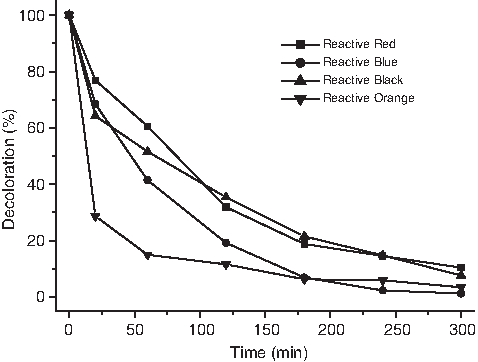
Photodegradation of reactive red, reactive blue, reactive black, and reactive orange in the presence of TiO2/FeTPP/PS mat photocatalyst. FeTPP/TiO2/PS mat: 10 mg; H2O2: 0.65 mol/L; Azo-dye solution: 15 mL; Lamp: 40W incandescent bulb.
The recycling and reuse of the catalyst play an important role, which could not only save cost, but also avoid the secondary pollution of water. The performance of the FeTPP/TiO2/PS mat toward the four azo-dyes up to three successive runs is summarized in Table 4. The photocatalytic activity of the recovered TiO2/FeTPP/PS mat catalyst showed only a little decrement for the photodegradation capabilities after three cycles. Furthermore, SEM images of the recycled catalyst showed that the fiber diameter of the FeTPP/TiO2/PS mat was greatly increased due to the swelling, but the fiber morphology was not damaged (Fig. 8). These results demonstrated that this TiO2/FeTPP/PS mat was stable in the photodegradation, and could be conveniently recovered and reused.
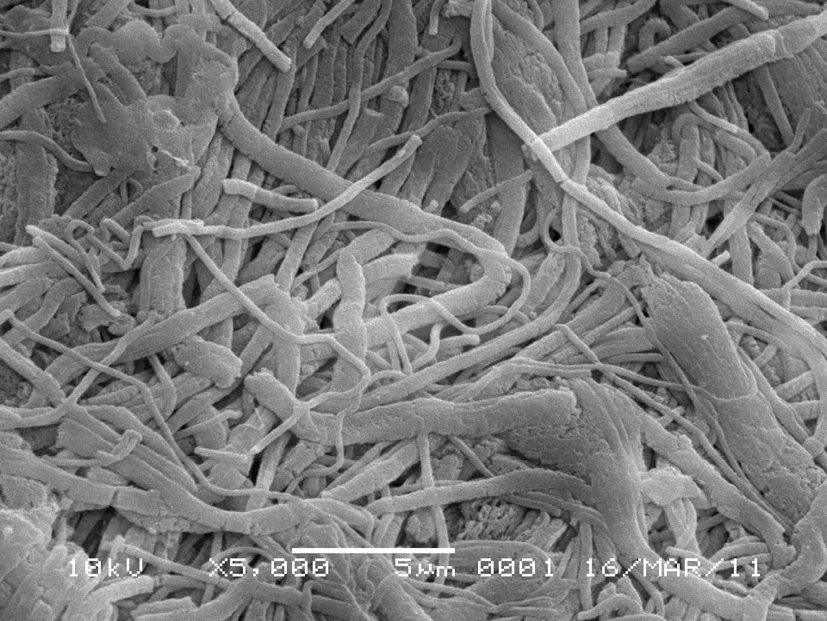
SEM image of FeTPP/TiO2/PS mat recycled thrice.
Photodegradation condition: FeTPP/TiO2/PS mat: 10 mg; H2O2: 0.65 mol/L; azo-dyes: 15 mL; lamp: 40W incandescent bulb; irradiation time: 300 min.
Conclusion
In conclusion, a series of FeTPP/TiO2 photocatalysts supported by fibrous polymer mats were prepared by electrospinning. Among the four polymers, CPVC was proved to be the best supporting material for the FeTPP/TiO2 photocatalyst. The FeTPP/TiO2/PS mat exhibited high and stable photocatalytic activity toward the photodegradation of azo-dyes under visible light irradiation in an aqueous environment. The photodegradation percent for studied azo-dyes was above 98.01% in the first cycle. Even after three cycles, the decoloration of azo-dyes by the FeTPP/TiO2/PS photocatalyst was still up to 86.98%. These results will provide valuable information for designing highly efficient heterogeneous photocatalysts, which could be used in the preparation of membrane photo-reactors in the future.
Footnotes
Acknowledgment
The authors acknowledge the financial support from the Shaoxing University.
Author Disclosure Statement
No competing financial interests exist.