




Abstract
Abstract
A new formula for approximating the Arrhenius temperature integral for nonisothermal analysis has been developed, using the Solver algorithm. The new formula takes the form p(u)=(e−u/u2)×[(1−2/u)/(1−λ/u2)], where λ=0.33 ln(u)+4.48. Applicability of the formula has been proven by conducting thermogravimetric analysis experiments on polypropylene material. When simulated thermogravimetric analysis curves derived from the proposed approximation were compared with curves obtained from other published approximate formulae, the new approximation fit the experimental data very well. Numerical analysis was used to test accuracy of the proposed formula, and its deviation from the numerical value was compared with those of other published approximation formulae. Results show that the new formula is a suitable solution for the evaluation of kinetic parameters for nonisothermal kinetic analysis, for example, pyrolysis of polymeric wastes and biomass fuel or to produce biomass fuel. Its use will result in significant improvement in plastic resource recycling and could also be helpful in biomass energy production.
Introduction
where t is time (sec); T, temperature (K); α, the conversion of reaction; f(α), the conversion function reflecting the mechanism of the process; A, the pre-exponential factor (K−1); E, the activation energy (Kcal mol−1); and R, the gas constant. For a nonisothermal and constant heating rate (β) condition, the following expression is obtained by integration and separation of variables of Equation (1),
where u= E/RT, and p(u) is the Arrhenius temperature integral. As the Arrhenius temperature integral has no exact analytical solution, extensive efforts have been devoted to obtaining its approximation. Flynn (1997) published an excellent article introducing different types of Arrhenius temperature integral approximation formulae and pointing out that there are many articles available of varying complexity and accuracy. Heal (1999) suggested a way to evaluate Arrhenius temperature integral approximation formulae and noted that many approximate solutions are gross or inaccurate.
We proposes a new Arrhenius temperature integral formula that is simple, accurate, and can be used over a wide range of u values.
Theory and Calculation
The Arrhenius temperature integral, p(u), in Equation (2) can also be expressed as
The integral on the right-hand side of Equation (3) is an incomplete gamma function. It is not integrable and can only be approached numerically. Normally, the gamma function is solved either by the series solution (Rainville, 1960) or by numerical integration (Gyulai and Greenhow, 1974). However, neither solution provides a simple yet easily interpreted form for thermogravimetric analysis. The classic approximation of the Arrhenius temperature integral is the Coats and Redfern (1964) approximation, shown here as Equation (6).
Rearranging Equations (3) and (4), one obtains
Assuming the term (1+2/u) in Equation (7) is approximate to one and taking this term outside the integration part, Equation (7) can be rewritten as
which is the approximation equation proposed by Gorbachev (1977).
Using the same mathematic transformation, Li's approximation formula (Li, 1985) can be obtained by rearranging Equations (3) and (5)
After comparing the Gorbachev and Li formulae, Agrawal (1987) replaced the coefficient of the term 1/u2 in the denominator and developed his own approximation formula:
Eight years later, Quanyin and Su (1995) found that the only difference between Equations (7)–(10) was the coefficient of the term 1/u2 in the denominator. As shown in Equations (11) and (12), they proposed two formulae using new coefficients:
From Equations (6)–(12), we found that these equations have the form of a rational function which can be generalized as
where λ, a parameter, replaces the coefficient of the term 1/u2 in the denominator. Values of λ range from 0 (Coats and Redfern, 1964) to 6 (Li, 1985), and the value u varies with different λ values (Fig. 1). This raises one interesting question: Should λ remain a constant or can it be a variable based on u?
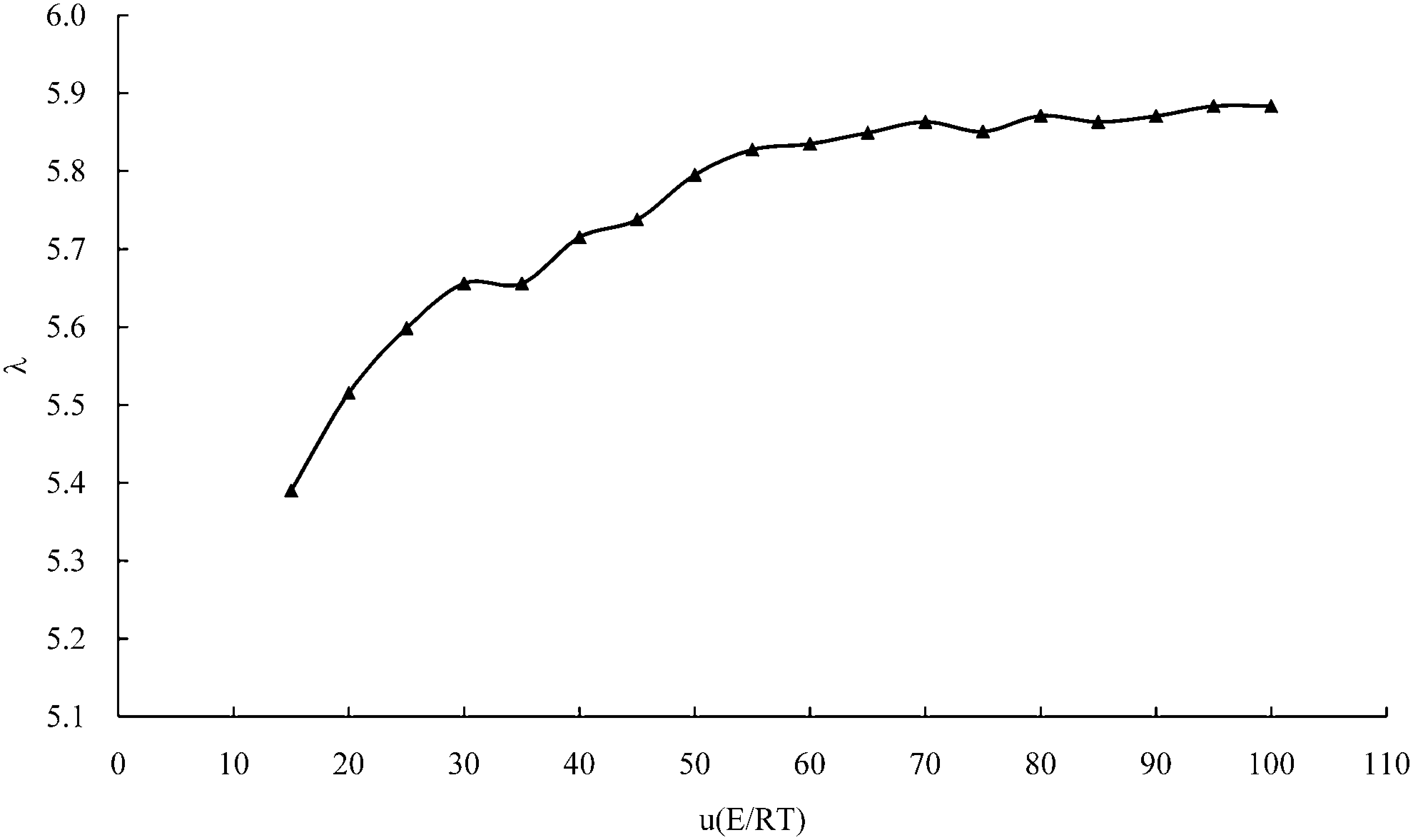
Relationship between u and λ.
In order to solve for λ, we utilized an algorithm called Solver. The Solver code, which is a product of Frontline System, Inc., is now a part of Microsoft Excel software (Billo, 2007). The value of λ for each u was determined by using Solver to find the best fit of the approximated temperature integral p(u) [Eq. (13)] to the numerical one. The numerical p(u) at each u was calculated with Mathematica software (Stephen, 2003). Table 1 shows the results of λ, u, ln(u) and numerical values of p(u) at different values of u. A close examination of the relationship between λ and u reveals an almost linear relationship between λ and ln(u) that can be illustrated by plotting λ against ln(u), as shown in Fig. 2. Through linear regression, we determined the y axis intercept, slope, and regression coefficient of the approximately straight line in Fig. 2 are 4.48, 0.33, and 0.98, respectively. Thus, λ can be represented as

Plotting of λ vs. ln(u).
The new approximation of p(u) can now take the form
Experimental verification
To prove the applicability of the new approximation of p(u), a commercial grade polypropylene from Formosa Plastics Corporation was used in a TGA experiment. The melting point and density of the polypropylene are 150°C–176°C and 0.918 g/cm3, respectively. Experiments were carried out on a METTLER TGA/SDTA 851 instrument in a nitrogen atmosphere with a flow rate of 50 mL/min.
Results and Discussions
The TG and DTG curves of the polypropylene are shown in Fig. 3. From an examination of the curves in Fig. 3, the pyrolysis reaction can be assumed to be a single-step reaction whose reaction model f(α) can be determined by the master plot method (Gotor et al., 2000).
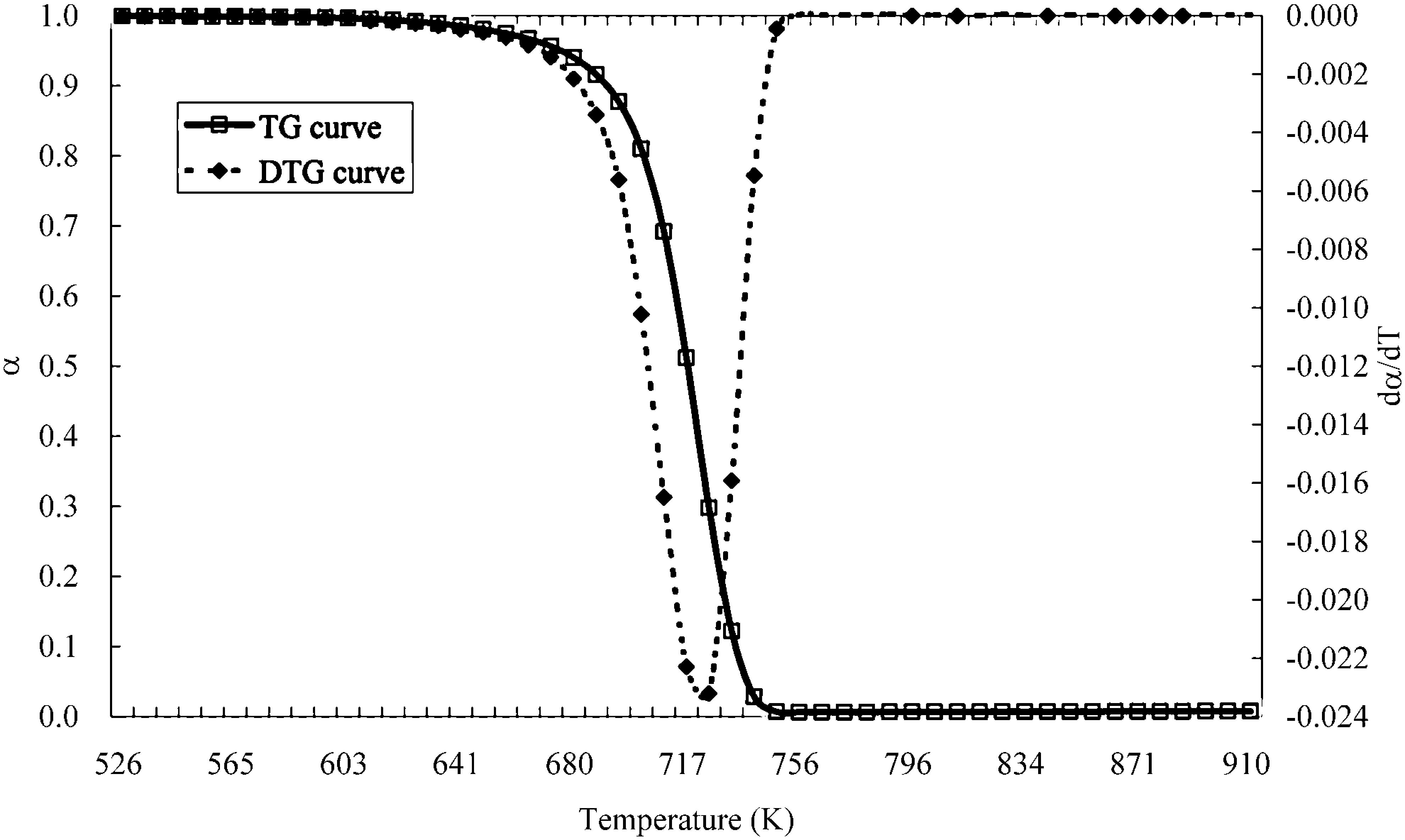
TG and DTG curves of polypropylene from TGA experiment.
For α=0.5, Equation (3) can be expressed as
where g(0.5) and p(u0.5) are defined as the values of g(α) and p(u) at α=0.5, respectively.
By dividing Equation (2) by Equation (16), we obtain Equation (17):
in which the value of p(u)/p(u0.5) should be equal to the value of g(α)/g(0.5) if an appropriate kinetic model g(α) is chosen. To determine the appropriate kinetic model, two sets of plots need to be constructed. One is an experimental master plot that is defined by plotting p(u)/p(u0.5) against α, and the other is a theoretical master plot that is defined by plotting g(α)/g(0.5) against α.
A set of theoretical master plots was constructed from different kinetic models, which are listed in Table 2. The experimental master plot was constructed from the new approximate p(u) function [Eq. (15)] with TGA experimental data and the activation energy, E, in u=E/RT, adopted from our previous work (Tai and Hsu, 2012). The same procedures were repeated for the other p(u) approximations (Coats-Redfern, Gorbachev, Li, Agrawal and Quanyin). The results are shown in Fig. 4. A comparison of the experimental master plots and the theoretical plots indicates that the most probably kinetic model for describing the nonisothermal solid decomposition of polypropylene is the Avrami-Erofeev model, g(α)=[−ln(1−α)]1/m, because all experimental master plots in Figure 4 lie between the theoretical master plots A1.5 and A2. By introducing g(α)=[−ln(1−α)]1/m into Equation (2), the parameters of A and m can be determined, using the following equation:
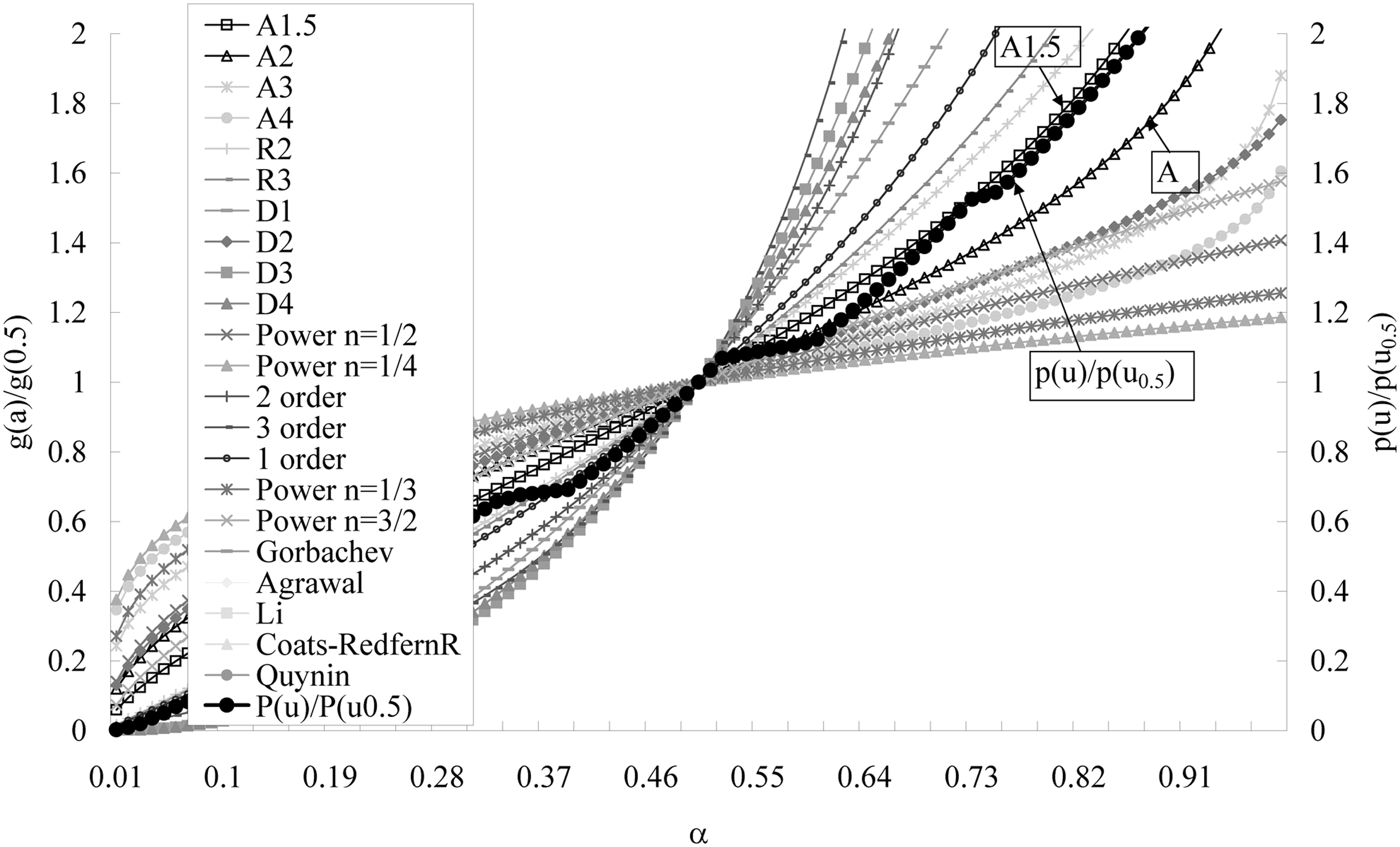
Comparison of experimental master plots and theoretical plots.
Figure 5 shows the plotting of ln(βR/E)−ln[p(u)] against ln[−ln(1−α)]. The pre-exponential factor A can be obtained from the intercept (ln A) on the y axis and the values of m can be obtained from the slopes (−1/m). The results of m and A are summarized in Table 3. The simulated DTG curves, which are shown in Fig. 6, were constructed by introducing parameters A and m into Equation (3). To examine the fitness of all simulated DTG data, the coefficient of determination, r2, was calculated. Figure 7 shows the linearity between the experimental and simulated DTG data. The results of the coefficient of determination, r2, shown in Fig. 8, indicate that the simulated values obtained from our approximation equation fit the experimental data as well as the values obtained from the other approximation equations.
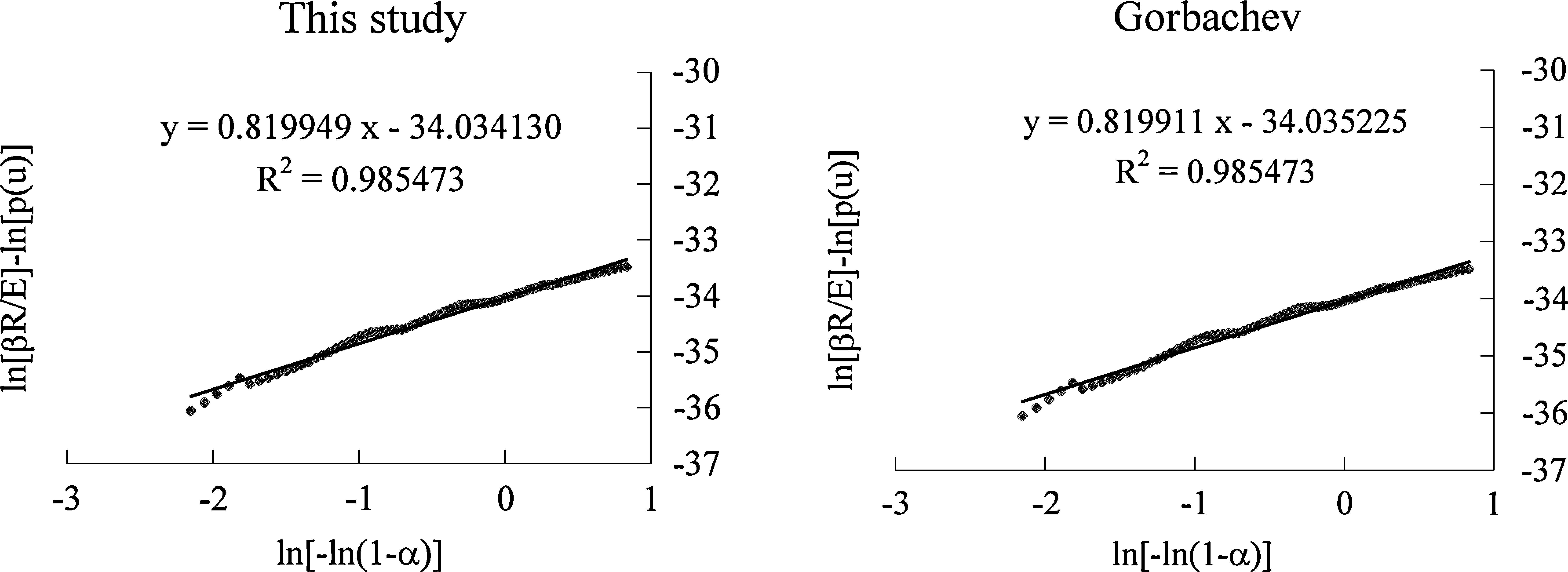
The plotting of ln(βR/E)−ln[p(u)] against ln[−ln(1−α)]. (continued)
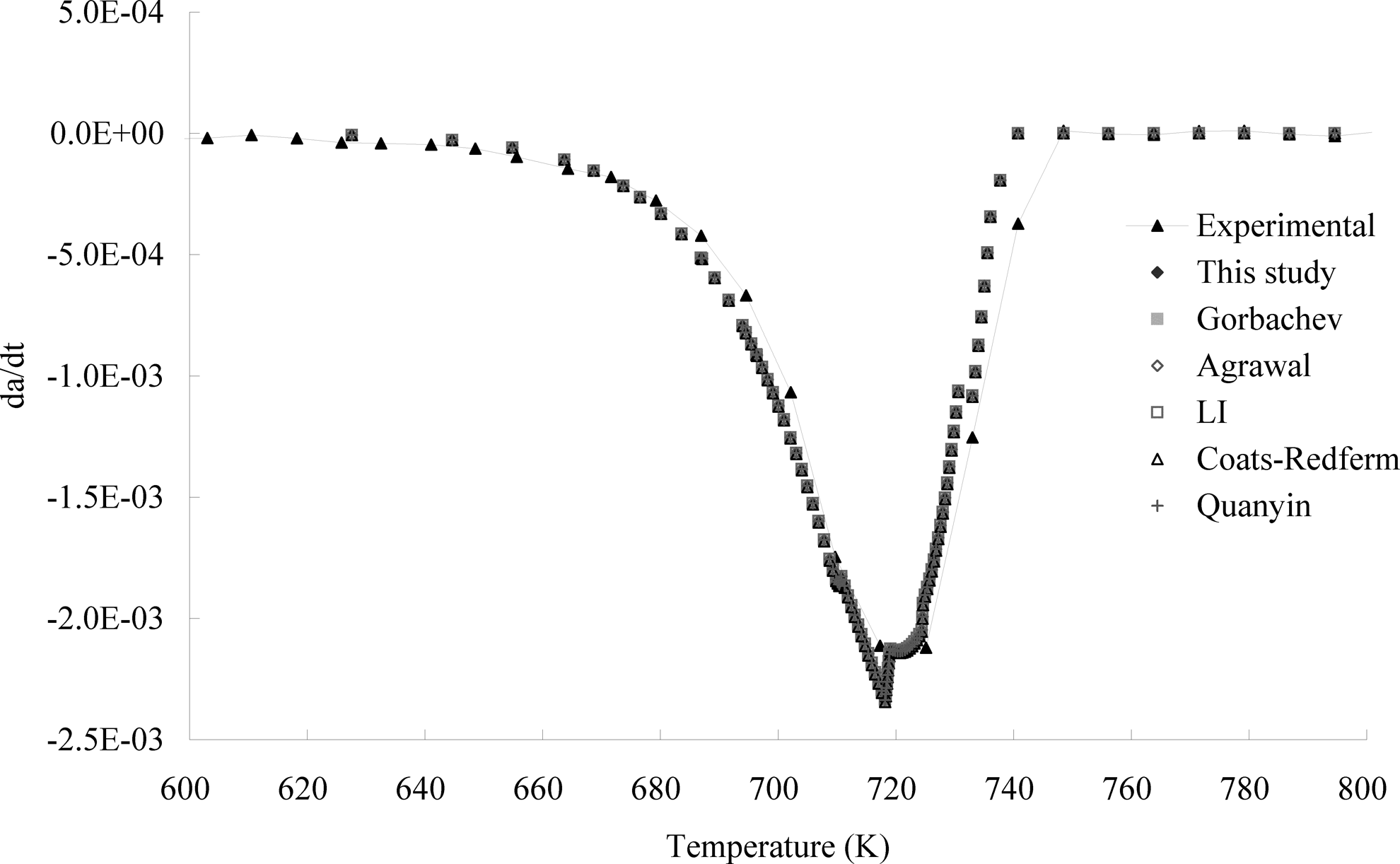
Comparison of the experimental and the simulated DTG curves of polypropylene.
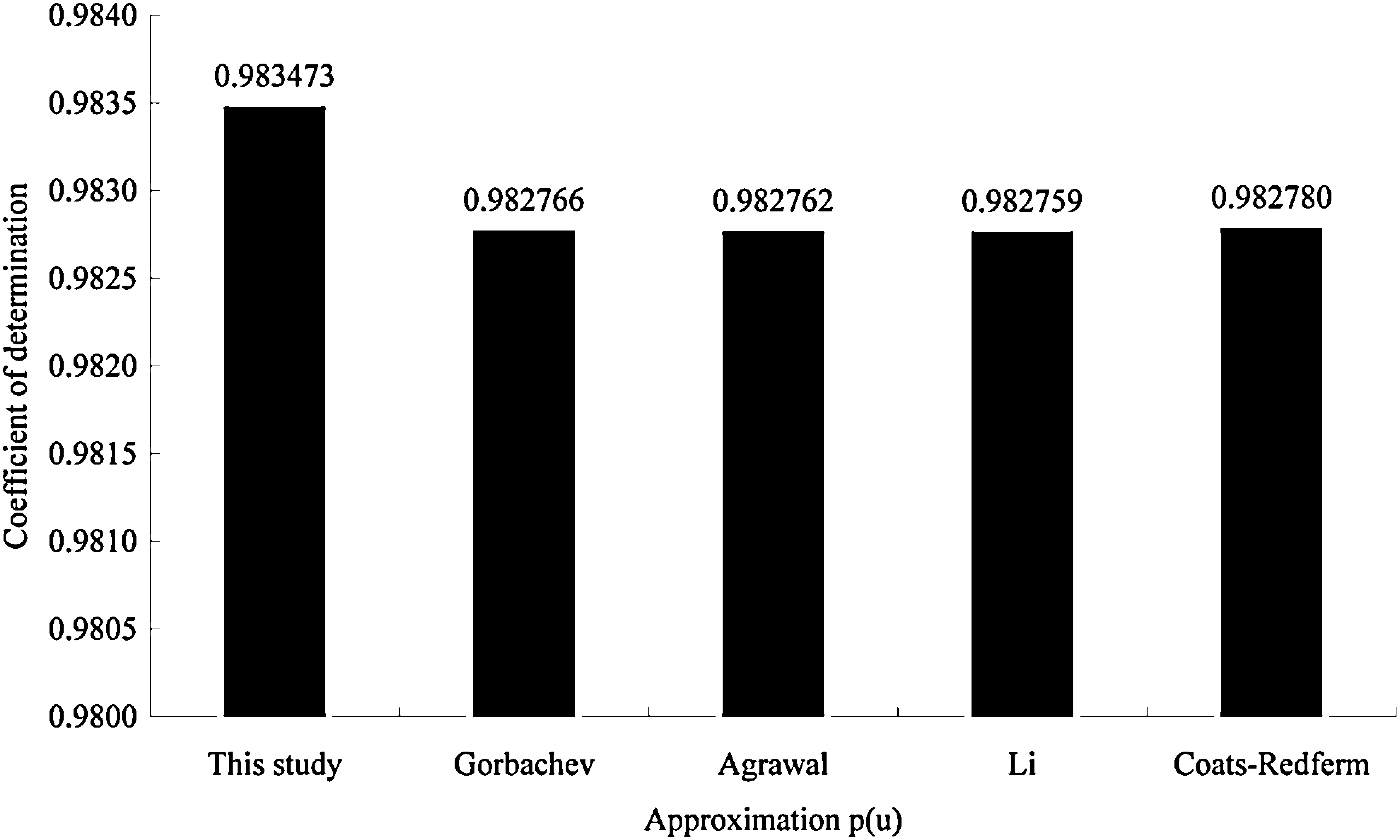
The linearity between experimental and simulated DTG data.
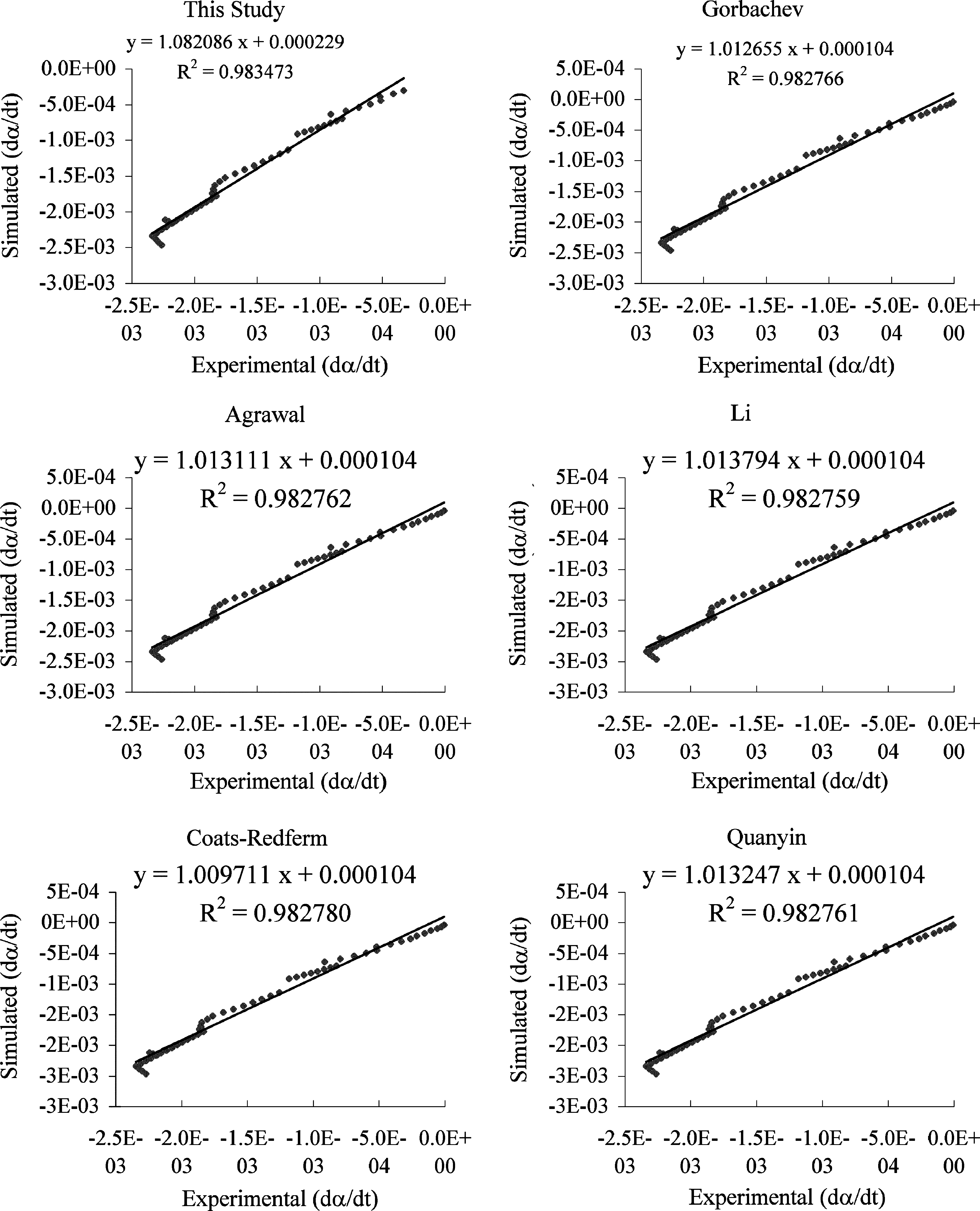
The results of the coefficient of determination (r2).
Evaluation of accuracy
The percentage of deviation from the numerical results of p(u) at different values of u is shown in Table 4 and Fig. 9. Agrawal (1992) has noted that a deviation of <0.1% is desirable for reactions of interest in thermal analysis, although deviations of <1% may be acceptable. Table 5 shows the accuracies of some of the integral approximations. The deviations of the Coats-Redfern equation are >0.1% for u<80. The deviations of the Gorbachev equation are<0.1% for u> 50. The Li equation deviates by <0.1% for u>24 and by <0.01% for u>55. The Agrawal equation deviates by <0.015% for u>85. The Quanyin equation deviates by <0.1% for u>40. The deviations of the new equation proposed in this study are <0.01% for u>35 and by <0.001% for u>70 and the interval of 14 to 15.
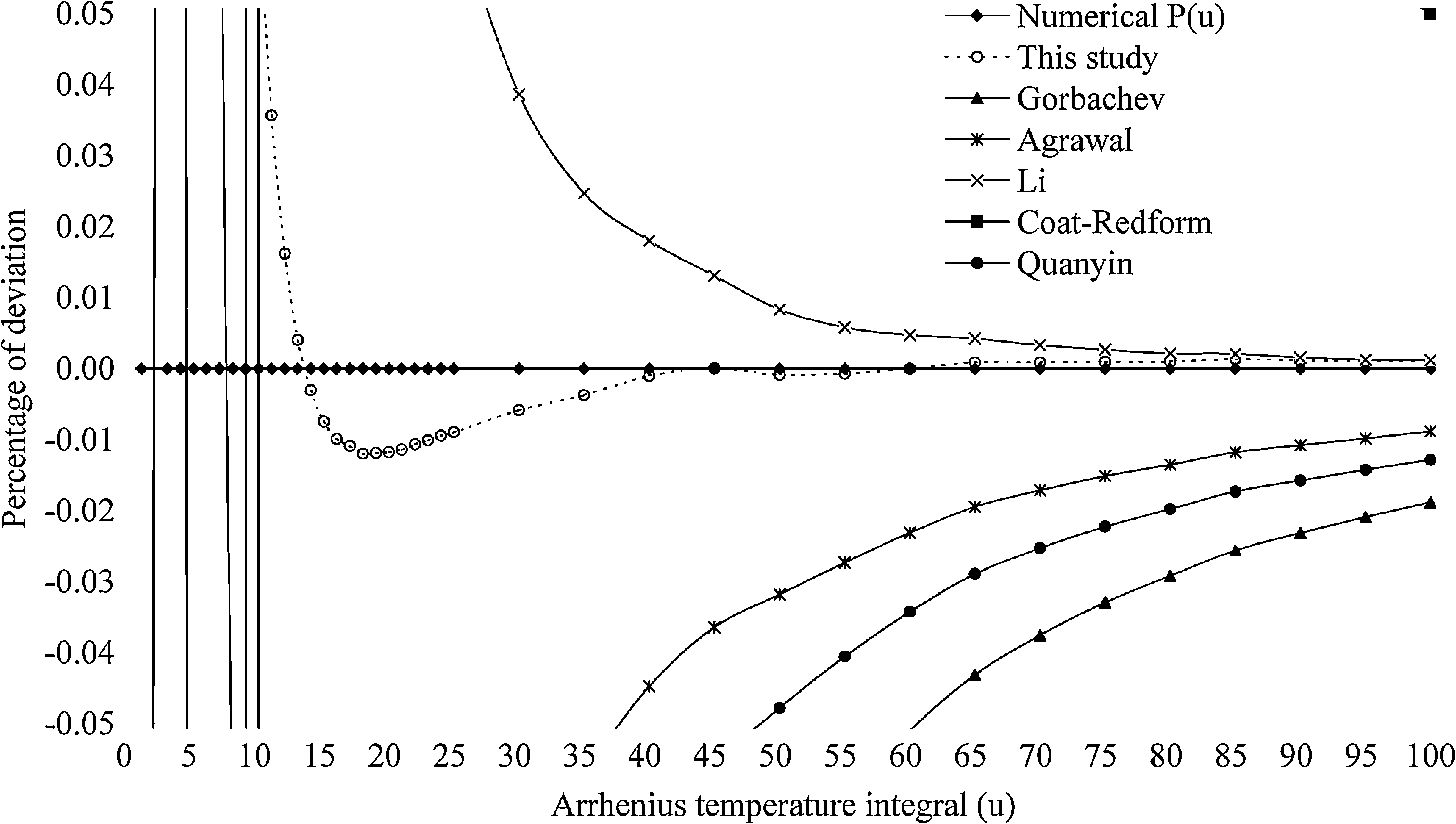
Comparision of the percentage of deviation from numerical results of the p(u) at different u.
Conclusion
In this study, we reviewed several approximate solutions of the Arrhenius temperature integral and found them all to be special cases of the more generic form
The numerical process can be performed using the Solver algorithm in MS Excel. The results of comparisons of our model with previous models can be seen in Fig. 9 and Table 4. The new formula shows a clear edge over previous models for u in the range of 10≤u≤100, which also covers the range 15≤u≤55, where most thermal decomposition reactions take place.
To prove the applicability of the new approximation of p(u), a polymer material, polypropylene, was used to conduct the TGA experiments. Using the master plot model, the reaction model was found. Figures 6 and 7 show that the simulated values obtained from the new approximation equation fit the experimental data as well as the values obtained from other approximation equations.
The formula proposed in this paper was not obtained from any approximating infinite series. It was obtained from numerical results calculated by computer. The numerical process is reliable and highly accurate. The resultant approximate solution to the Arrhenius temperature integral has been proven to be a viable alternative for evaluating kinetic parameters of nonisothermal TGA of, for example, the pyrolysis of polymeric waste and biomass fuel.
Footnotes
Author Disclosure Statement
No competing financial interests exist.