




Abstract
Abstract
This investigation was focused on preparing TiO2 photocatalytic fibers by electrospinning without polymer addition, impregnating ferrous ion onto the fibers, and evaluating the solar photo-Fenton's activity of the iron-immobilized catalysts. The article also highlights the major challenges overcome in the selection of suitable precursors and solvents for the electrospinning process. Characterization of the pure and iron impregnated catalysts was accomplished by X-ray diffraction, high-resolution scanning electron microscopy, energy-dispersive X-ray spectroscopy, and ultraviolet–visible light spectroscopy. Solar photocatalytic and solar photo-Fenton's activity of the catalysts were evaluated by the degradation of a cationic dye, methylene blue and an anionic dye, methyl orange. In the fiber preparation process, electrospinning with suitable precursor allows a flexible flow rate from 6 to 8 mL/h and voltage from 12 to 20 kV at a tip to collector distance of 9 cm. The diameter of the calcined and iron impregnated fibers lies in the range between 0.2 and 0.8 μm. Solar photo-Fenton's studies revealed that both the dyes could be degraded at a supremely faster rate than the solar photocatalytic process. Interestingly, the azo dye, methyl orange, was observed to degrade at a faster rate within 5 min (k=19.8×10⁻¹ min−1) than the nonazo dye, methylene blue (9.90×10⁻¹ min−1), when solar photo-Fenton's experiments were conducted at acidic pH.
Introduction
Generally, in the photocatalytic process, it is common to use oxygen from air as a TiO2 electron acceptor. However, the use of hydrogen peroxide has also been addressed due to its high oxidizing potential (Tanaka et al., 1991). In the presence of ferrous ion, hydrogen peroxide could rapidly degrade organic compounds (Yap et al., 2011) due to the well-known classic Fenton's reaction.
Hence, the present study aimed at preparing electrospun TiO2 fibers using a nontoxic solvent without any polymer additives and at impregnating ferrous ion on to the electrospun fibers for sunlight-induced photo-Fenton's applications. The solar photo-Fenton's efficiency of the Fe-impregnated TiO2 fibers was then monitored by the degradation of an anionic dye, methyl orange and a cationic dye, methylene blue. The role of pH of reactant solution in dye degradation was also deeply investigated.
Materials and Methods
Materials
All chemicals used in the present study were of analytical grade. Titanium(IV) propoxide (TTP; Sigma Aldrich), isopropyl alcohol (Samchun Chemical), and ferrous sulfate heptahydrate (Samchun Chemical) were used as received from the suppliers without further purification. All reagents and solutions were prepared using double-distilled water.
Synthesis of electrospinning gel
The precursor gel for electrospinning TiO2 was prepared by the hydrolysis and polycondensation of TTP in the presence of hydrochloric acid. The major experimental conditions for the successful electrospinning of TiO2 fibers are furnished in Table 1.
In the synthesis procedure, titanium propoxide was first dissolved in isopropanol under stirring using a magnetic stirrer (Ika C-MAG HS7). After 5 min of stirring, concentrated HCl was added, and the solution was then continuously stirred under room temperature for 6–8 h to induce slow hydrolysis. During the hydrolysis, the solution was kept in contact with the moisture in air to control the viscosity.
Preparation of TiO2 fibers
In the electrospinning procedure, the precursor solution was loaded into a 30 mL syringe equipped with a stainless steel 18-gauge needle. The solution was fed with a flow rate of 6–8 mL/min using a syringe pump. The syringe needle was connected to a high voltage power supply (SHV 200 40K/5 mA) that is capable of generating DC voltages of ∼30 kV. To collect the electrospun fibers, an aluminum foil was covered on a cylindrical target, and the tip to collector distance was maintained at 9 cm. An electrical voltage of 12 kV was then applied to the tip needle to obtain the TiO2 fibers.
The fibers obtained were then calcined at ∼500°C for 4 h in air with a ramp rate of 5°C/min. The resulting pure TiO2 catalyst fiber was then designated as “Rx=0.”
Iron impregnation onto TiO2 fibers
The calcined TiO2 fibers were then subjected to iron impregnation by the wet impregnation method in which 1 g of pure TiO2 fibers were immersed overnight in a series of ferrous sulfate solutions containing the 0.2, 0.3, 1.2, and 2.4 wt% of Fe2+ ion. The solution was tightly closed to avoid oxidation of ferrous to ferric by exposure to air. It was then dried over a water bath and heated at 150°C for 5 h. The resulting iron-impregnated catalysts were then designated as “Rx=0.2, Rx=0.3, Rx=1.2, and Rx=2.4,” respectively.
Catalyst characterization
The calcined and the iron-doped TiO2 fibers were characterized by high-angle powder X-ray diffraction (XRD; ET 816 X-ray diffractometer using Cu Kα radiation λ=1.5405 Å with scintillation counter as detector; 2θ=10.000–70.000°) to identify the crystal phase; field-emission scanning electron microscopy (FE-SEM) to observe the surface morphology (JSM–6300; Jeol); high-resolution scanning electron microscopy (HR-SEM) with gold coating technique (Hitachi) to study the fiber morphology and diameter; energy-dispersive X-ray spectroscopy (EDX; Thermo Electron Corporation) to obtain the elemental composition; and ultraviolet–visible light (UV–vis) spectrophotometer (Cary 5E) was used in the spectral range of 200–800 nm to investigate the visible light response of the pure and iron-impregnated TiO2 fibers.
Sunlight-induced photocatalytic and photo-Fenton's experiments
The photochemical experiments were carried out in 600 mL standard glass beakers with 200 mL of aqueous solution containing 0.1 g of catalyst and 10 ppm of the dye (methylene blue/methyl orange). The pH adjustments of the dye solutions were carried out by the addition of diluted NaOH/H2SO4. The pH of all the solutions was measured using a calibrated pH meter (Elico L1 120). The dye suspensions were stirred in the dark for 30 min to attain the adsorption equilibrium and then subjected to daylight solar irradiation at noon when the intensity of sunlight was between 90,000 lx and 70,000 lx, measured using a LUX meter (TES 1332; TES Electrical Electronic Corp.). In solar photo-Fenton's experiments, 5.9 mM H2O2 was added to each suspension and subjected to solar irradiation. Solar peroxide experiments were carried out as described earlier without the addition of catalyst. At regular intervals, 5 mL of aliquot was taken, centrifuged, and the absorbance of supernatant was measured at the
Results and Discussion
Preparation of electrospun TiO2 fibers
Since this study emphasizes the preparation of TiO2 precursor gel without any polymer addition, it was a great challenge to come out with a clear viscous gel, as many of the metal oxide precursors begin to hydrolyze in the gel and start to precipitate as solids. A diverse combination of metal oxide precursors, solvents, and hydrolyzing agents in various proportions was attempted for the formation of viscous gel to fabricate the electrospun fibers. Metal oxide precursors such as titanium tetraisopropoxide (TTIP), titanium tetrabutoxide (TTB), and titanium tetrapropoxide (TTP) were attempted for electrospinning. Solvents such as methanol, 1-butanol, tertiary butanol, glycerol, 2-ethoxy ethanol (Son et al., 2006), and 2-propanol were also attempted. Different hydrolyzing agents such as water, nitric acid, and hydrochloric acid were used. Among the metal oxide precursors, TTP started precipitating out immediately after the addition of solvents other than 2-ethoxy ethanol and 2-propanol. With TTIP and 2-ethoxy ethanol, the desired viscosity was obtained, but the formation of electrospun fibers was not favored. Electrospinning was found to be more favorable and convenient only with the combination of TTP, iso-propanol, and hydrochloric acid. Similar kind of challenges in selecting the precursors and solvents were faced by Madhugiri et al. (2004) even in the polymer-assisted electrospinning of TiO2 fibers.
Crystal characterization
Powder XRD patterns of the catalysts were taken at high angles in order to assess the crystal phase and crystallinity after calcination and iron impregnation. Figure 1 represents the XRD patterns of pure TiO2 fibers and iron-impregnated TiO2 fibers. For all the catalysts, the peaks related to the anatase titania phase at the corresponding 2θ values of 25°, 55°, and 56° and the peaks related to the rutile titania phase with 2θ values of 28° (major), 36°, and 42° were obtained, thus revealing the presence of both anatase and rutile phases of titania (Jongsomjit et al., 2005). Hence, all the catalysts were expected to be photo efficient due to the presence of an anatase phase and visible light active to some extent due to the presence of a rutile phase (Sun and Smirniotis, 2003; Xiaoa et al., 2006). In the XRD pattern, the peaks assigned to Fe2O3 (2θ=33.0) were not observed for the iron-impregnated TiO2 catalysts, which was due to the lower percentage (<5%) of iron impregnation opted in the synthesis procedure (Praveen Surolia et al., 2007).
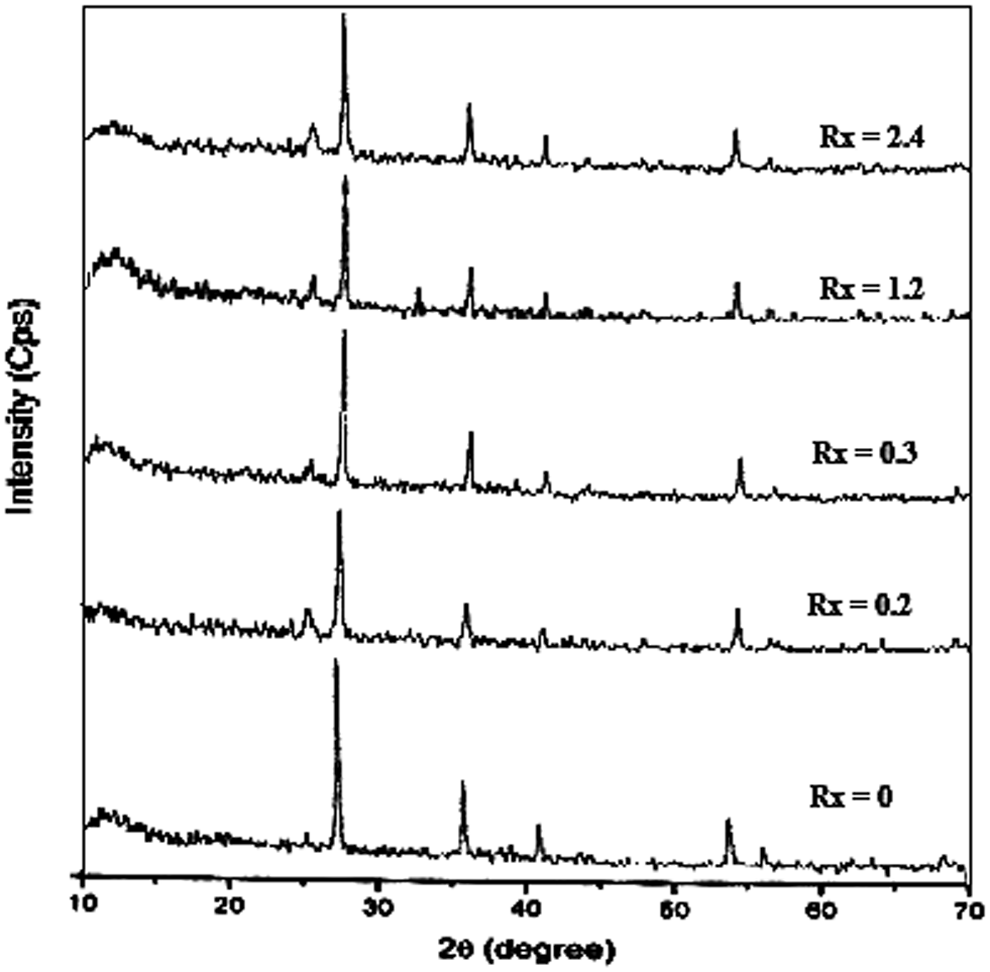
X-ray diffraction patterns of pure and iron-impregnated TiO2 fibers.
Morphological characterization
The surface morphology of the as-spun and the calcined titania fibers was characterized by FE-SEM. Low and high magnification FE-SEM images of the as-spun and calcined electrospun fibers are shown in Fig. 2.

Low-
The FE-SEM images of both the as-spun and calcined samples represent a large number of fine identical fibers. From the high-magnification SEM images (Fig. 2b, d), it can be observed that the surface of the calcined TiO2 fiber is rough when compared with that of the as-spun fiber. However, from the corresponding low magnification images, it is clear that the TiO2 fiber morphology was maintained even after the high temperature treatment. The average diameter of the as-spun fiber lies in the range of 1.3 μm, whereas the average diameter of the calcined fibers lies in the range of 0.8 μm. This shrinking in diameter is common in calcining electrospun fibers, which accounts due to the combustion of by-products and crystallization of titania (Aryal et al., 2008). However, the extent of shrinkage due to combustion of organic components is low in this case of nonpolymer titania preparation when compared with the titania/polymer composite fibers (Kong and Dai, 2001; Son et al., 2006).
The HR-SEM images of iron-impregnated TiO2 fibers are shown in Fig. 3. The HR-SEM images of the iron-impregnated TiO2 fibers show that the iron impregnation treatment did not affect the morphology of the fibers and the diameter of all the catalyst fibers lies in the range from 200 to 800 nm. Thus, the calcined and iron-impregnated fibers were found to be in submicron range. Previous reports on the synthesis of electrospun fibers also showed that the diameter of the electrospun fibers lay in the range of submicrometer and micrometer (Larsen et al., 2003; Doh et al., 2008; Kongkhlang et al., 2008; Alves et al., 2009).

High-resolution scanning electron microscopy images of iron-impregnated TiO2 fibers:
Compositional analysis
In order to estimate the quantity of iron impregnated onto the TiO2 fibers, EDX analysis was performed. Figure 4 shows the EDX spectra of pure TiO2 and a series of iron-impregnated TiO2 fibers. Figure 4a shows that the calcined TiO2 fibers were composed of titanium and oxygen and no other element. Thus, it indicates the absence of impurities in the pure TiO2 fibers. When observing the amount of iron incorporated in the series of iron-impregnated samples, a little deviation was observed in the wt% of iron added during preparation and the quantity of iron estimated in the samples by EDX analysis. The amount of iron added to the samples, “Rx=0.2, Rx=0.3, Rx=1.2, and Rx=2.4,” was 0.2, 0.3, 1.2, and 2.4 wt%, respectively, and the composition of iron on the TiO2 fibers shown by the EDX analysis was 0, 0.3, 0.8, and 1.8 wt%, respectively. For the sample Rx=0.2, though the presence of iron could be seen in Fig. 4b, the peaks of iron was gradually diminished due to the hindrance of highly intense titanium and oxygen peaks.
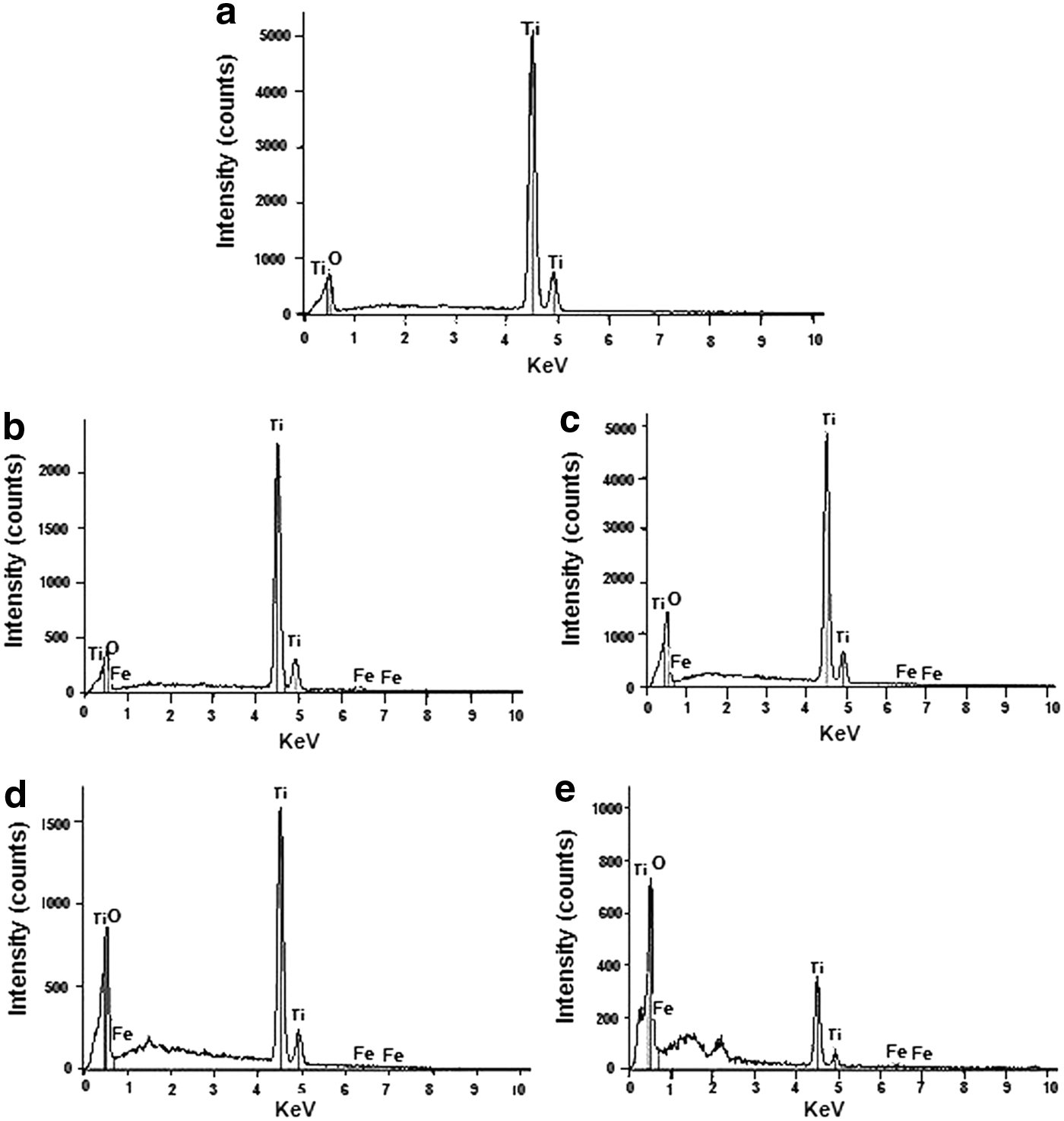
Energy-dispersive X-ray spectra of
Optical light characterization
In order to inspect the visible light absorption characteristics of the pure and iron-impregnated fibers, UV–vis absorption spectra were taken. Figure 5 shows the UV–vis absorbance spectra of calcined and a series of iron-impregnated TiO2 fibers. All the samples exhibited a strong absorption in the wavelengths around 320 nm, but the absorbance gradually decreases and becomes stable from 430 nm. However, unlike the pure anatase titania that we synthesized in our previous study (Jeevitha Raji and Palanivelu, 2008), no sample was found to reach the zero absorbance and possessed the visible light absorption to some extent, which might be due to the presence of rutile phase in all the samples (Sun and Smirniotis, 2003). However, enhanced light absorption was not observed in the visible region, which demonstrates that iron was not doped but only adsorbed onto the TiO2 fibers.
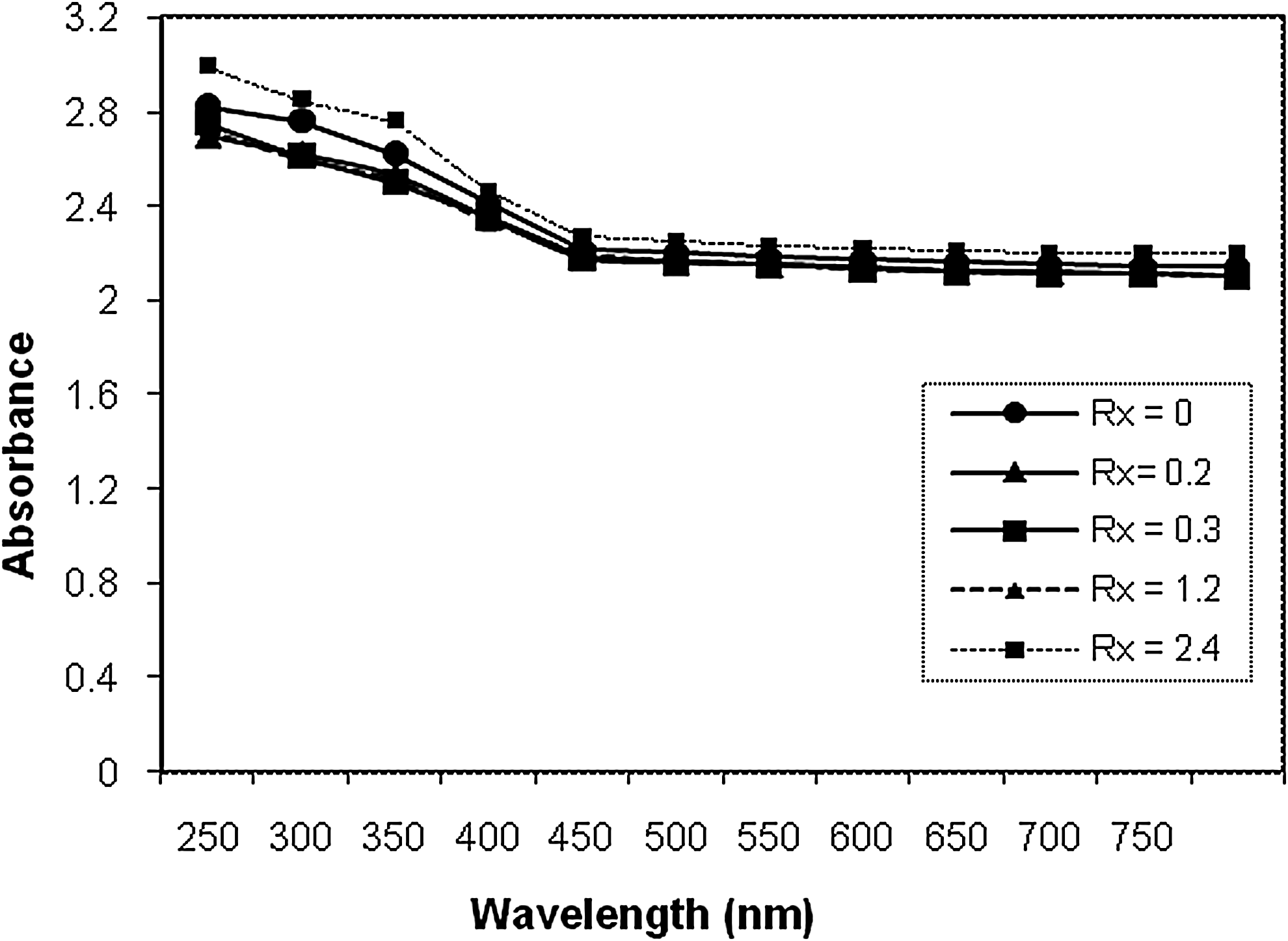
UV–vis absorbance spectra of calcined and iron-impregnated TiO2 fibers.
Solar photo-Fenton's degradation of dyes
Preliminary photocatalytic experiments were conducted with the pure TiO2 electrospun fibers and iron-impregnated TiO2 fibers in the absence of H2O2. The reaction rate of the solar photocatalytic and solar photo-Fenton's experiments was calculated by using a pseudo-first-order equation [Eq. (1)], which is a simplified equation of the Langmuir–Hinshelwood kinetic model shown in Equation (2) (Doh et al., 2008).
where r is the rate of the reaction (mg/[L·min]), C0 is the initial concentration of the dye (mg/L), C is the concentration of the dye at time t (mg/L), t is the illumination time, k is the reaction rate constant (min−1), and K is the adsorption coefficient (L/mg).
Since the rate of solar photocatalytic degradation of the model dye pollutants was observed to be very slow (k=5.5×10⁻² min−1 and 5.2×10⁻² min−1 with pure and iron-impregnated TiO2 fibers, respectively), further emphasis was given to evaluate the hydrogen peroxide-assisted solar photo-Fenton's activity of the catalysts.
The role of pH in the photo-Fenton's degradation of dyes was studied from pH 3 to pH 9. Studies were not conducted below pH 3 due to the fact that under strong acidic conditions, the catalyst lattice collapses and consequently, loses its catalytic activity (Massam and Brown, 1998). The spectral characteristics of the cationic and anionic dyes at the corresponding pH are shown in Table 2. The initial dye concentration for both methylene blue and methyl orange was chosen to be 10 ppm, as they result in extinction values that are suitable for reliable results.
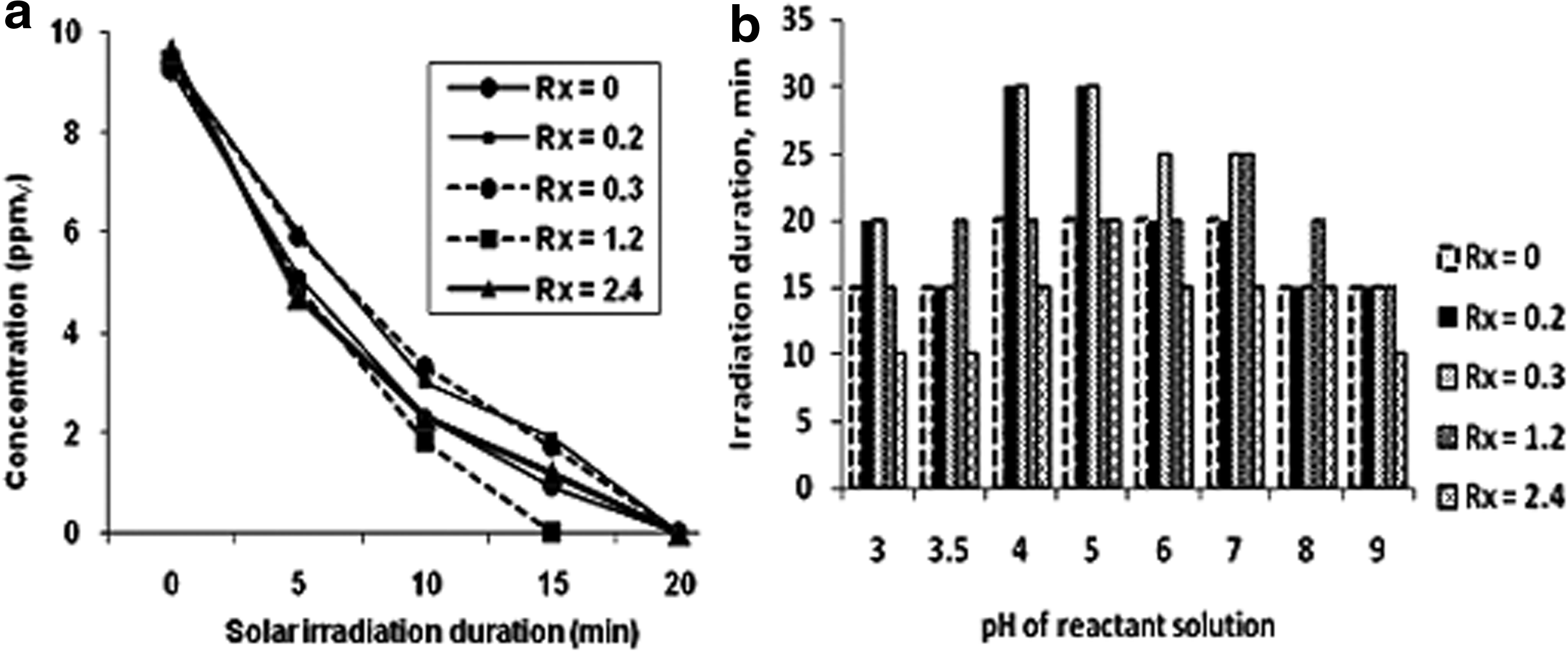
The adsorption and degradation profile of methylene blue at actual pH is depicted in Fig. 6a. The decrease in dye concentration during 30 min of dark adsorption before solar irradiation was taken as the concentration of dye adsorbed on to the catalysts. At actual pH, the adsorption of methylene blue onto the catalysts varied from 4% to 8%. The adsorption of methylene blue was maximum and >10% at basic pH 9. The figure shows that a complete degradation of methylene blue was observed with the iron-impregnated catalyst Rx=1.2 after 15 min of solar irradiation (k=6.60×10⁻¹ min−1). The degradation profile of methylene blue at varied pH from pH 3 to pH 9 is given in Fig. 6b. The profile demonstrates that the iron-impregnated catalyst with the highest iron content, Rx=2.4, was efficient among all the pure and iron-impregnated catalysts over the entire range of pH. On observing the degradation of the dye, the activity of Rx=2.4 was elevated, and the degradation occurred at a very rapid rate at pH 3, 3.5, and 9. At this pH, a complete degradation was observed within 10 min of solar irradiation. The rapid degradation at the acidic pH 3 and 3.5 is due to the fact that the Fenton's reaction is more active at acidic pH at which more hydroxyl radicals are produced that rapidly degrade the organic pollutant (Rodríguez et al., 2007). The enhanced activity of Rx=2.4 in the degradation of methylene blue, when compared with the pure and other iron-impregnated catalysts, might be attributed to the higher iron content and augmented Fenton's reaction. There was no significant adsorption of dyes onto the iron-impregnated catalysts compared with the pure catalyst. Hence, the degradation of the dye could majorly be due to the potential hydroxyl radicals generated during the solar photo-Fenton's process.
The photo-Fenton's properties of the synthesized catalysts in terms of pseudo-first-order reaction rate constant with regard to methylene blue are given in Table 3.
Interestingly, rapid degradation of methylene blue was also observed at pH 9. The increase in the rate of degradation of the dye at pH 9 could be explained as follows: For TiO2, the point of zero charge is around 5.8 to 6.0 (may take substantially higher values depending on the method of preparation, impregnation, etc.). Hence, at acidic pH below 5.8, the aqueous medium can supply more protons, which make the particle surface predominantly possess positive charge; whereas, at pH above 5.8, the aqueous medium provides hydroxyl ions and the particle surface possesses negative charge. Since methylene blue is a cationic dye, it is expected to be predominantly in its cationic form at acidic pH and neutral form at basic pH. Therefore, at basic pH, the electrostatic repulsion between the negatively charged catalyst surface and the neutral dye molecule is less on comparing the strong repulsion between the positively charged catalyst surface and methylene blue at acidic pH. Similar results were obtained in the study by Yun et al. (2008), in which the degradation of methylene blue was favored at pH 9.
The adsorption and degradation of methyl orange at actual pH of the dye-catalyst suspension is depicted in Fig. 7a. The adsorption of methyl orange onto the catalysts at actual pH after dark adsorption varied from 4% to 6%. The adsorption of methyl orange was maximum and greater than 8% at acidic pH 3 and 3.5.
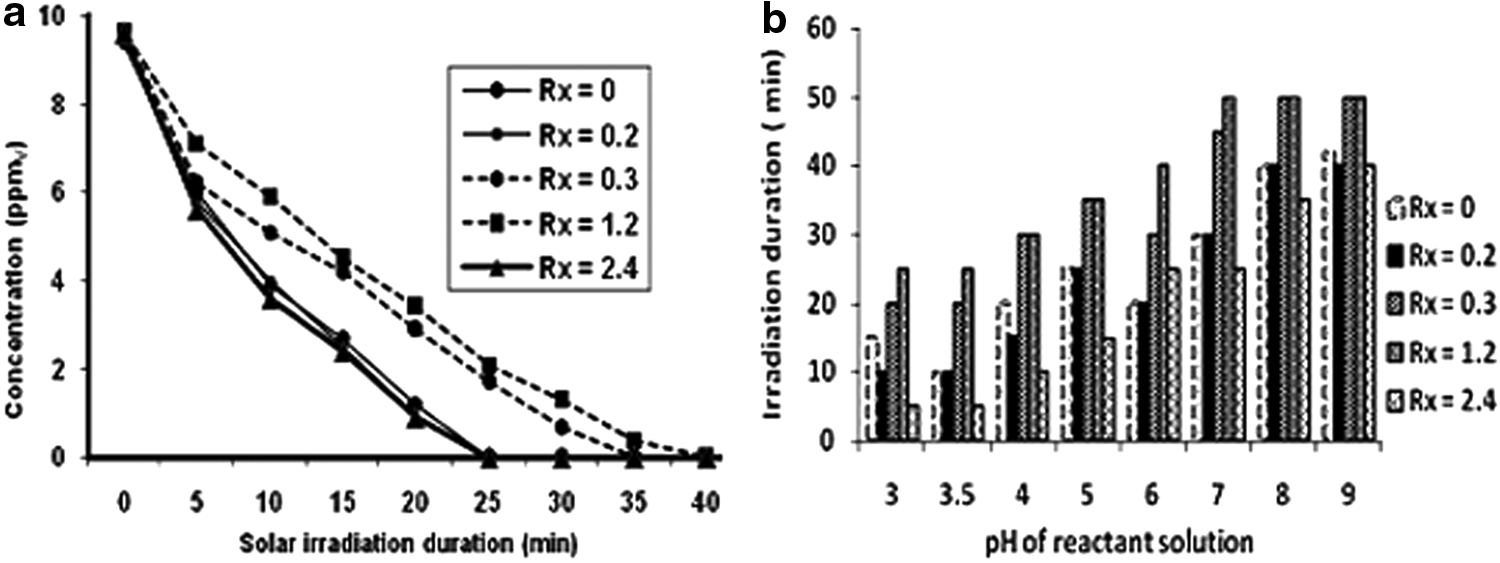
When observing the degradation profile of methyl orange from Fig. 7b, the dye was found to degrade very rapidly within 5 min at pH 3 and pH 3.5 with the catalyst Rx=2.4. However, the rate of degradation follows a downward trend as the pH increases from pH 3.5 to pH 9. To reason out this manner of degradation, the same zero point charge of the catalyst and the dissociation nature of the dye appear to play a major role. Since methyl orange is an anionic dye, it is expected to be predominantly in its anionic form at basic pH and neutral form at acidic pH. Therefore, at acidic pH, the electrostatic repulsion between the positively charged catalyst surface and the neutral methyl orange dye molecule is less on comparing the repulsion between the negatively charged catalyst surface and methyl orange dye molecule at basic pH. The degradation results of methylene blue and methyl orange clearly reveal that if the pH of the reactant suspension is favorable for Fenton's activity and catalyst–pollutant interaction, the degradation of complex compounds could be made easy and achieved at a faster rate. The possible reaction pathway and the reaction intermediates of methyl orange were described by Huang et al. (2008) in their study on the degradation of organic pollutants.
The photo-Fenton's properties of the synthesized catalysts in terms of pseudo-first-order reaction rate constant with regard to methyl orange are furnished in Table 4.
Solar photo-Fenton's and solar photocatalytic mechanism
The enhancement in the activity of iron-impregnated catalysts by solar photo-Fenton's process over the simple photocatalytic process is due to the series of reactions (Martinez et al., 2005) as follows.
The oxidation system based on the Fenton's reagent (hydrogen peroxide in the presence of ferrous/ferric ions) is a powerful source of oxidative radicals. In addition, the Fenton's processes are shown to be enhanced by light due to the decomposition of the photoactive Fe(OH)2+ species, promoting an additional generation of HO• radicals in solution as in Equation (7).
The following equations [Eqs. (8)–(12)] summarize the general mechanism of photocatalysis.
From the equations cited earlier, it could be seen that in the photocatalytic process, the potential HO radicals are generated only by light irradiation, and, thus, its generation is dependent on the efficiency of light source. However, in photo-Fenton's process, the combination of Fenton's system and the photocatalytic mechanism synergistically and effectively acts in the destruction of pollutants.
Solar peroxide degradation of dyes
A study was conducted to degrade the dye pollutants using hydrogen peroxide with the assistance of solar light without any catalyst and to make a comparison of the degradation of dyes by solar photo-Fenton's method and solar peroxide method. The results of the solar peroxide studies are depicted in Fig. 8. On observing the results, complete degradation of methylene blue required 150 min (2.5 h) of solar irradiation at pH 3.5 (k=6.6×10⁻² min−1) and 120 min (2 h) of solar irradiation at pH 9 (k=8.2×10⁻² min−1). On the other hand, at pH 3.5, methyl orange degraded completely at the end of 120 min of solar irradiation (k=8.2×10⁻² min−1); whereas at pH 9, only 60% of methyl orange was found to be degraded (k=4.56×10⁻³ min−1).
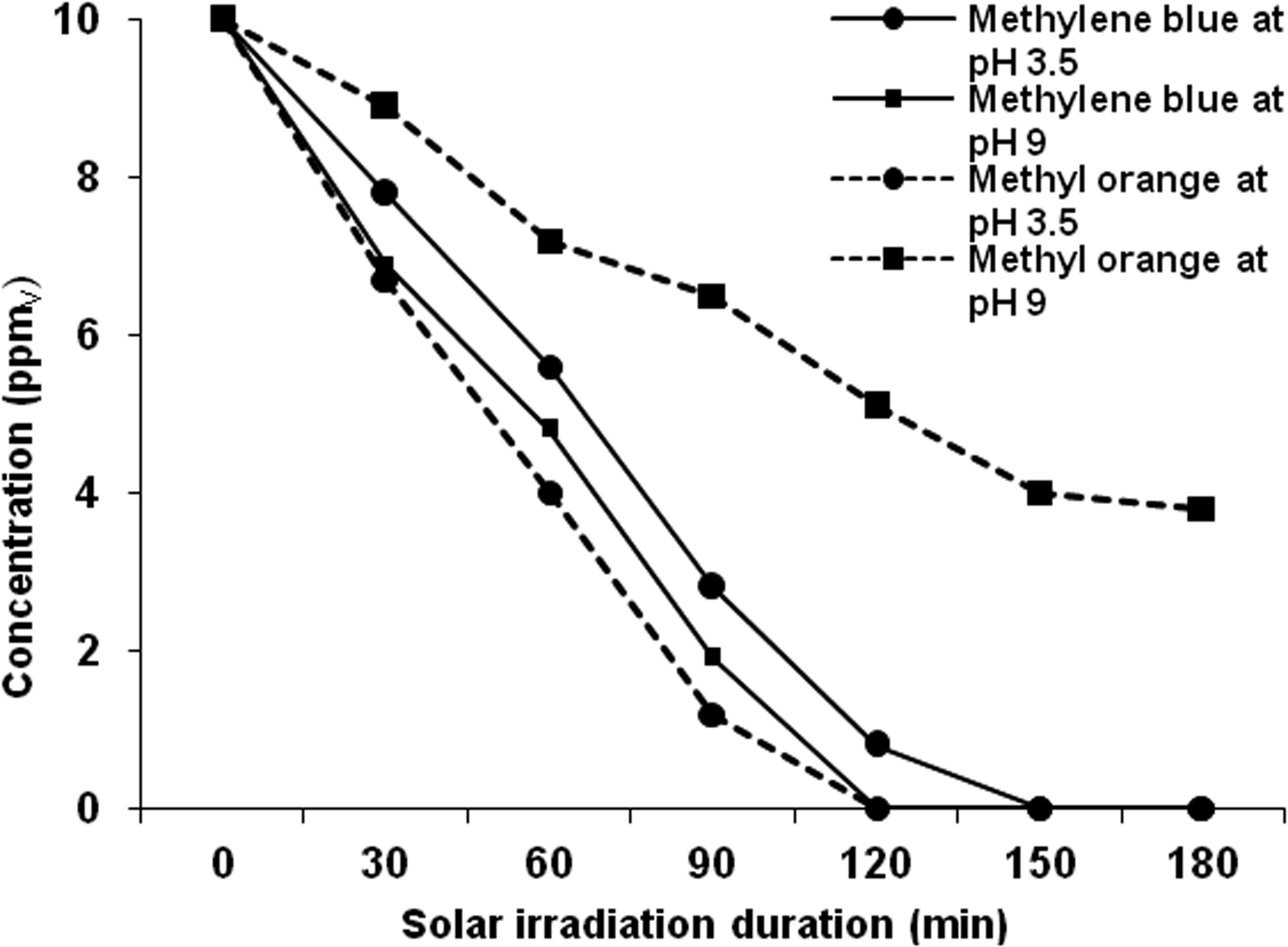
Solar peroxide degradation of dyes at acidic and alkaline pH [conditions: dye concentration=10 ppm; H2O2 concentration=5.9 mM].
Thus, the results on the whole reveal that among the solar photocatalytic, solar photo-Fenton's, and solar peroxide processes, the solar photo-Fenton's process degrades pollutants at a supremely faster rate than the other two processes, which is due to the series of effective Fenton's and photocatalytic reactions [Eqs. (3) to (12)].
Hydroxyl radical consumption and Fenton's activity
To further ascertain that the efficient decolorization of dyes in the solar photo-Fenton's process was chiefly due to high potential hydroxyl radicals, experiments were conducted to quantify the hydroxyl radical consumption spectrohphotometrically by rhodamine B method at 550 nm (Liang et al., 2006). Methyl orange and 2,4-DCP were taken as model pollutants, and the results are depicted in Fig. 9a–b. A visible light-absorbing pollutant and a nonabsorbing pollutant were taken for the experiments, as dyes have the tendency to undergo self-degradation due to photolysis under solar irradiation. In the solar photo-Fenton's experiments with methyl orange, the concentration of the dye was varied from 10 to 80 ppm, and the hydrogen peroxide concentration was varied from 29.5 to 236 μM. In the solar photo-Fenton's experiments with 2,4-dichlorophenol, the pollutant concentration was taken as 100 ppm, and the H2O2 concentration was varied from 9.87 to 39.37 μM. From the figure, it is clear that the photo-Fenton's degradation of both methyl orange and 2,4-DCP is proportional to hydroxyl radical consumption.
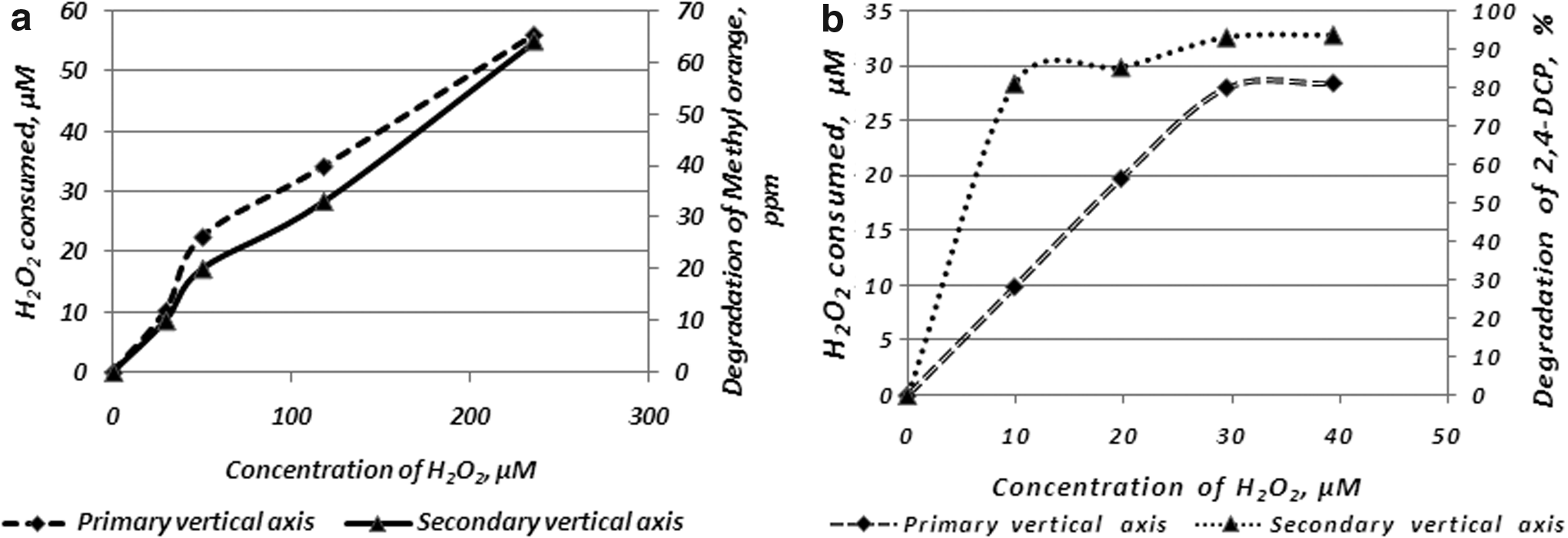
Hydroxyl radical consumption in solar photo-Fenton's degradation of pollutants:
Thus, the results of solar peroxide experiments and hydroxyl radical consumption in solar photo-Fenton's experiments confirm that the degradation of the dyes was majorly due to the hydroxyl radicals generated by the ferrous ion in the iron-impregnated catalysts.
Reusability studies
In order to evaluate the practical application potential of the iron-impregnated electrospun fibers, reusability studies were conducted with the best acting catalyst Rx=2.4 with methyl orange as a model pollutant at pH 3 in the presence of H2O2. The fibers were recovered after each run, washed, annealed at 400°C for 1 h, and reused for the next cycle of study. It was possible to reuse the catalyst with no significant loss in the catalytic activity for three cycles (k=19.8×10⁻¹ min−1 for 1st run; k=14.1×10⁻¹ min−1 for 2nd run; and k=11.0×10⁻¹ min−1 for 3rd run); after the 3rd cycle, the electrospun fibers were found to disintegrate and tended to lose their fibrous structure.
Leachability studies
Leachability experiments were conducted to examine the leaching of iron species from the best acting catalyst, Rx=2.4 with methyl orange as model pollutant at pH 3 in the presence of H2O2. Since the reusability studies revealed the use of catalyst for approximately three runs, the leaching of iron from the catalyst was observed after the 3rd run. It was observed that the leaching was negligible, releasing 0.3 ppm of iron into the reaction solution after three cycles of experiments.
Conclusion
Electrospun TiO2 fibers were prepared using a nonpolymeric and nontoxic precursors and impregnated with iron for solar photo-Fenton's degradation of methylene blue and methyl orange. The characterization of the fibers by XRD, SEM, EDX, and UV-vis spectroscopy shows that the calcined fibers are composed of both anatase and rutile phases of titania; the diameter of the calcined and iron-impregnated fibers lies in submicron range; and all the catalysts possess some extent of light absorption in the visible region. The results of the dye degradation studies lead us to the following conclusion:
• When compared with the pure TiO2 fibers, iron-impregnated fibers with maximum iron content degrade the dye pollutants at a faster rate • Efficient degradation of the dye pollutants largely depends on the cationic or anionic nature of the dye, the zero point charge of the catalyst, and the initial pH of the reactant. • Dyes could be degraded at a supremely faster rate by solar photo-Fenton's process than by the solar photocatalytic and solar peroxide process
The study revealed that the natural and energy efficient sunlight-induced photo-Fenton's process could be a viable alternative for the energy-consuming treatment technologies in the degradation of organic pollutants.
Footnotes
Acknowledgments
J.R.R. is thankful to Korea BK21-E2M Group, Chungnam National University (South Korea), and Center for International Affairs, Anna University, Chennai, for the financial help offered for the student exchange program. She is also thankful to the University Grants Commission (UGC), New Delhi (India), for UGC Research Fellowship in Science for meritorious students.
Author Disclosure Statement
No competing financial interests exist.