




Abstract
Abstract
Pentachlorophenol (PCP) is an important hazardous compound present in industrial wastewaters and in the leachate of contaminated sites. This article reports on the application of horizontal-flow anaerobic immobilized biomass (HAIB) reactors (R1, R2, and R3) for PCP and chemical oxygen demand (COD) removal from contaminated waters. The reactors' feed consisted of synthetic wastewaters containing different cosubstrates, inoculated with different types of sludge. A mixture of glucose, organic acids, and alcohols fed R1 and R2, and estuarine-like water supplemented with glucose and formate fed R3. R1 and R2 inocula consisted of a mixture of sludge from up flow anaerobic sludge blanket reactors treating sewage and paper-recycling wastewater. R3 received inoculum derived from estuarine sediment contaminated with chlorophenols. Different start-up strategies were applied. COD removal efficiencies were 99% (R1), 95% (R2), and 80% (R3). Independent of the start-up strategy applied, efficient PCP (0.2–13.0 mg/L) removal occurred in the three HAIB reactors. Adsorption of PCP onto polyurethane foam matrix bioparticles was negligible. Tri- and dichlorophenol were observed in all reactors, suggesting that PCP removal occurred by reductive dechlorination. PCP was effectively removed by the reactor but high concentrations of other chlorinated phenols were still present in the effluent of the reactor.
Introduction
Anaerobic processes are widely used to treat sewage and industrial wastewater, and studies have demonstrated the possibility of applying this technology to treat toxic priority pollutants. Pentachlorophenol (PCP) can be removed through reductive dechlorination (Ye and Shen, 2004; Li et al., 2010). However, important aspects related to the technological application of the process are not well established. Although an anaerobic reactor's inoculation is considered important for successful treatment, there is a lack of information on the possible sources and adaptation protocol for PCP inocula. Additionally, there is a lack of information on the start-up strategy for anaerobic reactors treating PCP-containing wastewater.
The horizontal-flow anaerobic immobilized biomass (HAIB) reactor was proposed by Foresti et al. (1995). It includes several important characteristics for success in bench-scale experiments for the anaerobic treatment of hazardous compounds such as PCP (Saia et al., 2007; Baraldi et al., 2008). The predominant plug-flow regime (Foresti et al., 1995) allows for a stepwise treatment process that occurs along the reactor's length. The inert support inside the reactor provides proper biomass retention without requiring a special solid retention apparatus or specific biomass characteristics. Such a flow regimen allows distinct populations to develop in different regions as a function of substrate availability and composition along the reactor (Varesche et al. 1997; Baraldi et al., 2008).
In this study, we demonstrated that the HAIB reactor is suitable for the treatment of synthetic wastewater and estuarine-like water containing PCP. The parameters investigated were biomass adaptation to PCP, reactor start-up strategy, and source of inocula.
Materials and Methods
Reactors
The study comprised the operation of three bench-scale HAIB reactors, each filled with polyurethane foam (20 g of 3-mm-square pieces with a density of 23 kg/m3 and a bed porosity of 40%) as the support material. The influents to the reactors were synthetic wastewater and estuarine-like water, both containing PCP. Each HAIB reactor was 1 m long (L), with a 5 cm diameter (D), a length/diameter ratio (L/D) of 20, and a final volume of 1991 mL (Fig. 1). The reactors were made of glass.
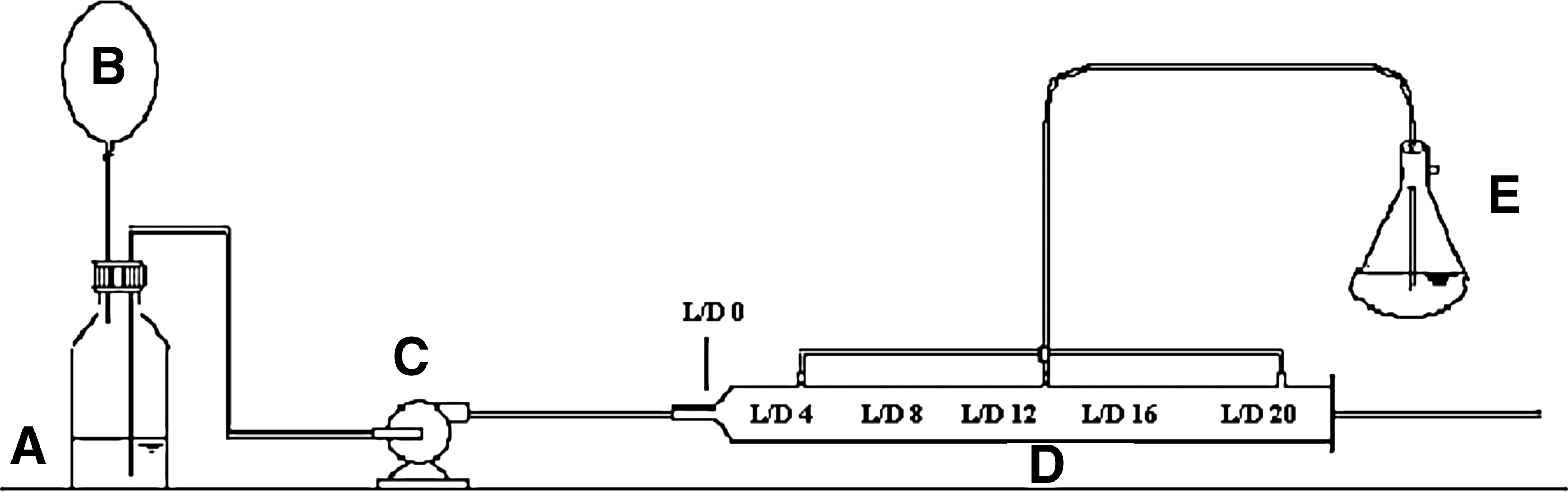
Schematic representation of a horizontal-flow anaerobic immobilized biomass reactor. Letters A, B, C, D, and E correspond to the influent reservoir, gas reservoir (N2), peristaltic pump, reactor, and gas collector, respectively. L/D corresponds to the length/diameter ratio of the sampling ports.
Reactors R1 and R3 operated over a hydraulic detention time (HDT) of 18 h. R2 operated over a HDT of 24 h. The reactors were installed inside a temperature-controlled chamber at 32°C±2°C.
Synthetic wastewater and estuarine-like water composition
The influent feeding wastewaters were synthetic wastewater and estuarine-like water supplemented with trace elements and electron donors suitable for the reductive dechlorination of PCP under anaerobic conditions. Reactors R1 and R2 received basal medium (Angelidaki et al., 1990). R3 received the estuarine-like medium described in Saia et al. (2007). These media received 0.1% NaHCO3 for buffering and 0.05% Na2S.9H2O to produce a low redox potential. The selected carbon sources provided the electrons required for reductive dechlorination and favored the growth of methanogens. Table 1 shows the concentration of each carbon source. Table 2 presents the reactors' operational parameters, including the corresponding chemical oxygen demand (COD) loading rates and the influent concentrations of PCP (PA grade) obtained by the dilution of a 10 mg/L stock solution.
COD, chemical oxygen demand.
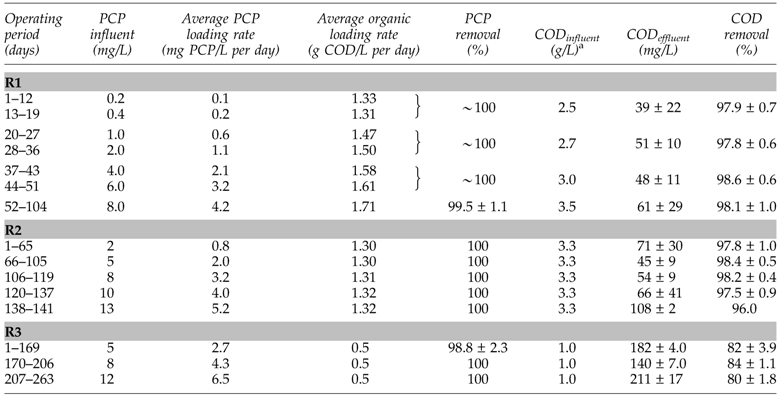
Mean value.
PCP, pentachlorophenol.
Inocula and operational period without PCP (start-up of HAIB reactors)
Reactors R1 and R2 received 13 g of total volatile solids (TVS) composed of a mixture of domestic sewage anaerobic sludge and granulated sludge. The granulated sludge originated from a reactor treating wastewater from a paper-recycling plant. The reactor's inoculation was performed according to Foresti et al. (1995). The inoculum of R1 was first adapted to PCP for 6 months in replicate batch reactors operated semicontinuously. Feeding occurred weekly (medium withdrawn and replenished), with 0.2 mg PCP/L and 200 mg COD/L.
R3 received inoculum obtained from sediment from the Santos São-Vicente Estuary (São Paulo Estate–Brazil) near the COSIPA site. This is the most contaminated site in the region, containing 35.4 μg/kg of PCP in the sediment, according to CETESB (2001). The sediment sample was first enriched under methanogenic conditions using easily degraded substrates (glucose and formate). Then, R3 received 0.14 g of TVS of this inoculum, according to procedures described by Saia et al. (2007).
The reactors then received the media without PCP until the establishment of methanogenesis, as evaluated by organic matter removal and by methane detection in the biogas (data not shown).
Operational period with PCP
As soon as the COD removal efficiency leveled out at a high value (>80%), indicating efficient methanogenesis, the influent received increased PCP concentrations, as shown in Table 2.
Monitoring the performance of the HAIB reactors
Monitoring of the reactor performance included the determination of influent and effluent COD and chlorophenols. Organic acids were determined in the effluent of the reactors. Spatial profiles were determined each time the systems were in an apparent steady-state regimen, represented by variations lower than 10% in the removal efficiency of PCP and COD. For the spatial profiles, liquid samples were taken from the sampling ports located along the length of the reactor in the (L/D) positions 0, 4, 8, 12, and 16 and from the reactor's effluent. COD, CPs, and organic acids were analyzed.
COD concentration determinations were performed according to the closed-reflux method (APHA, 2005), with modifications made to eliminate the interference of chloride, as described by Saia et al. (2007). Specific organic acids (acetic, butyric, propionic, Isobutyric, and valeric) were determined using a HP 6869 gas chromatograph equipped with an HP Innovax column (Hewlett Packard; part number 19091N-133) and a flame ionization detector, as described by Moraes et al. (2000). PCP; 2,3,4,6-tetrachlorophenol; 2,3,6-trichlorophenol (TCP); 2,4,6-TCP and 2,3,4-TCP; 2,3-dichlorophenol (DCP); and 2,6-DCP and 2,4-DCP concentrations were determined using an HP 5890 series II gas chromatograph equipped with an electron capture detector and an HP-5 column (Hewlett Packard; part number 19091J-413) according to Damianovic et al. (2007). The concentration range of chlorophenols detected by the method was 0.025 to 8 mg/L. The detection of monochlorophenols and phenols was not possible by this method.
The sorption of PCP and less-chlorinated phenols onto polyurethane foam matrix bioparticles (PFMBs) was analyzed. Five PFMBs were taken from R1 and R3 at each sample port and transferred to tubes containing 10 mL of a sodium hydroxide solution (0.1 M). The tests (five PFMBs each) were carried out in triplicate. The samples were shaken vigorously and maintained in an NaOH solution for 30 min at 40°C. Chlorophenols released from the PFMB were analyzed according to Damianovic et al. (2007).
Results and Discussion
Start-up of the HAIB reactors
The start-up of the HAIB reactors was evaluated by organic matter degradation, expressed as COD removal, without the addition of PCP. A COD removal higher than 95% (R2) and 80% (R3) was established within 20 to 30 days, which is a short period for anaerobic reactors (Puñal et al., 2000), indicating the high activity of the inocula. In R1, a COD removal of 97% was established within 120 days, at the end of the adaptation period. This slow organic matter degradation in R1 could be due to the previous exposure of the inoculum to PCP, as described below.
Adaptation of inocula to PCP
Before the inoculation of reactor R1, the inoculum was exposed to PCP (0.2 mg/L) in a semicontinuous system for 6 months. At the end of this period, the PCP concentration in the liquid was below the detection limit (0.025 mg/L), indicating the presence of microorganisms with the potential for PCP biodechlorination. This microbiota was inoculated in R1, and after 120 days, the period observed for the establishment of methanogenesis, 0.2 mg/L PCP was added. Five days after the addition of PCP to the R1 influent, DCP was detected in the effluent (Fig. 2a) as a result of PCP reductive dechlorination. COD removal was 98% (Table 2). In a batch system, Ye and Shen (2004) also observed a long period of inoculum adaptation (180 days) to PCP (4–40 mg/L) and COD concentration (5 g/L). The inoculum was then used in a continuous-flow upflow anaerobic sludge blanket (UASB) reactor, and PCP (2–4 mg/L) was biodechlorinated in 30 days.
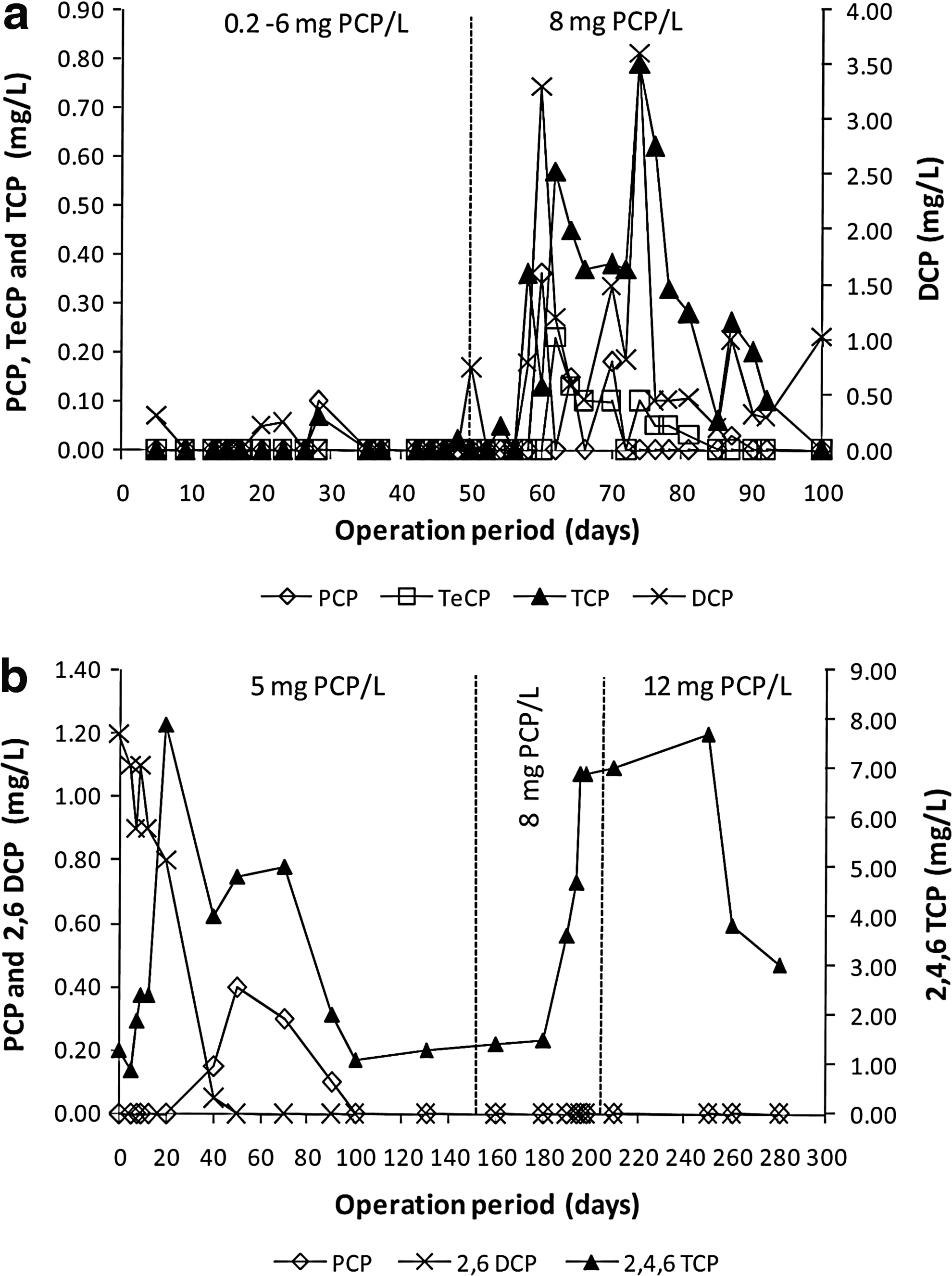
Chlorophenol concentration in the effluent of reactor R1
In R2, the adaptation of the inoculum to PCP (2 mg/L) was observed to occur in 20 days. Trace levels of 2,3,4-TCP; 2,3,6-TCP; 2,6-DCP; and 2,3-DCP were detected in the effluent. Similar reductive dechlorination pathways of PCP were presented by Magar et al. (1999) and Takeuchi et al. (2000). The COD removal (Table 2) was comparable to that observed over the period during which no PCP was added (∼95%). In a similar system, Saia et al. (2007) also observed the adaptation of estuarine sediment to PCP (5 mg/L) in 26 days using glucose as the organic source. Similar results were also observed by Lanthier et al. (2005) in a fixed-film bioreactor inoculated with sludge (0.5 g/L of VSS from a UASB reactor fed with 1.5 mg/L of PCP, a mixture of organic compounds (butyrate, ethanol, sucrose) and yeast extract. In R3, the adaptation of the inoculum to PCP occurred after 207 days, although the inoculum was obtained from a site severely contaminated with chlorophenols. This result could be attributed to the high organic and PCP loading rates applied to the biomass (Table 2). The continuous addition of 10 mg/L of PCP during the first 120 days resulted in the adsorption of PCP onto PFMB. Up to 10 mg/L of PCP and 324 mg/L of acetic acid were detected in the effluent, and COD removal decreased from 99% to 60%. To restore microbial activity, PCP was omitted from the influent medium for 87 days. During this period, organic matter degradation was re-established, resulting in a COD removal higher than 80%. Adsorbed PCP dechlorination occurred, producing 5 mg/L of 2,4,6-TCP in the effluent.
The adaptation protocol for a continuous system with a low concentration of PCP (R2) resulted in only a short period of time being required to initiate PCP dechlorination and maintain organic matter degradation under anaerobic conditions. Adaptation in a semicontinuous system (R1) or using a high initial concentration of PCP (R3) in continuous system is considered a poor strategy, even for microorganisms previously exposed to chlorophenol compounds.
Performance of the HAIB reactors exposed to a progressive increase of PCP
After the adaptation period, the reactors were exposed to a progressively higher PCP load (Table 2). The addition of external carbon sources led to the development of an active microbial community capable of degrading PCP and its degradation products. Figure 2 shows that 2,4,6-TCP and DCP were detected in the effluents of R3 and R1, respectively. In this case post-treatment is required, such as advanced oxidation process (Pera-Titus et al., 2004) and aerobic process (Armenante et al., 1999). In R2, traces of 2,3,4-TCP; 2,3,6-TCP; 2,6-DCP and 2,3-DCP were detected throughout the reactor, which were further dechlorinated. The spatial profiles showed that PCP removal occurred mainly in the first portion (L/D=0 to L/D=4) of all the bioreactors. The consumption of intermediate chlorophenols occurred in the remaining portion (Fig. 3). Throughout the experiment, COD removal in R1 and R2 was higher than 97% (Table 2) and occurred mainly in the first part of the reactors. COD removal in R3 was lower than that in the other reactors (Table 2). Throughout the entire operational period, acetate at a concentration of 94 mg/L and propionate at a concentration of 46 mg/L were detected in the effluent of R3. This is related to differences in the adaptation procedures adopted and the amounts of inoculum used. In R1 and R2, inoculation proceeded with higher amounts of biomass. The initial PCP concentration was lower, and larger amounts of organic sources were supplied, covering a broader range of compounds. These conditions led to the development of a microbial community able to degrade increasing amounts of PCP. The addition of this contaminant did not disturb the overall performance of the anaerobic process.
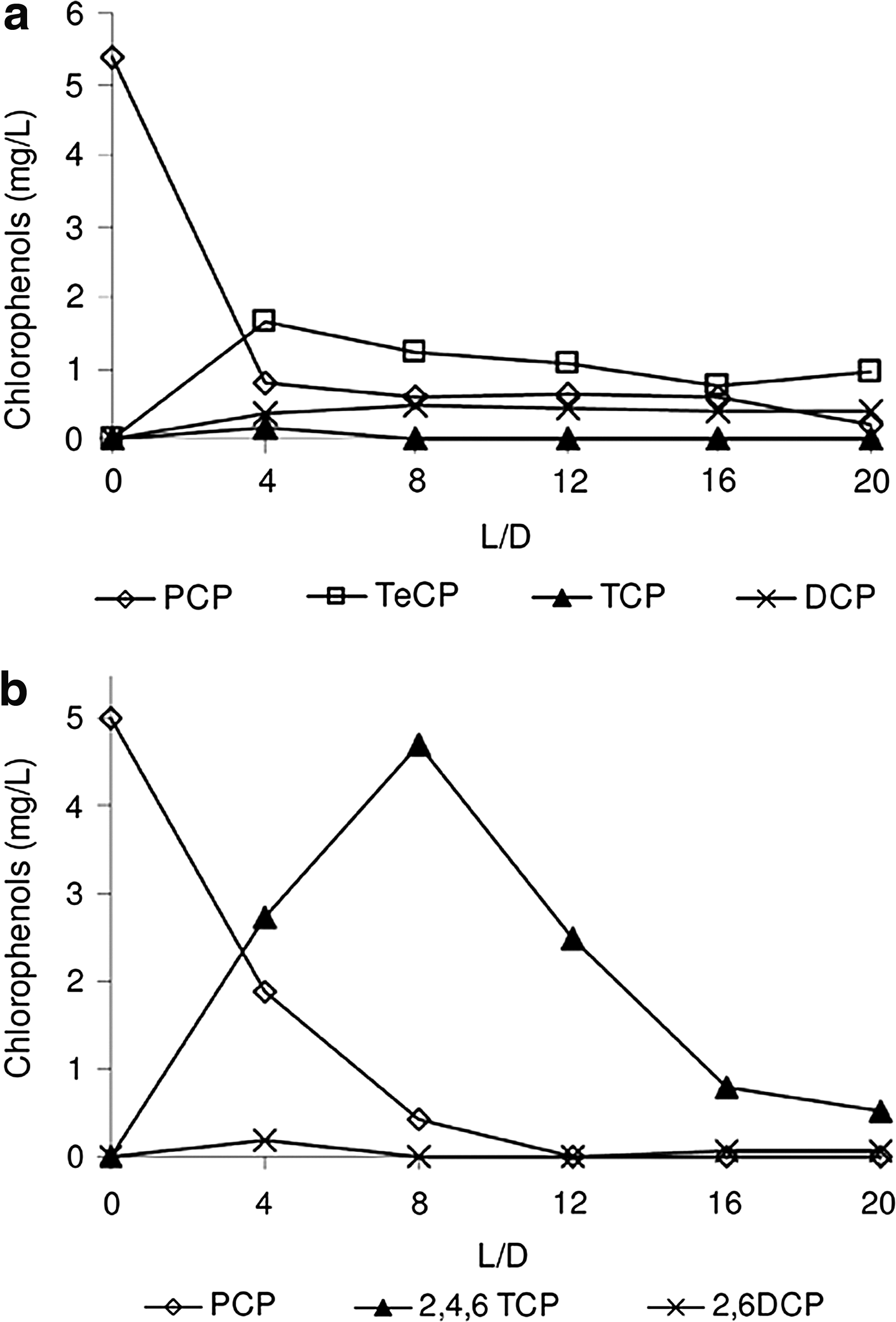
Chlorophenol spatial profiles in pentachlorophenol (PCP) influent of 5 mg/L in R1
The high efficiencies obtained for PCP dechlorination and organic matter removal in the HAIB reactors could be attributed to the coexistence of methanogenic archaea and dehalogenating bacteria. These results indicate that the polyurethane foam packing media provided proper conditions for the immobilization of the microorganisms (Varesche et al. 1997; Baraldi et al. 2008).
Regarding the adsorption of chlorophenols in PFMB, the concentration of PCP PFMB in R1 was very small compared with the amount added (Fig. 4a). Throughout the experimental period, the reactor received ∼240 mg of PCP, and 0.47 (0.2%) mg was adsorbed on the PFMB. R3 received ∼1285 mg throughout the experimental period, and 10.2 mg (0.79%) was adsorbed on the PFMB (Fig. 4b), demonstrating that the main mechanism of PCP removal was reductive dechlorination. Sheng et al. (2005) and Ye and Li (2007) previously observed that the main mechanism of PCP removal in granular sludge was reductive dechlorination, not adsorption.
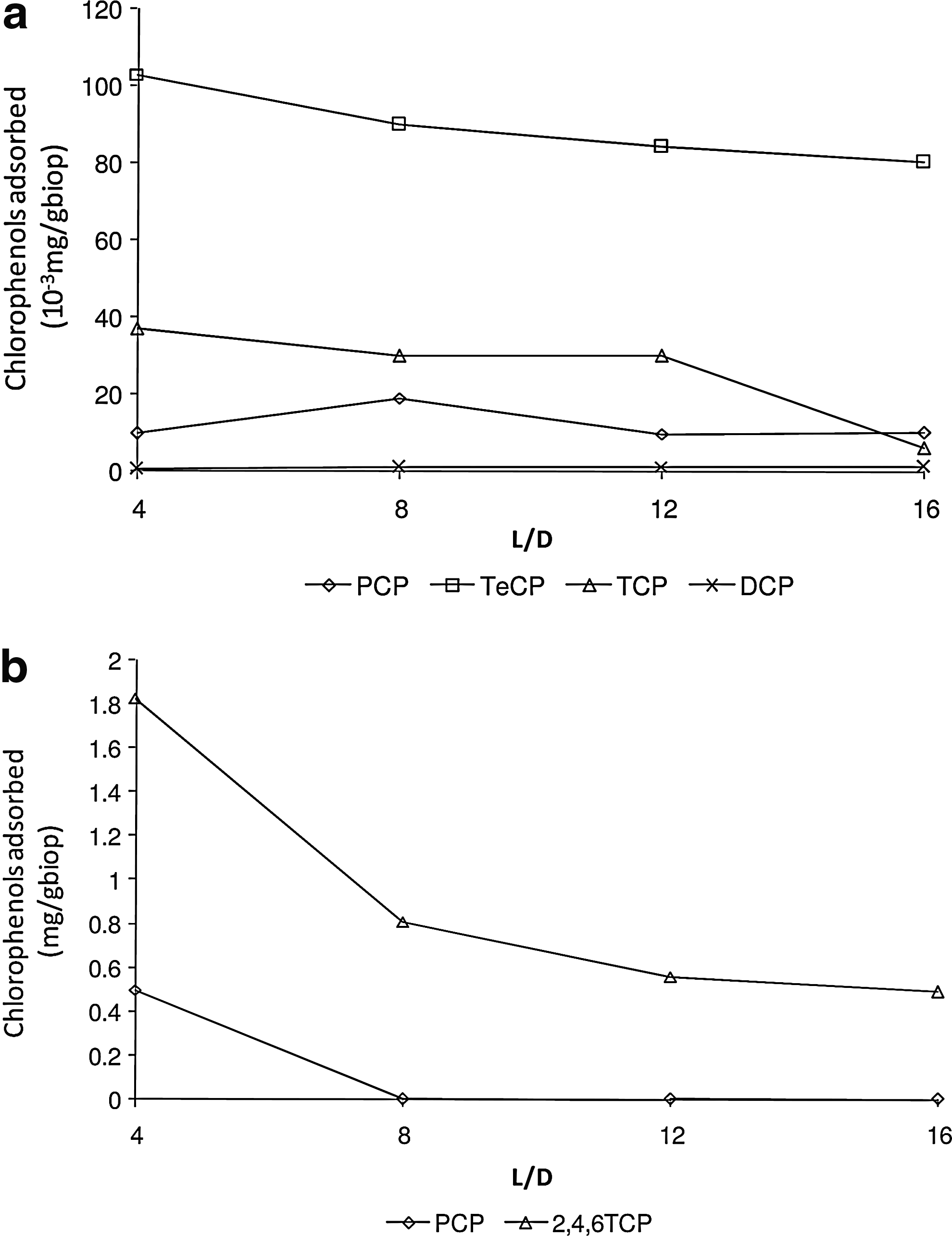
Chlorophenols adsorbed on bioparticles along reactor R1
Conclusions
Horizontal-flow anaerobic biomass (HAIB) reactors were observed to be robust in removing PCP from synthetic wastewater and estuarine-like water using different inoculum sludge and different electron donors.
The start-up of the reactor with a low amount of PCP (R2) exhibited a shorter initial PCP reductive dechlorination period than that observed for the adaptation in the semicontinuous reactor (R1) or with a high initial PCP concentration (R3).
Sludge from bioreactor wastewater treatment and enriched estuarine sediment were suitable as inocula for the anaerobic treatment of PCP-containing water.
Footnotes
Acknowledgments
This work was funded by the FAPESP (Fundação de Amparo a Pesquisa do Estado de São Paulo), CAPES (Coordenação de Aperfeiçoamento de Pessoal de Nível Superior), and CNPq (Conselho Nacional de Desenvolvimento Científico e Tecnológico).
Author Disclosure Statement
No competing financial interests exist.