




Abstract
Abstract
An agricultural waste, Cyperus rotundus (CR), was used as a low-cost adsorbent to remove two toxic heavy metal ions (copper [Cu] and zinc [Zn]) from aqueous solutions in single and binary systems. Surface characteristics of CR were investigated using Fourier transform infrared (FTIR), x-ray diffraction, and scanning electron microscopy. Effects of CR dosage and contact time were investigated at 30°C. Kinetic and isotherm aspects of heavy metal adsorption were studied. Adsorption kinetics of heavy metals were studied in single and binary systems and rate sorption was found to conform to a pseudo second-order kinetic model. Intraparticle diffusion plots showed that the adsorption processes involve multistep kinetic stages. Isotherm aspects of heavy metals in single and binary systems followed the Freundlich isotherm. Maximum adsorption capacity of CR for Cu and Zn was 500 mg/g and 208 mg/g for the single system. Results indicated that CR is effective for adsorption of Cu and Zn from aqueous solutions.
Introduction
Application of biosorption in environmental management has become a significant area of research and development during the past 10 years (Harikishore Kumar Reddy et al., 2010). Biosorption is a process that utilizes low-cost biosorbents to sequester toxic heavy metals (Kratochvil and Volesky, 1998). Low-cost agricultural wastes can be used as a good adsorbent for heavy metal removal from wastewater. Agricultural wastes including coir pith (Ramesh et al., 2011), hazelnut shells (Cimino et al., 2000), peanut hull pellets (Johnson et al., 2002), coconut husk (Tan et al., 1993), and banana and orange peels (Annadurai et al., 2002) have been used for removal of heavy metal from wastewater.
The present study focuses on the removal of Cu and Zn ions from aqueous solutions by Cyperus rotundus (CR; also known as purple nut sedge or nut grass), an agricultural waste. CR is indigenous to India, but is now found abundantly in tropical, subtropical, and temperate regions (Gordon-Gray, 1995; Pooley, 1998). The objectives of the present study were to determine the agitation time and optimum CR dosage for the effective removal of Cu and Zn ions from an aqueous solution in single and binary systems. The equilibrium and kinetic data of the biosorption processes were then analyzed to evaluate the ability of CR to adsorb Cu and Zn and to study adsorption models that can describe this biosorption.
Materials and Methods
Biosorbent and its characterization
Nut grass was collected from Malai Kovil near the National Institute of Technology, Tiruchirappalli, Tamil Nadu, India. The nut grass was sun-dried for 7 days. The dried material was then ground and sieved. CR samples 150–300 μm in size have been used for the present study.
The various characteristics such as specific gravity, density, pore volume, and point of zero charge of CR were studied. The point of zero charge was determined using the solid addition method (Oladoja and Aliu, 2009). Pore volume of dried CR was found using a water evaporation method (Wikipedia, 2012). Brunauer–Emmett–Teller (BET) surface area of CR was found by the liquid nitrogen method. The CR was characterized using scanning electron microscope (SEM) and Fourier transform infrared (FTIR) spectroscopy. The functional groups present in the samples were characterized by a Perkin-Elmer Fourier infrared spectrometer (Spectrum RXI). SEM images of the CR was obtained with the help of a HITACHI S-3000H operated at 10 kV.
Equipment
An S-series atomic absorption spectrophotometer (AAS) was used for metal concentration analysis. The pH measurements were obtained using an Orion EA 940 expandable ion analyzer. An IHC 3280 Orbital shaking incubator was used for all adsorption experiments.
Batch study
Effect of contact time was carried out at constant temperature of 30°C with initial concentration (10 mg/L) and adsorbent dose of 1 g/L. After shaking, the solution samples were withdrawn at suitable time intervals. Effect of CR dosage was carried out using a series of samples with varying biosorbent dosage (0.2–3 g/L) kept in an orbital shaker for a constant time interval (equilibrium contact time). Suspensions were then filtered through Whatmann filter paper (No. 42). The filtrates were analyzed for final metal concentration.
The effect of pH on the amount of heavy metal removal was studied over the pH range from 2 to 12. The pH was adjusted by adding a few drops of 0.5 normality (N) NaOH or 0.5 N HCl. In this study, 100 mL of heavy metal solution having a concentration of 10 mg/L at different pHs were agitated with optimum CR dosage using the orbital shaker at 30°C. Agitation was provided using a Remi CIS-24BI (Remi Instruments Ltd.) at a constant speed of 150 rpm for equilibrium time. The equilibrium concentrations were determined using AAS.
Results and Discussions
Characterization of biosorbent
The physical characteristics of the biosorbent like specific gravity, density, BET surface area, pore volume, and point of zero charge were found to be 0.9, 903 kg/m3, 1.027 m2/g, 9.035 cm3/g, and 5, respectively. BET surface area and pore volume values of dried CR shows that the adsorbent has enormous pores required for adsorption. This is also in agreement with the SEM images of CR (Fig. 1). The surface structure of nut grass before and after biosorption of Cu was analyzed by SEM. The morphology of this material can facilitate biosorption of metals due to the irregular surface of the nut grass, and thus makes possible the biosorption of metals in different parts of the material. From SEM analysis we concluded that this material presents an adequate morphological profile to retain metal ions. FTIR patterns for CR before and after adsorption are shown in Fig. 2. The FTIR spectra of unloaded biosorbent were assigned into groups. The bands of CR before and after adsorption, as well as the FTIR spectra groups, are given in Table 1. Compared with the FTIR spectra before and after adsorption of Cu and Zn, there were clear changes in transmittance for CR. The changes mainly occurred in the carboxyl, -CO, and C—C/-CN groups of CR. This indicates that those functional groups are the main active sites of CR for the sorption of heavy metals. Figure 2 shows the disappearance of a small peak at 756 cm–1 for Cu and Cu–Zn adsorption. This peak was attributed to Si–O–Si stretching of CR. This may have been due to the reaction between Cu and Si–O–Si group and resulted in the breakage of Si–O–Si bonds.
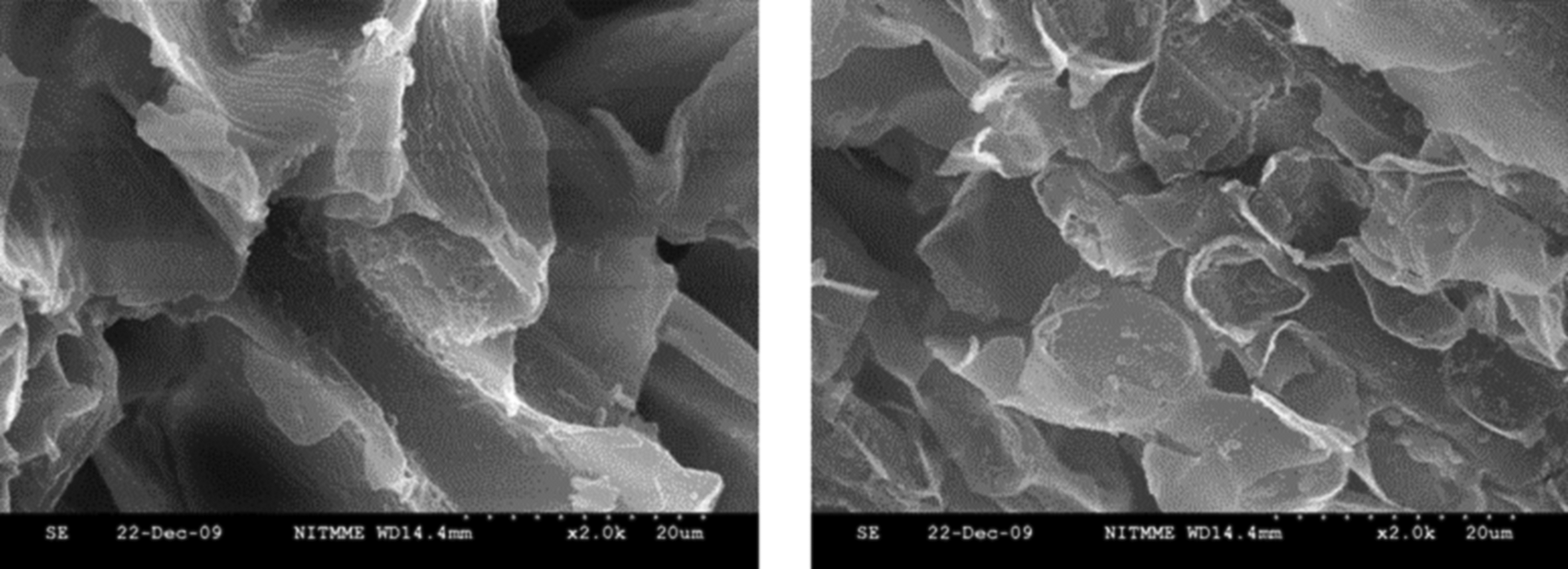
Scanning electron microscope image of Cyperus rotundus (CR) before and after biosorption of copper (Cu).
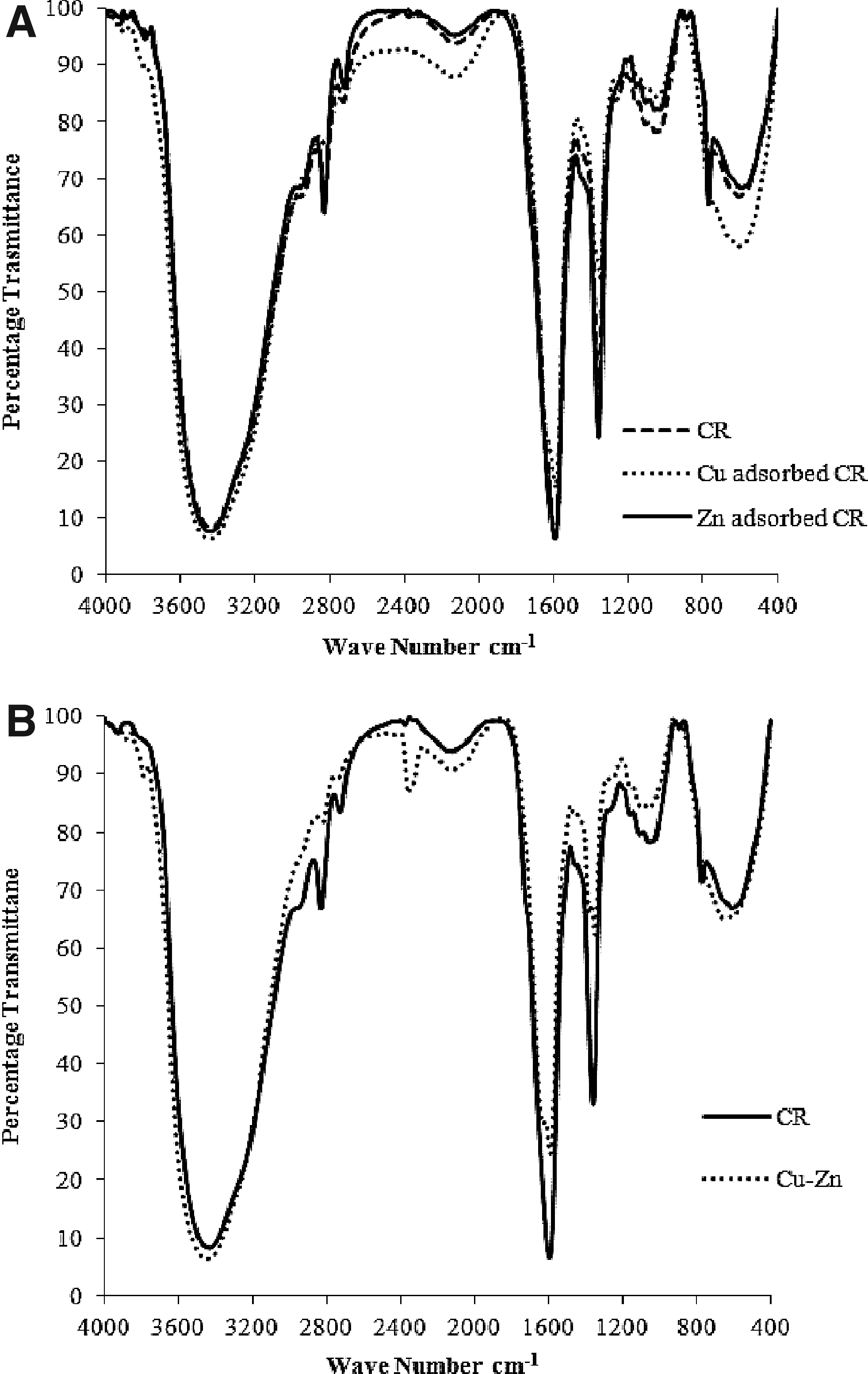
Fourier transform infrared pattern for CR before and after adsorption in
Sources: aSvecova et al., 2006; bYee et al., 2004; cSaleem and Bhatti, 2011; dGupta and Rastogi, 2008; eGandhimathi et al., 2012.
Cu, copper; Zn, zinc.
Biosorption kinetics
The effects of contact time on the biosorption process were studied in the time range from 2 to 300 min at 30°C with a fixed biosorbent dose (Fig. 3). The biosorption rapidly increased during the first 10 min for Cu in both systems, then it was moderate up to 30 min, and thereafter the adsorption remained constant. This trend followed up to 150 min for Zn in single system and 270 min in binary system. Metal ion adsorption sharply increased at a short contact time and gradually slowed down with approaching equilibrium. This could be attributed to the larger number of vacant surface sites available for adsorption at the initial stage compared with the later stages, and to the repulsive forces existing between heavy metal molecules on the CR surface and those in solution at the later stages (Salman et al., 2011). Such short times coupled with high removals indicate a high degree of affinity for the heavy metals pointing toward chemisorption (Hameed, 2008). This behavior is attributed to saturation of the available adsorption sites present on the CR. The time required to attain the state of equilibrium (saturation) is termed equilibrium time, and the amount of heavy metal adsorbed at the equilibrium time reflects the maximum adsorption capacity of the adsorbent under those operating conditions (Ahmad et al., 2007). At this point, the amount of heavy metal desorbing from CR is in a state of dynamic equilibrium with the amount of heavy metal being adsorbed (Hameed, 2008). From Fig. 3, it was observed that the time necessary to reach the equilibrium were 30 and 150 min for Cu and Zn respectively in the single system. The uptakes of Cu and Zn at equilibrium were found to be 81% and 55% respectively in the single system. But in the binary system, equilibrium times were 270 and 45 min for Cu and Zn with an uptake of 79.5% and 20% respectively. The time profile of dyes uptake is a single, smooth, and continuous curve leading to saturation, suggesting the possible monolayer coverage of heavy metals on the surface of CR (Ahmad et al., 2007).
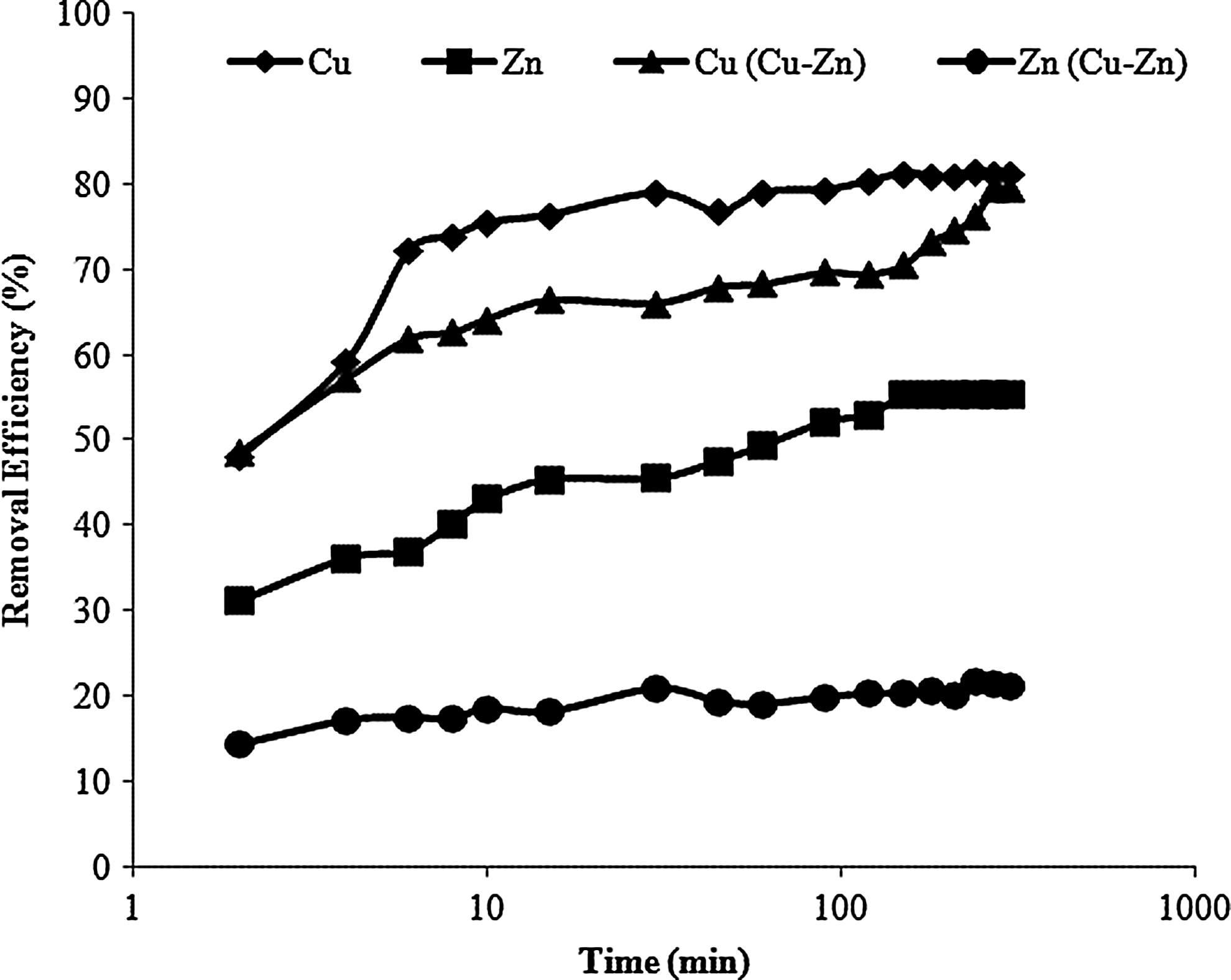
Effect of contact time on the uptake of Cu and zinc (Zn) (CR dosage=1 g/L).
Among the various suggested kinetic models for the adsorption process, the two well-known models, namely Lagergren's pseudo first-order kinetic model [Eq. (1)] (Lagregren, 1898) and pseudo second-order kinetic model [Eq. (2)] (Ho and McKay, 1999) were selected in this study. The linear forms of both models could be expressed as
where qe and qt are the amounts of the heavy metal adsorbed (mg/g) at equilibrium and at time t (min), respectively, k1 the rate constant adsorption (h–1) and k2 is the rate constant of pseudo second-order adsorption (g/mg per minute). The plot of log (qe−qt) versus t should give a linear relationship from which k1 and qe can be determined from the slope and intercept of the plot, respectively. Similarly, the plot of (t/qt) and t of Equation (2) should give a linear relationship from which qe and k2 can be determined from the slope and intercept of the plot, respectively. Figures 4 and 5 show the plot of the pseudo first- and pseudo second-order models for adsorption of metal ions in the single and binary systems. The adsorption kinetic constants (from Figs. 4 and 5) and experimental qe values (from Fig. 3) are given in Table 2. From Table 2, it was observed that the rate of Cu adsorption is higher than that of Zn. Based on the comparison between experimental and theoretically calculated qe values, it was found that the pseudo second-order model fitted better than pseudo first-order model for all system of metal ions (Table 2). This suggests that the rate-limiting step may be chemical sorption involving valance forces through sharing or exchange of electrons between heavy metal ions, and the adsorbent provides the best correlation data for the heavy metal ions (Feng et al., 2011).
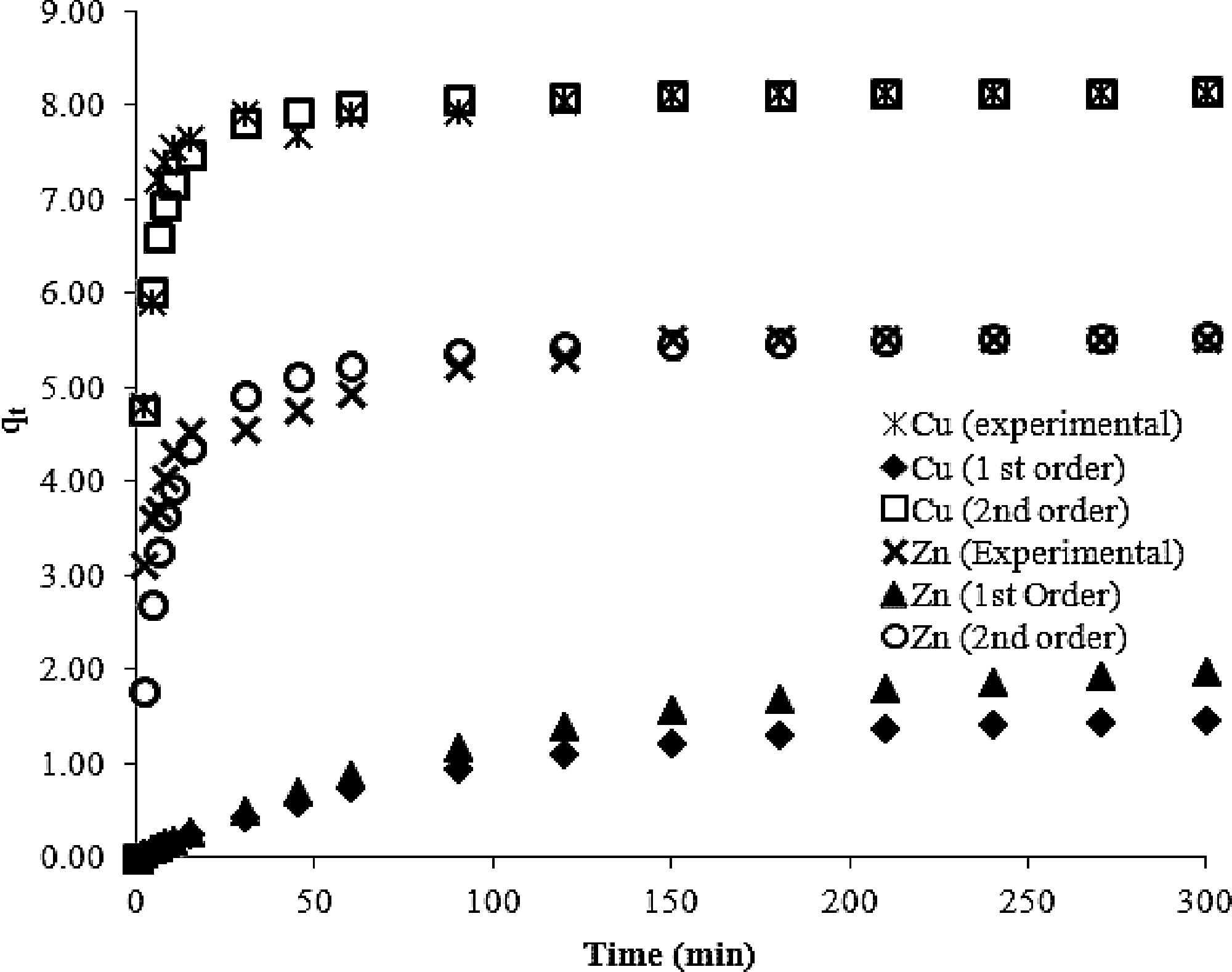
Pseudo first- and second-order kinetics plot for removal of Cu and Zn in single system (CR dosage=1 g/L).
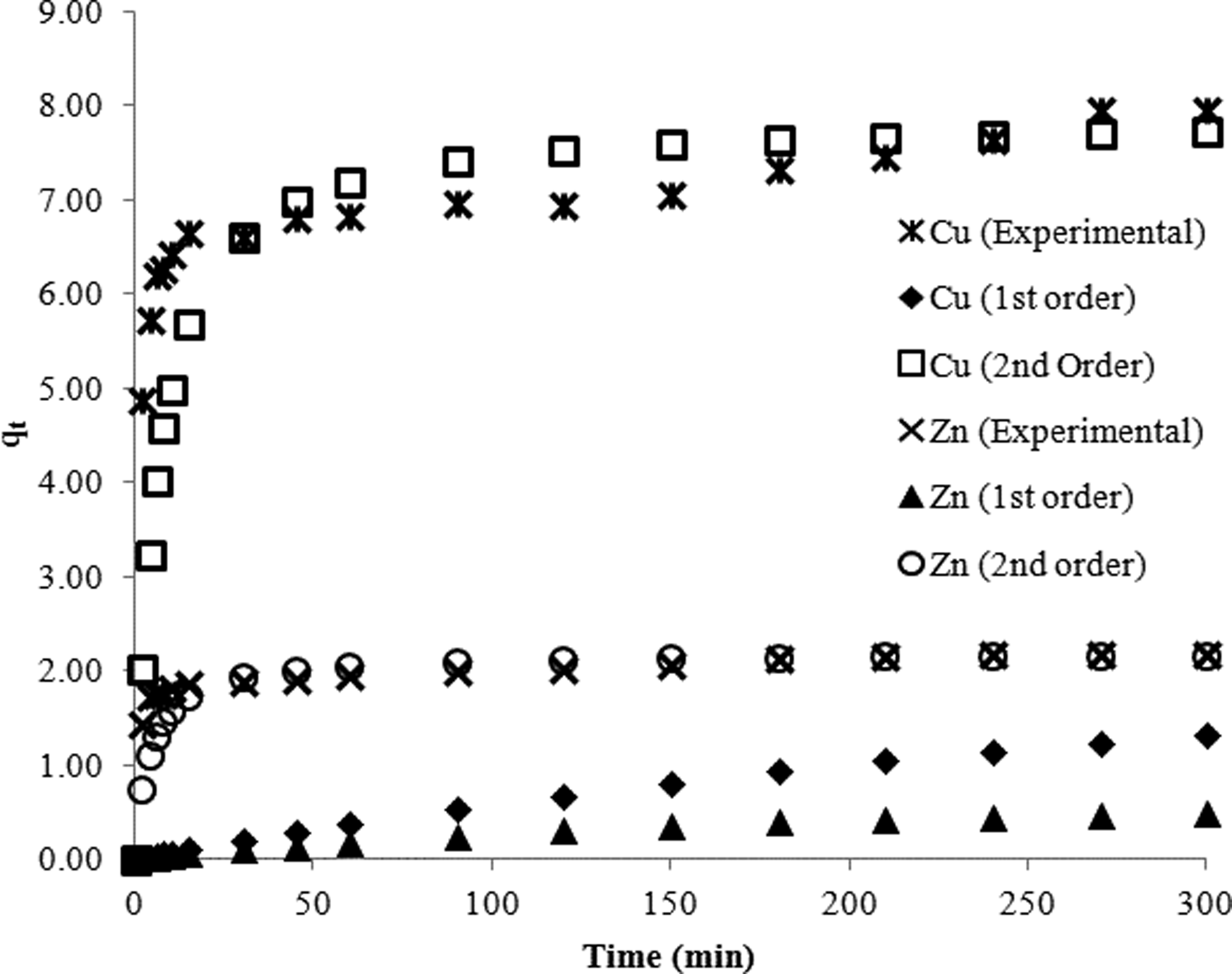
Pseudo first- and second-order kinetics plot for removal of Cu and Zn in binary system (CR dosage=1 g/L).
The possibility of intraparticle diffusion resistance affecting adsorption was explored by using the intraparticle diffusion model [Eq. (3)] (Weber and Morris, 1963):
where C is the intercept and kid is the intraparticle diffusion rate constant (mg·min0.5/g), which can be evaluated from the slope of the linear plot of qt versus t1/2. Intraparticle diffusion plot (Fig. 6) shows multilinearity between t1/2 and qt. These results imply that the adsorption processes involve more than single kinetic stage or sorption rate (Vaghetti, et al., 2009). Removal of Cu in single system and Zn in binary system undergoes double stage sorption on CR. But, Zn in single system and Cu in binary system adsorption occur in three steps. The first sharper region is the instantaneous adsorption or external surface adsorption (Hameed et al., 2009). So, the rate of uptake of heavy metal in this region is very high. The second region is the gradual adsorption stage where intraparticle diffusion is the rate limiting (Hameed et al., 2009). This stage occurs after the saturation of external surface of CR that is, completion of external surface adsorption. Then, the heavy metal enters into the pores of CR and adsorption takes place at interior surfaces of CR. The third step, viz. sorption of heavy metal by the biosorbent binding sites (Guo et al., 2003).
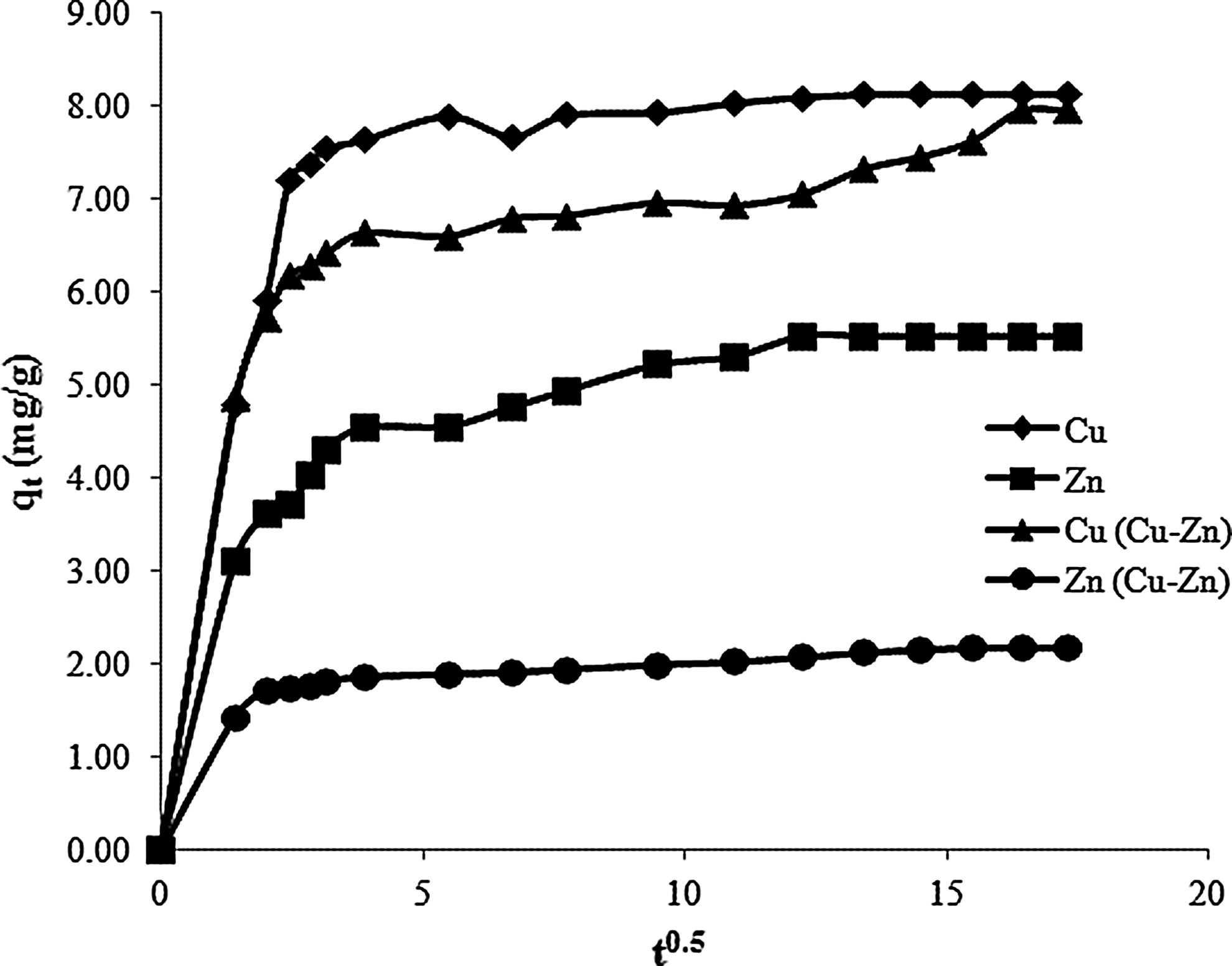
Intraparticle diffusion model plot for Cu and Zn removal by CR.
Effect of biomass dosage and isotherm models
The effect of biomass dosage on the biosorption of Cu and Zn ions, in both single and combined species conditions was studied using different biomass dosage in the range, 0.2–3 g/L (Fig. 7). An increase in the amount of the adsorbents leads to an increase in the amount of the heavy metal adsorbed, in both systems. But after a particular dose the change in heavy metal concentration is very less. The maximum biosorption of the metal ions was attained at about CR dosage of 2.6 and 2.2 g/L for Cu and Zn in single species system with maximum removal of 87% and 72% and 2.6 g/L for both Cu and Zn in combined species system with removal efficiency 88% and 35.4% respectively. After that the increase in removal efficiency is insignificant with respect to increase in CR dose. This is due to higher CR concentration; there is a very fast superficial adsorption onto the CR surface that produces a lower solute concentration in the solution than when CR dose is lower. Thus with increasing adsorbent dose, the amount of heavy metal adsorbed per unit mass of CR is reduced, thus causing a decrease in q e value (Han et al., 2007).
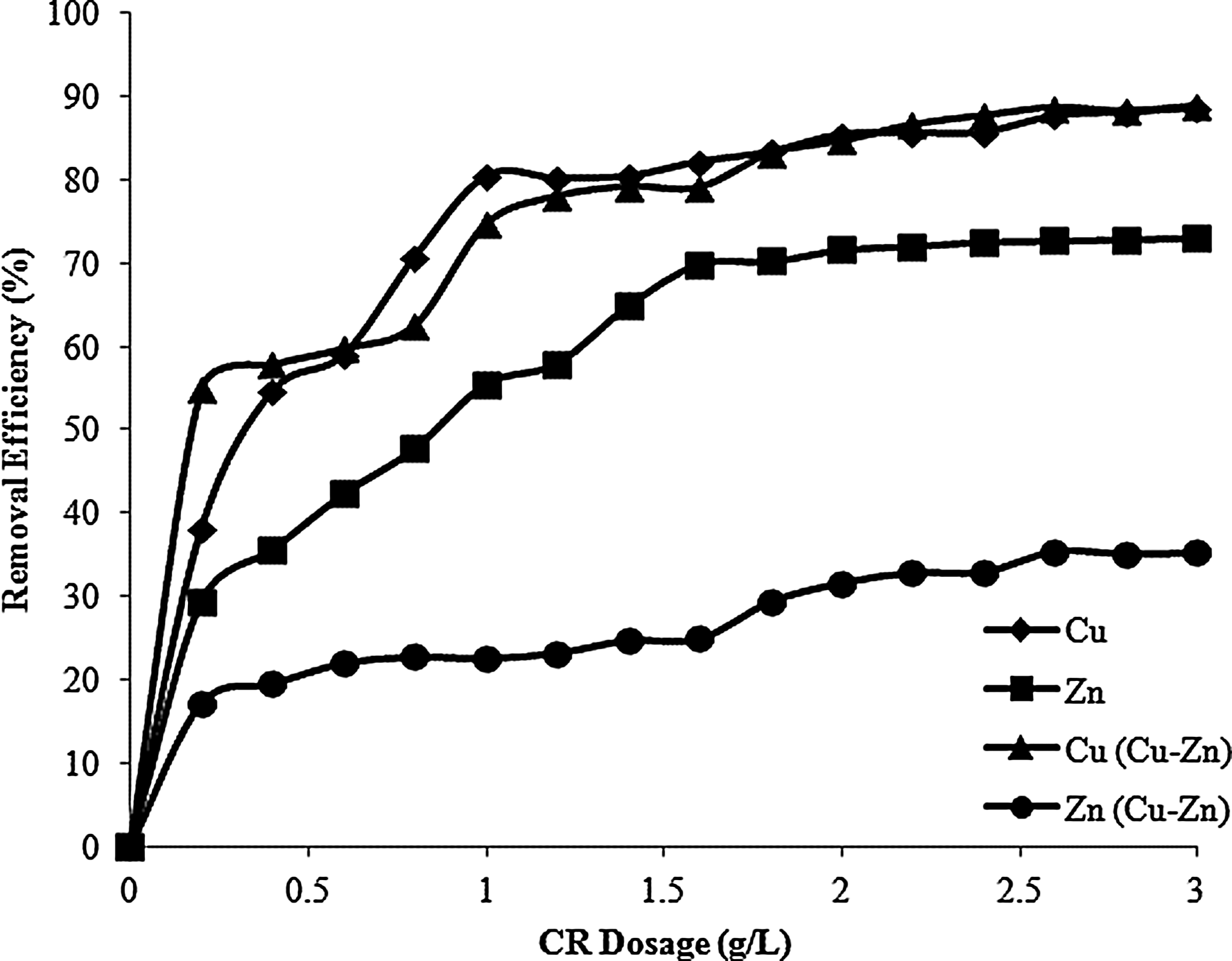
Effect of CR dosage on the uptake of Cu and Zn in single and binary system.
The adsorption data were analyzed by a regression analysis to fit Langmuir (Langmuir, 1915) and Freundlich isotherms (Freundlich, 1906). The linear forms of the above two isotherm models are expressed as follows:
where b is a constant that increases with increasing molecular size, qe is the equilibrium uptake of heavy metal, qmax is the amount adsorbed to form a complete monolayer on the surface, Ce is the concentration remaining in solution (mg/L), and K and n are constants depending on the temperature, adsorbent, and substance to be adsorbed.
The essential characteristics of the Langmuir isotherm can be expressed by a separation or equilibrium parameter, a dimensionless constant, which is defined by Equation (6) (Eren and Acar, 2006).
The value of RL indicates the type of isotherm to be either unfavorable (RL>1), linear (RL=1), favorable (0<RL<1), or irreversible (RL=0; Tofighy and Mohammadi, 2011).
The Freundlich and Langmuir adsorption isotherm plot for the single system of heavy metals are shown in Figs. 8 and 9. From Table 3, the maximum adsorption capacity of CR is found to be 500 mg of Cu/g and 208.33 mg of Zn/g of CR. The value of RL is found to be between 0 and 1 for a single system. This indicates that adsorption is favorable. The Freundlich constant “n” has values greater than or near to 1. This also indicates that adsorption is favorable in the single system.
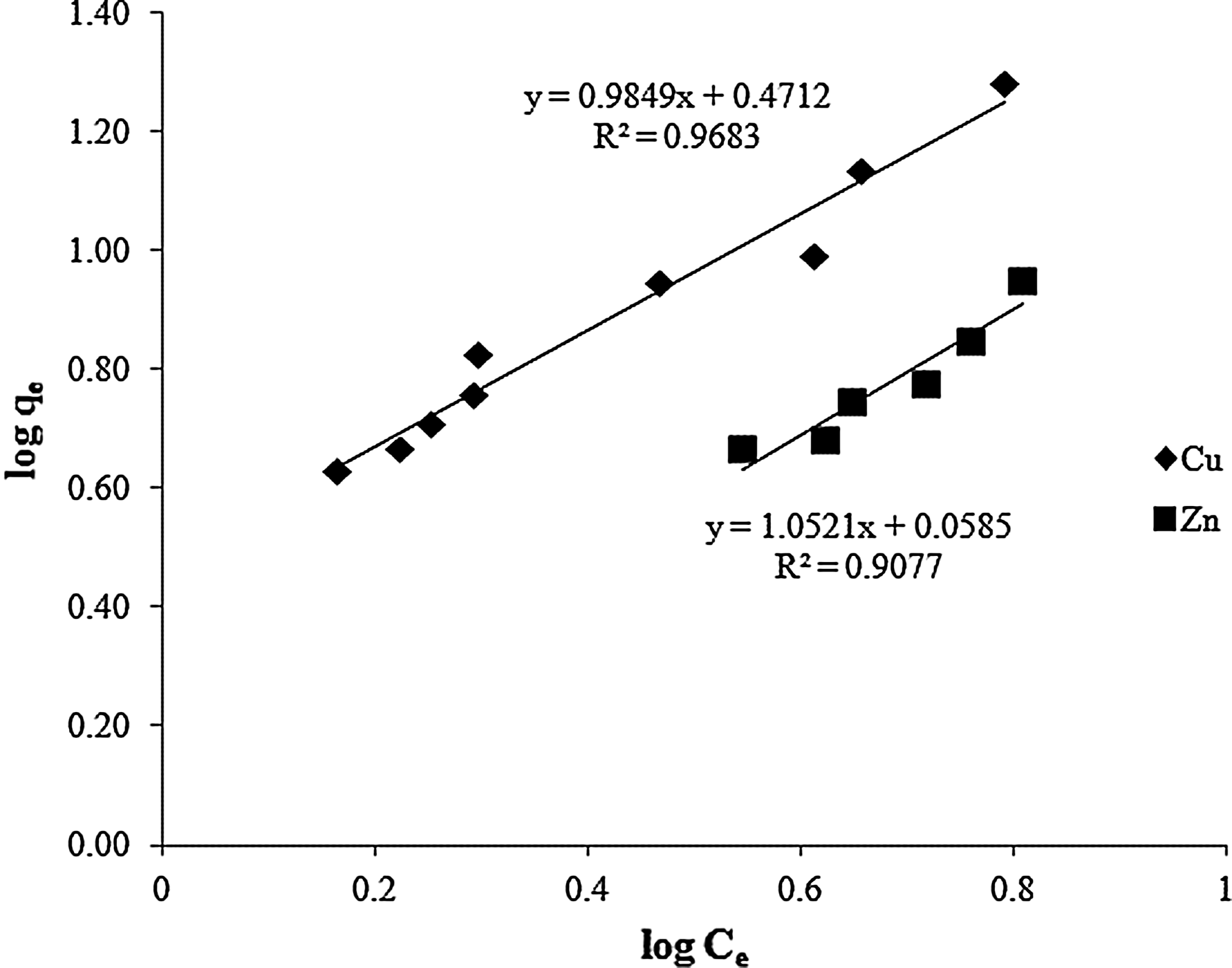
Freundlich isotherm plot for removal of Cu and Zn in single system.
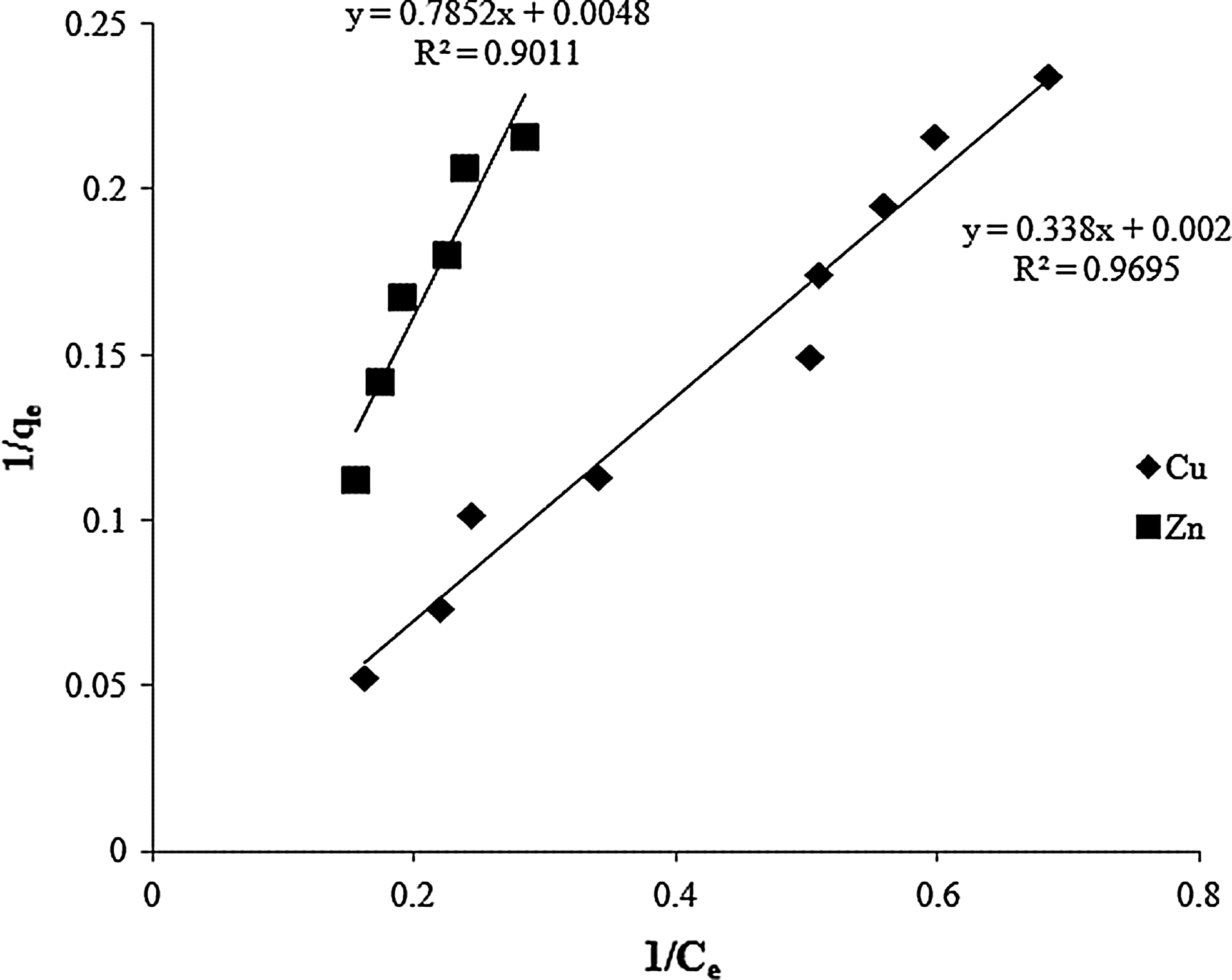
Langmuir isotherm plot for removal of Cu and Zn in single system.
The maximum adsorption capacity of various adsorbents for Cu and Zn adsorption in the single system together with the present study is given in Table 4. From Table 4, it was found that CR has a relatively large adsorption capacity compared with other adsorbents. This indicates that CR can be considered as promising material for removing Cu and Zn ions from aqueous solution.
Effect of solution pH on heavy metal adsorption
The influence of pH on adsorption capacity of CR was studied over a range of pH values from 2 to 12, and the results are shown in Fig. 10. It was observed from Fig. 10 that adsorption of both heavy metals increased with increasing pH, and maximum adsorption of Cu and Zn are obtained at pH 6 and 8 respectively. This is due to the surface complexation reactions, which are mostly influenced by the electrostatic force of attraction between heavy metals and the surface of the adsorbent (Nadaroglu et al., 2010). At lower pH values, heavy metal removal was inhibited, possibly as a result of the competition between hydrogen and metal ions on the sorption sites, with an apparent preponderance of hydrogen ions, which restricts the approach of metal cation as in consequence of the repulsive force (King et al., 2008). The behavior observed at pH 2 denotes a strong competition effect between the heavy metal and the H3O+ ion for the active sites of the adsorbent (Gomez-Tamayo et al. 2008). After pH 6 and 8, the removal of Cu and Zn decreased with increase in pH of the solution. This is due to the reduction in true biosorption of metal ions by the blockage of active sites by metal precipitation. The precipitation of Zn as hydroxide occurred at pH 7–12, while precipitation of Cu occurred at pH>6 (Gupta et al., 2010; Ferrah et al., 2011). However, Cu uptake was consistently higher than Zn uptake over the whole range of pH.
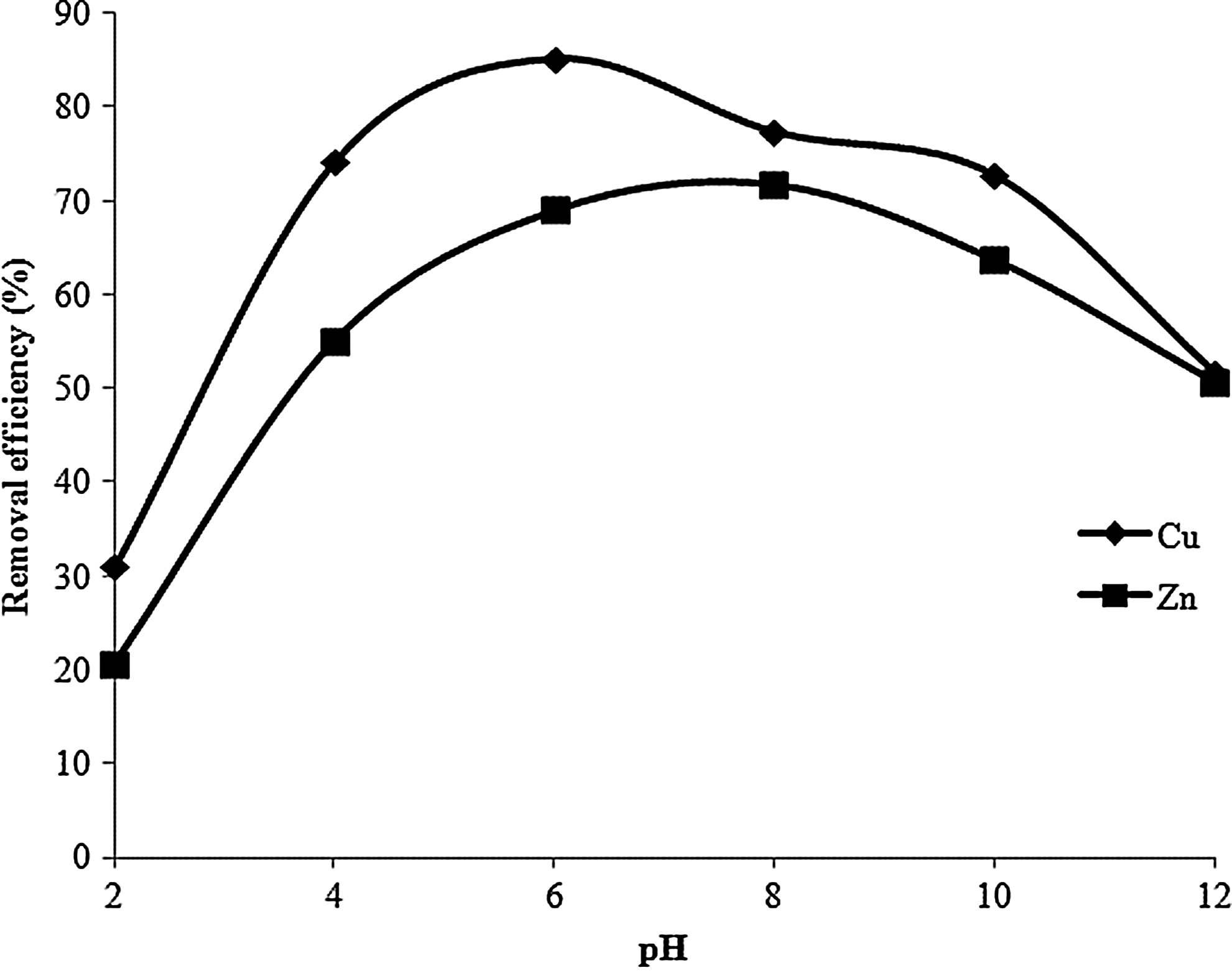
Effect of solution pH on the adsorption of Cu and Zn on CR.
Conclusions
This study confirmed that CR, an agricultural waste, is a good adsorbent for removal of heavy metal from aqueous solutions containing both single and multi-metal ion systems. Cu and Zn were very effectively removed from single and binary systems by CR. The kinetics of adsorption is similar (pseudo second-order) for both metals in single and combined systems. The Langmuir and Freundlich adsorption models were used for the mathematical description of the adsorption of Cu and Zn onto CR, and it was found that the adsorption equilibrium data fitted well to both models. The monolayer adsorption capacity of CR is found to be 500 mg Cu/g and 208 mg of Zn/g. This indicates that CR is a very good potential adsorbent for the removal of Cu and Zn from wastewater from metal processing, electroplating, and electrical and paint industries.
Footnotes
Author Disclosure Statement
No competing financial interests exist.