




Abstract
Abstract
Effects of two fungal additives used for improving settling of paper mill residue (sludge), was investigated. The laboratory-scale pilot reactor, equipped with two tanks—an anoxic and an aerobic—was fed by wastewater from an industrial paper mill and inoculated with industrial sludge. It was operated over 3 weeks with either additive containing three or four identified fungi species: Geotrichum sp., Trichoderma sp., Mucor sp., and Aspergillus sp. Several parameters were followed: settled sludge volume (SSV); sludge volume index; size of flocs; chemical oxygen demand (COD) removal; evolution of fungal cells; and bound and soluble extracellular polymeric substances (EPS). The COD removal was 86–95% throughout the pilot experiments. Both fungal additives showed a significant improvement of the SSV from ∼800–1000 mL/L to ∼200 mL/L after 20 days and an increase in the median floc sizes of >50%. The first improvement of settling observed after 5 days of fungal inoculation can be attributed to the filamentous nature of fungi immobilizing/entrapping the floc components; the second, after 20 days, can be attributed to enhanced production by sludge of bound EPS involved in cohesion of aggregates. However, fungal population decreased after 20 days of inoculation, likely due to unfavorable pH 7.7 in aerated tanks.
Introduction
M
Sludge is a complex biological structure consisting of microbial consortia embedded in an extracellular polymeric substances (EPS) network linked by bivalent cations (Wingender et al., 1999). EPS are the main components of the sludge, accounting for up to 50–90% of total sludge organic matter (Wingender et al., 1999). They retain a high level of water and affect sludge settling and sludge dewatering (Liu and Fang, 2003; Wilén et al., 2008).
Fungal cultures have been studied for the treatment of effluents from paper and pulp mills, from dying and textile industries, or from alcohol distilleries, which contain large quantities of toxic and intensely colored waste effluents (Pokhrel and Viraraghavan, 2004). Malaviya and Rathore (2007) reported an important reduction of color, lignin, and chemical oxygen demand (COD) values for paper mill effluents within the first 24 h using a fungal bioreactor. Taseli et al. (2004) obtained the dechlorination of pulp wastes and removed 76% of absorbable organic halogens and 61% of color using a continuous fungus-packed bed reactor. The ability of fungi to degrade different recalcitrant molecules is due to two types of extracellular enzymatic systems: hydrolytic and oxidative (Sanchez, 2009). Schroeckh et al. (2009) demonstrated a symbiotic interaction between fungi and bacteria; a specific activation of fungal secondary metabolism was reached by the presence of bacteria. Bacterial-fungal interaction showed a specific response related to low molecular weight molecules. Fungi have also been used with success in industrial-scale applications in sludge dewatering; for example, the MycET® technique (Nicaud, 2008).
Little information exists about the fungal impact on sludge settling, yet fungi are applied on an industrial scale in problematic cases. Alam and Fakhru'l-Razi (2003) showed that two filamentous fungi, Penicillium corylophilum and Aspergillus niger, were successfully used for the increase of settling: 86% of total solids were settled after 1 min of settling compared with 4% without fungi.
To better understand the action of fungi on sludge settleability, effects of two commercial fungal additives, A and B, was investigated. The originality of this study is the examination of EPS production by sludge. Indeed, EPS issued from microbial metabolism play an essential role in the floc structure binding components together.
Materials and Methods
Laboratory-scale pilot experiments
The laboratory-scale pilot reactor (Fig. 1), designed to approach the industrial treatment process in a real paper mill WWTP, consisted of an anoxic tank (30 L) and an aerobic tank (45 L), continuously agitated. Sludge and wastewater were delivered directly from the WWTP (sludge at the beginning of the experiment and wastewater once a week). The aerobic tank was inoculated with fresh activated sludge and was fed at a continuous rate of 3 L/h with fresh wastewater; recirculation of activated sludge was 3 L/h. Air was delivered only to the aerobic tank, and the oxygen concentration was regulated in two ranges: 2–3 mg/L (currently used in the WWTP) and 1–2 mg/L. The reactor rapidly achieved steady state after 48 h: pH 7.7 and biomass concentration of ∼3 g/L.
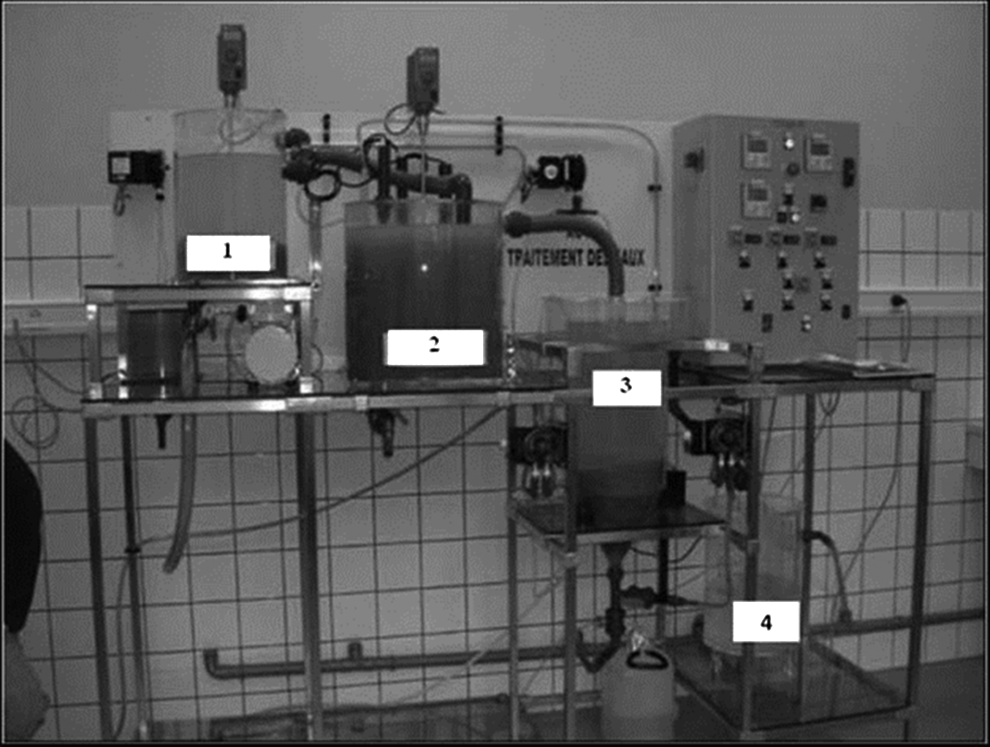
Laboratory-scale pilot reactor used for the fungal treatment of wastewater from paper mills. 1, anoxic tank; 2, aerobic tank; 3, clarifier; 4, tank containing treated outlet water.
The pilot reactor was operated for 4 additional days at a constant biomass concentration before fungi were injected into the aerobic tank. For better adaptation of fungi, fungal inoculation was performed as recommended by the supplier during 4 consecutive days: 50 mL of fungal additive was added the first day, and 5 mL/day the following 3 days. The first introduction of fungal additive was considered the start-up phase of the experiment. The reactor was operated with fungal additive A for 23 days, and it was then emptied and cleaned to restart a new experiment with the fungal additive B for another 23 days under the above-mentioned conditions. During each experiment, nutrients were supplied to the biomass (25% NH4+ at 4.5 mL/day and 75% phosphoric acid at 1 mL/day), and carbon was provided by the effluent rich in starch and cellulose.
Fungal cultures
The identification of the fungi in the commercial additives was done in Petri dishes on malt agar (Botton et al., 1985) and by microscopic analysis (Olympus CX 41). Enumeration of fungi was done in Petri dishes by triplicate. Chloramphenicol glucose agar was used because chloramphenicol inhibits the growth of bacteria, thus giving a specific response for fungal account. Total flora concentration was assessed using plate count agar.
Sludge characterization
The sludge sampled in the aerobic tank was analyzed by the standard methods (APHA et al., 2005): mixed liquor volatile suspended solids and mixed liquor suspended solids (MLSS) by the 2540 G method; settled sludge volume (SSV) and sludge volume index (SVI) were determined, respectively, by the 2710 C and 2710 D method.
Size distribution of the flocs was established using the Malvern Mastersizer S equipped with 2 mW He–Ne laser (in the range of 0.05–900 μm). The measurements were made at a constant rate of the peristaltic pump on the diluted sludge using its own supernatant.
EPS analysis was performed (at 25°C) by size exclusion chromatography (Zorbax 250 series GF-250 column, 25 cm×9.4 mm; Agilent Technologies) and the column was calibrated by protein and polysaccharide standards, as described by Avella et al. (2010). Before analysis, the sludge was centrifuged for 15 min at 4500g to separate the biomass (settled pellets) from the supernatant. Analysis of the soluble EPS was performed by direct injection of the supernatant in the chromatographic column. Bound EPS were extracted from settled pellets according to the Frolund et al. (1996) protocol, with a modification in extraction time from 1 to 4 h instead. The extracted bound EPS were then injected into the chromatographic column.
COD concentration of the pilot effluent was measured by the ultraviolet–visible light spectroscopic method using the commercial kit Nanocolor® COD 300 and COD 1500 (Macherey Nagel).
Results
Commercial additives A and B were identified as follows:
A: Mucor sp., 103 fungi/mL; Trichoderma sp., 103 fungi/mL; and Geotrichum sp., 102 fungi/mL.
B: Mucor sp., 103 fungi/mL; Trichoderma sp., 104 fungi/mL; Geotrichum sp., 105 fungi/mL; and Aspergillus sp., 104 fungi/mL.
In the presence of the fungal additives A or B, the effect of two oxygen concentrations on COD removal and biomass activity in terms of EPS production was examined. Using any of the fungal additives, COD removal (Fig. 2) was constant between 86% and 95% throughout the reactor's operation time. Soluble and bound EPS content and sludge settling were not dependent on the variation of oxygen concentration; pH 7.7 and conductivity 0.9 μS/cm remained constant during all the experiments.

Percentage of COD removal over reactor operating time. COD, chemical oxygen demand; DO, dissolved oxygen concentration.
The evolution of fungal cells over the reactor's operation time (3 weeks) is presented in Fig. 3. The growth of fungi was slightly more significant with additive B than with additive A. This can be related to the higher initial fungal concentration in additive B. With both additives (A or B), from about the 20th day, the concentration of fungi decreased rapidly, and no fungi were detected on the 23rd day (detection limit <10 fungi/mL). The concentration of Geotrichum in the experiment with additive A between the 7th and 12th days was under the detection limit; the absence of Geotrichum in the experiment with additive B—on the 10th day—should be considered as an analytical problem. In spite of the fungal decay, the total flora assessed in the reactor liquor remained constant at around 106 microorganisms/mL.
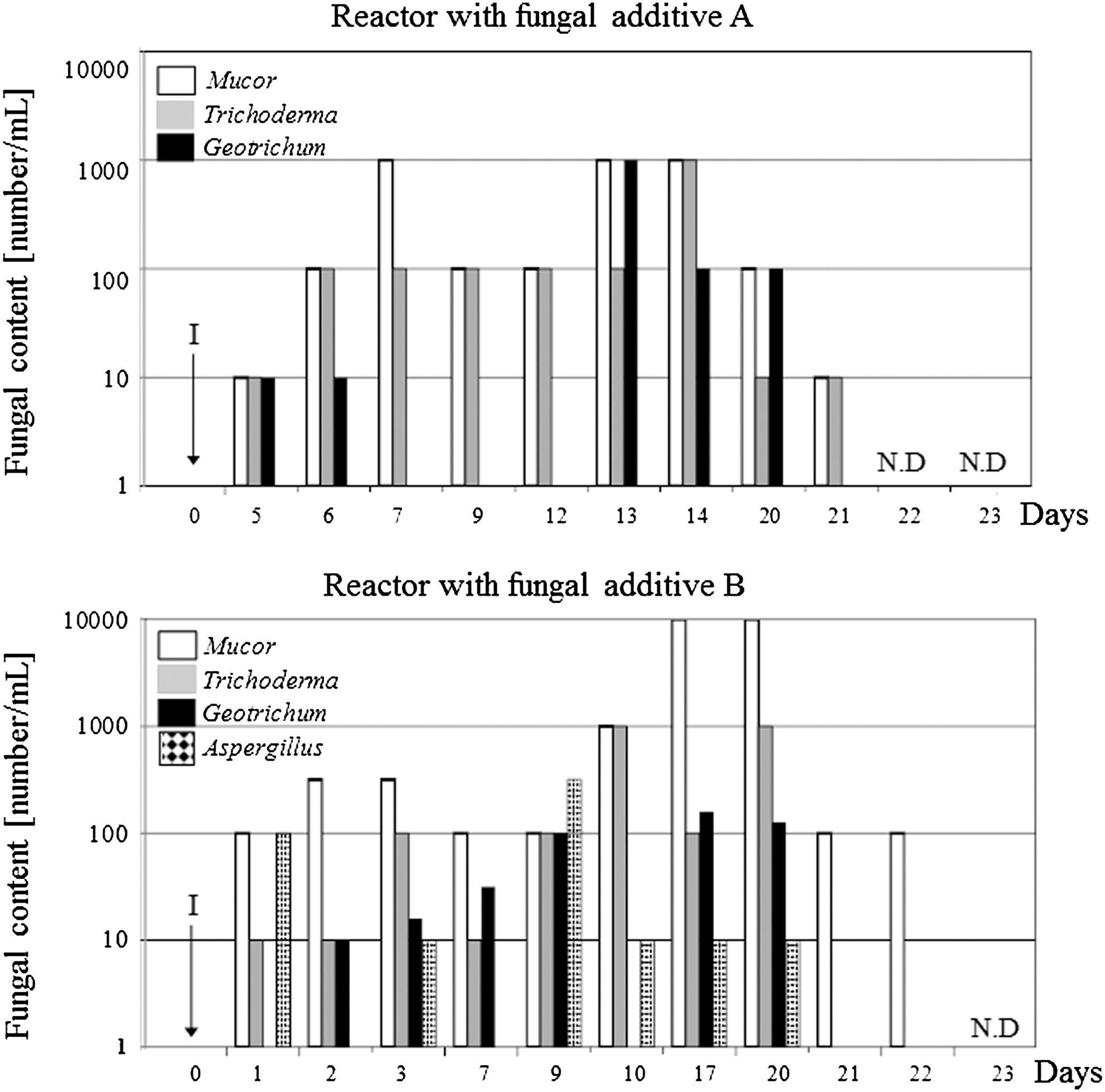
Evolution of fungal content over reactor operating time (number of fungi/mL). I, fungi inoculation; N.D, not detected.
After 20 days of reactor operation in the presence of additive A, the diameter of the flocs increased from the initial median size (with standard deviation) of 30±5 μm to 60±12 μm, and when additive B was used from 70±15 μm to 110±35 μm.
To evaluate the settling properties of sludge, SSV and SVI were measured. The sludge with SVI<150–200 mL/g presented an acceptable settling in WWTP practice (according to local regulations). The disadvantage of SVI is its dependence on biomass content (MLSS). Figure 4 shows that despite SVI of ∼200 mL/g, sludge settling was poor with high SSV at the beginning of the experiments: 5 days were necessary to improve sludge settling, SSV decreased from 1000 mL/L (additive A) and 760 mL/L (additive B) to ∼600 mL/L. An excellent settleability with SSV of 200 mL/L was reached in both experiments after 20 days of fungal inoculation.
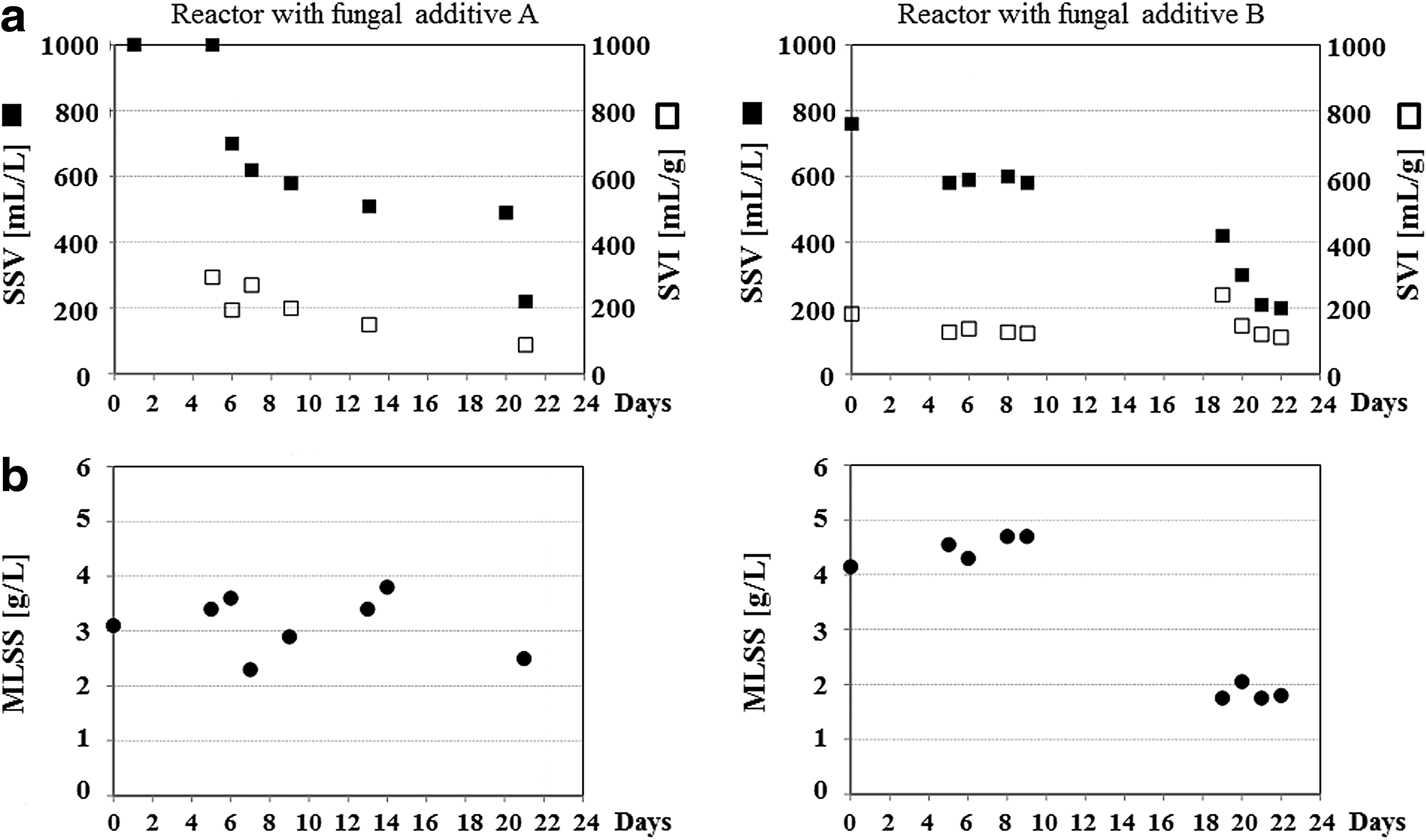
Evolution of
The evolution of EPS content over the pilot operating time is presented in Fig. 5; bound and soluble EPS are normalized per gram of biomass. Garnier et al. (2006) reported that bacterial strains may have different kinetics of EPS production. In our study, the difference observed in EPS content between additives A and B could be related to the fungal strains present: with additive B, EPS bound in flocs and soluble in the liquid phase increased from about the 9th day compared with additive A. However, for both additives, the maximum EPS content was observed mainly after 20 days, but it is not possible to distinguish the EPS origin (bacteria, fungi, or both).

Evolution of soluble and bound EPS content (normalized per gram of mixed liquor volatile suspended solids) over the reactor operating time in experiments with fungal additives A and B. EPS, extracellular polymeric substances.
The molecular size distribution of EPS macromolecules was evaluated by size exclusion chromatography. The chromatogram gives information about the size distribution of macromolecules. Each peak can correspond to an individual polymer molecule or to a mixture of various chemical species with the same hydrodynamic sizes. Figure 6 shows a typical chromatogram of bound and soluble EPS. Bound EPS exhibited two large macromolecule families (peaks 1 and 2) and one smaller oligomer family (peak 3), while soluble EPS showed only two peaks: one of large macromolecules and the other of small oligomers. During both experiments (with additive A or B), the EPS chromatographic profiles remained identical with the same number of peaks and a constant ratio of peak areas. However, the total EPS content (total chromatogram area) increased mainly at the end of the experiments (Fig. 5). The increased content of bound EPS involved in floc cohesion may be considered as an important factor responsible for enhanced settling.
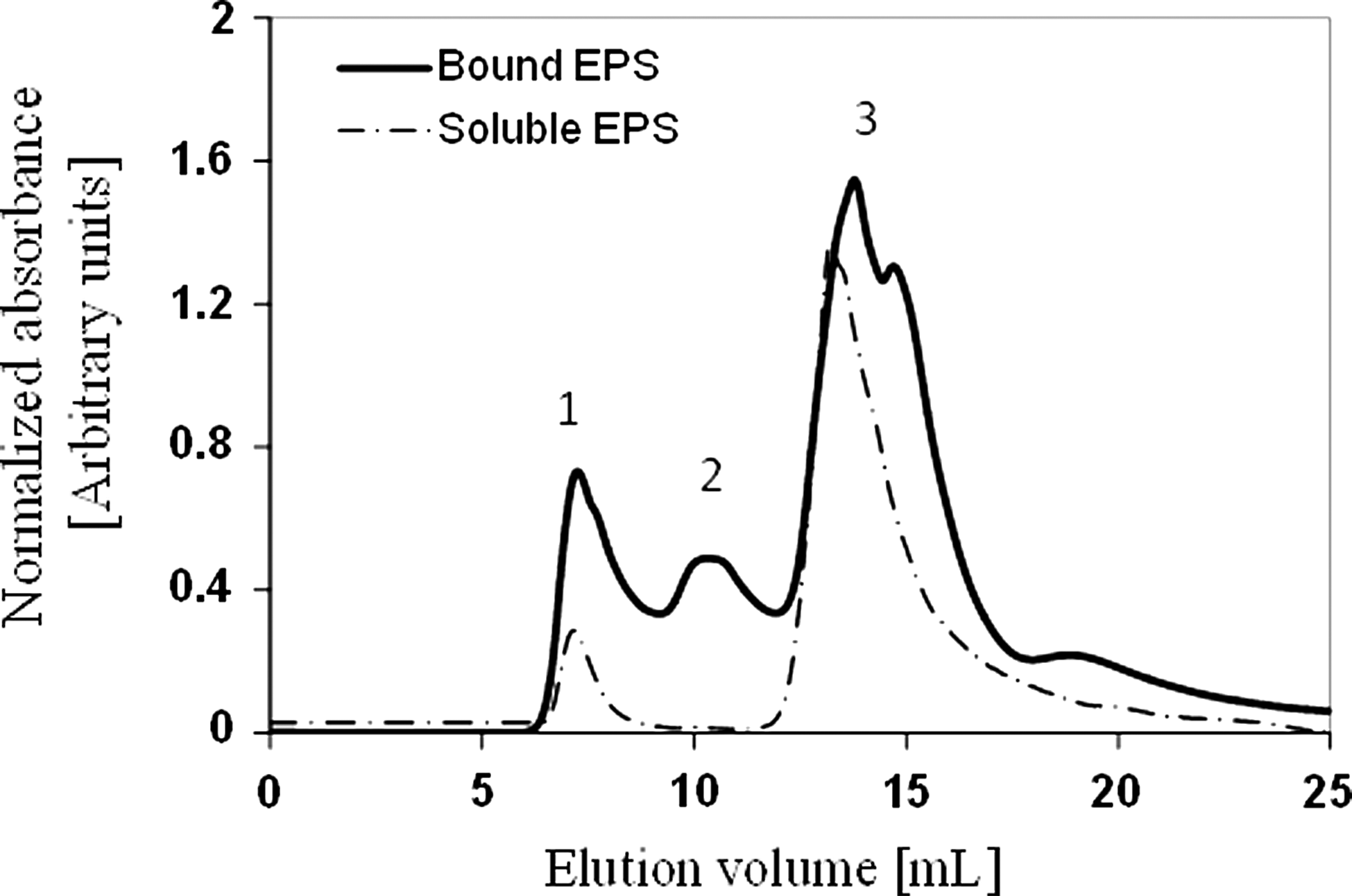
A typical chromatogram of EPS (bound and soluble). The macromolecular sizes correspond to protein or polysaccharide calibration as follows: peak 1, proteins >670 kDa or polysaccharides ∼212 kDa; peak 2, proteins ∼44.3 kDa or polysaccharides ∼11.8 kDa; peak 3, proteins ∼5.7 kDa or polysacchardies ∼0.18 kDa.
Discussion
Classical models of biological flocs (e.g., Keiding and Nielsen, 1997) include a certain number of filamentous microorganisms as a significant part of the floc structure necessary to link floc components. On the other hand, the overabundance of filamentous microorganisms leads to floc disintegration and settling problems. Alam and Fakhru'l-Razi (2003) showed that the filamentous fungal strains immobilized or entrapped the solid components of sludge by their filamentous structure; consequently, larger floc diameters and better settling were obtained. In our study, settleability was significantly improved: the first decrease of SSV was after 5 days of fungal inoculation with additives A or B, and the filamentous fungal structure could be at the origin of the first improvement of settling. The second improvement, after 20 days, was concomitant with the increase in content of EPS bound in the flocs; EPS play an important role in cohesion of aggregates. It is likely that both phenomena—the filamentous fungi structure and the higher EPS content—contributed to build dense aggregates with increased median floc diameters (up to 50%). Figure 7 presents a typical microscopic observation of the sludge at the beginning and at the end of experiments with additives A and B.
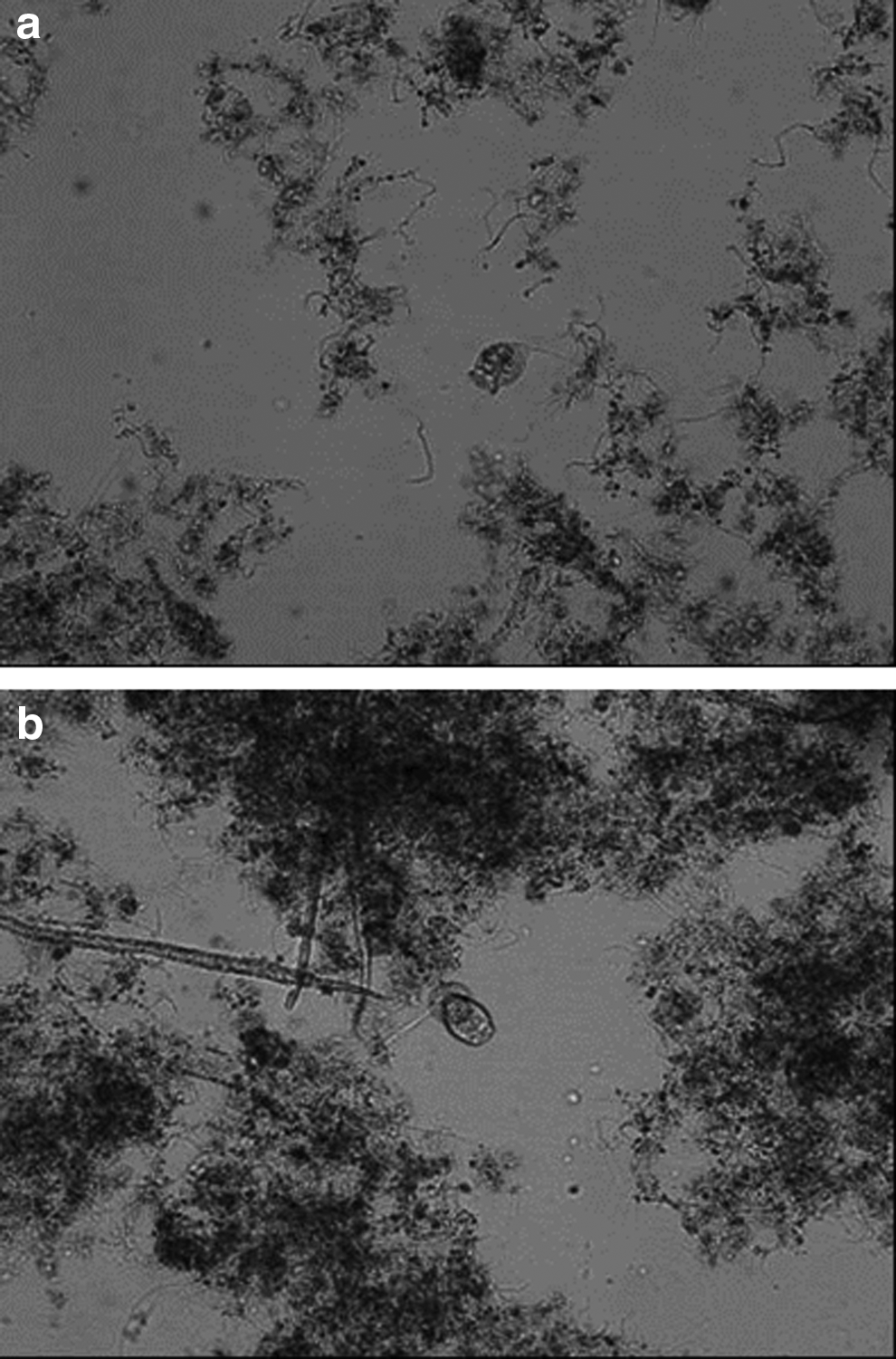
Microscopic photographs of flocs (magnification×100):
The increased EPS content occurred simultaneously with fungal population decay. Fungi are acidophilic and psychotropic species requiring specific conditions such as low pH (around 5–6) and temperatures between 15–20°C (Kavanagh, 2005). In this study, pH=7.7 and temperature of 25°C in the aerated tank were close to those in industrial plants and not optimal for fungi. This may explain their decay. Unfavorable conditions for fungi in industrial WWTPs explain the necessity of their continuous or point addition when applied. Like bacteria, fungi also produce EPS depending on microenvironmental conditions. Different researchers (Aguilera et al., 2008; Papinutti, 2010) have observed that in hostile conditions (desiccation, pH, and heavy metal presence), when the number of fungal cells decreased, the amount of EPS was enhanced. In our study, the observed enhancement of EPS content can be attributed either to fungal action in the unfavorable environment or to bacteria; however, it was not possible to distinguish them [since bacteria may also increase EPS production as a response to hostile conditions (Avella et al., 2010)]. What is certain is the fact that the fungal–bacterial consortium produced more EPS involved in the floc structure. More et al. (2010) reviewed an exceptional capacity of fungal cultures to secrete proteins occurring with comparatively little increase in cell biomass. This corroborates the observation in our experiments: EPS content increased, while biomass remained constant or decreased.
Specially, EPS bound in flocs could be assigned as responsible for better sludge settleability. Indeed, Avella et al. (2011), considering sludge coming from different treatment plants, showed that the best settling was systematically observed for sludge containing high amounts of bound EPS in the floc.
Conclusion
This study has provided a new insight for better understanding of the effectiveness of fungal additives in sludge settling. The experiments in a laboratory-scale pilot reactor were performed with paper mill wastewater and sludge in conditions similar to a paper mill WWTP. Compared with the original sludge settling with SSV of 800–1000 mL/L, settling was upgraded to excellent values of 200 mL/L using commercial fungal additives.
Enhanced settling could be attributed to two aspects related to fungal presence: first, the filamentous structure of fungi contributing to the structure of the flocs by entrapping the solid components; second, the increased content of EPS, playing an important role in the cohesion of microbial aggregates. It was not possible to distinguish whether the enhanced EPS amount was caused by fungal or bacterial activity. However, their concomitant action proved effective in our study, as observed when commercial additives are applied in WWTP practice. Fungal additives may offer an environmentally friendly way to remedy sludge settling problems in critical situations, despite the disadvantage that fungi have to be added to the biological reactor because of fungal cell decay.
This study pointed out the role of EPS involved in better settling. Additional investigations can be performed to identify the origin of EPS in the fungi-bacteria sludge system. However, this kind of study should be performed on the basis of two laboratory-scale pilots operating simultaneously, overcoming technical equipment limitations.
Footnotes
Author Disclosure Statement
No competing financial interests exist.