




Abstract
Abstract
Arsenic (As) is in the first rank of dangerous and toxic chemicals. A phytotoxicity bioassay was used to select plant species for phytoremediation that were able to remove As from a contaminated site. Ludwigia octovalvis (Jacq.) P.H. Raven has been described as a plant that can survive on a contaminated site in Malaysia. In this study, the phytotoxicity and uptake of As by L. octovalvis were examined at various As concentrations of 5, 22, and 39 mg/kg in a pilot reed bed system. The total extractable As and bioavailable As concentrations were determined using the wet digestion method and a solution of ethylene diamine tetraacetic acid disodium (Na2-EDTA) respectively. Results showed symptoms of phytotoxicity at all As concentrations after 42 days of exposure as the ratio of plant numbers to total mass of As was low. An increase in As-induced symptoms of phytotoxicity occurred with increasing As concentration in the spiked sand and with days of exposure. The concentration of the bioavailable As in the spiked sand decreased, and percentages removed were 76.5%, 72.0%, and 62.9% for initial As concentrations of 5, 22, and 39 mg/kg respectively. Maximum As uptake in stems reached approximately 1092.6±106.7 mg/kg on day 14 at an As concentration of 39 mg/kg, while the maximum As uptake in roots and leaves on day 28 was 794.5±110.4 and 883.9±110.97 mg/kg respectively. An increase in As uptake by whole L. octovalvis plants occurred with increasing As concentration in the spiked sand, giving evidence that As can induce toxic effects on L. octovalvis when it is taken up and accumulated in its tissues.
Introduction
A
Phytotoxicity is a term used to describe the toxic effect of a compound on plant growth. Such damage may be caused by a wide variety of compounds, including heavy metals. A phytotoxicity bioassay was used to select plant species for phytoremediation that were able to reduce heavy metals in a contaminated site. Phytoremediation is the use of green plants to remediate various media (soil, water, or sediment) that are impacted by different types of contaminants (organic and inorganic) that interact with microorganisms (ITRC, 2001). Phytoremediation has been proposed as a cost-effective, engineering-economical, environmentally friendly, and alternative technology to remediate arsenic-contaminated soils (Lasat, 2002).
In this study, Ludwigia octovalvis plants were used. L. octovalvis has been described as a plant that can survive on a contaminated site containing hydrocarbon and heavy metals such as As and lead (Pb) in Malaysia (Rahman et al., 2009). According to Almansoory et al., (2013), L. octovalvis is a good plant for remediating hydrocarbon in contaminated soil. Based on a previous study on plant screening at a contaminated site in Malaysia (data not published), L. octovalvis is one of the plants that was found to be a potential As accumulator plant, with a value of 1.7 for its Biological Accumulation Coefficient (BAC). According to Bini et al. (1997), plants with BAC values ranging from 1 to 10 can be considered as accumulators. BAC indicates the ratio of the heavy metal concentration in the plant's tissue (mg/kg) to its concentration in soil (mg/kg). To calculate BAC values, the following equation is used:
Based on a previous study (Titah et al., 2013a), L. octovalvis can be used in As phytoremediation. L. octovalvis is a suffruticose shrub or perennial woody herb growing to 2 m in height with a stem diameter of 1 cm. L. octovalvis plants are supported by sinker roots, one of which may be the taproot, and long, white, lateral roots that grow just under the soil surface. In Malaysia, it is known locally as “buyang samalam,” “lakom ayer,” and “pujang malam.”
The aim of this study was to determine the effect of a single exposure to As on L. octovalvis and determine As uptake by this plant in a pilot reed bed system. This is one part of a phytoremediation project to use native plants to remediate heavy metals and hydrocarbons. A reed bed system is designed to simulate the microbiological, chemical, and physical processes that occur naturally. A reed bed system works through the cleansing power of three elements involving soil dwelling microbes, the media's physical and chemical properties (soil, sand, or gravel), and finally the plants themselves (Pinkson-Burke, 2005).The parameters of temperature, dissolved oxygen, oxidation-reduction potential (ORP), pH, and chemical oxygen demand (COD) were recorded to observe physicochemical changes in the reed bed system. The toxic effects of inorganic As depend on the As speciation in the media (Peshut et al., 2008), which depends on the pH (Masscheleyn et al., 1991) and redox conditions (Marin et al., 1993).
Materials and Method
Design of pilot reed bed
Pilot reed beds were constructed of fiberglass tanks, the walls of which were 0.5 cm thick and black in color with dimensions of 92 cm×92 cm×60 cm (Fig. 1). A layer of medium gravel (Φ in 2 cm) was placed in the bottom of the reed bed, and another layer of fine gravel (Φ in 1 cm) was placed as the top layer. The thicknesses of both the medium and fine gravel layers were 10 cm. The As spiked sand was placed into the reed bed at a depth of 30 cm. All the reed beds were located in a greenhouse at the Universiti Kebangsaan Malaysia.

Design of the pilot reed bed.
Propagation of the plant species
L. octovalvis species were propagated from seeds in the greenhouse using garden soil with a ratio of 3:2:1 for top soil:organic material:sand. The seeds were planted in plastic crates (37 cm×27 cm×10 cm). After 3 weeks, individual seedlings were transferred into polybags. All of the plants used in the study were 8 weeks old. The temperature in the greenhouse was kept at 38°C (day)/29°C (night), with a light period of 12 h and illumination of 25,000 Lux.
Spiked sand preparation, phytotoxicity testing, and sampling
Based on analysis, the levels of macronutrients in the sand were 29.2 mg/kg nitrate (N), 1.2 mg/kg potassium (K), 13.0 mg/kg sulfate (SO42−), 86.5 mg/kg calcium (Ca), and 7.4 mg/kg magnesium (Mg), whereas micronutrients were present at 6.4 mg/kg chlorine (Cl−), 5.5 mg/kg iron (Fe), 0.04 mg/kg zinc (Zn), and 1.62 mg/kg manganese (Mn). Trace elements were not detected. The sand was spiked with an As salt, sodium arsenate dibasic heptahydrate (AsHNa2O4·7H2O; Sigma Aldrich, St. Louis, MO). The following four different concentrations of As were prepared: 0 mg/kg (as the control), 5, 22, and 39 mg/kg. The As concentrations were selected based on a range finding test as reported by Titah et al. (2012).
After the sand was spiked with As, each reed bed was planted with 50 healthy L. octovalvis plants, and the reed beds were watered every 2 days to maintain the sand moisture by adding water to the same level in the sand. The moisture content of the spiked sand was monitored using a moisture meter (Decagon, Pullman, WA), while pH, temperature, and oxidation-reduction potential (ORP) were monitored using a pH-meter (model pH 300; Cyberscan, Singapore. Determination of dissolved oxygen (DO) used a potable DO-meter (model YSI 550A; YSI, Yellow Springs, OH). Chemical oxygen demand (COD) determination used a Hach COD reactor (Hach, Loveland, CO) with reagent for the low range (0–150 mg/L), and results were read using a DR/2010 spectrophotometer (Hach).
Three plants from each concentration (i.e., each pilot reed bed) were harvested after 0, 14, 28, and 42 days of exposure. The parameters measured to observe plant growth were the biomass weight, the lengths of the roots, and the lengths of the stems. In addition, samplings of the spiked sand and leachate were conducted after 0, 14, 28, and 42 days of exposure. All samplings were conducted in three replicates.
Analysis of arsenic
The concentration of bioavailable As was determined using extraction with a solution of 0.05 mol/L disodium ethylene diaminetetra acetic acid (Na2-EDTA; Quevauviller, 1998). The total extractable As was determined using the wet digestion method (USEPA, 1996). The plant materials (roots, stems, and leaves) were dried prior to the extraction procedure. The As extraction from the plants was performed using a modified wet digestion method (Plank, 1992; Kalra 1998; Temminghoff and Houba, 2004). The As levels in spiked sand, leachate, and plant were later analyzed using an Optima 7300DV Inductively Coupled Plasma-Optical Emission Spectrometer (ICP-OES) instrument (Perkin Elmer, Waltham, MA). The percentage of total extractable As removed, bioavailable As in the sand, and leachate content over time were determined as follows:
where [As] is the concentration of As, t0 is the time at initial exposure (day 0), and tn is the specified time (day n).
Determination of rhizobacterial populations
Rhizobacterial population of L. octovalvis was also observed to see if there was any relationship to phytotoxicity. The method used to determine the rhizobacterial population from the roots of L. octovalvis was based on several previously published reports (Harley and Prescott, 2002; Abou-Shanab et al., 2005; Cakmakci et al., 2007; Mittal and Johri, 2007).The determination of the rhizobacterial population was performed on the first and final days of exposure. The standard plate count method—the most widely used for determining bacterial number—was used (Harley and Prescott, 2002).
Statistical analysis
All the experimental data were subjected to an analysis of variance (ANOVA) using SPSS Statistics for Windows v17.0 (SPSS, Inc., Chicago, IL). All the experiments were performed in triplicate to compensate for experimental errors, and are reported as mean±standard deviation (SD). Statistical significance was defined as p<0.05.
Results and Discussion
Monitoring of physical and chemical parameters
Physical parameters such as moisture, pH, T, ORP, and DO, and chemical parameters (COD) were recorded through the phytotoxicity test as depicted in Fig. 2 for all treatments. In general, the results showed that the moisture ranged from 37.3±0.4% to 41.6±3.3%. The average pH ranged from 7.2±0.1 to 8.0±0.2, in the normal range for plant growth (OECD, 2006). Mean temperature values in the spiked sand ranged between 25°C and 28°C throughout the 42 days, normal for a tropical region. According to Szogi et al. (2004), the conditions in a reed bed system can be distinguished with respect to whether it is aerobic or anaerobic through DO and ORP measurements. According to Myers et al. (2006) and Ndegwa et al. (2007), the relationship between DO and ORP is linear, that is, when DO increases, ORP also increases. The DO values ranged between 5.8±0.1 and 7.9±0.0 mg/L. DO concentrations of 0 mg/L occurred as the ORP reached −170 mV (Myers et al., 2006). According to Akkajit and Tongcumpou (2010), the negative ORP shows the system is in a reducing state. Under anoxic conditions, the ORP ranges between −50 and −130 mV (Yu et al., 2001). The results of this study showed the treatment environment was between aerobic and anoxic, with the ORP ranging between −8.2±0.9 and −67±0.1 mV. Changes in ORP and pH can greatly affect the As species present in the soil solution (Smith et al., 1998). According to Valverde et al. (2011), As(V) is more dominant in soil containing a lot of oxygen, and according to Peshut et al. (2008), the inorganic As speciation can affect the toxic effect of As. The toxic effect of As in L. octovalvis increased when bioavailable As(V) increased, since more As(V) could be taken up by the plants. According to ATSDR (2007), As uptake and bioaccumulation by plants follows the trend As(V)>As(III)>monomethyl arsonic acid (MMA)>dimethylarsinic acid (DMA). The relationship between DO and COD is inverted (Maitera et al., 2010), that is, the lower the DO, the higher the COD value (Fig. 2e, f). The statistical analysis of the physiochemical data showed no significant difference (p>0.05) for moisture. However, pH, temperature, and ORP, DO, and COD parameters showed significant differences (p<0.05) with time.
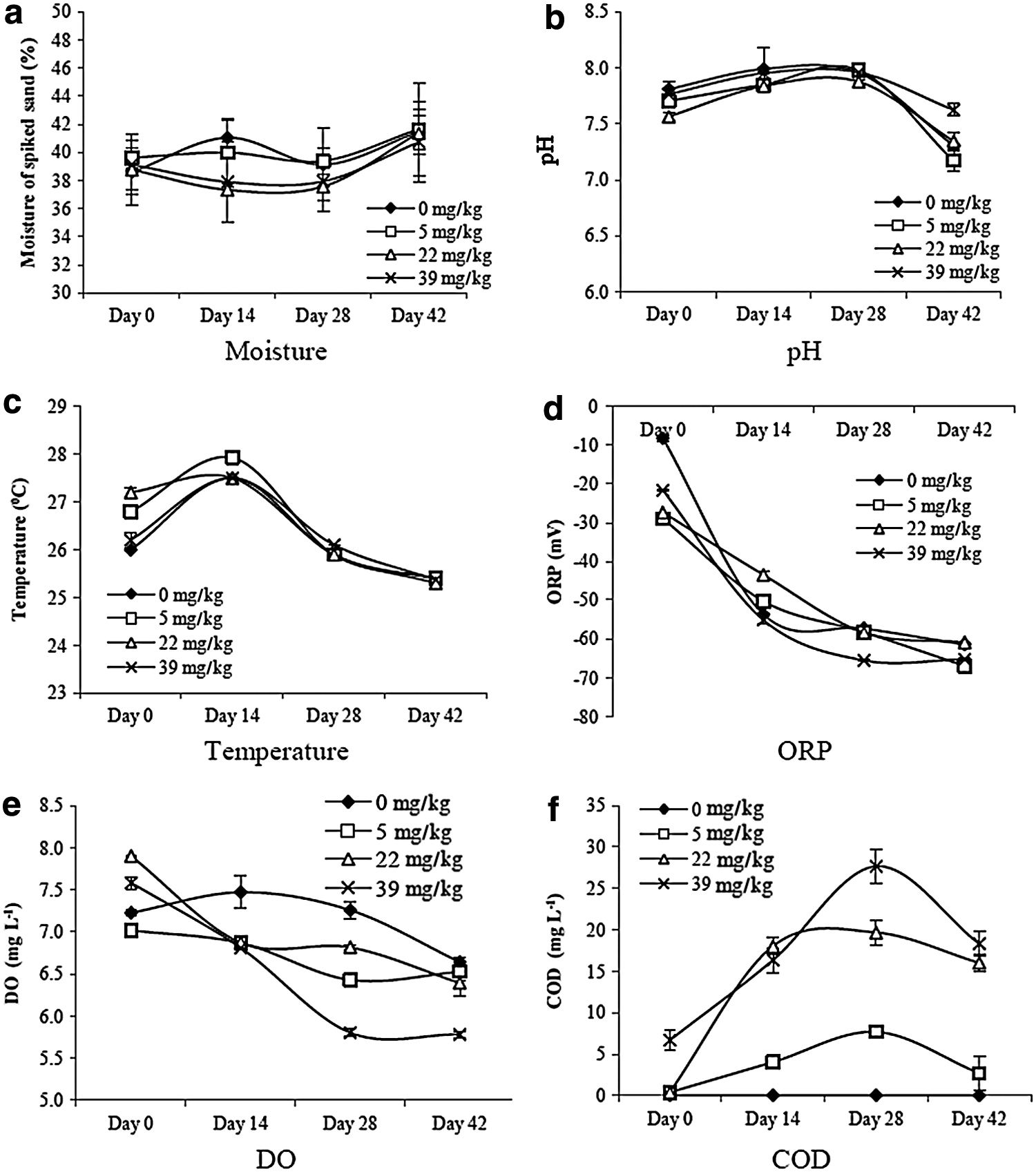
Physicochemical parameter variations during the arsenice (As) phytotoxicity test with Ludwigia octovalvis (Jacq.) P.H. Raven in the reed bed system
Observation of toxic effect
Based on physical observation, all plants were healthy after 42 days in the control reed bed. Symptoms of phytotoxicity such as wilting and senescent leaves occurred at a concentration of 5 mg/kg, while wilting and senescent leaves as well as dried and dead plants occurred at concentrations of 22 and 39 mg/kg (Fig. 3). According to Kabata-Pendias and Pendias (2001), the symptoms of As toxicity to plants are variously described as leaf wilting, inhibition of root growth, and plant death. According to Dahmani-Muller et al. (2000), heavy metal translocation to root, stems, leaves, and finally to senescent leaves is considered a detoxification process to assist in the removal of As from the plant. Senescent leaves were one indication of the plant's detoxification mechanisms.
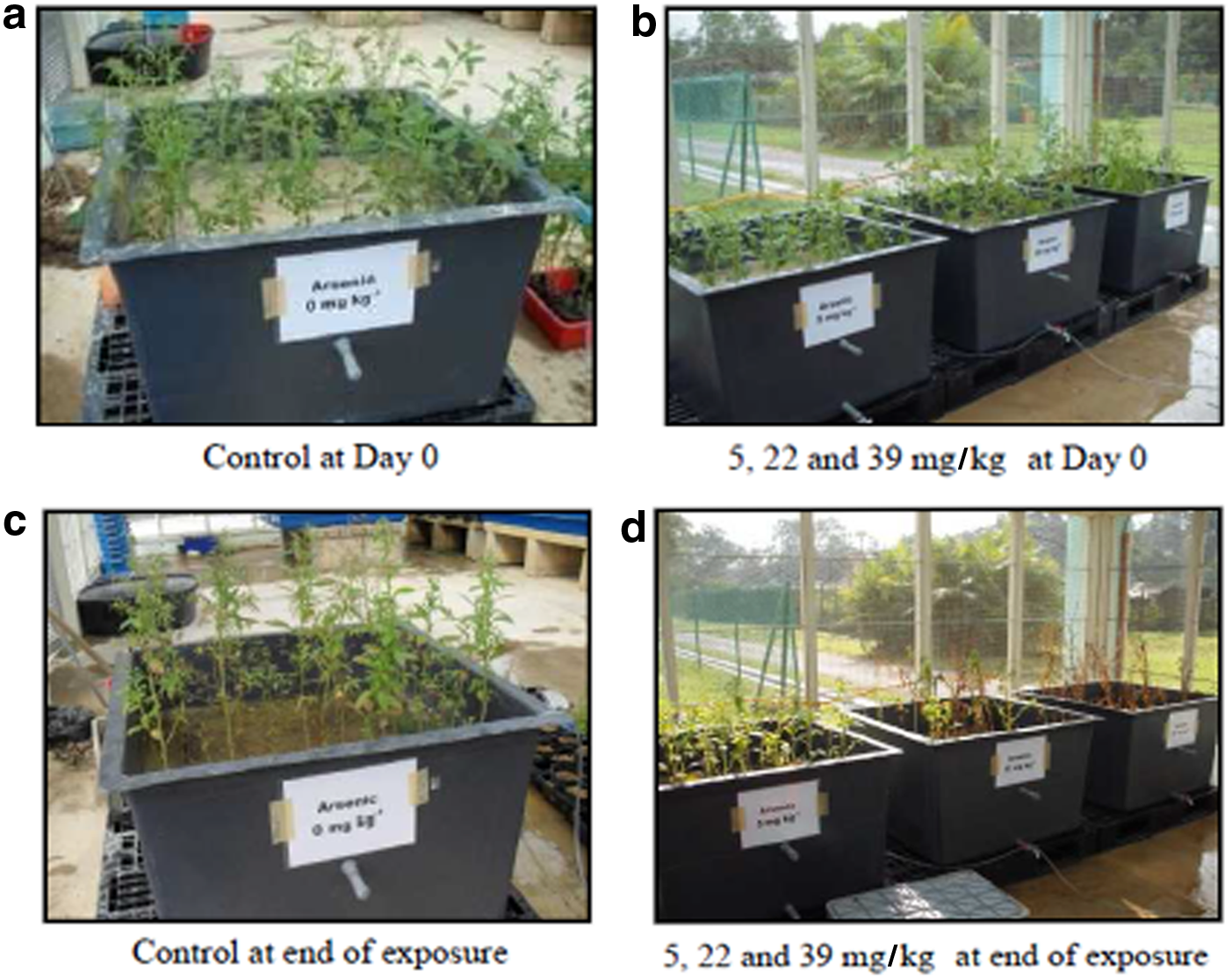
Images of L. octovalvis during the experiment:
An increase in symptoms of As phytotoxicity occurred with increasing As concentration in the spiked sand and with increasing days of exposure. Based on Titah et al. (2013b), the ratio of plant numbers to As total mass can be used to determine the level of toxic effects against L. octovalvis. This ratio can be determined using the following equation:
The ratio of the number of L. octovalvis plants to the total mass of As in spiked sand (g) was 21, 4, and 2 for As concentrations of 5, 22, and 39 mg/kg respectively. The ratios were initially low. The L. octovalvis plants could survive up to 39 mg/kg when the ratio of plant numbers to As total mass (g) rose above 20.
Biomass can be used as an indicator of the overall health of plants growing in the presence of heavy metals (Fayiga et al., 2004). The primary impact of As toxicity on plants is a reduction in growth (Kabata-Pendias and Pendias, 2001). According to Rattanawat et al. (2011), a nominal change in dry biomass production indicated severe phytotoxicity due to heavy metal poisoning. The results of the fresh and dry weight measurements of biomass showed increases in the control. The biomass fresh weight still showed an increase up to day 42 during exposure to 5 mg/kg As. However, the increase in biomass fresh weight was less than that of the control. The decline in biomass fresh weight at As concentrations of 22 and 39 mg/kg is shown in Fig. 4a. Biomass fresh weight showed increases up to day 28 during exposure at 22 mg/kg or 39 mg/kg but decreased thereafter. Based on the ANOVA, the weight of fresh biomass differed significantly between the control and any of the As spiked sands at day 42. The biomass dry weight on Fig. 4b was significantly different (p<0.05) when compared to the control.

Effects of As on fresh and dry weight of L. octovalvis plants as compared to control. Vertical bars indicate±SD of three replicates. The same letter indicates no significant difference at p>0.05 at the same concentration of As in spiked sand at the same sampling time.
Based on Fig. 5a, root length increased in the control and at an As concentration of 5 mg/kg, while it showed a declining trend at As concentrations of 22 and 39 mg/kg after day 28 of exposure. The increases in root length at a concentration of 5 mg/kg were also low compared with the changes in root length in the control. However, the results of the statistical analysis showed that the root length was significantly different (p<0.05) between the control and any concentration of As spiked sand. The stem lengths were also significantly different between the control and As spiked sand (Fig. 5b).
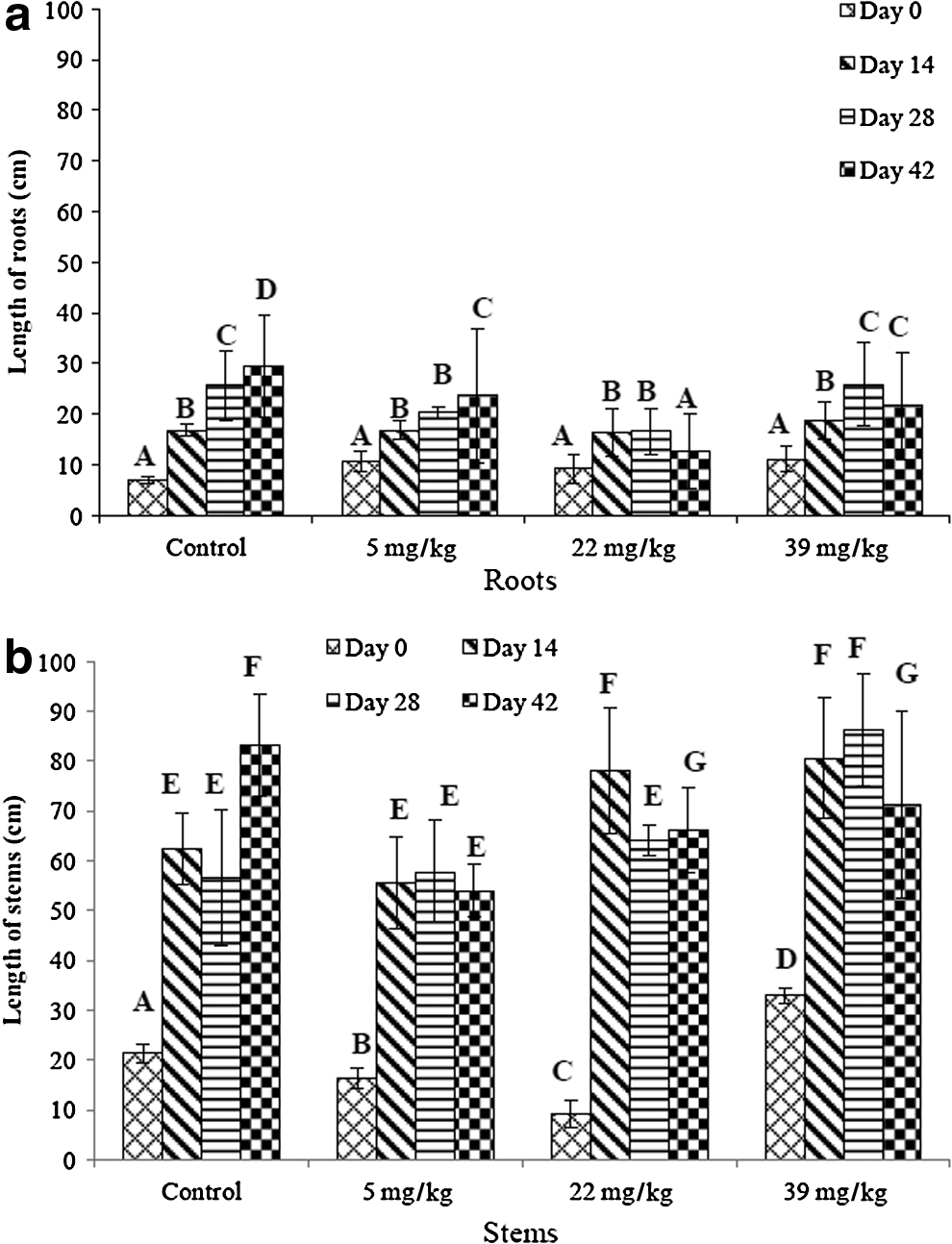
Effects of As on
Removal of bioavailable As
The concentration of bioavailable As in spiked sand decreased during the experiment in all of the As spiked sands (Fig. 6). Based on the ANOVA, the concentration of bioavailable As in spiked sand showed a significant difference (p<0.05) according to time. The removal percentages of the bioavailable As in the spiked sand were 76.5%, 72.0%, and 62.9% for As concentrations of 5, 22, and 39 mg/kg respectively. The greatest removal occurred with an As concentration of 5 mg/kg. The decreasing bioavailability of As in the spiked sand was expected, as the As was taken up and accumulated by L. octovalvis. As predicted, the results of plant extraction showed detectable As in the plants after exposure to As, and As was not detected in the control plants. However, based on the mass balance of As, As was lost. The mass balance was calculated based on the initial concentration of total extractable As in the spiked sand compared to the residual extractable As in the spiked sand, the residual bioavailable As in the spiked sand, the residual As in the leachate, and the As taken up by L. octovalvis after 42 days (Fig. 7). Figure 8 depicts the output of mass balance for the As (%) in the pilot reed bed system at the end of the exposure (42 days). According to Aksorn and Visoottiviseth (2004), the percentages of As lost in As treatment systems were approximately 20–40%. Another previous study by Onken and Adriano (1997) proved that microorganisms in the sand produced volatile As through a reduction process from inorganic As to a methylated form of As. This situation was expected, as the microorganisma could affect the As in the system. Based on the determinations of rhizobacterial populations, it showed that the indigenous bacteria grew in the rhizophere of L. octovalvis in the control and in all As spiked sands. Rhizosphere bacteria or rhizobacteria, also known as plant growth promoting rhizobacteria (PGPR), could play an important role in phytoremediation. They are capable of aggressively colonizing plant roots and promoting plant growth (Khan et al., 2009).

Concentration of bioavailable As in spiked sand. Vertical bars indicate±SD of three replicates. The same letter indicates no significant difference at p>0.05 at the same concentration of As in spiked sand at the same sampling time.

Schematic diagram of As mass balance in reed bed system.

Mass balance of As in the pilot reed bed system at the end of the exposure.
As leaching from the reed bed increased, beginning on day 0 up to 14 days of exposure, while from day 28 until the end of the experiment (42 days) the leaching decreased at each As concentration (Fig. 9). The statistical analysis showed a significant difference in As leaching at p<0.05. The irrigation conducted every 2 days could be a possible factor affecting the mobilization of As from the solid phase to the solution phase (Huynh et al., 2008). After 28 and 42 days of exposure, the As in the leachate decreased due to the As uptake by the plants and the added water. The percentages of As removal in the leachate were 98.9%, 84.1%, and 73.3%, with initial As concentrations of 5, 22, and 39 mg/kg respectively. The highest percentage of As removal in the leachate occurred at the lowest As concentration.
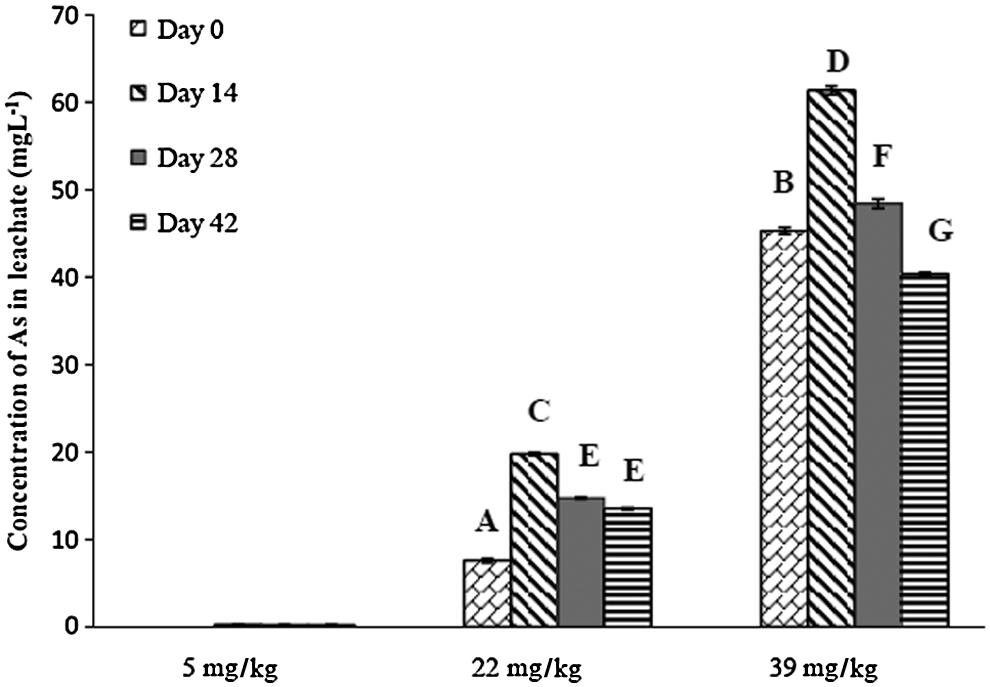
Concentration of As in the leachate. Vertical bars indicate±SD of three replicates. The same letter indicates no significant difference at p>0.05 in the concentration of As in spiked sand at the same sampling time.
Population of rhizobacteria
The total culturable rhizobacteria in the control was 8.2×10¹⁰ CFU/mL on day 0, but it had decreased by the end of the experiment (42 days; 9.9×10⁸ CFU/mL). Similarly, the total culturable rhizobacteria in the As spiked sand decreased. The decreases in total culturable rhizobacteria were from 1.1×10¹¹ to 3.6×10⁸ CFU/mL, 2.8×10¹⁰ to 3.5×10⁴ CFU/mL, and 3.4×10¹⁰ to 2.5×10⁴ CFU/mL for 5, 22, and 39 mg As/kg, respectively. The decreasing number of rhizobacteria in the control was due to insufficient nutrients for rhizobacterial growth. However, the decreases in total rhizobacteria in the As spiked sand were likely due to insufficient nutrients, as well as the toxic effect of the As on the rhizobacteria. Both forms of As (bioavailable and total) significantly inhibited the soil microbial community, but the bioavailable As exerted a greater inhibitory effect compared to the total As in the soil (Ghosh et al., 2004). According to (Smith et al., 1998), As may have a direct influence on microbial populations present in the soil, and decreases in microbial populations have been reported in soils that have been polluted with As compounds. The declining number of rhizobacteria could also indicate a decreasing diversity in the rhizobacteria. According to Giller et al. (1998), there are detrimental effects upon soil microbial diversity and microbial activities (indexes of microbial metabolism and soil fertility) in metal-polluted environments. Based on a study by Xiong et al. (2010), As contamination decreased the metabolic diversity of rhizobacteria. However, the decrease in microbial diversity showed that only As-tolerant rhizobacteria were able to survive. Microorganisms have developed mechanisms to cope with a variety of toxic metals for their survival in environments enriched with such metals (Martin-Laurent et al., 2004).
Arsenic uptake by L. octovalvis
Figure 10 illustrates As uptake and accumulation by L. octovalvis. An increase in As uptake by L. octovalvis occurred with increasing As concentration in the spiked sand. Based on the ANOVA, the As uptake showed no significant difference (p>0.05) between the control and As concentration of 5 mg/kg. However, there was a significant difference (p<0.05) between the control and As concentrations of 22 and 39 mg/kg. Phytostabilization occurred at a low concentration of As, since the As concentration in roots was higher than in stems. According to Moreno-Jimenez, Penalosa, et al. (2009), plant species with high As accumulation in roots and low root decomposition confirm the prospects for long-term phytomanagement and phytostabilisation of As. However, phytoextraction has a role with higher concentrations of As. Among all the concentrations used, the maximum As uptake during the exposure was 1092.6±106.7 mg/kg in the stems of L. octovalvis at the highest As concentration (39 mg/kg) after 14 days of exposure, while the maximum As uptake in roots and leaves was 794.5±110.4 and 883.9±110.97 mg/kg on day 28 respectively. However, almost all the L. octovalvis became wilted and dried at As concentrations of 22 and 39 mg/kg, based on physical observation, as the As uptake increased. Even when the L. octovalvis wilted and dried, the plants continued to take up and accumulate As. The two mechanisms responsible for As transport from the growth medium to plant roots were mass flow and diffusion (Bondada and Ma, 2003). Uptake of As is typically through the root–soil interface, driven by the water potential gradient between the air and the root system (Nicholson, 2002). Plants may utilize two separate systems to take up As: passive uptake through the apoplast, and active uptake through the symplast (living cell; Bondada and Ma, 2003; Concenco and Galon, 2011). Passive uptake means that nonactively living parts of plant cells are involved in apoplastic space transport. Ions, including soluble As species, move apoplectically with the influx of water through the root hairs to the cortex. The ions are barricaded from entering the stele and instead are forced into the protoplasm where they are transferred to vessels via the pericycle (Punz and Sieghardt, 1993). Once in the vessels, they can be transported throughout the shoot. To overcome the plasma membrane barrier, specific protein carriers are responsible for shuttling ions across and into the cell (Nicholson, 2002).
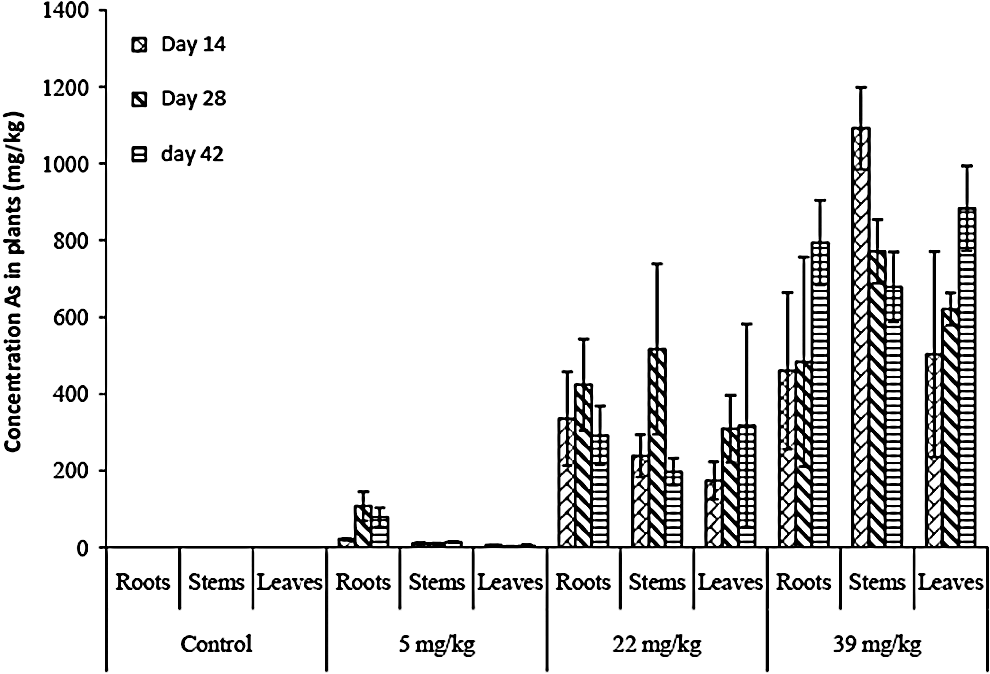
Uptake of As exposed to L. octovalvis. Vertical bars indicate±SD of three replicates.
Conclusions
In the present study, an increase in symptoms of As phytotoxicity occurred with increasing As concentration in spiked sand and with increasing days of exposure. A lower ratio of plant numbers to As total mass showed an increasing toxic effect. The removal percentages of the bioavailable As in the spiked sand were 76.5%, 72.0%, and 62.9% with As concentrations of 5, 22, and 39 mg/kg respectively. The study indicated that As can be taken up by L. octovalvis. The maximum As uptake reached was 1092.6±106.7 mg/kg in the stems on day 14, while the maximum As uptake in roots and leaves was only 794.5±110.4 and 883.9±110.97 mg/kg respectively on day 28. An increase in As uptake by whole L. octovalvis plants occurred with increasing As concentration in the spiked sand.
Footnotes
Acknowledgments
The authors would like to thank Tasik Chini Research, Universiti Kebangsaan Malaysia (UKM), and the Ministry of Higher Education, Malaysia, of UKM-KK-03-FRGS 0119-2010 for funding this research, and the Ministry of National Education of the Republic of Indonesia for providing a doctoral scholarship to the first author.
Author Disclosure Statement
No competing financial interests exist.