




Abstract
Abstract
This work dealt with the integrated application of struvite precipitation and biological treatment of the supernatant liquor after autothermal thermophilic aerobic digestion (ATAD). To the best of our knowledge, no feasibility study of NH4-N and PO4-P removal from ATAD supernatant by struvite precipitation has been performed before. Furthermore, it was worthwhile and interesting to evaluate the biological treatability of combined wastewater, in which the struvite supernatant was mixed with sewage wastewater. Batch experiments were conducted to examine the effects of pH, dosage of magnesium and orthophosphate, and the addition of preformed struvite deposits as a seeding material on the removal of NH4-N and PO4-P from the ATAD supernatant of sewage sludge. The struvite precipitation experiments showed that pH was an important factor in the simultaneous removal of NH4-N and PO4-P. It was noticeable that the high concentration of heavy metals in ATAD supernatant liquid could significantly inhibit NH4-N removal during struvite precipitation. An overdose of orthophosphate outstandingly enhanced NH4-N removal, but decreased PO4-P removal. When the preformed struvite was added (5 g/L) as a seeding material, the settled sludge volume decreased to less than half. It was revealed that the optimal volume ratio of the struvite supernatant to sewage wastewater should be up to 1:100 maximum (the average influent NH4-N loading rate of 0.135 kg NH4-N/m3 per day) to prevent inhibition of nitrification when the combined wastewater is applied to biological systems.
Introduction
D
Although the ATAD system has the above-mentioned advantages, its relatively high digestion temperature causes the production of high concentrations of ammonium (NH4+) and orthophosphate (PO43−) in the supernatant liquid (Juteau et al., 2004; Agarwal et al., 2005; Juteau, 2006; Borowski and Szopa, 2007) due to the proteinaceous cellular material undergoing fermentation. Most of the ammonia nitrogen (NH4-N) and phosphate produced during digestion of municipal sewage sludge are generally returned to the biological nutrient removal (BNR) system, and this could negatively affect the process performance unless accounted for or treated separately. It was reported that recycled flow from the dewatering of autothermal thermophilic aerobically digested biosolids, contains high NH4-N concentrations that can increase the wastewater influent load by 15% to 20%, thus seriously deteriorating the process performance (Tchobanoglous et al., 2003). Specifically, in South Korea, the appropriate handling of the digested supernatant liquid has been an ongoing issue since 2012, when more stringent effluent criteria for total nitrogen (T-N) and total phosphorus (T-P) were applied to sewage treatment plants (STPs).
To solve the problem, the precipitation of NH4-N and PO4-P by forming magnesium ammonium phosphate (struvite, MgNH4PO4·6H2O) would be attractive in treating the supernatant liquid. Struvite crystallizes as a white orthorhombic crystalline structure, which is composed of magnesium, ammonium, and phosphate in equal molar concentrations. However, to the best of our knowledge, no feasibility study about using struvite precipitation for the removal of ammonium and phosphate from the ATAD supernatant has been tested before, although some previous work dealt with struvite precipitation of anaerobically digested liquids (Hill and Grasso, 2002; Yoshino et al., 2003; Uludag-Demirer et al., 2005; Türker and Çelen, 2007; Jin et al., 2009; Quan et al., 2010; Song et al., 2011), swine wastewater (Laridi et al., 2005), and industrial wastewater (Chimenos et al., 2003). Therefore, a case-by-case study of uses for struvite precipitation would be important because the optimum conditions vary depending on wastewater characteristics and experimental conditions, as revealed in many studies.
Specifically, it would also be worthwhile and interesting to evaluate the biological treatability of combined wastewater, in which the struvite supernatant was mixed with sewage wastewater in four different volume ratios, to find the optimum volume–mixture ratio of struvite supernatant to sewage wastewater. This is because the digestion liquid is often returned to the BNR system to further reduce the ammonia nitrogen and phosphate. It should be noted that until now there has been no study on the effect of recycling struvite supernatant on the biological treatability of a main stream system.
The present study was therefore aimed at investigating the feasibility of struvite precipitation in removing NH4-N and PO4-P from the digestion liquid of a dual digestion system, where a thermophilic aerobic reactor (TAR) was combined with an anaerobic digester (AD; the AD is followed by the TAR). In the study of struvite precipitation, the evaluations were mainly focused on the following parameters: (1) pH, (2) optimum dosage of magnesium and orthophosphate, and (3) addition of preformed struvite as seeding material. Finally, the effects of recycling struvite supernatant to the BNR system were investigated by adding it to sewage wastewater.
Materials and Methods
Operation of a pilot-scale dual digestion system
The pilot-scale, dual digestion system was installed in Daejeon STP (South Korea) as illustrated in Fig. 1. A mixture of waste activated sludge (WAS) and thickened primary sludge was used to feed the system. The dual digestion system was mainly composed of the AD and TAR. Their volumes were 15 and 5 m3 and the solid retention time (SRT) was 50 and 17 days, respectively. The TAR was operated in microaerobic conditions by providing pure oxygen gas with a flow rate of 0.5 m3/h. Under microaerobic conditions, the average concentration of dissolved oxygen (DO) was approximately 1 mg/L. The purpose of TAR is to biologically oxidize the residual organics in anaerobically digested slurry to carbon dioxide and water. The energy released during the biodegradation of the organics was used to raise and sustain the bioreactor operating temperature to between 55°C and 65°C (thermophilic conditions). The thermophilically digested liquid passed through an ultrafilter (UF) to separate the biologically treated effluent from the suspended solids (SS). A portion of the return sludge from the UF was sent to a chemical treatment tank designed to treat the excess biosolids generated in the TAR. Hydrogen peroxide and nitric acid were added under controlled conditions to create an oxidation reaction, which partially solubilizes/oxidizes the organics in the stream, making the resulting material more biodegradable. The chemically treated material was then sent back to the TAR for further oxidation. The system mass balance for total solid (TS), volatile solid (VS), total chemical oxygen demand (TCOD), NH4-N, and PO4-P is presented in Table 1. As shown in Table 1, there was an approximately seventeen-fold and fivefold increase in the concentration of NH4-N and PO4-P, respectively, when compared with the combined sludge feed with the UF permeate.

Schematic of pilot-scale dual digestion system: 1, strainer; 2, feed sludge blending tank; 2a, combined sludge feed; 3, centrifuge; 4, anaerobic feed tank; 4a, anaerobic digester feed; 5, anaerobic digester; 5a, thermophilic aerobic reactor feed; 6, thermophilic aerobic reactor; 6a, ultrafilter (UF) feed; 6b, waste sludge; 7, ultrafilter; 7a, UF permeate; 8, chemical treatment tank.
Refer to Fig. 1.
AD, anaerobic digester; TAR, thermophilic aerobic reactor; UF, ultrafilter; TS, total solid; VS, volatile solid; TCOD, total chemical oxygen demand.
Struvite precipitation
A part of the UF permeate was used as experimental material for the study of struvite precipitation. Significantly high concentrations of NH4-N and PO4-P were observed due to the high TS reduction, as presented in Tables 1 and 2. A more detailed description of the composition of the UF permeate is also in Table 3.
SCOD, soluble chemical oxygen demand; SS, suspended solids; VSS, volatile suspended solids; TKN, total Kjeldahl nitrogen; T-P, total phosphorus; nd, not detected.
For struvite precipitation, magnesium chloride (MgCl2·6H2O) was used as the magnesium source with a concentration of 61 g Mg/L. For the phosphate source, a potassium phosphate (K2HPO4) stock solution containing 93 g PO4-P/L was prepared. For adjustment of pH, 8 N NaOH was used. Experiments were carried out at an ambient laboratory temperature (20°C) and were conducted using a jar test apparatus, as shown in Fig. 2. The paddle at the end of each stirrer shaft had a diameter of 7.6 cm and a height of 2.5 cm. Jars were made of acrylic plastic with dimensions of 11.5×11.5×25 cm and held 1.0 L of liquid. In all experiments, the struvite precipitation proceeded by the addition of magnesium and phosphate followed by pH adjustment, as described in our previous study (Kim et al., 2007). The mixing speed was 150 rpm and the mixing time was 2 min, followed by settling for 30 min. A syringe was used to withdraw a sample from each jar at the end of the settling period. The samples were filtered through membrane filters (Gelman GN-6 with effective pore size of 0.45 μm) before analysis. To observe the effect of the preformed struvite as the seeding material, the seeding materials were prepared by drying and crushing the preformed struvite crystals. Seeding particles with diameters ranging from 75 to 150 μm were sieved and collected.
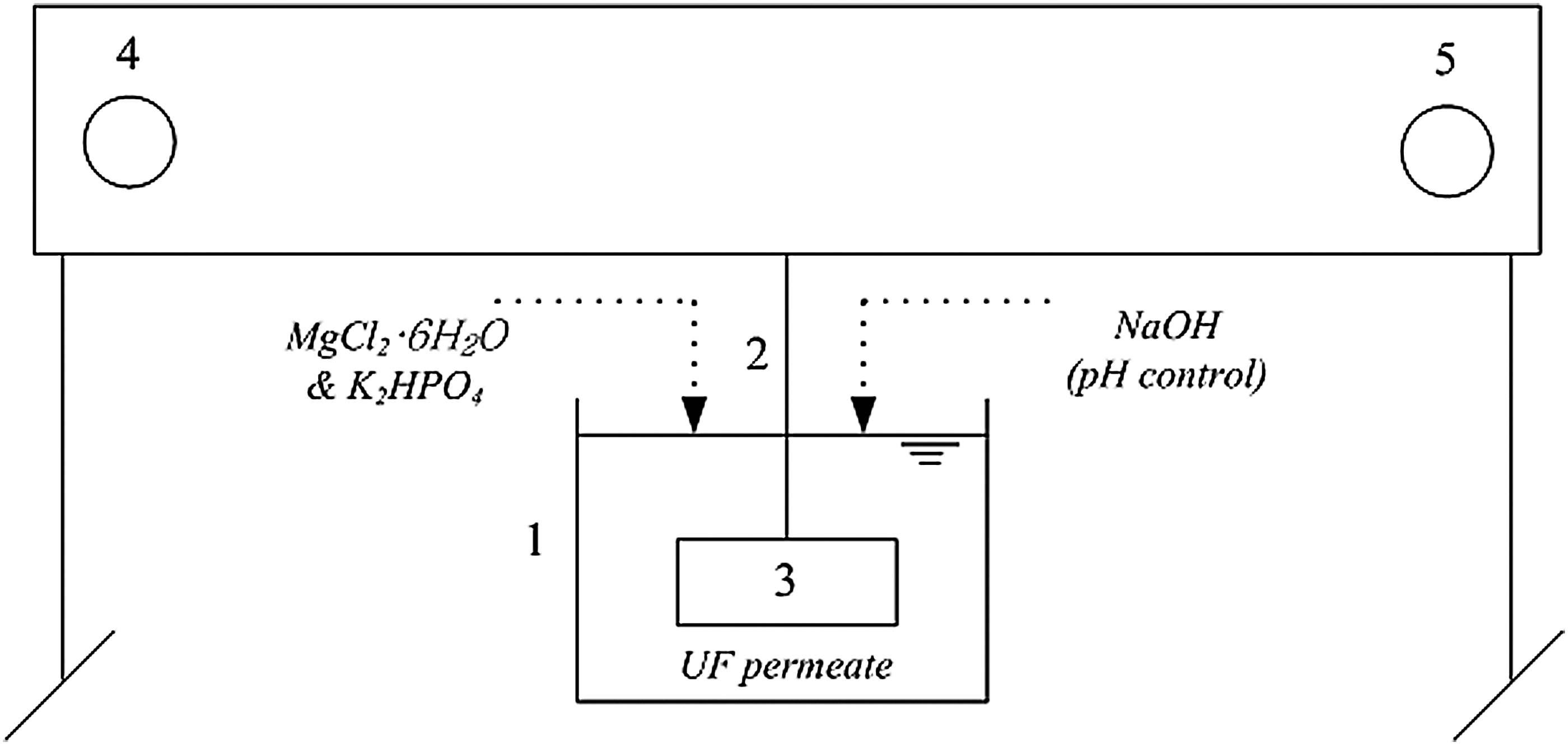
Schematic of jar test apparatus: 1, jar; 2, stirrer shaft; 3, paddle; 4, power supply; 5, mixing speed adjuster.
A2/O system setup and operation
Two laboratory-scale A2/O systems were installed to assess the biological treatability of the struvite supernatant by mixing it with raw sewage wastewater. One was used as a reference reactor (hereafter named as “Control”), where raw sewage wastewater only was introduced into the system without mixing the struvite supernatant with it. In the other system, a mixture of struvite supernatant and raw sewage wastewater (in several different ratios) was utilized as an influent. Based on the mixing ratio, the whole experiment was divided into four main periods as highlighted in Table 4. In Runs 1, 2, 3, and 4, each period took 40, 30, 40, and 30 days, respectively.
Each A2/O system was composed of anaerobic, anoxic, and oxic reactors and a final settler with the volumes of 7, 10, 7, and 18 L, respectively. Activated sludge obtained from an oxic basin of the STP of Cheongju city was used as the inoculating sludge for the experiment. Mixers were installed in all reactors to evenly distribute the activated sludge throughout the reactors. A sufficient DO concentration (about 5 mg/L) was provided to accomplish full nitrification in the oxic reactor. Nitrate in the oxic reactor was recycled internally to the anoxic reactor at a recycling ratio of 1. The settled sludge in the final settler was also recycled to the anaerobic reactor with a recycling ratio of 1. The recycling ratio is defined as the quotient between the flow rates of the recycling effluent and wastewater influent. The flow rate applied was 0.096 m3/d, corresponding to an HRT of 6 h. The SRT was 12 days, which was maintained by periodically discharging excess sludge from the recycle line.
Analytical procedures
Chemical analyses of samples were performed according to the procedures described in Standard Methods (APHA, 2005). Samples were analyzed for TCOD and SCOD (standard code: 5220 D), TKN (standard code: 4500-N B), PO4-P (standard code: 4500-P E), TS (standard code: 2540 B), VS (standard code: 2540 G), SS & VSS (standard code: 2540 D), NO2-N (standard code: 4500-NO2− B), and NO3-N (4500-NO3− B). NH4-N and T-P were determined using the HACH Nessler method and the HACH persulfate UV oxidation method, respectively. As, Cd, Cr, Cu, Fe, Mn, Ni, Pb, Se, and Zn were measured using ICP-OES (Jobin Yvon, Ultima 2 Ce). The detection limits for As, Cd, Cr, Cu, Fe, Mn, Ni, Pb, Se, and Zn were 0.05, 0.004, 0.007, 0.006, 0.007, 0.002, 0.015, 0.04, 0.03, and 0.002 mg/L, respectively. The dried deposits produced from struvite precipitation were characterized by X-ray diffraction (XRD, Model DMS 2000 system, SCINTAG). All the samples were analyzed immediately after sampling.
Results and Discussion
Struvite precipitation: effect of pH
Figure 3 illustrates the removal characteristics of NH4-N and PO4-P as a function of pH. The best experimental NH4-N removal efficiency was observed to be 69% at pH 10. This removal efficiency decreased when pH exceeded 11.0, while a major increase in NH4-N removal was not found when pH exceeded 7.0. This tendency was somewhat different from a previous study, where the solubility of struvite gradually decreased as pH approached 9.0, and then increased when pH rose above 9.0 (Doyle and Parsons, 2002; Barnes et al., 2007; Yetilmezsoy and Sapci-Zengin, 2009). The PO4-P removal followed a similar trend as that for ammonia, however, its removal increased continuously up to pH 11.0. Although the effluent PO4-P concentration was lowered up to pH 11.0, the increasing rate of PO4-P removal was insignificant over pH 9.0. At pH 9.0, the PO4-P removal was 95%. It was observed that the PO4-P removal characteristics found in the present study were also not consistent with previous work, which showed that the effluent PO4-P concentration increased as struvite solubility began to increase with increasing pH (Kim et al., 2007; Ryu et al., 2008). The continuous decrease in the effluent PO4-P concentration up to pH 11.0 could be due to the additional precipitation of phosphate ions as hydroxylapatite (Ca10(PO4)6(OH)2) at pH 10.0. It is well known that, as the pH value of wastewater increases, the calcium ions will react with phosphate to precipitate hydroxylapatite in the metastable zone. This generally occurs between pH 9.0 and 10.5 (Joko, 1984; Van Dijk and Braakensiek, 1985; Tchobanoglous and Burton, 1991). The precipitation of magnesium phosphate (Mg3(PO4)2) would also be expected in the pH range of 8.5–11.0.
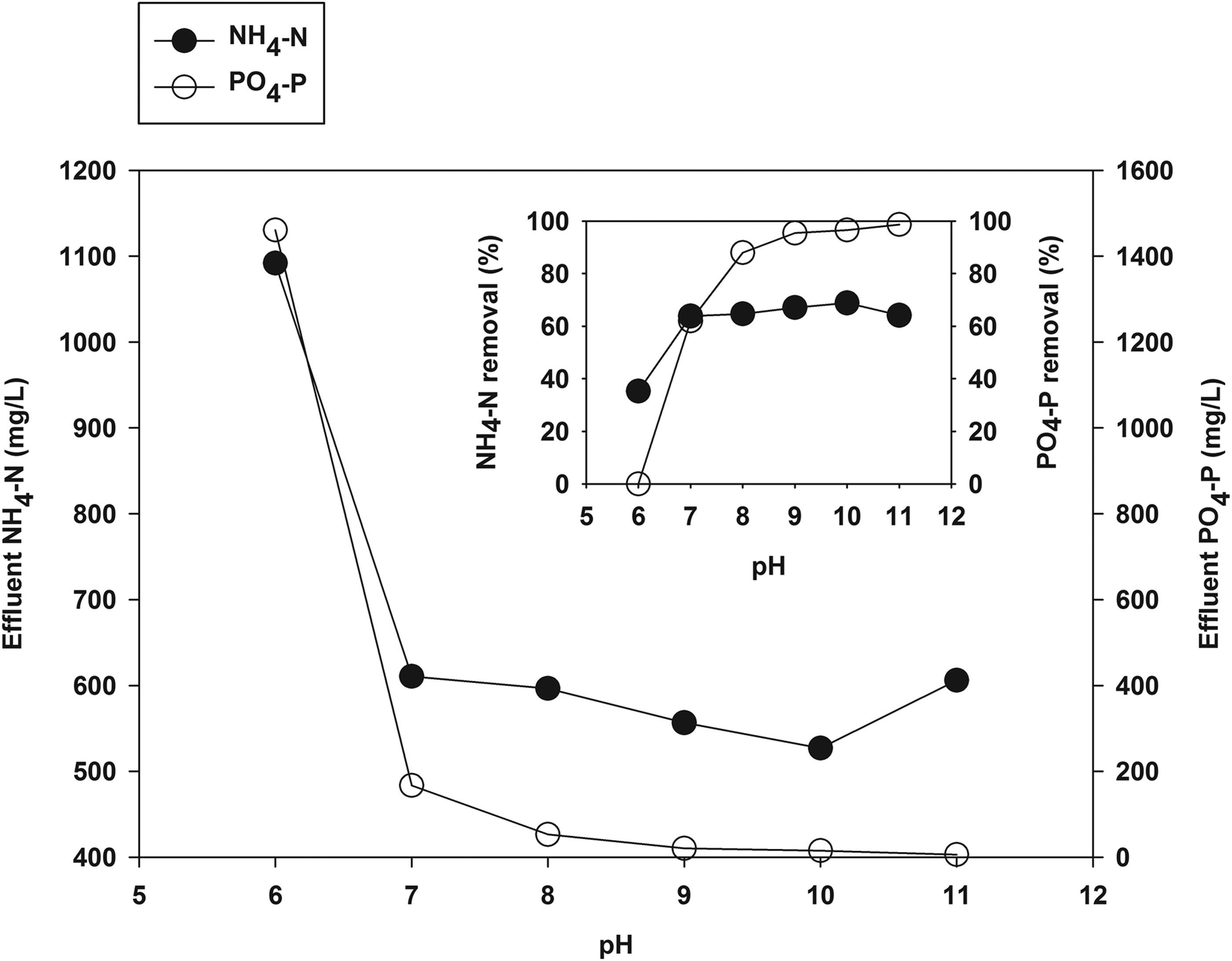
Removal of NH4-N and PO4-P as a function of pH during struvite precipitation: initial concentrations of NH4-N and PO4-P were 1688 and 440 mg/L, respectively; magnesium and orthophosphate dosage for struvite precipitation was 1.0:1.0:1.0 in the molar ratio of NH4-N:Mg:PO4-P.
Moreover, it should be noted that the NH4-N removal found in this study was relatively low as compared with that found in previous studies about struvite precipitation of anaerobically digested supernatants. The previous work reported that the NH4-N removal was over 77% at the NH4-N:Mg:PO4-P molar ratio of 1:1:1 in treating supernatants from an AD (Altinbas et al., 2002a, 2002b; Uludag-Demirer et al., 2005; Uysal et al., 2010). The lower NH4-N removal in our experiments could be due to the high concentration of heavy metals in the dual digestion supernatant, as seen in Table 3. Specifically, it was found that the concentration of Cu was noticeably high. Referring to the study of Uysal et al. (2010), it is obvious that the values of heavy metals found in their dual digestion supernatant were much higher than those found in the sewage sludge anaerobic digestion supernatant. The higher heavy metal concentrations in the dual digestion supernatant could be due to the additional destruction of organics in TAR. It is speculated that the relatively high level of heavy metals in the UF permeate could inhibit struvite crystallization for the removal of NH4-N and PO4-P. The heavy metals could be eliminated as a side reaction by binding with orthophosphate. For example, copper phosphate (Cu3(PO4)2) could be formed as a by-product in struvite precipitation and this could decrease the probability of ammonia binding with orthophosphate. According to the study of Uysal et al. (2010), 70.70% of Fe, 60.50% of As, and 48.83% of Hg were reduced by struvite precipitation. Liu et al. (2011b) also reported that concentrations of Zn, Cu, and Ca were markedly reduced with decreases of 43%, 37%, and 60%, respectively, during the struvite crystallization process.
Based on our experiment, it is important that the optimum pH for struvite precipitation of the ATAD supernatant should be carefully determined. Considering both the removal of NH4-N and PO4-P, the recommended optimum would be pH 9.0.
Struvite precipitation: effect of magnesium and orthophosphate dosage
It has been noted that in previous studies, ammonium and phosphate removal were generally affected by the amount of magnesium added to the struvite precipitation (Staraful et al., 2001; Jaffer et al., 2002; Nelson et al., 2003). Staraful et al. (2001), in particular, emphasized that magnesium ions are a limiting factor to struvite precipitation. However, our study showed that the orthophosphate ion could also be a limiting factor to struvite precipitation under specific conditions. Figure 4a clearly shows the effect of both the magnesium and phosphate dosages on NH4-N removal. These results were achieved by adding magnesium and orthophosphate sources to the wastewater. It was found that NH4-N removal was affected more by the amount of orthophosphate added than magnesium under specific conditions. For example, in the NH4-N removal line of 80%, the NH4-N removal efficiency depended totally on the molar ratio of PO4-P:NH4-N, when magnesium was injected above the molar ratio of 2.0:1.0 for Mg:NH4-N. In other words, no amount of magnesium could achieve an NH4-N removal of 80%, if the PO4-P dosage was less than the 1.4:1.0 molar ratio of PO4-P:NH4-N. Similar trends were also observed in the NH4-N removal lines of 40% and 60%, respectively. On the other hand, PO4-P removal was similarly affected by the amounts of magnesium and phosphate under all experimental conditions as illustrated in Fig. 4b. However, the increase in the amount of orthophosphate diminished PO4-P removal, whereas the addition of magnesium enhanced phosphate removal. This means that even with the addition of more orthophosphate ions, the removal efficiency of PO4-P can be decreased rather than improved.
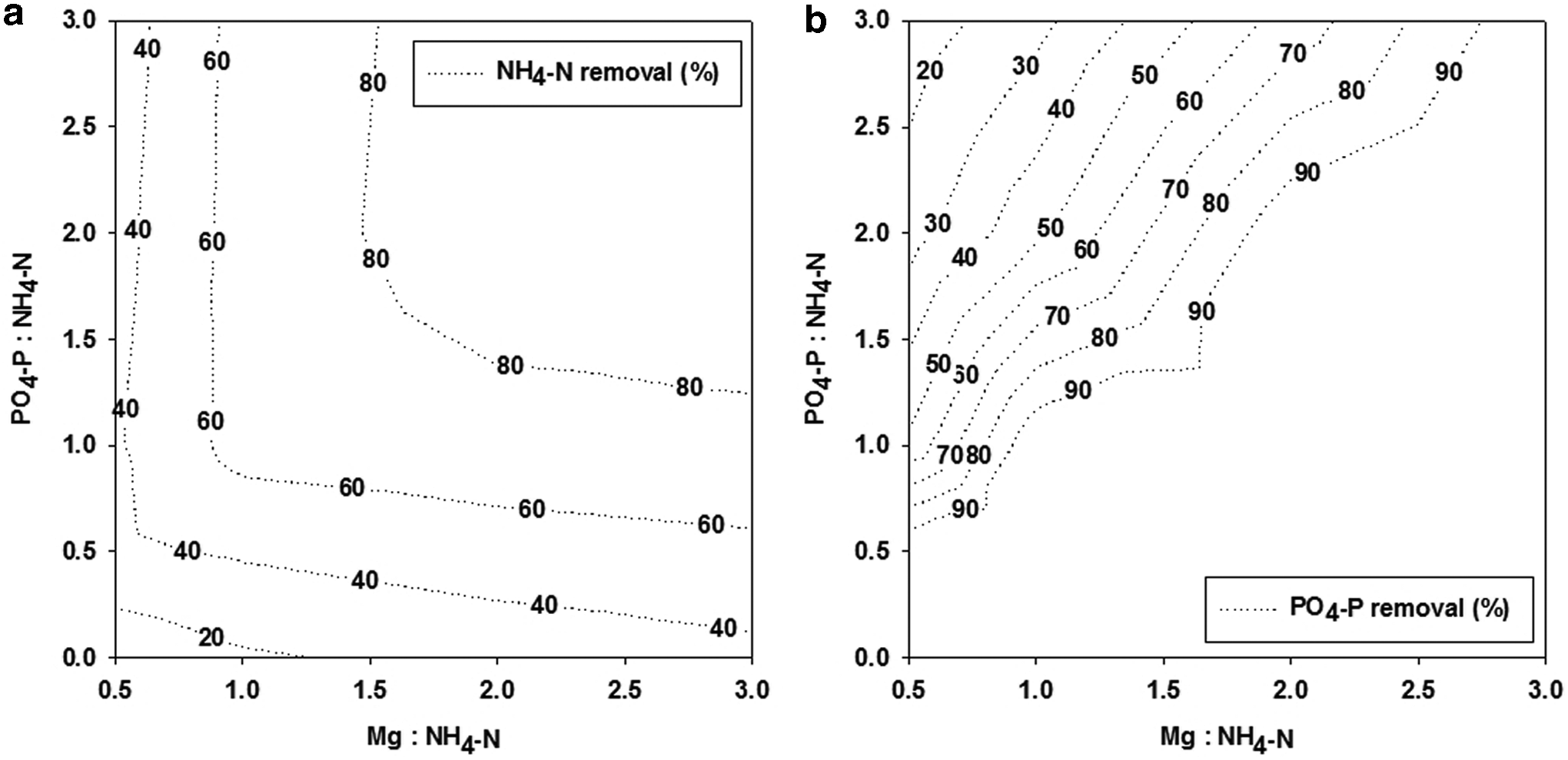
Effect of magnesium and orthophosphate dosage on the removal of NH4-N
Struvite precipitation: effect of the preformed struvite as the seeding material
The preformed struvite was prepared and it was characterized by XRD analysis. The X-ray diffractograms exhibited several peaks indicative of the struvite presence, as illustrated in Fig. 5. The XRD pattern generated from the precipitated matter matched the database model for struvite (i.e., position and intensity of the peaks). In other words, the peaks shown in the “reference” (bottom of Fig. 5) were those shown in standard struvite, and the XRD pattern generated from the precipitated matter (top of Fig. 5) matched exactly those of the “reference” for struvite. Therefore, the main peaks of the precipitated matter indicate that the precipitated matter was struvite.

XRD diffractograms of the precipitated matter.
The preformed struvite was put into a solution to assess the enhancement possibility of NH4-N and PO4-P removal by struvite precipitation. As revealed in the previous study, the addition of preformed struvite crystals improved the performance of struvite precipitation (Kim et al., 2007). They insisted that at low levels of seeding material, struvite precipitation proceeds by two mechanisms, namely, crystal nucleation and crystal growth, while at high levels of seeding material, the crystal growth is preferred to crystal nucleation. However, in our experiment, the overall removal performance of NH4-N and PO4-P was not enhanced by adding preformed struvite as the seeding material, when the seeding material was added from 0 to 5 g/L as shown in Fig. 6a. However, on the positive side, the settled sludge volume during struvite precipitation was significantly decreased by adding preformed struvite (Fig. 6b). Figure 6b clearly shows that the settled sludge volume was reduced to less than half when the preformed struvite was added to 5 g/L. This phenomenon was also reported in other coagulation-related articles. Bhuptawat et al. (2007) reported that sludge produced while using the combination of Moringa oleifera seed and alum was significantly less than that produced by alum alone. Chen et al. (2009) also revealed that sequential additions of fly ash and lime reduced the sludge volume when fly ash was used as a seed material. This means that the reuse of precipitated struvite as seeding material can contribute to reducing the cost of sludge disposal, although the extra cost of struvite processing (adding chemicals, drying, and crushing the struvite crystals) cannot be ignored.
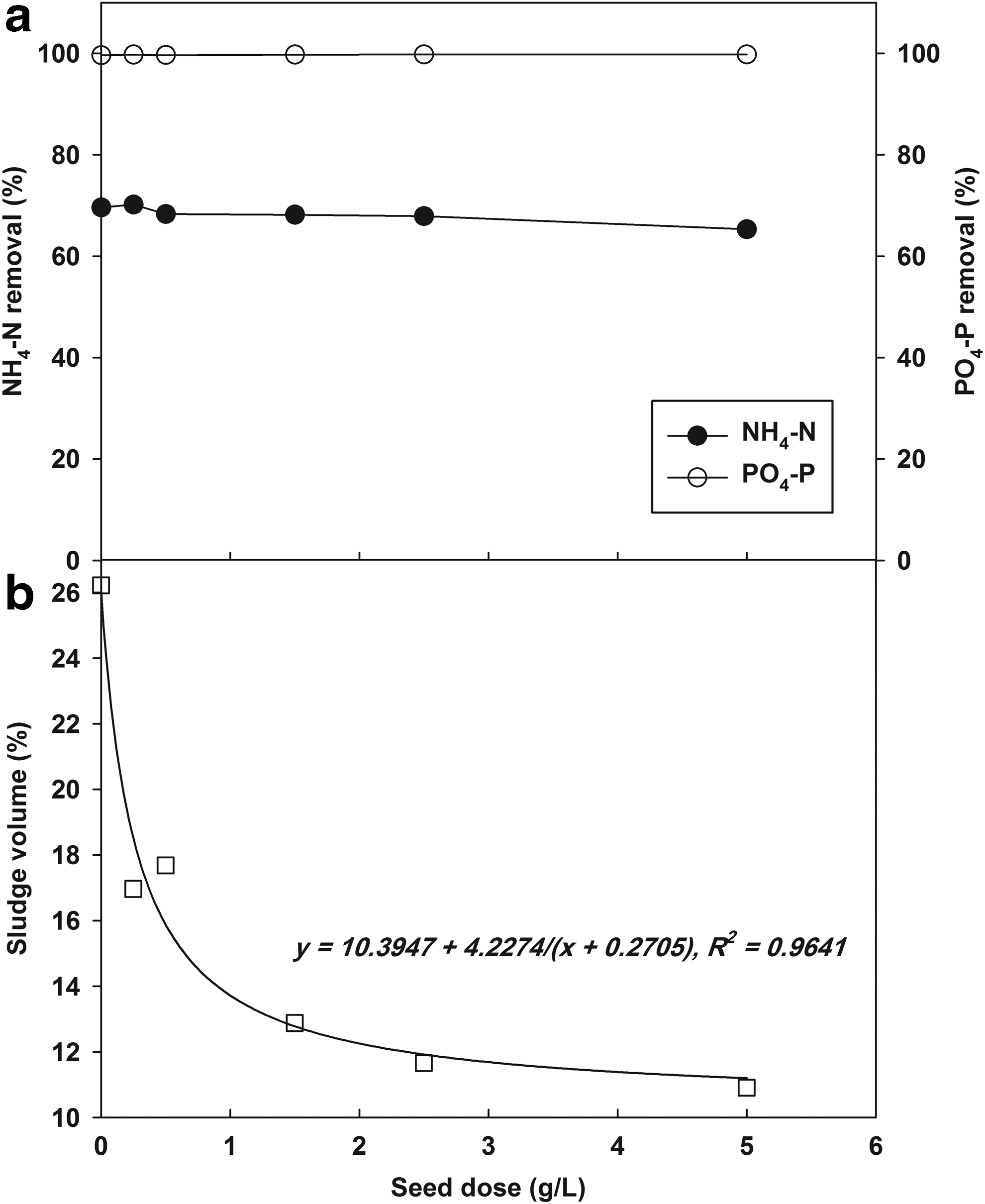
NH4-N and PO4-P removal
Biological treatability of combined wastewater: TCOD removal
The biological TCOD removal from combined wastewater, in which the struvite supernatant was mixed with raw sewage wastewater at different volume ratios, as shown in Table 4, was evaluated by comparing it with raw sewage wastewater in Runs 1, 2, 3, and 4. Figure 7 demonstrates that the increase in the volume–mixture ratio of struvite supernatant to sewage wastewater resulted in decreased TCOD removal. When the volume–mixture ratio increased to over 1:100, TCOD removal from the mixed wastewater was less than 80%. One notable point was that TCOD removal decreased as the ratio increased, even though the influent TCOD loading rate was almost the same in Runs 1, 2, 3, and 4. It is believed that this tendency could be due to an increase in the nonbiodegradable fraction of organic matter in the combined wastewater, as the ratio was increased by adding the struvite supernatant into raw sewage wastewater.

Comparison of biological total chemical oxygen demand (TCOD) removal in Runs 1, 2, 3, and 4: error bars indicate standard deviation; the figures above the white bars are the volume percent of struvite supernatant liquid in the combined wastewater.
Biological treatability of combined wastewater: nitrification performance
Figure 8 exhibits how the nitrification characteristics of “Control” wastewater and the combined wastewater in the A2/O system depend on the volume ratio of struvite supernatant to sewage wastewater. The NH4-N removal of “Control” and combined wastewater was similar in Runs 1 and 2. However, as the ratio increased to over 2:100, the NH4-N removal of the combined wastewater declined (see Runs 3 and 4). In Runs 1, 2, 3, and 4, the average NH4-N removal efficiency of “Control” was 98.7%, 98.9%, 95.4%, and 86.5%, and that of mixed wastewater was 98.8%, 97.1%, 82.1%, and 59.8%, respectively. Moreover, in Run 4, the mixing of the struvite supernatant with raw sewage wastewater caused nitrite accumulation due to the increased NH4-N loading rate. The effluent NO2-N accumulated to up to 3.2 mg/L during the treatment of mixed wastewater. The higher NH4-N loading rate in Run 4 could be toxic to nitrite oxidizing bacteria (NOB), and could lead to the accumulation of nitrite in the biological reactor. This phenomenon has already been demonstrated in many studies (Chung et al., 2006; Gregory et al., 2010). These results show that the volume–mixture ratio of struvite supernatant to sewage wastewater should be permitted up to 1:100, which corresponds to an average influent NH4-N loading rate of 0.135 kg NH4-N/m3·d, to prevent deterioration of NH4-N removal and subsequent nitrite accumulation.
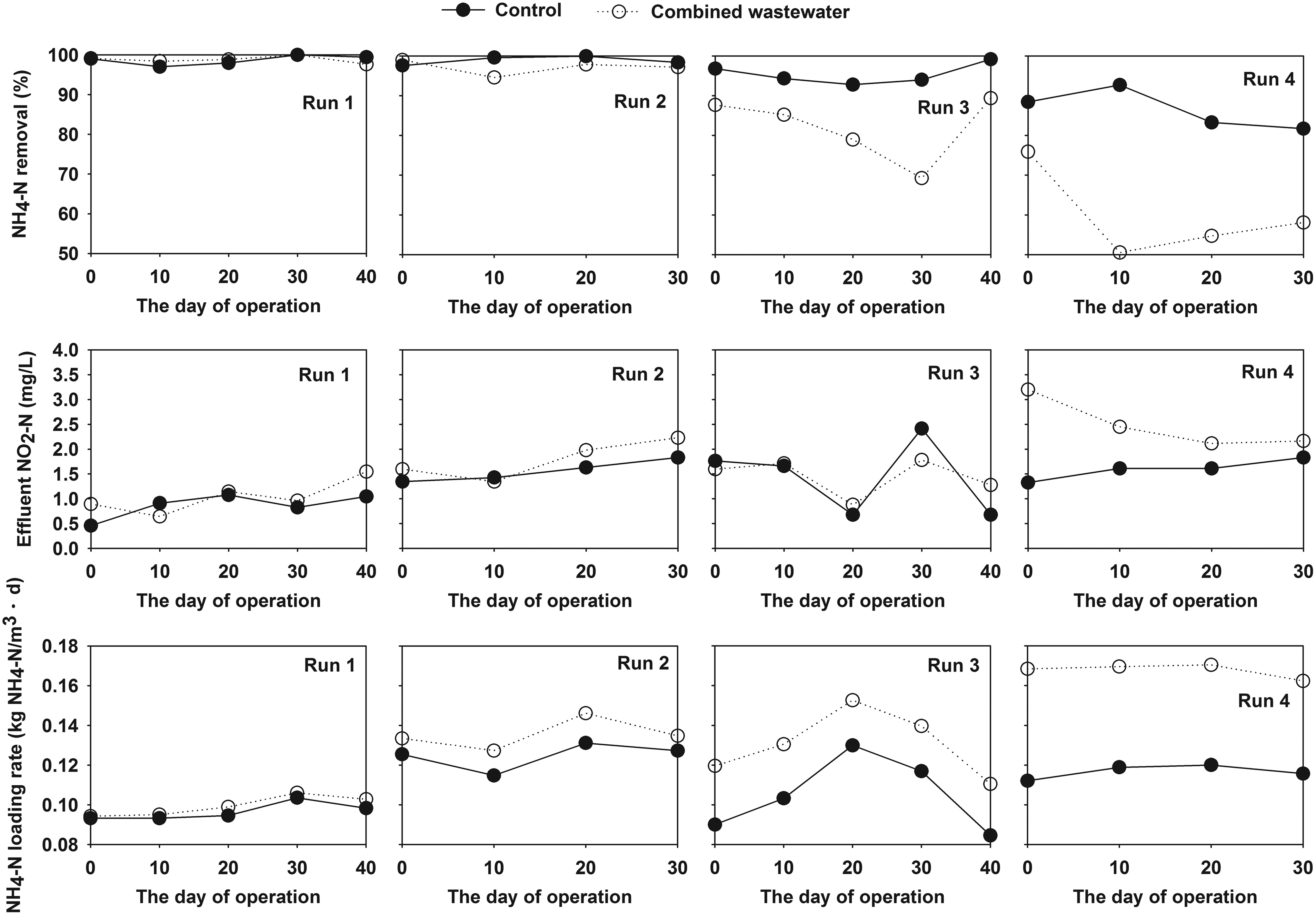
Daily variation of NH4-N removal, effluent NO2-N, and NH4-N loading rate in Runs 1, 2, 3, and 4.
Conclusions
This study evaluated the applicability of struvite precipitation in treating ammonia and phosphate of ATAD supernatant. Furthermore, the biological treatability of combined wastewater, in which the struvite supernatant was mixed with sewage wastewater at four different volume ratios, was assessed. Based on the experimental results, the following conclusions were drawn.
(1) In struvite precipitation of ATAD supernatant, pH was an important factor in the simultaneous removal of ammonium nitrogen and orthophosphate. The optimum reaction for the removal of NH4-N and PO4-P was found at pH 9.0.
(2) It is believed that the relatively high concentration level of heavy metals in the ATAD supernatant could adversely affect NH4-N removal during struvite precipitation.
(3) Excess dosages of magnesium and orthophosphate were highly beneficial to the removal of NH4-N. Meanwhile, PO4-P removal declined when the orthophosphate source was overdosed.
(4) Although the additional injection of preformed struvite as a seeding material did not enhance the removal efficiency of NH4-N and PO4-P, it noticeably reduced the settled sludge volume during struvite precipitation when the preformed struvite was added up to 5 g/L.
(5) In the evaluation of biological treatability of the combined wastewater, it was clear that the addition of struvite supernatant into sewage wastewater decreased the removal efficiency of TCOD and NH4-N. Specifically, nitrite accumulation was observed when the volume–mixture ratio of struvite supernatant to sewage wastewater reached 3:100.
(6) Consequently, struvite precipitation of ATAD supernatant was feasible in treating ammonia nitrogen and orthophosphate. In addition, the volume–mixture ratio of struvite supernatant to sewage wastewater should be carefully determined in biological reactors when the struvite supernatant is returned to the BNR system for further treatment.
Footnotes
Acknowledgments
This research was financially supported by the Ministry of Education, Science Technology (MEST) and the National Research Foundation of Korea (NRF) through the Human Resource Training Project for Regional Innovation (No. 09-009).
Author Disclosure Statement
The authors declare that no competing financial interests exist.