




Abstract
Abstract
Injection of anthropogenic carbon dioxide into geologic formations is a technology that can be deployed in the relatively short term in order to avoid potential harm to the environment caused by excess CO2 in the atmosphere. Success of sequestering CO2 in underground reservoirs is strongly dependent on the prevention of leakage back into the atmosphere and the ability to mitigate should significant leakage occur. Both detection of leakage and reliable risk mitigation plans require a robust monitoring system. The space and time span of CO2 sequestration projects is large, which results in trade-offs between cost and robustness of monitoring. In order to make a cost-effective decision without compromising monitoring effectiveness, knowledge of CO2 transport in the vadose zone and seepage mechanisms into the atmosphere is essential. This study focuses on the simulations of hypothetical CO2 leakage into the ∼100 m thick vadose zone at an actual site in the San Juan Basin, the United States. Hypothetical leaks were assumed to occur through abandoned wellbores whose integrity had been compromised below the water table. Results show that, at the leak rates analyzed, CO2 did not express itself at the wellhead for extended periods due to the extremely thick vadose zone. It was also seen that even after decades of simulated leakage, point measurements of CO2 flux into the atmosphere may not reach levels distinguishable from the background. The regional seepage pattern, however, is both measurable and distinguishable. This finding can be used for designing cost-effective and robust near-surface monitoring networks and algorithms.
Introduction
G
Depleted oil and gas reservoirs are next in the list of targets for carbon sequestration due to their suitable reservoir permeability and proven capability to contain buoyant fluids for geologic time scales (Gentzis, 2000), as well as their potential to offset costs by enhanced production. Targeted storage reservoirs have a caprock that traps the injected CO2 through various mechanisms. For some cases, the caprock itself can sorb the CO2 diffusing into it, resulting in a self-blocking mechanism (Busch et al., 2008).
Ideally, storage reservoirs and formations are selected so that containment targets for CO2 are met. However, many wells have often been drilled through oil and gas reservoirs. Considering that oil and gas extraction has a history of more than a century, one can easily see that some of the wells are older, were permitted under past regulations, and may carry a risk of allowing or enhancing fluid leakage from the target reservoirs (Patroni, 2007). Furthermore, many abandoned wells may have been “lost” due to inadequate record keeping. Such possibilities should be assessed in objective risk mitigation plans and by environmental impact analyses, because they may cause leaks (Koornneef et al., 2012).
A well that was drilled for oil or gas extraction is potentially subject to several hazards during its lifetime and after abandonment. These can be briefly listed as follows:
During the drilling: casing wear due to high rotating hours (Sun et al., 2012) or pressure and temperature cycles (van der Kuip et al., 2011), cracks within the wellbore cement, or target formation (Brown and Ferg, 2005).
After drilling: cement shrinkage followed by crack formation and/or cement-rock debonding (van der Kuip et al., 2011), exposure to formation fluids (Le Guen et al., 2009), and crack formation due to geologic movements (Mainguy et al., 2007).
When CO2 is introduced into depleted oil and gas reservoirs, the hazards mentioned earlier will contribute to the risks of leakage. These risks include a leakage along or around the wellbore into the formations above the targeted one. In addition, the presence of CO2 in the reservoir can pose further problems due to the effect that CO2-saturated brine has on traditional Portland cement (Barlet-Gouédard et al., 2007; Kutchko et al., 2007). It should be noted that current research suggests that it is not likely that CO2 will create a permeable pathway for any great distance along a wellbore, but that it could alter an existing pathway through the cement (Huerta et al., 2011) or at the cement-rock interface (Carey et al., 2007).
Given the original depth and the path it needs to travel, it is unlikely that significant rates of CO2 leakage into the environment would occur (van der Kuip et al., 2011). As a testimony to this fact, during the 30 year history of CO2 injection for enhanced oil recovery in Alberta, Canada, failures never reached a point to threaten the public safety (Bachu and Watson 2009). Recently, another claim of CO2 leakage from the Weyburn sequestration project in Saskatchewan, Canada, was confirmed to be a false alarm, confirming the safety and reliability of the application (Romanak and Sherk, 2013). Another factor that may reduce the surface flux of a potential leak is the possible partitioning of the leaking fluid through the leaky portions of several wells, resulting in out-of-reservoir underground containment and a very diffuse signature near the surface (Pawar et al., 2009). Therefore, it is a challenge to monitor leakage events from the surface.
Due to the vulnerabilities explained so far and the attenuation of leakage as it travels underground, a sequestration project should verify its promise for long-term containment. This involves the monitoring of the movement of the injected CO2 (Mathieson et al., 2009) and the detection of any potential leakages (Yang et al., 2011; Sun et al., 2013). In this regard, to study the behavior of leaking CO2 in the vadose zone and to check the performance of the available detection technologies, controlled CO2-release experiments (Lewicki et al., 2007; Strazisar et al., 2009; Spangler et al., 2010) and computational simulations (Oldenburg and Unger, 2004; Ogretim et al., 2009) have been performed.
Computer simulations are easier and cheaper to do, whereas on-site experimentation with actual equipment is costly, which increases the already existing financial burden related to carbon sequestration. Therefore, optimized and refined methods are necessary to meet the monitoring targets without increasing the costs significantly. Use of site-specific identifiers (Helium or tracer gases, etc.) (Annunziatellis et al., 2008) or perfluorocarbon tracers, soil gas monitoring (Strazisar et al., 2009), and distinguishing the temporal and/or spatial behavior of natural and artificial CO2 fluxes (Lewicki et al., 2005; Pan et al., 2010; Romanak et al., 2013) are among the methods that have been investigated for this purpose.
After deep saline aquifers and depleted oil and gas reservoirs, unminable coal seams form a third option for geologic sequestration of carbon. It is known that coal seams often contain significant amounts of methane, which is generated during the formation of coal (Harpalani and Chen, 1995). With the improvement of available technology, such as hydraulic fracturing (Rahman et al., 2007; Wang, 2009), coal bed methane has become a significant source of fuel both in the United States and around the world (Economides et al., 2012) in the past few decades. In addition, when exposed to CO2, coal desorbs methane as it adsorbs the carbon dioxide. Coal can sorb approximately 15 times as much CO2 as methane by volume (Mazumder and Wolf, 2008). So, enhanced coal bed methane (ECBM) production is a method of carbon storage that has both environmental and economic benefits.
Several field tests have been held around the world to determine the feasibility of this idea, including at the Allison unit (Ozdemir, 2009; Shi and Durucan, 2010) and the Pump Canyon site in the San Juan Basin, which is a part of the U.S. Department of Energy's Southwest Regional Carbon Sequestration Partnership (Wilson et al., 2012). It should be noted that the wells which are going to be drilled for this purpose are going to be made from CO2-resistant cement, and so will not suffer from the risks related to CO2 exposure. However, there are other risks as discussed earlier, which still affect these new wells.
Storage in the San Juan Basin coal seam
For a detailed description of this basin and its geology, see the papers by Marroquin and Hart (2004) and Shuck et al. (1996). ECBM production with CO2 involves the dewatering of the reservoir and the subsequent methane production in order to open up the pore space and increase injectivity. Although with the injection of CO2, swelling of coal (Korre et al., 2007; Siriwardane et al., 2012) and the subsequent decrease in injectivity were observed in both the Allison unit and Pump Canyon field tests, long-term consistency in the injection rate may result in excess stress, which can induce microfractures that will improve near-wellbore permeability and, therefore, injectivity (Harpalani and Mitra, 2010).
The San Juan Basin is the top producer of coal bed methane in the world (Marroquin and Hart, 2004). Natural fractures present in the reservoir result in a high system-level permeability (Hart, 2006; Clarkson et al., 2010), and they make it possible to produce this field at economically attractive rates. The upper methane-containing coal seam is at 800–850 m (2600–2800 ft) below the surface (Shuck et al., 1996). With the contraction of the coal matrix due to the desorption of methane, the system permeability of coal generally increases during years of production (Mavor and Vaughn, 1998; Palmer, 2009; Pillalamarry et al., 2011). Using various well drilling and completion technologies, the gas recovery efficiency has increased to such levels that this single basin is a major source of natural gas in the United States (Palmer, 2010). Given its current status and the experiments already performed, the San Juan Basin is a potential target for CO2 ECBM activity in the long term.
The present study uses computer simulations to investigate how a leak at the Pump Canyon site in the San Juan Basin (Fig. 1) would express itself in the near surface, and how readily it would be seen by monitoring devices at the surface. Similar studies have been performed at locations with shallow vadose zones and flat terrains (Lewicki et al., 2005; Lewicki et al., 2007; Yang et al., 2011). The unique aspect of the site used in this study is that the vadose zone spans approximately 140 m (Fig. 2), and the terrain is very irregular (Fig. 1). Although in the current study a CBM site is used, the risks pertaining to carbon sequestration under deep vadose zones are valid for the other geologic storage options explained earlier.
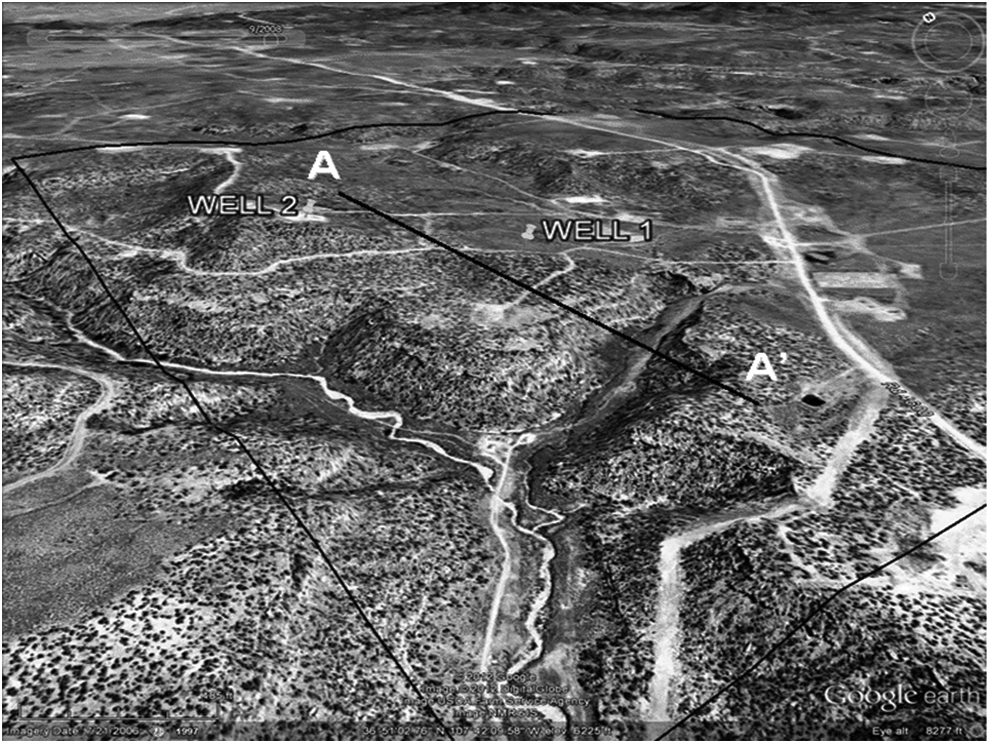
Overview of the simulated area from Google Earth and the locations of the wells where leakage was simulated.
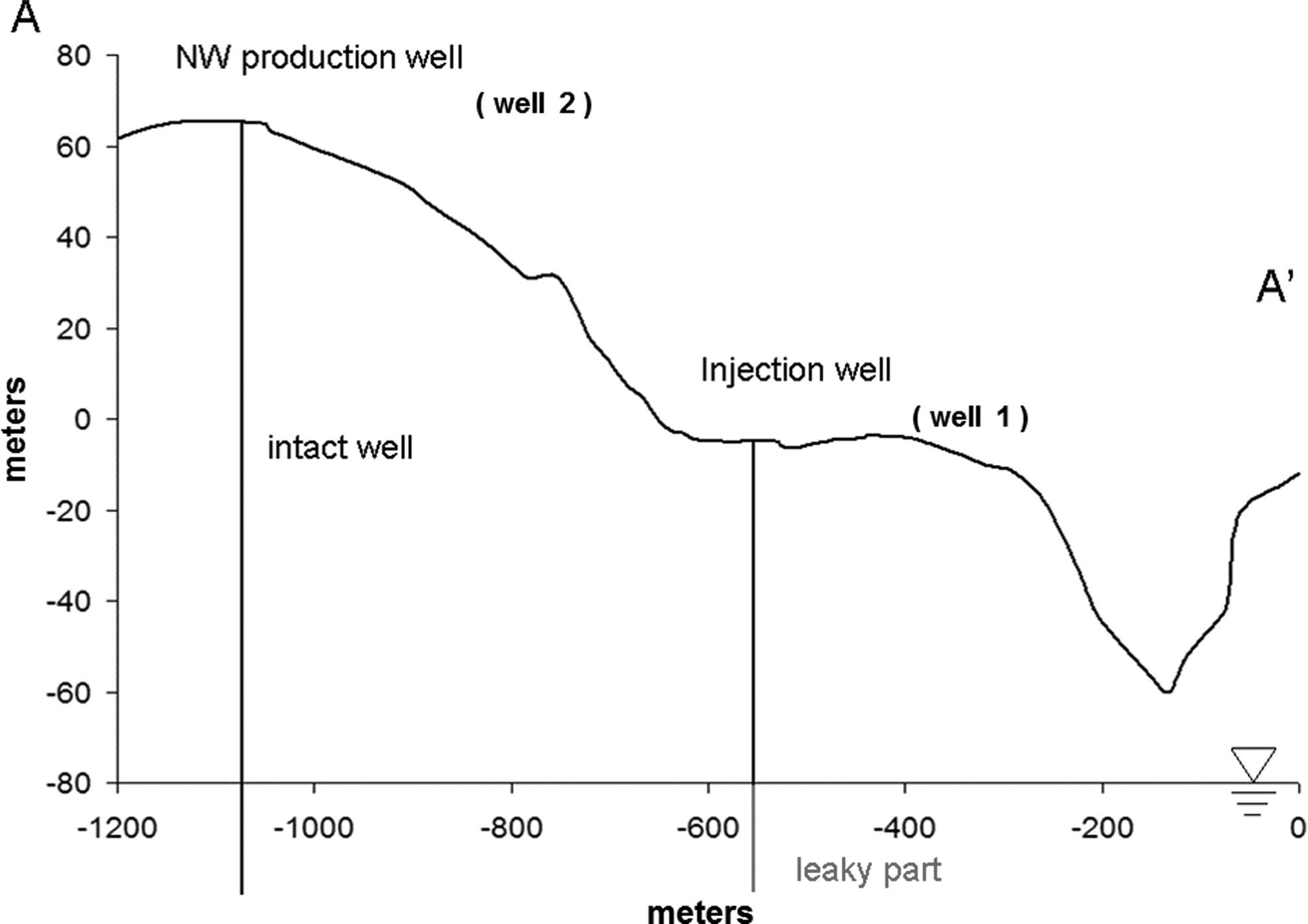
Sketch of the vadose zone along the A–A′ transect in Fig. 1 showing leakage from injection well.
In this study, we consider the possible leakage of CO2 along a wellbore from a deep source and into the vadose zone. The development of the plume in the vadose zone from such a leak was simulated for two different wells shown in Fig. 1. The surface seepage flux distribution was analyzed to extract some lessons for the improvement of surface monitoring techniques that are applicable at other locations having thick vadose zones.
Methods
In the event of an accidental release of CO2 from its reservoir, the path back to the atmosphere goes through several formations. Along this path, CO2 can disperse into these formations, and it can dissolve in the resident fluids. On its way toward the surface, the CO2 plume can branch into several paths due to heterogeneity of the medium. In the vadose zone, the vertical migration of the leaking CO2 plume is impeded due to its negative buoyancy here. As a result of all these factors, only a small fraction of the original CO2 leak may reach the surface. Therefore, a leakage of concern, even if it stays as a single branch throughout its path, may reveal a faint signature at or near the surface. To simulate such a case, three arbitrary leakage rates (10−4, 10−3, and 10−2 kg/s) were simulated as point sources at the top of the water table at each well. Assuming 5 Mt of annual CO2 emission from a mid-sized power plant, these leakage rates would correspond to leakage rates that are “less than critical,” “critical,” and “more than critical” levels, respectively, according to the criterion given in the IPCC Special Report on Carbon Capture and Storage (Metz et al., 2005).
Simulations were performed with the TOUGH2 code (Pruess et al., 1999) and its EOS7CA module (Oldenburg and Unger, 2003). Handling of the surface and manipulation of the computational grid accordingly was done by using an in-house preprocessor, INCONCEPT. The preprocessor uses the real topological data to automatically decide which grid cells fall in the computational domain and which do not. Subsequently, it assigns the cells at the surface as boundary cells.
For the simulations, permeability of the topsoil (first 0.5 m from the surface) was experimentally found using samples of the site. The remaining information was determined through observations of the site stratigraphy and the available publications on it (Mavor and Vaughn, 1998; Shi and Durucan, 2010; Wilson et al., 2012). The general stratigraphy of the actual site is such that thin layers of shale are present between thick layers of sandstone. To model this layered structure, a single anisotropic rock type was assumed in which horizontal permeability was 100 times higher than the vertical permeability. Further details on the underground layers and the corresponding functions for capillary pressure and relative permeability are given in Table 1.
van Genuchten function for relative permeability: for gases:
van Genuchten function for capillary pressure:
The computational domain included two wells, as shown in Fig. 1. Well 1 is an injection well at the center and well 2 is a production well to the northwest. It was assumed that both of these wells were abandoned after a future CO2 ECBM production activity. Simulations were performed within the vadose zone to see the fate and surface signature of the CO2 leaking through these wells.
For each simulation, only one well was assumed to be leaky. A rough sketch of the cross-section of the vadose zone along the A–A′ transect of Fig. 1 is shown in Fig. 2 for the case of leakage from well 1. Note that although this figure is two dimensional for illustration purposes, the simulations were three dimensional and were based on actual topography.
The computational domain included around 30,000 cells of various sizes, concentrating around the leaking well. For each case, the coordinates were adjusted so that the leaking well was located at the origin of the coordinate axes. Leakage simulations were preceded by an initialization run to achieve gravity-capillary equilibrium. During the initialization run, and later during the CO2 injection runs, atmospheric conditions were assumed static; hence, temperature and pressure fluctuations at the surface were not accounted for. Then, the CO2 was injected at a constant rate at the groundwater table directly under the well head for a simulated time of 40 years. For the boundary conditions on the computational domain, fixed-pressure and constant-zero-CO2 concentration were used. The resultant seepage patterns were compared with two criteria: (1) a background value of 7.6 g/(m2·day), typical of arid biomes (Cable et al., 2011) similar to those found at the San Juan Basin site; (2) the minimum measuring capability of common CO2 flux chambers (0.01 g/[m2·day]) (Bernardo and de Vries, 2011).
Results and Discussion
History of the spatially integrated seepage over the entire domain is shown in Fig. 3 for well 1 and in Fig. 4 for well 2. For well 1, the first appearance of measurable levels of CO2 seepage occurs only 3–15 years after the onset of the leakage. For well 2, the same happens 4–25 years from the start of the leakage. Comparing the seepage histories for the same leakage rates, it is seen that there is a delay in the arrival of measurable CO2 fluxes to the surface due to larger vadose zone thickness at well 2. This delay is reduced with an increase in leakage rate.
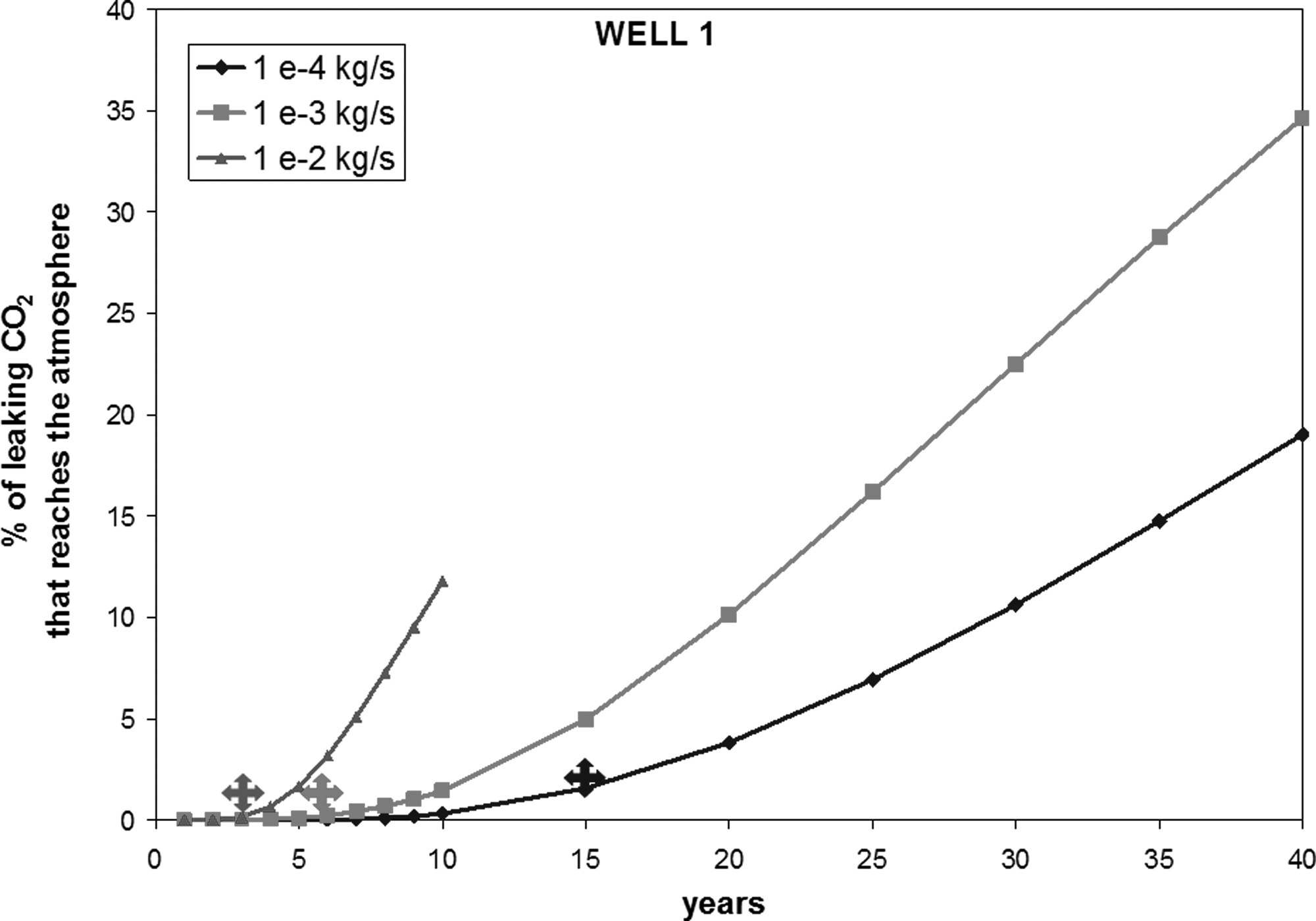
Total seepage history for the case with leakage at well 1. The thick crosses indicate the time of the first appearance of measurable levels of CO2 seepage at the surface at any point in the domain.
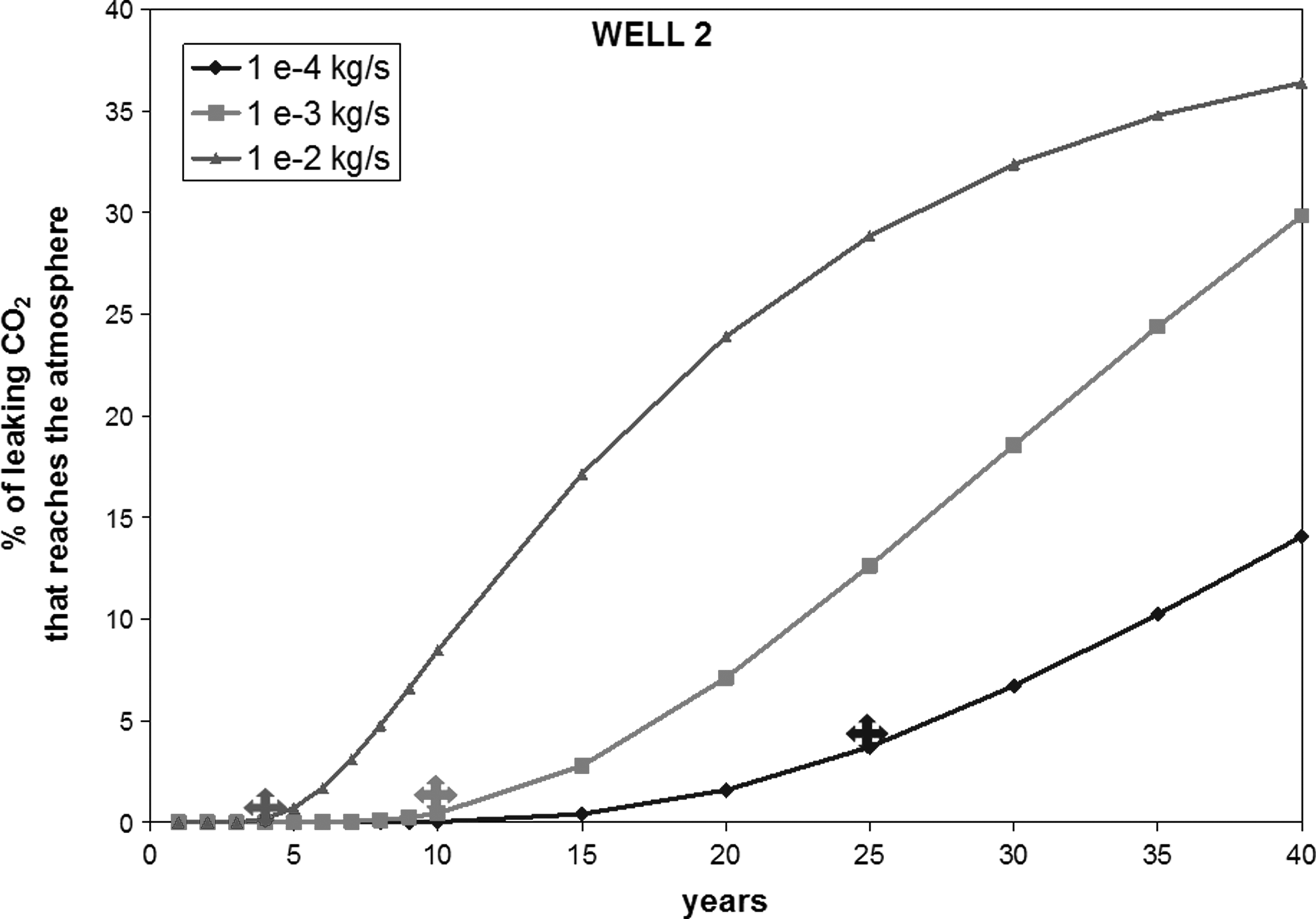
Total seepage history for the case with leakage at well 2. The thick crosses indicate the time of the first appearance of measurable levels of CO2 seepage at the surface at any point in the domain.
Another observation from these figures is that, within the simulated time frame, none of the cases approaches a point where the entrance rate of CO2 to the vadose zone from below is equal to the rate it is released to the atmosphere, which suggests a substantial accumulation in the vadose zone.
In Figs. 5 and 6, the ground surface seepage distribution for well 1 from a leakage of 10−4 kg/s is shown after 20 and 40 years, respectively. Figure 7 shows the ground-level distribution from a leakage of 10−4 kg/s from well 2 after 40 years. Keeping in mind that the (0,0) location for each case is the leaky well location, so the same coordinates in different figures do not refer to the same geographic location. Similarly, the elevation contours in each plot are measured from the elevation of the head of the leaking well. Indicated coordinates are in terms of meters. The gray-scale legend was adjusted so that any seepage below measuring capabilities is white.
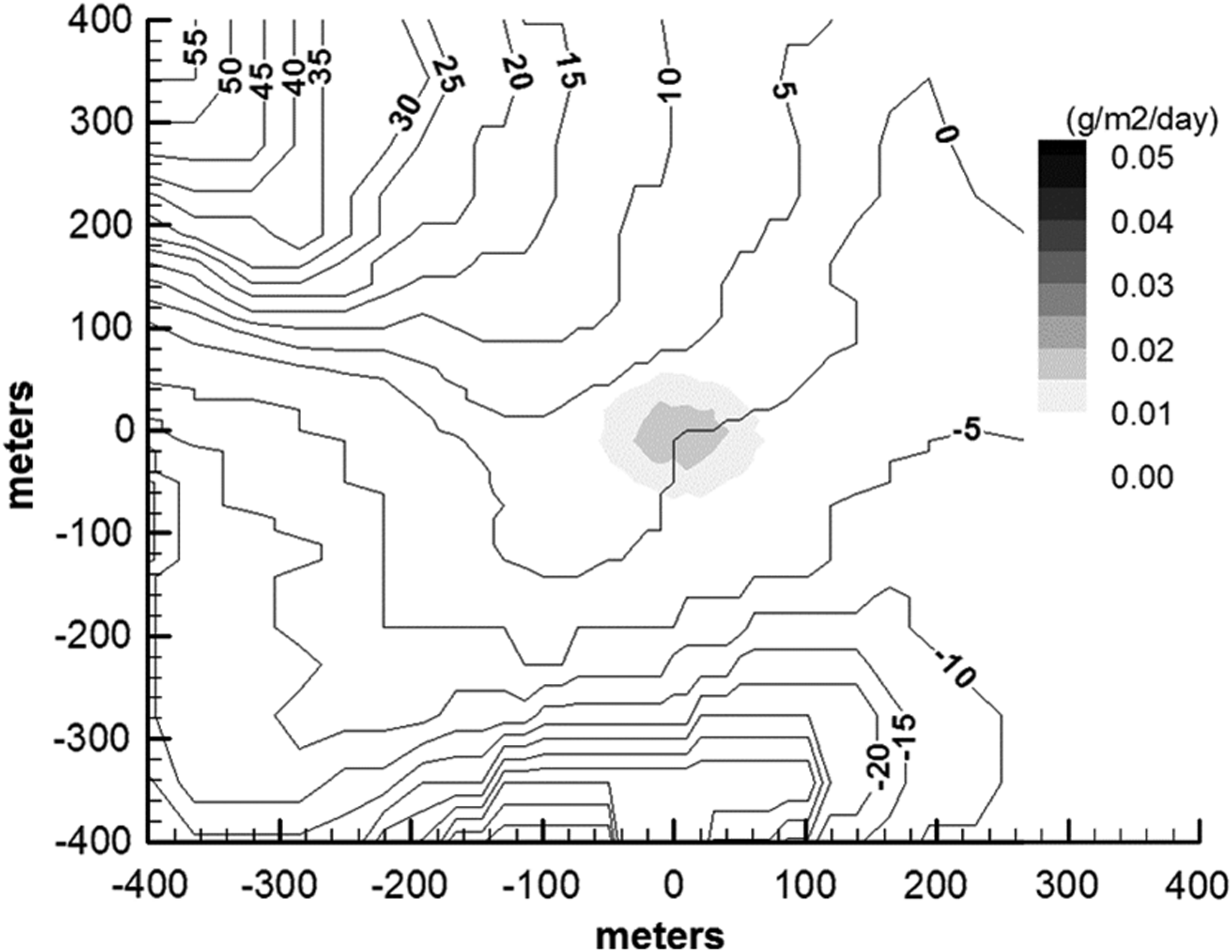
CO2 seepage plot for well 1 (injection well) after 20 years.
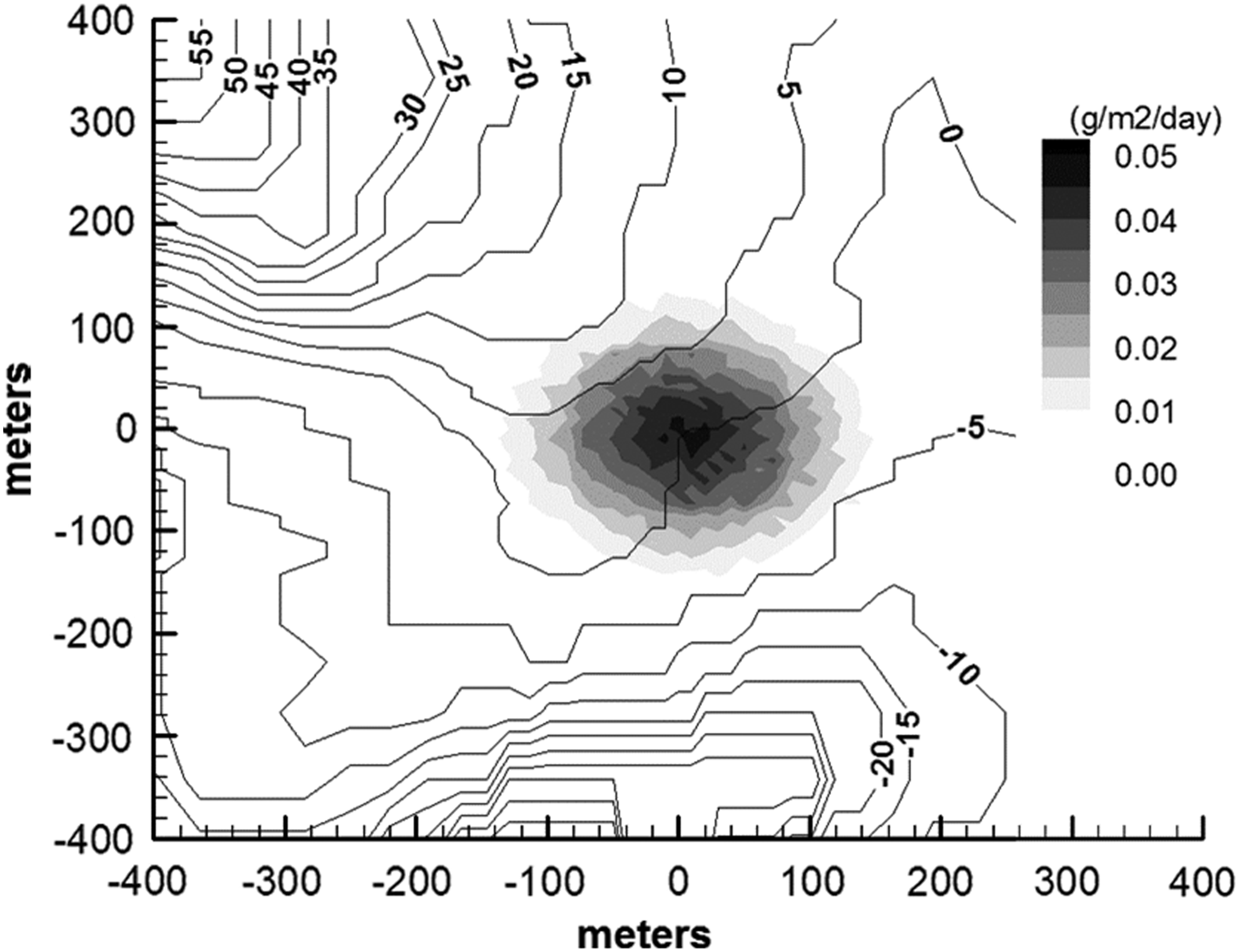
CO2 seepage plot for well 1 (injection well) after 40 years.
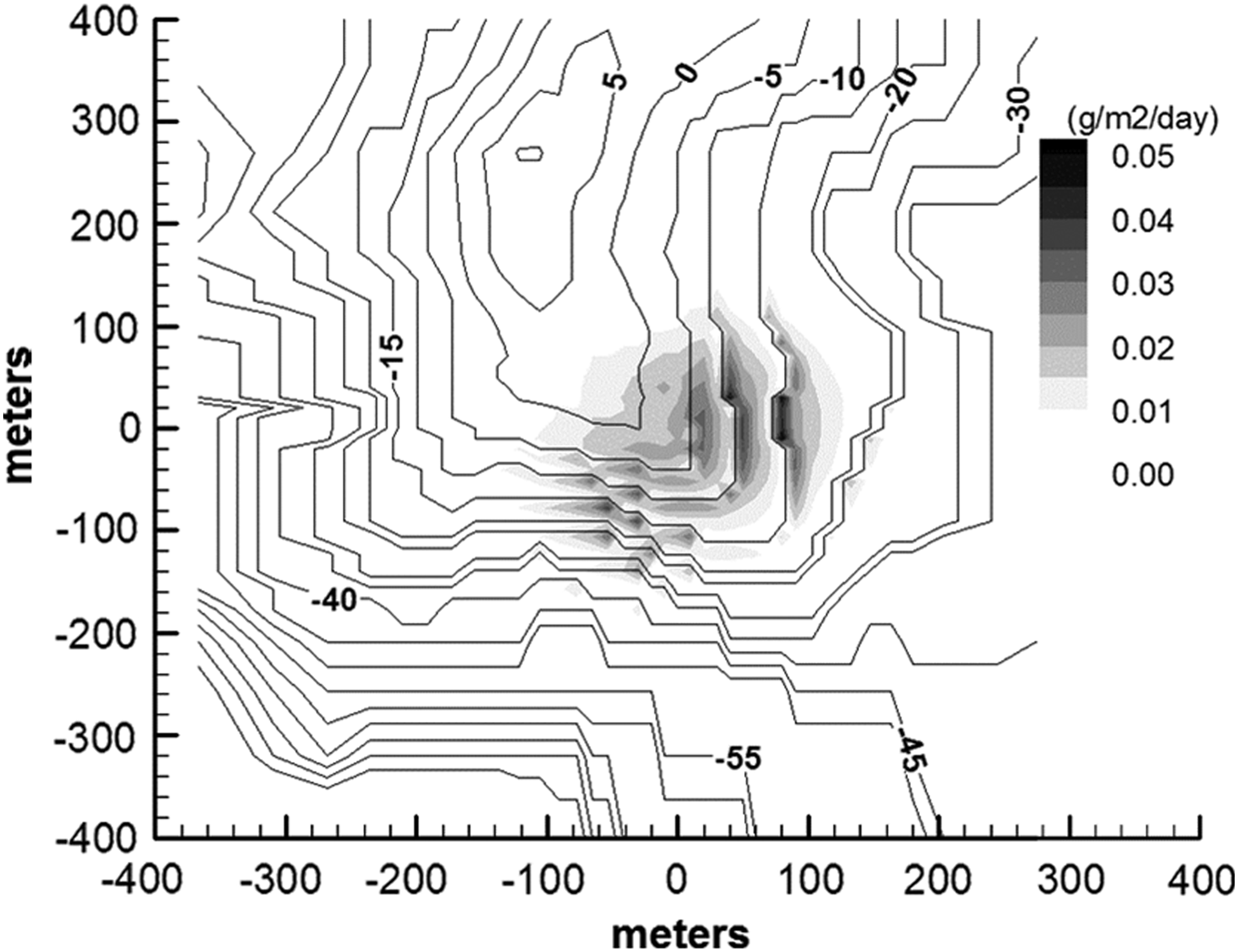
CO2 seepage plot for well 2 (northwest production well) after 40 years.
For well 1, the vadose zone at the leaking well is about 80 m thick; whereas for well 2, the vadose zone is about 140 m thick. Consequently, after 20 years of leakage, although the plume expresses itself at measurable levels in well 1, it still remains unmeasurable for well 2; which is why a 20 year plot for well 2 was not included. Similarly, after 40 years of leakage, the seepage at the surface is more significant in well 1 than in well 2. It should be noted that “measurability” can change according to the technology used in the equipment. However, measurability does not necessarily warrant detection. When compared with a typical background CO2 seepage flux of 7.6 g/(m2·day) in this kind of biome, none of the cases reveals values that are distinguishable from the natural background fluctuations in seepage. Although not shown here pictorially, increasing the leakage rate to 100 times (i.e., 10−2 kg/s) for well 1 produced distinguishable seepage flux values (∼5 g/[m2·day]) within the first decade. Well 2 showed seepage values that are distinguishable from the background (∼3 g/[m2·day]) only after two decades with the same increased leakage rate of 10−2 kg/s.
For well 1, which is located on a relatively flat surface, the seepage patterns are concentrated around the well. For well 2, which is located near the bank of a hill, the seepage pattern seems to be offset toward the embankment. Thus, the highest fluxes are observed not around the well head but on the hillside. This is due to the negative buoyancy of the CO2 in the vadose zone, and the anisotropy of the rock type favoring horizontal migration.
The findings so far can be summarized as follows. For thick vadose zones, although “measurability” changes from one device to another, measurable levels of CO2 flux at the surface occur years after the first entry to the vadose zone through the water table. Even then, measurability does not necessarily mean detectability, as the background fluctuations inhibit such a conclusion. This result still holds true even if much less background values are considered due to seasonal changes. Moreover, depending on the topography, the highest seepage fluxes may be displaced from the wellhead due to steepness and abrupt changes in the topography. Nevertheless, when looked at carefully, it is seen that the seepage flux distribution due to a leakage event covers an area with increased intensity at the inner locations. Moreover, this pattern is persistent over time and is at measurable levels. This is unlike a spatially haphazard or temporally periodic variation of flux in a natural background. Therefore, instead of comparing a single-point measurement at a specific time and place to background values, one could use statistical pattern recognition techniques to interpret spatially distributed measurements to come up with a satisfactory monitoring capability and sensitivity, without necessarily looking for single flux values that stand out of the natural background variation. The findings here not only highlight the need for statistical methods as discussed in Lewicki et al. (2005) and in Romanak et al. (2013) but also call for further improvement to address the challenges of thick vadose zones.
Summary
In summary, it is found that it may take several years, even decades, for a small leak into a thick vadose zone to produce measurable levels of CO2 at the surface. In the simulations, the time required to reach such measurable levels is directly proportional to the vadose zone thickness and inversely proportional to the leakage rate, both nonlinearly. A great challenge is that even if the flux values are measurable, they are not necessarily distinguishable from the natural background. Therefore, a point flux measurement will not necessarily lead to leak detection. In order to overcome this issue, instead of using the comparison of single measurements to predetermined criteria, one can use statistical methods that detect patterns which are consistent over time and space. This will enable a more timely detection of leakages into the vadose zone, should they occur.
Footnotes
Acknowledgments
The authors thank Dustin Crandall from URS Corporation for his contribution to topographic data handling, Tom Wilson for his detailed geologic knowledge of the site, and Hema Siriwardane for the permeability measurements for the topsoil samples. As a part of the National Energy Technology Laboratory's Regional University Alliance (NETL-RUA), a collaborative initiative of the NETL, this technical effort was performed under the RES contract DE-FE0004000.
Author Disclosure Statement
No competing financial interests exist.