




Abstract
Abstract
More than 300 million people across the world are currently at risk for skeletal and dental fluorosis due to drinking fluoride-contaminated groundwater. Current treatment solutions are not adequate in a number of manners: short adsorbent lifespan, high waste generation, poor treated water aesthetics, continuous dependence on electricity, poor recovery of extracted groundwater, and economic unsustainability. Hybrid anion exchange resin, referred to as HAIX-Zr, was synthesized in this investigation by impregnating strong base anion exchange resins with nanoscale zirconium oxide (ZrO2) particles at a loading rate of >10% zirconium content (w/w). Nanoparticles of ZrO2 were <50 nm and had a mean diameter of 15 nm. Polymeric anion exchange resins are durable hosts with an environment of fixed positive charges (e.g., quaternary ammonium functional groups, R4N+) that create enhanced local anion concentrations via the Donnan membrane effect. Synergy of the robust polymer phase and high surface area of dispersed zirconium oxide nanoparticles resulted in high fluoride sorption capacity even in the presence of high concentrations of other competing anions. Most notably, high concentrations of sulfate (500 mg/L) showed practically no noticeable competing effect and demonstrated the high fluoride selectivity of HAIX-Zr. No physical fragmentation or loss in capacity occurred during cycles of exhaustion-regeneration; ZrO2 is chemically stable from pH 3 to 12. Kinetics of the sorption process during a fixed-bed column run was controlled by intraparticle diffusion, and intraparticle fluoride diffusivity for HAIX-Zr was found comparable to other selective processes. HAIX-Zr was regenerated efficiently (>90%) over two cycles of exhaustion-regeneration with alkali (3% NaOH/3% NaCl) and acid (CO2 sparged water) without any noticeable loss in capacity. HAIX-Zr is ready for field applications under representative conditions.
Introduction
U
High fluoride content groundwater often has minimal other contaminants of concern, so selective removal of fluoride with an appropriate sorbent has been the primary thrust of most treatment technologies. A regenerable fixed-bed adsorbent system would be most desirable because of the simple installation and operation, low electricity demand, and low maintenance costs. As a plug-flow reactor with a known capacity, fixed beds will produce effluents with consistent water quality regardless of natural changes in influent groundwater.
A regenerable fixed bed should be physically and chemically resistant over many cycles of exhaustion-regeneration. Polymeric ion-exchange resins have been designed for such routine operations across all scales of use. However, currently, no commercially available anion-exchange resin has greater fluoride sorption affinity compared with competing sulfate and chloride anions that are always present in relatively high concentrations in groundwater. Fluoride is a hard base, according to hard-soft acid base characterization, that binds most favorably to hard acids (Pearson, 1968). Thus, various inorganic oxide–based materials, including hydroxyapatite, bone char, and activated alumina (AA), are used for fluoride adsorption; all are more fluoride selective than commercially available polymeric anion-exchange resins (Clifford, 1999; Brunson and Sabatini, 2009; Tchomgui-Kamga et al., 2010; MacDonald et al., 2011). Unfortunately, all of these inorganic adsorbents lack durability, mechanical strength, and chemical stability: Fines are created during prolonged fixed-bed column operation. From a performance standpoint, AA has the best performance and largest market share, but it dissolves in alkaline solutions used for regeneration. AA is, therefore, not amenable to efficient regeneration for sustainable, repeated use. A robust, reusable sorbent with high fluoride removal capacity is highly desirable to address the global fluoride crisis.
A similar crisis is due to the natural geochemical leaching of arsenic into groundwater around the world. Arsenic effects are especially significant in the Indian subcontinent, Southeast Asia, and Latin America (Berg et al., 2007; Hug et al., 2008; Bundschuh et al., 2012). Hydrated Fe(III) oxide (HFO) nanoparticles impregnated in a polymeric anion-exchange resin were found to be an effective solution for sorption and sequestration of both As(V) and As(III) species (Cumbal and SenGupta, 2005; Sarkar et al., 2012). In contrast, fluoride, being a very hard anion, shows minimal sorption affinity to borderline soft HFOs. The general objective of the investigation was to produce a new fluoride-selective hybrid polymeric/inorganic material that is durable, chemically stable, amenable to regeneration, and reusable.
Concept and Experimental Protocols
Conceptualized hybrid nanosorbent: zirconium oxide nanoparticles within an anion-exchange resin
Oxides of polyvalent metals, namely, Zr(IV), Ti(IV), Fe(III), and Al(III), are known to exhibit ligand sorption properties through formation of inner-sphere complexes (Stumm and Morgan, 1996). Of them, hydrated zirconium oxide, referred to as HZrO, is chemically stable over a wide pH range, innocuous, available globally at a moderate price, and exhibits high sorption affinity for hard anionic ligands such as fluoride. HZrO microspheres were reported earlier with nanostructures in the range of 20–100 nm by precipitating zirconium on ion-exchange resins and oxidizing the resin (Hristovski et al., 2008). Despite high ligand sorption capacity, such fine submicron structures on their own are unusable in fixed-bed columns or any flow-through systems because of poor mechanical strength and excessive pressure drops. Conceptually, if nanoscale HZrO is dispersed within polymeric anion exchanger beads, the following synergy occurs:
1. The hydraulic permeability of the fixed bed is controlled by the large, robust polymer beads, leading to a low pressure drop; 2. The Donnan membrane effect, from the fixed quaternary ammonium functional groups of the anion-exchange resins, enhances permeation and sorption of fluorides by HZrO nanoparticles; 3. The hybrid polymeric/inorganic sorbent is amenable to efficient regeneration and reuse due to mechanical protection of and chemical stability of HZrO nanoparticles within the hybrid sorbent microenvironment.
Due to the Donnan membrane effect, all anions present in the aqueous phase, namely, sulfate, chloride, and fluoride, will be concentrated within the anion exchanger due to its much higher concentration of fixed positive charges (i.e., quaternary ammonium functional groups) than in water. However, of all the anions, HZrO nanoparticles exhibit high sorption affinity only toward fluoride through Lewis acid–base interactions (i.e., sulfate and chloride do not have any ligand or Lewis base characteristic). Consequently, fluoride sorption is enhanced. The opposite effect occurs in cation-exchange resins, where fluoride, sulfate, and chloride are co-ions that are highly rejected from within the resin due to its negatively charged sulfonic acid groups. All other conditions remaining the same, hybrid cation-exchange resins with HZrO nanoparticles (HCIX-Zr) should have much lower fluoride capacity than hybrid anion-exchange resins with HZrO nanoparticles (HAIX-Zr). Earlier investigations pertaining to ion exchanger-supported iron oxide nanoparticles have sufficiently discussed the premise of the Donnan membrane effect for the selective removal of target anions and cations (Puttamaraju and SenGupta, 2006; Sarkar et al., 2010). Figure 1A provides an illustration of the composition of a conceptualized hybrid polymeric/inorganic material impregnated with HZrO, referred to as HAIX-Zr. Zirconium oxide nanoparticles have been dispersed within the pore and gel phase of an anion exchanger with covalently attached positively charged quaternary ammonium functional groups. The ligand sorption capacity of HAIX-Zr is pH dependent due to protonation and deprotonation of the surface binding sides of the oxide nanoparticles (Kosmulski, 2002): HAIX-Zr can be regenerated using alkaline solution and reused for multiple cycles of exhaustion-regeneration. Figure 1B illustrates the conceptualized cyclic process where HAIX-Zr removes fluoride selectively from contaminated water, releases fluoride when regenerated with alkaline solution, and regains adsorptive capacity when rinsed with dilute acid.

Earlier studies on fluoride removal included impregnating nonfunctionalized, electrically neutral polymeric hosts with zirconium oxychloride (ZrOCl2) solutions. However, ZrOCl2 is hazardous and requires precautionary measures for handling and transport (Suzuki et al., 1989). Such polymeric sorbents fail to take advantage of the favorable Donnan membrane effect, as demonstrated earlier when ion-exchange resins were used as host materials (Sarkar et al., 2010). Highly porous zirconium oxide particles were also prepared by precipitating ZrO2 from ZrOCl2 inside a macroporous strong base anion-exchange resin and then burning off the organic polymer at 750°C (Hristovski et al., 2008). The resulting highly porous zirconium oxide was crystalline with high ligand sorption capacity. Although the particles have a high surface area, the zirconium oxide was mechanically weak and not reusable for multiple cycles of exhaustion-regeneration in a fixed-bed column. In the current investigation, we used nonhazardous, widely available ZrO2 and commercially available polymeric anion-exchange resins as the primary constituents to synthesize HAIX-Zr to mitigate the fluoride crisis. Attempts were deliberately made to produce amorphous nanoparticles within the anion-exchange resin by carrying out the synthesis process at an ambient temperature. For polyvalent metal oxide nanoparticles, amorphous structure offers greater surface area per unit volume than its crystalline counterpart and, thus, they offer greater contaminant removal capacity.
Specific objectives of the current investigation were to (1) prepare a new class of hybrid anion exchanger (HAIX-Zr) through dispersion of zirconium oxide nanoparticles within an anion-exchange resin; (2) demonstrate high fluoride selectivity of HAIX-Zr; and (3) regenerate HAIX-Zr with a high efficiency. Critical aspects to HAIX-Zr synthesis were the role of the host material (i.e., type of functional groups inside the host), sorption kinetics, and chemical stability. It is worth noting that hybrid sorbents have also been prepared earlier by covalently attaching Cu(II) or adding oxides of Fe(III) and Ti(IV) in different substrates without consideration of the Donnan membrane effect, namely, chitosan, alginate, and chelating polymers (Min and Hering, 1998; Zhao and SenGupta, 2000; Demarco et al., 2003; Miller and Zimmerman, 2010). In addition, metal-selective nonpolar organic extractants have been successfully impregnated in porous polymers for efficient separation (Alexandratos and Ripperger, 1998; Kabay et al., 1998).
Synthesis of HAIX-Zr material
Nonhazardous, easy-to-transport, and widely available zirconium oxide was the starting material for the synthesis process. The zirconium oxide material was obtained from MEL Chemicals (Flemington, NJ), while the macroporous anion-exchange resin with quaternary ammonium functional groups (Purolite A-500P) was provided by Purolite Co. (Philadelphia, PA). The structure, composition of the matrix, and other pertinent details are provided in the (Supplementary Table S1), but no endorsement is implied. The preparation of HAIX-Zr was refined through several iterations and carried out at an ambient temperature to promote formation of amorphous ZrO2 nanoparticles within anion-exchange resin beads. The final synthesis protocol is included in detail in other places (Padungthon, 2013; SenGupta and Padungthon, 2013).
Characterization of HAIX-Zr
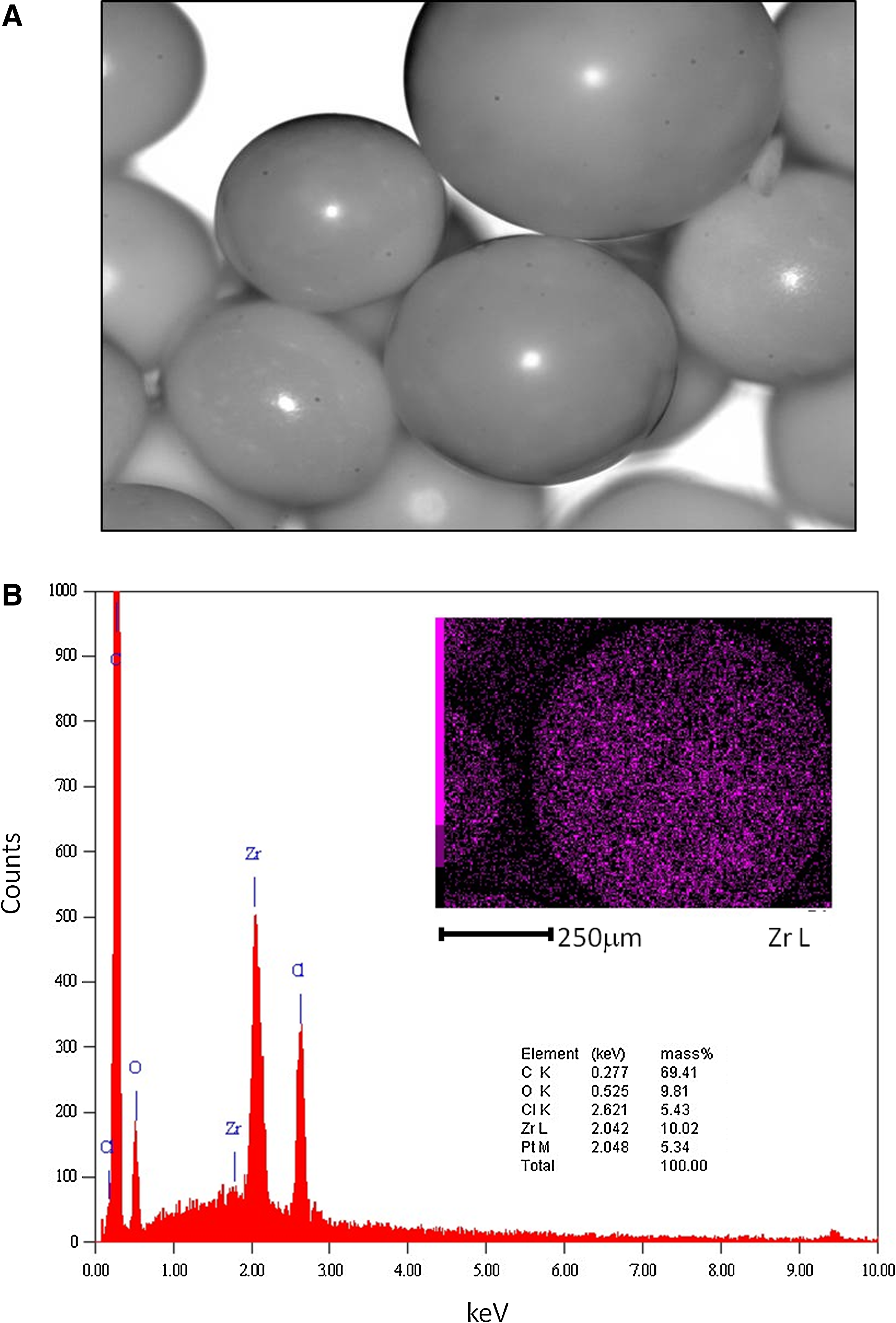
Zirconium oxide and anion-exchange resins are available worldwide and the synthesis process, as developed during this investigation, can be replicated in countries impacted by fluoride. HAIX-Zr remained identical in physical configuration to its parent anion exchanger beads (Fig. 2A). Slices of HAIX-Zr were characterized by scanning electron microscopy with energy-dispersive X-ray (SEM-EDX) attachments (Model JEOL JSM-6360A). Figure 2B shows that the EDX mapping inside a single hybrid particle-notice zirconium is present throughout the entire bead. The zirconium content of the resulting HAIX-Zr was found to be 110–130 mg Zr/g of resin after two successive acid digestions.
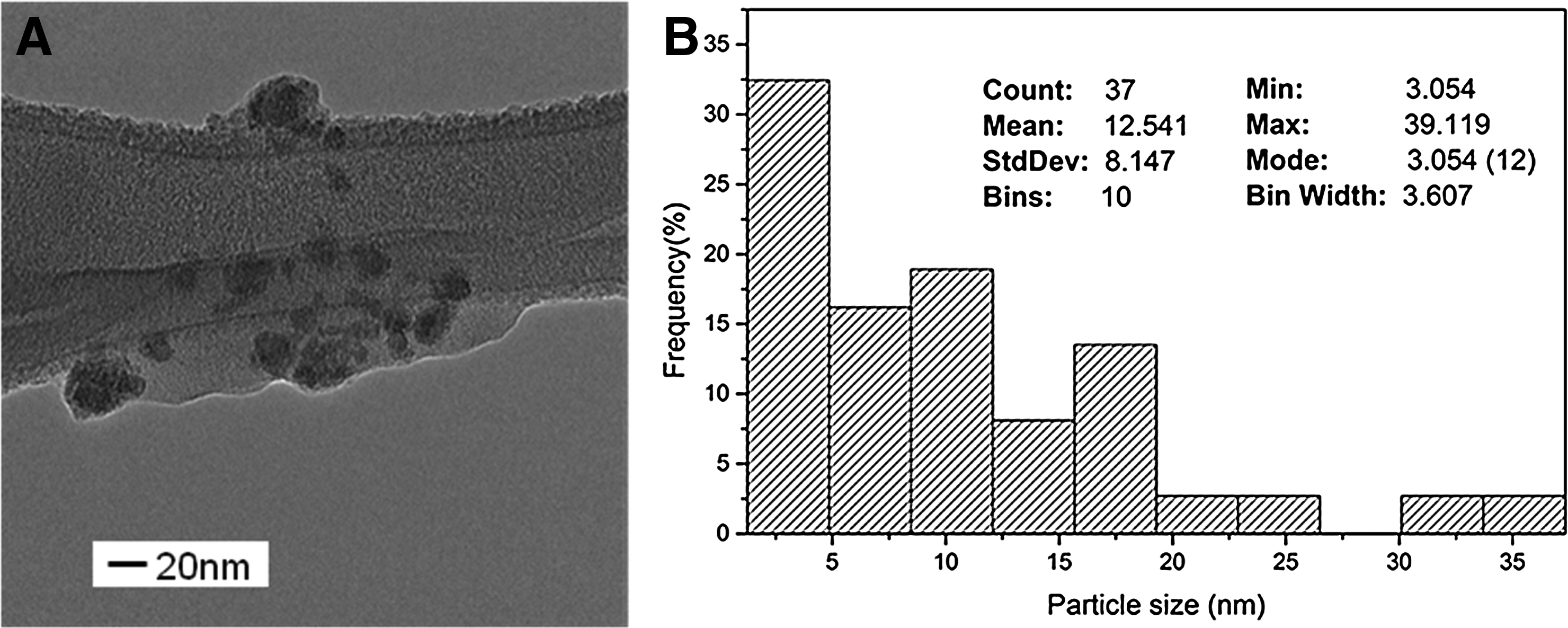
The tunneling electron microscope (TEM) image, as shown in Fig. 3A, was taken by a JEOL JEM-2200FS with a field emission gun under an accelerating voltage of 200 keV. The specimen was prepared by slicing HAIX-Zr with ultramicrotomy. Scanning, enumeration, and particle-sized distribution calculations were performed with the software ImageJ attached to the JEOL electron microscope; Figure 3B shows the particle diameter distribution for the 37 HZrO nanoparticles. The mean particle size was calculated to be 12.5 nm. Particle sizes ranged from a maximum of 39.1 nm to a minimum of 3.0 nm.
Images were taken for slices from parent macroporous anion exchanger beads and HZrO-dispersed particles using a Hitachi 4300 Scanning Electron Microscope (SEM), while the X-ray mapping was taken with a Phillips XL-30. SEM images, as illustrated in Fig. 4A and B, show practically no change in pore structure due to impregnation of HZrO. This observation reinforces that HZrO nanoparticles reside primarily in the gel phase and do not affect the resin pore structure. The interior fluid dynamics and tortuosity of the particles are unlikely to be affected after the dispersion of HZrO nanoparticles.
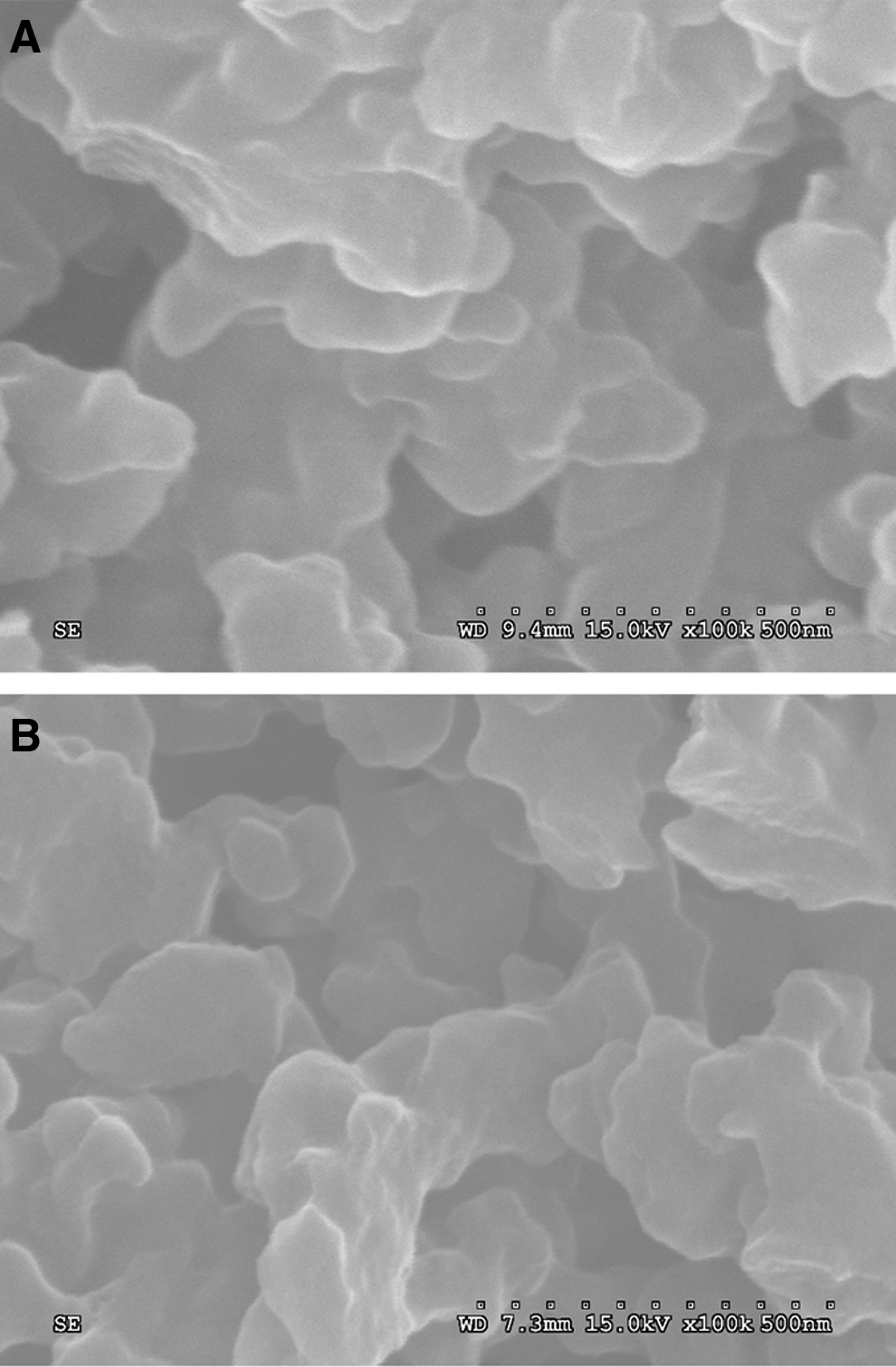
High-resolution scanning electron microscope (SEM) image taken at 15 keV of a cross-sectioned resin bead coated with Ir.
Column runs and chemical analyses
Fixed-bed column runs for fluoride removal from synthetic, but representative, feed solutions were carried out using 11 mm-diameter glass columns, constant-flow pumps, and fraction collectors. The empty-bed contact time (EBCT) and superficial liquid-phase velocity (SLV) were recorded for each experimental column run. Previous studies with polymeric ligand exchangers confirmed that no significant channeling occurs under such operating conditions (Zhao et al., 1995). The water chemistry for all of the synthetic feedwater was as follows: F−=5 mg/L; pH 5.5±0.5; Cl−=SO42−=100 mg/L; and SiO2=10 mg/L; the only exception was the comparison tests in Figure 4 at pH 5.5 and F−=10 mg/L. The exhausted HAIX-Zr was regenerated using a mixed solution of 3% NaCl and 3% NaOH. After regeneration, the bed was rinsed with CO2-sparged water (pH≈3.5) to bring the hybrid sorbent to working conditions for the next cycle of fluoride removal. Our ongoing work with removal of contaminants from groundwater has demonstrated that the pH during sorption can be conveniently reduced to pH 5.5 through a weak-acid cation exchanger in series by partly converting alkalinity into carbon dioxide, thus avoiding external acid dosage and associated operational complexity. For several years, many fixed-bed arsenic removal systems have been and continue to be in operation to treat contaminated groundwater in South and Southeast Asia (Supplementary Fig. S1).
For a comparison, AA (Oxide India Co., Durgapur, India) was also tested as a sorbent during the column runs; it is commercially available and well characterized. This particular AA has been and is still in use in several locations in the Indian subcontinent for removal of arsenic and fluoride (Sarkar et al., 2005). In order to confirm any significant change in the amorphous structure of ZrO2 nanoparticles, the powder X-ray diffraction analyses of the sliced HAIX-Zr samples were carried out for both parent and used materials after several cycles of operation with an X-ray diffractometer, Rikagu model MiniFlex II. Fluoride analysis was carried out by using Hach UV-VIS spectrophotometer model DR 5000 by following SPADNS method (APHA, 1985). Chloride and sulfate were analyzed using a Dionex Ion Chromatography system (model DX-120).
Batch equilibrium test: sulfate competition
An equilibrium uptake test was completed to demonstrate whether fluoride sorption by HAIX-Zr takes place through the ligand-exchange mechanism. In the batch equilibrium test, sulfate concentration was gradually increased from 0 to 500 mg/L, while the dosage of HAIX-Zr and the water chemistry were identical to other column runs.
Simulated pH degradation tests
To further investigate the chemical stability or dissolution of HAIX-Zr and AA materials, 100 mg of each material was added to 200 mL of water and shaken in a gyratory shaker at different pH values for 72 h. Solution pH was adjusted with dilute HCl or NaOH, and the dissolved aluminum or zirconium in the residual solution was analyzed using an inductively coupled plasma optical emission spectrometer spectrophotometer (Perkin Elmer Model Optima).
Batch kinetic tests
Kinetic tests for the sorption of fluoride onto HAIX-Zr in the presence of other electrolytes were performed using the set-up shown in Fig. 5. HAIX-Zr beads were loaded within the cell of the variable-speed stirrer. When the stirrer assembly rotates, the centrifugal action produces a rapid circulating flow of solution entering the cage at the bottom and leaving through the radial holes of the cage. Thus, an area of high turbulence surrounding the ion exchanger beads was maintained, and diffusional resistances in the liquid film around the ion exchanger beads were essentially absent. Under these circumstances, the sorption kinetics were controlled by intraparticle diffusion. The underlying principles of this apparatus are identical to the one developed originally by Kressman and Kitchener and described by Helfferich (1962). At different time intervals, small volumes (<2.5 mL) of the solution were collected from the solution and analyzed.

Batch kinetic test apparatus and stirrer assembly for determination of intraparticle diffusivity.
Results
Comparison of different sorbents: column runs
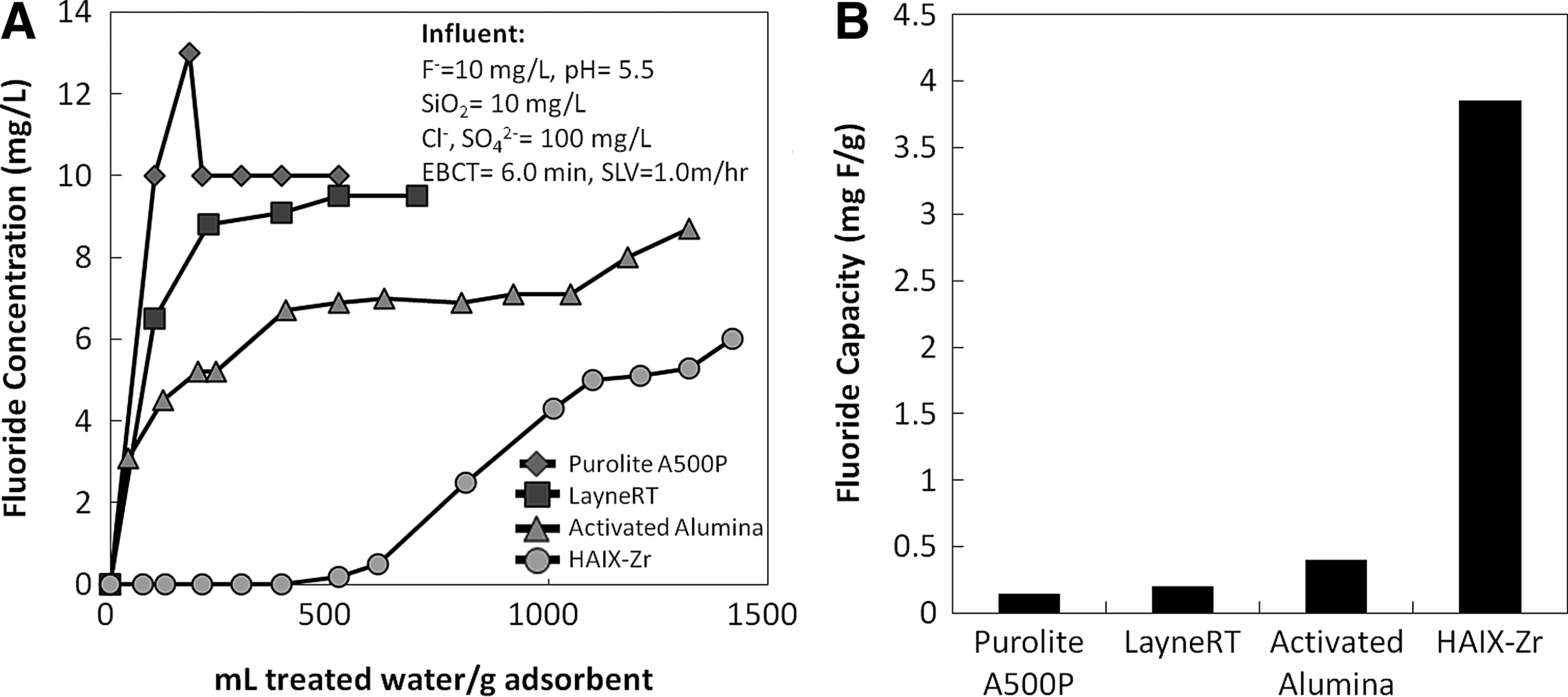
Figure 6A shows effluent histories during fixed-bed column runs with four different sorbents: AA (Oxide India Co.), LayneRT™, Purolite A-500P (a strong-base anion-exchange resin), and HAIX-Zr; HAIX-Zr was synthesized in accordance with the protocol described earlier. LayneRT is an arsenic-selective HAIX resin that contains iron oxide nanoparticles (Sarkar et al., 2012). The influent composition and the hydrodynamic conditions (i.e., EBCT and SLV) were identical for all four runs and recorded in Figure 6A. In order to reduce the length of the runs, fluoride concentration in the influent was kept relatively high at 10 mg/L. Since the specific gravities of the four sorbents were different, the abscissa in Fig. 6A was plotted as milliliter of water treated per gram of the adsorbent (bed volumes [BVs]) in the bed to normalize the data. Strong-base macroporous anion-exchange resin (Purolite A-500P) offered the lowest fluoride removal capacity, and fluoride breakthrough showed chromatographic elution behavior; that is, fluoride in the treated water was greater than that in the influent. Chromatographic elution was caused primarily due to the presence of sulfate in the feed, which has significantly higher selectivity for anion-exchange sites compared with fluoride. It should be noted that LayneRT did not offer any significant fluoride removal capacity, and fluoride breakthrough occurred quickly in <50 BVs. AA offered significantly greater fluoride removal capacity; 50% fluoride breakthrough took place in about 300 BVs. In comparison, HAIX-Zr offered much greater fluoride removal capacity, where 50% of the fluoride breakthrough occurred well after 1000 BVs. Figure 6B presents a summary of fluoride removal capacities of different sorbents estimated from Fig. 6A at 50% fluoride breakthroughs during the column runs; characteristically, these operating capacities are of practical significance for field-scale applications, but significantly lower than the capacity values reported in the literature from batch equilibrium studies (Clifford, 1999; Brunson and Sabatini, 2009; Tchomgui-Kamga et al., 2010; MacDonald et al., 2011).
The role of the host polymer
In order to examine the Donnan membrane effect exerted by the host ion-exchange materials, zirconium oxide nanoparticles were separately dispersed within a macroporous cation-exchange resin (Purolite C-145; Purolite Co.) following a protocol described earlier (Padungthon et al., 2011). The zirconium oxide content of the resulting hybrid cation-exchange resin (HCIX-Zr) was 12% or 120 mg/g of resin as Zr. Two separate fixed-bed column runs were carried out using HCIX-Zr and HAIX-Zr for fluoride removal, with all other conditions remaining identical. Both Purolite C-145 and Purolite A-500P are macroporous resins with a polystyrene matrix and divinylbenzene cross-linking; they are different from each other only with regard to their functional groups. While Purolite C-145 has negatively charged sulfonic acid functional groups, Purolite A-500P has quaternary ammonium groups with fixed positive charges. Figure 7 shows the comparison of fluoride effluent histories between the two runs. It should be noted that in spite of similar ZrO2 content, HAIX-Zr offers much greater fluoride removal capacity than HCIX-Zr. Taken in consideration of past work, these observations indicate that ZrO2 nanoparticles offer high fluoride selectivity, but the Donnan membrane effect, exerted by the covalently attached quaternary ammonium functional groups in the host anion exchanger, greatly enhances the permeation of fluoride anion within the hybrid sorbent; that is, surface sorption sites of zirconium oxide nanoparticles are more accessible and have greater capacity when anion-exchange resins are used as host materials.
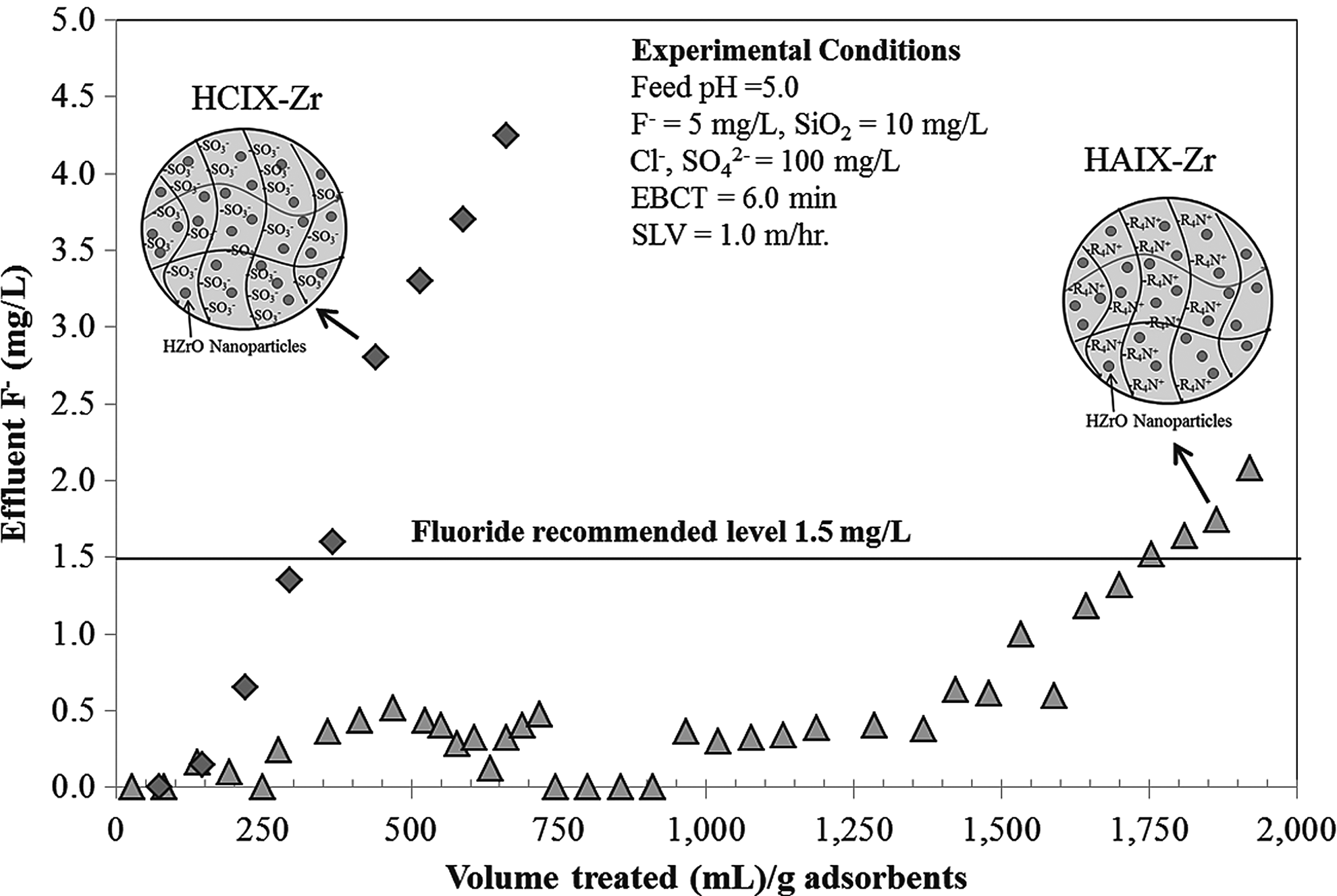
The comparison of fluoride effluent histories between identical runs using HAIX-Zr or HCIX-Zr. Empty-bed contact time (EBCT) and superficial liquid-phase velocity (SLV) are provided in the figure.
Consecutive column runs, attrition resistance, and chemical stability
Of all the fluoride-selective sorbents in use to date, AA exhibits the highest fluoride sorption capacity compared with commercially available bone char, hydroxyapatite, and anion-exchange resins. AA was procured from Oxide India Co. Figure 8A and C provide the comparison of fluoride effluent histories of two successive column runs using AA and HAIX-Zr under otherwise identical conditions, while Fig. 8B and D show fluoride concentration profiles during regeneration with 3% NaOH/3% NaCl. The following observations should be noted:
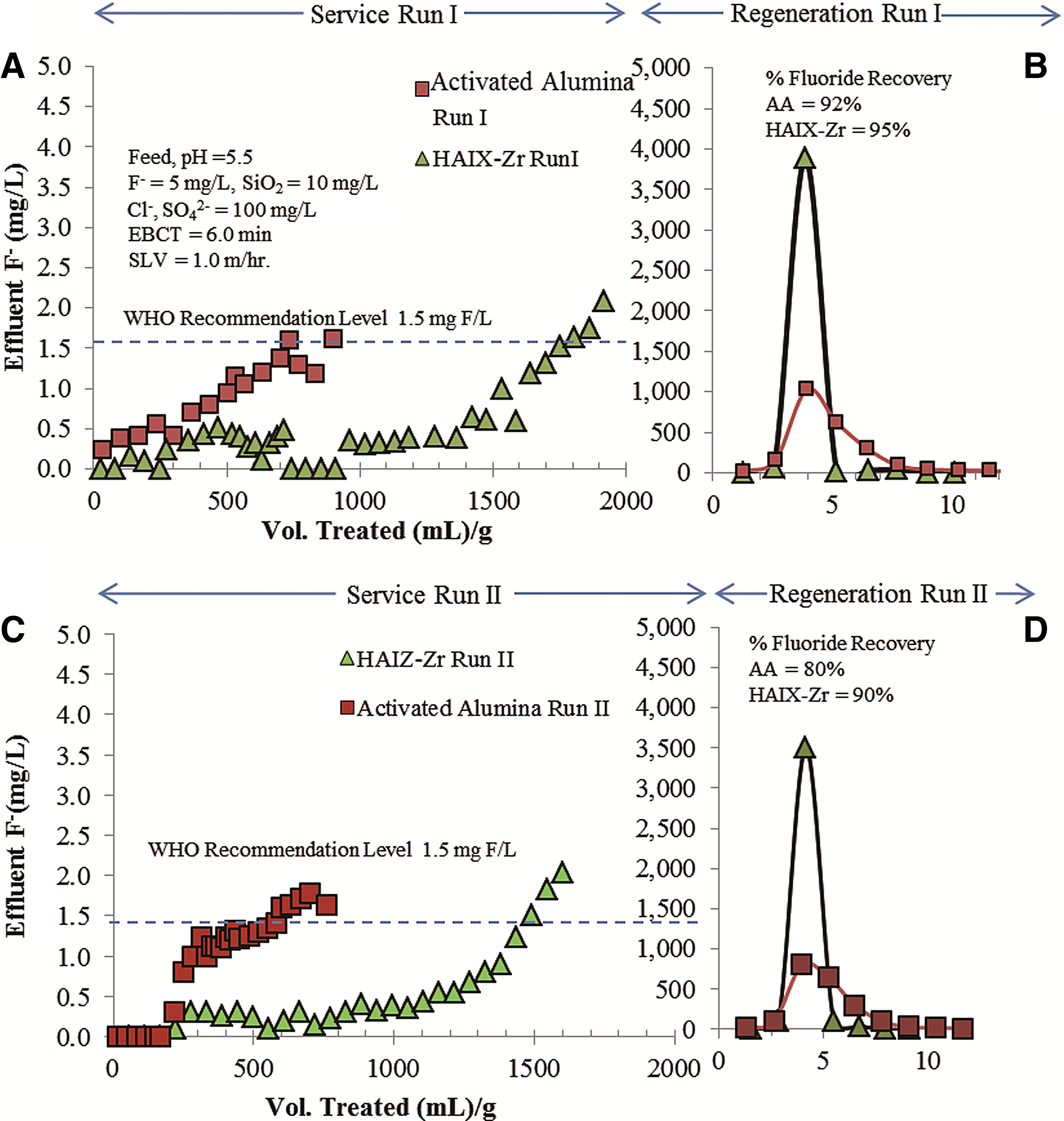
Comparison of fluoride effluent histories of two successive column runs using AA
• HAIX-Zr offered significantly greater fluoride removal capacity than AA.
• 1.5 mg/L fluoride breakthrough occurred at <600 BVs for AA and at >1400 BVs for HAIX-Zr.
• Regeneration was quite efficient for both AA and HAIX-Zr. In <10 BVs, well >90% regeneration efficiency (i.e., fluoride recovery) was attained for both HAIX-Zr and AA; HAIX-Zr had much higher fluoride loading per mass than AA.
Lack of attrition resistance, chemical stability, and reusability for multiple cycles of operation are viewed as major shortcomings for sustainable use of AA in mitigating fluoride crisis. For visual evidence, photographs of HAIX-Zr resin and AA particles after two cycles of exhaustion-regeneration are provided in the (Supplementary Fig. S2); fragmentation of particles is apparent. HAIX-Zr particles, on the contrary, show no signs of fragmentation or physical breakdown after two cycles of operation lasting more than two months.
Figure 9 shows plots of dissolved zirconium from HAIX-Zr and aluminum from AA, after tumbling for 72 h at different pHs. It should be noted that HAIX-Zr is practically insoluble over the entire pH range of service and regeneration, from pH 4 to 12. At pH≤3.0, minor dissolution of zirconium oxide was observed. In contrast, AA was chemically very unstable, especially at alkaline conditions during the regeneration process (pH≥11); more than 40 mg/L Al was dissolved in solution at pH 12.0. It is postulated that enhanced chemical dissolution during regeneration and physical attrition during lengthy column runs are responsible for high fragmentation of AA particles.

Plots of simulated pH stability testing (pH 3–12), showing equilibrium aqueous concentrations for zirconium from HAIX-Zr and aluminum from AA.
In order to confirm whether the amorphous structure of zirconium oxide particles change into crystal structures with elapsed time and pH changes during service-regeneration cycles of operation, X-ray diffractograms were obtained for sliced HAIX-Zr particles for both fresh materials and after two cycles of operation as shown in (Supplementary Fig. S3). It should be noted that the sliced HAIX-Zr particles show no distinguishable peaks, that is, zirconium oxide structure is near-completely amorphous. No enhanced crystallinity corresponding to tetragonal or monoclinic forms is observed even after several cycles of operation.
Effect of competing sulfate anion concentration
An equilibrium uptake test was carried out to demonstrate that the fluoride uptake by HAIX-Zr takes place through the ligand-exchange mechanism and suffers minimal competition from other commonly encountered anions, namely, sulfate and chloride. In the batch equilibrium test, sulfate concentration was gradually increased from 0 to 500 mg/L, while the dosage of HAIX-Zr and other parameters, including the initial fluoride concentration of 10 mg/L and pH, were kept constant. It should be noted that an increase in the aqueous-phase sulfate concentration had minimal influence on the fluoride concentration in the aqueous phase (Fig. 10A), and the fluoride removal capacity (Fig. 10B) remained nearly unchanged.

Sorption kinetics: mechanism and effective intraparticle diffusivity
One column run with previously exhausted and regenerated HAIX-Zr was deliberately subjected to a 24 h interruption at the time period marked with a circle in Fig. 11. As the effluent fluoride concentration gradually increased, the influent flow was deliberately discontinued. When the flow resumed, the effluent fluoride concentration dropped significantly, from 4.25 to 2.5 mg/L, as can be seen from the inset of Fig. 11. Following the passage of about 60 BVs of influent solution after the restart, the fluoride concentration at the exit of the column reached concentration before interruption.
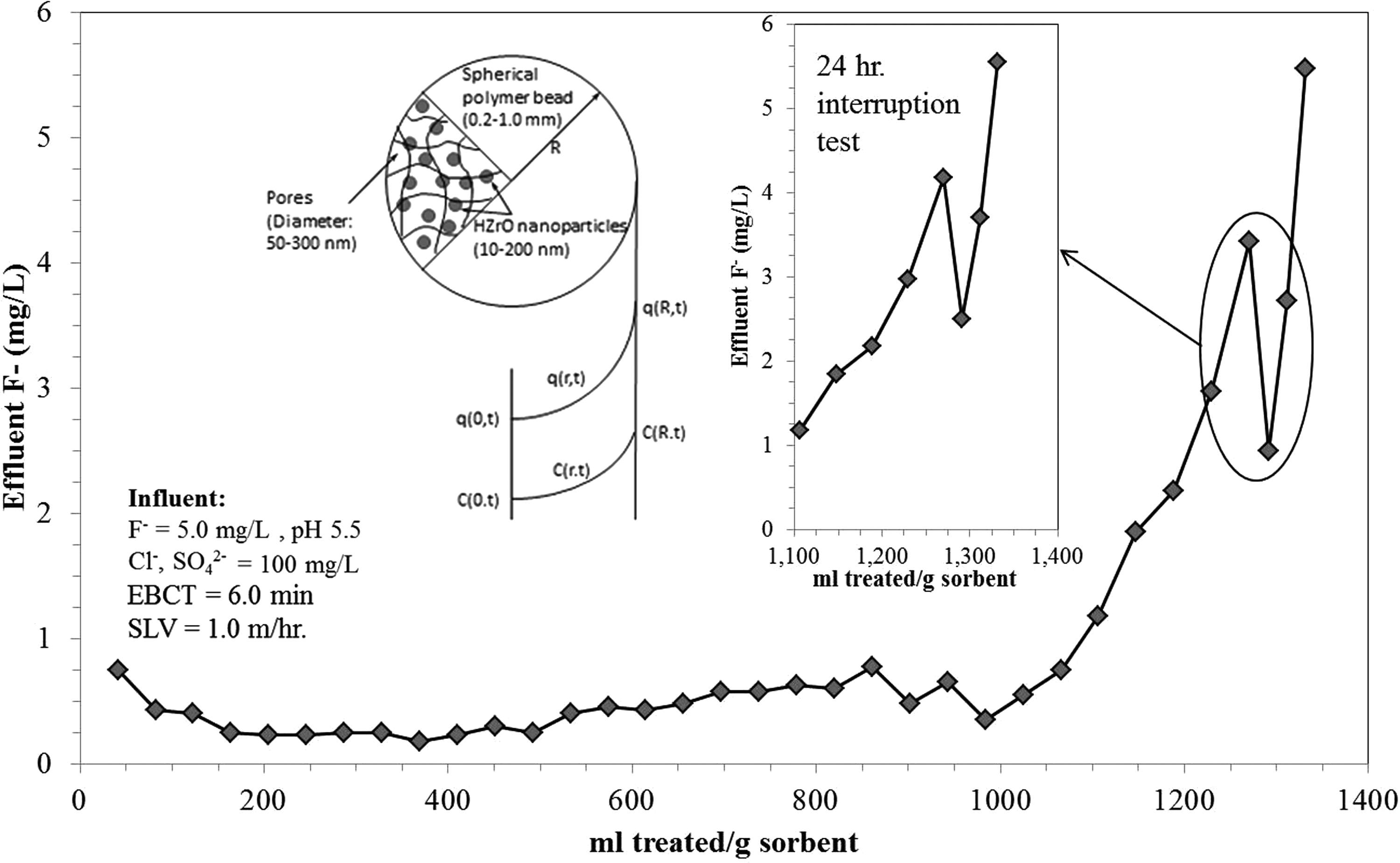
Twenty-four hour interruption test during fixed-bed column run on fluoride removal by HAIX-Zr. Insets: (Left) Concentration gradient of fluoride and capacity across the ion-exchange resin versus time; (right) close-up of effluent fluoride concentration during the 24 h interruption.
For an intraparticle diffusion-controlled sorption process, the concentration gradient within the sorbent particle serves as the driving force and governs the overall rate; a representative situation of a single spherical HAIX-Zr particle with a concentration gradient only in the exchanger phase is depicted in the inset of Fig. 11. As the interruption test progresses, the concentration gradient across the resin bead attenuates. The interruption enables the sorbed fluoride to create a homogeneous concentration distribution within the spherical bead. As a result, immediately after restarting the column, the resin-bulk solution concentration gradient and the uptake rate into the resin bead were greater than before the interruption. In other words, a faster uptake and a drop in effluent fluoride concentration after the interruption test is evidence that supports intraparticle diffusion being the primary rate-limiting step. Several previous studies have also confirmed that kinetics in selective sorption processes are governed by intraparticle diffusion (Li and SenGupta, 2000; Demarco et al., 2003).
In order to determine the intraparticle pore diffusivity for fluoride, a finite volume batch kinetic test was carried out using the set-up shown in Fig. 5. At time t, the mass balance of fluoride between the liquid and the exchanger phase gives
where V and m represent the solution volume and the mass of HAIX-Zr, respectively; CF,0, CF,t, and qF,t represent initial aqueous-phase fluoride concentration, fluoride concentration in the aqueous phase at time t, and uptake by the exchanger at time t, respectively. At equilibrium, that is, after infinite time,
Normalized fractional loading or uptake of fluoride (F) by the exchanger during the batch kinetic test changes with time and is defined as
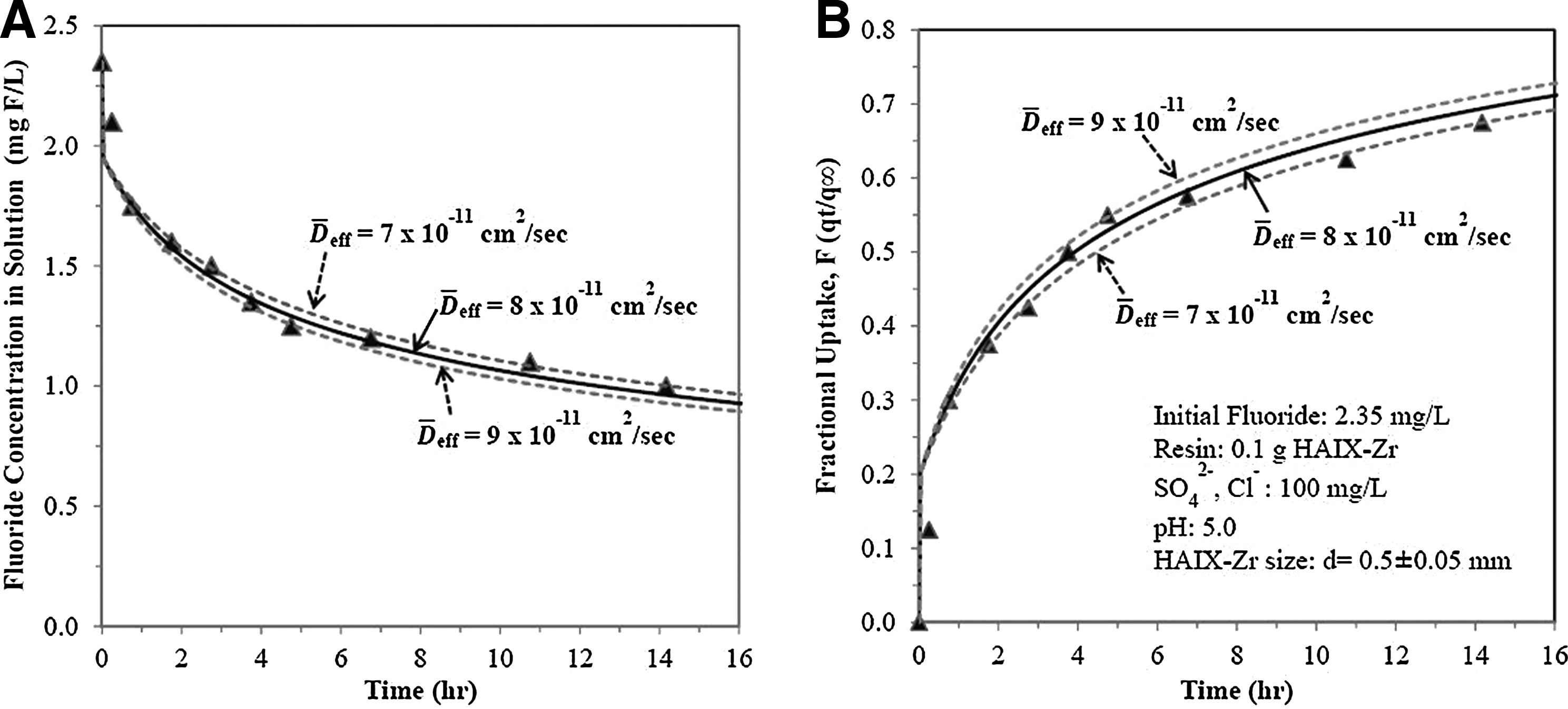
Figure 12A shows the decrease in the aqueous-phase fluoride concentration with time, and Fig. 12B shows the corresponding fractional uptake versus time plot for the batch kinetic test; pertinent experimental conditions are in the figures. Dissolved fluoride concentration after 72 h was taken as the equilibrium value. For a finite solution volume system with appropriate initial and boundary conditions, fractional uptake rates are available in the open literature (Crank, 1975) and are written as
βn is the nonzero root of
and βn can be calculated from its relationship with the final fractional uptake,
The solid lines in Fig. 12A and B represent the model predictions of the kinetic test results and the best-fit effective intraparticle diffusivity,
Discussion
Role of the host material and the nature of interaction
Results from Fig. 7 validate that the fixed charges of the functionalized host materials greatly influence the overall fluoride removal capacity. Although HZrO impregnation was nearly the same for both cation-exchange resins (negatively charged sulfonic acid functional groups) and anion-exchange resins (positively charged quaternary ammonium functional groups), HAIX offered much greater fluoride removal capacity than HCIX, in keeping with the premise of the Donnan membrane effect. In addition, the results from Fig. 10A and B demonstrated that sulfate (or chloride) exhibits no competing effect for fluoride removal by HAIX-Zr; that is, electrostatic interaction plays a very insignificant role in fluoride removal. However, the quaternary ammonium functional groups (R4N+) in HAIX enhance fluoride accessibility to HZrO nanoparticles embedded within the gel phase by orders of magnitude versus HCIX.
In order to develop both mechanistic understanding and quantitative representation of the scenario, let us consider the TEM of a sliced hybrid particle clearly showing the presence of HZrO nanoparticles in the gel phase of the anion exchanger as shown in Figure 3A. We consider a 20 nm HZrO particle and assume spherical geometry, where, independently, this nanoparticle always exhibits high sorption affinity for fluoride through Lewis acid–base interactions, as shown in Fig. 13A. For a cation exchanger support, this particle is embedded in negatively charged sulfonic acid functional groups (Fig. 13B); while for an anion exchanger, they are positively charged quaternary ammonium groups (Fig. 13C). Considering the ion-exchange capacity of both exchangers to be 1 mEq/mL, the density of charged functional groups surrounding the 20 nm sphere is ∼6.02×10²⁰/mL. The Donnan exclusion effect is very strong for cation-exchange resins, but permeation of fluoride toward HZrO nanoparticles is enhanced by the positive functional groups in anion-exchange resins, leading to increased sorption capacity. In addition, earlier studies showed decreased crystallization and smaller particle size in anion-exchange resins versus cation-exchange resins (Cumbal, 2004).
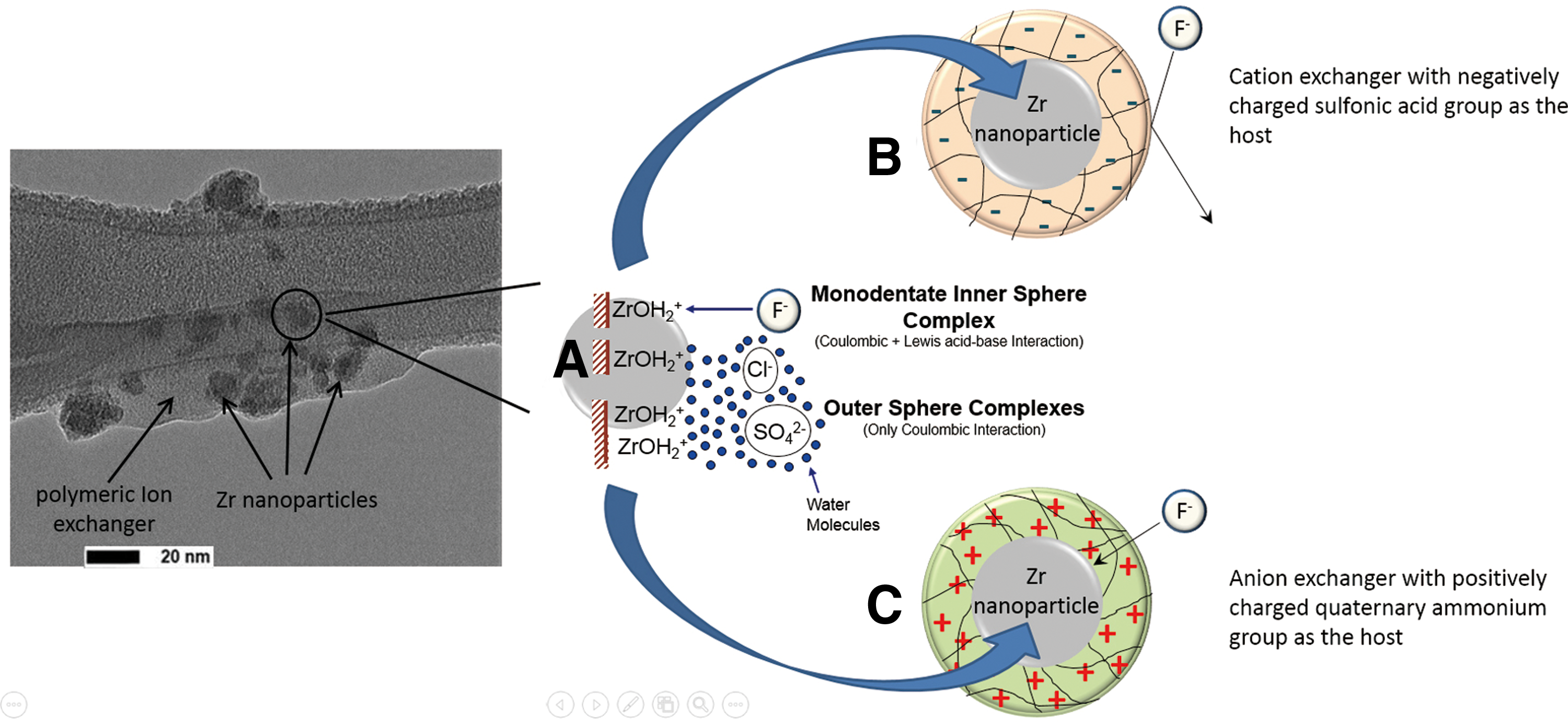
TEM of a sliced hybrid particle and fluoride sorption comparison between
Application potentials and reusability of the hybrid sorbent
For HAIX-Zr, innocuous zirconium oxide, which is nonhazardous and easily transportable, was the primary chemical constituent for the new sorbent. All existing zirconium-based adsorbents reported to date, with or without supporting materials, use highly hazardous ZrOCl2 as the primary ingredient. Transporting ZrOCl2 to geographical regions of interest that are confronted with fluoride-contaminated groundwater poses major hurdles and renders the zirconium technology less amenable to large-scale, rural application. Zirconium oxide, on the contrary, is benign, safe to handle, and also obtainable as a waste byproduct in high purity from many chemical industries. One commercially available macroporous anion exchange resin, Purolite A-500P, was used in the study as the substrate for preparing the hybrid polymeric/inorganic material. It is likely that by further optimizing the substrate anion exchanger, the fluoride sorption capacity can be significantly enhanced.
HAIX-Zr is durable, chemically stable, and mechanically strong; it did not form any fines during prolonged column runs and after regeneration. The regeneration of HAIX-Zr was very efficient (Fig. 8B,D), and more than 90% fluoride sorbed in the previous cycle was removed. The observation that fluoride desorption was completed in <10 BVs demonstrates that the sorption sites of HZrO nanoparticles are easily accessible through the network of pores; that is, no pore blockage or consequent increase in tortuosity resulted from the dispersion of HZrO nanoparticles within the anion exchanger. High sorption affinity in conjunction with efficient regeneration and reusability make HAIX-Zr a strong candidate for deployment to mitigate fluoride crisis in remote rural areas of the developing world.
Based on the zero-point charge information for HZrO particles available in the open literature and related sorption studies (Kosmulski, 2002; Padungthon, 2013), amorphous HZrO particle surface may be approximated as a diprotic acid with the following two acid dissociation constants:
In addition, the acid dissociation constant of hydrofluoric acid, HF, is
Figure 14A provides the relative distribution of the surface functional groups of zirconium oxide with pH, while the relative predominance of F− is presented in Fig. 14B. It should be noted that at pH<6.0, protonated HZrO (ZrOOH2+) is the most predominant functional group and the formation of inner-sphere complexes with fluoride is highly favored due to the prevailing Lewis acid–base interaction. In contrast, at pH>9.0, negatively charged surface groups (ZrOO−) are predominant and reject anions by the Donnan exclusion effect, including fluoride. Thus, the sorption and desorption of fluoride onto HAIX-Zr can be alternated by swinging pH as demonstrated in Fig. 8. Accordingly, the sorption-desorption rinsing continues as a cyclic process as illustrated in Figure 1.

Distribution of surface functional groups of hydrated zirconium oxide (HZrO) particles
Summary
In this study, an extensive laboratory investigation was carried out with representative fluoride-contaminated groundwater to evaluate the performance of a reusable, hybrid sorbent that utilizes HZrO nanoparticles supported on a commercial anion exchanger. Zirconium oxide (ZrO2), a nontoxic, nonhazardous inorganic material, was one important starting material and is available globally. The quaternary ammonium functional groups of the anion exchanger beads enabled high (∼12% by mass) zirconium loading and enhanced fluoride removal capacity through the Donnan membrane effect. Mechanical agitation, regeneration, and repeated column usage did not result in any loss in HZrO particles or uptake capacity from the resin. Major conclusions can be summarized as follows:
• HAIX-Zr provides a synergy that is not attainable by anion exchangers or zirconium oxide nanoparticles independently. In addition to being highly fluoride selective, HAIX-Zr was found to be more chemically stable and durable compared with AA.
• Similar to other selective sorption processes, intraparticle diffusion is the primary rate-limiting step for dissolved fluoride removal by HAIX-Zr. The experimentally determined intraparticle diffusivity (8×10⁻¹¹ cm2/s) under representative conditions is comparable with that observed for other selective sorption processes.
• HAIX-Zr was found amenable to regeneration and reuse with no loss in capacity in successive cycles.
• Polymeric anion exchangers are inexpensive, durable, and universally available sorbents throughout the world. On a treated water-throughput basis, HAIX-Zr is economically competitive with all other existing sorbents for fluoride removal and ready-for-field trials.
Footnotes
Acknowledgments
The authors gratefully acknowledge the partial financial support received through grants from the United States Environmental Protection Agency (USEPA), NCIIA (National Collegiate Invention and Innovation Alliance), and Pennsylvania Infrastructure and Technology Alliance (PITA). They are thankful for the Royal Thai Fellowship awarded to S.P.
Author Disclosure Statement
No competing financial interests exist.
References
Supplementary Material
Please find the following supplemental material available below.
For Open Access articles published under a Creative Commons License, all supplemental material carries the same license as the article it is associated with.
For non-Open Access articles published, all supplemental material carries a non-exclusive license, and permission requests for re-use of supplemental material or any part of supplemental material shall be sent directly to the copyright owner as specified in the copyright notice associated with the article.
