




Abstract
Abstract
In the present work, the distribution of endocrine-disrupting chemicals (EDCs) in an industrial (denim-dyeing) wastewater and pollutant removal efficiencies of three processes from two treatment plants were studied. Result indicated that nonylphenol (NP) was the main pollutant in the wastewater with concentrations of 30–400 μg/L, followed by bisphenol A (BPA) with concentrations of 0.37–14.5 μg/L, while only a trace amount of triclosan (TCS) was detected. High pH values and high dye concentrations had no effect on treatment efficiencies of all processing units. Conventional activated sludge treatment process showed the highest removal efficiencies of 90% for NP, 92% for BPA, and 94% for TCS. Performance of oxidation ditch treatment process was inferior to conventional sludge system for reduction of NP. The acid sedimentation unit could remove nearly half of NP and TCS from the influent, while an increasing trend was observed in the same unit for the concentration of BPA, which might be caused by transformation of unidentified parent chemicals in the raw wastewater. The long hydraulic retention time of the sedimentation unit did not favor reduction of NP and might influence the removal efficiency of other two compounds. To reduce effluent endocrine effects to the aquatic organisms, efforts should be focused on NP and its parent compounds.
Introduction
E
Given the risks posed by them, the three compounds have become a cause for concern for environmental researchers worldwide (Pothitou and Voutsa, 2008; Ifelebuegu, 2011). High concentrations of the three EDCs have been detected in the surface waters of China (Zhao et al., 2011). Tap water has also been found to be polluted with the three EDCs (Li et al., 2010). Wastewater discharged from industrial parks nearby is considered a source of pollution (Li et al., 2010; Zhao et al., 2010, 2011).
The effluent from the textile industry contains high concentrations of organic and inorganic compounds (Correia et al., 1994; Chiavola, 2009) and is considered one of the most difficult-to-treat wastewaters (Singh and Arora, 2011). Although treatment plants designed for textile wastewater are able to successfully eliminate common pollutants, the endocrine effects induced by textile auxiliaries in wastewater have still aroused the interest of environment researchers (Pothitou and Voutsa, 2008b; Prigione et al., 2008).
Three EDCs were chosen for the investigation because of their possible use in the textile industry. NPEOs with emulsifying, dispersing, wetting, and foaming capabilities serve as dyeing auxiliaries in textile manufacturing. BPA, a monomer that comprises both polycarbonate and epoxy resin, can be used as an antioxidant or stabilizer in textiles. TCS, an antimicrobial agent, can be used as an antiodor agent in textile products. However, the distribution of the three EDCs in textile wastewater has rarely been explored in research. The removal efficiencies of treatment plants and the amounts of them discharged to wastewaters have not been studied.
One objective of the present study is to investigate the distribution of NP, BPA, and TCS in the mixed wastewater from two denim-dyeing industrial parks in the southeast of China. The results of three treatment processes from the parks were also examined. The role of each treatment unit in the reduction of the trace pollutants was discussed based on the results obtained. The profile of the removal of the three EDCs from wastewater was presented to understand their elimination mechanisms in industrial wastewater. A gas chromatograph connected to a mass spectrometer with a chemical ionization (CI) source was used to determine the three EDCs. Meanwhile, the conventional pollutants were monitored to ensure the efficiency of the processes during the sampling period.
Facilities and Methods
Facilities and its characteristics
Wastewaters examined were discharged from two representative denim industrial parks, namely Xizhou Industrial Park (abbreviated as Xizhou hereafter) and Xiapu Industrial Park (abbreviated as Xiapu hereafter), occupied by nearly 100 denim-processing mills. The dyeing, washing, and finishing procedures are the major contributors to the wastewaters of the two parks. The washing procedure is considered the biggest contributor, as its by-products make up more than 60% of the wastewater from each park. A small proportion of domestic sewage is also detected in the wastewater from the two treatment plants. The pollutants in the mixed wastewaters include modified starch, caustic alkali, sulfur black, indigo, and various textile auxiliaries. The pH of the mixed wastewaters reaches higher than 12 as a result of the sodium hydroxide derived from the mercerizing procedure.
The mixed wastewater from Xiapu is divided into two parts (named Processes I and II and depicted in Fig. 1a and b, respectively) and processed sequentially in an acidified sedimentation tank, an anaerobic hydrolysis tank, an aerobic tank, and two final sedimentation tanks. Process II differs from Process I because of the substitution of the conventional active sludge tank by an oxidation ditch. Polymeric flocculants made of polyaluminum chloride (PAC) are added to the second sedimentation tank in the two processes in Xiapu to help the settling of suspended particles. Process III applied in Xizhou (depicted in Fig. 1c) is similar to Process I except for the omission of one sedimentation tank in the final stage. The operating parameters of the processes are illustrated in Tables 1 and 2.
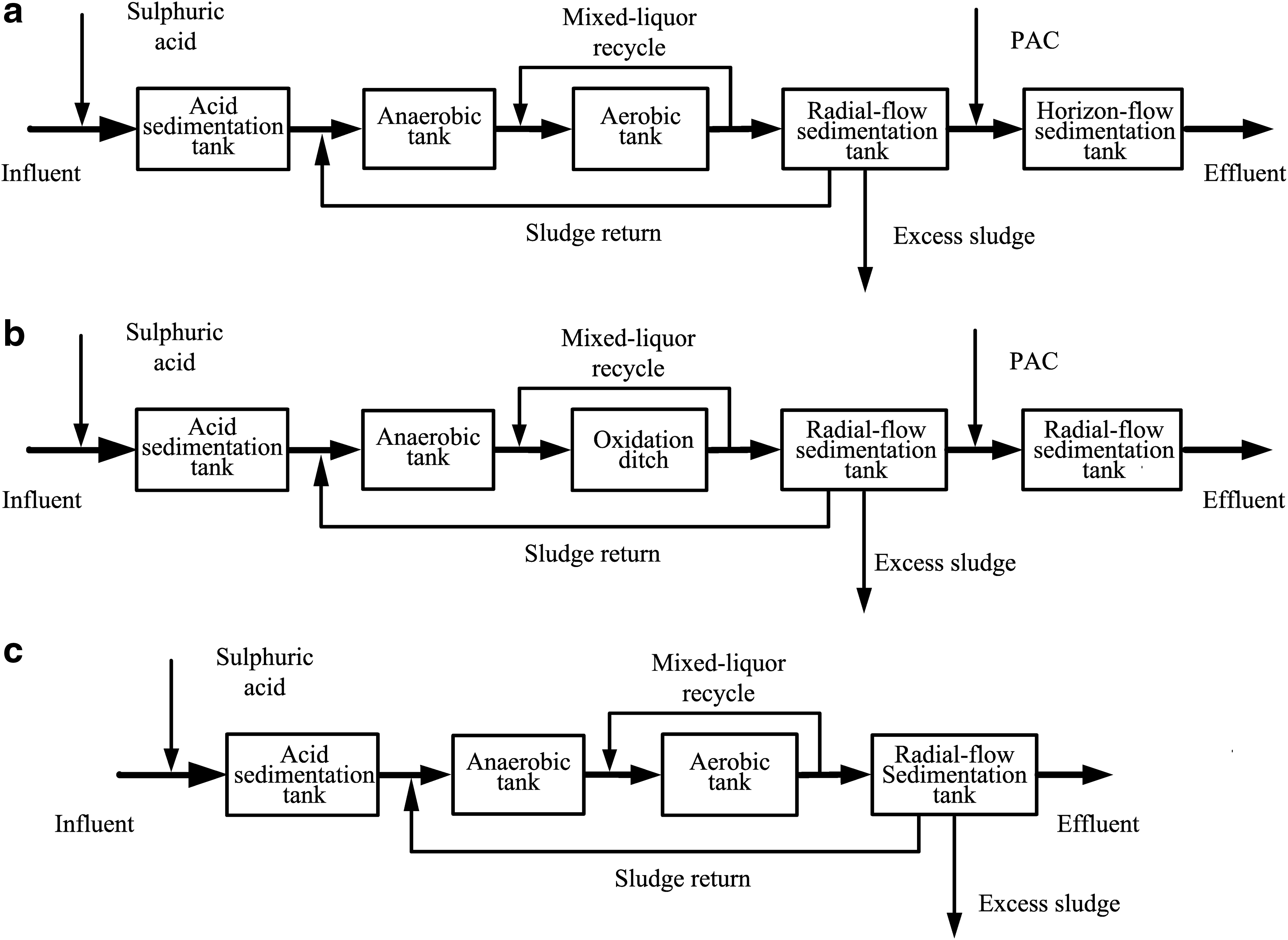
Three treatment processes:
HRT, hydraulic retention time; MLRR, mixed liquid recycle ratio (average of 6 days); SC, sludge concentration (average of 6 days); SRR, sludge recycle ratio (average of 6 days); SRT, sludge retention time (average of 6 days).
The two processes in Xiapu treat 50,000 tons of wastewater daily. The treatment capacity of Process III is 100,000 m3/day.
Sampling
The processes in the treatment plants had already been employed for many years when the study began. The sampling for each process lasted for a week. According to the data on the common pollutants obtained in the investigation, all the effluents met the national textile-dyeing emission criterion (i.e., chemical oxygen demand below 80 mg/L) during the sampling period. One-liter amber glass bottles were used as sample containers. Before sample collection, each bottle was prerinsed with wastewater thrice. The pH levels were reduced to 3 circa by adding 4 M sulfuric acid to the samples. Then, 50 mL methanol was added for the same preservation purpose. The collected water samples were placed in a cooler and transported to the laboratory, where they were stored at 4°C in preparation for filtration and extraction.
Detection of NP, BPA, and TCS
Chemicals and reagents
The organic solvents used included methanol (MeOH), dichloromethane (DCM), hexane, and acetone, all of which were HPLC grade (Merck, Darmstadt, Germany). The pentafluorobenzoyl chloride (PFBOCl) used for derivatization was supplied by Merck. Poly (divinylbenzene-co-N-vinylpyrrolidone; Oasis HLB; 6 mL, 500 mg) cartridges were purchased from Waters (Milford, MA). Analytical standards of 4-NP, TCS, and BPA were purchased from Dr. Ehrenstorfer (Augsburg, Germany). The internal standards, such as BPA-d16 (deuterated [2H16] BPA), 13C-labeled triclosan (13C12-TCS), and 4-n-NP, were purchased from Fluka (Buchs, Switzerland). HPLC-grade water was prepared in the laboratory using a Milli-Q/Milli-RO Millipore System (Merck, Shanghai, China).
Sample preparation
A 500 mL wastewater sample was filtered through a preashed (4 h, 400°C) glass-fiber filter (pore size 0.7 μm; Whatman, Brentford, United Kingdom). The compounds from the spiked wastewater samples were extracted using oasis HLB cartridges (6 mL, 500 mg; Waters) fitted on a vacuum apparatus (Alltech, Deerfield, IL). The samples were passed through the cartridge with a flow rate of 10 mL/min after the cartridge was conditioned with 10 mL MeOH and 10 mL Milli-Q. The cartridges were washed with 4×2.5 mL Milli-Q-grade water to remove interference and then dried under a vacuum for 2 h. The target compounds were eluted with 4×3 mL MeOH and 3×2 mL DCM. The eluate was evaporated until dry under a gentle stream of nitrogen at 40°C. Finally, the dried residues were dissolved in 100 μL MeOH and subjected to a derivatization reaction.
Derivatization procedure
The derivatization method for the phenolic compounds was based on previously used procedures involving pentafluorobenzoylation (Kuch and Ballschmiter, 2001; Boitsov et al., 2004). The steps used in the derivatization process are as follows. First, 100 μL of an extract of MeOH was transferred to a 10-mL glass tube (Kimax, Vineland, NJ) with a polytetrafluoroethylene screw cap. After drying the MeOH under a gentle nitrogen stream, 2 mL of 1 M NaHCO3 aqueous solution and 1 mL of 1 M NaOH aqueous solution were added to the tube. A vortex was used to fully dissolve the residue. Subsequently, 2 mL of n-hexane, 50 μL of 10% pyridine in toluene, and 50 μL of 2% PFBOCl in toluene were added sequentially. The tube was then tightly capped, vigorously shaken for 1 min, and left at room temperature until two liquid layers formed. The supernatant was carefully transferred into a 5-mL centrifugal glass tube. Another extraction was performed with the addition of 2 mL of n-hexane in the 10-mL tube. The upper layer was transferred to the 5-mL centrifugal glass tube containing the previous layer. The n-hexane mixture was dried under a gentle nitrogen stream. The final extract was redissolved in 100 μL of n-hexane, which was then transferred to a 2-mL amber glass vial with a 250-μL flat-bottomed insert for analysis.
Gas chromatography–mass spectrometry analysis
Target compounds were analyzed using an Agilent 7890N gas chromatograph (Agilent, Santa Clara, CA) connected to an HP 5975 MSD mass spectrometer (Agilent) with a CI source. The separation of the compounds was achieved using a DB-5MS capillary column (30 m) with a film thickness of 0.25 μm and an internal diameter of 0.32 mm (Supelco, Bellefonte, PA). The carrier gas was helium, which was maintained at a constant flow rate of 2.0 mL/min. Quantitative analysis was carried out using the selected ion monitoring mode. The retention time and characteristic ions of the target compounds and corresponding internal standards are listed in Table 3.
BPA, bisphenol A; I.S., internal standard; MW, molecular weight; NP, nonylphenol; RT, retention time; TCS, triclosan.
Results and Discussion
Influent concentrations of target compounds
Concentrations of the target compounds in the mixed denim wastewater collected from the inlet of the treatment plants are presented in Fig. 2. Trace amounts of TCS and a vast distribution of NP and BPA were found in the wastewater. NP was the most abundant EDC with average concentrations of 249 μg/L (range, 154–352 μg/L) and 56.1 μg/L (range, 24–87 μ/gL) in the wastewaters from the two industry parks. The BPA ranked second with average concentrations of 0.86 μg/L (range, 0.37–2.31 μg/L) and 8.57 μg/L (range, 2.3–14.5 μg/L). The detected concentration of NP was far higher than that recorded in the raw municipal sewage ranging from several μg/L to dozens of μg/L (Ahel et al., 1994; Stasinakis et al., 2008; Zhou et al., 2010). The BPA concentration was the same as that from urban sewage ranging from hundreds of ng/L to several μg/L (Ying et al., 2008; Zhou et al., 2010; Nie et al., 2012). As for the TCS, the measured concentration ranged from undetected to 355 ng/L, which is lower than that from the municipal sewage ranging from 0.87 to 1.83 μg/L (Lee et al., 2005).
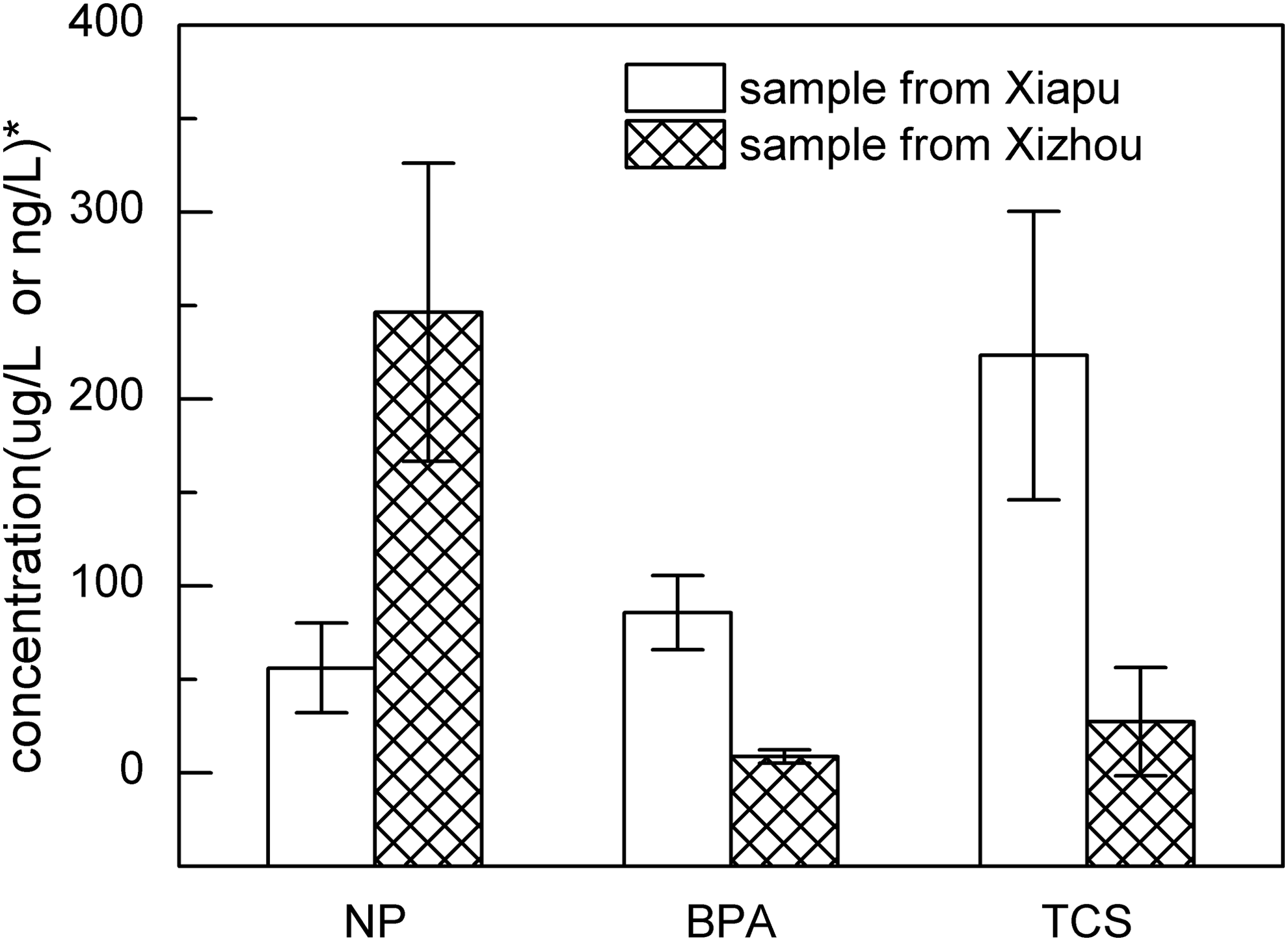
The concentration of three compounds in the dye wastewater from two industrial parks. *The units for nonylphenol (NP), bisphenol A (BPA), and triclosan (TCS) are μg/L, 100 μg/L, and ng/L, respectively.
The results above indicate that the denim sewage is heavily polluted by NP. According to the literature on NP, the abundance of NP is mostly attributed to the degradation of NPEOs used in the processing of denim fabric. The dispersants of dyes and detergents applied in the denim washing procedure, especially the latter, are the main contributors of NPEOs. A certain amount of NPEOs were degraded into NP in the sewer line and resulted in the pollution of the denim wastewater. Substantial amounts of BPA were found in the wastewater, although no direct use was found in the textile industry. Therefore, some chemicals must have been transformed into BPA in the conveying system. The developers used in the dyeing procedure, as well as the flame retardants for a particular fabric, and the inner coating of vessels for various chemicals used in textile were all suspected to be the parent chemicals of BPA. The detected BPA and undetected parent chemicals of BPA in the influent pose a threat to the nearby aquatic environment for the discharge of effluent from the plants. Given the low TCS concentration detected, TCS was not considered a serious pollutant in the denim wastewater. Various personal care products were found to be the main source of TCS in the domestic sewage (Foran et al., 2000). The trace amounts of TCS detected in the present study were most likely derived from the small proportion of domestic sewage from the industry parks. The antiodor agents for special products in the denim industry cannot be ignored certainly.
Removal of NP
Elimination of NP from municipal sewage has been studied for many years. The effluent concentration of NP from urban sewage is related to the absorption and biodegradation that occur in treatment plants (Zhang et al., 2008). The transformation of NPEOs into NP complicates the elimination of NP in the processing flow. NPEOs in the domestic sewage were observed to biodegrade into NP and NPEOs with 1 or 2 units of ethoxylates under anaerobic condition (Wang et al., 2010). Under aerobic condition, the amount of NP decreased as a result of the biodegradation and absorption of active sludge (Stasinakis et al., 2010). Nevertheless, all transformation processes occurred in neutral or weak acid conditions. No strong basic environment, such as a pH value above 12, in denim sewage has previously been recorded.
Figure 3a–c presents the removal of the three target pollutants from the highly alkaline denim wastewater by the three treatment processes.
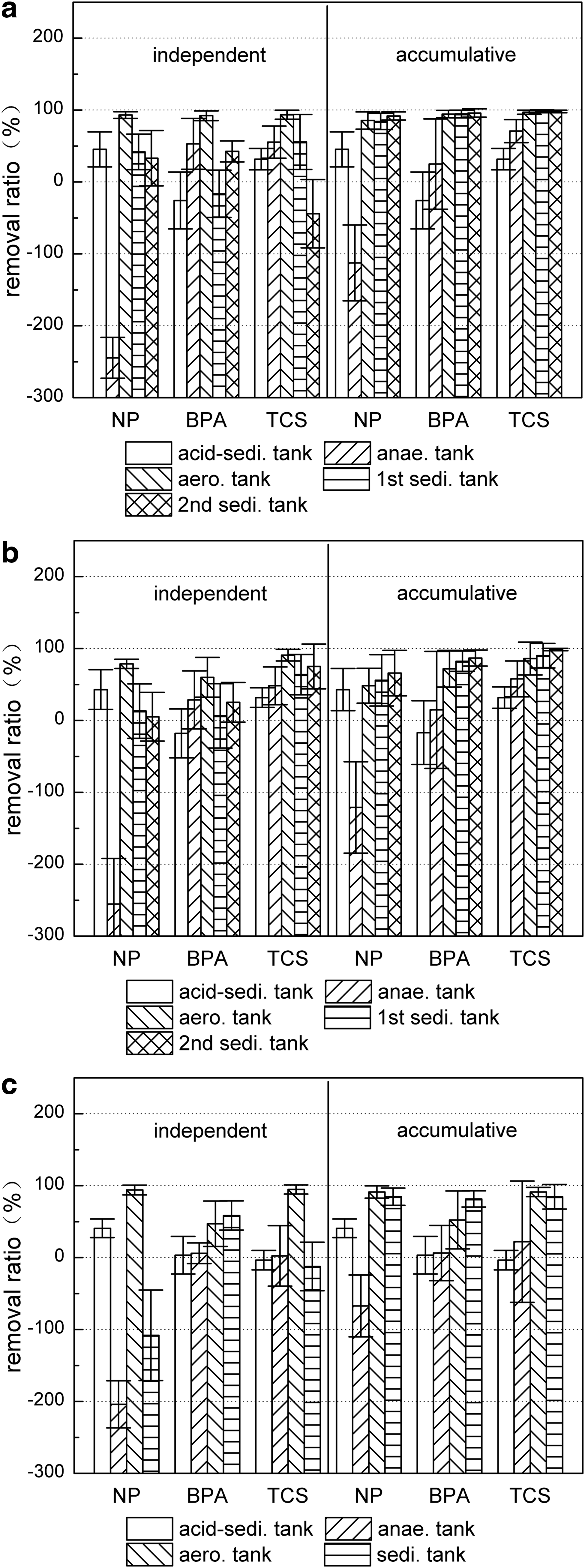
Independent and accumulative removal ratios of the three compounds from tasks in three processes;
Disregarding the abundance of dyes and hydroxyl ion in the wastewaters, NP was greatly reduced from the flow in the processes designed for conventional pollutants of denim wastewater. The three processes yielded overall NP removal ratios of around 92%, 66%, and 84% averagely. The aerobic tank served the core function in the reduction of NP. The independent average removal ratios of NP by the three processes were 93%, 79%, and 94%. The oxidation ditch in Process II showed the worst performance among the three active sludge tanks, yielding a culminated NP removal rate of only 66% for the process.
The inferiority of the oxidation ditch has been recorded in the researches of Ifelebuegu and Ying (Ying et al., 2008; Ifelebuegu, 2011). The sludge retention time (SRT) was once suspected to be the reason for the disparity because of the positive effect of long SRT on NP reduction recorded in the domestic sewage system (Gori et al., 2010). However, the relationship between the SRT and the NP removal rate in the present study is not consistent with such finding. The conventional active sludge system with a shorter SRT of 10.5 or 11.9 obtained a higher removal ratio than the oxidation ditch with an SRT of 15.9. Therefore, the gap in the removal ratio might not result from the SRT of them but from the operating methods of the processes. The wastewater in the oxidation ditch flowed circularly through the anoxic, anaerobic, and aerobic channels until directed out of the tank, whereas the wastewater in the conventional aeration tank flowed through the aerobic channels and into the sedimentation unit. The conventional aeration tank did not have large anaerobic and anoxic zones. The water underwent long aeration treatment when directed out of the tank. Hence, we suspect that the anoxic and anaerobic environment may have interfered with the reduction of NP in the water flow. The perfect performance of the conventional aerobic active sludge unit may be attributed to the persistence of the aerobic environment in the unit.
In the anaerobic units from all processes, the trend of increase prevailed with a rate above 200%. This trend is consistent with the theory of the biodegradation of NPEOs to NP under the anaerobic condition. It indicates that there are a large number of microorganisms that can cause the transformation in the unit even under conditions with pH values reaching 11.
Addition of acid and the settling of large particles in the acid sedimentation unit helped decrease the pH of influent to 11 and created a favorable environment for the biomass in the remaining units. A decreasing trend for the concentration of NP was noted in the acid sedimentation unit. The increasing trend from the transformation of NPEOs under the anaerobic condition was not observed in the acid sedimentation unit. It may be impeded for the absence of anaerobic biomass in the unit because the transformation is commonly considered to be the result of biodegradation of NPEOs with the help of biomass. The absorption of NP to the particles and the settling of the particles occurred in the acid sedimentation unit and, therefore, were considered responsible for nearly half the decrease of NP. The high pH of the influent and the particular dyes in the denim wastewater showed no sign of impediment on the absorption of NP to the particles, such as trivial fiber, and slurry.
Results also show the complexity of the reduction of NP in the sedimentation unit. Although the decrease occurred frequently during Processes I and II in the sedimentation unit, the increasing trend was occasionally observed in both processes. For Process III, the increasing trend prevailed and resulted in an average decline of the accumulative removal rate from 90% to 83%. The addition of PAC in the second sedimentation tank did not aid in the reduction consistently, with an increasing trend also observed occasionally. Thus, the reduction of NP with the settling of fine particles was not the only fate of NP that occurred in the unit. It might increase as the result of the transformation of dissolved NPEOs or the desorption from the active sludge. The most possible mechanism is the former one, wherein the dissolved oxygen was exhausted, and an anaerobic environment emerged locally in the sedimentation unit. Therefore, a long hydraulic retention time (HRT) is considered to be the reason for the fluctuation because it favors the occurring of anaerobic environment.
Removal of BPA
BPA is a readily biodegradable compound. The laboratory-scale experiments show that BPA can be biodegraded in aerobic conditions with inoculated active sludge, but poorly degraded in anoxic and anaerobic conditions (Mohapatra et al., 2010).
Many studies have been carried out to explore the removal of BPA from urban sewage treatment plants. Its removal rate in the aqueous phase ranges from 61% to 98% (Melcer and Klecka, 2011). Further investigation found that the removal route of BPA in urban sewage treatment plants includes the adsorption and biodegradation processes related to active sludge (Wang et al., 2014).
BPA in dyeing wastewater undergoes a treatment procedure different from that in urban sewage, given the high pH and large amounts of dyes in the former. Despite these differences, the results (depicted in Fig. 3) of this study showed that in the treatment plants of dyeing wastewater, the aerobic unit played the most critical role in the reduction of BPA, similar to that in the treatment plants of urban sewage.
The aerobic unit removed around 50–90% BPA from the inlet and was thus considered the most efficient one among the processing units. However, the aerobic units of the three processes yielded different removal rates, namely, 91%, 59%, and 49%. The great gap among the processes might result from the operating parameters, such as HRT and SRT, and the characteristics of the dyeing wastewater, such as pH and the components of wastewater. However, the present study could not exactly determine how these factors affect BPA reduction. Nevertheless, the performance of Process I shows that the conventional active sludge system is capable of eliminating BPA with a high removal ratio while meeting the emission criterion set for conventional pollutants. Although the superior of the conventional aerobic tank to the oxidation ditch from Process II in terms of the removal of NP had been observed in the investigation, no superior in terms of the removal of BPA was found in the same sampling period. Meanwhile, the conventional active sludge unit from Process III ranked the last with the removal rate far lower than that with the same active sludge unit from Process I. Therefore, an elimination mechanism for BPA different from that for NP must be present in the aerobic units from these processes.
The most valuable discovery of the present study is the fate of BPA in the acid sedimentation unit. BPA is considered a hydrophobic compound that tends to be absorbed into the sludge suspended in water. Given the subacidity of BPA, its pKow will decrease with the increase of pH, which in turn decreases the absorbed BPA (Staples et al., 1998; Clara et al., 2004). In the present work, BPA tended to increase in all the three acid sedimentation tanks on the contrary. The increasing trend might be attributed to the transformation of some chemicals into BPA as the transformation occurred in the conduit and resulted in the detection of BPA in the raw wastewater. The acrid environment of the acid sedimentation tank was in favor of the transformation of the parent chemicals and led to the increase of BPA in the unit.
The increasing trend of BPA concentration significantly changed when the processing flow entered the anaerobic hydrolysis unit. A removal rate ranging from 28% to 53% was observed in the tanks from Processes I and II. The removal rate from Process III ranged from −8% to 20%. BPA does not degrade by way of hydrolysis for its deficiency of hydrolyzable groups in the molecule component. Few records are found in the literatures on the anaerobic biodegradation of BPA. Therefore, the dissolved BPA may be eliminated through absorption to the anaerobic sludge and the prerequisites for the formation of BPA might disappear in the anaerobic unit.
Performance of the sedimentation unit is another matter that deserves attention. Unlike the decrease of NP in the sedimentation unit, the concentration of BPA decreased in all sedimentation tanks except in the first sedimentation tank during Process II. Furthermore, the addition of PAC showed a positive effect on the decrease of BPA in the second sedimentation unit. The decreasing trend in the sedimentation unit indicates that the environment in the unit did not favor the formation of BPA. The absorption of BPA into the settling sludge prevailed in the sedimentation unit. Furthermore, comparing the removal rates and HRTs of these sedimentation units, the unit with a longer HRT from Process III achieved a higher removal rate of around 58%. Considering that an extended HRT could enhance the settling effect (Clara et al., 2004), we suggest a relatively long HRT to improve BPA reduction in the future.
Removal of TCS
On the basis of the TCS concentration detected in the raw wastewater, we can conclude that the denim-dyeing wastewater was not polluted by TCS. The trace amounts found in the plants probably originated from the small proportion of domestic sewage received by the treatment plants.
The fate of TCS in the sewage treatment plants shows that TCS is a biodegradable compound. A high degradation rate of 97% in an acclimatized sludge system was recorded by Athanasios et al. (Stasinakis et al., 2007). The continuous flow treating system in their study further indicated the occurrence of direct biodegradation after a rapid absorption of TCS into the sludge. In the study by Ying et al. (Ying and Kookana, 2007), anaerobic lagoons were used to investigate TCS reduction. They attributed the reduction of TCS in the wastewater in the lagoons to the adsorption and the settlement of sludge. No biodegradation of TCS under anaerobic conditions was detected.
In the present study, the fate of TCS in the denim-dyeing treatment plants confirmed that this EDC is a readily biodegradable compound. Among the target pollutants, only TCS achieved an independent removal rate above 93% with the smallest statistical deviation in the aerobic unit. The acrid condition of the wastewater showed no effect on its biodegradation.
Apart from the aerobic unit, all the other processing units of the three processes presented no consistent performance in TCS reduction. The acid sedimentation units of Processes I and II helped decrease the TCS concentration in the water. However, the same unit from Process III presented an increasing trend. In the anaerobic hydrolysis unit and the sedimentation unit from Process I, a decreasing trend was observed, whereas an opposing trend was found in other processes. The results above indicate the instability of the units during TCS reduction. The instability of the units might result from the trace amounts of TCS and the deviation of the determination method. Another reason for the fluctuation of the removal rate might be the equilibrium of the absorption of TCS into the sludge that resulted from the differences in the composition of the wastewater and the disparities of the operating parameters in the different processes. More investigations should be made to learn the mechanism about them.
Role of treatment units in the removal of target pollutants
The three treatment processes were established for the elimination of conventional pollutants in the denim wastewater. The pollutants, including dyes, modified starch, and slurry, were removed from the wastewaters through absorption and biodegradation, especially the latter. The anaerobic hydrolysis unit and the aerobic unit played a major role in the biodegradation of the pollutants. The acid sedimentation unit and the settlement unit played an auxiliary but an important role for the water to meet the effluent emission standard. The former processing unit reduced the pH of the wastewaters to a value that favored the microorganisms in the following units. The latter helped to improve the effluent quality by clearing sludge from the flow. All units were indispensable in the elimination of conventional pollutants in denim wastewaters.
Regarding the three target pollutants, although biodegradation was still the main elimination approach, the units in three processes presented differences in the elimination in our study. The independent average removal rates achieved by the aerobic units for the three processes ranged from 79% to 94% for NP, from 47% to 92% for BPA, and from 91% to 95% for TCS. They were similar to the rates achieved from urban sewage plants. The influent pH value of around 9 in the units and the particular pollutants in the denim wastewater did not impede the elimination of the target pollutants by microorganisms that inhabited in the denim wastewater treatment plants.
The anaerobic unit transformed the refractory compounds in the denim wastewater into simple and biodegradable compounds. The concentration of conventional pollutants was commonly reduced by 20–40%. However, in the elimination of the target pollutants, different removal rates were achieved for different compounds. After the processing of the unit, NP concentration exceeded 200% because of the conversion of NPEOs into NP. BPA and TCS decreased on an average by 28–53% in the unit of Processes I and II. The absorption of the EDCs into the anaerobic sludge was considered the most likely way to eliminate the EDCs for the absence of hydroxyl groups in the molecular and low efficiency of anaerobic biodegradation of them.
Differences in the elimination of the target pollutants were also observed in the acid sedimentation unit. NP and TCS presented a decreasing trend in the tanks in Processes I and II, whereas BPA showed an increasing trend in the same units. In the acid sedimentation tank from Process III, a decreasing trend of NP was observed in our study, while the increasing trend of BPA was occasionally found in the same tank either. In addition, the variation of TCS concentration in the unit during Process III was contrary to that during Process I and II. As analyzed previously, the three compounds tend to adhere to the particles and dyes with the decline of pH for the hydroxyl groups in their molecular structure. Therefore, the decreasing trend of NP and TCS was in accordance with the adherence of compounds and the settlement of particles, while the increasing trend of BPA was not. The increasing trend of BPA was considered to result from the transformation of some unidentified chemicals like what had happened in the sewage conduit, but the increasing trend of TCS detected in Process III cannot. The absorption was the route prevailed in the acid sedimentation. However, the variation in the removal efficiency of the three compounds implied that many factors could influence the efficiency of the absorption. The existence of their parent compounds further complicated their concentration levels, as observed in the increase case of BPA.
The results also reveal the instability of the effect of the sedimentation units on reduction of the target pollutants. Increasing and decreasing trends for the three compounds were both observed during the sampling period. The addition of PAC did not aid in the reduction of the target pollutants continuously during the sampling period. The increased results of all three compounds have been observed in the effluent of the second sedimentation tank when the decreased result prevailed in the tank. Although the increased result of NP after the addition of PAC might attribute to the transformation of NPEOs for the long HRT of the units, the increasing trend of BPA and TCS could not be reasonably explained by the same mechanism considering the absence of the parent chemicals of them. There must be some other factors that influence the performance of sedimentation. Further investigation should be made to learn the mechanism of elimination of the three compounds to get a perfect outcome.
In the case of denim wastewater, studies on the endocrine effects of effluent on the environment should focus on NP and NPEOs because of their abundance in the influent. As for BPA and TCS, their trace amounts and high removal ratios in the aerobic unit are enough to reduce their concentrations below the chronic effect concentration. Hence, the elimination of these two compounds requires little research concern.
Conclusions
The distribution profile indicated that NP was a common pollutant and that substantial amounts of BPA were present in the denim wastewater. TCS was found not to be a pollutant in the denim wastewater. The three processes applied in the treatment of denim wastewater yielded high ratios in the removal of the three EDCs. The high pH and the particular dyes of the denim wastewater have no impediment on the reduction of them. The aerobic unit and the acid sedimentation unit played core roles in the elimination of NP. The aerobic unit removed around 90% of NP and BPA in the aqueous phase from the inlet. The acid sedimentation unit eliminated amounts of NP and TCS from the influent. The absorption of settled particles and the absence of anaerobic microorganisms were considered to be the reason for the reduction of them in the acid sedimentation unit. The decreasing trend of NP in the acid sedimentation unit is the first record of its reduction under the anaerobic environment. The increase of BPA in the acid sedimentation unit implied that there must be some chemicals that could be converted to BPA. The environment in the unit will prompt the transformation of the parent chemicals into BPA and result in the increase of BPA. The fluctuation of the removal efficiency of the sedimentation unit indicated the complexity of the absorption of the micropollutants into the sludge. The high HRT might lead to the depletion of oxygen, which results in the concentration increase of the three compounds occasionally. To decrease the endocrine effect of the effluent from the denim industry, focus should be put on NP and NPEOs because of their high concentration detected in present study. The inferiority of the oxidation ditch to the conventional active sludge on the reduction of NP was also observed in our investigation. It implied that the operating method of oxidation ditch did not favor the elimination of NP compared with the conventional active sludge system. Further investigation should be made to improve the performance of the oxidation ditch on the reduction of NP.
Footnotes
Acknowledgments
This work was supported by the Water Pollution Control and Treatment Special Project (2012ZX07206003) of China. The authors would like to thank the anonymous reviewers for their suggestions and critical comments, which improved the article.
Author Disclosure Statement
No competing financial interests exist.