




Abstract
Abstract
This study prepared fresh ferric hydroxide (in-situ FeOxHy) by the enhanced hydrolysis of Fe3+ ions, and investigates its adsorptive behaviors toward Sb(III) and Sb(V) through laboratory and pilot-scale studies. A contact time of 120-min was enough to achieve adsorption equilibrium for Sb(III) and Sb(V) on the in-situ FeOxHy, and the Elovich model was best to describe the adsorption kinetics of Sb(III) and Sb(V). The Freundlich model was better than Langmuir model to describe the adsorption of Sb(III) and Sb(V) on the in-situ FeOxHy, and the maximum adsorption capacity of Sb(III) and Sb(V) was determined to be 12.77 and 10.21 mmol/g the in-situ FeOxHy as Fe, respectively. Adsorption of Sb(V) decreased whereas that of Sb(III) increased with elevated pH over pH 3–10, owing to the different electrical properties of Sb(III) and Sb(V). Adsorption of Sb(III) and Sb(V) was slightly affected by ionic strength, and thus indicated the formation of inner sphere complexes between Sb and the adsorbent. Sulfate and carbonate showed little effect on the adsorption of Sb(III) and Sb(V). Phosphate significantly inhibited the adsorption of Sb(V), whereas slightly effected that of Sb(III) due to its similar chemical structure to Sb(V). Pilot-scale continuous experiment indicated the feasibility of using in-situ FeOxHy to remove Sb(V), and equilibrium adsorption capacity at the equilibrium Sb(V) concentration of 10 μg/L was determined to be 0.11, 0.07, 0.07, 0.11, and 0.12 mg/g the in-situ FeOxHy as Fe at equilibrium pH of 7.5–7.7, 6.9–7.0, 6.3–6.6, 5.9–6.4, and 5.2–5.9, respectively.
Introduction
R
It is generally known that long-term exposure to antimony through drinking water has a potential toxicity and carcinogenicity toward humans. Antimony in human body can also inhibit the DNA replication and metabolic process through its strong affinity for thiol group and substitution for P in biological reactions (Wilson et al., 2010). Thus it has been around extensive attention in both the developed and developing world. The United States Environment Protection Agency and EU had stipulated that the maximum contaminant level (MCL) for it in drinking water is 5 and 6 μg/L, respectively (Filella et al., 2002a, b). In China, the MCL for Sb in drinking water is 5 μg/L (Xu et al., 2011). In most natural waters the background Sb concentration is reported to be <1 μg/L (Filella et al., 2002a, b). However, in some water bodies the extremely high Sb concentrations, that is, 100–7000 mg/L, have been reported due to anthropic pollution (Guo et al., 2009).
Sb mainly exists in two inorganic oxidation states of Sb(III) and Sb(V), and Sb(V) dominates in oxic surface waters, whereas Sb(III) is dominant in anoxic conditions. The removal of Sb from drinking water has received much less attention than that of arsenic, and some technologies such as coagulation (Guo et al., 2009; Wu et al., 2010), adsorption (Leuz et al., 2006; Xi et al., 2011), ion exchange (Ozdemir et al., 2004), and membrane methods (Saito et al., 2011) have been investigated. Adsorption is promising and widely used to remove toxic elements such as Sb at low concentrations (Xu et al., 2011), and the (hydro)oxides of Al, Fe, and Mn have been reported to be valuable adsorbents due to their high affinity toward antimony (Xu et al., 2001; Leuz et al., 2006; Xu et al., 2011; Wang et al., 2012). Xu et al. (2001) investigated the adsorption of Sb(V) onto commercially available activated alumina, and the maximal adsorption capacity (Qmax) of 74.1 μM/g was reported at optimized pH of 4.3. Leuz et al. (2006) reported the Qmax of 136±8 μM Sb(V)/g by goethite at pH 3.0. Wang et al. (2012) investigated the adsorption of Sb onto the synthetic manganite, and the Qmax was determined to be 784.5 μM/g for Sb(V) at pH 3.0. Our previous study has developed the Fe–Mn binary oxide (FMBO) and investigated its removal behavior toward antimony, and the mechanism of oxidation and adsorption has been proposed (Xu et al., 2011). Unfortunately, the adsorption capability of these adsorbents toward Sb is relatively low, and their use in practice is sometimes inhibited by the frequent regeneration procedures and labored maintenance, thereafter.
The preparation of these synthetic adsorbents with high crystallite, mainly by drying and granulation procedures, is unfortunately achieved at the expense of remarkably lowered adsorption efficacy. The use of freshly prepared adsorbents may be advantageous with respect to the adsorption capability because this preparing method maintains the adsorptive sites as much as possible. The surface adsorption activity and amorphous structure of freshly prepared adsorbent can show higher affinity toward adsorbate (Liu et al., 2011). In engineering application, the promising high adsorptive capability toward the adsorbate on this adsorbent may prolong the regeneration cycles and avoid frequent regeneration procedures. Consequently, it can reduce the cost and simplify regeneration procedures. Streat et al. (2008) demonstrated the strong adsorption capacity of the freshly prepared hydrous iron oxide toward anions such as fluorine, arsenic, and phosphate. Liu et al. (2011) prepared the in-situ Al2O3·xH2O by the reactions between aluminum chloride (AlCl3) and stoichiometric sodium hydroxide (NaOH) solution with an Al3+/OH− molar ratio of 3:1, and indicated the removal capability of as high as 110 mg F/g Al in pH ranges from 5.0 to 7.2. To enable the application of the freshly prepared metal oxides, we have successfully prepared the novel adsorbent of FMBO-Diatomite by the in-situ coating of FMBO onto diatomite, the high equilibrium removal capability toward As(III), that is, 1.68 mg As(III)/g at pH 7.0, has been reported (Chang et al., 2009). The high removal capability of these adsorbents is ascribed in that the in-situ preparation method avoids the loss of active surfaces to a large extent (Liu et al., 2011). To remove trace Sb from drinking water, the freshly prepared Sb removal adsorbent may be valuable and feasible in considering that Sb is much more difficult to remove than other toxic elements such as arsenic. The cost-effective iron oxide is reported to exhibit strong affinity toward Sb (Leuz et al., 2006), and the freshly prepared iron hydroxide may work well to remove Sb in practice. However, rare studies have investigated it before to our best knowledge. Furthermore, most studies evaluated the removal capability toward Sb by batch experiments rather than by pilot-scale continuous experiments. Pilot-scale data may be more valuable for system design and process optimization for Sb control from an engineering point of view.
In this study, we first prepared the in-situ FeOxHy by the enhanced hydrolysis of iron ions (Fe3+) and evaluated its adsorption capacity toward Sb(III) and Sb(V) through adsorption kinetics and adsorption isotherms. Second, the effects of pH, ionic strength, and coexisting anions on Sb removal were investigated. Furthermore, the removal capability and the feasibility in practical use were evaluated through pilot-scale dynamic experiments.
Materials and Methods
Chemicals
All the chemicals used in this study were of analytical grade. The preparation of the in-situ FeOxHy followed the procedures described in our previous study (Liu et al., 2011), except that the iron salt was used. Briefly, the in-situ FeOxHy was prepared through the reaction between iron chloride hexahydrate (FeCl3·6H2O) and NaOH at the equivalent Fe3+/OH− molar ratio of 1:3. The stock solution of Sb(III) and Sb(V) were prepared by dissolving the antimony potassium tartrate (C4H4KO7SbH2O·1/2H2O) and potassium antimony tetrahydrate (KSbO3·3H2O) with deionized water, respectively. The antimony-containing water was prepared by the dilution of stock solution to desired concentrations, and potassium nitrate (KNO3) solution at 0.01 M was added to provide the background ionic strength, unless otherwise noted. The pH adjustment was preceded by 0.5 M hydrochloric acid (HCl) and NaOH.
Experimental methods
Batch adsorption experiments
Adsorption kinetic experiments
Test water at 0.5 mmol/L Sb(III) or Sb(V) was added into a 1000-mL glass vessel with magnetic agitation (140 rpm), and 10 mL solution with in-situ FeOxHy suspension was dosed immediately after mixing Fe3+ and OH− solutions to get the desired dose of 40 mg/L as Fe. The pH adjustment was preceded at intervals by 0.5 M HCl and/or NaOH to achieve a stable pH of 5.0±0.1. In the meanwhile, aliquots (5 mL) were taken from the suspension according to the time designed by the kinetic experiment. The whole kinetic experiment lasted for 4 h. Kinetic experiments showed that a 2-h reaction time was adequate to achieve adsorption equilibrium, and the contact time of 2 h was chosen, thereafter.
Adsorption isotherm experiments
Sb(III) or Sb(V) adsorption isotherms were carried out using batch tests in a 50-mL polypropylene centrifuge with a 40 mL volume of Sb(III) or Sb(V) solution. Initial Sb(III) or Sb(V) concentration varied from 0.1 to 3 mmol/L. In each test, 1 mL of the in-situ FeOxHy suspension was put into the tube to get the adsorbent concentration of 80 mg/L as Fe after the solution pH was adjusted to 5.0±0.1. The pH was continually adjusted during the test to keep pH to 5.0. The tubes were shaken on a rotary vibrator with a rotating speed of 30 rpm for 2 h. All samples were filtered through a 0.45 μm membrane filter for further analysis after the reaction.
Effects of pH and ionic strength
The procedures were similar to the adsorption isotherm experiments, except that the pH ranged from 3.0 to 10.0 and the concentrations of KNO3 were controlled to be 0.001, 0.01, and 0.1 mol/L, respectively. The initial Sb concentration was 0.5 mmol/L and the in-situ FeOxHy dose was 80 mg/L as Fe.
Effects of coexisting anions
The stock solutions of sulfate, phosphate, and carbonate at concentrations of 1 and 10 mmol/L were separately added to Sb-containing water before the addition of in-situ FeOxHy at 80 mg/L as Fe. The initial Sb concentration was 0.5 mmol/L and pH was well controlled to be 5.0 in the whole adsorption process.
Pilot-scale dynamic experiments
A conventional fixed adsorption bed reactor in the column was employed in the pilot-scale dynamic experiments, and the tested setup was given in Fig. 1. This pilot-scale system included two adsorption columns with an internal diameter of 230 mm and a height of 1900 mm. The load of in-situ FeOxHy adsorbent followed the method what Chang et al. (2009) have reported before. Briefly, the stock solutions of FeCl3 and NaOH at equivalent molar ratio were fully reacted and then fed in the adsorption column by a chemicals feeding pump.

Schematic setup of dynamic adsorption in column test.
Additionally, two sampling pots were installed in two columns of the water outlet. The Sb(V)-containing water at 20–30 μg/L was prepared by continuously dosing Sb(V) stock solution into the suction pipe of the pump for the elevation of the tap water, and these two solutions were well mixed inside the pump. Sb(V) accounts for above 99% of the total antimony in natural surface waters (Filella et al., 2002a, b) and is more difficult to remove than Sb(III) at around the neutral pH conditions (Guo et al., 2009). Additionally, Sb(III) is inevitably oxidized to Sb(V) by residual chlorine in the tap water used in this study. On the basis of these considerations, the removal efficacy toward Sb(V) was evaluated in this pilot study. The Sb(V)-containing water was pumped and flowed upstream through these two fixed bed reactor column in sequence at a flow rate of 0.06 m3/h. The empty bed contact time was determined to be 82 min. In the whole pilot-scale dynamic experiment, the influent pH was adjusted and gradually decreased from 7.6 to 5.2 according to the concentration of effluent Sb(V).
Analysis and characterization
The pH was measured with a precise pH meter (720A; Thermo Orion). The zeta potential of the in-situ FeOxHy was directly measured with a Zetasizer2000 Zeta Potential Analyzer (Malvern Co.).
The concentration of Sb(III) and Sb(V) was measured using an inductively coupled plasma atomic emission spectroscopy (SCIEX Perkin-Elmer Elan mode 5000). Samples were filtered through 0.45-μm membrane filters immediately after sampling and a drop (∼0.02 mL) of concentrated HCl (11 M) was added into the samples before the analysis.
Raman spectra were collected on a Via Reflex Micro-Raman Spectroscopy System (Renishaw Co.) at room temperature and the in-situ FeOxHy suspensions before and after adsorbing Sb were centrifuged before Raman analysis.
Modeling methods
The Visual MINTEQ Version 3.0 software was used to simulate the species distribution of phosphate and Sb(V) in their mixed solution. The initial concentrations of phosphate and Sb(V) were 10 and 0.5 mmol/L, respectively. The different species simulated were as follows: PO43−, HPO42−, H2PO4−, H3PO4, Sb(OH)6−, and Sb(OH)6(aq).
Results and Discussion
Adsorption kinetic
Figure 2 shows the adsorption kinetics of Sb(III) and Sb(V) on the in-situ FeOxHy at pH 5.0. The adsorption of Sb(III) and Sb(V) onto the in-situ FeOxHy was extremely fast, and the 5-min contact time can achieve ∼75% and 83% of the Qmax of Sb(III) and Sb(V), respectively. The initial rapid adsorption process was mainly ascribed to the surface adsorption activity and amorphous structure of the freshly prepared adsorbent (Liu et al., 2011). In this study, the in-situ FeOxHy was freshly prepared procedures rather than the conventional sintering process. This method can restore the surface activities and adsorptive capacity as much as possible.
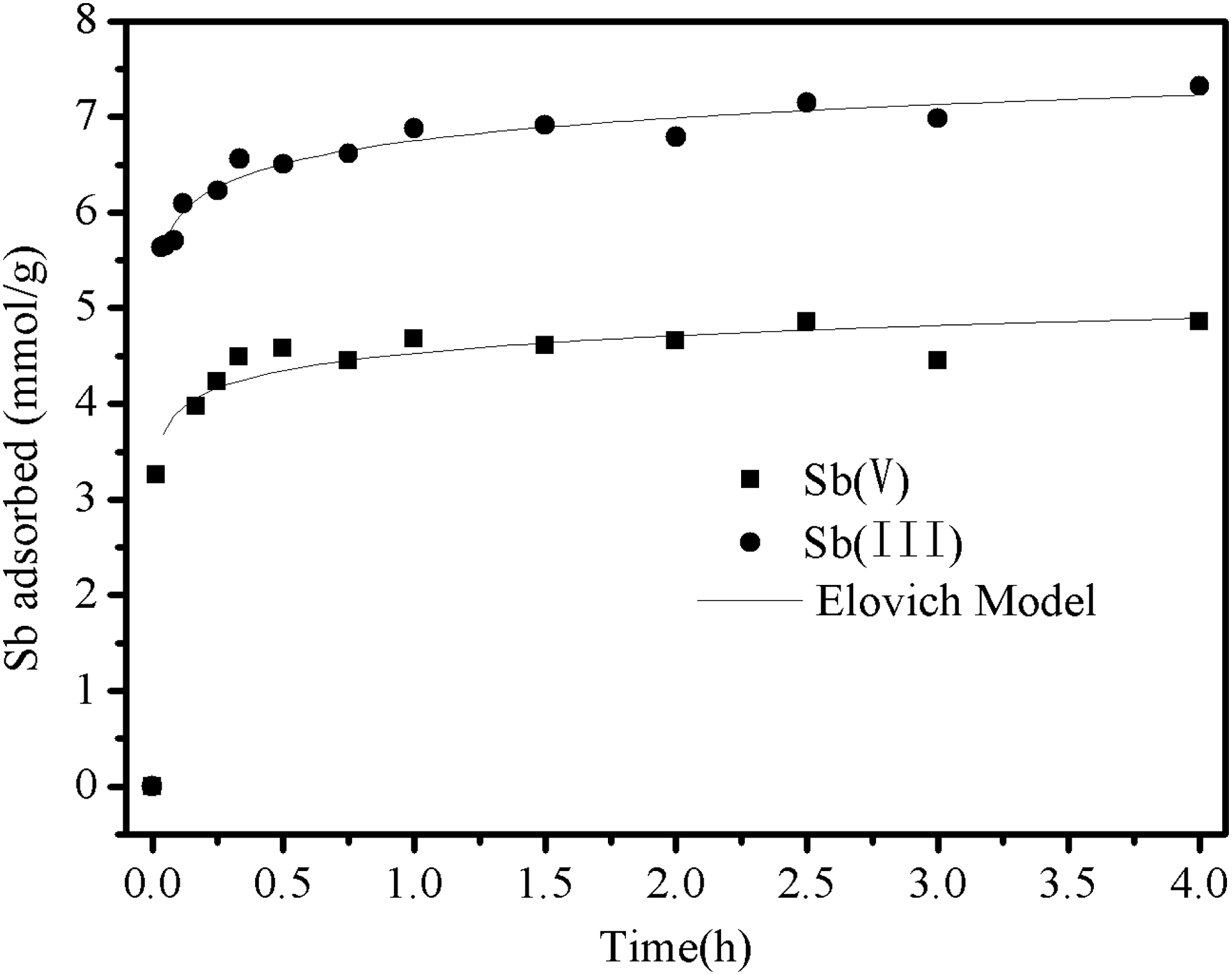
Adsorption kinetics of Sb(III) and Sb(V) on the in-situ FeOxHy (Experimental conditions: [Sb(III)]0=0.64 mmol/L, [Sb(V)]0=0.53 mmol/L, the adsorbent dose is 40 mg/L as Fe, pH=5.0).
The adsorption quantity of Sb(III) [i.e., QSb(III)] was observed to be 88% and 95% of QSb(III),max after 30 and 120 min, and no apparent increase was observed with prolonged contact time. The adsorption of Sb(V) showed similar trends to that of Sb(III), except that the higher adsorption quantity was observed. Quantitatively, Qsb(III),max was determined to be 4.85 mmol/g Fe of the in-situ FeOxHy as Fe, whereas Qsb(V),max was 7.32 mmol/g Fe. Based on the aforementioned experiment results, the contact time of 2 h was adequate for the following experiments accordingly.
To further understand the main adsorption mechanisms of Sb(III) and Sb(V) on the in-situ FeOxHy, five kinetics models (Xu et al., 2011), that is, the Pseudo-first equation, Pseudo-second-order, Elovich model, Parabolic diffusion, and Power function, were employed to fit these data, and the relevant kinetic parameters were illustrated in Table 1. The Elovich model was best to describe the adsorption kinetics of Sb(III) and Sb(V) on the in-situ FeOxHy, as indicated by the regression coefficient (R2) results. It was inferred that the heterogeneous phase diffusion process was dominant in the adsorption of Sb(III) and Sb(V) on the in-situ FeOxHy surface.
Experimental conditions: [Sb(III)]0=0.64 mmol/L, [Sb(V)]0=0.53 mmol/L, the adsorbent dose is 40 mg/L as Fe, pH=5.0.
Adsorption isotherm
Figure 3 illustrates the adsorption isotherms of Sb(III) and Sb(V) on the in-situ FeOxHy at pH 5.0, and the dose of the in-situ FeOxHy was 80 mg/L as Fe. The direct graphic maximum adsorption capacity of Sb(V) [i.e., Qmax-Sb(V)] was determined to be 10.21 mmol/g Fe, whereas that of Sb(III) was slightly higher to be 12.77 mmol/g Fe. Table 2 illustrates the fitted constants and R2 for the Langmuir and Freundlich isotherms. Freundlich model was better than the Langmuir model to describe the adsorption of Sb(III) and Sb(V) on the in-situ FeOxHy as indicated by R2, and this indicated the occurrence of multilayer adsorption in antimony adsorption.
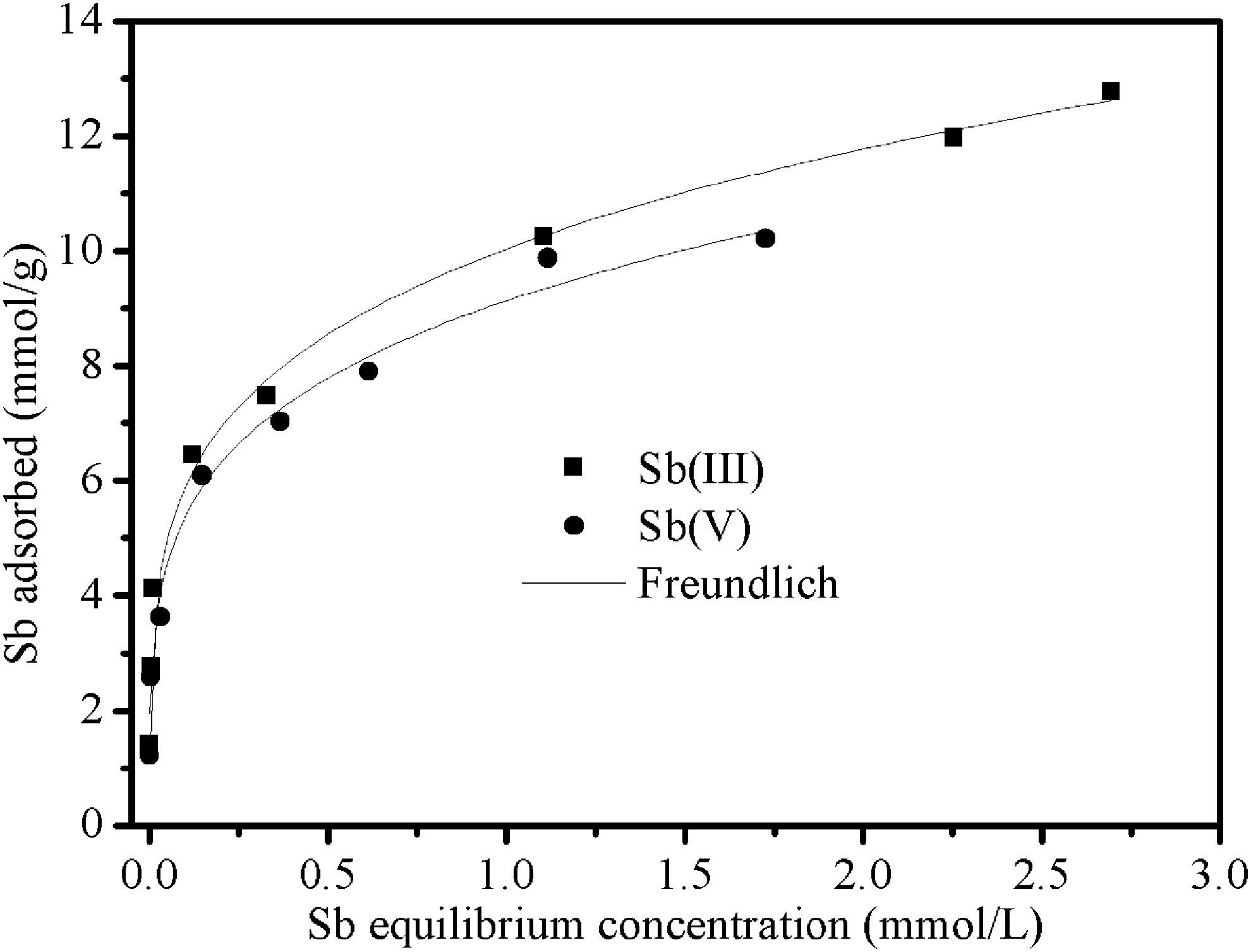
Adsorption isotherms of Sb(III) and Sb(V) on in-situ FeOxHy (Experimental conditions: the adsorbent dose is 80 mg/L as Fe, pH=5.0).
Experimental conditions: Initial Sb(III) or Sb(V) concentration varies from 0.1 to 3 mmol/L, the adsorbent dose is 80 mg/L as Fe, pH=5.0.
Furthermore, Table 3 compares the obtained adsorption capability of the in-situ FeOxHy toward Sb(III) and Sb(V) with those of several reported adsorbents. The in-situ FeOxHy exhibited remarkably higher adsorptive capability of Sb(III) and Sb(V) than other adsorbents. This may be mainly attributed to its low particle diameter, high surface area, and the amorphous form with high activity. The proposed in-situ preparing procedures avoid the widely used sintering process and maintain the surface functional groups to the most extent (Liu et al., 2011). The obtained results indicated that the in-situ FeOxHy have remarkable superiority over other adsorbents in removing antimony from drinking water.
pH is shown in parentheses.
FMBO, Fe–Mn binary oxide.
Effects of pH and ionic strength
The adsorption of Sb(III) and Sb(V) over a wide pH range from 3 to 10 is illustrated in Fig. 4. The initial Sb(III)/Sb(V) concentration was 0.5 mmol/L, and the dose of the in-situ FeOxHy was 80 mg/L Fe. The ionic strength was controlled to be 0.001, 0.01, and 0.1 mol/L as KNO3, respectively. Sb(III) and Sb(V) showed critically different adsorption behaviors with elevated pH. Quantitatively, the adsorption capacity of Sb(III) increased from 4.19 to 6.34 mmol/g Fe with pH increasing from 3 to 7, and little variation was observed at an elevated pH of as high as 10. The pH significantly impacts the species distribution of Sb(III). The positively charged SbO+ and Sb(OH)3 are the main species at pH ≤6 whereas in pH ranges from 7 to 10, the neutral Sb(OH)3 is the dominant species (Shoji et al., 1974). Additionally, the surface characteristics of adsorbents were also highly affected by pH (Liu et al., 2011). Supplementary Figure S1 illustrates the zeta potential of in-situ FeOxHy in wide pH ranges from 3.0 to 10.0, and the decreased zeta potential with elevated pH was observed. For example, the zeta potential was respectively determined to be +34.5, +3.3, and −23.4 mv at pH of 3.0, 7.0, and 10.0, and the zero point of charge (i.e., pHZPC) was determined to be near to 7.5 accordingly. The elevated pH benefited the deprotonation of the adsorbent surface [Eq. (1)], and favored the adsorption of Sb(III) on the in-situ FeOxHy through electrostatic adsorption. At an elevated pH of above 7, the electrostatic adsorption between the neutral Sb(OH)3 and the surface of the in-situ FeOxHy was weakened to a large extent, and pH showed little effect on Sb(III) adsorption accordingly. Interestingly, the adsorption of Sb(V) on the in-situ FeOxHy decreased steadily from 7.25 to 1.16 mmol/g Fe with the pH increasing from 3 to 10. The negatively charged Sb(OH)6− dominated in Sb(V) species over wide pH ranges from 3 to 10 (Filella et al., 2002a, b). The protonation reaction at low pH ranges, as shown in Equation (2), enhanced the electrostatic attraction between Sb(OH)6− and the surfaces of the in-situ FeOxHy, and this effect benefited the adsorption of Sb(V), thereafter. At a high pH, the deprotonation of the adsorbent may occur, as shown in Equation (1). These effects increased the electric repulsive forces between Sb(OH)6− and the in-situ FeOxHy, and inhibited the adsorption of Sb(V) to a large extent.
Ionic strength shows effect on the macroscopic adsorptive performances, which provide valuable information on the formation of surface complexes (Hayes et al., 1988). In detail, the formation of outer sphere complexes was relative in that the adsorptive capacity decreases with elevated ionic strength. On the contrary, in cases where ionic strength has little effect or shows favorable effect on the adsorption capacity, the formation of inner sphere complexes may be inferred. Figure 4 illustrates the effect of ionic strength at three levels on the macroscopic adsorption behaviors of Sb(III) and Sb(V) over a wide pH range from 3 to 10. Ionic strength showed little effect on the adsorption of Sb(III) at pH of above 6 and that of Sb(V) at a pH of below 5. The elevated ionic strength improved the adsorption of Sb(III) and Sb(V) to some extent at pH ≤6 and pH ≥5, respectively. These results indicated that the inner sphere complexes might dominate in the adsorption of Sb(III) and Sb(V) onto the in-situ FeOxHy accordingly. Supplementary Table S1 illustrates the possible reactions involved in the adsorption of Sb(III) and Sb(V), and it was noted that this study cannot precisely illustrate either monodentate or bidentate binuclear complexes formed.
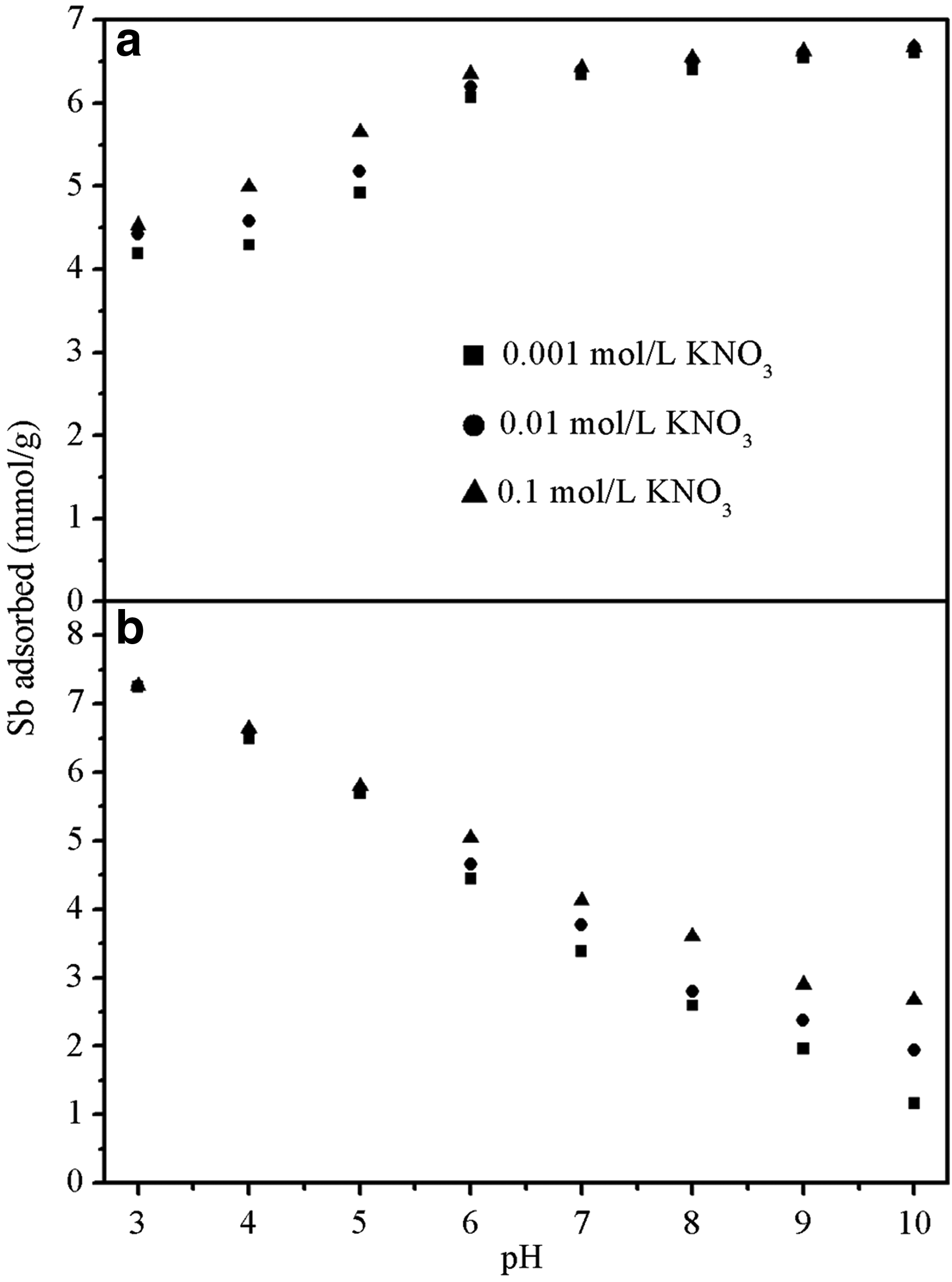
Effect of ionic strength on Sb(III)
Raman spectroscopy also provides valuable information on the mechanisms involved in the adsorption of Sb(III) and Sb(V). As shown in Fig. 5, the in-situ FeOxHy exhibited a strong peak at 719 cm−1, which corresponded to Fe-O vibration mode (Das and Henry, 2011). After the adsorption of Sb(III) and Sb(V), this peak was weakened to a large extent. Additionally, there appeared one new peak at 588 cm−1 after adsorbing Sb(III) and two new peaks at 610 and 504 cm−1 after adsorbing Sb(V), respectively. The band at 588 cm−1 might be attributed to the stretching and vibration of Sb(III)-O on surfaces of the in-situ FeOxHy, and the peaks at 610 and 504 cm−1 might be assigned to the bending modes of the Sb(V)-O.

Raman spectroscopy of in-situ FeOxHy, in-situ FeOxHy-Sb(III), and in-situ FeOxHy-Sb(V) (Experimental conditions: [Sb(III)]0=20 mmol/L, [Sb(V)]0=20 mmol/L, adsorbent concentration was 160 mg/L as Fe, pH=5.0).
Effect of coexisting anions
The widely presented anions such as sulfate, phosphate, and carbonate have been demonstrated to show different effects on the adsorption of antimony (Wu et al., 2010; Xu et al., 2011). The effects of sulfate, phosphate, and carbonate at two concentrations of 1.0 and 10.0 mmol/L on the adsorption of Sb(III) and Sb(V) were shown in Fig. 6, and pH was controlled to be 5.0. Sulfate and carbonate showed little effects on the adsorption of Sb(III) and Sb(V) even at high concentrations of 10 mmol/L. The adsorption capacity of Sb(III) decreased slightly from 5.64 to 5.32 and 5.26 mmol/g Fe due to the presence of phosphate at 1 and 10 mmol/L, respectively. Comparatively, much more significant inhibition of phosphate on Sb(V) adsorption was observed, and the adsorption capacity of Sb(V) decreased from 6.4 to 1.8 mmol/g Fe even at low phosphate concentration of 1 mmol/L. The elevated phosphate concentration of 10 mmol/L can hardly further inhibit the removal of Sb(V). These results were consistent with previous studies (Wu et al., 2010; Xu et al., 2011). For example, it showed in Xu et al. (2011) study that when the concentration of phosphate was 1 mmol/L, the adsorption capacity of Sb(V) on FMBO decreased from 0.82 to 0.31 mmol/g.
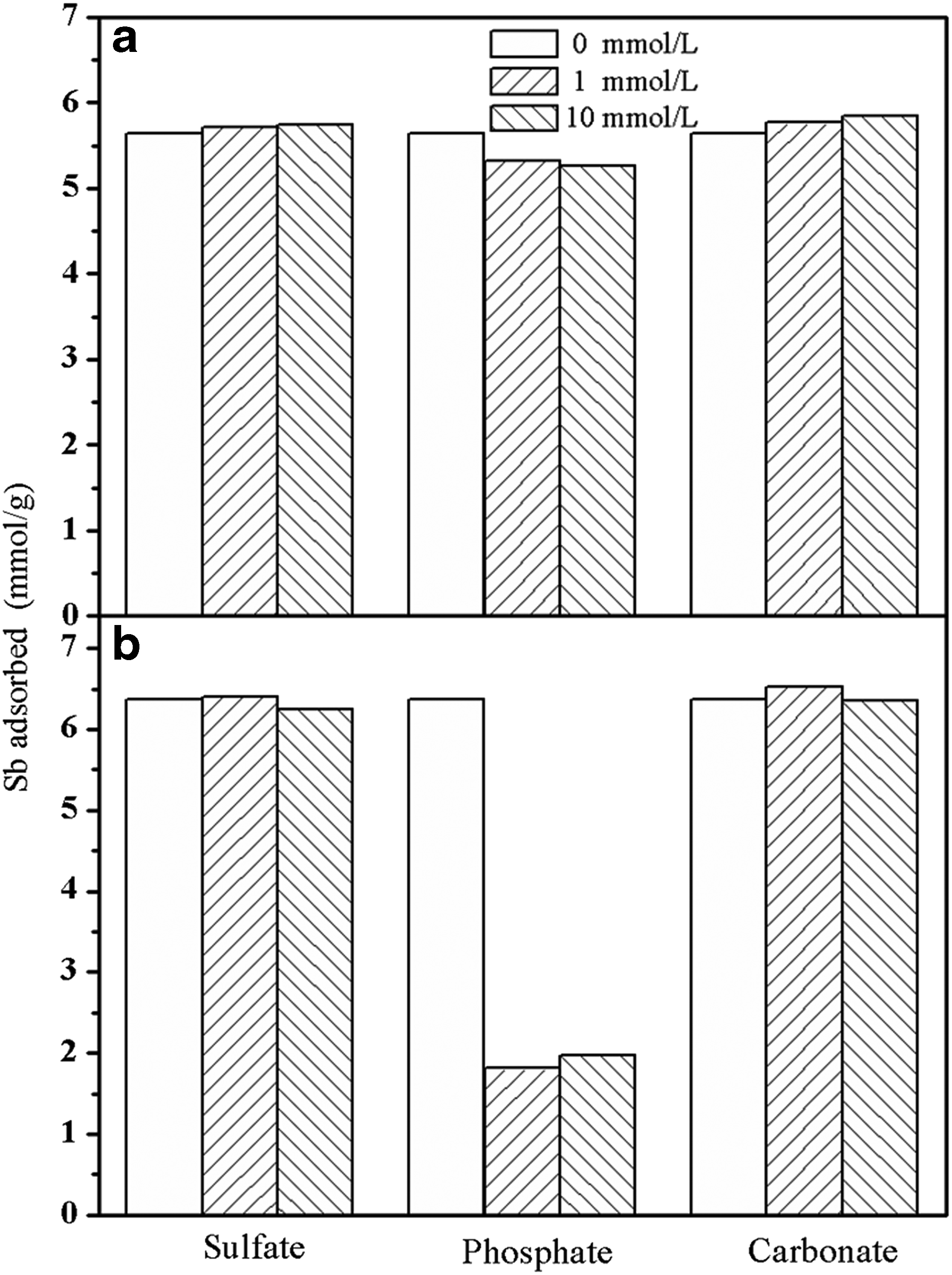
Effects of coexisting anions on Sb(III)
Furthermore, the Visual MINTEQ software was used to illustrate the species distribution of Sb(V) and phosphate in their mixed solution over a wide pH range from 3 to 10 (Supplementary Fig. S2). It was observed that Sb(V) and phosphate rarely interacted and the formation of complexes and coprecipitates rarely occurred in wide pH ranges. At pH 5.0, H2PO4− was determined to be the dominant species of phosphate, and the inhibitive effect of phosphate may be attributed to their same family and similar chemical structures (Ghosh et al., 2006; Kolbe et al., 2011) so that they competed with the same adsorption sites. Sb(III) and Sb(V) shows opposite electrical character and the dominant species were reported to be SbO3+ and Sb(OH)6− at pH 5.0, respectively (Shoji et al., 1974; Xu et al., 2011). The negatively charged phosphate exhibited different effects on their adsorption, thereafter. The variation trends of the adsorption capability of Sb(III) and Sb(V) and ζ-potential over wide phosphate concentration ranges from 0.5 to 10 mmol/L were illustrated in Supplementary Fig. S3. The adsorption of negative phosphate lowered the zeta potential of the in-situ FeOxHy in the Sb(V)-removing system, and the inhibited adsorption of Sb(V) was also observed (Supplementary Fig. S3b). Interestingly, in the Sb(III)-removing system, the zeta potential varied little even at high phosphate concentration of 10 mmol/L, and the slight effect on Sb(III) adsorption was also observed accordingly.
Pilot-scale continuous experiments
To further evaluate the feasibility of using the in-situ FeOxHy for the removal of antimony in practice, the continuous pilot-scale studies were preceded and the results were indicated in Fig. 7. In the pilot-sale continuous experiments, the Sb(V)-containing water was pumped and flowed upstream through column A and B in sequence. The initial Sb(V) concentrations were controlled to be in the range from 20 to 30 μg/L, and the influent pH was adjusted and gradually decreased from 7.6 to 5.2 in the 716-h run length. At a specified pH range, the effluent Sb(V) concentrations increased gradually with prolonged run length, and then decreased significantly in the case of lowering pH. The positive correlation between influent pH and residual Sb(V) concentrations was observed (Supplementary Fig. S4), and relativity analysis indicated the high R2 values of 0.95, 0.87, 0.89, and 0.87 at influent pH of 7.6, 7.1, 6.5, and 6.1, respectively. Supplementary Table S2 illustrated the removed Sb(V) and the adsorption capacity in Column-A and Column-B in different pH ranges. The calculated adsorption capacity was determined to be 0.11, 0.07, 0.07, 0.11, and 0.12 mg/g Fe at average pH values of 7.6, 7.1, 6.5, 6.1, and 5.6, respectively.
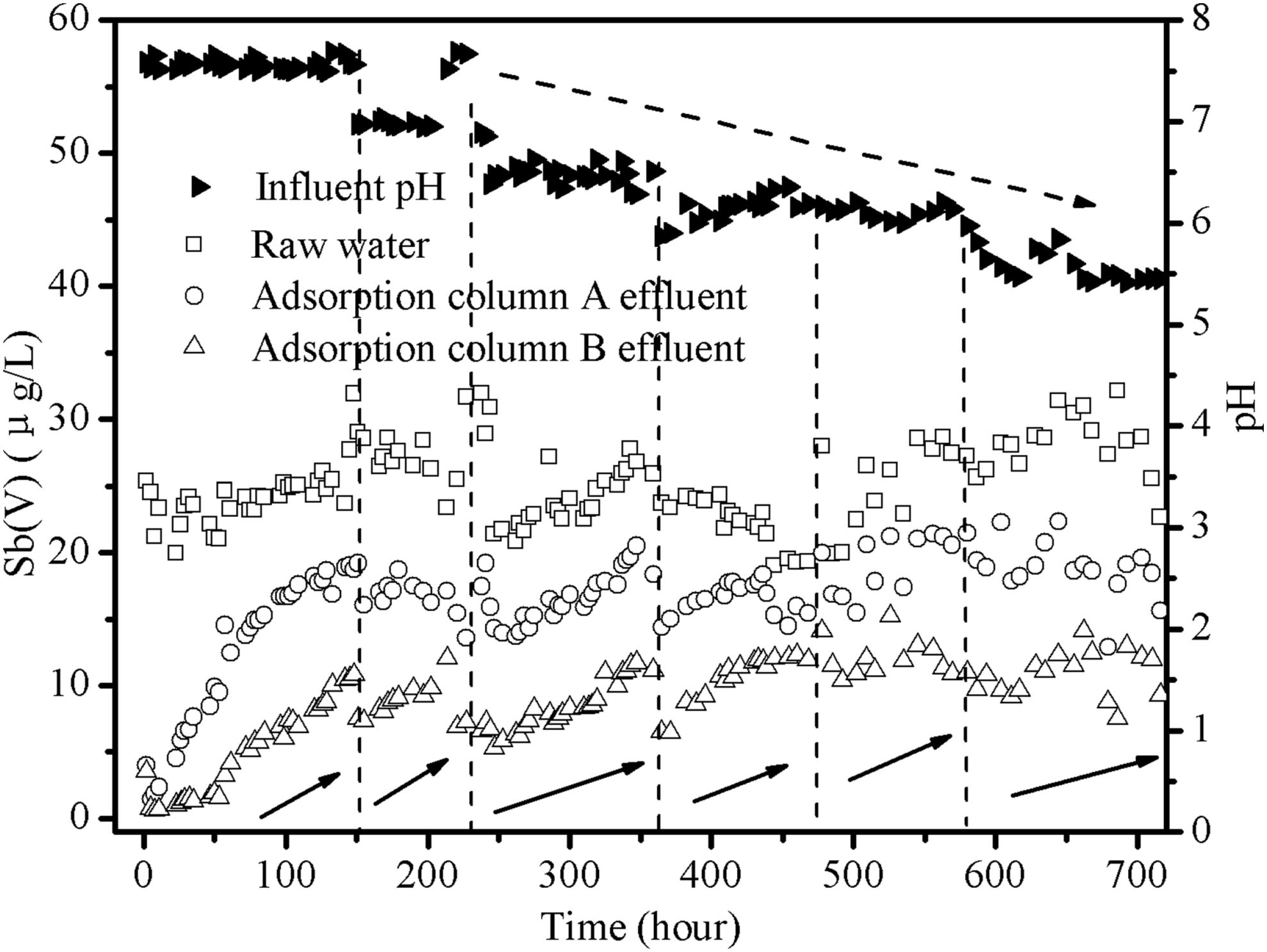
Sb(V) removal by two adsorption stages in the dynamic adsorption test (Experimental conditions: [Sb(V)]0=20–30 μg/L, pH=7.6–5.2, empty bed contact time=82 min).
In addition, the cumulative adsorption quantity of Sb(V) with prolonged run length in Column-A and Column-B, which was the difference due to the different influent initial concentration between column A and B, was observed to be positively correlated with prolonged run length (Supplementary Fig. S5). This suggested that the observed QSb(V) at equilibrium Sb(V) concentration of 10 μg/L was far below the QSb(V),max values in these continuous experiments. It was additionally noted that the residual concentrations of Fe and turbidity in the effluents meet the requirements by drinking water standards in China, that is, Fe <0.3 mg/L, turbidity <1 nephelometric turbidity unit (NTU).
Conclusion
This study develops the adsorbent of the in-situ FeOxHy and indicates its effective removal efficiency toward antimony through laboratory and pilot-scale experiments. This method to prepare adsorbents maintains the active surfaces as much as possible, and enables its higher adsorptive capability and faster adsorption velocity over other synthetic adsorbents. At pH 5.0 the maximal adsorption capacity of Sb(III) and Sb(V) are determined to be as high as 12.77 and 10.21 mmol/g Fe. The 5-min contact time achieves ∼75% of the maximum adsorption capacity toward Sb(III) and Sb(V). The elevated pH over a wide pH range from 3 to 10 lowers Sb(V) adsorption and increases Sb(III) adsorption, and this is ascribed to the different electrical properties between Sb(III) and Sb(V). Phosphate significantly inhibits Sb(V) adsorption, and the adsorption of Sb(III) is slightly affected by the coexisting anions even at high concentrations of 10 mmol/L. The pilot-scale continuous experiments indicates the feasibility of using the in-situ FeOxHy for the removal of Sb(V), and pH adjustment is valuable to increase the equilibrium adsorption capacity and to decrease the frequency for adsorbents regeneration.
Research Highlights
• The in-situ FeOxHy is prepared by the enhanced hydrolysis of Fe3+ ions.
• The in-situ FeOxHy exhibits superiority over other adsorbents in Sb removal.
• The elevated pH inhibits Sb(V) adsorption and favors Sb(III) adsorption.
• The formation of inner sphere complexes may occur during Sb adsorption.
• Phosphate greatly inhibits Sb(V) adsorption and rarely affects Sb(III) adsorption.
• Pilot study demonstrates the feasibility of using in-situ FeOxHy for Sb(V) removal.
Footnotes
Acknowledgments
This work was supported by the key project of National 863 High-Tech Research and Development Program of China (2012AA062604) and the National Science Foundation for Distinguished Young Scholars of China (Grant No. 51225805). Moreover, the author Ruiping Liu gratefully acknowledges the support of the Beijing Nova Program (2013054).
Author Disclosure Statement
No competing financial interests exist.
References
Supplementary Material
Please find the following supplemental material available below.
For Open Access articles published under a Creative Commons License, all supplemental material carries the same license as the article it is associated with.
For non-Open Access articles published, all supplemental material carries a non-exclusive license, and permission requests for re-use of supplemental material or any part of supplemental material shall be sent directly to the copyright owner as specified in the copyright notice associated with the article.
