




Abstract
Abstract
This study reports on the photooxidation of antiepileptic drug primidone by direct UV-C irradiation, UV-C/H2O2, and UV-C/Fe(II). The influence of different parameters, such as pH, hydrogen peroxide concentration, Fe(II) concentration, Cl− concentration, HCO3− concentration, and primidone initial concentration, has been studied. Experiments were carried out by utilizing a UV high-pressure mercury lamp with 254 nm wavelength to irradiate aqueous solutions of primidone. Kinetic experiments showed that primidone followed pseudo-first-order kinetics. H2O2 concentration and Fe(II) concentration had significant influence on photodegradation speed of primidone, and their optimal concentrations were 1 and 0.1 mM, respectively. According to results of photooxidation experiments, effectiveness of specific photooxidation processes could be arranged in the following order: UV-C/Fe(II)>UV-C/H2O2>UV-C. Optimum conditions for primidone UV-C and UV-C/H2O2 photodegradation were observed at a pH value of 6.3. Increase of concentration of Cl− in UV-C/H2O2 system slightly increased primidone degradation rate. However, presence of HCO3− inhibited photodegradation of primidone. Saturation of primidone aqueous solution with O2 proved to be beneficial to degradation of primidone in UV-C/Fe(II) system. Phenobarbital, 4-hydroxyphenobarbital, and 1-(2-nitrobenzyl)-5-oxoproline were identified by liquid chromatography–mass spectrometry–mass spectrometry analysis as main by-products of primidone degradation. Finally, primidone and its by-products were subjects to complete mineralization to ammonia, carbon dioxide, and water. This study obtained the fundamental data on the UV degradation efficiency and the by-products of primidone, and data obtained in our study can be used to evaluate the application of advanced oxidation processes.
Introduction
P
Primidone is rapidly (in 2.7–4.2 h) absorbed in the human body after oral ingestion. It is partly eliminated in unchanged form in urine (15–65% of the dose), while the other part is converted to PEMA (16–65%) and phenobarbital (1–8%) (Kwan et al., 2001). There are various harmful effects of primidone on human organisms, such as feeling of intoxication, sedation, nausea, vertigo, diplopia, gastrointestinal symptoms, and loss of libido (Rogvi-Hansen and Gram, 1995). Other authors (Perucca and Gilliam, 2012) report side effects of primidone, such as coordination disturbances, including dizziness, unsteadiness, imbalance, gait difficulties, nystagmus, and tremor. Phenobarbital as a main active metabolite of primidone exhibits toxic effects on the human body, such as lethargy, dysarthria, and lack of coordination (Rogvi-Hansen and Gram, 1995).
Various studies reported the presence of primidone in the surface water, ground water, and wastewater. Hass et al. (2012) investigated variations in concentrations of primidone in an urban water cycle of Berlin and effluents from six wastewater treatment plants in Berlin. Median effluent concentrations of primidone were detected in a range from 0.43 to 0.71 μg/L (Hass et al., 2012). Henzler et al. (2014) investigated the fate of primidone during river bank filtration, and their research has proved that it was neither degraded nor absorbed during the river bank filtration process. These results have confirmed that primidone behaves in a very persistent manner in the environment (Henzler et al., 2014). In the United States, primidone was detected in various wastewater effluents and source water with a mean detected concentration of 159 ng/L (Oppenheimer et al., 2011). Reh et al. (2013) discovered that primidone had low potential input, relatively high detection frequency of 10%, and, consequently, high persistence in karst and fractured aquifers. Primidone was also detected in the wastewater irrigated soils from three different locations in Hebei, China, where the concentrations ranged from 1.6 to 4.3 μg/kg (Chen et al., 2011). Several other studies (Mac Leod et al., 2008; Trenholm et al., 2009; Yang et al., 2012; Falås et al., 2013; Hübner et al., 2013, 2014; Nguyen et al., 2013) also reported the presence of primidone and other anticonvulsant drugs in the environment and proposed methods for their removal from wastewaters.
Conventional water treatment processes have proved to be inefficient in removal of pharmaceuticals. Therefore, it is necessary to utilize advanced oxidation processes, such as UV-based advanced oxidation processes. De la Cruz et al. (2012, 2013) studied degradation of emergent contaminants by UV-C, UV-C/H2O2, and neutral photo-Fenton at pilot scale in a domestic wastewater treatment plant. Their study has proved that the direct UV-C photooxidation method is the least effective method for removal of selected pharmaceuticals, while the neutral photo-Fenton is the most effective method, where 54% of primidone has been removed after 10 min [50 mg/L of H2O2 and 5 mg/L Fe(II)] (De la Cruz et al., 2013). Ninety nanogram per liter of primidone was detected in a secondary effluent of a sewage treatment plant, and primidone showed low removal efficiency of 5% after 5 min by UV-C process (Kim et al., 2009a). The studies mentioned earlier (Kim et al., 2009b; De la Cruz et al., 2012, 2013) were not focused on a single pollutant, but on the removal of a large group of pollutants that were detected in various municipal wastewater treatment plants. Therefore, the data that were obtained in these studies are unsuitable for optimization of UV-C photooxidation of primidone, since there are not enough data for influence of initial concentrations of primidone, H2O2, Cl−, HCO3−, Fe(II), and pH on the efficiency of primidone removal by UV-C irraditation.
This study was focused on the characteristics of photoxidation of primidone, including dynamics and photodegradation mechanism. The influence of initial concentrations of primidone, H2O2, Cl−, HCO3−, and Fe(II) was thoroughly researched and optimal concentrations were proposed. The pH influence on photodegradation process of primidone was investigated to find the optimal pH conditions. Previous studies lack the data about the degradation pathways of primidone during photooxidation processes. In this study, the by-products of primidone were successfully identified and the degradation pathways during UV-C irradiation were tentatively proposed. The data obtained in this study are useful for optimization of removal of primidone by UV-C photooxidation processes in wastewater treatment plants.
Experimental Materials and Methods
Materials
Primidone (>98% pure) was purchased from ICN pharmaceuticals. Thirty percent H2O2 (analytical grade quality) was purchased from Sinopharm chemical reagent company. FeSO4·7H2O, NaCl, and NaHCO3− (analytical grade quality) were purchased from Sinopharm chemical reagent company. The pH values were adjusted by H2SO4 and NaOH (analytical grade quality) that were purchased from Sinopharm chemical reagent company. Ultra-pure water was obtained by using a Mili-Q Milipore System. All of the samples were diluted in ultra-pure water with a conductivity of 18.2 Ω/m. Acetonitrile (HPLC gradient grade; Merck) was used for high-performance liquid chromatography (HPLC) and liquid chromatography–mass spectrometry–mass spectrometry (LC-MS-MS) analysis.
Photo-irradiation procedure
All of the irradiation experiments were performed in a merry-go-round photochemical reactor (Sidongke Electric Plant). The photochemical reactor was coupled with a maximum of 12 quartz tubes containing the reaction solution for the photooxidation experiments. The quartz tube had a total volume of 100 mL and a liquid layer thickness of 35 mm. A 300 W high-pressure mercury lamp with a 254 nm wavelength was used to simulate UV-C irradiation. The light intensity was 15 μEinstein/min, and the cell length was 13 cm. The mercury lamp was immersed in the circulated-water cooled quartz well. The samples were irradiated for a determined period of time by UV-C and then, 1 mL of each of the samples was taken from the tube and used for instrumental analysis.
Analytical methods
Changes in concentration of primidone during irradiation time were observed using a high-performance liquid chromatography (HPLC, Agilent 1200 series). HPLC was equipped with a reversed phase column (C18, 150×4.6 mm). The autosampler volume injection was set to 20 μL. Variable wavelength detector was set at 225 nm. The mobile phase with the flow rate of 0.6 mL/min was a mixture of ultrapure water and acetonitrile (60/40, v/v).
Identification of inorganic cations that were released during the protodegradation process of primidone was performed by ion chromatography (IC; Dionex) that was equipped with a cationic ion exchange column. Twenty millimolars methanesulphonic acid with a flow rate of 1 mL/min was used as a mobile phase. The injection volume was 25 μL.
Formation of byproducts of primidone was monitored by LC-MS-MS. Agilent 1260LC chromatograph (100×3 mm EC-C18 end-capped Porshell 120 column) was coupled to an Agilent 6460 mass spectrometer equipped with an electron spray ionizator (ESI) interface and a heated nebulizer. The flow rate was 0.4 mL/min, and the injection volume was 10 μL. A mixture of water 75% and acetonitrile 25% was used as the mobile phase. Mass spectrometry analysis was performed in the range of 20–400 m/z. The following operating conditions were used for the negative electron spray ionization (ESI[−]): nebulizer pressure 40 psi; capillary voltage 4,000 V; temperature 300°C; drying gas flow, 8 L/min; and nozzle voltage, 0 V.
Results and Discussion
Direct photodegradation of primidone in aqueous solution
UV photooxidation process is a widely used technology for efficient removal of organic substances from aqueous solutions. Molecular oxygen is a poor oxidant because of the very low rates of reaction of ground-state triplet oxygen (3O2). The hydroxyl radical (•OH), singlet oxygen (1O2), and the superoxide radical anion (O2•− or its conjugate acid HO2) are the three main intermediates that are generated during a photooxidation process (Halmann, 1995).
Effect of initial concentration on photooxidation of primidone by UV-C irradiation
In this study, primidone was removed by the pseudo-first-order kinetics.
Equation (1) shows the kinetic behavior of primidone photooxidation process, where [PMD] and [PMD]0 indicate primidone concentrations at time t and 0 min, respectively, and k is the pseudo-first-order rate constant of primidone degradation. The calculation of k was necessary to prove that photooxidation of primidone followed the pseudo-first-order rate.
For the purpose of determining the influence of concentration on the photooxidation of UV-C, five different concentrations (0.1, 0.2, 0.5, 1.0, and 2.0 mg/L) of primidone were prepared. The initial pH of the solutions was 6.3. The results have shown that direct UV-C photooxidation was not an effective method for removal of higher concentrations of primidone (i.e., 80% of primidone 0.1 mg/L degraded after 300 min, while only 53% of primidone 2 mg/L degraded after 300 min). The degradation of different initial concentrations of aqueous primidone solutions by UV-C irradiation was exhibited in Table 1. As depicted in Table 1, it was obvious that the photodegradation rate of primidone decreased as the initial primidone concentrations increased. Higher primidone concentration caused lower degradation rates, and this could be attributed either to its relatively high UV absorbance at 254 nm (the molar extinction coefficients ɛ of primidone at 254 nm is 220 L/[mol·cm]) (Real et al., 2009) or to the presence of by-products from photodegradation of primidone that competed for active species that were created during the UV irradiation of aqueous solution.
Quantum yield of primidone
The pseudo-first rate constant of primidone photodegradation can be used to calculate the quantum yield. The quantum yield is often utilized as an indicator of the efficiency of a photochemical reaction. Quantum yield is defined as the number of molecules that reacted during a photooxidation reaction divided by the number of photons absorbed [Eq. (2)] (Livingston, 2005).
Or more specifically,
where Φ is the quantum yield (mol/Einstein); I0,λ (Einstein/[Ls]) is the UV light intensity; ɛD,λ (L/[mol·cm]) is the molar absorptivity at the selected UV wavelength, respectively; and l is the cell length (cm) (Livingston, 2005). In this study, the light intensity was 15 μEinstein/min and the cell length was 13 cm.
The values of quantum yield for primidone photodegradation in UV-C, UV-C/H2O2, and UV-C/Fe(II) systems were calculated and exhibited in Table 1.
Effect of pH on photooxidation of primidone by UV irradiation
The effectiveness of UV-C photooxidation under different pH conditions was tested to determine the optimal pH conditions. The initial concentration of aqueous solution of primidone was 0.5 mg/L. The degradation rates of primidone at different pH by UV-C irradiation were exhibited in Figure 1. The results have indicated that pH change has a significant influence on the effectiveness of primidone degradation. As depicted in Figure 1, pH 6.3 was the most effective pH for removal of primidone. Based on the degradation rates of primidone during the UV-C photooxidation, the following pH order was established: 6.3>4.9>3.3>8.9>10.8.
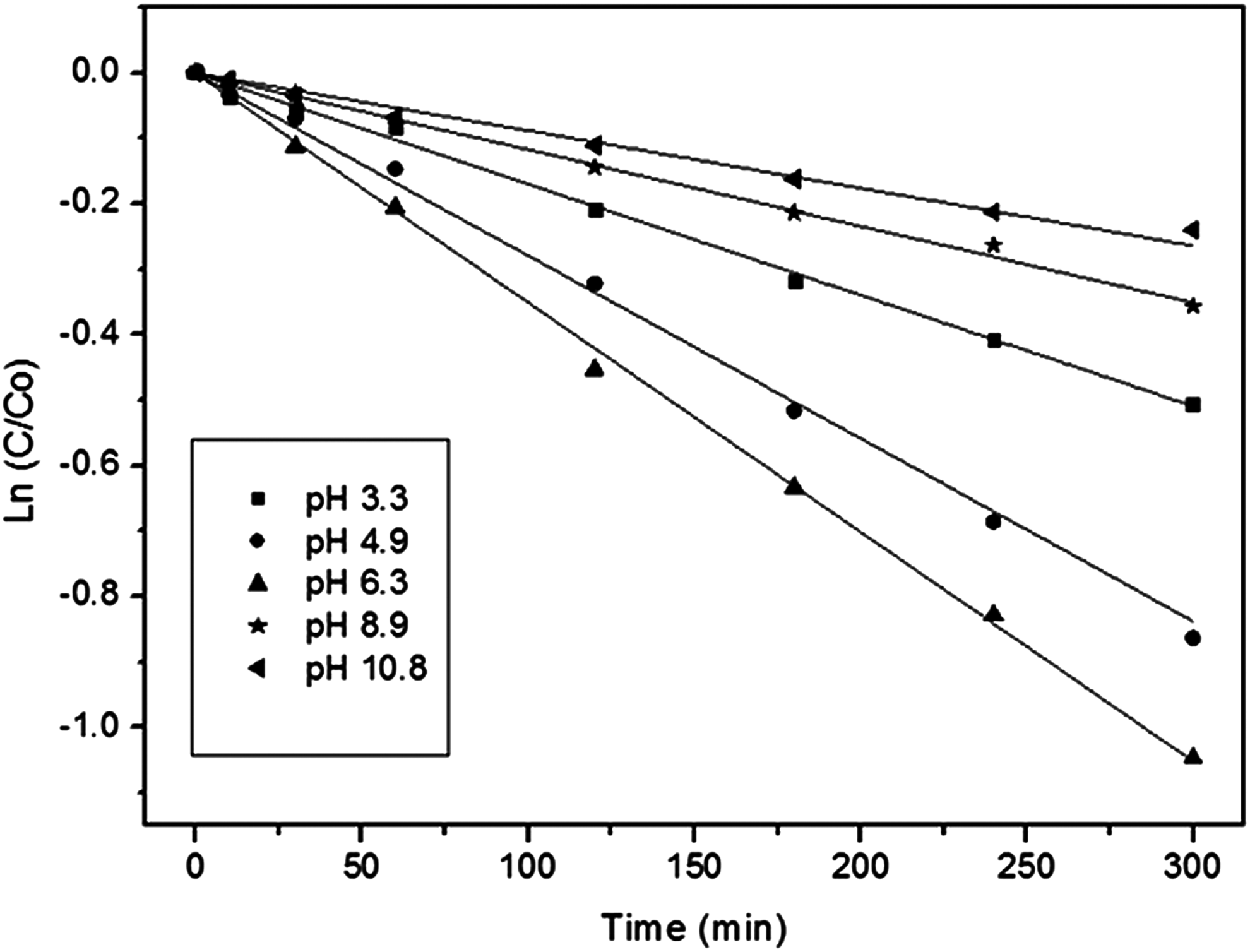
UV photooxidation of primidone 0.5 mg/L at different pH values.
As indicated in the previous literature (Livingston, 2005), proton is the major end product of the photo-reaction of some organic compounds. The increased proton formation is responsible for lower reaction rates. This directly implied that proton generation could inhibit the photodegration process, which agreed with the observations of lower reaction rates at lower pH levels in this study. Therefore, the lower pH level inhibited the photooxidation processes of primidone. The decrease of photooxidation rates of primidone in alkaline solution is due to the elimination of oxidizing species, such as hydroperoxy anions (•OH) and, consequently, decreasing of the rate of reaction (Tang, 2003). Since the oxidizing species are mainly responsible for photodegadation of primidone, the alkaline environment can strongly inhibit the photodegradation of primidone. In an acidic environment, the photodegradation of primidone is faster than its photodegradation in an alkaline environment because of the fact that the presence of H+ ion has no significant scavenging effects on the oxidizing species.
UV/H2O2 photodegradation of primidone
The addition of hydrogen peroxide during UV irradiation is a very effective method that is used to increase the degradation rates of organic compounds.
As shown in Equation (4), when UV-C light and H2O2 are combined, the hydroxyl radicals (OH•) are created. Equation (5) shows the reverse reaction, when two hydroxyl radicals create hydrogen peroxide (H2O2). Hydrogen peroxide reacts with hydroxyl radicals, as shown in Equation (6), and superoxide anions are generated. UV-C/H2O2 process may degrade organic contaminants either directly by photolysis or indirectly by hydroxyl radicals. If the photon wavelength is greater than 254 nm, hydroxyl radicals are largely responsible for initiation of oxidation reactions (Aleboyeh et al., 2005).
Effect of initial primidone concentration on UV/H2O2 photooxidation of primidone
Wastewater and groundwater can contain a wide range of concentrations of primidone. Therefore, it is of utmost importance to study the influence of initial concentrations on primidone degradation rate. Different initial concentrations of primidone were tested for UV-C/H2O2 photooxidation effectiveness. The initial H2O2 concentration was 0.1 mM.
Figure 2 shows that the degradation rates decreased in UV-C/H2O2 system as the initial concentrations of primidone increased. Since the molar extinction coefficient of primidone is 220 L/[mol·cm], the decrease of degradation rates for increased initial concentrations of primidone could be attributed to the absorption of UV-C irradiation by primidone molecules or the inner filter effect. The inner filter effect lowers the quantity of ultraviolet radiation that is available for absorption by H2O2, which is the critical factor for the production of active oxidant •OH and the treatment performance effectiveness in the H2O2/UV-C process (Lofrano, 2012). Therefore, the concentration of active oxidant (•OH) that is available to perform oxidation is lower at higher initial concentrations of primidone.
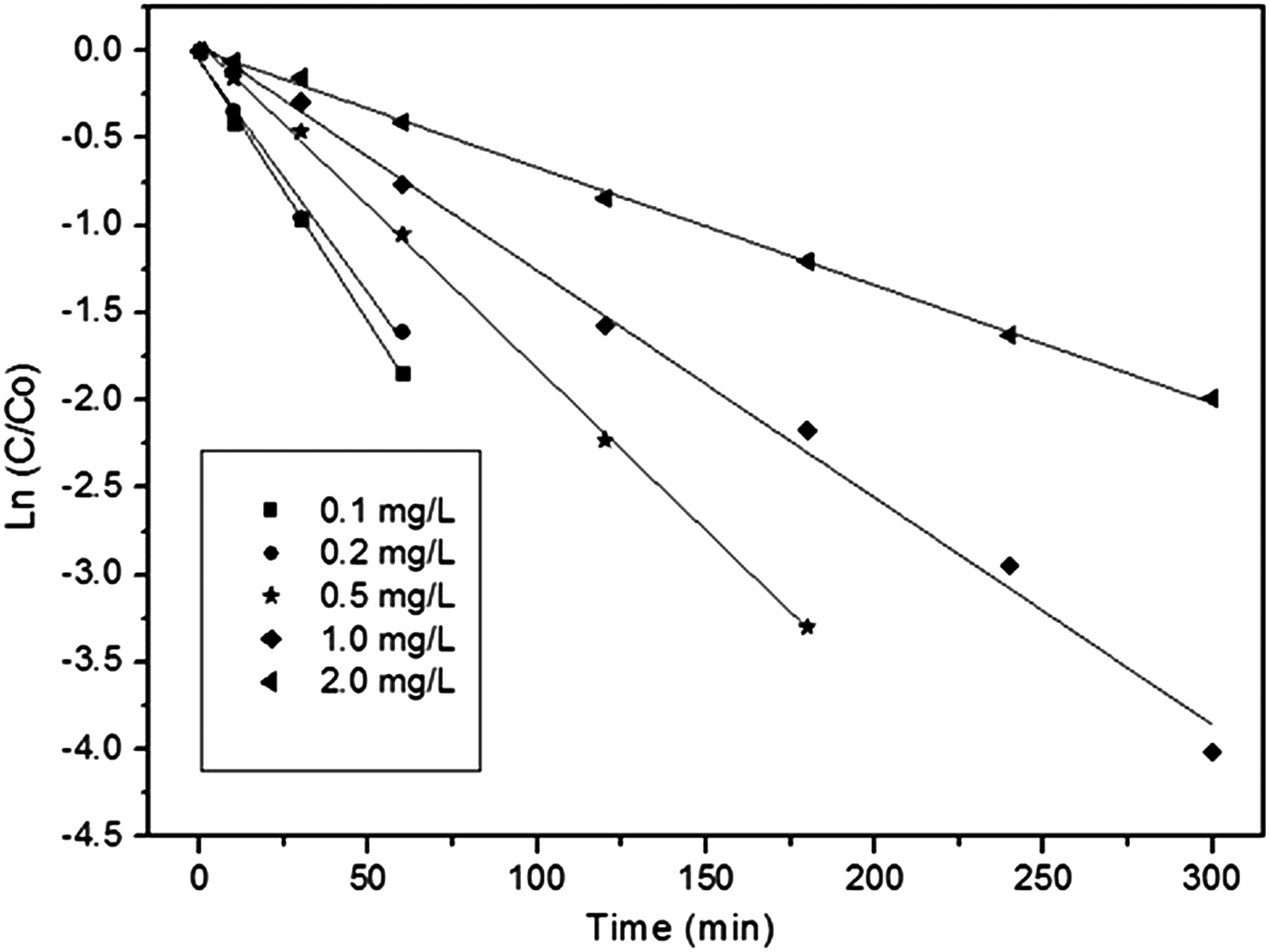
UV photooxidation of different concentrations of primidone with 0.1 mM of H2O2.
Effect of H2O2 dosage on UV/H2O2 photooxidation of primidone
The experiments were performed to find the optimal initial concentration of H2O2 in UV-C/H2O2 system. 0.005, 0.01, 0.02, 0.05, 0.08, 0.1, and 1 mM of H2O2 were added to primidone 0.5 mg/L aqueous solution. The initial pH of the solutions was 6.5. Table 1 shows the influence of the initial concentrations of H2O2 on primidone degradation in UV-C/H2O2 system. As depicted in Table 1, the concentration of 1 mM of H2O2 was highly effective for photodegradation of primidone 0.5 mg/L. The primidone degradation rate increased significantly at higher initial concentrations of H2O2. This was mainly caused by the increase of concentration of •OH radicals, which were generated during the photolysis of H2O2. The speed of removal of primidone in UV-C/H2O2 system is directly controlled by the concentration of •OH radicals (Borghei and Hosseini, 2008).
The higher initial concentrations of H2O2, such as 5, 10, and 50 mM, were also tested for photodegradation efficiency. However, the increase of the initial concentrations of H2O2 did not cause a substantial increase in degradation efficiency of primidone. Considering the fact that it was necessary to economize the photooxidation process and decrease the overall consumption of reagents, 1 mM was chosen as the optimal concentration of H2O2, since all the higher initial concentrations of H2O2 had almost the same effect on primidone degradation.
Effect of pH on UV/H2O2 photooxidation of primidone
Effectiveness of UV-C/H2O2 photooxidation for different pH values was tested to find the optimal pH conditions. The degradation of primidone 0.5 mg/L aqueous solutions at different pH values by UV-C/H2O2 irradiation was exhibited in Figure 3. The initial concentration of H2O2 was 0.1 mM. The results indicated that the variation of pH values had a significant influence on primidone degradation. As shown in Figure 3, pH 6.5 was the most effective pH value for removal of primidone during UV-C/H2O2 photooxidation. According to the degradation rates of primidone, the following pH order was established: 6.5>4.7>3.1>9.0>10.8.
UV/H2O2 photooxidation of primidone 0.5 mg/L with 0.1 mM of H2O2 at different pH values.
As shown in Equation (7), the alkaline environment is responsible for creation of hydroperoxy anions (HO2−) that react with HO• [Eq. (8)] and with residual H2O2 [Eq. (9)], thus directly decreasing the number of hydroxyl radicals that are necessary for the effective photooxidation reaction of primidone (Daneshvar et al., 2008). The reaction of •OH and HO2− is around one hundred times quicker than its reaction with H2O2.
The same pH order was established for UC-C and UV-C/H2O2 photolysis. The results indicated that both of the photooxidation processes followed the same influences of pH values. This proved that the degradation rate of primidone is directly proportional to the concentration of HO• radicals in the aqueous solution during UV photolysis. The acidic or alkaline environment could directly influence concentrations of available HO• radicals in UV-C and UV-C/H2O2 systems (Daneshvar et al., 2008).
Effect of Cl− and HCO3− dosage on UV-C/H2O2 photooxidation of primidone
Chloride ion (Cl−) is frequently found in various groundwater samples. Bicarbonate ion (HCO3−) usually occurs in high concentrations in effluents from different manufacturing plants, such as dye and tannery manufacturing wastewaters. In some wastewater treatment plants, HCO3− is added to stabilize and adjust the pH value in a chemical coagulation process (Liao et al., 2001).
Different initial concentrations of Cl− and 0.1 mM H2O2 were added to the aqueous solution of primidone 0.5 mg/L. The initial pH of the aqueous solutions was 6.5. The UV-C/H2O2 photooxidation of primidone followed the pseudo-first-order kinetics. Table 2 exhibits the values of pseudo-first-order rates k of primidone 0.5 mg/L, containing 0.1 mM H2O2, and different concentrations of NaCl and NaHCO3. As exhibited in Table 2, all of the samples that contained Cl− achieved better degradation rates than a sample without Cl−. The optimal concentration of Cl− was 1 mM. As Liao et al. (2001) illustrated, the improved oxidation efficiency of a target contaminant in the presence of Cl− alone and pH ≥6 is attributed to their great effect on the concentration of •OH. The HO• forms through the H2O2 photolysis, followed by the scavenging of HO• by Cl− with the rate constant of (4.3±0.4)×109 L/(mol·s) forming HOCl−•. HOCl−• can dissociate back to HO• and Cl− with the dissociation rate constant of (6.1±0.8)×109/M/s, which is slightly larger than the scavenging reaction rate constant of HO• (Liao et al., 2001). On the other hand, the HOCl−• radicals could also be responsible for rapid formation of Cl• through the protonation reaction at the rate of (2.1±0.7)×1010 L/(mol·s) [Reaction (11)] and the reverse reaction with the rate constant (1.3×10³ L/(mol·s)), which is relatively low when compared with the forward reaction rate constant. The pK value for deprotonation reaction (i.e., reverse reaction) in Reaction (11) is a constant, which is a critical value that directly affects the HO• concentration. In this study, the pH value was 6.5, which was lower than 11.5, which is pKa value of primidone. Therefore, HOCl−• radicals became the dominant species. Hence, as depicted in Reaction (11), the existence of Cl− could lead to formation of higher concentrations of HO• through HOCl−• dissociation reaction.
However, higher concentrations of Cl− did not promote the photooxidation of primidone. These results comply with results of Liao et al. (2001) and their investigation of influence of NaCl on photooxidation of organic substances. At relatively high concentrations of Cl−, the HO• concentration remains constant, regardless of the changes in chloride concentration (Liao et al., 2001).
Different concentrations of HCO3− were added to an aqueous solution of primidone (0.5 mg/L), which contained 0.1 mM of H2O2. The initial pH of the solutions was 6.5. As depicted in Table 2, the addition of HCO3− decreased the photooxidation efficiency of primidone. The lowest value of photodegradation rate was observed for the HCO3− concentration of 10 mM. As shown in Reaction (12), HCO3− competes with primidone for •OH in UV-C/H2O2 system. This leads to the formation of CO3−• inorganic radical specie that is much less reactive than •OH (Liao et al., 2001). Addition of HCO3− also increases pH value of the solution. Since the experiments in this study have proved that primidone exhibits lower degradation rates in an alkaline environment, higher pH values of solutions containing HCO3− are directly responsible for lower degradation rates of primidone in UV-C/H2O2 system.
UV/Fe(II) photodegradation of primidone
It is well known that the addition of Fe(II) and Fe(III) ions to a UV photooxidation system can enhance the degradation rate of organic compounds. The oxidation and transformation of Fe(II) to Fe(III) can produce H2O2 and •OH [Reactions (13–16)] in the presence of O2. Fe(III) ions generate hydroxyl radicals in the presence of UV irradiation [Eq. (17)]. Hydroxyl radicals react with organic substances and generate organic radicals [Eq. (18)]. The best performance of UV/Fe(II) photooxidation is obtained in acidic aqueous solutions between pH values of 3.0 and 4.5 (Catalkaya and Sengül, 2006).
Effect of Fe(II) dosage on UV/Fe(II) photodegradation of primidone
Concentrations of 0.001, 0.005, 0.01, 0.05, 0.1, and 0.5 mM of FeSO4·7H2O were introduced to the aqueous solution of primidone 0.5 mg/L, and pH was adjusted to 3 to test the effectiveness of UV-C/Fe(II) photooxidation for removal of primidone. Table 1 shows the influence of Fe(II) concentrations on primidone degradation in UV-C/Fe (II) system. As exhibited in Table 1, the increase of concentration of Fe(II) ions till 0.1 mM caused an increase of degradation rates of primidone. However, the addition of Fe(II) ions above 0.1 mM and till 0.5 mM has decreased the degradation rate of primidone. All of the primidone samples in UV/Fe(II) system completely degraded after 300 min.
Increased degradation rates of primidone in UV/Fe(II) system are mainly caused by the oxidation of Fe(II) ions to Fe(III) ions and, consequently, increased generation of H2O2 and hydroxyl radicals when oxygen is present in the aqueous solution (Catalkaya and Sengül, 2006). After the increase of Fe(II) concentrations more than 0.1 mM, much of the •OH radicals that were created from H2O2 are consumed by Fe(II) and there are not enough •OH radicals for further effective degradation of primidone. On the other hand, Fe(OH)3 that is created during the oxidation of FeSO4 in UV-C/Fe(II) systems exhibits brown turbidity properties that can obstruct the absorption of the ultraviolet light, which is essential for photolytic degradation of primidone (Ghodbane and Hamdaoui, 2010). The optimal concentration of Fe(II) ions was 0.1 mM under the available experimental conditions.
Effect of O2 on UV-C/Fe(II) photodegradation of primidone
Figure 4 depicts the effect of saturated O2 on UV-C/Fe(II) photodegradation of primidone. The pH value was set to 3.0. As exhibited in Figure 4, addition of O2 to an aqueous solution of primidone 0.5 mg/L, which contained 0.1 mM FeSO4·7H2O, increased the degradation rate of primidone. 0.5 mg/L of primidone completely degraded after 20 min in UV-C/Fe(II)/O2 system, which was more effective than UV-C/Fe(II) system, where 0.5 mg/L of primidone completely degraded after 30 min.
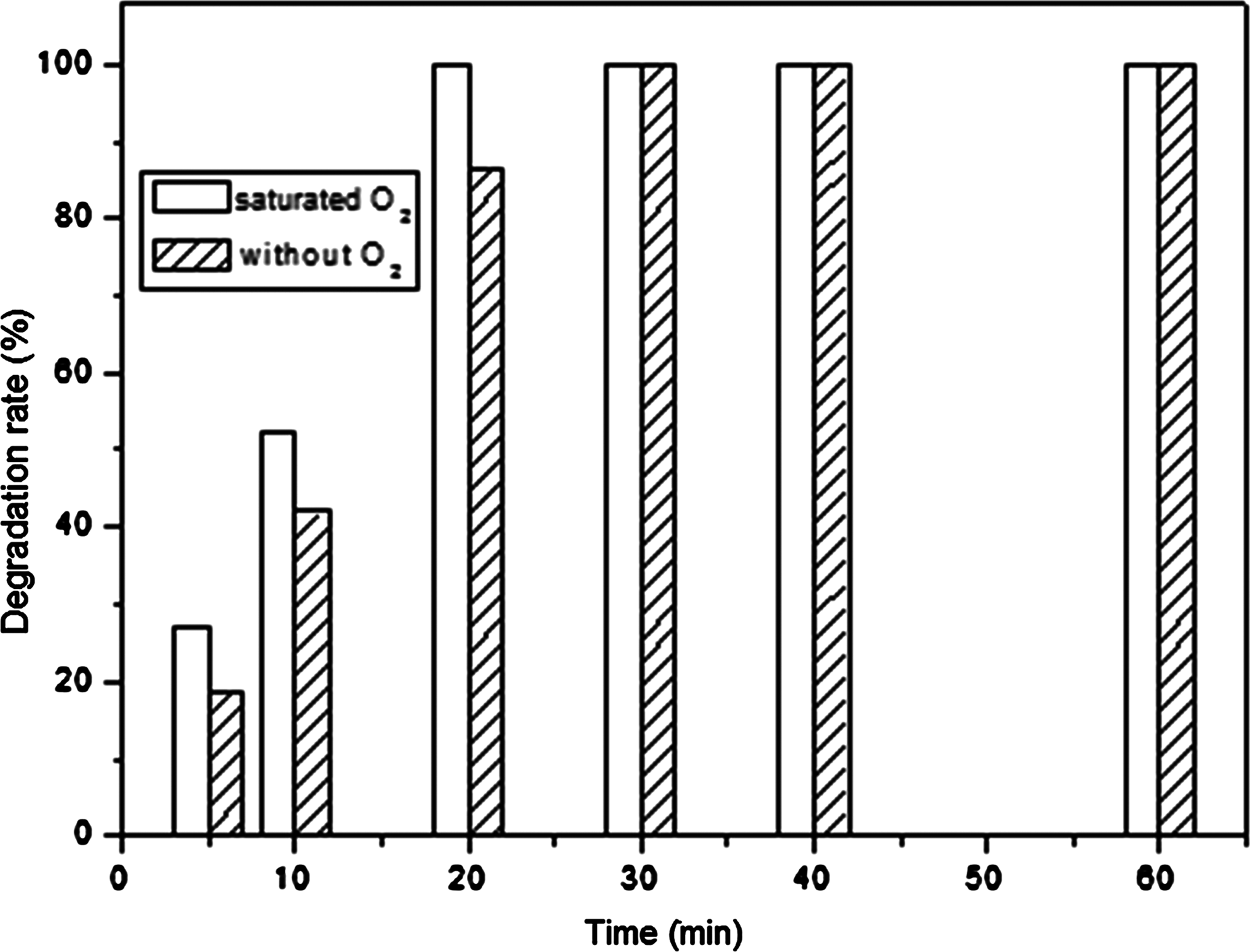
UV/Fe(II)/O2 photooxidation of primidone 0.5 mg/L with FeSO4·7H2O 0.1 mM.
After saturating UV-C/Fe(II) system with O2, O2•−, H2O2, and •OH [Reactions (13–18)] are formed. These active species can enhance the degradation rate of primidone (Ahmed and Chiron, 2014). When the UV-C/Fe(II) systems are saturated with O2, the concentrations of the oxidizing species, such as hydroxyl radicals, that are needed for effective photodegradation of primidone also increase. O2 is also responsible for direct oxidation of primidone. Therefore, its presence increases the degradation rate of primidone.
Comparison of UV-C-based advanced oxidation processes for primidone degradation
Various experiments were conducted to examine the degradation efficiency of three different UV-C-based advanced oxidation processes. Figure 5 depicts the semi-logarithmic groups of [PMD]/[PMD]0 containing different oxidation agents as a function of reaction time. As exhibited in Figure 5, UV-C irradiation alone is not effective for removal of primidone from aqueous solutions. Introducing the common oxidants [H2O2 and Fe(II)] could significantly improve the degradation rates of primidone.
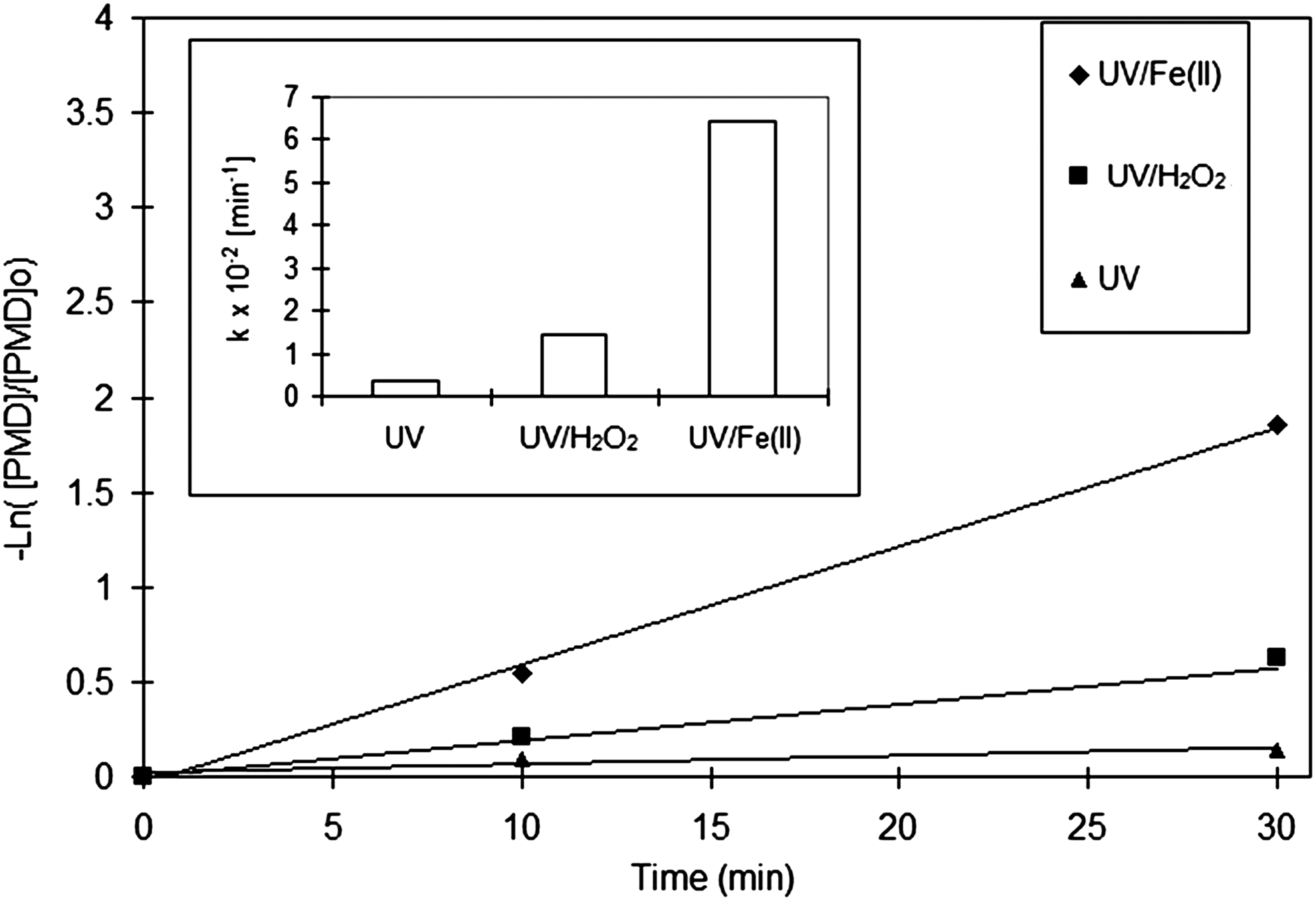
Comparison of UV-based advanced oxidation processes for primidone degradation: [PMD]=0.5 mg/L; [H2O2]=0.1 mM; [Fe(II)]=0.1 mM; pH[UV]=6.3, pH[UV/H2O2]=6.5, pH[UV/Fe(II)]=3.
In Figure 5, the slopes of the fitted straight lines represent the values of k for UV-C, UV-C/H2O2, and UV-C/Fe(II) systems, respectively. The values of k for different UV advanced oxidation processes were as follows: k[UV]=0.0034 min−1; k[UV/H2O2]=0.0142 min−1; and k[UV/Fe(II)]=0.0644 min−1 and it is obvious that UV-C/Fe(II) is the most effective photooxidation process for removal of primidone from aqueous solutions.
Primidone degradation path over UV-C irradiation
NH4+ was detected through IC tests of primidone samples that were previously irradiated in UV-C and UV-C/H2O2 systems. The highest concentration of NH4+ was detected after 30 min of UV-C irradiation, and it gradually decreased as the time of irradiation increased. This proved that the concentration of NH4+ that was generated during the photooxidation process was directly proportional to the speed of degradation of primidone and its by-products. Finally, the N element of primidone was subject to complete transformation to NH3. Samples of primidone that contained H2O2 exhibited higher concentrations of NH4+ ions because of the higher photodegradation rates of primidone.
LC/MS/MS analysis was used to identify the intermediates of primidone (m/z=217) that were created during the UV-C irradiation. One of the detected by-products was phenobarbital with m/z=231. The decrease of primidone peak size in LC chromatogram picture was directly proportional to the increase of phenobarbital peak, which suggested that primidone gradually oxidized into phenobarbital. The size of the phenobarbital peak gradually increased with time and started decreasing as the time of UV-C irradiation continued. Two new peaks gradually became visible over time, which was most likely caused by the presence of the oxidation by-products of phenobarbital. Two of the identified oxidation products of phenobarbital were 4-hydroxyphenobarbital with m/z=247 and 1-(2-nitrobenzyl)-5-oxoproline with m/z=263. Primidone, phenobarbital and its oxidizing products were subject to complete oxidation to CO2, NH3, and H2O at longer UV-C irradiation times. Figure 6 exhibits the proposed photooxidation pathway of primidone under UV-C irradiation. Figure 7 shows the quantitative formation of intermediates during the photodegradation of primidone as a function of C/Cmax (C, concentration at time t and Cmax, maximum concentration). As shown in Figure 7, the maximum concentrations of phenobarbital and 4-hydroxyphenobarbital were detected after 180 min of UV-C irradiation, while the maximum concentration of 1-(2-nitrobenzyl)-5-oxoproline was detected after 120 min of UV-C irradiation.
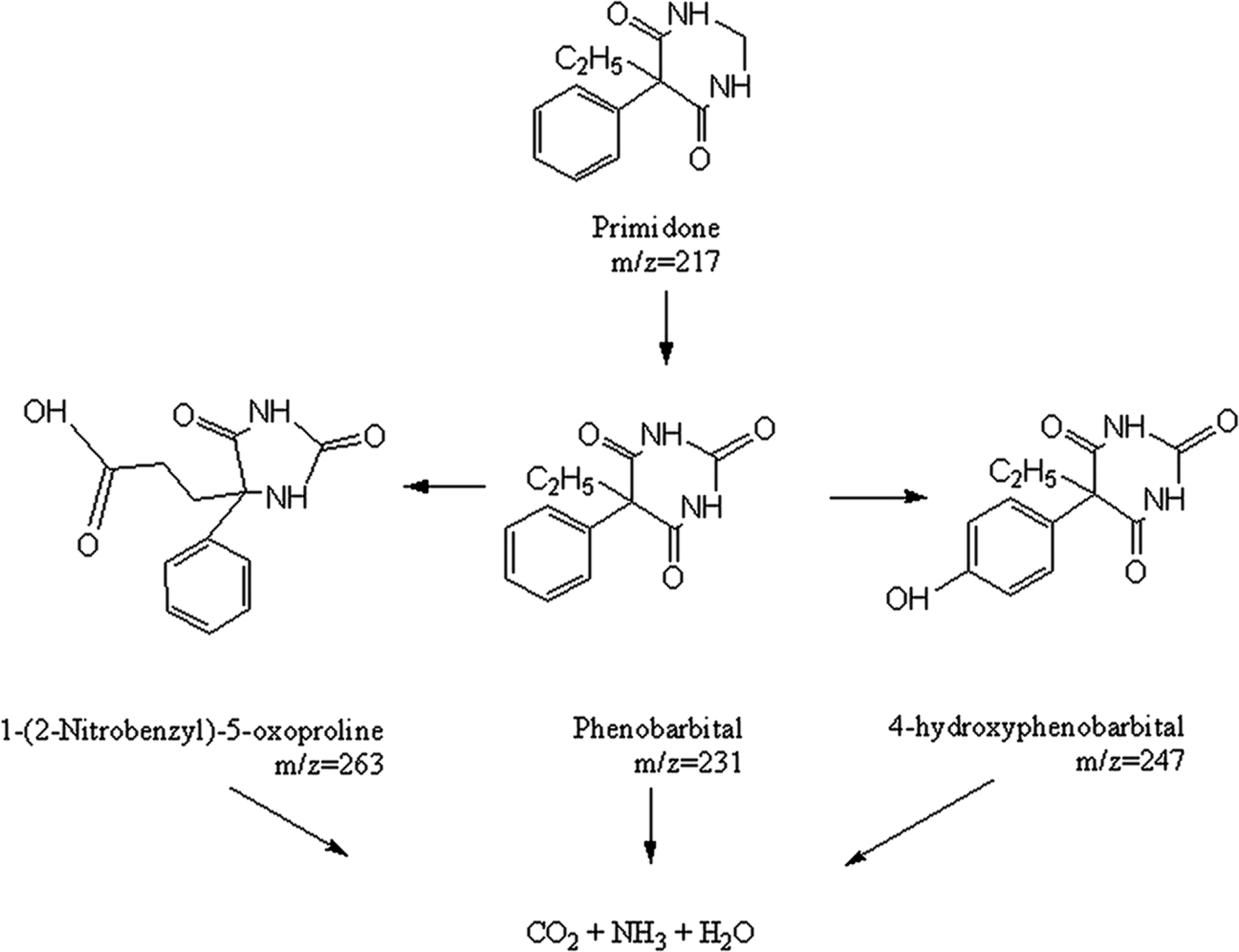
Degradation pathways of primidone under UV irradiation.
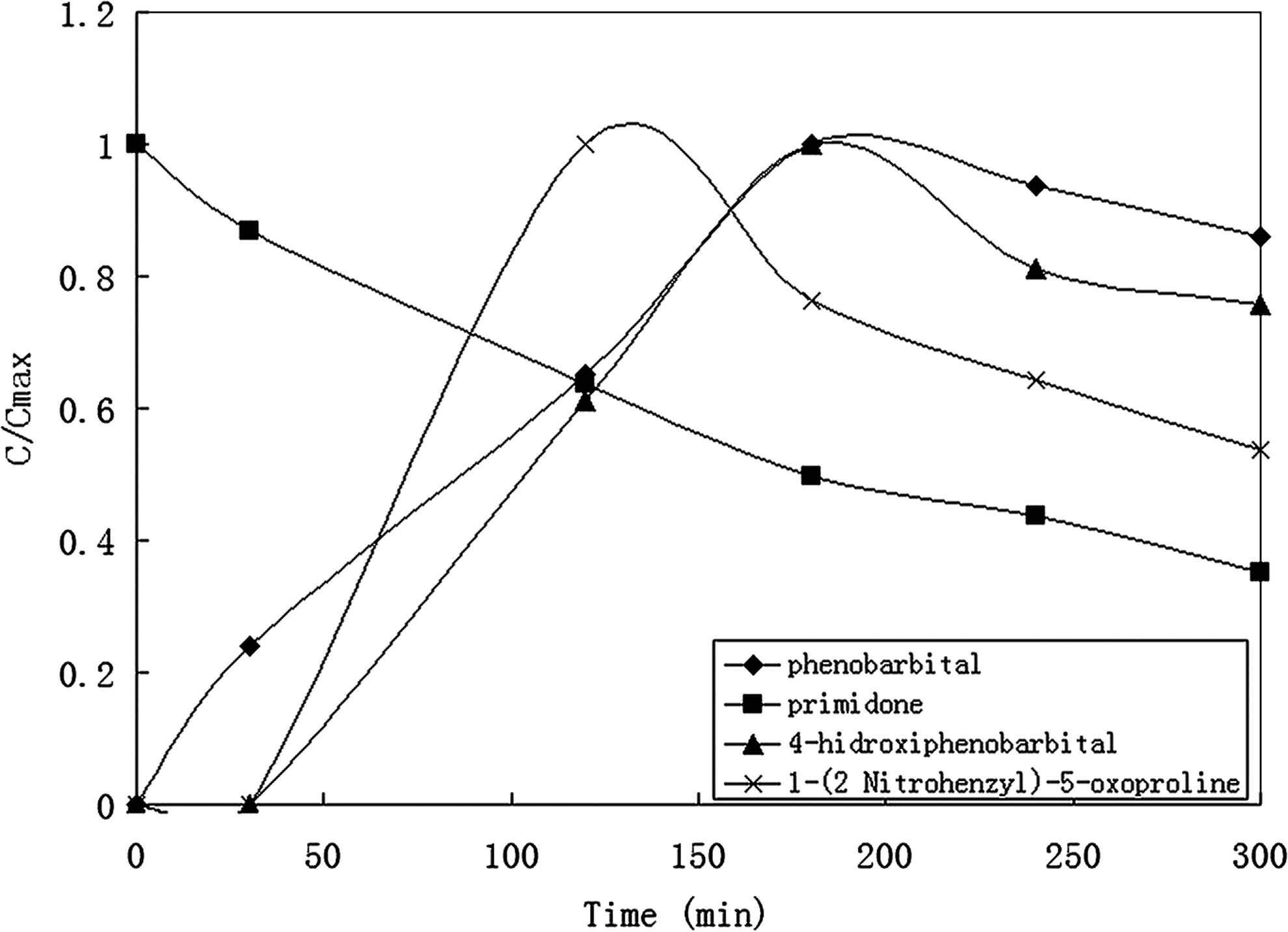
Quantitative liquid chromatography–mass spectrometry–mass spectrometry analysis of intermediates during UV-C photodegradation of primidone.
Conclusions
UV-C, UV-C/H2O2, and UV-C/Fe(II) photooxidation processes were successfully performed for removal of antiepileptic drug primidone from aqueous solutions. The experimental results obtained in this study showed that UV-C/H2O2 and UV-C/Fe(II) processes were more effective than the UV-C irradiation alone. H2O2 acted as •OH promoter, consequently leading to increased photodegradation rates of primidone as the concentrations of H2O2 increased. Acidic and alkaline pH values were responsible for lower primidone degradation rates in both direct UV-C and UV-C/H2O2 systems. The increase of Cl− concentration improved the photodegradation rate of primidone, while the increase of HCO3− concentration decreased the photodegradation rate of primidone in UV-C/H2O2 system. UV-C/Fe(II) photooxidation process increased the primidone degradation rate when compared with direct UV-C irradiation alone. The best working conditions were obtained for an initial Fe(II) concentration of 0.1 mM and an initial H2O2 concentration of 1 mM. The saturating of UV-C/Fe(II) system with O2 improved the degradation rate of primidone. NH4+, Phenobarbital, 4-hydroxyphenobarbital, and 1-(2-nitrobenzyl)-5-oxoproline) were detected and identified during primidone degradation process. The possible degradation pathways for primidone by UV-C irradiation in aqueous solution were tentatively proposed. This study confirmed that UV/Fe(II) and UV/H2O2 can be considered feasible options with high potential for effective decomposition of primidone during water treatment based on UV-C irradiation. The further research of UV photooxidation of primidone should include influence of dissolved organic matter that is present in wastewater treatment facilities.
Footnotes
Acknowledgments
The authors are grateful for the financial support provided by the National Natural Science Foundation of China (No. 11305099, 11175112, and 11025526), the Program for Changjiang Scholars and Innovative Research Team in University (No. IRT 13078), and the Project supported by Science and Technology Commission of Shanghai Municipality (No. 13230500600).
Author Disclosure Statement
No competing financial interests exist.