




Abstract
Abstract
Methylisothiazolinone (MIT) is widely used as biocide in hair and skin care products and in high concentrations, more than 150 mg/L, in cooling towers in the paper mill and refinery industry. This product has been recognized as a potent contact allergen and is discharged to the wastewater treatment plants (WWTP) from industrial processes or domestic usages. However, the role of MIT in biological treatment has not been characterized, and therefore, the effect of MIT on the composition and performance of activated sludge has been analyzed. For this purpose, a sequential batch reactor was fed with a synthetic solution containing 5 mg/L of MIT. Addition of MIT had shown no significant effect on organic matter metabolization (dissolved organic carbon [DOC] removal remained constant at 80–90%). On the contrary, a loss of efficiency in the nitrification process occurred (ammonium removal decreased from 90% to 20% per cycle throughout the experiment), first affecting the nitrite oxidizing bacteria and, after around 40 cycles, also the ammonium-oxidizing bacteria disappeared, as shown by fluorescence in situ hybridization analysis. Bioindicative studies based on counts of protozoa and sludge biotic index indicated that, at the end of the process, a stable and well-colonized protozoa community was obtained. Finally, respirometric tests indicated some acclimatization of the heterotrophic bacteria to MIT, as shown by shorter lag periods when the sludge was previously fed with MIT. The role of MIT in biological treatment has been characterized to increase the knowledge about this pollutant effects on activated sludge to improve WWTP performance.
Introduction
C
In particular, 2-methyl-4-isothiazolin-3-one or methylisothiazolinone (MIT) can be labeled as an EP. This is a biocide compound used in cooling systems or as a preservative in cosmetics; in fact, concentrations of this compound up to 150 mg/L have been reported to be added in cooling towers (Critchley and Bentham, 2009). MIT has shown some toxicity toward aerobic and anaerobic bacteria, as well as fungi and other microorganisms (Torén et al., 1997), and its use is limited by its ability to cause skin irritation, allergic reactions, and potential neurotoxicity (European Commision, 2009). MIT has increasingly been used as a preservative in cosmetics, skin care products (Geier et al., 2012), and as a preservative in surface waters to cooling towers in recent years [in Spain around 12% of total biocides used (Martinez et al., 2013)].
As MIT has been found in trace amounts in surface waters (after household and industry wastewater treatment), it can represent a concern for water quality and its effect on microorganisms constituting activated sludge should be determined (Rafoth et al., 2007). In fact, some EPs have been reported to be potentially toxic toward the biomass, and consequently to induce changes in the efficiency of the biological treatment. In fact, this efficiency is closely related to the composition of the sludge, namely the bacterial, protozoan, and metazoan population (Juliastuti et al., 2003). For instance, some bacterial families are responsible for the nitrification process and their absence in the sludge would result in ammonium accumulation (Bassin et al., 2012); furthermore, protozoa are considered to be important bioindicators for the activated sludge, as their population has been associated with operational parameters (Tocchi et al., 2012). As the protozoa sizes are some orders of magnitude larger than bacteria, they can be identified and quantified by optical microscopy; hence, they have been used as a fast and convenient way to define the biological quality of the sludge (e.g., sludge biotic index [SBI]) (Arévalo et al., 2009).
Against this background, the aim of this work is to study whether MIT has some influence on the composition and performance of activated sludge, before a more detailed study can be performed; hence, a high concentration of this pollutant was used in a synthetic sample, simulating a pulp and paper industry wastewater, to rule out, as far as possible, effects that are not attributable to this pollutant. For this purpose, a sequencing batch reactor (SBR) was used. This approach was chosen because SBRs are able to remove not only organic carbon but they can also deal with nitrogen (Gerardi, 2010). SBRs can be programmed in consecutive cycles of aerobic and anoxic conditions to induce nitrification and denitrification processes (Singh and Srivastava, 2011). Furthermore, these reactors can be more flexible and efficient than biological continuous reactors for the degradation of EPs, because the cycle can be modified to fit the biodegradation process (Salgado et al., 2012). Some important parameters were monitored to control the SBR performance, namely organic matter and MIT removal, nitrification and denitrification processes, as well as sludge composition.
Materials and Methods
Synthetic wastewater and initial biomass
Biodegradable synthetic wastewater, used to feed the activated sludge, consisted of a mixture of readily biodegradable organic substrates: 250 mg/L of meat extract (BIOKAR), milk (175 mg/L), and ethanol (100 mg/L). Inorganic nutrients such as KH2PO4 (22.5 mg/L) and NH4Cl (80 mg/L) were also present, together with trace amounts of other chemicals (MgSO4, NaHCO3, KCl, CaCl2, and FeCl3 of ca. 250 mg/L). Synthetic wastewater was prepared daily by diluting 30 mL of this mixture with tap water to reach an initial chemical oxygen demand (COD) in the reactor of ca. 300 mg O2/L. Eventually, MIT (≥98% Fluka) was added to the synthetic influent in a concentration of 5 mg/L to simulate a typical concentration in the water production circuit of paper mill. According to the Document on Best Available Techniques in the pulp and paper industry, there is an input of biocides to the water system (between 10 and 100 g/t of paper) together with other wet-end chemicals (European Commision, 2013).
The activated sludge was taken from a WWTP from the East of Spain fed with a mixture of household and industrial effluents. The sludge was first acclimatized to the biodegradable synthetic wastewater in the SBR (20 cycles, 10 days) and then to MIT (55 cycles, 27 days). Initially, the mixed liquor suspended solids (MLVSS) in the reactor were 2,500 mg/L and the sludge retention time (SRT) was ca. 20 days; SRT was kept constant throughout the experiment considering the daily sludge extraction and total suspended solids in the reactor.
Laboratory-scale SBR
Experiments were performed in the setup described in Figure 1. The SBR has a volume of 7 L and is equipped with a mechanical stirrer (50 rpm), peristaltic pumps to fill and empty the reactor, and a temperature control system (20°C). Oxygen was supplied through a compressor (1 L/min). Dissolved oxygen (DO) and pH (WTW probe) were measured on line and processed by a data acquisition card and software developed using LabView (National Instruments).
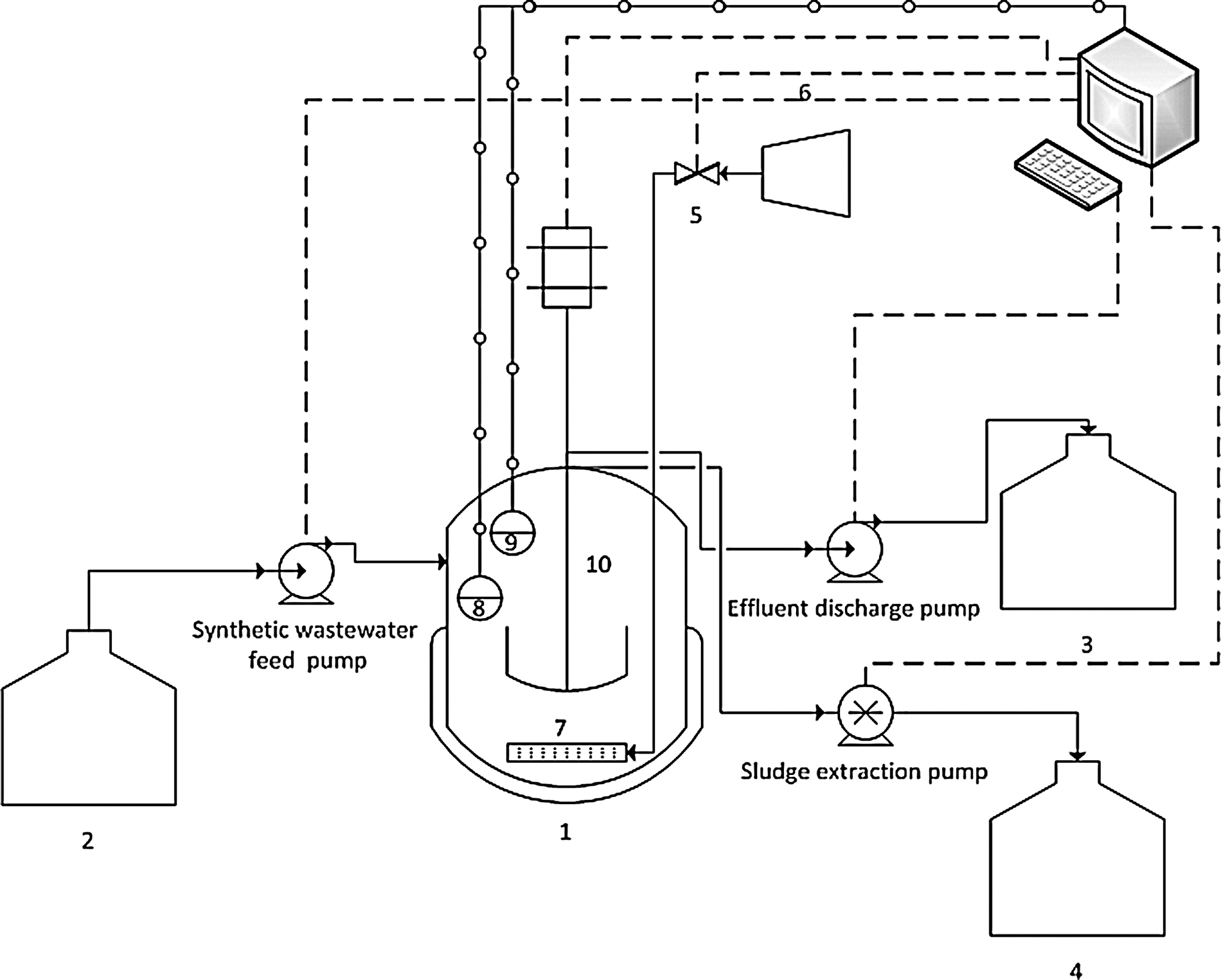
Experimental setup: (1) Sequencing batch reactor (SBR), (2) feed tank, (3) treated water tank, (4) sludge tank, (5) air regulation valve, (6) air compressor, (7) air diffusor, (8) pH probe, (9) oximeter, (10) stirrer, (11) digital/analog I/O and LabVIEW software to SBR control.
The SBR was operated in 12-h automatic cycles consisting of the following consecutive phases: (a) fill, (b) aerobic reaction-nitrification, (c) anoxic reaction-denitrification and sludge extraction, (d) settle, (e) effluent discharge, and (f) idle. The sludge extraction was carried out in the last 10 min of the anoxic phase to control the sludge mass (at that time the concentration was known). This sequence and the length of each phase can be seen in Table 1.
There were some phases that coincide in time with others (e.g., sludge extraction was performed at the end of anoxic reaction).
The feed volume was 4 L/cycle.
SBR, sequencing batch reactor.
Chemical analyses
Samples were periodically and directly taken from the reactor during the aerobic phase and filtered through a glass fiber filter before analysis (nominal pore size 1.2 μm). The MIT concentration was determined by HPLC analysis (Perkin Elmer Autosystem XL equipped with a diode array detector and an autosampler). A LiChrosphere 100 RP-18 column was employed, and the eluent was an isocratic mixture of acetonitrile (90%) and formic acid 0.01 N (10%). UV detection was fixed at 274 nm. Identification and quantitation were based on comparison with standards. Dissolved organic carbon (DOC) was measured with a Shimadzu model TOC-V CSH apparatus. COD was determined photometrically according to the dichromate method; digestions were performed at 148°C in a Thermoreactor TR 300 (Merck), and a Spectroquant NOVA 60 (Merck) was used for photometric determination. MLVSS was also determined according to the standardized procedure (APHA, 1995). Nitrate and ammonia were measured potentiometrically (Crison NO3− 96 62, NH4+ 96 63).
Biological measurements
Bioindicative studies and protozoan counts were performed with optical phase-contrast microscopy (VWR microscope TR400-SW) using a Fuchs Rosenthal sample holder with bright line. Species identification and counts were done at ×200 magnification in vivo conditions. Samples of activated sludge (25 μL), used in protozoan counts, were analyzed immediately after sampling. Analyses were repeated four times and results are the average of those measurements.
SBI was calculated; briefly, this is an indicator of the state of the activated sludge and can be used to estimate its depuration ability. It is based on the flagellates, testate, naked and some attached amoebae, and swimming and crawling ciliate populations. More detailed information of this methodology can be found elsewhere (Madoni et al., 1984).
Communities of nitrifying bacteria were identified and quantitated by means of the fluorescence in situ hybridization (FISH) technique with image analysis (Manz et al., 1992). Measurements were carried out with probes labeled with fluorophores of the 16SrDNA of specific ammonium-oxidizing bacteria (AOB) and nitrite-oxidizing bacteria (NOB) (probe Nso1225 for AOB and probes Ntspa662+Competing and NIT3+Competing for NOB). For the bacterial community analysis (Eubacteria domain), probes EUB 338I, II, and III (EUB mix) were used. MATLAB software (Borrás, 2008) was used for image analysis to carry out the quantification (X 10±SD/√n).
Respirometric analyses were performed in an electrolytic respirometer (Bioscience, BI2000). Glass bottles (1 L) loaded with the samples to be analyzed were thermostatized and sealed with a device able to monitor the oxygen consumption and to regenerate it through electrolysis. As a consequence, plots of oxygen consumption versus time can be calculated. Bottles were filled with 250 mL of sample containing MIT (5 mg/L) and glucose (700 mg/L). Parallel to this, blank experiments were also run (700 mg/L of glucose dissolved in distilled water). Inoculum (2.5 mL of sludge) and the necessary nutrients (MgSO4, CaCl2, FeCl3, Na2HPO4, NH4Cl, KH2PO4, K2HPO4) were added to each bottle.
Results and Discussion
Activated sludge acclimatization to readily biodegradable substrate
First, the sludge was subjected to an acclimation process for 17 days. The initial behavior of the aerobic phase of the SBR was evaluated by adding a readily biodegradable synthetic substrate, as described in the experimental section (initial COD=300 mg/L). Variations in DOC and COD were monitored during each cycle (see Fig. 2 for an example): the mean removal in acclimation experiments was 87% and 92%, respectively, after 3 h; beyond this point, those values remained constant. MLVSS were kept at ca. 2,500 mg/L throughout the acclimatization period. Furthermore, as shown in Figure 2, ca. 65% ammonia removal was reached, indicating an acceptable nitrification in this acclimation process.
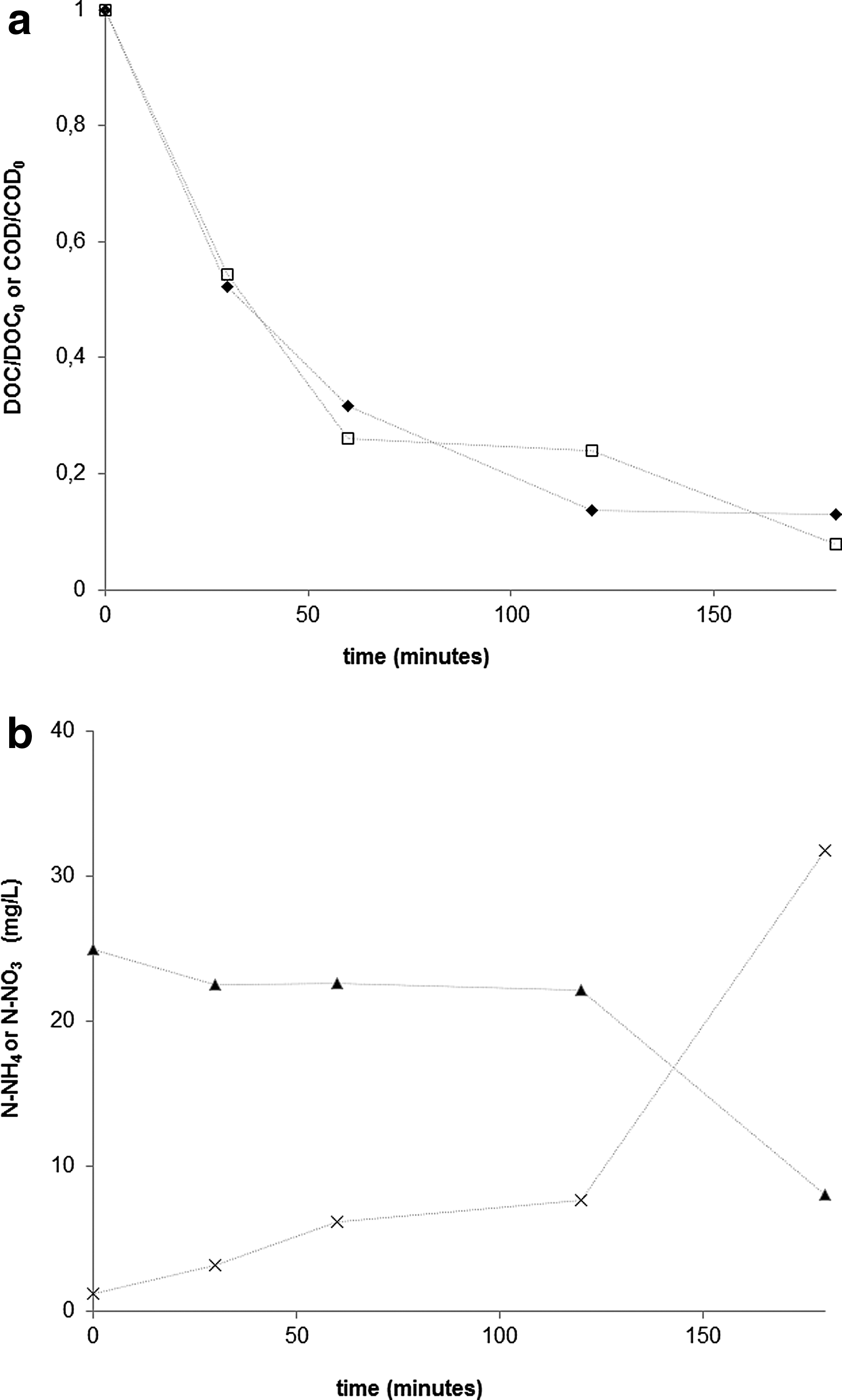
Example of variations in different parameters versus time throughout an aerobic cycle in an SBR in the acclimatization period to a readily biodegradable substrate:
Activated sludge acclimatization to MIT
After 17 days of initial acclimatization, MIT (5 mg/L) was added together with the biodegradable synthetic wastewater during 27 days (55 cycles). MLSS, DOC, COD, MIT concentration, ammonium, and nitrate were monitored during eight cycles corresponding to different selected days (days 1, 4, 8, 11, 16, 22, 24, and 26).
Evolution of MLSS during the acclimatization period (fed with a biodegradable mixture without MIT) and the MIT treatment period can be found in Figure 3. Addition of MIT resulted in a remarkable decrease in MLSS during the first 22 cycles and, beyond this point, a recovery in this parameter was observed. This behavior in the SBR has been described elsewhere (Choubert et al., 2006; Vaiopoulou and Gikas, 2012) and can be associated to an initial toxic or inhibitory effect of the xenobiotic toward some species found in the activated sludge.
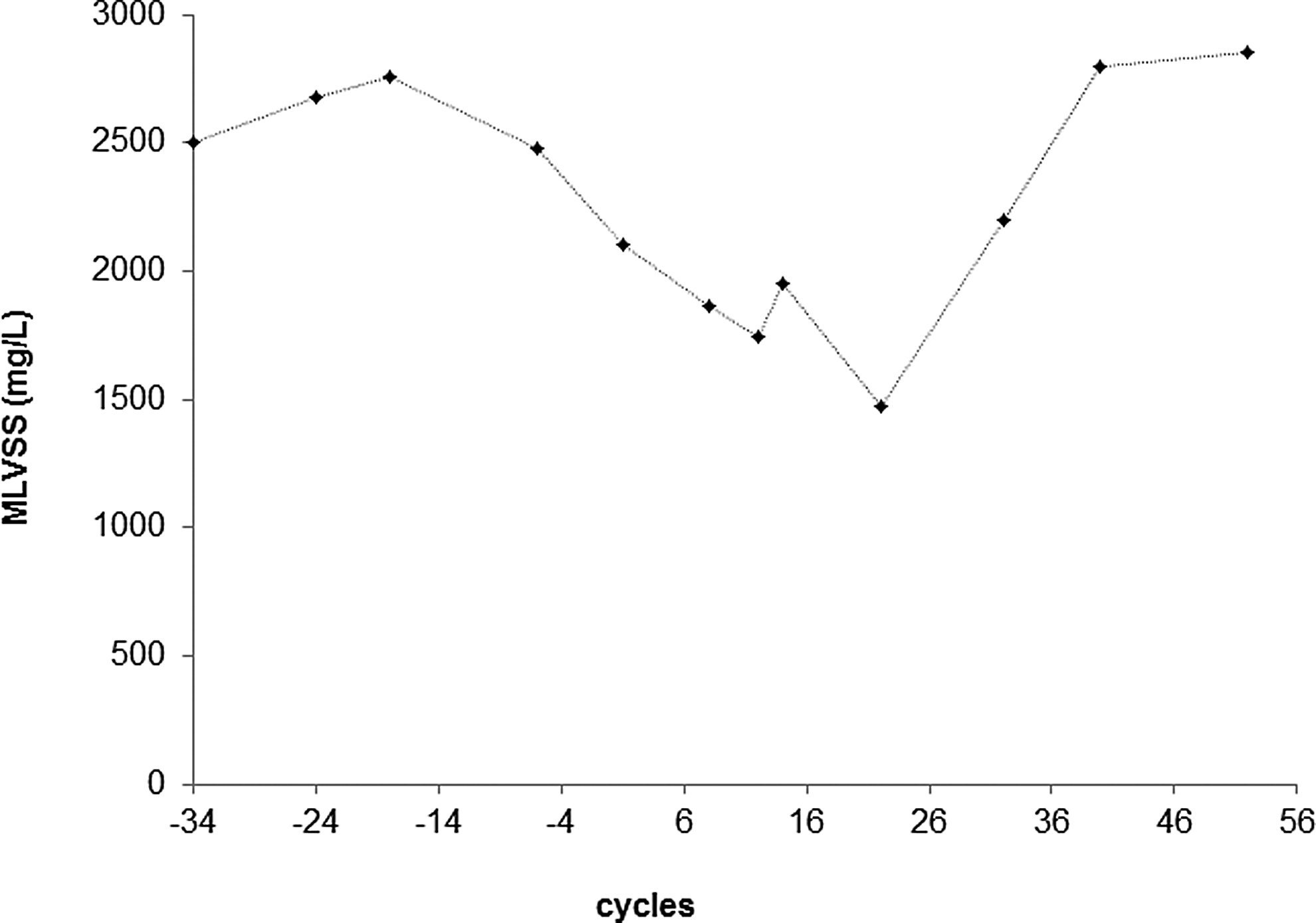
Plot of mixed liquor suspended solids in SBR experiment versus time. Negative values indicate the acclimatization period to a biodegradable mixture and positive time represents the methylisothiazolinone (MIT) treatment period. The line indicates the first day of MIT treatment period.
Variation of DOC throughout each cycle is shown in Figure 4. The trends are similar in all cases, reaching final DOC removal in the range 80–90% after 5 h, which means that MIT is not able to decrease significantly the metabolization of the added organics. However, slight differences in the time-resolved data might be found: from cycles 1 to 22, longer periods are required to reach the final DOC values, as can be observed in Figure 4, inset, where the reduction reached after 30 min is shown; the opposite behavior is observed from cycles 22 to 44, when a faster decrease was monitored. Beyond this point, the process becomes slower again.
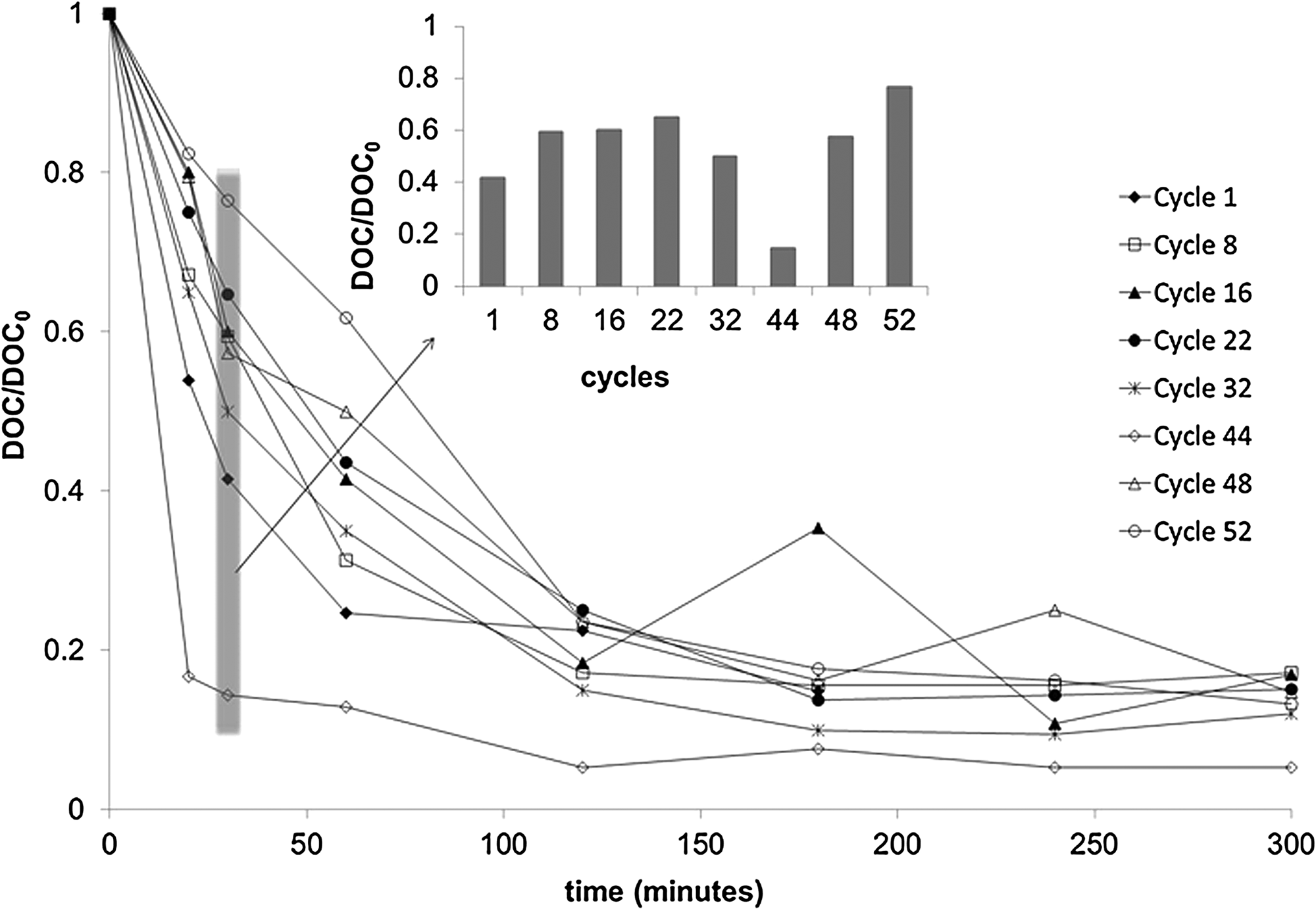
Relative DOC values (DOC/DOC0) measured throughout the aerobic phase. Data obtained after 30 min of treatment are shown in inset.
It is interesting to note that although some decrease in MLVSS was observed upon MIT addition, as shown in Figure 3, it did not result in noticeable loss of efficiency in DOC mineralization. This could be due to the fact that organic load is rather low and the hydraulic retention time is long enough to allow a good mineralization of organics despite the above-mentioned kinetic differences (Moussavi et al., 2009; Orhon et al., 2009; Adrianus et al., 2012; Kim et al., 2013).
To gain further insight into the process, the MIT concentration was also determined by HPLC analysis. Some differences can be observed in the MIT removal yield after the aerobic phase (Fig. 5); in the first cycles, there was a certain decrease in MIT elimination (from 80% to 55%), which can be associated to the period required for the acclimatization of the activated sludge to MIT (days 1–8); then, the yield was recovered to reach the initial values of ca. 80% (day 11). However, beyond this point, a slight loss of efficiency in dissolved MIT decrease was detected (70% at day 26), which might be due to some MIT accumulation in the reactor (daily treated effluent discharged was 60% of total reactor volume) inducing some toxicity in the sludge. This is in agreement with the variation of the initial concentration of MIT in each cycle, also shown in Figure 5, which beyond cycle 44 suffers a progressive increase.

Concentration of MIT in an SBR at beginning of a cycle in different days (■). The percentage of MIT removal for the corresponding cycle is also given (gray column, right axis).
It is interesting to study the effect of MIT on the nitrification process. For this purpose, ammonium and nitrate were analyzed in the aerobic cycle. Figure 6A shows that ammonium removal was high during the first cycles (70–95% yield in days 1–22). However, in the final days monitored (days 24–26), most of the ammonium remained in the reaction medium (less than 25% removal). Regarding nitrate, the high concentration of this ion formed in the first day (close to their stoichiometric amount) indicated that a complete nitrification was achieved. In posterior cycles, the amounts of nitrate were systematically below 10% of the expected stoichiometric concentration. This indicates that nitrification was not complete (Fig. 6B).
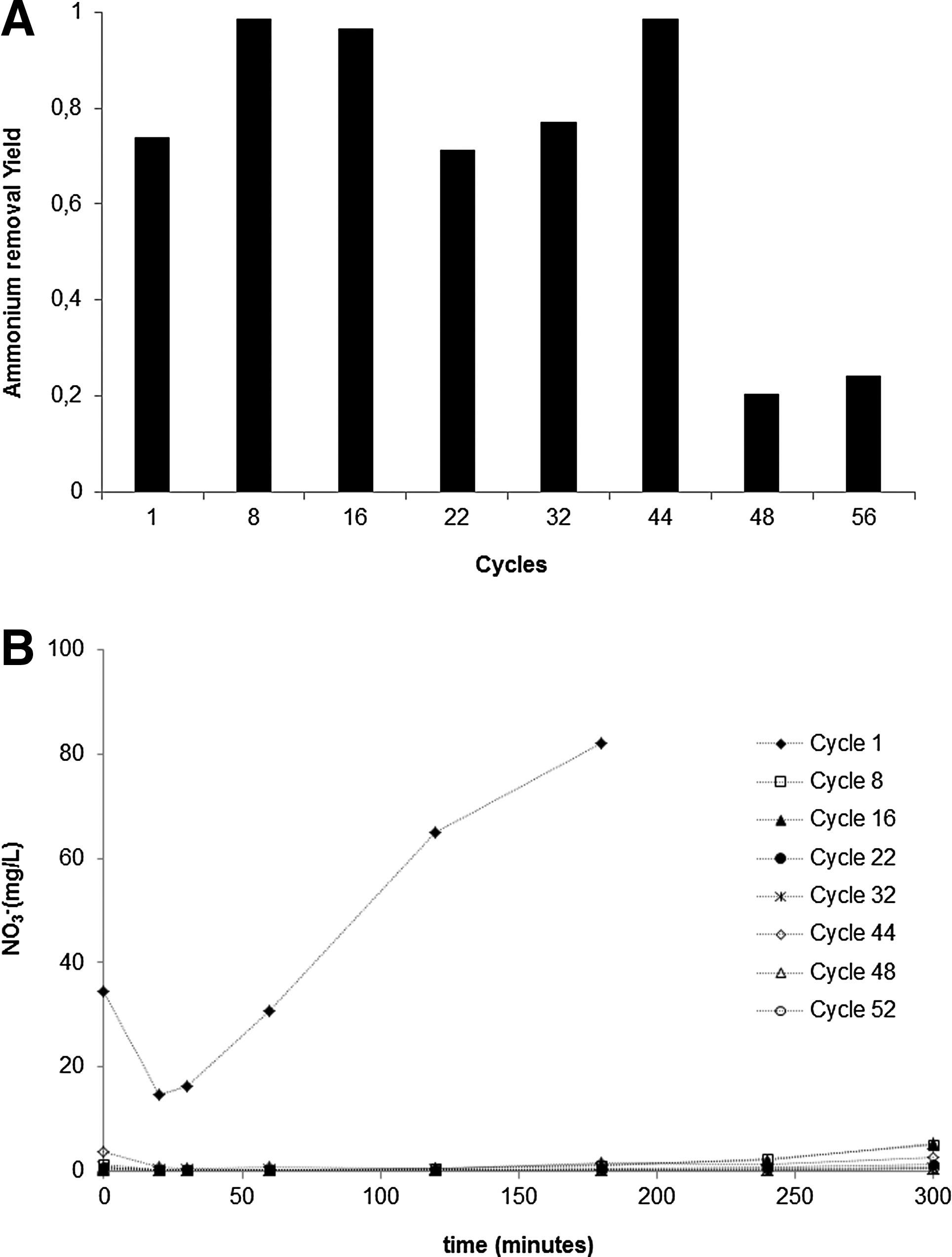
Nitrification process in an aerobic cycle of the SBR submitted to MIT:
Taking into account that the nitrification processes consists of two steps, namely nitrite formation and consequent oxidation to nitrate, the above-described behavior can be explained by assuming that MIT was able to damage the bacteria responsible for the oxidation of nitrite to nitrate after a short period of exposure (a few days). On the other hand, more cycles were required to inhibit the transformation of ammonium into nitrite. To clarify this point, FISH measurements were carried out to better characterize the bacterial population. Samples were taken at day 11, when ammonium transformation was still efficient, but NO3− was not formed (partial nitrification) and at day 26, when nitrification was very poor.
FISH analysis for samples taken on day 11 showed the presence of AOB with the typical formations of dense cell aggregates with a spherical shape of ammonium-oxidizing β-proteobacteria class. On the other hand, NOB were not found in these samples, as demonstrated by the absence of the typical formations of dense cell aggregates with the spherical shape of genus Nitrospira and Nitrobacter. According to these data, there was a well-developed community of AOB, which constitute a 5%±0.8 of the total viable bacterial community of the activated sludge and an absence of NOB. This is in agreement with the sludge being able to oxidize ammonium into nitrite, but not to further oxidize this anion to nitrate.
In sharp contrast, when samples taken in day 26 were submitted to FISH analyses, together with the absence of NOB, a decrease in the population of AOB was also observed (only 1%±0.2 of the total viable bacterial community of activated sludge), which points to a significant loss of efficiency of the nitrification process (Fig. 7). Although the system is too complex to attribute this effect to a single cause, MIT might play an important role in the inhibition of nitrification by autotrophic bacteria (Wang et al., 2012; Zanetti et al., 2012), as other important operational parameters remained constant throughout the experiment (pH, temperature, DO concentration, and alkalinity) and the nitrite concentration in the effluent was systematically below 2 mg/L after the complete cycle. It is worth commenting that the low final values of nitrite could be attributed to the action of heterotrophic bacteria during the anoxic phase of the cycle.

Comparison between ammonium-oxidizing bacteria (AOB) population (% of total viable bacterial community), (gray column on the secondary axis) and ammonia removal efficiencies (%), (black column on the principal axis) in two cycles (22 and 52) of the MIT treatment.
Bioindicative studies
Evolution of the protozoan population in the sludge when submitted to MIT might also be of interest to evaluate the effect of this chemical on the system. Figure 8 shows the total abundance of protozoa in samples taken throughout the experiment. The initial sludge mainly contained amoebae (Arcella sp. and Mayorella sp.) together with some Vorticella infusionum sp. and Epistylis sp. Upon addition of MIT, the population of naked amoebae (Mayorella sp.) was observed to increase, reaching a maximum (day 8) and then decreased, nearly completely disappearing at the end of the experiment; the growth of naked amoebae in the startup of bioreactors followed by a decrease when the bioreactor is adapted to the medium is a well-known behavior described elsewhere (Madoni, 2011). This is in general agreement with the chemical parameters reported above, which showed an initial period of adaptation to MIT (see above, Figs. 5 and 6).
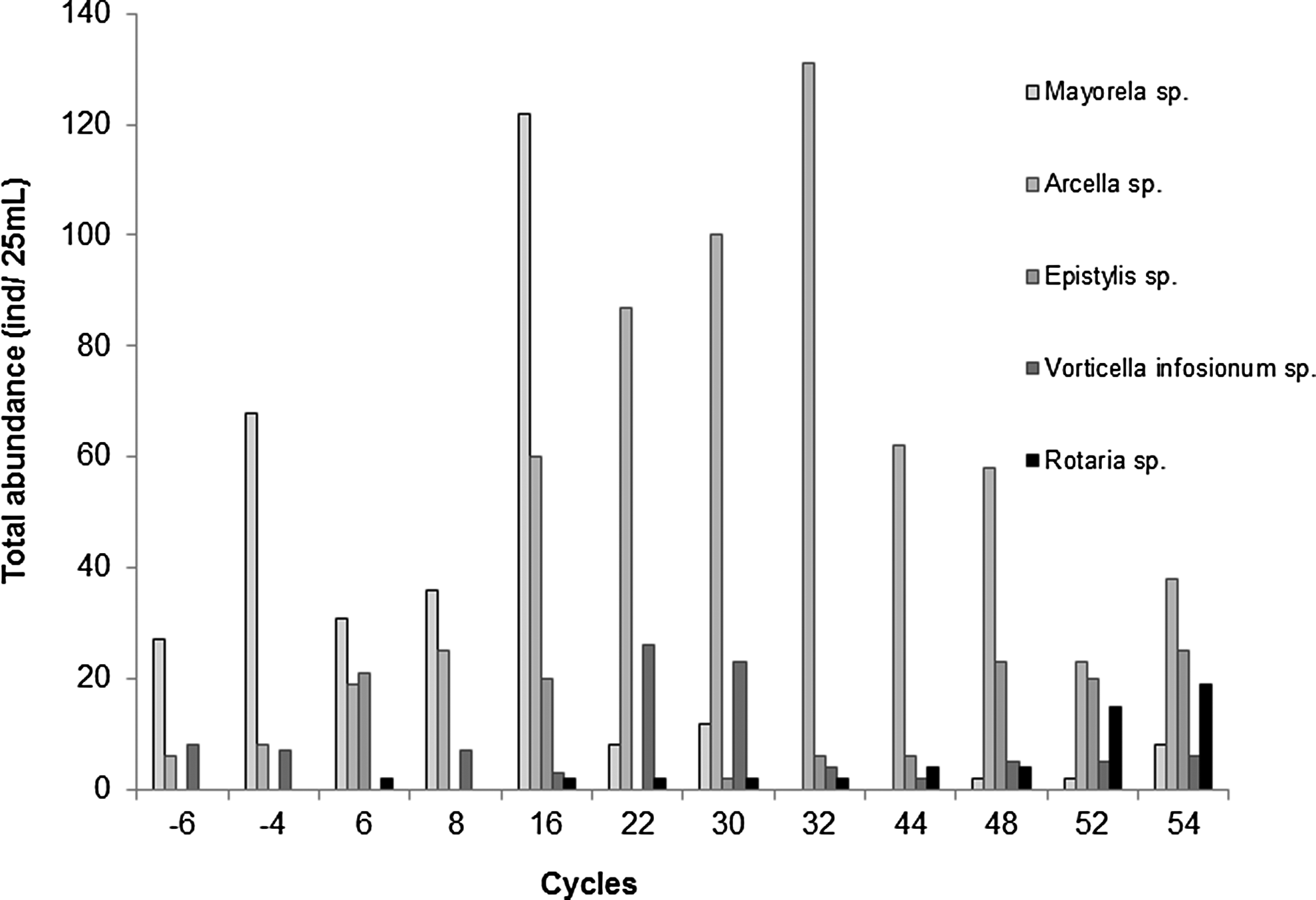
Composition of protozoa community present in an SBR. Results for the first adaptation period and MIT treatment are given.
On the other hand, Arcella sp. becomes predominant after day 11, once the reactor is acclimatized to MIT. High relative populations of these species show good correlation with efficient pollutant removal, low organic load, high SRT, and high concentration of DO in the aeration tank, which are the conditions required to obtain a complete nitrification (Yusof et al., 2010); hence, it is to be expected that problems in the nitrification process would result in a decrease in the Arcellas sp. number. This was the behavior observed in our case, in which the number of Arcellas in the final samples decreased.
SBI was calculated based on the population of the five species identified. Attached ciliated protozoa were detected (Vorticella infusionum or Epistylis sp.) throughout the experiment; on the other hand no rotifers (Rotaria sp.) were observed in the initial days although some of these metazoa were found in the final samples (days 24 and 26). Taking also into account the amoebae (whose behavior is reported above), an SBI value of 7 was systematically calculated, which means that the sludge can be labeled as Class II (SBI 6–7). This means that the sludge was stable and well colonized, with optimal biological activity but showing discrete efficiency in wastewater treatment. This is in general agreement with the results obtained on the behavior of the sludge (Salgado et al., 2012).
Respirometric test
To determine the effect of MIT on acclimatized and nonacclimatized sludge, respirometric assays were performed with sludge taken from the SBR at the end of the process and from the WWTP (without adaptation to MIT); this is interesting to better understand the effect of MIT on the heterotrophic organisms that constitute the sludge. In both cases, the sludge was fed with a highly biodegradable mixture containing glucose and inorganic nutrients, to which MIT was later added. Figure 9 shows a plot of the oxygen uptake versus time for all experiments. Although similar final values for oxygen uptake were obtained in all cases, significant differences can be found in the lag periods. In the experiments performed without MIT, it was very short (ca. 5 h) and the presence of MIT results in longer lag periods: ca. 15 h in the case of the SBR sludge and 60 h for the WWTP sludge. This different behavior can be attributed to some inhibition caused by MIT to the sludge respiration, which is more noteworthy in that obtained from the WWTP, which has not been previously adapted to this pollutant.
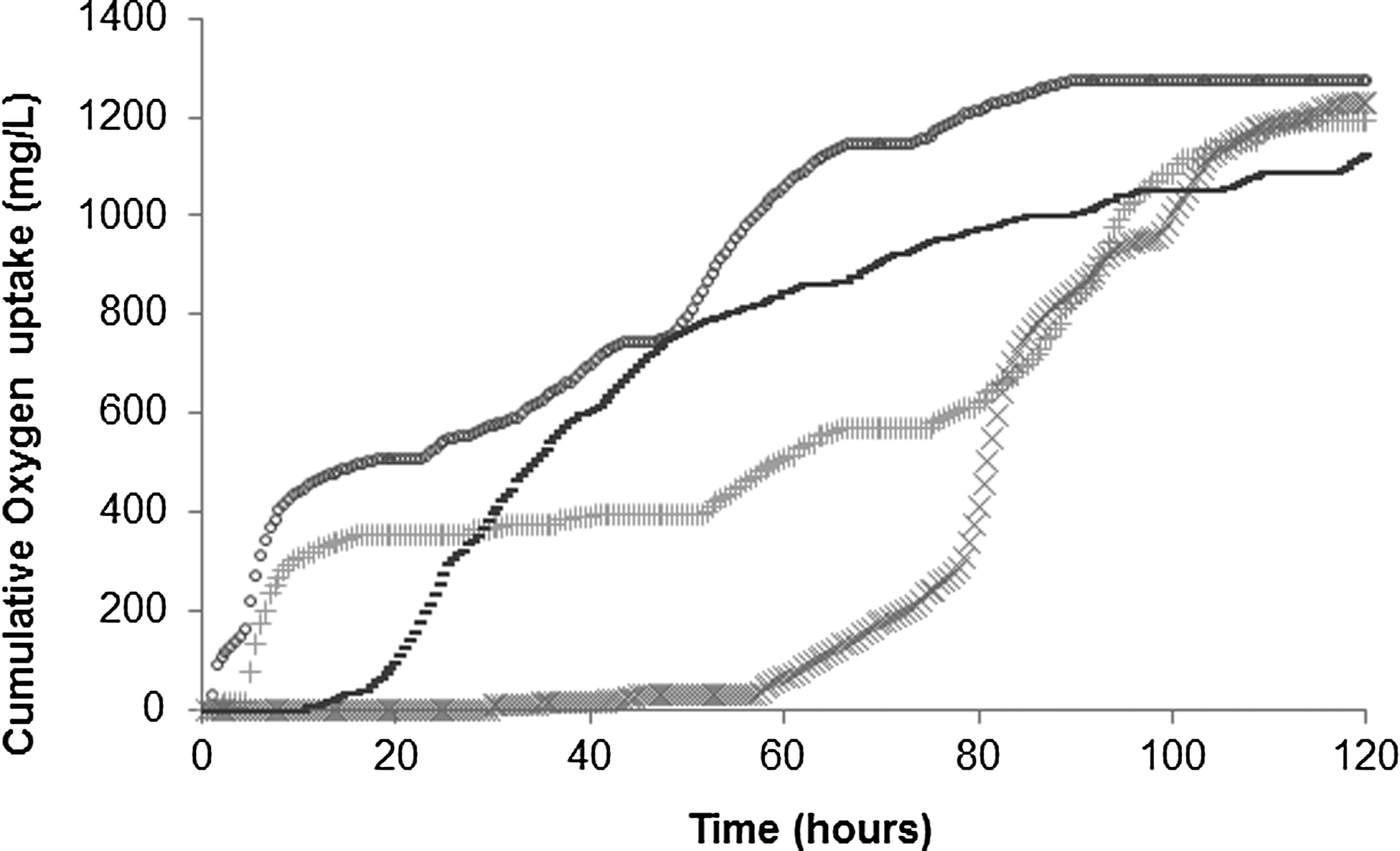
Accumulated oxygen uptake versus time obtained in the degradation of a readily biodegradable substrate (glucose, 700 mg/L) in different respirometric tests: SBR biomass without MIT (ooo), SBR biomass with 5 mg/L of MIT (---), wastewater treatment plants (WWTP) biomass without MIT (+++); WWTP biomass with 5 mg/L of MIT (××××).
Conclusions
MIT has been proven not to have a noteworthy influence on the ability of activated sludge to treat organic matter, and some acclimatization to this EP is indicated by respirometric tests. However, this compound has been shown to completely inhibit the nitrification process, probably due to the toxicity of MIT toward NOB and, after longer exposure, also to AOB. Hence, further studies to better determine the potential effect of this pollutant in biological processes are necessary; furthermore, the development of an advanced treatment capable of removing MIT would be convenient when nitrification is required.
Bioindicative studies based on the protozoan population are in general agreement with the observed behavior of the sludge. Hence, they could be a simple, quick, and effective tool to predict the performance of an activated sludge.
The role of MIT in biological treatment has been characterized to increase knowledge about this pollutant effects on activated sludge to improve the wastewater industrial treatment plant performance. In further works, lower concentrations of MIT (around ng/L or μg/L) should be employed to simulate the SBR behavior when household effluents are treated.
Footnotes
Acknowledgment
We would like to thank the financial support of the Spanish Ministerio de Economía y Competitividad AQUAFOTOX (CTQ2012-38754-C03-02).
Author Disclosure Statement
No competing financial interests exist.