




Abstract
Abstract
This article addresses the sonochemical degradation of Rhodamine B (RB), a recalcitrant textile organic dye. The relative influence of extent of radical production by the cavitation bubbles and radical scavenging (or conservation) on the overall degradation of RB was assessed. Degradation of RB at different experimental conditions, such as pH, gases (air, argon [Ar], oxygen, and nitrogen), hydrogen peroxide (H2O2), peroxymonosulfate (PMS), peroxydisulfate (PDS), ferrous sulfate, and novel Fenton-like reagents (H2O2+ferrous sulfate, PDS+ferrous sulfate, and PMS+ferrous sulfate), was studied. Experimental results revealed that sonochemical degradation of RB is governed by the extent of utilization of HO· radicals. Ar-bubbled solution that produces higher HO· radicals gave a higher color-removal rate than other gases. Further, higher color removal was observed at solution pH of 3. Of all the experimental conditions studied, novel Fenton-like reagent, that is, PMS+ferrous sulfate-added solution, gave complete color removal. Mineralization study also revealed that higher removal of total organic carbon was attained at the condition of PMS with ferrous sulfate (pH 3) than with other experimental conditions. This result has been attributed to synergistic effects of HO· radicals and sulfate radicals providing effective interaction with the dye molecule. Degradation intermediates of RB through LCMS/GCMS analysis were also provided to support the degradation pathway.
Introduction
T
Azo dyes are a group of compounds bearing the functional group R-N=N-R′. Among the dyes, the most commonly used are the reactive azo dyes. Moreover, these dyes are the most problematic pollutants of textile wastewaters. Rhodamine B (RB) is one of the most important xanthane dyes that is used in a variety of industries, such as paper, textile, food stuffs, and dye lasers, thereby the wastewater discharged from these industries causes color to water streams (Lee et al., 2013). The disposal of these colored wastewaters poses a major problem for the industry due to stringent environmental regulations on disposal standards as well as a threat to the aquatic environment posing color and obstructing the photosynthesis process in water streams. It is reported that RB is carcinogenic and could induce skin, eye, gastrointestinal tract, and respiratory tract irritations (Tang et al., 2012). The chemical structure of RB dye is given above (Fig. 1).

Chemical structure of Rhodamine B dye.
In general, conventional treatment systems, such as adsorption on activated carbon, coagulation by a chemical agent, or reverse osmosis, were used to treat this type of wastewater. The afore-mentioned methods are nondestructive and, hence, the disposal of the recovered/concentrated pollutant (after these treatment methods) poses a major threat to the environment (Mehrdad and Hashemzadeh, 2010). Nowadays, oxidation technologies are used as the alternates for nondestructive methods as they mineralize the pollutants through reaction with the hydroxyl radicals produced in the solution. These hydroxyl radicals are short-lived and highly reactive species that react nonselectively with organic matter present in wastewater and are referred as advanced oxidation processes (AOPs). These AOPs use any one of the processes, for example, ultraviolet radiation, hydrogen peroxide (H2O2), ozone, Fenton's reagent, ultrasound, or a combination of these processes (Vogelpohl and Kim, 2004; Rasoulifard et al., 2011). Fenton and photo-Fenton reactions have the advantage of being very fast and efficient, but they only work in acidic solutions and need extraneous iron as reported by AlHamedi et al. (2009).
In recent years, considerable interest has been shown on the application of ultrasound as a possible alternative for treating textile wastewater (Chiha et al., 2010; Merouani et al., 2010a, 2010b; Mishra and Gogate, 2010; Wang et al., 2010a, 2010b; Ahmedchekkat et al., 2011; Pang et al., 2011b). Earlier studies had shown that ultrasound treatment of pollutants can significantly reduce the treatment time and the amount of catalyst/additives (Sivakumar and Pandit, 2001; Wang et al., 2008a, 2008b; Gayathri et al., 2010; Tiong and Price, 2012). The Fenton's reagent is a combination of an oxidizing reagent (H2O2) and a catalyst (usually iron) that yields hydroxyl radicals (·OH) upon reaction with each other. The ·OH radical is the primary oxidizing chemical species generated with Fe2+ initiating the decomposition of H2O2 in an acidic environment. The amount of hydroxyl radicals (·OH) would be increased in Fenton process in combination with ultrasound due to its transient cavitation action. Effective utilization of (·OH) would be facilitated through intense micromixing resulted out of ultrasonic mechanisms, such as microturbulence and microstreaming (Chakma and Moholkar, 2013). When the Fenton processes were combined with ultrasound (sono-Fenton), 99% efficiency was achieved in a very short time for Acid Black 1 wastewater at the conditions of 40-kHz ultrasound frequency, 0.025 mM Fe2+, and 8.0 mM H2O2. With various initial concentrations (20, 100, and 200 mg/L) of carbofuran, the degradation efficiencies were increased from 60%, 42%, and 25% for Fenton process to 99%, 63%, and 39% for sono-Fenton process at the identical studied conditions (Ying-Shih et al., 2010).
Fenton-like processes, for example, 4A-zeolite supported α-Fe2O3 (Fe-4A) prepared by hydrothermal-calcination method, were effectively used along with H2O2 to degrade Orange II using sono-Fenton process. This system was proven to work under neutral conditions, providing higher reactive oxide production to degrade the dye leading to 92.5% removal in 80 min of sono-Fenton reaction time (Chen et al., 2010). H2O2 in combination with FeOOH representing a Fenton-like reaction to degrade para-chlorobenzoic acid proved to give faster reaction rate (Neppolian et al., 2004). In the same way, Fenton-like degradation of RB using H2O2 with iron metal oxides (II and III) proven to have resulted in an efficient catalytic oxidation reaction (Xue et al., 2009). It is reported that the reaction had followed pseudo first-order kinetics and H2O2 with iron (III) oxide provided higher decomposition of RB at neutral pH.
Similarly, H2O2 with three heterogeneous copper catalysts—CuO, Cu/Al2O3, and CuO-ZnO/Al2O3—under ultrasound provided the synergistic effect to give higher p-chlorophenol removal at 25°C and 100 W of ultrasound power (Kim et al., 2007). However, the Cu/Al catalyst has proven to give higher total organic carbon (TOC) removal along with H2O2 due to higher catalyst dispersion. Heterogeneous Fenton-like degradation using H2O2/CuFe-ZSM-5 to degrade Rhodamine 6G in water showed 100% color removal at low pH of 3.4 after 45 min of reaction time though the TOC elimination was only 51.8% after 2 h of reaction time (Dükkanci et al., 2010). Prihod'ko et al. (2011) studied the degradation of Rhodamine G dye using Fe-exchanged zeolites (Fe-ZSM-5 and Fe-USY)/H2O2 as materials for catalytic wet peroxide oxidation. Complete color removal of the dye is enabled with Fe-ZSM-5/H2O2 at a reaction time of 150 min and the TOC removal is 80% at near-ambient temperature (323 K) and quasi-neutral pH (4.9). The effect of various anions in the presence of ultrasound for the degradation of Acid Black 1 had provided an indication that different oxides would behave in a different manner with the pollutants. The degree of degradation with anionic oxides has followed the order as
In this present study, effort has been put to increase the efficiency of ultrasonic treatment of RB dye using a novel homogeneous Fenton-like reagent. Initial experimental studies were focused on parametric variations, such as initial pH of the aqueous solution, dosage of H2O2, type of oxidants (peroxydisulfate [PDS] and peroxymonosulfate [PMS]), and Fenton's reagent. To understand the mechanism of sonochemical degradation of RB dye, experiments, such as RB dye solution saturated with respective gas nuclei (oxygen [O2], argon [Ar], nitrogen [N2], and air) and sodium chloride of varied concentration in RB dye solution, were performed, respectively. Based on the results of these studies, the experiments have been directed to intensify the ultrasonic treatment of RB with homogeneous Fenton-like reagent (Fe2++PDS and Fe2++PDS) in addition to conventional Fenton's reagent (Fe2++H2O2) and subsequently, applied the Fenton-like reagent process to varied RB concentration in order to make the process feasible for field application. Mineralization study through TOC and LCMS/GCMS analyses was also performed and presented.
Experimental
Materials
Chemicals, such as RB (Loba Chemie), conc. H2SO4 (Merck), NaOH (Merck), H2O2 (30%; Merck), NaCl (Merck), PMS (Merck), PDS (Merck), and ferrous sulfate (Merck), were used as procured. Double-distilled water is used for preparing all the solutions. Gases, such as Ar, O2, and N2, are of 99.99% purity and were used for bubbling the aqueous liquid medium. In the case of air, compressed air is used for bubbling. All experiments were performed with an ultrasound probe (Sonics & Materials; VCX 500) that operates with a frequency of 20 kHz and delivers a variable output power of up to 500 W. The diameter of the probe tip is 13 mm.
Experimental procedure
All the degradation experiments were carried out in a 120-mL-jacketed borosilicate glass reactor. The reaction volume taken is 100 mL with the initial RB concentration of 2.08×10⁻⁵ mol/L unless otherwise specified. The sonication (or reaction) time of the dye solution is 60 min for all the experiments. The ultrasound probe is set for 100-W-deliverable power for all the experiments. The color removal of the dye is followed at different time intervals of 15, 30, 45, and 60 min. The temperature of the reaction medium is maintained constant during sonication by means of a circulating water bath (Julabo; Model: ED-5). The initial pH of the solution is varied using either 0.05 N sulfuric acid or 0.05 N sodium hydroxide solution. The pH of the aqueous medium is monitored using full-featured multiparameter instrument (YSI, Inc.; Model: Professional Plus). In the case of gas bubbling experiments, the RB solution is bubbled with the required gas for 5 min at the rate of 5 LPM in order to saturate the solution with the respective gas nuclei.
Analysis
Peak absorbance of RB was measured at 554-nm wavelength using UV-vis spectrophotometer (JASCO, V-570). The percentage color removal of the RB at different time intervals is calculated from the precalibrated chart with known RB concentrations. TOC content of the initial and treated RB solutions is analyzed by direct injection of the samples into a TOC analyzer (Shimadzu; TOCvcph) calibrated with standard solutions of potassium hydrogen phthalate. The degradation-intermediate formation was studied using LC-MS. LC-MS analysis was performed for untreated RB and Fenton's-reagent-treated RB in the negative-ion mode on a liquid chromatography–ion trap mass spectrometer (LCQ Fleet; Thermo Fisher Instruments Limited). The analysis was performed using a C18 column (150×4.6 mm i.d., 5 m) and the separation was carried out using an ammonium phosphate (0.1%, v/v) as buffer solution with methanol as eluent solvent and at a flow rate of 1 mL/min. The compound detection was done using a diode array detector at the wavelength of 550 nm. GCMS analysis was performed for Fenton-like-reagent-treated RB (PDS+ferrous sulfate and PMS+ferrous sulfate) in a gas chromatograph (Bruker; GC45X-GC-44) combined with a mass spectrometer (Flame Ionization Detection [FID] Detector). Programmed Temperature Vaporizing injector was used with 1 mL/min flow and the analysis was performed on column DB-WAX (30 m×0.25 mm and 0.25 μm).
Results and Discussion
The difficult part of wastewater treatment is dealing with lower pollutant concentration. Bringing in the effective interaction between the pollutant and produced radicals is the most challenging part in all kinds of AOPs. There are two ways by which the interaction between organic molecules and HO· radicals can be made. One way is by increasing the number of HO· radicals in the bulk medium, thus making higher probability of interaction with an organic molecule. The other way is to bring an organic molecule near to the bubble–bulk interface so that the produced radicals would react immediately with the organic molecule. Effort has been put to overcome this challenge using different experimental techniques for the degradation of RB using ultrasound and the results were discussed in the following sections.
Degradation of RB with ultrasound alone
Degradation of 2.08×10⁻⁵ mol/L RB aqueous solution with ultrasound alone is shown in Fig. 2a and b. The color removal is about 27% with simple ultrasound and performed with aqueous solution pH (i.e., 6.7), which means that the initial pH of the aqueous solution is unaltered. The observed low color-removal rate with ultrasound alone is because of the poorer interaction between HO· radical and RB molecule. RB molecule is characterized by higher solubility (∼15 g/L at 20°C) and lower vapor pressure (1.89E-19 mmHg at 25°C), which makes it to remain in bulk liquid medium. Due to the nonavailability of RB molecule at the point of HO· radical production (i.e., the bubble–bulk interface), the produced HO· radicals recombine with H· radicals to form H2O again. The graph drawn between sonication time and ln(c/c0) is linear, indicating that sonochemical treatment of RB follows pseudo first-order kinetics. The rate constant for RB aqueous solution with simple ultrasonic treatment is found to be 5.13×10⁻³ min−1.
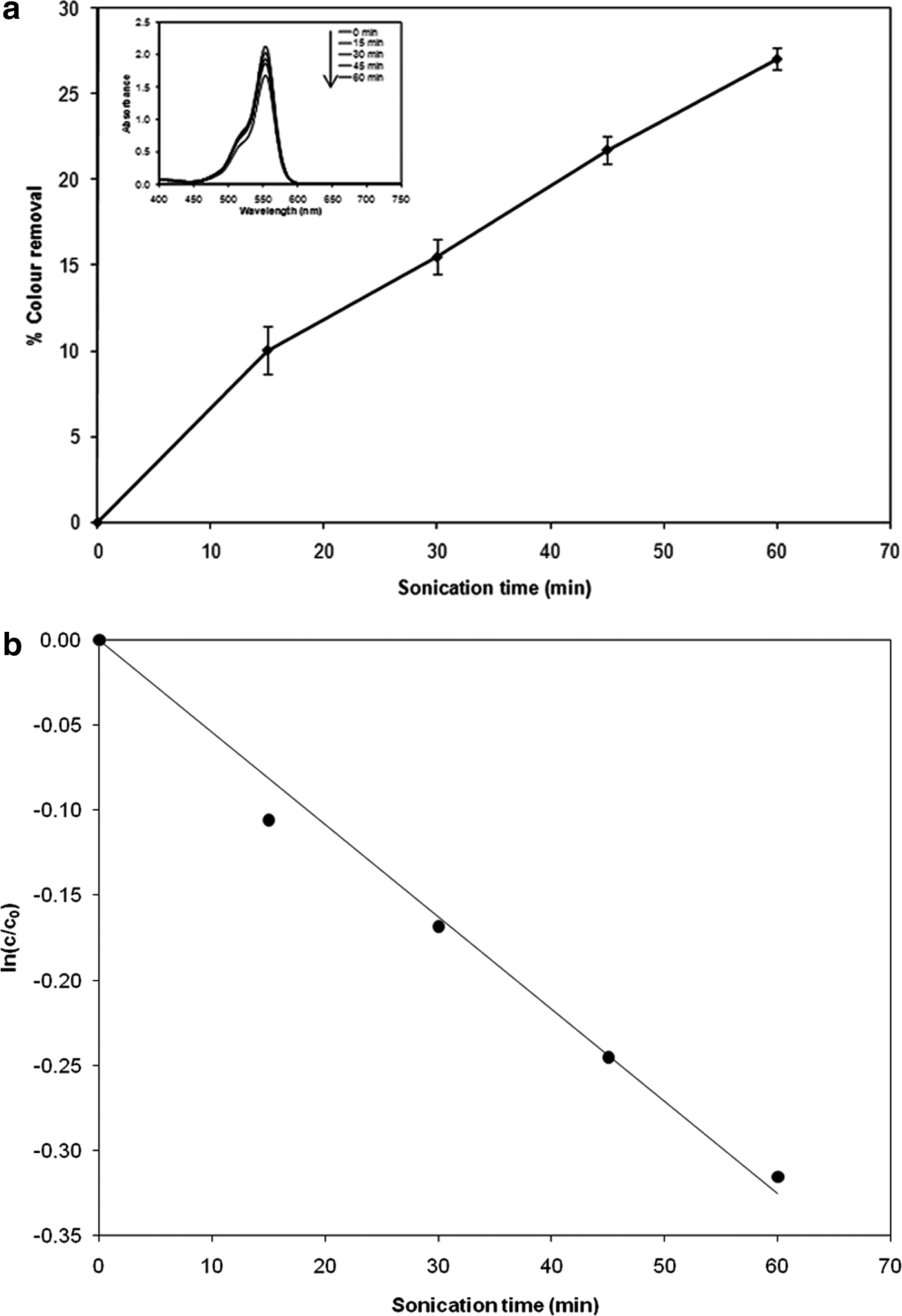
Color removal of RB with ultrasound treatment alone (RB: 2.08×10⁻⁵ mol/L, solution pH 6.7, and temperature 25°C).
Effects of initial solution pH
Sonochemical degradation of 2.08×10⁻⁵ mol/L RB with varying initial solution pH is shown in Fig. 3. The degradation of RB increased with decrease in initial solution pH. The maximum color removal of 32% is attained for initial solution pH of 3 and lower color removal of 12% is attained for initial solution pH of 11. It is evident that at acidic pH the RB will exists in molecular form and hence migrates toward the surface of the cavitation bubble where the generated HO· radicals effectively oxidize molecular form of RB to undergo mineralization (Vajnhandl and Marechal, 2007). In addition, under normal condition there is a maximum possibility that the amount of radicals produced out of the cavitation bubble will intend to recombine to form water again and this possibility is reduced when the RB molecule remains near the surface of the cavitation bubble and this is slightly achieved with decreased pH of the pollutant aqueous solution. Also, the pKa value of RB is 4.2 (Zhang et al., 2011), which further adds to the claim that at initial solution pH of 3 (i.e., below pKa value) the solubility of the RB lowers and would remain in molecular form. Since the cavitation bubble and the molecular form of RB were hydrophobic in nature, both would come close to each other. Due to this, the RB molecule would be readily available for HO· radical attack produced out of the cavitation bubble upon ultrasound irradiation. The produced HO· radical will break the complex structure of RB and it will open up the aromatic ring that will eventually undergo further cleavage with continuous ultrasound irradiation under acidic condition. The rate constant values for initial solution pH of 3 and 12 were 6.09×10⁻³ min−1 and 2.05×10⁻³ min−1, respectively.

Effect of the initial pH (RB: 2.08×10⁻⁵ mol/L and temperature 25°C).
Effects of H2O2
To enhance the degradation of RB, experiments were performed by adding varied amounts of H2O2, a strong oxidant, which will further produce additional HO· radicals upon irradiation of ultrasound. As the initial concentration of the pollutant taken for the study is rather low (2.08×10⁻⁵ mol/L), the interaction between the pollutant and HO· radical plays a major role in terms of degradation. Hence, adding H2O2 should increase the interaction between HO· radicals and RB molecules to give higher degradation. When H2O2 is added to aqueous medium, it splits into two HO· radicals under the ultrasonic irradiation (Chand et al., 2009). Hence, increasing the HO· radicals in the liquid medium could increase the percentage degradation of RB, which is evident from Fig. 4. It needs to be mentioned that these experiments were performed without altering the initial solution pH (i.e., 6.7). Increasing H2O2 concentration has increased the RB dye decoloration up to 2.64×10⁻² mol/L and it got lowered with further increase of H2O2 concentration (i.e., for 3.54×10⁻² and 4.4×10⁻² mol/L). The maximum color removal of 28% is attained when 2.64×10⁻² mol/L of H2O2 is added with rate constant value of 5.55×10⁻³ min−1. Beyond 2.64×10⁻² mol/L of H2O2, the scavenging of HO· radicals with excess production of H· radicals and HO· radicals would exist to form H2O and H2O2 again without undergoing oxidation reaction (Saritha et al., 2007).

Effect of hydrogen peroxide concentration (RB: 2.08×10⁻⁵ mol/L, solution pH 6.7, and temperature 25°C).
Effects of PMS and PDS
Effect of sulfate peroxides, such as PMS and PDS, on the color removal of RB was studied. As like the H2O2 the PMS and PDS were reported to produce radicals, which will enhance the oxidation reaction (Maruthamuthu and Neta, 1977; Fernandez et al., 2004; Zhao et al., 2010; Chen et al., 2012; Olmez-Hanci and Arslan-Alaton, 2013; Hao et al., 2014). The study of experiments with the additions of PMS and PDS will further increase the degradation efficiency of RB and may enlighten the location of degradation of RB that is in the bulk liquid medium. As it is intended to make a comparison of the effect of these peroxides over H2O2 on the color-removal efficiency and the location of degradation, experimental condition chosen was aqueous solution of pH 3 and 2.64×10⁻² mol/L of peroxides (H2O2, PDS, and PMS), for which higher color removal is achieved for H2O2. The RB dye concentration remains the same for these experiments (i.e., 2.08×10⁻⁵ mol/L). Figure 5 shows that the percentage color removal has increased significantly with the addition of both PMS and PDS when compared with H2O2. PMS-added solution gave highest color removal of 95%, while it is 83% and 46% for PDS- and H2O2-added solution. The same is reflected in their rate constant values, 36.14×10⁻³ min−1 (PMS), 22.13×10⁻³ min−1 (PDS), and 10.04×10⁻³ min−1 (H2O2). It is proven that HO· radicals have the higher redox potential and would be able to attack organic molecules to undergo faster dissociation. But sulfate radical anion (SO4·−) is found to have greater redox potential when dissociated from either PMS or PDS (E0 ranges from 2.00 to 3.1 eV) than HO· radicals dissociated from H2O2 (E0=1.76 eV) and was experimentally studied by Fernandez et al. (2004). It is well known that, upon ultrasound irradiation, H2O2 would yield two hydroxyl radicals [Eq. (1)] (Olmez-Hanci and Arslan-Alaton, 2013). In the similar manner, ultrasonic irradiation of PDS would yield two sulfate ions [Eq. (2)]. But the unsymmetric PMS would be yielding one sulfate radical anion (SO4·−) and one hydroxyl radical HO· [Eq. (3)]. PMS is supposed to produce synergistic effect of H2O2 and PDS. The produced sulfate radicals react with water molecule yielding HO· radicals [Eq. (4)] thus increasing the number of available HO· radicals for the oxidation reaction.

Effect of peroxides (RB: 2.08×10⁻⁵ mol/L, H2O2/PDS/PMS: 2.64×10⁻² mol/L, initial pH 3, and temperature 25°C). PMS, peroxymonosulfate; PDS, peroxydisulfate.
Based on the reactions [Eqs. (1)–(4)], the following justification could be presumed. In the case of H2O2-added solution, though two HO· radicals are produced, all those produced might not effectively attack the RB molecule due to its high reactivity and short half-life period. Some might recombine again and some might react with hydrogen radical (produced out of cavitation process) to form water molecule. Moreover, at initial solution pH 3 all the RB molecules might not be in molecular form and the short-lived radicals might not reach all the RB in the bulk liquid medium. Also, the radical production in H2O2-added solution is a one-step process. In the case of PDS, two SO4·− radicals would be produced and those radicals react with water to form HO· radicals, which is a two-step process. As indicated earlier in this section that the redox potential of SO4·− radicals is higher than HO· radicals, the oxidation reaction get enhanced initially with SO4·− radical directly [Eq. (2)] and if not then through the second process [Eq. (4)]. Hence, with PDS the initial attack on RB would be by SO4·− radicals and then by HO· radicals. This might have accounted to higher color removal with PDS than H2O2. In the case of PMS, HO· and SO4·− radicals [Eq. (3)] are produced one at a time. There would be initial attack on RB by both the radicals. Later on unreacted SO4·− radicals again form HO· radical [Eq. (4)] that adds up additional oxidation reaction on RB dye molecule. Hence, with PMS there is three-way radical attack on RB dye molecule leading to highest color removal than H2O2 and PDS.
Effect of novel Fenton-like reagents
This study is performed to intensify the color-removal rate and to identify the best-suited oxidant (H2O2, PMS, and PDS) with Fe2+, that is, novel Fenton-like reagent. For this, experiments were performed with 1 mmol/L concentration of Fe2+ in combination with 2.64×10⁻² mol/L of individual peroxides (H2O2, PMS, and PDS) at initial solution pH of 3 and for 60 min of sonication time. The color-removal rate has further increased drastically with these conditions as shown in Fig. 6. Complete color removal (99%) of 2.08×10⁻⁵ mol/L RB has been observed with novel Fenton-like reagent (i.e., PMS+Fe2+) after 2 min of ultrasound irradiation followed by 86% color removal for PDS+Fe2+ and ∼50% color removal for H2O2+Fe2+. Their respective rate constants were 49.80×10⁻² min−1, 45.14×10⁻² min−1, and 13.67×10⁻² min−1. This further shows that an increase in the production of HO· and SO4·− radicals has immensely increased the color-removal rate of RB. The radical production of ferrous sulfate with peroxides upon ultrasound irradiation is given in Equations (5)–(7). The PMS+Fe2+-added solution has the advantage over other two (PDS+Fe2+ and H2O2+Fe2+) that all the reactions [Eqs. (5)–(7)] would occur leading to increased rate of continuous production of radicals (both HO· and SO4·−).

Effect of Fenton-like reagents (RB: 2.08×10⁻⁵ mol/L, initial pH 3, H2O2/PDS/PMS: 2.64×10⁻² mol/L, Fe2+: 1 mmol/L, and temperature 25°C).
Effect of initial dye concentration
The color-removal study with increasing initial dye concentrations was performed with 1 mmol/L concentration of Fe2+ in combination with 2.64×10⁻² mol/L of PMS at solution initial pH of 3 and for 60 min of sonication time. The experiments were conducted for three different RB concentrations of 1.04×10⁻⁴, 2.08×10⁻⁴, and 1.04×10⁻³ mol/L and the results were shown in Fig. 7. The results indicate that the optimized condition helps in removal of color at a faster rate for lower dye concentration and as the initial dye concentration increases the color-removal rate decreases. It is obvious that, as the number of RB molecules increases to a very large extent with increased initial dye concentration, there would not be sufficient HO· and SO4·− radicals available to degrade all the RB molecules and hence, there is a reduction in the color-removal rate of RB at higher concentration. The number of HO· and SO4·− radicals produced would be the same irrespective of the initial RB dye concentration as the concentration of Fenton-like reagent used was the same. With the condition studied, 1.04×10⁻⁴ (rate constant is 10.08×10⁻² min−1) and 2.08×10⁻⁴ mol/L (rate constant is 7.52×10⁻² min−1) RB-treated solutions resulted in the complete color removal whereas for 1.04×10⁻³ mol/L (rate constant is 1.38×10⁻² min−1), 63% of color removal was attained, respectively. Although the near-complete color removal is attained for concentrations of 1.04×10⁻⁴ and 2.08×10⁻⁴ mol/L, it needs to be mentioned here that the color removal does represent complete degradation of the pollutants and the number of intermediates formed would vary with dye concentrations and the 60-min sonication time would not be sufficient enough to degrade all the intermediates formed. This result shows that the studied system could be applied for higher concentration of RB dye solution also.

Effect of initial dye concentration with Fenton-like reagent (PMS: 2.64×10⁻² mol/L, Fe2+: 1 mmol/L, initial pH 3, and temperature 25°C).
Effects of gas bubbling
The trend in color removal of RB with the bubbling gases is shown in Fig. 8. The experimental conditions were as follows: 60-min sonication time, 2.08×10⁻⁵ mol/L RB, solution pH (6.7), and 100-mL reaction volume. To avoid the air (which is present over the surface) dissolving into the reaction volume during sonication, respective gas is passed over the head space of the reactor. The percentage degradation of RB with varying gas contents follows the order Ar>air>O2>N2. The rate constant values were 11.17×10⁻³ min−1, 6.37×10⁻³ min−1, 6.7×10⁻³ min−1, and 5.73×10⁻³ min−1. Since RB is characterized by higher solubility (∼15 g/L at 20°C) and lower vapor pressure (1.89E-19 mmHg at 25°C), the degradation of RB should occur in the bulk liquid medium by hydroxylation reaction and that is attained through the reaction of RB molecules with HO· radicals produced from respective nuclei. The simulation results of bubble dynamics with varying gas contents (Sivasankar and Moholkar, 2009) showed that maximum number of HO· radicals is produced for Ar (due to higher specific heat ratio) containing bubble followed by air, O2, and N2. The inert nature of Ar gas and the higher final caviation collapse temperature (i.e., two times of the diatomic or triatomic gases) of monoatomic-Ar-bubbled solution than other gases lead to higher radial production. Although the final collapse temperatures attained were in the same range for air-, O2-, and N2-bubbled aqueous solutions, there exists scavenging of hydrogen atom and hydroperoxyl radical by O2 to form H2O2, O2, O, and H2 and, with N2, the scavenging action leads to formation of oxides of N2. Also, in the case of N2, the fact that lower HO· radical production and inability to conserve the HO· radical contribute to its lower degradation of RB than O2 and air. Air-bubbled aqueous solution exhibits both the effects of O2 and N2. These experiments were done to represent the location of degradation of RB during the cavitation process. As per the experimental results the percentage color removal has increased with production of HO· radicals, which indicates that the degradation of RB might occur in the bulk liquid medium.
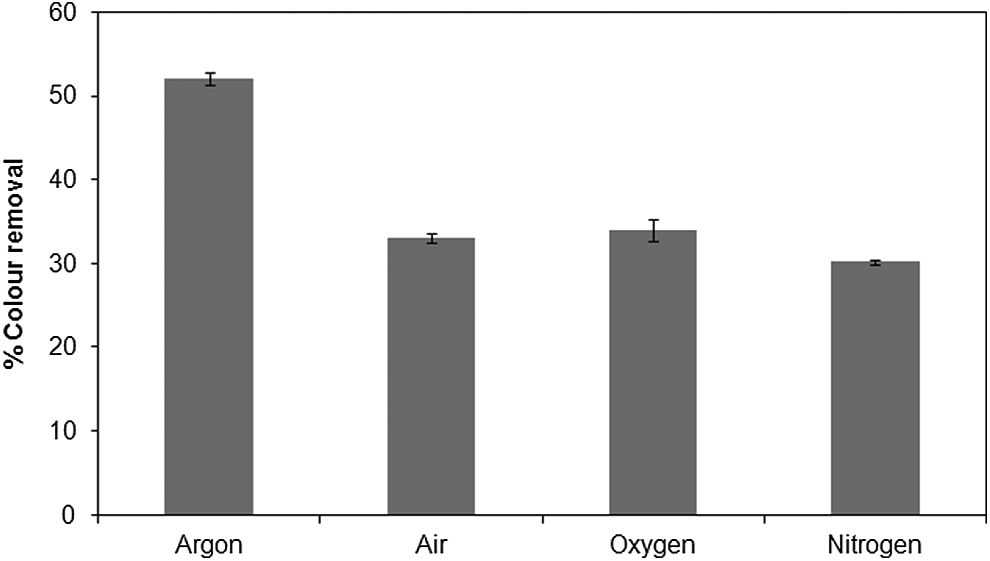
Effect of gas bubbling (RB: 2.08×10⁻⁵ mol/L, solution pH 6.7, and temperature 25°C).
Effect of NaCl
This experimental parameter was applied in order to make a further justification on the location of degradation of RB. As it could be seen from Fig. 9, the color removal of RB increases with increase in NaCl addition under the experimental conditions of 60-min sonication time, 2.08×10⁻⁵ mol/L RB, solution pH (6.7), and 100-mL reaction volume. Since RB is highly hydrophilic in nature, the interaction between the radicals formed out of cavitation bubble and RB molecule would have lesser possibility. Once NaCl is added to the RB aqueous solution, the RB molecules are driven toward the bubble–bulk interface. This leads to effective interaction of radicals and RB molecule that resulted in higher color removal with an increase in NaCl addition as shown in Fig. 9. This theory is well presented with the results of researchers already available in the literature (Seymour and Gupta, 1997; Gogate et al., 2004; Mahamuni and Pandit, 2006; Bapat et al., 2007; He et al., 2009). Higher probability of interaction between radicals and RB gives enhanced hydroxylation reaction and hence higher color removal. The color removal is 32% with 0.5 g NaCl (rate constant is 6.01×10⁻³ min−1) and 35% with 1 g NaCl (rate constant is 6.35×10⁻³ min−1) against 27% with simple ultrasound treatment (rate constant is 5.13×10⁻³ min−1).
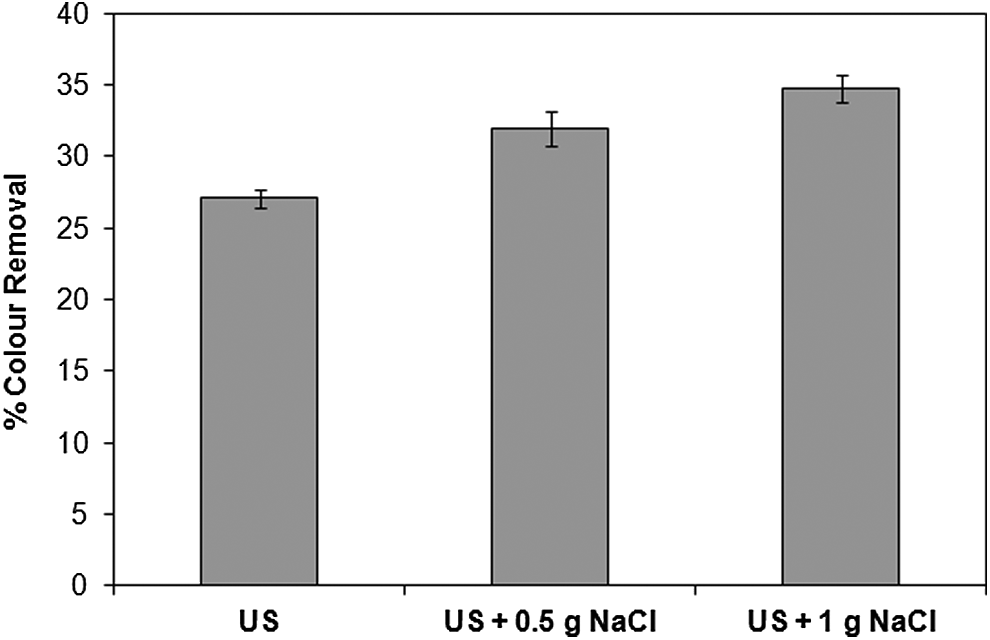
Effect of NaCl addition (RB: 2.08×10⁻⁵ mol/L, solution pH 6.7, and temperature 25°C).
Mineralization study using TOC analysis
As color removal would only show the parent compound getting degraded, it is mandatory to study the mineralization of RB in order to validate its degradation. For this, the irradiated solution (2.08×10⁻⁵ mol/L RB) is subjected to TOC analysis. Table 1 gives the values of TOC at various experimental conditions studied. The observed mineralization shows that there is no complete mineralization of RB in all the cases. Of all the cases studied, the mineralization rate or TOC removal rate for Fe2++PMS+pH 3 solution is higher or complete (below detectable limit) when compared with Fe2++PDS+pH 3 (∼93%) or Fe2++H2O2+pH 3 (∼68%) solution for 12 min of ultrasound irradiation. This trend is similar to the color-removal rate of RB with these conditions and the mechanisms were explained in earlier sections.
H2O2/PDS/PMS=2.64×10−2 mol/L; Fe2+=1 mmol/L.
PDS, peroxydisulfate; PMS, peroxymonosulfate; RB, Rhodamine B; TOC, total organic carbon; US, ultrasound.
LC/GC/MS study
LC, GC, and MS studies were done to identify the intermediates formed out of the sonochemical degradation process. The analysis results were shown in Figs. 10a and b, 11, and 12. Figure 10a and b shows the Total Ion Current (TIC) of specific mass spectra for untreated RB (2.08×10⁻⁵ mol/L RB, solution pH) and sonochemically treated RB (2.08×10⁻⁵ mol/L RB, initial pH 3, 2.64×10⁻² mol/L H2O2, 1 mmol/L Fe2+). Figures 10 and 11 show the GC and mass spectra of sonochemically treated RB (2.08×10⁻⁵ mol/L RB, initial pH 3, 2.64×10⁻² mol/L PDS and PMS, 1 mmol/L Fe2+) solution. The analysis shows that there were a number of additional products formed in the case of sonochemically treated RB aqueous solution when compared with an untreated RB aqueous solution. From Fig. 10a, the mass spectrum of untreated RB solution exhibits a single peak at m/z 443. Whereas, sonochemically treated RB solution exhibits a new peak at m/z 460 (Fig. 10b), validating that the generated hydroxyl radicals attacked the RB molecule to form a new intermediate compound (see the structure that follows) followed by removal of CO. Such degradation pathway is shown here indicating the generation of more hydroxyl radicals via sonochemical process that degrades RB molecules rapidly. In addition, N-ethyl group cleavage (peaks at m/z 386 and 298), chromophore cleavage (peak at m/z 294), and open-ring cleavage (peak at m/z 166) also take place as reported by many researchers (Chen et al., 2003; Lei et al., 2005). Similar trend of degradation pathway (AlHamedi et al., 2009; Zhong et al., 2009; Gazi et al., 2010; Mehrdad et al., 2011) is followed in the case of PDS- and PMS-treated RB solution as many simpler compounds were observed from the mass spectra (Fig. 13).

ESI mass spectrum of intermediates (RB: 2.08×10⁻⁵ mol/L, H2O2: 2.64×10⁻² mol/L, Fe2+: 1 mmol/L, initial pH 3, and temperature 25°C).
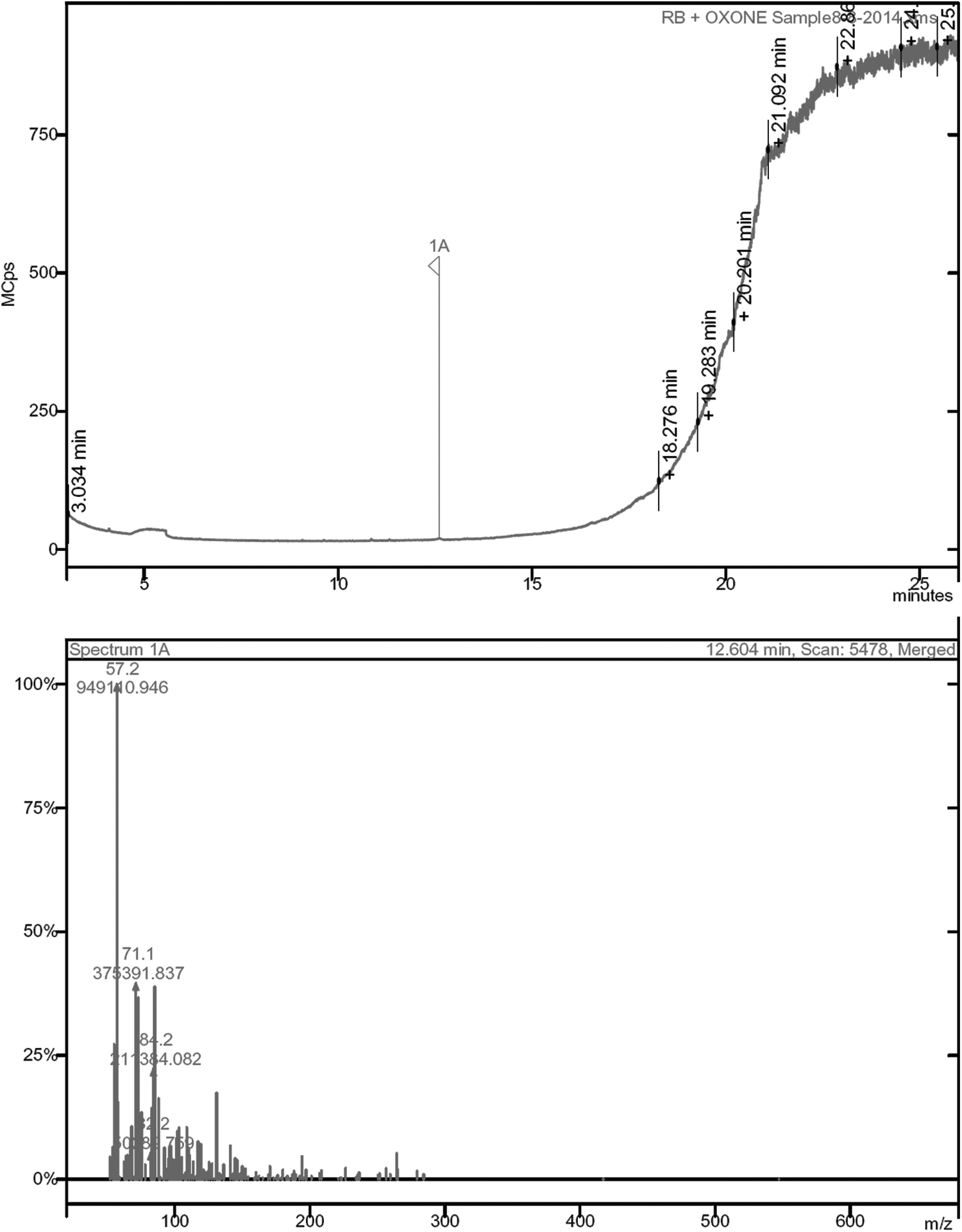
GCMS spectrum of intermediates (RB: 2.08×10⁻⁵ mol/L, PDS: 2.64×10⁻² mol/L, Fe2+: 1 mmol/L, initial pH 3, and temperature 25°C).
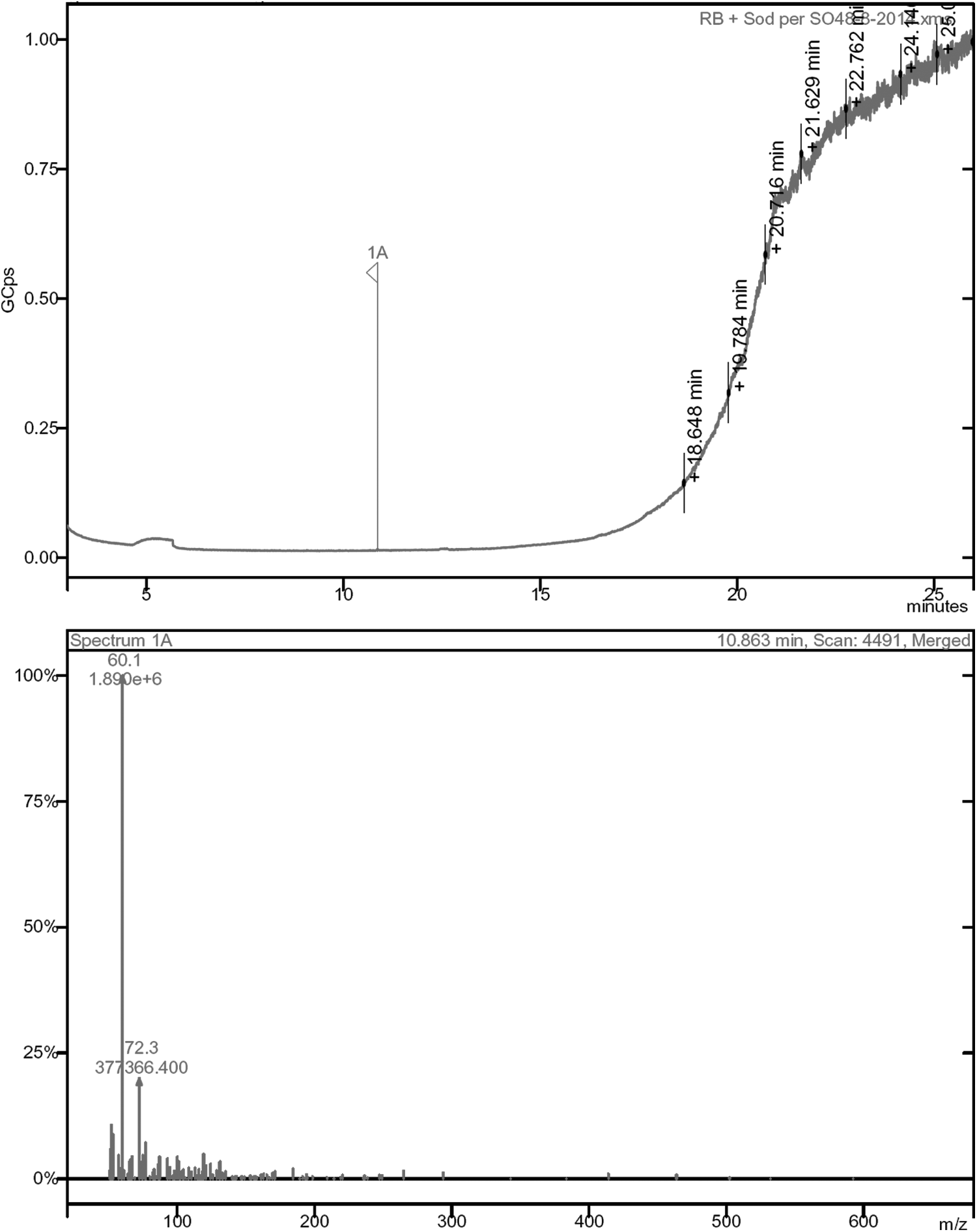
GCMS spectrum of intermediates (RB: 2.08×10⁻⁵ mol/L, PMS: 2.64×10⁻² mol/L, Fe2+: 1 mmol/L, initial pH 3, and temperature 25°C).
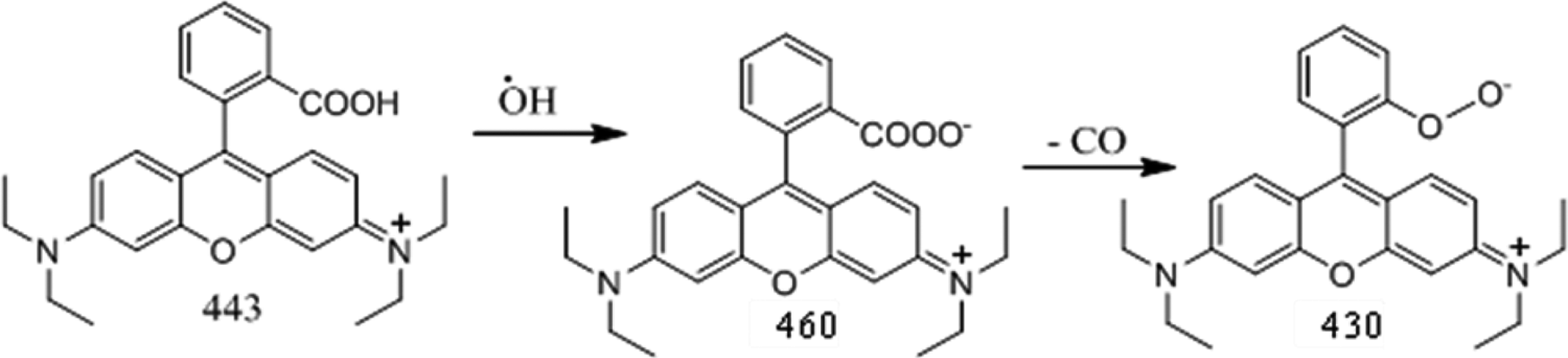
Proposed pathway of degradation of RB.
Conclusions
Color removal, mineralization (TOC), and the degradation mechanisms of RB dye using cavitation as the promising AOPs were reported. When experimental conditions, such as initial pH, H2O2, type of oxidants (PDS and PMS), Fenton's reagent (Fe2++H2O2), and novel Fenton-like reagents (Fe2++PDS and Fe2++PMS), were used, the color removal/degradation rate had significantly improved. Complete color removal was achieved for novel Fenton-like reagent (1 mmol/L Fe2++2.64×10⁻² mol/L PMS, initial pH 3) for RB dye concentrations of 2.08×10⁻⁵, 1.04×10⁻⁴, and 2.08×10⁻⁴ mol/L. Mineralization study showed that novel Fenton-like reagent (Fe2++PMS, initial pH 3) not only removes color but could remove TOC content within 12 min of ultrasound irradiation. Gas bubbling and NaCl-addition experiments provided an indication that the degradation of RB would occur only in the bulk liquid medium through hydroxylation reaction and the strategy followed to improve the radical production through novel Fenton-like reagent proved impeccable.
Footnotes
Acknowledgment
The author T. Sivasankar would like to thank the Department of Science and Technology (DST), Government of India, for financially supporting this work under Fast Track Scheme for Young Scientists.
Disclosure Statement
No competing financial interests exist.