




Abstract
Abstract
A novel TiO2/hydroniumjarosite composite photocatalyst has been synthesized by a simple hard template method. X-ray diffraction, ultraviolet (UV)-vis diffuse reflectance spectroscopy, transmission electron microscopy, and nitrogen adsorption–desorption measurement were used to characterize the composite photocatalyst. Photocatalytic performance of the prepared composite catalyst was evaluated in a heterogeneous Fenton-like process using methyl orange (MO) as a probe contaminant. The TiO2/hydroniumjarosite composite exhibited remarkable enhancement on the photocatalytic activity compared with bare TiO2 or hydroniumjarosite toward the oxidation of MO under UV light irradiation. Increased light absorption intensity, larger specific surface area, and open porous structure are believed to be the main reasons for enhanced photocatalytic performance of TiO2/hydroniumjarosite composite. Results suggest that the as-prepared TiO2/hydroniumjarosite composite is an effective and promising photo-Fenton-like catalyst for the degradation of MO and purification of wastewater.
Introduction
I
where ≡ represents the surface of catalyst (Lin and Gurol, 1998).
Jarosite is a member of isostructural minerals described by the general formula AFe3(SO4)2(OH)6, where the A site is occupied commonly by K+, Na+, and H3O+ (Baron and Palmer, 1996). Jarosite is also a secondary iron sulfate mineral and typically formed indirectly from the oxidation of sulfide minerals, especially pyrite. Engineers and researchers focused on the utilization of jarosite as an iron scavenger in the hydrometallurgical process, a raw material in the production of pigments or construction materials and an adsorbent for arsenic and copper removal (Asokan et al., 2006, 2010; Grafe et al., 2008; Asta et al., 2009; Dutrizac and Chen, 2010; Katsioti et al., 2010; Vu et al., 2010). Xu et al. (2013b) used hydroniumjarosite [H3OFe3(SO4)2(OH)6] as a heterogeneous Fenton catalyst in the degradation of azo dye methyl orange (MO). However, the synthesized hydroniumjarosite shows an irregular shape with various grain sizes ranging from a few hundred nm to several μM and the photocatalytic activity of jarosite mineral needs to be improved for higher degradation efficiency of MO. In this article, hydroniumjarosite was synthesized with the introduction of TiO2 as a hard template by the wetness impregnation method for the first time. Compared with bare hydroniumjarosite, the fabricated TiO2/hydroniumjarosite composite exhibited an enhanced photocatalytic activity for the degradation of MO. The reason of choosing MO as a target pollutant is that MO is a typical probe molecule used in the previous research articles (Arabatzis et al., 2003; Li et al., 2006; Huang et al., 2008).
Materials and Methods
Catalyst preparation
All chemicals used in this work were of analytical grade, purchased from Shanghai Chemical Reagent Co., Ltd., and used without any further purification.
TiO2/hydroniumjarosite [TiO2/H3OFe3(SO4)2(OH)6] material was obtained by the deposition–precipitation method with the following steps: (1) 3.9990 g Fe2(SO4)3 was added to a solution of 1.2000 g urea in 100 mL deionized water under continuous magnetic stirring for 30 min. (2) 2.3961 g of TiO2 (Degussa P25) was added to the above mixed solution and the pH value did not change during this process. (3) The obtained suspension was transferred into a Teflon-lined stainless steel autoclave (200 mL) after additional stirring for 24 h. (4) The sealed autoclave was maintained at 90°C for 8 h and then cooled to room temperature naturally. (5) The resulting sample was collected by centrifugation, washed several times with absolute ethanol and deionized water, and finally dried at 60°C for 24 h. The preparation of hydroniumjarosite followed exactly the same procedure except that there was no step (2) any more.
Photocatalytic degradation procedures
Photocatalytic degradation of MO was carried out in a XPA-7 photochemical reactor (Xujiang Electromechanical Plant). The schematic diagram has been shown in a previous reference (Tian et al., 2010). The temperature of reaction solutions was kept at 25±2°C by cooling water circulation. A 500 W medium-pressure Hg lamp with a maximum light intensity output at 365 nm was used as an irradiation source of ultraviolet light (UV). A 500 W xenon lamp was used as light source to mimic solar irradiation visible light (VL) at wavelengths from 300 to 800 nm. The light intensity at the position of 50 mL-capacity quartz tube is 12.7 mW/cm (measured using UV-A irradiation meter; Beijing Normal University). The initial pH value of suspension was adjusted to 4.5 with 0.1 M sulfuric acid solution and sodium hydroxide solution. The initial concentration of MO was 80 mg/L. All catalysts were dipped in the MO solution and stirred in dark for 60 min to establish the adsorption–desorption equilibrium between the dye and the catalysts before illumination. At given irradiation time intervals (10 min), a small quantity (2 mL) of the suspension was taken and centrifuged to separate the catalyst particles from the suspension. The concentration of MO was determined using a UV-vis spectrophotometer (Beijing Ruili Corp.; UV-9100) at 464 nm. The concentration of hydrogen peroxide was measured using the same UV-vis spectrophotometer after color development with titanium sulfate, while the iron concentration was determined according to the o-phenanthroline spectrometric procedure.
Catalyst characterization
Powder X-ray diffraction (XRD) patterns were recorded at a scanning rate of 4°/min in the 2θ range of 10–70° using a Bruker D8 Advance instrument with Cu–Kα radiation (λ=1.5406 Å) at room temperature. The morphology and nanostructure of synthesized products were further observed using a Hitachi H-7650 transmission electron microscope (TEM) at the acceleration voltage of 80 kV. UV-vis absorption spectroscopy of the specimens was recorded with a UV-vis spectrophotometer (Cary 300) equipped with an integrating sphere with a radius of 150 mm. Nitrogen adsorption–desorption measurement for the products was performed using a Micromeritics ASAP 2020 M+C instrument with a degassing temperature of 80°C and using Barrett–Emmett–Teller (BET) calculations for surface area and Barret–Joyner–Halender calculations for pore volume.
Results and Discussion
Characterization of prepared catalysts
Figure 1 exhibits the XRD patterns of TiO2 (Degussa P25), hydroniumjarosite and TiO2/hydroniumjarosite composite. The XRD pattern of hydroniumjarosite sample matches the diffraction of pure H3OFe3(SO4)2(OH)6 (JCPDS card No. 31-0650) very well and there is no impurity peak. It is known that Degussa P25, considered as one of the best photocatalysts, is a mixture of anatase and rutile phase (Kolen'ko et al., 2004). As shown in Fig. 1, the diffraction peaks at 2θ of 25.28°, 36.98°, 37.80°, 38.58°, 48.02°, 53.89°, 55.06°, 62.69°, 68.76°, 70.31°, and 75.03° can be indexed to the characteristic peaks (101), (103), (004), (112), (200), (105), (211), (204), (116), (220), and (215) of anatase (JCPDS card No. 21-1272), respectively. Whereas the other diffraction peaks of P25 sample can be indexed to the characteristic peaks of rutile (JCPDS card No. 21-1276). For the sample of TiO2/hydroniumjarosite, the corresponding XRD patterns reveal that the sample is a mixture of H3OFe3(SO4)2(OH)6, anatase and rutile phase. Compared with the P25 sample, a negligible change of all diffraction peak positions of the anatase and rutile phase suggests that Fe3+ does not incorporate into the lattice of TiO2. In addition, the diffraction peaks of H3OFe3(SO4)2(OH)6 phase in composite become slightly broader, which indicates that the size of H3OFe3(SO4)2(OH)6 particles reduces. This result is further verified by TEM observation.

X-ray diffraction patterns of prepared catalysts [■: Anatase; •: Rutile; ▼: Pure H3OFe3(SO4)2(OH)6].
Figure 2a shows the irregular morphology of hydroniumjarosite with particle size ranging from 300 nm to a few μM. Figure 2b shows approximate spherical morphology of P25 with an average diameter of about 40 nm. The morphology of TiO2/hydroniumjarosite (Fig. 2c) is similar to that of TiO2. Obviously, larger particles (particle size range from 45 to 70 nm) in this sample are of hydroniumjarosite. In the high magnification transmission electron microscope (HMTEM) image of TiO2/hydroniumjarosite (Fig. 2d), the fringe interval of 0.189 nm is consistent with the interplanar spacing of (200) crystal planes of anatase TiO2, while the fringe interval of 0.199 nm is consistent with the interplanar spacing of (303) crystal planes of hydroniumjarosite. In addition, TiO2 served as heterogeneous nuclei for the growth of hydroniumjarosite and inhibited the growing up of hydroniumjarosite particles during the synthesis of the composite. This explains the reduction size of hydroniumjarosite particles, which agrees very well with the XRD result.
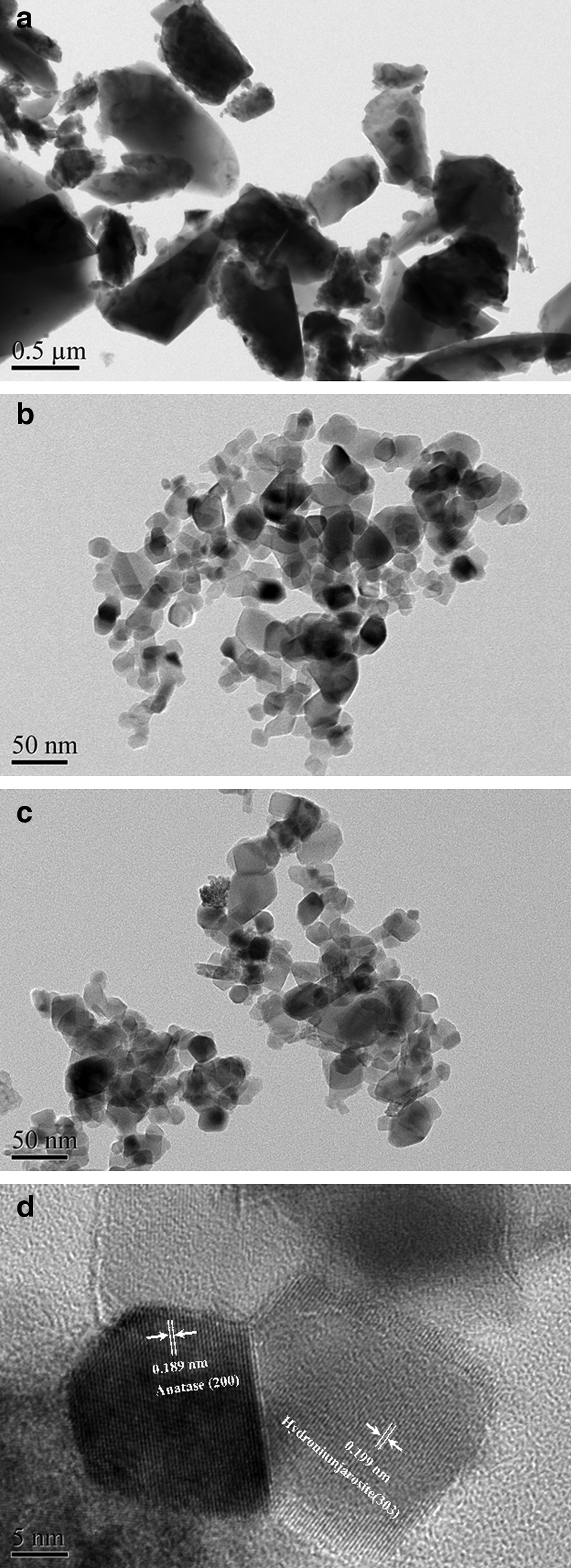
Transmission electron microscope images of
Figure 3 shows the UV-vis absorption spectroscopy of TiO2, hydroniumjarosite, and TiO2/hydroniumjarosite composite. The absorbance of the catalysts increases in the order of TiO2/hydroniumjarosite>hydroniumjarosite>TiO2. The increase in absorbance is due to the absorption contribution from hydroniumjarosite and the modification of the fundamental process of electron–hole pair formation during irradiation (Xu et al., 2011), which is beneficial to the photocatalytic performance (Liu et al., 2011).
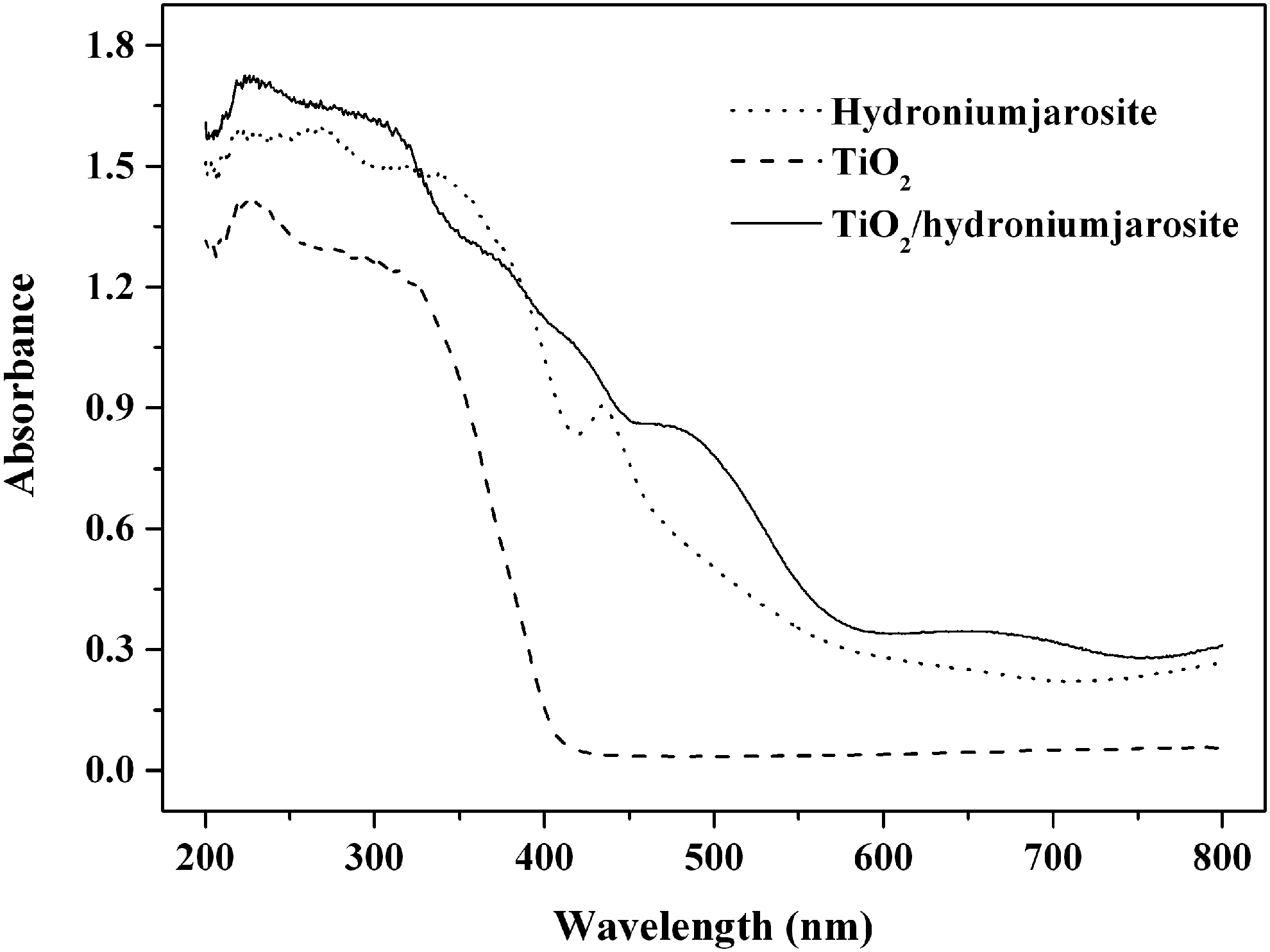
Ultraviolet (UV)-vis diffuse reflectance spectra of prepared catalysts.
Figure 4 shows the N2 adsorption–desorption isotherms of hydroniumjarosite and TiO2/hydroniumjarosite. Both of them display type IV isotherms with hysteresis loops at relative pressure (P/P0) between 0.2 and 1.0, indicating their mesoporous feature (Zhang et al., 2011). The BET-specific surface areas of hydroniumjarosite and TiO2/hydroniumjarosite are estimated to be 3.79 and 41.03 m2/g, respectively. The pore volumes for both materials are 0.02 and 0.26 cm3/g, respectively.
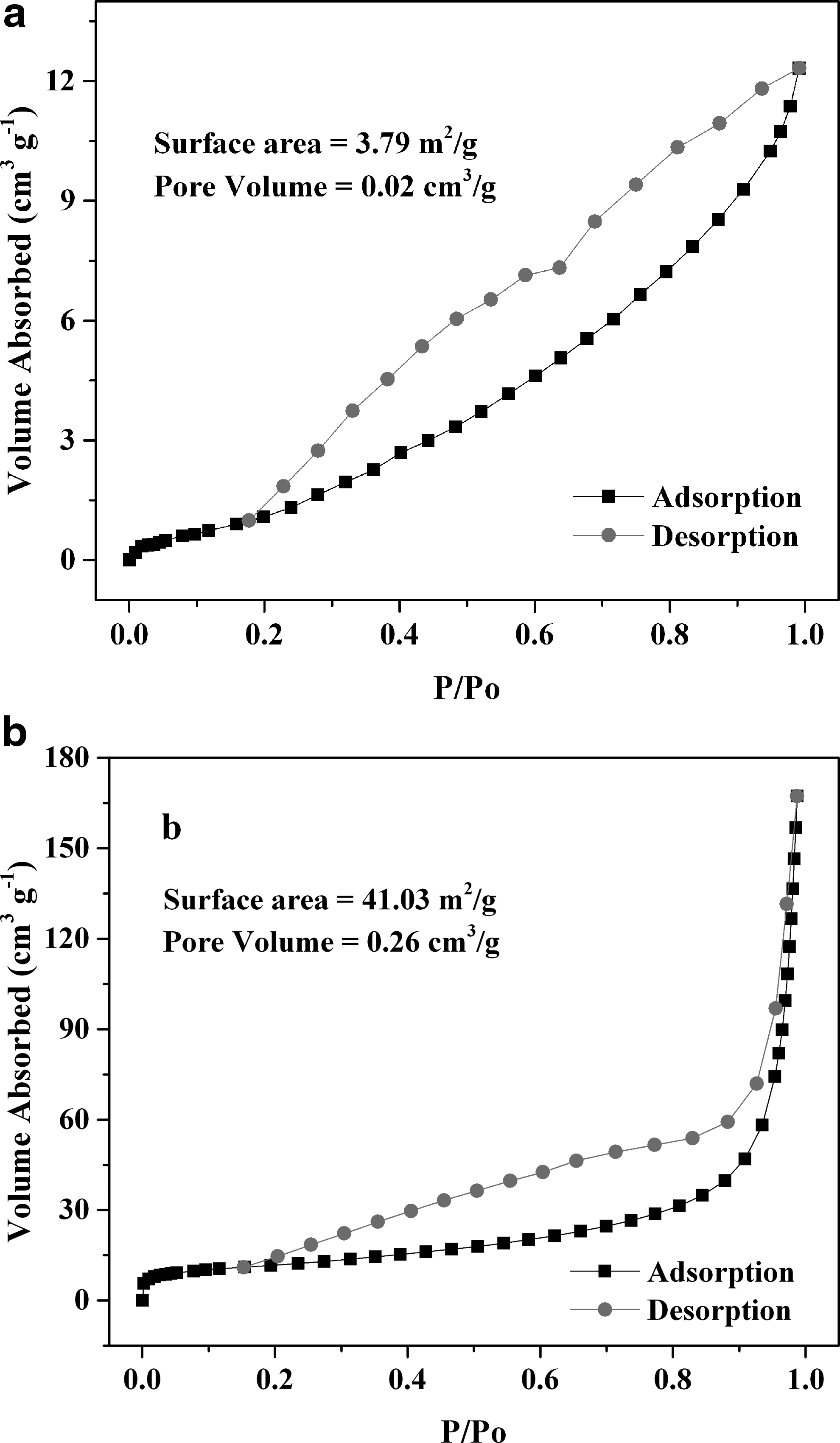
Nitrogen adsorption–desorption isotherm of
Effect of operating parameters on the photocatalytic degradation efficiency of MO
Based on the previous studies (Lin and Gurol, 1998; Kwan and Voelker, 2002), the photo-Fenton-like reaction is initiated by the formation of peroxide complex species with Fe (III)-active sites on the catalyst surface. Hydroxyl radicals are generated after a chain of reactions under irradiation attack the MO molecules adsorbed on the surface of catalyst and lead to their degradation. Since the concentration of hydrogen peroxide is directly related to the amount of hydroxyl radicals produced in the Fenton-like reaction, this parameter surely influences the degradation efficiency of MO. Four concentrations of H2O2, such as 150, 300, 600, and 1200 mg/L, were selected to investigate the effect of H2O2 concentration on the degradation efficiency of MO over TiO2/hydroniumjarosite under UV irradiation. As shown in Fig. 5 (C0 and Ct are the concentrations of MO solution at initial time and after irradiated at t time, respectively), the oxidation rate of MO increases with the increase of H2O2 concentration from 150 to 1200 mg/L, but does not change significantly as the H2O2 concentration increases from 600 to 1200 mg/L. This is not consistent with our prediction. One possible reason is that too much H2O2 is absorbed on the surface of catalyst. With impeding adsorption of MO molecules on such surface, the oxidation efficiency decreases. At the same time, excessive H2O2 serves as a scavenging agent of •OH with the mechanism as follows (Zhao et al., 2008; Zhao and Hu, 2008).
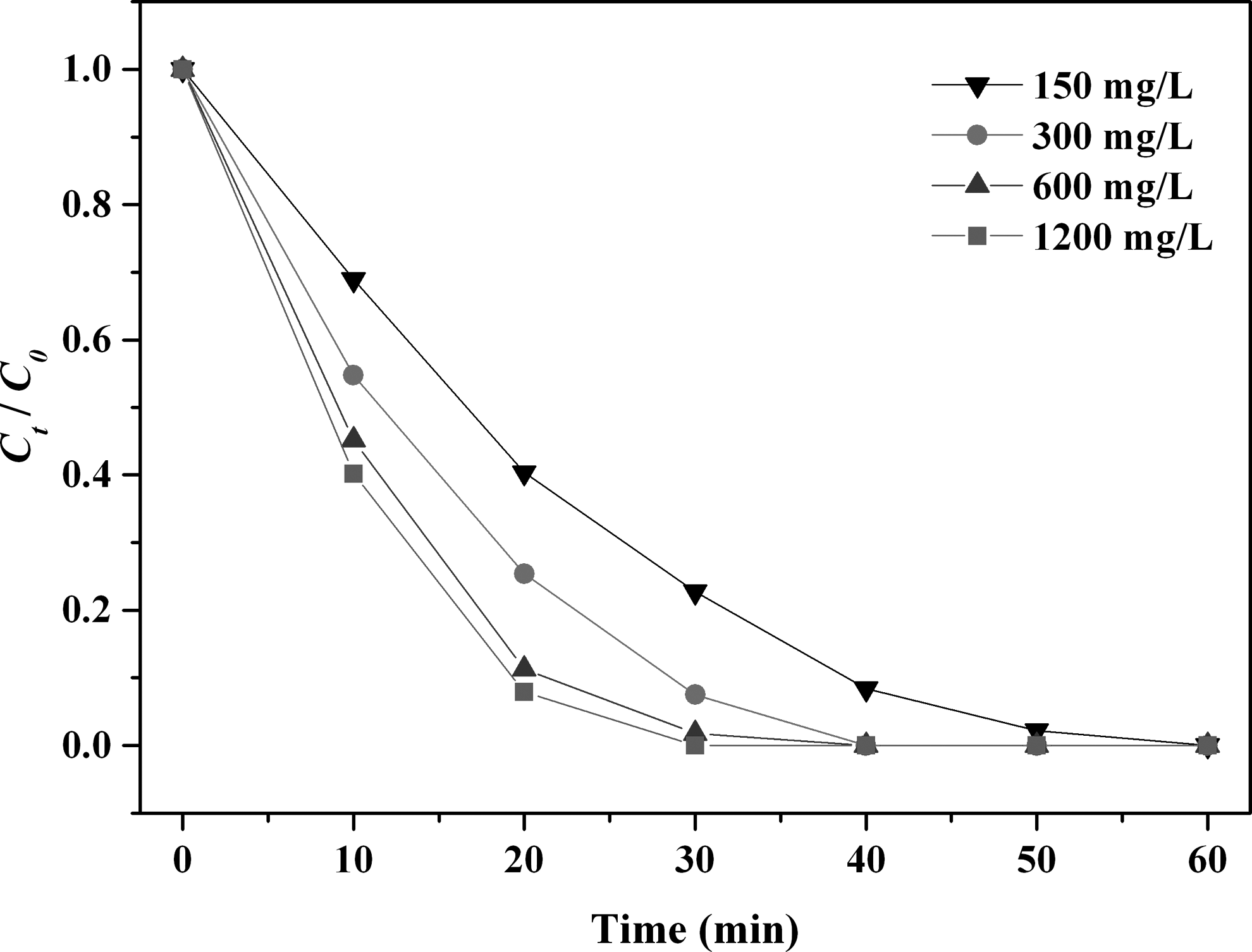
Effect of H2O2 concentration on degradation efficiency of methyl orange (MO). (Testing condition: UV irradiation; [MO]=80 mg/L; [TiO2/hydroniumjarosite]=200 mg/L; pH=4.5).
Four concentrations of TiO2/hydroniumjarosite, such as 200, 400, 800, and 1600 mg/L, were selected to study the effect of catalyst dosages on the MO degradation under UV irradiation. As shown in Fig. 6, the degradation efficiency of MO increases when the catalyst dosage increases from 200 to 400 mg/L. This is easy to understand since more catalysts have more active sites in the reaction system, and thus causing an increase in the number of •OH radicals, which means better degradation efficiency of dye (Hanna et al., 2010). However, this does not means that the more the amount of catalyst, the better the degradation efficiency of MO. It was observed that once the catalyst dosage increases from 800 to 1600 mg/L, the oxidation efficiency of MO declined. When the catalyst dosage reaches a certain value, the solution becomes turbid and thus blocks UV radiation for the reaction to proceed (screening effect) and leads to the decrease of MO degradation efficiency (Rauf et al., 2011).
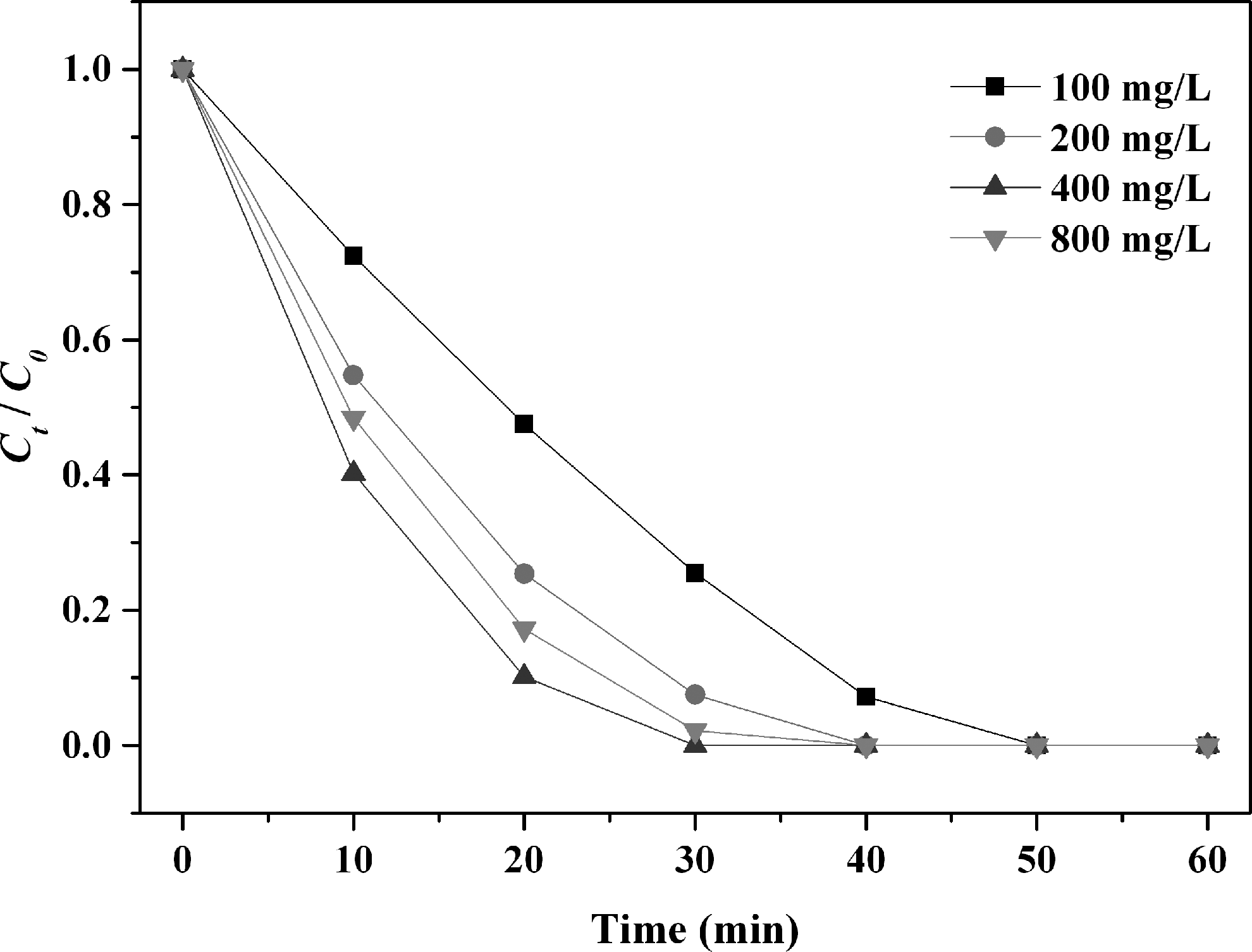
Effect of catalyst loading on degradation efficiency of MO. (Testing condition: UV irradiation; [MO]=80 mg/L; [H2O2]=300 mg/L; pH=4.5).
Effect of initial pH on the removal of MO over TiO2/hydroniumjarosite under UV irradiation were determined with a pH range of 3.0–9.0. As shown in Fig. 7, the degradation efficiency of MO decreases with the increase of initial pH from 3.0 to 9.0. Especially, the worst removal efficiency of MO is observed at the initial pH of 9.0, where only 27.5% of MO is removed under UV irradiation for 60 min. However, considerable degradation efficiency of MO is still obtained in an approximate neutral condition, which indicates that the prepared TiO2/hydroniumjarosite catalyst can well overcome the drawback of a narrow pH range of homogeneous Fenton reaction. In heterogeneous catalysis system, the mechanism of initial pH on the removal efficiency of the organic pollutants is complicated. First, more •OH is available to attack the target molecules in the solution with a lower pH value. When the pH is higher than 4.0, H2O2 becomes unstable and decomposes into H2O and O2 (Du et al., 2008), which decreases the yield of •OH and the oxidation efficiency of MO. Second, the initial pH value might affect the surface properties of the catalyst (TiO2/hydroniumjarosite). When the solution pH value increases, the surface of as-prepared catalyst is gradually deprotonated (Xu et al., 2013a), which weakens the binding strength between negatively charged MO molecules with the catalyst surface, and thus decreases the degradation efficiency of MO. Third, the ferrous ions might precipitate in alkaline conditions to form iron hydroxide [Fe(OH)3] or hydrous ferric oxide (Fe2O3·nH2O) (Liang et al., 2009). These iron precipitates have low efficiency to activate H2O2 to produce •OH (Kang and Hwang, 2000).
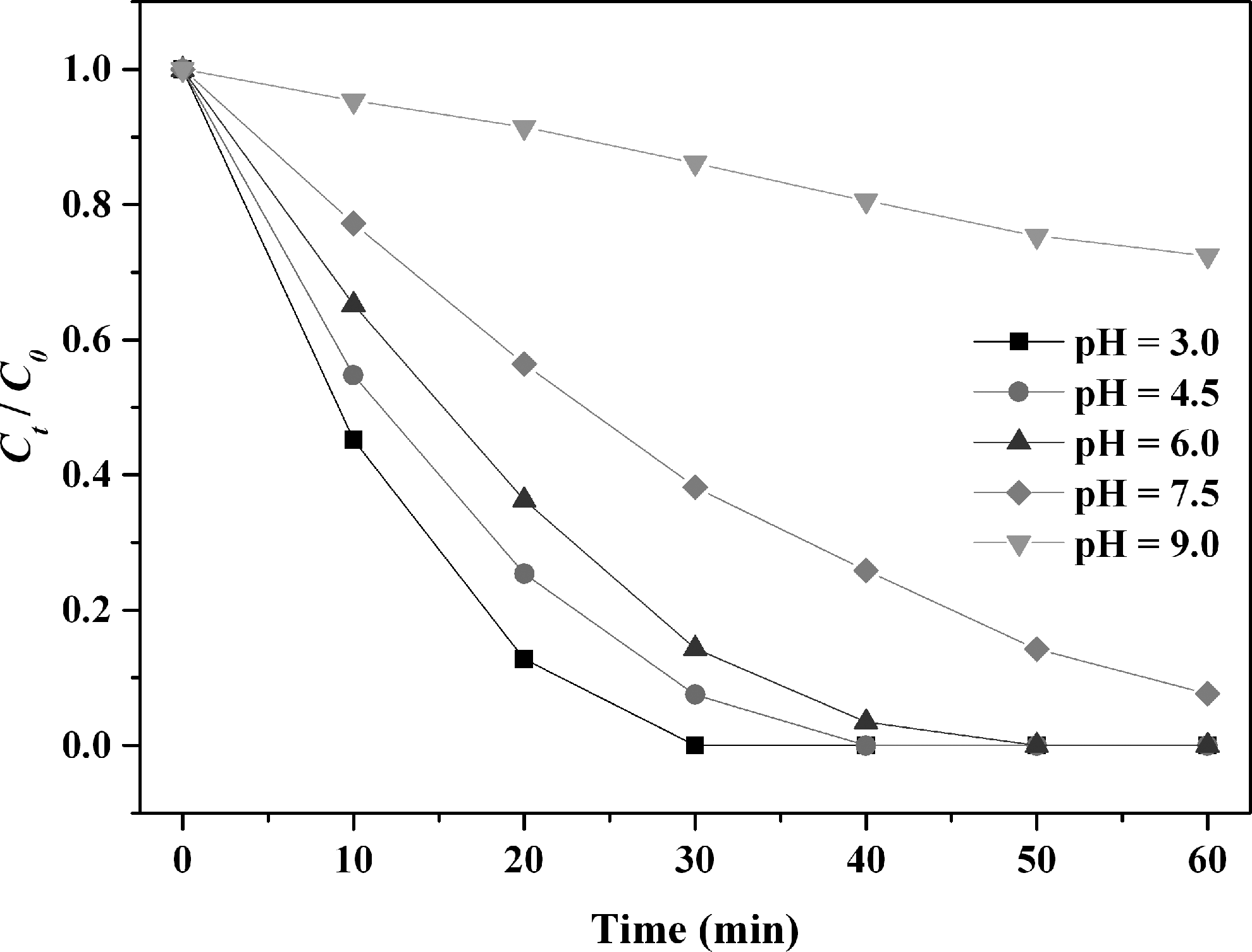
Effect of initial pH on degradation efficiency of MO. (Testing condition: UV irradiation; [MO]=80 mg/L; [H2O2]=300 mg/L; [TiO2/hydroniumjarosite]=200 mg/L).
Degradation efficiency of MO over the TiO2/hydroniumjarosite composite catalyst under VL and UV irradiation is presented in Fig. 8. Obviously, the catalytic activity of TiO2/hydroniumjarosite composite under VL irradiation is inferior to that under UV irradiation.
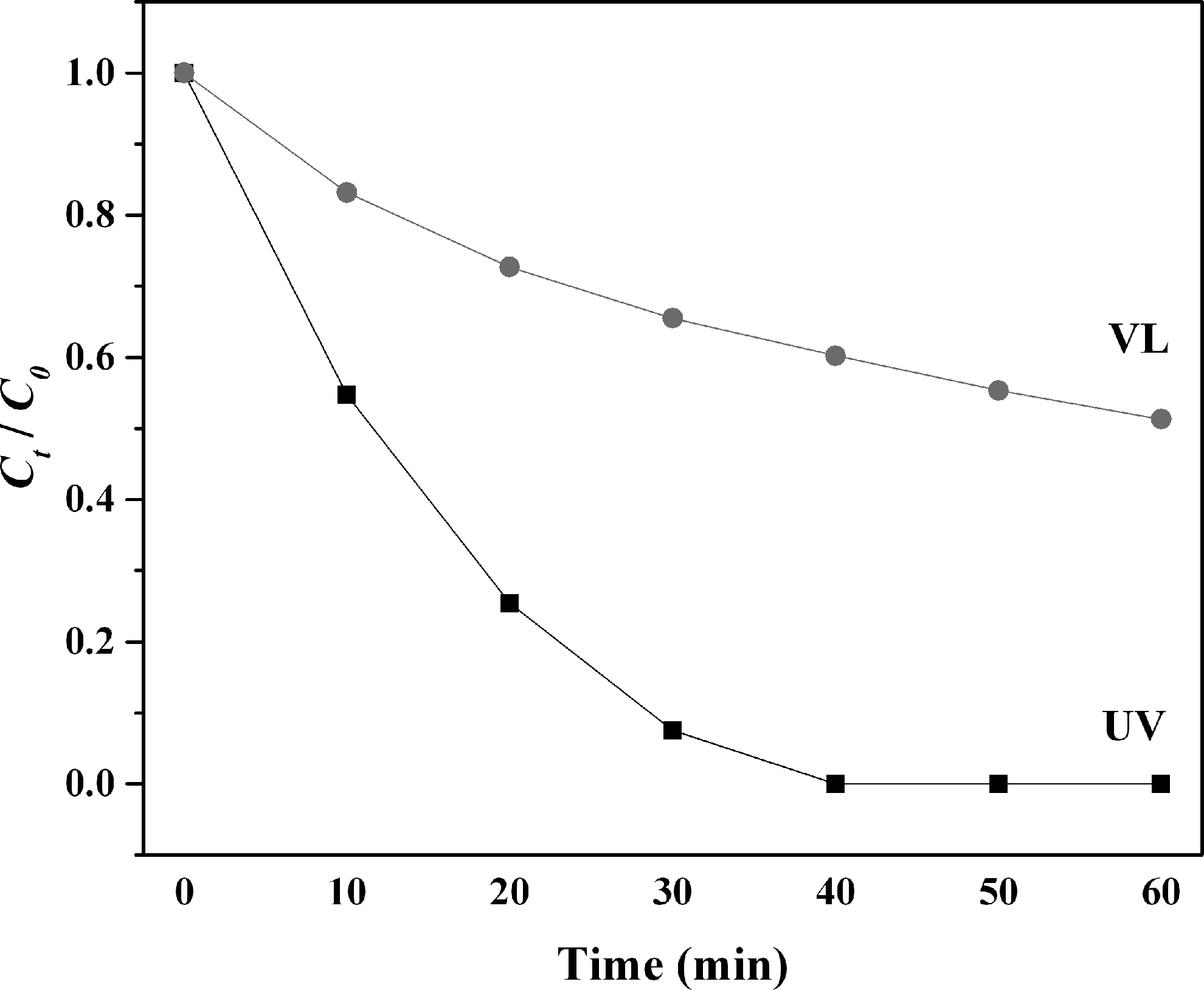
Effect of light source on degradation efficiency of MO. (Testing condition: [MO]=80 mg/L; [H2O2]=300 mg/L; [TiO2/hydroniumjarosite]=200 mg/L; pH=4.5).
Photocatalytic degradation of MO in different reaction systems
Figure 9 shows the time course of Ct/C0 of MO photocatalytic degradation in different reaction systems. As it can be displayed from the figure, negligible degradation of MO was observed during 60 min of irradiation in the absence of catalyst and H2O2, which showed the stability of MO molecules under UV irradiation. When catalyst was added in the reaction system, the photocatalytic degradation efficiency of MO over hydroniumjarosite and TiO2 (P25) was 8.56% and 15.2%, respectively, within the same time. Under UV illumination, absorption of photons creates an electron–hole pair if the energy is higher than the band gap of semiconductor. The pairs migrate to the surface and finally form •OH radicals. These free radicals cause the oxidation of MO. The dominant reactions are shown as follows (Kolen'ko et al., 2004).
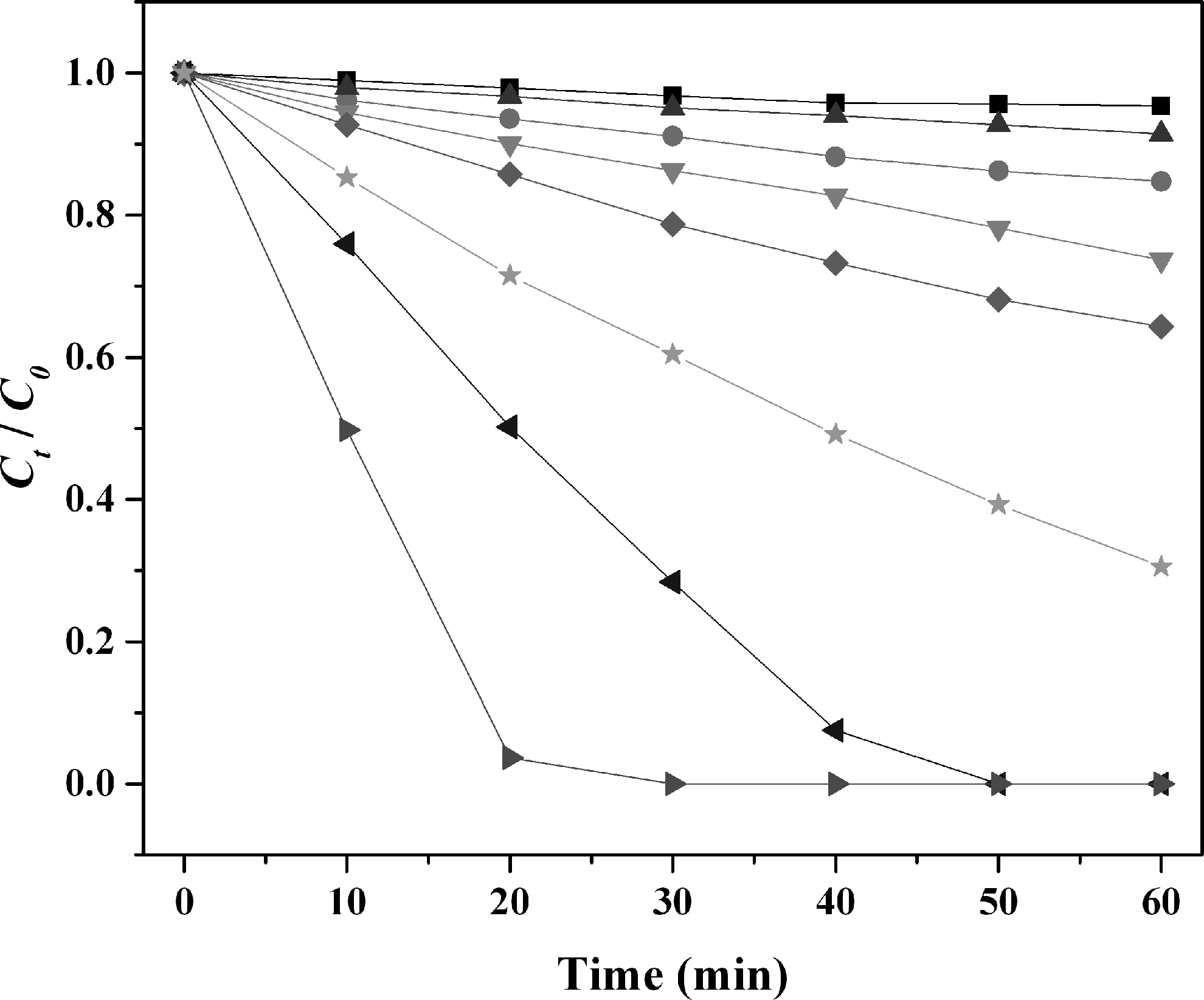
Degradation efficiency of MO in different reaction systems (■: only UV irradiation; ▲: UV+hydroniumjarosite; ●: UV+TiO2; ▼: UV+H2O2; ♦: UV+H2O2+TiO2; ★: Dark+H2O2+TiO2/hydroniumjarosite; ◂: UV+H2O2+hydroniumjarosite; ▸: UV+H2O2+TiO2/hydroniumjarosite). (Testing condition: [MO]=80 mg/L; [H2O2]=600 mg/L; [catalyst]=400 mg/L; pH=3).
However, TiO2 and hydroniumjarosite have a high electron–hole recombination rate (Rengaraj et al., 2007; Fang et al., 2008; Ku et al., 2011). Therefore, the photocatalytic activities of the TiO2 and hydroniumjarosite are low. During UV+H2O2 oxidation, more •OH is generated rapidly than sole UV irradiation or UV/TiO2 or UV/hydroniumjarosite oxidation, which can be explained by Equation (8) (Zhang et al., 2007). Thus, the photocatalytic degradation efficiency of MO increases to 26.3% after 60 min.
In the UV+TiO2+H2O2 reaction system, MO does not experience a Fenton-like process and is degraded by 35.7% after 60 min. However, in the case of the UV+H2O2+hydroniumjarosite reaction system, the degradation process of MO can be explained by heterogeneous Fenton-like reactions (Xu et al., 2013b). Hydroxyl radicals are generated after a chain of reactions occurring on the catalyst surface and led to the 100% degradation of MO after 50 min. In the TiO2/hydroniumjarosite/H2O2 suspension, MO is degraded by 39.6% and 100.0% after 30 min under dark conditions and UV irradiation, respectively. Apparently, UV irradiation can accelerate the heterogeneous Fenton-like reaction owing to the increase of •OH yield. It turns out that pseudo-first-order kinetics is obeyed for the photocatalytic degradation of MO. The calculated kinetic constants are listed in Table 1. The concentration evolution of hydrogen peroxide over time in different reaction systems is also presented in Fig. 10. As shown in Fig. 10, the decomposition rates of H2O2 in different reaction systems follow the order of UV+H2O2+TiO2/hydroniumjarosite>UV+H2O2+hydroniumjarosite>Dark+H2O2+TiO2/hydroniumjarosite>UV+H2O2+TiO2>UV+H2O2. This order of H2O2 decomposition rates is the same as that of the kinetic constant, which suggests that the hydrogen peroxide evolution can be used as a probe for the relatively efficient degradation of MO.
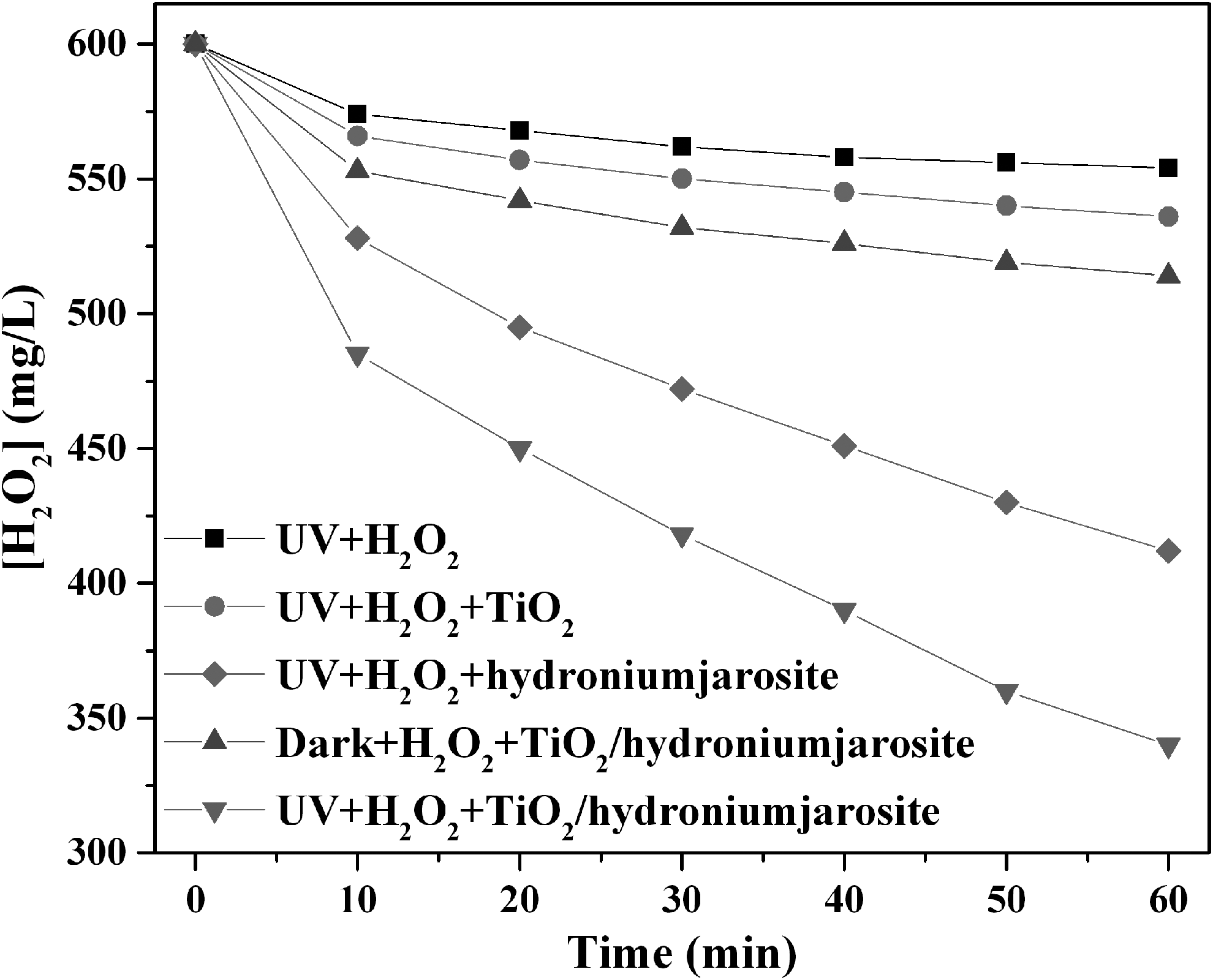
Concentration evolution of hydrogen peroxide over time in different reaction systems. (Testing condition: [MO]=80 mg/L; [H2O2]=600 mg/L; [catalyst]=400 mg/L; pH=3).
UV, ultraviolet.
To understand whether dissolved iron from catalyst would contribute significantly to the degradation of MO, the dissolved iron concentration was measured in the end. The total leaking iron concentrations were 0.69 and 0.45 mg/L for the UV+H2O2+hydroniumjarosite and UV+H2O2+TiO2/hydroniumjarosite systems, respectively. At this level of dissolved iron concentration, the generation of hydroxyl radicals was mainly due to the heterogeneous photo-Fenton process, and the homogeneous photo-Fenton reaction in the bulk solution contributed little to the degradation of MO.
Results undoubtedly reveal that the photocatalytic activity of hydroniumjarosite is greatly improved by the introduction of TiO2 as a hard template during the synthesis. This is ascribed to the following reasons. (1) The enhanced optical absorption intensity of the TiO2/hydroniumjarosite composite (shown in Fig. 3) is in favor of the photocatalytic reaction. (2) The reduced particle size of hydroniumjarosite in composite (shown in Fig. 2c) also plays a key role in the heterogeneous Fenton-like process. As it is well known, the adsorption of organic pollutants on the catalyst surface is the first and indispensable stage for its further degradation. The smaller the particle size, the larger the surface area is. The surface area and pore volume of the TiO2/hydroniumjarosite composite are more than 10 times compared with bare hydroniumjarosite (shown in Fig. 4a, b). Therefore, the larger surface area of TiO2/hydroniumjarosite bears more unsaturated surface coordination sites exposed to the suspension. (3) The presence of the open porous structure enables more efficient transportation for the reactant molecules into the active sites, and thus enhances the photocatalysis efficiency for MO degradation.
Conclusions
In summary, a facile deposition–precipitation method has been used to synthesize TiO2/hydroniumjarosite composites. The as-prepared material was employed for the photocatalytic degradation of aqueous MO under UV irradiation. It is found that the photocatalytic activity of the TiO2/hydroniumjarosite composite is better than bare TiO2 and hydroniumjarosite due to its higher optical absorption intensity, surface area, and open porous structure. It would be of great promise for the industrial application of this material with high photocatalytic performance for wastewater (containing MO) treatment.
Footnotes
Acknowledgment
This study was financially supported by the National Natural Science Foundation of China (21377057, 41371476, and 21477054).
Author Disclosure Statement
No competing financial interests exist.