




Abstract
Abstract
Problems identified with elevated lead in drinking water associated with galvanized steel pipes were recently hypothesized to result from lead accumulation on galvanized steel pipe surfaces from upstream lead service pipes. However, historical research documents that the grade of zinc typically used for galvanizing contains a minimum of 0.5% lead and can itself be a significant long-term source of lead, which may explain some recent lead contamination problems associated with galvanized steel. Surface analysis of various galvanized steel pipes and fittings installed from 1950 to 2008 demonstrated that the concentration of lead in the original zinc coating can range from nondetect to nearly 2%, dependent on the manufacturer and fitting type. Since cadmium is also present in many zinc coatings, but not in lead pipe, leaded solder, or brass, correlation of zinc concentration to both lead and cadmium concentrations in water was considered as a possible fingerprint implicating the coating on galvanized steel as a lead source; bench-scale tests of metal leaching from harvested galvanized steel pipes were used to validate this approach. Using profile sampling, individual homes with galvanized steel pipes as a primary lead source were identified in Washington, DC, Providence, RI, Chicago, IL, and a city in Florida. In some cases, the levels of lead from this source were very significant (>100 μg/L) and can be exacerbated by installation of a copper pipe upstream during partial service line replacements.
Introduction
E
Zinc coating as a source of lead
Although galvanized steel pipes have fallen out of favor in the United States, they were the most commonly installed pipe material for most of the 20th century (AWWA, 1996) and are still installed in some present-day buildings. In a large national water utility survey, 52% of utilities (N=898) reported the presence of steel or galvanized steel service lines within their distribution system, and an estimated 7.5% of households overall had steel or galvanized steel service lines (American Water Works Association, 1996).
The source of lead in galvanized steel pipes is the zinc coating. It is common practice to use Prime Western Grade zinc in galvanizing baths (AWWA, 1996), which contains a minimum of 0.5% lead by weight and a maximum of 1.4% lead by weight (AWWA, 1996; ASTM, 2013a, 2013b). While galvanizing can be accomplished using other grades of zinc containing lower levels of lead, the presence of lead in the galvanizing kettle has processing advantages, including increased fluidity (American Galvanizers Association, 2006). In comparison, the level of lead in lead-free components for potable water use was recently reduced to a maximum of 0.25% in the wetted surface material (United States Environmental Protection Agency, 2012), making the level of lead found in many zinc coatings unacceptable for potable use if judged by the new standard.
When lead is present in the zinc coating, it can be released to water either in the soluble form through dissolution of the zinc coating or in the particulate form through the scouring of zinc corrosion products at high flow rates (Fig. 1a). In this work, this is referred to as direct lead release.

Schematic showing three different possible lead release scenarios for galvanized pipe.
Cadmium as a fingerprint for galvanized steel pipe
In situations where lead release is dominated by dissolution of zinc coatings, it is expected that lead and zinc concentrations will tend to be correlated. However, several attempts to study lead release from galvanized steel pipes have been confounded by the presence of brass fittings (Neff et al., 1987; Lee et al., 1989), which also contain both lead and zinc.
One possible way to distinguish lead from galvanized steel and lead from brass in the field is by using the cadmium concentration as a fingerprint. Prime Western Grade zinc can contain up to 0.2% cadmium (AWWA, 1996; ASTM, 2013b), and bench-scale experiments under intermittent flow conditions have demonstrated that the concentrations of zinc, cadmium, and lead released from galvanized steel pipes can correlate with each other (Meyer, 1980). Such correlations between lead and cadmium release were successfully used in Poland to identify galvanized steel as a water lead source (Barton et al., 2002; Barton, 2005).
Other sources of cadmium in drinking water
According to EPA, the primary sources of cadmium in drinking water are the corrosion of galvanized pipes, erosion of natural deposits, discharge from metal refineries, and runoff from waste batteries and paints (United States Environmental Protection Agency, 2013). Other than galvanized steel pipe corrosion, these major sources of cadmium are expected to affect the cadmium concentration in the source water, which can be identified by taking samples for cadmium at the treatment plant or checking the cadmium concentration of well-flushed field samples.
Brass tends to have only traces of cadmium relative to lead (e.g., Schock and Neff, 1988). In the field, the amount of cadmium released from galvanized steel pipes has been sufficient to distinguish it from other materials, despite possible confounding factors; in Seattle, homes with galvanized steel pipes had cadmium concentrations at least 10 times higher than homes with copper pipes (Sharrett et al., 1982).
Galvanized steel pipe as a direct lead source
A literature review identified numerous laboratory and field studies (Table 1) demonstrating that galvanized steel pipes can be a significant source of lead in drinking water (McFarren et al., 1977; Center for Disease Control, 1978; Meyer, 1980; Lee et al., 1989; AWWA, 1996; Quevauviller and Thompson, 2005; Lasheen et al., 2008). Experiences with samples in France found that lead concentrations from galvanized steel are typically below 10 μg/L, but can frequently reach 25 μg/L and are sometimes as high as 100 μg/L (Quevauviller and Thompson, 2005). Similarly, data taken from homes with galvanized steel pipes in Portland, OR, showed a median lead level of 10 μg/L and a 90th percentile value of 20 μg/L (AWWA, 1996).
Majority of sites (68%) were between pH 7 and 8; detailed pH distribution available in Lee et al. (1989).
NR, not reported.
These data imply that pre-2014 galvanized steel could contribute enough lead to create problems with action level compliance and human health (Triantafyllidou et al., 2014). It is expected that the levels of lead released from galvanized steel pipes will tend to decrease as the zinc coating is depleted; however, one 3-year intermittent-flow study demonstrated that lead can be released above the action level for at least several years after installation (Meyer, 1980).
Galvanized steel pipe as an indirect lead source
Recent work identified problems with elevated lead in homes with galvanized steel in Washington, DC and concluded that the lead present on the old galvanized steel pipe surfaces originated from upstream lead pipes (Sandvig et al., 2008; HDR Engineering, Inc., 2009; McFadden et al., 2011), causing other researchers to draw similar conclusions when galvanized steel is serving as a source of lead in water (Deshommes et al., 2010). Conceptually, this mechanism is the result of the strong tendency for iron to adsorb lead; these iron scales can form on the galvanized steel pipe surface once the zinc coating has been lost (Fig. 1b). If lead-rich iron scales form, they can serve as a reservoir for indirect release of lead from galvanized steel pipes, even once the original lead source has been removed.
The mechanism was supported by surface analysis of iron scale scrapings from harvested galvanized steel pipes, which identified lead-rich regions within the iron scale; the authors stated that the zinc layer was no longer present in these pipes and did not consider its possible contribution to lead release (HDR Engineering, Inc., 2009; McFadden et al., 2011). It was further acknowledged that the seeding of lead from services on downstream galvanized steel is a complex process dependent on pipe age, mineralogy, and water chemistry, particularly the presence of phosphate corrosion inhibitors (HDR Engineering, Inc., 2009; Wasserstrom, 2014), which implies that it may not occur universally to a significant extent when lead is present upstream of galvanized steel pipes. For example, attempts at HDR Engineering to deposit lead on unlined iron tubing in a pipe loop setup led to weak adherence of lead to iron, with only 25% adhering to the surface, and half of this desorbing in the first week without lead dosing (2009).
Role of deposition corrosion
Deposition corrosion can occur whenever ions from a more noble metal [e.g., copper(I) and copper(II) ions] are present in water that contacts a less noble pipe material (e.g., lead or galvanized steel), form microgalvanic cells on the pipe surface, and dramatically accelerate corrosive attack, failure rates, and metal release (Kenworthy, 1943).
Most studies of deposition corrosion have focused on the galvanized steel/copper system, and practical experiences with devastating consequences have led to recommendations against the installation of copper before galvanized steel in the flow sequence and general guidance to avoid installation of more noble metals before less noble metals in the pipe flow sequence (Cruse, 1971; AWWA, 1986; NACE, 1995). Nevertheless, the practice continues, particularly in large buildings and when lead service lines are partially replaced with copper in homes with galvanized steel premise plumbing (HDR Engineering, Inc., 2009; Noble, 2013). In the case of lead release from galvanized steel pipes, the presence of upstream copper is expected to accelerate lead release in both the direct and indirect cases of lead release from galvanized steel pipes (Fig. 1c).
Objectives
The overall goal of this work was to re-examine the role of galvanized steel as a lead source in modern homes, schools, and large buildings. Specifically, this work examined (1) the concentration of lead on the surface of galvanized steel pipes of various ages and types, (2) the level of lead released to water from galvanized steel pipes in well-controlled bench-scale studies, and (3) the use of cadmium as a fingerprint to detect galvanized steel pipes as a source of lead in both homes and schools.
Materials and Methods
Pipe coating analysis
Concentration of lead on the surface of the galvanized steel pipes was measured using a handheld X-ray fluorescence (XRF) analyzer (Innov-X Alpha 800 LZX). The measurement time for each XRF reading was 45 s. Unless noted otherwise, readings were taken on the clean outside surface of the pipe and represent the concentrations in the zinc coating before exposure to water. To confirm XRF results, sections of scale were removed from one set of pipes, digested using a mixture of nitric acid and hydroxylamine hydrochloride, and analyzed for total metals by inductively coupled plasma–mass spectrometry (ICP-MS; Thermo Scientific Thermo Electron X Series) using Standard Method 3125B (APHA, 1998).
Bench-scale study
Galvanized steel pipes (3/4″ diameter) were harvested from a distribution system in Florida and cut into 6″ sections. Twenty pipes were exposed to finished water from the city's treatment plant using a dump-and-fill protocol with water changes three times per week (Monday, Wednesday, and Friday). During week 1, no disinfectant residual was present; for the remaining weeks, free chlorine was added to a concentration of 2.1 mg/L to match the measured disinfectant residual leaving the treatment plant at the Florida utility. Water changes continued for 3 weeks, and samples were collected as weekly composites for each pipe. All samples were digested in the bottle by adding 2% trace metal grade nitric acid and 0.1% hydroxylamine hydrochloride, with a minimum of 24 h of digestion at room temperature and 24 h of digestion at 50°C before analysis. Samples were analyzed for total metals by ICP-MS as above.
Household sampling
Except for the data collected in the case of a child's elevated blood lead (EBL), all household samples were collected as part of sequential (profile) sampling, using the protocol outlined in Clark et al. (2014). At the sites in Washington, DC and Chicago, IL, sequential profiles were collected at a low flow rate of 1 L/min with the aerator on, the highest possible flow rate with the aerator on, and the highest possible flow rate with the aerator off. Samples collected in Florida included only the two profiles with the aerator on. For the EBL case study, both first draw and 45 s flush samples were taken according to the standard EPA protocol (United States Environmental Protection Agency, 1991; Triantafyllidou et al., 2012) at normal household flow rates with the aerator on at all taps in the home. All samples were acidified with 2% trace metal grade nitric acid and analyzed for total metals using the same ICP-MS method outlined above.
School sampling
Samples in schools were collected according to the protocol outlined by EPA for voluntary monitoring in schools (United States Environmental Protection Agency, 2006), which involves collecting a 250 mL sample rather than the 1 L sample typical in residential sampling. After overnight stagnation, both first draw and 45 s flushed samples were collected at all taps in the school used for drinking.
Results and Discussion
After assessing the extent to which modern (pre-2014) galvanized steel pipes used in potable water systems contain lead, bench and field studies from a case study of a Florida utility with instances of elevated lead from galvanized steel service lines are reviewed. Results from a home in Chicago explored the effect of flow rate on lead release from galvanized steel pipes and confirmed the presence of cadmium as a fingerprint for lead derived from galvanized steel pipe coatings. This is followed by field results from home profile sampling, school sampling, and sampling in the EBL case study, demonstrating widespread significance of galvanized steel pipes as a lead source when it is present.
Concentration of lead in galvanized steel pipe coatings
Significant concentrations of lead up to 1.8% were measured in the zinc coating of galvanized steel pipes and fittings (Figs. 2 and 3). In 60-year-old galvanized steel service lines harvested from a distribution system in Florida, the coating on the outside of the pipe after surface cleaning contained 0.8–1.7% lead by weight (Fig. 2). To put the amount of lead available for release from galvanized steel service lines in context, a calculation of effective lead surface area was performed for a representative household plumbing system with a galvanized steel service line and compared to a representative mix of six brass utility service parts commonly found in home plumbing (as described in Maas et al., 2002).
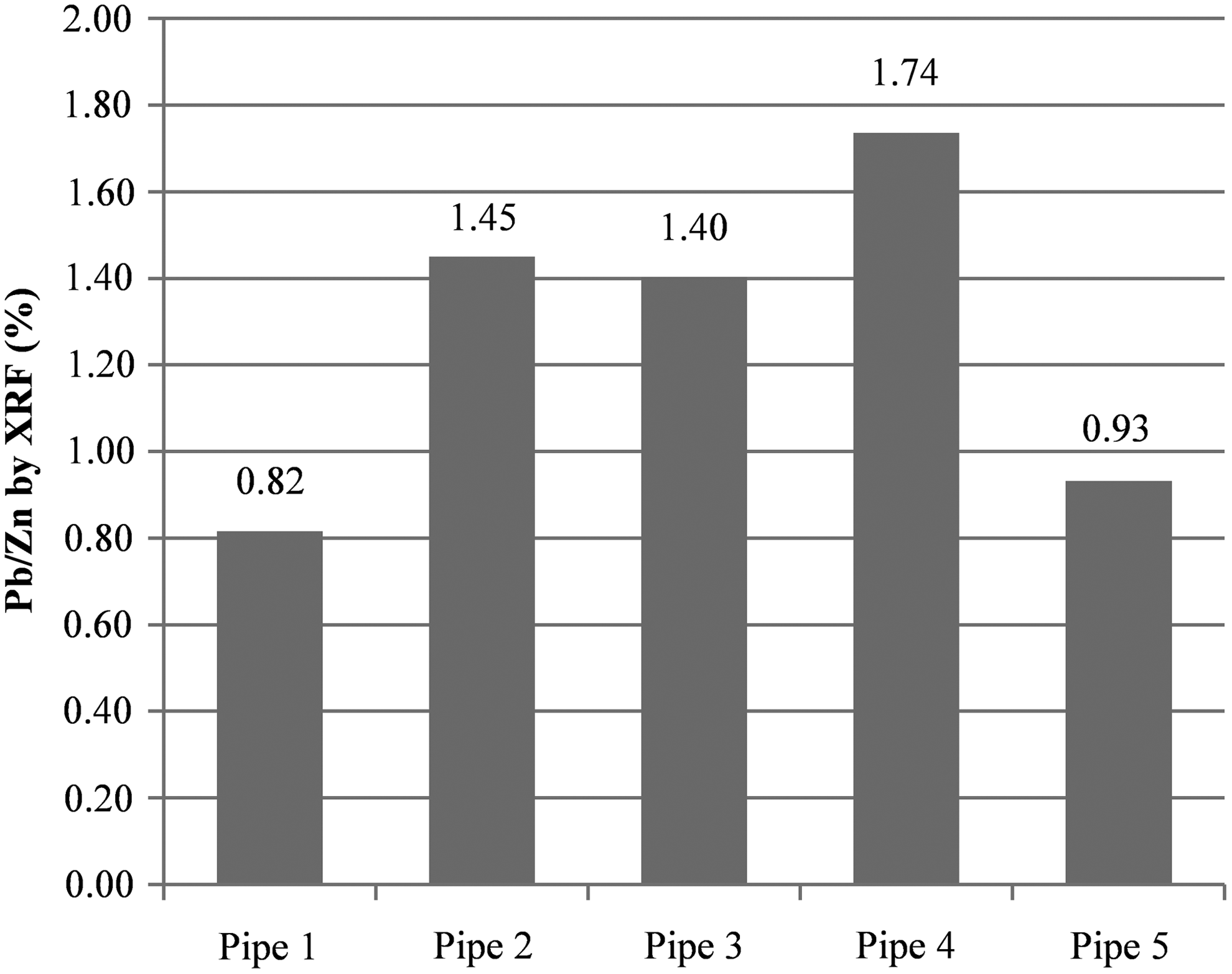
Ratio of lead (Pb) to zinc (Zn) detected on the outside of 60-year-old galvanized service lines harvested from a distribution system in Florida by X-ray fluorescence (XRF).
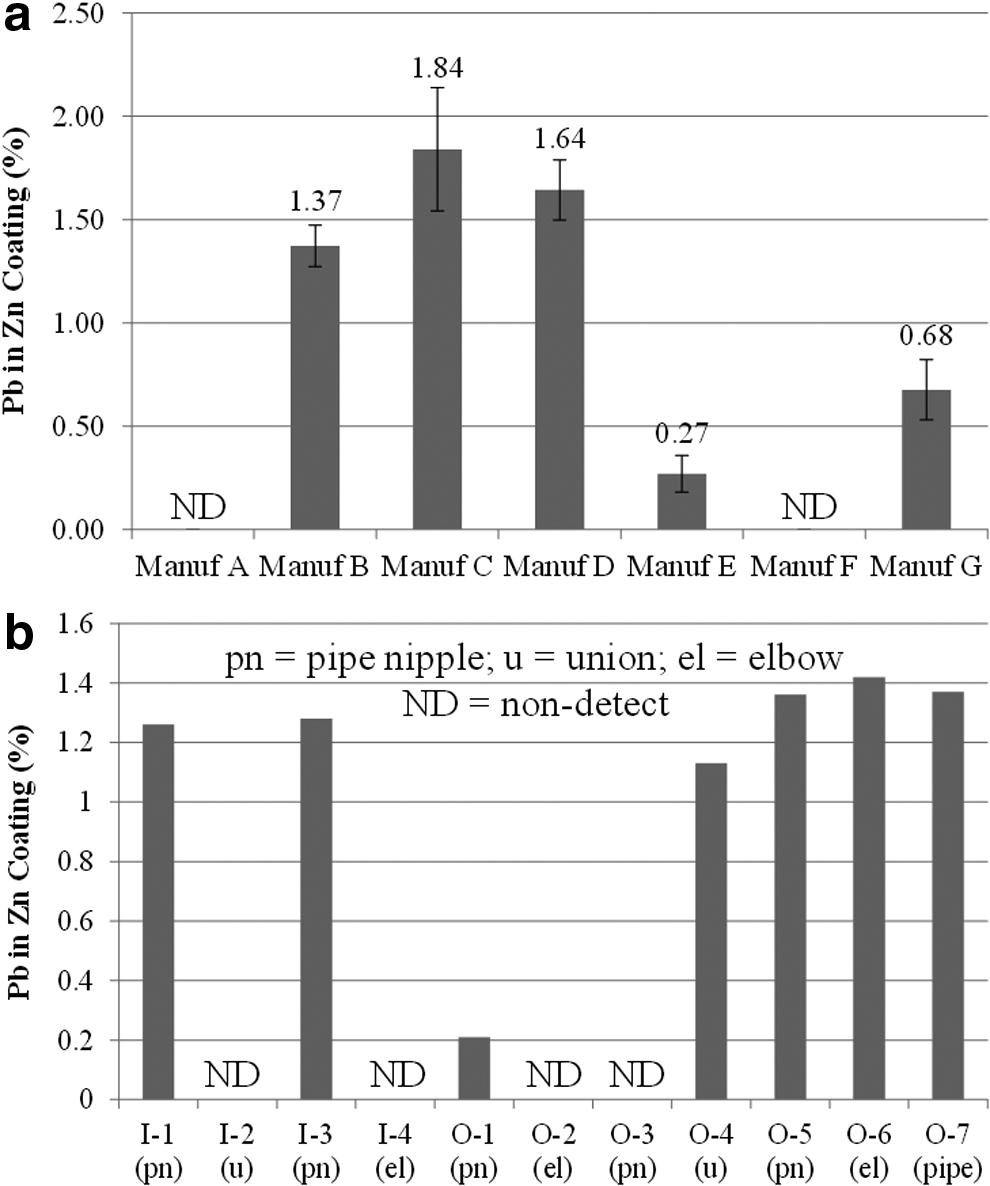
XRF results for lead (Pb) concentration in zinc (Zn) coating on galvanized pipes from several manufacturers in
For a galvanized schedule 80 steel pipe, the surface area was calculated for a 25 ft, ¾″ service line and multiplied by 1.4%. For brass, the total surface area was estimated using volumes from the literature (Maas et al., 2002) and a surface area to volume ratio of 0.008 in2/mL (Triantafyllidou and Edwards, 2007), which was then multiplied by the percentage of lead to give the effective lead area. The effective lead area was 63 cm2 for the galvanized steel service line, whereas the range of effective lead areas was only 0.03–1.1 cm2 for brass with lead levels from 0.25% to 8% lead.
From a different perspective, the total mass of lead in the galvanized steel service line would be 3.4–11.2 g over the range of coating thicknesses documented in the literature (Fox et al., 1983), compared to 100–300 g estimated to be available in pre-2014 lead-free brass (Triantafyllidou and Edwards, 2011). A key implication of these calculations is that for galvanized steel pipes, a relatively small mass of lead is concentrated in the area contacting the water through the thin zinc coating, causing a disproportionate impact. For example, 11.2 g of lead is sufficient to contaminate an entire four-person household's daily water use (100 gal/day) to the 15 μg/L action level for more than 5 years if it was all released uniformly over that period.
For galvanized steel premise plumbing installed from 1990 to 2008, lead concentration varied significantly by the manufacturer and fitting type (Fig. 3). In large (10–12″ diameter) galvanized steel pipes installed between 2005 and 2008 in a large public building in Indiana, lead concentrations on the outside of the pipe measured by XRF ranged from nondetect to 1.8% (Fig. 3a).
Dissolution and ICP-MS analysis of scale harvested from the inside of the same pipes were consistent with XRF results, with lead/zinc ratios ranging from nondetect to 2.2%. Using this more sensitive technique, for which the method detection limit (MDL) in the dissolved sample was 0.1 μg/L, cadmium was detectable in 5/18 samples and was highest when lead was highest, implying that cadmium can serve as a positive indicator of galvanized steel pipes as a lead source, but that lead contributions from galvanized steel cannot be ruled out in the absence of cadmium.
Similarly, in the 1990s household plumbing harvested from a home in Chicago, lead concentrations on the outside of the pipe ranged from nondetect to 1.4% (Fig. 3b). These results are consistent with expectations based on the use of Prime Western Grade zinc, which contains 0.5–1.4% lead, in the galvanizing process by some manufacturers (AWWA, 1996; ASTM, 2013b). The measurement of concentrations lower than 0.5% implies that some manufacturers used other grades of zinc for galvanizing. The measurement of concentrations higher than 1.4% is consistent with the fact that XRF is a surface-sensitive measurement technique, and impurities, such as lead, are known to concentrate in the (eta) layer of zinc furthest from the underlying steel (AWWA, 1996).
Lead release from galvanized steel in Florida
Exposure of sections of the harvested 60-year-old Florida service lines described above to finished water during bench-scale tests demonstrated that the zinc coating can contribute significant lead levels to water. During a 3-week dump-and-fill study, the concentration of lead in water reached a maximum concentration of 172 μg/L, more than 10 times the EPA action level. Throughout the test, the ratio of lead/zinc in water was similar to the ratio of lead/zinc expected in the zinc coating, ranging from 0.2% to 1.5% with an average of 0.5%. When lead concentration is plotted as a function of zinc concentration, the two metals are correlated with R2=0.46 (Fig. 4a).

Correlations observed between
A relatively strong correlation is also present between zinc and cadmium with R2=0.69 (Fig. 4a). For both lead and cadmium, the sample with the highest zinc concentration has a large effect on the linear fit; if this point is excluded, the R2 values change to 0.34 for lead and 0.77 for cadmium. If lead and cadmium are plotted against one another (Fig. 4b), a moderate correlation with R2=0.44 is observed. As expected based on the composition of Prime Western Grade zinc, the concentrations of cadmium are lower than lead (maximum cadmium=13 μg/L; average cadmium/zinc=0.05%). Despite the low concentrations, the relationship between the concentrations of zinc, lead, and cadmium provided further support for the use of cadmium as a fingerprint element for the presence of galvanized steel pipes.
Field sampling in the same city in Florida, which is believed to have no lead service pipes, revealed lead concentrations as high as 67 μg/L in samples collected at a high flow rate, even after several minutes of flushing. The highest lead sample had more than 3,000 μg/L zinc, giving a lead/zinc ratio of 2%, similar to that detected in the galvanized steel pipe removed from the system. The sample also contained high levels of iron (22,000 μg/L) and detectable cadmium (>0.1 μg/L). Interestingly, the sample also contained 1,000 μg/L copper, implying either the presence of brass or that deposition corrosion is occurring. In some cases, lead and zinc concentrations were correlated; in one particular home, samples collected at a high flow rate demonstrated a very strong correlation with R2=0.976, and the presence of detectable cadmium (>0.1 μg/L) indicated galvanized steel pipes as a lead source.
Role of flow rate in lead release from galvanized steel pipes
Sequential (profile) sampling at a home in Chicago, IL, revealed that lead release from galvanized steel pipes is sensitive to changes in flow rate and removal of the aerator (Fig. 5). To put the flow scenarios reported here in the context of consumer water use, the high flow sample with the aerator would be representative of using a kitchen tap at its maximum flow rate, such as when filling a large pot or pitcher. The high flow samples without the aerator are not typical of kitchen use, but represent the flow rates that can be achieved from nondrinking taps such as Roman bath spouts and laundry room faucets (Clark et al., 2014).

Plots of lead (Pb; gray circles) and cadmium (Cd; black triangles) concentrations as a function of the zinc (Zn) concentration in water for a home in Chicago using
This particular home contained multiple lead sources, including both a lead service line and galvanized steel premise plumbing. Despite this, both lead and cadmium concentrations in water were correlated to the zinc concentration in water for all samples collected (Fig. 5a), implying that the zinc coating on the premise pipes is a dominant source.
Furthermore, when only samples taken at the highest flow rate with the aerator removed are included, the correlation becomes even stronger (R2>0.90; Fig. 5b). One possible reason for this is the dominance of particulate metal release in these samples (Clark et al., 2014), and it is expected that elevated lead levels in this home are the result of scale being scoured from galvanized steel pipe walls at a high flow. For example, the sample with the highest lead concentration (63 μg/L, 0% soluble) also contained high levels of particulate zinc (600 μg/L, 10% soluble) and iron (1,160 μg/L, 0% soluble). The particulate copper concentration in this sample was also elevated (44 μg/L, 2% soluble), an observation consistent with the scouring of copper-containing deposits from the galvanized pipe wall. This result implies that deposition corrosion could play a role in metal release to water for this home, which was known to have experienced a recent partial lead service pipe replacement with copper.
Household correlations of lead, cadmium, and zinc at a high flow rate
Strong correlations between lead, cadmium, and zinc found in Chicago were also present in field samples from Washington, DC and Providence, RI (Clark et al., 2014). Of 12 homes with lead service lines sampled in Washington, DC, five demonstrated a correlation between lead and zinc (>0.8) at a high flow with no aerator (Fig. 6). Similarly, 4 of 12 homes with lead service lines sampled in Providence showed the same correlation (R2>0.7; Fig. 6a). Correlations were also found between zinc, cadmium, iron, and copper in some homes (Fig. 6a). Both cadmium and iron could be expected if release is due to galvanized steel pipes, and the correlation to copper could be a result of deposition corrosion effects.

It is important to note that for many of these homes, galvanized steel was not indicated as a lead source by co-occurrence of cadmium. Only 8% of samples in both Washington, DC and Providence contained detectable (>0.1 μg/L) cadmium. Among the samples with nondetect cadmium were several extremely high lead samples (1,800 μg/L in Washington, DC and 7,700 μg/L in Providence), which are believed to result from scouring of particles from the lead service line, as well as samples containing high levels of both lead and tin believed to result from dislodged solder particles (Clark et al., 2014).
Lead release from galvanized steel pipes in schools
Analysis of results from 92 samples collected from different taps in a Washington, DC school did not demonstrate a consistent correlation between zinc and lead or cadmium, as expected given variability in coatings. However, when samples were separated into two groups based on the detection limit for cadmium of 0.1 μg/L, cadmium>MDL (N=44), and cadmium<MDL (N=48), the detectable cadmium group had an average lead concentration of 194 μg/L, more than 10 times higher than the average lead concentration of the nondetect cadmium group (18 μg/L). This result implies that the presence of a galvanized steel pipe, as flagged by the presence of cadmium as a fingerprint, is associated with elevated lead in water.
Galvanized steel pipe and potential links to EBL
In 2008, a case of childhood EBL in Washington, DC led to water sampling, which revealed extremely high lead levels in the child's drinking water (nearly 1,000 μg/L). Further analysis revealed that the concentration of lead in water, which passed through galvanized steel pipes, was highly correlated to the zinc concentration (Fig. 7). Moreover, zinc and cadmium were correlated, providing a fingerprint for lead release from galvanized steel and implying that the galvanized steel pipe contributed a significant fraction of the lead in water in this case.
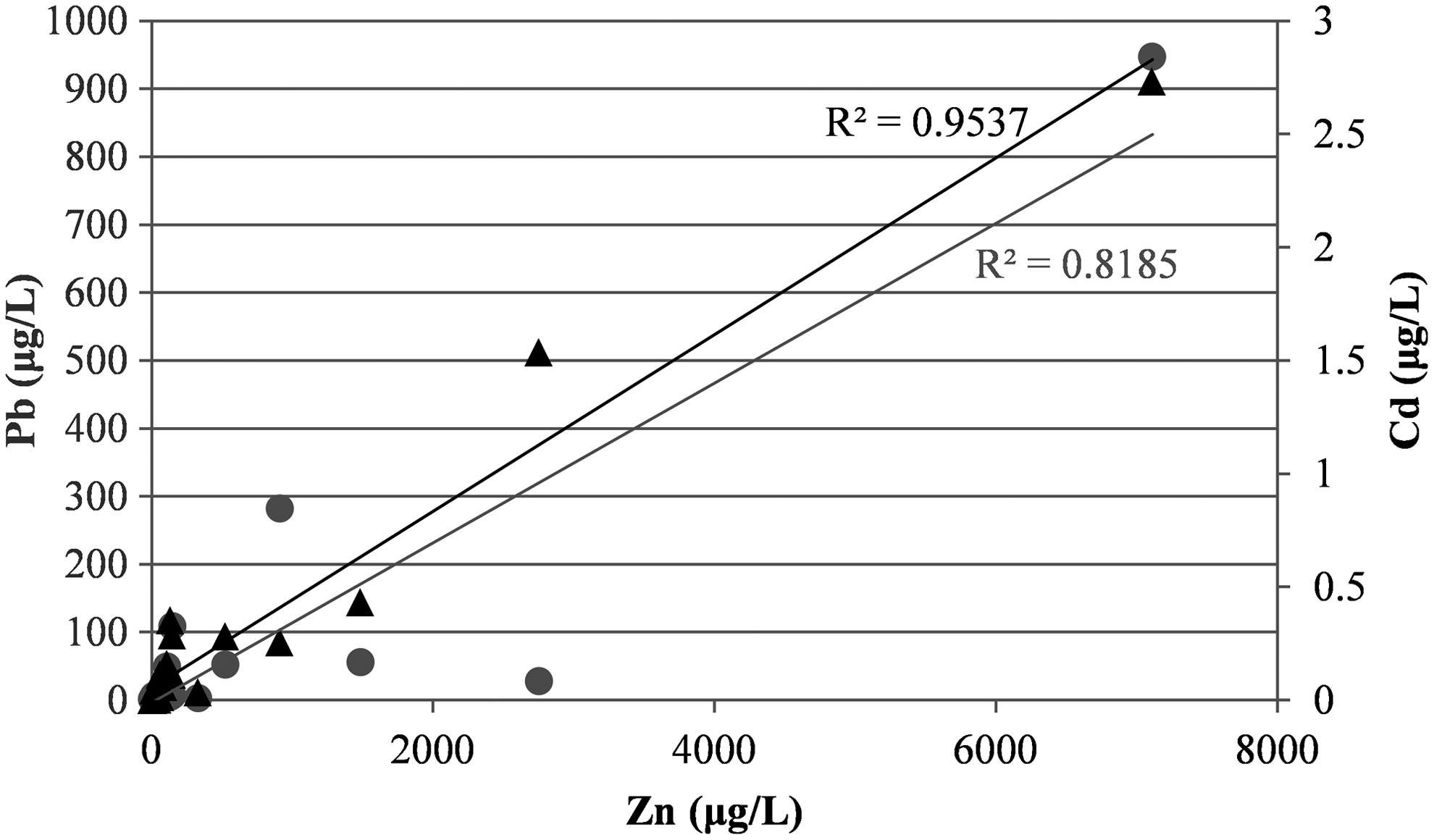
Water samples taken from a home in Washington, DC where a child was found to have elevated blood lead (EBL), demonstrate a strong correlation between both lead (Pb) and zinc (Zn) (gray circles) and cadmium (Cd) and Zn (black triangles), implicating galvanized iron as a possible source of lead in water.
While it is premature to draw any links between the very high lead in water and this particular case of EBL, it reinforces the importance of public health warnings provided by the local utility to consumers in DC homes with galvanized iron (DC Water, 2009; HDR Engineering, Inc., 2009), and further, the levels of lead detected in this water are far in excess of those known to cause EBL in children and infants (Triantafyllidou and Edwards, 2011; Triantafyllidou et al., 2014).
Relative importance of direct and indirect lead release
Although recent work has appropriately drawn attention to galvanized steel pipes as an important source of lead in drinking water (HDR Engineering, Inc., 2009; Wasserstrom, 2014), the HDR work has focused exclusively on the indirect release of lead through seeding. While lead seeding can and does occur in some cases, it is important to not overlook direct release of lead from the zinc coating itself. For galvanized steel pipes harvested from a home in Chicago, IL, with a lead service line, which serves as an upstream lead source, a comparison of the concentration of lead on the inside of the pipe compared to the outside can provide insight into the relative contribution of direct and indirect sources of lead release (Fig. 8).
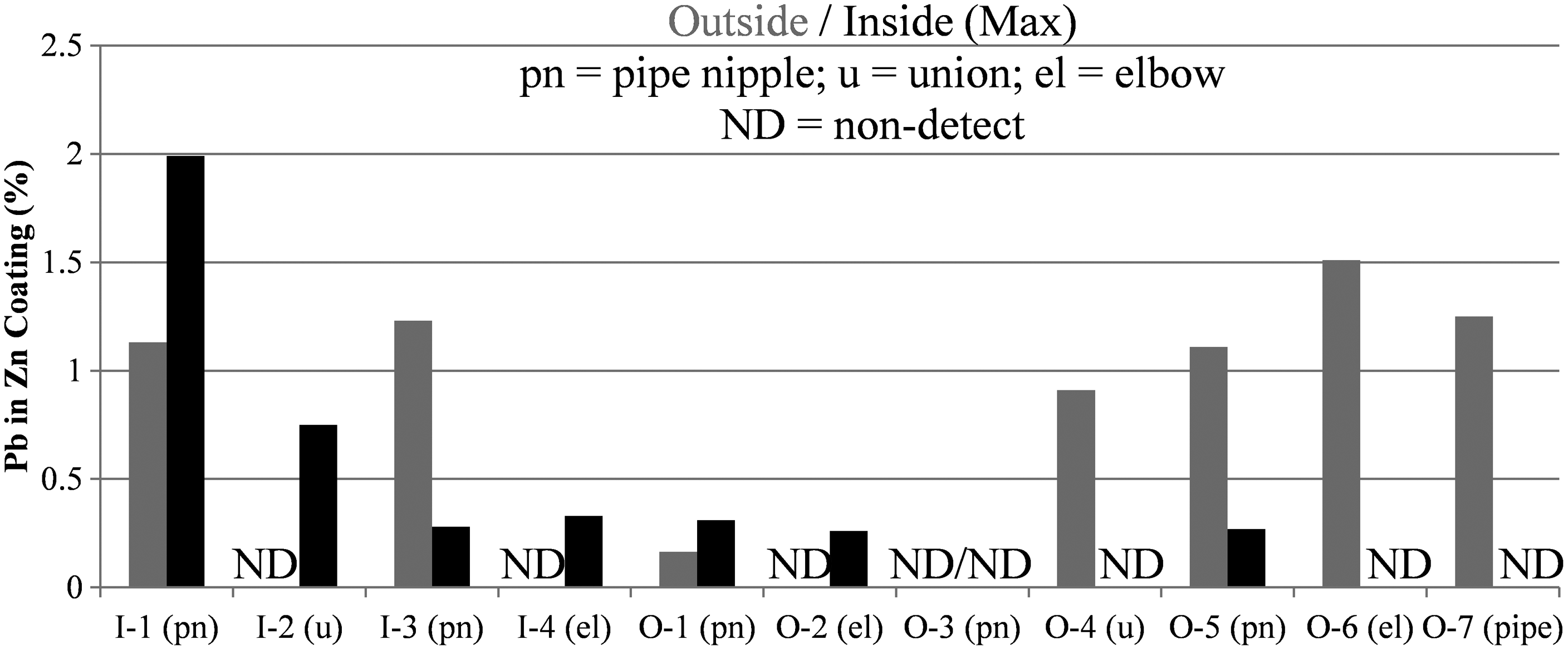
For pipes harvested from a home in Chicago (Fig. 3b), the concentration of lead (Pb) by XRF in the zinc (Zn) coating (gray) is compared to the maximum concentration of Pb measured on the inside by XRF (black), which represents a mix of the remaining Pb from the coating and any seeded lead.
The concentration on the outside of the pipe represents the concentration of lead in a new pipe coating available for direct release, while the concentration on the inside reflects residual direct release lead and any seeded lead available for indirect release. In this home, the concentration of lead by weight detected by XRF on the inside of the pipe was never more than 2% and was on average less than 1%, which is similar to the concentration found on the outside of the pipe (Fig. 8). This provides an example of a case where direct release of lead dominates relative to indirect release and highlights the need to consider both mechanisms when evaluating lead-in-water contributions from galvanized steel pipes.
Conclusions
Analysis of pipe surfaces, bench-scale studies, and field samples for lead leaching from galvanized steel pipes yielded the following conclusions:
• Surface analysis of galvanized steel pipe coatings removed from modern buildings revealed surface concentrations up to 1.8% lead, which is roughly consistent with the composition of Prime Western Grade zinc. • Bench-scale tests with harvested galvanized steel pipes revealed that concentrations as high as 172 μg/L lead could be released from galvanized steel pipes under dump-and-fill conditions and that lead and cadmium are correlated to zinc when galvanized steel pipes are the source of lead release to water. • Samples collected from homes in Washington, DC, Providence, RI, Chicago, IL, and a city in Florida revealed strong correlations between cadmium, lead, and zinc indicative of galvanized steel as a significant source of lead in these homes. • The above correlations were strongest at high flow rates, especially without aerators, implying that particulate release from zinc coatings can be the dominant source of lead at these flow rates • When samples collected at a school in Washington, DC were divided into two groups based on a cadmium threshold of 0.1 μg/L (the MDL for cadmium by ICP-MS), the samples with detectable cadmium had an average lead concentration 10× higher than the samples without cadmium, implicating galvanized steel pipes as a significant source of lead in this school. • Although indirect lead release through lead seeding onto galvanized steel pipes can occur under some conditions, considering only this mechanism gives an incomplete picture of lead release from galvanized steel pipes, and the contribution of direct release from the zinc coating to lead in water should be considered when the overall risk of lead exposure from galvanized steel pipes is estimated.
Footnotes
Acknowledgments
The authors acknowledge the financial support of the National Science Foundation under NSF CBET SusChEM GOALI 1336616 and the Graduate Research Fellowship Program (GRFP). The authors would also like to acknowledge the financial support of the Robert Wood Johnson Foundation (RWJF) under the Public Health Law Research program and the Abel Wolman Fellowship (American Water Works Association). Opinions and findings expressed herein are those of the authors and do not necessarily reflect the views of the NSF, RWJF, or AWWA. The authors would further like to thank Yanna Lambrinidou at Parents for Nontoxic Alternatives (PNA), the DC Department of the Environment (DDOE), and the homeowners who participated in the field sampling studies in Washington, DC, as well as the DC Public Schools (DCPS), Eastern High School, and the student sampling volunteers at the Washington International School (WIS).
Author Disclosure Statement
No competing financial interests exist.