




Abstract
Abstract
Organic dyes are relatively resistant to conventional treatment methods and some of them produce carcinogenic by-products, making necessary the development of technologies for the removal of dyes and their breakdown products in wastewater. In this study, the influence of the addition of single or fractionated aliquots of H2O2 on the removal of indanthrene blue dye contained in aqueous solutions through the UV/H2O2 system was studied. Experimental parameters studied were temperature, pH, and H2O2 concentration, using single and fractional H2O2 additions. Maximum efficiency was observed at the highest H2O2 concentration in acid media. Fractional addition of H2O2 has a positive influence on the overall efficiency of the oxidative processes. Treatment carried out at 40°C, pH 5, and 1,500 mg/L of H2O2 (fractional addition) resulted in a drastic enhancement of the dye degradation/mineralization rate, reducing 98.6% chemical oxygen demand, 100% color, 92% total organic carbon, and 99% H2O2, demonstrating that this system was effective in the treatment of effluent containing indanthrene blue dye.
Introduction
T
Dyes contribute significantly to environmental pollution, especially in water resources, hindering the penetration of sunlight and damaging the photosynthetic metabolism of some species such as marine microalgae (cyanobacteria and chlorophyte). Moreover, they are potentially carcinogenic (Salgado, 2009).
More than 10,000 different types of dyes and pigments are used worldwide in the textile industry. Approximately 20% of these dyes are unfixed in the dyeing stages and are lost in the textile wastewater, thus generating an environmental problem when discarded inappropriately (Guarantini and Zanoni, 2000; Park et al., 2007; Parshetti et al., 2010). In addition, these dyes are relatively resistant to conventional treatment methods and some of them produce carcinogenic by-products. Therefore, it is necessary to develop technology systems for the removal of dyes and their breakdown products in wastewater.
Dye is composed of a chromophore group and a group responsible for fixing the dye to a fiber structure. Between the groups of dyes, determined based on the chromophore groups, the Society of Dyers and Colourists (1976) classifies the dyes and pigments in 26 types such as azina, azo, anthraquinone, nitro, thiazine, and others. About 20–30% can be identified, of which azo (70%) and anthraquinone (15%) dyes are most commonly used (Moussavi and Mahnoudi, 2009).
Anthraquinone dyes are mainly used in the coloration of cotton and cellulose fibers (Novotny et al., 2006) and are applied as primary and secondary dyes in trichromatic compositions (Epolito et al., 2005). They pose serious health risks not only from their presence in the environment but also because of their secondary products, such as potentially carcinogenic aromatic amines (Novotny et al., 2006). The indanthrene dyes fall into this classification, and there are a few studies addressing the removal of this type of dye and its degradation reaction intermediaries (Hihara et al., 2002; Roessler and Crettenand, 2004; Pupo et al., 2013). Therefore, the importance of the investigations studying routes of treating wastewater containing anthraquinone-based dyes is evident, according to the environmental and health risks that they present (Fanchiang and Tseng, 2009).
Biological treatments, the most widely utilized, do not present a complete solution to the problem, owing to the low biodegradability of many dyes (Galindo et al., 2001). Techniques such as adsorption on wheat bran (Çiçek et al., 2007), adsorption on activated carbon (Órfão et al., 2006), coagulation/flocculation (Lee et al., 2006), ultrafiltration (Zaghbani et al., 2007), and reverse osmosis (Sostar-Turk et al., 2005) have been reported for the removal of textile dyes. However, they are more expensive than biological processes and only realize the phase transfer of the pollutant requiring postprocessing of solid wastes generated or the regeneration of the adsorbent material.
Owing to the deficiencies presented by conventional treatment systems, new treatment alternatives have been proposed. Very promising alternatives are the advanced oxidation processes (AOPs), which are characterized by generating highly reactive oxygen radicals in aqueous solution, particularly the hydroxyl radical (•OH) from the combination of different chemical oxidants, with or without a radiation source. Hydroxyl radicals are not selective and attack all organic molecules. The great advantage of these processes is their destructive character, that is, the contaminant is not simply transferred from the phase, but rather it is degraded through a series of chemical reactions (Benitez et al., 2002; Al-Qodah et al., 2007).
Hydrogen peroxide (H2O2) is one of the most common sources of •OH radicals, either by its catalytic decomposition in the presence of metal ions or semiconductor oxides, or by irradiation with ultraviolet light (UV). •OH radicals are extremely reactive and are strong oxidants (E = 2.8 V), which are able to mineralize organic contaminants by successive oxidation reactions (Gogate and Pandit, 2004; Raj and Quen, 2005; Salgado, 2009).
Compared to other AOPs such as Fenton, ozone, UV/O3, UV/TiO2, and so forth, the photolysis of H2O2 has some advantages such as complete water miscibility, stability, and commercial availability. Moreover, H2O2 presents no problems for phase transfer, and the investment costs are relatively low compared to other processes (Raj and Quen, 2005).
Thus, in this article, we study the influence of the addition of single and fractionated aliquots of H2O2 on the removal of indanthrene blue dye contained in aqueous solutions through the UV/H2O2 AOP. The variables studied for the synthetic wastewater treatment were as follows: temperature, pH value, and H2O2 concentration.
Materials and Methods
For this article, we used the dye, indanthrene blue (CAS Number: 81-77-6), which has a melting point of 470–500°C, a pH value of 8, maximum absorbance at 290–300 nm, solubility of 0.1 g/100 mL in water at room temperature, and is soluble in sulfuric acid as well as in alkaline solutions. Figure 1 shows the chemical structure of indanthrene blue. The complex aromatic molecular structure of indanthrene blue makes it very stable and difficult to degrade.
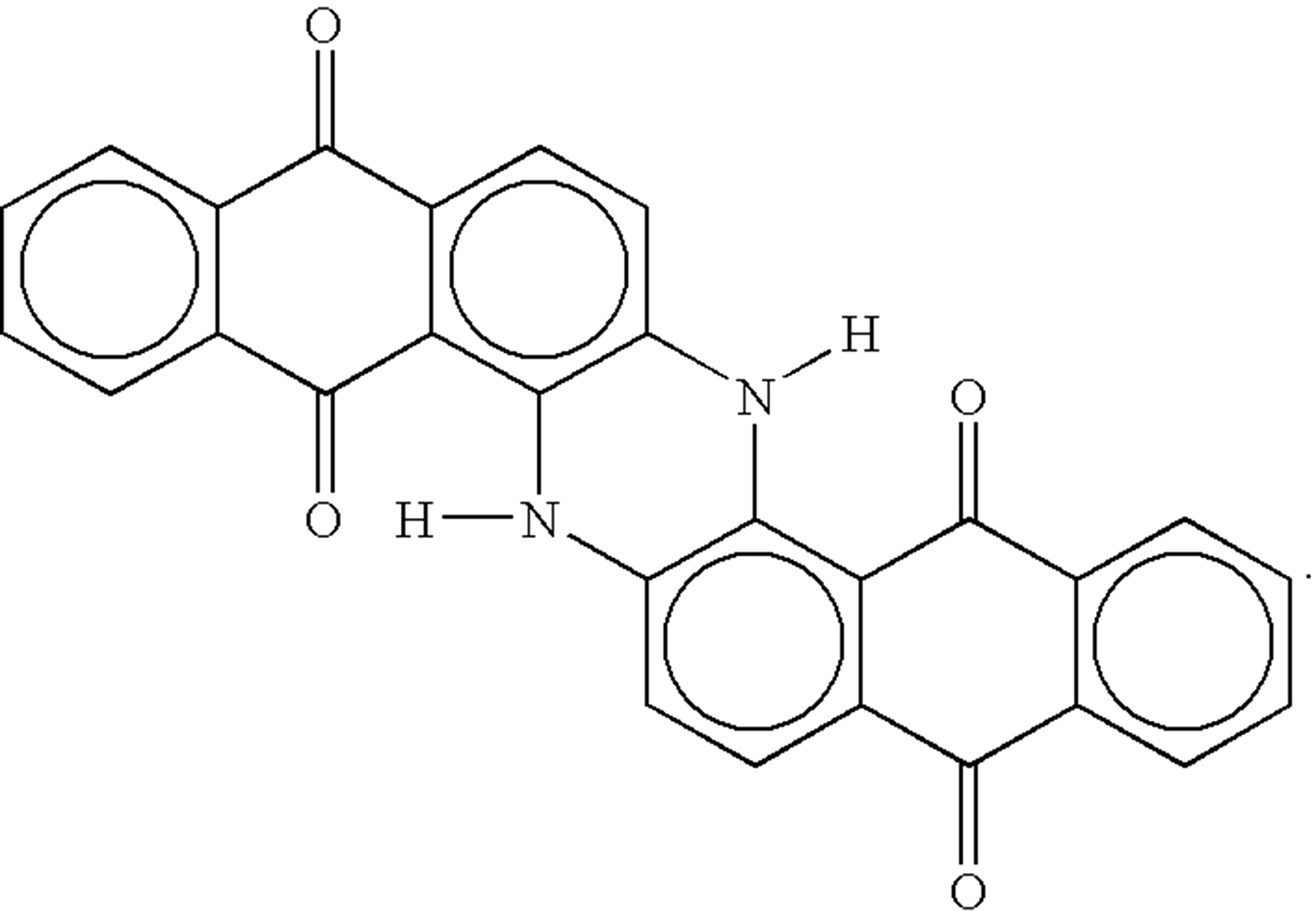
Chemical structure of indanthrene blue dye.
All experiments were carried out in a thermostatic photochemical reactor with a capacity of 0.5 L, coupled to an ultrathermostatic bath (Nova Ética, Brazil), and operated in batch mode. A mercury vapor lamp (125 W without the protective bulb) was used as the radiation source, which was placed into a quartz bulb and immersed into the solution (Fig. 2).
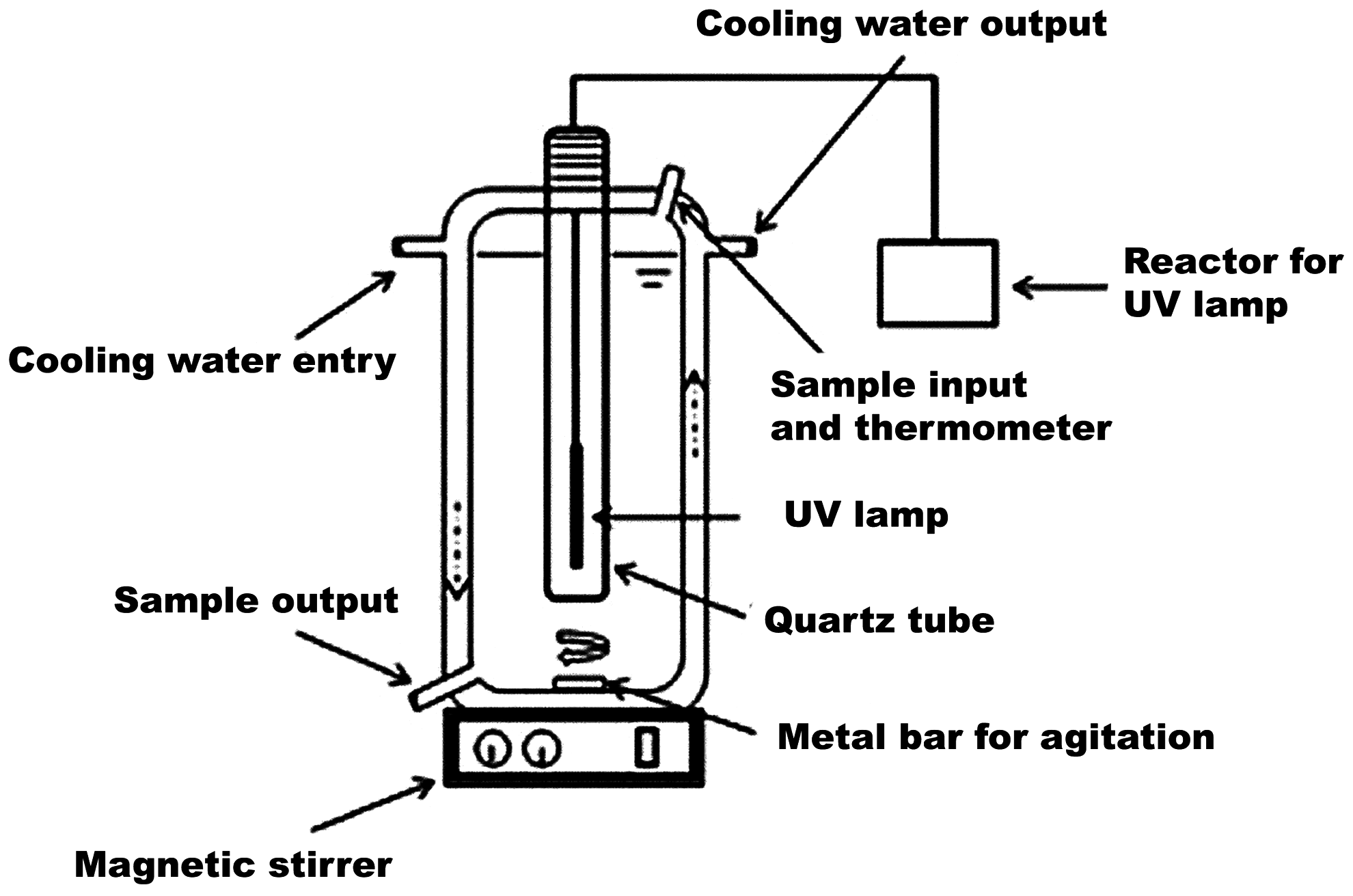
Schematic representation of photochemical reactor used for UV/H2O2 treatment of indanthrene blue dye solutions (60 mg/L). UV, ultraviolet light.
All treatments were held under agitation at 500 rpm, provided by a magnetic stirrer, with oxygenation of 10 L/min by an air compressor. The variants of the treatment were temperature (20°C, 30°C, and 40°C), which was maintained by a cooling jacket, pH value (5, 7, and 9), adjusted by HCl or NaOH solutions (0.5 M), the concentration of H2O2 (500, 1,000, and 1,500 mg/L) (Cisneros et al., 2002; Martins et al., 2011), and dye concentration (60 mg/L). The treatment time was set at 60 min. The determination of color, total organic carbon (TOC), chemical oxygen demand (COD), pH value, and residual peroxide was performed after each treatment of the samples.
The determination of COD was performed according to the standard American Public Health Association (APHA) method (Alpha, 2005). The ampoules were placed into a digester (HACH DRB 200), with further reading of the absorptivity at a wavelength of 600 nm in a HACH DRB 5000 spectrophotometer. The values of TOC were determined using the test tube HACH method No. 10128.
The pH value of the obtained effluent sample was determined by a pH meter (PM608; Analion). The determination of color was carried out according to standard methodology, CPPA (1975) modified (CPPA, 1975; Queissada, 2009), using a spectrophotometer (HACH DRB 5000).
H2O2 concentration was determined according to the procedure adapted from Queissada (2009), using a HACH DRB 5000 spectrophotometer. The H2O2 concentration in the sample was obtained by interpolation of absorbance, which was measured in the sample from the calibration curve that was previously constructed.
After determination of the best conditions of variables treatment, a more detailed study was performed in terms of H2O2 use. Therefore, the addition of the H2O2 was performed at a single rate (at the start of treatment) or with fractional rates (three fractions, every 20 min and six fractions, every 10 min).
Results and Discussion
Treatment using single addition of H2O2
All experiments were performed in triplicate for increased reliability of the results. Treatments were performed at pH 5, 7, and 9, with H2O2 concentrations of 500, 1,000, and 1,500 mg/L, and temperature variation of 20°C, 30°C, and 40°C.
The effect of UV radiation on the degradation of the dye, without adding hydrogen peroxide, was initially evaluated before starting the study of other variables. The effect of photolysis of indanthrene blue dye in the absence of H2O2 is presented in Figure 3. Removals of 0.8% and 0.6% for color and COD were observed, respectively. Thus, the UV radiation alone is not capable of degrading the dye in a considerable rate and the addition of H2O2 is needed to enhance the process.

Decrease of color and chemical oxygen demand (COD) of indanthrene blue dye solution (60 mg/L) as a function of treatment time without the addition of hydrogen peroxide.
Effect of H2O2 concentration
Discoloration and degradation of indanthrene blue dye increased with increasing concentration of H2O2 (Table 1). The use of higher concentrations of H2O2 in conjunction with UV light increases degradation and discoloration of the colorant, owing to higher amounts of •OH radicals generated by the photolysis of H2O2 (Salgado, 2009).
COD, chemical oxygen demand; UV, ultraviolet light.
The discoloration of the dye solution occurs due to the reaction between the dye molecule and the hydroxyl radicals, which are simultaneously generated in a solution from hydrogen peroxide, UV irradiated [Eq. (1)].
The hydroxyl radicals are very strong oxidizing agents, they can react with the dye molecules producing intermediates, which can cause discoloration of the initial solution. At higher hydrogen peroxide concentrations, the solution consumes •OH radicals to produce peroxyl radicals—
Effect of pH
Some reports have already shown that aqueous solutions containing dyes can be discolored more efficiently by the H2O2/UV process in acid media (Hihara et al., 2002; Rathi et al., 2003; Aleboyeh et al., 2005; Rodriguez et al., 2007). The results are listed in Table 1 and show that the lower the pH value, the higher the reduction of both color and COD, also highlighting the faster consumption of H2O2 in acidic conditions. This behavior is rationalized by considering that the reduction potential of the hydroxyl radical decreases with increasing pH, and in acid pH values (i.e., pH 3), its reduction potential is 2.80 V, whereas at pH 7.0, it drops to 1.80 V (Aleboyeh et al., 2005). This explains why the best results in Table 1 were obtained under acidic conditions.
Furthermore, according to Rathi et al. (2003), the degradation rates of organic compounds become faster at acidic pH compared to neutral or alkaline pH systems. At acidic pH values, the •OH radical is the predominant reactive oxidant, but at alkaline pH values, weaker hydroperoxyl radicals [Eq. (2)] are formed through the reaction of hydroxyl radicals with H2O2, which decreases the efficiency of the oxidation process, and the dissociated hydroperoxy anion [Eq. (3)] will consume the hydroxyl radicals, as shown by reactions in Equations (4) and (5):
The pH of the solutions decreases after the treatments, indicating the formation of carboxylic acids through the oxidation of the organic compounds present in the solutions (Mattos et al., 2003).
Effect of temperature
Rodriguez et al. (2007) studied the effect of temperature on the discoloration of aqueous solutions containing indigo carmine dye in an acidic medium and realized that this variable does not cause a significant effect on the discoloration or degradation of the dye. This indicates that the activation of the UV/H2O2 process occurs by means of a photochemical pathway and not through a thermal process.
Table 2 shows the reduction in COD, color, and H2O2 upon varying the temperature of the treatment in an alkaline medium (pH 9). From Table 2, it is possible to observe a slight increase in the reduction of COD and color with increasing temperature. A similar behavior was noted at pH values of 5 and 7. This occurs because increasing the temperature decreases the energy needed to reach the activation energy of the reaction, resulting in an increase in the rate of the oxidation reaction.
Pearson correlation
The Pearson linear correlation between COD × temperature, color × temperature (relative to pH shift), COD × pH, and color × pH (relative to the temperature change) was used to observe a possible relationship between these parameters. The results of these studies are listed in Table 3.
Pearson linear correlation showed a significant positive correlation between the reduction of COD and temperature, that is, when the correlation coefficient (r) is close to 1, it indicates the existence of a direct correlation between the variables. Thus, the higher the temperature increases, the greater the COD reduction. Similar behavior was obtained between the concentration of H2O2 and the color reduction.
In the correlation between pH and reduction of COD, a significant negative correlation was observed, indicating an inverse correlation, namely, the increase in pH causes a decrease in the COD reduction.
Treatment with fractionated aliquot of H2O2
From the data in Table 2, the highest rates of reduction of COD, color, and H2O2 occurred at 40°C using 1,500 mg/L of H2O2 at pH values of 5, 7, and 9. Thus, the effect of the use of fractional aliquots of H2O2 was studied using these optimized conditions. The aliquot of H2O2 was fractionated into three parts (3 × 375 mg/L), which were injected every 20 min throughout the treatment. This procedure was performed to optimize the treatment of the H2O2/UV system for the possible degradation of compounds that were not degraded during the treatment with a single aliquot of H2O2 and to avoid the formation of hydroperoxyl radicals, with a consequent decrease in the •OH concentration.
Results of the reduction processes for COD and color, after UV/H2O2 treatment using a fractional aliquot of H2O2 (Table 2), showed that the H2O2 was almost completely consumed (99%) in all treatments, independent of the pH value that was used. This is extremely important, as residues of H2O2 can be toxic when this effluent is discarded into aquatic environments (Mattos et al., 2003).
The greatest COD (98.6%) and color (100%) reductions occurred with treatment parameters using pH 5 and aliquots of 375 mg/L H2O2. Nevertheless, the process for the same conditions, but using a single aliquot, was to some extent less effective (96.3% COD reduction). This may be attributed to the fact that the initial concentration of H2O2 (1,500 mg/L) at the beginning of the treatment becomes somewhat excessive, decreasing the efficiency of the process (Fig. 4). Fernandez et al. (1999) evaluated the addition of H2O2 concerning the rate of mineralization of the Orange II dye. An increase in the rate of mineralization with the gradual addition of peroxide during elapsing of reaction was observed. Rate of H2O2 addition can influence the mineralization of the target compound. These authors verified an increase in the rate of mineralization with the progressive addition of peroxide in the reaction, rather than adding it at the beginning of the reaction. Such behavior may have been raised by the fact that H2O2, even in optimum conditions of operation, can act as a •OH radical-capturing source [Eq. (2)], and the intermediaries generated can compete with the dye for the •OH radical.
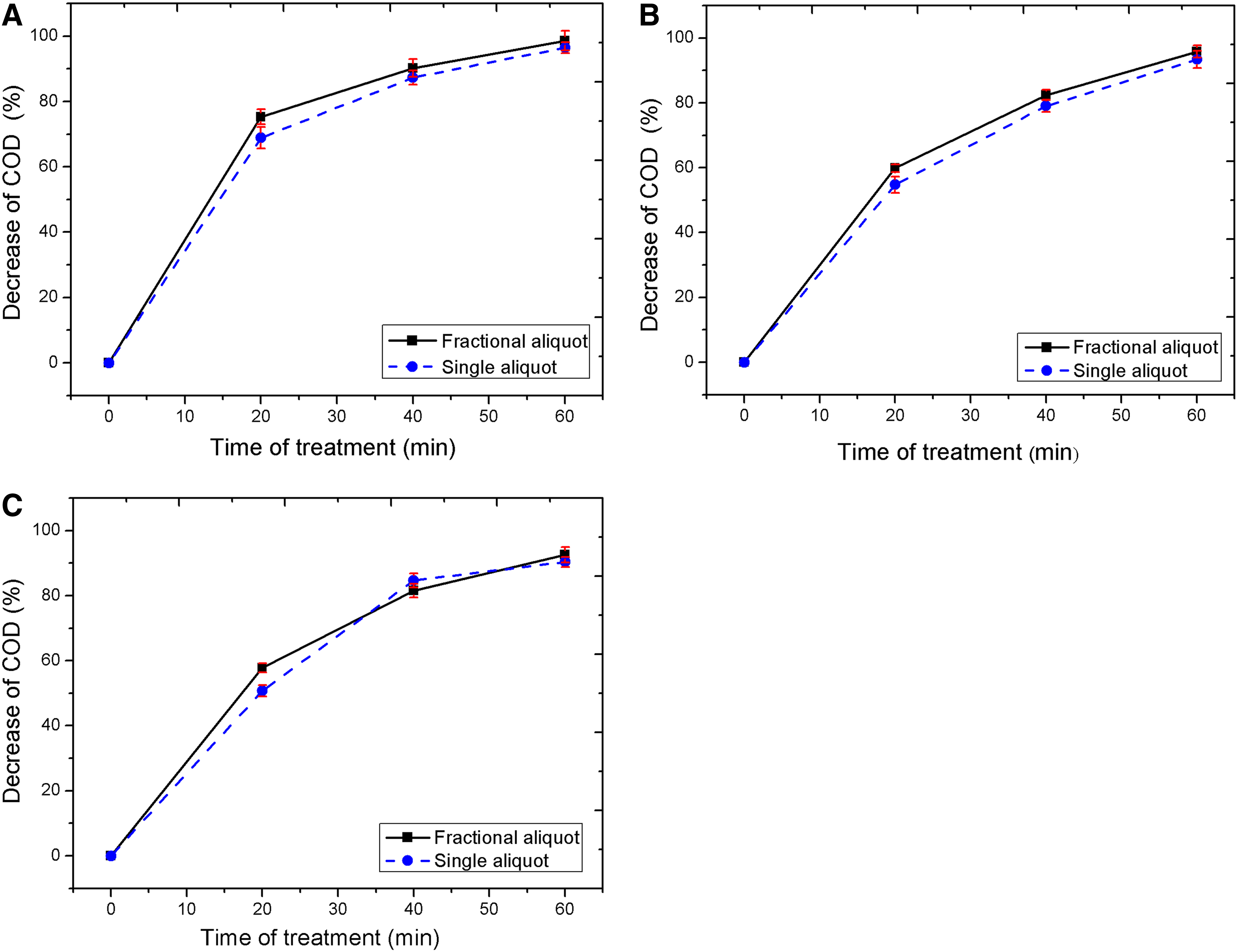
Decrease of COD using a single aliquot and fractional aliquot of H2O2 (1,500 mg/L) in UV/H2O2 treatment of indanthrene blue dye solutions (60 mg/L) at 40°C.
Results are shown in Figure 5. Through the graphs, it can be observed that COD reduction occurs rapidly during the first 20 min of the treatment, with a lower reduction rate in the subsequent minutes of treatment. It is believed that the photolysis of H2O2 molecules in •OH radicals [Eq. (1)] performed the degradation of much of the dye in the first 20 min, producing intermediaries. The intermediaries generated can present a more complex chemical structure, which hampers their degradation, and compete with the dye molecules for the •OH radicals. This would explain why in the final 40 min of the treatment, the COD decrease occurred slowly, even with the additions of H2O2.
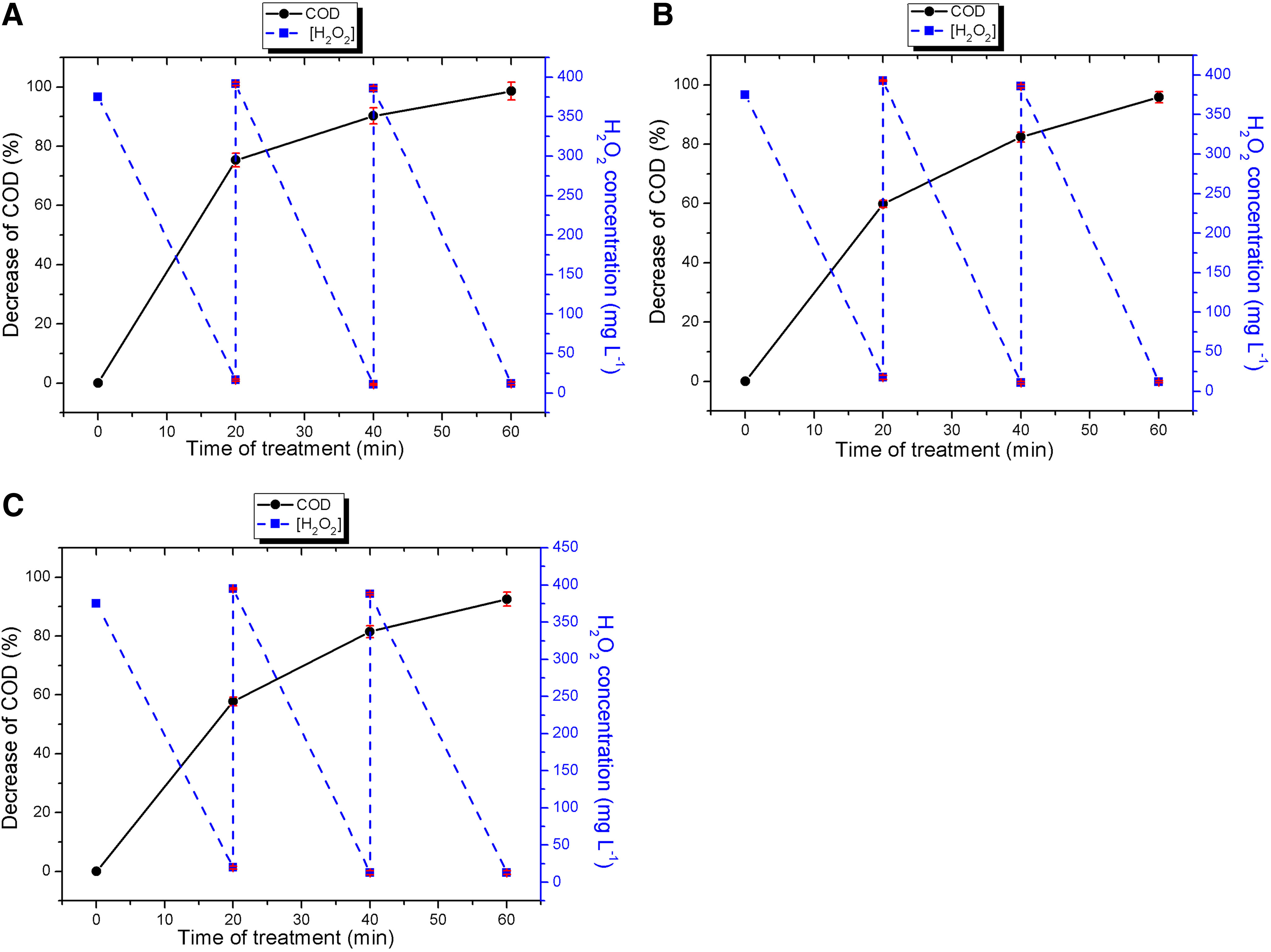
Reduction kinetics of COD and H2O2 during treatment of indanthrene blue dye solutions (60 mg/L) with UV/H2O2 (fractional rate) [1,500 mg/L] at 40°C.
In contrast, the TOC is a direct measurement of the amount of carbonaceous organic matter in an effluent sample. In this study, we selected the treatments that showed the highest reduction of COD, color reduction, and reduction of H2O2 (i.e., pH 5, 7, and 9, using a fractioned aliquot of 1,500 mg/L H2O2 at 40°C).
Results in Table 4 indicate a larger TOC reduction in acidic pH (pH 5) than in neutral or alkaline pH. TOC reductions of 92.0%, 72.6%, and 61.3% were obtained using the pH values of 5, 7, and 9, respectively. The reduction values of TOC are similar to the results obtained for the reductions of COD and color, confirming that there was more degradation of the dye in this pH value (pH 5) and that the UV/H2O2 oxidative process was effective in the degradation of organic matter.
TOC, total organic carbon.
Best conditions of the UV/H2O2 treatment
To perform the optimized process, we chose the treatment that used 1,500 mg/L H2O2/UV, pH 5, and a temperature of 40°C, because these conditions showed the best results in the reduction of COD (98.6%), color reduction (100%), reduction of TOC (92.0%), and reduction of H2O2 (99%).
To perform a more detailed study of the treatment, samples were taken every 10 min (6 × 250 mg/L). It can be seen from Figure 6 that a COD reduction of over 67% was achieved in the first 10 min of treatment. According to the results, it was possible to degrade more than 85% of the COD in the first 20 min of treatment, about 11% more when using aliquots of 375 mg/L of H2O2, also increasing to ∼91% in the middle of the treatment. In the period from 30 to 50 min, the rate of degradation decreased until it was almost constant in the 50–60-min range.
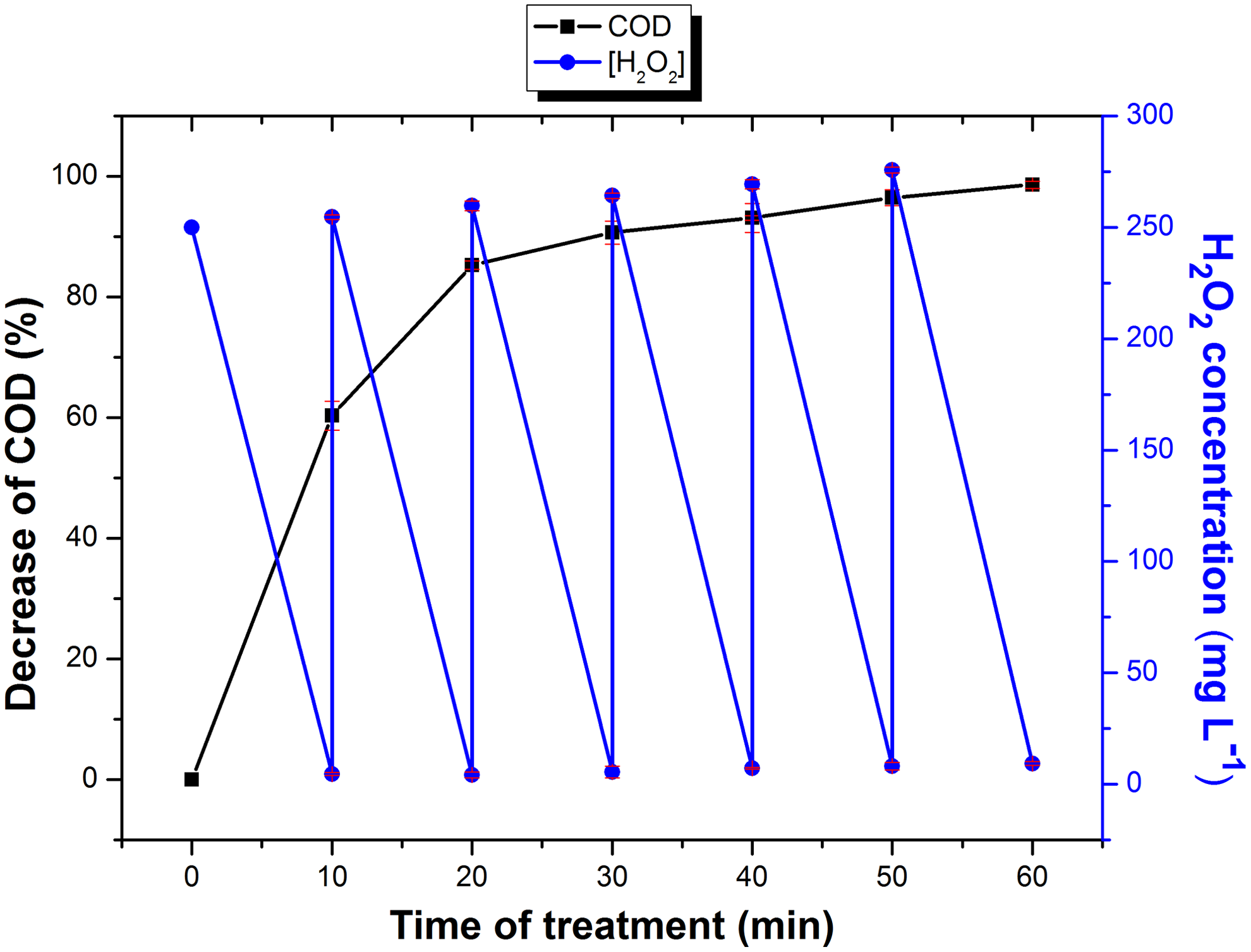
Reduction kinetics of COD and H2O2 during treatment of indanthrene blue dye solutions (60 mg/L) with UV/H2O2 (fractional rate) [1,500 mg/L] at 40°C and pH 5. Samples withdrawn and H2O2 injected every 10 min of treatment.
Conclusions
The H2O2/UV advanced oxidation process was effective in the degradation/mineralization of the indanthrene blue dye. The process removed 100% color, 98.6% COD, 92.0% TOC, and 99% H2O2 at pH 5 using 1,500 mg/L H2O2 (fractional aliquot) at 40°C. High efficiencies were also obtained by using a single aliquot of H2O2 under the same treatment conditions.
By optimizing the process, a rapid reduction in COD and H2O2 consumption was realized. After treatment for 30 min, using 1,500 mg/L H2O2, pH 5, and a temperature of 40°C, it was possible to reduce both the COD of the effluent by more than 91% and H2O2 by 99%.
Of the studied parameters, it was noticed that the concentration of H2O2 and the pH of the samples showed the greatest influence on the treatment efficacy. Although temperature showed little influence on the process, increased temperature was shown to contribute to the removal of both COD and color. The use of fractionated aliquots of H2O2 resulted in higher degradation efficiencies, demonstrating that the use of a single aliquot at the beginning of the treatment decreases the efficiency of the process, probably by the formation of hydroperoxyl radicals with a consequent decrease in •OH concentration.
Footnotes
Acknowledgments
The authors thank the National Council of Technological and Scientific Development-CNPq (grants 303630/2012-4 and 310282/2013-6), FAPITEC, and CAPES from Brazil for the scholarships and the financial support provided for this work.
Author Disclosure Statement
No competing financial interests exist.