




Abstract
Abstract
This research investigated air–water quality interactions during single room humidification to increase indoor relative humidity. Ultrasonic humidifiers were filled with five different water quality types ranging from low to high total dissolved solids (TDS), hardness, and iron content. Aerosols emitted were evaluated for particle size distribution and dissolved metal and nonmetal constituents with inductively coupled plasma–mass spectroscopy. Emitted aerosols were in the inhalable range; the 90th percentile aerosol concentrations occur between 0.020 and 0.040 μm. Findings indicated that humidifier aerosols contained 85–90% of constituents present in the source water for low TDS, hardness, and iron tap waters. Deviations from this pattern were found in high hardness and high iron well waters due to precipitation of some constituents within the humidifier reservoir during operation. Deviation were seen only in the constituents that were precipitating as determined by comparison of filtered and unfiltered reservoir water. There was no evidence to suggest that failure to remove remaining humidifier reservoir water after a humidifier cycle and before refilling the humidifier reservoir for the subsequent cycle would result in increased exposures after five consecutive cycles regardless of increased concentrations in the humidifier reservoir during a single cycle. Results indicated that inhalable aerosols represent exposure to dissolved constituents present in source water.
Introduction
I
Humidifiers are valuable and often operated in households when the relative humidity (RH) drops below a comfortable level. Humidifier use generally increases in winter months when humidity levels in households drop below an optimal comfort level of 40–50% RH (Highsmith et al., 1988). Dry air (RH ≤20%) causes discomfort in the eyes, lips, face, and skin (Highsmith et al., 1988). Increasing the RH can relieve discomfort associated with dry air, protect appliances and furniture, and reduce static electricity due to low humidity (Reinikainen et al., 1991, 1992; Mohan et al., 1998). Humidifiers are also prescribed by physicians for patients diagnosed with respiratory illness because higher RH reduces irritation in the respiratory tract (Farrer, 2012).
There are three types of humidifiers commonly used in homes to increase humidity: (1) ultrasonic type, which aerosolizes water using ultrasonic vibration; (2) impeller type, which uses a fan to break water into small droplets; and (3) evaporative type, which uses heat to evaporate water. Of the 2015 top 13 rated single room humidifiers for consumer purchase, 11 are ultrasonic type (Consumer Reports, 2015). Consumers have replaced most impeller or steam humidifiers with ultrasonic humidifiers due to the reduced noise, increased humidifying ability, and reduction in mold and bacteria problems (Highsmith et al., 1988).
Possible human health risks associated with humidifier use are well documented. The United States Environmental Protection Agency (US EPA, 1991a) recommends the use of distilled water in humidifiers and regular maintenance and cleaning of humidifier units, but typical consumer usage characteristics, such as source water quality, refilling habits, and maintenance activities for household humidifiers, are not known. The US EPA (1991a) warns consumers that humidifiers can aerosolize microbes, which may proliferate within the humidifier and lead to respiratory infection or humidifier fever (Edwards, 1980). Ultrasonic humidifiers are known to disseminate microbes more readily than other humidifier types and produce an aerosol in the inhalable range, increasing potential inhalation exposures (Highsmith et al., 1988; Tyndall et al., 1995).
The percentage of aerosols formed by an ultrasonic humidifier in the respirable range is 90%. This is concerning because inhalation of aerosols emitted by humidifiers leads to deposition of minerals, which were present in the source water, into the lungs of exposed children (Rodes et al., 1990; Highsmith et al., 1992; Daftary and Deterding, 2011). Children are a population subgroup that is particularly sensitive to elevated particulate matter in indoor air (Bennett and Zeman, 1998; Lin and Peng, 2010). High mineral waters are not recommended for use in humidifiers due to the production of inhalable white dust, particles of dissolved minerals that remain once the water in the aerosols have evaporated and, therefore, present a human exposure risk (US EPA, 1991a).
A common aggregate measurement for the amount of dissolved minerals in water is total dissolved solids (TDS), but globally, standards for acceptable TDS in tap water vary. The United States recommends 500 mg/L (US EPA, 1979), while the World Health Organization (WHO, 2003) considers 1,000 mg/L to be acceptable to consumers. Bottled waters also vary in TDS content from less than 30 to more than 1,500 mg/L (Azoulay et al., 2001; Platikanov et al., 2013). Additionally, there are health benefits associated with ingesting waters containing nutrients like calcium and magnesium, which are major contributors to TDS (Azoulay et al., 2001; Cotruvo, 2006). The current TDS standards are due to primarily aesthetic concerns associated with high mineral content in water, such as salty taste, scaling in plumbing, and staining (US EPA, 1979; WHO, 2003).
In addition to aesthetic concerns, drinking waters with high TDS also contain dissolved metals, which may include those with known negative human health impacts when inhaled. Lead is a well-known neurotoxin when inhaled and although regulated not to exceed 0.15 μg/L in air and to an action level of 0.015 mg/L in tap water, dissolved and particulate lead has been shown to exceed the action level in consumers' tap water (US EPA, 1991b, 2008; ATSDR, 2007; Edwards et al., 2009; Pieper et al., 2015). In 2013, Lead and Copper Rule violations were 11% of 107,940 monitoring violations for drinking water in the United States alone (US EPA, 2013a). Manganese also has known adverse health effects and is regulated for occupational inhalation exposures to a threshold limit value of 0.2 mg/m3 and is often present in drinking waters at levels exceeding existing aesthetic-based standards of 0.05 mg/L (US EPA, 1979; ACGIH, 1999; Ayotte et al., 2011; ATSDR, 2012; Brandhuber et al., 2015; Pieper et al., 2015). Inhalation of manganese has detrimental neurological impacts, including reduced motor and cognitive function, mood changes, and manganism, a progressive syndrome with Parkinson's disease-like symptoms (ATSDR, 2012). The aerosolization of drinking waters with elevated concentrations of these or other neurotoxic metals with an ultrasonic humidifier may present an inhalation exposure source resulting in negative impacts on human health.
Current literature suggests that the concentration of TDS in the aerosols produced by ultrasonic humidifiers are about 90% of their concentrations in the source water used to fill the humidifier reservoir, but these data are limited to one water type and for a single ultrasonic humidifier operated for 0.5 h (Highsmith et al., 1988). There are limited data available for emission of individual cations and anions constituting TDS (Highsmith et al., 1992). There is also an information gap regarding air emissions of dissolved water constituents during long-term use when the humidifier is repeatedly refilled without discarding water remaining in the humidifier reservoir.
This study aims to address current research gaps related to varying source water qualities and extended operation durations for ultrasonic humidifiers. Specifically, the objectives of this study are: (1) determine the effect of five water quality types with respect to emission of dissolved constituents, specifically dissolved metals, from the humidifier reservoir into the water aerosols; (2) determine if relative concentrations of dissolved constituents in the humidifier reservoir and aerosols are constant over time for each water type; and (3) evaluate dissolved constituent concentrations in aerosols produced during prolonged use when the humidifier reservoir is recharged without cleaning between cycles. This information will expand upon current knowledge and improve the understanding of potential inhalation exposures to dissolved drinking water constituents resulting from the use of single room, ultrasonic humidifiers.
Experimental Protocols
Ultrasonic humidifier
The humidifier model used in this study is in the top five of available small, single room humidifiers and rated a “Best Buy” by Consumer Reports (2015). It was available for purchase from online retailers and in-store at major United States chain retailers. Its design has a reservoir capacity of three liters, is filterless, and has a variable output control. All experiments were operated with the output set to its maximum setting.
Aerosols expelled by the humidifier were characterized using an Aerodynamic Particle Sizer (APS 3321, TSI) for particles 5–20 μm and Scanning Mobility Particle Sizer (SMPS 3936, TSI) for particles 0.014–0.750 μm. The humidifier reservoir was filled with 3 L of chloraminated tap water and operated at maximum output setting 1.5 ft from APS and SMPS inlets. A background aerosol measurement was performed before humidifier operation, and aerosol distribution measurement was performed when the humidifier had been operating for 1.5 h.
Water quality
Five different waters were selected to represent a range of typical tap water qualities. The five water types are all used as drinking water sources and include (1) chlorinated tap water from a surface water source, (2) chloraminated tap water from a surface water source, and (3) dechloraminated municipal tap water from a surface water source, (4) high hardness well water, and (5) high iron well water. For the chlorinated and chloraminated water types, 3 L of water was collected at a household tap and immediately used to fill the humidifier reservoir. The chloraminated municipal tap water was augmented with 0.5 mg/L MnCl2 as Mn to assess the impact of humidification on a metal commonly found in drinking water at low concentration (Ayotte et al., 2011). Dechloramination was achieved by filtration with granular activated carbon. The high hardness and high iron well waters were not subject to treatment and were collected in 10-L acid-washed Nalgene® containers from individual homes in Southwest Virginia.
Temperature, pH, and disinfectant residuals were measured immediately when a water sample was obtained. Temperature was measured with a Fisher Scientific Traceable® digital thermometer (14-648-45). pH was measured with an Accumet® electrode (13-620-287A) and confirmed by pH indicator strips before use in humidifier unit if water was not immediately used (A011550; Sigma). Free and total chlorine concentration measurements were performed with a HACH Pocket Colorimeter™ II for chlorine. TDS was measured with a Hanna Multiprobe (HI 9828; Hanna Instruments) calibrated before use with HI 9828-0 calibration solution. Alkalinity was measured using titration method 2320-B from Standard Methods (Clesceri et al., 1998).
Metals and nonmetals (Na, Mg, Al, Si, Ca, V, Cr, Fe, Mn, Co, Ni, Cu, Zn, As, Mo, Ag, Cd, Sn, Pb, and Cl) were analyzed using a Thermo Electron X Series inductively coupled plasma with mass spectrometer per Standard Method 3125-B (Clesceri et al., 1998). Samples and calibration standards were prepared in a matrix of 2% trace metal grade nitric acid by volume. The minimum reporting levels for the constituents in μg/L are Ag: 0.1; Al, Cd, Co, Cr, Ni: 0.2; Cu: 0.5; As, Zn: 0.2; Mg: 2; Mo: 5; Si:10; P: 20; and Mg, Na: 50. For the purpose of this research, a major water constituent is defined as having source water concentration ≥1,000 μg/L and a minor water constituent is defined as having source water concentration <1,000 μg/L.
Experimental design
For each experiment, the humidifier's upper reservoir was filled with 3 L of water. The aerosol outlet was attached to a glass condensation column that was subsequently vented to two 10-L glass collection bottles connected in series to allow for recovery of condensed water aerosols (Fig. 1).

Experimental apparatus. Upper reservoir was filled with 3 L of water, then placed on top of the lower reservoir. The upper reservoir empties into the lower reservoir, where ultrasonic vibrations produce aerosols, which are transported through a plastic conduit within the humidifier unit (dashed lines) then expelled out of the top of the humidifier unit into the glass condensation column. Aerosols were collected at the condensed aerosol collection point and the remainder was recovered in the glass collection bottles.
The humidifier was operated until automatic shutdown was initiated by low water level in the reservoir; this occurs after operation for a cycle of 12–14 h at the maximum output setting. The reservoir water was sampled at 0, 1, 2 h, and every subsequent 2 h until humidifier cycle completion. Condensed aerosol samples were collected from the condensation column (Fig. 1) starting at 1 h, then continuing every second hour to align with reservoir water samples. If precipitates were visually detected in the humidifier reservoir, an additional sample was filtered using a 0.45 μm filter (09-719-2D; Fisherbrand) at 8 h of operation and the end of the cycle. Humidifier units were rinsed with deionized water between trials. Three identical humidifiers were used to obtain triplicates for each water type.
An additional experiment designed to evaluate the impact of neglecting to dispose of remaining source water when recharging the humidifier reservoir followed the same procedure outlined for single cycles with the addition of four refills performed in sequence over the course of 5 days with no removal of the water remaining in the reservoir at the completion of a cycle. This experiment was performed with chloraminated tap water augmented with 0.5 mg/L MnCl2 as Mn and 0.03 mg/L PbCl2 as Pb as representative dissolved metals present in the source water that have regulatory levels. Particulate lead was not investigated.
Data analyses and statistics
Analysis of the slope was calculated by dividing the condensed aerosol concentration by reservoir water concentration for each constituent over time for each water type. The ratios from three humidifier cycles were then averaged, at which point, a linear regression was performed in R (R Development Core Team, 2011) on the ratios for each constituent using data from 2 to 12 h. The mean slopes and minimum and maximum values from all constituents were reported. Mean slopes were compared using a one-way ANOVA with analysis in R (R Development Core Team, 2011). A paired t-test with α = 0.05 was used to determine significant difference over time during the 5-day cycle, repeated-use experiment.
Results
Characterization of source water quality types
Water quality parameters for each source water type are summarized in Table 1. While the pH for all waters were similar and ranged from 7.2 to 7.8, the TDS varied greatly from 72 to 225 mg/L. The high hardness well water has a hardness of 333 mg/L as CaCO3, whereas other waters had hardness values ≤44 mg/L as CaCO3.
Higher levels of Na contribute to the greater TDS value for chlorinated municipal tap water when compared to other municipal tap water types. Major and minor constituent concentrations given as mean ± standard deviation in μg/L for n = 3 replicates.
n/a indicates water not chlorinated.
*indicates no measurement taken.
Fe is a major constituent for high iron well water only.
BD indicates below reporting limit.
Concentrations augmented.
Concentrations augmented for 5-day experiment, BD for all other experiments.
TDS, total dissolved solids.
Water quality data for metals, silicon, and chloride are provided in Table 1. Major dissolved constituents are those with concentrations >1,000 μg/L and for all waters, including Ca, Cl, K, Mg, Na, and Si. Fe was included as a major constituent in the high iron well water as it was present above 1,000 μg/L. Minor constituents are those with concentrations ≤1,000 μg/L and include Al, Cu, Mn, Ni, Pb, and Zn. Select constituents like As, Mo, Ag, Cd, and Sn, had concentrations below reporting limits for all waters. As expected, Ca and Mg concentrations in the high hardness water were more than six times greater than the concentration in any other water.
Humidifier performance
A humidifier cycle with no aerosol collection confirmed that the collection of aerosols did not alter humidifier cycle time. The emitted aerosols were initially visible as a white mist in the glass condensation column and condensed before collection in bottles. After completion of a cycle and automatic shutdown, 159.2 ± 27.2 mL water remained in the reservoir, representing 5.3% of the 3 L charge water. Condensed aerosol recovery was an average of 91.0% ± 5.1% by volume for the 3 L of charge water. The total recovery of water constituents during a humidifier cycle was 90.7% ± 12.5% by weight. This loss of ∼9% of constituents is consistent with the loss of ∼9% of all aerosols during a humidifier cycle. Water temperature increased rapidly in the humidifier reservoir from room temperature and stabilized at 40–45°C between 1.5 and 3 h into the humidifier cycle.
Humidifier aerosol characterization
Total particle counts from the APS increased from 9.57 particle/cm3 to 1.31 × 10² particle/cm3 after 1.5 h of humidifier operation. Total particle counts from the SMPS increased nearly an order of magnitude from 3.80 × 10³ particle/cm3 background levels to 3.30 × 10⁴ particle/cm3 after 1.5 h of humidifier operation. The humidifier aerosols are distributed unimodally as tested by the Hartigan's Dip test (Hartigan and Hartigan, 1985) in R (p = 0.4118), with 90th percentile aerosol concentrations occurring between 0.118 and 0.169 μm, and 50th percentile occurring between 0.045 and 0.334 μm. Therefore, the majority of particles expelled by the humidifier are well within the respirable range (US EPA, 2013b).
Comparison of reservoir water and aerosols over time
The three municipal tap waters, all derived from surface waters, performed similarly in relation to the trends of both major and minor constituent concentrations over time (Fig. 2). For chlorinated, chloraminated, and dechloraminated tap waters, concentrations of major and minor constituents increased slightly over time in the humidifier reservoir. Major and minor constituent concentrations in aerosols both initially decrease, but after 2–4 h, all constituent concentrations increased at a constant rate and at a slope not significantly different (p > 0.05) from the concentrations in the reservoir water through the end of the humidifier cycle. This initial decrease in concentration coincides with the increase from initial room temperature water to 40–45°C in the reservoir. Overall, the aerosol concentrations are about 85–90% of the humidifier reservoir concentrations. The residual chlorine concentrations in both the chlorinated and chloraminated tap waters were below detection limits when tested at the conclusion of their respective humidifier cycles. Disinfection residual type had no impact on proportion of constituents in the aerosols.
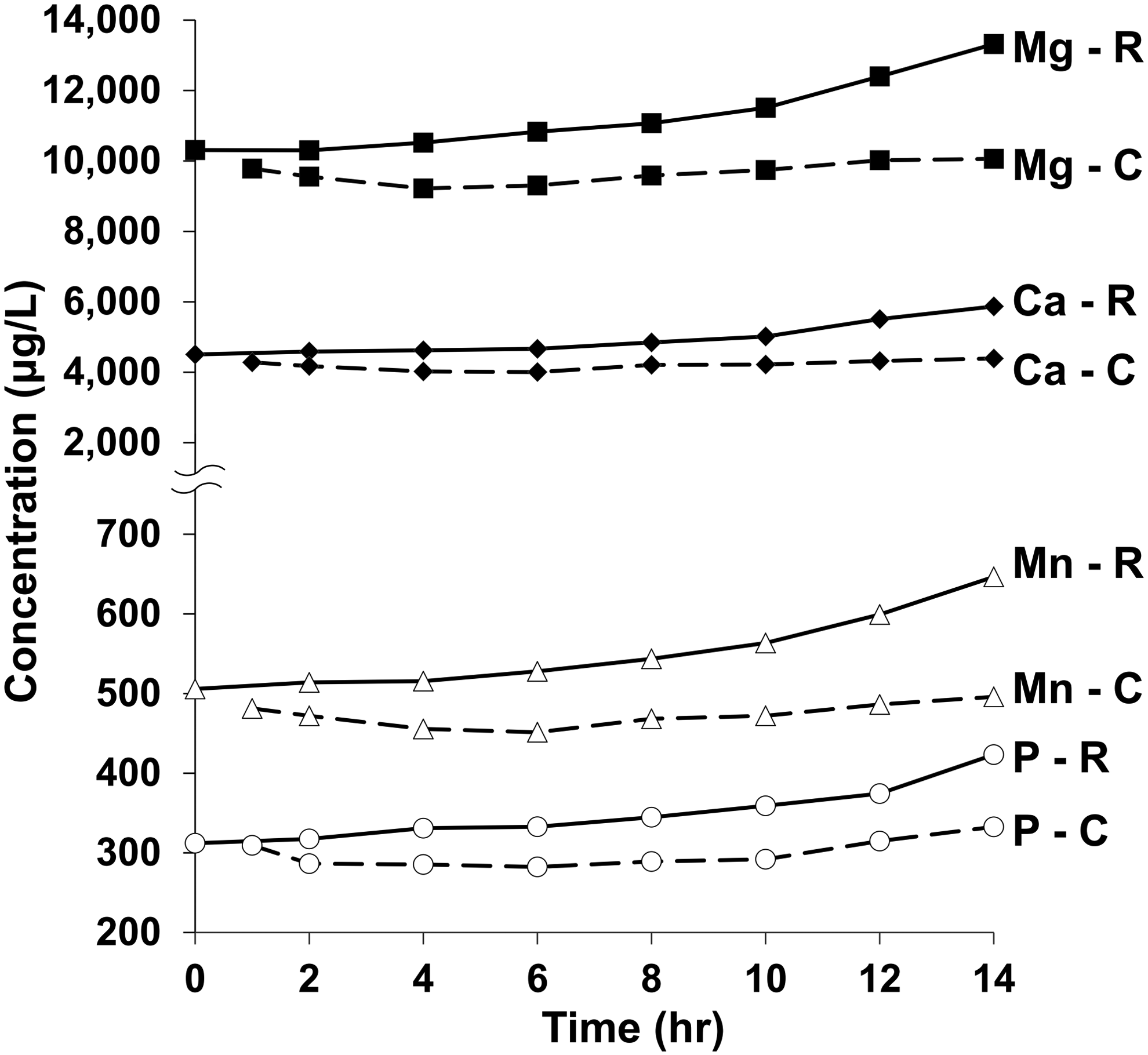
Representative major and minor constituent concentrations over time resulting from humidification with chloraminated municipal tap water. This example is representative of results seen in all municipal water types. The solid line and R denote reservoir sample; the dashed line and C denote condensed aerosol sample. The break in concentration axis denotes change in magnitude and scale.
The high hardness well water constituents did not show the same trend as the three municipal tap waters' constituents. In Fig. 3, it is apparent that the Ca concentration decreases in both the humidifier reservoir and the aerosols for the high hardness well water. Since the solubility of Ca2+ as CaCO3 decreases with increasing temperature (Stumm and Morgan, 1996) and ultrasonic irradiation has been shown to increase CaCO3 formation (Nishida, 2004), the precipitation of Ca was explored (Fig. 3). The filtered samples for all replicates show lower Ca concentrations than the unfiltered humidifier reservoir sample, indicating that precipitation was occurring (Fig. 4). All other major constituent concentrations follow the trend of increasing reservoir concentration and initial decrease in aerosol concentration followed by an increase after the first 2 h of operation. The Cu and Zn in the reservoir decrease over time similarly to the Ca. This is likely due to precipitation or adsorption as evidenced by lower concentrations of both metals in the filtered samples than unfiltered samples. Further evidence of precipitation was the presence of white solids in the humidifier reservoir, although the condensed aerosols remained clear and colorless.
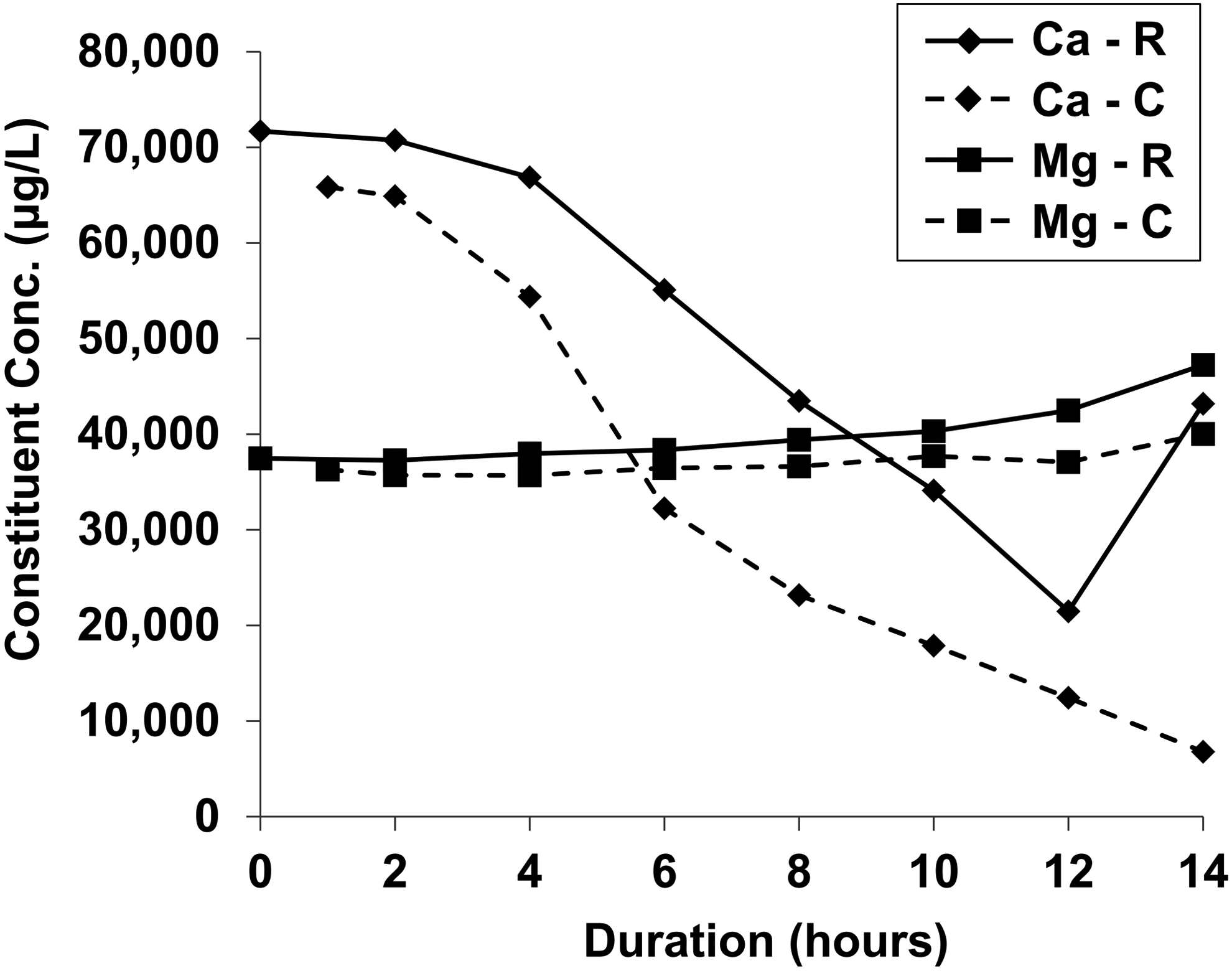
Representative major constituents over time resulting from humidification of high hardness well water. Temperature increased from 25°C to 45°C during time = 0–3 h. R denotes reservoir sample, C denotes condensed aerosol sample.
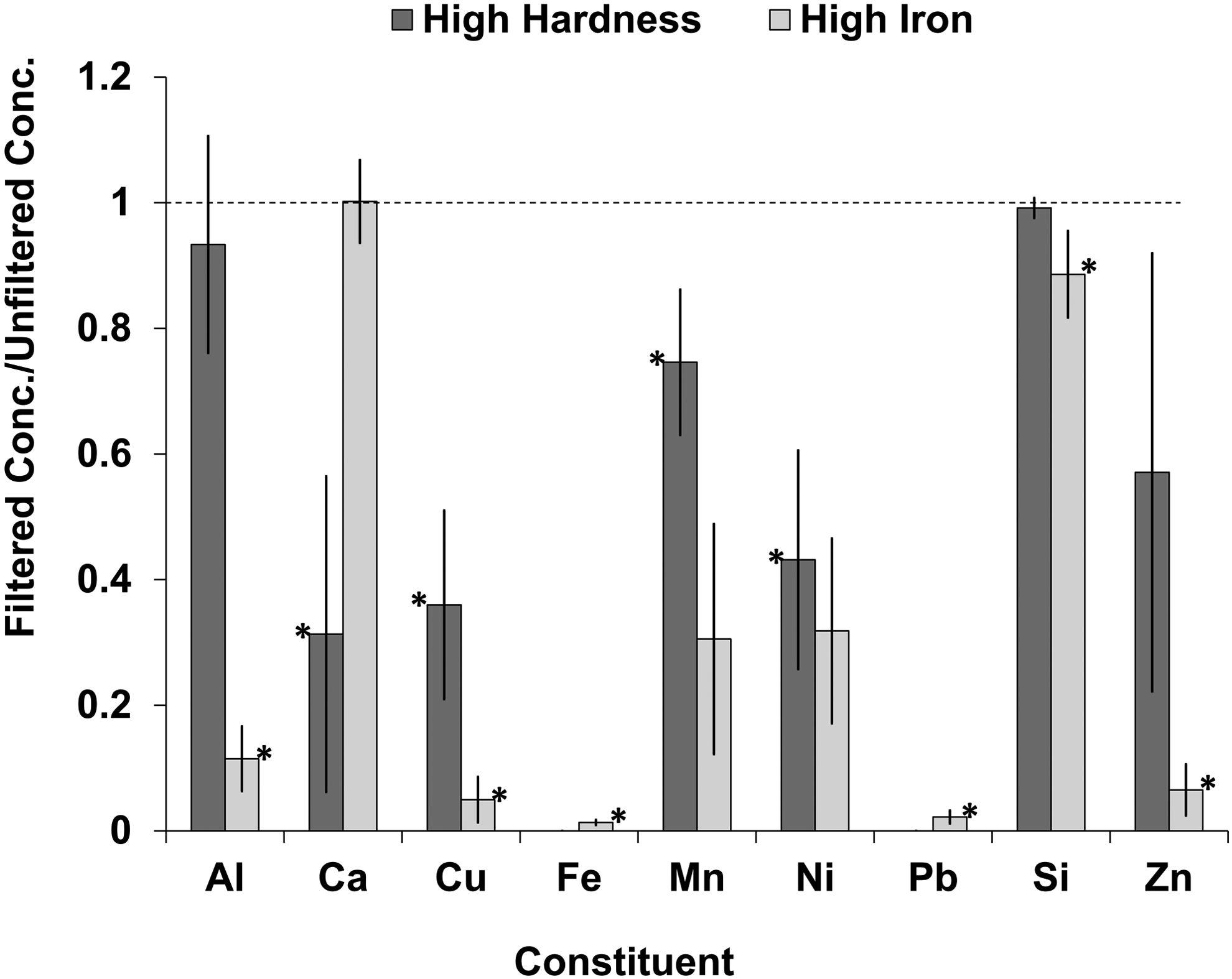
Ratio of concentrations of constituents in filtered and unfiltered reservoir samples for high hardness well water and high iron well water. Precipitation is indicated by lower filtered, acid digested sample concentration than unfiltered concentration, represented by those constituents with ratio <1 (dashed line). Fe and Pb were below detection in the high hardness water. *represents significant difference between filtered and unfiltered concentrations (p < 0.05, paired t-test).
Iron precipitation occurred during the high iron well water experiments, which was visually apparent as orange solids consistent with oxidation (Fig. 5). There is also evidence of precipitation or adsorption onto Fe precipitates for additional constituents (Al, Si, Cu, Mn, Ni, Pb, and Zn), shown by lower filtered concentrations than unfiltered reservoir concentrations (Fig. 4). Cu, Mn, and Zn also exhibit the same pattern of concentration change seen in the Fe concentration in Fig. 5. The other major constituents increased over time in the reservoir, and concentrations initially decrease before increasing in the aerosols; similarly the municipal tap waters and their filtered and unfiltered concentrations do not differ, therefore, they are not precipitating. Concentrations in the filtered reservoir sample are lower than the aerosol concentration for many constituents, suggesting that some precipitate particles were expelled in the humidifier aerosols, even if they were not visually apparent. The aerosol concentrations for precipitating constituents do not exceed the initial charge water concentrations.

Total iron concentrations for reservoir water (R), condensed aerosols (C), and for filtered reservoir water (RF) for a single replicate. All samples were acid digested to ensure accurate measurement of total iron.
Ratios of constituents emitted
For constituents that did not precipitate, 85–90% of the constituent present in the charge water was expelled in the aerosols after the temperature stabilized at 40–45°C. The initial ratio was ≥90%, but decreased as the temperature in the reservoir increased, resulting in a final ratio of 70–80% at the end of the humidifier cycle (Fig. 6).
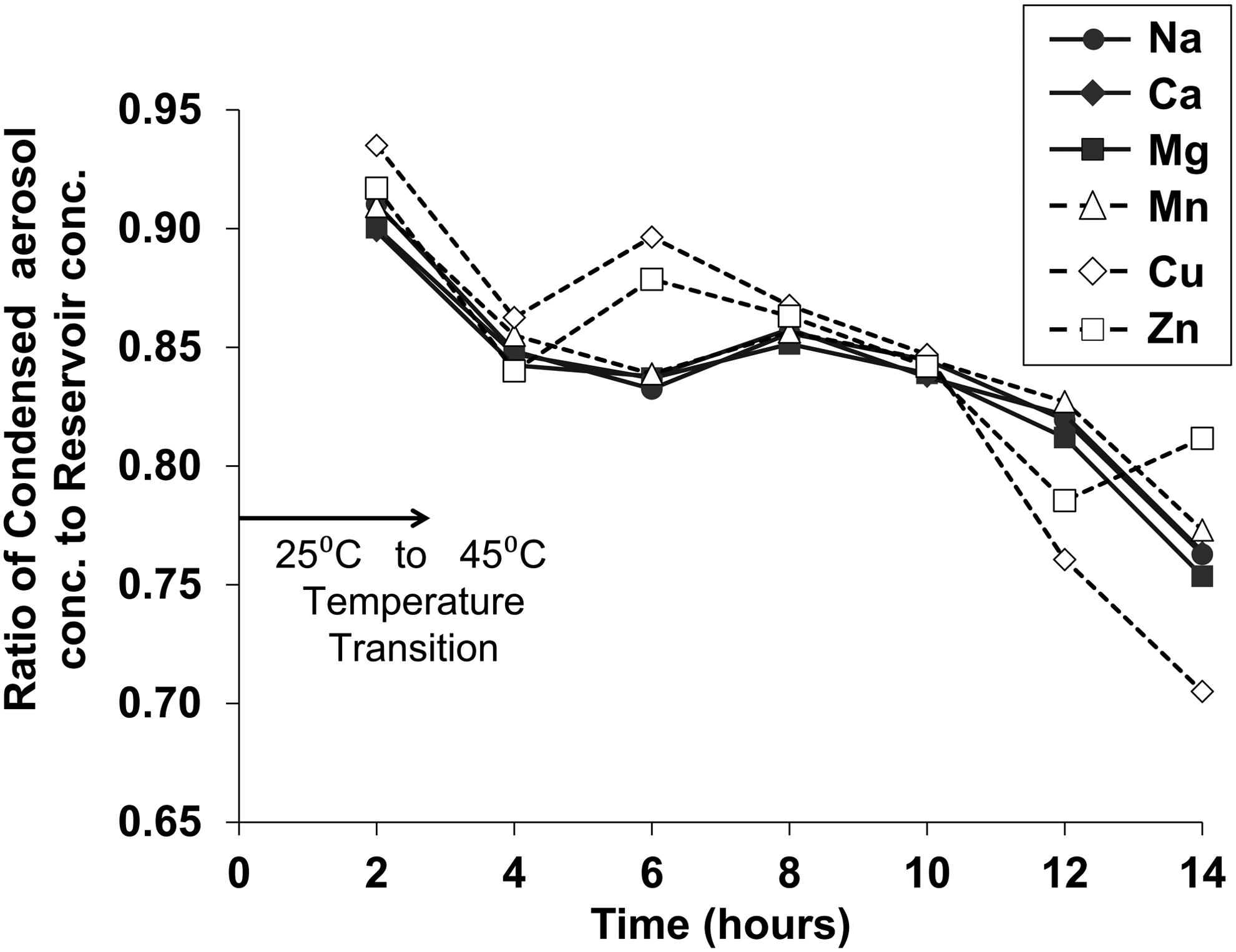
Ratio for aerosol concentrations divided by reservoir concentrations over time for dechloraminated tap water.
To further analyze the ratio between aerosol constituent concentration and reservoir water concentration, the data from only 2–12 h were analyzed and they represent the majority of the cycle duration, water temperature was stable, and variability of cycle duration is avoided (i.e., 12–14 h). The slopes of the ratios for all constituents that did not precipitate were averaged for each source water type (Table 2). Statistical analysis demonstrated that for all waters, the mean slope values were <0, indicating decreasing ratios. With the exception of Al in chlorinated tap water, which provided the maximum value, all slopes for nonprecipitating constituents were negative, indicating the proportion of dissolved constituents in the aerosols to be decreasing with time. A one-way ANOVA showed no statistical difference in slope between all constituents for all water types (p = 0.182).
No significant difference was found between water types.
Single replicate of Al resulted in slope >0.
Effect of continuous use on constituent concentrations in emitted aerosols
To determine whether there is significant accumulation of constituents in the reservoir water not emptied after use, the humidifier unit completed five consecutive cycles for a total of 70 h without removing the water remaining from the previous cycle. The reservoir concentrations for each individual cycle showed an increase for all constituent concentrations, but the final reservoir concentrations at hour 70, after five consecutive cycles, were not significantly higher than any other cycle ending concentration (p > 0.05) (Fig. 7).
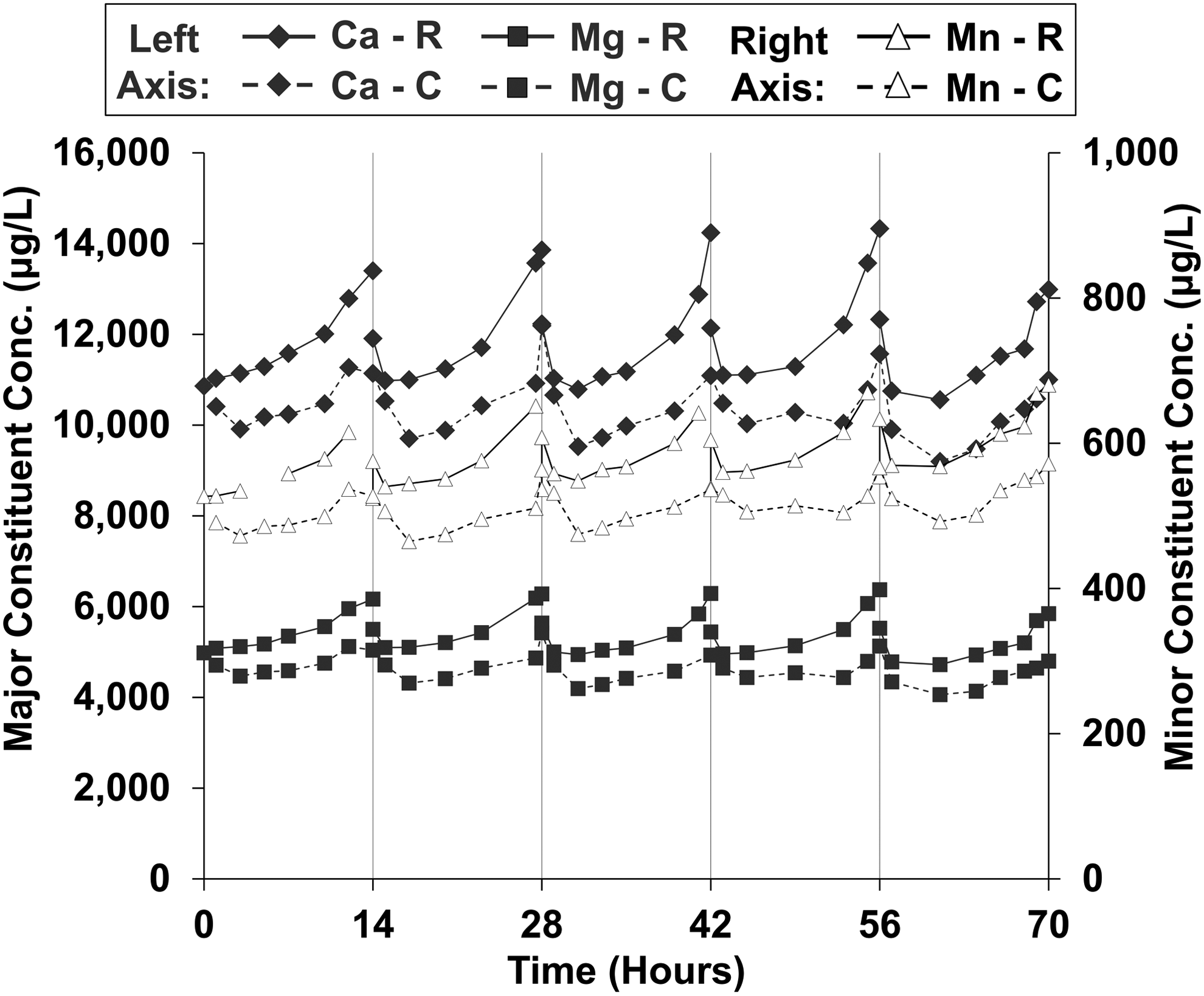
Five consecutive 14 h cycle experimental results for selected major and minor constituent concentrations in reservoir and aerosols. Chloraminated tap water augmented with 500 μg/L Mn. Vertical gridlines denote humidifier reservoir refill.
Discussion
Operation of the ultrasonic humidifier produced inhalable aerosols that contained the minerals that were present in the charge water. Disinfection residual type did not impact the proportion of constituents expelled. The concentrations of constituents in the humidifier reservoir water increase over time, which co-occurs with an initial decrease in aerosol constituent concentration. The constituent concentrations in aerosols begin to increase after 2 to 4 h to a concentration that is about 85–90% of the reservoir water concentration, before declining at the end of the cycle to 70–80% (Fig. 6). The change in aerosol concentrations co-occur with the temperature increase in the humidifier reservoir from room temperature to 40–45°C, which stabilizes after about 2 h of operation (Figs. 3 and 6). Increase in temperature likely increases the evaporation of water and does not affect minerals. In our research, a likely explanation is that water was emitted from the reservoir principally by aerosolization with a slight amount of evaporation, whereas minerals were only emitted in aerosols. The effect of temperature on aerosol concentration has a precedent. In ultrasonic nebulizers used as delivery systems for aqueous drugs, increased temperature led to water evaporation, which increased drug solution concentrations resulting in higher inhalation doses for patients (Steckel and Eskandar, 2003).
Previous research reported a 90% relationship for aerosol and source TDS reported for a single time point at 0.5 h (Highsmith et al., 1992). The current study, however, demonstrates that there is a decreasing trend in the percentage of constituents expelled over time (Fig. 2). This decline in percentage does not result in a decrease in aerosol constituent concentration, however, as both reservoir and aerosol constituent concentrations increase over time. When inhaled, these aerosols represent an exposure source to soluble tap water constituents.
The initial concentrations of constituents in the source water quality types do not impact the 85–90% proportion of constituents expelled in the aerosol, unless precipitation occurs. The potential for precipitation is an important distinction seen when comparing the five different water types. When precipitation occurs, as it did in the high hardness and high iron waters (Figs. 3 and 4), there was a lower soluble concentration of calcium or iron in the reservoir and, therefore, Ca and Fe concentrations in the aerosols had to also decrease. Our limited data are suggestive that some of these particulates may have been expelled by the humidifier, which is evidenced by lower filtered reservoir water concentrations than total aerosol constituent concentrations (Fig. 5). As total concentration of any constituent increases in the reservoir, it can approach its solubility limit resulting in precipitation of that constituent. Increase in water temperature can also impact solubility of select water constituents, such as CaCO3, which experiences retrograde solubility (Stumm and Morgan, 1996). Additionally, ultrasonic vibrations increase the rate of calcium carbonate precipitation proportional to ultrasonic intensity (Nishida, 2004).
Neglecting to empty the lower reservoir between reservoir refills did not result in a build-up of major or minor constituents over the course of 5 days. This is likely due to the addition of 3 L of charge water to refill the humidifier reservoir, diluting the constituents present in the water remaining in the reservoir from the previous cycle (Fig. 7). Other documented health concerns, such as growth and dispersion of bacteria, suggest cleaning the reservoir before refilling is a good practice for ultrasonic humidifiers (Baur et al., 1988; US EPA, 1991a; Tyndall et al., 1995; Yiallouros et al., 2013).
Aerosols emitted by an ultrasonic humidifier that produced a white dust that contained calcium, magnesium and other minerals was shown to negatively impact the health of an infant sleeping in the room (Daftary and Deterding, 2011). This white dust has been confirmed to expose the lung tissue of mice to dissolved water constituents (Umezawa et al., 2013). The high percentage of source water constituents aerosolized, except in cases of precipitation, when combined with inhalable aerosols produced by ultrasonic humidifiers, support that single room humidifiers are a source of inhalation exposure to aerosolized constituents, and that the initial water quality determines the exposure (Highsmith et al., 1992; Mohan et al., 1998; Daftary and Deterding, 2011). Dissolved inorganics or TDS, in source and treated waters, is increasing due to many factors, including agriculture, industrial activities, and hydraulic fracturing (Dietrich and Burlingame, 2015). TDS also increases in winter time where deicing agents are used, which coincides with increased humidifier usage (Highsmith et al., 1988; Kaushal et al., 2005; Dietrich and Burlingame, 2015). Therefore, consumers who fill humidifiers with tap water will increasingly be using higher TDS water and aerosolizing greater amounts of dissolved constituents. This is critical because exposure to aerosols emitted by humidifiers filled with water containing high TDS and/or metals like lead and manganese could result in negative human health outcomes (US EPA, 1991a; ATSDR, 2007, 2012). The current research reinforces that waters of low mineral content should be used in ultrasonic humidifiers to limit human exposure to dissolved constituents.
Summaries
Source water quality impacts the concentrations of dissolved water constituents in the humidifier reservoir and expelled respirable-sized aerosols. Overall, the aerosol concentrations are 85–90% of the humidifier reservoir concentration at the corresponding time. This indicates that if potentially hazardous metals like lead are in the source water, they will be expelled as an aerosol at a similar concentration present in the water. One important exception is in the case of precipitation. If precipitation of minerals occurs in the reservoir, the concentrations present in the humidifier reservoir and condensed water aerosols do not follow typical patterns. Source waters with lowest possible levels of metals and other dissolved constituents should be used in ultrasonic humidifiers to reduce inhalation exposure and protect human health.
Footnotes
Acknowledgments
The authors acknowledge both Virginia Tech's Institute for Critical Technology and Applied Sciences and the Water INTERface Interdisciplinary Graduate Education Program for funding this research. Technical input from Drs. Falkinham, Gallagher, and Marr are appreciated.
Author Disclosure Statement
No competing financial interests exist.