




Abstract
Abstract
Increasing applications of zinc oxide nanoparticles (ZnO NPs) in commercial products causes concerns regarding the effects of these NPs on ecological systems and human health. This study investigated the removal effect of ZnO NPs by coagulation from the aqueous system by measuring turbidity and solubility under different pH values and concentrations of humic acid (HA). Results showed that pH has significant impact on coagulating ZnO NPs by introducing FeCl3 (0, 0.03, and 0.3 mM) in aqueous phase. At pH 3–6, more than 53% of ZnO NPs were dissolved as Zn2+. At pH 6–8, removal of ZnO NPs resulted from combined effects of coagulant enmeshment and charge neutralization. When pH ranged from 8 to 11, average removal efficiency of turbidity of ZnO NPs by FeCl3 (0.3 mM) was above 97% and the solubility of ZnO NPs was lower than 5%. Removal of ZnO NPs was mainly due to the effect of enmeshment of coagulants at pH 8–11. Results also suggested that HA could impede aggregation of NPs when concentrations of FeCl3 were 0 and 0.03 mM. While the concentration of FeCl3 increased to 0.3 mM, the effect of enmeshment of coagulants was greater than the impediment of HA on the aggregation of ZnO NPs at pH 8–11. Therefore, coagulation served as an effective method to remove ZnO NPs from the aqueous system with pH ranging from 8 to 11.
Introduction
W
Dhas et al. (2014) showed that there was significant inhibition on various bacterial strains when exposed to ZnO NPs, especially for Bacillus barbarous, with 65% inhibition at 50 mg/L and almost 100% at 100 mg/L. Similarly, Zheng et al. (2011) reported that 50 mg/L of ZnO NPs would inhibit reductase activities of nitrifying microorganisms, resulting in removal efficiencies of total nitrogen decrease by 70.8% to 81.5%.
Currently, membrane microfiltration and ultrafiltration are widely used for the removal of NPs in aqueous environments (Zhong et al., 2011; Springer et al., 2013). However, the operation cost of membrane treatment is very high and membrane fouling seriously impacts its performance (Kim et al., 1993; Zodrow et al., 2009). NPs can also be removed by an activated sludge process through adsorption on biomass in wastewater treatment plants (Westerhoff et al., 2013), but they might be toxic to microorganisms and adverse to subsequent sludge treatment by changing sludge properties (Tiede et al., 2010; Mu and Chen, 2011; Chen et al., 2014). Mu and Chen (2011) found that 30–150 mg/g total suspended solid of ZnO NPs induced 18.3–75% inhibition of methane production in activated sludge anaerobic digestion. Therefore, it is necessary to find effective and simple methods to remove NPs from water.
Coagulation is a convenient and effective way to remove NPs in aqueous environments and also one of the important steps followed during the conventional water treatment processes. Generally, coagulants would be added to destabilize the colloidal materials and cause the small particles to agglomerate into larger settleable flocs (Honda et al., 2014; Wang et al., 2014). The process of coagulation is affected by pH, ionic strength (IS), ionic compositions, natural organic matter (NOM), and other characteristics of aqueous media (Wang et al., 2013).
To our knowledge, since ZnO NPs can get dissociated to Zn2+ and high concentrations of Zn2+ are harmful to aquatic living organisms (Prasad et al., 1999; Xia et al., 2008; Larner et al., 2012) and human health (Fosmire, 1990), they might be relatively more toxic than some stable NPs such as TiO2 and CeO2 (Yuan et al., 2010). Therefore, the dissolution of ZnO NPs must be considered in the removal process, which is influenced by pH (Miao et al., 2010).
In natural waters, humic substances are ubiquitous, the concentrations of humic substances range from a few mg/L to hundreds of mg/L dissolved organic carbon (Wall and Choppin, 2003), and a small amount (∼0.1 mg/L) of NOM may be adsorbed on the surface of NPs, giving them negative charge depending on different kinds of NPs and pH values to affect the dissolution and aggregation of NPs (Keller et al., 2010; Wang et al., 2010; Han et al., 2014; Mohd Omar et al., 2014). Yang et al. (2009) reported that humic acid (HA) impeded ZnO NP dissolution and made them more stable due to the surface interaction. On the contrary, Bian et al. (2011) reported that the dissolution of ZnO NPs was enhanced in the presence of HA due to the polydentate complexing structure of HA with pH ranging from 9 to 11, and Han et al. (2014) also suggested that the presence of HA would increase the dissolution of Zn2+, and furthermore, the dissolution of Zn2+ increased as HA concentration increased.
However, the amount of dissolved ZnO NPs can be significantly influenced by the pH of the solution (Li et al., 2013). According to another study (Mohd Omar et al., 2014), the coating of Suwannee River HA (SRHA) onto the surface of ZnO NPs contributed to NP disaggregation, and NPs showed better dispersity with increasing concentration of SRHA in most cases. Recently, the effect of HA on coagulation of TiO2 NPs has been reported (Qi et al., 2012; Wang et al., 2013). However, the effect of HA on coagulation of ZnO NPs has been rarely taken into consideration (Surawanvijit et al., 2014). Thus, to better understand the removal performance of ZnO NPs by coagulation in aquatic environments, the effect of HA should be studied.
The aim of this study is to explore proper conditions to remove the ZnO NPs from aqueous environments effectively by coagulation, particularly the effects of HA and pH. Turbidity and the amount of Zn2+ in supernatant were measured under different HA concentrations with a wide range of pH values to investigate removal efficiency.
Materials and Methods
Chemicals and solution preparation
ZnO NPs were purchased from Sigma-Aldrich (Shanghai) Trading Co., Ltd. According to the manufacturer, ZnO NPs have a particle size of less than 50 nm and a specific surface of area 15–25 m2/g. ZnO NP suspensions were prepared by adding 3 mg ZnO nanopowders into 100 mL 1 mM NaHCO3 solution. According to the effect of ultrasonic time on the turbidity of suspension in Supplementary Table S1, all sample suspensions were subjected for ultrasonification using a Ningshang Ultrasonic SY-180 for 25 min before coagulation. Before ultrasonification, the pH was adjusted to 9 to minimize the dissolution of ZnO NPs at the time of ultrasonification. The stock suspensions were freshly prepared every day.
The coagulant (FeCl3) was purchased from Yijing Environmental Protection Co., Ltd. The concentration of stock solution of FeCl3 was 150 mM. HA was obtained from Sigma-Aldrich Trading Co., Ltd. HA stock solution was prepared by adding 20 and 200 mg HA powder into 40 mL deionized water, and the pH of the solution was adjusted to 10 by adding 100 mM NaOH to make sure that HA dissolved completely. The solution was stirred at 600 rpm for 24 h to improve stability (Zhu et al., 2014), and the stock was stored in the dark at 4°C before diluting it to the desired concentration for the following experiments. The total organic carbon of 10 mg/L of HA is around 4.5 mg/L.
Characterization of ZnO NPs
Transmission electron microscopy (TEM) images were obtained from Philips XL-30 Field Emission instruments and JEOL JEM-2011 and the ZnO NPs were dispersed into ethanol with 10 min of ultrasonication for TEM measurements. The specific surface area of ZnO NPs was measured at 77 K using an ASAP 2020 analyzer (Micromeritics Co., Ltd.). The size distribution of ZnO NPs with concentration of 30 mg/L was determined using dynamic light scattering. Malvern Zetasizer (Nano ZS 90) was used to analyze the zeta potential of ZnO NPs at 25°C, balancing for 1 min.
Coagulation and dissolution
Coagulation was performed following the jar test method with 1 min of rapid mixing at 300 rpm and 15 min of slow mixing at 150 rpm, then settling for 30 min. Treatment performance was assessed by measuring supernatant turbidity performed in triplicate. Although the solubility of ZnO NPs increased sharply at pH below 7 or above 11 (Dange et al., 2007), the experiments in this study were conducted in the pH range of 3–11 to get systemic data to assess the influence of pH on the dissolution of ZnO NPs. Supernatant turbidity was measured by a Turbidimeter (2100 P; HACH). After coagulation, the supernatant was settled for 30 min for the concentrations of zinc measurement using ICP Agilent 720 ES to calculate the solubility of ZnO NPs as complimentary data to illustrate removal of turbidity and two parallel tests were carried out for each sample. Visual MINTEQ was used to calculate the species of ferric and zinc ions in solution after coagulation with 0 and 10 mg/L of HA, which was conducted in the absence and presence of carbon dioxide (CO2) to explore the impact of CO2 on zinc and ferric species. The concentrations of dissolved zinc and ferric species in solution were measured by ICP Agilent 720 ES after coagulation. In addition, we used analysis of variance (ANOVA) to study the influence of the concentrations of FeCl3, HA, and pH on the removal efficiencies of turbidity of ZnO NPs.
Results and Discussion
Characteristic of ZnO NPs
From Supplementary Fig. S1a, ZnO NPs exhibited even size distribution. Most of them were spherical particles with a diameter of around 25 nm, and some of them were slab-like and rod-like particles. Likewise, Supplementary Data (Supplementary Fig. S1b) showed that the diameter of most particles is in the range of 15–30 nm. The specific surface area was determined to be 13.13 m2/g for ZnO NPs.
Figure 1 indicated that the range of pH 3.65–6.46 is the dissolution region of ZnO NPs, which agreed with the study by Mohd Omar et al. (2014). According to Fig. 1, when the pH is 6.46, the average zeta potential is +4.16 mV, and then the zeta potential is found to be falling gradually with increasing pH. The isoelectric point of ZnO NPs measured by Zetasizer Nano is at pH 7.7.
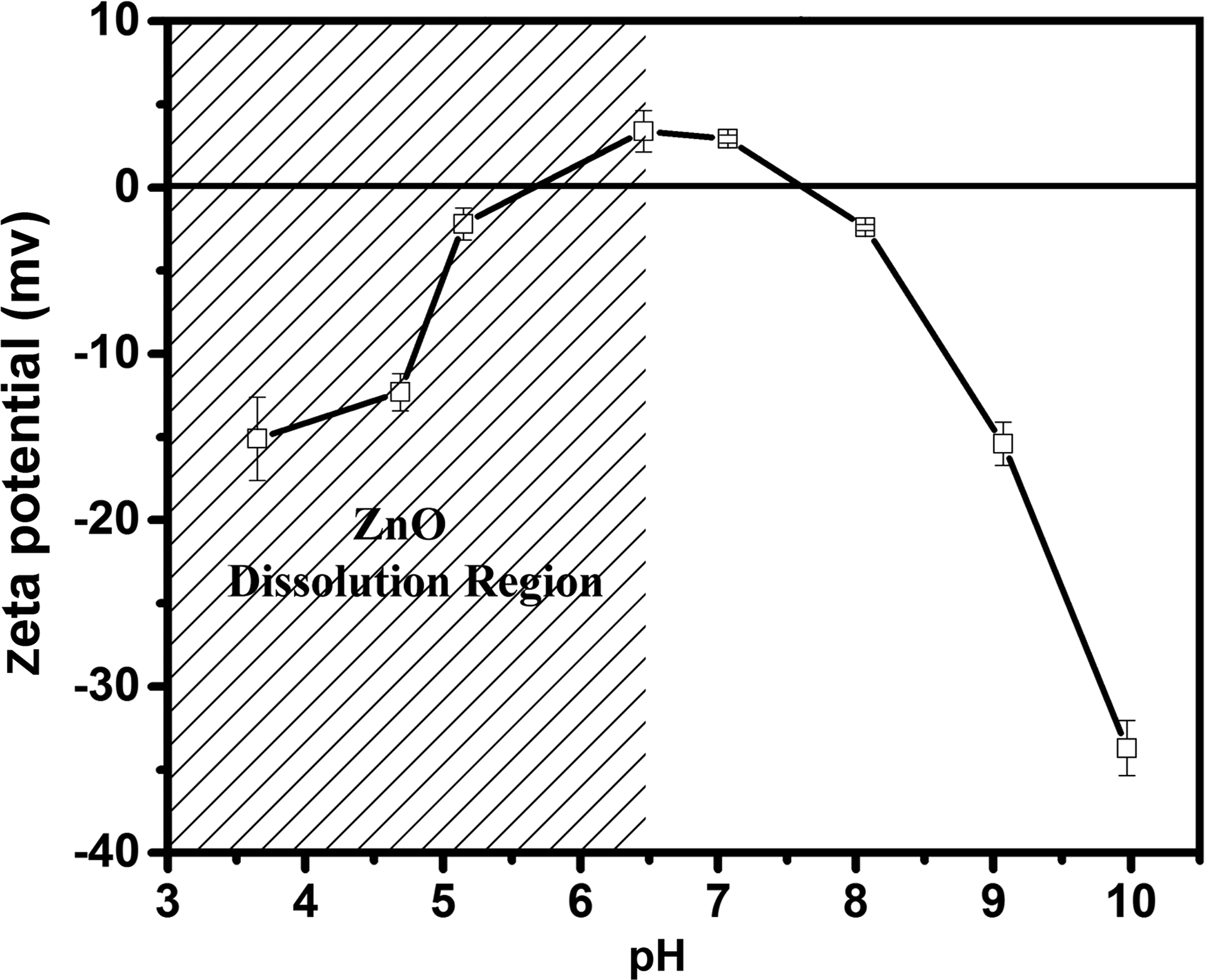
Zeta Potential of ZnO NPs as a function of pH. ZnO NPs, zinc oxide nanoparticles.
Effect of FeCl3 dose on ZnO NP removal efficiency
Based on the sedimentation region of Fe(III) shown in Supplementary Fig. S2, it was very favorable for the coagulation process by Fe(III) at around pH 8 as a large amount of FeOOH was being generated. Considering the dissolution of ZnO NPs in acidic conditions, we carried out experiments at pH 9 to reduce their dissolution and to achieve better coagulation effect. Figure 2 shows that the removal efficiency of turbidity of ZnO NPs was significantly increased with increasing the concentration of FeCl3 (p < 0.05) and the highest removal efficiency was achieved with the dosage of 0.3 mM FeCl3, which was more than 99%. Figure 2 also suggests that the presence of FeCl3 hindered the dissolution of ZnO NPs at pH 9 and the concentration of FeCl3 had slight impact on the solubility of ZnO NPs. Since the solubility of ZnO NPs was less than 2% with FeCl3 (Fig. 2), which could be ignored compared with high removal efficiency, coagulation serviced as an efficient method to remove ZnO NPs from water at pH 9.
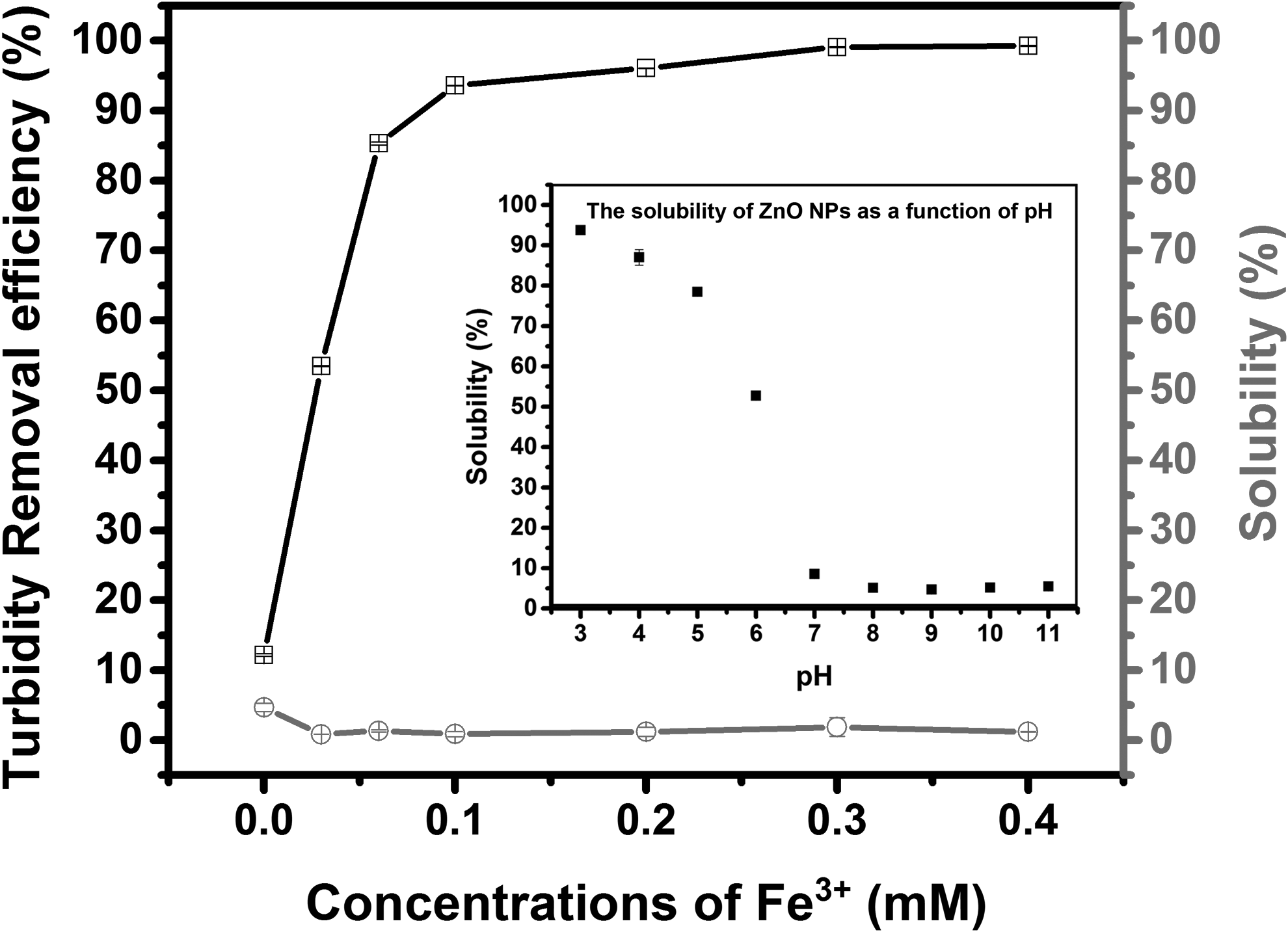
Effect of concentrations of Fe3+ on removal efficiency of turbidity and solubility of ZnO NPs at pH 9 ([ZnO NPs] = 30 mg/L; [Fe3+] = 0, 0.03, 0.06, 0.1, 0.2, 0.3, 0.4 mM).
Effect of HA on ZnO NP removal
Coagulation of ZnO NPs
Accurately, 0.03 mM of FeCl3 was added into 30 mg/L ZnO NP suspension to study the effect of HA (10 mg/L) on coagulation. The results suggested that the presence of HA decreased the removal efficiency of turbidity of ZnO NPs (Fig. 3). The effect of HA concentrations on the zeta potential of negatively charged ZnO NPs is presented in Supplementary Fig. S3a, which indicated that the electrostatic repulsion force between negatively charged ZnO NPs became stronger at higher HA concentrations. Thus, HA was found to impede the aggregation of ZnO NPs, which made negatively charged ZnO NPs more stable in the solution. According to the study of Mohd Omar et al. (2014), disaggregation of ZnO NPs might be induced by the adsorption of HA on NPs due to the van der Waals interaction between HA and NPs. From Fig. 4, the TEM images of sediment also suggested that the presence of HA was unfavorable for the aggregation of NPs and made them separate from each other.

Removal efficiency of turbidity of ZnO NPs as a function of pH ([ZnO NPs] = 30 mg/L, [Fe3+] = 0.03 mM, [HA] = 10 mg/L). HA, humic acid.
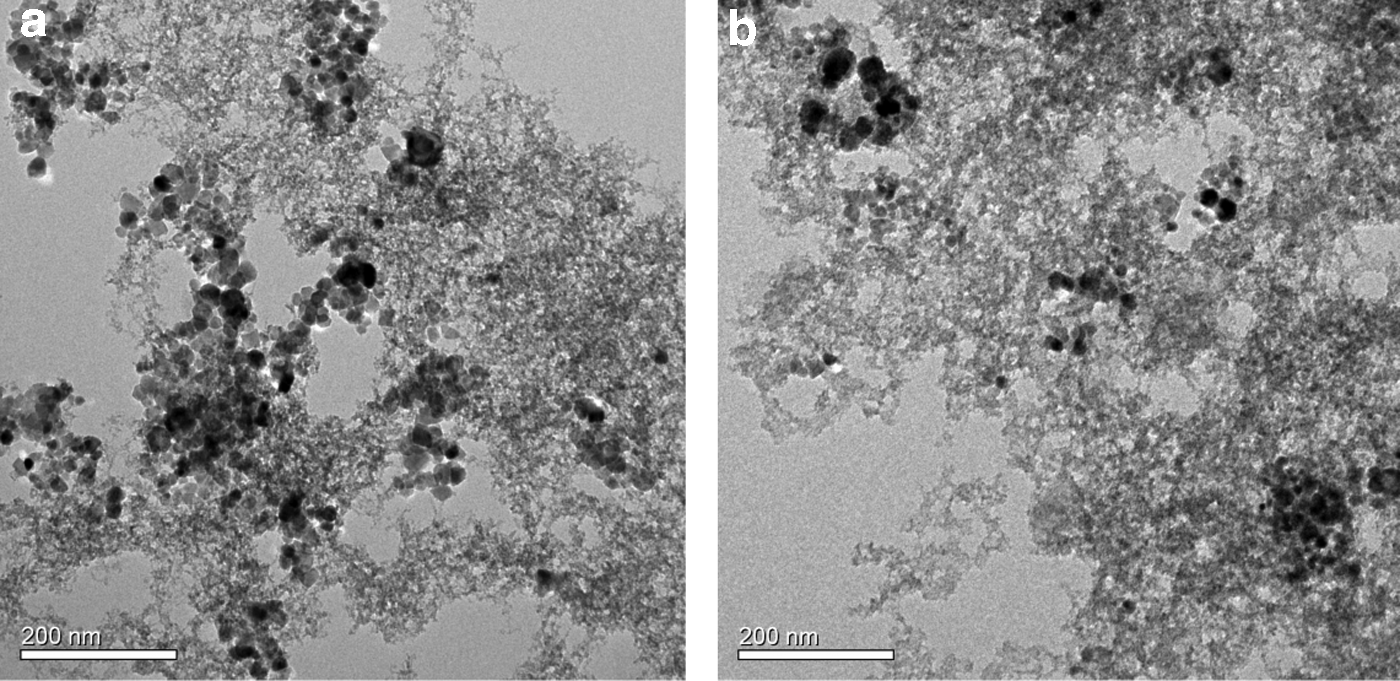
TEM image of sediment of ZnO NPs and FeCl3
To study the effect of HA on coagulation at the highest removal efficiency, we chose 0.3 mM of FeCl3 based on our previous study (Wang et al., 2014). In the absence of HA, ZnO NPs were dissolved easily in acidic aquatic environments (Mohd Omar et al., 2014). Therefore, ZnO NPs could be effectively removed by coagulation when the pH was 8–11 (Fig. 5). The average removal efficiency of turbidity of ZnO NPs was higher than 95% and the highest removal efficiency of turbidity is 99.1% at pH 9 in the absence of HA. When the pH was less than 8, the turbidity removal efficiency increased with increasing pH. According to Supplementary Fig. S2, when pH ranged from 8 to 10, the main mechanism of the removal of ZnO NPs is the enmeshment of FeCl3 coagulants. However, when pH was above 10, the function of enmeshment became weak, and oppositely, the amount of Fe(OH)4− increased (Supplementary Figs. S4a and S5a), which made the electrostatic repulsion forces between negatively charged ZnO NPs and Fe(OH)4− slightly higher. Thus, the removal efficiency of ZnO NPs had a slight decreasing tendency over pH 10.

Removal efficiency of turbidity of ZnO NPs as a function of pH ([ZnO NPs] = 30 mg/L; [Fe3+] = 0.3 mM; [HA] = 0, 0.5, 2.5, 5, 10 mg/L).
In the presence of HA, NPs could be also removed effectively with pH ranging from 8 to 11 (Fig. 5). When the pH was between 3 and 6, higher concentration of HA resulted in the decrease of removal of turbidity of ZnO NPs at the same pH. At pH 8 to 11, the zeta potential in solution ranges from +6 to −42.2 mV with increasing concentrations of HA (Supplementary Fig. S3a), which did not make a substantial difference on the removal efficiency of turbidity. The possible mechanism was that the dosage of coagulants (0.3 mM FeCl3) was sufficient and the aquatic environment with pH greater than 8 was favorable for the generation of Fe(III) flocs according to Supplementary Fig. S2. Although there were negatively charged HA, Fe(OH)4−, and ZnO NPs (Supplementary Figs. S4 and S5), the enmeshment of the coagulants was much stronger than the repulsive forces between ZnO NPs and played the major role in removing NPs from water. Therefore, the high removal efficiency of ZnO NPs might result from the combined effects of enmeshment of coagulants and charge neutralization. Supplementary Figures S4 and S5 showed the zinc and ferric species after coagulation in the absence and presence of CO2, which indicated that the presence of CO2 increased the concentration of [Fe(OH)2]+ at pH 6 and [Fe(OH)4] − at pH 11. From Supplementary Figs. S4 and S5, it seems that ferric species are easier to combine with the hydroxyl group.
The p-value was used to evaluate the statistical significance of ZnO NP coagulation depending on the pH. In all conditions, p-value showed significant changes in aggregation (p < 0.05). However, the concentrations of HA had no significant effect on the coagulation of NPs (p > 0.05).
Dissolution of ZnO NPs
There are actually three different phases after coagulation: Zn2+, suspended ZnO NPs (not participating in coagulation), and ZnO NP flocs. Therefore, we measured the amount of Zn2+ in supernatant to calculate the solubility of ZnO NPs.
In the absence of HA, Fig. 6 shows that the solubility of ZnO NPs decreased with increasing pH, which dropped sharply when pH was changed from 6 to 7, and the species of zinc ions are shown in Supplementary Figs. S4a and S5a. When pH ranged from 3 to 6, the concentration of Zn2+ in the supernatant was more than 12 mg/L, which indicated that more than 53.12% of ZnO NPs were dissolved into the solution due to the direct response of the protons and the surface of ZnO (Bian et al., 2011). Therefore, the majority of the turbidity removal of suspensions resulted from dissolution rather than coagulation of ZnO NPs under relatively acidic conditions. However, when pH was 9, the total amount of zinc species in supernatant was 24.07 mg/L and the concentrations of Zn2+ were lower than 0.46 mg/L (data not shown here). When the pH was 8–11, the average solubility and turbidity removal efficiency were 3.54% and 96.87%, respectively, which suggested that coagulation was an efficient way to remove ZnO NPs from water. According to Yamabi and Imai (2002), when pH is less than 6, the main existing zinc species are Zn2+ and Zn(OH)+; and when pH was higher than 9, the dissolution of ZnO NPs was related to slightly soluble hydroxide and hydroxy complex; therefore, the solubility of ZnO NPs around pH 9 was much less than that at acidic conditions. The chemical reactions of ZnO NPs could occur under acidic and alkaline conditions as follows (Bian et al., 2011):
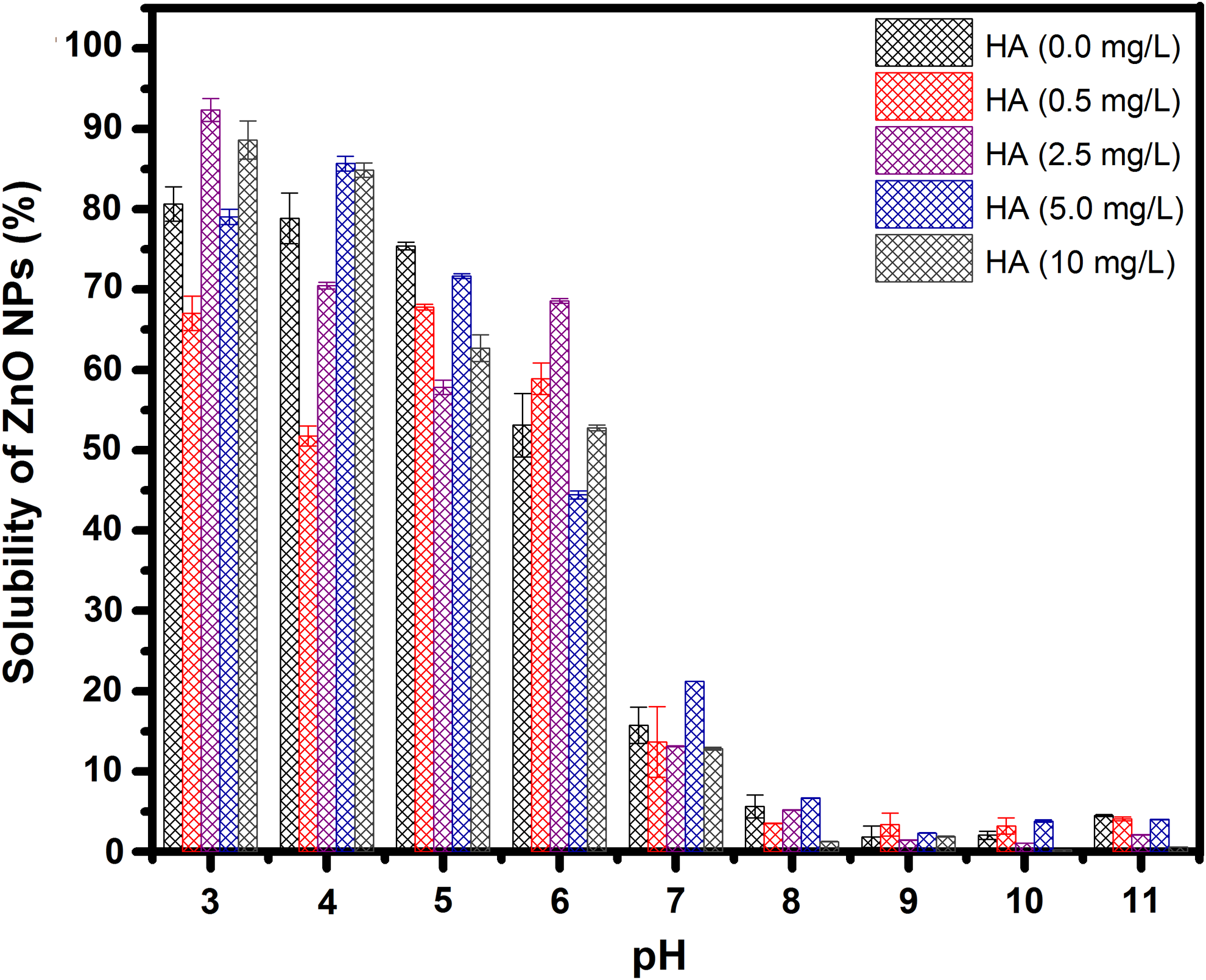
Dissolved Zn2+ as a function of pH ([ZnO NPs] = 30 mg/L; [Fe3+] = 0.3 mM; [HA] = 0, 0.5, 2.5, 5, 10 mg/L).
In the presence of HA, when pH was 6–9, the solubility of ZnO NPs decreased with increasing pH and we could know species of zinc ions from Supplementary Figs. S4b and S5b. In most cases, HA at a lower concentration impeded the dissolution of ZnO NPs in solution by being absorbed onto the surface of ZnO NPs (Han et al., 2014). Because HA had no significant effect on the removal efficiency of ZnO NPs and the decreasing of the concentration of Zn2+ in the presence of HA could contribute to the removal of ZnO NPs in alkaline solution with a concentration of 0.3 mM FeCl3, coagulation behaved effectively to remove ZnO NPs from water at pH 8–11.
Conclusions
This study showed that coagulation served as an effective way to remove ZnO NPs from aquatic environments. When pH ranges between 8 and 11, removal efficiency of turbidity of ZnO NPs by a dosage of 0.3 mM FeCl3 is higher than 97%. There are three situations of coagulation and dissolution of ZnO NPs (Fig. 7): (1) the dissolution of ZnO NPs, which were transformed into soluble hydroxide, hydroxy complex, and Zn2+ in supernatant with pH ranging from 3 to 6; (2) at pH 6–8, the removal efficiency of ZnO NPs resulted from combined effects of coagulant enmeshment and charge neutralization; and (3) when the pH is between 8 and 11, the enmeshment of coagulants had significant effects on the removal of ZnO NPs.
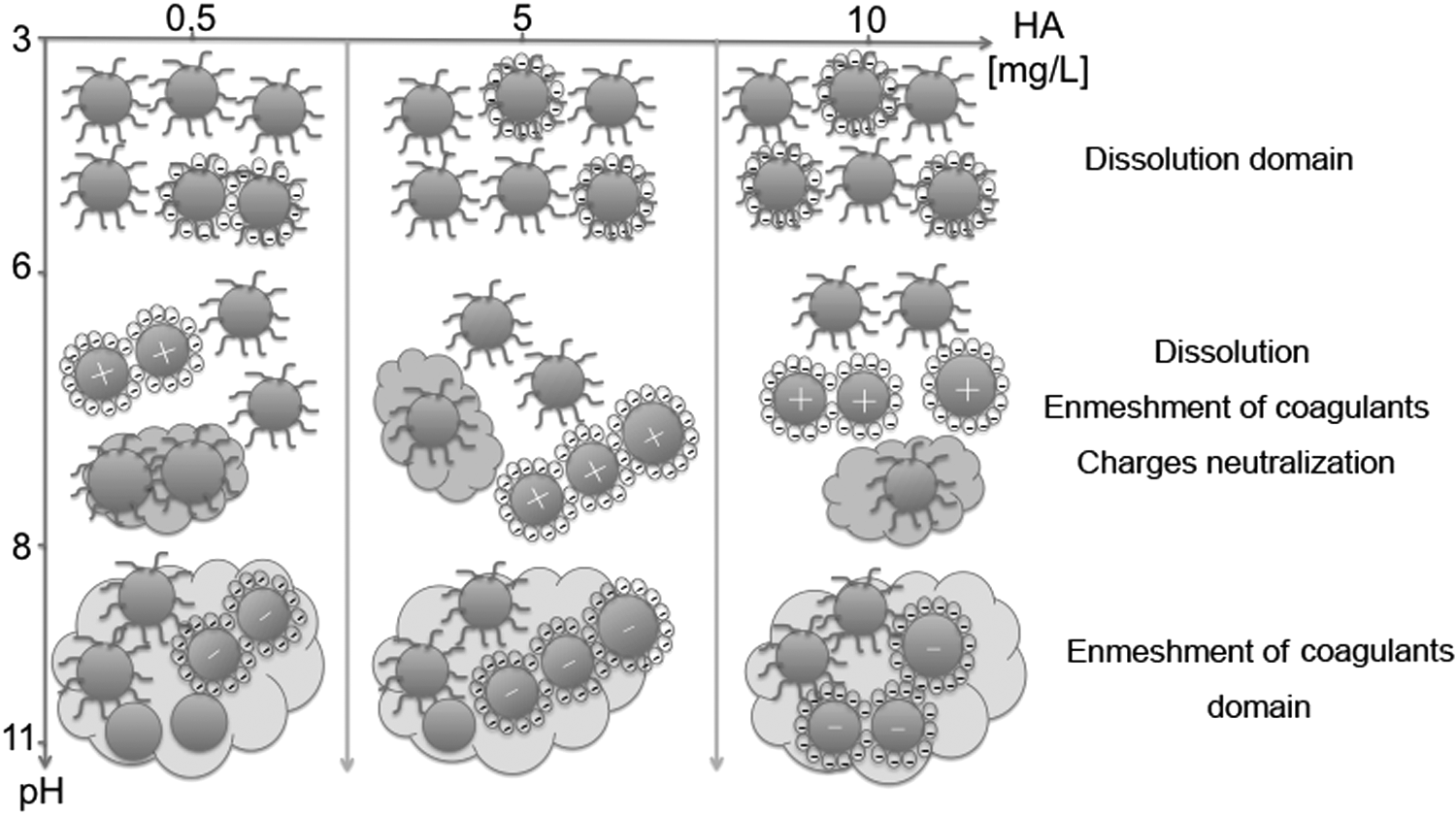
Interaction of ZnO NPs with HA at different pH values.
Footnotes
Acknowledgments
The research was partially supported by the National Natural Science Foundation of China (Fund No. 51108328) and Science and Technology Commission of Shanghai Municipality (No. 15230724300). It was supported, in part, by 111 Project and the Fundamental Research Funds for the Central Universities (No. 0400219312). The authors also appreciate the contribution of Ms. Xuejuan Yan for her preliminary exploration.
Author Disclosure Statement
No competing financial interests exist.
References
Supplementary Material
Please find the following supplemental material available below.
For Open Access articles published under a Creative Commons License, all supplemental material carries the same license as the article it is associated with.
For non-Open Access articles published, all supplemental material carries a non-exclusive license, and permission requests for re-use of supplemental material or any part of supplemental material shall be sent directly to the copyright owner as specified in the copyright notice associated with the article.
