




Abstract
Abstract
Performance of a hybrid ultraviolet/hydrogen peroxide (UV/H2O2)–mixed matrix membrane system for an azo dye, acid black 1 [AB1], removal in a water purification process was studied. Different mixed matrix membranes embedded with titanium dioxide (TiO2) nanoparticles, multi-walled carbon nanotubes (MWCNTs), and a mixture of them were fabricated by the phase inversion method. Mixed matrix membranes embedded with MWCNTs resulted in higher pure water flux, and mixed matrix membranes embedded with TiO2 showed lower flux declines in the presence of AB1. However, all the membranes exhibited very low total organic carbon (TOC) rejection and none of the mixed matrix membranes could decolorize the AB1 solution. UV/H2O2 pretreatment of the AB1 solution resulted in enhanced TOC rejection, decolorization, and enhanced antifouling membrane behavior. Combining UV/H2O2 with each type of polysulfone (PSF) mixed matrix membranes (PSF/TiO2, PSF/MWCNT, and PSF/TiO2/MWCNT) resulted in optimal performance in terms of permeation, flux decline, antifouling, rejection, and decolorization. The hybrid process of UV/H2O2-PSF/TiO2/MWCNT mixed matrix membrane resulted in 270 (L/[m2·h]) permeation, 29% flux decline, 90% TOC rejection, 99% decolorization, and 99% flux recovery ratio (FRR%).
Introduction
A
Biological treatment requires optimal environment, nutrition supplies, large land area, and is often limited by toxicity of some chemicals (Bhattacharyya and Sarma, 2003). Furthermore, biological treatment is a slow process (Robinson et al., 2001). Although many organic molecules are degraded, many others, especially azo dyes, are difficult to deal with due to their complex chemical structure and synthetic organic origin (Zhu and Ma, 2008). Azo dyes, characterized by the presence of an azo group consisting of two nitrogen atoms (-N = N-) as the chromophore, are the largest group of dyes and represent more than a half of the global dye production (Daneshvar et al., 2012). Some dyestuffs such as acid yellow 17 and reactive orange 17 are considered to be nonbiodegradable or very slowly biodegradable due to their xenobiotic nature (Ghoreishi and Haghighi, 2003; Rai et al., 2005; Daneshvar et al., 2013).
However, an anaerobic textile-dye bioremediation system allows azo and other water soluble dyes to be decolorized by reductive cleavage of the azo bonds (-N = N-) by the action of microorganisms present in the wastewaters, but inadequate anaerobic breakdown yields formation of by-products such as aromatic amines, methane, and hydrogen sulfide (Robinson et al., 2001).
Although application of some chemical methods is simple, chemical treatments use a huge amount of chemicals and generates a large volume of sludge, which itself requires treatment. In photochemical treatment, no sludge is produced but by-products may be formed (Tchobanoglous et al., 1991; Adegoke and Bello, 2015). Advance oxidation processes (AOPs) have been receiving attention in removing organic dyes from aqueous solutions. AOPs provide in-situ production of strong oxidizers such as hydroxyl radicals (OH•), ozone (O3)c superoxide anion radical
Different physical methods such as membrane filtration processes like ultrafiltration (Zaghbani et al., 2009), nanofiltration (Gomes et al., 2005), reverse osmosis (Al-Bastaki, 2004), and adsorption techniques (Mui et al., 2010; Šmelcerović et al., 2010) are widely used for dye removal. For instance, high efficiencies have been achieved by using activated carbon as an adsorbent for removal of a wide variety of dyes, but this method is very expensive (Gomez et al., 2007). Some membrane filtration methods can remove all dye types but the major disadvantages of the membrane process are production of concentrated sludge, poor decolorization, and membrane fouling (Adegoke and Bello, 2015). There is a trade-off between membrane flux permeation, rejection, and fouling. Membrane fouling depends on several factors including the filtration operational conditions, membrane properties, and feed solution physicochemical properties (Crozes et al., 1997; Greenlee et al., 2010; Esfahani et al., 2015a; Malmali et al., 2015).
Membrane fouling is an important concern for membrane separation technology, which can cause flux decline and affect the quality of the water produced. Severe fouling may require intense chemical cleaning or membrane replacement that increases the cost of water treatment processes (Esfahani et al., 2015b). Yu et al.(2010) used an asymmetric cellulose acetate membrane and thin-film composite polyamide membrane for dye removal and concluded that membrane surface charge, membrane surface roughness, and operational conditions such as cross-flow velocity had significant effects on process efficiency.
Several studies (Ollis, 2003; Grzechulska-Damszel et al., 2009; Wang et al., 2015) have shown that a combination of mentioned treatment methods resulted in higher pollutant removal efficiency because each technique complements the advantages and overcomes the challenges of the other. Technical flexibility of membrane separation technology has allowed possible integration/coupling with several AOPs (Wang et al., 2015). For instance, Wu et al. (1998) applied membrane filtration and ozonation processes for treatment of reactive dyes and reported over 99% of the color and copper removal and 85% of salt by mass and 85% of water reuse. Mozia et al. (2005) coupled photocatalytic techniques and membrane distillation for degradation of organic pollutants and reported complete dye removal from the aqueous environment. Although there is some research on using membrane technology (separately or in combination with AOPs) for dye removal, the lack of mixed matrix membranes use with modified physicochemical properties and enhanced performance efficiency in this field is felt.
In this study, performance of hybrid UV/H2O2–mixed matrix membrane (polysulfone/titanium dioxide [PSF/TiO2], PSF/multi-walled carbon nanotube [MWCNT], and PSF/TiO2/MWCNT) systems on dye removal in aqueous solution was investigated for the first time. First, the efficiency of mixed matrix membranes for dye removal in terms of permeation, fouling, cleaning, rejection, and decolorization of the acid black 1 (AB1) solution was studied using the cross-flow filtration. Then, the UV/H2O2-treated AB1 solution was filtered with the same mixed matrix membranes at the same experimental condition, and the effect of UV/H2O2 on the membrane filtration process was investigated to determine trade-off between membrane permeation, rejection, antifouling, and decolorization. This process potentially can be used for industries such as textile and paper where large quantity of reused water is needed.
Materials and Methods
MWCNTs, termed Baytube 150P, were provided by Bayer Material Sciences with manufacturer specifications of 13 nm for the outer diameter, 4 nm for the inner diameter, and 0.2 to 1 μm mean lengths. Titanium dioxide (TiO2) nanoparticles (manufacturer label average size of 21 nm, >99.5% trace metal basis) and N-Methyl-2-pyrrolidinone (NMP) were purchased from Sigma-Aldrich. Polysulfone Udel P-3500 LCD MB7 (PSF) (molecular weight: 77,000–83,000 g/mol) was provided by Solvay Advanced Polymers. Deionized water (DI) was produced on a Millipore DI system Direct-Q 3 UV (18.2 MΩ·cm), which was used for both membrane fabrication and the filtration study. The commercial AB1 (Dye purity = 80%) (Molecular weight: 616 g/mol) product was purchased from Sigma-Aldrich (Sigma Chemical Co.) and used without further purification. H2O2 30 wt.% (certified ACS) was purchased from Fisher Scientific, Inc.
Membrane fabrication and characterization
All membranes were fabricated by a phase inversion process (Van de Witte et al., 1996). Granular PSF (18 wt.%) was dissolved in NMP by stirring at room temperature (T = 25 ± 2°C) and humidity (58 ± 2%) for 8 h and then stored in a closed glass vessel for 8 h to release the gas bubbles before casting. Nanocomposite membranes were fabricated in the same procedure except that nanoparticles (1 wt.%) were dissolved in NMP for 20 min and sonicated for 20 min before addition of PSF granular into the casting solution (Table 1). To begin casting the membranes, the casting solution was placed on the clean glass and spread out using the doctor blade with 220 μm thickness. The cast film and glass were immediately immersed in a precipitation bath containing DI at room temperature to initiate the nonsolvent induced phase separation (Esfahani et al., 2015c). The formed membrane was floated from the glass (after 90 s) and rinsed with DI to remove the residual solvent. All membranes were kept in DI for 12 h before the filtration test.
MWCNT, multi-walled carbon nanotube; NMP, N-methyl-2-pyrrolidinone; PSF, polysulfone; TiO2, titanium dioxide.
All micrographs were acquired using an environmental scanning electron microscope (FEI Quanta 200, 149 FEI Company). All the samples were frozen by liquid nitrogen and subsequently fractured, then sputter-coated with gold. Atomic force microscopic (AFM) analysis was applied as well to evaluate the membrane surface roughness using a Digital Instruments Nanoscope III. Three replicate samples of each membrane were analyzed. The statistical analysis for surface roughness was performed using NanoScope Analysis v1.40r1 (Bruker AFM Probes) in term of the average roughness (Ra). The error was less than 10% of the mean value.
The hydrophilicity of the membranes was determined based on the pure water contact angle by using a laboratory-constructed camera apparatus (JVC TK 1270). One microliter of water droplets were placed at different positions on the membrane surface for replicates. The average value of at least five measurements was reported.
A revised form of the Guerout–Elford–Ferry equation was used for calculation of average pore radius of membranes, rm, (Feng et al., 2004)
Here, ɛ is the membrane porosity, η is the water viscosity (Pa·s), l is the membrane thickness, Q is the volumetric flow rate of permeate pure water (m3/s), A is the membrane effective area (9.07 × 10⁻⁴ m2), and ΔP is the operational pressure (0.16 MPs).
Overall porosity of all the membranes was determined using a gravimetric method defined in Equation (2) (Yu et al., 2009):
Here, Wwet is the weight of the membrane immersed in pure water for 3 days, Wdry is the weight of the membrane dried in a vacuum oven at 80°C for 12 h, A is the membrane effective area (m2), L is the membrane thickness (m), and ρw is the water density (0.998 g/cm3).
To determine the water flux of membranes, first all membranes samples were compacted at transmembrane pressure (TMP) = 0.3 MPa and room temperature (T = 25 ± 2°C) to reach steady flux permeation. Then, the pressure was reduced to TMP = 0.16 MPa, and pure water flux was calculated using Equation (3):
Here, Jw1 (L/[m2·h]) is the pure water flux, V is the volume (L) of permeate water, A is the effective membrane area (m2), and Δt is the permeation time (h). A minimum of three replicates was tested, and the average is reported.
The flux recovery ratio (FRR%) was used as the index of antifouling properties of membranes by using Equation (4):
Here, Jw1 is the pure water flux of a membrane at TMP = 0.16 MPa and cross-flow velocity of 0.16 cm/s. After calculation of pure water flux (Jw1), 10 ppm AB1 solution was introduced into the filtration system, and the permeation test was measured for 2 h at TMP = 0.16 MPa and cross-flow velocity of 0.16 cm/s. The fouled membrane was washed by pure water at cross-flow velocity of 0.16 cm/s and room temperature for 15 min. After the cleaning step, the pure water flux (Jw2) was again measured at TMP = 0.16 MPa and cross-flow velocity of 0.16 cm/s.
Dye rejection ability of the membranes was tested at 0.16 MPa TMP using the 10 ppm AB1 solution. The solution concentration of feed and permeate was measured using a UV-vis spectroscopy (Varian Cary 3 E; Agilent) at a wavelength of 618 nm. The dye rejection (R%) was calculated by Equation (5):
Here, Cp and Cf are dye concentration in permeate and feed solution, respectively.
UV/H2O2 process
Combination of UV radiation and H2O2 is a promising approach to removing hazardous organics from aqueous solutions. UV radiation of the 200–300 nm region induces disassociation of H2O2 to hydroxyl radicals (OH•), which have an oxidation potential of 2.8 V. Hydroxyl radicals can unselectively oxidize the target organic contaminants (RH) and produce highly reactive organic radicals (R), which can be more oxidized to decompose and mineralize organic compounds into carbon dioxide and water [Eqs. (6)–(12)] (Georgiou et al., 2002).
In this research, a batch-scale photo reactor was used to evaluate the AOPs of the combination of UV and H2O2 for removal of AB1 in water. A 450 W high-pressure mercury vapor UV lamp (Hanovia, AceGlass) was used as the light source for the photo reactor. The UV lamp located at the center of the reactor was covered with a quartz sleeve. A water cooling loop was used to prevent the lamp from overheating (Fig. 1). A 10 ppm stock solution of AB1 was prepared by addition of 1 mL of H2O2 30 wt.% and appropriate amount of dye (AB1) into a 1-L conical flask and diluting with DI to 1,000 mL without further pH adjustment. Then, the solution was poured into the UV photoreactor and irradiated for 5 min. Then, the treated solution was used as the feed for the membrane filtration part. The initial pH of the solution (pH = 5.2) was measured by using a Fisher scientific accumet® model 15 pH meter, according to standard laboratory operating procedures. The concentration of 1 mL of H2O2, 30% wt.%, was chosen following previous studies (Shu et al., 2004).
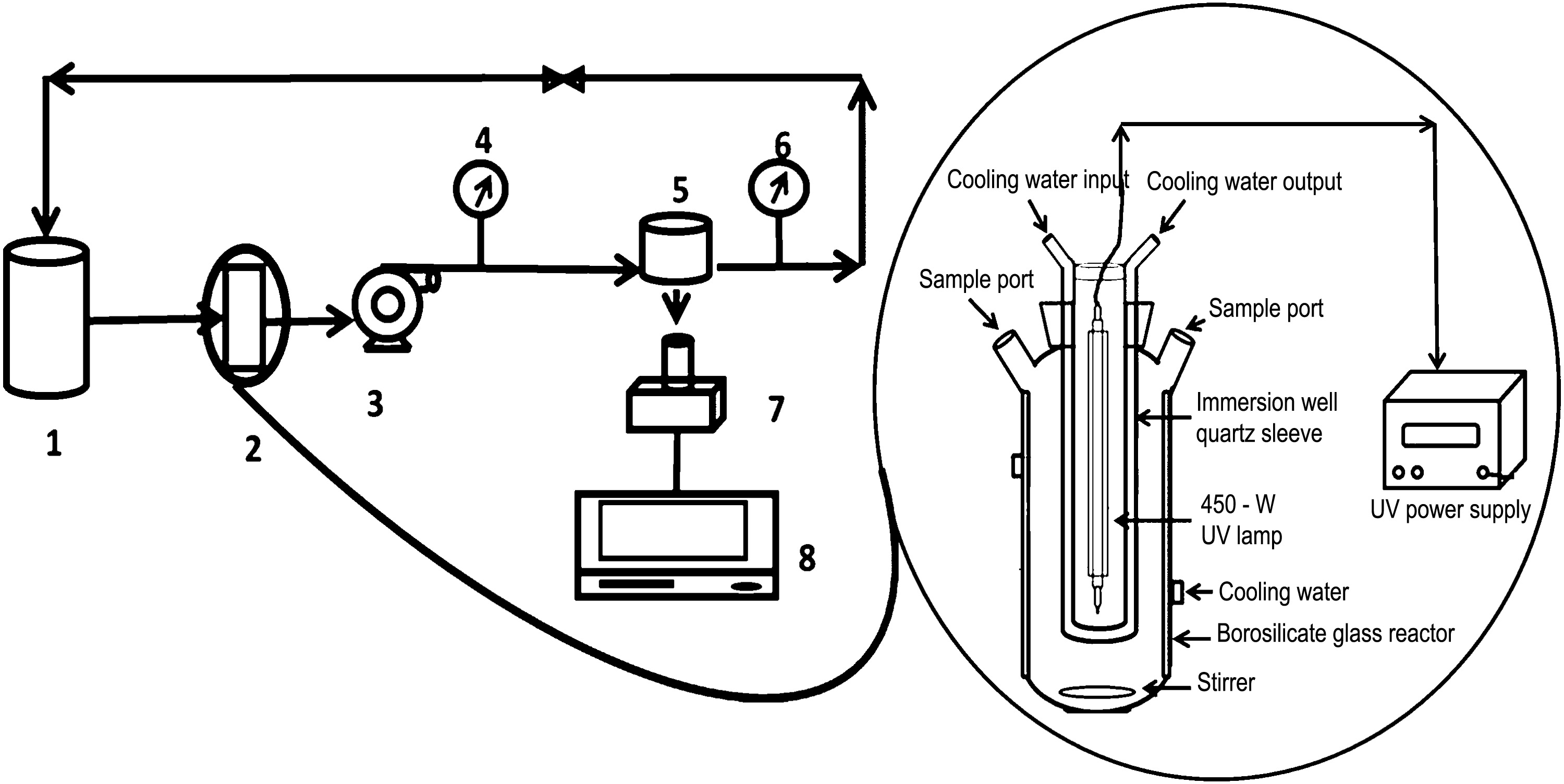
Schematic of UV/H2O2- filtration setup: (1) feed tank, (2) UV/H2O2 reactor (3) pump, (4 and 6) pressure gauge, (5) polycarbonate membrane cell (surface area: 11 × 10−3 m2), (7) electronic balance, (8) data acquisition. H2O2, hydrogen peroxide; MWCNT, multi-walled carbon nanotube; PSF, polysulfone; UV, ultraviolet.
Results and Discussions
Membrane characterization
X-ray diffraction scans of the membranes confirm existence of TiO2 and MWCNT in the polymeric network of membranes (Fig. 2). PSF exhibited a broad peak (2θ in the range of 12o to 20o), which corresponds to the amorphous structure of the PSF. Sharp peaks were observed for PSF/TiO2 nanocomposite at 2θ = 26o and 2θ = 50o, which are attributed to the high crystallinity of TiO2 nanoparticles (Devrim et al., 2009). The diffraction peak of MWCNT was seen at 2θ = 26o that match the XRD pattern reported by Vatanpour et al. (Vatanpour et al., 2012) related to the MWCNT filler embedded into the polymeric membrane. The PSF/TiO2/MWCNT showed the same sharp peaks like both PSF/TiO2 and PSF/MWCNT.
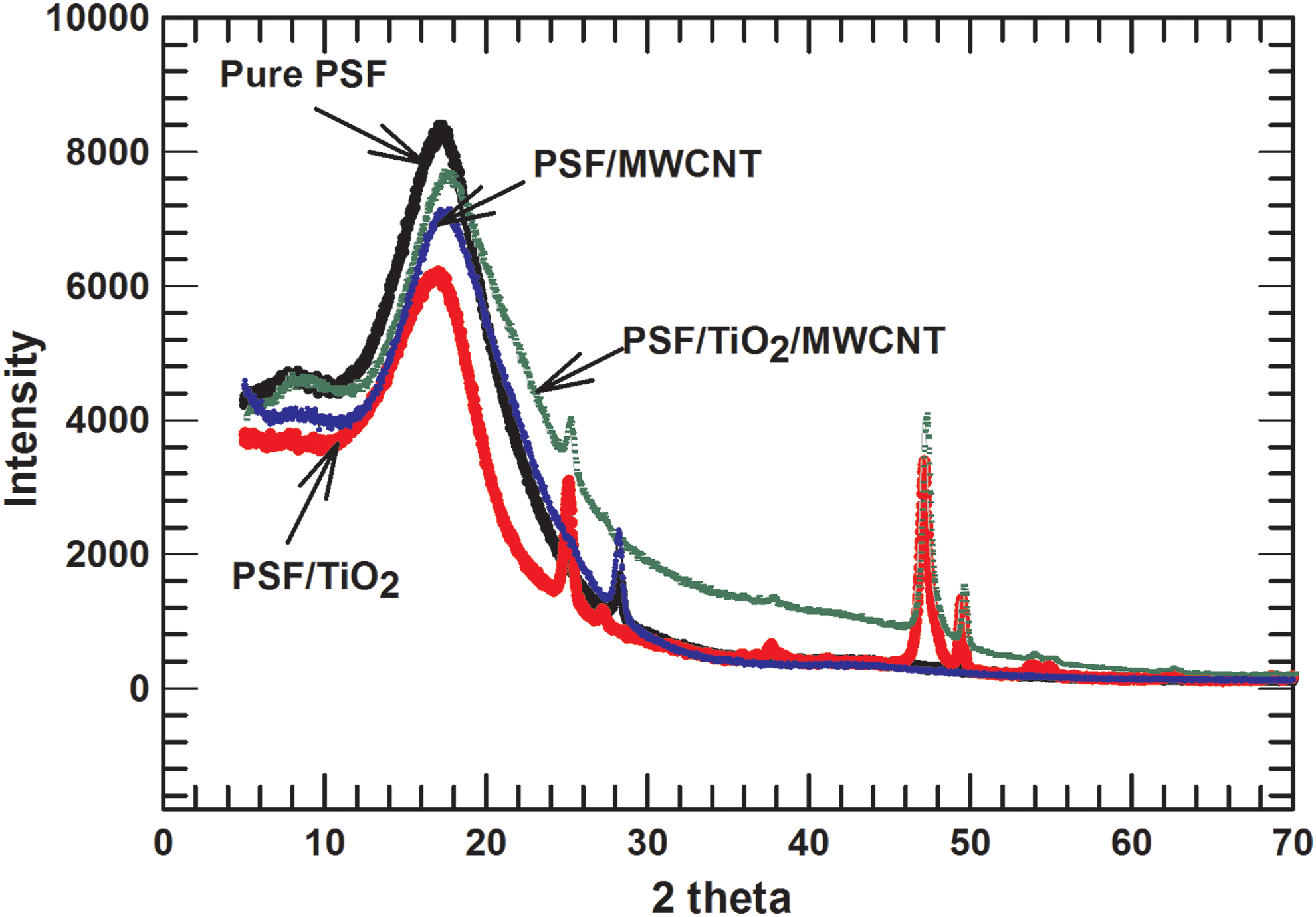
XRD pattern of pure PSF, PSF/TiO2, PSF/MWCNT, and PSF/TiO2/MWCNT membranes. TiO2, titanium dioxide.
SEM micrographs of a cross section of membranes are shown in Fig. 3. All of the membranes exhibit a typical asymmetric structure of ultrafiltration membrane including a dense top layer and a porous sublayer. However, all the nanocomposite membranes showed more pores in the top layer and more interconnected pores in the porous sublayer. The changes in membrane morphologies induced by the addition of TiO2 and MWCNT nanoparticles could be interpreted from a membrane formation mechanism during the phase separation. The two main factors of thermodynamic state and kinetic properties of the system, and how they vary during processing, control the structure formation mechanism, and therefore, the resulting morphology of a membrane made by phase separation (Kimmerle and Strathmann, 1990; Fontananova et al., 2006; Yang et al., 2008; Zhao et al., 2008).
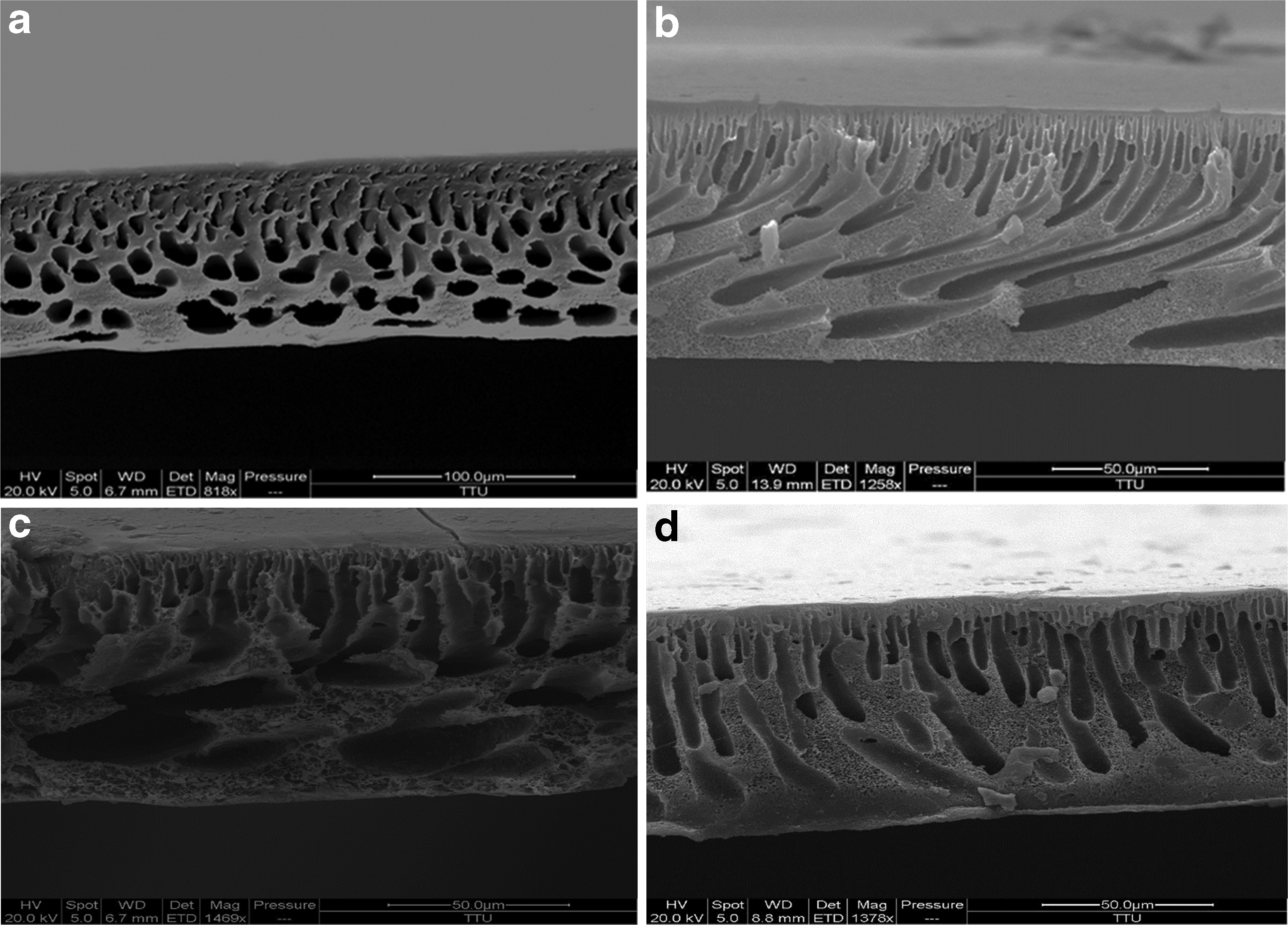
SEM images of membrane cross section:
The addition of nanoparticles reduced the miscibility of the casting solution with water (nonsolvent), causing the acceleration of the phase separation. When the casted film came into contact with the nonsolvent (DI) in the coagulation bath, there was a rapid outflow of the solvent (NMP) from the casting film to the coagulation bath, inducing the diffusion behavior of soluble additive into the coagulation bath. A more rapid rate of outflow solvent diffusion allows a slower influx of nonsolvent into the precipitating film. The out leaching of nanoparticles along with the solvent acted as a pore forming agent resulting in membrane pores and porosity (Table 1) (Smolders et al., 1992; Zhao et al., 2011). Addition of MWCNT to the casting solution did increase the viscosity (Table 1). The more viscous casting solution could result in a decrease in the mutual diffusion rate and development of a sponge-like morphology. However, based on the SEM evidence, the viscosity was not the controlling or dominant factor in pore formation. Thus, a thermodynamic affinity argument, leading to enhanced phase separation, is consistent with the finger-like pores observed in the nanocomposite SEM images (Esfahani et al., 2015c). The molecular weight cutoff (MWCO), defined as the lowest molecular weight of a solute that has a rejection of 90%, measured based on the rejection of different proteins increased from 12 kg/mol for pure PSF up to 32 kg/mol for PSF/MWCNT (Bowen, 1993; Yin et al., 2013). This trend is consistent with the finding from Yin et al. (2013) that the MWCO of MWCNT nanocomposite membranes increased by addition of MWCNT into the PSF membrane (Yin et al., 2013).
AFM images of the membranes are presented in Fig. 4. The average surface roughness (Ra) of all the nanocomposite membranes increased compared to pure PSF (Ra = 2.5 nm) membranes. Addition of MWCNT increased the membrane surface roughness more compared to TiO2 nanoparticles and resulted in surface roughness of PSF/MWCNT, PSF/TiO2/MWCNT, and PSF/TiO2, showing Ra = 6.8, Ra = 4.5, and Ra = 2.9, respectively. This may be due to aggregation of nanoparticles on the membrane surface during the membrane formation process (Qiu et al., 2009).
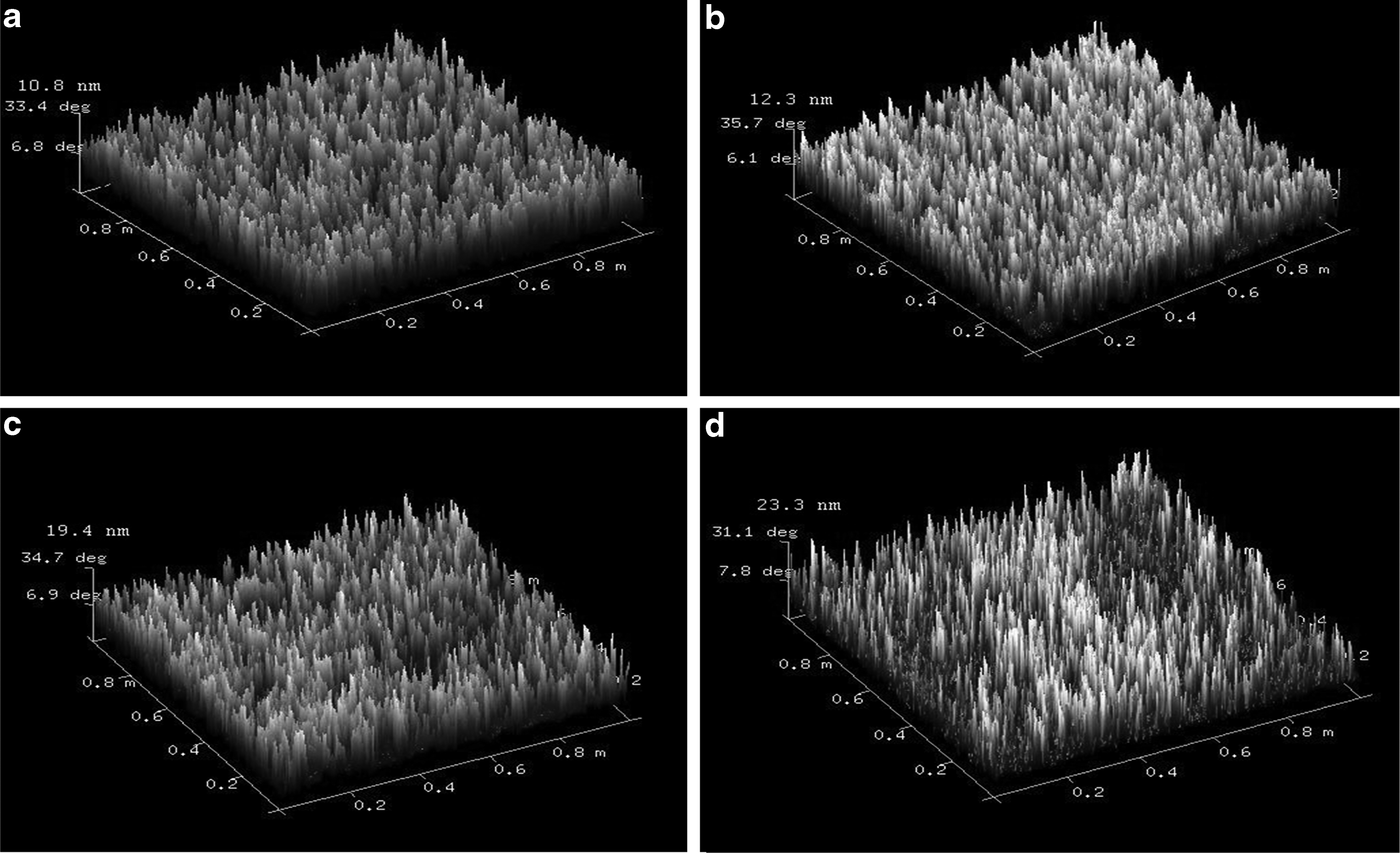
Atomic force microscopic surface images of
Table 1 shows the contact angle measurement of all the membranes. The enhanced surface hydrophilicity of mixed matrix membranes, compared to pure PSF, can be explained due to the presence of hydrophilic functional groups such as –COOH and –OH on the surface of modified MWCNT and the TiO2 nanoparticles. Figure 5 shows the digital photograph of the top surface and bottom surface of PSF/TiO2 and PSF/MWCNT membranes. Color of the back side (side of the casted film face the glass) of PSF/MWCNT and PSF/TiO2 nano-composite membranes was very light compared to the top side (side of the cased film face the nonsolvent). This phenomenon indicates the migration of nanoparticles to the top surface of the membranes during the phase inversion process. The presence of MWCNT and the TiO2 nanoparticles with their hydrophilic functional groups can explain the increased hydrophilicy (Table 1), and their aggregation can explain the increased membrane surface roughness of nanocomposite membranes (Fig. 4). Choi et al. (2006) reported a contact angle reduction from 72° for pure PSF to 55° for nanocomposites by adding 4% (wt.) MWCNT. The PSF/TiO2/MWCNT showed reduction in contact angle from 81° for pure PSF to 61° for the mixed matrix membrane. This result exhibits the synergistic effect of MWCNT and TiO2 nanoparticles in contact angle and porosity (Table 1).

Digital photographs of PSF/MWCNT and PSF/TiO2 nanocomposite membranes top side (top surface) and back side (Because of the white color of PSF/TiO2 nanocomposite membranes, the contrast between the top side and back side is not completely obvious here. But, the top side of the PSF/TiO2 membranes is shinier due to the presence of TiO2 nanoparticles).
Membrane performance: flux, fouling, rejection
Pure water fluxes of all the membranes are presented in Fig. 6. Mixed matrix membranes showed a higher pure water flux than the pure PSF membranes (10 L/[m2·h]). This improvement in pure water flux can be explained by two facts. First, as it was discussed earlier, the higher porosity (Table 1) and more interconnected porous structure of mixed matrix membranes (Fig. 3) provided more room for transportation of water molecules inside the porous structure, resulting in higher permeation. Second, addition of hydrophilic nanoparticles increased the hydrophilicity of mixed matrix membranes (Table 1), improved the water permeability by attracting water molecules inside the support structure, and facilitated their transport through the membrane pores (Yang et al., 2006). The PSF/MWCNT showed the maximum pure water flux (410 L/[m2·h]) among the membranes. This very high flux can be justified based on the fact that the PSF/MWCNT membrane had the largest mean pore radius (20 nm) and the second highest porosity among any of the membranes (Table 1).

Pure water flux of membranes at TMP = 0.16 MPa, cross-flow velocity = 0.16 m/s, and temperature = 23 ± 2°C. The standard error bars of all samples were less than 10%. TMP, transmembrane pressure.
The antifouling and rejection properties of membranes were investigated by filtration of a 10 ppm dye solution. Figure 7 shows the flux decline of dye solution after 2 h filtration at TMP = 0.16 MPa and cross-flow velocity of 0.16 cm/s at room temperature. The pure PSF membrane did not show any flux decline during the filtration. However, very low (10 L/[m2·h]) flux of pure PSF indicates not enough dye solution permeation through the membrane, resulting in insignificant membrane fouling. PSF/TiO2 nanocomposite membranes exhibited eight times higher permeation than pure PSF. Moreover, PSF/TiO2 nanocomposite membranes did not show significant flux decline (applying statistical analysis of variance and Tukey method) during the dye filtration process. PSF/MWCNT nanocomposite membranes showed almost 35 times and 4 times higher permeation than pure PSF and PSF/TiO2. As it was discussed for pure water permeation flux, larger pore size and porosity of nanocomposite membranes embedded with MWCNT (Table 1) facilitated the transport pathway and resulted in enhanced permeation flux. The controversial point of PSF/MWCNT nanocomposites is their higher flux decline compared to pure PSF and PSF/TiO2 nanocomposite membranes. Both PSF/MWCNT and PSF/TiO2/MWCNT showed 12% and 11% flux decline, respectively (Fig. 7). This flux decline phenomenon can be justified by the fact that the AB1 molecules might adsorb on the multi-wall carbon nanoparticles embedded in the membrane surface or inside the membrane pores, resulting in membrane fouling by cake layer formation or an internal pore blocking mechanism (Gong et al., 2009; Esfahani et al., 2015b). For instance, Ai et al. (2011) reported adsorption of methyelen blue on magnetite-loaded MWCNTs, yielding a maximum monolayer adsorption capacity of 48.06 mg/g. Another reason for significant flux decline of nanocomposite membranes embedded with MWCNT might be high surface roughness (higher peak/valleys ratio) (Table 1) that provided a more active site for adsorption of dye molecules on the surface or confinement of dyes particles on the membrane surface initiating the cake layer formation (Jones and O'Melia, 2000).
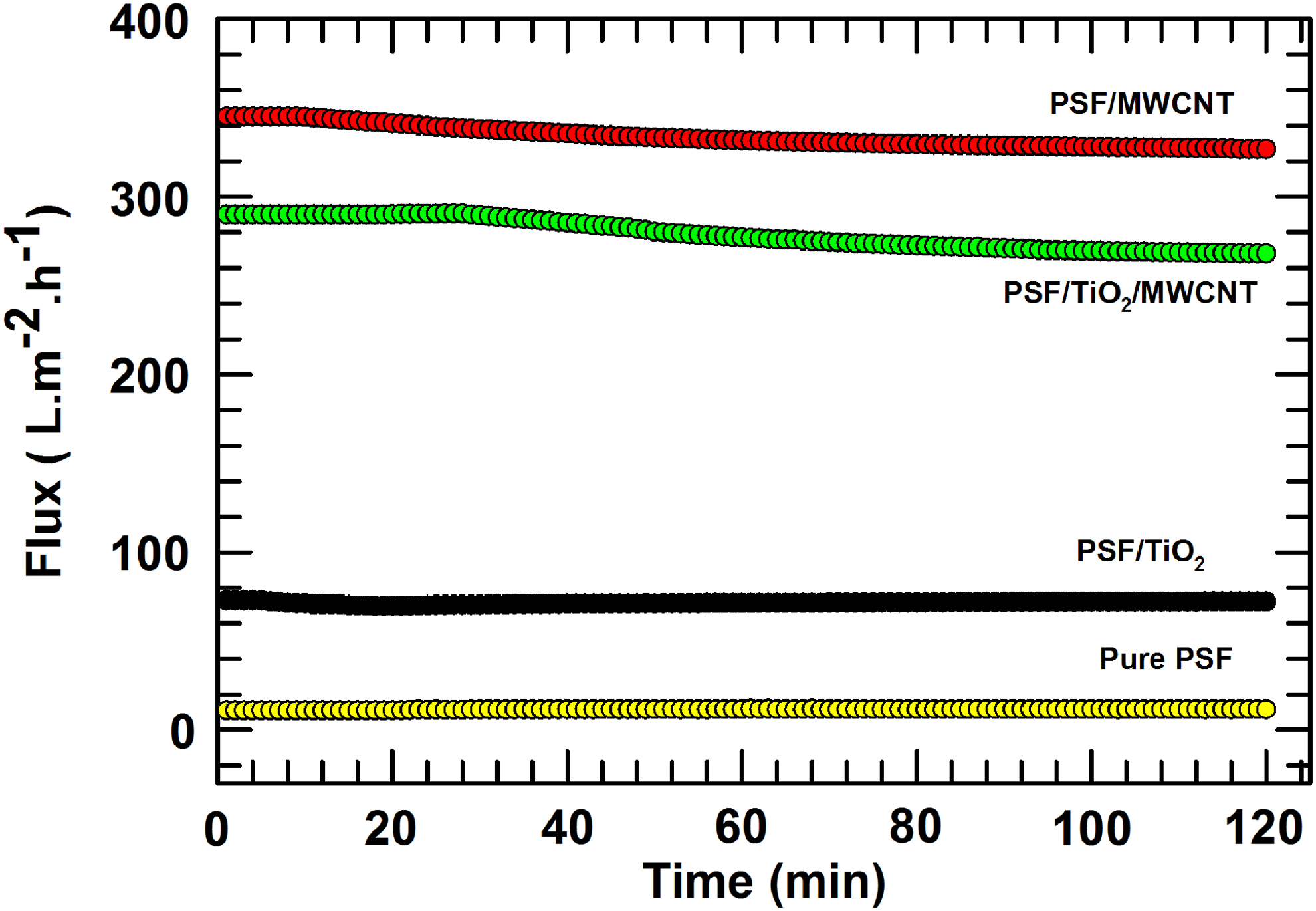
Flux of 10 ppm AB1 solution at TMP = 0.16 MPa, cross-flow velocity = 0.16 m/s, and temperature = 23 ± 2°C. The standard error bars of all samples were less than 10%.
Water cleaning was used to recover membrane flux, and the efficiency of hydraulic cleaning was assessed by FRR% as the index for membrane antifouling properties (Peeva et al., 2011). Higher FRR% values mean higher efficiency of hydraulic cleaning and better antifouling properties. FRR% values of all membranes are presented in Fig. 8. PSF/TiO2 mixed matrix membranes exhibited the best antifouling behavior by 100% flux recovery ratio among the membranes. The high surface hydrophilicity of PSF/TiO2 nanocomposite membranes, discussed earlier based on contact angle (Table 1), weakened the interaction between dye molecules and membrane surface, and therefore, the deposited dye molecules on the surface could be easily washed away by hydraulic cleaning of the membrane. Although the PSF/TiO2/MWCNT showed the lowest contact angle (Table 1), the FRR% of PSF/TiO2/MWCNT was 75%, which indicates 25% of the fouled membrane could not be cleaned by hydraulic washing. This 25% ratio shows that there was no cleaning effect and was due to strong adsorption of dye molecules in multi-wall carbon particles or internal pore blocking that prevented hydraulic washing from cleaning them (Yang et al., 2011).
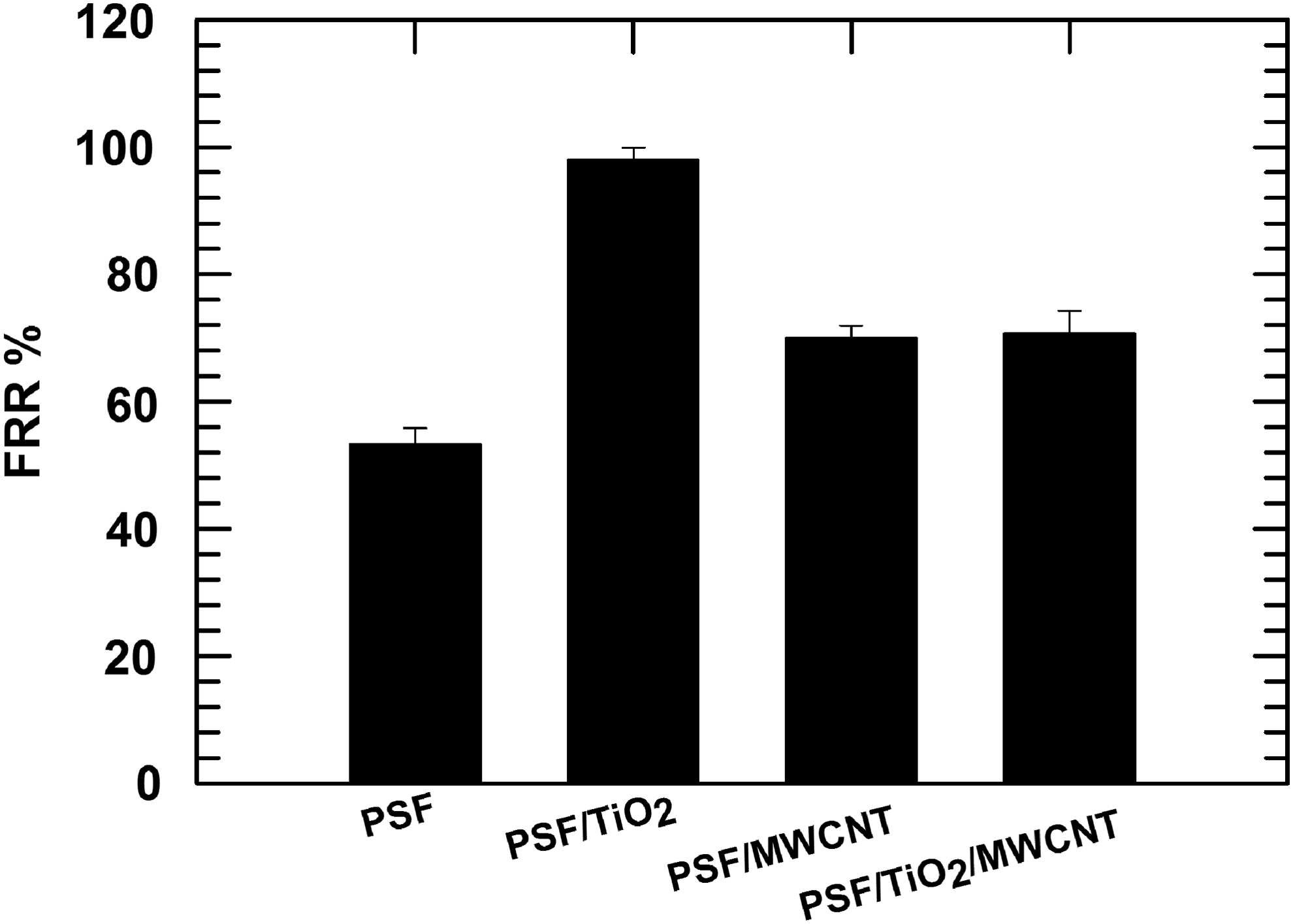
Flux recovery ratio (FRR%) values of membranes. Hydraulic washing was performed by pure water (DI) at cross-flow velocity of 0.16 m/s and temperature = 23 ± 2°C for 15 min. DI, deionized water.
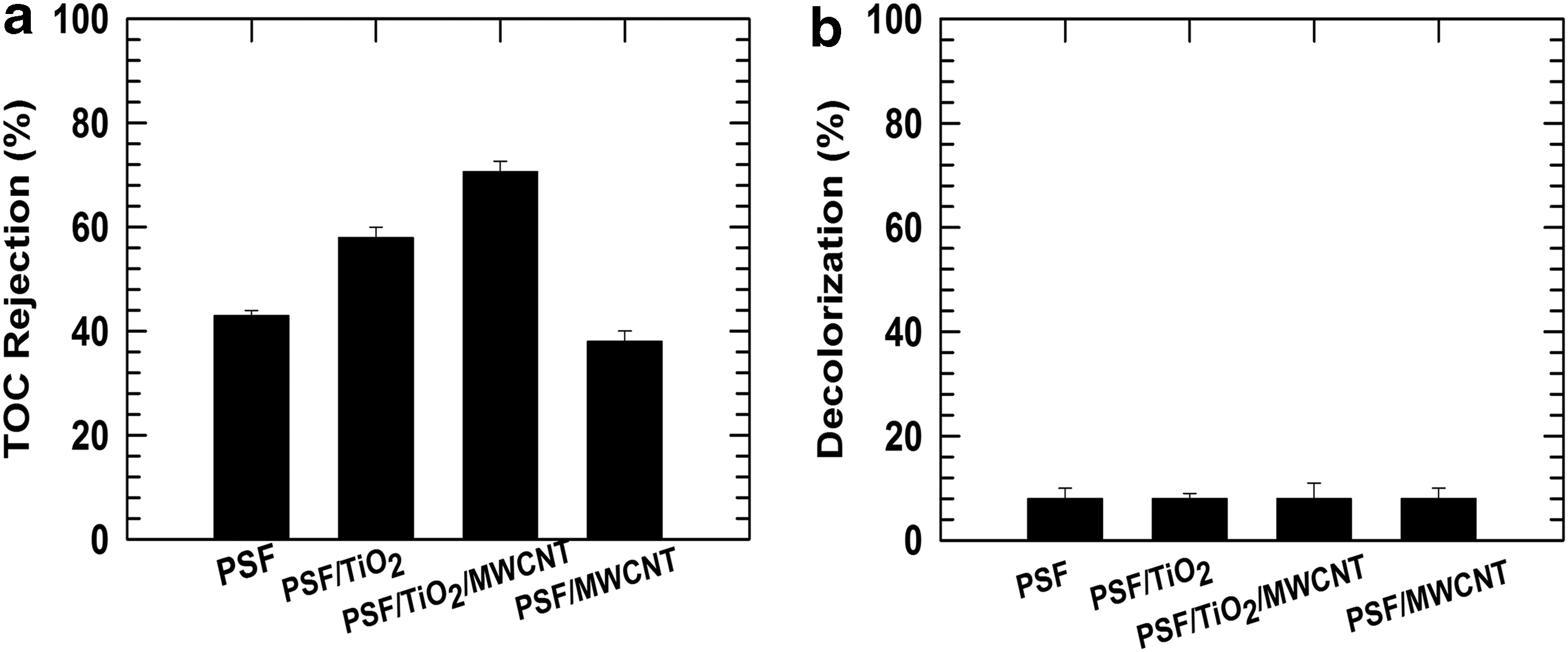
Rejection and decolorization ability of membranes are presented in Fig. 9. The PSF/TiO2/MWCNT nanocomposite showed the highest rejection of AB1 solution compared to other membranes. This behavior was the synergistic effect of MWCNT and TiO2 nanoparticles that caused more optimal results than each of the MWCNT and TiO2 nanoparticles could have achieved separately. PSF/MWCNT showed the minimum rejection of AB1, which can be explained based on the fact that the PSF/MWCNT nanocomposite had a larger pore size, resulting in a passage of AB1 particles through the membrane pores. The critical point of all the membranes is their weak performance on decolorization of the AB1 solution. Figure 9b shows that all membranes could decolorize the AB1 by less than 10%. Color present in dye effluent gives a straightforward indication of water being polluted, and discharge of this highly colored effluent can directly damage the receiving water (Chen et al., 2003; Stretz et al., 2013). The presence of solution color is the result of the interaction between an azo function (-N = N-) and two aromatic species: the dyes carry an acceptor group, which is an aromatic nucleus frequently containing a chromophoric group, for example,
Effect of UV/H2O2 on mixed matrix membranes performance
The UV/H2O2 process can potentially affect the physicochemical properties of organic compounds and mineralize completely or partially most of the organic contaminants into carbon dioxide and water (Ollis et al., 1991; Koutahzadeh et al., 2016). Figure 10 shows the flux of 10 ppm AB1 solution treated with UV/H2O2 for 2 min and filtered for 2 h at TMP = 0.16 MPa and cross-flow velocity of 0.16 cm/s. Comparing the flux of treated AB1 solution (Fig. 10) with flux of AB1 solution without UV/H2O2 treatment (Fig. 7) indicates that UV/H2O2 treatment process might affect the solution physicochemical properties such as electrostatic charge, polarity, and particle size (Oturan et al., 2001; Guivarch et al., 2003), resulting in different flux decline behavior.

Flux of 10 ppm AB1 solution after UV/H2O2 treatment for 2 h filtration at TMP = 0.16 MPa, cross-flow velocity = 0.16 m/s, temperature = 23 ± 2°C.
All the nanocomposite membranes showed more flux decline for UV/H2O2 treated AB1 solution compared to AB1 solution without treatment. PSF/TiO2, PSF/MWCNT, and PSF/TiO2/MWCNT had 9%, 22%, and 29% flux decline, respectively. This phenomenon can be explained based on the fact that UV/H2O2 treatment changed the AB1 solution pH from initial pH = 5.2 to more acidic pH = 3 of final treated solution. The PSF/TiO2 nanocomposites have zero charge surface charge due to presence of TiO2 nanoparticles at pH = 5.5–6.0. Also, pH of the AB1 solution without any treatment is 5.2. Therefore, there is not any powerful electrostatic attraction between membrane surface and dye molecules, resulting in flux with no significant decline (Fig. 7). However, due to acidic pH of treated AB1 solution (pH = 3), the membrane surface turned to a more positive surface electrical charge that caused attraction electrostatic interaction between dye molecules and the membrane surface, resulting in attachment of dye molecules on the membrane surface (Grzechulska and Morawski, 2002; Zhang et al., 2013). After binding a layer of dye molecules on the membrane surface, the other dye molecules with negative surface charge bind to the negative membrane-dye surface by van der Waals force. It was the similar phenomenon reported by Kim et al. (2009) for interaction of short-range natural organic matter (NOM)-NOM and NOM-TiO2 interactions governed by polar (acid-base) and van der Waals forces in ceramic membrane filtration-ozonation hybrid processes.
Interestingly, this is the reason for high FRR% (more than 95%) of PSF/TiO2 after hydraulic membrane washing where the water molecules weakened those interactions and recovered the fouled membrane surface. The same scenario happened for mixed matrix membranes embedded with MWCNTs, with two exceptions: (1) first, there is a high affinity adsorption between dye molecules and MWCNT that caused the severe flux decline due to cake layer formation and internal pore blocking fouling (Fig. 10). (2) second, the PSF/MWCNT membrane surface is negatively charged (in range of zeta potential = −15, zeta potential = −50) in the entire pH range (Gong et al., 2009) and provided the electrostatic repulsion with the treated AB1 solution and enhanced negative surface charge. Effect of UV/H2O2 treatment was significant on FRR% of PSF/TiO2/MWCNT that caused an incremental increase of FRR from 70% (for AB1 solution without UV/H2O2 treatment) to 99% (for AB1 solution with UV/H2O2 treatment) (Fig. 11). This increment might be justified based on the high surface hydrophilicity of the PSF/TiO2/MWCNT nanocomposite membrane (Table 1) that mitigates fouling resistance (Sawada et al., 2012). Moreover, this behavior can be early evidence of synergism that was already discussed. The effect of UV/H2O2 was significant on decolorization of the AB1 solution (Fig. 12a).

Comparison of membranes FRR% between UV/H2O2 treated AB1 solution and AB1 solution without treatment. Hydraulic washing was performed by pure water (DI) at cross-flow velocity of 0.16 m/s and T = 23 ± 2°C for 15 min.

The treated AB1 solution showed around 99% decolorization after UV/H2O2 treatment (Koutahzadeh et al., 2016). H2O2 is the main factor for color destruction of the AB1 solution, and UV irradiation in the absence of H2O2 resulted in no color destruction. However, UV/H2O2 treatment cannot completely decrease total organic carbon (TOC) of the AB1 solution, and further processes (like membrane filtration) are needed to achieve this goal (Georgiou et al., 2002). Figure 12b shows that TOC rejection of all membranes increased after UV/H2O2 treatment of the AB1 solution. The PSF/TiO2/MWCNT mixed matrix membrane showed a nearly 98% TOC rejection. This behavior can be explained based on the fact that the UV/H2O2 treatment provided more negatively charged intermediates that exhibited a repulsion electrostatic interaction with a highly negative membrane surface charge of PSF/TiO2/MWCNT due to the synergism behavior of TiO2 and MWCNT.
Conclusions
This study was focused on application of the hybrid system of UV/H2O2–mixed matrix membrane for dye removal in water purification. The PSF/TiO2 and PSF/MWCNT and PSF/TiO2/MWCNT nanocomposite membranes embedded with a mixture of TiO2 nanoparticles and MWCNT with the possible synergism behavior were fabricated and characterized. Each of the TiO2 and MWCNT nanoparticles had specific effects on the asymmetric PSF membrane structure and permeation, fouling, and rejection. The permeability-related properties were tested using cross-flow filtration of 10 ppm AB1 solution. PSF/MWCNT showed the highest permeation flux, which correlated with the greatest mean pore size and pore interconnectedness. However, the greatest flux decline occurred for the mixed matrix membrane embedded with the MWCNT, which is attributed to high affinity adsorption of AB1 molecules in MWCNT. Alternatively, the mixed matrix membrane embedded with TiO2 nanoparticles showed a minimum flux decline and maximum FRR%, which is attributed to their hydrophilic surface that facilitates ease of washing. The inefficient performance of all the membranes was shown in the very low impact (less than 20%) on decolorization of the AB1 solution.
UV/H2O2 treatment of the AB1 solution affected the membrane filtration performance by impacting the physicochemical properties of the AB1 solution. The main advantage of UV/H2O2 treatment was significant decolorization of the AB1 solution. In general, UV/H2O2 pretreatment of the AB1 solution before membrane filtration resulted in higher TOC rejection and higher FRR% for all the nanocomposite membranes. In selecting the optimal mixed matrix membrane to be used in the hybrid process of UV/H2O2–mixed matrix membranes, the trade-off between permeation, fouling, cleaning, and rejection of membranes should be considered. Based on the experimental condition tested in this study, two possible combinations resulted in the optimal efficiency. The hybrid process of UV/H2O2-PSF/TiO2/MWCNT mixed matrix membrane resulted in 270 (L/[m2·h]) permeation, 29% flux decline, 90% TOC rejection, and 99% FRR. The hybrid process of UV/H2O2-PSF/TiO2 mixed matrix membrane resulted in 100 (L/[m2·h]) permeation, 10% flux decline, 60% TOC rejection, and 99% FRR. Preference of each of these systems depends on the requirements of the application.
Footnotes
Acknowledgments
The authors gratefully thank Dr. Holly Stretz at the TTU Department of Chemical Engineering for her useful discussions. We thank the TTU Center for the Management, Utilization, and Protection of Water Resources at TTU for technical research support. The authors thank the TTU Department of Chemical Engineering for instrumental support. We also wish to thank Thomas W. Malmgren at the University of Tennessee, Knoxville, for access to an AFM and microtoming.
Author Disclosure Statement
No competing financial interests exist.