




Abstract
Abstract
Occurrence and behavior of steroid estrogens and phenols in natural waters have been widely reported, but information about progestogens and androgens is rarely published. In this study, occurrence, spatiotemporal distribution, bioaccumulation, and ecotoxicological risk of steroidal and phenolic endocrine disrupting chemicals (EDCs) (progestogens, androgens, estrogens, and phenols) were documented in the catchment of China's Erhai Lake. Phenols were detected in concentration ranging from 47 to 215 ng/L in water and 16 to 76 ng/g in sediment. The pollution of phenols was mainly caused by the emission of agriculture, industry, and daily activities. Natural and synthetic steroids were also found in Erhai Lake catchment with the total concentrations ranging from 19 to 161 ng/L in water and from 2.76 to 29.1 ng/g in sediment. Bisphenol A, estrone, and dihydrotestosterone were the alkyl phenol, estrogen, and androgen found in the highest concentrations. Bioaccumulation of these EDCs in fish tissues was most pronounced in livers, followed by gills and then muscle tissue. Computed risk quotients suggest that the ecotoxicological risk of steroids and phenols in Erhai Lake was lower than that in the rivers feeding the lake. 17α-ethinylestradiol and bisphenol A pose the greatest risk and should be controlled preferentially in this catchment.
Introduction
E
Among the hundreds of EDCs, alkyl phenols and steroids are typical pollutants of concern (Zuo et al., 2015; Zhou et al., 2016). Among the steroids, natural estrogens [estrone (E1), 17β-estradiol (E2), and estriol (E3)], androgens [androstenedione (AND), testosterone (TEST), and dihydrotestosterone (DHT)], and progesterone (PROG) are excreted by both humans and livestock, and all of them have been detected in sewage treatment plant effluent (Ternes et al., 1999; Huang et al., 2014). 17α-ethinylestradiol (EE2) is an orally bioactive synthetic estrogen used in almost all modern formulations of oral contraceptive pills. It has been reported at concentrations up to 11.1 ng/L in Lake Quinsigamond in the American state of Massachusetts (Zuo et al., 2013). In addition, phenolic EDCs such as 4-nonylphenol (4-NP), bisphenol A (BPA), 4-tert-octylphenol (4-t-OP), and 4-cumylphenol (4-CP) that are widely used in households, in agriculture, and in industrial processes are now considered to be ubiquitous contaminants in natural water and even in various foods (Ferguson et al., 2001; Liu et al., 2012). In the aquatic environment, EDCs can be reduced not only by photochemical reactions but also by being absorbed into sediments and by being bioaccumulated in organisms (through which they may enter food chains) (Boreen et al., 2003; Peng et al., 2008; Zhu and Zuo, 2013). In summary, monitoring of steroids and phenols in water, sediments, and aquatic organisms has great significance for protecting ecosystem and ensuring drinking water safety.
Estrogens and phenols have become active research topics worldwide, and methods for detecting them have improved. As early as 2007, Zuo's group reported a method of microwave-accelerated derivatization for the simultaneous gas chromatographic–mass spectrometric (GC/MS) analysis of natural and synthetic estrogenic steroids (Zuo et al., 2007). A group led by Samaras subsequently reported an analytical method for the simultaneous determination of traces of acidic pharmaceuticals and phenolic endocrine-disrupting chemicals in wastewater and sewage sludge using gas chromatography with mass spectrometry (Samaras et al., 2011). Simultaneous determination of progestogens, androgens, estrogens, and phenols in water, sediment, and biological samples by enolization–silylation, followed by acceleration solvent extraction (ASE)–gel permeation chromatography (GPC)–solid phase extraction (SPE)–GC/MS, has been reported from our own laboratory (Huang et al., 2015), and those methods have been applied to the effluents of sewage treatment plants around Dianchi Lake in China's Yunnan Province (Huang et al., 2014). Adverse biological effects of EDCs on fish species exposed to the plants' effluents have been found (Liu et al., 2012; Wang et al., 2013). Because of the pollution input from the sewage treatment plants, phenols and estrogens are now widely detected in surface water, sediment, and wild fish species collected from Dianchi Lake and its surrounding rivers (Liu et al., 2011; Wang et al., 2012, 2013; Huang et al., 2013). However, few such data have been reported about steroidal and phenolic EDCs in Erhai Lake, another important lake in the area, especially androgens and progestogens, which have not been reported in Dianchi Lake yet.
Erhai Lake (25°36′–25°58′ N, 100°05′–100°18′ E) is located in China's southwestern Yunnan Province. Its altitude is about 1974 m, and it has an area of 2656 km2 with an average depth of 10.5 m. The lake is a major source of drinking water for the Dali county, a popular scenic spot. However, rapid economic development and flourishing tourism have polluted the lake and its catchments within the last few decades.
The objectives of this study were (i) to research the occurrence and spatiotemporal distribution of steroid estrogens (E1, E2, EE2, and E3), androgens (DHT, TEST, and AND), progestogen (PROG), and phenols (4-NP, BPA, 4-CP, and 4-t-OP) in water and surface sediment samples from Erhai Lake; (ii) to investigate the source of any pollution by analyzing the lake's six main inflowing rivers and one outflow; (iii) to evaluate the catchment's risk quotient (RQ) for those pollutants; and (iv) to quantify the bioaccumulation of the 12 types of steroids and phenols in various tissues (gills, livers, and muscles) of Crucian carp (Carassius auratus) and Cyprinus carpio collected from the lake. The aim was to provide more comprehensive fundamental data for risk assessment.
Materials and Methods
Chemicals and materials
All of the standards used were of the highest commercially available purity (>97%). Estrogens (E1, E2, E3, and EE2), progestogen (PROG), phenols (4-t-OP, 4-CP, 4-NP, and BPA), surrogates (estrone-d4, bisphenol A-d16, and testosterone-d3), derivatization reagent [N-methyl-N-trimethylsilyl trifluoroacetamide (MSTFA)], dithioerythritol (DTE), trimethyliodosilane (TMIS), and an internal standard (5a-androstane) were obtained from Sigma-Aldrich. The androgens (AND, DHT, TEST) were purchased from Tokyo Chemical Industry Co., Ltd. Organic solvents (methanol, dichloromethane, ethyl acetate, hexane, and cyclohexane) used for sample processing and analysis were of HPLC grade and were purchased from Merck. HPLC grade water was prepared using a Milli-QRC system (Millipore). A stock solution of 5a-androstane was prepared in hexane at a concentration of 1 mg/mL. The other stock solutions (at 1 mg/L) were dissolved in 100% HPLC-grade methanol and stored at −20°C for later use.
SPE cartridges of Sep-Pak C18 (6 mL, 500 mg) and Oasis HLB were obtained from Waters. All glassware was cleaned using an SC 1160 automatic bottle washer (SalvisLab) and then pyrolyzed at 450°C for 4 h to eliminate organic matter.
Study area and sampling sites
Study areas and sampling sites are shown in Fig. 1. Water and surface sediment samples were collected from twelve National Surface Water Quality Monitoring Sites around the lake between April, 2012 and October, 2014. Surface water samples were collected from the estuaries of five of the inflowing rivers (R1, R3-R6) and from the outflow (R2). In addition, fish samples were taken from six sites on the lake. A global positioning system device was used to locate the sampling positions.
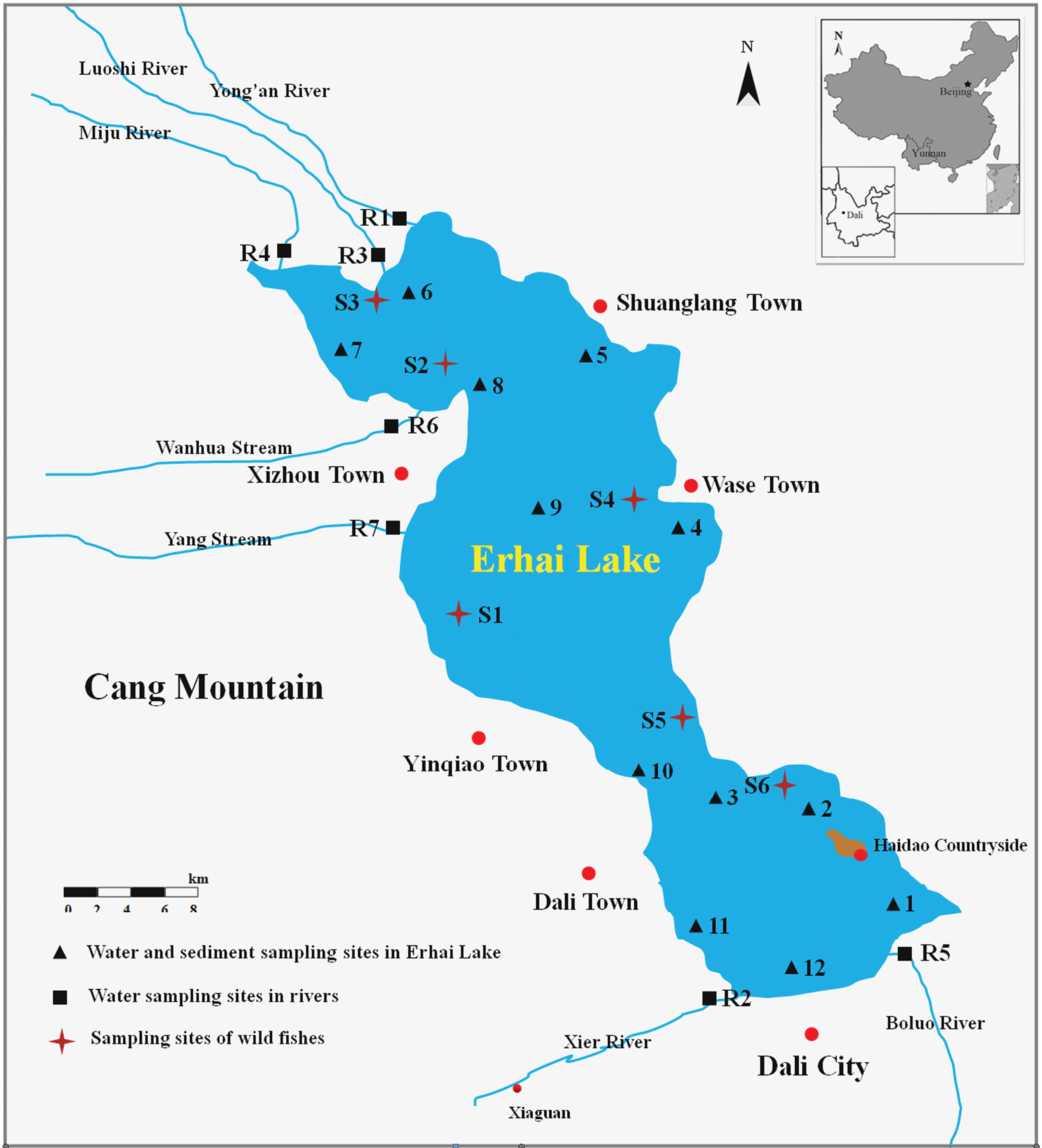
Study area and sampling sites in Erhai Lake, China.
All of the water samples were collected in 4 L amber glass bottles, and 1% of methanol was added into the samples immediately to suppress potential biodegradation. Surface sediment samples were collected from the top 5 cm of the lake bed using stainless steel Van Veen grabs. All of the samples were placed into ice packed coolers and transported to the laboratory as soon as possible. The water samples were refrigerated at 4°C, while the sediment samples were frozen at −45°C until extracted.
A total of 38 fish specimens were collected from six sites on the lake (S1–S6 in Fig. 1). Fish species were selected for analysis based primarily on availability, but also on size, migratory behavior, and placement in the food chain (Keith et al., 2001; Huang et al., 2013). Fish with little or no migration behavior were preferred. The species analyzed were Cyprinus carpio and Crucian Carp, which are important economic fish in Erhai Lake and occupy the same position in the food chain. Their lengths ranged from 17.4 to 37.9 cm and their body weights from 118 to 311 g. The fish were collected in October 2014.
The fish were sacrificed using a lethal dose of anesthetic (MS222) and dissected with a clean scalpel blade to separate the tissues from the bones. The muscles of each fish were homogenized and kept separately (Liu et al., 2012). The organ tissues (gills and livers) were grouped by species and sampling site and stored at −40°C until they were analyzed.
Sample pretreatment and instrumental analyses
The analysis procedure is shown in Fig. 2. The method for simultaneous determination of estrogen, phenols, androgens, and progestogens using ASE with GPC, SPE, gas chromatography, and mass spectrometry (GC/MS) has been described previously (Huang et al., 2015) in detail.
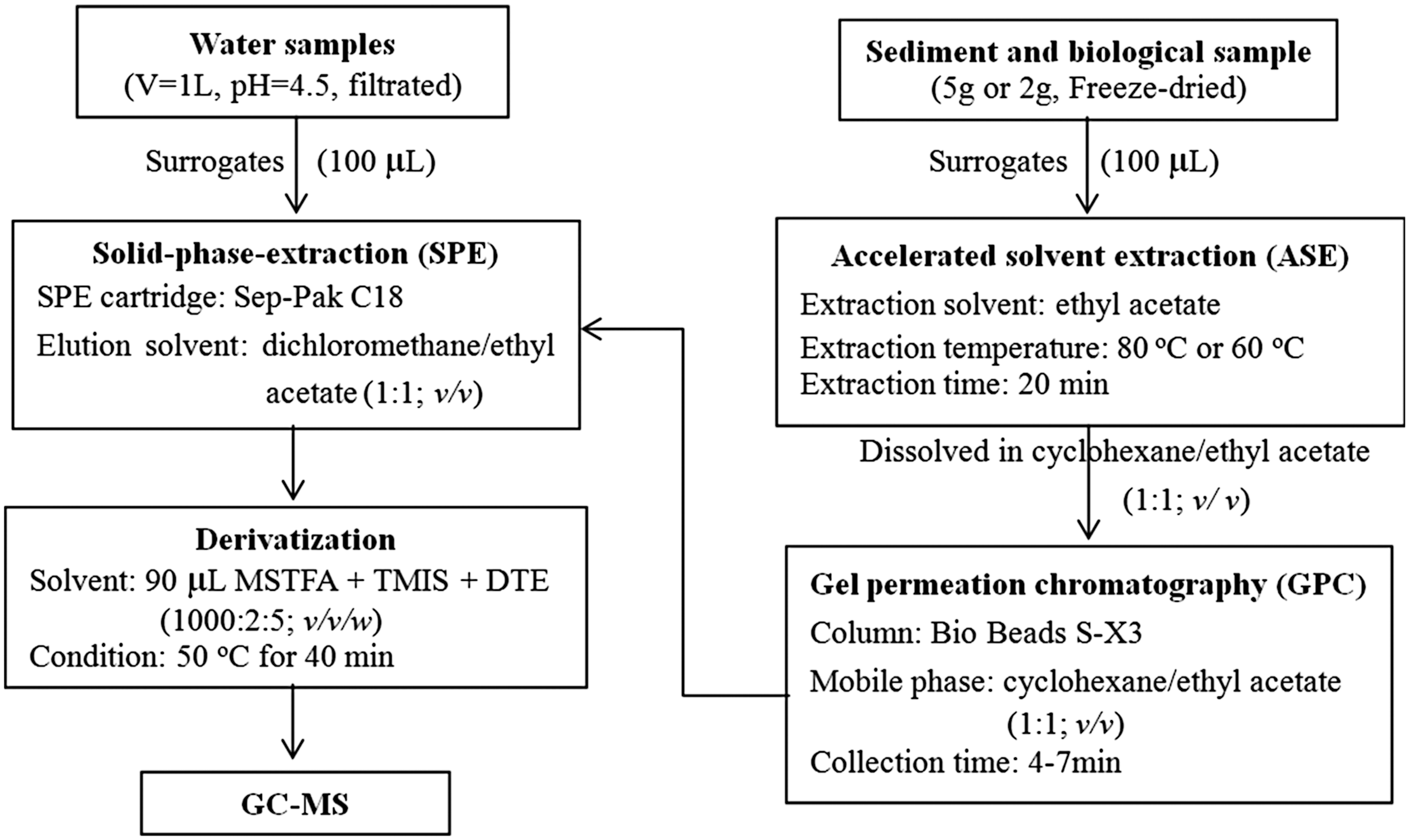
Analysis procedure for steroidal and phenolic EDCs in water, sediment, and biological samples. EDCs, endocrine disrupting chemicals.
Quality assurance and quality control
All producers of analysis were strictly under the quality assurance and control measures. All of the laboratory ware was of glass or Teflon to avoid sample contamination. E1-d4, BPA-d16, and TEST-d3 were used as surrogate standards within each sample to monitor the methods' accuracy. Samples were all analyzed in triplicate. The recoveries of target compounds were ranged from 65.32% to 95.46% for ultrapure water, and the relative standard deviations (RSD) were 2.0%–8.9%. In surface water, the recoveries were 63.5%–91.7% and the RSD were ranged from 3.1% to 7.4%. For sediment samples, the recoveries were 63.8%–91.4% and the RSD were 3.2%–8.0%. For fish samples, the recoveries were 60.3%–92.2% and the RSD were ranged from 2.7% to 8.0%. The detection limits for the target compounds were estimated to be 0.3–0.8 ng/L for water samples and 0.5–1.0 ng/g for sediment and biological samples. All conditions meet the requirements of trace contaminate analysis.
Results and Discussion
Occurrence of steroidal and phenolic EDCs in Erhai Lake
The concentrations of phenols and steroids at the 12 surface water sampling sites are summarized in Table 1. Phenols were detected everywhere at total concentrations ranging from 44.9 to 138.1 ng/L. The average concentration was 75.8 ng/L. The concentrations of 4-t-OP, 4-CP, 4-NP, and BPA were 2.0–15.8 ng/L, 2.7–9.8 ng/L, 6.6–17.9 ng/L, and 28.1–101.1 ng/L, respectively. E1 and E2 were also detected in 100% of the water samples, with EE2 and E3 found in 79% and 71%, respectively. The concentration ranges for E1, E2, EE2, and E3 were 4.7–27.6 ng/L, 1.1–3.0 ng/L, 1.0–1.7 ng/L, and 1.0–1.7 ng/L, respectively. The concentrations of E1 and E2 are significantly higher than the values reported from the Acushnet river estuary (Zuo et al., 2006). Total estrogen concentration ranged from 6.0 to 33.5 ng/L with an average of 17.9 ng/L. DHT and AND were also detected in 100% of the samples, at concentrations of 2.8–25.7 ng/L and 1.0–5.6 ng/L. TEST was found in 88% at 0.4–1.6 ng/L and PROG in 75% at 0.6–1.9 ng/L. The total concentrations of androgens and progesterone at various points ranged from 4.05 to 34.78 ng/L.
N.D., not detected, below the limit of quantification, values represent mean ± standard deviation (SD).
The value of SD <0.05.
Table 2 shows the concentrations of steroidal and phenolic EDCs in the sediment samples. The phenols were detected in the sediments at frequencies consistent with those in the water, but the values for E2, EE2, E3, TEST, and PROG were slightly lower at 92%, 50%, 46%, 79%, and 38%, respectively. For the phenols, the concentrations of 4-t-OP, 4-CP, 4-NP, and BPA at the different sediment sampling points were in the range of 0.8–20.7 ng/g dw, 0.5–2.4 ng/g dw, 1.1–4.0 ng/g dw, and 13.1–51.2 ng/g dw, respectively. With regard to the steroids, the ranges were 0.5–14.7 ng/g dw for E1, 0.6–2.6 ng/g dw for E2, 0.6–1.2 ng/g dw for EE2, 0.5–0.7 ng/g dw for E3, 0.6–9.2 ng/g dw for DHT, 0.5–2.1 ng/g dw for AND, 0.6–1.0 ng/g dw for TEST, and 0.6–0.8 ng/g dw for PROG.
N.D., not detected, below the limit of quantification, values represent mean ± standard deviation (SD).
The value of SD <0.05.
In both the water and the sediment, E1 and DHT were the major estrogen and androgen, respectively (Fig. 3). The concentrations of estrogen, androgen, and progesterone were similar in both, but they were lower than those of the phenols. Previous studies have shown that steroid concentrations are usually about 1 or 2 orders of magnitude lower than phenols, but the activity of steroids is a thousand times higher than phenols (Johnson et al., 2005; Lu et al., 2011).
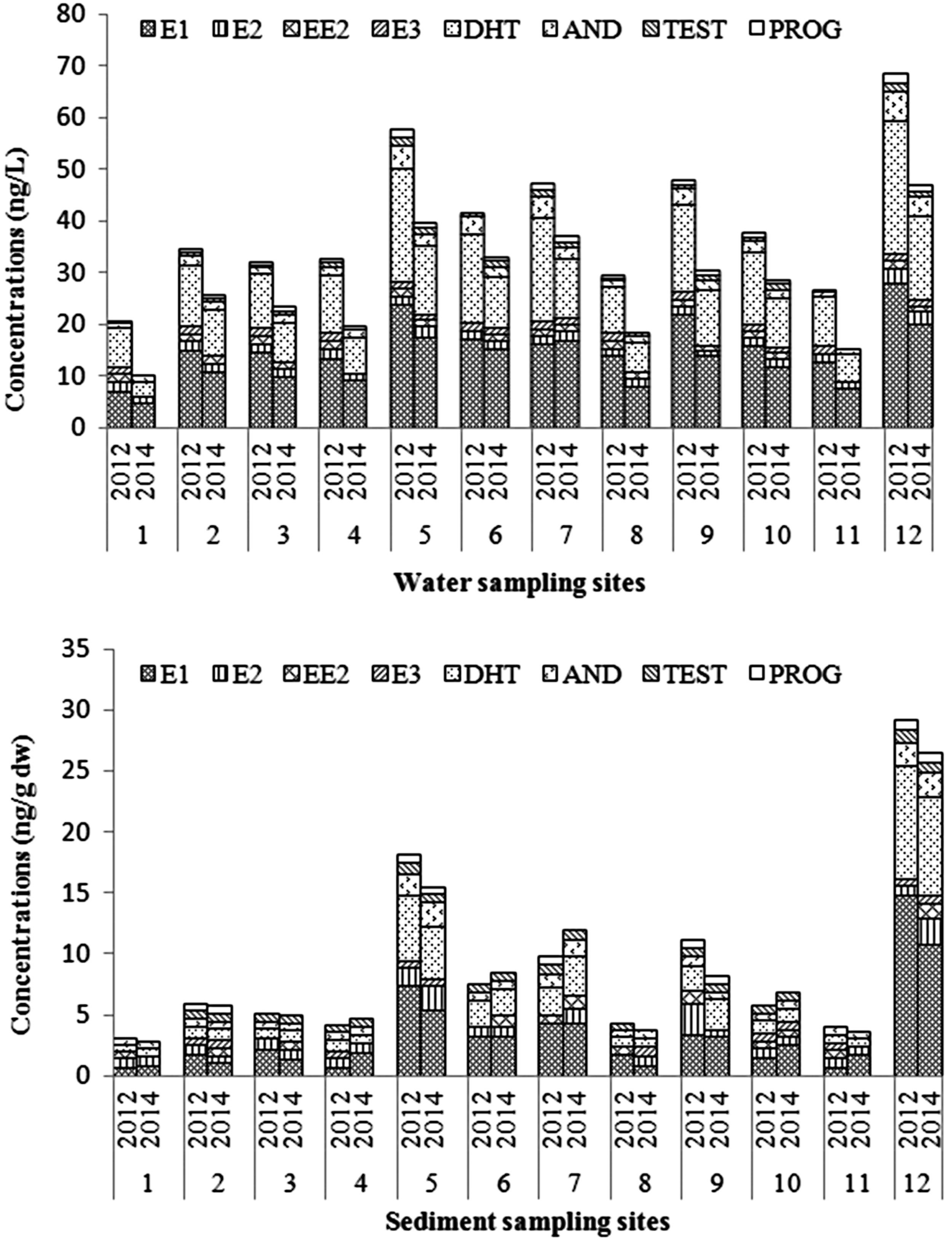
Concentrations of steroids in water and sediment samples from Erhai Lake.
The concentrations of target substances detected in the samples were generally lower than those reported from some other lakes (Mayer et al., 2007; Writer et al., 2001). The values for phenols are in line with the concentrations reported from Yuandang Lake, also in China (Zhang et al., 2011). However, the estrogen levels are higher than those reported from China's Pearl River and Taihu Lake (Shen et al., 2001; Wang et al., 2012).
Spatiotemporal distributions
As is shown in Fig. 4, the 12 sampling points in Erhai Lake were categorized into three groups depending on the mean ΣEDCs concentrations in the water samples: seriously polluted (>150 ng/L, points 5 and 12), moderately polluted (100–150 ng/L: 2, 6, 7, 9, and 10), and slightly polluted (<100 ng/L: 1, 3, 4, 8, and 11) (Huang et al., 2013; Wang et al., 2013). Points 5 and 12 are closer to areas of higher population density, and the activities of human daily life are a major source of the target substances. The 9th sampling point was in the center of the lake where the hydrological characteristics are more stable, which may have made it harder for pollutants to disperse. The 6th and 7th sampling points in the north of the lake were also relatively high, probably due to the sewage and agricultural runoff. The distributions of EDCs in the sediment at the 12 sampling points were consistent with those in the water.
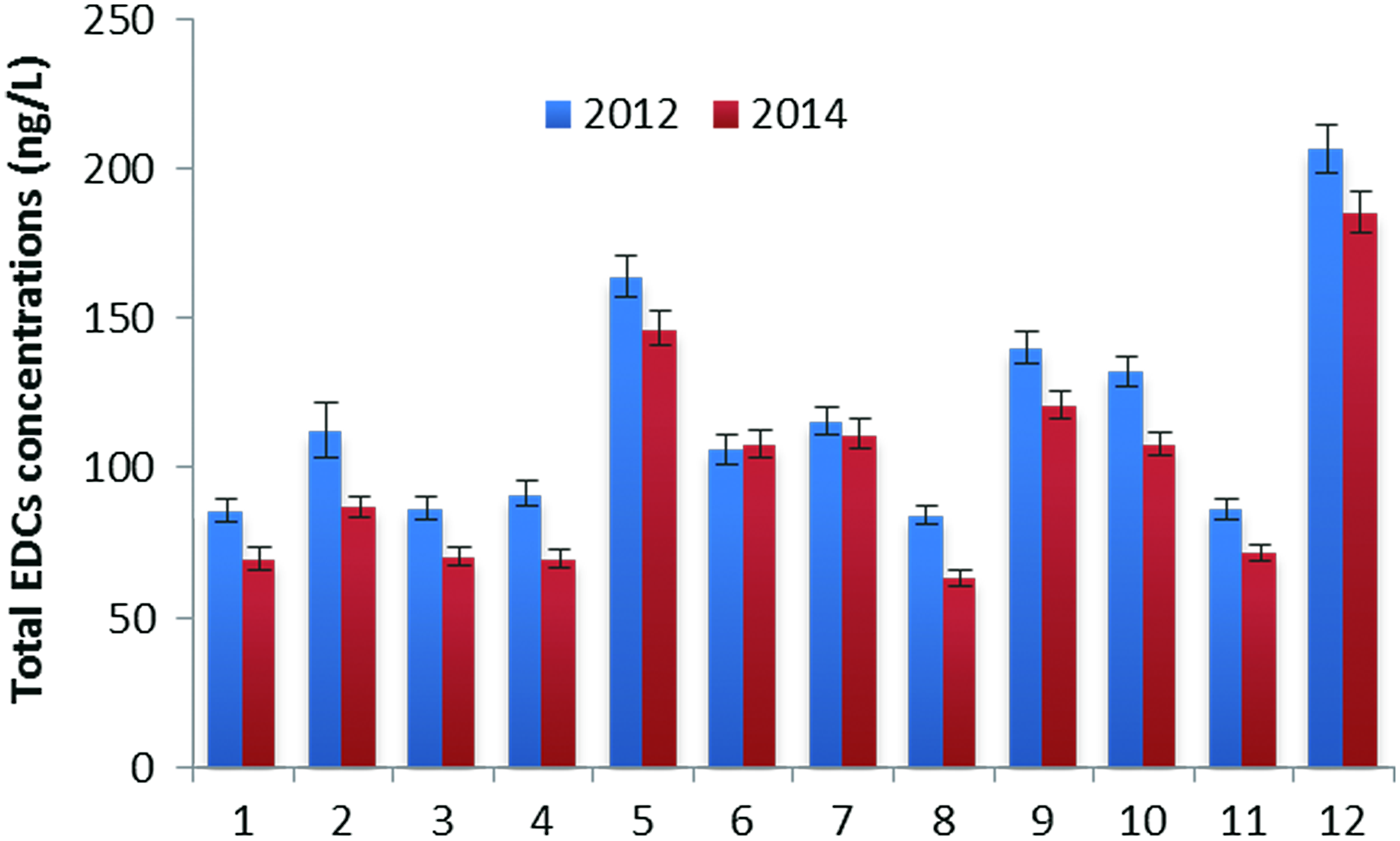
Total concentrations of EDCs in the water samples from Erhai Lake.
Comparing the concentrations of phenols and steroids in water between April 2012 and October 2014 (Fig. 4), it indicated that they were slightly decreased over the 2 years, maybe because of the heavier rainfall in October 2014. The flow rates of the rivers around the lake are not stable and the lake's water level fluctuates as well. April 2012 was during the dry season.
Residual contaminants in the sediments are relatively hydrophilic (with logKow > 2) (Staples et al., 1998; Lai et al., 2002; Tan et al., 2007). Any disruption of the sediment could release them again into the water column, so the ecological risk of the endocrine disruptors in the sediment cannot be ignored.
Occurrence and distribution of phenols and steroids in seven rivers around the lake
Most of the steroids and phenols were detected in all seven rivers around Erhai Lake, as is shown in Table 3. The detection frequency of phenols was 100%. The mean concentrations of 4-t-OP, 4-CP, 4-NP, and BPA in the different rivers were in the range of 1.3–26.4 ng/L, 2.8–13.8 ng/L, 11.9–28.2 ng/L, and 24.5–146.6 ng/L, respectively. These results are similar to those reported by Quednow and Püttmann (2008). The phenol concentrations were lower than those found in China's Liao River (Grover et al., 2011).
N.D., not detected, below the limit of quantification, values represent mean ± standard deviation (SD).
The value of SD <0.05.
Steroids were detected in 92% of the samples, with E1, E2, DHT, and AND detected everywhere. The aquatic concentrations in those rivers were 6.0–55.0 ng/L for E1, 3.2–17.4 ng/L for E2, 1.4–16.1 ng/L for EE2, 1.4–13.4 ng/L for E3, 6.6–37.6 ng/L for DHT, 3.3–15.4 ng/L for AND, 2.9–8.3 ng/L for TEST, and 1.5–4.9 ng/L for PROG. All are consistent with the concentrations found elsewhere in China (Chen et al., 2007; Liu et al., 2011), but are higher than the levels reported in overseas rivers (Grover et al., 2011; Ciofi et al., 2013).
Concentrations of EDCs in a river are influenced by many factors, so it is not surprising that the observations varied. The Wanhua Stream flows through an area of high population density, leading to it having the highest levels of the target substances. The total concentration of target substances was as much as 275 ng/L in the Yong'an River (R1), which is long with bank line and large flow rate. Nonpoint source pollution due to the agriculture runoff in the upper reaches of that river is considered to be very serious. The Xi'er River (R2) is the lake's unique outflow and flows through the city of Xiaguan, which further pollutes it. The EDCs concentrations in the Miju River (R4) and Yang Stream (R7) were less than 200 ng/L, a moderate level of pollution. Wetlands in estuaries of the Luoshi River (R3) and Boluo River (R5) probably played an important role in reducing the pollutants at those sites.
Environmental Implications
Risk quotients
These results confirm that domestic, industrial, and agricultural nonpoint sources are contributing steroidal and phenolic EDCs to Erhai Lake and its surrounding rivers. This can cause some ecotoxicity and otherwise adversely affect ecosystems. The ecotoxicological risks of EDCs can be approximately quantified by computing a risk quotient (RQ) using Equation (1).
Where EC is the observed concentration of a contaminant and PNEC is its predicted no-effect concentration. The PNECs used were 120 ng/L for 4-t-OP, 820 ng/L for 4-NP, 60 ng/L for BPA, 6 ng/L for E1, 2 ng/L for E2, 0.1 ng/L for EE2, 60 ng/L for E3, and 2,000 ng/L for PROG (Loos et al., 2007; Wright-Walters et al., 2011; HO et al., 2012). Any RQ value greater than 1 indicates that the pollutant has an adverse impact and the site should be considered at risk.
RQs based on the water samples from the lake and five of the rivers in April 2012 and October 2014 are displayed in Fig. 5. For the rivers, 60% the RQs were less than 1, 30% RQs were less than 10, but four (10%) were above 10. In the lake itself, two-thirds of the RQs were less than 1 in 2012 and 71% were below 1 in 2014. In 2012 and 2014, respectively, 12.5% and 9.4% of the RQs were between 1 and 10. The ecotoxicological risks are lower in the rainy season, and risk in the lake is less serious than in the rivers.
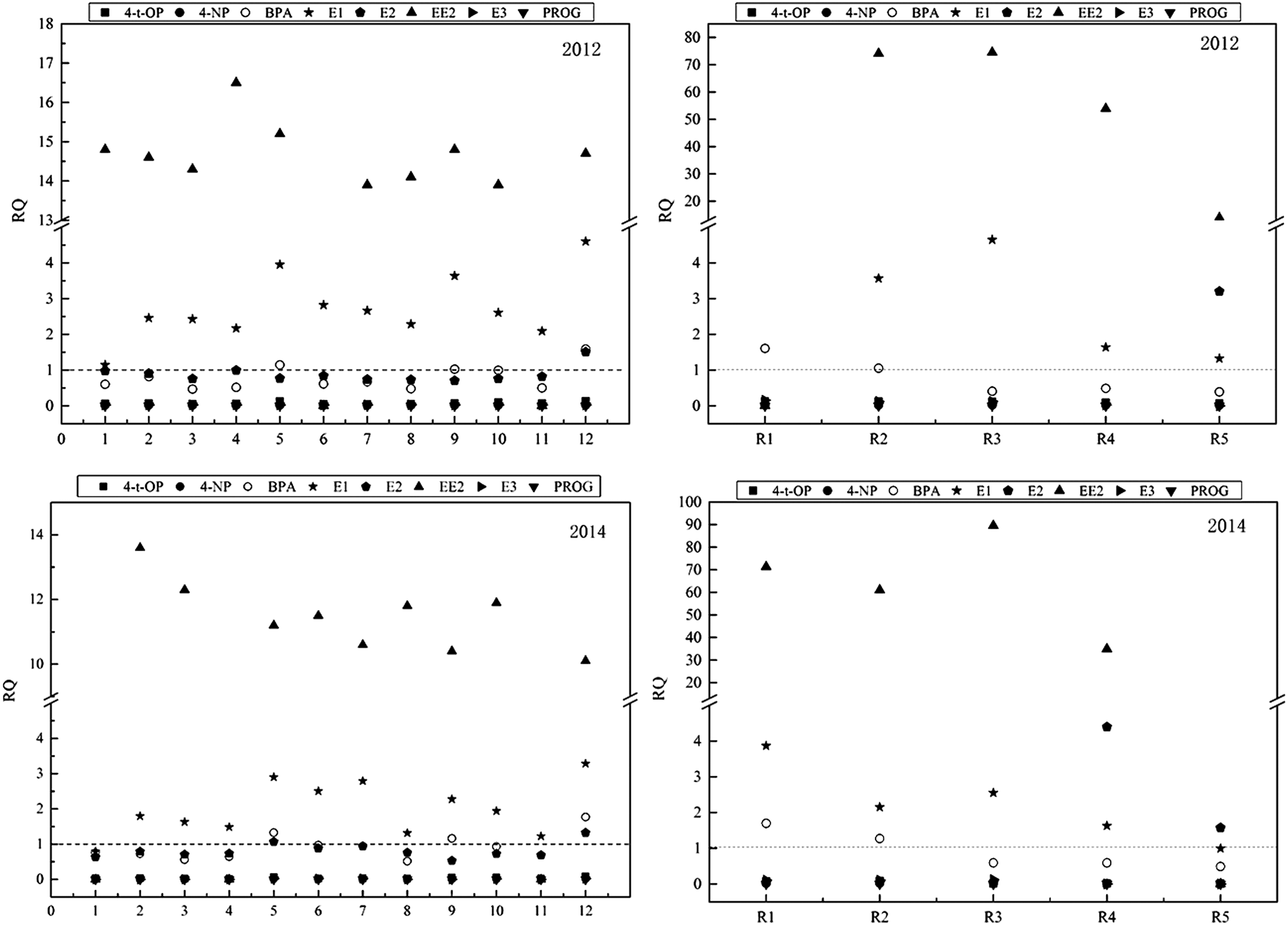
The risk quotients (RQs) of phenols and steroids in the rivers and in Erhai Lake.
The RQs of EE2 were above 10 everywhere, and those of E1 were above 1 at all of the sampling sites. These two substances pose the greatest potential risk. The RQs of 4-t-OP, 4-NP, E2, E3, and PROG were less than 1 everywhere, indicating little potential risk for humans and wildlife from those pollutants.
Bioaccumulation
The mean concentrations of the steroidal and phenolic EDCs in the fish tissue samples collected from Erhai Lake in October 2014 are shown in Fig. 6. The phenol concentrations are in the order BPA > 4-NP > 4-t-OP > 4-CP, which is consistent with previous reports (Bjerregaard et al., 2007; Zuo and Zhu, 2014). The fish taken at S1 and S2 had significantly higher concentrations of phenols than those taken elsewhere, probably because both of those sampling points were near a village or town.
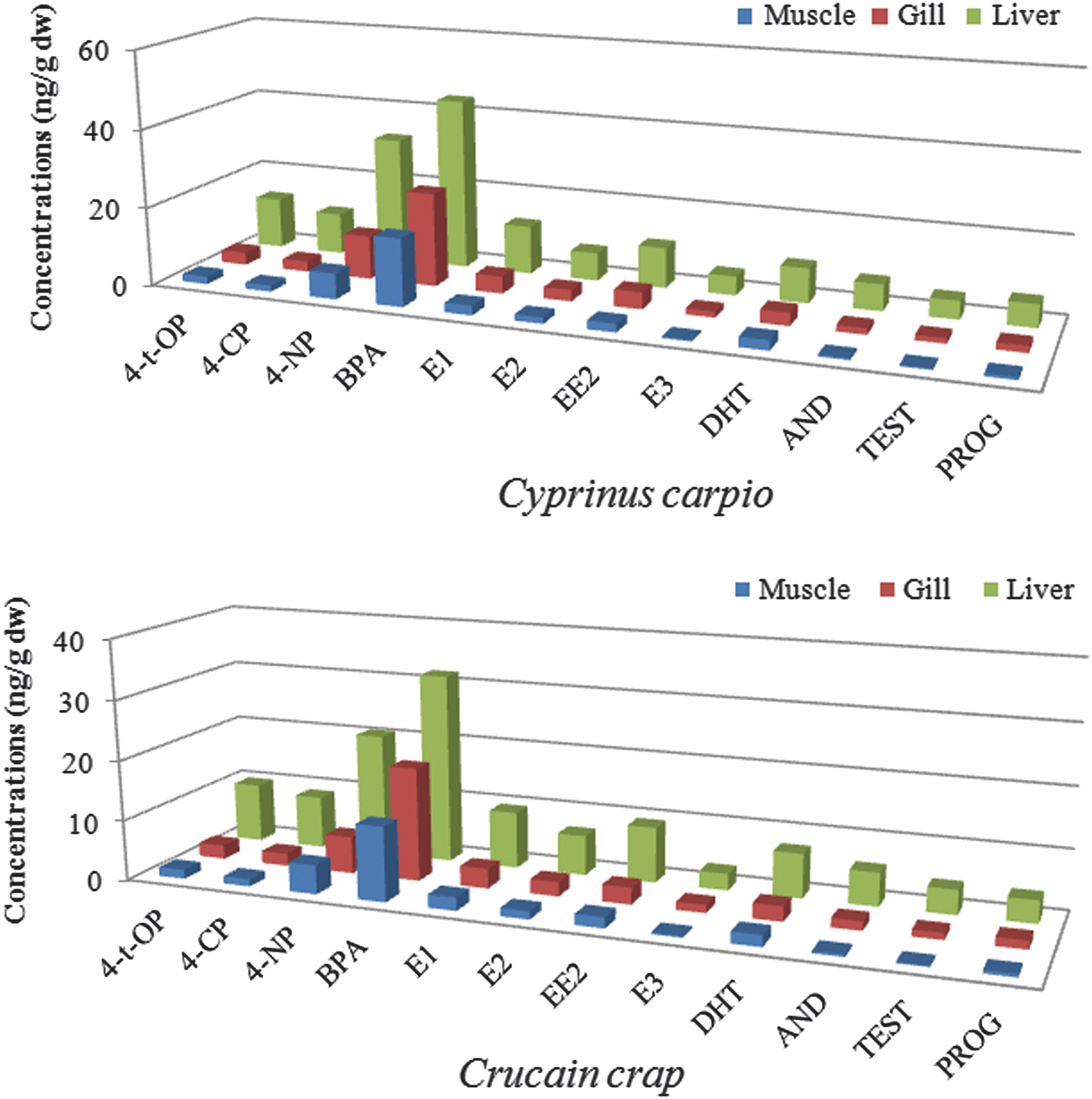
Concentrations of steroidal and phenolic EDCs in wild fish tissues sampled from Erhai Lake.
Steroid levels found were lower than those of the phenols in the tissue samples. All of the steroid concentrations in the muscle samples were below 3.3 ng/g. As in the water samples, the concentrations of E1 and E2 were higher than those of the other steroid estrogens, and DHT was also the major androgen in the fish samples. High steroid concentrations were observed at points S1, S2, S3, and S4, but the lower concentrations of phenolic EDCs were found at S3 and S4, presumably because phenols and steroids come from different sources. Phenols are mainly agricultural and industrial pollutants, while steroids come from drugs through humans and to some extent wildlife (Desbrow et al., 1998; Peng et al., 2008).
Cyprinus carpio apparently bioaccumulated phenols and steroids more readily than the Crucian carp. Cyprinus carpio are a bottom-feeding species and feed on algae and benthic animals, while Crucian carp eat a plant-based diet and live in the shallows of the lake. EDCs tend to be adsorbed on particulate matter suspended in the water, which gradually settles to the bottom (Liu et al., 2011). Bottom feeding thus enriches the pollutants in Cyprinus carpio to levels higher than in Crucian carp. Moreover, different organizations of fish might also bring different enrichment capacity (Moon et al., 1985; Fernandes et al., 1993). The highest concentration of target EDCs was found in the livers, followed by gill and muscle tissue. The gills are the first organ to be in contact with ingested contaminants (Caldwell et al., 2012), while the liver is well known as a major site for accumulation, biotransformation, and excretion of contaminants (Lin et al., 2005).
Conclusions
This work investigated the occurrence, spatiotemporal distribution, and ecotoxicological risk of 12 EDCs in a lake in China. The results indicate that the estrogen, androgen, and progesterone concentrations in water and sediment samples are at similar levels, but phenols are present at higher levels than steroids. BPA was the main phenol observed everywhere because it is widely used in agriculture and in the plastics industry.
The results confirm that wetlands play an important role in reducing pollutants, as is widely supposed. The pollutant posing the greatest potential risk was found to be EE2, followed by E1. In addition, BPA showed the greatest bioaccumulation in the wild fish species tested. The highest concentrations of the target EDCs were found in the liver, followed by the gills and muscle tissue.
Footnotes
Acknowledgments
This project was sponsored by the National Natural Science Foundation of China (Grant no. 21267012 and 41401558) and Application Fundamental Key Basic Research Foundation of Yunnan Province, China (Grant no. 2013FA011).
Author Disclosure Statement
No competing financial interests exist.