




Abstract
Abstract
A microbial fuel cell (MFC) is a device that uses bacteria as catalysts to oxidize organic matters as well as generate electrical current. MFCs are effective in chemical oxygen demand (COD) removal from wastewater; however, MFC alone is not effective in nitrogen and phosphorus removal. Alternatively, microalgae can effectively remove nitrogen and phosphorus from wastewater. To improve treatment efficiency of wastewater, a combined process consisting of MFC and microalgae cultivation was developed, and the effectiveness of the system for wastewater treatment and electricity generation was evaluated. Wastewater was first treated with a single-chamber MFC (SMFC) for removing COD, and partial removal of nitrogen and phosphorus accompanied with electricity generation; then, the treated wastewater was used to cultivate microalgae to further remove the residual phosphorus and nitrogen. The SMFC generated a maximum power density of 268.5 mW/m2 and achieved 67% COD removal; only 34% total phosphorus (TP) and 50% NH4+-N removal were obtained with SMFC alone. Up to 97% TP and 99% NH4+-N removal were achieved with the combined process. These results demonstrated that the combined process was effective for wastewater treatment, resulting in improved TP and NH4+-N removal compared with MFC alone and providing a promising candidate for treating wastewater.
Introduction
A
High COD removal could be achieved with MFC; however, MFC alone is not effective in nitrogen and phosphorus removal. For example, only 63% of total nitrogen was removed when the domestic wastewater was treated with a single-chamber MFC (SMFC) (Ahn and Logan, 2010). To improve nitrogen removal, some coupled systems in MFC and nitrifying–denitrifying processes were investigated (Virdis et al., 2008; Xie et al., 2011, 2016; Zhang et al., 2014; Sotres et al., 2016). Although those coupled systems improved the removal of nitrogen, it was difficult for them to completely remove nitrogen and they were not effective in phosphorus removal.
Meanwhile, many studies have shown that microalgae effectively remove nitrogen and phosphorus from wastewater (Di Termini et al., 2011; Menger-Krug et al., 2012; Hena et al., 2015; Liu et al., 2016). For instance, more than 98% nutrients (e.g., 98.8% PO4-P, 99.4% NO3-N, and 100% NH4+-N) can be removed from dairy farm-treated wastewater by algae (Hena et al., 2015). In addition, removing nitrogen and phosphorus, the biomass from algae grown on wastewater can be used for producing biofuel (Kligerman and Bouwer, 2015; Soydemir et al., 2016). Microalgae utilize the nitrogen and phosphorus in wastewater to synthesize biomass by photosynthesis; as a result, nitrogen and phosphorus are removed and wastewater is treated.
However, wastewater, especially domestic wastewater, usually cannot be used to directly cultivate algae because there are many suspended solids in wastewater, resulting in very low light transmittance of wastewater. Therefore, before use for algae cultivation, wastewaters are usually filtered or centrifuged to remove the large particles and improve the light transmittance of wastewater. These pretreatments are both energy-consuming and inefficient. By contrast, wastewaters treated by MFC usually do not require filtration or centrifugation. In addition, the light transmittance of wastewater can be significantly improved after MFC treatment. Wastewater, after MFC treatment, still contains nitrogen, phosphorus, and other nutrients to meet the growth requirements of algae, which can be further removed by microalgae that accompany biomass production.
The objective of this study was to evaluate the effectiveness of the MFC and microalgae combined processes for wastewater treatment, electricity generation, and biomass production. Wastewater was first treated with an SMFC to remove the COD, some phosphorus, and nitrogen, which was accompanied by electricity generation. Then, the treated wastewater was used to cultivate microalgae to further remove the residual phosphorus and nitrogen, as well as produce biomass.
Materials and Methods
Domestic wastewater
Domestic wastewater was collected from the effluent of primary clarifier of Qingdao Tuandao Wastewater Treatment Plant (Qingdao, China), centrifuged (1 × 10⁴ g for 10 min) to remove the particles, and kept in a refrigerator at −20°C before use. The COD, NH4+-N, and total phosphorus (TP) of the centrifuged wastewater were 264.4 ± 5.3 mg/L, 33.05 ± 0.13 mg/L, and 4.54 ± 0.08 mg/L (±standard deviation [SD], n = 3), respectively. The pH value of the centrifuged wastewater was 7.40. The centrifuged wastewater was used for all MFC tests without any other treatment.
SMFC configuration
Figure 1 shows the schematic diagram and photograph of the SMFC used in this study. The SMFC was constructed with a cylindrical chamber that was 4 cm long and had a diameter of 3.5 cm. An anaerobic tube (1.4 cm inner diameter and total headspace volume of 14 mL) was glued to the top of the chamber. The tube was sealed with a butyl rubber stopper and a perforated plastic screw cap. A platinum-coated carbon cloth and carbon fiber brush were used as the cathode and anode electrode for SMFC, respectively, which were connected to a copper wire through an external resistance (Rext) of 400 Ω. The carbon fiber brush anode was constructed as described by Logan et al. (2007) and cut to 2.5 cm in length with a diameter of 3.5 cm (carbon fiber type: Dalian Xingke Carbon Fiber Co., Ltd., with Young's Modulus 220 GPa).
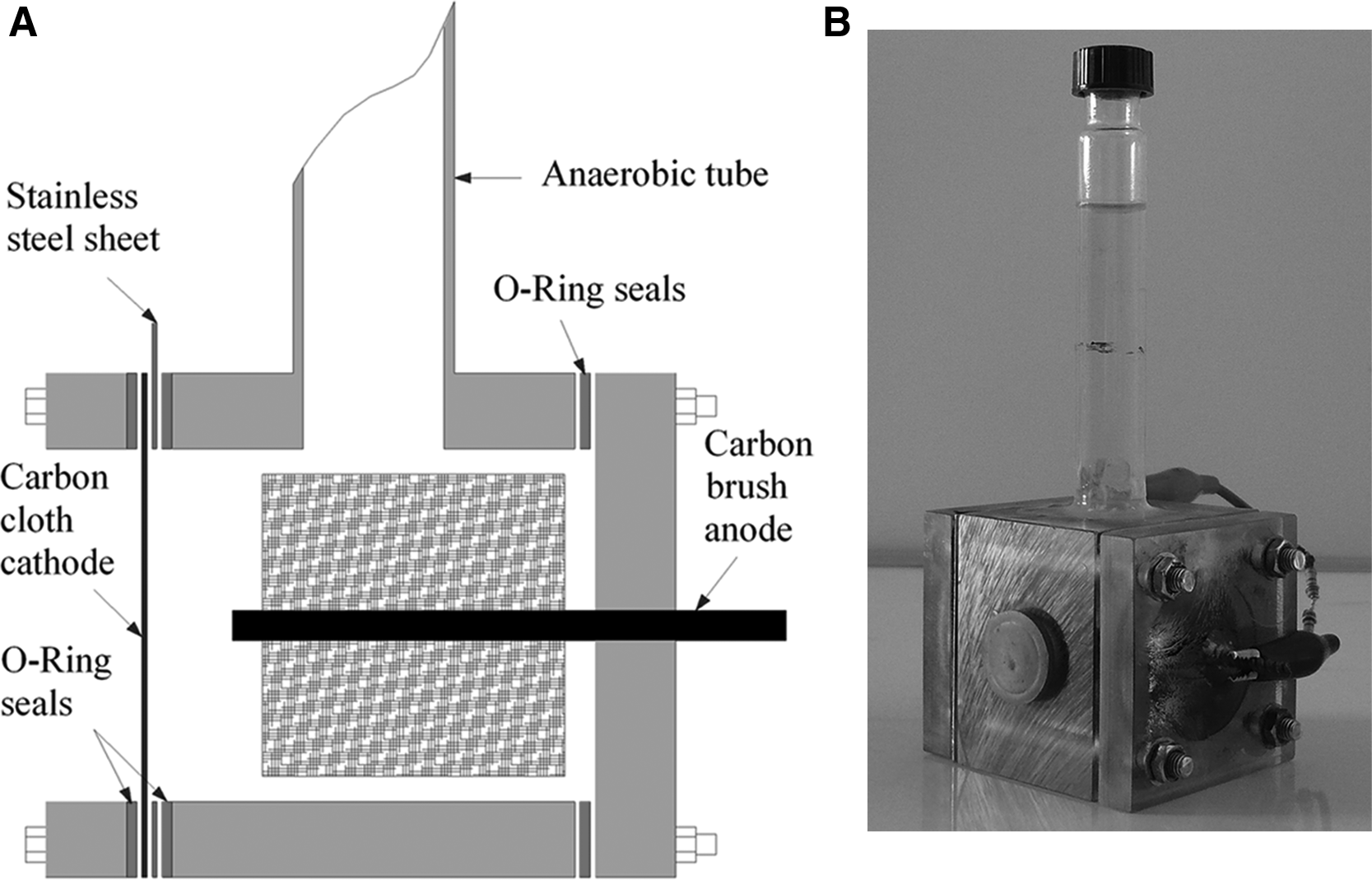
Schematic diagram
The carbon brush anode was first treated with acid; then, it was heat treated as previously described by Feng et al. (2010) and washed thrice with deionized water before it was used in MFC. The carbon cloth cathode was created as previously described by Cheng et al. (2006), except that the paintbrush was replaced with glass spreading stick. The carbon cloth that was removed from the furnace was immediately pressed at 1.5 kg/cm2 pressure for 90 s. The carbon cloth cathode, with a platinum-coated (0.5 mg Pt/cm2) side facing the solution, was placed on one side of the chamber. A stainless steel sheet was used in the cathode as a current collector. The brush anode was placed on the other side of the chamber with its end located 1 cm from the cathode.
SMFC inoculation and operation
Domestic wastewater, without centrifugation, was used as an inoculum, which was mixed with centrifuged wastewater (with a volume ratio of 25/75), and the mixture was purged with O2-free nitrogen gas to remove oxygen before it was fed to the SMFC. A polyester bag (1 L) filled with pure nitrogen gas was connected to the anaerobic tube through a silicon pipe to balance the pressure inside and outside the SMFC. The SMFC was covered with aluminum foil to exclude light. The voltage over Rext was recorded using an electrochemical workstation (Shanghai Chenhua Instrument Co., Ltd.; CHI660C) at 50 s intervals. After the voltage over Rext exceeded 0.100 V during a batch cycle, the inoculum was omitted and SMFC was only given centrifuged wastewater.
When a reproducible maximum voltage was obtained for at least three batch cycles, the anode was considered fully enriched with electroactive microbe. Then, the SMFC was used for wastewater treatment. Fresh O2-free centrifuged wastewater (45 mL) was placed in the SMFC each time. At the same time, the voltage over the Rext was recorded. A water sample (2.5 mL) was removed from the SMFC with a syringe every 8 h from the time of adding fresh substrate; meanwhile, 2.5 mL of O2-free sterilized deionized water was added into the SMFC with a syringe. The COD, TP, and NH4+-N concentrations in the water sample were measured.
Microalgae cultivations
SMFC-treated wastewater was directly used to cultivate microalgae. A column glass photobioreactor (Ø 4 cm × 25 cm), filled with 180 mL SMFC-treated wastewater, was used for microalgae incubation. The preconcentrated Chlorella vulgaris 12, isolated from domestic wastewater by our laboratory, was used as an inoculum. The inoculation concentration of microalgae was OD750 = 0.3150. The photobioreactor was single-side illuminated day and night. The light for microalgae cultivation involved normal fluorescence and its intensity (LI-250A Light Meter; LI-COR) was 7.48 × 10⁴ lx. The distance between the surface of photobioreactor and light source was 15 cm. Air was purged into the photobioreactor at a rate of 25 mL/min to supply CO2.
Culture (10 mL) was removed from the photobioreactor every 24 h during the cultivation cycle; then, it was centrifuged (1 × 10⁴ g for 10 min) and the concentrations of nitrogen and phosphorus in the supernatant were measured. Equal volumes (10 mL) of distilled water were added into the photobioreactor to balance the volume.
Analysis
Output voltage of the SMFC was recorded using an electrochemical workstation. The power density, P (mW/m2), was obtained according to P = IU/A, where I (mA) is the current, U (V) is the voltage over Rext, and A (m2) is the surface area of the cathode. The polarization curve was obtained by varying the Rext over a range of 35–5,000 Ω, and the voltage over Rext, at 5 min intervals per resistor, was measured by adding a fresh substrate to the SMFC. Coulombic efficiency (CE) for an MFC run in batch mode, ηCb, evaluated over a period of time tb, is calculated as in Equation (1)
where M = 32 is the molecular weight of oxygen, F is Faraday's constant, b = 4 is the number of electrons exchanged per mole of oxygen, vAn is the volume of liquid in the anode compartment, and ΔCOD is the change in the COD over time t1.
TP and ammonia nitrogen concentrations were measured according to the methods described in Wei (2002). The COD was analyzed using a fast digestion–spectrophotometric method (Wei, 2002).
Results and Discussion
Performance of the SMFC
A repeatable cycle of electricity generation was readily obtained with the SMFC inoculated with bacteria present in wastewater. The SMFC produced a repeatable and rapid increase in the cell voltage of 0.399 ± 0.009 V (±SD, based on three averages given in Fig. 2, with each average based on 600 points, as shown) with the 400 Ω resistor, which was followed by an eventual decrease in the voltage as the organic substrate in waste water was depleted. The voltages produced by the reactor were close to 0.43–0.44 V, which was also achieved by an SMFC with domestic wastewater (Ahn and Logan, 2010).

Three repetitive cycles of electricity generation with domestic wastewater, where lines show the range of data used to calculate average maximum voltages (in the order shown) of 0.403 ± 0.002, 0.388 ± 0.003, and 0.405 ± 0.002 V (±SD, n = 600). SD, standard deviation.
When the electrical current production stabilized (Fig. 2), data were collected to determine the voltage and power production sustained across a range of current densities that were obtained by varying the resistance between the electrodes (Fig. 3). Based on polarization data, the maximum power produced was 268.5 mW/m2 at a current density of 1,055 mA/m2 (Rext = 250 Ω) or 5.7 W/m3, when power was normalized by the reactor liquid volume (Fig. 3). This power was similar to the highest power density of 263–278 mW/m2 (8.0–8.4 W/m3), which was also achieved by an SMFC with domestic wastewater at an organic loading rate of 0.8–0.9 g COD/L · day (Ahn and Logan, 2010).
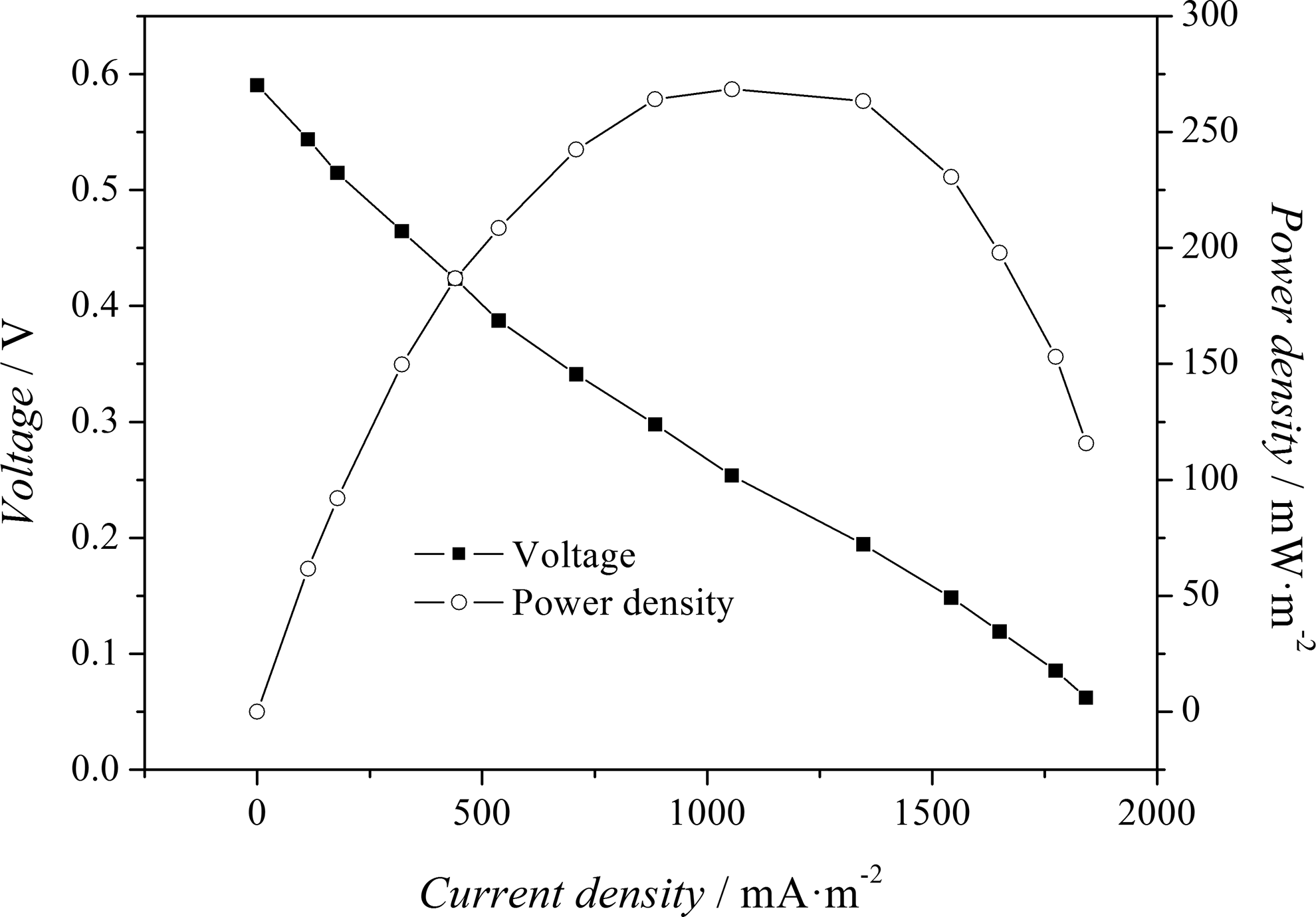
Polarization and power curves of the SMFC.
The low power density might partly be attributed to the low conductivity and COD concentration of domestic wastewater. A maximum power density of 2,400 mW/m2 (normalized to the cathode projected surface area), or 73 W/m3 based on the liquid volume, was achieved by a similar system with a high conductive medium (Logan et al., 2007). The internal resistance (Rint) of the system was only 8 Ω (Logan et al., 2007). The Rint of an MFC plays a dominant role in defining the point of the maximum attainable power. It can be simply determined when a polarization curve is linear, as the slope of the polarization curve is equal to the internal resistance (Logan et al., 2006).
As shown in Fig. 3, the polarization curve of the SMFC is approximately linear; therefore, the Rint of the SMFC could be approximately represented by the slope of polarization curve, which was calculated as 261 Ω in this case. The slope was very close to the value (250 Ω) calculated according to Ohm's law. According to Ohm's law, the maximum output power density can only be obtained for a condition in which the internal and external resistances are equal. As mentioned above, the maximum power density of the SMFC was achieved at an Rext of 250 Ω. The relative high Rint resulted in a low maximum power density.
The power density is low when it was taken into account that platinum has been used. The use of platinum catalysts is not conducive to the application of this technology due to its high price. The studies on low-cost and efficient nonplatinum cathodic catalysts, such as manganese dioxide (Li et al., 2010), manganese–cobalt (Mn-Co) oxide (Mahmoud et al., 2011), metal Fe-N-C (Santoro et al., 2015a), Fe–AAPyr (Santoro et al., 2015b), and so on, will improve the MFC performance and reduce the MFC construction costs. In addition, the biocathodes (Huang et al., 2011; Zhang et al., 2012) or photoautotrophic microalgae attached on a cathode as oxygen producers (González del Campo et al., 2013, 2014, 2015) can also improve the MFC performance and reduce the MFC operation costs.
The CE of the SMFC was 53.8 ± 2.5% (n = 3, using averages shown in Fig. 2), which is lower than 60% (Logan et al., 2007). However, it was much higher than the 3–12% (Liu et al., 2004) and 20% (Liu and Logan, 2004) achieved with the SMFCs and domestic wastewater.
This result demonstrated a relatively high efficiency of capturing electrons from the substrate as current. A possible reason for the higher CE in this case might be that the air cathode used here reduced the oxygen transferring across the air cathode into the anodic chamber. The permeability of the air cathode in this case might be relatively low compared to the air cathode used in other studies with only one carbon base layer that was not heat pressed under a given pressure (Liu et al., 2004; Liu and Logan, 2004), which resulted in less oxygen available for aerobic degradation of substrate, increasing the CE. Except for the influence of oxygen, organic fermentation also had an effect on the CE. Some of the organic matter was consumed by methanogens in the reactor, as confirmed by the presence of trace amounts of methane in the reactor headspace.
In general, conditions in the anodic compartment are favorable for methanogen growths. It is difficult to avoid proliferation of the methanogens when MFC is operated under nonsterile conditions over long time periods. The methanogens compete with the electrochemically active bacteria for substrate, which decreases the CE. Furthermore, as in any microbial process, a few percentages of the organic substrate are expected to be consumed by the microbial consortium for growth and are thus lost in coulomb generation. In addition, this part of the loss is proportional to the operation time. The consumption of substrate that has nothing to do with coulomb generation can be optimally avoided by operating the reactor under short cycle times.
COD, phosphorus, and nitrogen removal in SMFC
MFC has been proposed as a method to treat wastewater; therefore, it is important to evaluate the performance in terms of the COD, nitrogen, and phosphorus removal. The removal of COD measures how much of the available “fuel” has been converted in the MFC, either into electrical power or biomass, or through competitive reactions with alternative electron acceptors (e.g., oxygen, nitrate, and sulfate).
Variations of COD removal during batch incubation are shown in Fig. 4. The COD removal rapidly increased within 16 h and then slowly increased; it finally reached a value of 67% within 40 h at a volumetric removal of 0.122 kg COD/day · m3. It was a little higher than 50% of that with the SMFC using domestic wastewater (Liu et al., 2004).
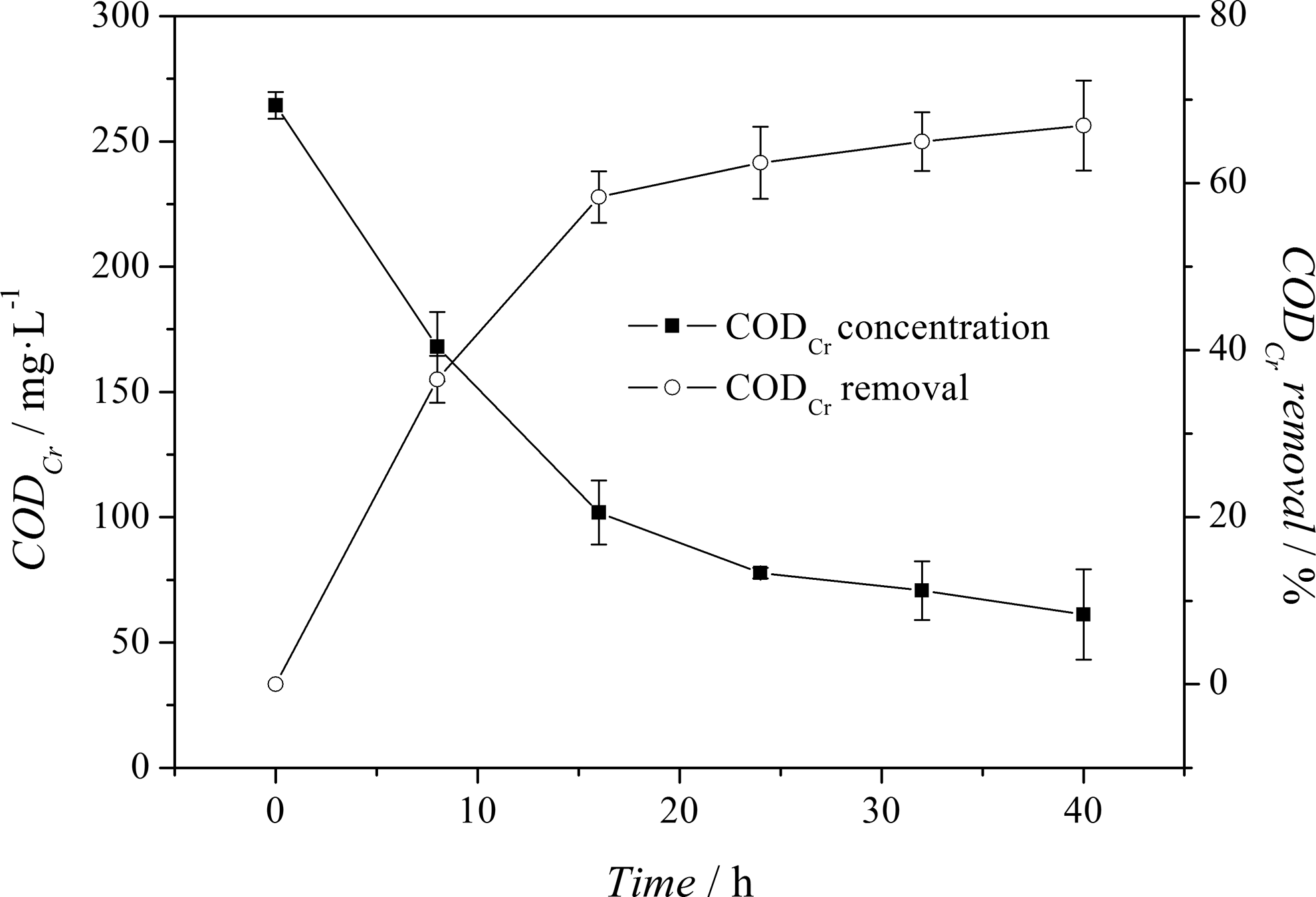
Variations of COD removal in SMFC as a function of time (±SD, n = 3). COD, chemical oxygen demand.
The reason for the COD removal to plateau at ∼67% during MFC treatment might be the complexity of wastewater. There are both readily and unreadily biodegradable substrates in wastewater. The former can be degraded within a short time, while the degradation of the latter takes a long time. Zhang et al. (2015) compared the effect of different substrates on the COD removal in MFCs. When acetate (a single and readily biodegradable compound) was fed, the COD removal was as high as 91% after 48 h of operation. By contrast, when filtered domestic wastewater was used, the COD removal was 70–80%.
The residual COD can be further removed by an aerobic cathode or algae. The COD polishing was realized at the cathode by heterotrophic bacteria in a sequential anode–cathode configuration (Freguia et al., 2007). The heterotrophic bacteria growing in the cathodic chamber can further hydrolyze and oxidize the residual organic matter, which improves the removal of COD. In addition, a COD removal of 98.8% was also achieved by algae grown in dairy farm-treated wastewater (Hena et al., 2015).
Additionally, to improve both the COD removal and power density, a new design of the MFC-photoreactor combing system is needed. For instance, the integration of the MFC and photobioreactor into one reactor might be helpful. In this integrated system, the oxygen generated by photosynthesis of microalgae can be directly provided to MFC in situ. Meanwhile, the carbon dioxide produced by MFC can be directly used as the carbon source for the in situ growth of microalgae. As a result, the efficiency of the entire system might be improved and the operation costs of the entire system will also be reduced.
Variations of TP and NH4+-N removal during the incubation period are shown in Fig. 5. As shown in Fig. 5, the TP and NH4+-N removal increased with incubation time, which finally reached 34% for TP and 50% for NH4+-N after 40 h of treatment. In general, the phosphorus and NH4+-N removal are usually attributed to the microbe growth when wastewater is treated by microbe. The molar ratio of nitrogen and phosphorus in cells is about 12 (C60H87O23N12P), however, the ratio of nitrogen and phosphorus's molar change is about 23.6 in this case. It means that almost half of NH4+-N was not assimilated by microbe growth.

Variations of TP and NH4+-N removal in SMFC as a function of time (±SD, n = 3). TP, total phosphorus.
The NH4+-N removal in MFC was a result of complex biological and physiochemical processes, which possibly include assimilatory nitrogen uptake, as well as physicochemical factors (such as ammonia volatilization at the cathode in SMFC) that are increased in proportion to current generation (Kim et al., 2008). For example, assimilatory nitrogen uptake responded with 61.5% NH4+-N removal, while the physiochemical processes may contribute to 29% of NH4+-N removal in a single-chamber MFC (Lu et al., 2009). In addition, nitrification might occur near the air cathode. The increase in the nitrate concentration was observed in the MFC anode chamber in a previous study, suggesting that nitrification occurred, which is likely a result of oxygen diffusion through the cathode (Min et al., 2005). Therefore, the mechanism of ammonia removal in the anode of MFC needs further research.
Phosphorus and nitrogen removal in photobioreactors with microalgae
Wastewater treated by the SMFC was used to cultivate microalgae for further removal of the residual TP and NH4+-N. The variations of NH4+-N and TP concentration and removal over time are presented in Figs. 6 and 7. As shown in Fig. 6, NH4+-N reduced quickly from 11.81 to 0.46 mg/L and the removal of NH4+-N was up to 96% within 3 days. As shown in Fig. 7, the TP concentration also quickly decreased within 3 days and declined from 2.31 to 0.14 mg/L. The TP removal was up to 94%. The ratio of nitrogen and phosphorus's molar change is about 11.6—a value that is almost equal to the molar ratio of nitrogen and phosphorus in microalgal cells according to the approximate molecular formula of the microalgal biomass (CO0.48H1.83N0.11P0.01) (Chisti, 2007). It means that almost all nitrogen and phosphorus were assimilated by microalgae growth.
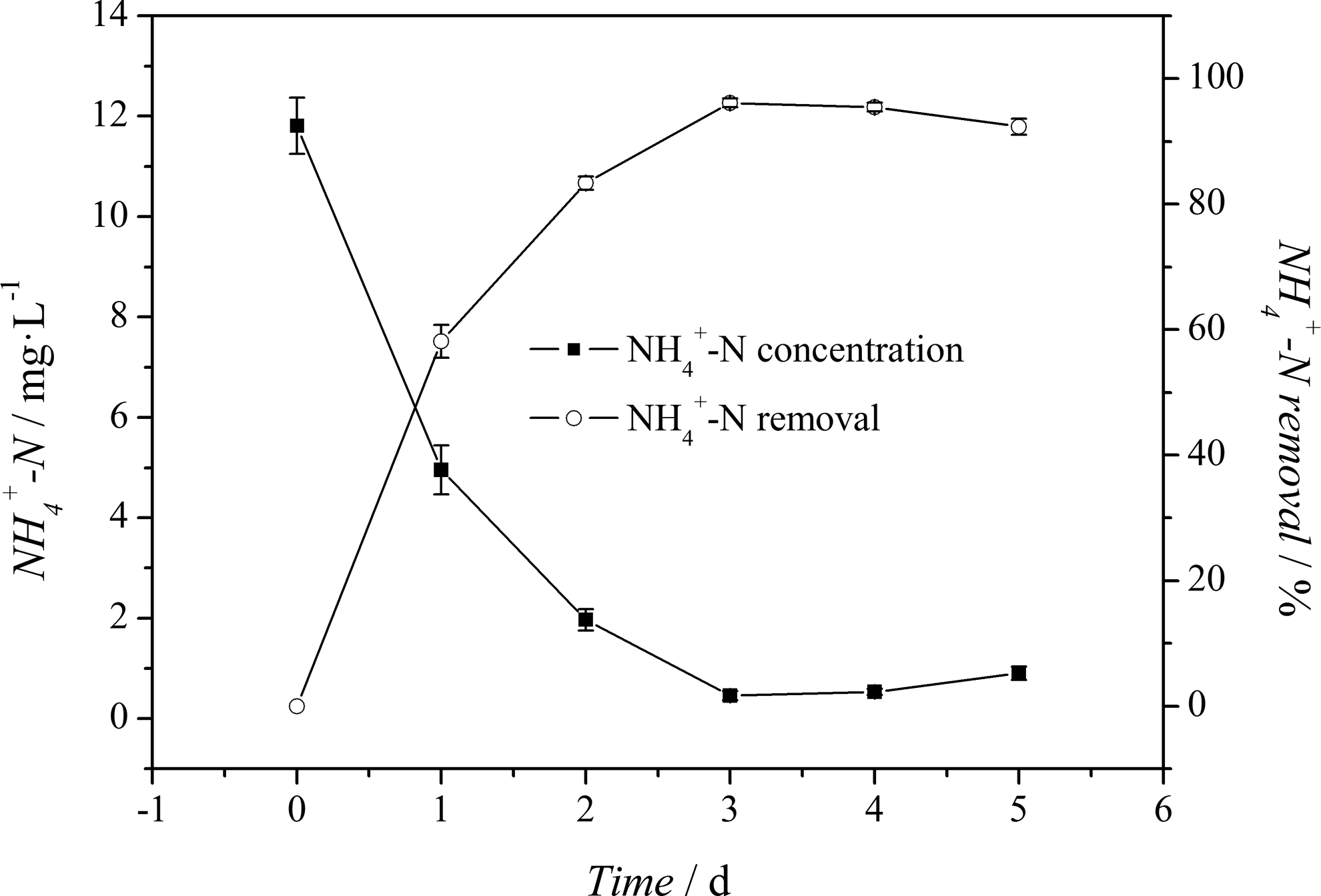
Variation of NH4+-N with time during microalgae cultivation (±SD, n = 3).
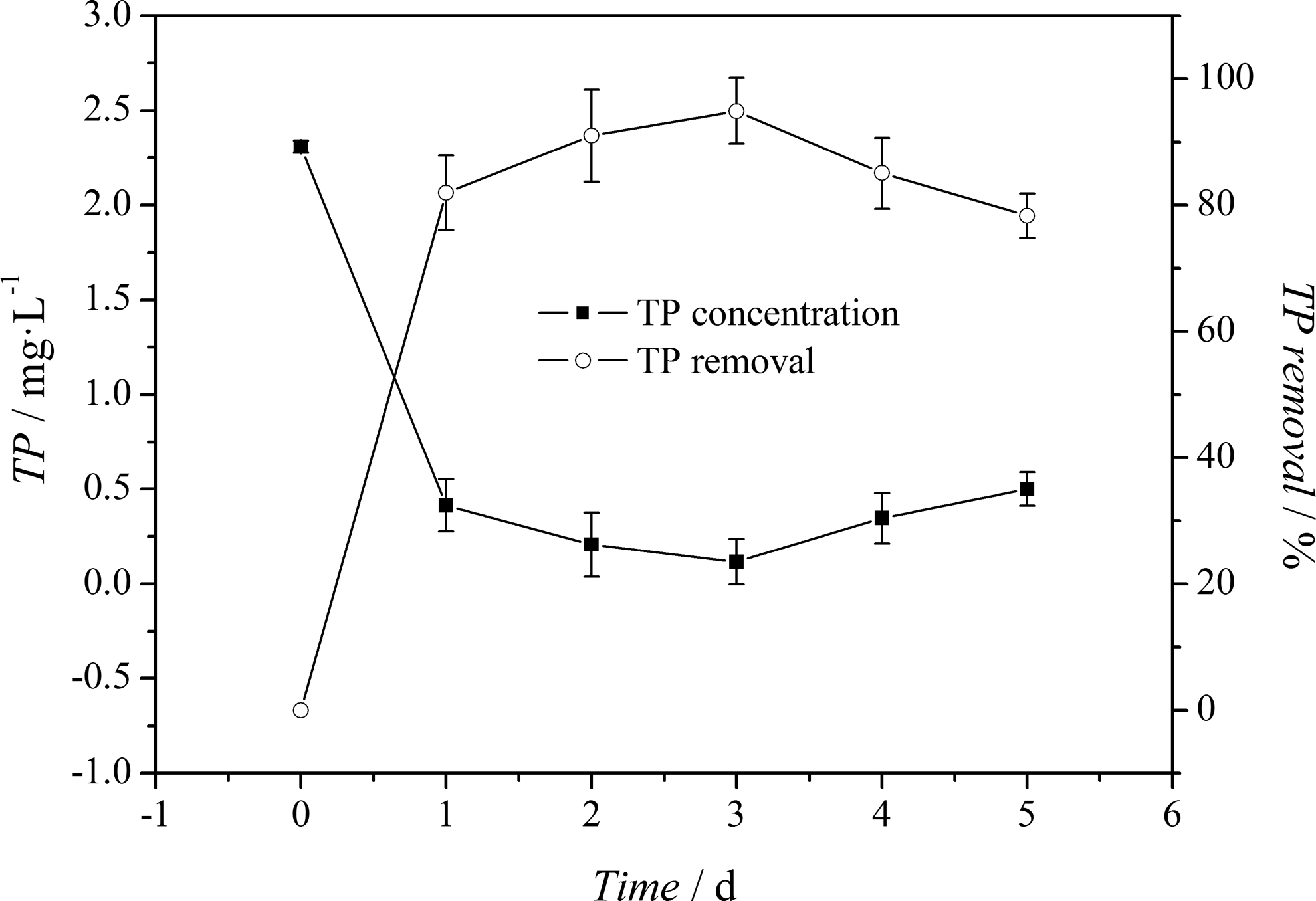
Variation of NH4+-N TP with time during microalgae cultivation (±SD, n = 3).
Microalgae utilized phosphorous and nitrogen to synthesize biomass by photosynthesis under light conditions, which significantly contributed to the removal of phosphorous and nitrogen from the liquid medium. However, 4 days later, the TP and NH4+-N concentrations increased slowly, which was likely from ruptured cells spilling their phosphorous and NH4+-N into the culture medium due to microalgae aging and death. This situation was reported by Droop (1975) during microalgae cultivation. In addition, microalgae were found to be partially aggregated after 3 days of incubation, which could have resulted, in part, from microalgae aging and death. The aggregation of microalgae may contribute nutrient depletion, which often occurs at the later stages of microalgae growth. Therefore, an appropriate cultivation or retention time for microalgae should be selected; otherwise, there will be poor nitrogen and phosphorus removal as a result of microalgae death.
In addition, the effect of light/dark cycle, as well as types of microalgae and the coupling mode of MFC and photobioreactor, on the performance of MFC, microalgae growth, and N/P removal also needs to be studied in detail. González del Campo et al. (2015) have reported that the power density of MFC, microalgae growth, COD removal, and N/P removal was higher during the light phase than during the dark phase. The light mainly affected the microalgae growth and dissolved oxygen at the cathode, which in turn affected the performance of MFC, COD removal, and N/P removal.
The combined process of MFC and microalgae cultivation can obtain 97% TP and 99% NH4+-N removal. The average TP and NH4+-N concentrations in wastewater that was treated by the combined process met the first-level criteria (Class A) specified in discharge standards of pollutants for the municipal wastewater treatment plant of China (GB18918-2002).
Conclusions
A combined process consisting of MFC and microalgae cultivation processes for domestic wastewater treatment, and simultaneous electricity and biomass production has been demonstrated to be efficient in this study. The MFC was mainly responsible for most of the COD and some of the TP and NH4+-N removal, while microalgae dominated TP and NH4+-N removal. The combined process could achieve better wastewater treatment with improved TP and NH4+-N removal than the MFC process alone, providing an innovative technique for wastewater treatment. However, both the COD removal and power density are insufficiently high. As this novel combined process for wastewater treatment is only preliminarily explored and verified, additional studies are needed to scale up and optimize the process in future studies before broad application.
Footnotes
Acknowledgments
This work is financially supported by the National Natural Science Foundation of China (Grant No. 31560015), the scientific research project of the Inner Mongolia Autonomous Region colleges and Universities (Grant No. NJZY150), and Foundation for Innovative Research of Inner Mongolia University of Science and Technology (Grant No. 2014QDL001).
Author Disclosure Statement
No competing financial interests exist.