




Abstract
Abstract
Reductive and oxidative degradation of amaranth dye using zero valent iron nanoparticles (ZVINP) has been investigated. Effect of various reaction parameters such as the iron dosage, stirring speed, and influence of pH were studied, and an optimum condition deduced. The ideal operational conditions were 1.5–2.5 g/L of ZVINP, 15–30 min of reaction time, stirring speed of 150–200 rpm and pH of 3–9 for an initial dye concentration of 50–70 mg/L. Different mechanisms are suggested for the reactions at lower and higher pHs. At low pH, direct reduction followed by protonation and Fenton reaction is responsible for decoloration and degradation. But at higher pH, in addition to reduction, reactions of superoxide radical and ferryl ions also play a role in the degradation and decoloration. On the other hand, there is no contribution from Fenton reaction at higher pH. With these optimized conditions when applied to a coir factory effluent, a complete decolorization and 34% total organic carbon (TOC) reductions were observed within 30 min of treatment. Both oxidative and reductive mechanisms are explained based on the product profile determined by LC-Q-ToF-MS (liquid chromatography connected with quadrupole time of flight mass spectrometry) analysis.
Introduction
T
Most of the dye molecules have complex aromatic structure and are highly stable in nature owing to their resistance to conventional physicochemical or biological methods. Intense color decreases the transparency of the system that makes degradation methods using light less effective. Moreover, conventional methods generally resulting in phase transfer and biological processes usually need further treatment for complete mineralization.
Effective degradation of dyes using advanced oxidation process and other methods are reported in the literature (Zielonka et al., 2004; Pálfi et al., 2011; Oturan and Aaron, 2014; Thomas et al., 2014; Brillas and Martínez-Huitle, 2015). Although the main reactant in advanced oxidation process, the hydroxyl radical, is nonspecific in its reaction with most of the organic compounds, the effective degradation depends on several factors such as back reactions, nature of the intermediate products, presence of other compounds and inorganic ions in the medium, and so on. Thus, the effectiveness of the degradation is compound specific and a generalized protocol is far from reality. On the other hand, such methods are the only solution to completely degrade the aromatic ring. In the recent years nanotechnology-based remediation techniques are also being experimented. Zero valent iron nanoparticle (ZVINP)-based degradation technologies have attracted the attention of researchers, especially in dechlorination of organic pollutants and decoloration of dye wastewater (Chang et al., 2006; Wang et al., 2009). Another significance of this method is that it is possible to recover and reuse nanoparticles (Gomathi Devi et al., 2009).
Use of iron as a catalyst for degradation of organic pollutants started in 1900s with the utilization of micro size iron in permeable reactive barriers (Gu et al., 1999). Micro scale zero valent powder was widely used for the in situ ground water cleanup and decoloration of dyes over the last decades (Cao et al., 1999; Chang et al., 2006). Due to its higher electron donating capacity ZVI has been intensively studied for large number of environmental pollutants like chlorinated compounds (Janda et al., 2004), organochlorine pesticides (Wang et al., 2009), dyes (Lin et al., 2008; Chatterjee et al., 2010), toxic metals (Melitas et al., 2002), and inorganic compounds (Mishra and Farrell, 2005).
Although Fenton reaction was as an efficient pollutant remediation method, the sludge formed as a by-product makes the method less convenient for in situ applications (Thomas et al., 2014). But with ZVINP (advanced Fenton) there will be very minimum sludge production and Fe3+ to Fe2+ reduction is faster compared with normal Fenton reaction (Gomathi Devi et al., 2011). ZVINP is used as the precursor for Fenton reaction and can produce OH radical in the presence of O2. ZVINP-induced degradation process can take place via two mechanisms, reductive and oxidative, depending on the availability of oxygen (Stieber et al., 2011). In the presence of oxygen both reductive and oxidative mechanisms initiate the degradation. But in the absence of oxygen, reductive mechanism will be prominent. The reductive mechanism is through the following reactions [Eqs. (1)–(4)] (Stieber et al., 2011).
And the oxidative mechanism (advanced Fenton) proceeds via the following reactions [Eqs. (5)–(10)] (Stieber et al., 2011). At the presence of excess oxygen, there is a possibility for the formation of hydroxyl radicals and oxygen radicals from electrons released from ZVINP.
Amaranth dye is an anionic azo dye having red to purple color and has an absorption maximum at 522 nm. At pH below 6, dye predominantly is in its protonated form (Gupta et al., 2012). It is mainly used as a food additive and is one of the azo dyes used in leather, phenol formaldehyde resins, synthetic fibers, and paper (Mpountoukas et al., 2010). The U.S. Food and Drug Administration banned the use of amaranth dye as a food additive as it was suspected as a carcinogen. But, it is still acceptable in several countries including India, Canada, and United Kingdom. As a histamine liberator, amaranth dye may increase symptoms of asthma (Rakhshaee, 2014). Amaranth dye can induce allergic and asthmatic reactions for people who are sensitive to aspirin drugs (Nevado et al., 1995).
Although, the degradation and decoloration studies of azo dyes using ZVI were reported in the literature, these studies were more focused on the decoloration and removal strategy and not on mechanistic aspects (Chang et al., 2006; Lin et al., 2008; Chatterjee et al., 2010). The degradation of amaranth dye using advanced Fenton reaction and its removal using nano biomaterial synthesized by the immobilization of Fe0 and Fe3O4 nanoparticles on cross-linked pectin were reported (Gomathi Devi et al., 2011; Rakhshaee, 2014). This study is aimed to deduce a reaction mechanism (oxidative and reductive pathways) that leads to decomposition of amaranth dye by ZVINP. A systematic study has been carried out by investigating the extent of decolorization, extent of degradation, and the determination of the intermediate products using high resolution mass spectrometry (MS). In addition, we have used wastewater from coir factory to look at its applicability in real system.
Materials and Methods
Materials
Amaranth dye (Trisodium-3-oxo-4-[(4-sulfonato-1-naphthyl)hydrazono]naphthalene-2,7-disulfonate, C20H11N2Na3O10S3), ferric chloride hexahydrate (Loba Chemie, India), and sodium borohydride, formic acid, and acetonitrile (Merck, India), Randisc PTFE SF syringe filter with 0.22 μ pore size (Rankem, RFCL, India) were used as received.
Preparation and characterization of ZVINP
ZVINP were chemically synthesized in the laboratory as per the reported method (Satapanajaru et al., 2011). The synthesized nanoparticles were characterized by using transmission electron microscopy (TEM) and selected area electron diffraction (SAED) analysis (Fig. 1). The TEM shows that the prepared nanoparticles are in the order of <5 nm and aggregated further as chain-like aggregates. The small discrete spots seen from SAED pattern indicate the crystalline nature of the materials.
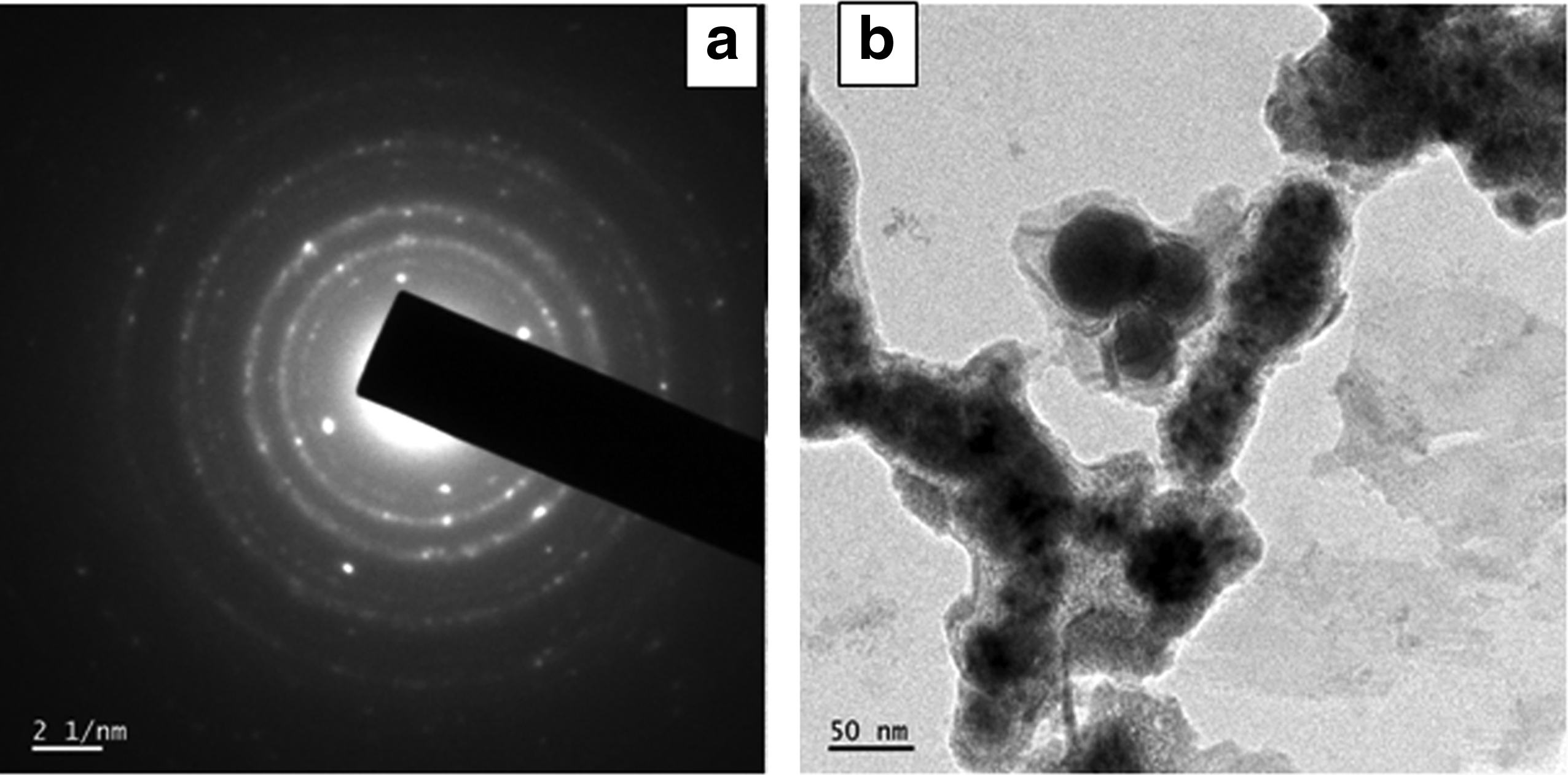
Transmission electron microscopic characterization of ZVINP prepared on carbon-coated copper grid
Degradation experiments
Experimental variables such as reaction time, ZVINP dosage, pH, and stirring speed were considered. The amaranth treatment were performed by adding 2 g/L of freshly prepared ZVINP into 100 mL of experimental solution with required pH in a 250 mL beaker with constant stirring of 150 rpm except for stirring speed experiments. A predetermined amount of aliquot was removed with syringe at different time intervals. All the samples for liquid chromatography connected with quadrupole time of flight mass spectrometry (LC-Q-ToF-MS) were filtered through Randisc PTFE SF syringe filter before injection. The samples for total organic carbon experiments were filtered through Whatman 1 filter paper for removing residual solid iron nanoparticles. The experiments were repeated twice and mean values were taken.
Analytical methods
Ultra performance liquid chromatography quadrupole time of fight mass spectrometry analysis
For the determination of degradation products after ZVINP treatment, Waters Acquity H class UPLC system coupled with a Waters Xevo G2 quadrupole–time-of-flight (Q-ToF) high-resolution mass spectrometer was used. An electro spray interface in negative mode was used for MS and tandem mass spectrometry (MS/MS) studies. The mobile phase was 1% formic acid, A, and acetonitrile, B. The LC separation was carried out on Agilent eclipse plus C8 column (100 × 4.6 × 1.7 μm). About 90%–10% gradient elution method was used. All the products identified here are within 5 ppm error limit.
TEM, spectrophotometric, and pH measurements
The extent of degradation was analyzed by UV-visible spectrophotometer (Shimadzu, UV-1700, Pharmaspec). High-resolution TEM was performed using a JEOL JEM 2010 operated at 200 kV. All pH measurements were made with digital pH meter (Eutech).
Total organic carbon analysis
To determine the extent of mineralization during ZVINP treatment, total organic carbon (TOC) of filtered samples was measured using Thermo Scientific Hiper TOC analyzer. Measurements were repeated at least twice and mean value is reported.
Results and Discussion
Effect of catalyst loading
Effect of iron dosage and its optimization were carried out by varying the initial iron dosage from 0.5 to 5 g/L. The change in the absorbance and TOC reduction are presented in Figures 2 and 3, respectively. The extent of degradation with time during ZVINP treatment is given in the supporting information (Supplementary Fig. S1). As seen from figures, the absorbance and TOC was gradually decreased with increase in iron concentration. But above an iron dosage of 2 g/L, there was no significant increase in the decay of amaranth dye. Therefore, 2 g/L of iron was fixed as the optimized iron dosage for further studies.
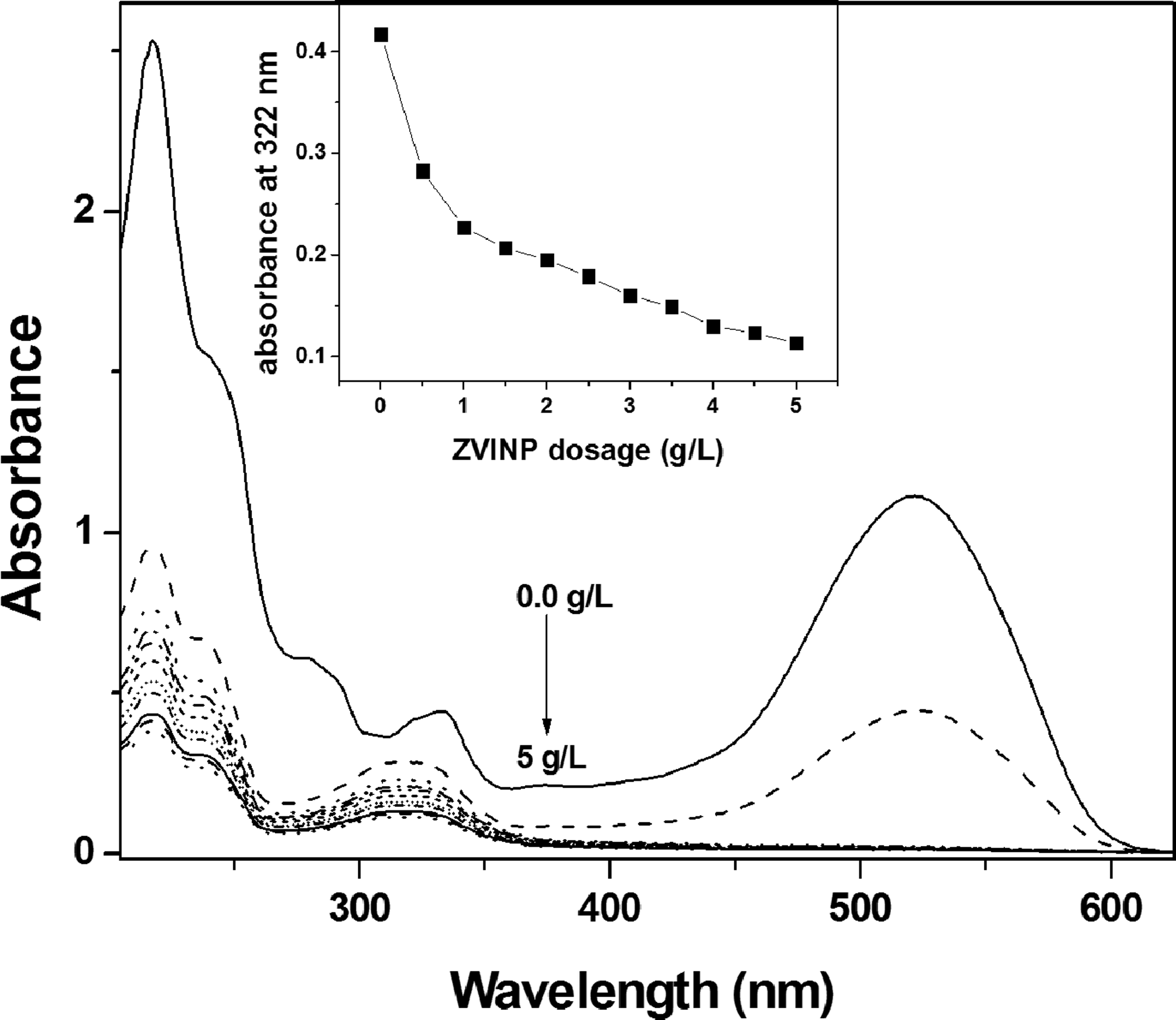
Effect of Fe concentration on the degradation of amaranth dye during ZVINP treatment. [Amaranth dye] = 60 mg/L, pH = 3, Time = 30 min, rpm = 150. Inset: Change in absorbance at 322 nm versus ZVINP dosage in grams per liter.

Effect of Fe concentration on the degradation of amaranth dye in terms of TOC after ZVINP treatment. [Amaranth dye] = 60 mg/L, pH = 3, Time = 30 min, rpm = 150. TOC, total organic carbon.
The UV absorbance spectra of amaranth dye showed absorption maxima at 522, 333, 219, and 239 nm. The absorbance at 522 nm is due to the n–π* transition of -N=N- group, which is responsible for the intense color. The other characteristic absorbencies at 333, 239, and 219 nm are due to the π–π* transition of aromatic ring. As seen from Figure 2 when iron dosage was increased to 0.5 g/L the absorbance intensity at 522 nm showed a reduction of about 60%, followed by a further reduction to about 100% with 1 g/L ZVINP after 30 min of reaction. At the same time, when the iron dosage was 0.5 g/L, the absorbance at 333 nm shifted to 322 nm. This clearly indicates the loss of azo group and possible formation of amine product. When the iron dosage was 1 g/L, the absorbance at 322 nm has 45% reduction. And only 62%, and 72% absorbance reduction was observed with 3 and 5 g/L of ZVINP, respectively.
The reduction of TOC and absorbance followed the same trend. It shows a gradual reduction in TOC with increase in ZVINP dosage. TOC reduction was 10% at 0.5 g/L of iron, which undergoes a gradual increase upto 63% with 5 g/L of ZVINP. Further addition of ZVINP did not give any enhancement and the solution becomes slightly turbid.
It is known that efficiency of nanoparticle-based remediation can be accounted by surface-mediated reactions (Bokare et al., 2007). The reaction rate largely depends on the available reaction sites at the surface of ZVI. If more reaction sites are available, reaction rate will also be high and this will accelerate the degradation of dye. This is the obvious reason for better efficiency at higher concentration of ZVINP. Logarithmic plot of dye concentration versus time gave a good straight line, which indicates that the degradation of amaranth follows a pseudo first order kinetics (Supplementary Fig. S2). At higher time of interaction, the reaction deviates from first order kinetics due to exhaustion of most of the active sites (Chatterjee et al., 2010). In aqueous solution, ZVINP can produce electrons and Fe2+. This electron will reduce the organic pollutants and subsequently Fe2+ would be used as a precursor for Fenton reaction [Eq. (9)].
But long time contact with aqueous medium may increase the oxide layer thickness and reduce active sites. Therefore, stoichiometric excess amount of ZVINP need to be provided for better reaction. At the same time, excess Fe2+ can be formed due to excess iron dosage that may have inhibitory effect because Fe2+ may act as scavenger for hydroxyl radicals (Hsueh et al., 2005). Over dosages of iron is always undesirable because the excess iron will precipitate out as iron hydroxides, these hydroxides may occupy the active sites, giving yellow coloration and turbidity to the test solution. It may decrease the degradation rate and decoloration rate. This is visible from our results at higher dosage of ZVINP.
Complete decolorization observed in the present experiment (Fig. 2) is likely the result of substantial azo link cleavage. On the other hand, TOC reduction shows that nearly 40% of the organic compounds still remain in the system as intermediate compounds. In other words, 60% of the parent compound gets mineralized.
Effect of pH
The extent of decolorization and degradation in terms of absorbance and TOC with respect to different pHs are depicted in Figures 4 and 5, respectively. As seen from the results, the solution was decolorized within 15 min of reaction at all pHs as can be seen from the complete disappearance of absorption at 522 nm. But maximum TOC reduction and maximum absorbance reduction at 322 nm were observed when the pH was at 3. In all pHs the absorbance at 333 nm is shifted to 322 nm and pH 5, 7, and 9 show almost same reduction in absorbance at 322 nm (12%, 10%, and 11%, respectively). But at pH 3, about 55% reduction in absorbance was observed at 322 nm. TOC also showed a similar tendency (i.e., 48%, 42%, 26%, and 42% TOC reduction, respectively), at pH 3, 5, 7, and 9. So the treatment was most effective at pH 3.

Effect of pH on the degradation of amaranth dye during ZVINP treatment. [Amaranth dye] = 60 mg/L, Time = 30 min, [ZVINP] = 2 g/L, rpm = 150. Inset: Absorbance removal percentage at 322 nm versus pHs.
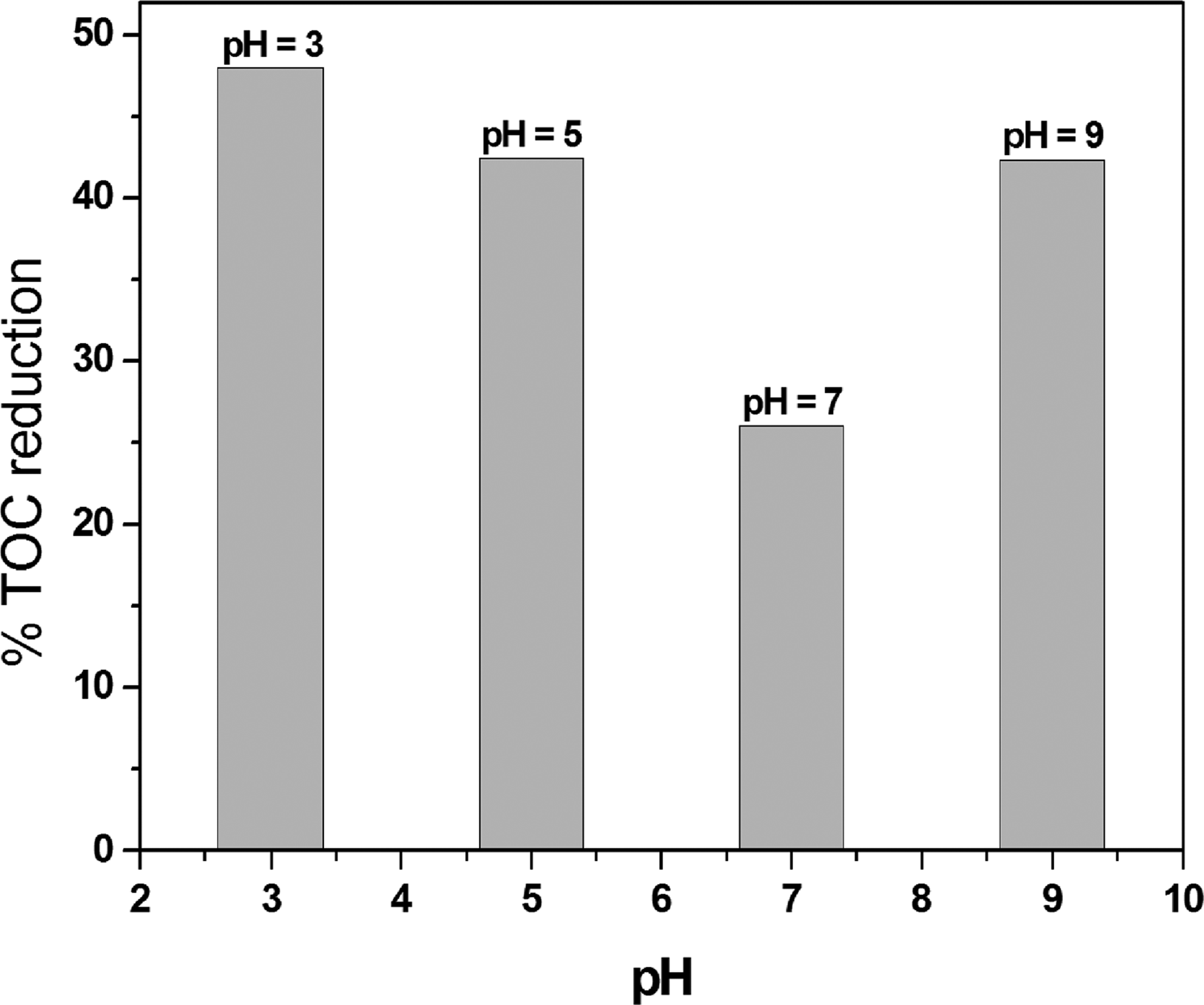
Percentage TOC reduction after ZVINP treatment at different pH of amaranth dye. [Amaranth dye] = 60 mg/L, Time = 30 min, [Fe] = 2 g/L, rpm = 150.
Amaranth dye is an anionic dye and hence lower pH would be ideal for better reaction. At lower pH, the ZVINP surface would be positively charged and it can attract more dye molecules and thereby can increase surface-mediated degradation. In addition, at low pH the thickness of oxide layer will be minimum and in akaline pH the oxide layer will have more thickness due to the formation of iron hydroxides in the presence of hydroxyl ions (Mielczarski et al., 2005). If the thickness of oxide layer is minimum, it is easy to carry out direct reduction of pollutants by electrons through the thin surface layer. At low pH, reduction of -N=N- bond is thus more favorable and hence breakage of the azo bond and formation of -NH-NH- bond leading to decolorization takes place. At the same time, OH radical reaction can also take place from the Fenton reaction as shown in Equation (9) (Cao et al., 1999; Fu et al., 2010). By and large, low pH will be ideal for efficient reaction. At pH 5 and 7, the decoloration was mainly due to adsorption of dye molecule to oxide layer of iron nanoparticles, followed by the direct reduction (Chatterjee et al., 2010). The contribution from Fenton's reaction will be feeble at pH 5. A minimum degradation was observed at pH 7 where only an adsorption followed by reduction of azo group is expected.
At pH 9, the decoloration was due to the adsorption of dye molecules on the oxide surface formed on the ZVINPs followed by reduction (Lin et al., 2008) similar to other pHs. In addition, the super oxide radical and ferryl ion, formed as a result of reaction 7 and 10, may also react with amaranth dye. In this context, one would expect an efficiency close to that of pH 3. On the other hand, at higher pH the reaction may be hindered by ferrous hydroxide layer (Cao et al., 1999). This means that deactivation of active sites due to iron hydroxides overrule other mechanisms. Moreover, at higher pH, the surface oxide layer of iron particle has a negative charge and the anionic dye has a negative charge; this imparts an electrostatic repulsion between the iron particle and dye molecule. This may also affect the efficiency of reaction.
Effect of stirring speed
Similar to other nanoparticles, the ZVINPs also have the tendency to aggregate. It is very clear from the characterization studies using TEM, these particles exist as chain-like aggregates. This explains the lower efficiency in aggregated systems due to reduction in surface area. There are methods like immobilization on membranes, ultra sonication, surface treatment, and stirring to keep the nanopartilce in a dispersed manner or as single particles as far as possible. Here, we used stirring as a tool to disperse nanoparticles.
No major change in color was observed after 1 h treatment without stirring (14% reduction at 522 nm). As seen from Figure 6, a complete decoloration was observed at all rpm within 15 min of reaction. But around 52% reduction in absorbance intensity at 322 nm was observed for 200 rpm; 53%, and 47% each for 150 and 100 rpm, respectively. It can be seen from Figure 6 that after 200 rpm there is not much decrease in absorbance at 322 nm. Same pattern was observed with TOC also shown in Figure 7.

Effect of stirring rate on the degradation of amaranth dye during ZVINP treatment. [Amaranth dye] = 60 mg/L, pH = 3, Time = 30 min, [Fe] = 2 g/L. Inset: Absorbance removal percentage at 322 nm versus stirring rate.
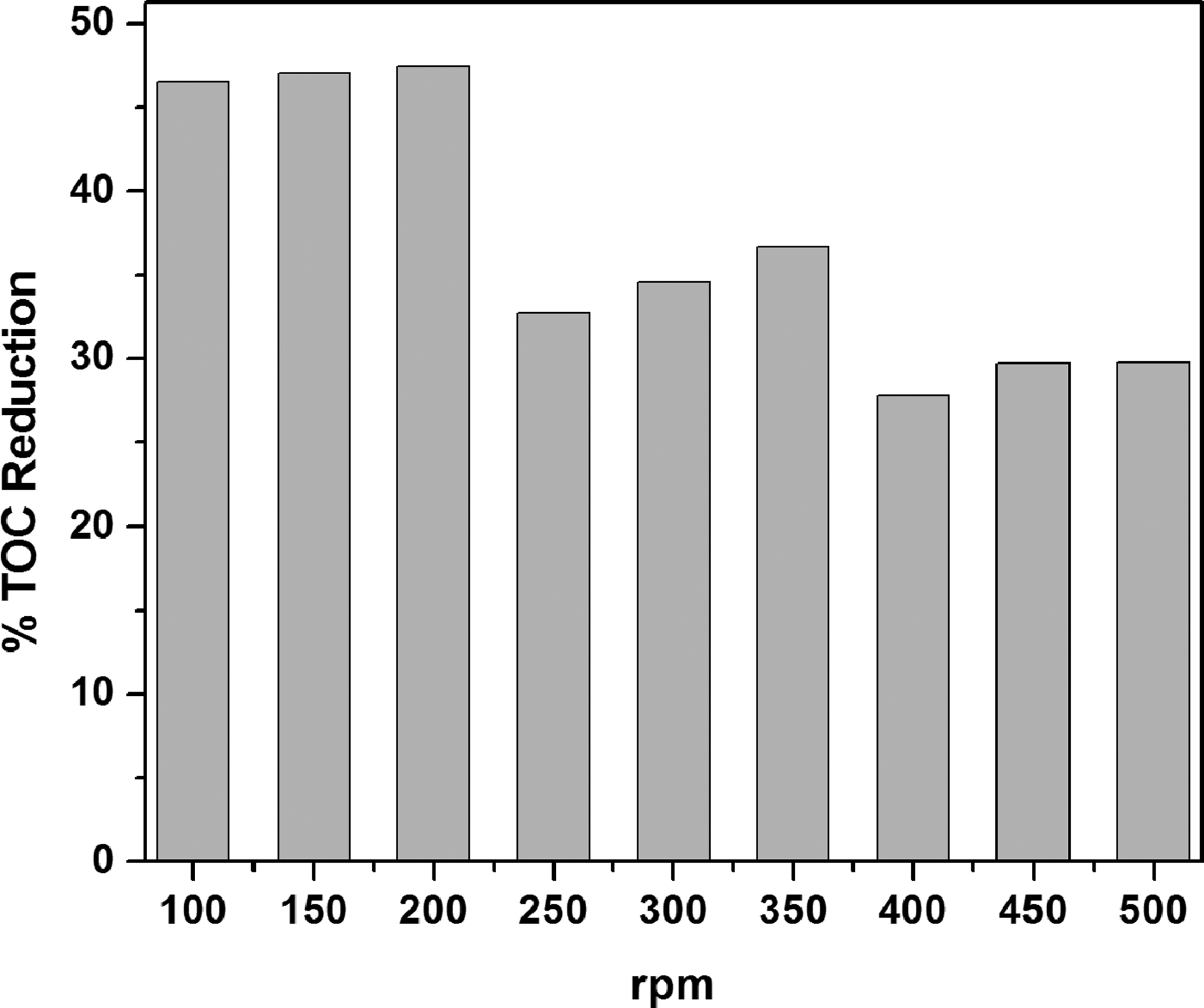
Effect of rpm on the degradation of amaranth dye in terms of TOC after ZVINP treatment. [Amaranth dye] = 60 mg/L, pH = 3, Time = 30 min, [Fe] = 2 g/L.
While the stirring will disperse the nanoparticle as much as possible, they will not get the time to aggregate. So this will increase the available surface area and thereby increase the effective reaction at the surface. When the stirring rate is more than 200 rpm, the solution displays a higher TOC value. The higher stirring speed will overrule the weak forces of attraction between the dye molecule and the surface; consequently, the adsorbed dye molecule will be liberated from the nanoparticle and will result in TOC increase. This is the reason for a fluctuating enhancement of TOC (Fig. 7). Therefore, all the subsequent works were carried out at a fixed stirring rate of 150 rpm.
Product studies using LC-Q-ToF-MS
Stable products formed after the treatment ([Amaranth dye] = 60 mg/L, pH = 3, Time = 30 min, [Fe] = 1 g/L, rpm = 150) of amaranth dye with ZVINP were identified by using high performance LC-Q-ToF-MS and these are listed in Table 1 as products
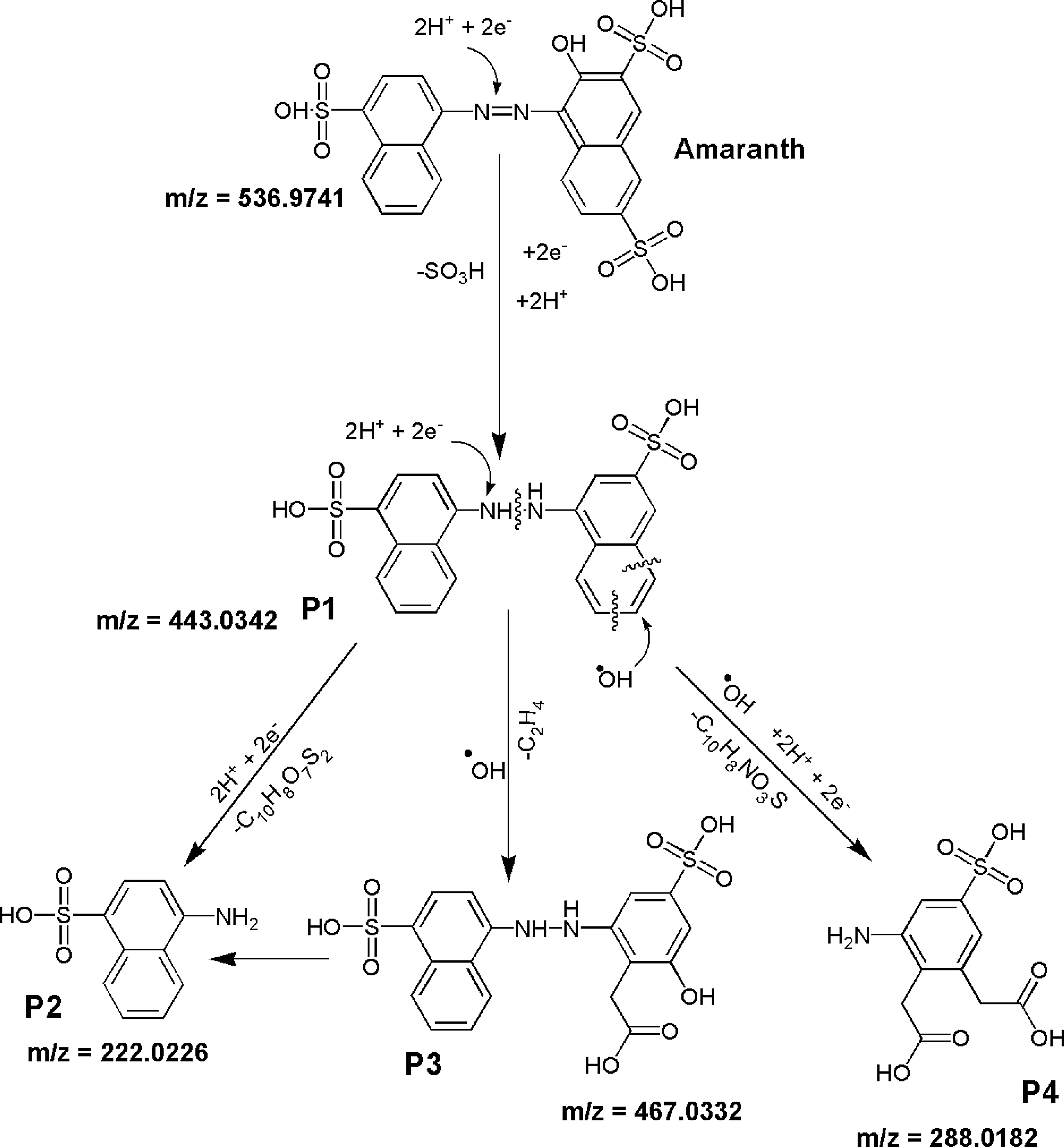
Proposed mechanistic degradation pathways of amaranth dye based on identified intermediates after ZVINP treatment. [Amaranth dye] = 60 mg/L, pH = 3, Time = 30 min, [Fe] = 1 g/L, rpm = 150.
[Amaranth dye] = 60 mg/L, pH = 3, Time = 30 min, [Fe] = 1 g/L, rpm = 150.
LC-Q-ToF-MS, liquid chromatography connected with quadrupole time of flight mass spectrometry.
Zero valent iron, being a strong reducing agent, act as an electron donor to the dye molecule and subsequently the anion could combine with H+. One of the major products identified in this study supports this reaction pathway (Fig. 8, Product
It is known that the primary step in azo dye degradation is the reduction of azo bond (Chatterjee et al., 2010) as shown in the following reactions [Eqs. (11)–(13)] (Chatterjee et al., 2010). In these reactions, electron adds to the azo bond and thereby destructs the conjugation followed by protonation.
It is clear from our product data that the first step of transformation is with the electron attack at the azo bond. The
Degradation of coir factory wastewater
To check the high efficiency of decolorization of the dye by ZVINP, we have treated it with wastewater from a coir industry. This is collected from a local coir factory. Usually factory wastewater is highly viscous in nature having large organics loading, deep color, and high level of suspended solids. The dyes used during dyeing process, pigment and natural organic matter from coconut husk are mainly responsible for deep color and large organics loading. We diluted 10 times the original concentration to make the system suitable for experiments. Although it is diluted, it bears viscous nature and has deep color with high TOC value of 150 mg of C/L. Treatment of coir factory wastewater with ZVINP has given a complete decolorization and 34% TOC reduction within 30 min of reaction with 2 g/L of iron (Fig. 9). Of course this contains many components including dyes and hence a clear-cut reaction route cannot be deduced. On the other hand, this is a demonstration that ZVINP can be utilized for effective decolorization of dye waste from industries as well.
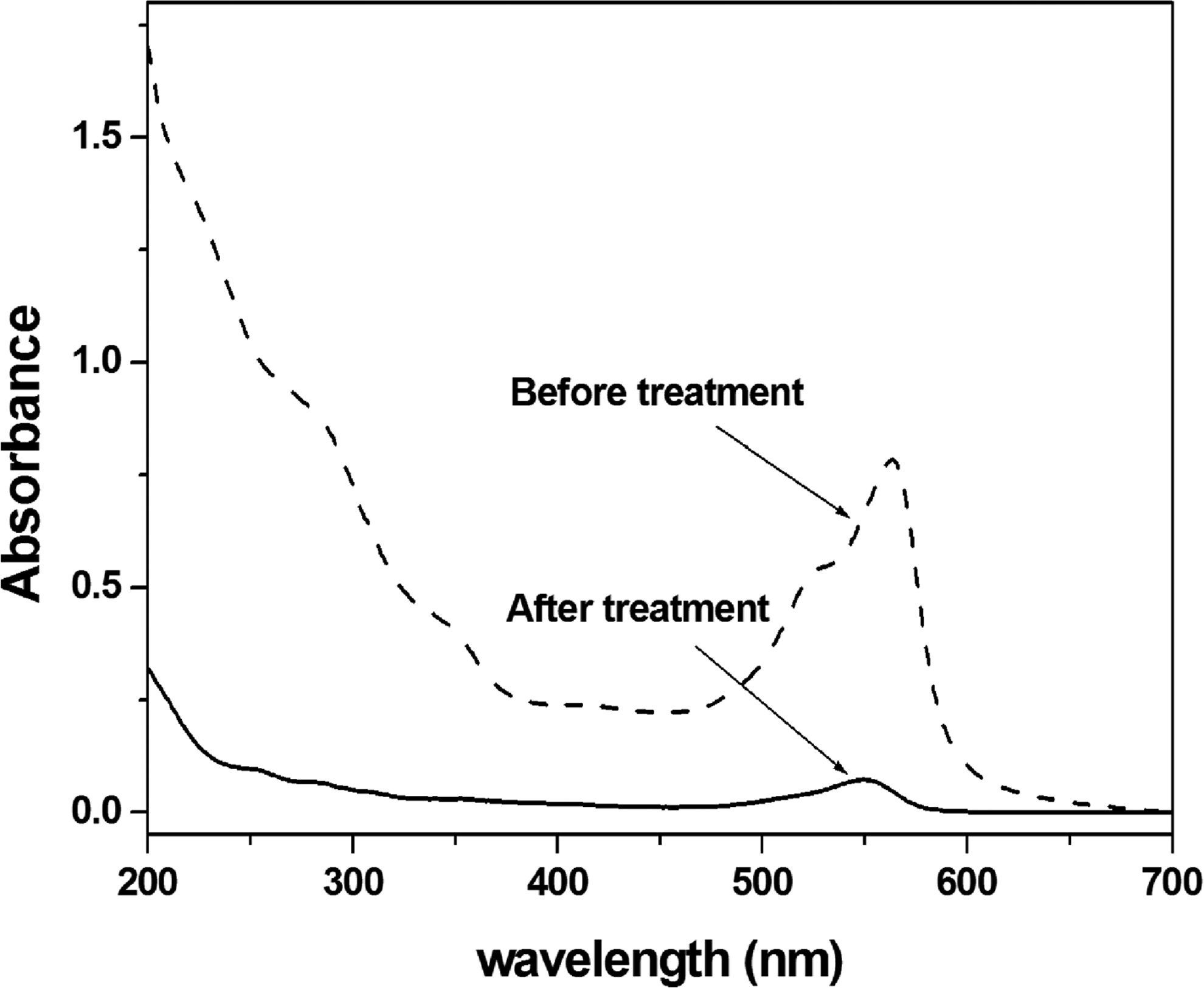
Extent of degradation of coir factory wastewater by ZVINP treatment. [ZVINP] = 2 g/L, time = 30 min.
Conclusions
It is demonstrated that synthesized ZVINP can effectively remove the color and TOC of amaranth dye under optimized conditions. A complete decolorization and 48% TOC reduction was observed within 30 min of treatment. The ideal operational conditions were 1.5–2.5 g/L of ZVINP, 15–30 min of reaction time, stirring speed of 150–200 rpm, and pH of 3–9 for initial dye concentration of 50–70 mg/L. Degradation studies of amaranth dye proved that iron can be used as the transition metal of choice for environmental applications, especially for the decolorization and degradation of azo dyes. The oxidative and reductive mechanism of this catalyst favors decolorization and degradation. ZVINP concentration, solution pH, and rotation speed are important to decoloration and degradation. At low pH direct reduction and hydroxyl radical reaction are responsible for decoloration and degradation. But at higher pH reactions of superoxide radical and ferryl ions are additional channels for degradation and decoloration. Application of these optimized conditions in coir factory wastewater resulted a complete decolorization and 34% TOC reduction within 30 min of treatment. This shows its suitability as an alternative wastewater technology for industrial application. It can be envisaged that such methods have potential application in similar systems or pollutants.
Footnotes
Acknowledgment
Financial support from KSCSTE and DST (FIST, PURSE) are gratefully acknowledged.
Author Disclosure Statement
No competing financial interests exist.
References
Supplementary Material
Please find the following supplemental material available below.
For Open Access articles published under a Creative Commons License, all supplemental material carries the same license as the article it is associated with.
For non-Open Access articles published, all supplemental material carries a non-exclusive license, and permission requests for re-use of supplemental material or any part of supplemental material shall be sent directly to the copyright owner as specified in the copyright notice associated with the article.
