




Abstract
Abstract
Effects of pH (5–12) on primary sludge (PS) fermentation and volatile fatty acid (VFA) accumulation were studied in batch experiments. Results showed that under strong alkaline conditions (pH 10–12), hydrolysis could be accelerated and high soluble chemical oxygen demand (SCOD) produced, but acidification was inhibited, resulting in a decrease of VFA production; whereas in weak base (pH 8, 9) conditions, more VFAs accumulated, although less SCOD was produced. Optimal conditions for PS to accumulate VFAs in this study were pH 9 and a fermentation time of 10 days. The study also revealed that protein degradation played an important role in VFA production. More protein was hydrolyzed and acidified at pH 9 than at pH 10 in the system, although protein content at pH 10 was higher. Acetic and propionic acids were the dominant acid species. Furthermore, a comparison of VFAs, NH4+, and pH relationships in pH 9 and pH-uncontrolled systems showed that weak base conditions could significantly enhance the processes of sludge solubilization and protein and carbohydrate degradation, and thus reduce VFA consumption. This, eventually, resulted in high VFA accumulation in fermentation systems.
Introduction
O
Many previous studies have focused on obtaining carbon resources from waste activated sludge (WAS) because it contains lots of bacterial mass, which can be converted to degradable organics (Horiuchi et al., 2002; Zhang et al., 2009; Zhao et al., 2010; Li et al., 2011). However, WAS requires complex enzymes or large energy input for cell wall lysis (Choi et al., 1997; Arnaiz et al., 2006; Zheng et al., 2013). Primary sludge (PS) generated from the primary settling tank in WWTPs is quite distinct from the WAS produced in the secondary sedimentation tank because PS normally includes a high portion of organic matter such as vegetables, fruits, feces, paper, and textiles. (Choi et al., 1997). In addition, it has different biodegradation characteristics than WAS does. According to the literature, PS contains a bulk of easily biodegradable organic matter, whereas more biomass is involved in the biodegradable fraction of PS compared to that of WAS (Arnaiz et al., 2006). Therefore, it is feasible to produce a large amount of VFAs as a carbon source using PS as fermentation substrate.
VFA accumulation is significantly influenced by pH in the acidification stage (Cokgor et al., 2009; Wu et al., 2009), and it has been proven that alkaline conditions could greatly improve VFA production from WAS during the anaerobic digestion process (Yuan et al., 2006; Wu et al., 2010). Therefore, in this study, the effects of pH (5–12) on PS hydrolysis and acidification were examined in batch experiments. The reasons for large VFA production and accumulation under alkaline conditions were explored by detecting the degradation of protein and carbohydrate contents. The relationships among VFAs, NH4+, and pH during the fermentation process in an alkaline-adjusted system and a pH-uncontrolled system were also investigated.
Materials and Methods
Sludge properties
The sludge was obtained from the primary settling tank of the Taiping WWTP in Harbin, China, and was used for fermentation experiments after being filtered through a 1 mm × 1 mm screen. The characteristics of the sludge are shown in Table 1.
Soluble/colloidal contents in supernatant after centrifuging.
Carbohydrate and protein equivalent to COD as 1.07 and 1.51 respectively.
TCOD, total chemical oxygen demand; TSS, total suspended solids; VSS, volatile suspended solids; SCOD, soluble chemical oxygen demand.
Batch experiments
Nine 600 mL fermentation flasks (numbered 1–9, as illustrated in Fig. 1) were used for the proposed experiments and each flask was filled with 500 mL fully mixed PS. The flasks were purged with nitrogen gas for 5 min to eliminate oxygen before the sludge was fed. Flask 1 served as the control, as its pH was not controlled. The pH values in Flasks 2–9 were maintained constantly at 5–12, respectively, which was adjusted every 12 h using 1 M NaOH or 1 M HCl solution through a pH regulating injector during the entire experimental process (20 days). The gas stored in the headspace was collected using drainage gas-collecting methods after being adsorbed by 100 mL 0.9 M H2SO4 solution to absorb ammonia gas (NH3). All flasks were incubated at 25°C in a constant temperature shaker (SHZ-82) with magnetic stirring at a speed of 100 r/min. Every 24 h, 3 mL samples were taken.

Sludge fermentation apparatus.
Analytical methods
Sludge samples were centrifuged at 10,000 rpm for 10 min. Then, they were filtered immediately through a Whatman GF/C glass microfiber filter (1.2 μm pore size). The filtrate, which contains soluble and colloidal compounds, was analyzed immediately for soluble chemical oxygen demand (SCOD) and carbohydrate, protein, VFAs, NH4+, and PO43− contents, whereas the filter was assayed for total suspended solids (TSS) and volatile suspended solids (VSS) (Yuan et al., 2006). SCOD, NH4+, PO43−, TSS, and VSS were measured according to Standard Methods (American Public Health Association, 2005). Soluble protein was detected using Lowry-Folin methods with bovine serum albumin as the standard (Lowry et al., 1951). Soluble carbohydrates were measured by the phenol-sulfuric acid method with glucose as the standard (Herbert et al., 1971). pH was determined using a WTW340i meter. VFAs were analyzed using an Agilent 7890 GC equipped with a flame ionization detector and HP-FFAP capillary column (inner diameter of 0.25 mm and length of 25 m). The VFA concentration was converted to COD concentration using the factors of 1.07 for acetic acid, 1.51 for propionic acid, 1.82 for n-butyric and iso-butyric acid, and 2.04 for n-valeric and iso-valeric acid (Grady Leslie et al., 1999). In addition, the VFA production rates were calculated using Equation (1):
where V is the VFA production rate (mg COD/[L · day]), t is fermentation time (days), and CVFAt and CVFA0 represent VFA concentration at the final and initial times (mg COD/L), respectively.
Results and Discussion
VFA production and composition
Effect of pH on SCOD release and VFA production
PS solubilization under alkaline fermentation resulted in large particulate COD in the fermented liquid phase (Fig. 2a). SCOD in the fermented liquid was mainly organics, such as proteins, carbohydrates, VFAs, and other unknown organic substances. The SCOD content increased as the pH rose, indicating that the sludge solubilization was greatly enhanced.

SCOD released
VFAs produced in the sludge fermentation mainly contained short-chain fatty acids of C2–C5 (e.g., acetic, propionic, n-butyric, iso-butyric, n-valeric, and iso-valeric acids). In this study, total VFAs (tVFAs) was the sum of these acids and their contents were expressed as equivalent COD. The effect of pH on tVFA production with fermentation time is shown in Fig. 2b. The largest VFA production under each alkaline condition from highest to lowest are as follows: pH = 9 (at 10 days) > pH = 8 (8 days) > pH = 10 (14 days) > control (18 days) > pH = 11 (18 days) > pH = 12 (20 days).
Generally, considering the pH effect on SCOD and VFA production, the results indicated that under strong alkaline conditions (pH 10–12), hydrolysis could be accelerated and high SCOD produced. However, acidification was inhibited, resulting in a decrease of VFA production. Under weak base (pH 8, 9) conditions, more VFAs accumulated, although SCOD yields were not as high as were those under strong alkaline conditions. The optimal conditions for PS to accumulate a large amount of VFAs in this study were pH 9 and a fermentation time of 10 days. Furthermore, when the carbon source was reused in the nutrition removal system, it has been reported that the phosphorus removal would benefit from the addition of VFAs, specifically while nitrogen removal by denitrification would occur with a variety of soluble COD production derived from the sludge fermentation, not just VFAs (Moser-Engeler et al., 1998). Thus, fermentation pH with proper fermentation time should be selected according to the specific purpose. In addition, suitable fermentation detention time should be maintained at different pH values because a longer fermentation period leads to higher SCOD yield, but also to higher loss of VFAs.
Effect of pH on composition of VFAs
Propionic-type and butyrate-type fermentation were the two main anaerobic fermentation types. Correspondingly, acetate, propionic acid, and butyrate were the main metabolites (Gerardi, 2003). VFA production and composition in the control tests, at pH 8, 9, and 10, are shown in Fig. 3. Acetate and propionic acid were the dominant acids at all pH conditions, whereas the contents of other acids were lower. The reason for acetate domination may be that other acids can be easily converted to acetate through different metabolic pathways, for example, butyrate and valeric acid could be degraded to acetate through β-oxidation degradation (McInerney, 1998). Table 2 shows the composition of VFAs at different pH values for a fermentation time of 10 days. Acetic acid was over 50% at all pH values. When pH rose, the proportion of acetic acid increased, whereas the proportion of propionic acid remained steady at 15%.
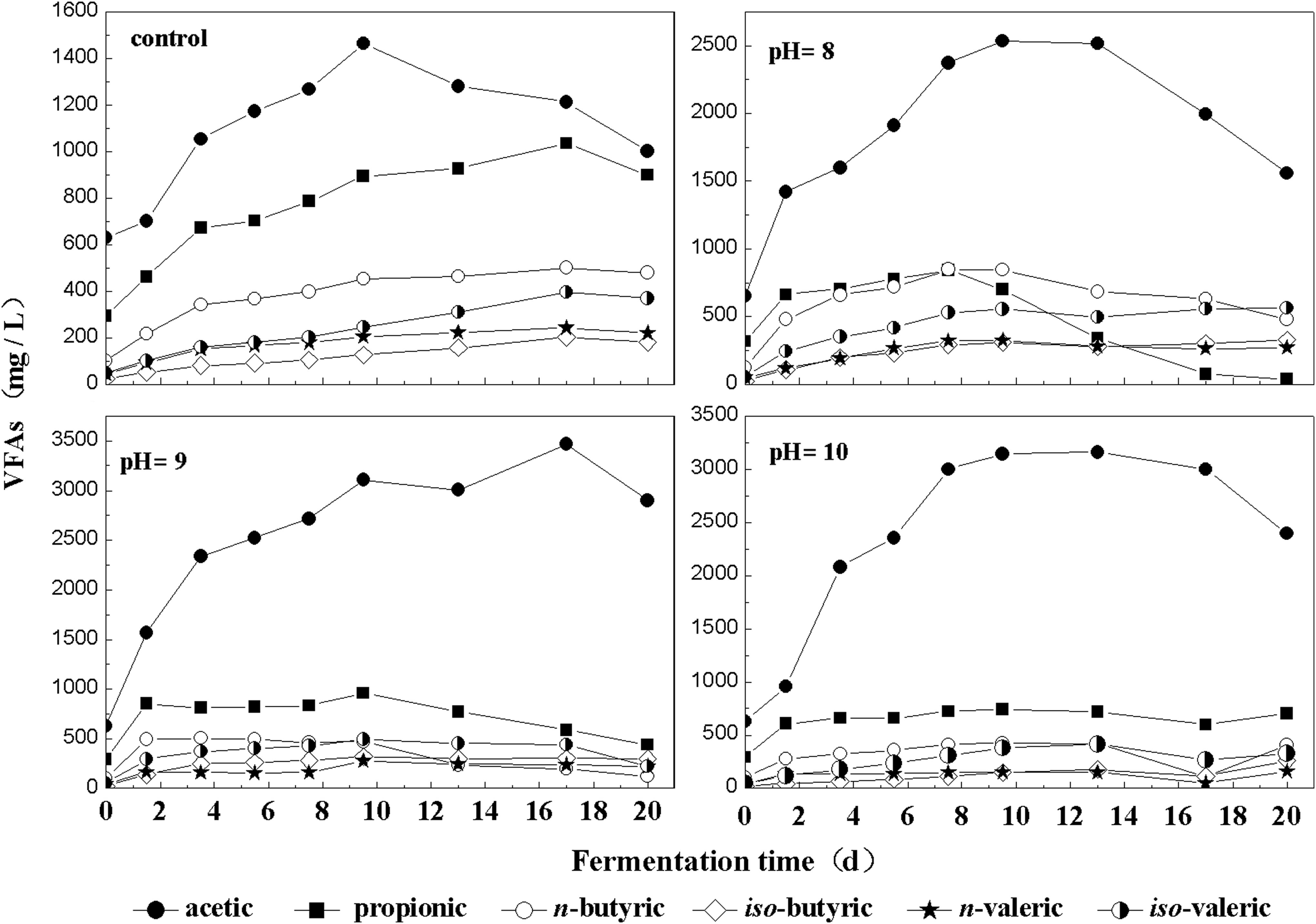
VFA accumulation at different pH conditions.
Mechanism of VFA accumulation under alkaline conditions
Protein and carbohydrate acidification
In the hydrolysis process, proteins can hydrolyze to amino acids and carbohydrates to simple sugars. These small molecule organics are utilized by acid-forming bacteria, producing VFAs. Figure 4 illustrates the variations in soluble/colloidal protein and carbohydrate production during the fermentation process. Both yields increased when pH increased from 5 to 12. In particular, an obvious increase of the yields was observed at pH 9–12. The relationship between the concentrations of soluble/colloidal proteins or carbohydrates and the fermentation pH (8–12) was well fitted linearly (Supplementary Fig. S1).
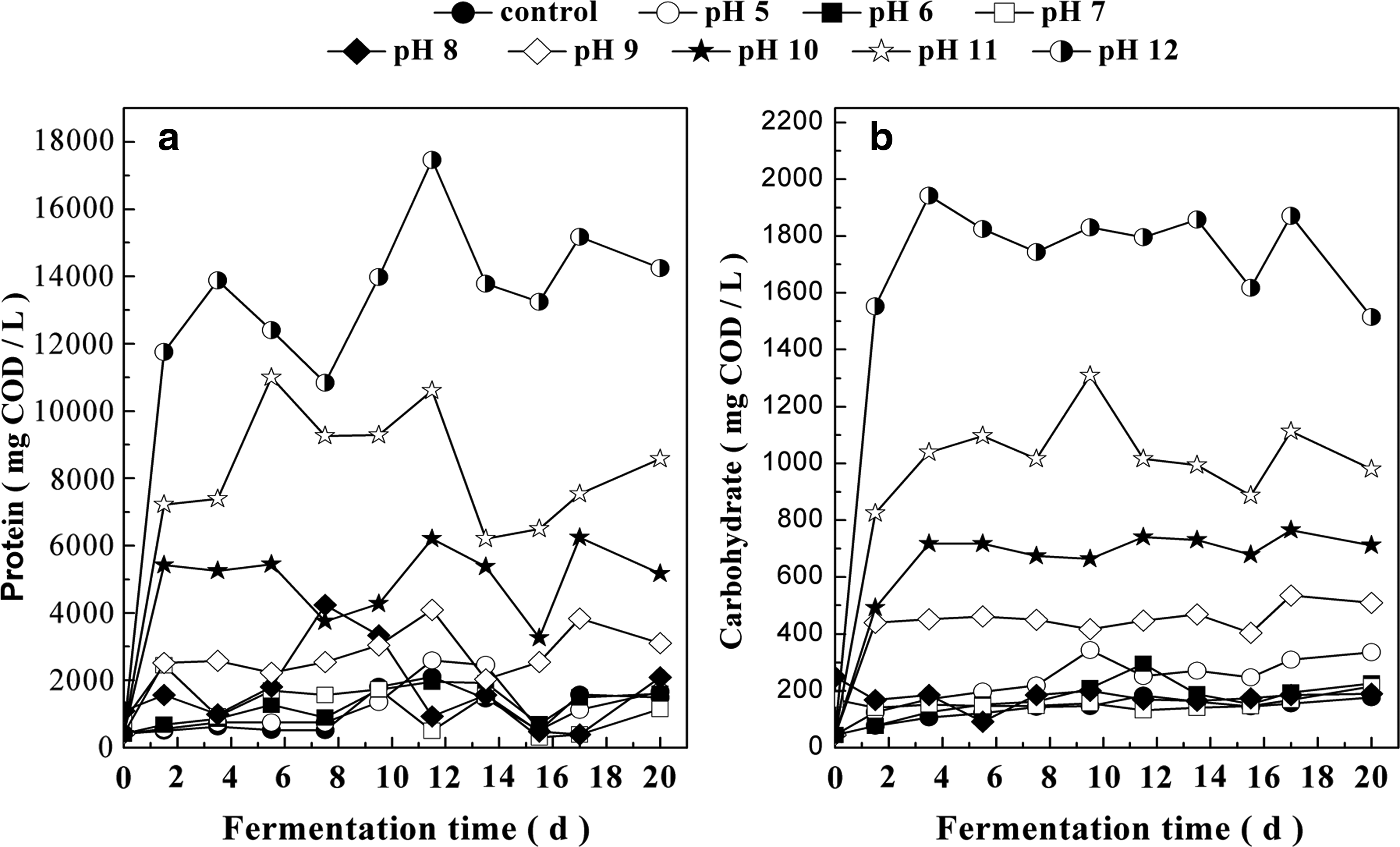
Protein
In addition, the percentage of soluble/colloidal proteins and carbohydrates accounting for SCOD for a fermentation time of 10 days in different systems is summarized in Table 3. Soluble/colloidal proteins were in the range of 20–30% when pH was below 10, whereas soluble/colloidal carbohydrates were in the range of 1–6% for all pH values. The soluble/colloidal protein content was obviously higher than the content of soluble/colloidal carbohydrates, which implies that protein was still the main component in PS, and therefore it played a more important role in VFA production, which was also seen in other studies (Yuan et al., 2006; Wu et al., 2010).
VFA, volatile fatty acid.
In addition, in the fermentation process, NH4+ was produced mainly by protein degradation (Banister et al., 1998). Therefore, the NH4+ content could indicate the degree of protein degradation to some extent. Figure 5a shows the NH4+ content released in the fermented liquid. Unlike the variation trend of soluble/colloidal protein content, the average soluble NH4+ content was highest at pH 9. It decreased when pH was higher than 9, as shown in Fig. 5b. The total NH4+ content contained the NH4+ that was released in the fermented liquid and the NH4+ that had been absorbed in the absorption solution. The NH4+ released was derived from the release of the ammonia from protein hydrolysis in the liquid, whereas the NH4+ absorbed was derived from the ammonia that had been trapped from the gas phase. Although the NH4+ concentration absorbed in the H2SO4 solution increased when pH was higher than 9, the total soluble NH4+ was still lower in the system at pH 10 than it was at pH 9. This indicates that less soluble/colloidal protein was degraded at pH >9. This was also in accordance with the result of a higher soluble/colloidal protein accumulation at pH >9. The result further demonstrated that pH 9 was more suitable for VFA accumulation than was pH 10 in PS fermentation. In addition, the PO43− released during the fermentation process is shown in Supplementary Fig. S2. It is fair to say that phosphate was another by-product of sludge solubilization.
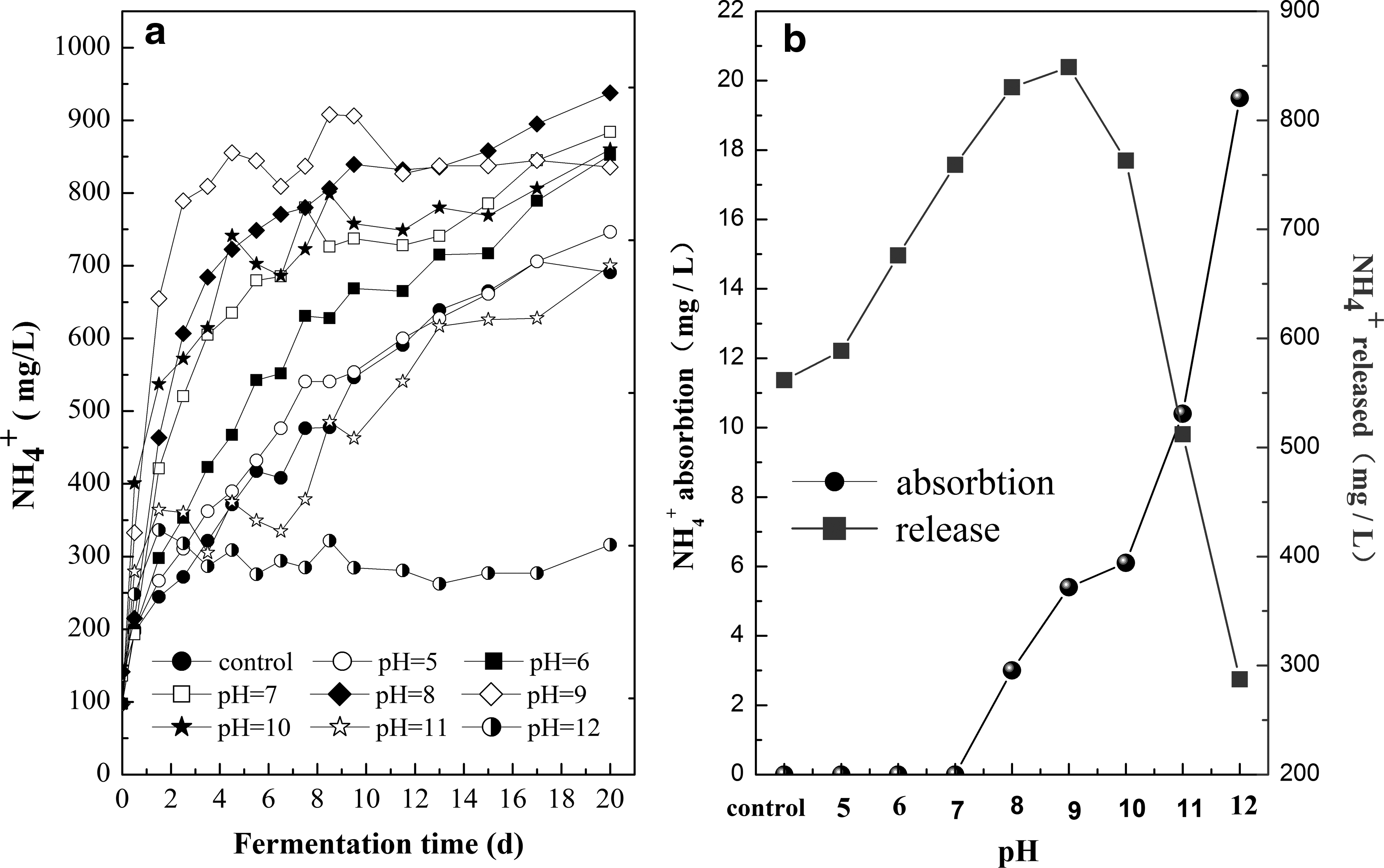
Average soluble NH4+ released in fermented liquid at different pH conditions
Effect of pH control strategy on fermentation process
It has been reported that VFA production is closely connected with pH in anaerobic digestion (Elisabeth and Paul, 1998). Bolzonella et al. (2005) showed that when pH decreased from 6 to 4, VFA production increased from 500 to 1000 mg/L. Meanwhile, the hydrolysis of protein [Eq. (2)] can produce ammonia and increase alkalinity, which also contributes to pH changes in the fermentation system. Figure 6 shows the variations among VFAs, pH, and NH4+ under two different conditions. The superiority of a pH-controlled strategy is illustrated in terms of VFA accumulation in anaerobic digestion systems.
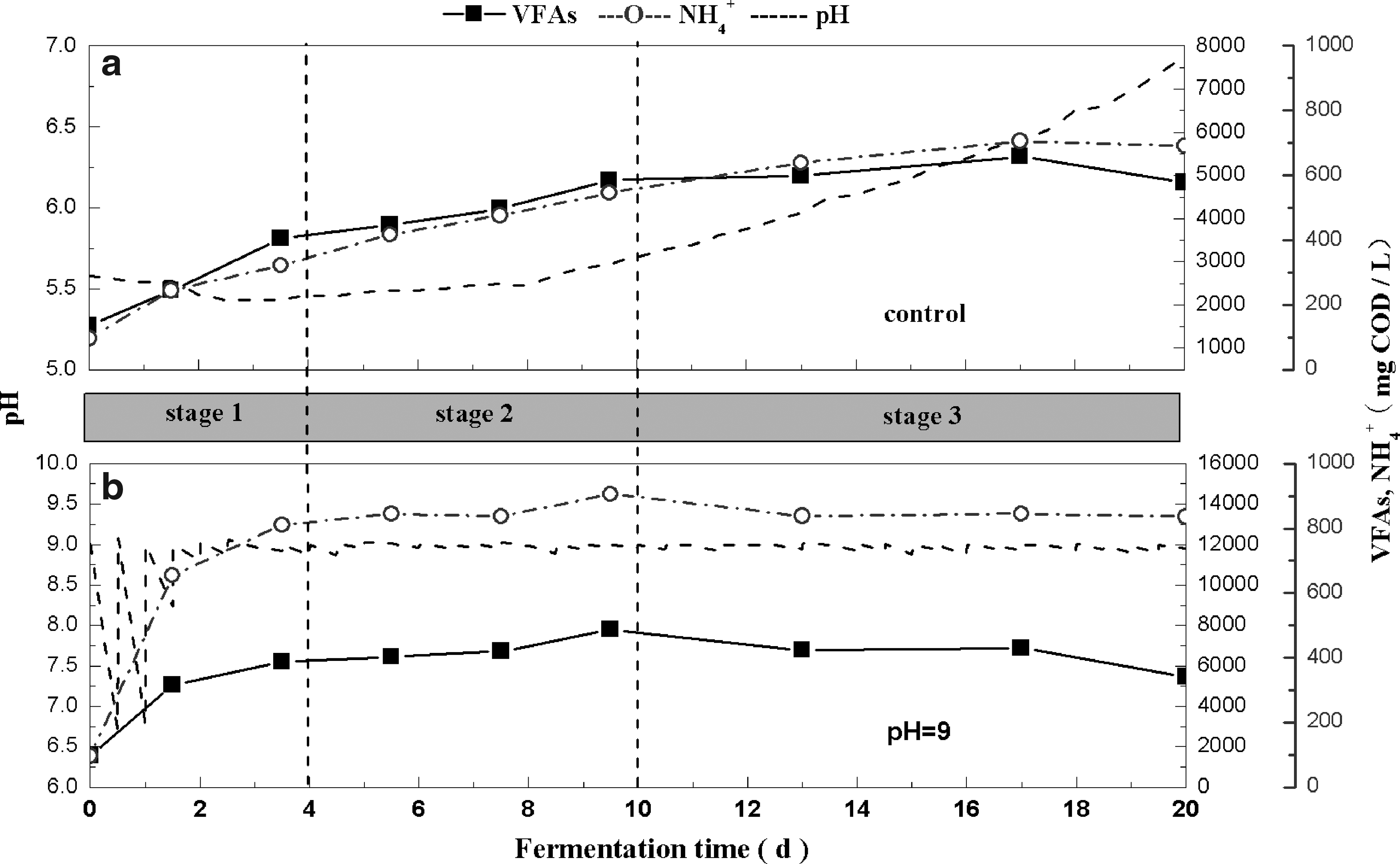
Variations of SCOD, VFAs, and pH at pH-uncontrolled
Protein degradation is shown in Equation (2).
In a pH-uncontrolled system, the whole fermentation process could be divided into three stages (Fig. 6a). In Stage I (0–4 days), a large amount of VFAs was produced by acid-forming bacteria using various kinds of SCOD. This led to an initial pH decrease from 5.6 to 5.5. The production rate of VFAs was 575 mg COD/(L · day). In Stage II (4–10 days), VFA production still increased, but the production rate became lower (average 428 mg COD/[L · day]) compared with Stage I. Accordingly, pH slightly increased to 5.7. It is believed that the pH increase was from the combination of VFA production and NH4+ release. A large amount of NH4+ (546 mg/L) was released through protein degradation, which neutralized H+ from the fermented solution. In Stage III (10–20 days), VFAs remained unchanged and then decreased from day 16 onward. Meanwhile, pH sharply increased to 7.0. When the sludge retention time lengthened, acid-forming bacteria were inhibited greatly by the acid accumulating in the system. A large amount of VFAs may have been consumed by bacteria, as there was an increase in gas production. This phenomenon had been demonstrated by Horiuchi et al. (2002), in which CH4 was produced in a system at pH values from 5 to 7. Eventually, pH significantly increased.
Compared with the system with the pH controlled at 9 (Fig. 6b), similarly, the process was divided into three stages. In Stage I (0–4 days), VFAs increased quickly, accompanied by an obvious fluctuation in pH (adjusted to 9 every 12 h), which indicated a high production rate of VFAs (2347 mg COD/[L · day]). Gradually, the pH became more stable because the acid production rate was decreasing (1329 mg COD/[L · day]). Stage II and Stage III were more similar because the methanogen process during Stage III was seriously inhibited; therefore, almost no VFA was consumed (Wu et al., 2010). The VFA content slowly increased with the decrease in daily pH. Thus, the environment in which pH was controlled under alkaline conditions was favorable to VFA accumulation from PS.
Conclusions
Effects of pH on PS fermentation were examined in batch mode experiments. The VFAs accumulated from PS fermentation were explored as an alternative carbon source for wastewater treatment processes. The results showed that strong alkaline conditions (pH >9) could transform sludge into soluble organics in terms of proteins and carbohydrates, whereas weak alkaline conditions (pH 8, 9) could further acidify proteins and carbohydrates to produce VFAs. Therefore, the optimal conditions for PS to accumulate VFAs in this study were pH 9 and a fermentation time of 10 days. As such, more proteins and carbohydrates were degraded to produce VFAs. The relationship among VFAs, NH4+, and pH during the fermentation process validated the advantage of alkaline fermentation for both accelerating sludge solubilization and inhibiting VFA consumption, which finally resulted in the large amount of accumulated VFAs.
Footnotes
Acknowledgment
This work was supported by the Fundamental Research Funds for the Central Universities (Grant No. 310829151074).
Author Disclosure Statement
No competing financial interests exist.
References
Supplementary Material
Please find the following supplemental material available below.
For Open Access articles published under a Creative Commons License, all supplemental material carries the same license as the article it is associated with.
For non-Open Access articles published, all supplemental material carries a non-exclusive license, and permission requests for re-use of supplemental material or any part of supplemental material shall be sent directly to the copyright owner as specified in the copyright notice associated with the article.
