




Abstract
Abstract
Composting is an effective method for disposing of plant and animal manure, including apple tree branches. In this study, effects of temperature, enzyme activity, and microbial community diversity were investigated in high-temperature aerobic composting using pig manure and apple tree branches as the experimental materials. This study showed that a compound microbial inoculum (Ralstoinia sp., Penicillium sp., Penicillium aurantiogriseum, and Acremonium alternatum) could improve the temperature and extend the period of high-temperature decomposition by 4 days. Compared with control treatment, inoculation with compound microbial inoculum improved cellulase, urease, and polyphenol oxidase activities by 15.0–19.8%, 2.3–71.4%, and 0.3–28.4%, respectively. Denaturing gradient gel electrophoresis analysis showed that the dominant bacteria were Firmicutes species, Bacillus sp. PML14, Acinetobacter sp., Pseudomonas sp., Phormidium sp., and bacteria that cannot be cultured using traditional methods. Addition of compound microbial inoculum improved bacterial community diversity during composting, thereby promoting the succession of the bacterial community structure as well as enhancing quality and efficiency of composting.
Introduction
G
Composting is considered to be a good way of recycling surplus manure as a stabilized end product of agriculture (Zeng et al., 2007; Bernal et al., 2009; Selvam et al., 2012). Various physicochemical indicators have been used to establish the stability and maturity of compost, including the temperature, pH, seed germination index (GI), carbon to nitrogen (C/N) ratio, and enzymatic activity (Mondini et al., 2004; Goyal et al., 2005; Benito et al., 2006). Microbes secrete enzymes to decompose materials that may be difficult to decompose such as cellulose and lignin, thereby synthesizing humus as well as producing physiologically active substances that are beneficial for plant growth (Benito et al., 2003). Thus, the enzymatic activity reflects the quantity of microorganisms as well as their activity, and changes in the composting process (Feng et al., 2011). Previous studies (Tian, 2009; Shin, 2011) have shown that cellulose is primarily degraded by cellulase. The urease activity reflects the mineralization of nitrogenous substances during the decomposition of organic matter, which is also an indicator of the quality of the compost. The enzymatic degradation of lignin is the main reaction in the humification process, where changes in the activity of polyphenol oxidase can reflect the speed and extent of humification in compost (Zan and Hou-Yi, 2014). Bacteria are the most important and abundant microorganisms during the composting process (Khalil et al., 2001; Bolta et al., 2003).
Denaturing gradient gel electrophoresis (DGGE) has been used to study the effects of inoculation with a compound microbial inoculum on the diversity of the bacterial community during composting (Gang et al., 2005; Liu et al., 2009), where the changes and ecological succession of important flora were monitored at the molecular level to better understand the nature of the composting process, thereby providing a theoretical basis for the development of composting techniques.
Thus, the aim of the present study was to provide a theoretical basis for the application of a compound microbial inoculum (Ralstoinia sp., Penicillium sp., Penicillium aurantiogriseum, and Acremonium alternatum) during the composting of apple tree branches and pig manure by studying its effects on the physicochemical properties of compost, including the urease, polyphenol oxidase, and cellulase activities, as well as the genetic diversity of the microbial communities.
Materials and Methods
Composting and sample collection
Materials used in this study comprised apple tree branches and pig manure, the characteristics of which are shown in Table 1. The pig manure came from a small five-star farm in the Yangling demonstration zone, Shaanxi, China. The apple tree branches came from an apple test station at Northwest Agriculture and Forestry University of Science and Technology in Luochuan, Shaanxi province, China. The apple tree branches were cylindrical, measuring 0.3–0.8 cm in diameter, and they were cut into lengths of 1–2 cm before composting.
C/N, carbon to nitrogen.
The experiment was conducted at the compost testing ground of the College of Natural Resources and Environment, Northwest A&F University, between April 29 and May 27, 2014. The crushed apple tree branches were mixed well with pig manure at a mass ratio of 10:9, where the initial C/N ratio was 30:1 and the initial moisture content was 60%. Two processing methods were tested in this experiment. In the T process, a bacterial preparation (compound microbial inoculum) was used to inoculate the compost at a mass ratio of 2%. In the control (CK) treatment, the compost was not inoculated. During the experiment, the compost was poured into a plastic foam box (38 cm long × 33 cm wide × 33 cm high; wall thickness = 4 cm) and turning was performed on days 1, 2, 7, 10, 16, 22, and 29 to ensure a uniform oxygen supply. During the composting process, water was added to the compost piles as required to maintain a stable moisture content.
Samples were taken from the top, middle, and bottom parts of the compost stacks at 1, 2, 7, 10, 16, 22, and 29 days. The samples were mixed well and divided into two parts, where one was stored at 4°C to determine the physicochemical properties and enzyme activity, and the other was stored at −80°C to determine the genetic diversity of the microbial community.
Compound microbial inoculum
The compound microbial inoculum prepared by our team comprised Ralstoinia sp. (LT703298), Penicillium sp. (LT703297), Penicillium aurantiogriseum (LT703295), and Acremonium alternatum (LT703296), which have the capacity for cellulose and lignin degradation. To obtain the liquid inoculant, the bacterial strains were inoculated into ca 50 mL of peptone cellulose solution (5 g/L peptone, 5 g/L NaCl, 2 g/L CaCO3, 1 g/L yeast powder, 1 × 6 cm filter paper, and 1,000 mL distilled water) and incubated at 30°C with rotation at 180 r/min for 5 days, then, centrifuged at 6,000 rpm for 10 min. Finally, the optical density of the liquid inoculant was adjusted to 0.5 using sterile 8.5 g/L NaCl, which corresponded to ca 108CFU/mL.
Chemical and physical analyses
Temperatures of the compost piles were monitored every day. The moisture content was measured after drying the samples overnight at 105°C. The pH of each compost sample was measured in water extract:distilled water at a ratio of 1:9 (w/v) using a pH meter (Sartorius, Göttingen, Germany). The dried samples were ground and analyzed before total organic carbon (TOC) analysis by dry combustion (Zeng et al., 2010). The Total Kjeldahl Nitrogen (TKN) contents were determined following the Test Methods for the Examination of Composting and Compost (TMECC) methods (2002). The E4/E6 ratio of humic and fulvic acids was determined in an aqueous extract by spectrometric analysis at 460 and 660 nm (Nelson and Sommers, 1982). The GI was determined based on seed germination and root length tests, as described by Jiang and Zeng (2006).
The activities of enzymes were determined using the method described by Gaun (1980). One activity unit (U) of polyphenol oxidase was defined as the amount of enzyme required to produce 1 mg purpurogallin per hour through the oxidation of pyrogallic acid, which is the specific substrate of polyphenol oxidase. One activity unit of urease was defined as the amount of the enzyme required to produce 1 mg NH4+-N/ per 24 h by urea hydrolysis. One activity unit of cellulase was defined as the amount of the enzyme required to produce 1 mg of glucose per 24 h. The specific activities of these enzymes were defined as units per gram of dry compost matrix.
DNA extraction and polymerase chain reaction-DGGE
DNA was extracted from 0.1 g of each sample (fresh weight) as described by Yang et al. (2007), followed by the removal of humic substances (Juárez et al., 2015). The DNA samples were purified using the BioTeke Multifunctional DNA Purification Kit (BioTeke Corporation, China) according to the manufacturer's instructions.
The 16S rDNA genes were amplified with 534r (5′-ATTACCGCGGCTGCTGG-3′) and GC-341f (5′- CGCCCGCCGCGCGCGGCGGGCGGGGCGGGGGCACGG-GGGGCCTACGGGAGGCAGCAG-3′). Polymerase chain reaction (PCR) was performed using a Bio-Rad PCR Thermal Cycler Model (Bio-Rad) as described by Xie et al. (2012).
DGGE was carried out using the electrophoresis cell D-Code™ System (Bio-Rad) according to Kuok et al. (2012). The specific bands in the DGGE profiles were excised and recycled with a recycling kit (MP Biomedical), before sending the products to Shanghai Sangon (China) for sequencing. The sequences obtained were deposited in the GenBank database under accession no. LT703285 to LT703294.
Statistical analysis
All of the results were expressed as the mean and standard deviations based on three replicates. Statistical analysis was performed using SPSS 18.0. DGGE images were analyzed using Quantity One (version 4.6.2; Bio-Rad). The similarities of the community fingerprints were calculated using the unweighted pair group method with arithmetic mean to analyze the hierarchical clusters. The diversity of bacteria was determined with the Shannon index (H), Simpson index (D), and Richness index (S) (Luo et al., 2015), which were calculated as follows:
where Pi is the intensity of a single band relative to the total intensity of all bands.
Results and Discussion
Changes in parameters during composting process
Changes in the temperature of the compost reflect the microbial activity and the progress of the composting process, which are important parameters for assessing the maturation of compost (García et al., 1992). According to the “Standard Agricultural Waste Disposal” regulations, pathogenic microorganisms are killed by heating at more than 50–55°C for 5–7 days (or >3 days at temperatures above 55°C), thereby rendering them harmless. As shown in Table 2, the CK and T treatments maintained a temperature greater than 55°C for more than 5 days, thereby meeting the statutory requirements. However, the high-temperature period lasted 4 days longer with the T treatment compared with the CK treatment. These results are consistent with those reported by Nakasaki et al. (2013a) who showed that inoculation could extend the thermophilic stage of composting.
CK, control treatment; T, inoculation with the compound microbial agent.
The pH is an important factor that affects microbial growth in compost. As shown in Fig. 1a, the pH of the CK and T treatments increased rapidly at the initial stage of composting, possibly because the protein content of the organic material was readily degraded to alkaline ammonia by microbes (Giusquiani et al., 1995). However, a large amount of organic matter was decomposed into organic acid, and thus the substantial accumulation of organic acids gradually reduced the pH during composting. After composting for 29 days, the pH declined to 8.2 and 8.1 with the CK and T treatments, respectively, where a pH of 8.0–9.0 meets the requirements for compost (García et al., 1992).
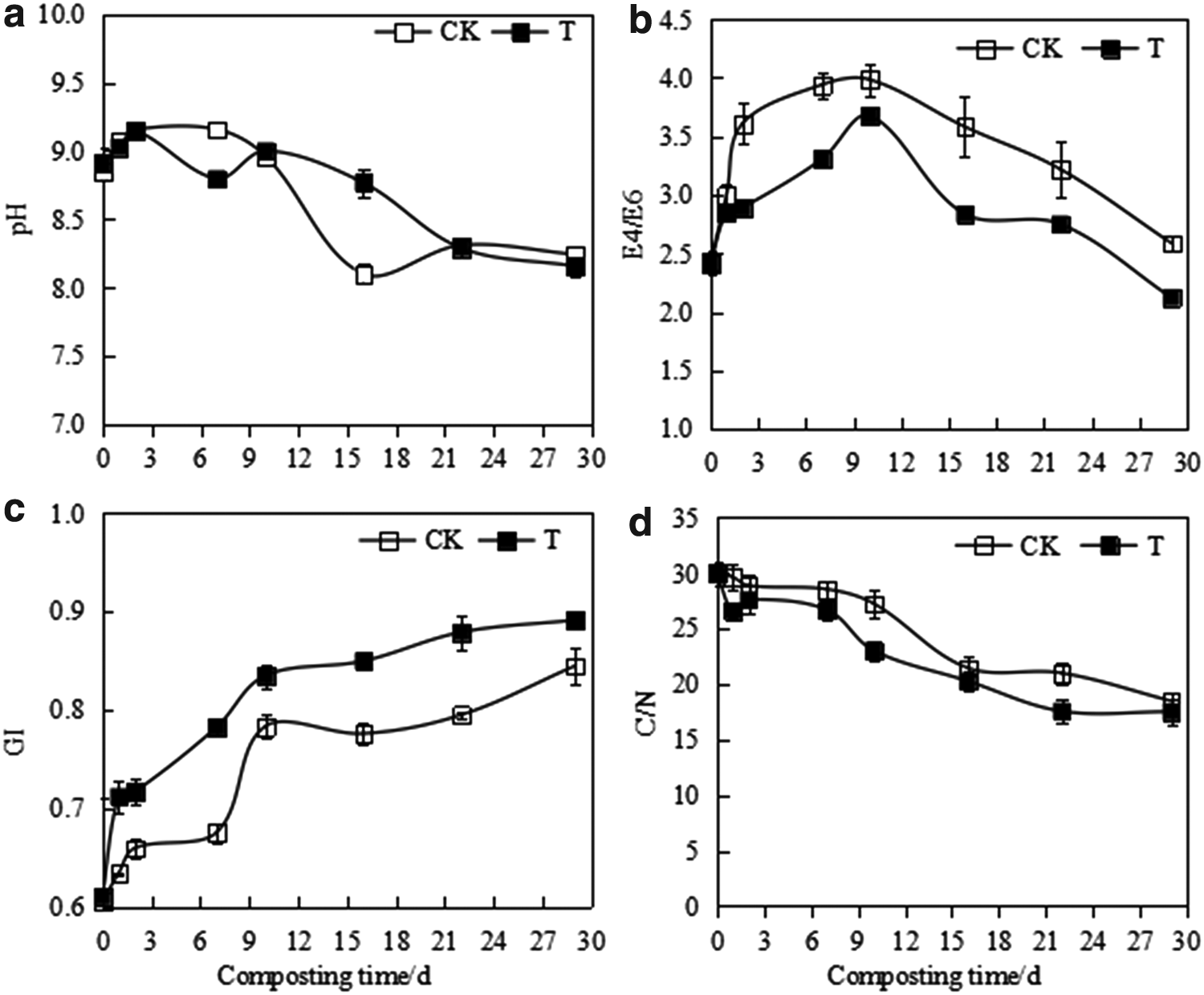
Changes in pH
E4/E6 ratio is an important indicator of the condensation degree for humic acid and the degree of aromatization, where a lower value indicates greater condensation and aromatization for humus, and the molecular weight is also higher (Moharana and Biswas, 2016). Figure 1b shows the changes in the E4/E6 ratio at different stages of the composting process. The E4/E6 ratio reached maximum values of 3.99 and 3.68 with the T and CK treatments after 7 days, respectively. An E4/E6 ratio greater than 1.7% is considered the threshold value for the maturity of a compost mixture (Jiménez and García, 1992). Subsequently, the E4/E6 ratio declined gradually, but the E4/E6 ratio was always higher with the CK treatment than the T treatment, thereby demonstrating that the compound microbial inoculum could promote the condensation and aromatization of humus.
Seed GI is considered to be the most sensitive and reliable index for evaluating compost putrescibility (Zhang and Sun, 2014). As shown in Fig. 1c, at the beginning of the composting process, both treatments inhibited seed germination and the GI did not differ significantly, that is, ca 60%, but the inhibitory effect of the compost reduced gradually over time. Thus, the seed GI increased gradually but faster with the T treatment, where the GI differed significantly from that with the CK treatment (p < 0.05). Under the T treatment, the seed GI required a shorter time to exceed 80%, that is, ca 10 days, whereas the CK treatment required 29 days. It is generally recognized that a compost is mature when GI >80% (Wang et al., 2015). Under the CK and T treatments, the seed GI reached 83.3% and 89.8% after composting for 29 days, respectively, thereby meeting the decomposition requirements. Thus, inoculation with the compound microbial inoculum significantly improved the seed GI and reduced the time required for the composting process.
C/N ratio is an important parameter for evaluating the progress of composting and it can reflect the degree of compost stability (Zeng et al., 2010). As shown in Fig. 1d, the C/N ratio decreased during composting and it tended to be relatively stable at the end. Mukesh and Akhilesh (2014) noted that a C/N ratio ≤20 is the standard for mature compost. Under the CK and T treatments, the C/N ratio decreased from an initial value of 30 to 18.5 and 17.5, respectively, thereby meeting the decomposition requirements. The C/N ratio was always lower with the T treatment than the CK treatment, which suggests that the addition of the compound microbial inoculum decreased the C/N ratio in the compost and promoted its maturation.
Successful use of compost depends on its degree of maturity and stability because the application of an immature product can have phytotoxic effects (Zucconi et al., 1981). However, the use of inoculants to accelerate the composting process or to improve the compost quality has been a controversial subject for a long time (Zeng et al., 2009), but our results in terms of the temperature, E4/E6 ratio, C/N ratio, and GI suggest that inoculation during different phases can enhance the composting efficiency.
Enzymatic activities
Urease activity
Urease is a hydrolase that cleaves C-N bonds in linear amides, which can catalyze the transformation of amide compounds into ammonia. Urease is closely linked to nitrogen metabolism during agricultural solid waste composting (Bohacz and Korniłłowicz-Kowalska, 2009; Vargas-García et al., 2010), so the urease activity reflects the mineralization of nitrogenous substances during the decomposition of organic matter and it is an indicator of the progress of composting (Pramanik, 2010). The changes in the urease activity are shown in Fig. 2, which indicates that the trends were the same under the T and CK treatments. The urease activity declined sharply at the beginning of composting, and during the high-temperature period, it dropped from a peak of 50.0 mg/g/day to a low of 4.40 mg/g/day under the T treatment, whereas with the CK treatment, it dropped from 52.6 to 1.33 mg/g/days. The urease activity remained at a low level in the later stages of composting, but the urease activity increased slowly during the cooling and rotting stages. A previous study showed (Li, 2015) that there is a positive correlation between the urease activity and microbial abundance. Therefore, the sharp decline in the urease activity may have been associated with a reduction in the number of microorganisms during the high-temperature phase, whereas the urease activity recovered as the temperature declined and the microbial numbers increased. The urease activity was higher with the T treatment compared with the CK treatment during the composting period as well as on the first and last days, which suggests that the microbial numbers were significantly higher under the T treatment compared with the CK treatment (LSD test, p < 0.05).
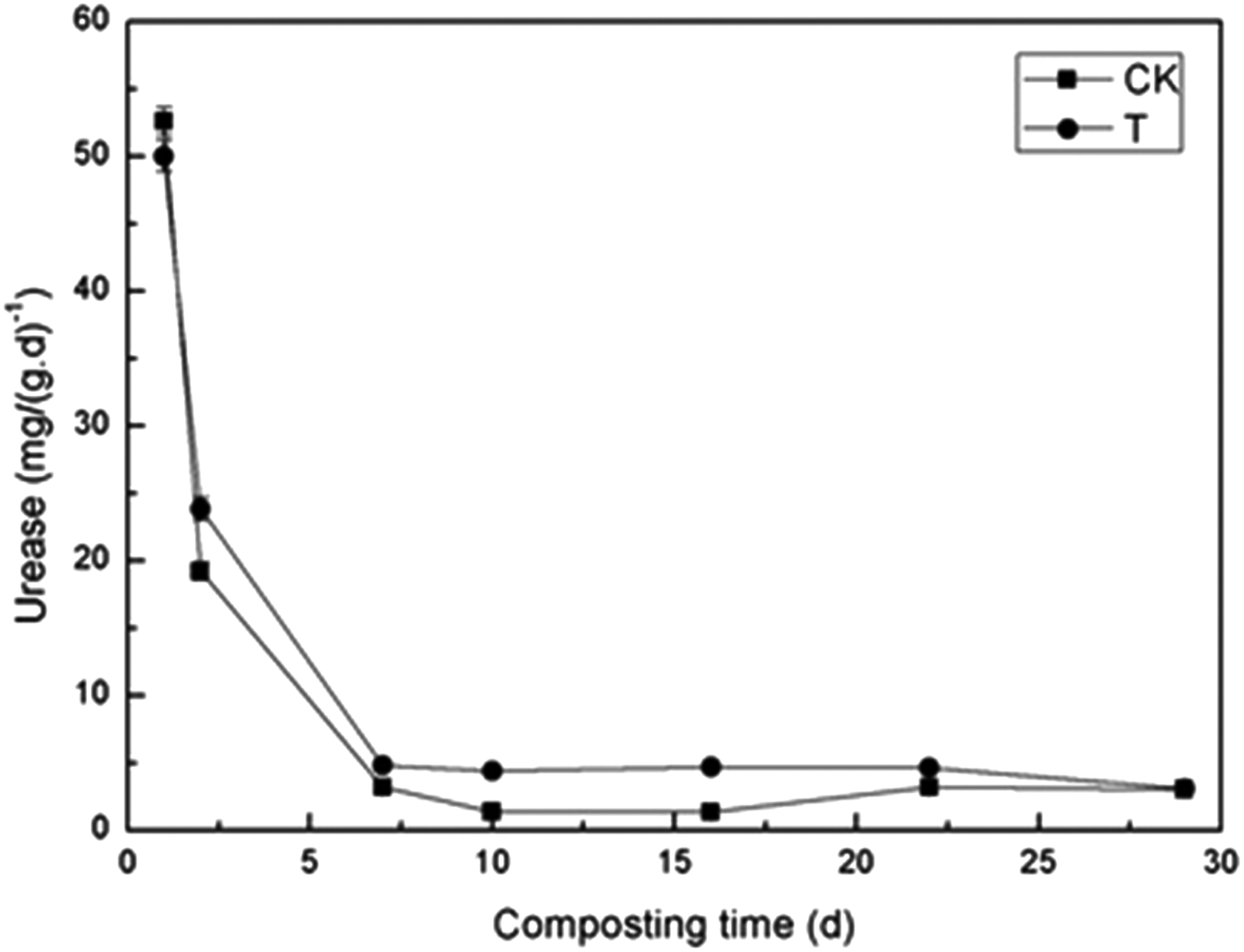
Changes in urease activity during composting.
Polyphenol oxidase activity
Polyphenol oxidase is a compound enzyme that oxidizes aromatic compounds (amino acid, protein, mineral, and carbohydrate compounds derived from composting) into quinones in compost, where these quinones are transformed into pigments with different molecular weights, thereby completing the recycling of aromatic compounds in compost (Trasar-Cepeda et al., 2000; Toscano et al., 2003). The enzymatic degradation of lignin is the main reaction during the humification process, where changes in the activity of polyphenol oxidase can reflect the speed and degree of humification in compost (Zan and Hou-Yi, 2014). Therefore, polyphenol oxidase plays an important role in transforming aromatic organic compounds into humus. As shown in Fig. 3, the enzyme activity of polyphenol oxidase exhibited a double hump in the two compost processing methods. In the compost prepared with the T treatment, the polyphenol oxidase enzyme activity increased with temperature during the first 3 days and reached a maximum of 3.61 mg/g/2 h after 2 days. After 7 and 10 days, the polyphenol oxidase enzyme activity was higher in the compost prepared with the T treatment compared with CK, with peaks after 2 and 16 days, which differed significantly from the CK treatment (p < 0.05). After 2 days of composting, the polyphenol oxidase activity was relatively stable under the T treatment compared with the CK treatment, which showed that inoculation with the compound microbial inoculum had a major effect on the changes in the polyphenol oxidase activity levels. Polyphenol oxidase can promote lignin degradation, but it can also synthesize humic acid from amino acids and quinone, which are the oxidation products of lignin (Mayende et al., 2006). Thus, the increased activity of polyphenol oxidase after inoculation with the compound microbial inoculum may have helped to stabilize the compost humification process.
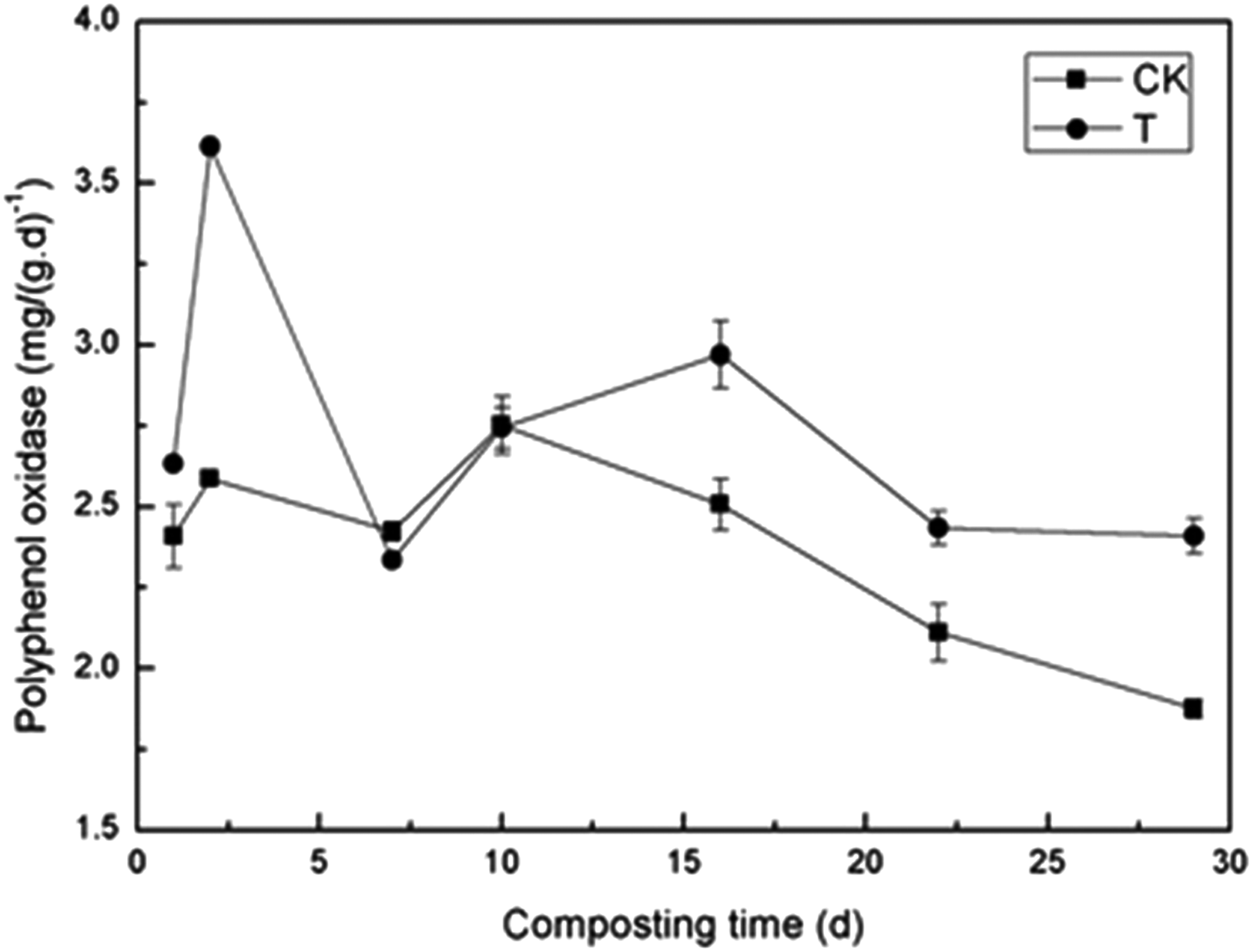
Changes in polyphenol oxidase activity during composting.
Cellulase activity
Cellulose is a form of agricultural waste that is difficult to decompose, but it can be hydrolyzed to cellobiose under the action of cellulase, which can then be hydrolyzed to glucose. Cellulase is an important enzyme in the carbon cycle, where changes in its activity can reflect the degradation of carbon materials during the composting process (Awasthi et al., 2005). The changes in the activity of cellulase during the composting process are shown in Fig. 4, which demonstrate that the cellulase enzyme activities were similar under the T and CK treatments, with an initial increase before declining. In the initial stage of composting, the cellulase activity increased when all of the bacteria were assumed to be active, where the enzyme activity peaked on day 7 under the T and CK treatments at 0.96 and 0.75 mg/g/day, respectively. As the composting progressed, the cellulase activity declined sharply, possibly because the main bacteria and fungi that produced cellulase died in large numbers due to the high temperature (Cerna-Hernández and Reyes-Cervantes, 2015). After entering the cooling phase, the cellulase enzyme activity decreased as the temperature declined and it finally tended to stabilize. The cellulase enzyme activity was lower under the CK treatment than the T treatment throughout the whole composting process, and there were significant differences between the two treatments after 7 and 29 days. These results demonstrate that the addition of the compound microbial inoculum improved the cellulase enzyme activity during composting.

Changes in cellulase activity during composting.
Analysis of microbial community
According to DGGE analysis, the bands obtained at various positions correspond to different microbial species, where the number of bands reflects the microbial diversity and their brightness reflects the microbial abundance (Wang et al., 2014). As shown in Fig. 5, the PCR products obtained from the T and CK treatments, which were then separated by DGGE, differed in terms of the number of bands and their brightness on days 2, 7, 16, and 29, thereby indicating that there were differences in the bacterial community structure and diversity. Thus, the bacterial species clearly changed during the composting of the apple tree branches, where the dominant strains played different roles at various composting stages under the two treatments. Bands B, A, and C were observed throughout the composting process, which may represent indigenous bacteria that occupy a specific niche during decomposition, and they may be affected little by different composting management measures, thereby remaining stable in the compost. Bands B, D, E, and F were often observed, but they differed in brightness between the T and CK treatments, that is, significantly brighter under the T treatment compared with the CK treatment. Microorganisms with higher growth rates than others that are indigenous in the raw compost material may be highly effective for inoculation (Nakasaki et al., 2013b). Bands G, H, I, and J were found after 29 days, but band J was only detected with the T treatment.

Denaturing gradient gel electrophoresis profiles of bacteria.
The bacterial diversity indexes during the composting process are shown in Table 3, where both the Shannon index and richness index increased initially before decreasing, and then increased again throughout the composting process, where the maximum values occurred after 7 and 29 days. The Simpson index increased gradually during composting under the T and CK treatments, reaching its maximum after 29 days. At the end of composting, the Shannon index, Simpson index, and richness index were higher under the T treatment than CK treatment, thereby demonstrating that the addition of the compound microbial inoculum improved the number and diversity of microbial species in the compost.
The sequence similarities of 10 major bands with matching bacterial sequences in GenBank are shown in Fig. 6 and Supplementary Table S1. The appearance of both band B and band F (99% shared identity with Bacillus sp. PML14 and 99% shared identity with Bacillus sp. S148, respectively) probably indicated the presence of Bacillus spp. in the compost. However, band D was related to Phormidium sp. MMG-13 (99% shared identity), whereas band G was highly similar (100% shared identity) to Pseudomonas sp. ES-dy17. Band H shared high sequence identity with a homolog from Firmicutes bacterium PD5-2, whereas band J sequence shared 97% identity with a homolog from Acinetobacter sp. BAS123i. Phormidium sp. MMG-13 (GenBank accession KF157403.1), Bacillus sp. S148 (GenBank accession AB712344.1), and Bacillus sp. PML14 (GenBank accession EF165014.1) were identified in the high-temperature stage of the composting process, thereby demonstrating that these were thermophilic bacteria and the dominant bacterial groups in this phase. Bacillus sp. can grow at 65°C, but it fails to grow at pH 5 or anaerobically in glucose medium (Brown, 1994). In addition, Bacillus spp. are important for nitrogen fixation as well as in the solubilization and release of phosphorus in compost (Subbarao, 1992), thereby making them important for maintaining the natural microbiota in compost. Therefore, the inoculum may have contributed to the thermophilic stage of composting. Previous studies have also detected these species during composting and they play important roles during specific stages of the composting process (Ishii et al., 2000; Watabe et al., 2003). Pseudomonas sp. ES-dy17 (GenBank accession FJ439527.1), Firmicutes bacterium sp. PD5-2 (GenBank accession DQ833364.1), Acinetobacter sp. BAS123i (GenBank accession KF442760.1), and an uncultured Acinetobacter sp. (GenBank accession AY881680.1) were dominant in the later stage of composting. Acinetobacter sp. BAS123i was only detected in the T treatment. Various genera of Gram-negative bacteria, especially Pseudomonas and Acinetobacter, possess strong oxidative properties and they can stimulate mycelial growth as well as the formation of fructification bodies by Pleurotus ostreatus (Silva et al., 2009). Cluster analysis showed that the similarity between the microbial populations during different stages was low in the same compost treatment, whereas the similarity was higher between treatments in the same composting period, and these results are consistent with those reported by Lópezgonzález et al. (2015).
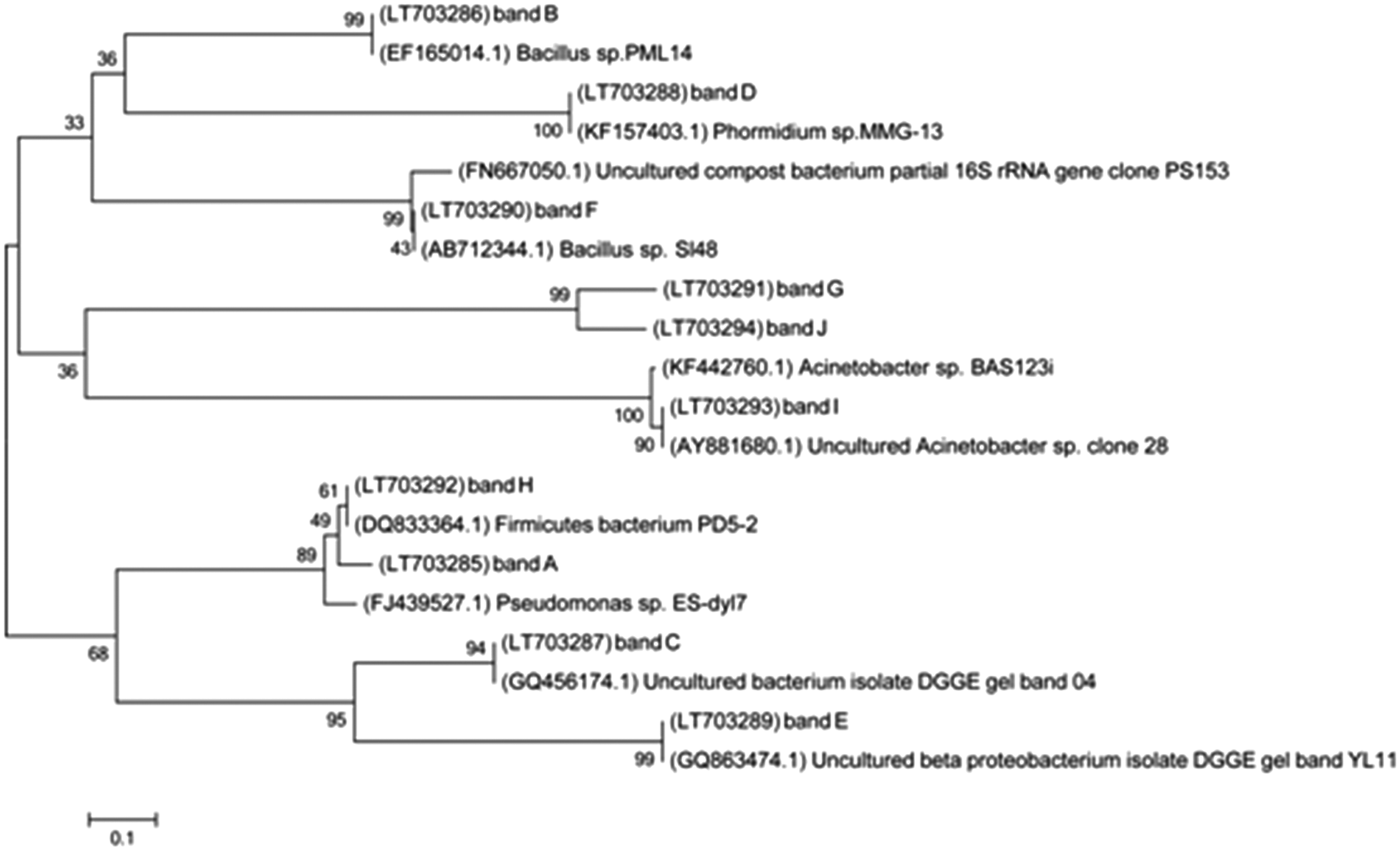
Phylogeny of bacterial sequences (GenBank accession numbers are shown in parentheses). Number following each accession number indicates number of clones sharing identical sequence. Bootstrap values are given for each branch.
Conclusion
In this study, the addition of a compound microbial inoculum (Ralstoinia sp., Penicillium sp., Penicillium aurantiogriseum, and Acremonium alternatum) decreased the duration of the composting process and improved the maturation rate. Inoculation of the compound microbial inoculum also increased the activity levels of cellulase, urease, and polyphenol oxidase, that is, by 15.0–19.8%, 2.3–71.4%, and 0.3–28.4%, respectively. The dominant bacteria were Bacillus sp., Acinetobacter sp., Firmicutes sp., Pseudomonas sp., and Phormidium sp. Therefore, the addition of this compound microbial inoculum improved the bacterial community diversity during composting, which promoted the succession of the bacterial community structure as well as enhancing the quality and efficiency of composting using apple tree branches.
Footnotes
Acknowledgments
This study was supported by the Chinese Ministry of Science and Technology (863 program, grant no. 2013AA102802), and the National Nature Science Foundation of China (41171203). The authors thank Dr. Duncan E. Jackson for language editing.
Author Disclosure Statement
No competing financial interests exist.
References
Supplementary Material
Please find the following supplemental material available below.
For Open Access articles published under a Creative Commons License, all supplemental material carries the same license as the article it is associated with.
For non-Open Access articles published, all supplemental material carries a non-exclusive license, and permission requests for re-use of supplemental material or any part of supplemental material shall be sent directly to the copyright owner as specified in the copyright notice associated with the article.
