




Abstract
Abstract
An anaerobic/anoxic/oxic (A2O) process with a side stream phosphorus removal system was assembled to treat high nitrogen but low carbon municipal wastewater. Results showed that a suitable volume of discharged side stream enhanced contaminants removal efficiency. Recirculation of phosphorus-free sludge in side stream to anoxic tank of A2O process improved the denitrifying phosphorus removal efficiency, and nitrogen and phosphorus removal rates increased to 61.1% and 92.7%, respectively. Composition and structure of microbial communities in the process were monitored by16S rRNA gene-based microbial molecular techniques. Analysis for enriched sludge indicated that composition and abundance of microbial community responded well to the loading of side stream. Denitrifying phosphorus-removal species, Thauera spp. and Dechloromonas spp., were increased to 9.0% and 8.5% with the start of side stream. Therefore, the side stream system was a helpful accessory to the A2O process to achieve high contaminants removal in treating low carbon municipal wastewater.
Introduction
I
Some new processes, such as simultaneous nitrification and denitrification (SND) and shortcut nitrification and denitrification (SCND) have been proposed for reducing dosage of carbon source, where SND saves 22–40% of carbon source and reduces 30% of sludge production (Seifi and Fazaelipoor, 2012). SCND treatment saves up to 40% carbon source and cut down 25% aeration rate (Turk and Mavinic, 1986). In addition, denitrifying phosphorus removal has confirmed to be an effective method to remove nitrogen and phosphorus simultaneously with relative less carbon source (Kuba et al., 1996; Seviour et al., 2003). However, the anoxic phosphorus removal capability in conventional biological nutrient removal (BNR) processes is limited (Liu et al., 2014). Thus, the enrichment of denitrifying phosphorus accumulating organisms (DPAOs) in BNR processes becomes a primary and crucial step (Nielsen et al., 2012).
Phostrip process comprising the side stream of sludge is usually proposed in enhanced biological phosphorus removal (EBPR) system to treat low carbon but high phosphate municipal wastewater (McLaren, 1979; Van Loosdrecht et al., 1997; Seviour et al., 2003). Moreover, this process can balance sludge reduction and production and consequently keep long solid retention time (SRT). Long SRT benefits the growth of autotrophic nitrifying bacteria and enrichment of DPAOs (Jin et al., 2014), which play a dominant role in removing nutrients. However, the detailed characteristics of functional microbial groups in this system are still few known, this further limits the development and application of the system in treating high nitrogen and low carbon source sewage (Seviour et al., 2003; Carvalho et al., 2007; Oehmen et al., 2007; Jin et al., 2014).
Hence, in this study, a modified anaerobic/anoxic/oxic (A2O)-side stream phosphorus removal process was developed as a pilot scale unit to treat municipal wastewater. Meanwhile, the microbial community structure, composition, and relative abundance of activated sludge were analyzed. The results would help process engineers to improve excess N and P removal in treating municipal wastewater and further operate WWTPs in high efficiency.
Material and Methods
Bioreactor configuration
The wastewater treatment process used in this study consisted of an A2O bioreactor and a side stream system (Fig. 1). The working volume of the A2O bioreactor was 2.8 m3 and the volume ratio of anoxic tank to aerobic tank was about 0.89. A small preanoxic tank (0.3 m3 in volume) was installed in front of A2O anaerobic tank to decrease nitrate in influent and to avoid the inhibition of nitrate on anaerobic phosphorus-release. Both anaerobic and anoxic tank were divided into two identical compartments, and aerobic tank was divided into five identical compartments. Several aeration plates were installed at the bottom of aeration compartments. A 0.3 m3secondary settler was connected to the end of A2O. An internal cycling of sludge occurred between the aerobic and anoxic tank and an external sludge cycling existed between the secondary settler and preanoxic tank.
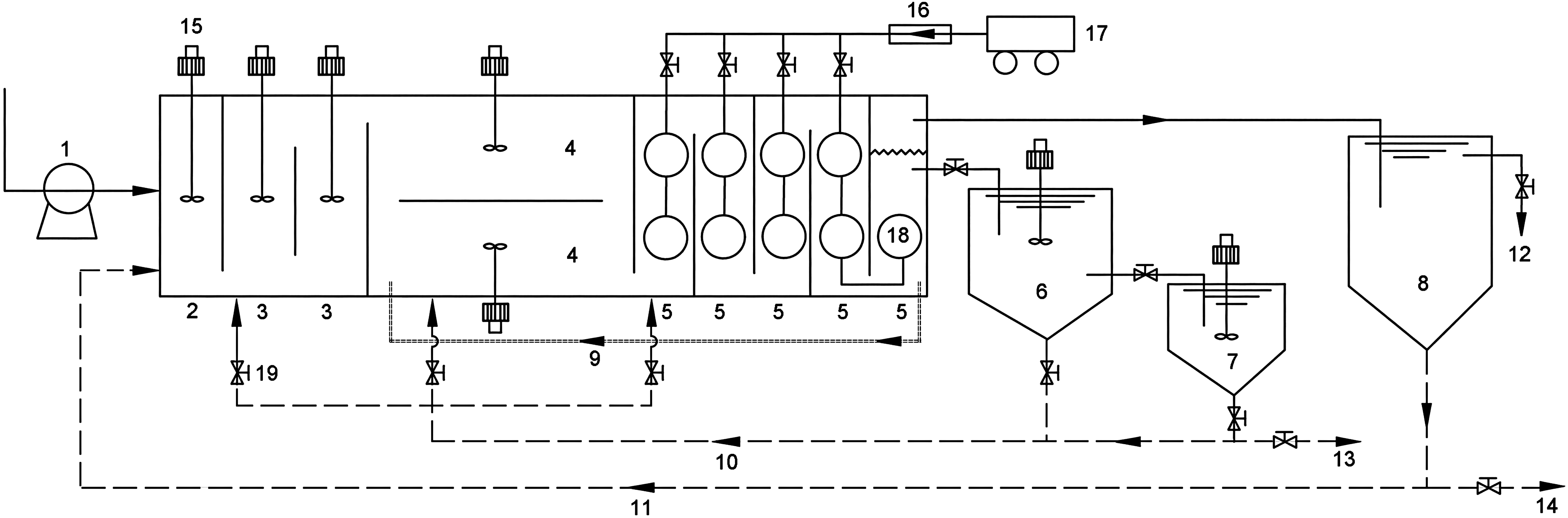
Schematic diagram of a modified anaerobic/anoxic/oxic (A2O)-side stream process. (1) Influent pump; (2) preanoxic tank; (3) anaerobic tank; (4) anoxic tank; (5) aerobic tank; (6) phosphorus-release tank; (7) chemical phosphorus removal tank; (8) secondary settler; (9) the double broken line indicates internal sludge recirculation; (10) the broken line indicates side stream recirculation; (11) the broken line indicates external sludge recirculation; (12) effluent; (13) chemical sludge; (14) excess sludge; (15) stirrer; (16) airflow rotameter; (17) air compressor; (18) aeration plate; (19) control valve.
The side stream system consisted of a phosphorus-release tank and a chemical phosphorus removal tank with working volumes of 0.6 and 0.3 m3, respectively. During side stream operation, the activated sludge was discharged into phosphorus-release tank from the end compartment of the aerobic tank. After phosphorus release, the phosphorus-free sludge was recirculated to a designated compartment of the bioreactor and phosphorus-rich supernatant was discharged into chemical phosphorus removal tank for phosphorus recovery by dosing polyaluminium chloride.
Activated sludge acclimation and bioreactor startup
Wastewater used in this study was obtained from the primary sedimentation tank of WWTP of Wuzhou, China. Wastewater characteristics are listed in Table 1. It contains a low COD of 95 mg/L but high nitrogen and phosphorus of 30 and 3.2 mg/L, respectively.
COD, chemical oxygen demand; TN, total nitrogen.
Activated sludge inoculum was obtained from secondary settler of WWTP of Wuzhou, China. The mixed liquid suspended solids (MLSS) of the sludge was 9,368 mg/L and mixed liquid volatile suspended solids (MLVSS) was 3,228 mg/L. About 0.7 m3 of sludge was poured into the A2O bioreactor and all tanks were filled with sewage. Dissolved oxygen (DO) in the aerobic compartments was kept about 2.0 mg/L by aerating and stirring. The wastewater in A2O bioreactor was changed every 2 days to ensure enough substrate for microbial growth. Two weeks later, the influent was fed continuously with a constant flow rate of 1.0 m3/d for 10 days. All experiments were conducted under the outdoor temperature.
Optimization of the combined A2O-side stream process
To investigate the effect of side stream on the bioreactor performance and the DPAOs enrichment, the whole operation was divided into two phases. Phase I, A2O bioreactor was operated for 15 days without loading side stream under the following optimal conditions, that is, wastewater inflow rate of 4 m3/d, internal cycle of sludge return rate of 100%, external cycle of sludge return rate of 200%, SRT of 140 days, gradual-increasing aeration rate along the stream flow from 0.74 to 1.11 m3/[m3·h] in aerobic tank. Phase II, A2O bioreactor ran continuously for 70 days as phase I except that different operating parameters were proposed (Table 2). During this phase, the volumes of discharged activated sludge in aerobic tank, that is, 200, 400, and 600 L, for one time were evaluated. There is one aeration plate in the final compartment of aerobic tank so as to keep the bottom sludge suspended and the internal sludge recirculation performing smoothly. To find a better contaminants removal, the returning destinations of phosphorus-free sludge were changed from the anaerobic, anoxic, and aerobic tanks of the bioreactor. At the same time, different SRTs were used.
SRT, solid retention time.
During bioreactor operation, the samples of influent and effluent in each tank were taken to monitor COD, total nitrogen (TN), total phosphorus (TP), NH4+-N, NO3−-N, NO2−-N, turbidity, pH, and DO by using HACH reagent and analyzer (HACH).
Microbial community analysis
After about 20 days' operation, the sludge in preanoxic, anaerobic, anoxic, and aerobic tank with or without loading side stream was obtained when the nutrients removal efficiencies came into steady state. Total DNA of activated sludge was extracted by the soil DNA extraction kit (Mobio) according to manufacturer's instructions. As for microbial community analysis, polymerase chain reaction-denatured gradient gel electrophoresis (PCR-DGGE) and high-throughput sequencing were conducted according to the previously described methods (Gao et al., 2014). In brief, bacterial universal primers BA101F (5′-TGGCGGACGG GTGAGTAA-3′) and BA534R (5′-GC clamp -ATTACCG CGGCTGCTGG-3′) were used to amplify the partial 16S rRNA gene for DGGE profiling. Polymerase chain reaction (PCR) products were then separated on a Bio-Rad mutation detection system. Cluster analysis for the DGGE profiles was followed by Ward's method with SPSS software (SPSS, Inc., Chicago, IL).
During high-throughput sequence analysis, 16S rRNA gene primer pair 515F (5′-GTGCCAGCAGCCGCGGTAA-3′) and 806R (5′-GGACTACCAGGGTATCTAAT-3′) was applied. PCR was performed in triplicate as in the previously described methods (Gao et al., 2014). Afterward, the mixed PCR product for each sample was purified and sequencing was conducted on an Illumina MiSeq platform by Novogene (Beijing, China). Paired-end reads of the DNA fragments were merged with the online software FLASH (http://ccb.jhu.edu/software/FLASH) and the sequences were allocated to each sample according to the unique barcodes. The sequences with 97% similarity or higher were identified as the same operational taxonomic units (OTUs) by UPARSE software (http://drive5.com/uparse). A representative sequence from each OTU was assigned to phylum or class using RDP classifier (Wang et al., 2007).
16S rRNA gene sequencing reads by high-throughput sequencing were deposited in MG-RAST with the IDs 4614496.3–4614502.3.
Statistical analytical method
Statistical analysis for the bioreactor operational parameters was conducted by SPSS software (SPSS, Inc.). Shannon diversity index of microbial communities of sludge samples was calculated using software package Mothur (Schloss et al., 2009). The principal coordinates analysis (PCoA) were performed with Fast UniFrac in QIIME (Hamady et al., 2010).
Results and Discussion
Phosphorus removal in combined A2/O-side stream process
After 15 days operation without loading the side stream, the MLVSS and MLSS in A2/O process approached to 3,274 and 5,352 mg/L, respectively. Afterward, the bioreactor was controlled as the designed operating parameters (Run I–VII in Table 2). The phosphorus removal rate (PRR) and system temperature were shown in Fig. 2. The average temperature in the bioreactor during this experiment was 25.6 ± 2.9°C. The PRR with (Run VII) and without loading side stream (Run I) was calculated and the results were shown in Table 3. According to the figure, these two phases were both conducted under the similar temperature of 28°C. Nevertheless, it indicated that significant difference (p < 0.05) in PRR was observed between with and without side stream application. Without loading side stream during Run I, the PRR was only 35.5%, there was still 2.49 mg/L of phosphorus in the effluent. Compared with that, side stream application remarkably improved the PRR in the system. Run VII (400 L of side stream) reached the highest PRR with 92.7% and the effluent phosphorus was 0.24 mg/L. Compared with Run II (200 L of side stream, 40% PRR), III (400 L, 70%), and IV (600 L, 80%), it indicated that PRR was directly proportional to the amount of side stream and more volume of side stream resulted in better phosphorus removal efficiency.
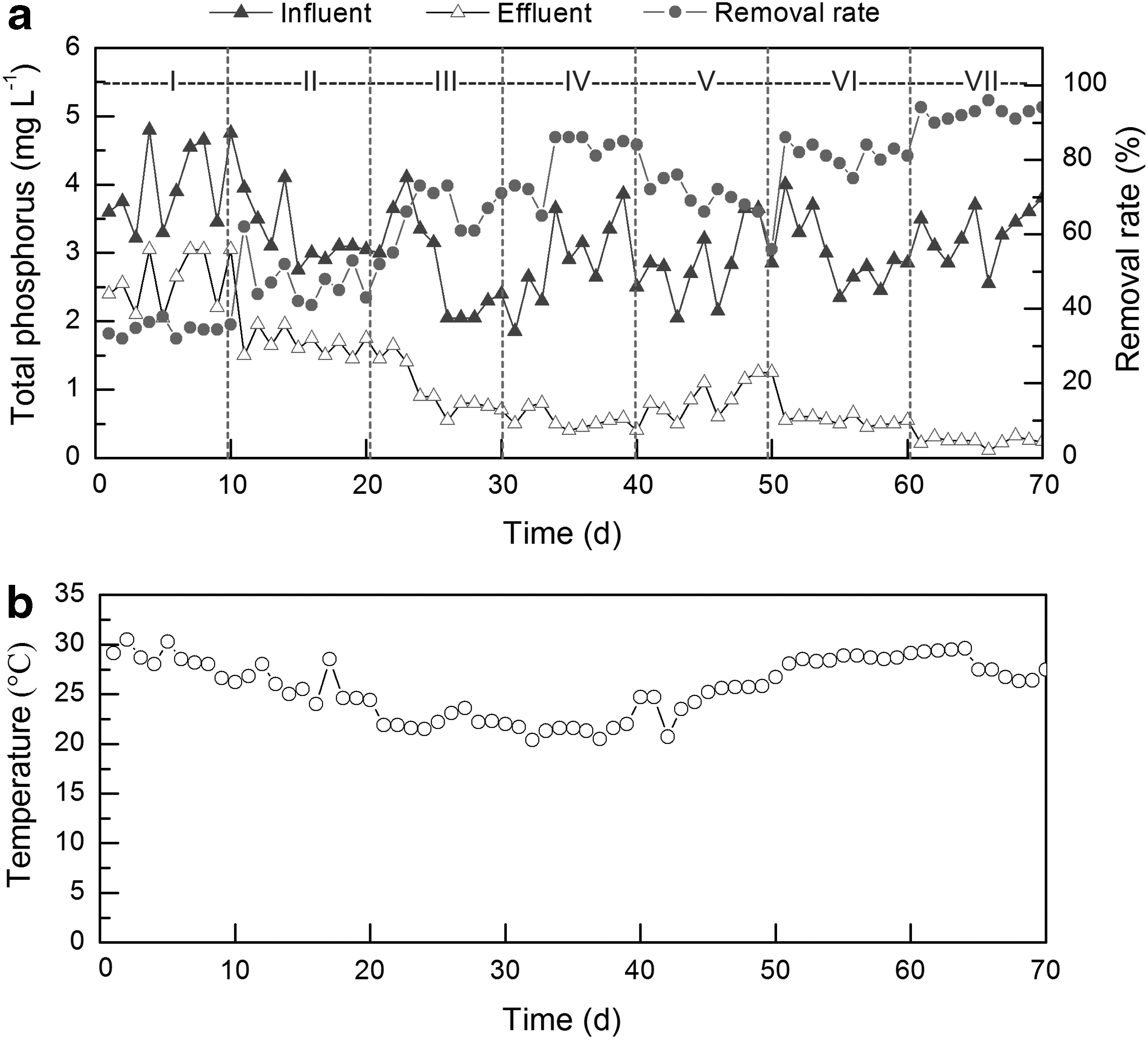
Effect of operating parameters on total phosphorus removal rate
Significant difference (p < 0.05).
By comparing Run III, V, and VII, it showed that returning destination of the free-phosphorus sludge to anoxic tank had better phosphorus removal efficiency at the 400 L of side stream. In the anoxic tank of A2O bioreactor, low oxygen condition benefited the enrichment of DPAOs (Ding et al., 2006) and DPAOs would use polyhydroxyalkanoates (PHAs) as carbons source and nitrate as electron acceptor to absorb phosphorus and simultaneously denitrify (Kuba et al., 1996). This study showed that average 92.7% phosphorus removal occurred in the anoxic tank (Run VII). However, when the returning position was the aerobic tank (Run III), PRR decreased to 49%. This might be attributed to the fact that high COD in this tank enhanced the growth of the non-PAO heterotrophic organisms (Carvalho et al., 2007), which competed with DPAOs for better ecological niche. PRR approached 47% when the free-phosphorus sludge returned to the anaerobic tank (Run V), which was much less than that of other returning destinations. Nitrate in the anaerobic tank was used as an electron acceptor for the growth of nonpolyphosphate heterotrophs, which would further reduce the phosphorus release (Zou et al., 2006). However, system temperature is an important factor that impacts the activity of PAOs and the phosphorus removal efficiency. Brdjanovic et al. (1998) and Panswad et al. (2003) pointed out the PAOs are lower-range mesophiles or even psychrophiles, and they prefer the relative low temperature, for example, at about 20°C. In our system, the temperature varied from 20.7°C to 30.5°C. Though the Run IV obtained a relative high PRR (average 80%) at the temperature of 21.7 ± 2.9°C, it was still far lower than Run VII (average 90% of PRR) at the temperature of 28.1 ± 1.1°C. Hence, this result suggests that returning destination of free-phosphorus sludge is a more critical influencer than the temperature. Therefore, in this study, the system achieved the best phosphorus removal efficiency with the returning destination to anoxic tank.
Nitrogen removal enhanced by side stream
Similar to phosphorus removal, there was significant difference (p < 0.05) for total nitrogen removal rate (NRR) between loading and not loading side stream (Table 3). With side stream applying, NRR increased from 51.1% to 61.1%, TN concentration in the effluent dropped from 15.1 to 11.7 mg/L. Without loading side stream, it showed that most of COD was consumed in the anaerobic tank and consequently less carbon source flowed into the anoxic tank (COD <30 mg/L). This implied that there were not enough carbon sources for denitrification in anoxic tank. Furthermore, due to low endogenous nitrate respiration rate and absence of DPAOs, the excess nitrate in anoxic tank was not eliminated completely. This led to a low NRR in anoxic tank; and NOx-N concentration at the end compartment of anoxic tank was more than 3.3 mg/L. However, when the modified A2O was combined with side stream operation, especially with returning destination to anoxic tank, the DPAOs were efficiently enriched, which led to a drop of nitrogen concentration. NOx-N at the end compartment of the anoxic tank was decreased to 1.8 mg/L. The denitrifying PRR in the anoxic tank increased from 24.4% to 83%. These results indicated that denitrifying phosphorus and nitrogen removal was extremely enhanced by loading side stream. In addition, when denitrifying phosphorus removal in anoxic tank was conducted smoothly, nitrate was rapidly consumed (Zhou et al., 2010) and phosphorus removal was consequently decreased. Generally, 1–4 mg/L nitrate at the end compartment of the anoxic tank was necessary for achieving a high nitrogen and phosphorus removal efficiency (Ding et al., 2006).
Response of microbial community to side stream application in A2O process
Activated sludge in each tank with and without loading side stream was taken for microbial community analysis when the reactor came into steady state. PCR-DGGE profiles (Fig. 3a) and the clustering analysis (Fig. 3b) showed that bacterial populations and relative amount had obvious difference between with (samples Pp, Pa, Px, and Po) and without side stream application (samples Wa, Wx, and Wo). According to Fig. 3a, some new bands appeared but others disappeared when the side stream was applied. This indicated that the microbial community diversity was changed much due to side stream application, which would be further confirmed by high-throughput sequencing results. Hence, the present findings were different from results obtained by Jin et al. (2014), where they found a little impact of side stream application on dominant species of sludge, but loading side stream had almost no effect on microbial community diversity.
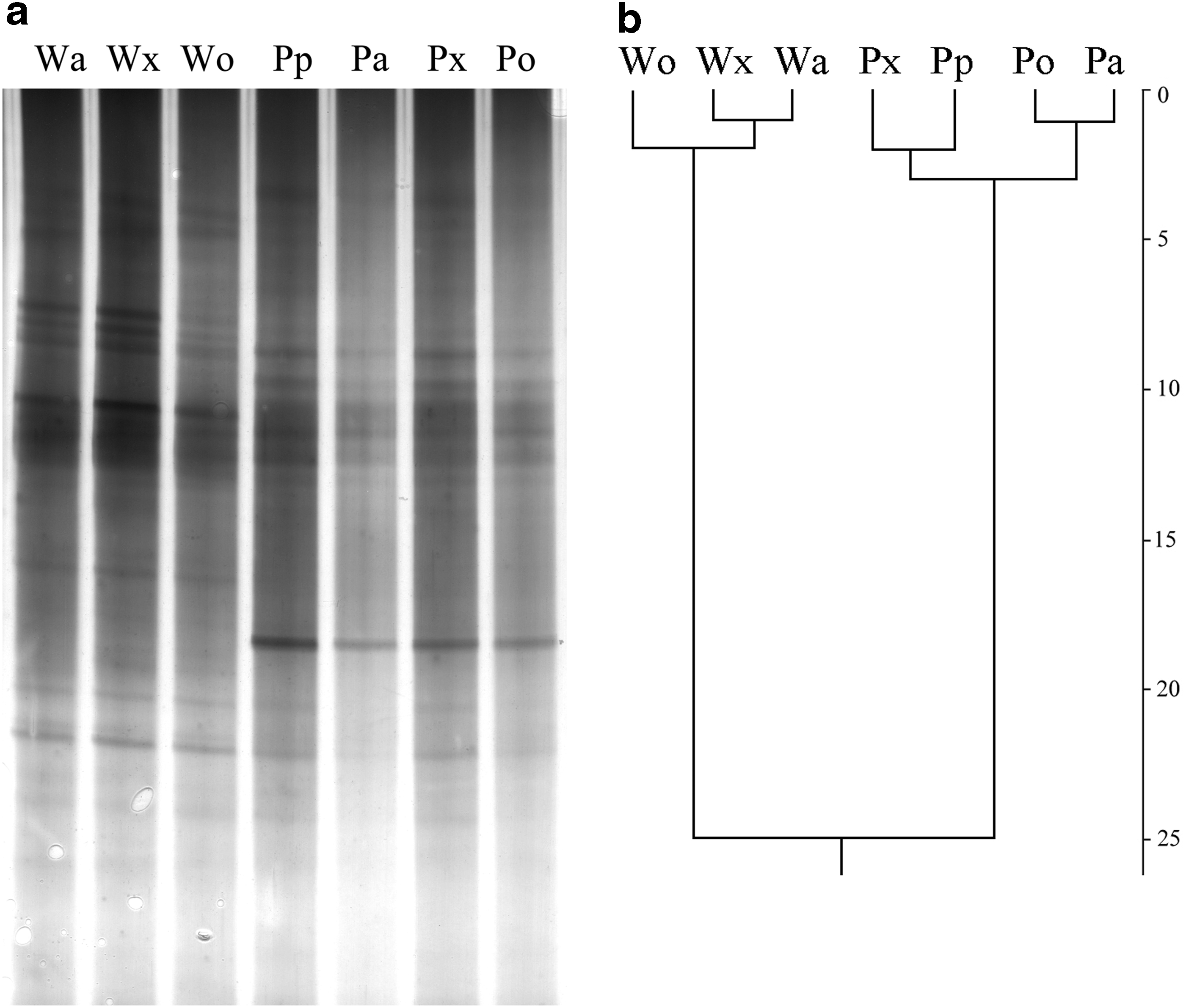
Denatured gradient gel electrophoresis (DGGE) profiles of microbial communities of suspended activated sludge
According to the Shannon diversity indices of microbial community in different tanks based on high-throughput sequencing results (Fig. 4), it showed that Px had the highest diversity index of 8.9, while Wa had the lowest index of 7.9. Community diversity of each tank with loading side stream was higher than that of without loading side stream. Composition and abundance of microbial community in each tank were analyzed at phylum/class-level and results are shown in Fig. 5a. Figure 5b showed the PCoA for microbial communities, which revealed the relationship of different microbial communities. According to Fig. 5b, samples Pp, Px, and Po (loading side stream) clustered together, and sample Pa from anaerobic tank separated a little far from them along the PC2; the samples Wo, Wa, and Wx (without loading side stream) grouped together, especially along the PC1 orientation. These results clearly revealed that the composition of microbial communities tended to form two groups according to the presence and absence of side stream application, which was well in accordance with the cluster results of DGGE profiles.
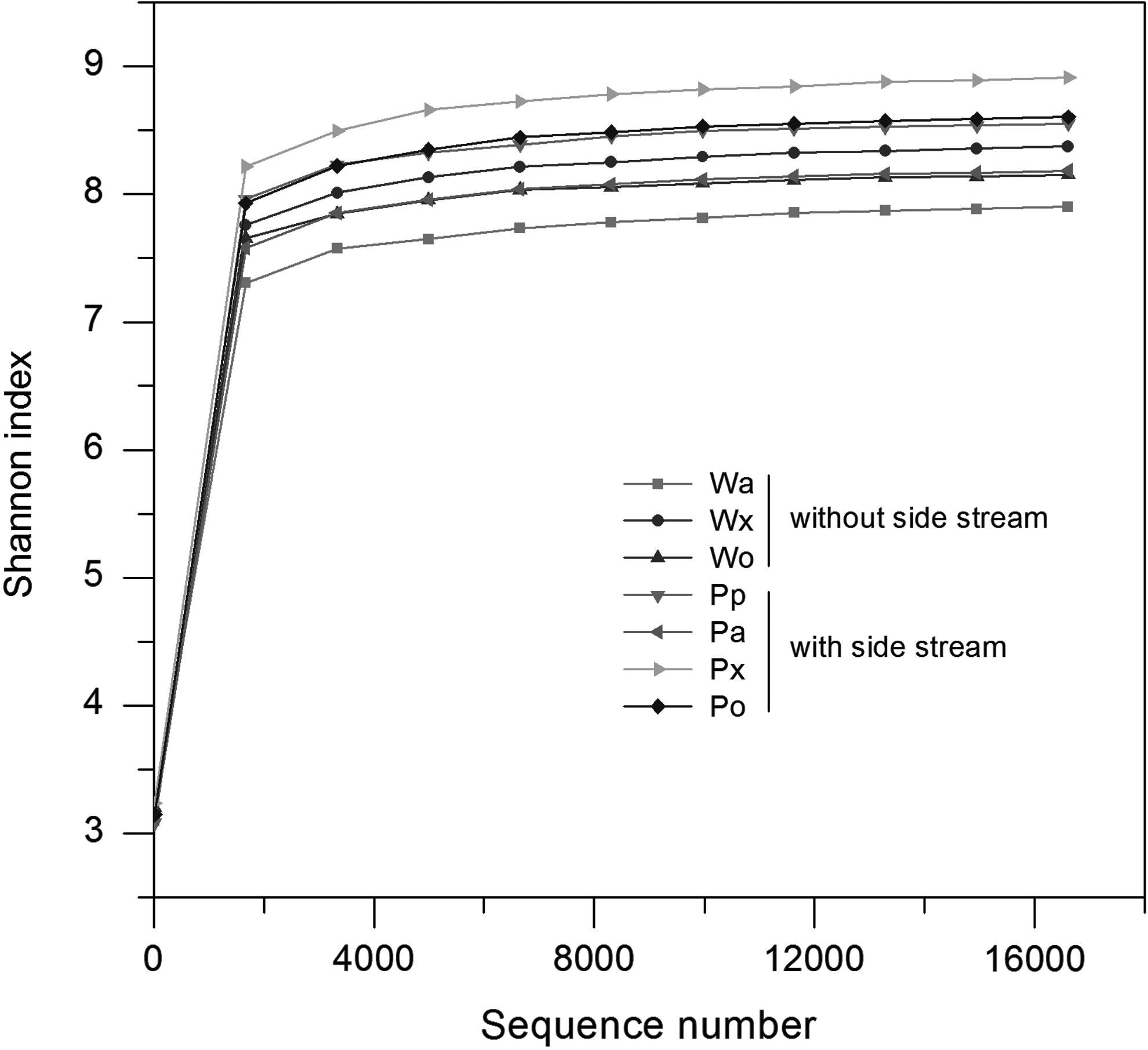
Shannon diversity indices based the high-throughput sequencing for bacterial community 16S rRNA gene sequences. Wa-anaerobic, Wx-anoxic, and Wo-aerobic tanks without loading side stream; Pp-preanoxic, Pa-anaerobic, Px-anoxic, and Po-aerobic tanks with loading side stream.
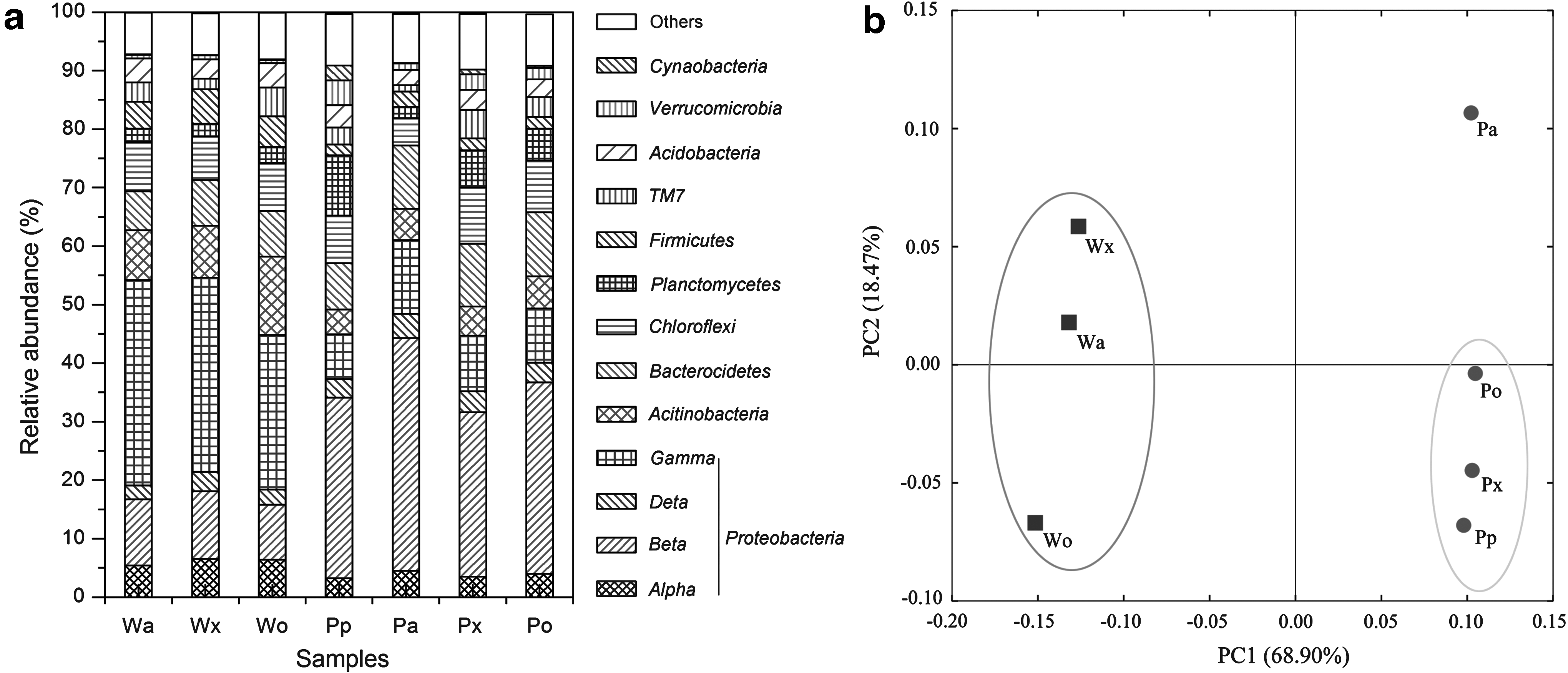
Relative abundance of microbial communities at phylum/class-level in different regions of A2O process combined with side stream
According to Fig. 5a, Proteobacteria, Actinobacteria, Bacteriodetes, and Chloroflexi were the most dominant phyla in all tanks of the reactor and their total relative abundance accounted for more than 75% of total sequences. Some members in Bacteriodetes and Chloroflexi have been approved to contain DPAOs (Jin et al., 2014). The relative abundance of the same phylum had significant difference in sludge samples. The abundance of Protecobacteria in sample Pa from anaerobic tank reached 62.50%, which was more than any other tanks. Abundance of Actinobacteria (average relative abundance without loading side stream was 10.28%, while loading side stream was 5.06%) and Firmicutes (5.24%, 2.13%) decreased largely with loading side stream while Planctomycetes (2.40%, 6.03%) and Verrucomicrobia (0.59%, 2.51%) increased obviously with loading side stream. In general, there was obvious difference in community abundance between loading and without loading side stream. However, no difference in community composition was observed at phylum-level.
Relative abundance of microbial communities at genus-level benefited to understand the difference of microbial community composition. According to Table 4, when side stream system was applied, Dechloromonas spp. and Thauera spp. increased rapidly and both accounted for more than 8.5% of total sequences in each tank. Research indicated that Dechloromonas species were important DPAOs, and they are commonly found in the EBPR systems (Ahn et al., 2002). Carosia et al. (2014) indicated that Dechloromonas spp. were capable of completely degrading mono-aromatic compounds to CO2 under aerobic/anoxic conditions or in the presence of nitrate. Thauera species were the facultative anaerobic denitrifying bacteria (Shinoda et al., 2004), and they reduced nitrate or nitrite in anoxic environment. In addition, they were a critical population for organic load degradation, mainly aromatic compounds, in many industrial WWTPs (Mao et al., 2008). Nitrospira species increased by 1.0% and existed widely in each tank. As their name showed, they oxidized nitrite to nitrate (Blackburne et al., 2007). Genus Nitrosomonas, usually coexisting with Nitrosospira, was considered to be the dominant ammonia-oxidizing bacteria (AOB) in wastewater (Hoang et al., 2014). However, they were not detected in this study, but the system still presented high NH4+-N removal rate. This indicated that there might be other bacteria to deplete NH4+-N in reactor.
Only established genera are shown.
Wa, Wx, and Wo are the samples from anaerobic, anoxic, and aerobic tanks, respectively, without loading side stream; Pp, Pa, Px, and Po are the samples from preanoxic, anaerobic, anoxic, and aerobic tanks, respectively, with loading side stream.
In this study, relative abundance of Accumulibacter spp. was enriched from 0.1–0.2% to 0.7–1.2% by starting side stream. Accumulibacter spp. were widely known as the major PAOs in Betaproteobacteria group and they played important roles in removing phosphorus (Seviour et al., 2003; Zeng et al., 2016). He et al. (2008) investigated five full-scale wastewater treatment facilities performing EBPR and they found Accumulibacter-related organisms were present in all facilities at levels ranging from 9% to 24% of total cells. Thus, the existence and enrichment of these bacteria would extremely contribute to nitrifying and denitrifying phosphorus removal in the system. All above results further confirmed that DPAOs were efficiently enriched by operating side stream.
Compared with above genera, though Parabacterioide, Rhodoplanes, and Pseudomonas were historically considered as denitrifiers and dominant phosphorus-removers (Seviour et al., 2003), their relative abundance in the present reactor were much low. Interestingly, the abundance of Acinetobacter species in Gammaproteobacteria, known to have the ability of denitrification and phosphorus removal (Yao et al., 2013), declined sharply from about 8.9% to <1.8% with loading side stream system. Kim et al. (2013) also showed that the Acinetobacter species comprised only 0.1–0.5% of all bacteria by sequencing analysis in the A2O process. In the research of Merzouki et al. (1999), they found most active DPAOs in anaerobic-anoxic and anaerobic-aerobic sequencing batch reactors belonged to genera Agrobacterium, Aquaspirillum, and Agrobacterium, but none of them were identified as species of Acinetobacter. This suggested that Acinetobacter spp. were commonly low in abundance though they were traditionally known as the typical PAOs (Seviour et al., 2003), which accorded well with the conclusion conducted by Mino et al. (1998).
All the results revealed that the structure and relative abundance of microbial community in reactors had changed markedly with loading side stream and the nitrogen and phosphorus removal-related bacteria were enriched.
Conclusions
A modified A2O process with side stream phosphorus removal system was set up to evaluate the effect of side stream application on the bioreactor performance and microbial communities. It showed that discharging 400 L of sludge for one time from aerobic tank to side stream tank was a better volume from contaminants removal efficiency point of view. When free-phosphorus sludge was recirculated to anoxic tank, denitrifying phosphorus removal ability was enhanced, nitrogen and PRRs increased simultaneously. The structure and relative abundance of microbial community in the reactor responded well to side stream application, and the nitrogen and phosphorus removal-related bacteria, that is, Dechloromonas spp. and Thauera spp. were enriched. Side stream attached to A2O process may be of great benefit to the contaminants removal and enrichment of DPAOs.
Footnotes
Acknowledgments
This work was financially supported by the National Water Pollution Control and Management Technology Major Project of China (No. 2013ZX07202-007), the Natural Science Foundation of China (Grant Nos. 51579049 and 51509044), and the Maritime Science and Technology Program of China.
Author Disclosure Statement
No competing financial interests exist.