




Abstract
Abstract
In this study, the physical strength and mechanical properties of oily sludge treated through stabilization/solidification (S/S) with Portland cement were investigated. S/S treatment effectively immobilized heavy metals and had a relatively small effect on hydrocarbons; 1:4 was an appropriate oily sludge to cement ratio in terms of physical strength, hydrocarbon leaching, and heavy metal immobilization. Porosity of the S/S samples exhibited a negative correlation with physical strength. With 20–21% considered the optimal range, the pore size distribution had a single peak and the pore diameter was less than 50 μm. X-ray diffractometry and scanning electron microscopy analyses showed that hydration of Portland cement was a sequential process: C3S was fast, while C2S hydrated more slowly and had a substantial influence on the final strength of the sample. Formation of C–S–H and AFt may be closely related to heavy metal immobilization.
Introduction
A
S/S is a quick and inexpensive waste treatment technique that immobilizes contaminants by converting them into a less soluble or a less toxic form (Malviya and Chaudhary, 2006; Chen et al., 2009) by creating a durable solid matrix to encapsulate contaminants specifically using cement-based techniques. The use of this disposal method for heavy metals has been extensively researched (Al-Ansary and Al-Tabbaa, 2007b). Karamalidis and Voudrias (2007), for example, tested the leaching behavior of Zn, Ni, and Cu from S/S-refined oily sludge with Portland cement (OPC) and achieved an immobilization of >98% for solidified ash metals at pH >6 and of >93% for solidified oily sludge at pH >7. Al-Futaisi et al. (2007) solidified tank bottom sludge mixtures using OPC and ran toxicity characteristic leaching procedure (TCLP) analyses on the samples and found that none of the extracts exceeded the regulated TCLP maximum metal limits. Karamalidis and Voudrias (2008) solidified refinery oily sludge using two types of OPC in cement to waste ratios from 0.1 to 0.7; a five-point sequential TCLP test showed that S/S of oily sludge with cement is indeed effective against the release of Pb, Cd, Zn, Ni, Cu, Cr, and Fe, where Pb and Cd were not detected in any TCLP test.
Previous studies have shown that it is possible to immobilize inorganic contaminants in oily sludge quite effectively; however, relatively little is known regarding the physical strength of S/S-treated oily sludge. Physical strength is a key factor influencing the disposal and reuse of oily sludge products. The sludge may be reusable as a controlled low-strength material, landfill liner, and landfill daily cover depending on its physical strength. Leonard and Stegemann (2010b) solidified petroleum drill cuttings using OPC and found that drill cutting addition influences the unconfined compressive strength and leaching pH; the latter is closely related to the successful immobilization of heavy metals. In short, the relationship between the physical strength and immobilization of heavy metals merits further examination.
This article studies the effectiveness of the S/S technique on immobilizing heavy metals and organic contaminants of oily sludge. On this basis, the mechanical properties of the cured products using S/S were investigated from the aspect of the porosity and pore size distribution. This represents original research beyond the extant literature. The primary objectives of the present study were as follows: (1) to evaluate the S/S effect of heavy metals, (2) to evaluate the mechanical properties of cement-solidified oily sludge and to establish effective parameters for said evaluation, and (3) to research the relationship between the physical strength and immobilization of heavy metals. Real samples taken from an oil refinery were stabilized using OPC and then subjected to a series of physical and chemical tests to determine the basic mechanical properties (e.g., compressive strength, flexural strength, and leaching). The porosity and pore size distributions of the samples were also measured to examine their physical strength from a microstructure perspective. X-ray diffractometry (XRD) and scanning electron microscopy (SEM) were used to assess the S/S mechanism of heavy metals.
Materials and Methods
Oily sludge
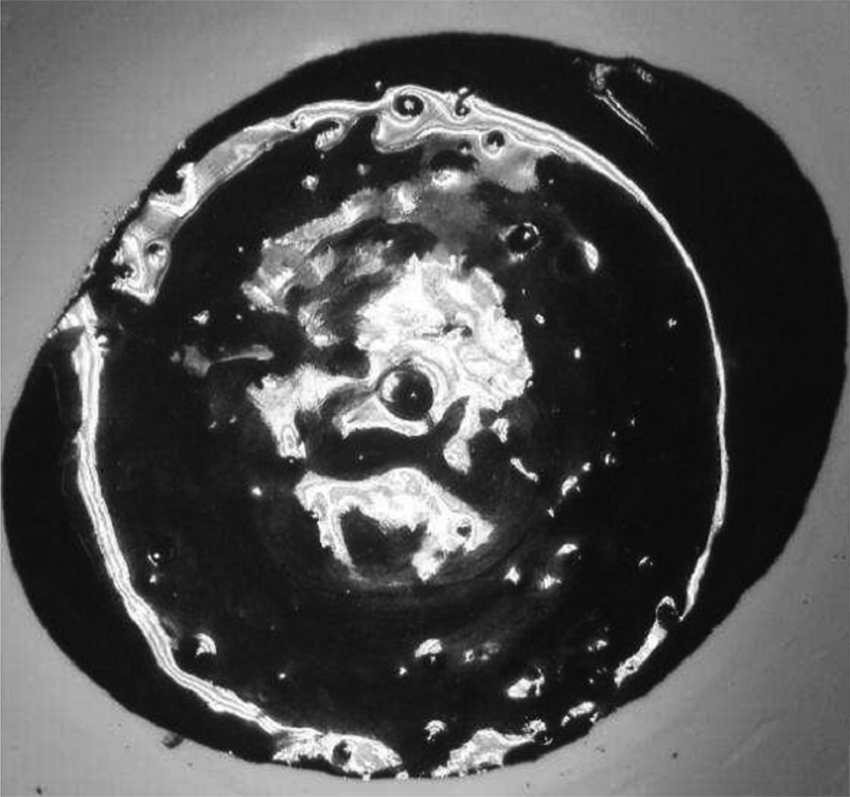
Oily sludge was obtained from a water treatment plant at Sinopec Yangzi Petrochemical Company Ltd., Nanjing, China. The sludge was stored at 4°C in a capped stainless-steel bucket until use. The compositions of the sludge samples are described in Table 1; the appearance of the sludge is shown in Figure 1.
Appearance of oily sludge.
Portland cement
Portland cement samples, P·II type with 42.5R grade, were obtained from the Conch Cement Plant, China. The properties of the cement were measured according to the Chinese standard of Common Portland Cement (GB175-2007). The chemical qualities of the cement are listed in Table 2, and the physical properties are shown in Table 3. The chemical composition of dried oily sludge was measured using X-ray fluorescence, and these data are also shown in Table 2.
Stabilization and solidification
Premeasured quantities of oily sludge were added to premeasured quantities of cement, followed by the addition of ultrapure water at a water to solid ratio of 0.5, which was the quantity of water in sludge and ultrapure water divided by the quantity of cement and oily sludge without water. Fresh cement paste was prepared by adding a fixed quantity of ultrapure water to the cement and oily sludge with synchronous mechanical agitation to maintain the consistency of the slurries. This process was conducted according to the Chinese standard test methodology in regards to water requirements, normal consistency, setting time, and the soundness of Portland cement (GB/T1346-2011). The slurries were then poured into 160 × 40 × 40 mm steel cube molds, then cured for a preset time before being tested in a humidity chamber under a relative humidity of 98% ± 2% and a temperature of 21°C ± 3°C, and demolded according to Chinese standard GB/T50081-2002. In this experiment, the ratio of oily sludge to cement (w/w) was from 1:2, 1:3, and 1:4. The curing time was 3, 7, 14, and 28 days.
Testing procedure
Flexural and compressive strength of samples were measured according to Chinese standard GB/T 17671-1999. The acid neutralization capacity was measured according to the Sunday method, which originated from DD CEN/TS15,364:2006. The sample was ground to <150 μm over 48 h with a range of concentrations of nitric acid, and then the pH was determined.
Samples were treated according to the “Solid waste-Extraction procedure for leaching toxicity-Acetic acid buffer solution method” (HJ/T300-2007). The metal concentrations in the extracts were determined using inductively coupled plasma/mass spectrometry.
XRD measurements were taken on an Ultima IV (Rigaku) to determine the mineral compositions of the S/S samples; 2θ scans were taken ranging from 10° to 50°. SEM analyses were conducted on a Quanta 200 scanning electron microscope at an accelerating voltage of 20 kV. Porosity and pore size distributions were measured using an Autopore 9510 Mercury Porosimeter (United States). Pore sizes ranging from 0.003 to 1,000 μm were detected with a maximum pressure of 60,000 psi. Total organic carbon (TOC) was measured using a TOC-V CPN instrument (Shimadzu). Total carbon and inorganic carbon were also recorded during the testing process.
Results and Discussion
Leaching pH and ANC
Leaching pH is a very important index in assessing the stability of heavy metal immobilization because it relates to the soluble state for many metals in both low and high pH (e.g., zinc, aluminum, and lead.) The untreated samples had pH values from 12.25 to 12.57, indicating the formation of physically stable calcium silicate hydrate (C–S–H), which is known to be formed at pH values above 12 (Stegemann and Zhou, 2009).
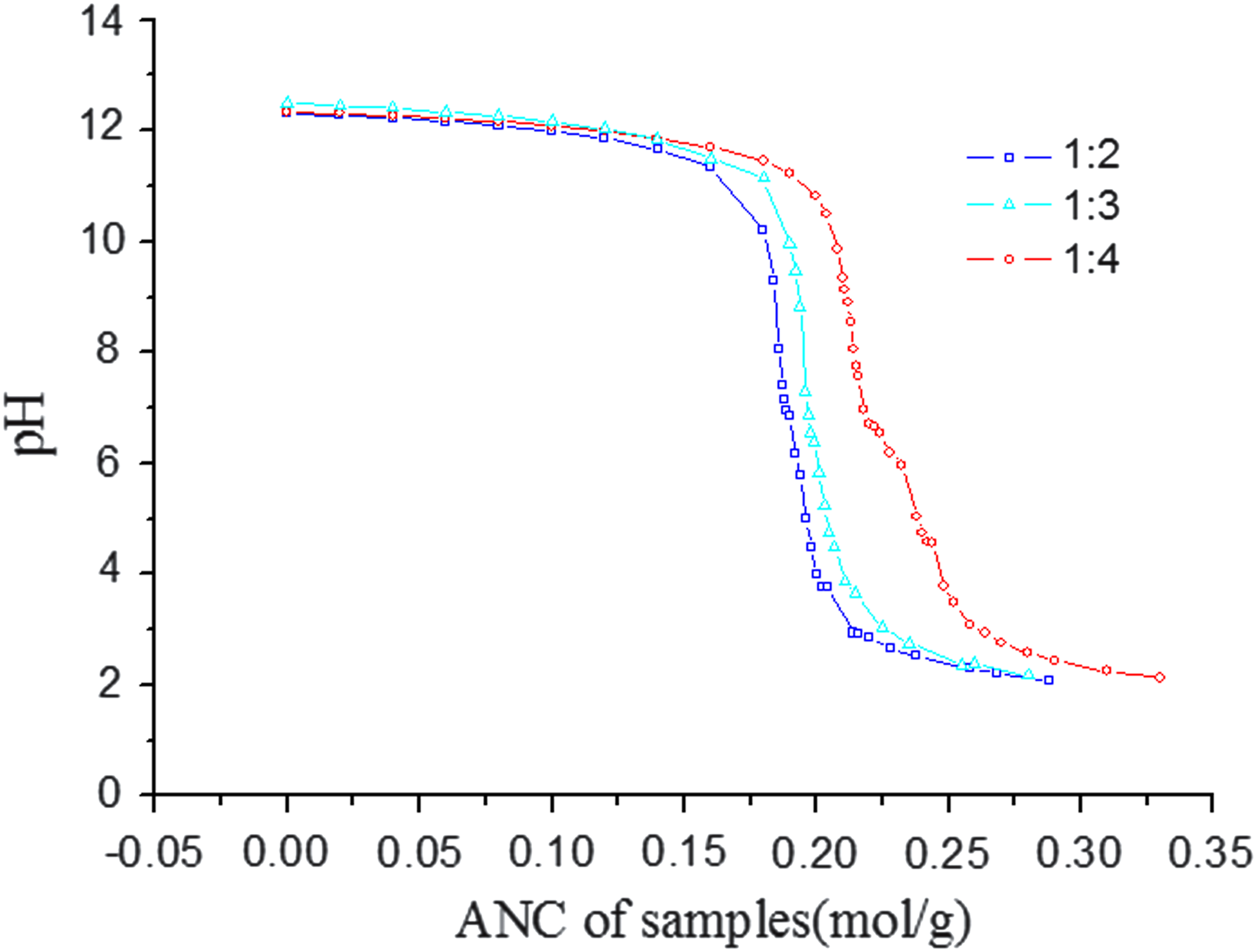
The acid neutralization capacity (ANC) is the amount of acid necessary to neutralize a certain amount of alkalinity or to decrease the pH to a certain extent; it can be used to evaluate the buffer ability of variable-pH materials as influenced by the outside environment (Cappuyns et al., 2004). In an ANC plot, a flat slope represents a hydrated phase able to resist acid damage. Steep slopes in the plot indicate inhibited formation of a hydrated phase. The ANC was measured for all S/S products after 28 days.
As shown in Figure 2, the oily sludge did not affect the ANC at acid additions below 0.15 mol/g. These products had a stronger buffer ability at pH >10, and the effective solidification of heavy metals could be ensured in alkaline conditions. The pH of all samples was above 12, so the immobilization of heavy metals was effective, as evidenced by the ANC plots. The ANC value decreased after the addition of oily sludge. Oily sludge itself has a low ANC value. The ANC of the samples increased significantly after S/S treatment, indicating that a chemical reaction occurred in addition to the cement encapsulating the oily sludge by creating a durable matrix; the ANC of the cement-based systems was mainly affected by the formation of calcium hydroxide and C–S–H.
ANC plots for S/S samples cured for 28 days. S/S, stabilization/solidification.
Leaching metal content
Metal content of the oily sludge and S/S samples with 1:2, 1:3, and 1:4 sludge/cement ratios was measured. The types of metals in the samples mainly included Cu, Zn, Fe, Ni, As, Pb, Cr, and Cd; the contents are shown in Table 4.
ND, no detection.
Several types of heavy metals were detected in the oily sludge samples, the concentrations of which (besides iron) exceeded the Chinese standard for hazardous waste (Table 4). Lead, cadmium, nickel, and arsenic concentrations exceeded the acceptable values by more than 100 times—in short, the oily sludge was highly contaminated with a variety of heavy metals. The leaching metal concentration of all samples decreased drastically after S/S. The treatment's effect on Fe was particularly evident, as Fe was not observed in any of the S/S samples. According to previous research (Mesci et al., 2010), nearly all the Cr ions were included in the solid phases; the mechanisms of Cr immobilization in a cementation matrix included precipitation, physical and chemical inclusion, and sorption. Some research has found that the effect of Cu and Zn is mainly related to adsorption, and Cu can be used as a partial substitute for Portland cement in cement mixtures (Mesci et al., 2009; Semra, 2012). Although the mechanism of heavy metal solidification is not completely clear, the concentrations of metals met the identification of extraction toxicity standards (GB 5085.3-2007). The optimal oily sludge to cement ratio, in terms of the treatment's effects on heavy metal concentrations, was 1:2. In general, S/S had an ideal effect on heavy metals in the oily sludge.
Leaching hydrocarbon content
Many previous researchers have observed that S/S is not particularly compatible with organic wastes, as organic compounds can inhibit cement-based binder hydration (Karamalidis and Voudrias, 2007a). To investigate the effects of S/S on organic matter in the samples, we measured the hydrocarbon concentrations of all samples after treatment, taking into account that oily sludge consists mainly of total petroleum hydrocarbons (TPHs). TOC was used as a TPH curing index, as the cement has a low organic carbon content; therefore, the organic carbon content was mainly derived from the oily sludge. For comparative purposes, the TOC of samples was measured at a variety of times and ratios.
Figure 3 shows that TOC decreased from 45.94 to 30.68 mg/L as the curing time increased from 7 to 14 days at an oily sludge to cement ratio of 1:2; by 28 days, TOC further decreased to 28.87 mg/L. The fact that there were no evident changes in TOC from 14 to 28 days indicated that hydrocarbons were effectively solidified after 14 days. TOC was lower at smaller sludge to cement ratios, suggesting that a decreased amount of oily sludge effectively decreased the leaching hydrocarbon content; further, organic compounds were not chemically bound in the binder hydration products (Leonard and Stegemann, 2010a). Increasing the amount of the sludge added to cement led to higher concentrations of hydrocarbons, that is, reducing the quantity of the sludge effectively improved the effect of S/S on hydrocarbons within an appropriate curing time (Leonard and Stegemann, 2010c).

Effect of S/S on hydrocarbons.
Physical strength
Compressive and flexural strength of the samples were also measured at various cement to sludge ratios and curing time. As shown in Figure 4, the appropriate (generally longer) curing time improved both strength properties. Lower oily sludge content corresponded to higher physical strength, as well. The minimum compressive strength at a curing time of 3 days was 22 MPa, which was more than half the value at the curing time at 28 days, suggesting that the treatment did not affect the rapid hardening characteristics of the Portland cement in the cases of mixing certain oily sludge.

Compressive and flexural strength with different ratios of oily sludge.
Concrete is divided into 14 levels according to the code for concrete structure design (GB50010-2010). The standard requires a minimum compressive strength of 15 MPa. The compressive strength of all samples met this standard; moreover, the sample cured for 28 days met the C35 standard and, thus, could be utilized in actual engineering practice. The S/S process inhibited the hydration of the cement by affecting the organic composition of oily sludge, which reduced the physical strength of the sample (Al-Ansary and Al-Tabbaa, 2007; Leonard and Stegemann, 2010b). This may be the reason that the sample with a smaller proportion of oily sludge exhibited higher physical strength.
Porosity and pore size distribution
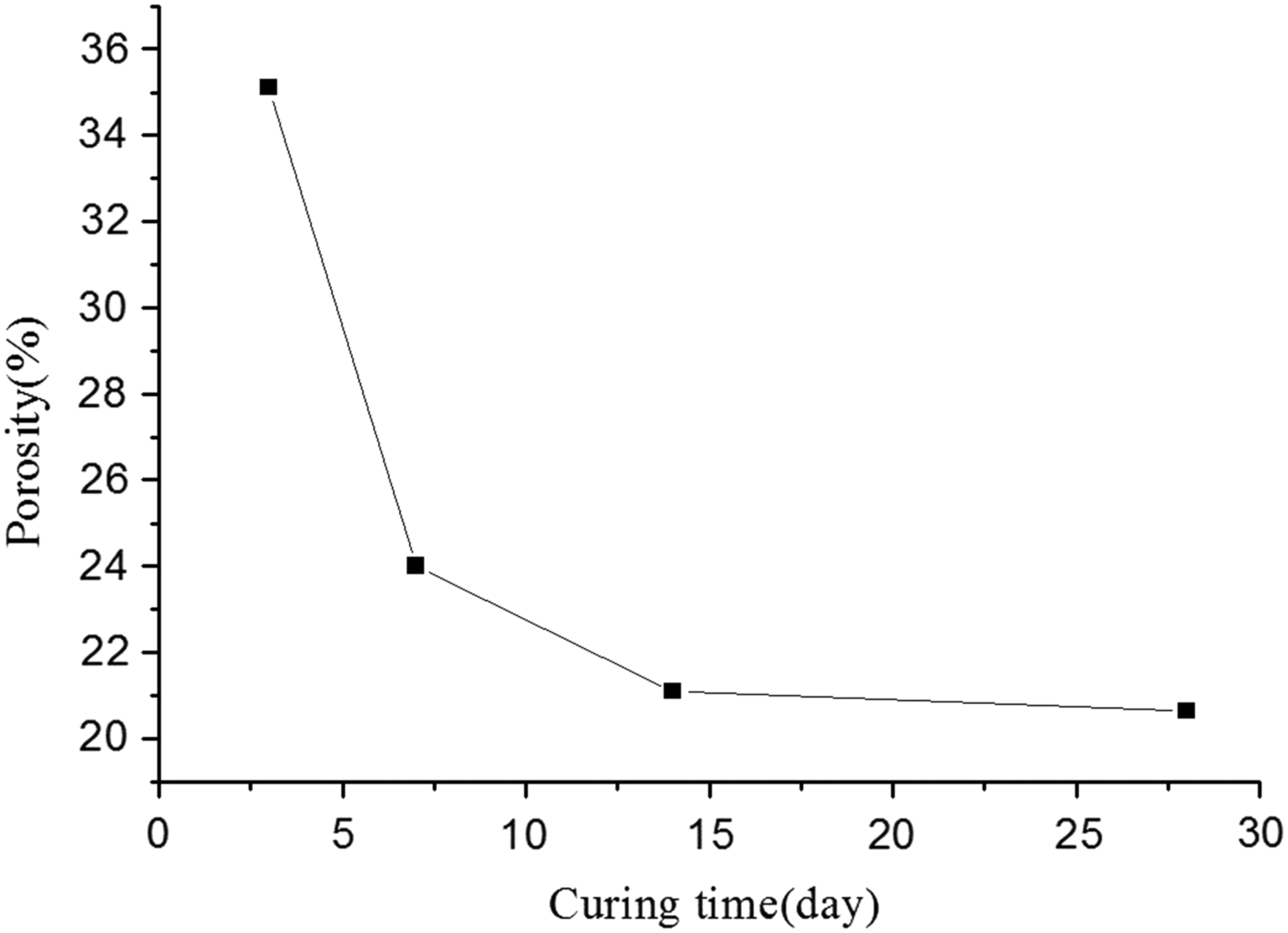
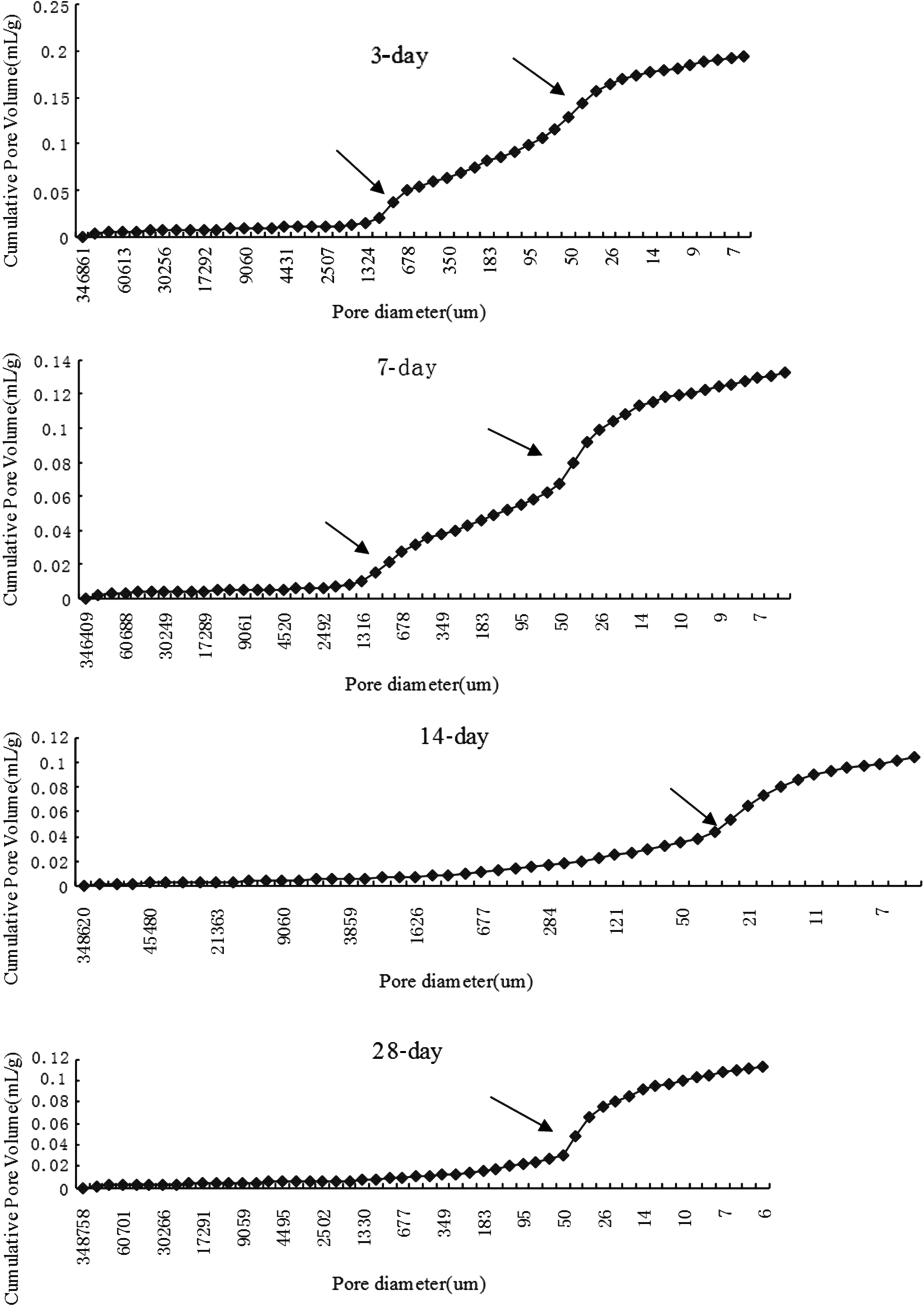
Large pores and unreasonable pore size distribution create poor density, which can reduce physical strength. The effects of curing time on the porosity and pore size distribution of the samples are shown in Figures 5 and 6, respectively. As shown in Figure 5, the porosity decreased from 35.1131% to 24.01% as curing time increased from 3 to 7 days; porosity was fairly stable, changing only from 21.10% to 20.64% as curing time increased from 14 to 28 days. These results, combined with the results shown in Figures 3 and 4, imply a negative correlation between porosity and physical strength. Larger porosity produced a looser structure, which reduced the physical strength of the cured product. We found that 20–21% was the optimal range of porosity for S/S treatment to yield optimal physical strength. The correlation between porosity and physical strength after 14 days of curing time was not linear, suggesting that pore size distribution was also a significant factor.
Effect of curing time on the porosity.
Pore size distribution of samples with various curing time.
The relationship between pore size distribution and curing time is shown in Figure 6. There were double peaks for samples cured for 3 and 7 days, which had relatively large pores, as opposed to a single peak for samples cured for 14 and 28 days, which had smaller pores. Large pores shrunk as curing time increased; this may explain why porosity decreased in our research. The pore sizes ranged from 10 to 70 μm and from 12 to 50 μm for the 14- and 28-day samples; pores decreased as curing time increased from 14 to 28 days, and these two samples had good physical strength, which implied that pores less than 50 μm in size may generate relatively good physical strength. Pore size distribution also affected the mechanical properties. The conclusions were similar to those of published research results (Kou et al., 2011; Wang et al., 2013).
Crystalline phase (XRD) analyses
The oily sludge was mainly composed of quartz and calcite (SiO2 and CaCO3), the XRD spectra of oily sludge was shown in Figure 7.
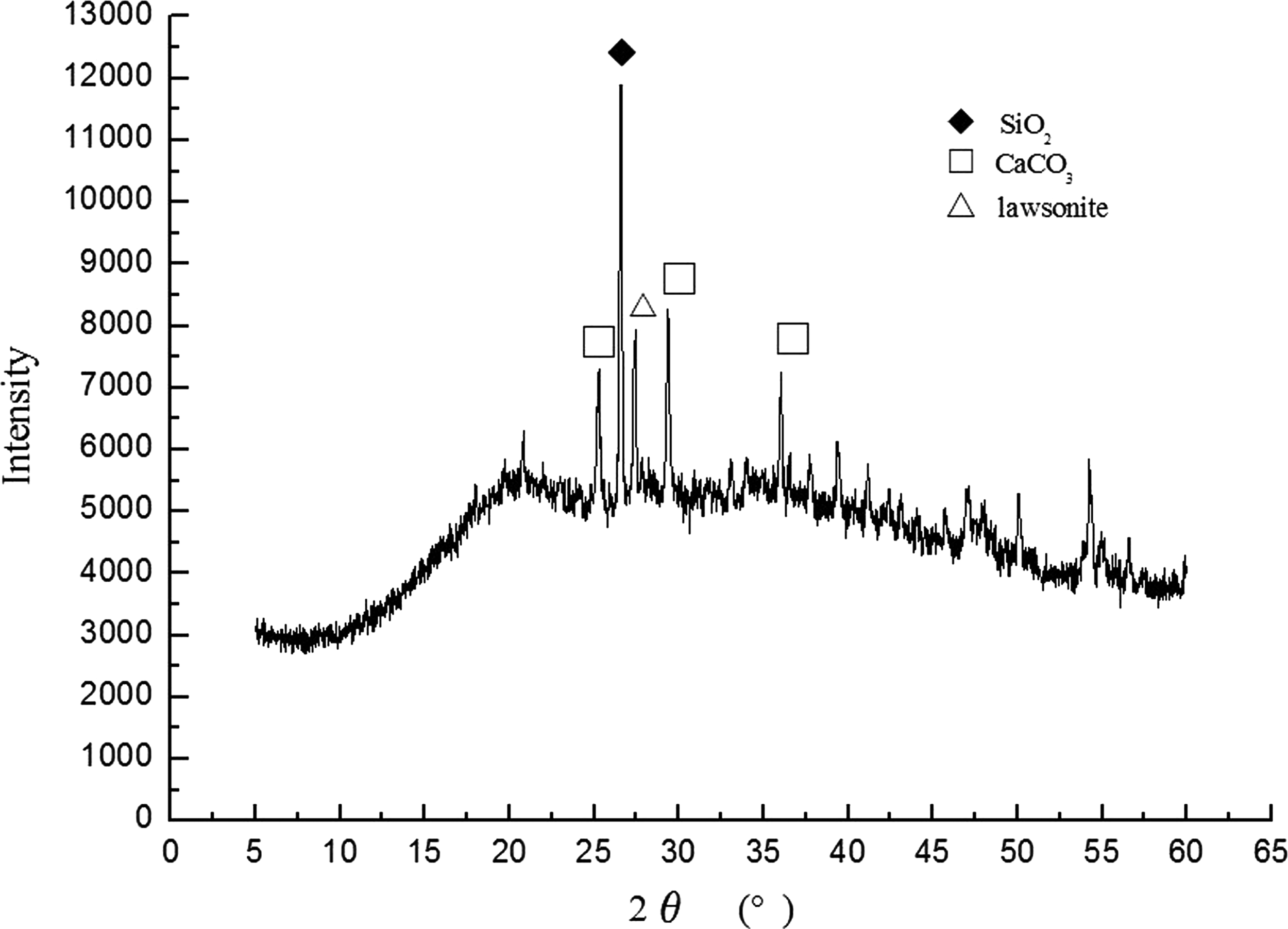
XRD spectra of oily sludge. XRD, X-ray diffractometry.
XRD spectra of samples with various curing times was shown in Figure 8. In general, there were four major components of OPC in the hydration reaction: tricalcium silicate (3CaO·SiO2), larnite (2CaO·SiO2), tricalcium aluminate (3CaO·Al2O3), and brownmillerite (4CaO·Al2O3·Fe2O3) (Mollah et al., 1998). Tricalcium silicate and dicalcium silicate can produce Ca (OH)2 and calcium silicate hydrate (C–S–H), while tricalcium aluminate and brownmillerite produce ettringite (AFt) or monosulfoaluminate (AFm). The hydration reactions of tricalcium silicate and dicalcium silicate, the two major components of OPC and the origins of C–S–H (Brunauer et al., 2002), can be expressed as in Equations (1) and (2). The hydration byproduct of tricalcium aluminate can be formulated as in Equations (3) and (4), depending on the amount of sulfate ions (Collepardi et al., 1978); brownmillerite reacts similarly to tricalcium aluminate.
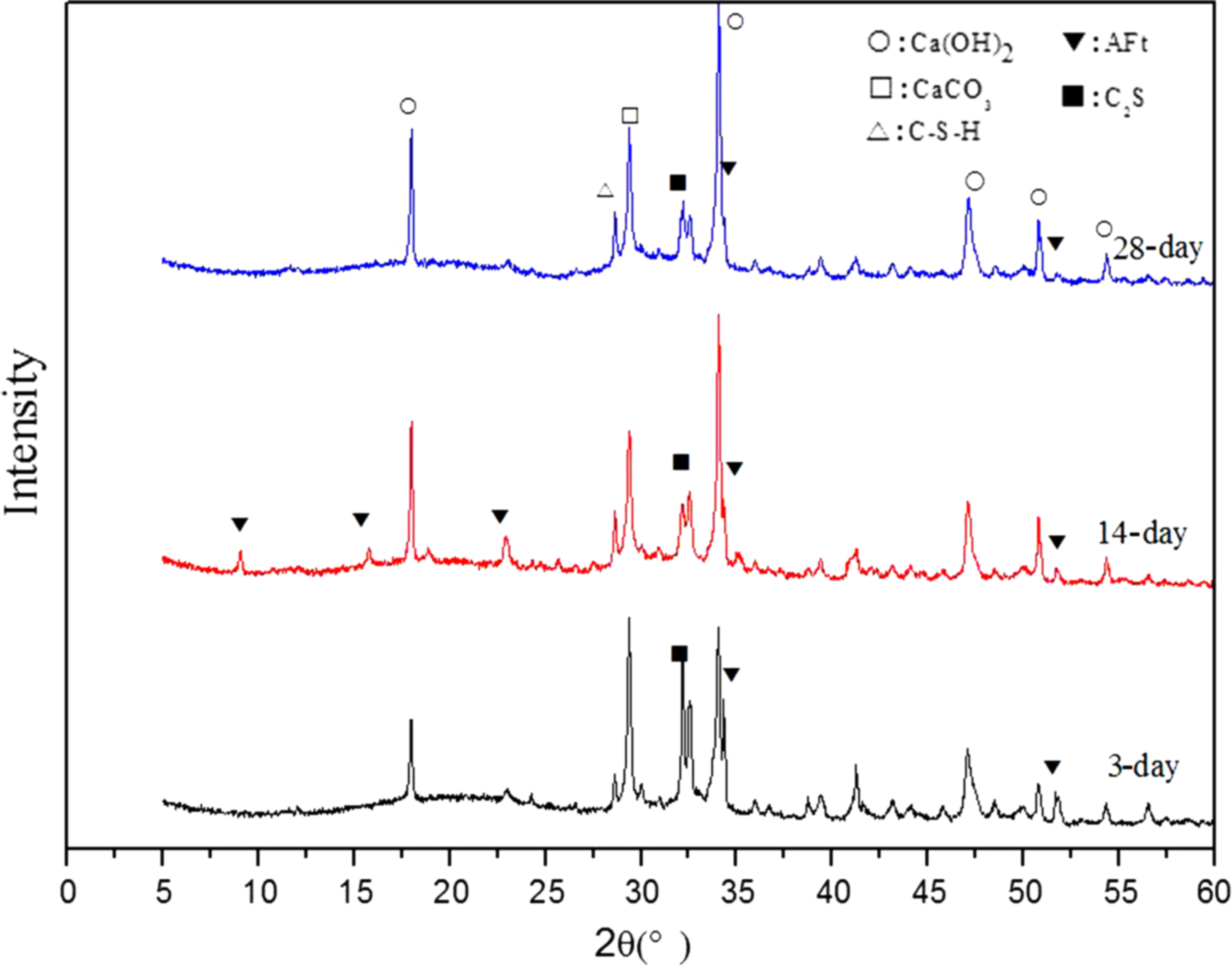
XRD spectra of samples with various curing times.
Regardless of curing time, the crystal phases of the samples were mainly SiO2, C–S–H, Aft, and Ca(OH)2, in addition to some 3CaO·SiO2 and 2CaO·SiO2. Larnite was also a major phase in the samples, suggesting that the hydration of C2S was a slower process compared with C3S. The amount of AFt in the 14-day sample was much larger compared with the 3-day sample or the 28-day sample, suggesting that ettringite formation occurred early in the hydration process. Combined with our observations of the physical strength of samples at different curing time, we concluded that the reaction of C3S hydration was fast, while C2S hydrated more slowly and had a substantial influence on the final strength of the sample.
Previous studies have indicated that heavy metal solidification is mainly related to C–S–H and AFt. In our samples, the saturated gel phase of C–S–H had more than 700 m2/g of specific surface area and could attract gas, liquid, and solid particles. The movement of metallic cations such as Al3+, Fe2+, K+, and Na+ in cement-based materials can be controlled by physical adsorption or chemical combination (Mandaliev et al., 2010). C–S–H forms the majority of the hydration products in OPC and is the main source of strength in cement-based materials (Maeda and Kasuga, 2014); its combination with metallic cations may be the most important S/S mechanism of cement, through which several heavy metals like Ni2+, Co2+, Hg2+, Zn2+, Cd2+, Cr3+, Pb2+, and Cs+ from the outside environment can also be immobilized (Gougar et al., 1996). As a byproduct of tricalcium aluminate during hydration reactions, AFt is well known to reduce the strength of solidified matrices (Ahmad and Shah, 2010), but it is useful for the immobilization of metallic cations. AFt can also combine with external ions by chemical replacement and surface adsorption of electronegativity. Previous research has shown that Ca2+ can be substituted by Pb2+, Cd2+, Co2+, Ni2+, and Zn2+, while Al3+ can be substituted by Cr3+, Si4+, Ni2+, and Co2+ (Gougar et al., 1996).
SEM analyses of morphological structure
SEM analyses were conducted to better understand the surface morphology and crystalline phases of the cement/oily sludge products. As shown in Figure 9 (C1), the surface structure of the 3-day sample was in a discrete state with many large holes and pores. The size of most of the consecutive cracks was ∼50 μm. This phenomenon likely occurred due to incomplete hydration reactions within the relatively brief curing time. The formation of C–S–H gel with cementation capacity was a gradual process (Caldwell et al., 1990), so a deficiency of C–S–H gel was likely the main cause of the discontinuity observable in Figure 6.
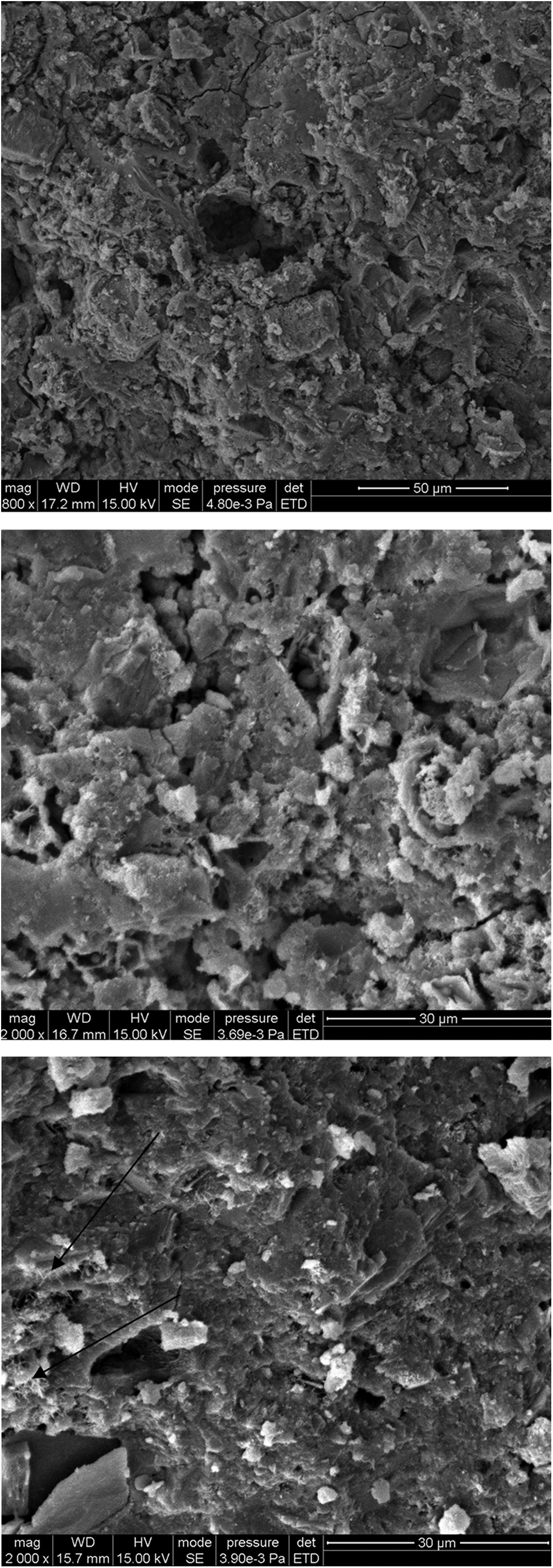
Scanning photomicrographs for samples with 3-, 14-, and 28-day curing time.
As shown in Figure 9 (C2), there was a compacted microstructure in the 14-day sample due to the formation of a new mineral substance. This substance may not have been generated at the same time as the other reaction products, causing the compacted microstructure. The formation of Ca(OH)2 and C–S–H, for example, was not successive (as discussed above.) The reaction of 3CaO.SiO2 occurred earlier than the reaction of 2CaO·SiO2.
As shown in Figure 9 (C3), the enrichment of quartz on the surface of the 28-day sample was accompanied by more uniformly distributed tiny pores than in other samples. The size of these pores was even less than 5 μm. As discussed above, small pores likely result in better strength. There were some network structures and needle crystalline structures in the sample as well, which are characteristic of the surface morphological features of C–H–S and AFt formed by the hydration reaction.
Conclusions
This article presents an experimental investigation of the use of S/S to treat heavy metals in oily sludge with OPC. The mechanical properties of the solidified samples were investigated, and the following conclusions were drawn.
S/S is a good tool to treat heavy metals in oily sludge. The sample with the 1:2 oily sludge to cement ratio met the Chinese standard for hazardous waste, but S/S was less compatible with hydrocarbons, which are closely related to the content of oily sludge. The compressive strength of the S/S samples all met the Chinese code for the design of concrete structures (GB50010-2010), so 1:4 is probably a better ratio considering the physical strength, hydrocarbon leaching, and S/S effect on heavy metals in the sample.
Porosity and physical strength were negatively correlated; 20–21% was considered the optimal range of porosity for the S/S sample in regards to physical strength. Porosity decreased as curing time increased, while the double peaks became a single peak in the pore size distribution. Pore size less than 50 μm generated relatively good physical strength.
The hydration of C3S exerted considerable influence on the early strength of the sample, while C2S hydrated more slowly and had more influence on the final strength. The formation of C–S–H and AFt may be closely related to the effect of the treatment on heavy metal solidification.
Footnotes
Acknowledgments
This study was supported by the National Natural Science Foundation of China (No. 51608272) and a project funded by the Priority Academic Program Development of the Jiangsu Higher Education Institutions (PAPD), the Natural Science Foundation of Jiangsu Province (No. BK20160937), and Student's Innovative Projects of Nanjing Forestry University (2016NFUSPITP089) for financial support.
Author Disclosure Statement
No competing financial interests exist.