




Abstract
Abstract
Colloidal silica (fumed silica) suspensions tested as carriers for remedial amendment delivery in subsurface contaminant remediation and as media for underground contamination containment. Rheological behavior of the silica suspensions under subsurface environment is not well documented while this knowledge is essential for the preparation and field injection of the suspensions. This contribution is focused on rheological characteristics of colloidal silica suspensions under various environmental conditions relevant to remedial amendment delivery for subsurface remediation. Influence of silica particle concentration, water source, ionic strength, pH, aging, amendment type and concentration, and subsurface sediment on rheological behavior of silica suspensions was evaluated. This work is the first attempt to relate the rheology of aqueous silica suspension to subsurface injection and amendment emplacement. Impact of remedial amendment and subsurface sediment is reported for the first time. Addition of potassium permanganate (KMnO4) amendment to aqueous silica suspensions increased viscosity; while presence of alcohol amendment in suspensions decreased their viscosity. All tested suspension formulations exhibited shear thinning before gelation. Addition of amendment to suspensions did not reduce the degree of shear thinning. Gelation rate of silica suspensions was increased with silica concentration and with addition of sediments. Rheological characteristics of shear thinning colloidal silica suspensions were compared to that of shear thinning polymer xanthan gum solutions, which was also applied for amendment delivery in subsurface remediation.
Introduction
P
For both amendment delivery and contamination containment applications, the silica suspensions have to be injected into the subsurface. The knowledge of the rheological behavior of the suspensions is critical to develop an appropriate design and procedure for field injection. The study of rheological properties of the suspensions is also essential for an efficient preparation and handling of the silica suspensions before injection.
For their versatile applications, including rheology modifier, coatings, cements, adhesives, filler for rubbers and plastics, and sealants, a series of studies on the rheological behavior of aqueous colloidal silica suspensions have been reported. The pH, salinity, and silica particle concentration change the viscosity and gelling property of the silica suspensions (Chen et al., 2007; Amiri et al., 2009; Mondragon et al., 2012). The strongest attraction between colloidal silica particles occurs at pH 4, the isoelectric point of the particles, and result in large particle clusters, relatively higher values of viscosity, yield stress, moduli, and shear thinning effects (Chen et al., 2007). The increase in silica particle content and salt concentration in the suspension result in greater strength of the silica network, therefore produce stronger gel (Amiri et al., 2009). It is also reported that larger silica particle sizes in the suspension lead to relatively stronger gel (Sun et al., 2016). Higher temperature applied to silica suspension increases the aggregation kinetics and reduces the gelation time (Amiri et al., 2011). When organic polymer molecules are present in the aqueous silica suspension, the molecules adsorb to the surface of particles and increase the shear viscosity of the suspension. The increase in adsorption time leads to increase in the adsorbed amount of polymer and result in higher viscosity (Kawaguchi et al., 1995).
Previous studies have covered a wide range of the rheological behavior for the aqueous colloidal silica suspensions while the focus is not related to the preparation and injection of the suspensions into the subsurface for delivery of remedial amendment or for establishment of contamination isolation barriers. Some specific relevant aspects are not covered in the reviewed studies. In this work, we carried out a set of studies on the rheological behavior of aqueous colloidal silica suspensions related to remedial amendment delivery to subsurface. The influence of silica particle concentration, water source, ionic strength, pH, aging of the suspension, remedial amendment type and concentration, and subsurface sediment was evaluated.
Materials and Methods
Materials
Fumed silica powder (Aldrich Chemical, Milwaukee, WI), hereafter designated as FS, with a mean particle size of 0.2–0.3 μm (aggregate) and BET surface area of 220 m2/g was used to form the silica suspensions. Sodium chloride (NaCl) and potassium chloride (KCl) were the salts used to test the influence of salinity on the rheology of the FS suspensions. Sodium hydroxide (NaOH) and hydrogen chloride (HCl) were used for pH adjustment.
Amendments tested in this study included potassium permanganate (KMnO4), an oxidant widely used in in situ chemical oxidation, and bioremediation substrates methanol, ethanol. Commercial fine sand (0.075 mm < size < 0.15 mm) and natural subsurface sediment obtained from depth of 5.2 to 5.4 m below ground surface in a farmland in the suburb of Beijing, China were used to test the influence of sediments. The sediment consists of 94.23% sand (0.02 mm < size < 2.0 mm), 1.01% silt (0.002 mm < size < 0.02 mm), and 4.76% clay (<0.0002 mm).
Methods and measurements
Preparation of silica suspensions
To prepare the FS suspensions, FS particles were added into ultra-pure water (Millipore Milli-Q system, resistivity Ω = 18.2 MΩ·cm), groundwater (GW) from a well at Tsinghua University, Beijing, China, or solutions containing different concentrations of salts. The GW contained Na+ K+ Ca2+ Mg2+ ions at concentrations of 3.24, 0.63, 1.75, and 0.97 mM, respectively. Before rheology tests, the silica particles and water were mixed by stirring at 300 rpm for 5 min, followed by 1 h of sonication.
To test the influence of remedial amendments on rheology, a predetermined amount of FS was added to solutions of KMnO4 in GW at concentration of 10 g/L, and to solutions of methanol or ethanol in GW at concentrations between 80 wt% and 100 wt%. The mixing approach described above was applied.
pH adjustment
FS suspensions samples prepared above had pH in the range of 6.8–7.5. To test the influence of pH, the suspensions were adjusted to pH 3 by adding HCl solution and to pH 9 by adding NaOH solution. The HCl and NaOH solutions were at high concentration therefore the volume change to the suspensions from pH adjustment was negligible. The pH values were measured at room temperature using a pH meter (Thermo Orion), which had been calibrated with buffer standards before use.
Jar tests
Jar tests were applied to observe the silica concentration influence on gelling rate of FS suspensions and to study the impact of sediments on gelation. A gelling suspension was placed into a jar, and the gelation process of the suspension was described by qualitative visual assessment of gel stages (Sydansk, 1990). These stages are listed in Table 1.
Suspensions with 5, 6, and 7 wt% FS in deionized water (DIW) and GW were prepared to test the influence of silica concentration. To investigate the impact of sediments, suspension in 50 mM KCL, 100 mM KCl, and 20 mM KMnO4 solutions were tested. In each jar test, 30 mL of FS suspension was added to a jar and mixed with 10 g of farmland sediment. The gelation process was compared to the suspension without sediment addition. The content in the jar was gently mixed at the beginning of test. The gelation state was recoded according to Table 1.
Rheology measurement
Rheological behavior was studied using an Anton Paar Physica MCR300 rotational rheometer (Anton Paar, Inc., Ashland, VA). A cup-and-spindle measuring system was used in this study. A built-in temperature control chamber allowed the selection of the desired temperature (25°C ± 0.1°C). The rheology flow curves were measured on suspensions with shear rates between 0.1 and 150 s−1. Measurements at steady shear rate of 100 s−1 were also performed to test the suspension viscosity change with shearing time.
Results and Discussion
Influence of silica concentration, water source, ionic strength, pH, aging of the suspension, amendment type and concentration, and sediment on the rheological characteristics of silica suspensions is presented in the following. The gelation process of silica suspensions with the presence of sediment is also described and discussed.
Silica concentration
The viscosity of suspension increased with the increase of FS concentration. In the FS-DIW suspensions, the viscosity increased from 1.0 Pa·s for the 3 wt% silica suspension up to more than 10 Pa·s for the 8 wt% silica suspension at shear rate of 0.1 s−1 (Fig. 1). The connection, that is, cross-linking (e.g., formation of siloxane bond), among the silica particles gives rise to viscosity of the suspensions (Iler, 1979; Brinker, 1994; Yossapol, 2002). Higher concentration of particles leads to a larger number of interactions among them and results in a greater probability of cross-linking. Higher FS concentration may facilitate the formation of more silica particle clusters and/or clusters with larger sizes, inducing a higher viscosity. Increase in viscosity of colloidal silica suspensions with increasing particle concentration was also reported by others (Chen et al., 2005; Mondragon et al., 2012; Yang et al., 2016).
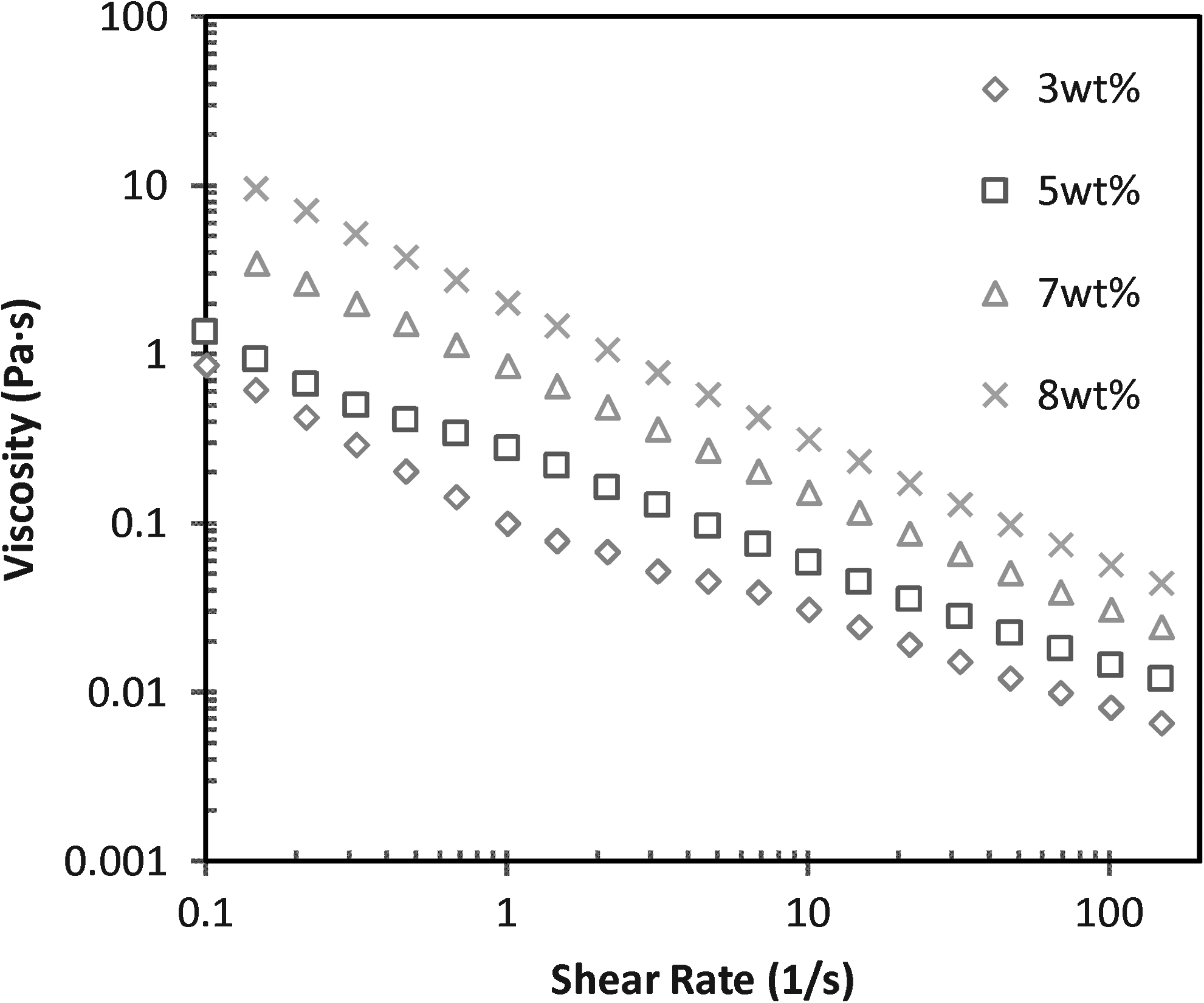
Flow curves of aqueous fumed silica in DIW suspensions with a range of silica concentrations (3–8 wt%). DIW, deionized water.
All suspensions exhibit a distinct shear thinning characteristic. Due to shear thinning effect, the viscosity at high shear rate (150 s−1) dropped by two orders of magnitude or more for all the suspensions, to as low as 0.01 Pa·s. For colloidal particle suspensions of isolated particles, it is commonly accepted that the shear thinning of the suspensions is resulted from the organization of particles into layers oriented along the direction of flow. The layering makes the flow of suspension easier because the particle layers can slide over each other more easily than if the particles were randomly distributed (Larson, 1999; Wagner and Brady, 2009). For suspensions containing colloidal particles that cross-link to form clusters, shear thinning is attributed to the breaking up of particle clusters caused by shear stress (Sonntag and Russel, 1986; Potanin, 1991; Ament et al., 2014). More recently, it was reported that shear thinning of colloidal suspensions was due to the decreased relative contribution of entropic force associated with shearing (Cheng et al., 2011).
When the silica concentration was higher, the slope of the shear thinning curve was higher (Fig. 1), that is, the shear thinning is more profound (see more discussions in Water Source section). This observation indicates that the FS particle clusters in the suspension with higher particle concentration are more prone to breaking up under shearing due to the larger number and/or larger sizes of the clusters.
The shear thinning behavior of the silica suspensions promotes easier injection into subsurface attributed to the lower viscosity induced by the shearing applied to the suspensions during pumping. Furthermore, when a shear thinning fluid (STF) is used as a medium to deliver remedial amendment to the subsurface, it has the potential to enhance the delivery of solute and particle amendments into lower permeability zones in heterogeneous formations therefore achieve more uniform amendment distribution (Zhong et al., 2008; Silva et al., 2012; Truex et al., 2015); improving amendment distribution is envisioned as an important advantage with the application of colloidal silica suspension for subsurface remediation delivery.
The influence of silica concentration on viscosity has an important implication to the application of the suspensions. When amendment is delivered to aquifer, lower silica centration can be used; therefore, the injection and distribution will be more readily achieved. When amendment is to be delivered and emplaced in the vadose zone, higher silica concentration can be used to obtain a higher viscosity so that the amendment laden suspension can stay in the vadose zone attributed to its lower mobility.
The viscosity of silica suspensions at a constant shear rate decreased slightly over time (Fig. 2). This time-dependent decrease of viscosity behavior is referred as thixotropy. The different slopes of the curves in Fig. 2 indicated that the suspensions exhibited more profound thixotropic characteristic at higher FS concentrations. For examples, the 3, 5, 7 wt% FS-GW suspensions showed 0.24, 1.07, 7.59 mPa·s/min viscosity decreasing rate, respectively. The reduction in viscosity was rapid in the beginning of shearing, and then slowed down gradually on prolonged shearing. The lowering in viscosity with mixing will be helpful for direct and well-based injection of the suspensions.
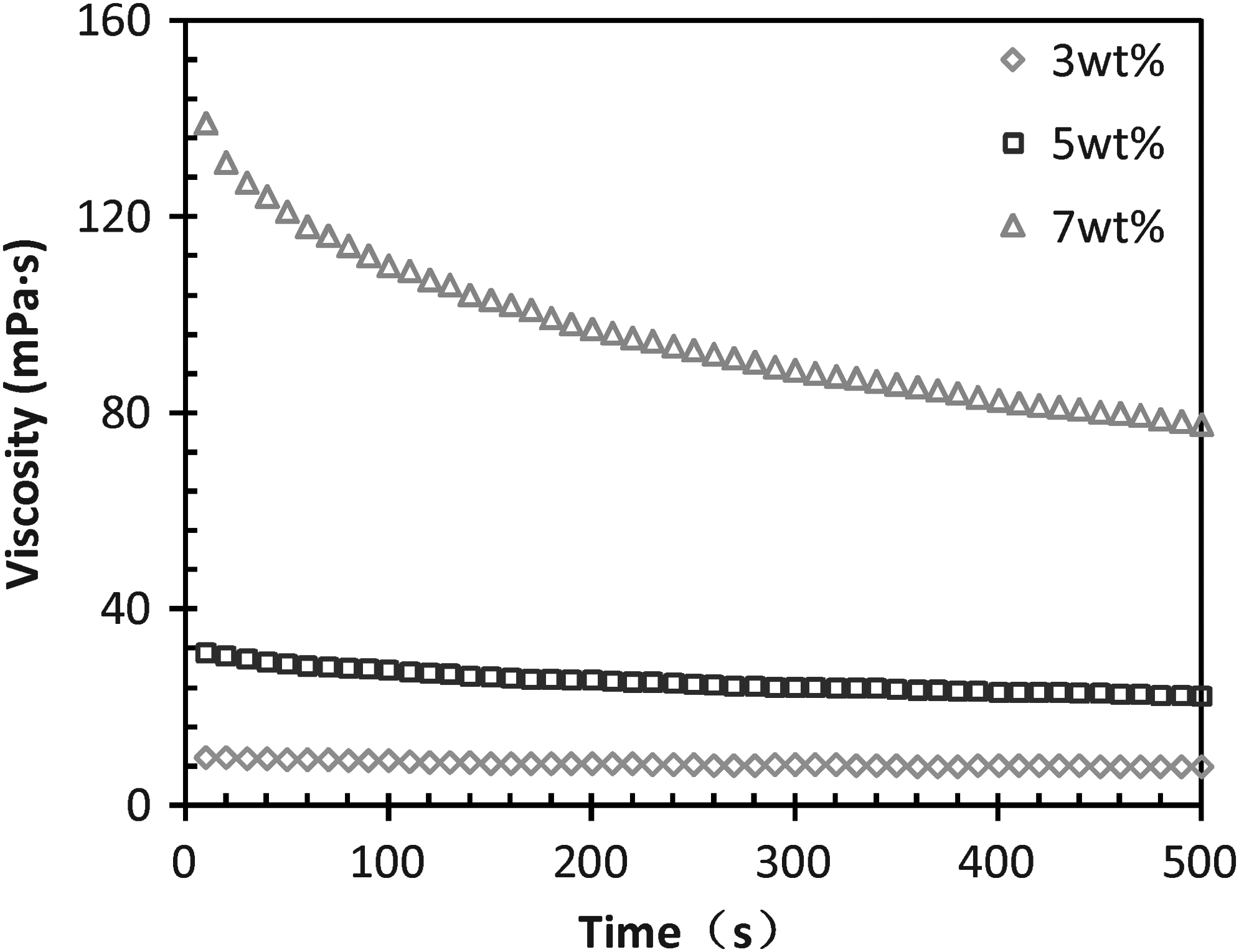
Thixotropic behavior of FS in GW suspensions at 100 s−1 shear rate. GW, groundwater.
Water source
At lower FS concentration (3 wt%), suspensions in GW had similar viscosity with suspensions in DIW (Figs. 1 and 3). In contrast, at higher FS concentrations (5, 7 wt%), viscosity of GW suspensions was higher than that of the suspensions in DIW. The salinity in GW had more profound influence on the viscosity with the increase of FS concentration. The ratio of viscosity in GW to DIW suspensions at shear rate of 0.1 s−1 was about 1, 5, and 10, respectively for FS concentration of 3, 5, and 7 wt%. A plausible explanation is that the salinity in GW diminishes the thickness of the electrical double-layer of water surrounding the silica particles and thus allowing closer approaches among the particles (Roberts, 2006; Amiri et al., 2009) to form clusters, resulting in increased viscosity. However, the particles in the 3 wt% suspension are farther apart and therefore the compressing of the double-layer water does not cause viscosity increase.
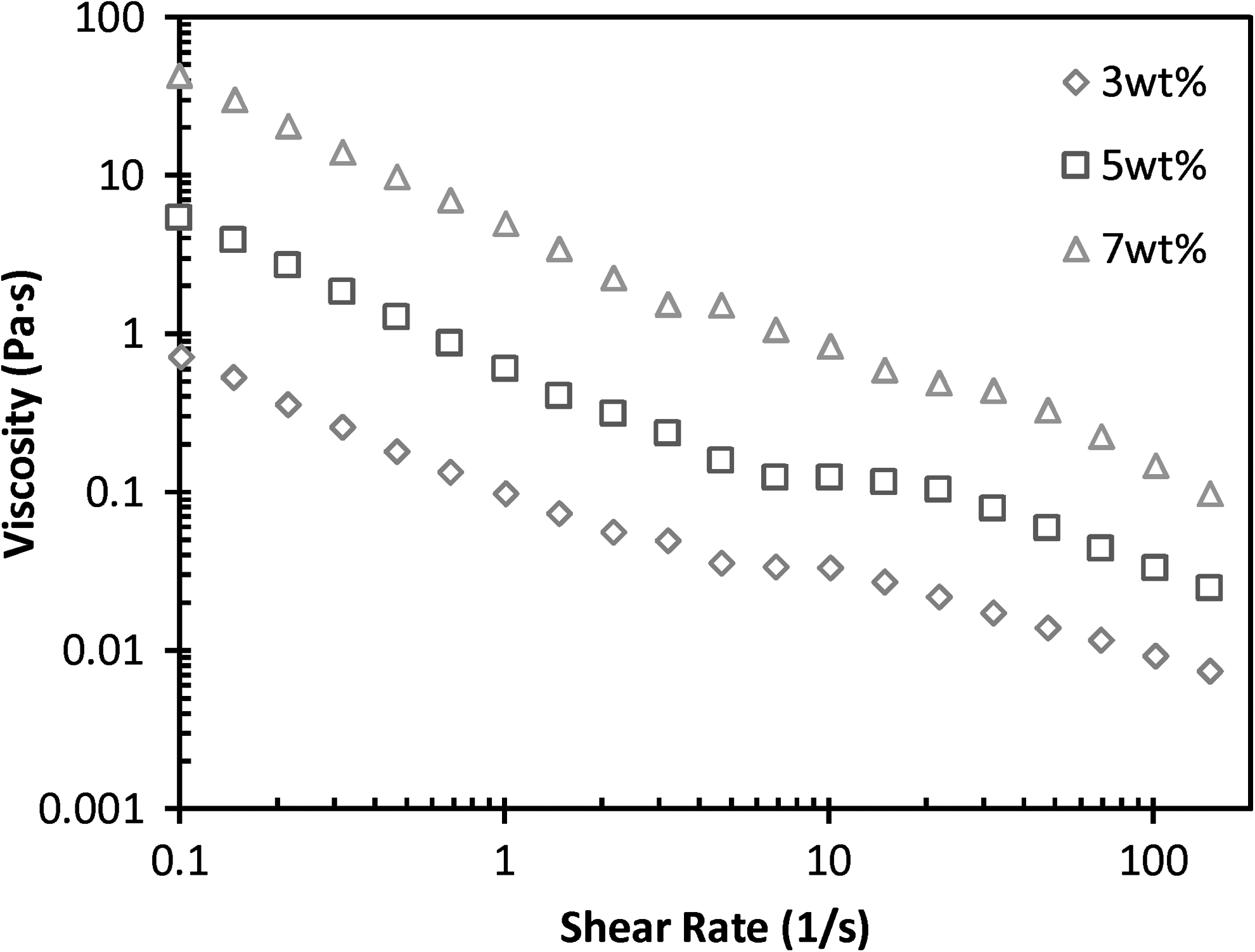
Flow curves of aqueous fumed silica in groundwater suspensions with a range of silica concentrations (3–7 wt%).
Suspensions of FS in GW (Fig. 3) also showed shear thinning behavior with rheology flow curves similar to those of suspensions in DIW (Fig. 1). The shear thinning flow curves can be fitted to a power law model (Tadros, 2011):
where μ is viscosity,
DIW, deionized water; GW, groundwater.
Ionic strength
Addition of Na+ and K+ cations increased the viscosity of silica suspensions (Fig. 4a, b). The viscosity increase was more significant at higher FS concentrations (Fig. 4c). The suspensions retained their shear thinning characteristics with the addition of these cations.
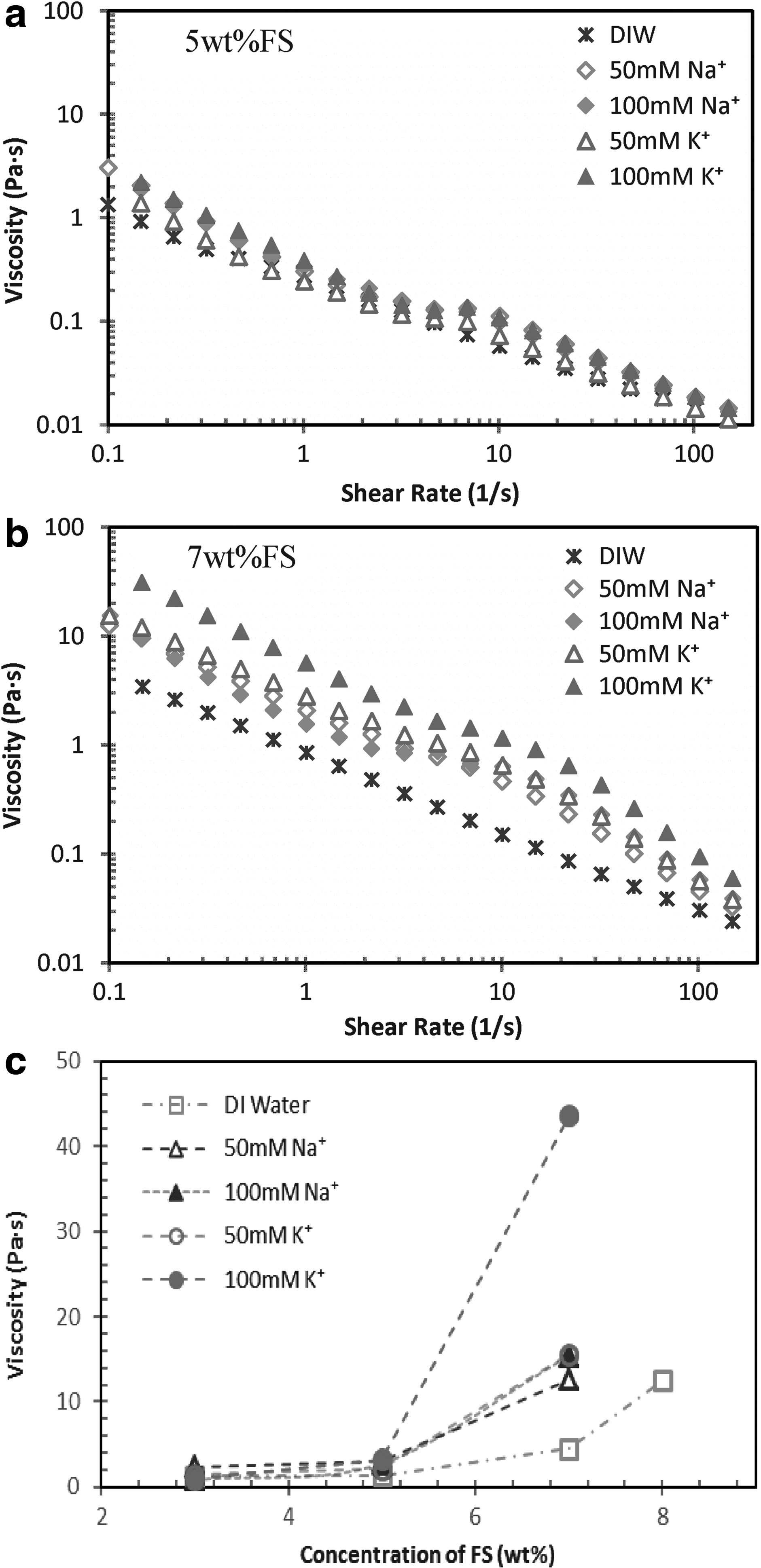
Influence of Na+ and K+ ions on FS suspension rheology:
The viscosity increasing with addition of cations can be explained using electrical double-layer theory. The negatively charged silica particles are surrounded by double electrical layer of ions. When the ionic strength in the suspension is increased the double-layer is depressed, allowing the particles to approach closer to each other and make connections (Roberts, 2006) that increase the viscosity. Ions may also act as a bridge among silica particles to form group of particles, increasing the viscosity (Bergna and Roberts, 2006). The presence of aqueous electrolytes near the water-solid particle interface increases the solid-water interfacial energy (Butkus and Grasso, 1998), which may result in an increase in viscosity of the solid particle suspension. Previous work had also demonstrated that adding cations contributed to SiO2 coagulation and increased the viscosity of suspensions (Milonjić, 1992; Depasse, 1997; Amiri et al., 2009).
Na+ and K+ ions made different contributions to viscosity change. For the 7 wt% FS suspensions, addition of 50 and 100 mM Na+ increased the viscosity from 4.5 to 12.6 Pa·s (183% increase) and 15.4 Pa·s (245% increase), respectively; while with the same concentration additions of K+ increased the viscosity from 4.5 to 15.6 Pa·s (250% increase) and 43.6 Pa·s (878% increase) (Fig. 4c). The sorption behavior difference between Na+ and K+ ions can give an explanation for this observed result. According to Milonjić (1992), the amount of ion sorption to silica particles influences the interactions between particles and has a quantitative relationship with stability of silica suspensions. Poorly hydrated cations K+ can be adsorbed in a greater quantity to the silica surface than the well-hydrated Na+ ions at high concentration of FS (Amiri et al., 2009). Addition of K+ could induce the formation of larger particle clusters and result in higher viscosity than the addition of Na+ due to higher absorption of K+ ions.
For the flow curves of 3, 5, and 7 wt% FS with 50 and 100 mM Na+ and K+ suspensions, the power law fitted k and n values and the coefficient of determination, R2, are listed in Table 3. Figure 5 shows the relationship between k and n values. All data in Table 3 are lumped together and best fitted with a logarithmic curve. The high R2 value indicates the empirical model might be used to relate the parameters over a considerable range of FS concentration and solution ionic strength.
For all those suspensions, when viscosity increases at low shear rate, the degree of shear thinning, indicated by the values of n, also increases. The empirical relationship between k and n is (Fig. 5):
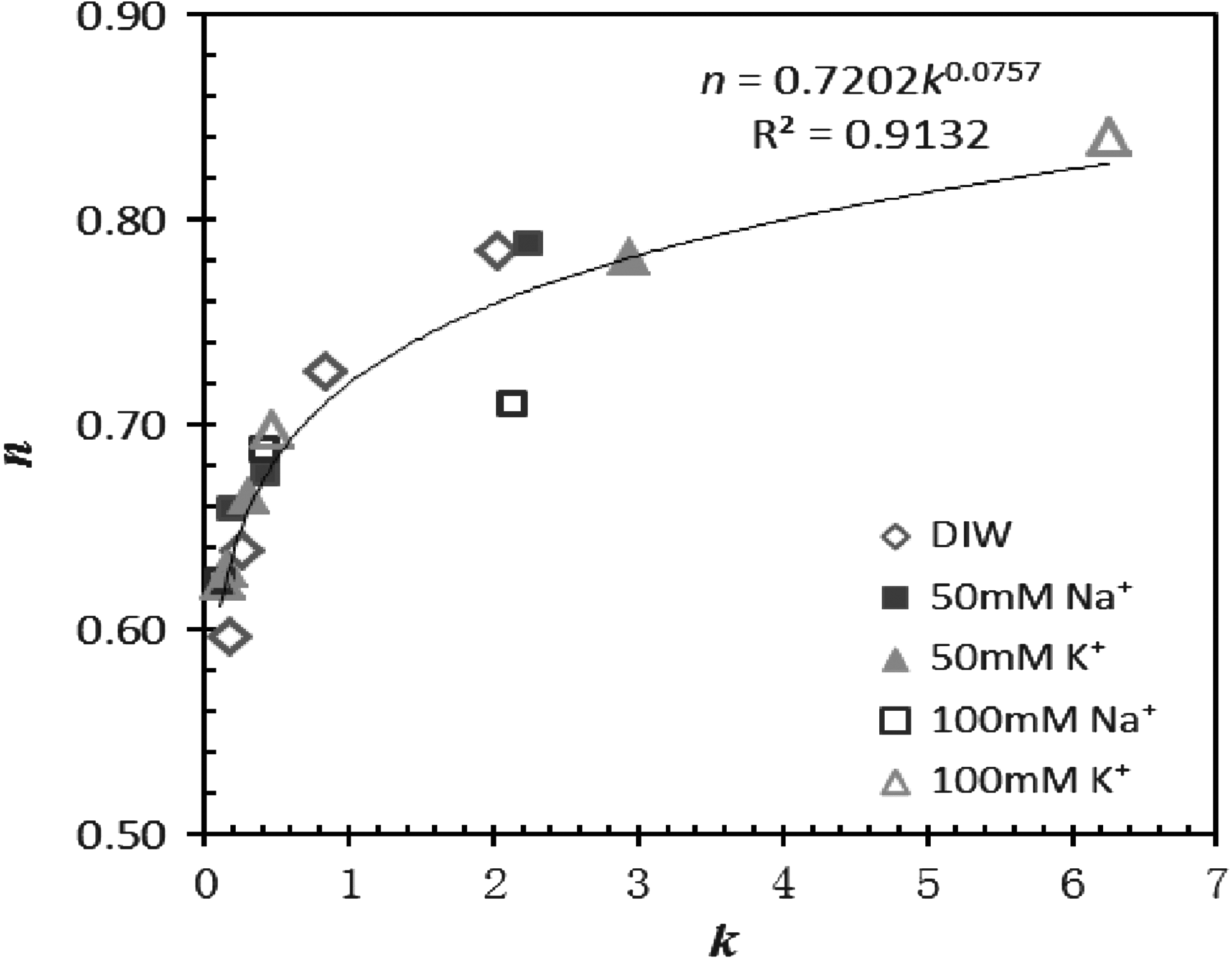
Power law fitting parameters k versus n relationship for FS suspensions in DIW and tap water sources and with different cation additions.
Such an empirical equation might be useful for fully parameterizing Equation (1) when only a k value is needed to effectively obtain the corresponding n value using this empirical equation. The k value can be experimentally obtained by determining the viscosity at
The viscosity of silica particle suspensions increased with aging (Fig. 6), resulted from the increasing extend of cross-linking among particles with time. The viscosity increasing process eventually leads to gelation of the suspensions. Similar observations were reported by others (Chen et al., 2005; Amiri et al., 2009). The viscosity increasing rate and magnitude were higher when the silica concentration was higher. For the 3 wt% and 5 wt% FS suspensions (Fig. 6a, b), viscosities increased remarkably in the first 3 days. After that, the increasing was minimal. For all the 7 wt% FS suspensions (Fig. 6c) except the one with 100 mM K+, the viscosity continued to increase for up to 3 days. The viscosity might have increased further after 3 days. However, the viscosity values were not obtained because the suspensions began to behave like a rigid gel and it was unpractical to conduct a viscosity measurement. The viscosity increase for the 7 wt% FS 100 mM K+ suspension was not quantified from the beginning because this suspension was “solid-like” at the initial of its preparation.
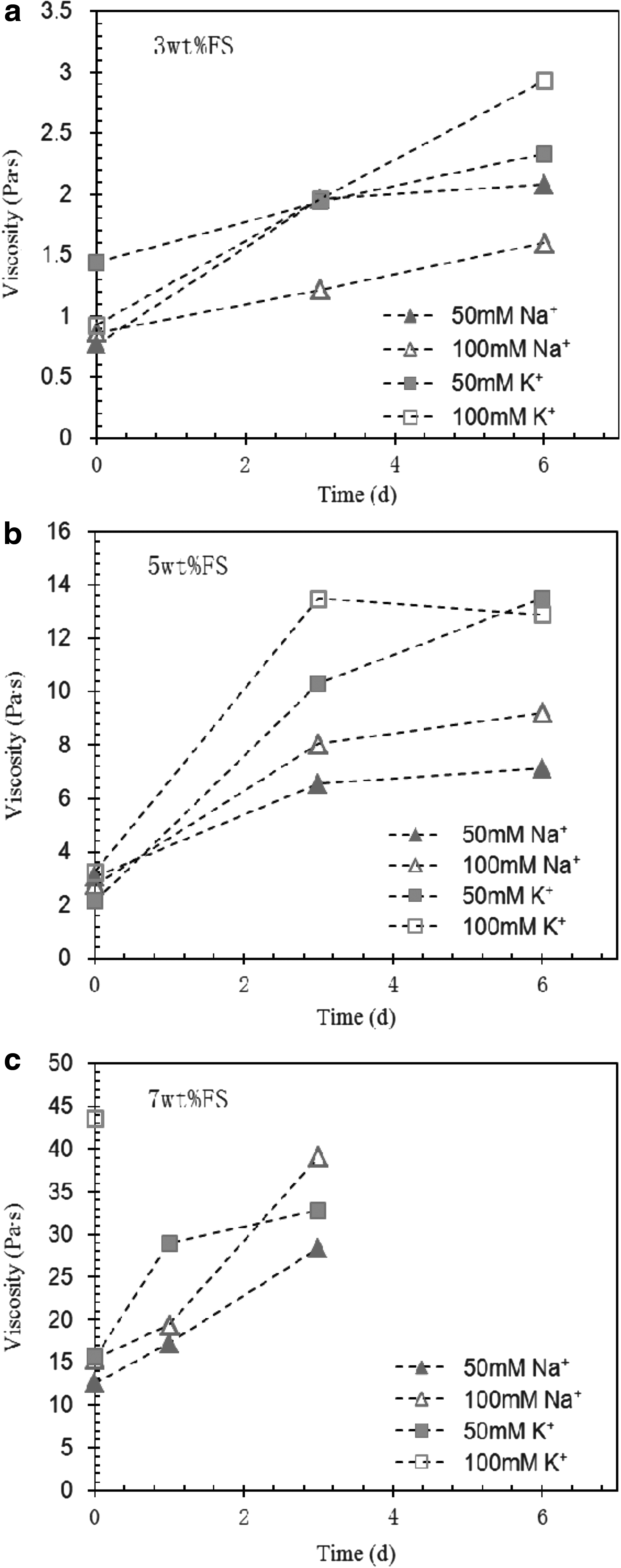
Effect of aging on viscosity for FS suspensions with additions of NaCl and KCl.
For field remediation, lower viscosities of the fresh suspensions facilitate the injection; shear thinning of the suspensions further promotes injectability. The higher viscosity in the later stage suspensions, or gelation with time, enables the emplacement of the injected suspension with remedial amendment in target locations. Previous studies have reported slow release of remedial amendments from emplaced silica gels (Lee and Gupta, 2014; Yang et al., 2016).
pH
For each tested pH, the suspensions' viscosity showed a rapid increase when the FS concentration reached a critical level (Fig. 7). For the acidic suspensions, viscosity did not increase significantly until FS concentration reached 8 wt%; while for the neutral suspensions and basic suspensions, viscosity increased remarkably when FS reached 5 wt% (Fig. 7).

Viscosity of FS suspensions with a range of silica concentrations at pH 3, 6.8, and 9 at shear rate 0.1 s−1.
Interaction among particles gives the rise of viscosity. According to the Derjaguin, Landau, Vervey, and Overbeek (DLVO) theory, the total energy of interaction between two particles is the algebraic sum of two interaction energies: the van der Waals attraction (VA) and the electrostatic double-layer repulsion (VR). At pH 3.5, which is close to the isoelectric point (i.e.p.) of the FS particles (Lyklema, 1995; Chen et al., 2005, 2007; Amiri et al., 2009), particles should have the strongest interactions because the VR can be neglected; therefore the suspension should exhibit higher viscosity than suspensions at pH higher than 3.5. However, our observation was in contrast to the DLVO theory prediction. This discrepancy can be explained by checking the hydration force that exists with the hydrophilic silica particles, which is not accounted for in the DLVO theory (Yotsumoto and Yoon, 1993; Israelachvili and Wennerstrom, 1996; Grasso et al., 2002; Chen et al., 2007). The existence of repulsive forces not considered in the DLVO theory was confirmed by direct measurements (Grabbe and Horn, 1993; Chapel, 1994; Yoon and Vivek, 1998). A hydrated layer on the silica particle surfaces diminishes the interaction among particles. A higher particle concentration is then required to facilitate the cross-link for the particles to give a rise in viscosity. The hydration effect might shift the pH where the suspension exhibits the highest viscosity. Kobayashi et al. (2005) also observed a characteristic slowing down of colloidal silica particle aggregation at low pH.
Amendment type and concentration
Impact of oxidant KMnO4, bio-nutrient methanol and ethanol on the rheology behavior of FS-GW suspensions are presented here. The addition of 10 g/L KMnO4 increased the viscosity of the FS-GW suspensions but had minor influence on their shear thinning characteristics (Fig. 8). The influence on viscosity was more significant in the suspensions with lower silica concentrations. Based on the power law fitted parameters (Table 4), the viscosity increase for the 3, 5, and 7 wt% silica suspensions was 58%, 49%, and 16%, respectively. The n values for the suspensions with and without KMnO4 addition showed a minimal change.
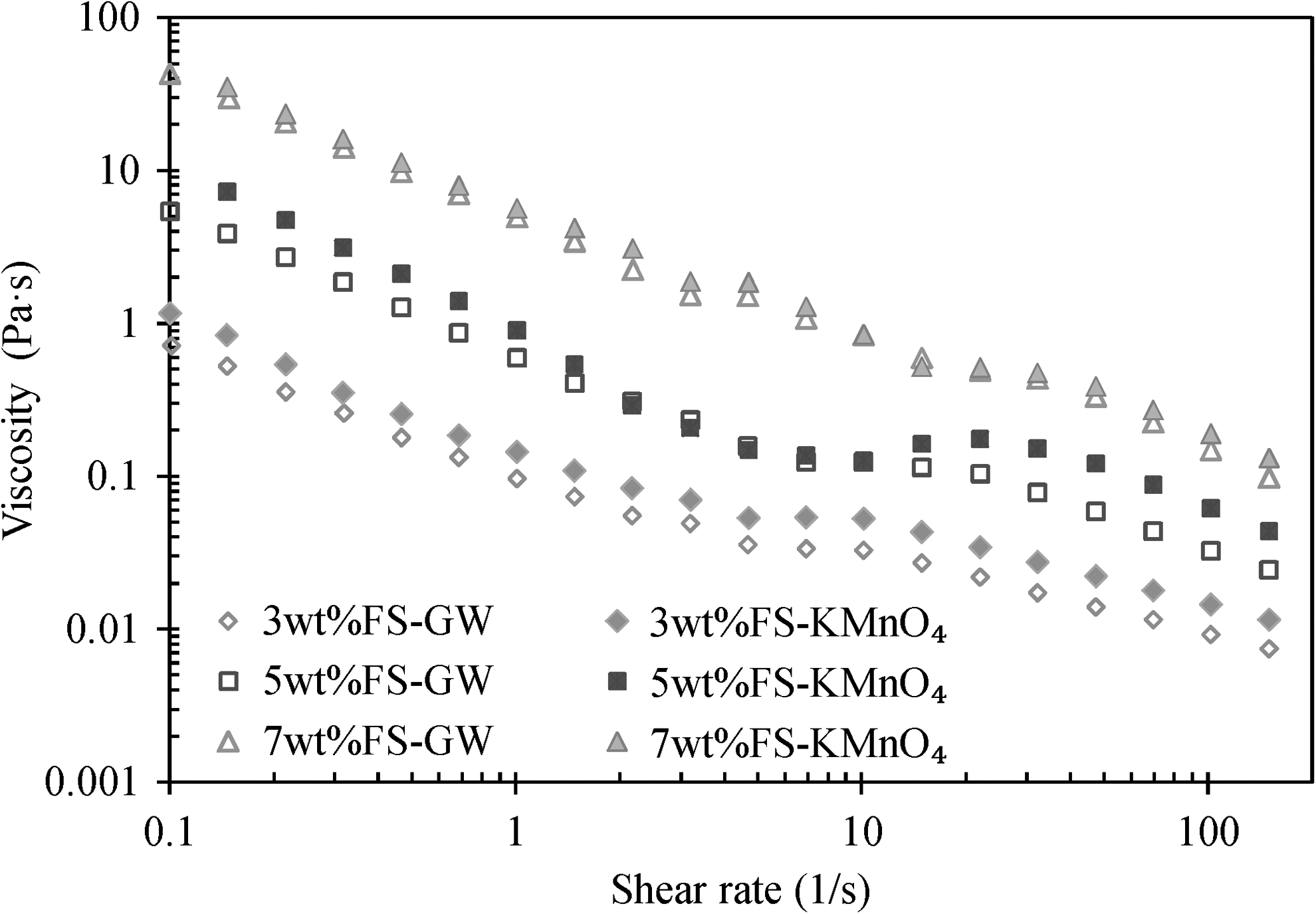
Influence of KMnO4 amendment (10 g/L) on rheology of FS suspensions. KMnO4, potassium permanganate.
KMnO4, potassium permanganate.
When KMnO4 dissolves in water, it disassociates into K+ and MnO4− ions. A comparison between the viscosity of 7 wt% FS-100 mM K+ suspension (K+ from KCl, Fig. 4b) and viscosity of 7 wt% FS-KMnO4 (Fig. 8) can be made to see the consistence of K+ influence. In the 7 wt%FS-KMnO4 suspension, KMnO4 concentration was 10 g/L, equivalent to 63.3 mM K+. The viscosity of the 7 wt% FS-KMnO4 suspension was slightly higher (i.e., 1.1 times) than that of 7 wt% FS-100 mM K+ at the same shear rate even though the K+ concentration was lower than 100 mM. The MnO4− ions might have contributed to the viscosity increasing.
At the same shear rate, the viscosity of 7 wt% FS-pure methanol and 7 wt% FS-pure ethanol suspensions are lower than the 7 wt% FS-GW suspension (Fig. 9). The viscosity of 7 wt% FS-80% methanol (20% GW) and 7 wt% FS-80% ethanol (20% GW) suspensions are also lower than the 7 wt% FS-GW suspension, but higher than the 7 wt% FS-pure alcohol suspensions (Fig. 9). The suspensions in GW and in 80% alcohol suspensions gelled over time. No gelation was observed for the FS-pure alcohol suspensions; instead, these mixtures appeared to be stable suspensions.

Rheology of fumed silica in bio-amendments methanol and ethanol suspensions in comparison with FS-GW suspension.
In the FS-pure alcohol suspensions, the hydrophilic silica particles interact with short-chain alcohol molecules through strong H-bonding between liquid molecules and surface silanol groups. A solvation layer is formed on the silica particle surface (Raghavan et al., 2000). This layer prevents the interaction among the silica particles, which resulted in a stable suspension. In the tests with the addition of 20% GW, hydrophilic silica particles were coated with a layer of water that could diminish the solvation layer. The ions in GW increased the viscosity of the suspensions. In these suspensions the silica particles linked together through siloxane bonds to form a three-dimensional network and eventually formed a gel (Iler, 1979; Bergna and Roberts, 2006).
Gelation of silica suspensions
FS suspensions undergo viscosity increasing and eventually gelling processes when the formulations are favorable. A visual semi-quantitative observation described in Table 1 was used to describe the gelation of the suspensions with 5, 6, and 7 wt% FS concentrations, and the results are presented in Fig. 10. The 3 wt% FS suspensions were not included since no viscosity increase was observed in these suspensions.
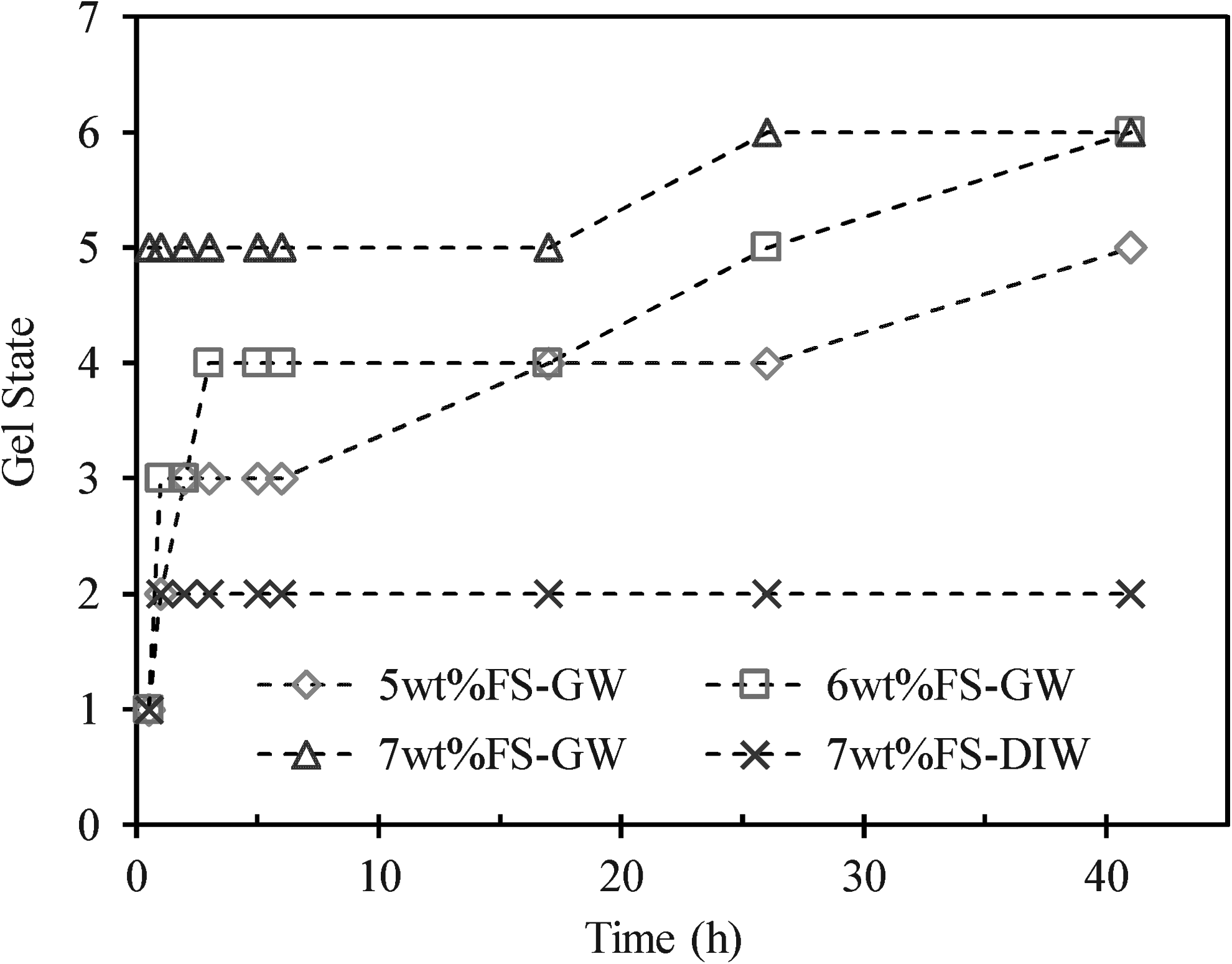
Gel state as a function of time for FS suspensions in DIW and groundwater.
In the gelation states listed in Table 1, states 1 through 4 describe flowing suspensions or solutions but not gels. Silica suspensions with 7 wt% FS in DIW did not gel and the viscosity slightly increased from the initial level. This was also true for the 5 and 6 wt% FS suspensions (data not shown). Suspensions in GW had much higher starting viscosity, and eventually formed gels, that is, reached the State 5 or higher. Suspensions with a higher FS concentration showed a faster gelation process. For instance, at 6 h, suspensions with 5, 6, and 7 wt% FS reached gelation state 3, 4, and 5, respectively; and at 30 h, these suspensions achieved gelation sate 4, 5, and 6, respectively. The gel formed in subsurface after suspensions injection can serve as a slow-release source of remedial amendments (Yang et al., 2016).
Sediment influence on gelation
When sediments were added to FS suspensions, the rates of gelation were increased (Fig. 11). In the 5 wt% FS-50 mM KCl suspensions, it took 55 h to reach gel state 5 when no sediment was added; while it took less than 4 h for this gelation process to occur when sediment was present (Fig. 11a). The highest gel state was 5 within 95 h gelation without sediment addition, while the suspensions reached gel state of 9 when sediment was added. Similar gelation processes were observed in the 5 wt% FS-100 mM KCl suspensions except that the suspension without sediment gelled faster, reaching gel state 5 in 10 h (Fig. 11b). This result is consistent with the finding presented in Fig. 6, that is, higher K+ concentration induced faster viscosity increasing of the suspension. For the 5 wt% FS-20 mM KMnO4 suspensions, it took 55 and 95 h for the suspensions with and without sediment, respectively, to reach gel state 9 (Fig. 11c). A comparison between the gelation processes of suspensions without sediment in Fig. 11a–c reveals that KMnO4 enhanced the gelation more than KCl. This result is expected since the comparison in viscosity enhancement between KMnO4 and KCl (Fig. 4b vs. Fig. 8) revealed that KMnO4 achieved a higher degree of viscosity increase.
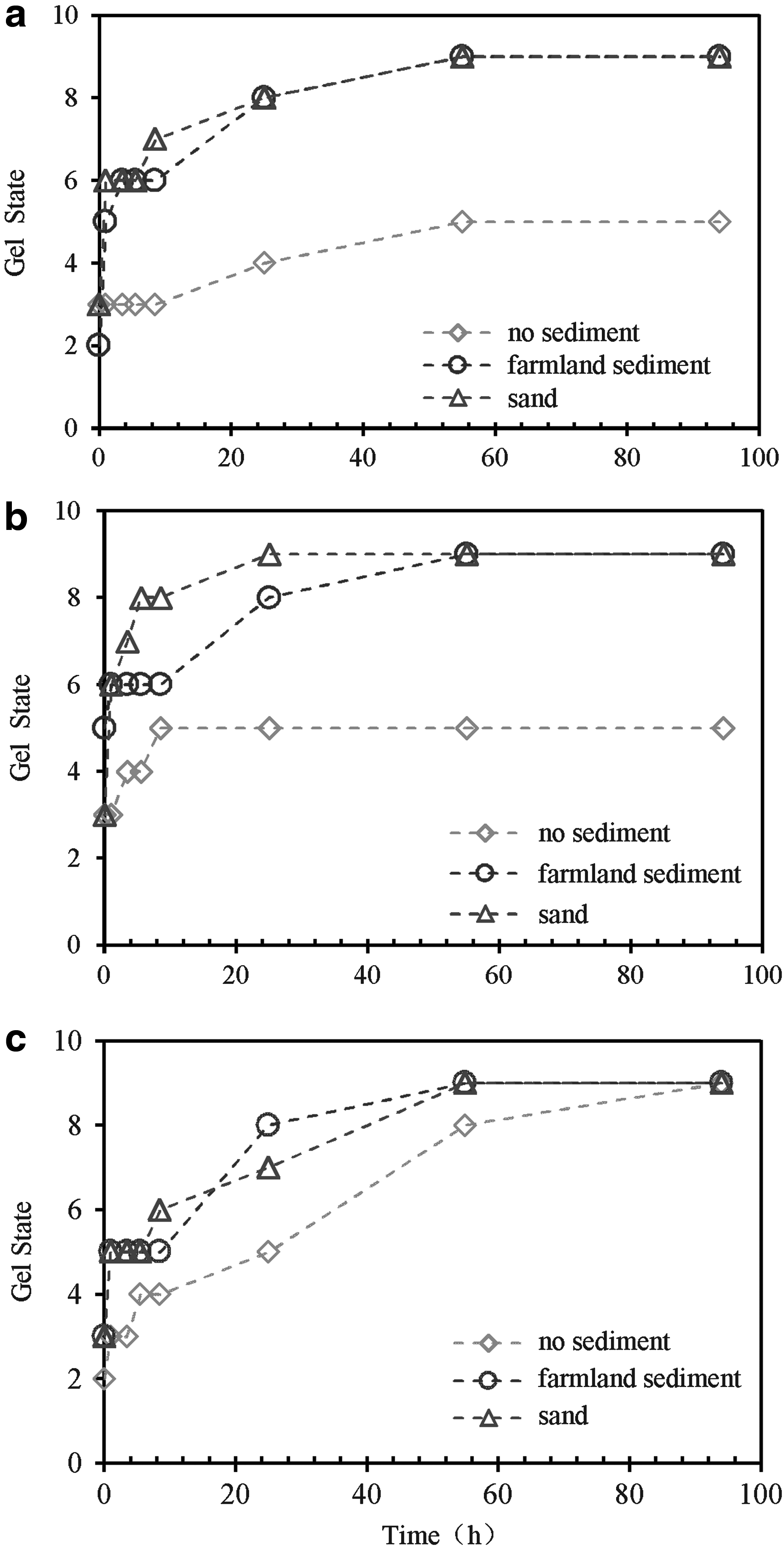
Sediment influence on FS suspensions gelation. Silica suspensions had FS concentration of 5 wt% and with
Both the silica concentration and ionic strength showed impact on the gelation rate of the suspensions. In field applications, these parameters can be adjusted so that an optimum gelation time can be obtained to best fit the suspension preparation and injection needs.
Gelation enhancement by sediment mostly likely can be attributed to the presence of ions in the sediment. The enhancement implies that when the amendment laden silica suspensions are injected into subsurface in contacting with sediments, the gelation will be promoted by the sediments. The gelled suspension should serve as a slow release source of the amendment.
Comparison between FS suspensions and xanthan gum solutions
STFs formed with organic polymers were also studied and applied for remedial amendment delivery. Xanthan gum is a representative of these polymers attributed to its superior rheological properties (Martel et al., 1998; Robert et al., 2006; Zhong et al., 2008, 2011, 2013, 2015; Silva et al., 2012; Chokejaroenrat et al., 2013; Truex et al., 2015). It is worth to make a comparison on the characteristics and potential applications between these delivery fluids formed with organic polymer and inorganic particles. This comparison can be used as a tool for the practitioners to choose an STF. The major characteristics and perspective applications of these two delivery fluids are presented in Table 5.
STF, shear thinning fluid.
Summary, Conclusion, and Implication
The influence of silica particle concentration, water source, ionic strength, aging of the suspension, pH, amendment addition, and subsurface sediment interaction on the rheological behavior and gelling process of colloidal silica (fumed silica) suspensions related to remedial amendment delivery was studied. The findings of this research present an important support for remedial amendment delivery design from the rheology perspective. Fumed silica aqueous suspensions increase viscosity attributed siloxane briding between silica particles and undergo a gelation process under favorite conditions. Before gelation, the suspensions possess shear thinning and thixotropic properties that facilitate injection for field remediation. Increase in FS concentration and ionic strength increased the viscosity of suspensions. Suspensions prepared with GW had higher viscosity compared to suspensions prepared with DIW, presumably due to the ionic strength in GW. Suspensions with higher viscosity at low shear rate exhibited more profound shear thinning. Addition of remedial amendments could increase (e.g., permanganate) or decrease (e.g., methanol and ethanol) the viscosity of silica-water suspensions, but the presence of amendments did not remove suspensions' shear thinning behavior. The viscosity of suspensions also increased with aging; and aging eventually leads gelation under favorable geochemical conditions. The increasing in silica concentration and the presence of sediment facilitated the gelation process.
With their pertinent rheological properties, colloidal silica suspensions can be applied to deliver remedial amendments to the subsurface utilizing their initial low viscosity and shear thinning characteristics, and to establish slow release amendment sources using the gelation (Yang et al., 2016) for enhanced and lasting remediation. The findings on the influence of silica concentration, water type, and ionic strength on viscosity help to define the formulation. Since sediments promote gelation, the forming of amendment-laden slow-release gel is promised after the suspension injection. The finding on gelation of FS-alcohol suspension has an important implication. The colloidal silica and alcohol suspension can be formulated so that it has a density less than water. The injection of this suspension to the capillary fringe zone can result in a layer of suspension spreading over the GW table. The subsequent gelation of this layer builds up a barrier between the vadose zone and aquifer, which can intercept the contaminant flux from the vadose zone to aquifer.
Footnotes
Acknowledgments
This work was partially funded by the National High Technology Research and Development Program of China (No. SS2013AA062607) and the Environmental Security Technology Certification Program (ESTCP) (project #ER-0913) of the Department of Defense, United States. The Pacific Norwest National Laboratory is operated by Battelle for the U.S. Department of Energy under contract DE-AC06-76RLO 1830.
Author Disclosure Statement
No competing financial interests exist.