




Abstract
Abstract
Nitrogen-doped microporous carbon is successfully fabricated through carbonization and KOH activation of polyaniline nanofiber, which is synthesized by dilute polymerization, and could directly provide the nitrogen doping source. Characterization shows that as-prepared sample is successfully doped with nitrogen with a content of 5.9%, and presence of a large amount of micropores render a high specific surface area of 977.9 m2/g to the sample. Capability of removing 2,4-dichlorophenol (2,4-DCP) from aqueous solution is explored through the bath adsorption experiments by utilizing the nitrogen-doped microporous carbon. The adsorbent manifesting a highest adsorption capacity of 378.8 mg/g is effective in a broad pH range (2.0–10.0) for removal of 2,4-DCP. Besides, the removal ratio of 2,4-DCP can be rapidly achieved to 90% within 10 min. Adsorption isotherm and kinetics data are fitted well with the Freundlich isotherm and the pseudo-second-order kinetic model, respectively. Moreover, nitrogen-doped microporous carbon can be regenerated effectively and recycled by using diluted NaOH. Therefore, implementation of nitrogen-doped microporous carbon with relatively high reusability as an adsorbent is promising for fast and efficient remediation of 2,4-DCP-containing wastewater.
Introduction
C
Many techniques, including adsorption (Kragulj et al., 2015; Tan et al., 2015), catalytic oxidation and reduction (Guérin et al., 2015; Jiang et al., 2016), and biodegradation (Huang et al., 2014; Liang et al., 2015) have been proposed to dispose CPs in the environment. Among all possible methods, adsorption is one of the most attractive approaches to remove pollutants (Liu et al., 2015), and the exploration for efficient adsorbents has attracted increasing interest of chemists, which are required to have high efficiency, good stability, fast adsorption kinetics, operational facility, safe treating process, and low cost (Li et al., 2015).
Porous carbon materials have drawn significant attentions due to their low-cost, excellent thermal/chemical stability and textural characteristics, for example high specific surface area and high porosity, which provide a porous host for the guest species (Chen et al., 2015; Ganesan and Shaijumon, 2016). These outstanding features enable them to be ideal candidates for various applications in many fields such as pollutant removal/remediation (Yang et al., 2015), catalyst supports (Zhu et al., 2016), sensors, and electrode materials (Guo et al., 2015). The properties of porous carbon mainly rely not only on the pore structure but also on the heteroatoms in porous carbon. It is reported that the surface and physicochemical properties of porous carbon could be tuned by the incorporation of heteroatoms (Nasini et al., 2014; Yang et al., 2014) into the carbon matrix. Among them, nitrogen atom is widely introduced into the backbone of the carbon due to it appearing as amine-like functionalities on the surface. Thus, the introduction of nitrogen atoms endows the carbons with basic nature, enhancing the interactions between the carbon and the acidic molecules. Moreover, nitrogen atom possessed strong electronegativity, which might interact with organic molecules containing hydroxyl groups to generate hydrogen bond. It is also demonstrated that nitrogen doping could modulate the electronic and crystalline structure of the carbon, boosting their surface polarity, chemical stability, and electric conductivity. Therefore, nitrogen-doped porous carbon materials show improved performance in a wide range of applications (Chen et al., 2013; Shen and Fan, 2013).
Generally, nitrogen-doped porous carbon can be prepared by using two main strategies: postsynthesis treatment of a carbonaceous precursor with nitrogen-containing gas such as ammonia and carbonization of nitrogen-rich carbon precursors such as synthetic polymers or biomass (Wang et al., 2015a). The first method is inefficient, time-consuming, and usually demands high energy, namely heat (Ashourirad et al., 2015). To fulfill the second approach, many researches have been devoted to the preparation of nitrogen-doped porous carbon from organic polymers (such as polypyrrole and polyimide) because of excellent thermal stability and high carbon yields (Xu et al., 2016).
However, it still remains a great challenge to synthesize nitrogen-doped porous carbon with high surface area and nitrogen content by a simple and effective process, which is more suitable for large-scale production. In addition, a quick adsorption rate and high adsorption capacity are essential, while porous carbon is adopted as an adsorbent for the removal of pollutants. Polyaniline (PANI) as a kind of conducting polymer could act simultaneously as the nitrogen source and carbon source, which simplifies the preparation procedure of porous carbon.
Herein, nitrogen-doped microporous carbon has been successfully prepared by direct carbonization and KOH activation of the homemade PANI nanofiber webs. After comprehensive characterization of its physical and surface chemical properties, nitrogen-doped microporous carbon is first used to investigate its potential feasibility for the removal of 2,4-dichlorophenol (2,4-DCP) from aqueous solutions by the adsorption. The adsorption kinetics and isotherms of 2,4-DCP on nitrogen-doped microporous carbon are also elucidated.
Materials and Methods
Materials and characterization
All chemicals were of analytical reagent grade and used as received, except for aniline, which was distilled under reduced pressure and stored at low temperature before use. Double-distilled water was used throughout the experiments.
N2 adsorption/desorption experiments (77 K) were conducted on a BELSORP-mini apparatus. The specific surface area, the mesopore size distribution, and micropore size distribution were analyzed by Brunauer–Emmett–Teller (BET) method, Barrett–Joyner–Halenda (BJH) method, and micropore (MP) plot method, respectively. In addition, CO2 adsorption at 273.2 K was performed to assess the MPs of the carbon materials. The microporosity distribution and cumulative pore volume were calculated by density functional theory. To obtain the morphology of nitrogen-doped porous carbon, field-emission scanning electron microscopy (FE-SEM) was conducted on a Hitachi SU-8010 instrument. Transmission electron microscope (TEM) observation was carried out on TEM (FEI Tecnai G2 20). X-ray photoelectron spectroscopy (XPS) analysis was performed on a VG Multilab 2000 system (Thermo Electron Corporation) with Al Kα radiation as the excitation source to investigate the element composition and chemical state of adsorbents. The UV-visible absorption spectra were recorded on a Shimadzu UV-2550 spectrophotometer. Fourier transform infrared spectroscopy (FT-IR) spectra of nitrogen-doped microporous carbon before and after the adsorption of 2,4-DCP were obtained on Thermo-Fisher iS 50 Fourier infrared spectrometer with an attenuated total reflection accessory.
Synthesis of PANI nanofiber precursor and nanostructured nitrogen-doped microporous carbon
PANI nanofiber was prepared by dilute polymerization according to previous method (Chiou and Epstein, 2005; Li et al., 2007). Namely, ammonium peroxydisulfate (6.25 mmol) was dissolved in 125 mL of 1.0 M HCl solution and then was rapidly mixed with a 125 mL solution of aniline (12.5 mmol) dissolved in 1.0 M HCl solution. After the mixed solution was shaken vigorously for about 90 s, the reaction was maintained at 30°C in a bath without any disturbance. After 1 h, the dark green precipitate was filtered and cleaned by distilled water until the filtrate became colorless and neutral, and then dried to obtain PANI for further use. For the fabrication of nitrogen-doped porous carbon, a mixture of KOH and PANI (KOH: PANI = 3, weight ratio) was heated to 650 °C with a heating rate of 3 °C/min and kept for 0.5 h under a nitrogen atmosphere. Subsequently, the sample was washed by 1 M HCl solution and deionized water, and finally dried overnight in an oven at 60°C.
Batch adsorption experiments
An accurately weighted amount of nitrogen-doped microporous carbon was added into 50 mL of 2,4-DCP solution with a known initial concentration, and then shaken (200 rpm) on a thermostatic shaker at 303 K to reach equilibrium. The initial pH of the solution was adjusted to the desired value using dilute HCl or NaOH solution. The suspensions were sampled to analyze 2,4-DCP concentration. The concentrations of 2,4-DCP before and after adsorption were determined spectrophotometrically (Wu et al., 1998).
The adsorption capacity of adsorbent toward 2,4-DCP was calculated using the Equation (1):
where qe (mg/g) is the amount of the 2,4-DCP adsorbed on per unit mass of adsorbent at equilibrium; C0 and Ce (mg/L) are the initial and equilibrium concentrations of 2,4-DCP in solution, respectively; W (g) is the weight of adsorbent used in the experiments; and V (L) is the volume of the solution.
Regeneration experiments
0.25 g of the adsorbent after 2,4-DCP reaching adsorption equilibrium and 250 mL of NaOH solution with a concentration of 0.25 M or H2O2 solution with a concentration of 0.08 M were added to Teflon bottles and then shaken (200 rpm) on a thermostatic shaker at 298 K for 300 min. The adsorbent was collected and washed with deionized water to remove the regeneration solution. The recovered sample was reused in subsequent adsorption under the same experimental conditions.
Results and Discussion
Characterization of adsorbent
N2 adsorption/desorption isotherm is applied to determine the specific surface area using the BET method at 77 K. As shown in Fig. 1a, the isotherm for the nitrogen-doped porous carbon is of type I(a) according to the IUPAC classification, indicative of microporous material (Sevilla and Fuertes, 2014; Thommes et al., 2015). The initial (steepest) part represents MP filling (rather than surface coverage) and the low slope of the plateau is due to multilayer adsorption on the small external area (Wu et al., 2005). The average BET-specific surface area is 977.9 m2/g. The mesopore and micropore size distribution by applying the BJH method and MP method are shown in Fig. 1b and c, respectively. The results indicate that the nitrogen-doped porous carbon mainly consists of MPs and few mesopores. The diameters of mesopores are mainly located at 10 and 40 nm. The MP size distributions show two sharp peaks at 0.6 and 0.9 nm. To verify the presence of MPs in nitrogen-doped carbon, CO2 adsorption is carried out, as shown in inset of Fig. 1a. The porosity distribution and the cumulative pore volume are analyzed by density functional theory, as show in Fig. 1c and d. It indicates the presence of MP in the size range of 0.4–0.9 nm, which is in accordance with results of N2 adsorption. KOH is an effective chemical activation agent to yield carbon materials with high surface area and narrow pore distribution (Fu et al., 2014). Thus, it results in that the MPs (<1 nm) in the nitrogen-doped carbon processed a cumulative volume of 0.132 cm3/g. The MP size in the nitrogen-doped carbon is large enough for 2,4-DCP, the size of which is calculated to be 0.486 nm by Gaussian software, to diffuse into the carbon. However, too small MPs in the microporous carbon will be unfavorable for the adsorption due to the sluggish diffusion of organic molecules into the MPs. Nevertheless, the high surface area and pore volume are advantageous for organics, generally leading to higher adsorption capacity for 2,4-DCP.

The morphologies of the nitrogen-doped microporous carbon are characterized by both TEM and SEM. As shown in Fig. 2, the sample is observed to have highly microporous structure. The pore diameters are around an average of 1 nm, which is in accordance with the results of porosity distribution analysis from CO2 adsorption. The SEM observations of PANI precursor show homogeneous morphology of cross-linked nanofibers with diameter in the range of 60–80 nm (Fig. 3a, b). Nitrogen-doped microporous carbon has been synthesized by KOH chemical activation of the homemade PANI nanofiber webs. After carbonization and activation, the morphology of nanofiber PANI is transformed to monolith with rather rough surface and bulge on it (Zhou et al., 2014b).
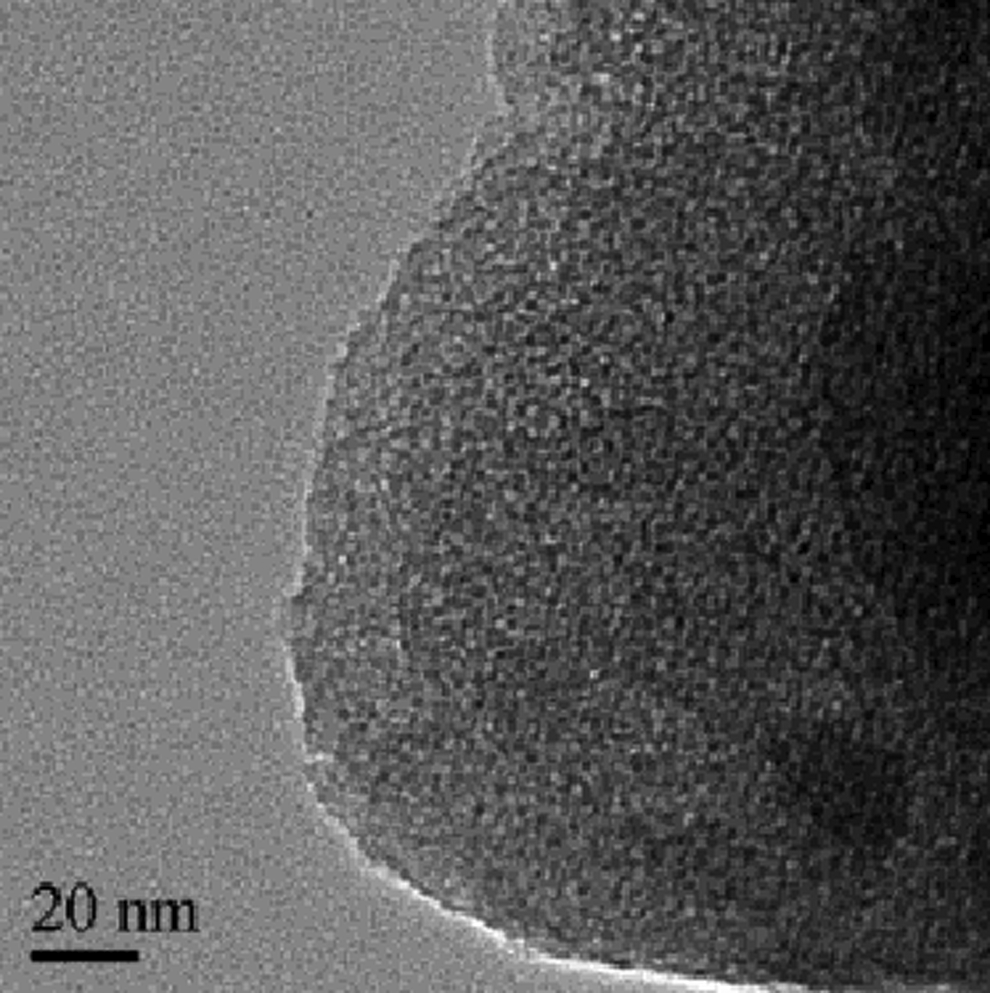
TEM image of nitrogen-doped microporous carbon. TEM, transmission electron microscope.
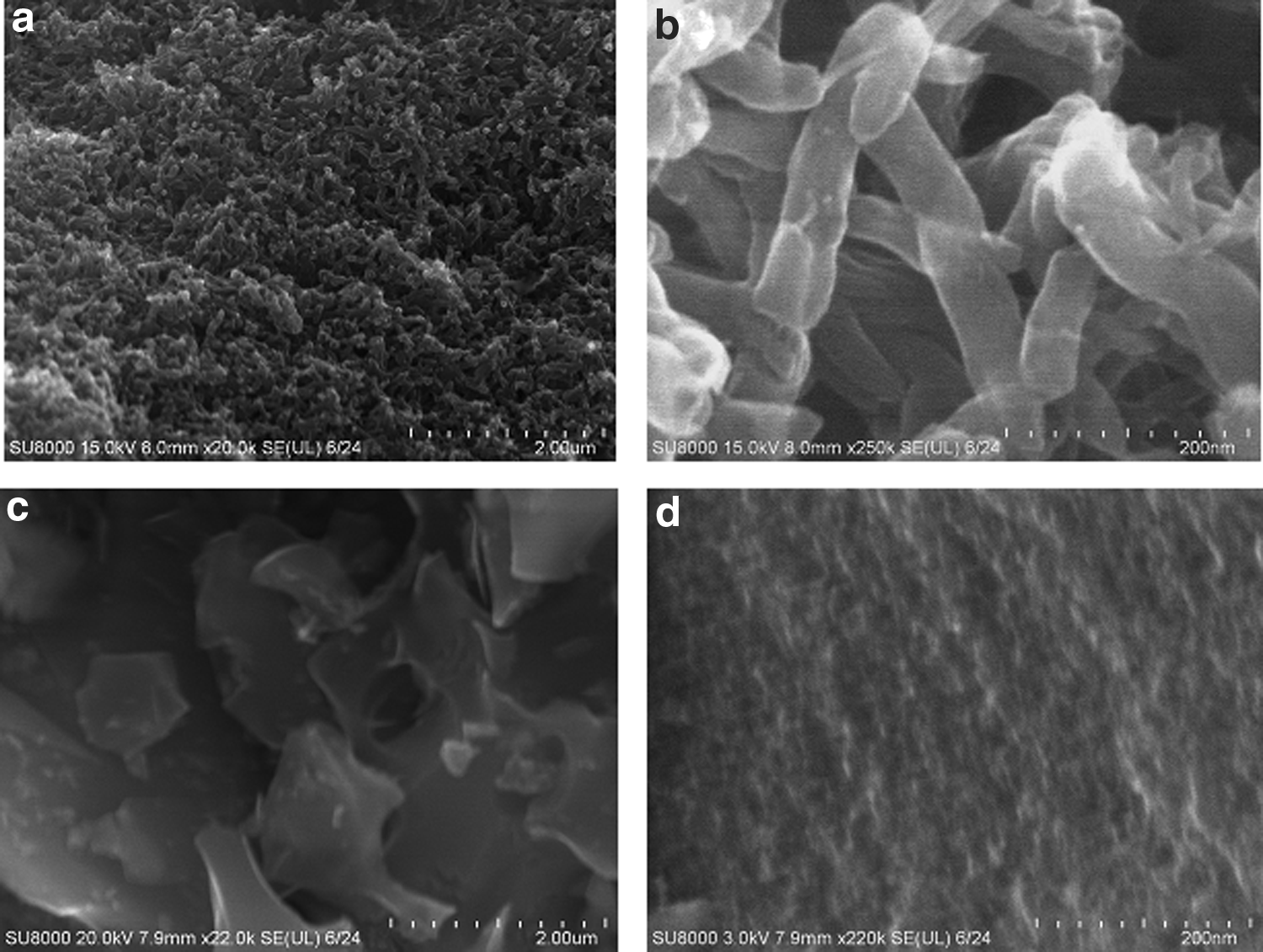
SEM images of PANI
XPS is used to analyze the surface constituents and elemental chemical state of the sample. The survey spectrum with binding energies of 0–1100 eV is displayed in Fig. 4a. Three strong peaks assigned to C 1s, N 1s, and O 1s indicate the high purity of nitrogen-doped porous carbon with the absence of impurities. The surface nitrogen atomic content is estimated to be 5.9%. Figure 4b shows the N 1s deconvolution spectra of microporous carbon. The observed peaks centering at 398.5, 399.9, and 403.2 eV can be attributed to hexagonal pyridinic N, pyrrolic N, and oxidized pyridinic N groups, respectively. The intense peak at 401.0 eV may be identified as quaternary-N, which is the most stable nitrogen species under pyrolysis conditions (Han, et al., 2014; Xu et al., 2015, 2016). C 1s deconvolution spectra are shown in Fig. 4c. Four peaks, centered at 284.4, 285.9, 288.0, and 289.1 eV, are assigned to nonoxygenated carbon (C = C/C–C) in aromatic rings, C–O (epoxy and alkoxy), C = O, and O–C = O groups, respectively (Wang et al., 2014). We conclude that nitrogen-doped microporous carbon materials can be synthesized by pyrolysis of PANI as a precursor, which directly provides the N doping source.

XPS spectra of the nitrogen-doped microporous carbon:
Effect of pH
Porous carbon adsorbs 2,4-DCP based on π–π dispersion interaction, hydrophobic interaction, electrostatic interaction, and hydrogen bonding (Liu et al., 2010; Yan et al., 2014). The effect of the solution pH is an important controlling parameter in the adsorption process. The adsorptions of 2,4-DCP (Pka = 7.9) onto nitrogen-doped microporous carbon as a function of pH value are verified in the range of 2.0–10.0. As shown in Fig. 5, the removal efficiency of 2,4-DCP is slightly increased with the increase of pH from 2.0 to 4.0. While pH (pH >4.0) is further increased, the removal efficiency slightly decreases. At pH 4.0, the removal efficiency is maximal because 2,4-DCP is undissociated and the π–π dispersion interactions are predominated (Moreno-Castilla, 2004). The decrease in 2,4-DCP adsorption from pH 4.0 to pH 2.0 is due to the increased H+ adsorption on the surface, which suppresses 2,4-DCP adsorption on these sites. The hydroxyl ion concentrations in the solution increase with the increase of pH in the alkali medium, which can decrease the adsorption of 2,4-DCP because of competitive adsorption. Furthermore, it is not beneficial to adsorption (pH >7.9) due to the electrostatic repulsion between the negatively charged microporous carbon and deprotonated 2,4-DCP, or between the adsorbed anions (Shen and Fan, 2013). In addition, the dissociation of 2,4-DCP leads to a decrease in the hydrophobicity, resulting in a reduced affinity between 2,4-DCP and the surface of microporous carbon (Liu et al., 2010).

Effect of pH on 2,4-DCP adsorption by nitrogen-doped microporous carbon. 2,4-DCP, 2,4-dichlorophenol.
Effect of adsorbent dosage
To investigate the effect of adsorbent dosage on adsorption, the experiments are conducted with a fixed initial 2,4-DCP concentration of 100 mg/L and different adsorbent dosage ranging from 0.1 to 1.2 g/L. As shown in Fig. 6, removal efficiency of 2,4-DCP increases from 52.9% to 98.9% with an increase in the amount of adsorbent from 0.1 to 1.2 g/L, respectively. 2,4-DCP adsorption capacity (amount of 2,4-DCP loaded per unit weight of adsorbent) reduces from 480.7 to 65.9 mg/g at the same time. In consideration of the 2,4-DCP adsorption capacity and the percentage removal of 2,4-DCP, the dosages of 0.5 g/L are used for the following

Effect of adsorbent dose on 2,4-DCP adsorption by nitrogen-doped microporous carbon.
Effect of contact time and adsorption kinetics
The influence of contact time on the adsorption of 2,4-DCP is investigated ranging from 0 to 240 min. As demonstrated in Fig. 7, adsorption kinetics reveals that the adsorption of 2,4-DCP at an initial concentration of 100 mg/L is very fast and the adsorption efficiency can reach 88.1% and 90.3% within 5 and 10 min, respectively. Also, the removal efficiency of 2,4-DCP increases to 93.1% when the equilibrium approaches within 30 min. The result indicates that the adsorbent could adsorb 2,4-DCP quickly, which shows that the nitrogen-doped microporous carbon has a potential application for the fast removal of organic pollutants.

Effect of contact time on 2,4-DCP adsorption by nitrogen-doped microporous carbon.
Adsorption kinetics of 2,4-DCP on microporous carbon is determined by using pseudo-first-order and pseudo-second-order model. The pseudo-first-order adsorption kinetics model is expressed as Equation (2):
The rate constant (k1) and theoretical equilibrium adsorption capacity (qe) can be obtained by plotting ln (qe – qt) versus t.
The pseudo-second-order equation is given as Equation (3):
The pseudo-second-order rate constant (k2) and maximum adsorption capacity (q2) are calculated from the intercept and slope of the pseudo-second-order plots.
Kinetics parameters for two different kinetics models and correlation coefficients are summarized in Table 1. The correlation coefficients (R2) for the pseudo-first-order model are relatively low (0.7005), and the calculated qe values (qe,calc) from the pseudo-first-order model do not agree with the experimental data (qe,exp), suggesting that the 2,4-DCP adsorption on the microporous carbon cannot be explained by a pseudo-first-order model. However, the kinetics data are fitted well with pseudo-second-order kinetics model with high correlation coefficients (R2 = 1) and there is good agreement between qe,exp and calculated qe,cal values, indicating that the adsorption of 2,4-DCP onto nitrogen-doped microporous carbon complies with a pseudo-second-order rate equation. The results suggest that chemisorption happens between 2,4-DCP and the microporous carbon; so the adsorption rate relies on the amount of adsorption sites on the carbon surface rather than the adsorbate concentration (Anisuzzaman et al., 2016). To verify the interaction between 2,4-DCP and the adsorption sites on porous carbon, FT-IR spectra are obtained, as shown in Fig. 8. The OH bending and deformation bands at 1405, 1325, and 1170 cm−1 are scarcely seen in the spectrum of 2,4-DCP adsorbed on nitrogen-doped porous carbon, suggesting inner-sphere bonding (chemisorption) of 2,4-DCP (Kung and McBrlde, 1991). Another observation is the shift of the band attributed to C-O stretching from 1275 cm−1 before the adsorption to 1281 cm−1 after adsorption. This is also indicative of the participation of phenolic group in the adsorption of 2,4-DCP through an inner-sphere mechanism (Bandara et al., 2001). After adsorption of 2,4-DCP on microporous carbon, the broad bands at 1475 cm−1 assigned to the aromatic ring C═C stretching vibration and at 1249 and 1053 cm−1 arose from C-H in plane bending remains, but decrease in the intensity. A Cl-sensitive vibration (1093 cm−1) does not vary. Moreover, some bands, not assigned, either shift or are weakened in the intensity, which illustrate the interaction of 2,4-DCP with the carbon adsorbent. In general, the adsorption kinetics of 2,4-DCP onto solid particles is controlled by different processes: (1) external mass transfer, (2) adsorption of 2,4-DCP onto particle surfaces, and (3) intraparticle diffusion (Chang et al., 2011). To understand the rate-limiting step and the involved mechanism of 2,4-DCP adsorption onto the microporous carbon, we introduce the intraparticle diffusion model as follows, Equation (4):
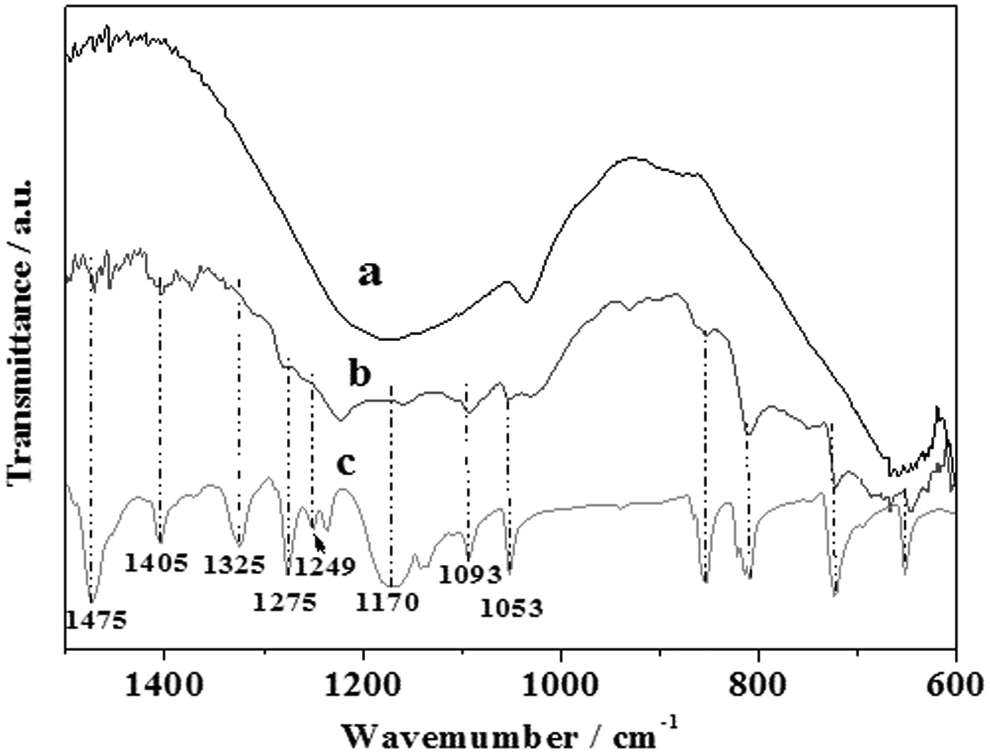
FT-IR spectra of nitrogen-doped porous carbon before (a) and after (b) adsorption of 2,4-DCP and pure 2,4-DCP (c). FT-IR, Fourier transform infrared spectroscopy.
If the plot of qe versus t0.5 curve is a straight line and through the origin, the intraparticle diffusion is the only rate-controlling step in adsorption; if not, the boundary layer diffusion is also the rate-controlling step to some degree. As shown in Fig. 9, the kinetics data fit not well with intraparticle diffusion model. The plot presents multilinearity, suggesting that adsorption process is complex and takes place by three steps. The first sharper portion (t0.5 2.2) represents the boundary layer diffusion of solute molecules. The second portion (2.2 < t0.5 < 4.5) describes the gradual adsorption stage, which attributes to the intraparticle diffusion. The third portion (t0.5 > 4.5) is the final equilibrium stage.
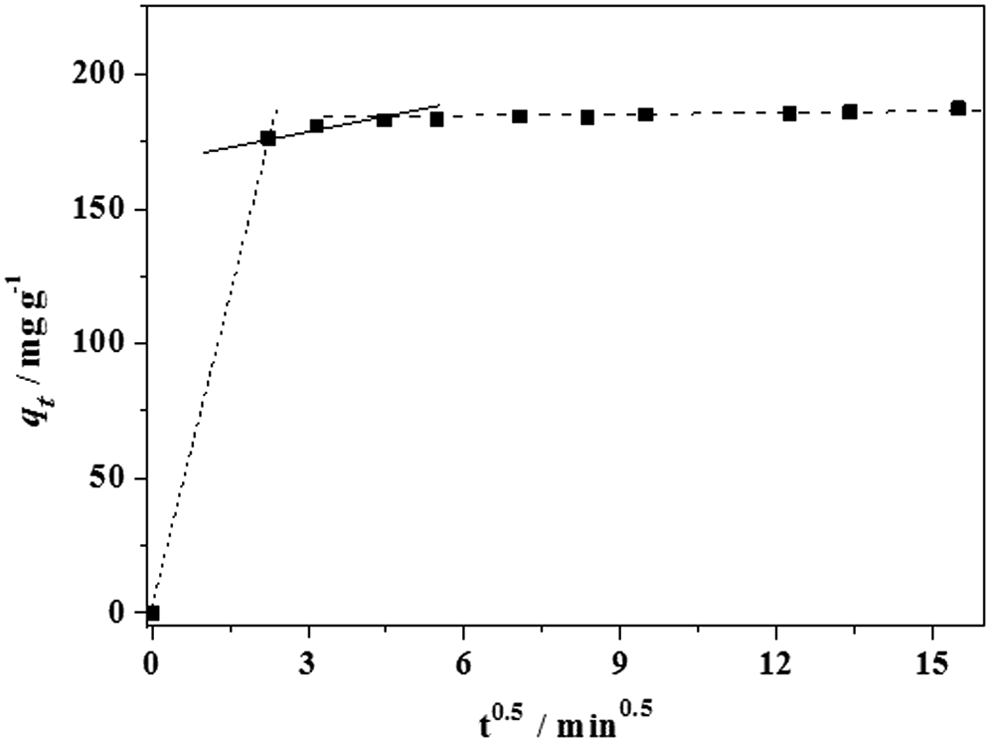
Plot of the intraparticle diffusion kinetics equation for 2,4-DCP adsorption by nitrogen-doped microporous carbon.
Adsorption isotherms
The isotherm for 2,4-DCP adsorbed on the porous carbon at 30°C is shown in Fig. 10. It can been seen that the porous carbon manifests a high adsorption capacity to 2,4-DCP when the concentration of 2,4-DCP is very low. With gradual increase in the concentration of 2,4-DCP, the increment in the adsorption capacity becomes small. Finally, the adsorption capacity reaches a plateau. According to Giles's classification of solution adsorption isotherms (Giles et al., 1960), the isotherm for 2,4-DCP adsorbed on porous carbon belonged to type H2, which indicates that 2,4-DCP molecules have a high affinity. At lower concentrations, 2,4-DCP molecules might be oriented edge on at the carbon surface in small aggregates.

The isotherm for 2,4-DCP adsorption by nitrogen-doped microporous carbon at 303 K.
The well-known Langmuir and Freundlich isotherm models have been employed to predict the mechanism and adsorption capacity of the adsorbent. The Langmuir isotherm assumes monolayer coverage of sorbent and all the adsorption sites have equal affinity for the adsorbate, while the Freundlich isotherm model is based on the multilayer sorption on heterogeneous surface. The two isotherm models can be represented as Equations (4) and (5):
where qe (mg/g) is the amount adsorbed per unit mass of adsorbent at equilibrium, Ce (mg/L) is the equilibrium concentration of 2,4-DCP, qmax (mg/g) is maximum monolayer adsorption capacity, and constant b (L/mg) is related to the energy of adsorption. KF and n are Freundlich constants related to the adsorption capacity and adsorption intensity. Table 2 summarizes the isotherm parameters of Langmuir, Freundlich, and the calculated coefficients at different temperature. It can be found that the correlation coefficient R2 (0.9738 and 0.9901) obtained from Freundlich model is much higher than that from Langmuir model. Therefore, Freundlich isotherm is suitable for modeling the adsorption of 2,4-DCP, indicating that the adsorption process is likely a multilayer adsorption process. Moreover, the Freundlich constants n are calculated to be 2.99 and 3.75 (n > 1), which suggest that the adsorption of 2,4-DCP is a favorable process (Jiang et al., 2015). The uptake capacities decrease with the rise of temperature, indicating the exothermic nature of the adsorptions. Besides, the tendency of 2,4-DCP to escape the surface of the adsorbent significantly increases with the increase in temperature, which results in a reduction in boundary layer thickness, and thus lowers the adsorption capacities, while similar literatures also have been reported (Liu et al., 2010; Yang et al., 2015).
Table 3 compares the maximum adsorption capacity and equilibrium time of various adsorbents for 2,4-DCP removal. Nitrogen-doped microporous carbon in our work shows excellent adsorptive removal performance toward 2,4-DCP in adsorption capacity and equilibrium time compared to some previous works reported in the literature.
Thermodynamic parameters
The thermodynamic parameters such as Gibbs free energy (ΔG0), enthalpy change (ΔH0), and entropy change (ΔS0) can be calculated from equation 6 and equation 7 (Raoov et al., 2013):
where R is the universal gas constant (8.314J/[mol·K]) and Kd is calculated as Kd = qe/Ce (where Kd is called the adsorption affinity) (Yang et al., 2015). ΔH0 and ΔS0 can be obtained from the slope and intercept of Van't Hoff plot of lnKd versus 1/T, respectively. The thermodynamic parameters are presented in Table 4. To evaluate the thermodynamic parameters, the adsorption experiments were conducted at temperatures ranging from 303 K to 323 K. The negative values of ΔG0 indicate that the adsorption of 2,4-DCP on nitrogen-doped microporous carbon is favorable and spontaneous at the tested temperatures. ΔS0 and ΔH0 for the adsorption process were calculated to be 38.41 J/[mol·K] and −23.29 kJ/mol, respectively. The positive value of ΔS0 indicated that the adsorption process leads to an increase in randomness at the solid/solution interface during the adsorption process, which is probably due to the release of a greater number of water molecules at the solid/liquid interface during the adsorption (Chang et al., 2011). The negative values of ΔH0 suggested the adsorption to be exothermic in nature during the adsorption process, which can be also predicted from the decrease in removal of 2,4-DCP with the increase in temperature.
Regeneration
The regeneration ability of the adsorbent is necessary for its practical application. NaOH (Xu et al., 2011) and H2O2 (Genz et al., 2008) are used to regenerate the adsorbent for reuse. The desorption efficiency is obtained to be 95.1% and 84.9% after regeneration of the adsorbent by NaOH and H2O2, respectively. Subsequently, the adsorbent is regenerated up to four cycles by NaOH, and desorption efficiency remains about 95.1%, 89.2%, 85.0%, and 80.2%. It is concluded that the adsorption is a reversible process and the sample can be recovered and reused for the 2,4-DCP adsorption. These results show that the adsorbent can be potentially used to remove CP contaminants from water.
Conclusions
Nitrogen-doped carbon has been successfully prepared by the carbonation of PANI nanofiber webs as well as KOH activation. The resulting sample has high surface area and large pore volume, and exhibits high adsorption capacity and fast adsorption rates for 2,4-DCP removal in water. The optimum pH for 2,4-DCP removal is 4.0 and the adsorbent is also effective at a broad pH range (2.0–10.0). Freundlich isotherm is a more suitable model to explain the adsorption behavior of 2,4-DCP on nitrogen-doped microporous carbon. Adsorption kinetics reveals that it follows the pseudo-second-order kinetic model and the adsorption efficiency can reach 90% within 10 min. The microporous carbon can be recovered and reused for 2,4-DCP adsorption. The results indicate that the adsorbent can be potentially used to remove
Footnotes
Acknowledgment
This work was supported by grants from the National Natural Science Foundation of China (Nos. 21107143, 21207033) and the Natural Science Foundation of Hubei Province of China (No.2016CFB505).
Author Disclosure Statement
No competing financial interests exist.