




Abstract
Abstract
Presence of volatile fatty acids (VFAs) is one of the major indicators of anaerobic digestion of organic matters present in wastewater, activated sludge, organic fractions of municipal solid wastes, and landfill leachates. The present article focused on a modified spectrophotometric method for measuring VFAs, based on the classical Montgomery method, and also compared its performance with other existing techniques of VFA determination such as distillation method, high-performance liquid chromatography (HPLC), and gas chromatography (GC). Comparisons have been made with regard to measured concentration of acetic acid standards and accuracy of the respective method. In addition, comparisons between the proposed method and GC, HPLC, and distillation methods have been made with regard to VFA measurement (as CH3COOH) from real anaerobic samples. The distillation method showed poor mean accuracy of 74.96% in comparison to that for the HPLC (using Aminex column) (100.00%) and for the GC (99.81%). The modified spectrophotometric method showed a superior accuracy range (95.76–115.35%) over five sets of experimental trials. The precision range (1.66–27.63%) of the proposed methodology was compared to a past case study of a similar spectrophotometric method (1.70–14.00%) along with the GC method (5.70–14.80%) and the distillation method (1.80–4.90%). In addition, limit of quantification and standard deviation were also compared.
Introduction
Importance of volatile fatty acid
A
In the measurement of VFA from wastewater, activated sludge, OFMSW, and landfill leachates, the following factors play a pivotal part: accuracy, precision, limit of quantification (LOQ), recovery of the weak acids as individual acid or as acetic acid and rapidity. In addition, the operational ease and technoeconomic viability, in terms of chemicals needed, are equally crucial. Analysis of VFA is significant as a quality assurance index in some foods (Tangerman and Nagengast, 1996). Studies involving the intestinal tract and health also analyze for VFAs (Randall et al., 1997). Apart from these, determination of VFAs is pertinent in the biological removal of nitrogen and phosphorus from wastewater (Eilersen et al., 1994; Raposo et al., 2013) and in the nitrification/denitrification within activated sludge (Wentzel et al., 1991; Elefsiniotis and Wareham, 2007). The understanding of the VFA profile and the complete mechanism by which the VFAs in wastewater/activated sludge function is still unknown at large. However, it can be assumed from different studies that the VFAs in wastewater act as a carbon source (Buswell et al., 1960) for the proper functioning of various nitrifying and denitrifying bacteria, that is, the VFAs provide the required energy for carrying out the nitrification/denitrification. The reduction in pH brought about by the VFAs affects the storage stability of waste incineration residues and also increases the mobility of heavy metals and radionuclides. The generation of unpleasant odor in various organic waste matters, such as wastewater and municipal solid wastes, is due to one of the chemical classes (mostly butyric acid) constituting VFAs (Siedlecka et al., 2008). Thus, it is imperative that the VFA measurement techniques should be such that they do not involve indirect, time-consuming, and material-demanding analysis but are amenable to field applications. In addition to that, repeatability of results, lower LOQ, and an optimum cost aspect are also needed.
Brief overview on existing methods of VFA determination
So far, the various techniques for measuring VFAs include distillation method, titrimetric methods (simple titration method and five-point titration method), Montgomery method (Montgomery et al., 1962), gas chromatography (GC), high-performance liquid chromatography (HPLC), gas-liquid chromatography (GLC), paper chromatography (Mueller et al., 1956), capillary chromatography (Fischer, 2002), headspace chromatography (Boe et al., 2007), online spectrofluorimetric analysis via a multisyringe/multipumping combined system (Palacio-Barco et al., 2010), fluorimetric method (Robert-Peillard et al., 2009), and spectrophotometric method. In most of these techniques, numerous problems were encountered, because of which method development for VFA analysis is still an ongoing area of research. The application of these methods for determining VFA is largely subject to variation in the types of sample, availability of apparatus/chemicals (or reagents)/man power, and extent of accuracy, as well as sensitivity desired.
Distillation method
The distillation method of VFA determination (APHA, AWWA and WEF, 1992) was mainly opted for the routine determination of VFAs in wastewater and the routine control of sludge digestion. In the distillation method of VFA determination, large volumes of samples are required thus making it tedious as well as cumbersome. One of the major problems associated with the distillation method is that the recovery of acetic acid is particularly difficult since it does not form an azeotropic mixture with water (Yang and Choong, 2001). Apart from that, the proportions of individual VFAs recovered depend on the experimental conditions. The distillation method, in which the contents of the volatile acids in the steam distillate is determined by titration with 0.1 N NaOH solution (Siedlecka et al., 2008), was modified later on by replacement with the potentiometric titration system. In case of the potentiometric system of titration since the pH range varied from 4.00 to 7.00, a conversion factor was assigned depending on the assumed concentration of the weak acid present in the aqueous sample. The conversion factors, as such, also varied with different concentrations of weak acid since their degree of ionization depended on concentrations; for example, two different conversion factors were reported to have been used for acetic acid concentrations greater and less than 250 mg/L in the region of pH 7.00 (Yang and Choong, 2001).
Titrimetric methods
Titration methods involving the determination of VFAs from anaerobic digester sample included the simple titration step, where total VFA and bicarbonate concentrations from anaerobic digester samples were measured over a pH range of 5.5–7.65, proposed by Anderson and Yang (1992), and the five-point titration procedure, proposed by Moosbrugger et al. (1993). VFA determination in anaerobic digester samples by the titrimetric method is very simple but the involvement of an empirical factor while calculating the concentrations of VFA deemed this method to be rigorous compared to the proposed methodology. The empirical factor is largely influenced by the effect of the activity coefficients of three different ionic species (H+, HCO3−, and CH3COO−) present in an anaerobic digester sample. In addition to the aforesaid titrimetric methods for monitoring of VFAs from anaerobic digester samples, Lahav and Morgan (2004) gave a detailed, critical, and comparative evaluation of other popular titrimetric methods that encompass analysis of VFAs from anaerobic digester samples.
Montgomery method
One of the classical VFA measurement techniques is the Montgomery method (Montgomery et al., 1962). This classical method of colorimetric composite determination of the VFA (Montgomery et al., 1962) had relatively convenient and precise steps for the preparation of the esters in comparison to the distillation method. However, the involvement of colorimeter in measuring the optical density of the prepared samples/standards caused the method to be less accurate and more cumbersome compared to the spectrophotometric method. Unlike the Montgomery method, in case of the modified spectrophotometric method, the absorbance of the sample/standard can be directly measured using a single/double beam spectrophotometer.
Paper chromatography method
Another classical method for VFA determination is the chromatographic method developed by Bulen et al. (1952). Later on, Mueller et al. (1956) developed this method, by modifying the column length and solvent system, to completely recover the lower volatile acids by using a single eluting agent. However, the modified method lacked reproducibility of the results. A similar paper-chromatographic procedure developed by Buswell et al. (1960) produced results that were mostly semiquantitative.
HPLC method
Determination of VFAs in anaerobic digester sample via HPLC is a reliable, quick, and efficient technique, which produces reproducible and consistent results. Not only that, the preparation of sample is very easy involving centrifugation and filtration of the raw sample followed by the analysis of the prepared sample directly. However, HPLC involves expensive setup, which is exclusively meant for measuring the VFA content in an aqueous sample. The determination is largely dependent on the availability of certain cation exchange columns, which are specifically designed to measure/separate the VFAs. So far, three different cation exchange columns have been reported to measure the VFAs via HPLC and these are Supelcogel 610H, Aminex HPX87H, and ORH 801. The working of each column is based on a unique principle. The ORH 801 column has the ability to withstand extreme pH conditions (pH: 0–14) and separates VFAs according to their respective pKa values. Thus, this column has been reported to be used for the determination of VFAs from fecal samples (Chen and Lifschitz, 1989). The Supelcogel 610 H column has been used for analyzing VFAs from pig slurry, where the six different SCFAs (acetic, propionic, isobutyric, butyric, isovaleric, and valeric acids) were reported to be isolated with this column using an isocratic phosphate eluant coupled with an ultraviolet detector in series (Peu et al., 2004).
The first reported determination of VFA via HPLC was carried out by Guerrant et al. (1982). The team analyzed a standard mixture of 25 SCFAs produced by anaerobic bacteria in culture media by HPLC equipped with Aminex HPX-87 column (cation exchange column). Later, Chen and Lifschitz (1989) determined VFAs derived from fecal samples via GLC, and HPLC equipped with ORH-801 organic acid chromatographic column (cation exchange column). It was reported that similar to the Aminex HPX87H column, the ORH-801 (sulfonated polystyrene divinylbenzene in the hydrogen form) column had the capacity to separate only the VFAs. Efficiency in terms of quick sample preparation, direct analysis, and quick separation of the VFAs along with traces of the nonvolatile dicarboxylic and keto acids was noticed in both the experimental studies, while measuring via HPLC. The accuracy and precision of VFA measurement via HPLC was vindicated in a study by Peu et al. (2004), who proposed a method to determine VFA content in pig slurry sample using HPLC. However, the involvement of expensive column, exclusively meant for determining VFA, mostly made the process economically infeasible.
GC method
In the GC method of VFA determination, measurement of individual VFA concentration was possible by means of a set of calibration curves obtained using five aqueous solutions of acetic acid, propionic acid, butyric acid, valeric acid, and caproic acid in the concentration range of 5–1,000 mg/L. The preparations of the standards as well as the samples were based on the Manni and Caron's (1995) procedure. However, the present study focused on the measurement of acetic acid concentrations from anaerobic digester samples. For this purpose, calibration curves were developed using 14 different standards of acetic acid concentrations ranging from 100 to 1,400 mg/L. The GC method of VFA determination has proved to be comparatively more precise and accurate, compared to the aforementioned methods, with provision for measuring individual concentration of VFAs. However, still this technique is seemingly not applicable to sludge liquor and similar to HPLC also involves a costly setup.
Other methods
Another VFA measurement technique includes the online spectrofluorimetric system (Robert-Peillard et al., 2009; Palacio-Barco et al., 2010), which allows the selective determination of VFA, in a range of 19–1,000 mg/L, with a frequency analysis of nine samples per hour, but involves an even more expensive setup and demands trained operational skills, similar to the GC and the HPLC methods.
Compared to all the above processes, the proposed modified spectrophotometric method for VFA (as mg/L CH3COOH) determination is not only easier but also involves a lower cost in terms of setup and chemical usage. Besides, the method is fast and also gives reproducible results, which are accurate and have a wide LOQ. This article basically highlights the detailed methodology involving a new approach for VFA determination in anaerobic digester samples. This new method of VFA determination is a modified spectrometric procedure based on the classical Montgomery method (Montgomery et al., 1962). The modifications lie in the preparation of a reagent that played a crucial role in controlling the final pH and color development. This was accomplished since the Montgomery method did not provide any control over the pH and hence the color development was not consistent. As such, the proposed method satisfied the conditions mentioned in the Montgomery method in terms of the desired working pH range. The article also briefly highlights the approach of some of the existing popular methods for VFA measurement, the comparison between methods of distillation, GC, and HPLC with the proposed method, and also justifies the need for selecting the proposed method over the popular methods.
Comparisons between the proposed methodology and the distillation method, the GC method, and the ultra-HPLC (equipped with C18 column) method were attempted using anaerobic digester samples of unknown acetic acid concentrations, obtained from a laboratory-scale three-stage mesophilic AD system comprising a hydrolytic chamber, an acidogenic chamber, and a methanogenic chamber, treating fruit and vegetable waste, a laboratory-scale hybrid up-flow anaerobic sludge blanket (HUASB) digester treating slaughter-house wastewater, and a pilot-scale floating dome-type digester treating OFMSW.
Experimental
Materials and reagents
For the purpose of preparing the synthetic samples/standards, which were used for calibrating the GC, the HPLC (equipped with liquid chromatography [LC]-AMINO column), and the modified spectrophotometer, glacial acetic acid (assay 99.7%) of strength 60.1 g/L and triple distilled water were used. In case of the modified spectrophotometric method, sample preparation necessitated the usage of the following chemicals of analytical grade, without further purification: glacial acetic acid (EMPARTA; Merck made), ethylene glycol (EMPARTA; Merck made), sulfuric acid (about 98% pure EMPARTA; Merck made), hydroxylamine hydrochloride (99% pure; Loba Chemie), sodium hydroxide pellets (EMPLURA, Merck made), and ferric chloride [anhydrous Iron (III) Chloride EMPLURA, Merck made]. Tripled distilled water was used entirely in all the analysis. While calibrating the HPLC system, equipped with C18 column (250 × 4.6 mm i.d.), HPLC-grade acetic acid (assay ≥99.8%), manufactured by Sigma-Aldrich, and HPLC-grade water were used for preparing the following standards: 62.5, 125, 250, 500, 750, 1,000, and 2,000 mg/L.
Raw samples from the five anaerobic chambers were centrifuged at 3,000 rpm for 5 min, following collection. Thereafter, the samples were filtered using 11-cm-diameter commercial-grade filter paper of pore size 50 μm. Following filtration, the filtered samples were diluted with commercially available distilled water for the purpose of testing via GC, ultra-HPLC (equipped with C18 column), and modified spectrophotometric method. For analysis via ultra-HPLC (equipped with C18 column), the abovementioned filtered samples were also tested following dilution with HPLC-grade water. In addition, while testing the raw samples in ultra high-performance liquid chromatography (UHPLC; equipped with C18 column), further filtration of aforesaid filtered samples was carried out using Whatman filter paper (grade No. 42). The analysis via distillation method was performed using only the filtered anaerobic samples.
Determination of VFA by distillation method
Glacial acetic acid of strength 60.1 g/L and triple distilled water were used for preparation of standards ranging from concentrations of 100–1,400 mg/L. The standards were then steam distilled as per the procedure of “Distillation Method” described in the Standard Methods (American Public Health Association and Water Environment Federation, 1995). Thereafter, the volatile acid content in the distillate was determined with 0.1 N sodium hydroxide solution and was expressed as acetic acid content.
Determination of VFA by high-performance liquid chromatography
Similar to the distillation method, the standards for the HPLC method were acetic acid solutions in triple distilled water with concentrations ranging from 100 to 1,400 mg/L. These were the same standards, which were used for testing via the other three methods (GC, modified spectrophotometric method, and distillation method). The analysis of these standards was performed using the Shimadzu LC-2010 HPLC system packed with a cation-exchange HPLC column (SUPELCOSIL LC-AMINO, length of 30 cm and internal diameter of 5 mm). The wavelength setting was 210 nm, the injection volume was 20 μL, and the run time was 10 min. Mobile phase selected was similar to that mentioned in Guerrant et al. (1982). VFA concentrations were determined by comparing the peak area of calibration with that of the sample.
However, the analysis of the five anaerobic digester samples containing unknown acetic acid concentrations was done using an UHPLC system, where the chromatographic separation was performed using isocratic elution. The run time was set at 6 min. The column oven temperature, injection volume, and wavelength were according to that mentioned in Mitra et al. (2016). The mobile phase was a buffer of 20 mM NaH2PO4 in HPLC-grade water with pH 2.2. Hitherto, C18 column was never reported to analyze VFA concentrations (as CH3COOH) in anaerobic digester samples. Hence, to ascertain the consistency of the testing via the UHPLC equipped with C18 column, the centrifuged and filtered real anaerobic samples were analyzed in three different ways: first, by measuring the centrifuged and filtered real anaerobic samples directly following filtration using Whatman 42-grade filter paper; second, by measuring the centrifuged and filtered real anaerobic samples following dilution with HPLC-grade water; and finally, by measuring the centrifuged and filtered real anaerobic samples following dilution with commercially available distilled water.
Determination of VFA by gas chromatography
Unlike the procedure described by Siedlecka et al. (2008), the standards of VFAs (acetic acid in triple distilled water) ranging from concentrations of 100–1,400 mg/L were prepared using 99.7% glacial acetic acid of strength 60.1 g/L. The analysis of the fourteen standards and the five anaerobic digester samples was carried out using the Agilent 7890B GC system and the YL 6100 GC system. Both the GC systems were equipped with “SUPELCOWAX® 10” fused silica capillary GC column (30 m × 0.25 mm, 0.25 μm). “Flame ionization detector (FID)” was used for the detection of the VFA. The back inlet temperature was set at 260°C with a split ratio of 30:1. The injection volume was set to 1 μL. The front detector temperature was set at 270°C. The oven temperature was initially set at 80°C, with a hold time of 0 min and ramp of 10°C, and the final temperature was 250°C. EZChrom Elite Compact system was used as the data analysis system.
Standard/synthetic samples were directly subjected to GC-FID, whereas 5 mL of the real anaerobic sample was extracted with 5 mL of dichloromethane, and the resultant solvent was subjected to GC-FID. The sample extraction procedures were similar for both the aforesaid GC systems. Similar to HPLC, concentration was determined by comparing the peak area of calibration and the peak area of the sample. The quality of the column used in a GC system is extremely crucial for the precise analysis of the VFAs present in an aqueous sample. This is because the polarity of the column stationary phase is mostly critical for the successful separation of the VFAs. Improved peak resolutions can only be obtained if the polarity of the column stationary phase matches closely with the polarity of the VFAs (Zhang et al., 2015). Prolonged use of a particular GC column, for analysis of SCFAs, without repair may lead to the degradation of the column through acid-base reactions with the stationary phase.
Determination of VFA by modified spectrophotometric method
Approach of the modified spectrophotometric method
The proposed methodology is based on the well-known colorimetric ferric hydroxamate method for determination of carboxylic esters. Esterification is carried out by ethylene glycol, because it gives good yields of ester and low blank values. The simplest objective is to use a large excess of nonvolatile alcohol that is miscible using water in all proportions with sulfuric acid as catalyst.
Procedure for determination of VFA
For standard/sample preparation, 0.5 mL of aqueous synthetic sample/anaerobic diluted sample was taken into a dry test tube. This was followed by the addition of 1.5 mL ethylene glycol and 0.2 mL of 19.2 N H2SO4. Thereafter, the mixture was heated for 3 min in a boiling bath followed by immediate cooling of the mixture. The 3-min duration was chosen, since the yield of ester was found to be highest after 2 min and found to decay slowly after 4 min. Thereafter, 0.5 mL of 10% hydroxylamine hydrochloride (HONH3Cl) was added, followed by the addition of 2 mL of 4.5 N NaOH solution and 10 mL of 10% FeCl3 solution (acidified with H2SO4). It was ensured that the pH of the resultant mixture remained between 1.2 and 2 since it was observed that the stability of the brown color was enhanced between the aforesaid pH ranges. Finally, the content in the test tube was diluted to 49.7 mL before the measurement of absorbance at 495 nm using single/double beam spectrophotometer.
Results and Discussion
Distillation method
Standards of VFA concentrations, ranging from 100 to 1,400 mg/L, were initially prepared by dissolving glacial acetic acid in water, as mentioned earlier. Thereafter, those were steam distilled as per the procedure of “Distillation Method” described in the Standard Methods (American Public Health Association and Water Environment Federation, 1995). The recovered concentrations of the individual VFAs were noted and were represented in mg/L as CH3COOH. The recovery factor for each standard was also calculated from the ratio of the measured and the theoretical concentrations, accordingly. Subsequently, the measured concentrations of CH3COOH solution were plotted with respect to the theoretical concentrations of the same to find out the mean recovery factor as shown in Fig. 1.

Measured VFA concentrations (in mg/L as CH3COOH) versus theoretical VFA concentrations (in mg/L as CH3COOH) for distillation method. VFA, volatile fatty acid.
Values of percentage recovery were also plotted with respect to the theoretical concentrations of CH3COOH as shown in Fig. 2.
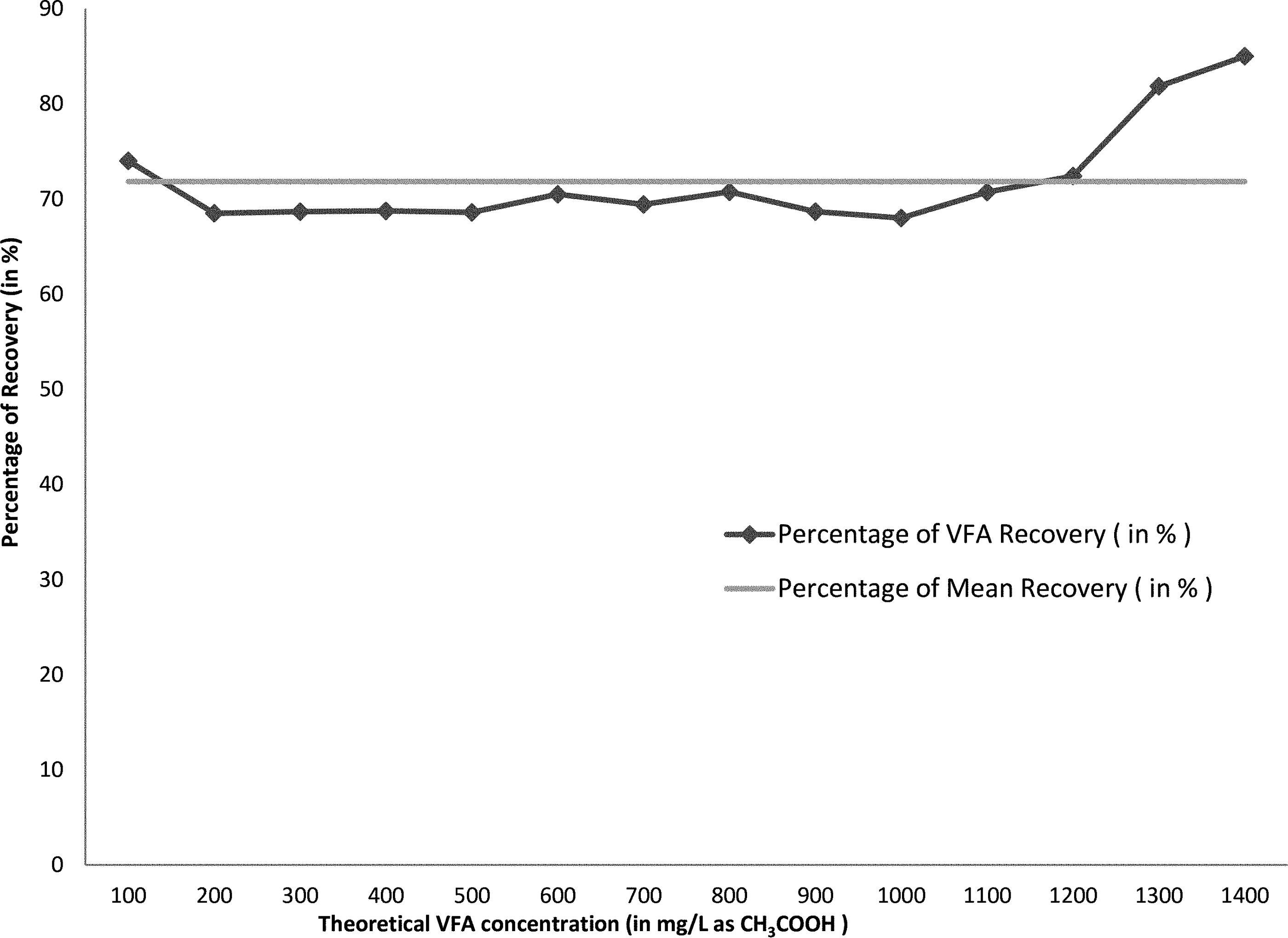
Percentage recovery of VFA concentrations (in mg/L as CH3COOH) versus theoretical VFA concentrations (in mg/L as CH3COOH) for distillation method.
It was reported in the study by Siedlecka et al. (2008) that in case of the distillation method the precision ranged between 1.8% and 4.9%. However, on repeating the distillation process for determining VFA, it was observed by the authors that the absolute recovery of acetic acid improved from the range of 110 mg/L (LOQ) to 636 mg/L and from the range of 100 mg/L (LOQ) to 1,400 mg/L, with the accuracy showing improvement from the range of 53–58.2% to the range of 68–85%. Figure 2 reveals that the mean recovery factor in case of distillation method is about 74.96%, for CH3COOH concentration in the range of 100–1,400 mg/L. Despite the improvement from the earlier study, as highlighted by the authors, the comparatively poor recovery/accuracy over the spectrophotometric method deemed the distillation method to be inferior. Moreover, in case of the distillation method, there was a large requirement of the sample volume for VFA determination, making it cumbersome and tedious. Also, the proportions of individual volatile acids recovered depended on the experimental conditions, for instance, acetic acid is particularly difficult to recover through this technique (distillation) as it does not form an azeotropic mixture with water.
With poor recovery of the acetic acid arising out of the conventional titration method, following isolation of the SCFAs by steam distillation, the appropriate substitution was brought about by the introduction of the potentiometric titration system. The potentiometric titration method showed considerable improvement in terms of absolute recovery of the acetic acid, in the range 11–1,164 mg/L (LOQ) with accuracy being above 97% and precision being in the range 1.8–15% (Siedlecka et al., 2008). However, the major drawback of this method (distillation followed by potentiometric titration) was that it required a conversion factor for various pH ranges, in between 4.00 and 7.00, when the titration was done. Assigning this conversion factor corresponding to different pH ranges depended on the assumed concentration of the weak acid present in the aqueous sample. The assumed concentrations of the weak acid varied with the actual concentrations of weak acid, since their degree of ionization was dependent on the concentrations.
High-performance liquid chromatography
HPLC chromatograms developed for six typical concentrations of acetic acid using the Shimadzu LC-2010 HPLC system packed with SUPELCOSIL LC-AMINO are shown in Fig. 3.
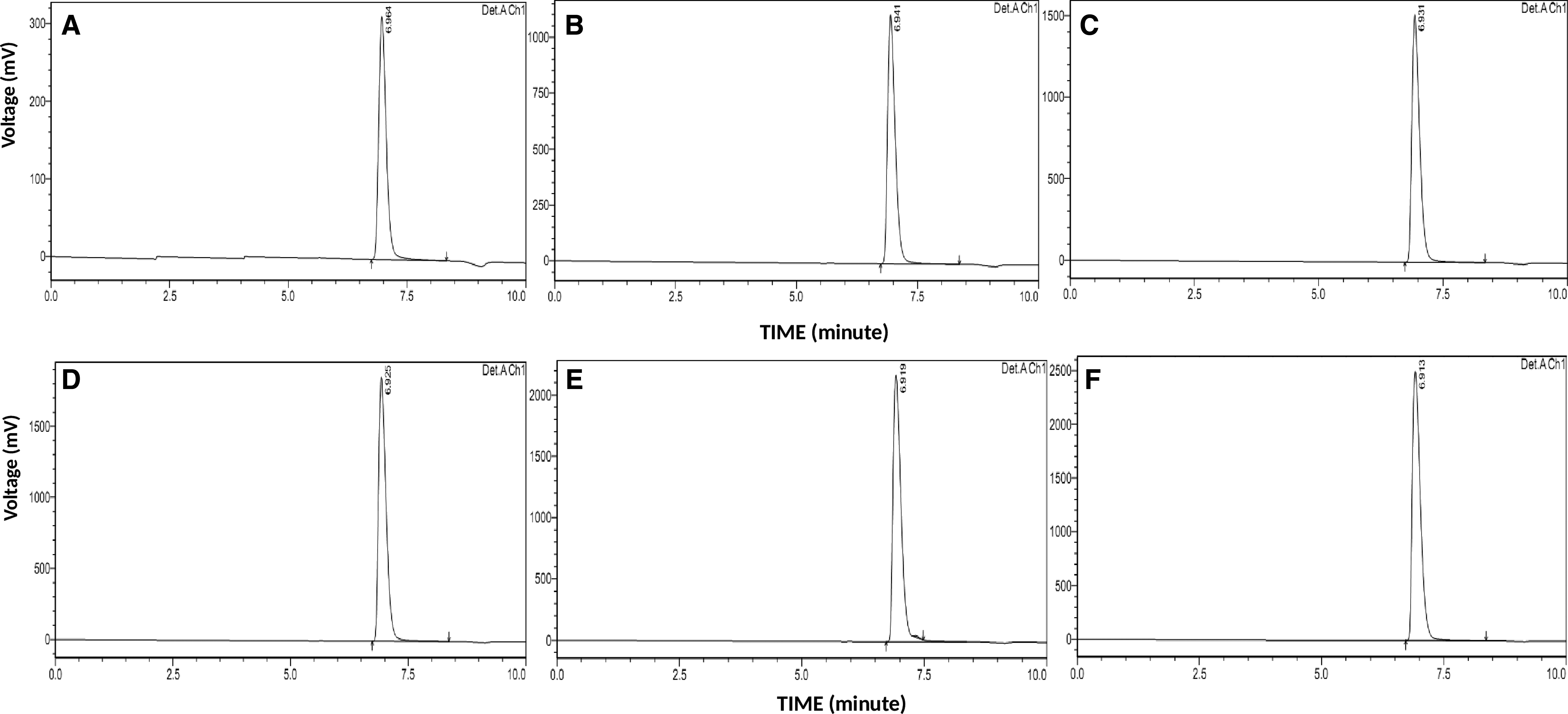
HPLC chromatograms for CH3COOH concentrations of
The peak area for each concentration was noted, and a calibration curve between the theoretical concentration and the peak area, obtained for individual concentration, was also prepared, as shown in Fig. 4.

Peak area count versus theoretical VFA concentrations (in mg/L as CH3COOH) for HPLC method.
To find out the accuracy of HPLC method (using the Shimadzu LC-2010 HPLC system packed with SUPELCOSIL LC-AMINO), measured concentrations of CH3COOH have been plotted with respect to theoretical concentrations of the same, as shown in Fig. 5.

Measured VFA concentrations (in mg/L as CH3COOH) versus theoretical VFA concentrations (in mg/L as CH3COOH) for HPLC method.
The mean accuracy level of HPLC method is thus observed as 100%.
For the purpose of measuring the acetic acid concentrations in the five digester samples, UHPLC equipped with C18 column was used. Seven standards of acetic acid concentrations 62.5, 125, 250, 500, 750, 1,000, and 2,000 mg/L were used for calibrating the system and for developing the calibration curve. Figures 6–8 show the chromatograms for standards 125, 750, and 2,000 mg/L along with the chromatograms of the 5 anaerobic digester samples, which were diluted 10 times with distilled water and HPLC-grade water for the first 2 runs and without any dilution for the last run.

Chromatograms for CH3COOH concentrations of

Chromatograms for CH3COOH concentrations of
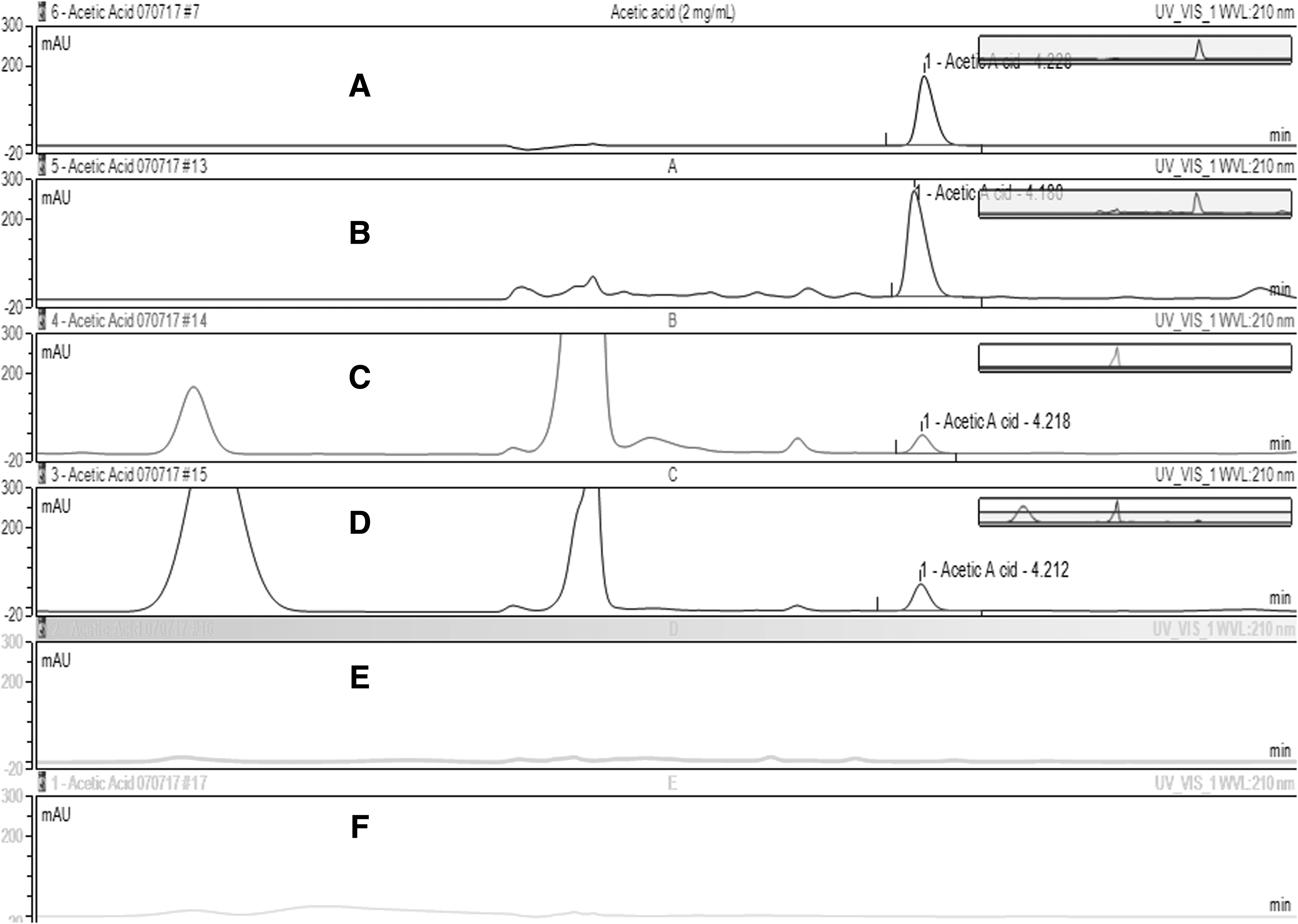
Chromatograms for CH3COOH concentrations of
The UHPLC system equipped with the C18 column was calibrated using seven standards of acetic acid concentrations (prepared with HPLC-grade acetic acid and HPLC-grade water) 62.5, 125, 250, 500, 750, 1,000, and 2,000 mg/L and the corresponding calibration curve, with R2 value 0.999, was developed. The equation obtained was y = 0.0085x, where y is the peak area count and x is the acetic acid concentration in mg/L.
It can be clearly observed from Figs. 6–8 that UHPLC systems equipped with C18 columns are not best suited for measuring acetic acid or any other SCFAs present in anaerobic digester samples. The standard/synthetic samples (concentrations between 100 and 1,400 mg/L) prepared with glacial acetic acid (assay 99.7%; EMPARTA; Merck made) and triple-distilled water, which were detectable via the GC, and the HPLC equipped with AMINO column, could not be detected using the UHPLC system equipped with the C18 column. Even though the particle sizes (5 μm) in both the columns used were similar, the variation in results may have been due to the change in the HPLC systems. The obvious variations in the LC techniques of the two instruments may be responsible for the observed differences in results, and subject to further detailed investigation. In addition, there is a dearth of literature on measurement of SCFAs from anaerobic digester samples using either UHPLC or C18 columns. However, UHPLC systems equipped with C18 column have been reported to measure VFAs from food and plant products (Mitra et al., 2016).
Even though measurement of VFAs via HPLC is quick, consistent, and efficient compared to the spectrophotometric method, it can be said that unless any of the previously mentioned columns (Supelcogel 610H, Supelcosil LC-AMINO, Aminex HPX87H and ORH 801) are available the measurement cannot be done. These columns are not only expensive but also demand specific operative skills to run. In laboratories with available HPLC instrumentation, where VFA analysis is not a routine practice, these columns are likely unavailable. Alternatively, single/double beam spectrophotometers are ubiquitous and sufficient for VFA analysis.
Gas chromatography
Standard/synthetic samples of acetic acid concentrations ranging from 100 to 1,400 mg/L were tested in two separate GC systems for the purpose of calibrating the systems and for developing the calibration curves. In the Agilent 7890B GC system, diluted samples from the hydrolytic, the acidogenic, the methanogenic, and the floating dome-type digester were tested. The sample from the HUASB digester was tested in the YL 6100 GC system. The GC chromatograms of five typical standard CH3COOH concentrations obtained using the Agilent 7890B GC system are shown in Fig. 9.

GC chromatograms for CH3COOH concentrations of
The corresponding calibration curve prepared between the theoretical concentrations of CH3COOH and the peak area count, obtained for the above five standard concentrations, for Agilent 7890B GC system, is shown in Fig. 10.
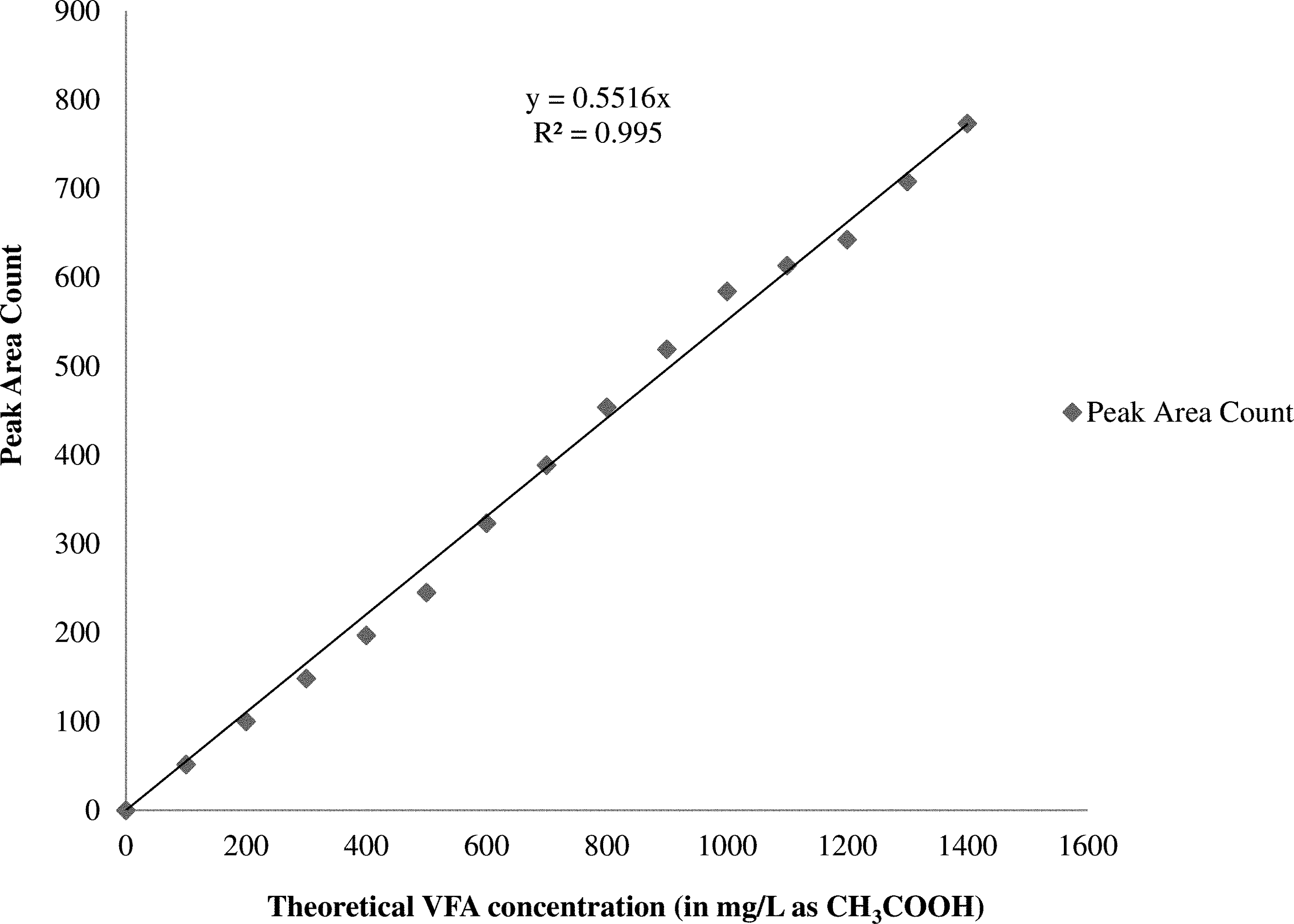
Peak area count versus theoretical VFA concentrations (in mg/L as CH3COOH) for GC method.
To find out the accuracy of the GC method (for Agilent 7890B GC system), the measured CH3COOH concentrations have been plotted with respect to the theoretical concentrations of CH3COOH standards as appended in Fig. 11.

Measured VFA concentrations (in mg/L as CH3COOH) versus theoretical VFA concentrations (in mg/L as CH3COOH) for GC system.
Mean accuracy of VFA (as CH3COOH) determination by GC method is observed as 99.81% from Fig. 11.
The analysis of the diluted samples (10 times diluted with triple-distilled water) obtained from the hydrolytic, the acidogenic, the methanogenic and the floating-dome type digesters was carried out using the same YL 6100 GC system, where the 14 different standards of acetic acid concentrations were tested. The corresponding chromatograms of the four digester samples are shown in Fig. 12.

GC chromatograms of the
The sample from the HUASB digester was analyzed in the YL 6100 GC system. Similar to the four other digester samples, the HUASB digester sample was diluted 10 times with triple-distilled water. The YL 6100 GC system was calibrated using five standards of acetic acid concentrations 100, 500, 600, 1,000, and 1,200 mg/L and the corresponding calibration curve, with R2 value 0.996, was developed. The equation obtained was y = 0.6322x, where y is the peak area count and x is the acetic acid concentration in mg/L. Figure 13 shows the chromatograms for the five standards of acetic acid concentrations, and the HUASB digester sample corresponding to the YL 6100 GC system.

GC chromatograms of the
It has been observed that determination of VFAs via GC is the most reliable among the aforementioned methods with regard to LOQ, precision, accuracy, sample preparation, and volume of the sample required for measurement. Also, the method allows for measurement of individual VFA concentration. In the study by Siedlecka et al. (2008), the precision range for measuring VFAs via GC was reported to be between 5.7% and 14.8%, and the absolute recovery of acetic acid was in the range of 4.6 mg/L (LOQ) to 1,000.7 mg/L with accuracy between 92% and 100.7%. It was also reported that only 2 mL of the aqueous solution was needed for the testing. However, the GC method necessitated the preparation of diazomethane, a derivative's agent, which is considered to be toxic and nonstable. In the present study too, extraction of the real anaerobic samples had to be done with dichloromethane, which is highly volatile in nature, before testing. Another drawback was the selectivity problem with the determination of acetic acid, in case of additional volatile contaminants present in the sample that was analyzed. Therefore, even though the GC method can be regarded as the most reliable of all the methods, including the existing spectrophotometric method, for measurement of low VFA concentrations and practical applicability onto surface-water and wastewater samples, it is yet to give satisfactory results for samples of digester sludge liquor. This problem was eliminated by the spectrophotometric method.
Modified spectrophotometric method
The earlier spectrophotometric method for VFA determination produced repeatable results, good accuracy, precision, and lower LOQ. The precision and accuracy of the spectrophotometric method were in the range of 1.3–14% and 82.1–104.2%, respectively, for acetic acid concentrations between 28 and 450 mg/L with absolute recovery of acetic acid being in the range of 23 and 457 mg/L. The proposed spectrophotometric method eliminated inconsistencies and showed reproducible results. Similar to the spectrophotometric method, the proposed method has several advantages over the other popular methods, such as small volume of sample requirement (0.5 mL) and direct determination of the VFA (in mg/L as CH3COOH) from the sample. Also, rapid multiple determination is possible since analysis of a single sample takes <15 min.
This proposed method substantiates the underlying principle of esterification of carboxylic acids present in digester liquor and the subsequent determination of those esters by the ferric hydroxamate reaction, which is in line with the classical colorimetric method. To measure the optical density (in this case absorbance), a double/single beam spectrophotometer was used instead of a colorimeter thereby increasing the accuracy of the measurement. The absorbance values as measured for the standard samples were plotted with respect to acetic acid concentration as shown in Fig. 14.

Absorbance versus theoretical VFA concentrations (in mg/L as CH3COOH) for the modified spectrophotometric method.
The concentration data of acetic acid standards are used for statistical analysis to find out the average, standard duration and relative standard deviation (RSD), as shown in Table 1. The accuracy and precision are estimated for five sets of standards having concentrations from 100 to 1,400 mg/L as CH3COOH are also furnished in Table 1.
Data obtained from modified spectrophotometric method (No. of sets: 5).
RSD, relative standard deviation; SD, standard duration; VFA, volatile fatty acid.
For compiling the data in Table 1, the same technique, as mentioned by Siedlecka et al. (2008), has been adopted. RSD has been evaluated for the purpose of determining the precision of the proposed methodology, whereas the accuracy has been estimated in percentage by comparing the measured and theoretical concentrations of acetic acid in the samples. It can be observed from the results that all the average theoretical concentrations of VFA (mg/L as CH3COOH) are within the standard deviation except two cases, namely 600 and 700 mg/L. In these two cases, the average values of VFA are found to be out of the standard deviation. The accuracy in these two cases is 109% and 107%, respectively, whereas the precision is 6.24% and 6.37%, respectively. Table 1 demonstrates that the precision and the accuracy of the proposed methodology are in the range 1.38–27.63% and 95.76–115.35%, respectively, for concentrations of VFAs (mg/L as CH3COOH) between 100 and 1,400 mg/L.
The comparison between the proposed methodology and the existing ones for VFA determination in terms of accuracy, precision, and LOQ is presented in Table 2.
HPLC, high-performance liquid chromatography; LOQ, limit of quantification.
While studying the absolute recovery of acetic acid, a satisfactory range between 100 and 1,400 mg/L was found, which can be considered good when compared with other methods. In addition, Fig. 15 asserts the superiority of the proposed methodology over the other measurement techniques as it can be seen that the deviation of results of the measured concentration with respect to the theoretical concentration of VFAs is the least in case of the GC method followed by the proposed method.
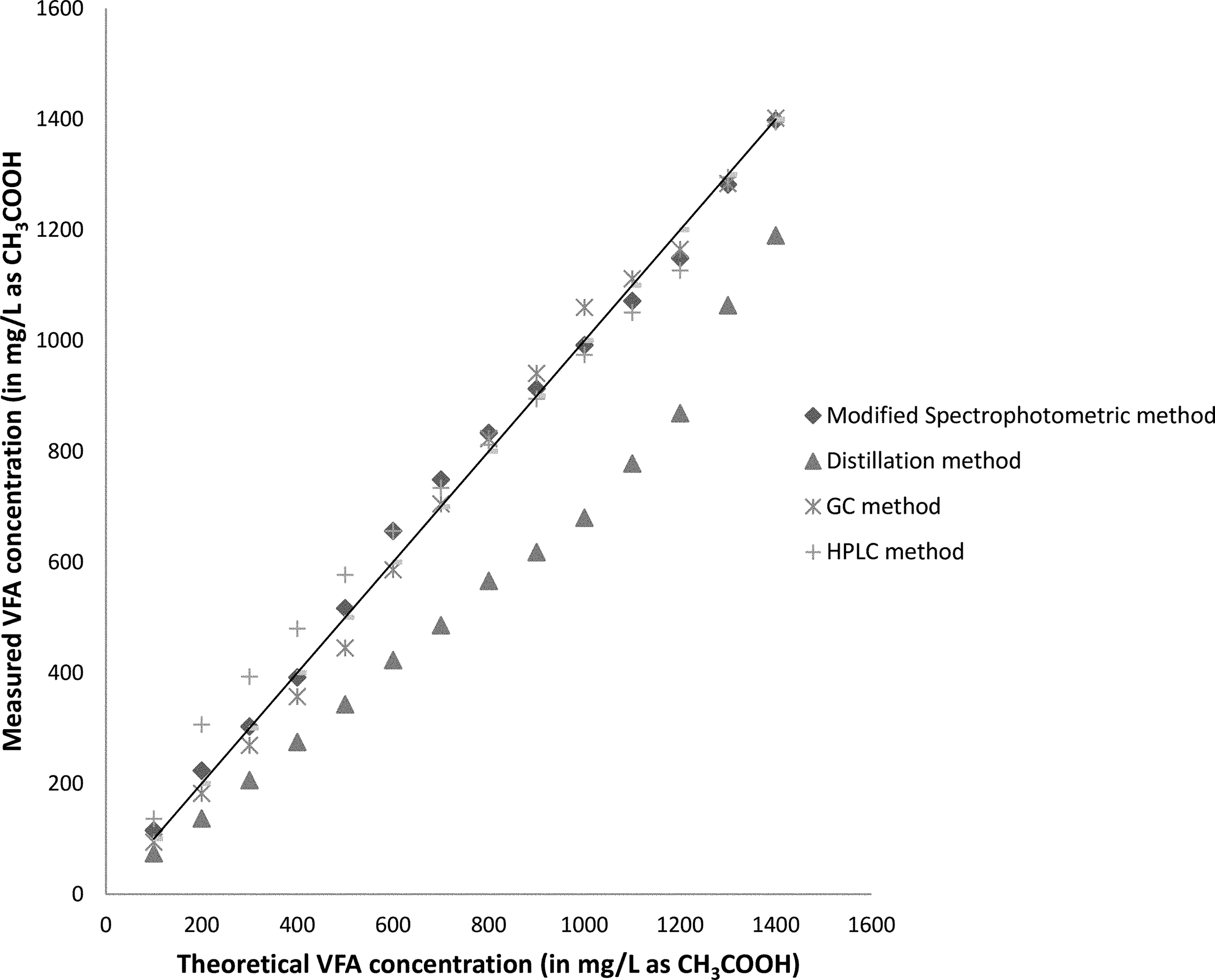
Plotting of measured and theoretical VFA concentration (in mg/L as CH3COOH) for modified spectrophotometric, distillation, GC, and HPLC methods.
Moreover, it is possible to analyze as many as 10 samples within a maximum duration of 60 min using the proposed method. The accuracy coupled with such optimum analysis time is extremely useful in case of measuring anaerobic digester samples, where rapid analysis is very important. This is because, the VFA present in the collected sample decays very rapidly when exposed to an aerobic environment. LOQ is separately calculated and is found to be 10 mg/L. It can be observed from Table 2 that the proposed methodology has a superior accuracy range compared to the distillation method, the HPLC method, and the previous spectrophotometric method. In addition, the precision range was also found to be much better in case of the proposed methodology. Another significant advantage of the proposed methodology is that it provides a scope for a wider range of acetic acid concentration measurement, between 10 and 1,400 mg/L, at the aforementioned precision and accuracy.
Six different absorbance readings (out of nine trials) were considered each for the hydrolytic, acidogenic, and the methanogenic samples and the average was calculated. For the HUASB and the floating dome-type digester samples, four absorbance readings (out of six trials) were considered and the average absorbance value was calculated. The absorbance value for the blank was then subtracted from the average absorbance readings obtained for each of the five anaerobic samples. Thereafter, the resultant absorbance value of any particular sample was put into the equation y = 0.0013x, obtained from Fig. 14, to get the acetic acid concentration (in mg/L) of that sample. Table 3 gives a detailed report of the VFA concentrations obtained for the five anaerobic samples via the proposed methodology.
A, observed absorbance values; B, blank absorbance value; C, calculated concentration (in mg/L as CH3COOH).
HUASB, hybrid up-flow anaerobic sludge blanket.
Comparisons between GC, UHPLC (using C18 column), distillation method, and the proposed method with regard to real anaerobic samples were collected from four laboratory-scale anaerobic digesters and one pilot-scale digester, analyses are shown in Table 4.
Recovery percentages for the distillation method are with respect to results obtained via the modified spectrophotometric method.
UHPLC, ultra high-performance liquid chromatography.
The modified spectrophotometric method's consistent performance with regard to real anaerobic sample analysis can be clearly observed from Table 4. It can be said that the consistency of the proposed methodology, with regard to real anaerobic sample analysis, is only asserted by the results obtained by testing via GC and distillation methods. In addition, consistency of the proposed methodology, with regard to analysis of standard/synthetic samples prepared using glacial acetic acid and triple-distilled water, has been also asserted by comparison with GC, HPLC, and distillation methods.
Conclusion
Presence of VFAs largely influences the contaminant levels of various nutrients (inorganic nitrogen and phosphorus) available in wastewater, which in turn disrupts the aquatic environment to a great deal by causing oxygen depletion, algal bloom, and eutrophication. The VFAs act as energy suppliers for different bacterial species thereby supporting their growth, which eventually results in an adverse impact on the waterbody. Monitoring of VFAs is thus extremely necessary with regard to maintaining hygienic conditions. A rapid and also dependable method for determining the VFAs is therefore needed in water quality management. The proposed methodology, that is, the modified spectrophotometric method, offers many advantages over the existing methods of VFA determination, not only because of its excellent precision, accuracy, and range of acetic acid recovery but also in terms of operation, rapidity, ability to measure VFAs present in anaerobic digester sludge liquor, leachates, wastewater, and OFMSW. This method is also found to be technoeconomically viable (due to use of low-cost apparatus usage and requirement of easily available chemicals) and needs for a small volume of the aqueous sample. Moreover, the importance of the proposed methodology is substantiated by repeatability of results and consistency with the sample preparation, as illustrated by the classical Montgomery method. Hence, this method can be inferred to be opted for VFA measurements in places requiring accurate and precise results at low cost and with a limited setup.
Footnotes
Acknowledgments
The authors gratefully acknowledge the instrumental support via UHPLC provided by Dr. Amalesh Samanta, Professor in the Department of Pharmaceutical Technology, Jadavpur University. They also sincerely thank Mr. Bhaskar Das, Research Scholar at the same department for extending help with regard to analysis of real anaerobic samples via UHPLC.
Author Disclosure Statement
No competing financial interests exist.