




Abstract
Abstract
Cr(III) metal ions, which are found frequently in leather industry wastewater, cause very serious problems especially for biological wastewater treatment systems. Therefore, it is necessary to selectively remove this heavy metal ion from wastewater. Removal of heavy metal ions from wastewater before treatment is an approach that improves treatment performance. The purpose of this study was the removal of Cr(III) ions from the leather industry wastewater using amino oxime ligand. Different adsorption experiments were investigated with different environmental parameters in the removal of Cr(III) ions, which are serious problems in wastewater of the leather industry, with amino oxime, and optimum values were determined. These parameters include Cr(III) ions, amino oxime concentrations, solution pH, temperature, and mixing speed. Adsorption capacities of amino oxime were increased while the initial Cr(III) ion concentration, mixing speed, and solution pH increased, whereas adsorption capacities decreased by increasing the concentration of amino oximes. The adsorbent (amino oxime) concentration should be kept at 3 g/L to achieve a removal yield of >89% at a concentration of 100 mg/L initial Cr(III) ion. When the amino oxide concentration was 0.25 g/L, the maximum adsorption capacity of 152 mg Cr(III)/g was reached.
Introduction
H
As is known, the presence of heavy metal ions in the environment can be harmful to a wide range of living species, including humans, animals, and plants (Rezania et al., 2016; Song et al., 2017a, 2017b). Various methods are used for the removal of heavy metals from wastewaters (Kratochvil and Volesky, 1998; Saleh and Gupta, 2012). In addition to the physicochemical methods such as chemical precipitation, adsorption, and ion exchange, there are also bioadsorption methods using biomaterials such as biomasses (Simeonova et al., 2008; Mthombeni et al., 2015; Sathvika et al., 2016; Kołodyńska et al., 2017). Almost none of them is a selective removal method, instead, they retain all the pollutants in the wastewater and, therefore, produce high amounts of impure sludge (Aksu, 2005). Recovery and reuse are important particularly for the industrial enterprises that use heavy metals such as those used in leather industry. Therefore, the sludge to be generated will not be a hazardous and harmful waste and also it will significantly decrease the operating costs. Therefore, researchers have focused their efforts on retaining only pure heavy metals and recovering them from the waste sludge and reusing them (Björklund and Li, 2017; He et al., 2017).
Owing to the wide use of Cr(III) metal in the leather industry, the wastewater of leather industry includes high concentrations of Cr(III) metal (Liang et al., 2013; Han et al., 2017). Cr(III) metal can be removed by using various methods (Kumar and Jena, 2017). One of these methods is the adsorption method. A wide range of materials are used in the removal of heavy metals from wastewater by adsorption (Khambhaty et al., 2009; Gupta et al., 2013; Xu et al., 2013). There is a very wide range of adsorbents used in these adsorbent materials, ranging from commercially produced adsorbents such as activated carbon to wood flour that can be obtained easily. However, not only heavy metals but also various pollutants that are included in the wastewater both physically and chemically are adsorbed on the adsorbents. So, the recovery of the adsorbed heavy metal is difficult and ineffective. The most significant advantage of heavy metal removal from wastewaters through adsorption by using chemical ligands is that only heavy metals are adsorbed (Awual et al., 2013; Mao et al., 2016). Therefore, the recovery and reuse of the adsorbed heavy metal also become effective.
In this context, one of the main objectives of the proposed project was the selective removal of Cr(III) metal in the wastewater of the leather industry. This heavy metal in the wastewater was absorbed selectively by the amino oxime compound, which was a chemical ligand. Therefore, there will be no toxic and dangerous compounds in the sludge of the leather industry wastewater treatment plant due to this heavy metal. Therefore, the sludge will be available to be sent directly to the regular solid waste storage facility.
Materials and Methods
Amino oxime handling
Removal of Cr(III) metal from the wastewater of the leather industry by using amino oxime ligand was examined in this study. Figures 1 and 2 show the structure of the amino oxime ligand and the structure of the amino oxime–metal complex, respectively (Karipcin et al., 2010).

Structure of amino oxime ligand (Karipcin et al., 2010).

Structure of amino oxime–metal complex (Karipcin et al., 2010).
Numerous researches have been carried out on the use of ligands in the removal of metals by adsorption method. In these researches, ligands have been determined to be effective in heavy metal adsorption.
Batch shaking experiments
Shaker experiments were carried out by using a circular motion shaker at a speed of 150 rpm. Water containing 10 mL of Cr(III) ions and a 10 mL volume of the amino oxime concentration were added to the tubes in a volume of 50 mL. The amino oxime was prepared to have the desired concentration in chloroform and hence to be completely soluble. The reasons why amino oxime was used in the liquid phase, not in the solid phase, were to minimize the effects of particle size, to ensure better distribution in the solution and hence better interaction, and to recover amino oxime and reuse it. At the end of the experiment, chloroform was at the lower phase since it did not mix with water, Cr(III) ions adsorbed by amino oxime were at the middle phase, and liquid solution treated from Cr(III) ions were in the upper phase. By this means, separation can be easily carried out by using a separatory funnel at the end of the experiment. During the experiments, the concentration of amino oximes was kept fixed at 1 g/L and the other environmental factors such as mixing speed (50–200 rpm), temperature (30–50°C), Cr(III) ion concentration (25–300 mg/L), and solution pH (2–8) were changed. To examine the effects of amino oxime concentrations, the concentration of amino oxime was changed between 0.25 and 3 g/L and other environmental factors such as mixing speed (150 rpm), solution pH (5), Cr(III) ion concentration (100 mg/L), and temperature (T = 25°C) were kept fixed.
Tubes were shaken for 120 min at 25°C and samples were taken at specific time intervals. To determine the amount of Cr(III) ion removal from the solution without using adsorbent (amino oxime), a control tube containing only 100 mg/L of Cr(III) ion solution without amino oxime was simultaneously shaken.
The adsorption capacities of amino oxime and percentage Cr(II) removal were calculated by using Equations (1) and (2).
Here, Ci, Ce, and Cf denote the Cr(III) ion concentrations (mg/L) at the beginning, equilibrium, and remaining in the concentration, V denotes the volume of the solution (mL), and W denotes the amount of ligand (g).
Analytical methods
Analysis of Cr(III) metal ion was carried out by using NexION 300 model ICP-MS of Perkin Elmer brand. Centrifugation was performed using the Nuve nf400 rotary shaker. The pH's were measured using the Hach senION+pH1 brand pH meter. Each analysis was repeated at least three times and the values that deviate <5% were noted.
Results and Discussions
Effects of environmental conditions on removal of Cr(III) ions by amino oxime
Removal of heavy metal ions with ligand adsorbents is accomplished by forming metal complexes of chelate or complex compounds with metal ions of the functional groups in the ligand. The effects of operating parameters such as pH, temperature, Cr(III) ions and amino oxime concentrations, and mixing speed on heavy metal removal by using the amino oxime were examined in this experimental setup.
Effect of initial Cr(III) ion concentration
While the amino oxime concentration was kept fixed at 1 g/L and the initial solution pH was kept fixed at 5, the initial Cr(III) ion concentration was changed between 25 and 300 mg/L. Figure 3 shows the variation of Cr(III) ion concentrations in the solution with time for various initial Cr(III) ion concentrations. For all the tested initial Cr(III) ion concentrations, the adsorbed Cr(III) ion concentrations were increased with time and reached equilibrium at the end of the 10-min experiment. At lower initial Cr(III) ion concentrations, such as 25 or 50 mg/L, the binding sites on the amino oxime were bound by Cr(III) ions, but all of the binding sites were not bound. As a result, the adsorption capacities of amino oxime were determined to be 19 and 34 mg/g, respectively. At higher Cr(III) ion concentrations, such as 250 and 300 mg/L, the amount of adsorption was limited by the concentration of amino oxime, and the amounts of Cr(III) ions in the equilibrium solid phase were found to be 66 and 68 mg/g, respectively. The obtained results are consistent with the publications in the literature that achieved higher adsorption capacity in higher metal ion concentrations (Gulnaz et al., 2005; Pamukoglu and Kargi, 2006b). To maximize the amount of Cr(III) ion adsorption, the initial Cr(III) ion concentration should be kept high enough at the fixed adsorbent (amino oxime) concentration.
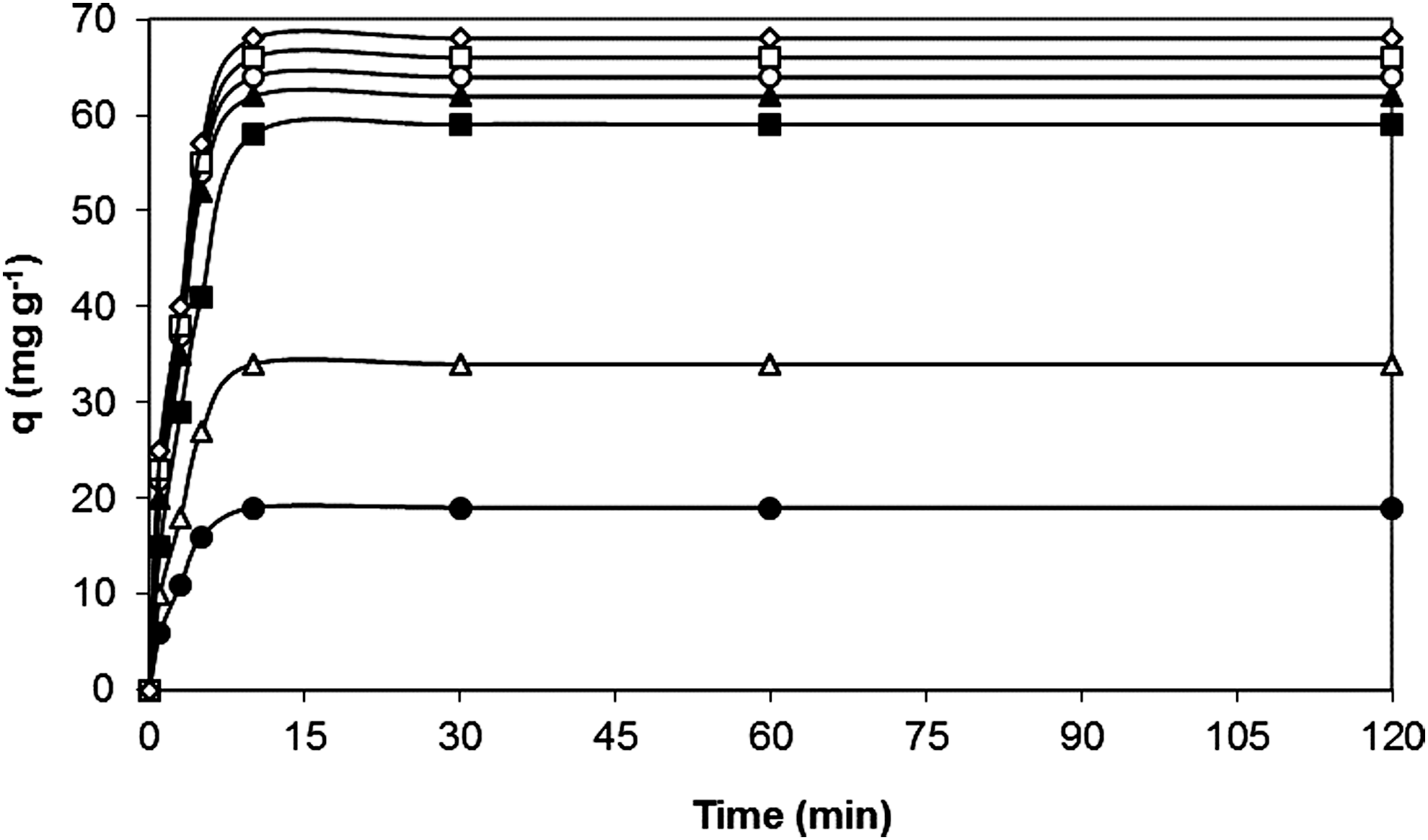
Variation of adsorbed Cr(III) ion concentration with time for different initial Cr(III) ion concentrations (amino oxime concentration = 1 g/L, pH 5, T = 25°C, rpm = 150). Cr(III) ion concentration (mg/L): ● 25, Δ 50, ■ 100, ▲ 150, ◯ 200, □ 250, ◊ 300.
Table 1 shows the initial Cr(III) ion concentrations with the variation in final Cr(III) ion concentrations and percentage Cr(III) ion removal. When the initial Cr(III) ion concentrations were increased from 25 to 300 mg/L, the percentage Cr(III) ion removals were decreased from 76% to 23% and the final Cr(III) ion concentrations were increased from 6 to 232 mg/L. At lower initial Cr(III) ion concentrations, such as 25 or 50 mg/L, all the Cr(III) ions bound to the binding sites on the amino oxime, but all of the binding sites were not bound. As a result, low Cr(III) ion concentrations were measured in the solution such as 6 and 16 mg/L. In contrast, at higher initial Cr(III) ion concentrations, such as 250 or 300 mg/L, all of the binding sites in the fixed amino oxime compound were bound by the Cr(III) ions so that the remaining Cr(III) ion concentrations in the solution were measured high as 184 and 232 mg/L, respectively. If a removal rate higher than 58% was desired in 1 g/L of amino oxime concentration, the initial Cr(III) ion concentration should be kept lower than 100 mg/L.
One of the most important parameters in the adsorption of heavy metal ions was the number of heavy metal ions adsorbed in equilibrium. Table 1 shows the amount of initial Cr(III) ion concentrations and the amount of Cr(III) ions adsorbed (qe, mg Cr(III)/g amino oxime) by amino oxime in equilibrium. As expected, when the initial Cr(III) ion concentration was increased, the amount of adsorbed Cr(III) ions was also increased. When the initial Cr(III) ion concentration was increased, high amount of Cr(III) ions was adsorbed by the binding sites of the amino oxime that was kept fixed at 1 g/L. When the initial Cr(III) ion concentration was increased from 25 to 300 mg/L, the adsorption capacity of the amino oxime was also increased from 19 to 68 mg/g.
Effects of adsorbent (amino oxime) concentration
In this set of experiments, the adsorbent (amino oxime) concentration was changed from 0.25 to 3.0 g/L, while the initial Cr(III) ion concentration, temperature, and initial pH were kept fixed at 100 mg/L, 25°C, and 5, respectively. Figure 4 shows the variation of adsorbed Cr(III) ion concentrations with time for various adsorbent (amino oxime) concentrations. For all the tested amino oxime concentrations, the adsorbed Cr(III) ion concentrations in the solution (mg/g) were increased with time and reached equilibrium at the end of the 10-min experiment. At lower amino oxime concentrations, such as 0.25 or 0.5 g/L, the binding sites on the amino oxime ligand were bound by Cr(III) ions and hence high adsorption capacities were achieved such as 152 and 100 mg/g, respectively. Although amino oxime has much more binding sites at higher concentrations, such as 2.5 and 3 g/L, only a few of them were bound by Cr(III) ions, therefore, low adsorption capacities were achieved such as 33 and 30 mg/g, respectively. To maximize the amount of Cr(III) ions adsorbed in the solution in equilibrium, the adsorbent concentration (amino oxime) in the fixed metal ion concentration should be kept low enough. These findings are consistent with publications in the literature that achieved lower adsorption capacities in higher adsorbent concentrations (Esposito et al., 2001; Pamukoglu and Kargi, 2006b).

Variation of adsorbed Cr(III) ion concentration with time for different initial amino oxime concentrations (pH 5, Cr(III)0 = 100 mg/L, T = 25°C, rpm = 150). Amino oxime concentration (g/L): 0.25,  0.5,
0.5,  1,
1,  1.5,
1.5,  2, □ 2.5,
  3.
3.
Table 2 shows the initial amino oxime concentrations with the variation in final Cr(III) ion concentrations and percentage Cr(III) ion removal. When the initial adsorbent (amino oxime) concentrations were increased from 0.25 to 3 g/L, the percentage Cr(III) ion removals were increased from 38% to 89% and the final Cr(III) ion concentrations were decreased from 62 to 11 mg/L. At lower initial amino oxime concentrations, such as 0.25 or 0.5 mg/L, the amounts of adsorbed Cr(III) ions in equilibrium were limited by the low number of the binding sites in the adsorbent (amino oxime) and, therefore, low removal of Cr(III) ions was achieved as 38% and 50%, respectively. In contrast, because of the high number of binding sites of the adsorbent at higher amino oxime concentrations, such as 2.5 and 3 mg/L, higher amounts of Cr(III) ions were removed as 82% and 89%, respectively. The adsorbent (amino oxime) concentration should be kept higher than 3 g/L to achieve a removal efficiency of >89% in an initial Cr(III) ion concentration of 100 mg/L.
Table 2 also shows the amount of initial amino oxime concentrations and the amount of Cr(III) ions adsorbed in equilibrium (qe, mg Cr(III)/g amino oxime). With the increase in the amino oxime concentrations, the amounts of adsorbed Cr(III) ions in equilibrium were decreased. When the initial adsorbent (amino oxime) concentrations were increased from 0.25 to 3 g/L, the amounts of adsorbed Cr(III) ions were decreased from 152 to 30 mg/g, respectively. The reason for this decrease was that the initial Cr(III) ion concentration was kept fixed at 100 mg/L. At lower amino oxime concentrations, the majority of the binding sites of the adsorbent were bound, and, therefore, higher adsorption capacities were achieved.
Effect of solution pH
One of the important parameters affecting the amount of adsorbed heavy metal ions and the rate of adsorption is pH. Different pH values can affect the surface loads of the adsorbent and the solubility of heavy metal ions. It is known that some heavy metal ions such as Cr(III), Cu(II), and Zn(II) precipitate in hydroxide form when pH is 6 or more (Sawyer et al., 1978; Pamukoglu and Kargi, 2006b). For this reason, the initial pH values were changed between 2 and 6 during the removal of Cr(III) ions by amino oxime. During these experiments, the amino oxime and Cr(III) ions concentrations and temperature were kept fixed at 1 g/L, 100 mg/L, and 25°C, respectively, and the pH values of the solution were changed between 2 and 6.
Figure 5 shows the variation in the adsorbed Cr(III) ion concentrations with time at various initial pH values. Adsorbed Cr(III) ion concentrations were increased with time at all pH levels and reached equilibrium at the end of the 10-min experiment. As there would be so many (H+) ions around when the solution pH was as low as 2 or 3, there would be a competition between H+ and Cr(III) ions for binding to the amino oxime binding sites (Pamukoglu and Kargi, 2006a). Therefore, the adsorption capacities of amino oxime were also measured lower at lower solution pH values.
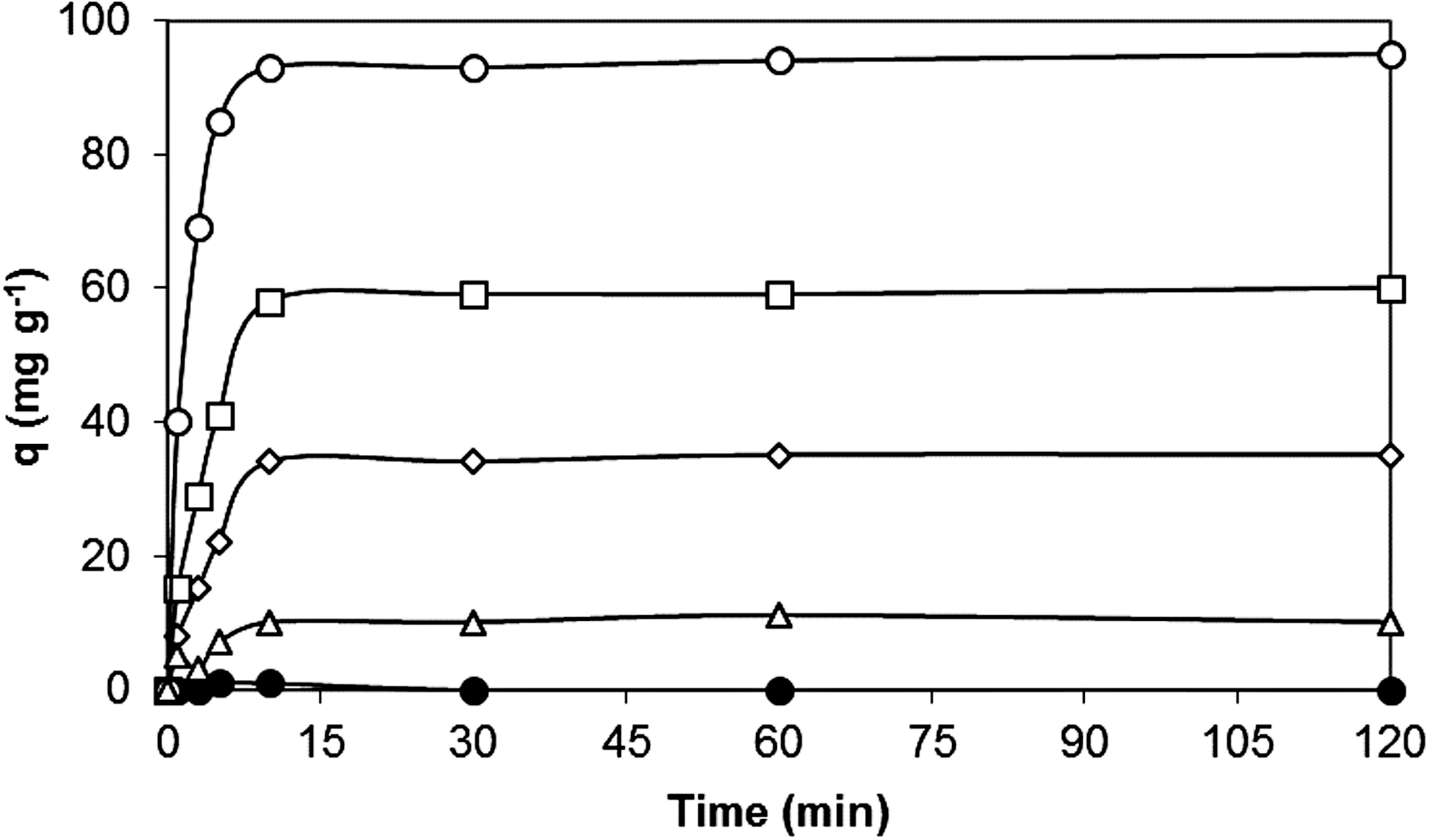
Variation of adsorbed Cr(III) ion concentration with time at different pH values (amino oxime concentration = 1 g/L, Cr(III) ion concentration = 100 mg/L, T = 25°C, rpm = 150). pH: ● 2, Δ 3, ◊ 4, □ 5, ◯ 6.
However, since the Cr(III) ions precipitate when the solution pH reaches 5 or more, it is known that the removal occurs not only by adsorption but also by precipitation. So that, the removal of Cr(III) ions was determined to increase significantly when the solution pH was increased >5. As a result, when the initial chromium concentration was 100 mg/L and the pH value was 6 and more, turbidity was observed in the solution and Cr(III) ions were found to precipitate. Therefore, the optimal solution pH should be 5 during Cr(III) adsorption and hence the solution pH was kept fixed at this value for the other experiments too and the other variables have been changed.
Figure 6 shows the variation of maximum adsorption capacities and initial adsorption rates (for the first minute) with pH. Adsorption capacities and adsorption rates were increased with the increase in solution pH. When the solution pH was >5, the increasing rate of the adsorption capacities was not only due to the adsorption but also due to the precipitation of Cr(III) ions. For this reason, the maximum adsorption capacity and adsorption rate at pH 5 were 58 mg/g and 15 mg/min, respectively.
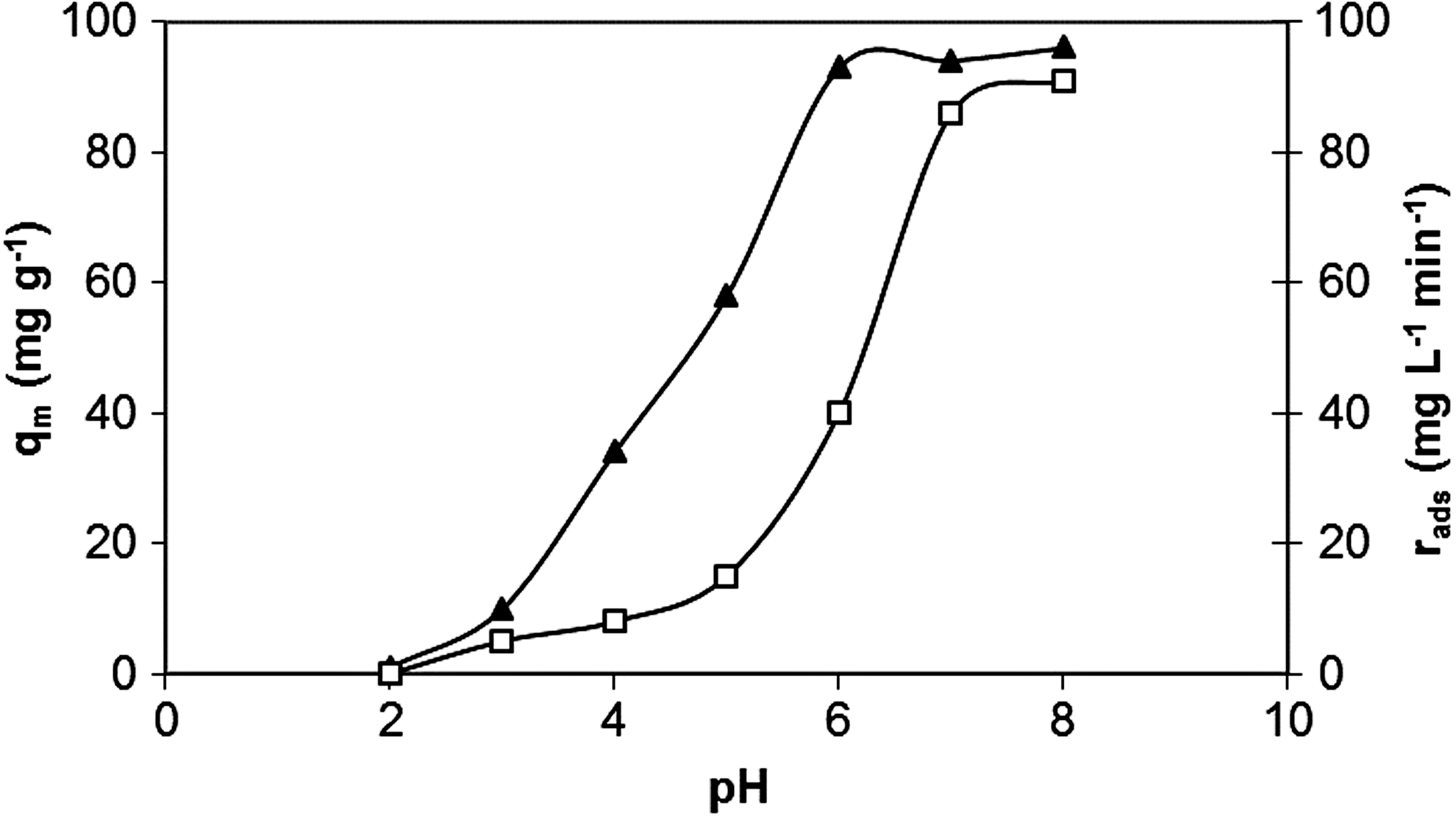
Variation of adsorbed Cr(III) ion concentration and initial adsorption rate with different pHs.
Effects of temperature
In the batch adsorption experiments, solution pH, Cr(III) ions concentration, and amino oxime concentration were kept at 5, 100 mg/L, 1 g/L, respectively, and the temperature was changed between 30°C and 50°C. Figure 7 shows the variation of adsorbed Cr(III) ion concentrations with time at various temperatures. The adsorbed Cr(III) ion concentrations reached equilibrium in 10 min at all the temperatures tested and no more increase was observed after this period. The amounts of adsorbed Cr(III) ions at equilibrium were increased from 59 to 68 mg/g when the temperature was raised from 30°C to 40°C and it was 76 mg/g when the temperature was raised to 50°C.

Variation of adsorbed Cr(III) ion concentration with time at different temperatures (amino oxime concentration = 1 g/L, Cr(III) ion concentration = 100 mg/L, pH 5, rpm = 150). Temperature (°C): □ 30, ▲ 35, ■ 40, Δ 45, ● 50.
The variation in the percentage Cr(III) ion removal with time for various temperatures is shown in Fig. 8. When the temperature was raised from 30°C to 50°C, the percentage Cr(III) ion removal was increased from 82% to 97%.

Variation of percentage Cr(III) removal with time at different temperatures (amino oxime concentration = 1 g/L, Cr(III) ion concentration = 100 mg/L, pH 5, rpm = 150). Temperature (°C): □ 30, ▲ 35, ■ 40, Δ 45, ● 50.
Effect of mixing speed (rpm)
The effect of mixing speed on Cr(III) ion removal was examined by using 100 mg/L of Cr(III) ion concentration and 1 g/L of amino oxime concentration at 25°C and pH 5, with a mixing speed between 50 and 200 rpm.
Figure 9 shows the variation in the amounts of adsorbed Cr(III) ions with time at different mixing speeds. The amounts of adsorbed Cr(III) ions were increased with time and they were determined to reach equilibrium at the end of the 10-min experiment at all mixing speeds. As shown in Fig. 9, with increase in mixing speed, the amounts of adsorbed Cr(III) ions were also increased. At lower mixing speeds such as 50 and 75 rpm, the interaction of amino oxime and Cr(III) ions was insufficient due to insufficient mixing speed, and as a result, lower adsorption capacities were achieved as 34 and 41 mg/g, respectively. When the speed was 150 and 200 rpm, the mixture was well homogenized and, therefore, the interaction was determined to be effective and the adsorption capacities were achieved as 58 and 64 mg/g, respectively.

Variation of adsorbed Cr(III) ion concentration with time at different mixing speeds (amino oxime concentration = 1 g/L, Cr(III) ion conc. = 100 mg/L, pH 5, T = 25°C). Mixing speed (rpm) = □ 50, ▲ 75, ■ 100, Δ 150, ● 200.
Figure 10 shows the variation in the percentage Cr(III) ions removal with time for each mixing speed. The percentage Cr(III) ions removal was increased with increase in the mixing speed. The maximum percentage Cr(III) ions removal (64%) was achieved at the mixing speed of 200 rpm. With increase in the mixing speed, the interaction between the amino oxime and Cr(III) ions in the solution was increased and hence the removal efficiencies were also increased.
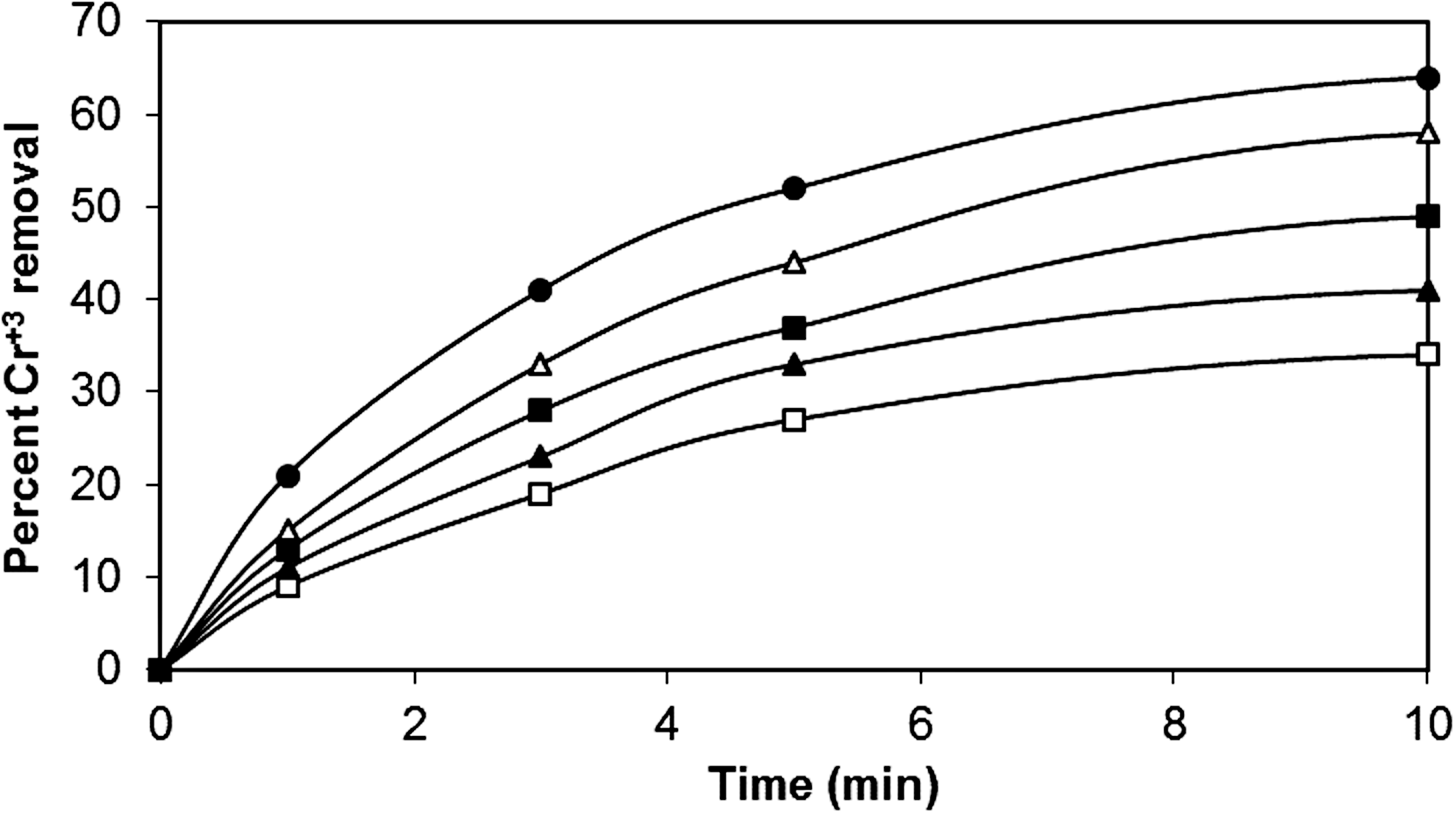
Variation of percentage Cr(III) removal with time at different mixing speeds (amino oxime concentration = 1 g/L, Cr(III) ion concentration = 100 mg/L, pH 5, T = 25°C). Mixing speed (rpm) = □ 50, ▲ 75, ■ 100, Δ 150, ● 200.
Conclusions
Industrial wastewater of leather industry includes Cr(III) metal ions. In this study, it was aimed to determine the effects of environmental conditions on the removal of Cr(III) metal ions from the aqueous solution by using the chemical compound, amino oxime. These environmental factors were pH, Cr(III) ion concentration, amino oxime ion concentration, temperature, and shaker speed (rpm). The effects of these environmental factors on the removal of Cr(III) metal ions were examined and optimum values were determined.
Results were listed hereunder:
• To maximize the amount of Cr(III) ion adsorption, the initial chromium ion concentration should be kept high enough at a fixed adsorbent (amino oxime) concentration. • When the removal rate was desired to be higher than 58% at an amino oxime concentration of 1 g/L, the initial Cr(III) ion concentration should be kept <100 mg/L. • To maximize the amount of adsorbed Cr(III) ions in the solution in equilibrium, the adsorbent concentration (amino oxime) should be kept low enough in the fixed metal ion concentration. • To achieve a removal efficiency of >89% in the initial Cr(III) ion concentration of 100 mg/L, the adsorbent (amino oxime) concentration should be kept at 3 g/L.
Footnotes
Acknowledgment
The authors are grateful for the financial support provided by Suleyman Demirel University BAP under project number 2875-YL-11.
Author Disclosure Statement
No competing financial interests exist.