




Abstract
Abstract
Immobilization of bacterial cells on carriers ensures the stability and intensity of biochemical transformations. The choice of the right carrier is often decisive to the success of the biotechnological process. So far, a relatively small group of materials has been tested in the anaerobic digestion (AD) process and the experiments produced different results. In this study, lignin grafted with polyvinylpyrrolidone (PVP) was used for the first time as an innovative microbial carrier in the AD process due to its particularly positive properties such as porosity, thermal stability, and availability. PVP improved cell adhesion to the carrier surface. Waste wafers (WAF) and sewage sludge (SS) were tested as separate samples. The process was carried out in the batch mode under mesophilic conditions. Monitoring of key process parameters such as pH, the volatile fatty acids (VFA), and the VFA-to-total alkalinity (VFA/TA) ratio proved the stability of digestion both in variants with and without the carrier. Results of microbiological and biochemical analyses proved that the addition of lignin-PVP material considerably increased the proliferation of eubacteria in the wafer sample (by 77%) and increased the enzymatic activity, especially in the SS sample (by 30%). Scanning electron microscope observations revealed the presence of microbial colonies on the lignin surface. Improvement of microbiological and biochemical parameters resulted in a natural increase in the amount of biogas/methane produced, that is, an increase of 33.9% in the WAF sample (1,201.45 m3/Mg volatile solids [VS] of biogas, including 685.53 m3/Mg VS of methane) and an increase of 46.8% in the SS sample (746.82 m3/Mg VS of biogas, including 379.60 m3 Mg/VS of methane). As lignin grafted with PVP was proven to have positive effect on the condition of bacterial flora and AD efficiency, the material can be used as a microbial carrier.
Introduction
T
Immobilized microbial cells exhibit high metabolic activity and resistance to toxic chemicals. In consequence, there is a higher survival rate of the cells. The immobilization of bacterial cells increases the specificity of enzymatic reactions and the process efficiency per unit of the bioreactor volume. It also ensures high operational stability and significantly reduces the process duration. The use of immobilized bacterial cells in biotechnological processes makes them more cost-effective (Dzionek et al., 2016). There are different biotechnological methods of immobilization, for example, encapsulation, gel entrapment, covalent bonding, cross-linking, and adsorption on solid carriers (Elakkiya et al., 2016). Cell immobilization is cheaper, more effective, and less time-consuming than enzyme immobilization (Yang et al., 1988). The choice of the right carrier is an important determinant of success of the biotechnological process. Effective support material is selected by weighing various characteristics and required features of cell application against the properties/limitations/characteristics of combined immobilization/support (Guisan, 2006). Carriers should meet some basic requirements, such as biocompatibility, porosity, chemical, mechanical and thermal stability, water insolubility, availability, and low cost (Elakkiya et al., 2016).
Natural zeolites are often used in AD as microbial carriers and ion exchangers removing ammonium due to the presence of Na+, Ca2+, and Mg2+ cations in their crystalline structure (Montalvo et al., 2012). This property also improves the AD of organic materials with high concentrations of nitrogen compounds (Montalvo et al., 2005; Fernández et al., 2007; Purnomo et al., 2017). A granulated polymeric support [poly(acrylonitrile-acrylamide)] (Lalov et al., 2001) and rubberized coir (Dhaked et al., 2005) were also tested as AD supporting media. In view of the need for alternative energy resources, Ivanova et al. (2008) researched the biohydrogen production process. They tested granulated activated carbon, wood shavings, and perlite from substrates such as agarose and alginic acid, and hemicellulose-rich pine wood shavings. Biohydrogen production was also researched by Chu et al. (2011), who used condensed molasses fermentation solubles. Seelert et al. (2015) observed improved production of biohydrogen with immobilized Clostridium beijerinckii. They used magnetite nanoparticles functionalized with chitosan and alginic acid polyelectrolytes as the immobilizing material. The authors of the aforementioned studies attributed improved methane or hydrogen production to specific cell-immobilizing materials, which limited the release and influence of inhibitors, desensitized immobilized cells to changes in the environment (pH, temperature, and access to the medium), stabilized the system, and increased biodegradability of substrates.
Lignin is a complex aromatic biopolymer mainly composed of p-coumaryl, coniferyl, and sinapyl alcohols. These are three basic monomers differing in the degree of methoxylation (Ralph et al., 2004). This compound is one of the most common biopolymers on earth, following cellulose (Baucher et al., 2003). It is also available as a by-product of the paper and pulp industry. Lignin is characterized by a large number of valuable properties, such as porosity, unique absorptivity, good thermal stability, low cost (waste lignin), availability, nontoxicity, biocompatibility, and specific structure. These properties resulted in the development of innovative “green” applications of this material, for example, as a filler in a wide group of polymers (Bozsódi et al., 2016), a carrier and component of the carrier for enzyme immobilization (Zdarta et al., 2015; Gong et al., 2017), material for the construction of electrochemical sensors and detectors (Milczarek and Inganas, 2012), and innovative lithium-ion batteries (Gnedenkov et al., 2014). Numerous functional groups in lignin molecules, especially carboxylic and phenolic groups on the lignin surface, make it a potentially inexpensive and easily accessible material, which is also an ideal biosorbent for hazardous metal ions (Pb2 +, Cu2 +, Cd2 +, and Ni2 +) (Li et al., 2015). Lignin can be used as a cell carrier in AD because it ideally meets the conditions of an effective microbial carrier. The cost-effectiveness of lignin as a carrier in practical AD application will be much more realistic with lignin waste. The use of lignin as an additive in AD of raw sewage sludge (SS) may have positive effects because it is not only a cell-immobilizing material but also a sorbent of heavy metals in the sludge, which inhibit the AD process. Another advantage of using lignin in AD is the significance of this material for soil humification (Calvo-Flores and Dobado, 2010). It is important because the digestate can be used as a fertilizer.
The aim of this study was to assess the lignin-PVP (polyvinylpyrrolidone) material as a potential microbial carrier in AD. The effect of the carrier was verified by comparing the stability and the amount of biogas produced in variants with and without the carrier. Stuffed wafers and raw sewage sludge were organic waste types used as substrates.
Materials and Methods
Materials
Stuffed wafers (WAF) and raw sewage sludge (SS) were the waste materials used in the research. The wafers were acquired from a factory in Poznań, whereas the sludge came from the Aquanet S.A. sewage treatment plant in Poznań. Digested sewage sludge, which was used as the inoculum in the experiment, came from the biogas plant situated at the same sewage treatment plant. Table 1 shows the physiochemical properties of these materials.
Physicochemical Properties of Substrates and Inoculum Used
COD, chemical oxygen demand; ND, not determined; SS, sewage sludge; TS, total solids; VFA, volatile fatty acids; VS, volatile solids.
Kraft lignin was used as a microbial carrier, whereas PVP—a synthetic and nontoxic polymer—was used as a modifier increasing cell adhesion. Both compounds were purchased from Sigma-Aldrich. Kraft lignin is not digested by hydrolytic enzymes, so it does not become degraded in the AD process (Tong et al., 1990). This is a key property of lignin, which makes it suitable for use as a cell carrier. Apart from that, lignin is a porous material, which is characterized by a wide range of molecule sizes and irregular morphology (Gellerstedt, 2015). According to data provided in the literature, the porous structure of kraft lignin has the following characteristics: specific surface area ABET = 1 m2/g, pore volume Vp = 0.01 cm/g, and considerable pore diameter (Sp) 12.1 nm (Klapiszewski et al., 2015). Kraft lignin is also highly stable for pH ranging from 3 to 11. The material is characterized by high negative values of the zeta potential and by a considerable pH range of stability (Dong et al., 1996). The thermal stability of lignin is also significant for AD, especially under thermophilic conditions. Cui et al. (2013) demonstrated that softwood kraft lignin was susceptible to molecular mass changes at temperatures above ∼120°C. Further support (information) can be found in the thermogravimetric analysis, where both hardwood and softwood kraft lignins exhibited a minor weight loss at temperatures below 200°C (Brodin et al., 2010).
Biogas production procedure
At the first stage of the experiment, four digestion mixture batches were prepared: WAF/inoculum (WAF—stuffed wafers), WAF+lignin/inoculum, SS/inoculum (SS), and SS+lignin/inoculum. There was also a sample with the inoculum and another one with the inoculum+lignin to verify and measure the amount of biogas from these materials (see Calculation of Cumulative Biogas and Methane section). Table 2 shows the amount of the substrate and inoculum in the mixtures and basic physicochemical properties of the batches.
Composition and Selected Properties of Digestion Mixtures Substrate/Inoculum
PVP, polyvinylpyrrolidone.
The digestion mixture ratios were based on VDI Guideline 4630 (2006), concerning the digestion of organic materials, characterization of substrates, sample taking, collection of material data, and digestion tests. Its main provisions specify the conditions that must be met to check the biogas efficiency of the substrates properly. Moreover, it characterizes the type of inoculum that should be used. It should come from a fermenter working on sewage sludge or from a biogas plant with a profile of biogasified materials similar to the substrate tested. The inoculum should contain 1.5–2% of organic dry matter and there should be <10% of total solids (TS) in the batches to guarantee adequate mass transfers. The pH values of the batches ranged from 6.8 to 7.5 (Chen et al., 2008; Zhang et al., 2014).
Lignin-PVP carrier was prepared by wet mechanical mixing of 20 g of lignin and 4 g of PVP, which were applied to particular substrate/inoculum batches (Table 2) and stirred vigorously. The quantities of carrier components were determined on the basis of data provided in reference publications (Singleton et al., 2002; Ivanova et al., 2008; Montalvo et al., 2012).
Rates of biogas production and biogas and methane yields were analyzed according to the German standard DIN Guideline 38 414-S8 (1985). The AD process was carried out in a multichamber biofermenter (Fig. 1).
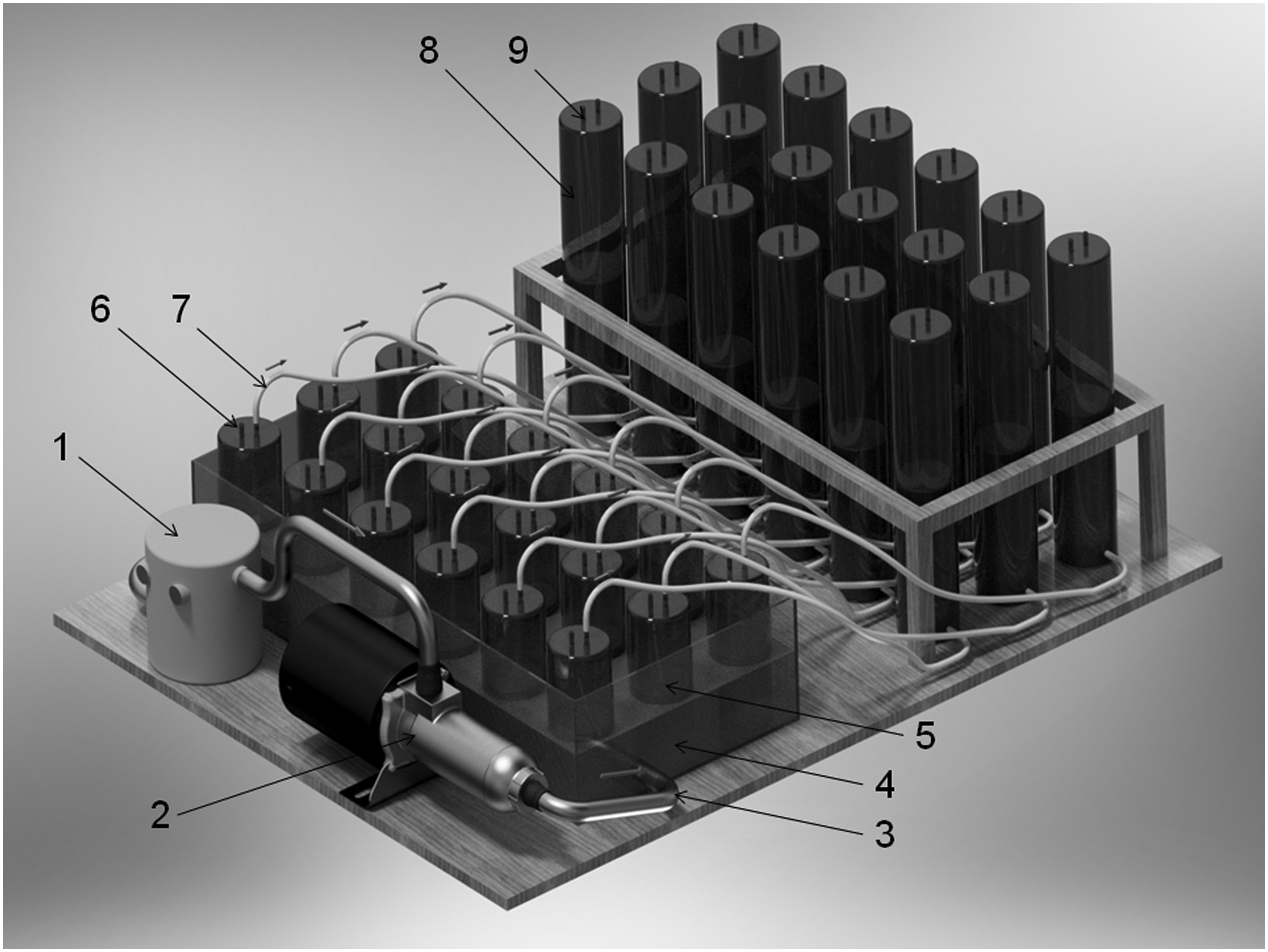
Biofermenter used in biogas production tests (18-chamber section): 1—water heater with temperature adjustment; 2—water pump; 3—insulated tubes for liquid heating medium; 4—water jacket (39°C); 5—biofermenter (1.4 L); 6—slurry sample drawing tube; 7—tube for biogas transport; 8—graduated tank for biogas; 9—gas sampling valve.
Eighteen digestion chambers were used in the tests. Each substrate and the control sample (inoculum) were digested in triplicate. Adequate substrate mixtures were placed in 1.4 L biofermenters (No. 5 in Fig. 1) with 1.2 L of the feed in each. The material was stirred every 24 h to prevent any uncontrollable decay of the organic matter and to ensure the effectiveness of the carrier. Each biofermenter was equipped with a water jacket (No. 4 in Fig. 1) connected to a heater (No. 1 in Fig. 1). This enabled control of the temperature. The tests were carried out under mesophilic conditions (at ∼39°C). The resulting biogas was transported through tubes (No. 7 in Fig. 1) into tanks filled with a neutral liquid (No. 8 in Fig. 1). In accordance with VDI Guideline 4630 (2006), the experiment was conducted for each substrate until the daily biogas production was lower than 1% of the total amount generated.
Analytical methods
Before and during fermentation, the substrates, inoculum, and batches were analyzed according to applicable procedures shown in Table 3.
Analytical Methods
ICP-OES, inductively coupled plasma optical emission spectrometry; TA, total alkalinity.
The biogas generated in the AD process was analyzed qualitatively and quantitatively. The fermented waste was monitored microbiologically and biochemically
Analysis of gas samples
Generated gas volumes were measured every 24 h. The gas volumes of at least 1 L were analyzed qualitatively, initially once a day, and then, as lower volumes were generated, every 3 days. The concentrations of methane, carbon dioxide, hydrogen sulfide, ammonia, and oxygen were measured with a Geotech GA5000 gas analyzer. The gas monitoring system was calibrated once a week by means of calibrating mixtures from Air Products. The calibrating gas mixtures were used at the following concentrations: 65% CH4 and 35% CO2 (in a single mixture), as well as 500 ppm H2S and 100 ppm NH3.
Microbial analyses of digestate
The total bacterial count in the six samples was identified directly under a fluorescence microscope (Zeiss) by means of fluorescent in situ hybridization (FISH), which was modified according to Amann et al. (1990a). There were four terms of microbial analyses: first—at the beginning of the experiment, second—after 5 days, third—after 8 days, and fourth—after 14 days.
Digested material (0.01 mL) was placed on the surface of microscope slides by means of a Breed pipette, and then it was fixed with a 4% paraformaldehyde (PFA) solution. At the next stage, the samples were washed in a phosphate-buffered saline (PBS) solution thrice and 0.5% Triton solution was added. Then, the samples were washed in the PBS solution thrice again. Next, they were placed in an alcohol series (70%, 80%, and 96%). When 70% formamide solution was added, the genetic probe EUB338 GCT GCC TCC CGT AGG AGT (Amann et al., 1990b) was applied. It was concentrated at 25 ng/uL, marked with Cy5 fluorescent dye, and suspended in a solution consisting of 5 M NaCl, 1 M Tris/HCl, 25% formamide, 10% sodium dodecyl sulfate (SDS), and ddH2O.
After a 24-h incubation of the digestate samples in darkness at a temperature of 37°C, they were analyzed by means of a Zeiss AxioImager M1 fluorescence microscope equipped with an AxioCam MRc5 color digital camera. The image was analyzed with the AxioVision 4.8 software.
At the last (fifth) term of analyses, the aforementioned in situ hybridization method was used to measure the count of methane microorganisms of the Archaea domain. To detect these microorganisms in the digested waste samples, the ARCH915 GTG CTC CCC CGC CAA TTC CT probe marked with Cy5 fluorescent dye was applied, as suggested by Stahl and Amann (1991).
In addition, the digestate sample with the largest count of microorganisms (eubacteria and Archaea) was subjected to analysis of bacterial colonization on the surface of the carrier, that is, lignin. The sample was analyzed with a Hitachi SU3500 scanning electron microscope (SEM), which enables observation of samples magnified 5–100,000 times. The SEM was equipped with a BSE-3D detector (backscattered electron image). During measurements, the pressure in the microscope chamber was 50 Pa. The electron beam size was 50, whereas its intensity ranged from 86,900 to 93,100 nA.
Analyses of enzymatic activity of digestate
Spectrophotometry was applied for biochemical analysis. The dehydrogenase activity (DHA) was determined according to the method developed by Thalmann (1968) with some minor modifications. The waste (5 mL) was incubated for 24 h with 2,3,5-triphenyltetrazolium chloride (TTC) at 30°C, pH 7.4. Triphenylformazan (TPF) was produced, extracted with 96% ethanol, and measured spectrophotometrically at 485 nm. The DHA was expressed as μmol TPF/g DM of waste.
Statistical analysis
Data were statistically processed with the Statistica 12.0 program. Two-way analysis of variance was used to verify the significance of variations in the count and activity of the microorganisms under study according to the experimental variant and term of analysis.
The sequential procedure of descending stepwise regression from the fifth grade was used to select the multiple regression model and present the results of microbial and enzymatic analyses. The determination coefficient R2 was used to fit the model.
Calculation of cumulative biogas and methane
After the qualitative and quantitative analyses of the gas, the final step was to assess the biogas yield per unit (m3/Mg) of organic dry matter. The calculations were based on the test results. The biogas yield from the substrates was calculated by subtracting the volume of gas generated from the inoculum and from the inoculum+lignin. The ratio of gas generated from the inoculum in the batches in the reactors filled with the substrate mixtures was calculated according to the following equation:
where VIS(corr.)—the volume of gas released from the inoculum (mLN); ΣVIS—the total volume of gas released from the inoculum during the test (mLN); mIS—the mass of the inoculum used for the mixture (g); and mM—the mass of the inoculum used in the control test (g).
Specific volume of digestion gas VS produced from substrate during the test was calculated step by step (from reading to reading) according to the following equation:
where VS—the specific volume of digestion gas produced relative to the mass loss on ignition during the test (LN/kgGV); ΣVn—the net volume of gas produced from the substrate during the test (mLN); m—the mass of the weighed-in substrate (g); wT—dry residue of the sample (%); and wV—loss on ignition (GV) of the dry mass of the sample (%).
Results and Discussion
Characterization of substrates and inoculum
Stuffed wafers (WAF) used in the experiment were characterized by neutral pH. The TS and VS (volatile solids) values were high and comparable. The C/N ratio was high due to the considerable content of carbohydrates and fats. These data can be found in Table 1. The permissible values of the parameters, which may inhibit biogas production, including ammonium nitrogen (0.98 wt. %TS), and the content of light metal ions K+, Na+, Mg2+, and Ca2+ (Chen et al., 2008), indicate that the material is good for methane production, although it is very rarely used for this purpose (Rusín et al., 2015; Pilarska, 2018). The inoculum (digested sludge) and raw SS used in the experiment were characterized by relatively low TS content and high VS content. The inoculum was characterized by relatively high conductivity. It confirms the presence of mineral components, which potentially favor the development and metabolism of anaerobic bacteria (Wan et al., 2011; Pilarska, 2018). The content of light metal ions in the inoculum was higher than in the raw sewage sludge. It is noteworthy that the chemical oxygen demand (COD) value in the inoculum (1,630 mg/L) was much lower than in the raw sewage sludge (3,200 mg/L). This means that during the AD, the organic residue and the residue of some inorganic compounds such as sulfites and sulfides were decomposed. The COD values noted in the experiment were in agreement with those reported in the literature (Silvestre et al., 2011). The content of heavy metals in both residues was comparable. In fact, any content of heavy metals in sewage sludge (Chen et al., 2008; Lin et al., 2017; Zhang et al., 2014; Fonoll et al., 2015) may inhibit methane production. The authors of this article investigated and characterized both raw and digested sludge in their previous studies (Pilarska et al., 2016; Pilarska, 2018).
Process stability
As can be seen in Table 2, the initial pH of the batches was close to 7. The neutral pH of materials undergoing digestion is an essential condition of process stability. During the experiment, the pH of the mixture undergoing digestion remained similar in both samples with the lignin-PVP carrier and those without it. As can be seen in Fig. 2, the pH of all the samples ranged from 6.92 (at the initial phase of the process) to 7.58 (at the final phase of the process). These values did not involve the risk that the production of biogas, including methane, might be inhibited. There were no significant drops in the pH value. It is important due to the fact that an acidic environment may decrease the microbial population and cause reactor performance instability (Chen et al., 2008; Purnomo et al., 2017). According to the literature, combinations with immobilized anaerobic microorganisms may exhibit better pH stability than combinations without immobilization due to the carrier and/or substances added to the carrier, for example, essential micronutrients. The addition of Fe2+ to a zeolite carrier promotes the attachment of bacterial species to the zeolite surface and favors their growth. In consequence, the process is stable (Purnomo et al., 2017). The stability of a combination can also be attributed to the carbonate/bicarbonate buffering, which guards against possible acidification of reactors by giving a pH of the same order as the optimal value for methanogenic bacteria (Fernández et al., 2007).
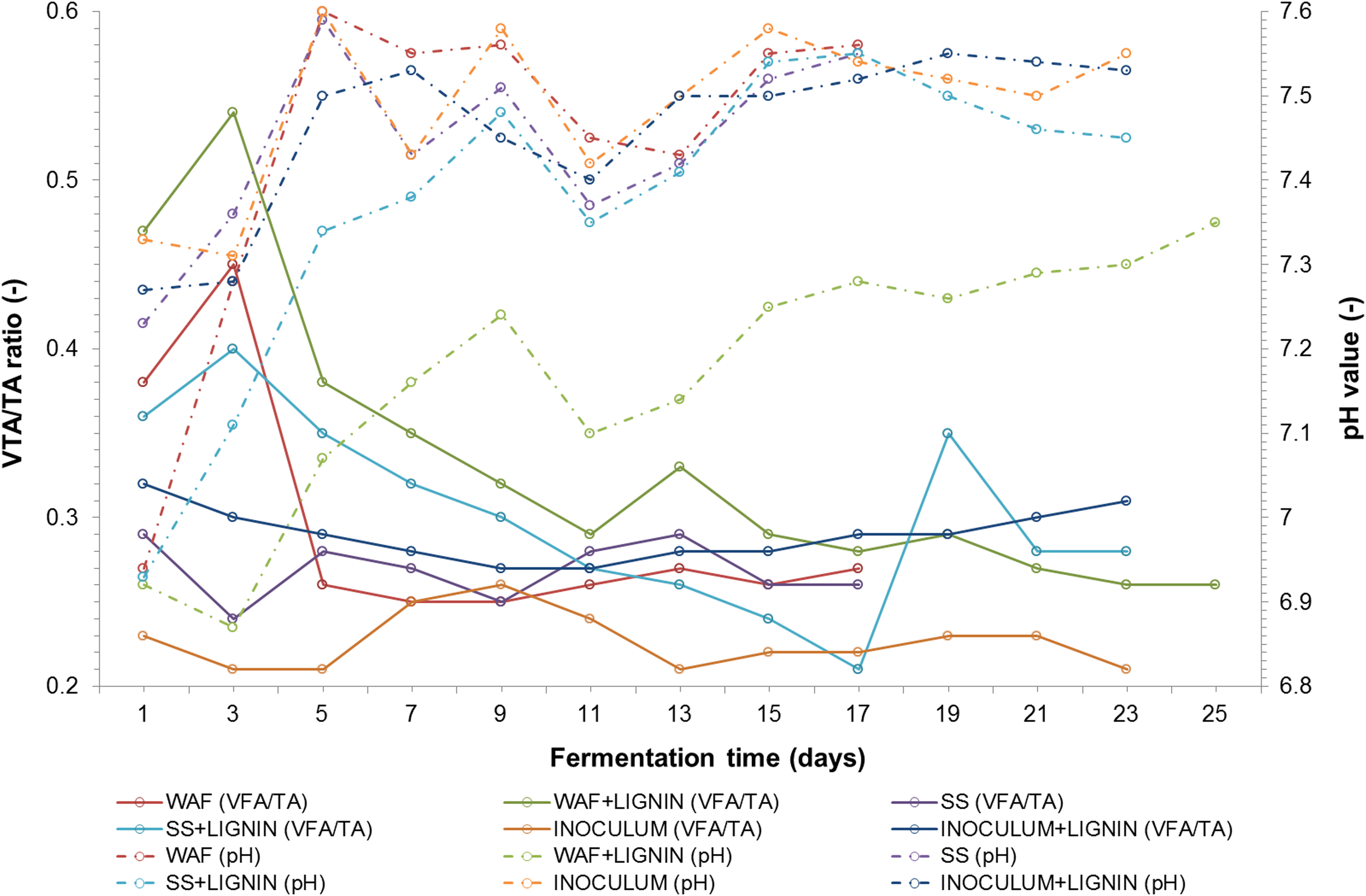
Variation in pH and VFA/TA ratio during the anaerobic digestion of the WAF, WAF+lignin, SS, SS+lignin, inoculum, inoculum+lignin samples. SS, sewage sludge; TA, total alkalinity; VFA, volatile fatty acids.
Monitoring of the process stability included not only measurements of the pH value but also the volatile fatty acids-to-total alkalinity (VFA/TA) ratio and VFA. The process was stable in nearly all the batches. Only in the combinations with stuffed wafers (WAF) and wafers with the carrier (WAF+lignin), on the third day of measurements, the VFA/TA ratio increased to 0.45 and 0.54, respectively (Fig. 2). It points to the accumulation of VFA and some instability. In the combination with sewage sludge and lignin (SS+lignin) the VFA/TA ratio reached the limit value of 0.4. The longest retention time was noted in the WAF+lignin sample (25 days). It was slightly shorter in the SS+lignin, inoculum, and inoculum+lignin samples (23 days). The shortest retention time was observed in the WAF and SS samples (17 days).
Figure 3 shows variation in the VFA concentration in the mixtures during the digestion process. As can be seen, the highest VFA concentration was noted at the initial phase in the WAF and WAF+lignin samples (2,500 and 2,650 mg/L, respectively). It was lower in the SS+lignin (1,890 mg/L) and SS samples (1,700 mg/L). In the other batches, these values did not exceed 1,700 mg/L.

Variation in VFA concentration during the anaerobic digestion of the WAF, WAF+lignin, SS, SS+lignin, inoculum, inoculum+lignin samples.
Biochemical and microbial characterization of digestate
Results of research on the influence of lignin-PVP carrier on the total bacterial count and DHA were analyzed statistically. The two-way analysis of variance proved that these factors significantly influenced (p = 0.001) the dynamics of changes in the count of microorganisms and enzymatic activity (Table 4).
F Test Statistics and Significance Levels of Two-Way Analysis of Variance for the Dehydrogenases Activity and Number of Bacteria Associated with Combination and Terms Research Fixed Factors
p = 0.05; ***p = 0.001.
ns, Not statistically significant.
The multiple regression analysis proved that the second-degree model was the best-fitted model for both parameters (microbial count and activity). None of the higher-degree models was better fitted. The determination coefficient R2 for the squared model had the highest values, which ranged from about 0.27 to 0.99.
Analysis of mean values of the results noted in individual variants showed that during the experiment, the highest count of eubacteria (Figs. 4 and 5) was observed in stuffed wafers subjected to methane digestion, that is, in the WAF and WAF+lignin samples. However, when lignin modified with the PVP compound was added (WAF+lignin), the proliferation of the bacteria increased by 77%. There was a similar reaction of the microorganisms in the other experimental variants (Fig. 4).
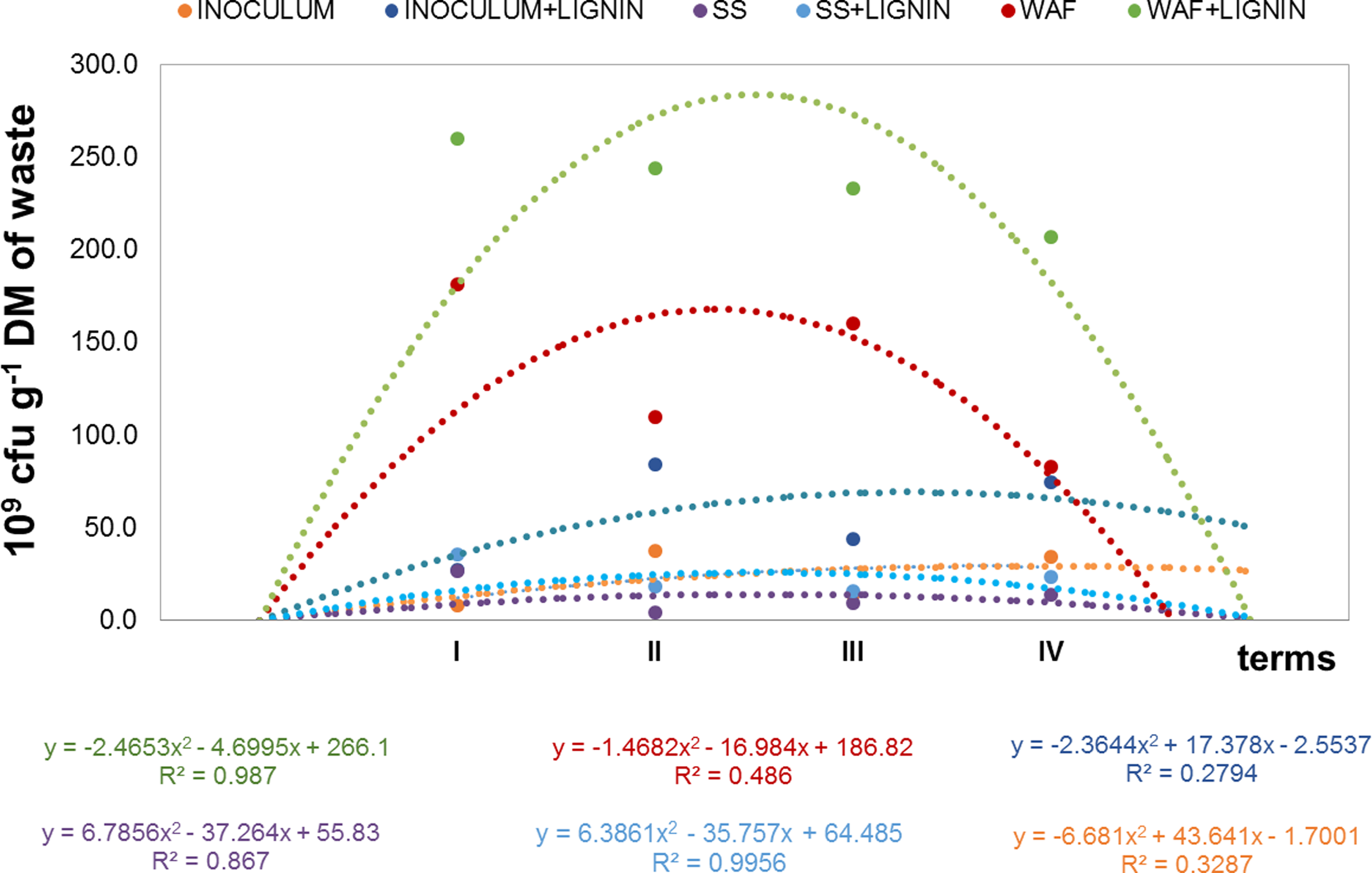
Variation in total count of heterotrophic eubacteria in the samples subjected to anaerobic digestion.

Specific identification of whole fixed bacterial cells with fluorescent oligonucleotide probes (FISH) in the WAF+lignin sample. FISH, fluorescent in situ hybridization.
The authors of this study maintain that the cells bound to the lignin-PVP carrier through covalent bonds (chemical adsorption). The theory of covalent immobilization of a methanogenic consortium was also formulated by Lalov et al. (2001). They used a granulated polymeric support [poly(acrylonitrile- acrylamide)] to improve biogas production. The researchers found that the methanogenic microorganisms bound to the synthetic polymer by hydroxymethyl groups from the support, and probably by amino groups from the methanogenic cells. It is known that the cell walls of methanogens often contain proteins and other organic compounds with amino groups, which may take part in that reaction (Lalov et al., 2001). Following this observation, it is possible to pose the hypothesis that if lignin is used, the bond will be made by hydroxyl and hydroxymethyl groups from lignin and amino groups from the cells. The hypothesis needs to be confirmed by analyses conducted in further research.
The bond between cells and the carrier in covalent immobilization is more stable and it gives positive results.
In our experiment, the lowest bacterial count remained in the raw sewage sludge (sample SS, see Fig. 4). This reaction of microorganisms may have been caused by the chemical composition of this waste, as it contained sufficient amounts of heavy metals, pesticides, polychlorinated biphenyls, and polycyclic aromatic hydrocarbons to inhibit the growth and activity of microorganisms (Khan and Scullion, 2002; Pilarska, 2018).
The type of the experimental material was an important parameter affecting the count of methane microorganisms of the Archaea domain. The microbiological analysis conducted at the last term of the study showed that the reaction of methane microorganisms to the type of waste was similar to the reaction of heterotrophic eubacteria (Fig. 6).
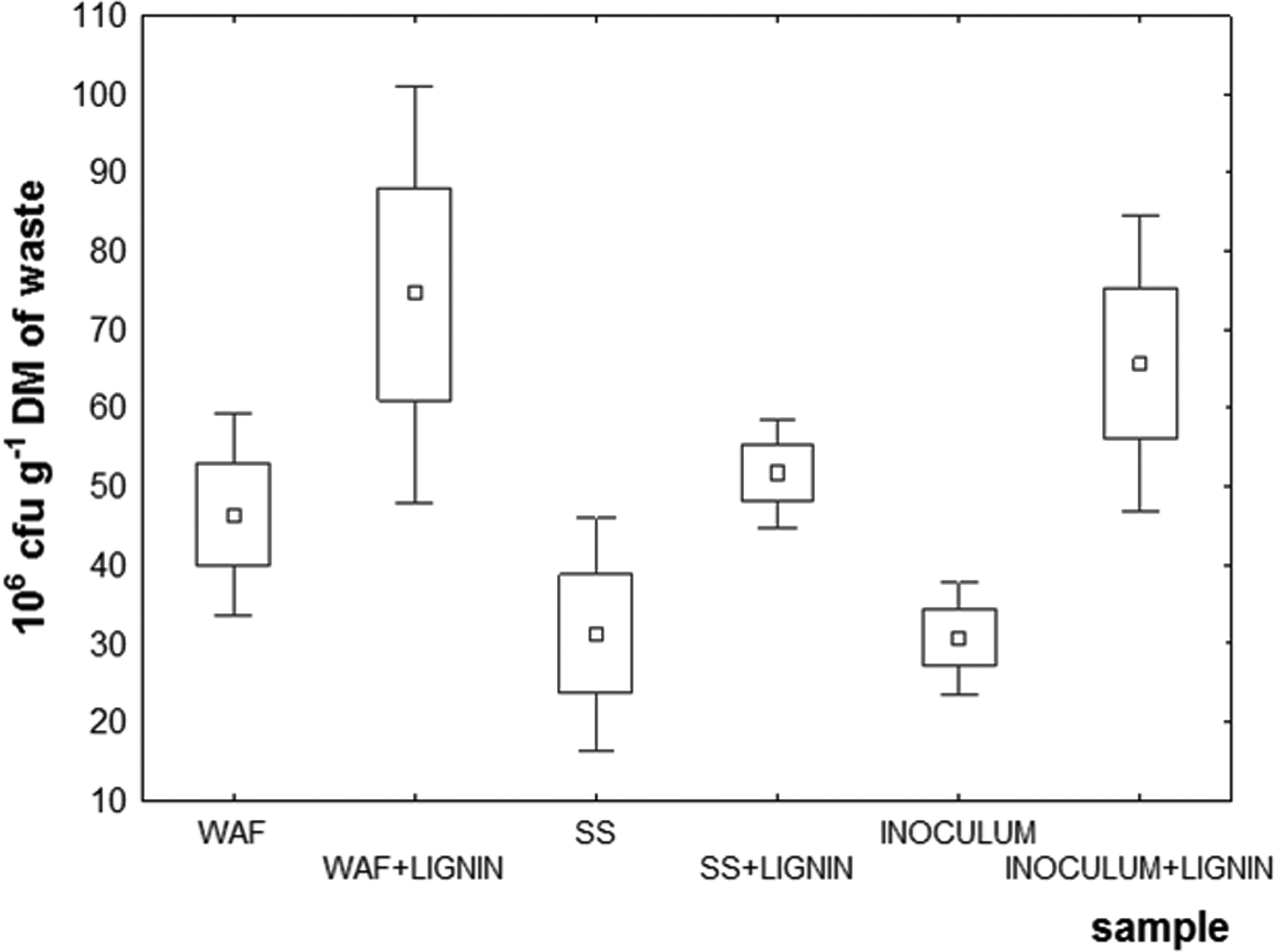
Count of Archaea in the samples subjected to anaerobic digestion—the last term of analyses.
The WAF+lignin sample, which was characterized by the largest count of these microorganisms, was analyzed with an SEM to observe the colonization of the lignin surface (Fig. 7). It showed that there were mostly rod-shaped bacteria concentrated on the surface. These results contrast with the results obtained with the FISH method (Fig. 5), which also revealed the presence of coccus-like bacteria. Fernández et al. (2007) made similar observations and concluded that the differences in the morphological shapes of bacteria may have been caused by inhomogeneity of the material sample analyzed with a microscope. The author also observed the effect of colonization on the carrier surface: a compact mass of microbial species, principally bacillary and filamentous forms, persistently remaining on the matrix surface.
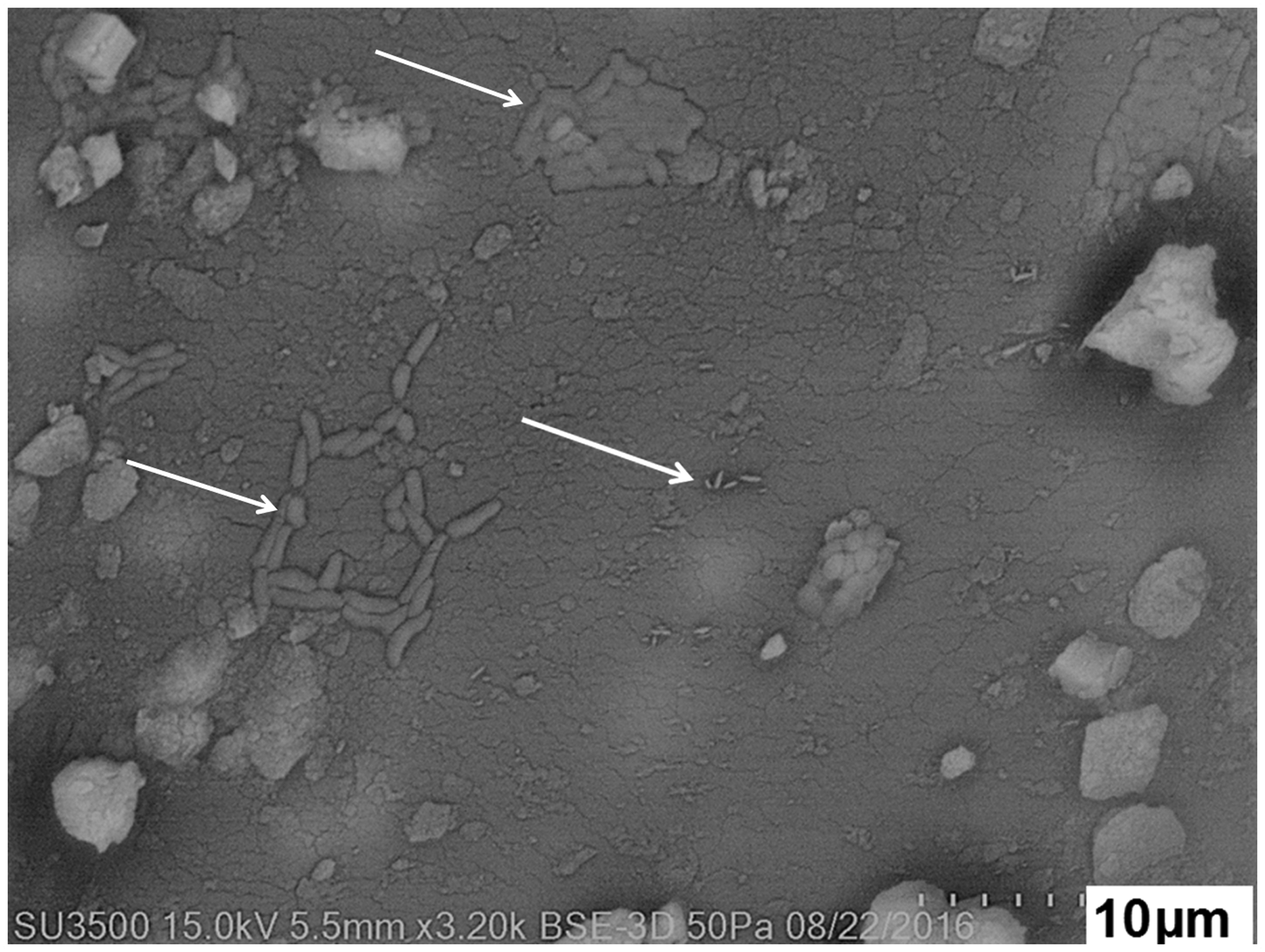
SEM image of the lignin surface colonized in the WAF+lignin sample. Arrows indicate colonies of cells on the lignin surface. SEM, scanning electron microscope.
DHA is regarded as a determinant of microbial activity, because these enzymes accelerate the dehydration of specific substrates in the processes of biochemical oxidation of organic components (Wyszkowska and Wyszkowski, 2010; Chen et al., 2017). There is dependence between DHA, respiratory activity, and the content of organic matter in the substrate (Wyszkowska and Wyszkowski, 2010).
The results of biochemical analyses presented in Fig. 8 show that in most samples, the DHA tended to increase until the third term, that is, the eighth day. It is most likely that this tendency was caused by the availability of easily decomposable organic matter (Chen et al., 2017).
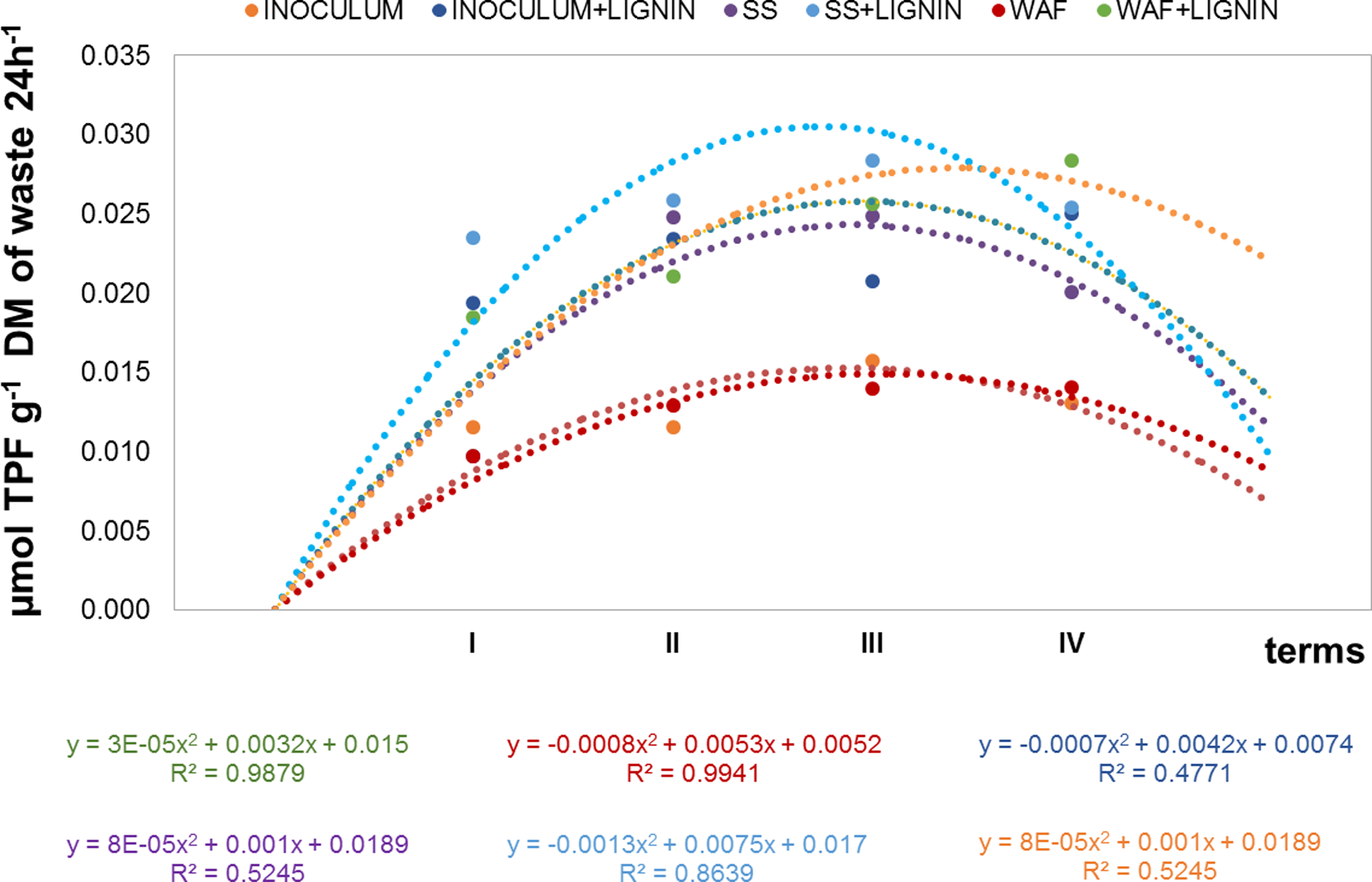
Variation in DHA in samples subjected to anaerobic digestion. DHA, dehydrogenase activity.
At the last term of the experiment, a further increase in the DHA was only observed in the variants enriched with the lignin-PVP carrier. According to Sumitra et al. (2013), the use of carriers in biotechnological processes stabilizes the structure of enzymatic proteins as they are more efficient, thermally stable, and resistant to chemical substances in the substrate.
The lignin-PVP carrier had positive influence on the DHA in all the experimental variants. It was particularly noticeable in the SS+lignin sample (Fig. 8). The increased DHA in the unprocessed sewage sludge with lignin may have been caused by the availability of organic matter as well as the fact that the raw sewage sludge, which has complex composition, abounds in microbial species originating from various environments.
Statistical analysis revealed a negative correlation between the count of eubacteria and DHA in most of the experimental variants, except the inoculum+lignin sample (Fig. 9). Such a situation is indeed possible. According to Lynch and Panting (1980), the count of microorganisms is not always positively correlated with their metabolic activity. A large count of microorganisms in a particular substrate may coincide with their low metabolic activity.
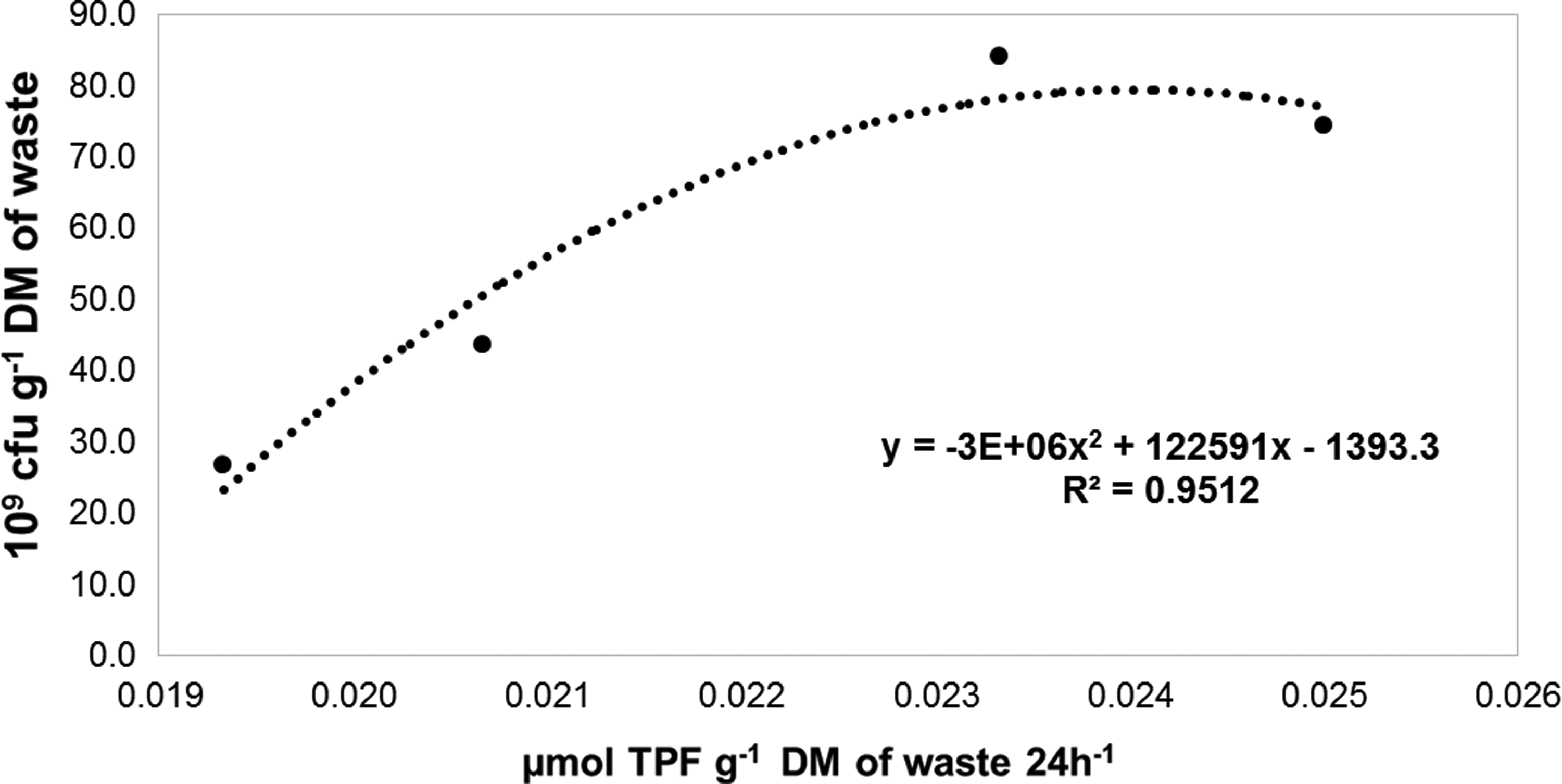
Dependence between the count of eubacteria and the DHA in the inoculum+lignin sample.
Biogas production efficiency
Each day, the production of biogas, including methane, proceeded efficiently (see the curves in Fig. 10a, b). The process was completed between day 17 (WAF and SS samples) and day 25 (WAF+lignin sample). The production process was stable, without any noticeable inhibition.

Cumulative biogas
There was higher AD efficiency in the variants with the carrier. This finding correlated with the aforementioned results of microbial and chemical analyses. The largest count of bacteria with higher activity in the WAF+lignin sample resulted in the largest quantity of biogas and methane accumulated per VS, that is, 1,201.45 m3/Mg VS and 685.53 m3/Mg VS, respectively (Fig. 11b), where the content of methane was 57.06%. The AD efficiency in the WAF sample (without the carrier) was lower, that is, 897.22 m3/Mg VS of biogas and 500.39 m3/Mg VS of methane. As mentioned in the previous section, the lignin-PVP material provided adequate conditions for the development of bacterial flora. Waste stuffed wafers are an ideal medium for bacteria due to the high content of carbon and high C/N ratio—undoubtedly, they are energetically efficient substrates (Pilarska, 2018). The information about the amount of biogas generated per amount of fresh matter was given for practical and logistic reasons (Fig. 11a), as it constitutes important data for conducting the process in a biogas plant. The results concerning biogas production from the samples with SS (SS+lignin) showed much lower values than the results of calculations including VS (Fig. 11b) due to the low content of TS in this waste (Table 1).
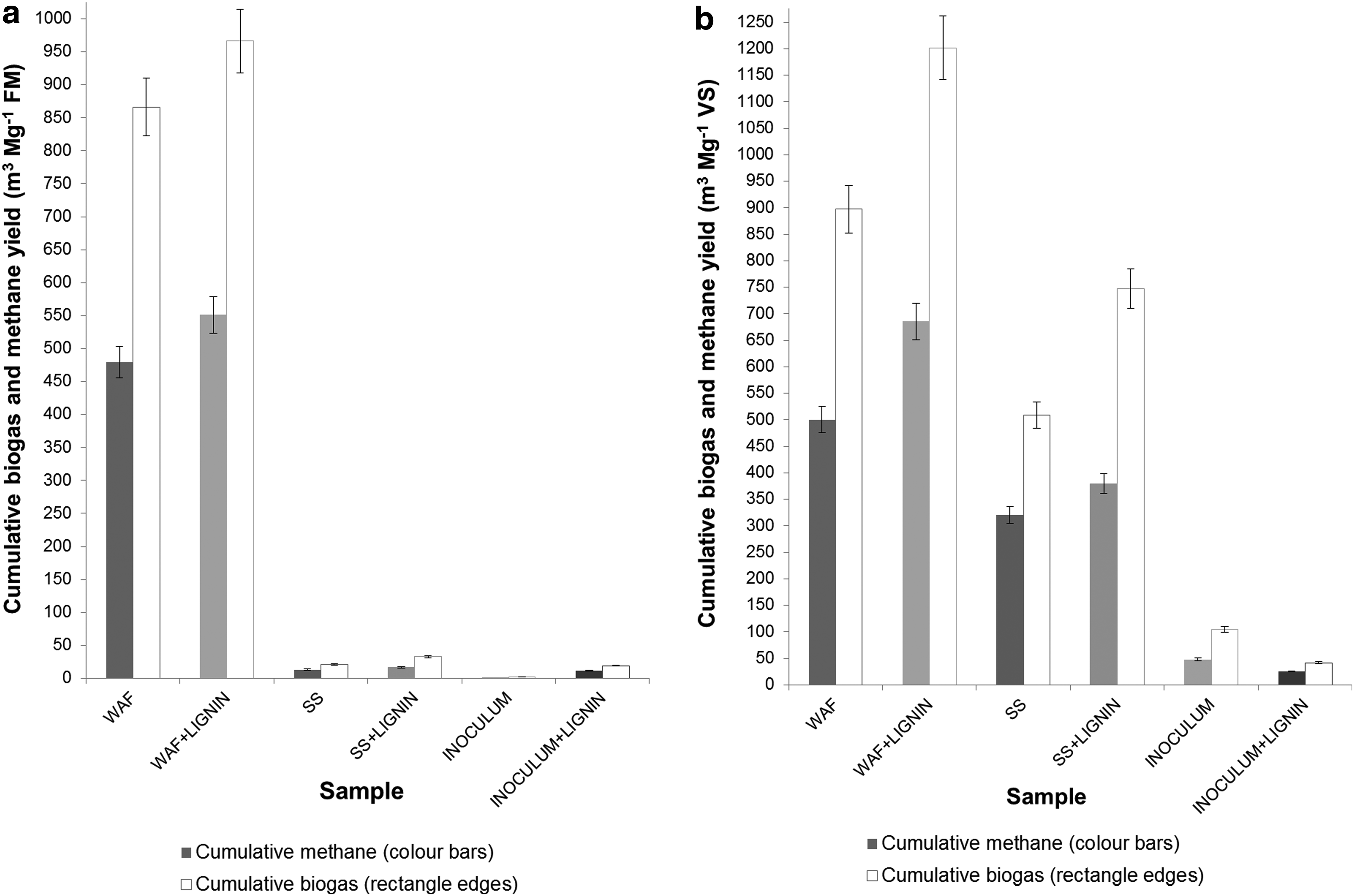
Cumulative biogas and methane yield from the FM
As sewage sludge has a low content of TS and a lower C/N ratio (Table 1), it generates smaller amounts of biogas. Another reason for its lower efficiency is the content of heavy metals and chemical compounds inhibiting the AD process (Fonoll et al., 2015; Pilarska et al., 2016). However, using lignin as a microbial carrier improved the efficiency of biogas generation from this material. As can be seen in Fig. 11b, the amount of biogas increased from 508.85 m3/Mg VS in the SS sample to 746.82 m3/Mg VS in the SS+lignin sample. The content of methane in the biogas generated from the sewage sludge sample with the carrier was 50.83%. The noticeable improvement in the efficiency of AD of raw sewage sludge showed that the lignin-PVP material not only extended the activity and stability of the microbial consortium but also adsorbed hazardous metal ions in the sludge. Lignin (aka “green sorbent”) is characterized by high porosity and total pore volume. According to the literature, there have been successful studies on the biosorption of different heavy metal ions onto kraft lignin, mostly nickel, cadmium, and lead (Ńćiban et al., 2011; Klapiszewski et al., 2015; Li et al., 2015) contained in wastewater.
Conclusions
There were positive results of cell immobilization on the lignin-PVP carrier. In the variants with the carrier, microbial cells proliferated much more intensely and exhibited higher activity. The most intensive proliferation of microorganisms was observed in the variant with wafers and the carrier (WAF+lignin), whereas the highest microbial activity was noted in the sewage sludge sample with the carrier (SS+lignin).
Results of microbial and chemical analyses corresponded to the process efficiency. The application of lignin with PVP to the mixtures subjected to AD resulted in higher production efficiency of biogas, including methane. This fact significantly increases the potential to use them in industrial production and improves the general cost-effectiveness of the construction and operation of a biogas installation. The amount of biogas produced from waste wafers increased from 897.22 m3/Mg VS to 1,201.45 m3/Mg VS, whereas the amount of biogas produced from sewage sludge increased from 508.85 m3/Mg VS to 746.82 m3/Mg VS. The amount of methane produced from waste wafers increased from 500.39 m3/Mg VS to 685.53 m3/Mg VS, whereas the amount of methane produced from sewage sludge increased from 320.48 m3/Mg VS to 379.60 m3/Mg VS.
There are plans to continue research on the application of lignin as a microbial carrier and as a factor reducing the content of AD inhibitors, especially heavy metals. Further studies will also include analyses of the physicochemical characteristics of the lignin-PVP material.
Footnotes
Acknowledgments
This study was supported by the Biolab-Energy A&P Company (Poznań, Poland). The English language of this article has been improved by Richard Ashcroft, a freelance scientific copy editor.
Author Disclosure Statement
No competing financial interests exist.