




Abstract
Abstract
The number of biogas power plants increased significantly in the recent years. A lot of countries developed competitive national biogas markets after decades of intensive research and technology innovation. Biogas power plants make use of advanced anaerobic digestion processes to increase the production of biogas as a principal source of income. On the other hand, digestate is still considered a by-product and usually disposed of in landfills. This article proposes energy generation from digestate as a financially viable alternative. Before energy generation, digestate is separated into solid and liquid fractions and dried by thermal energy. Calorimetric measurements showed that the heating value of digestate is 13 MJ/kg, which favors its energy generation potential, especially if the excess heat from cogeneration is used for the drying. The digestate produced in biogas power plants can be used as a low-cost alternative fuel for electricity generation in biomass power plants. It is estimated that digestate-generated electricity could contribute with 4.2% of the total electricity generation in Croatia. The economic analysis revealed that the price of electricity generated from digestate, under the present feed-in tariff system in Croatia, is two to three times higher than the total cost of digestate.
Introduction
I
The European biogas market comprises thousands of biogas facilities. At the end of 2014, the number of biogas cogeneration facilities operating in the EU-28 was 17,240, with a total installed electrical capacity of 8,339 MW, a 20% increase with respect to the year before (European Biogas Association, 2016). These biogas facilities generated a total of 63 TWh of electricity, which is equivalent to the needs of 15 million households (European Biogas Association, 2016).
The majority of biogas facilities are focused on electricity generation. On the other hand, the generated heat is used only partially (Rutz et al., 2012). This is because thermal energy finds limited commercial use, achieves lower prices, and is considered of lower quality than electricity. This ineffectiveness is a drawback of the modern biogas industry, which leads to microeconomic and macroeconomic losses, but also challenges regarding the increasing competition for land utilization.
Biogas is produced in the process of anaerobic digestion (AD), which is a biochemical process where different types of anaerobic microorganisms (acidogenic bacteria, acetogenic bacteria, and methanogenic archaea) degrade complex organic matter (biomass) into less complex organic compounds, in oxygen-deprived environment. The same process occurs in biogas facilities where the incoming organic material, the raw material or substrate (Vindiš et al., 2010), is anaerobically digested into two main products: biogas and digestate. Generally, AD is focused on the production of biogas as the principal product, while digestate is considered a by-product, which results with additional costs to biogas facilities.
The digestate can be used in different ways. Nowadays it is used as a fertilizer, which is the easiest way for its disposal, moreover because digestate is rich with macronutrients (nitrogen, N, phosphorus, P, and potassium, K) and micronutrients (e.g., selenium and copper) (Saedi et al., 2008). Digestate contains significant fractions of water and carbon in the undigested organic matter, between 3% and 5% of the total volume. Each component of digestate has its own developed market. Nevertheless, digestate is deemed a highly valuable fertilizer, but with unstable ratio of nutrients and high costs of application and storage. Digestate has specific chemical composition and affects positively only on some agricultural species, which makes its disposal an increasing problem.
As a fertilizer, digestate must comply with the Nitrates Directive. The Nitrates Directive is a colloquial term for the regulation called Council Directive 91/676/EEC dating from December 12, 1991, concerning the protection of waters against pollution caused by nitrates from agricultural sources (European Economic Community, 1991). Excessive landfilling with digestate could be avoided if new applications of digestate are developed, some of which could be implemented in upgraded biogas facilities.
A number of studies investigated on the possible alternative uses of digestate, beside land fertilization. Kratzeisen et al. (2010) studied the combustion properties of dried digestate for energy generation and found that digestate have heating values between 15 and 16 MJ/kg, which is comparable to wood.
Monlau et al. (2015) concluded that the excess heat from biogas facilities could meet the needs of digestate drying and coupling digestate pyrolysis to AD results with 42% more electricity compared to standalone AD.
Hossain et al. (2016) tested the performance of a multicylinder diesel engine running on blends of digestate pyrolysis oil. They found that pyrolysis oil blends ignite later and combust faster than fossil diesel. For a blend with up to 30% of pyrolysis oil, the engine thermal efficiency decreased 7% and the fuel consumption increased 32%, while CO emissions decreased 66% compared to fossil diesel.
Neumann et al. (2016) used a novel thermocatalytic reforming process for the conversion of digestate with a heating value of 14 MJ/kg into high-quality bio-oil with low acidity and heating value of 35 MJ/kg.
Pedrazzi et al. (2015) investigated on the use of digestate as biofuel in domestic furnaces. They found that furnaces burning digestate-wood pellets with heating value of 16.5 MJ/kg achieve 46% efficiency, while furnaces burning pure wood pellets with heating value of 19 MJ/kg achieve 55% efficiency.
This research will show that digestate has a large potential as alternative fuel for energy generation. The digestate heating value will be determined experimentally by means of calorimetric measurements and the digestate potential of Croatia will be calculated.
Biogas in Croatia
Biogas production and utilization in Croatia is one of the less developed, but recently a very dynamic sector in the field of renewable energy sources (RES). Although RES have been identified in the Energy Act, the major turning point for RES projects occurred in 2007, when bylaws regulating the generation of electricity from RES were passed, together with a tariff system for renewable electricity producers.
The Croatian feed-in tariff (FiT) determines the producer's eligibility, the level and the duration of the subsidized price for electricity generation from RES and cogeneration. The tariff levels defined in the FiT system depend on the type of renewable energy source, the installed capacity, and the quantity of electricity supplied to the grid. The aim is to ensure privileged status and reasonable return of investment to producers of electricity from RES within the national electricity market.
Until mid-2009, there were only three biogas facilities in Croatia and only one of them was using agricultural feedstock as an eligible producer of renewable electricity. The Ivankovo biogas power plant is a cogeneration unit producing biogas from manure and corn silage feedstock, with installed capacity of 1 MW and annual electricity generation of 8 GWh, while the obtained thermal energy is used for feedstock drying (Saedi et al., 2008).
Beside the Ivankovo biogas power plant, the other two biogas producers are the Zagreb Wastewaters facility for wastewater treatment and the landfill power plant Jakuševac. The Zagreb Wastewaters biogas power plant generates electricity and thermal energy from wastewater sludge. The installed capacity is 2.5 MW and the annual electricity generation is 13.2 GWh. The lower calorific value of the biogas is 24 MJ/m3. Electricity and heat are supplied to the water purification plant, while the surplus electricity is delivered to the national electrical grid. The Jakuševac power plant uses landfill gas from municipal waste. The landfill gas, which consists mostly of methane and carbon dioxide, has a lower calorific value of 18 MJ/m3. The power plant has an installed capacity of 3 MW and an annual electricity generation of 15 GWh.
At present, in Croatia, the total installed electrical capacity is 35.7 MW in 22 biogas power plants and the annual generated electricity is 237.3 GWh (Ministry of Environment and Energy, Republic of Croatia, 2016).
Using the available data for Croatia, it is possible to estimate the total quantity of digestate produced in biogas power plants and the amount of energy that could be obtained from it in nearby biomass power plants. In this way, digestate would be appropriately taken care of, instead of being disposed in landfills where it is a potential hazard to the environment. Therefore, digestate can be considered an additional source of income to both biogas and biomass power plants, while also improving the renewable energy image of Croatia.
Today, biogas production in Croatia is coupled to agricultural biomass. However, the utilization of agricultural biomass as feedstock material in biogas power plants is limited by the present agricultural production, the season of the year, and transport costs between the place of origin and the power plant. These are the main reasons behind the smaller installed capacities in biogas power plants compared to the biomass capacities (including waste and wastewater).
Biogas production from agricultural feedstocks, such as crop residues, manure, and a variety of organic waste, offers a number of advantages: it is a renewable energy source, contributes to the reduction of greenhouse gases and methane (CH4) emissions in the atmosphere, reduces the organic waste and prolongs the landfill lifetime, and prevents soil and water pollution. The benefits of biogas utilization spread over several sectors of the economy. Therefore, biogas production and use are regulated by several bylaws and, compared to other RES, this complicates the implementation of biogas projects, especially because biogas feedstocks are agricultural and animal waste materials. This problem is even more emphasized for digestate because digestate is not yet defined as a new feedstock, but rather as a waste generated in biogas facilities.
However, due to the strict regulations in the EU, digestate landfilling or spreading on agricultural fields will soon be prohibited. Because of that, it is necessary to find new and innovative uses for the digestate produced in biogas facilities.
Materials and Methods
Digestate composition and preparation
The observed digestate is obtained by mesophilic AD (at 38°C during 42 days) of pig manure and corn silage. The ratio of pig manure and corn silage is 30:70. After separation of the solid and liquid fractions of digestete, the samples of dried solid digestate are carefully prepared for the calorimetric procedure. The digestate is dried inside an oven, leaving it for 3 h at a temperature of 130°C. Weighing the digestate samples before and after drying, a moisture content of up to 80% was measured, which indicates that raw digestate is unusable as fuel for combustion processes. The chemical composition of the solid fraction of digestate is given in Table 1.
Chemical Composition of the Solid Fraction of Digestate
Unfortunately, no suitable laboratory equipment was available for the analysis of the liquid fraction composition. The liquid fraction of digestate is usually used for fertigation due to its high content of valuable nutrients. Nevertheless, this study will focus on the solid fraction as the source of energy potential of digestate.
Digestate fuel pellets are obtained by mechanical pressing of dried digestate. Each digestate fuel pellet results with one calorimetric measurement. The digestate pellets are fixed inside the calorimetric bomb with nickel wires connected to the firing electrodes. The calorimetric bomb is then closed, vented, and pressurized with pure oxygen at 30 bar of pressure. The calorimetric bomb is immersed in water inside a brass container. This container is equipped with a stirrer for faster steady-state achievement and with an immersed temperature sensor for water temperature readings.
The calorimetric procedure
Calorimetry is the experimental method for the measurement of heating values of fuels. The thermal energy released during the combustion of fuel pellets is transferred to the calorimetric water and bomb, whose temperature increase are measured. The heating value of the fuel sample is determined by measuring the temperature rise in the water and bomb, as well as the fuel sample mass. The specific heat capacity of water, the quantity of calorimetric water, and the thermal capacity of the calorimetric bomb are known values, provided by the manufacturer of the equipment. The fuel sample is ignited by an electrical charge carried by nickel wires connected to firing electrodes. The small amount of heat released by the combustion of nickel wires is subtracted from the calorimetric heat balance.
Water temperature readings are performed with different time steps depending on the phase of the calorimetric measurement: (1) before ignition, temperature readings are taken every 60 s; (2) immediately after ignition, temperature readings are taken every 15 s; and (3) following the initial abrupt temperature rise, temperature readings are taken every 60 s until steady state is achieved.
The heat balance equation of the calorimetry equates the heat generated from the combustion of the fuel sample and nickel wires (left-hand side) to the heat absorbed by the calorimetric water and bomb (right-hand side), that is
Rearranging the heat balance of the calorimetric bomb (1), the higher heating value of the fuel can be determined as follows:
In the previous equations, Hg (kJ/kg) is the higher heating value of the fuel, Mg (kg) is the mass of the fuel sample, Ww (kJ/K) is the heat capacity of the calorimetric water, Wb (kJ/K) is the heat capacity of the calorimetric bomb, ΔT (K) is the total temperature rise of the calorimetric water and bomb before ignition and after steady state is achieved, and Qh (kJ) is the heat released by the combustion of nickel wires. The heat capacity of the calorimetric water is
In the above equation, Mw (kg) is the mass of the calorimetric water and cw (kJ/[kg·K]) is the specific heat capacity of water. At the average water temperature of 20°C during calorimetric measurements, water has a specific heat capacity of 4.182 kJ/(kg·K) and a density of 998.2 kg/m3 (Christen et al., 2010). The heat capacity of the calorimetric bomb and container is given by the manufacturer, Wb = 1868.3 kJ/K. The calorimetric heat balance needs to be corrected by the heat released from the combustion of the nickel wires, which is calculated from the following equation:
In the previous equation, Mz (kg) is the mass of the burned nickel wire and Hz (kJ/kg) is the heating value of nickel, defined as 6,698 kJ/kg. The mass of the burned nickel wire is determined from the following equation:
In Equation (5), Mo (kg/m) is the linear mass of the nickel wire defined as 8 × 10⁻⁵ kg/m and lbur (m) is the length of the burned wire, calculated as the difference between the initial length of the nickel wire lz (m) and the length of unburnt nickel wires after combustion lrem (m).
Results and Discussion
Heating value of digestate
A total of 10 calorimetric measurements have been carried out to determine the heating value of the digestate. The experimental results are listed in Table 2. It can be seen that the heating value of dried digestate is in the range between 12.5 and 13.5 MJ/kg with the average value at 13 MJ/kg. The heating value of digestate depends on the composition of the source feedstock. However, as it is mentioned before, the type of digestate used in the experiments is specific for Croatian biogas facilities since all of them use similar feedstock, a mixture of corn silage and pig manure.
Higher Heating Value of Digestate Obtained by Calorimetry
The obtained heating value is comparable to those of biomass fuels. For example, a heating value of 16.3 MJ/kg has been measured for pinewood with bark (Kratzeisen et al., 2010), 9.5 MJ/kg for green wood, 15.5 MJ/kg for seasoned wood, 16.8 MJ/kg for wood pellets, and 19.6 MJ/kg for dry bark (Ashton and Cassidy, 2007), while dried sewage sludge has a heating value of 11 MJ/kg (ECN, 2012). For comparison with fossil fuels, lignite coal has a heating value of 20.2 MJ/kg (ECN, 2012).
It should be noted that a certain amount of heat is needed for drying of digestate before combustion. The heating value of the digestate would be lower if the necessary heat for drying is taken into account. Generally, digestate contains large water fractions (Drosg et al., 2015), which were determined to be up to 80% in this study. After mechanical pressing, this moisture content can be reduced down to 40–60%. The remaining moisture needs to be removed during the drying process, for which the excess heat generated in cogeneration facilities can be employed. Taking that the latent heat of vaporization of water is 2.4 MJ/kg, the heating value of digestate would be between 9.5 and 11.4 MJ/kg for moisture contents of 60% and 40%, respectively.
Generally, it is necessary to remove all the moisture present in the digestate to avoid blockage of air supply and possible damage to the furnace (Kratzeisen et al., 2010; WRAP, 2012). The ash content of the digestate is obtained by weighing the residual ash after combustion of digestate pellets in the calorimetric bomb. The ash content of digestate depends on the exact composition of each fuel pellet. The measured ash content is in the range between 7% and 13%, with the average value at 9% (Table 2). The residual ash appears in the form of granules, as shown in Fig. 1.
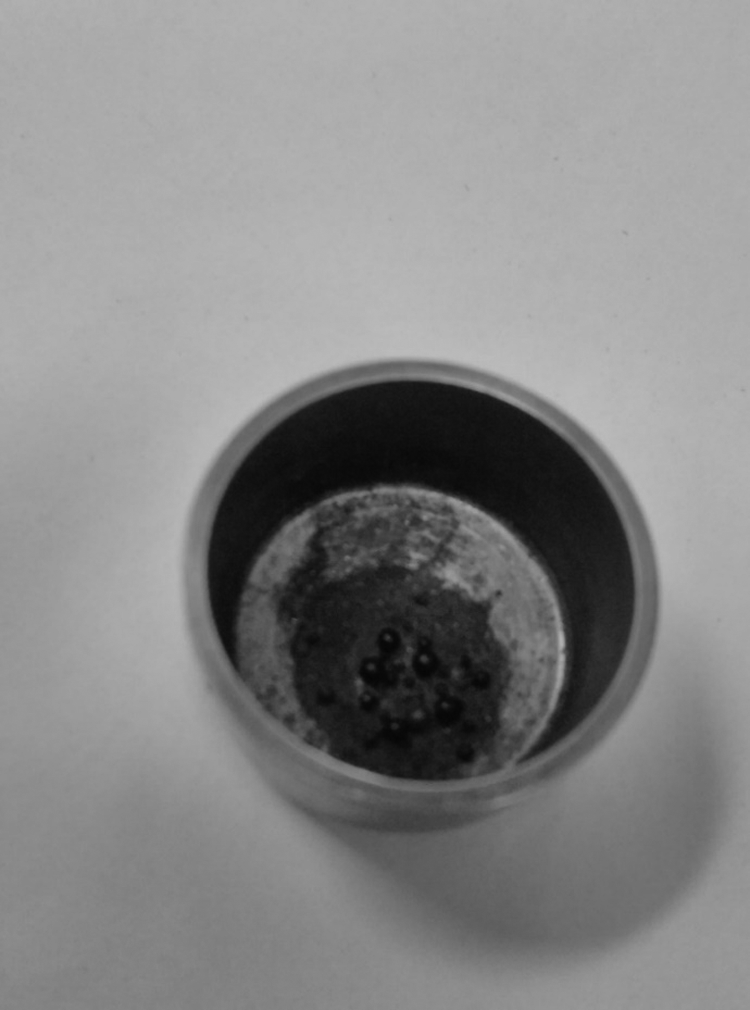
Residual ash in the form of granules obtained from digestate combustion.
The granules may contain trace metals such as magnesium (Mg), boron (B), copper (Cu), zinc (Zn), manganese (Mn), and cobalt (Co), while also inorganic compounds such as calcium oxide (CaO), potassium oxide (K2O), and phosphorus pentoxide (P2O5). These compounds do not react during the calorimetry process (Pels et al., 2005; Rajamma et al., 2009). However, the specific content of granules could not be defined, due to lack of equipment for ash characterization.
Beside combustion, digestate can be used in various biological and thermochemical conversion processes: for production of bioethanol or biomethane, in pyrolysis processes, hydrothermal carbonization (HTC), and vapothermal carbonization (VTC) processes. These processes can be compared with respect to the energy yield. Bioethanol production results with energy yields between 2.5 and 4.3 MJ/kg, biomethane production with 1.8 to 6.4 M/kg, pyrolysis with 8.6 to 10.8 MJ/kg, HTC with 8.7 to 18.2 MJ/kg, VTC with 11.8 MJ/kg, and combustion with up to 17.3 MJ/kg (Monlau et al., 2015).
The energy potential of digestate in Croatia
Based on the results of calorimetric measurements, it is possible to estimate the energy potential of digestate in Croatia, calculating the amount of energy that would be generated if all the digestate from Croatian biogas facilities would be used as fuel. Digestate cannot be used directly as a fuel in biogas power plants, but instead it can be transported to nearby biomass power plants, where further treatment before combustion is necessary (drying, grinding, and pelleting).
Since the owners of biogas facilities in Croatia do not have the obligation to report their biogas production numbers, there are scarce data about the quantity of digestate produced in Croatia. Therefore, it is necessary to make some assumptions. Based on the literature overview, the amount of digestate produced by a biogas power plant with 1 MW of electrical capacity is in the range between 10,000 and 40,000 tonnes per year, depending on the composition of feedstock, the type of biogas power plant, and the type of AD. For example, Germany had a total biogas installed capacity of 3,352 MW in 2012 and the total amount of digestate was 65.5 million m3 (Möller and Müller, 2012; Simet, 2015). Taking that the density of digestate is about the density of water (1,000 kg/m3), it can be calculated that each MW of biogas electrical capacity produces 19,540 tonnes of digestate per year, in Germany.
Digestate production from AD in Croatia is estimated taking into account the life cycle analysis of biogas produced from feedstock of agricultural and animal origin (Whiting and Azapagic, 2014) having similar composition to the feedstock analyzed in this study. One tonne of feedstock, through the AD process, generates 145 Nm3 (or 160 kg) of biogas with 60% methane and 840 kg of digestate. Each Nm3 of biogas generates 1.46 kWh of electricity at 39% conversion efficiency (Whiting and Azapagic, 2014). In other words, 1 MWh of electricity is generated from 685 Nm3 of biogas, while, as by-product, nearly 4 tonnes of digestate are generated in the AD process. At the moment, Croatia has a total installed biogas capacity of 35.7 MW, while an additional 49.2 MW of biogas capacities are awaiting approval and construction, as shown in Fig. 2.

Biogas and landfill gas power plants in Croatia:
Some of these biogas project applications will be rejected since the future planned capacity of 84.9 MW exceeds the present agreed limit of 70 MW. In 2016, the total biogas capacity of 35.7 MW generated 237.3 GWh of electricity in Croatia (Ministry of Environment and Energy, Republic of Croatia, 2016). Therefore, the average MW of biogas capacity generates 6,650 MWh of electricity and 26,600 tonnes of digestate. The measured dry matter fraction of digestate is 20.5% (Table 1), which means that each MW of installed biogas capacity produces 5,450 tonnes of digestate dry matter annually. Taking into account the present rate at which new biogas capacities are being installed, the limit of 70 MW will be reached in the next year or two. These 70 MW of biogas capacities will produce a total annual quantity equal to 381,500 tonnes of digestate dry matter.
Assuming that all of the biogas power plants in Croatia use feedstocks with comparable composition, the average heating value of the dried digestate would be 13 MJ/kg, based on the presented calorimetric measurements. The thermal energy necessary for the drying of digestate is usually supplied by the cogeneration unit, a typical feature of biogas and biomass power plants.
The thermal energy content in the total amount of dry digestate is then 49.6 × 10⁸ MJ or 1,380 GWh. With an average electricity conversion efficiency of 39% in biogas power plants, the annual generated electricity from digestate would be 538 GWh. Since all power plants in Croatia generated a total of 12.8 TWh of electricity in 2016 (Eurostat database, 2016), the estimated amount of electricity from digestate would contribute the national electricity generation with 4.2%.
Economic aspects of digestate
In Croatia, digestate is usually disposed in landfills or as fertilizer on agricultural lands, as these are the easiest solutions. However, dried and pelletized digestate could be used as an additional low-cost fuel in biomass power plants, moreover because biomass and biogas power plants are usually located in the same zones, where agricultural and forestry waste materials are plentiful. This is the case in the continental region of Croatia where agriculture and forestry are both developed, as shown in Fig. 3. The digestate produced as by-product in the biogas power plants can be sold and transported to the nearest biomass power plants. Therefore, digestate includes the following costs: purchase and transport (raw material costs), drying, pelleting, storage, and labor at the site of the biomass power plant.
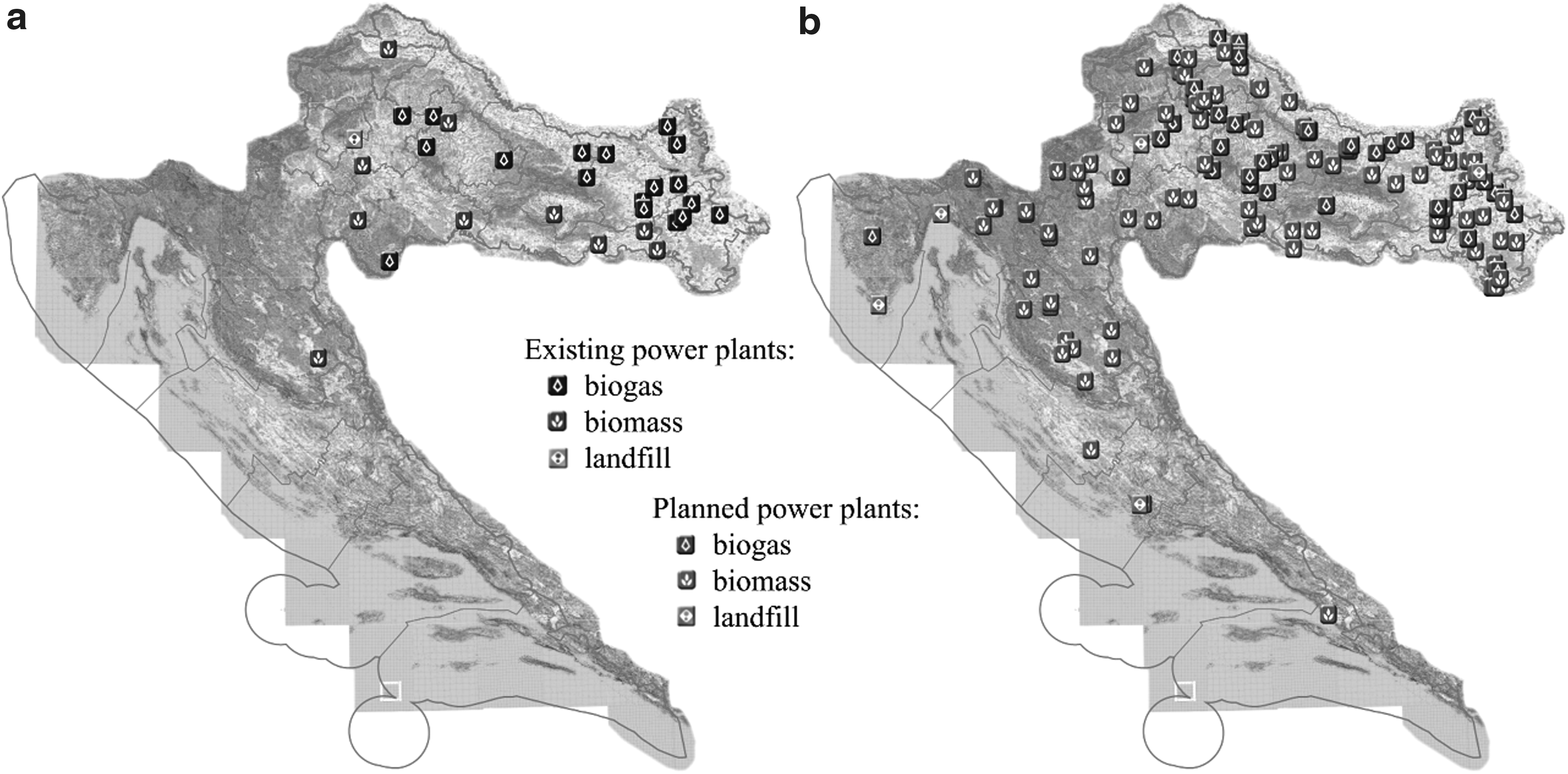
Location of biogas, biomass, and landfill power plants in Croatia:
Generally, the cost of pellet production depends on the price of energy, that is the fuel for drying and the electricity for plant operation, on the cost of labor and maintenance, and on the size and production capacity of the pelleting plant. For example, the overall cost of non-woody (straw) pellet production in Ireland is 100 €/t (Nolan et al., 2010) with the following distribution: raw material and drying 50%, grinding and pelleting 20%, transport 15%, labor 10%, and other 5%. On the other hand, pellet production costs around 90 €/t in Austria and 60 €/t in Sweden (Thek and Obernberger, 2004). The cost of pellet production from wood biomass is even lower in North America, between 40 and 50 €/t (Mani et al., 2006), depending on the fuel used for drying. The cost shares of the various process operations are as follows: raw material and transport 40%, labor 25%, drying 20%, and pelleting 15%.
In Croatia, the cost of biomass from unused agricultural lands is between 40 and 50 €/t, while transport costs are 0.1 €/(t·km) (Pfeifer et al., 2016). Pelleting and labor are estimated at 20 €/t and 10 €/t, respectively. This would put the total cost of digestate, transport and drying included, at around 60 €/t, pelleting excluded. In case pelleting is necessary, the cost of digestate would be around 80 €/t. In Croatia, biomass power plants are considered RES and operate under the subsidized FiT system. The FiTs for electricity generated in biomass power plants is 200 € per MWhel in biomass power plants with up to 1 MW of installed electrical capacity and 147 € per MWhel in larger biomass power plants (Ministry of Environment and Energy, Republic of Croatia, 2016).
The thermal energy content of digestate is 3.6 MWh per tonne of digestate, taking that its heating value is 13 MJ/kg. Assuming that the average energy conversion efficiency of a biomass power plant is 39%, the generated electricity would be 1.4 MWh per tonne of digestate. Under the present FiT system, the electricity generated from one tonne of dried digestate is valued between 206 and 280 € per tonne of digestate, depending on the installed capacity of the biomass power plant. The net difference between the value of generated electricity and the total cost of digestate fuel in the biomass power plant is between 126 and 200 € per tonne of digestate, as shown in Table 3. This shows that both the biogas and the biomass power plant would have financial benefits from using digestate as additional fuel.
Economic Analysis of Digestate
Recovery of valuable nutrients
The energy generation potential of digestate is comparable to those of other solid biomass fuels, moreover as digestate is by-product of biogas production and usually disposed of in landfills. However, the nutrient value of digestate should also be taken into account. Digestate contains large amounts of valuable nutrients that favor the growth of plants (N, P, and K). As it was mentioned before, after combustion, these nutrients remain in the form of ash, which is usually landfilled. In this way, the nutrients become waste and cannot be sustainably reused. Due to the increasing scarcity of valuable nutrients (especially P) in the world, it was necessary to improve the processes for extraction of nutrients.
Wet-chemical and thermochemical-based processes, capable of extracting P, were developed as solutions to the problem. These methods can extract P from the produced ash and the nutrient can be used directly for land application or as co-feedstock in the production of specific fertilizers. However, both processes are intensive. The wet-chemical process needs a large number of chemicals and the thermochemical process needs a lot of energy, which increases the operating costs in both processes (Sartorius et al., 2011).
Another problem of the chemicals necessary to extract P are the metals that dissolve simultaneously with P (Donatello and Cheeseman, 2013), which narrows the direct land application and limits the production of P-based fertilizers. Consequently, this field of research is gaining increasing attention, moreover because the European legislation regulates the recovery of nutrients from waste.
Conclusions
The digestate heating value of 13 MJ/kg, obtained by calorimetry, confirms that digestate can be regarded as a good alternative to solid biomass fuels, even more as digestate is the by-product of AD that ends up being disposed in landfills or agricultural fields. The energy potential of digestate in Croatia is substantial. It is estimated that the 70 MW of biogas capacities in Croatia would be capable of producing 381,500 tonnes of digestate each year. The thermal energy content in this amount of digestate is 1,380 GWh, which could be converted into 538 GWh of electricity at a 39% conversion efficiency. This amount of electricity would contribute with 4.2% to the total electricity generation in Croatia. Despite its energy potential, digestate has yet to be recognized as a source of energy or as a source of nutrients (for the purpose of nutrient extraction).
Digestate cannot be used directly in biogas power plants, but instead it can be transported to nearby biomass power plants and used as a low-cost alternative fuel to solid biomass fuels. In Croatia, biogas and biomass power plants are located in the same regions, where waste materials from agriculture, forestry, and animal husbandry are available in large quantities. The economic analysis revealed that the potential income from digestate-generated electricity is two to three times higher than the total cost of digestate, including raw materials, drying, and transport. Therefore, both biogas and biomass power plants would benefit financially from the use of digestate as additional fuel.
The most important advantage of digestate is its heating value, which is comparable to woody biomass fuels, and the fact that it can be used in biomass power plants without special adaptations. On the other hand, the drawback of digestate is the cost of energy necessary for drying and its high ash content. Nevertheless, the thermal energy produced in biomass cogeneration power plants could be used effectively for drying of digestate. The ash content of digestate was measured at around 9% in this study. Although this residual ash needs to be removed from the biomass furnace periodically, it could bring further benefits as a feedstock for the extraction of valuable nutrients.
The combustion of digestate appears to be a great possibility for electricity generation and additional incomes both to biogas and biomass power plants, even though digestate could find other nonenergy applications, especially as a valuable source of nutrients. In that case, nutrients would be extracted from digestate in the form of struvite immediately after AD, while the remaining sludge would be used as a fertilizer.
Footnotes
Author Disclosure Statement
No competing financial interests exist.