




Abstract
Abstract
The nitritation–anaerobic ammonium oxidation (anammox) process was studied for the first time using an oxidation–reduction potential (ORP) decrease rate control in the anammox sequencing batch reactor (SBR). SBR was inoculated and fed with high-strength N-rich real reject wastewater (containing an average of 740 mg NH4+-N/L) coming from a biogas plant. Start-up with total nitrogen removal rates (TNRRs) of 90 g N/[m3·day] (87 mg N/g VSS/day) was achieved shortly at 25°C within a 132-day operation period. However, during a further 470-day operation with ORP control using aeration “switch off” values in the aerobic and “switch on” values in the anoxic phase, much higher TNRRs of 220 g N/[m3·day] were achieved with maximum total nitrogen removal efficiency at 95%. The ORP decrease rate as a novel anammox treatment step shortening the control parameter was gradually decreased at values of 1.65, 0.9, and 0.4 mV/min ensuring a high TNRR and low accumulation of ammonium and nitrate. Batch testing showed the highest specific anammox activities of 4.4 (±1.8) mg N/g VSS/h at ORP decrease rates of 0.4 mV/min. Low optimum dissolved oxygen concentrations of up to 0.5 mg O2/L could reduce treatment costs in anammox full-scale systems in combination with ORP control. Among other microorganisms determined by pyrosequencing, anammox bacteria, Candidatus Brocadia fulgida and uncultured Planctomycetales bacterium clone P4 were determined and the latter bacterium's increase in quantities from 2.8 × 10⁴ up to 1.6 × 10⁶ copies/g TSS during ORP-controlled conditions were examined using a quantitative polymerase chain reaction.
Introduction
N
Currently, ORP has been applied as a control parameter in laboratory-scale anammox sequencing batch reactor (SBR) systems operations (Lackner et al., 2012), but not in full-scale applications. The ORP decrease is mostly caused by the consumption of oxidized nitrogen forms (nitrite and nitrate) and the consumption of residual dissolved oxygen (DO). In noninhibited mature deammonifying SBR sludge, nearly all the nitrite formed during the oxic stage of the process is consumed in the anoxic stage mostly by anammox bacteria; also some of the nitrate produced by anammox and nitrite-oxidizing bacteria (NOB) is consumed by denitrifying bacteria, and residual DO is utilized by ammonium-oxidizing bacteria (AOB), NOB, and aerobic heterotrophic bacteria. The shift in the ORP can change the configuration of vital proteins or impact the charge on mitochondrial membranes of bacteria.
ORP decrease can be controlled by switching the aeration on/off or by increasing/decreasing the airflow based on the change of the signal of an ORP sensor. ORP values of 120 to −40 mV have been found to be optimum within a single cycle of the anoxic phase of anammox SBR, with ΔORP showing high sensitivity changing 120 mV units in the case of interval aeration applied, whereas DO is fluctuated only in 0.3 increments (Lackner and Horn, 2012).
Online variables used for control of deammonification processes include coupling of the following parameters measuring separately: pH (Rikmann et al., 2018), conductivity (Lackner and Horn, 2012), DO (Jin et al., 2012), and NH4+-N and NO3−-N measures by ion selective sensors (Lackner and Horn, 2012). The ORP parameter can summarize and reflect the concentration of DO, the conductivity of NH4+-N and NO3−-N, organic compounds, activity of microorganisms, and some toxic compounds present in the reactor by just one sensor (Holman and Wareham, 2003). Using an aeration control in wastewater treatment plant (WWTP) systems based on real-time ORP measurement can detect the rates of ORP decrease from the slopes of ORP–time curve at ammonium depletion points, as DO measurements within the desired range for nitritation–anammox (0.02–0.2 mg/L) are lacking in signal stability, whereas the ORP provides consistent data also at low DO levels, as has also been reported previously (Holman and Wareham, 2003). Certain biochemical events such as the depletion of organic carbon or ammonium under low-oxygen conditions, and aerobic/anoxic/anaerobic changes, can be readily detectable by online ORP profile as well. The exact logical program scheme based on ORP control needs to be created for SBR operating cycles for nitrogen removal process control as anammox biomass has low inhibition thresholds toward nitrite, free ammonia (FA), and DO concentrations. ORP could be a more suitable and more consistent parameter for anammox process control and helps to shorten the lengths of the operating cycles (both aerobic and anoxic) compared with pH or DO due to its higher signal range (several hundred mV) (Lackner and Horn, 2012). The broad range of ORP signal allows us to define the shorter lengths of aerobic and anoxic phases to achieve higher specific substrate removal rates at shorter treatment times, thereby lowering water treatment costs. An optimized ORP borderline values set-up enables exact detection of depletion of ammonium and DO, or accumulation of excess nitrite and nitrate, indicating operational disturbances such as overloading, underloading, over-aeration, and under-aeration of wastewater treatment reactor (Tanwar et al., 2008). In the treatment of high-strength wastewaters, rapid signal responses are of utmost importance to avoid inhibition. Hence, to detect the effect of the ORP decline rate on substrate depletion and on the activity of fragile floccular deammonification biomass, an in-depth study of ORP control is required. Optimized ORP drop rates based on substrate consumption rates in each treatment step of an SBR cycle could significantly shorten the whole treatment process.
For the deammonification process without inhibition, additional aeration control as double control is of critical importance when applying ORP change-based process maintenance. The latter has not yet been shown to be a stable control parameter by itself. Sufficient intervals between anoxic and aerobic phases and controlled DO levels are required to shorten water treatment cycles and to avoid the direct inhibitory effects caused by substrates-free ammonia and free nitrous acid (FNA) on anammox bacteria and to limit the growth of NOB and accumulation of nitrate (Strous et al., 1999).
Control over DO concentrations and ORP values is a key factor for operating inhibition-sensitive floc-based anammox systems such as SBR (Jin et al., 2012). DO reversible inhibition on anammox bacteria activity in an SBR was reported at above certain values: >0.3 mg O2/L (Udert et al., 2008), >0.5 mg O2/L (Lackner et al., 2012), and 0.7 mg O2/L (De Clippeleir et al., 2009).
The application of the SBR system for the deammonification process operation allows exact control of wastewater retention time, and even distribution of substrate and efficient biomass retention. For completing the nutrient removal process for low C/N ratio wastewaters, microbial consortia should be developed involving AOB, anammox bacteria, minor amount of NOB, and heterotrophic denitrifiers (van der Star et al., 2007). Wang et al. (2010) have reported simultaneous partial nitrification, anaerobic ammonium oxidation, and denitrification to work well in a full-scale SBR reactor type under high influent NH4+-N concentration of 634 mg/L. In other articles (Schaubroeck et al., 2012), sufficient specific anammox activities (SAAs) (range 141–700 mg N/g VSS/day) were achieved for the granular anammox SBR in the treatment of synthetic wastewater, whereas according to Udert et al. (2008), the organic fraction was also removed from digester supernatant and from diluted source-separated urine. Floccular sludge systems have not been studied in terms of taking account combinational effect of ORP decrease rate and DO control on anammox process.
The aim of this study was to increase the deammonification process total nitrogen (TN) removal and SAA in the SBR biomass through ORP as a control parameter. The goal was to determine the optimum border ORP decrease rate values for efficient SBR operation and to confirm these for cultivated biomass in batch tests. The ORP, DO, ammonium, and nitrate patterns during aerobic/anoxic phases of an SBR process for achieving a high total nitrogen removal efficiency (TNRE) and total nitrogen removal rate (TNRR) were considered. The ORP decrease rate as control indicator parameter ending treatment cycle when ammonium was depleted was investigated in connection with determined bacteria.
Materials and Methods
SBR inoculation and operation
The reactor was inoculated with biomass taken from the nitritation–anammox pilot-scale SBR plant (3 m3) treating digester supernatant under given conditions (Rikmann et al., 2018). Diluted ammonium-rich (600–1,300 mg N/L) real reject water coming from the Tartu WWTP (Estonia) anaerobic tank was used as the reactor feed.
The deammonification process was carried out in a 9.6 L plexiglass reactor connected with a water jacket and being thermostated at 25.0°C (±0.5) (Assistant 3180, Germany). The reactor was equipped with online ion-selective sensor equipment (Hach-Lange, Germany) for NH4+-N, NO3−-N; sensors for ORP (Ponsel, France), DO (Elke Sensor, Estonia), and pH (Ponsel, France) detection. The primary DO control was ORP-based; the airflow was stopped when the ORP decrease limit value of 0.4, 0.9, and 1.65 mV/min was exceeded. The secondary DO control during aerobic phase was DO concentration-based: airflow was stopped at concentrations <0.5 mg/L (after 400 days) and up to 1.5 mg/L (before 220 days). The anoxic phase in the SBR was determined after around 5 min of the end of aerobic phase when DO decreased to 0 mg/L. A relatively long hydraulic retention time (HRT) of 37.5–48 h was applied to avoid inhibition, which could happen by injection of the concentrated feed. pH was in range 6.5–8.2 as optimum for anammox process.
SBR had the following cycles: a 15 min filling phase, a 3–30 min aerobic phase, and a 30–60 min anaerobic phase, followed by a 1 h settling phase and a 15 min effluent discharge phase (the duration of these phases altogether was 37.5–48 h). The SBR was fed during less than 5% of one cycle time. ORP decrease rates were set at certain values in between 0.4 and 1.65 mV/min. When the respective ORP values were achieved within the SBR program, the settling phase was triggered and subsequent effluent discharge occurred.
TNREs and TNRRs were calculated based on the feed flow rate, influent and effluent ammonium, nitrite, nitrate parameters, and volatile suspended solid (VSS) concentration in the reactor according to the following equations:
where Q is the daily flow rate, L/day, ∑[N] inf and ∑[N] eff are the sum of inorganic nitrogen species (NO2−-N, NO3−-N, and NH4+-N) in the influent and effluent, respectively (g N/day). Specific TNRR was calculated as TNRR/VSS, where VSS is the volatile suspended solids content (g/L).
Reactor batch tests
Biomass SAA tests were performed in reactor at 25°C at a thermostated temperature applying a biomass VSS concentration around 3–5 g/L and at NH4+ concentrations achieved after feeding (200–400 mg N/L). Further tests were performed in a 0.1 L separate cell apart from the reactor for the determination of SAA at limiting and optimum ORP values. In the reactor tests, boundary ORP values were set based on oxidation–reduction conditions in the following ranges: −150 to 200 mV at ORP decrease rates of 0.4, 0.9, and 1.65 mV/min. After achieving respective ORP decrease rates, effluent was discharged from the reactor. NH4Cl-NaNO2-NaHCO3-water solution at NO2−-N to NH4+-N of 1.32–1 with additions of macro- and micronutrients (Zhang et al., 2009) was used as a synthetic medium.
Batch tests in separate cell
Batch tests were performed in separate reaction vessel in 100 mL volume to define the ORP effect (within a range of +186 to −78 mV) on batch SAA. Different ORP values were achieved by the addition of different amounts of NaNO3 added into solution as nitrate does not take part in an anammox reaction. The reaction mixture was stirred at 100 g with a magnetic stirrer and thermostated at 25°C. TN concentrations of ∼100 mg N/L were applied at the beginning of tests. The pH value was held consistently at 8.1 (±0.2) by the HCO3− buffer (0.616 g HCO3−/L). Higher HCO3− concentrations can cause high pH disturbances and cause lack of soluble CO2 as a carbon source (Tenno et al., 2018a, 2018b). The substrate together with the biomass was de-aerated with argon for 15 min before the start of the test to ensure anoxic conditions inside the test cell. Samples were taken after every 2 h during the 6-h period using the overpressure of argon. SAA was calculated according to the following equation:
where ∑[N] inf and ∑[N] eff are the sum of inorganic nitrogen species (NO2−-N, NO3−-N, and NH4+-N) in the influent and effluent, respectively, VSS (g/L), T is time (h).
Analytical methods
Influent and the effluent NH4+-N, NO2−-N, NO3−-N (TN—the sum of these) were measured spectrophotometrically according to Greenberg et al. (1992). HCO3−, VSS, and total suspended solid (TSS) concentrations were measured according to Greenberg et al. (1992).
Water samples were centrifuged at 4,000 g for 10 min and solids were removed from the samples before analysis. The samples' pH values were measured with a pH meter connected to a Jenway pH electrode (Germany) and DO was measured with an Marvet Junior (Estonia) electrode, respectively.
Polymerase chain reaction methodology
Biomass was mechanically removed using a vortex mixer, followed by DNA extraction using the Mo Bio PowerSoil DNA Isolation Kit according to the manufacturer's instructions. The polymerase chain reaction (PCR) products were purified with a JETquick Spin Column Kit (GENOMED GmbH) and then sequenced. Twenty-five to 50 mg of biomass was applied for DNA extraction (Zekker et al., 2016).
Quantitative PCR
Quantitative PCR (qPCR) was conducted with primer sets Amx694F(GGGGAGAGTGGAACTTCTG) and Amx960R(GCTCCACCGCTTGTGCGAGC), which amplify about 285-bp fragments of most anammox bacteria 16S rDNA (Ni et al., 2010).
Cloning for the standard was performed using the Thermo Scientific InsTAclone PCR Cloning Kit according to the manufacturer's instructions. A JM109 cell line was used. Plasmid was purified from selected colonies using a GeneJET Plasmid minipreparation kit (Thermo Scientific). Dilutions of purified plasmid were used as standard in the qPCR.
PCR amplification and detection were performed in optical 96-well reaction plates. The PCR temperature program was initiated for 12 min at 95°C, followed by 45 cycles for 10 s at 94°C, 20 s at 58°C, and 20 s at 72°C. Each PCR mixture (10 μL) was composed of 2 μL of 5× HOT FIREPol EvaGreen qPCR Supermix (Solis BioDyne, Estonia), 0.25 μL of forward and reverse primers (100 μM), and 1 μL of template DNA.
Results and Discussion
Long-term nitritation–anammox process in SBR
A nitritation–anammox SBR was operated for 600 days to investigate the effect of certain ORP decrease rates on the development of efficient aerobic/anoxic phases and on the efficiencies and TNRRs on the process. Ammonium and nitrate peaks inhibit the deammonification process, which could have been kept low by applying aeration and ORP control, without a significant lowering of TN loading in the system.
Reactor operation was divided into four periods: a period without ORP as a control and three periods with aeration and cycle length control based on ORP decrease rate control.
In the first period (0–210 days), the nitritation–anammox process was carried out without ORP control. The average achieved TNRRs were 90 (±31) g N/[m3·day] (76 mg N/g VSS/day). The average TNRE was 80% (Fig. 1). Within the period without ORP control, a maximum TNRR of 150 g N/[m3·day] was achieved independent of the conditions when ORP values ranged from −200 mV in the anoxic phase to +50 mV in the aerobic phase. However, a much higher average TNRR of 120 g N/[m3·day] was achieved in the period of 211–600 days when the system's treatment cycle was finished and a fixed ORP decrease rate was achieved (1.65, 0.9, and 0.4 mV/min), registered by OPR probe. Simultaneously, during different periods, batch testing was performed at respective ORP decrease rates set for reactor cycle completion. The highest SAAs of 4.4 (±1.8) mg N/g VSS/h at an ORP decrease rate of 0.4 mV/min finishing each treatment cycle was achieved in batch tests (Table 1).
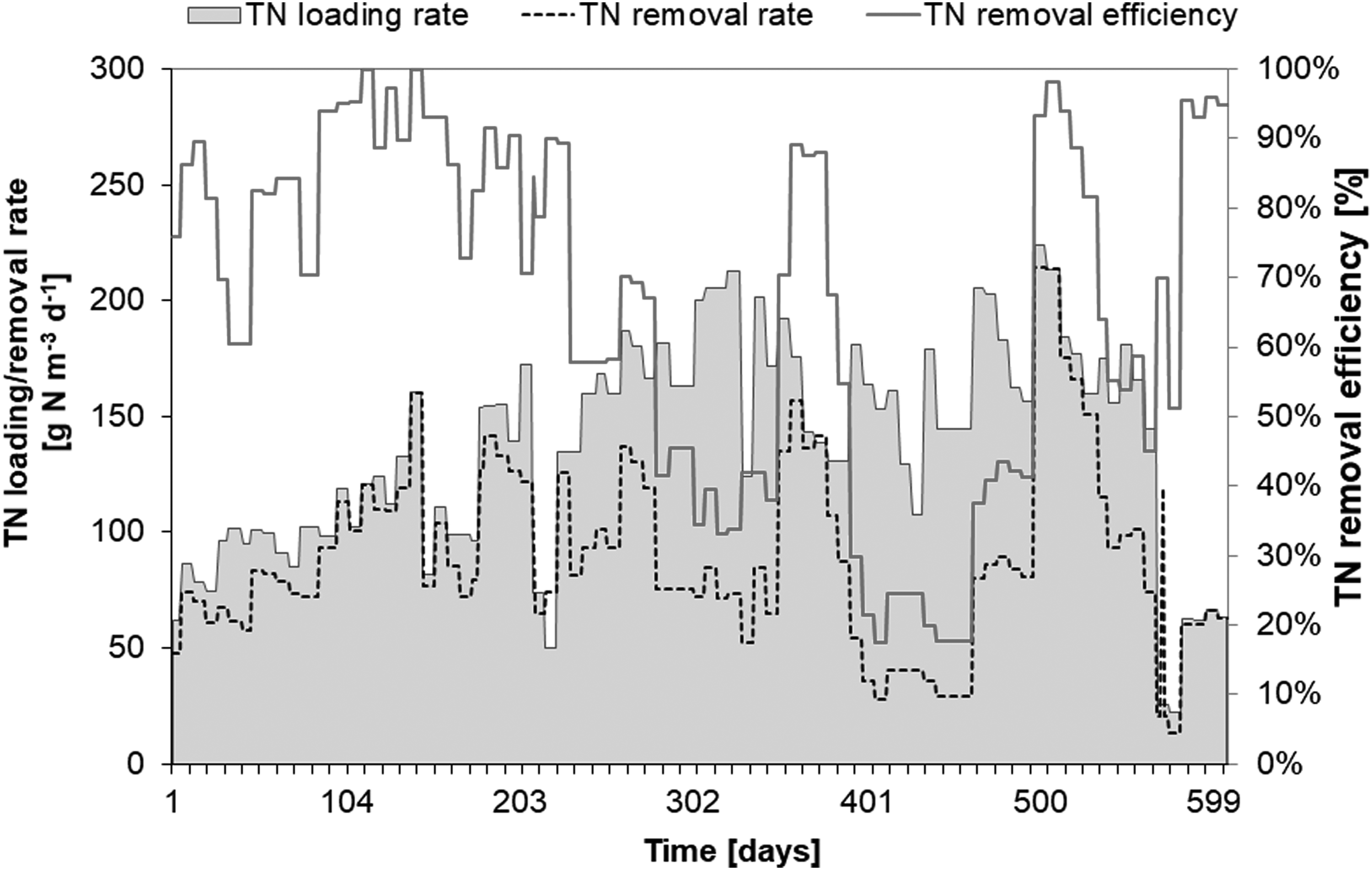
TNRRs and TNREs depending on ORP decrease rates during reactor operation. ORP, oxidation–reduction potential; TNRE, total nitrogen removal efficiency; TNRR, total nitrogen removal rate.
Total Nitrogen Removal Rates and Specific Anammox Activities Depending on Oxidation–Reduction Potential Range and Oxidation–Reduction Potential Decrease Rate During Reactor Operation and Batch Tests Performed Inside Reactor During Sequencing Batch Reactor Operation
ORP, oxidation–reduction potential; SAA, specific anammox activity; TNRR, total nitrogen removal rate; VSS, volatile suspended solid.
After 461 days of operation with the ORP control at the lowest ORP decrease rate range (0.4 mV/min), total nitrogen loading rates were 230 g NH4+-N/[m3·day] and TNRRs reached the highest values of 220 (±32) g N/[m3·day]. ORPs fluctuated at low amplitude of −150 to 0 mV, showing rather negative values being optimum for the process. Average TNRE achieved after 461 days was 60%. During days 461–600, a high average TNRR of 100 g N/[m3·day] with a moderate average TNRE (68% [±50]) was achieved due to applying of ORP controller set-up at low ORP decrease rate range of 0.4 mV/min, maintaining optimal low DO concentration of <0.5 mg/L.
Start-up phase of SBR (days 0–210) without ORP control
Reactor operation was carried out without ORP control within the first period to adapt biomass to high-strength wastewater.
Maximum TNRR of 160 g N/[m3·day] (SAA 89 mg N/g VSS/L) with a highest TNRE of 95% was achieved during a 132-day operation period without ORP control (Fig. 1). Despite the high influent TN values (500–800 mg N/L), low average effluent TN values were achieved: 3 mg NH4+-N, 0.5 mg NO2−-N, and 64 mg NO3−-N/L (Fig. 2). A moderate average TNRR of 90 g N/[m3·day] (SAA 76 mg N/g VSS/L) with a sufficiently high average TNRE of 80% was achieved during a 210-day operation period.
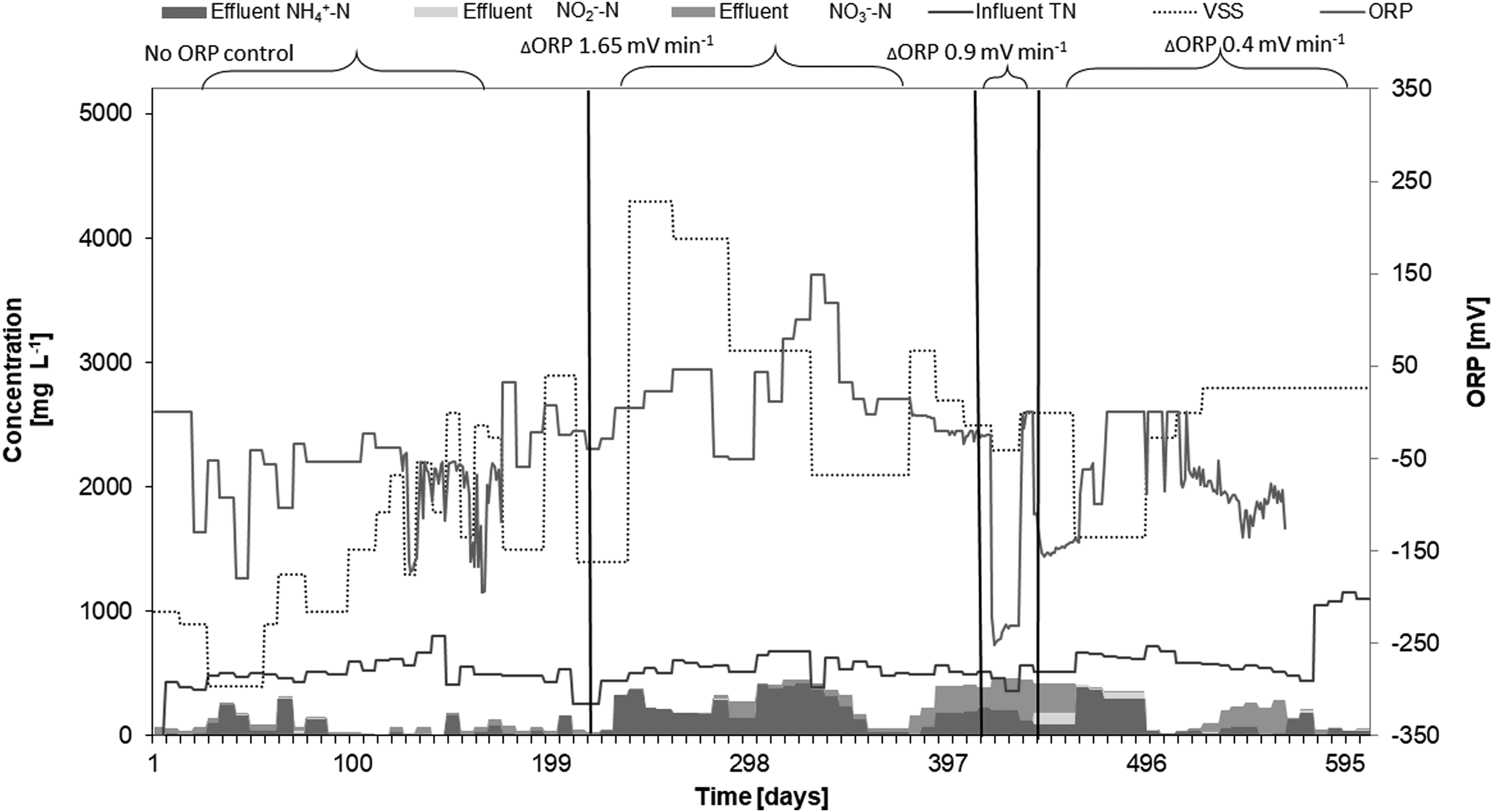
Influent and effluent TN concentrations during reactor operation at different ORP values. TN, total nitrogen.
ORP values during the start-up period were not increased abruptly to high values (being less than +50 mV) compared with the study of Li and Sung (2015), according to whom the ORP was increased suddenly to more than +180 mV and nitrate concentrations were increased to 106.5 mg N/L, despite the low DO concentration (0–0.5 mg O2/L) present in the system. In our system, from day 128 onward, ORP decreased from −50 to −190 mV. Subsequently, nitrate concentrations were decreased from 40 to 15 mg N/L, possibly due to a decrease of the NOB activity with the decreased oxygen supply conditions (DO decreased from 1.5 to <0.5 mg/L). The average nitrite concentration in the effluent during this stage was consistently low: 7 (±1.5) mg N/L.
In the case of higher applied influent pHs of 8.21 (±0.15), and high influent NH4+ concentrations (500–800 mg N/L), present on days 0–50, efficient NOB suppression was ensured through the elevated FA concentration presence during each start of feeding (>10 mg NH3-N/L). Then, the effluent NO3−-N concentration decreased from 70 to 18 mg N/L. According to De Clippeleir et al. (2009), insertion of a longer anoxic phase has sustained low nitrate production and avoided against nitrite inhibition, the ratio of NO3−-Nformed/NH4+-Nremoved staying near anammox-stoichiometric range of 1.32/1.
SBR operation brought along an increase in average biomass concentration in the reactor in time (from 1.5 [±0.7] to ∼2.4 [±0.5] g VSS/L) during start-up, showing possibilities to cultivate anammox-specific biomass rapidly. After 210 days, TNRR began to drop to 50 g N/[m3·day] due to process instabilities caused by inefficient aeration control bringing along high nitrate and ammonium peak concentrations, up to 200 and 100 mg N/L, respectively, necessitating ORP control, which enabled more sensitive aeration control.
On the further operation on 211th day, the VSS concentration inside the reactor reached 3.2 (±0.9) g/L on average.
ORP control on stationary and high efficiency phase (211–600 days)
Within the period with ORP control applied between days 211 and 600, ORP fluctuated between −250 and +150 mV. The highest TNRR of 220 g N/[m3·day] (SAA 89 mg N/g VSS/day) was achieved between days 500 and 511 when the ORP decrease rate was set at 0.4 mV/min and ORP fluctuated less between −150 to 0 mV.
Average TNRR of ≈100 g N/[m3·day] (SAA of 35 mg N/g VSS/day) was achieved during the whole ORP-decrease-rate-controlled period. When the influent TN concentration was increased from 500 to 800 mg N/L after 232 days of operation, TNRR initially dropped gradually to 46 g N/[m3·day], due to ORP control application at high values of 1.65 mV/min and an increase in the FA concentration in the effluent due to high NH4+ levels. DO concentration was low in this period as well (0.5 mg/L).
After 258 days of operation with ORP control set at 1.65 mV/min, average NO3− production was at an anammox-stoichiometric ratio (95 mg NO3−-N/L). At the end of the period, NOB adaption with increased nitrate production took place. Then, the ORP decrease rate was decreased further from 1.65 to 0.9 mV/min to minimize nitrate production caused by aeration (Fig. 2).
Decrease of nitrate production occurred within the period after 461 days with the ORP decrease rate decreased to 0.4 mV/min (average 58 mg NO3−-N/L), showing anammox organisms' sufficient activity maintenance in the SBR biomass and efficient NOB activity limitation by increased influent ammonia concentrations in the process final phase.
When ORP values during the start of the anoxic phase (−200 mV) and at the end of the aerobic phase (−15 mV) varied the most within the ORP-controlled period, it constituted to the highest ORP decrease rate (16 mV/min) after each cycle initiation and the cycle was depleted when ORP decrease rate of 0.4 mV/min was achieved.
The ratio of NO3−-Nformed/NH4+-Nremoved decreased during the whole SBR operation when the influent FA concentrations were high (5–18 mg N/L) on day 595. Thus, FA peaks of up to 18 mg N/L, in combination with a higher volumetric exchange ratio (VER) (∼25%), played an important role in the suppression of NOB growth for sustaining the nitritation–anammox process.
De Clippeleir et al. (2009) observed that no anammox process start-up could be achieved at a high VER (40%) showing optimum VER to be at 25%. The current successful start-up demonstrated that a VER of 25% for the treatment of high-strength wastewater was also optimal. However, according to the higher VER of 50% used by Vázquez-Padín et al. (2009), a TNRR of 250 g N/[m3·day] was reached shortly after a month of operation. At a lower VER of 14%, a higher volumetric TNRR of 450 g N/[m3·day] was achieved by Dapena-Mora et al. (2006) in the SBR treating wastewater having a high C/N ratio.
Within 500–511 days, there was a minimum accumulation of nitrate and ammonium along with a high TNRE (>80%). In contrast to the current study, according to Viet et al. (2008), a low SAA (9.58 mg N/g VSS/h) was achieved by them. In the present study, between days 500 and 511, rather than negative ORPs (less than −100 mV), the TNRR of 230 g N/[m3·day] was achieved at much higher SAA (89 mg N/g VSS/h).
Due to the need for decreasing the high NO3−-N concentrations in the reactor, an attempt was made to maintain reducing environment by short aeration time application (5 min) during 529–544 days, maintaining negative ORP values after the end of the aeration period (less than −50 mV) (Fig. 2).
Sufficiently low effluent values were achieved at this timeframe: 37.5 mg NH4+-N/L, 0.6 mg NO2−-N/L, and 91 mg NO3−-N/L, achieving the maximum TNRE of 98% (Fig. 2).
Higher values than in our studied system in terms of SAAs (141–220 mg N/g VSS/day) were also achieved by Schaubroeck et al. (2012) who used similar VSS concentration (up to 4.7 g/L) as in the current study in the SBR for the treatment of synthetic low organics-containing wastewater. In the present work, SAAs up to 94 mg N/g VSS/day were achieved.
Due to the higher effluent pHs at the beginning of each treatment cycle (>8.0) and a submesophilic temperature of 25°C, FNA concentrations were <0.005 mg HNO2-N/L, which was below the inhibition threshold values for anammox bacteria (0.006–0.04 mg HNO2-N/L) (Zekker et al., 2015).
During the whole SBR cycle, the ratio of NO3−-Nformed/NH4+-Nremoved decreased when the influent FA concentration was increased (FA 5–18 mg N/L) on day 595. So ammonium (FA) peaks in combination with a higher VER (∼25–50%) had an important role in the suppression of NOB growth for sustaining deammonification process.
Sufficient biomass accumulation continued in further operation after 441 days (VSS concentration) (2.4 [±0.5] g/L) in the reactor due to good biomass settling properties with a 1 h settling phase.
Batch tests
Triplicate blank tests (substrate without biomass) confirming zero chemical reaction and different activity tests with biomass at various ORP decrease rates were performed in the reactor during reactor cycle completion control at various ORP decrease rates (1.65, 0.9, and 0.4 mV/min).
To determine biomass tolerance to various ORPs and to imitate abrupt changes in wastewater composition and aeration level in industrial flows, batch tests were performed in the conditions when SBR ORPs were −200 – (+150) mV during days 0–600 of SBR operation.
To prove that different N− compounds' conversion is a biological process and not a chemical reaction, abiotic tests were carried out on reactor operation day 0, measuring NH4+, NO3−, and NO2− concentrations for 6 hours at a constant ORP of +35 (±11) mV. Biotic tests were subsequently performed (Fig. 3).
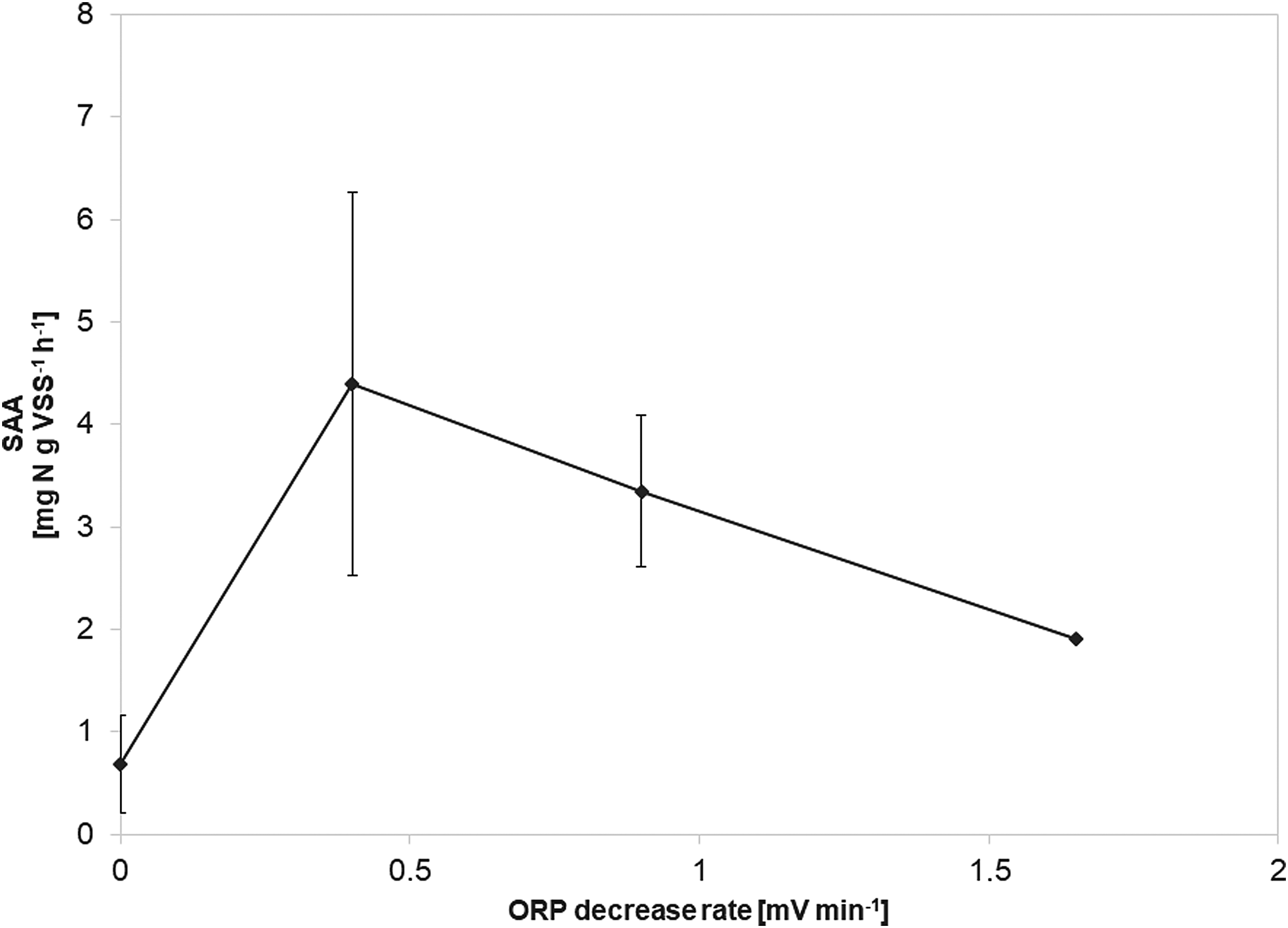
SAA changes at different ORP decrease rates in the batch tests performed during reactor operation on days 0–600. VSS 1.3–2.6 (±0.2) g/L. In the test without biomass (blank test), ORP decrease rate and SAA being low (0.7 mg N/[L h]). SAA, specific anammox activity; VSS, volatile suspended solid.
According to Lackner et al. (2012), optimum ORP of more than +80 mV was determined to achieve the highest TNRR. Also, low effluent ORP values have been correlated positively with low NO3−-N concentrations and high ORP values with low NH4+-N concentrations (Lackner et al., 2012), needing the real-time control based on ORP decrease rate. Despite this, Li and Sung (2015) achieved more than 80% TNRE and a very low effluent ammonium concentrations (<0.6 mg N/L) with higher applied ORPs (≈ +400 mV).
In contrast to the current study, according to Lackner et al. (2012), an increase in the ORP values within 0 to +150 mV in SBR, an efficient deammonification process could be achieved with high TNRR of up to 400 g N/[m3·day] and high TNRE of 90%. In the current case, at applied lower ORPs of −150 to 0 mV, the conditions were sufficient for the enhancement of efficient N-removal reaching maximum TNRR of 220 g N/[m3·day] and SAA of 4.4 (±1.8) mg N/g VSS/h on 461–600 days.
Generally, batch tests intended at the higher ORPs of −78 − (+37) mV showed low SAAs, corresponding to similar low ORPs (less than −50 mV) being applied in the deammonification SBR initial stages (days 102–161).
A batch test with an inoculum of the SBR used for start-up on day 0 showed an SAA of 2.14 mg N/g VSS/h. Substrate incubation in the test vessel without biomass (blank batch test) showed a minimum abiotic SAA of 0.7 mg N/g VSS/h, signifying low effect caused by abiotic reactions on SAA estimation. An average VSS concentration of 2.6 (±1.2) g/L was determined in the batch tests.
During the further reactor operation, increase in the activity of biomass was reached at over SAA of 4.4 (±1.8) mg N/g VSS/h, at the low ORP decrease rate (0.4 mV/min) during the reactor operation in the final period, on days 461–600, showing efficient reactor operation and development of sustainable ORP control.
ORP decrease rates during reactor operation optimization
ORP and DO concentrations at the end of operation cycles in the intermittently aerated SBR on days 211–600 were recorded when ORPs decrease rates measured after aeration were set at 0.4, 0.9, and 1.65 mV/min, respectively. ΔORP was in the highest range of 200 mV for the cases with interval aeration at lengths of 5 min aerobic/60 min anoxic phase, respectively, bringing along a high SAA of 4.4 (±1.8) mg N/g VSS/h determined on day 532 when the reactor showed the specific TNRR of 54 mg N/g VSS/day. The short aeration time (3–5 min) after day 461 also ensured low nitrate production during the last stage of the process.
Figure 4 shows typical changes in DO, ORP, and ORP decrease rate on day 554 of the last operation period. The ORP decrease rate during the initiation of the aerobic cycle was within 14 mV/min when the reactor's ORP was not controlled, being similar with respective aeration period within the ORP-controlled period. By contrast, an abrupt increase in the ORP value (to around +200 mV) was observed by Ra et al. (2000) for a nitrification process after the aeration was switched off when the DO concentration only increased to 0.5 mg/L.
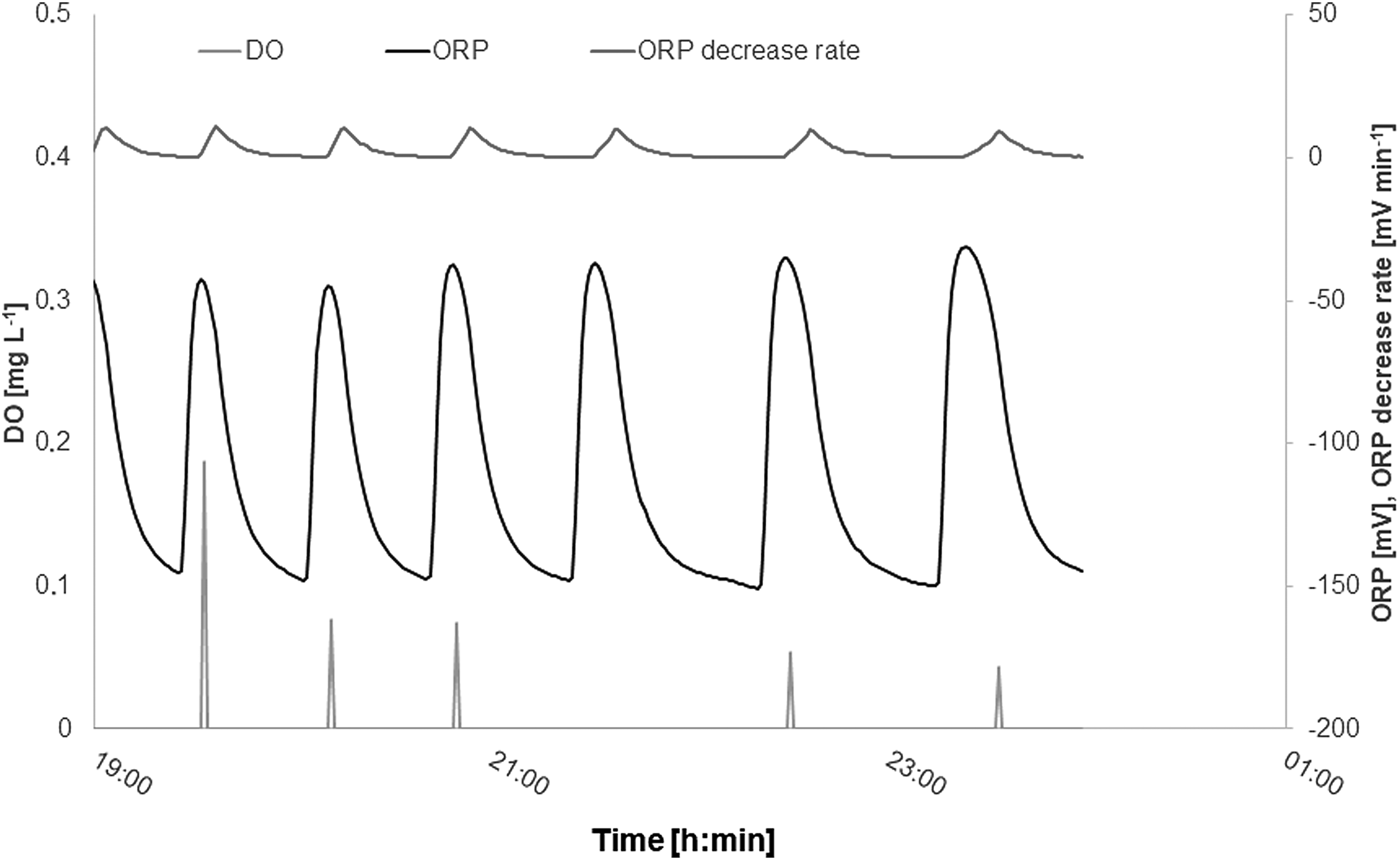
Reactor operation at ORP decrease rate of 0.4 mV/min with low maintained DO concentration (<0.2 mg/L) in the SBR on day 554. DO, dissolved oxygen; SBR, sequencing batch reactor.
During the operation at an ORP decrease rate of 1.65 mV/min on days 211–421, an SAA of 1.9 mg N/g VSS/h was achieved, which was lower than the SAAs achieved at ORP decrease rates of 0.4 and 0.9 mV/min. ORP decrease rates of 0.9 and 0.4 mV/min brought about higher SAAs of 3.4 (±1.5) and 4.4 (±1.2) mg N/g VSS/h, higher than the operation at 1.65 mV/min. Also, lowering ORP decreasing rates benefits on avoiding accumulation of nitrate, nitrite, and ammonium in further cycles.
Optimized ORP control at 0.4 mV/min
To prevent NOB fast propagation and inhibition of anammox bacteria by nitrite, the DO level was controlled <0.5 mg O2/L throughout the aerobic stage with ORP decrease rates maintained at 0.4 mV/min. On days 558–560 with an ORP decrease rate of 0.4 mV/min, ORP border levels during the aeration phase were set from a positive range of 60 to −20 mV to a negative range of −200 to −10 mV to decrease excessive aeration causing nitrate accumulation (Fig. 4). DO concentrations were also <0.5 mg/L. The distinctive decrease in ORP values occurred from −10 to −200 mV during feeding of an ammonium-rich influent, which could be unfavorable to the growth of NOB in the system. During the SBR cycle, NH4+ was essentially reduced from 180 mg N/L to low levels (<20 mg N/L) in the discharged effluent.
SAAs during the last period at an ORP decrease rate of 0.4 mV/min were the highest among other experiments staying at 4.4 (±1.8) mg N/g VSS/h, being significantly higher than ORP decrease rates of 0.9 and 1.65 mV/min (p < 0.05). Similarly, high maximum SAAs of 7 mg N/g VSS/h were achieved at an ORP decrease rate of 1 mV/min by Lackner et al. (2012), but at high temperature of 30°C. The highest TNRR (220 g N/[m3·day] and also highest nitrate production (reaching a concentration of 160 mg N/L) were observed in the last period of the reactor operation, indicating that a long HRT of 48 h could be beneficial to NOB growth.
Figure 5 shows SBR operation cycles between days 550 and 558 when ORP decrease rates were 0.4 mV/min for each SBR cycle with the ORP fluctuating widely between −25 and −150 mV during the whole cycle. Before effluent discharge, the DO concentration was around 0 and 0.5 mg/L during the short 5 min aeration and 60 min anoxic phases, respectively. Such short aerobic phases were set to avoid excessive production of nitrate instead of nitrite and to increase nitrite and ammonium consumption by the longer maintained anoxic phase. ORP decrease rates at the beginning of aerobic cycle were high (10 mV/min), and when values of 0.4 mV/min were achieved at the end of each anoxic cycle, the settling phase was triggered.

Analysis of a deammonification process in the SBR during three cycles observed on days 550–558 showing NH4+-N depletion at the end of cycle and NO3−-N production according to ORP decrease rate being 0.4 mV/min.
According to Lackner et al. (2012), the highest TNRRs of 590 g N/[m3·day] in the SBR were achieved at an ORP decrease rate of 1–2 mV/min using intermittent aeration with long aerobic phases of 60 min and anoxic phases with lengths of 80 min, respectively—both being longer than during most of current SBR operation time.
Large pH changes were occurring in the reactor (range 6.5–8 [ΔpH 1.5 U]) due to a decrease in the HCO3− buffering capacity initiated by nitritation process carried out at a long HRT (>2 days).
Batch tests in a 0.1 L separate cell
Batch tests in a 0.1 L reaction cell for the determination of optimum ORP range for high SAA were performed during days 102–161 of SBR operation. After applying low ORP values (less than −50 mV) for the batch tests, biomass showed low SAA, which stayed <1.5 mg N/g VSS/day indicating low performance of the anammox stage without the nitritation stage at a lower ORP range than assumed before (Lackner et al., 2012). The maximum SAAs were achieved at test with maintained ORP of −18 mV, which responded to SAA of 1.85 mg N/g VSS/day (Fig. 6), being significantly higher than the one achieved at lower ORPs than −18 mV and also at higher ORPs than 0 mV (p < 0.05). Overall, in most experiments, SAAs stayed at a similar range around 1.5 mg N/g VSS/day without a clear relationship dependence on applied ORPs.
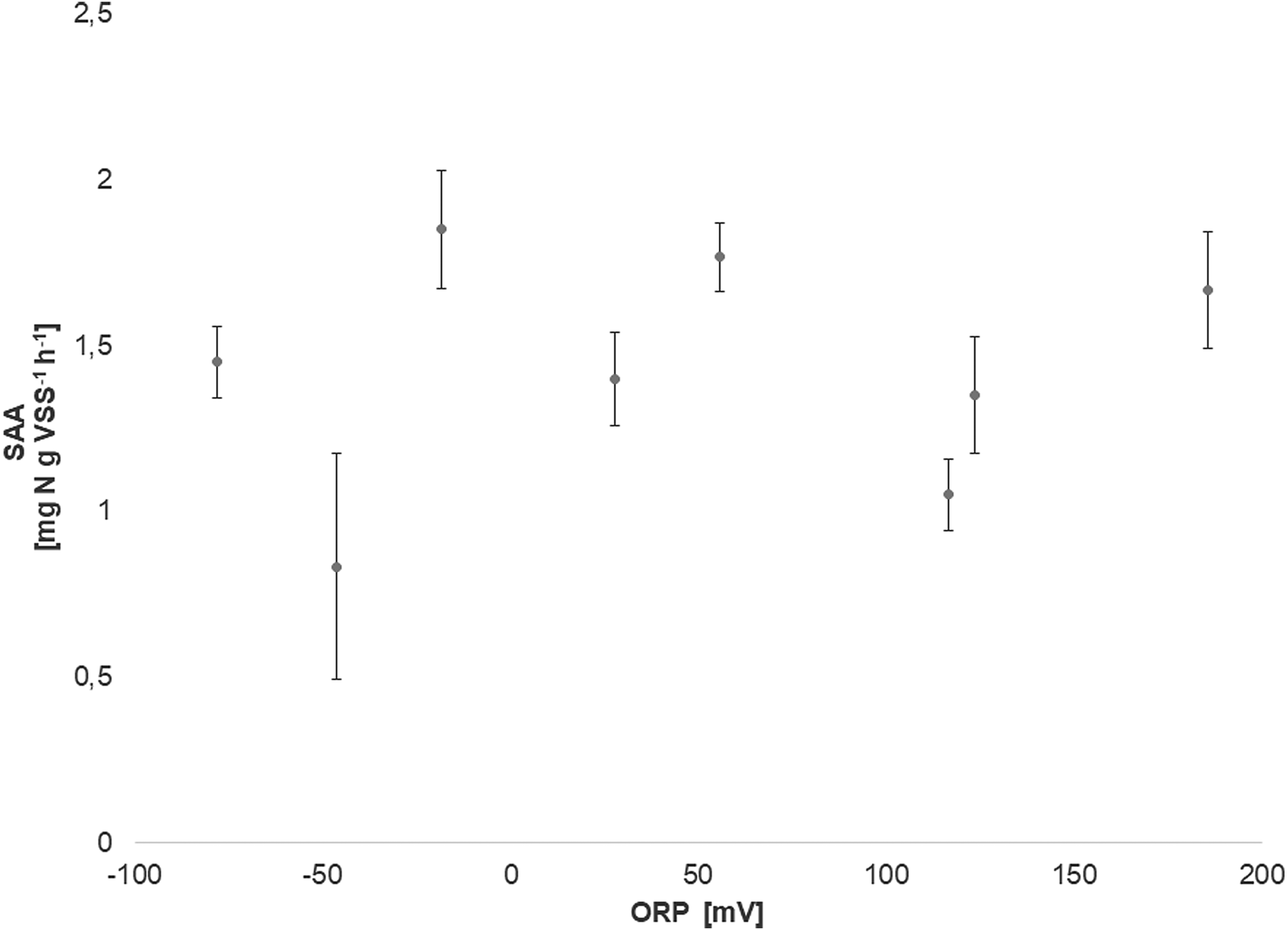
SAA changes at different redox potential values maintained in 0.1 L batch tests.
Pyrosequencing and qPCR observations
Microorganisms quantities in the biomass samples taken from the reactor during the operation period (days 76–600) and from feed (reject water) were determined. As a result of the pyrosequencing analysis with biomass taken on day 482, three closely related anammox bacteria (Candidatus Brocadia anammoxidans, Candidatus Anammoximicrobium, uncultured Planctomycetales bacterium clone P4) were identified from the seeding sludge and from the reactor. Candidatus Kuenenia species were missing. Different heterotrophic microorganisms were identified from the SBR as well.
Planctomycetales bacteria present in biomass belong to the order Brocadiales, whose closest relative to these sequences is Candidatus Brocadia fulgida.
Uncultured Planctomycetales bacterium clone P4 (GenBank: DQ304521) was also detected from the samples taken on day 482 to be increasing from 2.8 × 10⁴ up to 1.6 × 10⁶ copies/g TSS (Fig. 7).
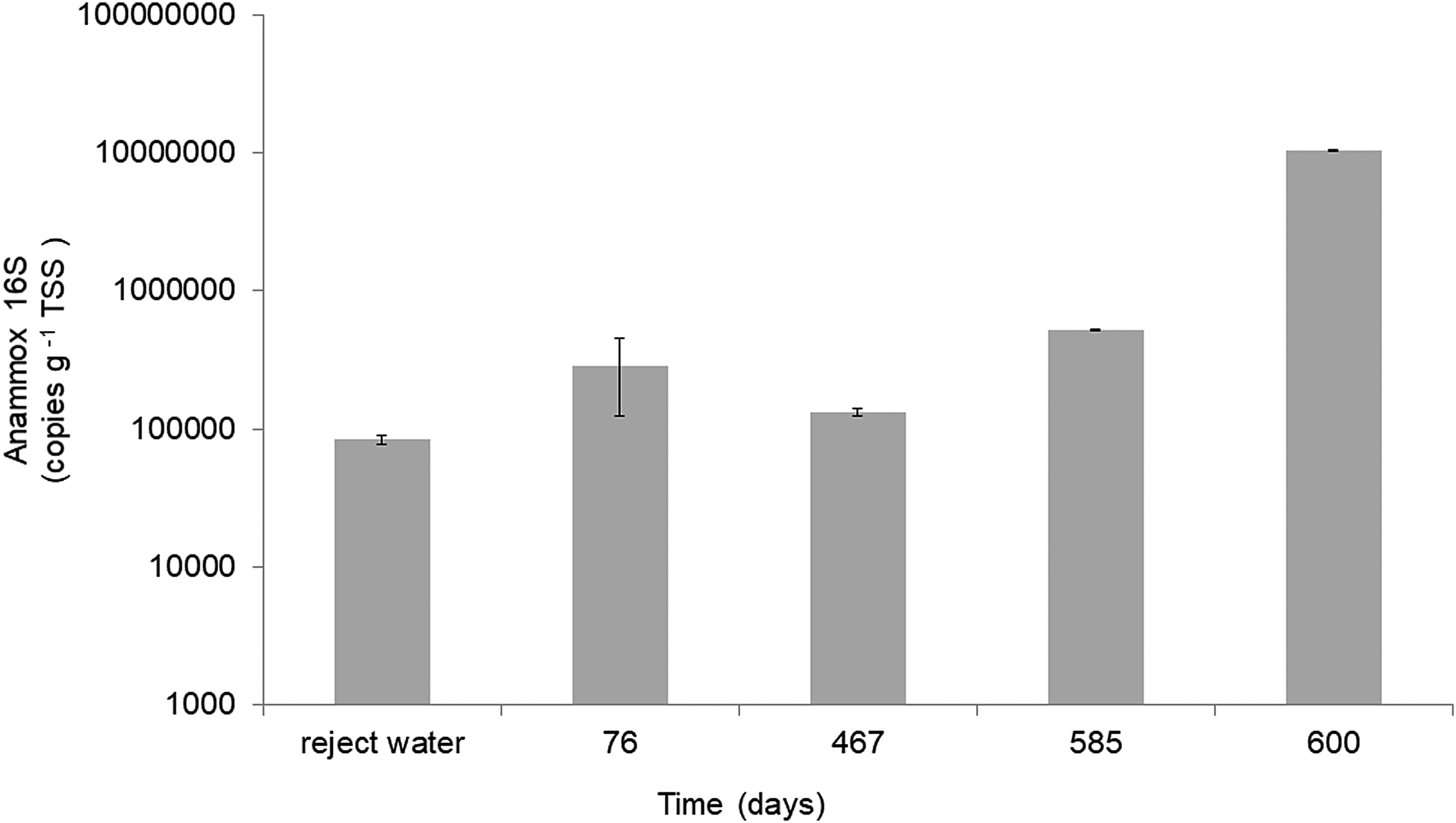
Gene copy numbers of anammox 16S rRNA at different reactor operation days.
Anammoxoglobus/Brocadia-like species have been shown to be present in the autotrophic wastewater treatment reactors (van der Star et al., 2007).
Among aerobic N-oxidizers, Nitrosomonas sp. and Nitrosomonas mobilis at equal shares (0.2%) were present in the biomass taken from the 482th day during the aerobic phase with Nitrobacter spp. and Nitrospira species not being present. The absence of the latter is attributed to the low nitrate production in SBR.
Microbial data along with SBR operation data confirmed the possibilities of treating reject water by a process operation based on control of ORP values, decrease rates in the nitritation–anammox process, and by applying proper DO and FA concentrations.
Conclusions
The nitritation–anammox process was sustained in the floccular SBR system in the long term (600 days). The low ORP decrease rate of 0.4 mV/min enabled the TN loading rate to be increased from 128 to 230 g N/[m3·day], achieving a maximum TNRR of 220 g N/[m3·day] at ORPs of −70 to 0 mV. Deammonification-related microorganisms contained in the SBR systems resulted in an average TNRE of 63% and a TNRR of 100 g N/[m3·day] (SAA of 85 mg N/g VSS/day). The most efficient nitrogen removal, without accumulation of ammonium and nitrate in the reactor through the control of ORP, was achieved from days 500 to 511 on, with a high achieved TNRR of 220 g N/[m3·day]. During the whole ORP-controlled period, high average TNRRs were achieved—83 (±32) g N/[m3·day]. It was discovered that suitable times for the aeration and anoxic phases could be 3–5 min and 60 min, respectively. The highest batch test SAA results were achieved in batch tests when ORP decrease rate was set at 0.4 mV/min being 106 (±43) mg N/g VSS/day (4.4 [±1.8] mg N/g VSS/h).
Findings suggested a real-time ORP control for monitoring of nitritation–anammox SBR operation during operation periods. Various N-converting and anammox organisms were detected from the samples taken from the SBR such as Candidatus Brocadia fulgida and uncultured Planctomycetales bacterium clone P4 strains. Uncultured Planctomycetales bacterium clone P4 (GenBank: DQ304521) quantities on days 76–600 was increasing from 2.8 × 10⁴ up to 1.6 × 10⁶ copies/g TSS.
From 0.1 L batch tests, it can be concluded that nitrogen removal in the anammox process is limited at a low ORP values range, and nitrogen removal can be carried out rather at slightly negative or slightly positive values (from −18 up to +56 mV) with the highest SAA being about 1.85 mg N/g VSS/h.
Based on the tests carried out, it can be concluded that ORP as a control parameter is able to reduce the energy requirements for aeration achieving a high autotrophic nitrogen removal rate.
Footnotes
Acknowledgments
The research was supported by the Estonian target-financed research project IUT20-16 and INDIGO (SLTKT15194) project. Ms Jana Mihkelson and Mrs Christina Mürk are acknowledged for their analyses of water samples the during reactor operation.
Author Disclosure Statement
No competing financial interests exist.