




Abstract
Abstract
An experimental investigation was conducted to analyze the effect of reduction catalyst-coated cordierite wall flow monolith diesel particulate filter and metal-based additive-added biodiesel on direct injection engine emissions at different engine injection opening pressures and injection timings. Furthermore, Ru/γ-Al2O3, Cu/γ-Al2O3, Co/γ-Al2O3, and Fe/γ-Al2O3 were synthesized and tested as diesel oxidation catalysts (DOCs) in the study. Co/γ-Al2O3 was coated over the clay balls as DOC since it lowered the soot ignition temperature from 537°C to 219.9°C. Thermogravimetric/differential thermal analysis of copper complex reduction catalyst [CuCl2(PPh3)2] with biodiesel soot exhibited a lower soot ignition temperature of 245.2°C. DOC-coated clay balls were placed upstream of the catalyzed diesel particulate filter (CDPF). Furthermore, iron(III) chloride of 20 μmol/L was added to waste cooking palm oil-based biodiesel (B100) as fuel-borne catalyst (FBC) to facilitate the effective CDPF soot oxidation process. Engine studies were carried out at a constant speed of 1,500 rpm under different operating conditions using FBC-added biodiesel (B100 FBC) and biodiesel without FBC. Presence of CDPF in the tail pipe of a diesel engine with B100 FBC-CDPF resulted in a slightly higher carbon dioxide emission by 8.5%, but there was a reduction in carbon monoxide, unburnt hydrocarbon, nitric oxide, and smoke emission by 9.1%, 37.5%, 6.7%, and 47.2%, respectively. For all the test fuels, CDPF resulted in a significant reduction in exhaust gas temperature and pressure drop above 25% load condition. B100 FBC-CDPF showed the brake thermal efficiency of 28.9% at 280 bar and 25.5 °CA, similar to that of diesel CDPF operation.
Introduction
The diesel engine has become a preferred candidate among the various kinds of internal combustion engines because of its higher thermal efficiency and lower fuel consumption. This includes heavy trucks, buses, industrial power generation equipment, off-highway construction, and mining equipment (Addy Majewski and Khair Magdi, 2006). Furthermore, diesel engine has become popular in the passenger car segment, particularly in countries such as India where the cost of diesel is significantly lower than that of petrol (Subramanian and Ramesh, 2001). Nowadays, control of emission is the major driving force in the development of diesel engine. Emissions from diesel engine include carbon monoxide (CO), carbon dioxide (CO2), nitric oxide (NO), and unburnt hydrocarbon (UHC), sulfur oxide, nitrogen oxide (NOx), and particulate matter (PM) that lead to severe respiratory disorders. Eradicating diesel engine exhaust products is crucial to diminish the human health and environmental impact related to PM especially in metropolitan cities (Zhang et al., 2015; Godoi et al., 2016). PM consists of soot covered with adsorbed aromatic hydrocarbons, which cause cardiovascular and respiratory problems in humans (Moldanová et al., 2009; Arteaga et al., 2015; Reşitoğlu et al., 2015; Wang et al., 2017; Wen et al., 2018).
These emissions produce a hazardous effect on air, water, soil, and human health, as well as causing global climate changes (National Institute for Occupational Safety and Health, 1988; International Agency for Research on Cancer, 1989; Summers et al., 1996; Lin and Lin., 2006). Furthermore, the wide field application of diesel engine leads to increasing requirements of petroleum-based diesel. The depletion of petroleum oil resources in the earth and a steep rise in fuel prices act as the driving force to search for an alternative fuel to diesel engines. To reduce the harmful pollutant emissions from a diesel engine, researchers have focused their interest on the domain of fuel-related techniques such as oxygenated fuels that show the ability to reduce the more harmful particulate emission (Rakopoules et al., 2008).
Among various other options, biodiesel is considered to be a promising alternate fuel for the current petroleum-based fossil fuels. Biodiesel has many advantages such as low emissions, biodegradable nature, nontoxicity, and better lubricity compared with diesel (Mittelbach and Tritthart, 1998; Lapuerta et al., 2007; Jindal et al., 2009; Anand et al., 2010; Kannan and Anand, 2011a; Lu et al., 2012; Tao et al., 2017). However, the manufacturing cost of biodiesel is high due to the cost of vegetable oil. Seventy-eight percent of biodiesel production cost depends on the corresponding feed stock (Sharma and Singh, 2009). Use of nonedible oil as a feed stock for biodiesel production is also restricted because using agricultural lands for biodiesel production indirectly affects food production. Reuse of waste cooking palm oil (WCO) not only lowers the production cost of biodiesel significantly but also helps in waste disposal, public sewer maintenance, and oily waste water treatment. A large quantity of WCO was obtained from restaurants, food-processing industries, and fast food shops to carry out this experiment.
Based on various researches conducted earlier, it was found that the biodiesel-fueled engines emit less CO, UHC, and PM compared with diesel, but there was a slight increase in NO emission (Money and Van Germen, 2001; Joshi and Pegg, 2007). However, the reduction rates achieved have not been adequate to meet the emission standards. Furthermore, reduction in emission can be achieved by either use of a modification of engine operating parameters (Narayana Reddy and Ramesh, 2006) and metal-based additives (Kannan et al., 2011), or after-treatment techniques (Heywood, 1988). The problem of trade-off relationship between NOx and PM on a conventional diesel engine is very difficult to solve in engine modifications (Banerjee et al., 2015; Rajesh Kumar et al., 2016). Metal-based additives act as oxidation catalysts and decrease the oxidation temperature, which resulted in particle burnout and reduction of NOx emission.
Bazooyar et al. (2018) have reported that the metal-based additive fuel-borne catalysts (FBCs) also react with water vapor (H2O), produce hydroxyl radicals (OH), and improve the combustion efficiency of an engine. There are numerous types of metal-based additives (calcium [Ca], copper [Cu], barium [Ba], iron [Fe], manganese [Mn], platinum [Pt], cerium [Ce], cerium–iron [Ce–Fe], and platinum–cerium [Pt–Ce]), which have been effectively utilized as FBC to support the combustion in diesel engines (Campenon et al., 2004). Fe as a fuel-borne catalyst showed excellent effect on the combustion of carbon due to the formation of highly reactive iron oxide in timescales smaller than the formation of carbon particles. Carbon particles that can condense on these oxidation sites are oxidized during the combustion process (Zhao et al., 2014).
Zbigniew et al. (2015) discussed that the size of the dispersed particles, their specific surface area, and porosity played a vital role in evaluating the activity of the FBCs. Among these methods, after-treatment techniques, such as diesel particulate filter (DPF), have become more popular as they control the PM that comprises mainly of carbonaceous soot particle that causes severe hazardous effect on the environment (Gulati et al., 1992; Tuteja et al., 1992; Lu et al., 2012; Chris et al., 2018).
Although physical filtration of the particulate from the exhaust emission using DPF is possible, it has several drawbacks. The major difficulty is that a significant portion of particulate with small nanorange escapes trapping and these particles are considered to be the most hazardous diesel particulate fraction (Ferin et al., 1992; Seaton et al., 1995; Donaldson et al., 1996). Besides, the DPF is affected by blocking of soot particles that need periodic regeneration (Harrison et al., 2003). Furthermore, the nonparticulate emissions such as UHC, CO, and NO will remain unchanged by the physical filtration of DPF and hence be delivered as such to the environment. Implementation of diesel oxidation catalyst (DOC) paved the way to reduce CO and UHC emissions effectively, as well as the heavy hydrocarbon species that condense or adsorb on the collected soot (Ara, 1993; Dou, 2012).
Especially, oxidation of NO to nitrogen dioxide (NO2) is another important reaction that has been considered a desirable effect in the regeneration of soot particle in DPF. In addition, DOC oxidizes a small portion of soot particles (Johnson, 2009). The reaction mechanism in DOC mainly relies on the presence of a catalyst that is deposited over the surface of the catalyst carrier and has the ability to adsorb oxygen. The reaction mechanism of DOC has three stages. Oxygen is bonded to a catalyst, reactants such as CO, UHC, and NO, and a small portion of soot, diffusing into the surface and reacting with the bonded oxygen and reaction products such as CO2, and water vapor desorbs from the catalyst and diffuses to the exhaust gas (Ambs and McClure, 1993; Osvaldo, 2018).
A range of ceramic and sintered metal-based DPFs have been established for controlling particulate emission. Among these, wall flow configuration filters are found to be very efficient, in which the exhaust gas is forced to pass through porous walls of consecutive channels thus capturing PM (Liati and Dimopoulos Eggenschwiler, 2010). The main concern of DPF system is the regeneration strategy, to burn the soot accumulated in DPF. The soot should be burnt by oxygen at more than 550°C. However, the exhaust gas temperature of the diesel engine is usually within 500°C under normal operating conditions (Abhotff, 1985). Hence, some other techniques are needed to burn the accumulated soot. Based on the studies conducted on regeneration of soot, oxidation of soot can be achieved by the implementation of active regenerating system such as electric heater (Kojetin et al., 1993), fuel burners (Kugland et al., 1991), and microwave heating (Yonushnis et al., 1993; Schejbal et al., 2009), and passive regeneration system such as catalyzing the filter and introducing the catalyst to the fuel as FBC (Pattas and Michalopoulou, 1992; Mooney, 1995; Romero et al., 1995).
Among the various methods, the passive regeneration method showed no power requirement to burn the accumulated soot, unlike active regeneration. Passive regeneration methods mainly rely on moderate exhaust gas temperature that utilizes the catalyst or fuel additive to lower the activation energy required to burn the soot (lower the soot ignition temperature). The DPF system with FBC is one of the recognized solutions. However, this causes the unfavorable increase of pressure drop, from ash accumulation, lose power, consumes more fuel, and uncontrolled soot combustion (Abhotff, 1985; Nascimento et al., 2016). Hence, DPFs must be periodically regenerated at high-temperature conditions or continuously regenerated with suitable catalysts that can oxidize soot at exhaust gas working temperatures (Nascimento et al., 1999, 2014; Kumar et al., 2012; Tang et al., 2014).
A catalyzed diesel particulate filter (CDPF) system eliminates these effects and produces low back pressure, high filtration efficiency, as well as high soot combustion efficiency (Yuuki et al., 2003). The action of CDPF is mainly due to the catalyst coated on the DPF, which lowers the soot ignition temperature to facilitate regeneration of the filter by oxidation of soot under exhaust temperatures experienced during regular operation of the engine (Abhotff, 1985). Manns (2005) investigated the DPF for passenger cars. It was concluded that the catalyzed filter with or without DOC was preferred due to better thermal management, less oil dilution by fuel, and significant improvement in hydrocarbon condensation.
Kodama et al. (2005) discussed the development of DPF system on Mitsubishi FUSO. It was found that filter regeneration faced difficulty at low load or cold ambient condition due to insufficient temperature to burn fuel in the exhaust system especially in active regeneration. Holcomb (2005) studied DOC for a diesel engine and observed that DOC ignition temperature decreased from 240°C to 215°C by converting platinum catalyst to a platinum/palladium catalyst formulation. Craig (2005) analyzed the performance aspects in terms of various regenerating properties of cordierite DPF in heavy-duty applications. It was found that the peak filter temperature and compactness of regeneration were mainly dependent on the DPF inlet temperature. It was concluded that to improve regeneration efficiency, the initial gas temperature of 550°C might be used so as to decrease the soot loading on the DPF.
Soeger et al. (2005) examined the regeneration fundamentals using oxygen and NO2 on the performance of catalyzed particulate filter for heavy-duty diesel applications. It was also observed that the maximum passive regeneration occurs at medium to high speed and medium load conditions. Heibel (2005) determined the performance and durability of the new Corning DuraTrap AT DPF. It was concluded that the back pressure was due to soot and ash accumulated in DPF. Furthermore, regeneration mainly relies on soot loading, long-term durability testing, and ash loading properties. Fleischman et al. (2017) evaluated the impact of DPF filtration efficiency in real-world usage, as well as the influence of different parameters on fuel economy. They found that the influence of natural deterioration is nearly 1.2–1.3%, and DPF contribution to fuel economy penalty is found to be 0.6–1.8%, depending on the bus type. DPF filtration efficiency was investigated throughout the study and found to be an average of 96% in the size range of 23–560 nm. Sarli et al. (2016) investigated the influence of soot/catalyst contact on the regeneration performance of a highly dispersed nanometric ceria-coated DPF. It exhibited the necessity of significant method for reducing the separation between the cake layer and the catalytic wall in order to activate CDPF.
Pérez and Bueno-López (2015) analyzed the catalyst combustion of soot under realistic conditions using Pt and CePr active phase. DPFs were loaded with 0.6 wt.% of either Pt or an optimized CePr active phase in the study. Both Pt and CePr active phases were stable after several DPF regeneration cycles. It was found that the CePr was a promising candidate to replace Pt in real soot removal DPFs. However, there is a lack of research on the domain of FBC-added biodiesel-fueled diesel engine with DOC and CDPF at different injection opening pressures and injection timings. The main objective of this article is to investigate the influence of DOC and CDPF on the performance and emission characteristics of direct injection (DI) diesel engine using biodiesel with and without FBC at different operating conditions.
Materials and Methods
WCO was obtained from a local restaurant near Dindigul, Tamil Nadu, India. Analytical reagent grade catalyst and methanol were used for the transesterification process. The base catalyst potassium hydroxide (KOH) was used in pellet form. A four-necked round-bottomed glass flask with a capacity of 5 L was used as a batch reactor for the production of biodiesel from WCO. This reactor was equipped with Liebig condenser, a mechanical stirrer with tachometer, a thermometer pocket with a thermocouple, and a stopper to remove samples. A constant temperature heating mantle was used to maintain the reaction temperature within ±0.1°C.
The optimum reaction conditions that resulted in maximum biodiesel yield of 96.2% were as follows: methanol to oil ratio of 0.4:1 (i.e., molar ratio of 9.6:1), KOH concentration of 0.5 (%w/v), reaction temperature of 52°C, and reaction time of 185 min at a constant stirring rate of 200 rpm. Metal-based reactants such as ruthenium(III) chloride trihydrate (RuCl3·3H2O), cobalt(II) chloride hexahydrate (CoCl2·6H2O), and copper(II) chloride dihydrate (CuCl2·2H2O) were procured from Loba-Chemie Pvt. Ltd. (Mumbai, India). Iron(III) chloride (FeCl3) was purchased from Merck Specialties Private Limited (Mumbai, India). Gamma alumina (γ-Al2O3) in pellet form was procured from Alfa Aesar for the synthesis of DOCs. Triphenylphosphine and ethanol were purchased from SD Fine Chemicals Private Limited (Chennai, India). Millipore water, petroleum ether (60–80°C), dry acetone, and methylene dichloride were used as a solvent for the synthesis of DOC and reduction catalyst. Clay balls with an average size of 16 mm were used as DOC support in DOC chamber.
Copper(II) oxide (nanostructured), copper(II) chloride (CuCl2), cobalt(II) chloride (CoCl2), iron(III) chloride (FeCl3), and copper(II) sulfate (CuSO4) are the metal-based additives considered FBC for biodiesel. The catalysts used were in powder form, purchased from the SD Fine Chemicals Private Limited (Chennai, India).
Selection of FBC
Based on earlier studies, selection of FBC for the biodiesel was based on its stability factor, environmental safety aspect, and its capability as an oxidation catalyst. Metal-based additives such as nano CuO, CuCl2, CoCl2, FeCl3, and CuSO4 were investigated for their use as FBC for biodiesel (Kannan et al., 2011). Stability study was carried out for all the metal-based additives based on the method reported previously (Kannan et al., 2011). In stability test, FeCl3 showed long-term stability with biodiesel. Thus, FeCl3 was selected as FBC for biodiesel.
Diesel oxidation catalysts
In this study, Ru/γ-Al2O3, Cu/γ-Al2O3, Co/γ-Al2O3, and Fe/γ-Al2O3 were selected as DOC on the basis of their better oxidation activities. DOC was prepared by the method followed on previous reports (Yamaguchi and Mizuno, 2002, 2003). Among the synthesized DOCs, the best DOC was selected on the basis of biodiesel soot oxidation study. Soot oxidation study was carried out to determine the lowest soot ignition temperature of soot and DOC mixture using thermogravimetric/differential thermal analysis (TG/DTA). The biodiesel soot was obtained from the exhaust of DI diesel engine and was dried in an oven for 24 h at 120°C. The procedure for mixing of biodiesel soot and DOC was followed by the previous report (Joseph Antony Raj and Viswanathan, 2010). Figure 1a and b shows the TG/DTA curve of biodiesel soot and DOC with biodiesel soot mixtures, respectively. The obtained TG/DTA curve of DOC and biodiesel soot mixture was compared with that of pure biodiesel soot.
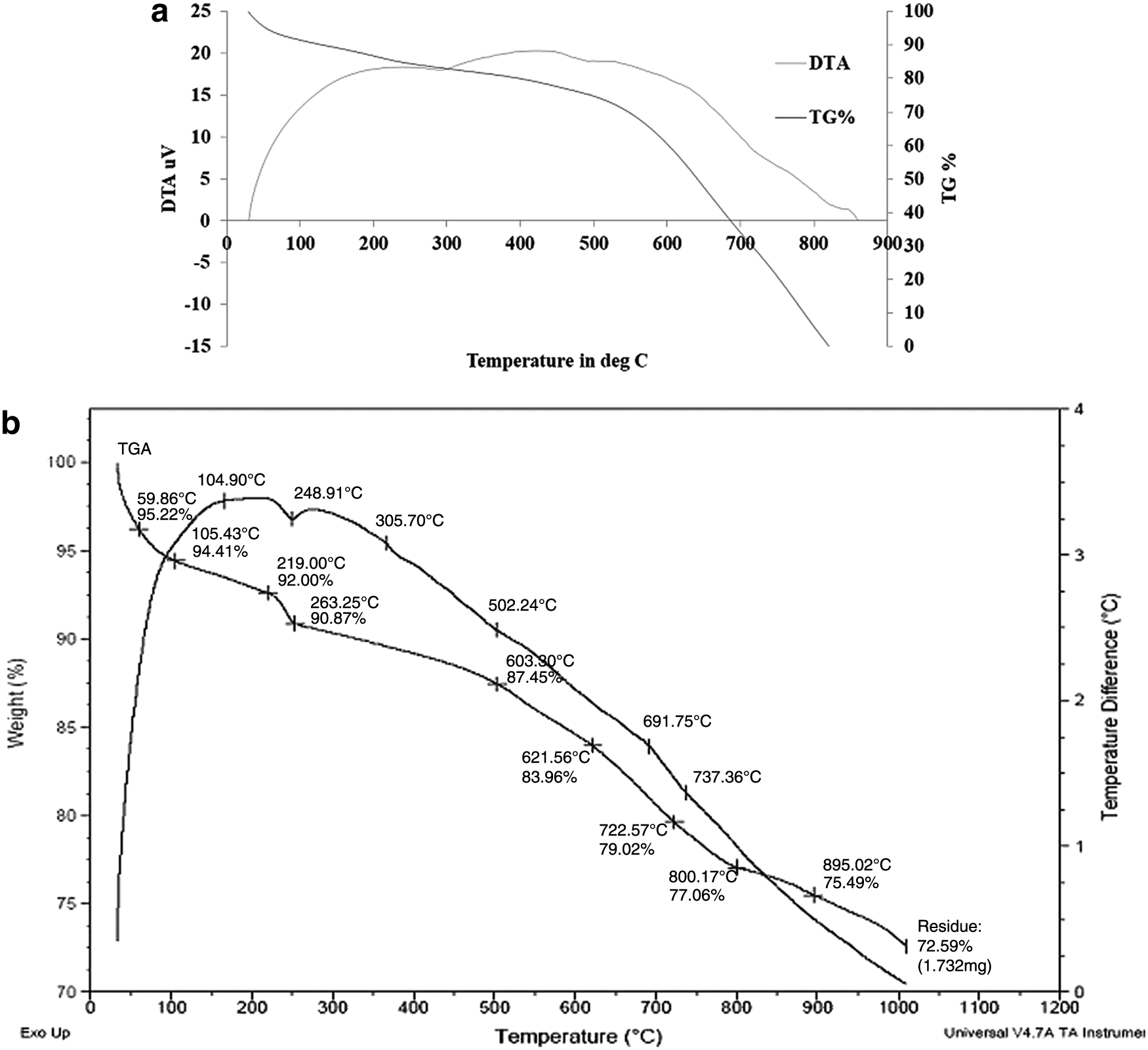
TG/DTA curve of DOC and biodiesel soot mixtures.
From Fig. 1, it can be observed that the soot ignition temperature of biodiesel soot was 537°C. Co/γ-Al2O3 and soot mixture showed a significant reduction in soot ignition temperature, which may be due to Co/γ-Al2O3-catalyzed oxidation of biodiesel soot. No sharp decrease in the weight loss was observed while using Fe/γ-Al2O3. In the presence of other catalysts (Ru/γ-Al2O3 and Cu/γ-Al2O3), soot ignition temperature was higher than 220°C. Hence, Co/γ-Al2O3 was selected as a DOC. Clay balls were selected as the carrier for DOC owing to be cheaper and more efficient because the porous network structures have low mass, low density, and low thermal conductivity. Furthermore, clay balls have high permeability, resistance to temperature, and more structural uniformity (Anand and Mahalakshmi, 2007).
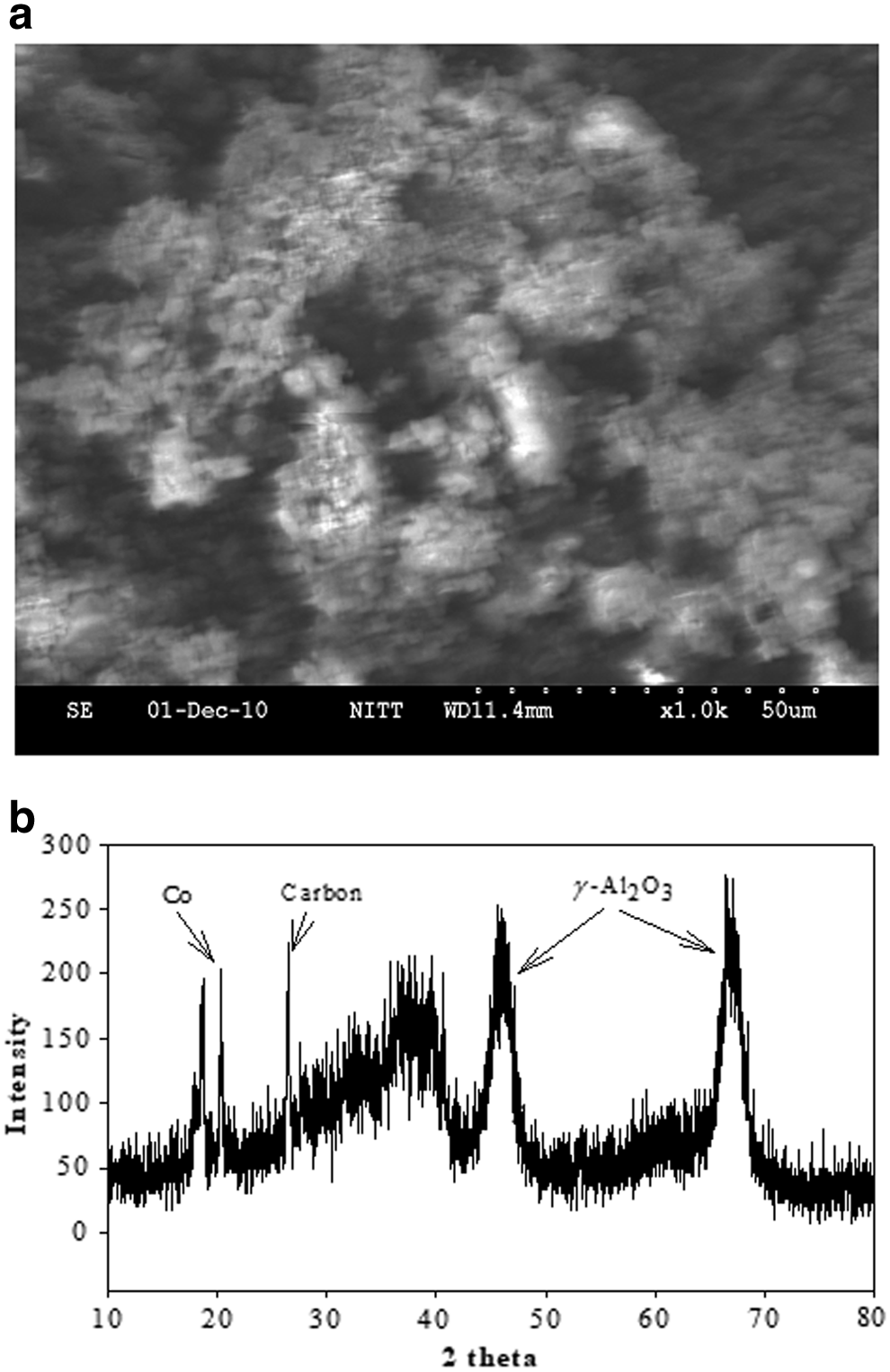
Co/γ-Al2O3 and soot mixture was characterized by using a scanning electron microscope (SEM) and powder X-ray diffraction (XRD). Figure 2a shows the SEM images of Co/γ-Al2O3 with biodiesel soot mixture. The SEM photograph showed even distribution of Co/γ-Al2O3 over biodiesel soot without significant sintering, which causes the proper oxidation process in DOC. The XRD pattern of Co/γ-Al2O3 with soot mixture is given in Fig. 2b. The position of the peaks confirms the presence of alumina, cobalt, and carbon, and excludes the presence of cobalt oxide. XRD data are consistent with those reported in the literature (Berry et al., 2000; Cava et al., 2007; Shaijumon and Ramaprabhu, 2003).
Reduction catalyst
Metal complexes are an attractive catalyst for oxidation of soot because of their cheap, easy synthesis and their chemical and thermal stability. Among various metal complexes, copper complexes are known for their catalytic oxidation properties, stability, and ease of handling (Ramakrishna and Bhat, 2011). The procedure for preparation of [CuCl2(PPh3)2] was followed from the previous study (Nageswara Rao et al., 2000). The mixture of [CuCl2(PPh3)2] and biodiesel soot was prepared by a similar procedure of DOC and biodiesel soot mixture. Soot ignition temperature of the mixture was determined through the TG/DTA. Figure 3 shows the TG/DTA curve of [CuCl2(PPh3)2] with soot mixture. It was found that the [CuCl2(PPh3)2] decreased the self-ignition temperature of biodiesel soot from 537°C to 245.2°C.
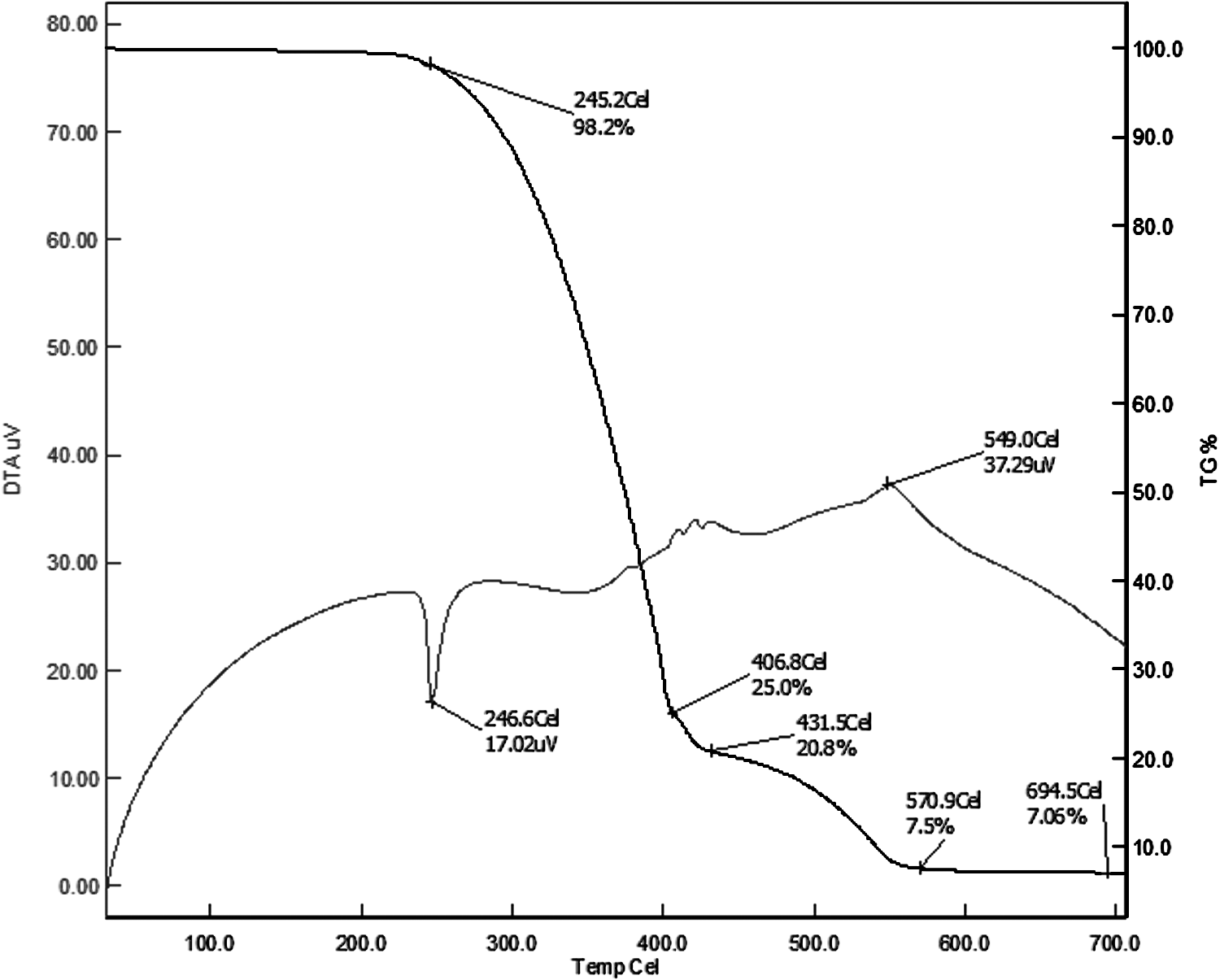
TG/DTA curve of CuCl2(PPh3)2 and biodiesel soot mixture.
Selection of DPF
Various kinds of DPFs and filter configuration using different types of materials are used in the automotive market. In this study, cordierite monolith wall flow filter made up of cordierite—a synthetic chemical composition of 2MgO-2Al2O3-5SiO2 (Model: Corning Dura Trap CO, 200/12; Corning India, Haryana, India), was selected on the basis of low thermal expansion coefficient, high melting point, high temperature resistance (above 1,200°C), good mechanical strength, great thermal shock resistance, excellent chemical stability, good catalyst adhesion, and good filtration efficiency, usually higher than 90% with lower pressure drop (Soloviev et al., 2015; Yang et al., 2017). The specifications of the cordierite monolith filter are given in Table 1. It possesses channels that are alternatively plugged at each end to force the particulate through the porous walls. Hence, the walls of the channels act as a filtration surface (Abhotff, 1985). The reduction catalyst was coated on DPF by following the method reported previously (Liu et al., 2003).
Diesel Particulate Filter Specifications
Engine Setup and Measurements
The experimental investigation was carried out on a single-cylinder, four-stroke, water-cooled, naturally aspirated, DI diesel engine. A schematic representation of the experimental setup is shown in Fig. 4. The engine had a compression ratio of 17.5:1 and was capable of developing 5.2 kW power at a constant speed of 1,500 rpm. The injection nozzle has three holes of diameter 0.3 mm each with a spray angle of 120°. The injector opening pressure and static injection timing as specified by the engine manufacturer were 220 bar and 23° before the top dead center. The test engine used was directly coupled to a KIRLOSKAR make electrical alternator for making power measurements. The detailed specifications of the engine are given in Table 2. The air flow rate was measured by an inclined manometer.
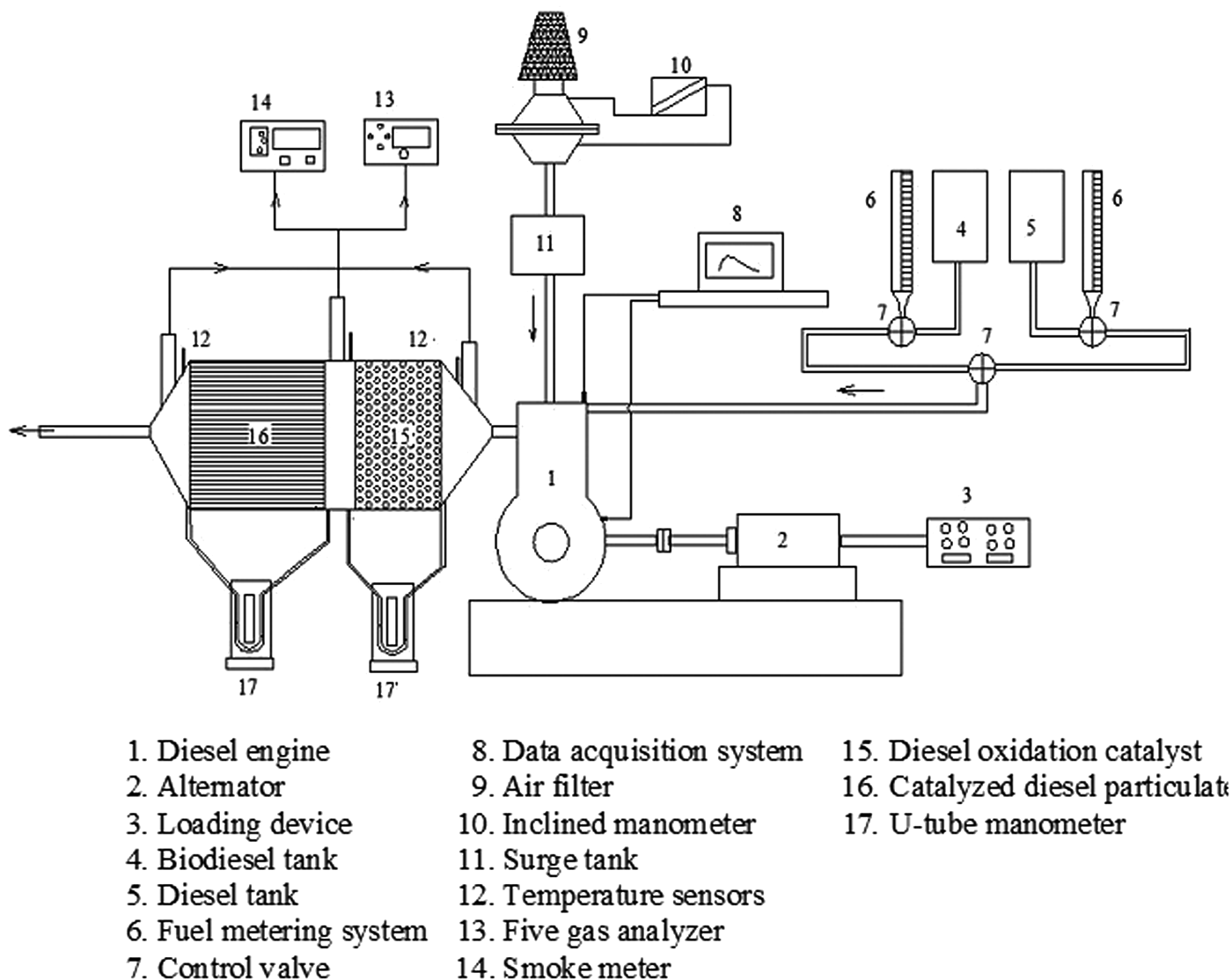
Schematic diagram of experimental setup.
Engine Specifications
bTDC, before Top Dead Center.
A standard burette and a digital stopwatch were used for engine fuel flow measurements. The 3.16″ × 2.9″ DOC chamber followed by 5.9″ × 6.3″ CDPF was installed at the tail pipe of DI diesel engine. U tube mercury-filled manometers were used to measure the pressure across the DOC and CDPF chambers. K-type (chromel/alumel) thermocouples connected to digital indicators measured the exhaust gas temperature at the entry of DOC and CDPF, and exit of CDPF. Exhaust gas emissions of test fuels at various stages of CDPF, namely CO, CO2, NO, and UHC, were measured using an AVL DiGas 444 five gas analyzer. CO and CO2 were determined as percentage volumes, whereas UHC was measured as n-hexane equivalent in ppm. NO was measured in ppm and smoke was measured in terms of percentage opacity using an AVL 437 smoke meter (standard).
The cylinder pressure was measured by installing a KISTLER quartz (piezo-electric) transducer with an inbuilt charge amplifier, model 6313 C, with a range of 0–100 bar into the cylinder head. The top dead center (TDC) marker (KISTLER model 5015A1000) was placed near the engine flywheel and a small metallic deflector was fitted at the TDC position. The setup was aligned in such a way that the sensor gives out a square wave output exactly when the piston is at TDC. The cylinder pressure data were recorded as the average of 20 cycles of data with a resolution of 0.5 °CA, using a data acquisition system. The heat release rate was calculated by first law analysis of 20 cycles of pressure crank angle data.
Initially, the injection pressure and timing of the engine were maintained as 220 bar and 23° before Top Dead Center (bTDC) (as set by the manufacturer). The test fuels used were biodiesel without FBC (B100 CDPF) and biodiesel with FBC (B100 FBC-CDPF). The fuel properties of test fuels are given in Table 3. The engine performance, emissions, and combustion characteristics were recorded at different loads ranging from 0% to 100% in increments of 25% along with 10% over load at a constant speed of 1,500 rpm. The engine operating conditions such as injection pressure and timing were optimized to 280 bar and 25.5° bTDC for biodiesel produced from WCO in the previous experimental study. Thus, the effect of CDPF on performance, emission, and combustion parameters was investigated at an optimized operating condition of 280 bar injection pressure and 25.5° bTDC injection timing. The results obtained were compared with that of diesel CDPF at standard operating condition (220 bar and 23° bTDC). Cooling of the engine was accomplished by circulating water through the jackets of the engine block and the cylinder head.
Comparison of Fuel Properties
Error analysis
Errors and uncertainties in the experiments may occur due to the selection of the instrument, working condition, calibration, environment, observation, and method of conduct of the tests (Devan and Mahalakshmi, 2009; Mani and Nagarajan, 2009). Uncertainty analysis was necessary to prove the accuracy of the experiments. The percentage uncertainties in measuring various parameters were determined using the root-sum-square method (Doebelin and Manik, 2007). The percentage uncertainty of various instruments used in the experimental investigation and the error analysis of the results are shown in Table 4.
Percentage Uncertainties of Various Instruments
CO, carbon monoxide; CO2, carbon dioxide; NO, nitric oxide.
Results and Discussion
Performance characteristics
Brake-specific fuel consumption
The variations of brake-specific fuel consumption (BSFC) for a diesel engine installed with CDPF under varying operating conditions are given in Fig. 5. The BSFC of all the test fuels was found to decrease with increasing engine loads. BSFC is defined as the fuel consumption per unit brake power developed. Hence, an increase in the engine load leads to a decrease in BSFC for all the test fuels. Biodiesel exhibited a slightly higher BSFC compared with diesel irrespective of injection pressure, timing, and FBC addition. The lowest BSFC of 0.32 kg/kWh was observed with B100 FBC-CDPF at an injection pressure of 280 bar and an injection timing of 25.5° bTDC at 100% load condition, which is 7.2% lower than that of B100 CDPF and 11.13% higher than that of diesel at the standard operating condition.
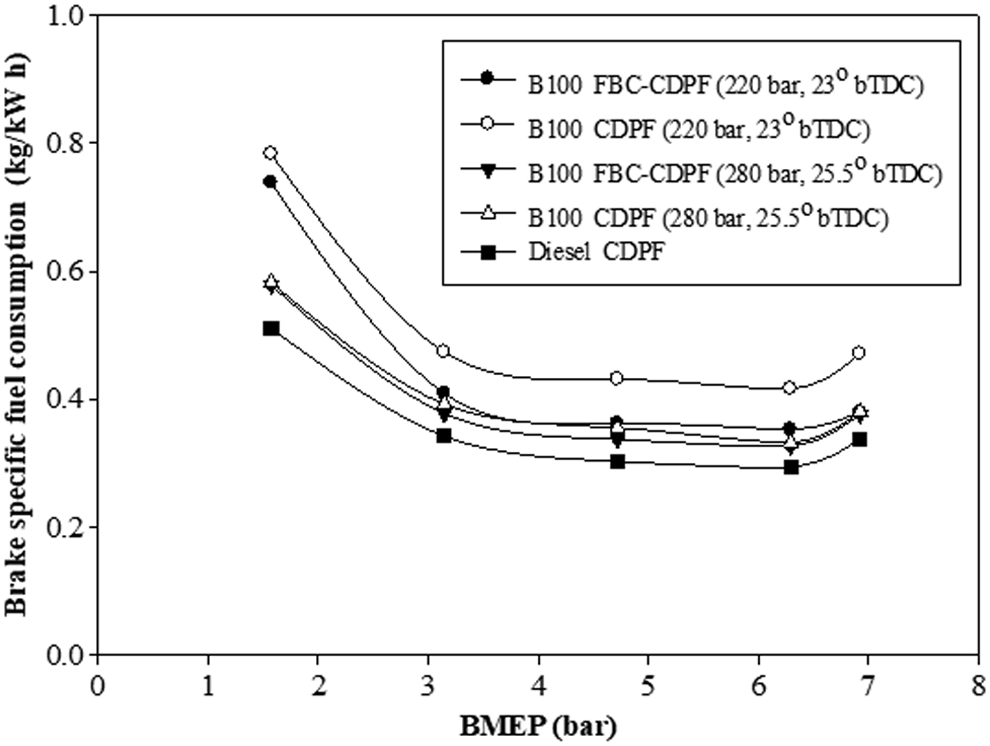
Brake-specific fuel consumption for test fuels.
Brake-specific energy consumption
Brake-specific energy consumption (BSEC) is a more relevant parameter than BSFC because it is independent of the fuel. Hence, it is more convenient to compare energy consumption rather than fuel consumption. BSEC is the energy input required to develop unit power. The variation of BSEC of test fuels with CDPF under different operating conditions is shown in Fig. 6. It was observed that the lowest BSEC of 12.6 MJ/kWh was noted for B100 FBC-CDPF at 280 bar injection pressure with 25.5° bTDC injection timing at 100% load condition, which is 21.4% lower than that of B100 CDPF and 3.2% higher than that of diesel at the standard operating condition.

Brake-specific energy consumption for test fuels.
Brake thermal efficiency
The comparison of brake thermal efficiency of test fuels with CDPF in different operating conditions is given in Fig. 7. For all the tested fuels, the brake thermal efficiency increases with increasing engine loads. It was found that the maximum brake thermal efficiency of 28.92% was noted with B100 FBC-CDPF at 280 bar and 25.5° bTDC at 100% load condition, which is slightly lower than diesel-CDPF and 7.8% higher than that of B100 CDPF.
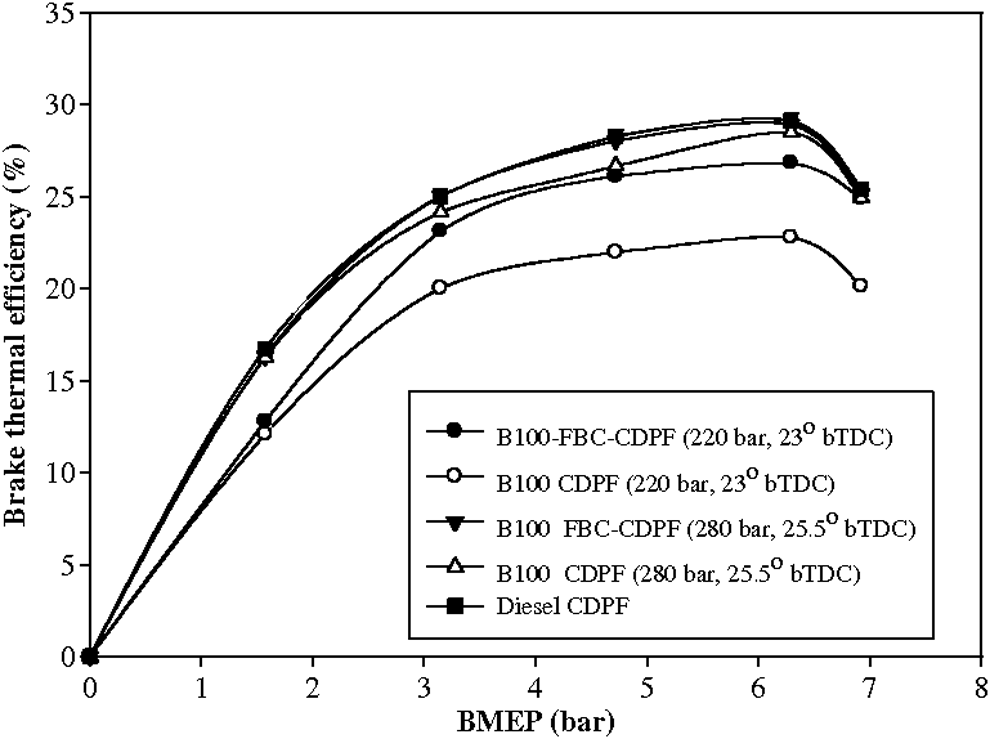
Comparison of brake thermal efficiency with BMEP for test fuels.
At standard operating condition, B100 FBC-CDPF and B100 CDPF exhibited higher BSFC, BSEC, and lower brake thermal efficiency compared with diesel. This is due to the lower energy content of biodiesel (Keskin et al., 2007). Significant reduction in BSFC and BSEC and improvement in brake thermal efficiency were noted with B100 FBC-CDPF at 280 bar with 25.5° bTDC compared with biodiesel at the standard operating condition. This is mainly due to biodiesel being injected at higher injection pressure, which causes the proper mixing of fuel and air. Furthermore, advancing fuel injection compensates the slow vaporization of biodiesel, resulting in better combustion. Besides, the catalytic effect of FeCl3 enhances the combustion process. However, the improvement in performance characteristics of B100 FBC-CDPF at optimum condition was slightly affected due to the presence of a CDPF in the tail pipe, which resulted in filter plugging by the soot of the exhaust gas that led to an increase in back pressure, causing a slight loss in engine performance characteristics (Cherng, 2002), compared with a previous study that used same fuels without CDPF (Kannan et al., 2011).
Pressure drop in CDPF
The variation in pressure drop of CDPF for the test fuels and the corresponding exhaust gas temperature under different load conditions are shown in Fig. 8. The pressure drop of all the test fuels increases up to 25% engine load, and it decreases with further increasing of engine loads. This can be explained by the fact that the temperature required for regeneration of the soot particle deposited within the filter was lower. Among the test fuels, the lowest pressure drop of 5.33 mbar was observed with B100 FBC-CDPF at 100% load condition, which is 33.7% lower than that of B100 FBC-CDPF and 56.55% lower than that of diesel at the standard operating condition. The temperature required for soot oxidation from 500°C to 600°C range was lowered with the use of [CuCl2(PPh3)2] that coated over the DPF. The soot ignition temperature of the catalyst was 245.2°C.
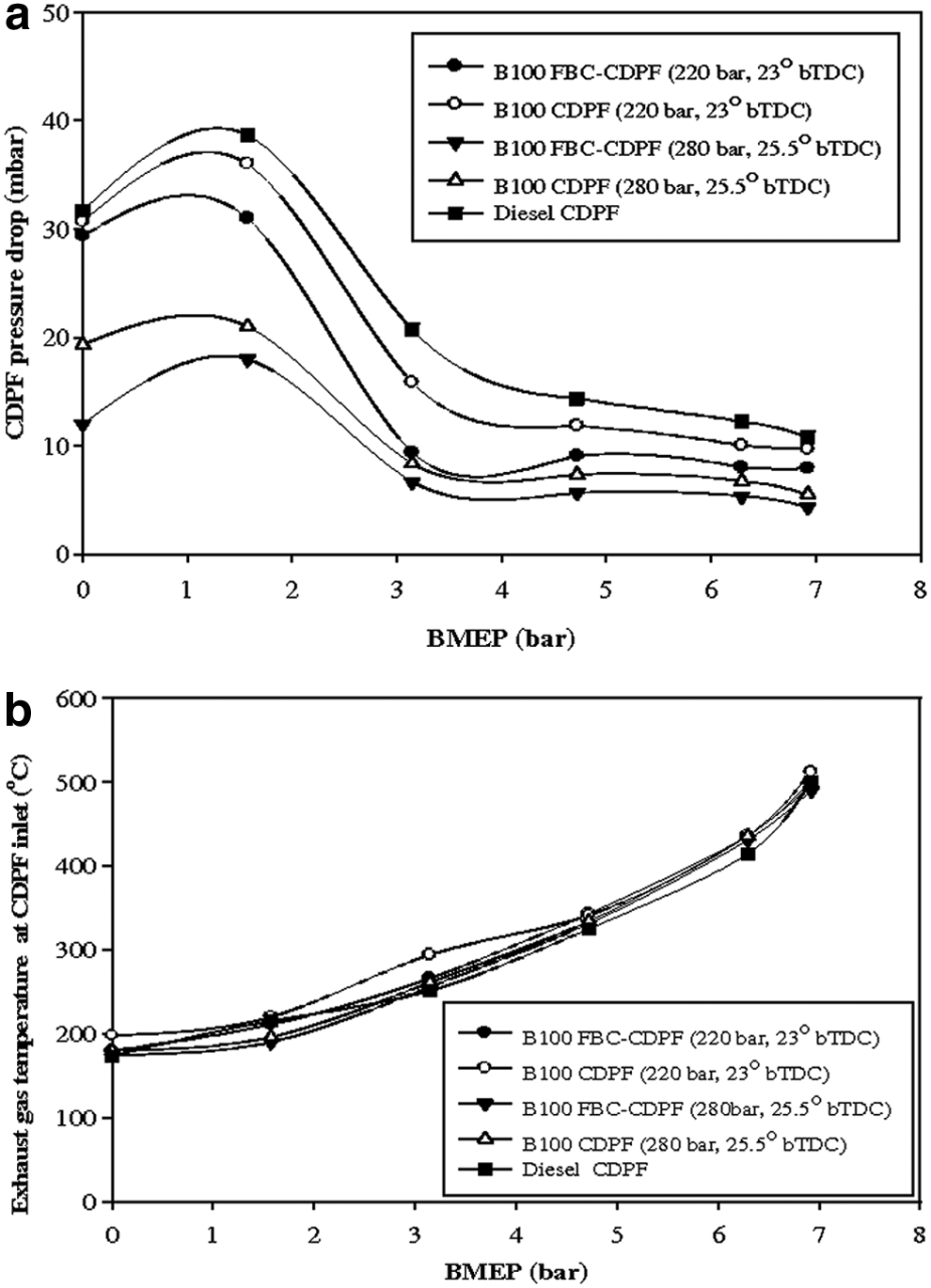
In addition, the oxidation catalyst placed upstream of the CDPF oxidizes NO to NO2, oxidizing the soot at a lower temperature than oxygen (Lepperhoff, 1999). When the engine load conditions go above 25%, the exhaust gas temperature exceeds the degradation temperature of the catalyst, which enables the decomposition of NO2 with accumulated soot within the DPF, causing proper regeneration of CDPF. The lower pressure drop of FBC added in biodiesel was due to FBC doped on soot, which leads to further reduction in temperature required for oxidation of accumulated soot particle within the filter (Allansson et al., 2004). CDPF mainly relies on the exhaust gas temperature for thermal regeneration. The rate of soot oxidation increases with increasing exhaust gas temperature, leading to lower pressure drop (Cooper and Thoss, 1998).
Combustion characteristics
Heat release rate
The variation in heat release rate of test fuels under different operating conditions at 100% load condition is shown in Fig. 9. The negative heat release rate was observed during ignition delay. This is because of the cooling effect by fuel vaporization and heat loss from the engine cylinder walls (Heywood, 1988). Among the test fuels, maximum heat release rate of 27.3 J/°CA was observed with B100 FBC-CDPF at 280 bar and 25.5° bTDC, which is 1.8% higher than that of diesel and 4.5% higher than that of B100 FBC-CDPF at the standard operating condition. This is attributed to the early start of combustion due to higher cetane number that shortens the ignition delay, higher oxygen content of biodiesel, and the catalytic effect of FBC, ensuring better combustion resulting in higher cylinder temperature (Banapurmath et al., 2009). The result of back pressure, caused due to installing CDPF, reduced the maximum heat release rate of all test fuels when compared without CDPF operation in the previous study (Kannan et al., 2011).

Heat release rate with crank angles at 100% load condition.
Emission characteristics
CO emission
The CO emission of test fuels with CDPF under different operating conditions is presented in Fig. 10. Biodiesel showed lower CO emission irrespective of operating conditions used when compared with diesel. This is due to higher oxygen content and higher cetane number of biodiesel (Ramadhas et al., 2005; Anand et al., 2010; Kannan and Anand, 2011b). Among the test fuels, lowest CO emission of 0.1% was observed with B100 FBC-CDPF at 280 bar with 25.5° bTDC after DOC at 100% load condition, which is 9.1% lower than that of CO emission before DOC, and there was insignificant CO oxidation in CDPF. The lowest CO emission of B100 FBC-CDPF at optimized condition after DOC is mainly due to the Co/γ-Al2O3 coated on the surface of clay ball, which promotes the oxidation of CO to CO2. A slight increase in CO emission was noted for B100 FBC-CDPF at the outlet of CDPF. Even though oxidation of CO takes place in CDPF, the decomposition of exhaust gas over catalyst-coated DPF releases additional CO. However, CO emission at CDPF outlet was lower than that of the consequent CO emission for test fuels before reaching the DOC inlet.
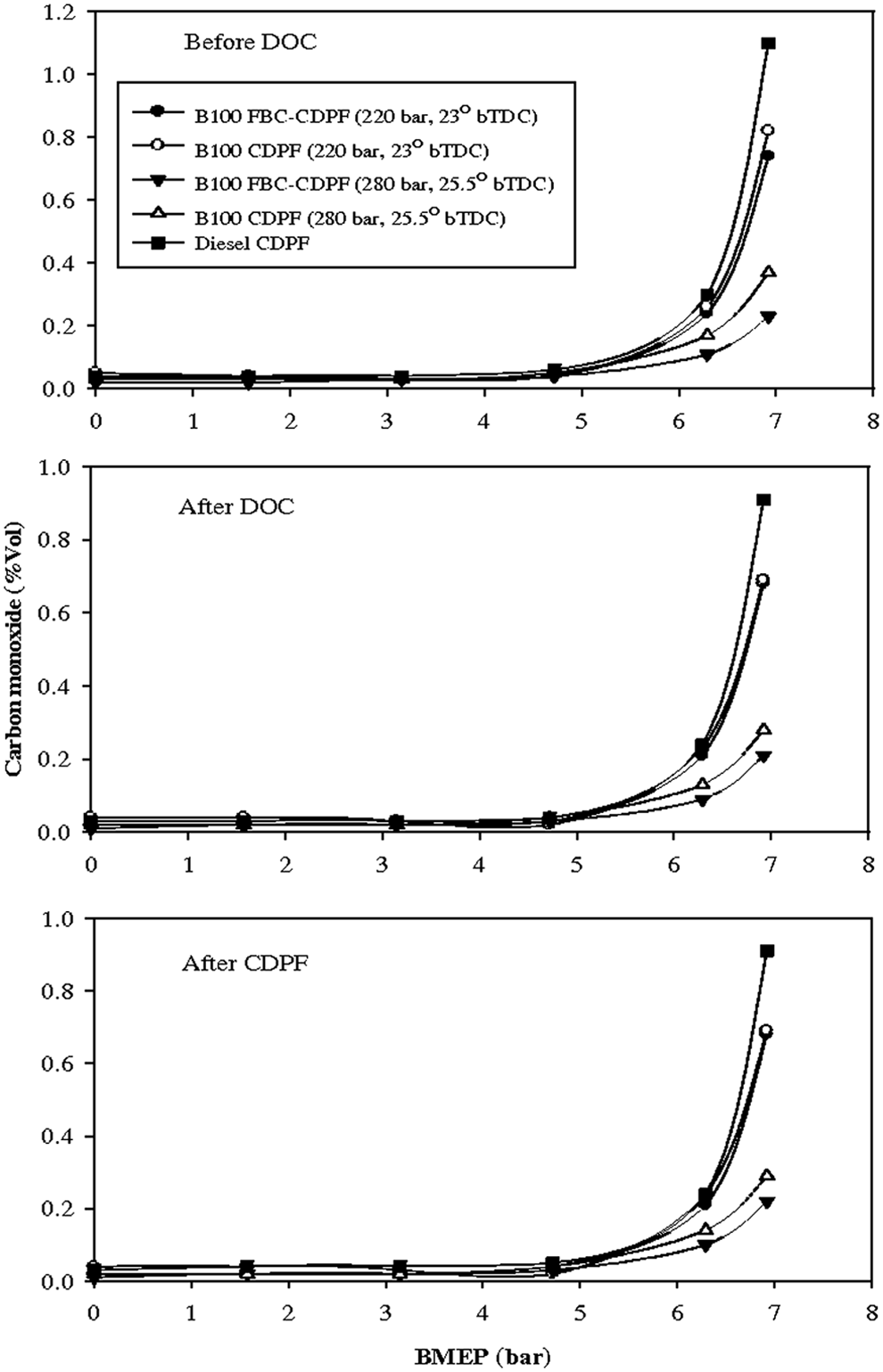
Effect of CDPF on CO emission for test fuels. CO, carbon monoxide.
CO2 emission
The effect of installing CDPF on CO2 emission for different test fuels under varying operating conditions is shown in Fig. 11. CO2 emission of all test fuels increases with increasing load. Higher fuel consumption is required at high engine loads, resulting in an increase in the fuel to air ratio at a constant speed. Lower CO2 emission for biodiesel at various operating conditions is mainly because of the lower carbon content of biodiesel in an equal volume of fuel consumed for the same load (Anand et al., 2010). The maximum CO2 emission of 4.7% was observed for B100 FBC-CDPF at an optimized condition and at CDPF outlet, which is 4.4% higher than that of CO2 emission after DOC and 9.3% higher than that of CO2 emission before DOC. This is mainly because of the presence of DOC that improves the conversion of CO to CO2. Furthermore, catalyst coated on the DPF promotes the conversion of C to CO2 (Lin, 2002).

Effect of CDPF on CO2 emission for test fuels. CO2, carbon dioxide.
UHC emission
The comparison of UHC emission for all the test fuels under different operating conditions is presented in Fig. 12. The lowest UHC emission was noted with biodiesel irrespective of operating condition. This is due to the higher oxygen content and cetane number of biodiesel (Kannan et al., 2011). Lowest UHC emission of 5 ppm was observed with B100 FBC-CDPF at CDPF outlet with 280 bar and 25.5° bTDC at 100% load condition, which was 3 ppm lower than that of UHC emission before DOC and slightly higher than that of UHC emission at DOC outlet. The reduction in UHC emission of B100 FBC-CDPF is mainly due to catalyzing the oxidation of UHC to CO2 and water vapor when the exhaust gases pass through Co/γ-Al2O3-coated clay balls in the DOC chamber. However, a slight increase in UHC emission was observed at the outlet of CDPF.
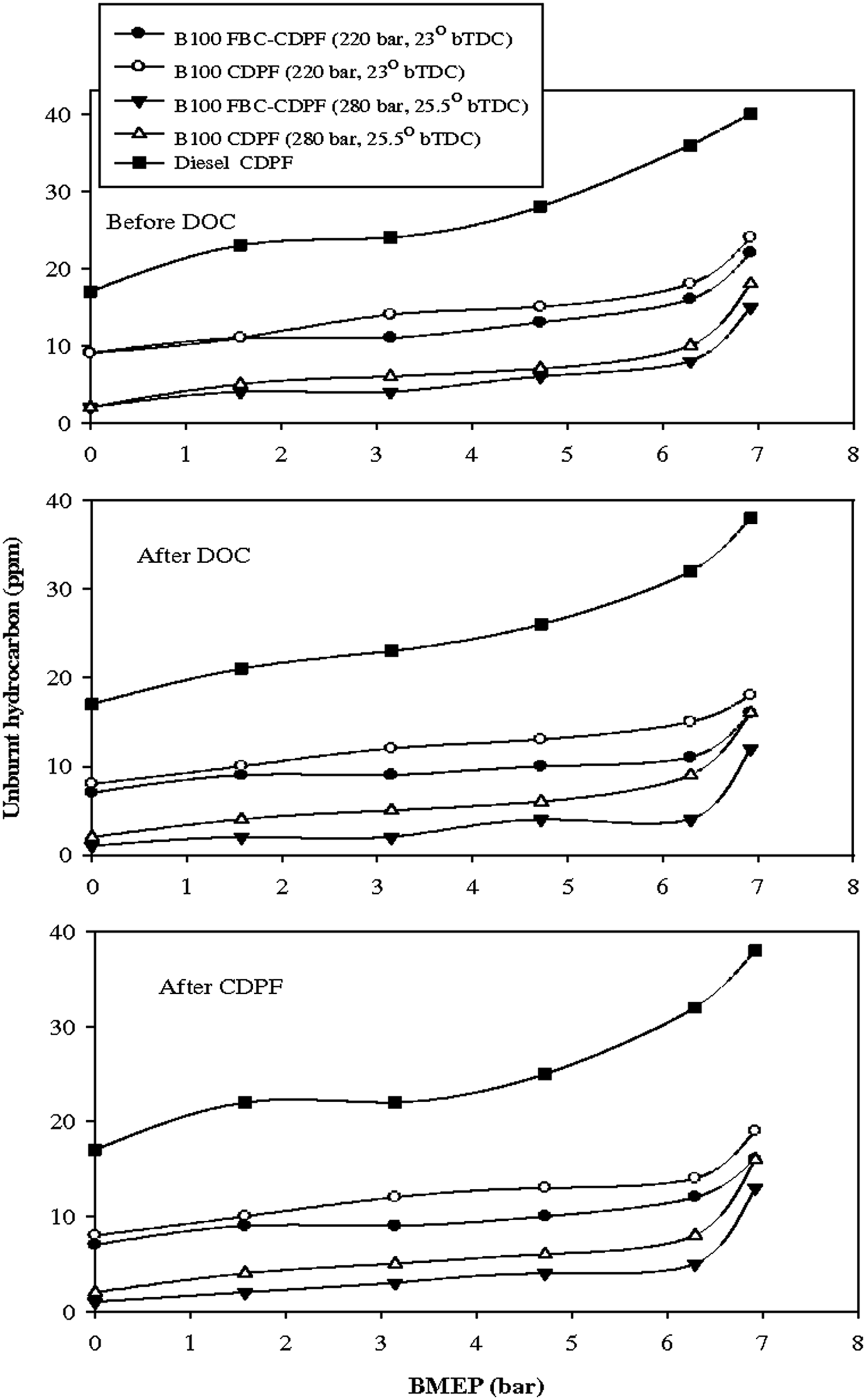
Effect of CDPF on UHC emission for test fuels. UHC, unburnt hydrocarbon.
NO emission
The NO emission of all test fuels at various operating conditions is plotted in Fig. 13. NO emission of biodiesel was lower than diesel, regardless of injection pressure and injection timing. In this study, the biodiesel derived from waste cooking oil had a higher cetane number of 61. The longer chain fatty acids and higher degrees of saturation yielded the higher cetane number (Graboski et al., 2003; Murphy et al., 2004; Ban-Weiss et al., 2007; Kannan and Anand., 2011b). Biodiesel contains a major portion of longer saturated fatty acids such as palmitic acid (C16:0), stearic acid (C18:0), and arachidic acid (C20:0). The presence of these fatty acids ensures that biodiesel has higher saturation. Hence, it can be stated that higher degrees of saturation (lower iodine number) and longer chain fatty acids lead to lower NO emissions (Graboski et al., 2003). The lower NO emission of biodiesel compared with diesel fuel was similar to the other research findings (Graboksi and McCormick, 1998; Assessment and Standard Division, 2003; Chang and Van Gerpan, 2005; Kannan and Anand, 2011b).

Variation of NO emission with CDPF for test fuels. NO, nitric oxide.
NO emission level increases with increasing injection pressure and timing because of the faster combustion and higher cylinder gas temperature and peak pressure, occurring at an earlier crank angle (Bari et al., 2004; Narayana Reddy and Ramesh, 2006). Reduction of NO emission was also observed when the exhaust gases pass over Co/γ-Al2O3-coated clay balls, which catalyze the NO to NO2. Besides, the FBC-added biodiesel can improve the oxidation reactivity of DOC, resulting in reducing soot ignition temperature by spreading of the FBC on the soot surface (Song et al., 2006). Moreover, the presence of a CDPF in the tail pipe showed a slightly higher NO emission. NO emission of 510 ppm was observed with B100 FBC-CDPF at 280 bar and 25.5° bTDC at 100% load condition and at CDPF outlet, which was 10 ppm higher than that of same fuel at the outlet of DOC and 27 ppm lower than that of same fuel before DOC. The slightly higher NO emission of all test fuels after CDPF is mainly due to the decomposition of NO2 (Andersson et al., 2002; Allansson et al., 2004) in the presence of [CuCl2(PPh3)2].
Smoke emission
The variation of smoke emission of the test fuels at different operating conditions under CDPF is illustrated in Fig. 14. The smoke emission of biodiesel at all loads was lower than that of diesel, irrespective of various operating conditions. This is because of a higher oxygen content and absence of sulfur content of biodiesel (Banapurmath et al., 2009). A slight reduction of smoke emission of all test fuels was noted after DOC condition. This is mainly because a small part of soot was oxidized by the Co/γ-Al2O3 coated over the clay ball support in DOC. The installation of CDPF was used to retain the solid particulate as the exhaust gases pass through the CDPF. Bulky PPh3 ligands are labile in nature, and hence, the Cu—PPh3 bond can be broken easily to create a vacant coordination site, which facilitates the conversion of NO2 to NO and subsequently C to CO2.

Effect of CDPF on smoke emission for test fuels.
At the outlet of CDPF, the lowest smoke emission of 19% was observed with B100 FBC-CDPF at the optimized condition, which is 16% and 17% lower than that of smoke emission after DOC and at the entry of DOC, respectively. This is mainly due to oxidation of soot within the filter. Thus, the soot accumulated in the filter can be burnt at the lowest ignition temperature of 245.2°C when the catalyst is coated over the DPF surface. It enables the regeneration process in the presence of NO2. Furthermore, FBC addition in the biodiesel can be used to reduce the regeneration temperature of soot and promote the soot oxidation process. This reveals that the CDPF helps to enhance the removal of soot for a diesel engine.
Conclusions
The main objective of the study was to investigate the effect of a CDPF on DI diesel engine using biodiesel with or without FBC at different operating conditions. Based on experimentation, the following conclusions can be drawn:
Similar brake thermal efficiency of 28.9% was observed with B100 FBC-CDPF at 280 bar and 25.5° bTDC when compared with diesel CDPF. The lowest pressure drop of 5.3 mbar was observed with the exhaust gas of B100 FBC-CDPF flow through CDPF at optimized operating conditions. Installation of CDPF showed a reduction in the exhaust gas temperature of B100 FBC-CDPF from 472°C to 393°C at 100% load condition. The DOC upstream of DPF performed more effective soot burning by the generation of NO2 gas upstream of CDPF. Furthermore, the presence of a catalyst on DPF enhancing soot combustion was also confirmed. Among the test fuels, B100 FBC-CDPF showed a higher heat release rate at 100% load condition compared with the other test fuels. Installation of a CDPF resulted in a reduction in CO, HC, NO, and smoke emission by 9.1%, 37.5%, 6.7%, and 47.2%, respectively, with B100 FBC-CDPF at optimized conditions. Significant improvement in CO2 emission by 8.5% was also observed.
Hence, the installation of CDPF is more efficient in reducing the tail pipe gas emissions of a diesel engine fueled with waste cooling palm oil-based biodiesel, which can be suitably used as an after-treatment technique for stationary DI diesel engine. The scope of further development of biodiesel-fueled diesel engine with CDPF depends mainly on the durability test of CDPF and determination of the effective operation of passive regeneration in terms of evaluating the deterioration of the catalyst. Furthermore, the use of copper complex-coated DPF resulted in the formation of toxic dioxins due to the combined reaction of chlorine and copper. A detailed investigation will be required to monitor the formation of toxic dioxins. Furthermore, the increase in the exhaust gas back pressure has to be kept in check while operating the engine for several hours.
Footnotes
Author Disclosure Statement
No competing financial interests exist.