




Abstract
Abstract
17β-Estradiol (E2) is normally detected in water at nanogram per liter levels, which could alter normal hormone functions and the physiological status of wildlife. In this study, biodegradation of E2 with microorganisms from activated sludge showed a high removal efficiency of 99.2% in 60 h. This was greater than the efficiency using single Escherichia coli. To remove E2 effectively, a system combining electrochemical and biological degradation was used to remove E2 from an aqueous solution. E2 removal efficiency using the combined system was increased at high dissolved oxygen concentrations and low pH and could reach 99.3% after 90 min. An electric current density of 20 mA/cm2 inhibited the growth of most bacterial species; however, dominant bacterial strains such as Bacillus, Lysinibacillus, and Aeromonas survived, leading to promotion of E2 degradation. From analysis of E2 degradation products by gas chromatography–mass spectrometry, E2 degradation was explained by the following process. First, E2 was oxidized to form hydroxylation products. Then, ring-opening oxidization of the products formed macromolecules and small-molecular-weight organic carboxylic acids. Finally, organic carboxylic acids were mineralized. It was also demonstrated that E2 degraded more quickly and completely by the combined system than by biological degradation.
Introduction
E
Biodegradation and photodegradation of steroid estrogens have been identified as two of the predominant natural degradation processes (Zuo et al., 2006, 2013; Chen et al., 2013). However, the half-lives of E2 under natural photolysis and microbial aerobic degradation were 10 and 20–40 days, respectively (Lee and Liu, 2002; Mazellier et al., 2008). Moreover, E2 could be transformed into E1 by microorganism degradation (Liu et al., 2011a), which had a strong endocrine-disrupting effect. To reduce human health risks, an effective, sustainable, and economically feasible treatment process for removing E2 from wastewater is required. Activated carbon adsorption, advanced oxidation, and biodegradation can effectively remove steroid estrogen in water (Clouzot et al., 2008). Advanced oxidation methods rely on active substances produced by different systems to react with steroid estrogen, such as Fenton catalytic technology (Katsumata et al., 2004), H2O2/ultraviolet (UV) (Daneshvar et al., 2003), and electrochemical oxidation technology (He et al., 2016). Electrochemical methods have been used to remove estradiol because of their effectiveness, robustness, compatibility, and short retention time (Murugananthan et al., 2007). However, the high energy consumption of advanced oxidation technology acts as a bottleneck for pollutant removal.
Recently, bioelectrochemical technology has been used for the treatment of recalcitrant organic matter (Kumar et al., 2017), phosphorus, and nitrogen in wastewater (Choi et al., 2018; Gong et al., 2018). Bioelectrocatalysis, which involves biodegradation and electrochemical catalytic degradation, has recently been used for successful bioremediation and can detoxify contaminants with reduced energy consumption (Puyol et al., 2017; Peng et al., 2018). The use of microorganisms as catalysts for electrochemical degradation of compounds with the objective of stimulating biochemicals is referred to as a microbial electrochemical system (MES) (Zhang and Angelidaki, 2014). Currently, the coupled biodegradation and electrochemical degradation method has been used to remove pollutants (Saratale et al., 2017), such as azo dye (Liu et al., 2011b) and tetrabromobisphenol A (Fan et al., 2017). Combining the biological system and electrochemical processes makes it difficult to identify limitations of the method. Electron transfer in a biocatalyzed electrochemical system plays a major role in harnessing electricity and degrading multiple pollutants present in the MES (Velvizhi and Mohan, 2015). Electrochemically active bacteria act as biological catalysts that lead to improvement in the performance of bacteria and the exchange of nutrients (Kumar et al., 2017). Thus, the rate of electron transfer is a major hurdle to overcome.
The objective of this study was to evaluate the removal efficiency of E2 using MES. For the efficient performance of MES, understanding sustained microbial growth and its metabolism is essential. Optimizations of various environmental factors (pH and dissolved oxygen [DO]) were discussed. Changes in the microbial community characteristics in the coupled electrochemical and biological system were also explored. Moreover, E2 degradation products were identified by gas chromatography–mass spectrometry (GC-MS) to illustrate the mechanism of the degradation process. The electrical energy consumption of the coupled method was evaluated. The study was designed to provide a theoretical basis for future application of bioelectrochemical technology in wastewater treatment as an alternative for reducing steroid hormone concentrations.
Materials and Methods
Materials and chemicals
The molecular formula of E2 standard is C18H24O2, and the water partition coefficient of octanol is 4.01 (Bai et al., 2013). E2, SnCl2, N-methyl-N-(trimethylsilyl) trifluoroacetamide, and trifluoroacetic acid were purchased from Sigma-Aldrich in the highest purity available (mostly analytical grade). Chromatographic grade acetonitrile, methanol, acetone, n-hexane, and ethyl acetate were purchased from Merck Corporation. NaCl, Na2SO4, (NH4)2SO4, KH2PO4, K2HPO4, CaCl2·2H2O, MgSO4, CH3COONa, yeast extract, glucose, and other inorganic reagents were of analytical grade and purchased from China's Sinopharm Chemical Reagent Co. Escherichia coli was selected as the experimental object in this study owing to its ability to degrade estrogen and its electrochemical activity (Yu et al., 2007; Qiao et al., 2008). E. coli was purchased from the China Industrial Strain Preservation Center (Beijing, China). The activated sludge used in the experiment was collected from the seventh and eighth sewage treatment plants in Kunming City, Yunnan Province. Milli-Q water (electrical resistance >18.0 MΩ) was used throughout this study.
Aerobic bacterial domestication
Activated sludge collected from the wastewater treatment plant was aerated for 2 days, and bacteria were collected by the leaching method. Then, E2 with different concentrations (0.2, 0.5, 0.8, and 1 mg/L) was used to conduct gradient aerobic acclimation of collected bacteria. The bacteria were domesticated in various concentrations of an E2 inorganic salt medium for 7 days, and then, the extracted bacteria were cultured in the higher gradient concentration of E2 medium. The inorganic salt medium comprised NaCl (1,000 mg/L), NH4Cl (800 mg/L), KH2PO4 (500 mg/L), K2HPO4 (600 mg/L), MgCl2·6H2O (200 mg/L), CaCl2·2H2O (50 mg/L), and yeast powder (5 mg/L) (He et al., 2017). The domesticated aerobic bacteria blended with a 1:4 (v/v) glycerol aqueous solution were restored in a −80°C refrigerator.
E2 biodegradation experiment
E. coli and aerobic bacteria were cultivated in the expanded medium (NaCl [10 g/L], peptone [10 g/L], and yeast powder [5 g/L]) for 10 h. Then, two kinds of bacteria with the volume ratio of 3% expanded medium were added into conical bottles containing 100 mL of electrolysis inorganic salt medium (NaCl [500 mg/L], Na2SO4 [2,000 mg/L], (NH4)2SO4 [400 mg/L], KH2PO4 [500 mg/L], K2HPO4 [600 mg/L], CaCl2·2H2O [50 mg/L], MgSO4 [170 mg/L], CH3COONa [150 mg/L], yeast extract [10 mg/L], glucose [18 mg/L], and E2 [0.5 mg/L]). The concentration of E. coli in the solution was reached at 1.6 × 10⁷ ± 2.3 × 10⁶ colony-forming units (CFU)/mL, while the concentration of bacteria in the solution was 2.4 × 10⁹ ± 1.5 × 10⁸ CFU/mL. The solutions of NaOH (1 mol/L) and H2SO4 (0.5 mol/L) were used to adjust the pH for two culture mediums with pH values of 5, 6, 7, 8, and 9. The conical bottles containing the E2 bacterial solution were cultured at 30°C and 180 rpm for 60 h in an aerobic condition. All of the experiments were carried out three times.
Combining electrochemical and biological degradation of E2
Electrochemical degradation was carried out in an open and undivided batch of electrolytic cells (an organic glass tank) containing 150 mL of the electrolyte solution under galvanostatic conditions using a DC power supply (PS-305DM). The inorganic salt solution was placed into a 250-mL organic glass box with Ti/Sb-SnO2 and a graphite plate as the anode and cathode, respectively. The effective areas of the anode and cathode were 40 × 50 × 0.3 mm and 100 × 50 × 0.3 mm, respectively, and the spacing was controlled at 10 cm. The same electrolytic inorganic salt medium and the same concentration of aerobic bacterial solution were used, which were in accordance with the biodegradation experiment. The electric current density was optimized in the range of approximately 4–40 mA/cm2. The solutions were saturated by 0.5 atm/min of air or N2 to control the concentration of DO at 7.85 ± 0.5 mg/L or 0.25 ± 0.2 mg/L, respectively.
Analytical methods
After degradation, the E2 concentration was quantified using a high-performance liquid chromatograph (HPLC 1260; Agilent Technologies) equipped with a Waters symmetry-C18 reversed-phase column (5 μm, 4.6 × 250 mm) and a fluorescence detector. E2 was eluted at a rate of 1 mL/min using a mixture of acetonitrile and ultrapure water at a ratio of 60:40 (v/v) containing 0.1% trifluoroacetic acid as the mobile phase. The excitation and emission wavelengths were 283 and 345 nm, respectively. The detection limit for E2 was 0.02 mg/L, and relative standard deviations of the replicate samples were <5% (Zuo, 2014; Gu et al., 2016).
Concentrations of aerobic bacteria and E. coli were analyzed using a Shimadzu 2600 UV-vis (ultraviolet-visible) spectrophotometer at the wavelength of 600 nm. To semiquantify the steady-state concentration of HO• produced in the combined process, terephthalic acid (TPA) was used to trap HO• and form 2-hydroxyl terephthalic acid (2-hTPA) (He et al., 2016). The measurement method is described in a previous study (Moreira et al., 2015). The initial concentration of TPA was controlled to 0.2 mmol/L, and 2-hTPA was determined by a fluorescence spectrophotometer (excitation wavelength and emission wavelength were 315 and 426 nm, respectively.)
Extraction and analysis of E2 degradation products
Because E2 solutions were dilute, all of the products were enriched by solid-phase extraction before the GC-MS analysis equipped with an Agilent DB-5chromatographic column (30 m × 0.25 mm × 0.25 μm). The samples were filtered through Millipore 0.45-μm GF/F glass fiber paper to remove the bacteria, as described in Zuo's studies (Zuo et al., 2006, 2013). Sep-Pak C18 cartridges were preconditioned with 5 mL of ethyl acetate and 5 mL of methanol, followed by 3 × 5 mL of ultrapure (UP) water. For extraction, the filtered samples were passed through cartridges at a flow rate of <3 mL/min1. Then, the cartridges were washed with 3 × 5 mL, 10%, methanol in UP water (v/v) and dried under a vacuum for 2 h. The target compounds were eluted from cartridges using 3 × 5 mL of ethyl acetate. The eluate was evaporated until it was nearly dry under a gentle stream of nitrogen. Finally, the dried residues were dissolved in n-hexane. Because of the large polarity of the target compounds, it was necessary to reduce their polarity and improve the stability of the substances and sensitivity of the chromatographic analysis by derivatization before the GC-MS analysis. The derivatization reagent [N-methyl-N-(trimethylsilyl) trifluoroacetamide] was added into the samples at 60°C for 30 min. E2 and degradation products were derivatized and cooled to room temperature for the GC-MS analysis. The GC-MS analyzed E2 and degradation products in the full scanning mode (selected ion monitoring, SIM), and the scanning range was approximately m/z 50–600 for the ion scanning mode. The SIM model analysis conditions for selected target compounds are shown in Table 1.
Bacterial 16S recombinant DNA amplification and high-throughput sequencing
The 16S recombinant DNA (rDNA) amplification and high-throughput sequencing method were used to identify the bacterial community (He et al., 2017), which was tested by Shanghai Meiji Biotechnology Co., Ltd. Suspended aerobic bacteria were sampled from the original expanded cultivation of bacterial solution (designated EO), electrochemical–biological combined system aerated with N2 (EN), and those aerated with air (EA) at a pH of 5. Then, suspended aerobic bacteria were stored in dry ice and sent to the company for gene sequencing. DNA in the samples was extracted using the E.Z.N.A. Stool DNA Kit (Omega Bio-tek) according to the manufacturer's alternative protocol (Bosshard et al., 2000). V3 and V4 regions of the 16S rDNA gene were selected for polymerase chain reaction (PCR). The primers were 338F (5′ACTCCTACGGGAGGCAGCA-3′) and 806R (5′GGACTACHVGGGTWTCTAAT-3′) (Masoud et al., 2011). The PCR was as follows: (1) 4 μL 5 × FastPfu buffer was used in the PCR mixture and (2) the PCR protocol consisted of an initial 3-min denaturation at 95°C, followed by 27 cycles of denaturing at 94°C for 30 s, annealing at 55°C for 30 s, extension at 72°C for 45 s, and a final extension at 72°C for 10 min.
Results and Discussion
E2 biodegradation by E. coli and aerobic bacteria
E. coli and aerobic bacteria were inoculated into the medium containing E2, and the biodegradation processes of E2 under aerobic conditions at different pH values are shown in Fig. 1. In this study, the adsorption rate of E2 on the microbial population was <5%; therefore, influences of adsorption were ignored in the degradation process during the experiments. The results illustrated that degradation of E2 by aerobic microorganisms domesticated from activated sludge was greater than that of E. coli. Combined degradation of E2 by various microbial strains was greater than that of a single microorganism, which was consistent with results of the Larcher group (Larcher and Yargeau, 2013).
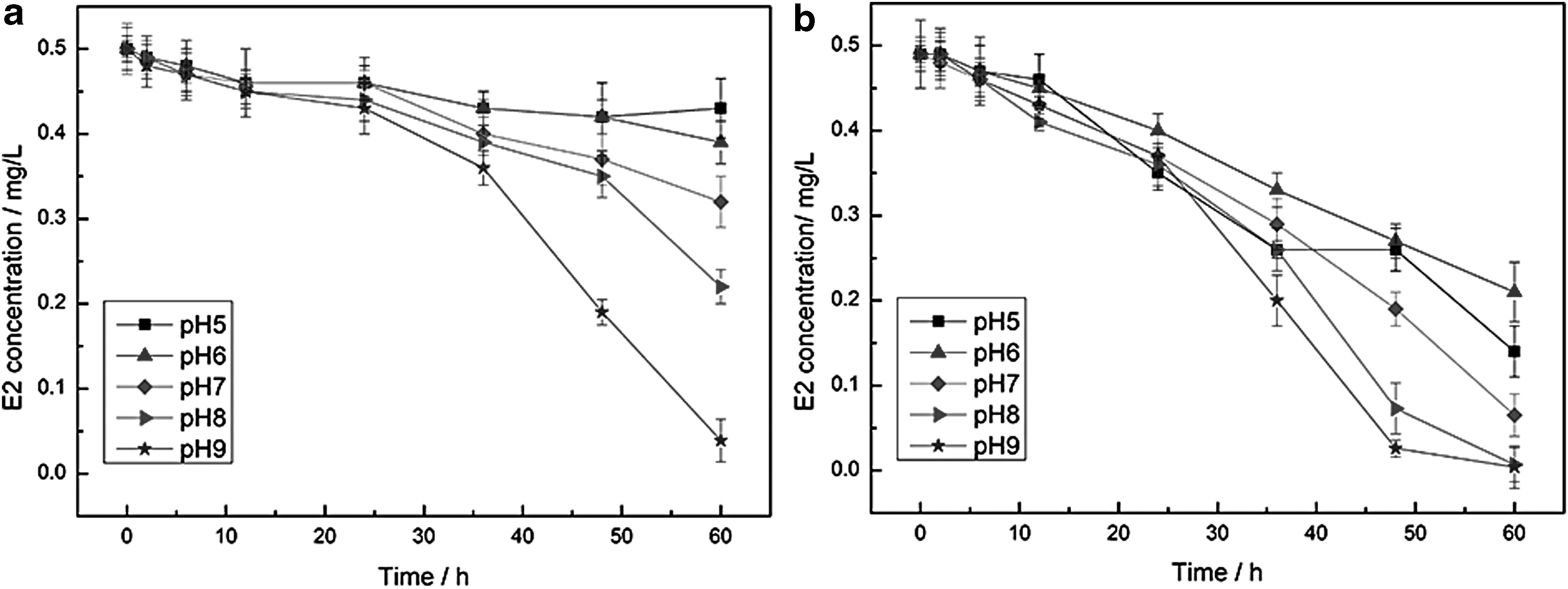
E2 removal by
Changes in microbial concentration and pH for E2 biodegradation by E. coli and aerobic bacteria are listed in Table 2. Degradation of E2 by aerobic bacteria or E. coli in an alkaline condition was superior to that in an acidic condition, and pH values became alkaline at the end of the reaction. The concentration of bacteria decreased under alkaline conditions because bacteria metabolized faster and had a shorter life cycle in alkaline conditions. In addition, damaged cells could release intracellular substances, which contained most of the oxidase (Song et al., 2010), resulting in degradation of E2 by 99.2% of the aerobic microorganisms under a pH of 9 after 60 h.
Optimized electric current density of E2-coupled degradation
E2 degradation processes were conducted under different electrical current conditions in the coupled system at an aerobic condition, as shown in Fig. 2a. It was shown that the E2 degradation rate was promoted with an increasing electrical current density at the range of approximately 4–40 mA/cm2 under a neutral and aerobic condition for 90 min. Addition of microorganisms into the electrochemical system could inhibit degradation of E2 at a pH of 7 because the bacteria had a quenching effect on active substances produced by the electrochemical process, and they were not able to produce enough enzymes to degrade E2. Figure 2b also shows that the concentration of microorganisms decreased under a high current density (40 mA/cm2); however, the concentration of microorganisms was stable at 20 mA/cm2. Microorganism growth and E2 degradation at 20 mA/cm2 were selected as the stable electric current density in the following experiment.
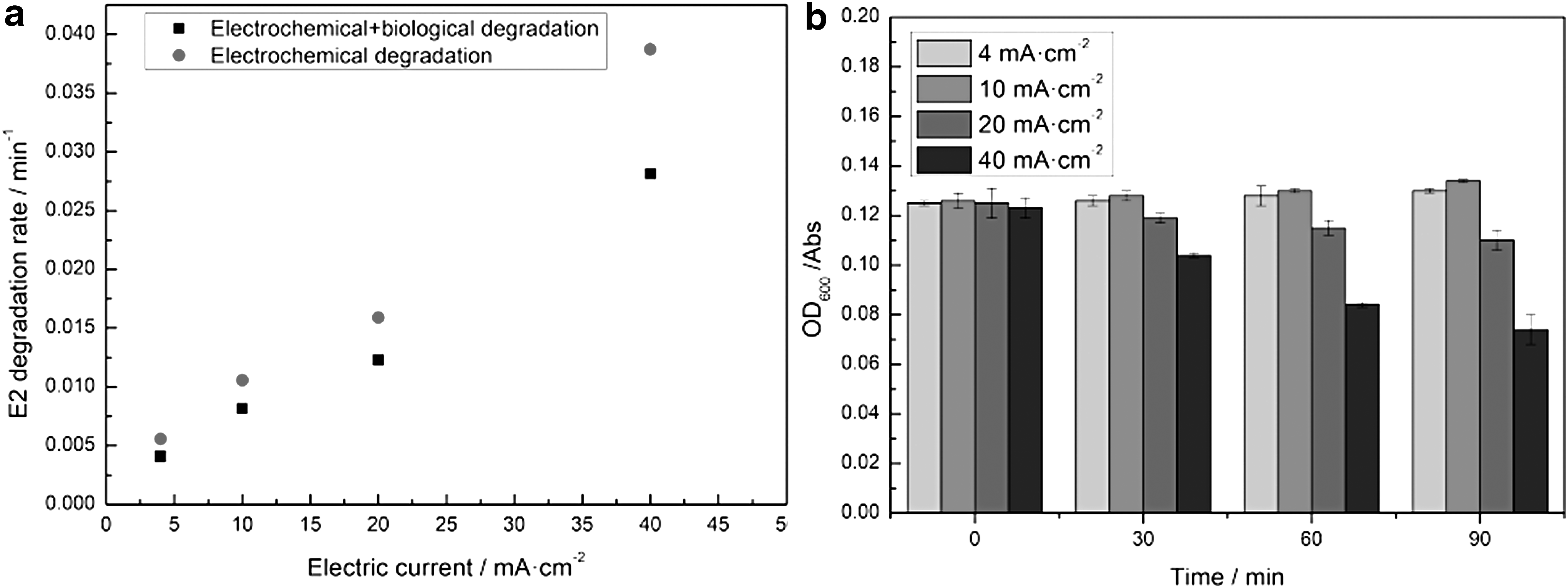
E2 combined electrochemical and biological degradation
The degradation process of E2 obeyed first-order reaction kinetics in the electrochemical degradation process (Fig. 3a), which was represented by the first-order reaction kinetics of Equation (1). Ct/C0 plotted as a function of the electrolysis time provided an exponential decay curve conforming to first-order kinetics, and the apparent rate constants (kapp) were evaluated from the slope of the plots of ln(Ct/C0) versus the reaction time (t) (Daskalaki et al., 2013).

E2 removal in 90 min using
Rate constants of electrochemical degradation and combined degradation processes are compared in Fig. 3c. The linear fitting results showed that the electrochemical degradation rate of E2 in the acidic condition was higher than that in the alkaline condition. DO promoted E2 degradation with a pH of 5. For further explanation, the free radical concentration was determined in this study, as shown in Fig. 4a. The acid and high DO promoted production of the hydroxyl radical, thus increasing E2 degradation in the electrochemical degradation process. In addition, combining electrochemical and biological degradation of E2 was explored at different pH values and DO concentrations in 20 mA/cm2 (Fig. 3b). The degradation process of E2 in the combined system was also subjected to the first-order reaction kinetic process. Degradation of E2 was inhibited in alkaline conditions with addition of microorganisms. However, compared with E2 electrochemical degradation, E2 degradation was promoted under the acidic condition with a 99.3% removal rate in the combined system. For DO, a high concentration of DO was beneficial to the removal of E2 by aerobic microorganisms in the combined electrochemical and biological system.
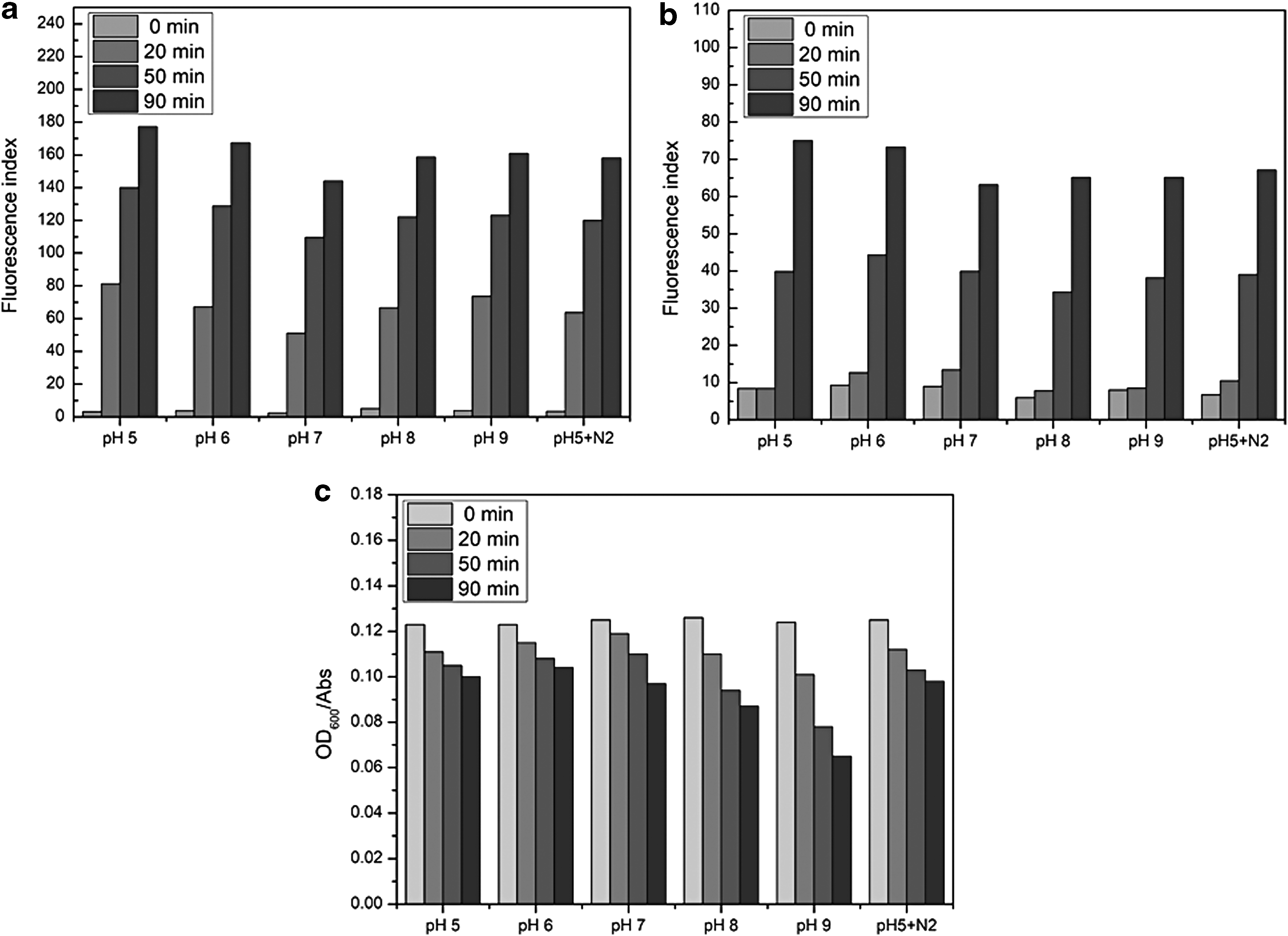
Concentrations of HO• in E2 removal using
Changes in the hydroxyl radical (Fig. 4b) and microbial concentrations (Fig. 4c) in the combined system were measured to explain the above results. The concentration of hydroxyl radical in the combined system was less than that of electrochemical degradation because the microorganisms had a competitive effect on the active radical. The decrease of microbials in the acidic condition was slower than that in the alkaline condition. However, the concentration of hydroxyl radical in the acidic condition was higher than that in the alkaline condition, resulting in more intracellular substances released to promote E2 degradation. This joint effect led to faster E2 degradation in the acidic condition than in the alkaline condition owing to larger production of hydroxyl radical. This was contrary to the effect of pH on degradation of E2 by biodegradation. Furthermore, the low DO concentration decreased production of the hydroxyl radical in the electrochemical system, and low DO concentration also inhibited the metabolism of microorganisms, leading to a significant decrease in degradation of E2.
Change of microbial community in combined system
After the original acclimated aerobic bacteria (EO), electrochemical aerobic degradation of E2 bacteria (EA) and electrochemical anaerobic degradation of E2 bacteria (EN) were tested with 16S rDNA at a pH of 5, as shown in Fig. 5.

From the Shannon index in the dilution curve (Fig. 5a), the diversity of aerobic bacteria was reduced by the electrochemical process, and the species of microorganism was also reduced by N2 permeation. From Fig. 5b, a large number of microorganisms reduced or disappeared under electrochemistry, such as Escherichia, Shigella, Klebsiella, Raoultella, Morganella, and Providencia. However, some bacteria such as Bacillus, Lysinibacillus, and Aeromonas survived, indicating that the electrochemical environment could promote the growth and metabolism of Aeromonas, Bacillus, and Lysinibacillus. In addition, Bacillus and Aeromonas could act as the electron receivers. Therefore, the electrochemical system had a better electron transfer ability between the bacteria and electrode (Woźnica et al., 2003; Li and Li, 2014; Saratale et al., 2017). Therefore, E2 degradation was promoted indirectly. It was also indicated that the effects of pH and DO on degradation of E2 were different from the single microorganism in the electrochemical-coupled system.
E2 degradation products and mechanism analysis
Extraction and analysis of E2 products from microbial degradation and combined degradation of E2 were investigated. In addition, the analysis results using GC-MS are shown in Fig. 6. E2 was only degraded into E1 with high concentration using microbial degradation. This indicated that E2 could be transformed into E1 by microbial degradation, which still had a high estrogenic activity, and it could not be transformed into other harmless products. Lee and his group also reported this microbial mechanism (Lee and Liu, 2002).
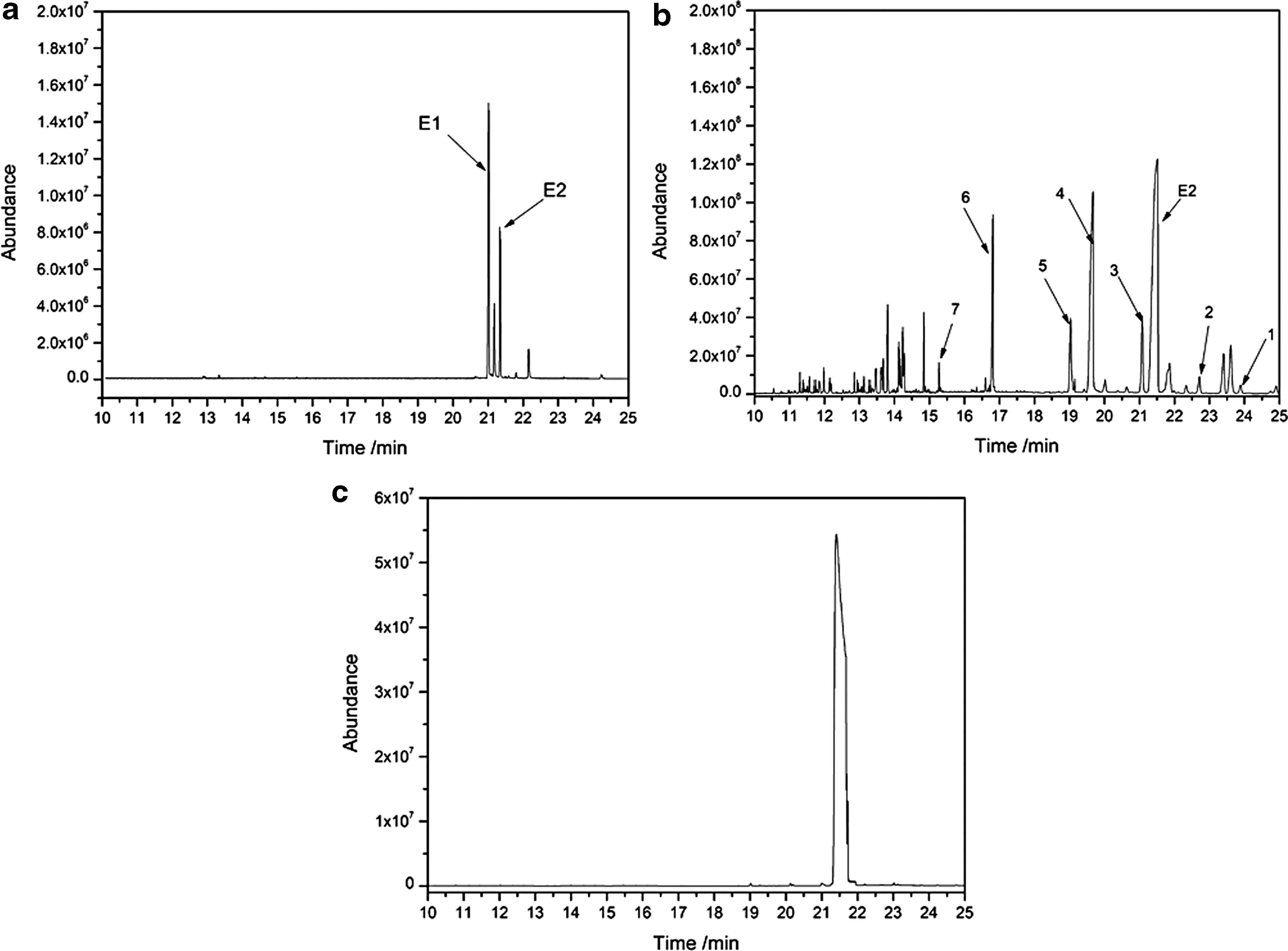
SIM chromatogram of E2 degradation products by
However, as shown in Fig. 6b, there were numerous peaks of substances in the chromatogram of degradation of E2 by the combined electrochemical and biological method. Direct electrode oxidation and numerous hydroxyl radicals prompted E2 rapid oxidation and E2 was transformed into intermediate products. The peaks, which had an adequate peak shape, high abundance, and no interference between other impurity peaks, were analyzed by mass spectrometry, as listed in Table 3. There were many E2 degradation products. In addition, E1 was also found in the 21.04-min chromatogram in Fig. 6b with low abundance, indicating that E1 concentration was low. From the analysis of hydroxylation products (1, 2 in Fig. 6b), the hydroxyl radical could attack phenol rings in the E2 structure and could react with fatty rings.
From results of the combined degradation products of E2, it could be inferred that the degradation process of E2 was as follows: E2 was oxidized by the hydroxyl radical to E1 or hydroxylation products by hydrogen substitution or an additional reaction. Then, its ring was further opened by an electrochemical action and microbial oxidase action (5, 6 in Fig. 6b). Next, oxidative products were oxidized to macromolecular organic carboxylic acids (4 in Fig. 6b) and small organic carboxylic acids (7 in Fig. 6b). Finally, organic carboxylic acids were mineralized and became carbon dioxide and water. This pathway was consistent with Wang's study on EE2 electrochemical degradation (Feng et al., 2010). Compared with microbial degradation, degradation of E2 by the combined electrochemical and biological method was more rapid and thorough.
Electrical energy consumption
Electrical energy per order (EEO) was defined as the required amount of electrical energy (kWh) to remove 90% of E2 in 1 L of aqueous solution. EEO was determined by the equation in Behnajady's study (Behnajady et al., 2009). The input power of the DC supply was determined by the applied current (A) and potential (V), which were calculated as 0.80 W for applied current density of 20 mA/cm2. The EEO was less in the coupled method (3.84 kWh/m3) than in the direct electrochemical oxidation processes (5.12 kWh/m3) at a pH of 5 and an aerobic condition. The results of the EEO showed that the combined electrochemical and biological method conserved more energy than individual electrochemical processes with the same E2 removal efficiency.
Conclusions
In this study, the coupled electrochemical and biological method was used to degrade steroid estradiol in water. The study found that aerobic degradation of E2 by aerobic bacteria was greater than that by E. coli. Under acidic conditions, degradation of E2 was improved by the combined electrochemical and microbial method because of the high concentration of the hydroxyl radical and stable microbial concentration. Electrochemically active bacteria, such as Bacillus, Lysinibacillus, and Aeromonas, survived and had better electron transfer ability, thereby indirectly promoting degradation of E2. The electrochemical mechanism of E2 degradation combined with microorganisms was explored. E2 degradation by the combined electrochemical and microbial method was more efficient than the biological method alone. This study provided a theoretical basis for application of the combined electrochemical and microbiological method to treat refractory estrogenic wastewater in the future. Furthermore, the coupled electrochemical and biological method was more energy efficient than individual electrochemical processes.
Footnotes
Acknowledgment
This research was sponsored by the National Natural Science Foundation of China (grant nos. 41761092, 41401558, and 51878321).
Author Disclosure Statement
No competing financial interests exist.