




Abstract
Abstract
This study reported a novel and resource-economical strategy for enhancing volatile fatty acids (VFAs) production and sludge dewaterability from sludge anaerobic digestion via codigesting with calcined alkaline residue (CAR) generated from ammonia-soda process. Batch tests were performed with CAR calcined at various temperatures from 400°C to 1,000°C. Results showed that maximum VFAs production of 2,038 mg/L was achieved at 800°C (CAR800), which was ∼3.4 times higher than the control test. Moreover, sludge dewaterability by adding CAR800 was comparatively close to the control test, indicating that CAR treatment was effective in improving dewaterability of digested sludge. Mechanism investigation revealed that CAR played a buffering role in maintaining the alkaline pH, which likely inhibited methanogenesis activity. It was also found that more readily bioavailable soluble organics were released by adding CAR800 in comparison with control. Microbial community analysis indicated that microbial hydrolysis and acidification were remarkably improved in the presence of CAR800.
Introduction
With the wide use of activated sludge process in municipal and industrial waste water treatment, a large amount of waste-activated sludge (WAS) is inevitably generated as a byproduct every year (Duan et al., 2012). In China alone, over 12 million tons of sludge (dry matter) was produced in 2016, and its disposal costs accounts for up to 60% of operational cost of a wastewater treatment plants (WWTPs) (Appels et al., 2008; Zhao et al., 2017). Meanwhile, WAS contains high contents of organic matter, heavy metals, and pathogens, which must be properly treated and managed to reduce its potential risk to the environment and human health. Hence, it is necessary to develop an effective and environmentally benign WAS treatment strategy to reduce sludge production, and even realize resource recovery simultaneously.
Anaerobic digestion (AD) is considered as one of the most promising technologies for WAS treatment that can not only reduce the amount of biosolids to be disposed but also transform organic matter (e.g., carbohydrates and proteins) in WAS into valuable resources (Jia et al., 2013; Ju et al., 2017; Liu et al., 2018). Recently volatile fatty acids (VFAs) production via AD has been paid growing attention, since the produced VFAs can be used as either precursors of bioenergy (i.e., polyhydroxyalkanoates and alcohol-based fuels) or preferred carbon sources to enhance biological nutrients removal (BNR) in wastewater treatment (Li et al., 2011; Frison et al., 2015; Sawatdeenarunat et al., 2017). However, VFAs accumulation in conventional AD system is generally limited by slow hydrolysis rate and rapid consumption by methanogens. Thus, different pretreatment methods, including chemical (acid, alkali or oxidation), mechanical (ultrasonic, microwave, or high-pressure homogenization), biological, as well as their combination, have been developed to enhance the sludge disintegration or inhibit the methanogenesis (Carrère et al., 2010; Huang et al., 2015; Neumann et al., 2016). Specifically, several kind of full-scale thermal hydrolysis pretreatment processes such as Cambi and Biothelys have been commercially implemented world-wide, which was capable of enhancing digestibility and dewaterability of sewage sludge (Neyens and Baeyens, 2003; Higgins et al., 2017; Zhang et al., 2018).
Among these pretreatment methods, alkaline digestion (pH >9) has been considered as a preferred and effective method for VFAs production and sludge reduction (Zhang et al., 2009; Jie et al., 2014; Huang et al., 2016), and the feasibility of the alkaline digestion liquid as the carbon source for enhanced biological phosphorus removal has also been demonstrated both in laboratory batch reactor and full-scale AD system (Tong and Chen, 2009; Li et al., 2011; Liu et al., 2018). It has been well documented that alkaline environment can accelerate the dissolution or destruction of sludge flocs and cell walls and inhibit methanogens activity as a result of enhancement of VFAs accumulation (Li et al., 2017b, 2018). In most cases, sodium hydroxide (NaOH) has been used as a preferred alkali reagent to adjust pH in digestion process, but the WAS dewaterability is remarkably deteriorated due to the disruption of sludge flocs (Neyens et al., 2003; Zhu et al., 2015). Moreover, frequent addition of NaOH is required to maintain optimal alkaline condition, which increases disposal costs of WAS inevitably. Therefore, more attention is required to develop an alternative strategy to solve the problems mentioned above.
Recently, some researchers provided a good review and discussion of codigestion with mineral additives in general digestion of biowaste, which provided a good environment for AD due to its buffering capacity as well as supplementation of essential trace elements (Zhang et al., 2013, 2017). The reuse of municipal or industrial solid waste has been proposed to enhance digestion processes, which apply for hydrogen, as well as for VFAs production (Zhang et al., 2015). Alkaline residue (AR) is the nontoxic and strong alkaline soda ash generated from ammonia-soda process, which has a considerable of CaCO3, CaSO4, Ca(OH)2, and other inorganics. In China, over 7.78 million tons of AR was produced in 2015, and a large portion of AR was inappropriately disposed in open landfills or discharged to oceans directly, which is a potential threat to groundwater and the marine environment. In our previous work, we have demonstrated that calcined alkaline residue (CAR) can be used as effective absorbent for phosphorus removal from aqueous media (Yan et al., 2014a, 2014b). Based on the information documented in the literature, it was hypothesized that the AR-supported approach might be a solution in sludge digestion for resource recovery and waste reduction. If this hypothesis was confirmed, this method will have significant economic benefit since both WAS and AR could be fully utilized. However, no research has been conducted to apply AR to WAS AD for VFAs production and sludge dewaterability.
Thus, objective of this work to investigate the use of CAR as an alkaline additive and inorganic nutrient for VFAs production and WAS dewaterability. The possible enhancement mechanisms for the improvement of WAS digestion under pretreated by CAR were also clarified through the compositional changes of soluble substrate and microbial community analysis. In particular, this study aimed to optimize VFAs formation without degrading sludge dewaterability via CAR dosing and avoiding the use of any external alkali source. To the best of our knowledge, it might be the first attempt to improve AD by using CAR.
Materials and Methods
Sources of WAS and AR
WAS used in this study was collected from the secondary sedimentation tank of a municipal WWTP in Nanjing, China. The sludge was concentrated by settling for 24 h and stored at 4°C before use. The main characteristics of the concentrated WAS were as follows: pH 7.09 ± 0.04, total suspended solids (TSS) 28,400 ± 280 mg/L, volatile suspended solids (VSS) 13,550 ± 350 mg/L, total chemical oxygen demand 9,960 ± 580 mg/L, soluble chemical oxygen demand (SCOD) 85 ± 20 mg/L, total protein 8,900 ± 600 mg COD/L, total carbohydrate 2,570 ± 80 mg COD/L, soluble protein 46.8 ± 9.6 mg COD/L, soluble carbohydrate 30.3 ± 1.0 mg COD/L, NH4+-N 30.9 ± 3.0 mg/L, PO43−-P 2.0 ± 0.3 mg/L, and capillary suction time (CST) 23.6 ± 1.0 s.
The AR was collected from a soda ash plant located in Shandong, China. The samples were first oven-dried at 105°C and passed through a sieve with a mesh of 0.15 mm. Subsequently, a certain amount of dried samples were placed in muffle furnace and calcined at the desired temperature of 400°C, 600°C, 800°C and 1,000°C under air atmosphere, respectively. The thermal treatment was carried out at a heating rate of 20°C/min with a residence time of 2 h. After calcination, the as-prepared AR was packed and stored in a desiccator before characterization. The CAR obtained at different temperatures was named as CAR400, CAR600, CAR800, and CAR1000, respectively. The raw AR was designated as AR.
Batch digestion experiments
Effects of calcination temperature on WAS hydrolysis, acidification, and dewaterability were conducted in control, AR, CAR400, CAR600, CAR800, and CAR1000 tests. Batch digestion experiments were carried out in the 500 mL serum bottles as anaerobic reactors containing 400 mL of sludge and the dosage of AR was 0.35 g/g VSS. The anaerobic reactors were sparged with high-purity nitrogen for 5 min to remove oxygen before digestion. Then, the bottles were placed in a shaker (180 rpm) under mesophilic condition (35 ± 1°C). The batch digestion test was conducted in triplicate reactors for 11 days, and samples were taken from each anaerobic reactor daily for further analysis.
Extracellular polymeric substance extraction
Extracellular polymeric substance (EPS) of sludge extraction was conducted according to the modified methods described by Li et al. (2012). EPS could be separated into four fractions—slime, loosely bound EPS (LB-EPS), tightly bound EPS, and pellet. First, 6 mL of sludge was centrifuged at 6,000 rpm for 5 min, and then the supernatant was carefully collected as slime. After extracting completely, the sediments were immediately resuspended to their original volume using 70% NaCl solution. Then, the sludge suspension was mixed by vortex mixer (6777; Corning) for 1 min and centrifuged at 6,000 rpm for 10 min. The supernatant was collected as LB-EPS. After adding NaCl solution to initial volume again, the suspension was put into a water bath at 60°C for 30 min. It was centrifuged at 6,000 rpm for 15 min and the supernatant was collected as LB-EPS. The remaining residual in the tube was pellet. All the samples collected after extraction were subsequently freeze-dried and stored at −20°C for further analysis.
Three-dimensional excitation emission matrix analysis of soluble organics
Three-dimensional excitation emission matrix (3DEEM) was used to characterize the composition and concentration of soluble organic in AD process. In this study, the fluorescence spectroscopy of sludge supernatant analyzed using a luminescence spectrophotometer (F-7000 FL; Hitachi, Japan). Scanning emission spectra from 200 to 600 nm were obtained at 5 nm increments by varying the excitation wavelength from 200 to 425 nm at 5 nm increments. The excitation and emission slits were both maintained at 5 nm, and the scanning speed was set at 30,000 nm/min for all samples. The 3DEEM data were processed using the software Origin 9.0.
Microbial community analysis
The microbial community in the anaerobic system was profiled using high-throughput sequencing technology as same as our previous study (Huang et al., 2016). First, the samples taken at day 7 were processed for DNA extraction using the FastDNA® SPIN Kit for Soil (MP Biomedicals, CA) following manufacturer's instruction. The 16S rRNA genes segments were PCR-amplified using the universal primer 515F (5′-GTGCCAGCMGCCGCGGTAA-3′) and 806R (5′-GGACTACHVGGGTWTCTAAT-3′) for the V4 variable regions. The amplification program comprised the following: an initial denaturation at 98°C for 3 min, followed by 30 cycles of denaturation at 98°C for 45 s, annealing at 55°C for 45 s, and extension at 72°C for 45 s, with a final extension at 72°C for 7 min. After purification and quantification, the samples were sequenced on an Illumina MiSeq platform (Beijing Genomics Institute, Shenzhen, China). DNA library building and data analysis were performed according to Liang et al. (2014).
Analytical methods
The pH of AR and CAR was measured in a suspension of 1:10 sample/Milli-Q water using a pH analyzer (Mettler FE20; Mettler Toledo). The chemical composition and morphological structure of samples were determined using X-ray Fluorescence Spectrometer (LAB CENTER-1800; Shimadzu, Japan), X-ray Diffractometer (X-ray diffraction [XRD]) (D8 Advance, Bruker, Germany), and scanning electron microscope (S-4800; Hitachi, Japan). The specific surface area and pore volume were measured by surface area analyzer with the Brunauer–Emmett–Teller (BET) method (ASAP 2020; Micromeritics Instrument).
Sludge samples were centrifuged at 6000 rpm for 10 min, and then filtered through 0.45 μm polytetrafluoroethylene membrane. The NH4-N, PO43−-P, TSS, and VSS were measured according to the Standard Methods (APHA, 1998). The determination of soluble protein, soluble carbohydrate, and VFAs production were conducted in accordance with our previous publication (Huang et al., 2016). The concentrations of Ca and Mg were analyzed by inductively coupled plasma mass spectrometry (Optima 7000DV; PerkinElmer). The pH values of sludge samples were measured using pH meter (FE20; Mettler Toledo). The CST was measured by a 340M/Triton CST measuring equipment (Type DP07706; Yodp Ltd., China). The Zeta potential of sludge was analyzed by Zeta meter (Zeta PALS, Brookhaven).
Statistical analysis
All batch digestion experiments in this study were conducted in triplicate, and the results are expressed as mean ± standard deviation. One-way analysis of variance was used to evaluate the significance of results, and p < 0.05 was considered to be statistically significant.
Results and Discussion
Characterization of AR
The chemical composition and properties of the calcined and original AR are listed in Table 1. The dominant component in all samples was calcium oxide, followed by magnesium oxide. A remarkable increase for all metal oxide contents could be observed with the increase of calcination temperature, which was resulted from the evaporation of crystal water. Moreover, the BET surface area of CAR increased with calcination temperature, which could provide more contact sites with sludge. The XRD patterns (seen in Fig. 1) showed that the major phase of AR was calcium carbonate, which was partly decomposed at 600°C, and then decomposed completely at 800°C.
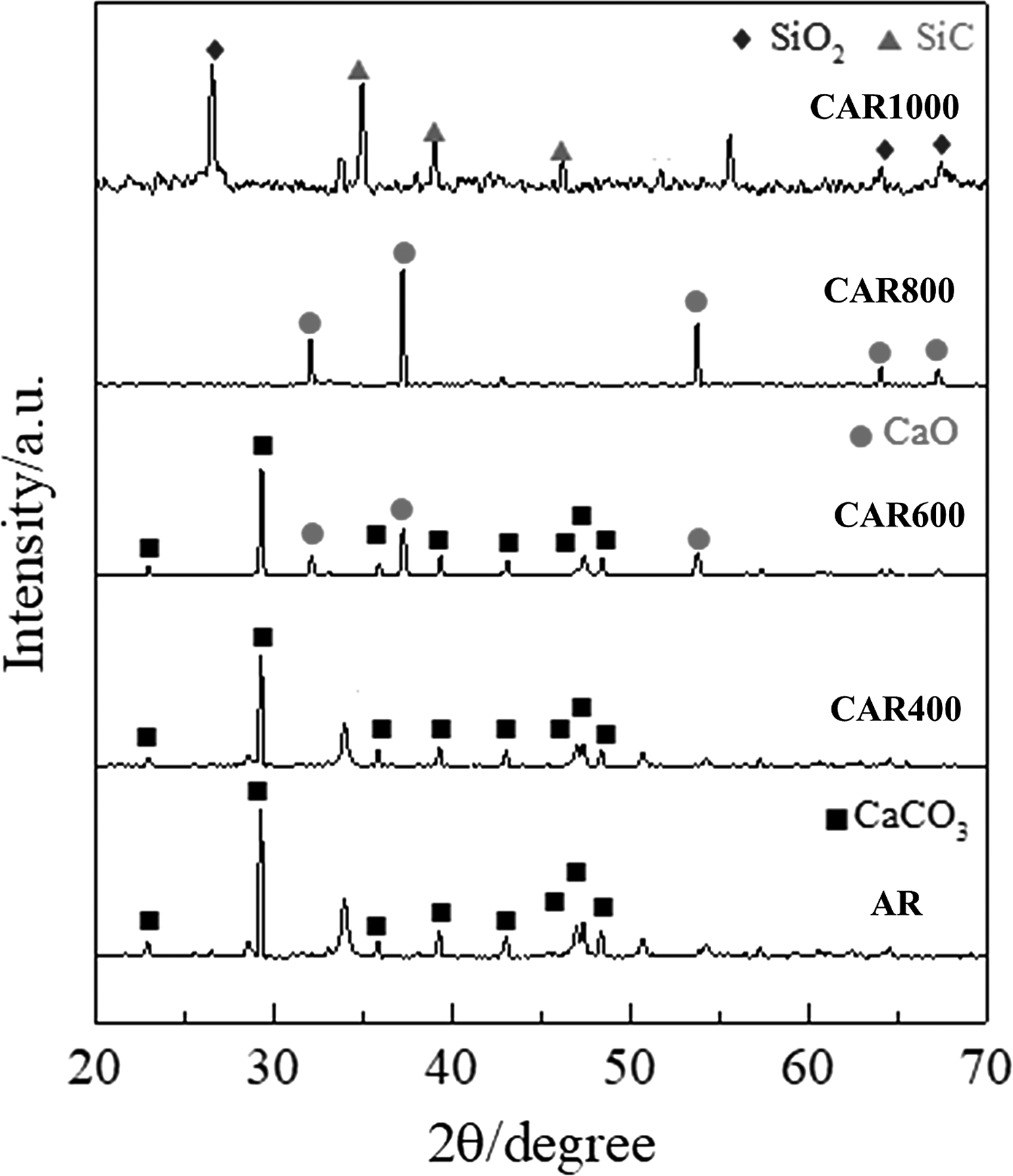
X-ray diffraction patterns of alkaline residue before and after calcinations.
Chemical Composition and Properties of Calcined Alkaline Residue
CAR, calcined alkaline residue; BET, Brunauer–Emmett–Teller; AR, alkaline residue.
Surface morphologies of AR and CAR are presented in Fig. 2. It could be observed that the surface of CAR became relatively rough compared with AR. This appearance well supported the higher surface area for CAR, especially for CAR800.
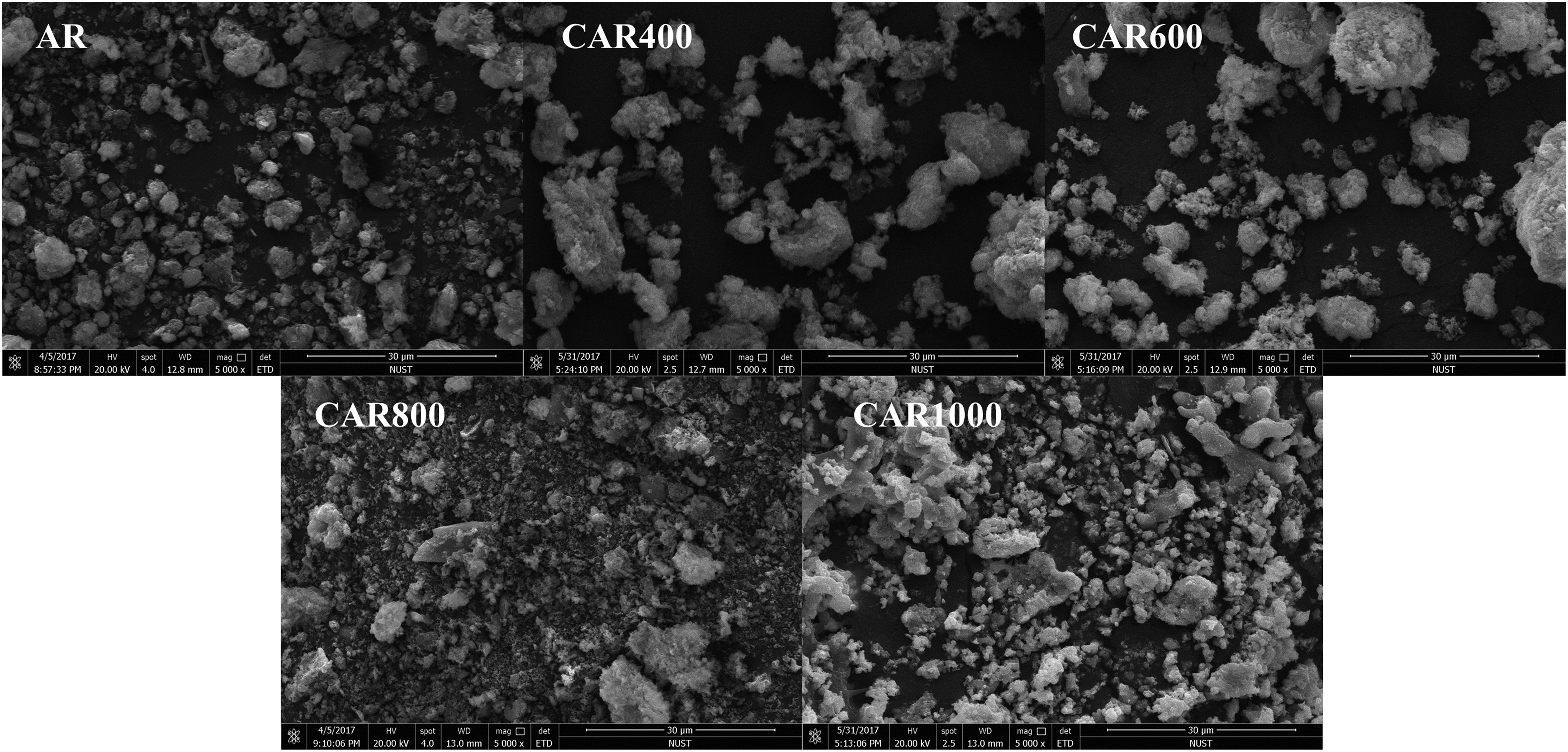
Scanning electron microscope images of alkaline residue before and after calcination ( × 5,000).
Hydrolysis and acidification of sludge digestion
Sludge soluble organic matter release
Hydrolysis efficiency could be expressed by the increase of SCOD concentration in the sludge digestion system. The disintegration of sludge flocs and microbial cells breakdown resulted in more soluble organic matter released into WAS supernatant, which is accessible for subsequent acidification process. The effects of AR on SCOD are shown in Fig. 3a. At digestion time of 7 days, it could be obviously seen that SCOD increased from 85 mg/L to 1,215, 1,460, 3,030, 3,450, and 3,610 mg/L with added AR, CAR400, CAR600, CAR800, and CAR1000, respectively, while the SCOD concentration increased to 940 mg/L for the control test. The results showed that CAR600, CAR800, and CAR1000 could stimulate the disintegration of sludge and particle matter. This may be due to the increasing alkalinity that increasingly favored SCOD release with the addition of AR with higher calcination temperature. Maspolim et al. (2015) and Zhang et al. (2016) also reported that lime and steel slag were conducive to solubilization of sludge through increasing digestion system pH, which the optimal pH values were pH 10 and 11.

Variation concentrations of SCOD
Protein and carbohydrate are the main constituents of the sludge extracellular polymer and the substrate for VFAs production during subsequent digestion. From Fig. 3b and c, we can see that concentrations of soluble protein and carbohydrate were, respectively, 78.9 and 48.4 mg/L, 96.3 and 54.4 mg/L, 337.1 and 122.1 mg/L, 520.6 and 147.3 mg/L, and 550.9 and 120.7 mg/L with AR, CAR400, CAR600, CAR800, and CAR1000 with digestion time of 5 days, and the concentrations of control test were only 26.5 and 33.0 mg/L. The results indicated that the alkaline condition could enhance the solubilization of soluble protein and carbohydrate caused by CAR addition. With the digestion time increased, the concentration of soluble protein increased gradually, whereas the soluble carbohydrate rose continuously in 5 days and then decreased thereafter. It could be explained by the dynamic equilibrium of WAS solubilization and organism degradation, and soluble carbohydrate was probably preferred substrates for most acid-producing bacteria. Therefore, the addition of CAR800 was more effective on sludge solubilization and provided more soluble protein and carbohydrate for subsequent acidification.
VFAs production and composition
The objective of the addition of CAR is to improve the efficiency of VFAs production. Thus, the profiles of VFAs production under different conditions were illustrated in Fig. 3d. It could be observed that the trend of VFAs production were similar to the results of SCOD. When CAR was added extra, the maximal VFAs production was greater than that from either control of AR treatment. For example, the maximal VFAs yield under CAR800 addition was 2,038 mg/L, which was 4.4-fold and 2.7-fold of that from the control test and the AR-treated fermenter, respectively. The results were likely due to the strong alkaline environment created by CAR, which could cause the electrostatic repulsions between EPS and inhibit the methanogenesis (Jie et al., 2014; Zhu et al., 2015). Moreover, further increase in calcination temperature from 800°C to 1,000°C could not lead to further improvement of VFAs production. It could be attributed to complete decomposition of CAR at 800°C. Thus, the optimum temperature of calcination treatment was 800°C in this study.
The percentages of individual VFAs under different conditions are shown in Fig. 3e. Acetic acid and propionic acid were the top two prevalent products in these digesters, which was in accordance with Wu et al. (2009). It should be noted that acetic acid concentration accounted for about 65% of the total VFAs in the control, whereas the addition of CAR contributed to a greater proportion of acetic acid, which account for 71.2–74.7% of the total VFAs. This may be explained that sludge hydrolysis and acidification were more efficient and sufficient in the presence of CAR, leading to the conversion of high-molecular-weight VFAs to acetic acid (Luo et al., 2013). Moreover, the consumption of acetic acid by methanogenic bacteria was likely inhibited by CAR, which will be further discussed in section “Variations of pH”.
NH4+ and PO43− concentration in the digestion liquid
Ammonium (NH4+-N) and orthophosphate (PO43−-P) were inevitably released during the AD process due to the decomposition of organic matter. Thus, the profiles of NH4+-N and PO43−-P concentrations under different conditions are presented in Fig. 3f and g. It could be seen that the concentrations of NH4+-N increased from 28.7 to 265.6, 336.3, 366.8, and 373.1 mg/L by adding CAR400, CAR600, CAR800, and CAR1000, respectively, which was much higher than the control (212.6 mg/L) and AR tests (223.6 mg/L). As protein was one of the main components of WAS, the release of NH4+-N was mainly from the hydrolysis of sludge protein. The results indicated that the particulate nitrogenous materials (i.e., sludge protein) were readily hydrolyzed in the presence of CAR, which were consistent with the soluble protein.
Similarly, it could be observed that the PO43−-P concentration increased to 19 mg/L with digestion time of 11 days in the control test. In contrast, a dramatic decline in PO43−-P concentration was observed with the addition of CAR (2–5 mg/L). These results indicated that the AR addition was beneficial to the removal of phosphorus compared to the conventional digestion. This could be attributed to the release of Ca2+ during the AD process. A large amount of Ca2+ could be produced by CaCO3 decomposition due to the supplying of H+ ions from VFAs, which could easily precipitate with phosphate as shown in Equations (1) and (2). These findings were consistent with the results reported by Zhang et al. (2016), where almost 91.6% phosphorus was captured with Ca-enriched steel slag addition.
It should be noted that the removal of phosphorus from sludge supernatant is one of the prerequisites for subsequent utilization of digestion liquor as the carbon source of BNR. In this study, an excellent in-situ phosphorus removal capacity was achieved with CAR addition, which was beneficial for improving the utilization efficiency of digestion liquor and reducing the construction and operational costs in WWTPs.
Variations of pH
It has been well documented that pH is an important factor in the WAS AD systems, which is directly related to microbial community and enzyme activity and subsequently affected sludge hydrolysis and acidification (Yuan et al., 2014; Ma et al., 2016). As shown in Fig. 4, when AR or CAR400 was applied, a slight increase of initial pH could be observed compared with the control (p > 0.05). In contrast,. The initial pH significantly increased by 9.74, 10.24, and 9.95 with the addition of CAR600, CAR800, and CAR1000, respectively. In addition, although the pH values in all cases decreased with digestion time due to VFAs production and ammonia nitrogen release, CAR800 and CAR1000 were able to make pH remain alkaline, which was unfavorable for the methanogenesis. The results were likely an attribute to the remarkable buffering performance, especially for CAR800 and CAR1000.

Variation of pH during waste-activated sludge anaerobic digestion with addition of CAR.
According to the results of Fig. 1, the main constituent of AR was converted from calcium carbonate to calcium oxide with the calcination temperature of 800°C and 1000°C. The H+ released from VFAs was leading to pH decreased, which was neutralized by CAR800 and CAR1000 during the AD process. Moreover, alkaline environment inhibited the activity of methanogens and efficiently enhanced VFAs production (Zhang et al., 2014). Therefore, the buffering capability of CAR800 and CAR1000 provided a more favorable alkaline environment for AD and subsequently improved WAS solubilization and acidification. These findings could well interpret the results of enhancing in SCOD and VFAs accumulation.
Sludge dewaterability
The effect of CAR treatment on WAS dewaterability evaluated by CST was also investigated in this study, which is shown in Fig 5. When AR and CAR400 was applied, the average CST values with digestion time of 11 days were, respectively, reduced by 61 and 77 s, which indicated that a significant improvement was occurred compared to the control (p < 0.05). With an increase of AR calcination temperature from 400°C to 1,000°C, the average CST were between 121 and 137 s, which was comparatively close to the control test (106 s). It should be emphasized that serious deterioration of WAS dewaterability was inevitably occurred under alkaline digestion, such as sole NaOH treatment in our previous study and other cases (Neyens et al., 2003; Huang et al., 2016), whereas a better dewaterability of sludge was attained in the presence of CAR is presented in this study.
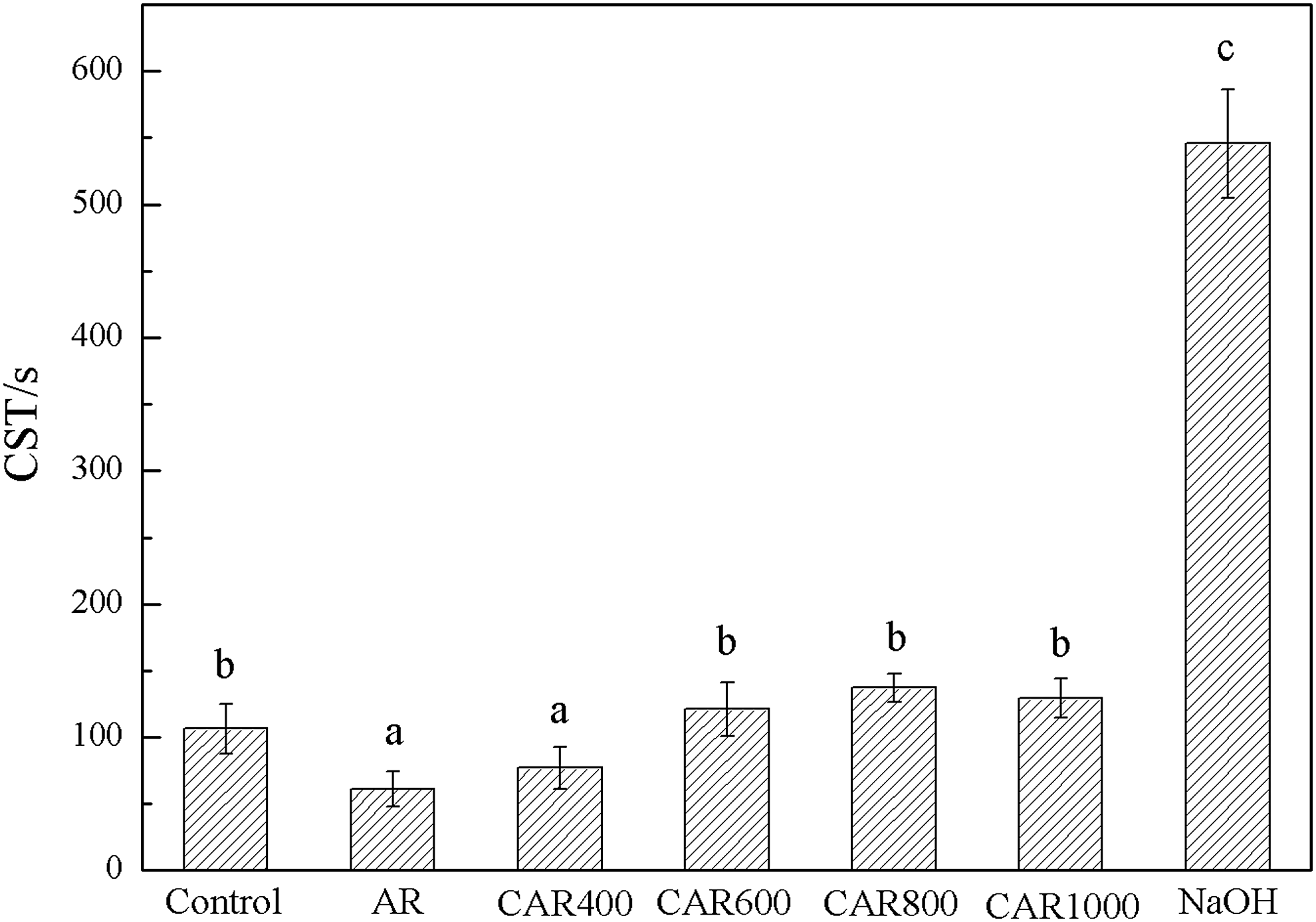
Dewaterability of sludge by adding CAR. Different letters indicate significant differences (p < 0.05).
According to the divalent cationic bridging theory, it was believed that divalent cations could neutralize the negatively charged colloids and bond with the functional groups of soluble protein and carbohydrates (Higgins and Novak, 1997). Li et al. (2012) indicated that Ca(OH)2 could accelerate the flocs disintegration as well as improve the dewatering ability of sludge. That is, CST was the result of the competition between degradation and flocculation of sludge. Based on the experimental results, the hypothesized effects of CAR on sludge dewaterability was presented as below: a large amount of Ca2+ released from AR with the increase of digestion time, which was benefit for the bridging with the dispersed flocs. Therefore, sludge dewaterability could be improved by using the CAR.
Three-dimensional EEM fluorescence spectrum of soluble organics
Three-dimensional EEM fluorescence spectrum is an effective and direct analytical method to characterize the dissolved organic matters in hydrolysis and acidification processes. It could also reveal the source and content of released fluorescent substrates during the digestion process (Pang et al., 2014). As shown in Fig. 6, the 3DEEM fluorescence spectrum of soluble organic substances after AR addition during the sludge digestion process and three main peaks were marked as Peaks A, B, and C, respectively. Table 2 summarizes the positions of fluorescence spectral peak of each sample. Peak A was observed as tryptophan protein-like materials with wavelengths of excitation/emission (Ex/Em) = (270–290 nm)/(325–350 nm), which represented the soluble microbial substrates in EPSs and intracellular substrates. Peak B was located at Ex/Em wavelengths = (221–231 nm)/(315–349 nm), resulting from the fluorescence of tyrosine protein-like materials. It was identified as the readily biodegradable soluble organic substances which generated from EPS. The soluble organics corresponding to Peak C was occurred at Ex/Em wavelengths = (230–260 nm)/(380–460 nm), which was attributed to the fluorescence of humic-like materials. Peak C was slowly biodegradable hydrophobic substances, which primarily produced in EPS hydrolysis (Chen et al., 2003; Yan et al., 2016).
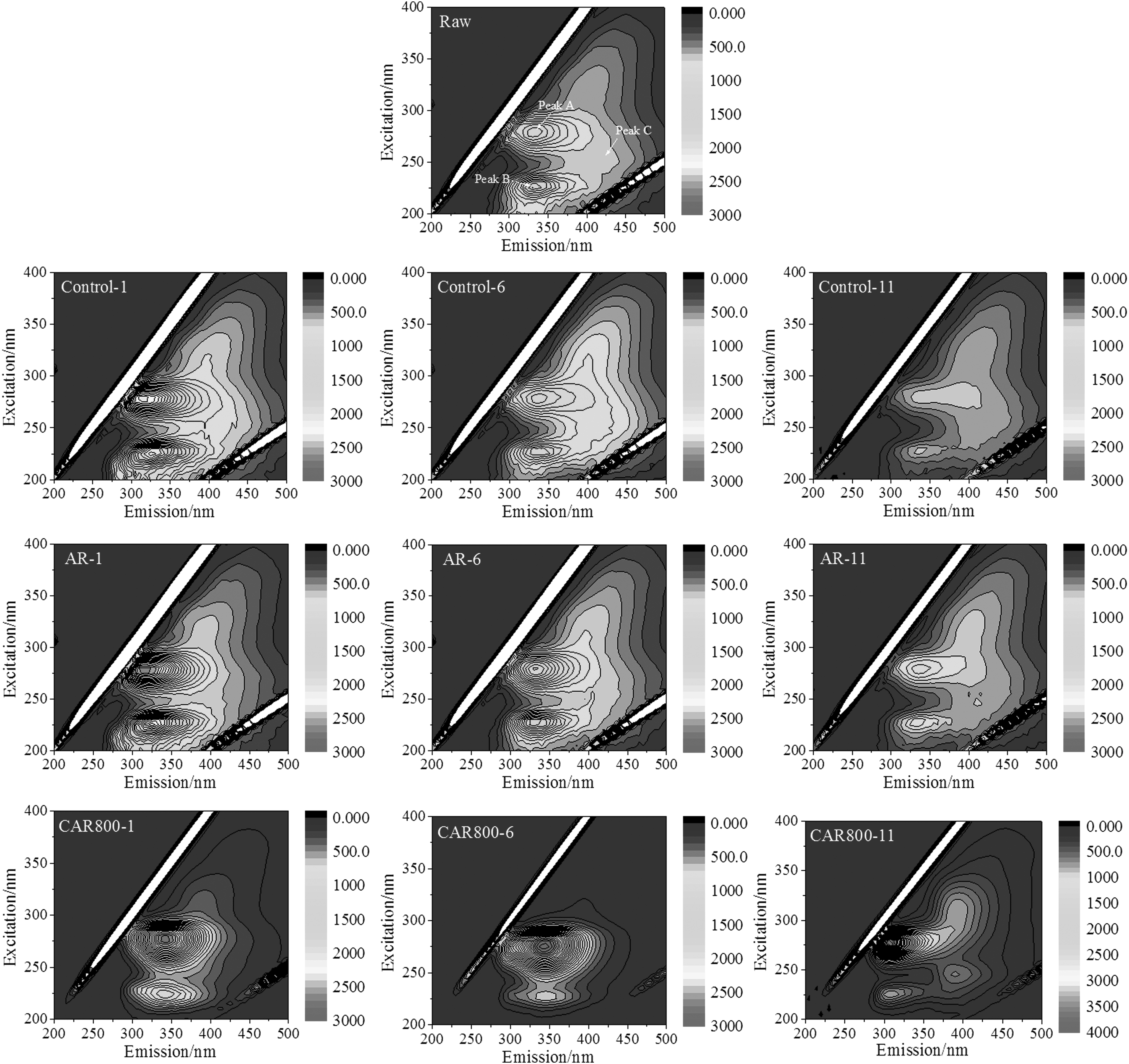
Excitation emission matrix fluorescence spectra of sludge in anaerobic fermentation process (digestion time = 1, 6, 11 days).
Fluorescence Intensity of Soluble Organics Under Different Treatment Conditions
FI, fluorescence intensity.
Fluorescent intensities of both Peaks A and B decreased with digestion time in control and AR tests, which implied that the concentration of substrate organic matter continuously decreased. But in AR test, more soluble organics obtained in digestion process compared with the control test, which could provide long-term acidification. The intensity of Peak A was significantly enhanced in CAR800 test, indicating the accumulation of cell organic debris and intracellular substrates hydrolysis. In addition, the organics was rich in carboxyl, amino, hydroxy, and alkoxy groups in the sludge digestion liquid under the alkaline condition (Pang et al., 2014). Therefore, the enhancement of soluble organics dissolution and sludge digestion is due to the alkaline condition by adding CAR800, as discussed in section “Sludge soluble organic matter release”.
Intensities of Peak A and B were corresponded to the result of WAS dewaterability. Li et al. (2017a) reported that the high concentration of soluble protein-like substances caused high CST values. In our study, the high intensities of Peak A and B were accountable for the high CST as shown in Fig. 5. Another literature also reported that the tryptophan-like materials were relatively stable under alkaline conditions and related to protein hydrolysis and/or other nonprotein substances (Spencer et al., 2007). The intensity of Peak B was decreased over 6 days and increased subsequently, representing that there was a considerable amount of readily bioavailable soluble organic substances in the presence of CAR800. However, the intensity of Peak C was emerged on 11 days in AR and CAR800 tests, which indicated that a large amount of nonbiodegradable materials were accumulated, while biodegradable substrates were depleted in the end period of digestion.
Microbial community analysis
Phylogenetic diversities of bacterial communities under different condition are estimated in Table 3. The operational taxonomic unit results demonstrated that the bacterial diversity and richness of the CAR800 addition were lower than that of the corresponding control samples. It could also be confirmed by Shannon and Simpson index. The decrease in microbial diversity may due to the inhibition of bacterial activity caused by strong alkaline condition, which was also observed in the previous study of Zheng et al. (2013).
Shannon Index, Chao Index, Ace Index, and Operational Taxonomic Unit Numbers Under Different Digestion Conditions
OTU, operational taxonomic unit.
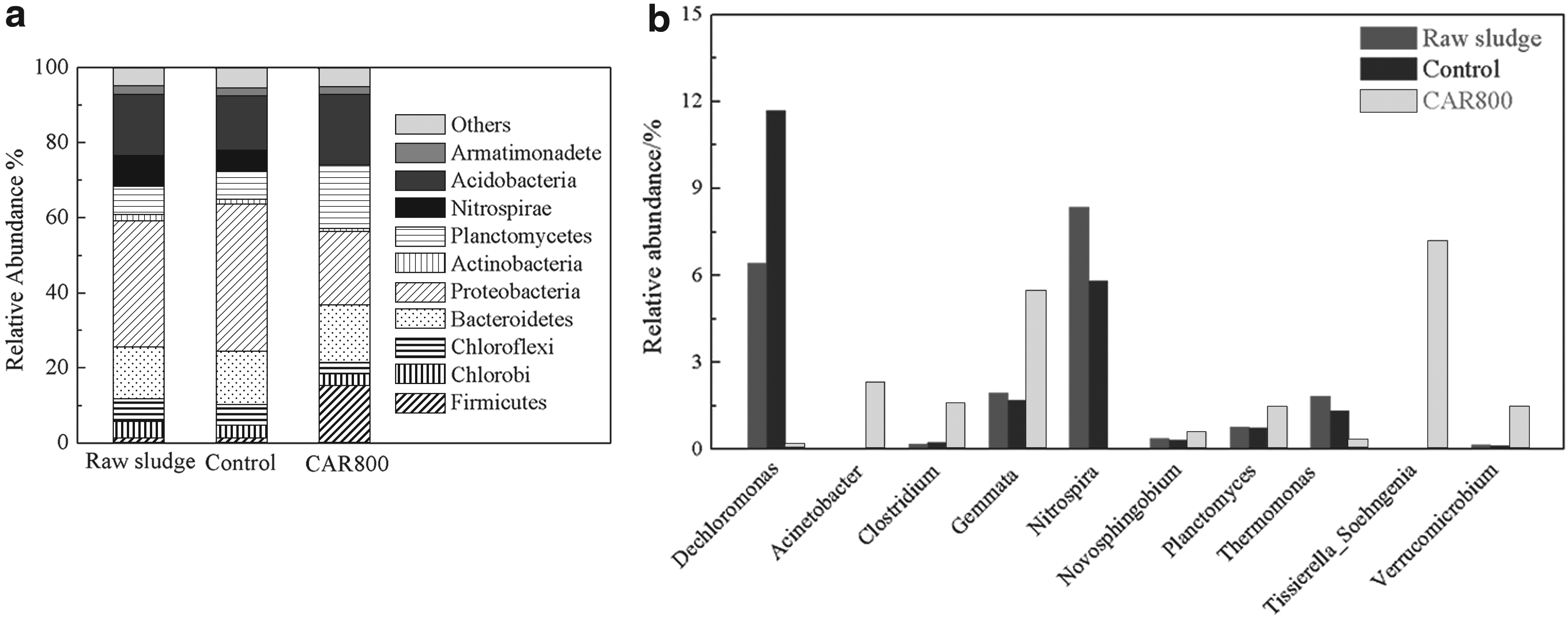
Based on the results of Illumina MiSeq sequencing, the phylum level distributions of bacterial in the raw sludge, control, and CAR800 tests are depicted in Fig. 7a. There were six major phyla in these three samples, including Acidobacteria (14.51–18.71%), Proteobacteria (19.64–39.45%), Bacteroidetes (13.81–15.45%), Chloroflexi (2.73–6.17%), Planctomycetes (7.53–16.96%), and Firmicutes (1.19–15.25%), which were well-known anaerobic microbes related to WAS anaerobic digestion. Compared with the raw sludge and control, the relative abundance of Firmicutes was evidently enhanced by the CAR800 addition. Firmicutes phylum was an important bacterial group involved in degradation of organic matters, which was related to acids production, for example, acetic and propionic acids (Lim and Wang, 2013; Luo et al., 2015). Also, Firmicutes could produce proteases, cellulases, lipases, and other extracellular enzymes (Chen et al., 2016). Proteobacteria was previously reported to play an important role in sludge AD system, which could utilize butyric, propionic, and acetic acids (Feng et al., 2009; Jaenicke et al., 2011). However, the Proteobacteria abundance dropped to 19.64% with CAR800 addition, indicating that it was hardly accommodated under alkaline digestion.
Phylum
More dominant distribution of bacterial community functions based on genus level is shown in Fig. 7b. Dechloromonas belonged to Proteobacteria that correlated with sludge hydrolysis, while Nitrospira was identified as nitrite oxidizing bacterium (Coates et al., 2001; Hou et al., 2014). The relative abundance of Dechloromonas and Nitrospira in raw and control tests was much higher than CAR800 test. Thermomonas, as fermentative bacteria, could generate VFAs and degrade organics, and it was enriched in CAR800 test (Xia et al., 2007). Furthermore, it should be noted that Tissierella, Gemmata, Acinetobacter, and Clostridium in CAR800 test occupied a large proportion (7.21%, 5.50%, 2.34%, and 1.56%) compared with raw sludge and control test. Clostridium and Tissierella were affiliated to phylum Firmicutes, which lead to higher VFAs production and potential acidification ability by adding CAR800 in sludge digestion process. Therefore, a large number of fermentative bacteria (e.g., hydrolytic and acid-producing bacteria) were enriched with the addition of CAR800, and subsequently sludge hydrolysis and VFAs accumulation were accelerated.
Conclusions
A novel strategy for simultaneously enhancing VFAs production and sludge dewaterability via CAR dosing from WAS AD was proposed. The highest VFAs yield was obtained to be 2,038 mg/L in the presence of CAR800. The mechanisms study revealed that CAR addition significantly accelerated the sludge disintegration, which thereby provided more readily biodegradable substances to achieve higher VFAs concentrations. Moreover, the microorganisms involved in sludge hydrolysis and VFAs production were enriched with the addition of CAR800.
Footnotes
Acknowledgments
This work was supported by the Fundamental Research Funds for the Central Universities (No. 30917011308), the National Natural Science Foundation of Jiangsu province (No. BK20161497) and the project from Environmental Protection Department of Jiangsu Province (No. 2017004). The authors thank the Jiangsu Key Laboratory of Chemical Pollution Control and Resources Reuse of China for their supports for this study.
Author Disclosure Statement
The author declares that there are no relevant financial or nonfinancial relationships to disclose.