




Abstract
Abstract
Oftentimes, environmental engineering projects meet technical objectives, but overlook social implications, which results in unused projects and division among community members and engineers. Recent studies demonstrate the importance of empathizing with community members before intervention and highlight the need to determine how these community members perceive engineers. In this study, we examine and report the role played by perceived empathy, warmth, and competence in adoption of anaerobic digesters in Sittee River, Belize. For example, the majority of the sampled populations perceived the black women environmental engineers working on this project to be warm and competent and viewed them as close allies (warmth mean = 4.0/5.0 ± 0.64; competence mean = 4.0/5.0 ± 0.52). Community members also reported that they felt a part of identifying the problem and the design process. In addition, participants' attitudes toward the anaerobic digester had moderate positive correlations with their perceptions of black women environmental engineers' warmth (r = 0.61), competence (r = 0.58), relative advantage (r = 0.59), and complexity (r = 0.59). In other words, these characteristics seem to influence the likelihood of villagers adopting anaerobic digesters for waste management and meeting cooking needs. Results from this study can (1) inform individual environmental engineers as well as international non-governmental organizations (NGOs) and nonprofit organizations engaging communities within developing communities and (2) broaden the participation of underrepresented groups both within the United States and abroad by highlighting some of the unique contributions they can make to the field of environmental engineering.
Introduction
Although the United States has large engineering programs across the nation, the field of engineering has been highly underrepresented for select racial, ethnic, and gender groups. In the United States, the percentage of African American environmental engineers lags far behind their percentage of the nation's population (Blaney et al. 2018). There has been moderate and even dramatic upward mobility of women obtaining various degrees in environmental engineering. It is one of the few success stories in engineering as a whole. However, when we look at the intersectionality of race and gender, we get a different story. For example, black women are highly underrepresented in engineering. Despite making up 6.3% of the U.S. population, black women earned less than 1% of bachelor of science degrees in the United States in 2014 and this number has been declining since 2002 (NSF, 2017). In addition, there is a decrease of African American women earning bachelor of science degrees in environmental engineering compared to those earning PhDs, suggesting a future pipeline challenge (Blaney et al. 2016). Among other problems this creates, the ability to innovate and solve complex problems is limited when diverse backgrounds, experiences, and cultures are not a part of the decision-making process (Page, 2007).
Our study was undertaken within the experience of “BioGals,” a waste-to-energy group comprising four women of color engineers from the United States. All four women were raised in the suburbs of their hometowns, but also have been influenced by humanitarian work, city life, and American, black, and Chinese cultures. The group, BioGals, works in Sittee River, Belize, in Central America.
BioGals, organization that empowers women of color to create sustainable solutions with international communities
BioGals' founder first encountered Sittee River Village as an undergraduate student, while studying abroad and was later contacted by a community leader requesting her to return and work on sustainability projects with the village. BioGals comprises academic and professional leaders in engineering, who use design thinking to understand community needs and create human-centered designs through empathy (Brown and Wyatt, 2010). Design thinking encourages engineers to be thoughtful about the products and services they create and makes sure those proposed ideas satisfy the needs of the user (Dym, 2005). BioGals embraces the process of design thinking by developing empathy with the villagers of Sittee River and understanding cultural values. This includes getting to know and listening to the community through surveys, interviews, and focus groups, but also by embedding themselves in the community. BioGals co-creates knowledge on sustainability, attends/participates in sports games, lives in the community, and observes daily life. BioGals takes approaches that align with Brown & Wyatt (2010) and Peace Corps (2018). This process allows BioGals to better understand the communities' needs for community members, and then partner with them to develop improved ways to manage food-energy-water systems.
Case study: Belize's history
Belize, like most of the Americas, was colonized by Britain and slaves were imported from Africa (Barriteau, 2004). During the American Civil War, Confederate sympathizers migrated to Belize investing in large amounts of sugar estates (Simmons, 2001). Consequently, Serpon Sugar Mill was established and operated in Sittee River Belize (Morris, 1883). In 1971, Sittee River Village's land was still owned by Americans (Chibnik, 1980), and a more recent report states that the south side of Sittee River Village is owned by the Belize Government (Kangas, 2003).
In the past, the World Bank classified Belize as a developing country, but now labels Belize as an upper-middle income economy based on their gross national income per capita (Fernholz, 2016). Sittee River Village, located in the Stann Creek district of Belize, is home to over 350 Creole (European and African descent) people (Fig. 1). Despite the village not having electricity as recently as 1971 (Chibnik, 1980), all villagers now have access to electricity and an improved water source (WHO, 2006). Sittee River Village Council consists of seven elected members who seek to preserve their natural environment through sustainability. Currently, many of the villagers are employed by a local construction company and by resorts on the coast that attract ecotourists seeking to admire the biodiversity.
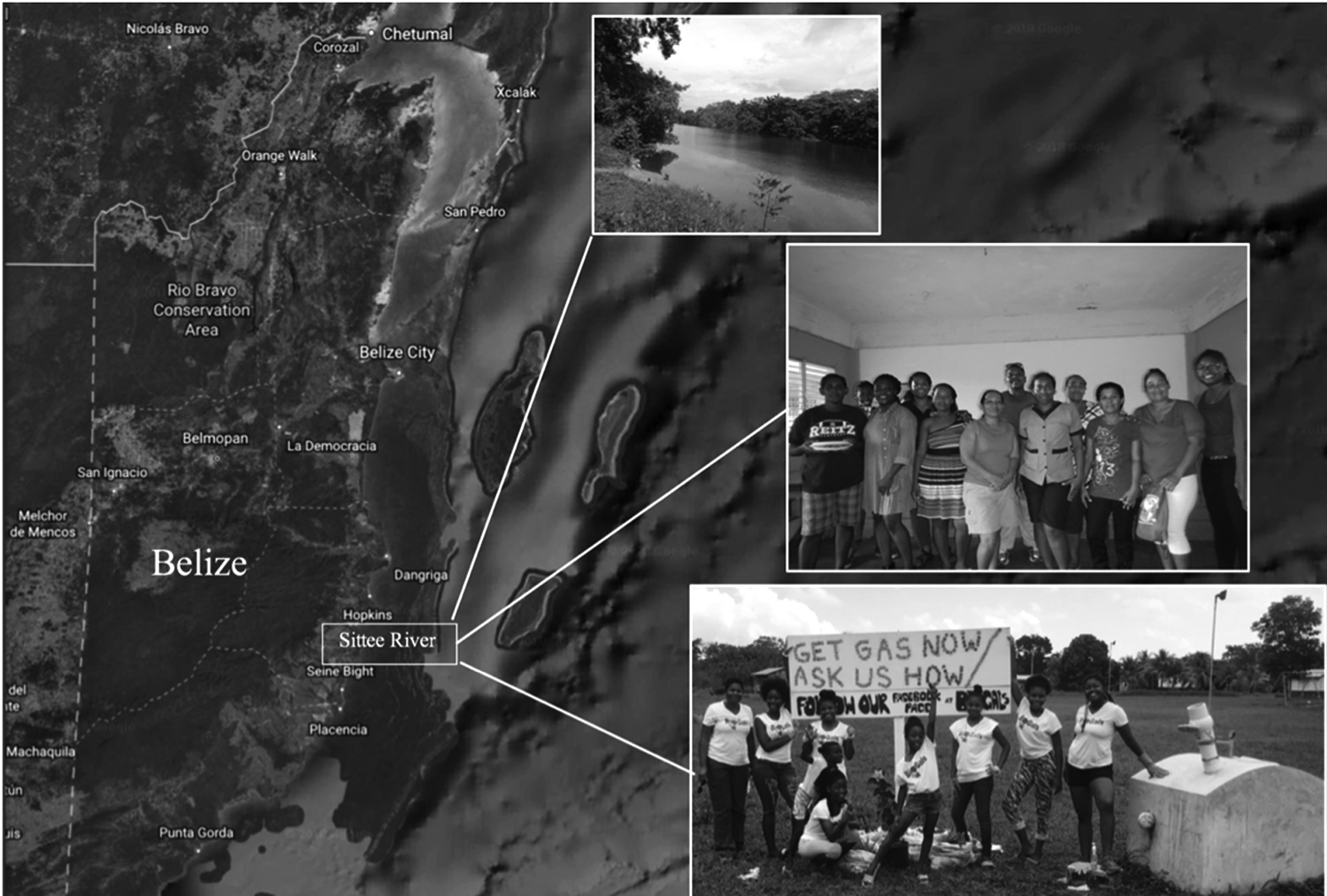
Sittee River is a rural Creole community located in Belize with a watershed that drains into the Caribbean Sea.
In 2015, BioGals began as a collaboration with the Sittee River Village Council focusing on strategic sustainable waste management techniques. Community members were concerned about the impact of rising tourism activity on waste management and the need for methods that reduce environmental impacts. Currently, Sittee River Village's waste disposal practices add to air, water, and land contamination (Hobbs et al. 2018). For example, the common methods of disposing waste are by burning, burying, or throwing it in the river. In response to such problems, BioGals has been investigating how waste-to-energy technology can be introduced to a small village, while employing various methods of community engagement and using sustainability to guide decisions.
As BioGals has undertaken numerous iterations of waste-to-energy projects in Sittee River, it became clear that the research team's identity was also playing a role throughout the project. There is some evidence from other fields that this shared history and identity may be helpful (Palmer, 2000). BioGals' team members empathize with this shared history and with the feelings and impacts of being marginalized. For example, scholars of color tend to be better at providing a voice to people of color by counter-storytelling through narratives (Solórzano and Yosso, 2002). Black women in environmental engineering belong to multiple communities and sometimes speak as members of the American, black, woman and environmental engineering community (Culp, 1991). The intersection of these memberships can assist black women environmental engineers in understanding some of Sittee River Village's unwritten information not commonly known by others (i.e., cultural knowledge) and toward social justice (Brayboy, 2005). Although there are distinct differences between BioGals and Sittee River villagers, such as BioGals having more access to resources like education, jobs, and economic stability, both are a part of the African Diaspora. Generally, BioGals and Sittee River villagers share emotional ancestral connections and are aware of the oppression and isolation that are sometimes felt from their residing country (Palmer, 2000), and are willing to listen to what each other has to say.
Given the rarity of finding black women environmental engineers in the United States, especially ones that work internationally in communities of color, this article used behavioral science models to analyze BioGals' interpersonal connections in the Sittee River Village. This study seeks to understand Sittee River villagers' perceptions of black women environmental engineers by examining warmth, competence, empathy, and likelihood of adopting anaerobic digestion technology
Methods and Procedures
Behavioral science models can be used to better understand community engagement and likelihood of adopting technology
The SCM is a theory that was developed for studying social perceptions and categorizations of groups across cultures and stems from characteristics common to all humans (Lee, 2006). According to the SCM, individuals perceive the warmth of a stranger first and their competence second (Lee, 2006). This measure was appropriate for our study because it quantifies interpersonal impressions established at the onset of BioGals' working relationship with the Sittee River. Lee (2006) previously collected data on the perceived stereotypes of black professionals and businesswomen, and these results serve as a baseline for the perceptions of black, female engineers in the United States. Therefore, we hypothesized that black women working on environmental engineering projects will be ranked highly for warmth and competence in this study. This study seeks to assess average perceptions of black female engineers and does not presume that all black female environmental engineers working in this context will be assessed equally warm and competent.
Many SCM studies have sample populations that are predominately white college students assessing various groups of people (Fiske 2012; Walzer and Czopp, 2011; Fiske et al. 2018). The study by Aklilu (2014) sampled black U.S. college participants, which assessed black U.S. groups. This study is unique because participants are community members from Belize. In addition, Belizean participants are assessing black women from the United States, who are proposing to design and engineer an anaerobic digester to manage waste and provide a cooking fuel.
We used the CARE scale, which was initially developed to assess the perceived empathy of health care practitioners, as a secondary measure of perceived empathy. While user-centered design has received recent publicity in engineering, reciprocated perspective taking associated with the CARE scale has received less attention (Mercer, 2004; Bikker, 2015; Foley et al., 2017). In the case of Sittee River Village and other engineering field projects, reciprocal empathy is a method of quantifying community engagement and community buy-in. We hypothesize that initial impressions associated with the appearance of women engineers will produce a high perceived potential for empathy.
The theory of diffusion of innovation has been used in many fields such as medicine, agriculture, and telecommunication (Coleman et al., 1957; Rogers and Williams, 1983; Rogers, 1995). Diffusion of innovation is used to measure the rate of adopting new technology by assessing five characteristics: relative advantage, compatibility, complexity, observability, and trialability (Valente and Rogers, 1995). Relative advantage, compatibility, and trialability are perceived by community members as positive, while the opposite is true for complexity (Valente and Rogers, 1995). Rogers (2002) identified users' attitudes as being a key factor associated with adoption of an innovation. Ntemana and Olatokun (2012) assess the attitudes toward information and communication technologies at a university in South Africa and found that relative advantage, complexity, and observability have positive influences. In addition, Bell and Pavitt (1997) state that developing countries benefit from the diffusion of technology without incurring the cost of innovating the technology and this contributes to adoption. Therefore, we hypothesize that villagers will have positive attitudes toward anaerobic digesters due to relative advantage, complexity, and observability.
Focus groups assessing BioGals
Three focus groups were held in June 2017. Each focus group was facilitated by an experienced moderator and sessions lasted for ∼30 min each (IRB STUDY 00002718). The aim of the focus groups was to understand how the villagers would benefit from the anaerobic digester and if our interactions with the community increased trust between the community members and the research team. The focus groups were audiotaped and transcribed.
The questions asked during the focus groups are as follows:
How do you see this anaerobic digester being used in your community? Do you trust the research team to provide a good sustainable technology product for Sittee River? In what ways? Do you feel that the research team has your best interest in mind? What evidence do you have to support your answer? With regard to the anaerobic digester, what other technical assistance do you feel that Sittee River will need to operate it and fix it? How do you see the youth getting involved in this project? Do you feel they will get involved? Do you see them taking on a role? Do you feel that anaerobic digestion could be a sustainable technology for this area? Do you have any doubts? If you could have any program or project you wanted for Sittee River, what program would you implement?
Measures
The transcribed responses of the focus groups were analyzed to find themes of positive, trusting relationships or of negative interactions between the villagers and the research group. Mazzurco and Jesiek (2017) explain that trust is fostered through “open communication, respect, reciprocity, and transparency.” Trust also “appears to be directly related to the time that engineers spend with community members” (Mazzurco and Jesiek, 2017). Positive responses were determined from words that reflect open communication, respect, and time spent with the community members. Negative responses were determined from words that reflect distrust, disagreement, and unethical behavior.
Questionnaire assessing black women environmental engineers
The study took place at the Sittee River Methodist Primary School and at villagers' homes (Fig. 2).

Participants listened to speeches and answered survey questions. To the right are participants completing the study at local primary school and to the left at their homes.
Perceived empathy, adoption of technology, warmth, and competence were assessed by a questionnaire administered by Qualtrics in December 2017 (IRB-SBS 2017-0517-00). Participants listened to computer-read speeches with headphones, while viewing one picture per speech of two different black women colleagues representing environmental engineers, who had never been to the Sittee River Village and are not a part of BioGals.
Speech 1 consisted of statements demonstrating empathy toward the current methods villagers use to manage waste. After Speech 1, participants completed a questionnaire based on two validated scales: SCM and CARE.
Speech 2 consisted of statements explaining the benefits of anaerobic digestion and how it operates. After Speech 2, participants completed a questionnaire based on the Adoption of Innovation scale.
Administration time for the entire questionnaire was ∼50 min. An unpaired t-test was performed comparing perceived warmth, competence, empathy, and likelihood of adopting technology based on population's educational history (below fifth grade or eighth grade and beyond), gender (male or female), and age (18–34 years or <34 years of age). Pearson correlation was used to calculate the relationship between perceived warmth, competence, empathy, adoption of innovation categories, and attitude.
Measures
Perceived competence and warmth
The SCM scale was used to measure perceived competence and warmth. Villagers were asked to rate the competence and warmth of the black woman who gave Speech 1 (24 items with 5-point Likert scale from 1, “strongly disagree,” to 5, “strongly agree,” a = 0.05; warmth sample item: “The person who gave the speech is kind”; competence sample item: “The person who gave the speech is skilled”). The relationship between warmth and competence was identified through inferential analyses using a frequency table.
Perceived empathy
The perceived empathy was measured using the CARE scale. Based on the CARE questionnaire (Foley et al., 2017), a modified version of the instrument was developed in which survey items referred specifically to perceived empathy. Villagers rated the perceived empathy of black woman who gave Speech 1. Perceived empathy consisted of seven items (5-point Likert scale from 1, “strongly disagree” to 5, “strongly agree,” a = 0.05; sample item: “The person who gave the speech cares about me”). The relationship of perceived support/empathy was measured using a frequency table.
Likelihood of adopting technology
The prospect of villagers adopting the anaerobic digester after listening to Speech 2 was measured using the Adoption of Innovation measure. In this measure, inventory items are answered on the same 5-point Likert scale as described above. Five categories for adoption of innovation were assessed in this study along with attitude. A frequency table was used to measure relationship of likelihood of adopting technology. Statements like “Hearing about the anaerobic digester is not necessary before I use the anaerobic digester” were reverse scored for comparison among the categories that were assessed. Statistical analyses were used to calculate means scores and statistical significance of adoption of innovation characteristics as it relates to attitude.
Results
Focus groups
The Sittee River Village Council's focus group consisted of n = 7 villagers (male = 6 and female = 1); the sample population from the Village Council focus group represents 100% of the seven councilpersons. The women's focus group consisted of n = 8 female villagers which represents 5% of the women in Sittee River. The young adult's focus group consisted of n = 4 men between 18 and 20 years of age. The female and male focus group participants were recruited by research team members based on gender and age. While efforts were made to invite every person in the village to participate to limit sampling bias, this was not possible due to various participants' work schedules and capacity of researchers to communicate with each individual.
Participants trust BioGals
The focus groups revealed positive and trusting interactions between the villagers and the research group. The villagers appreciated the work that BioGals has done and are comfortable working with the research team on environmental engineering projects. The following sample quotes have key words and phrases reflecting the trusting relationship built with community members through respect and time spent with the community. The key words and phrases are in bold.
“We have
“You
“It's your
“Other groups come and we never see them again,
“Every time I see you come to Belize, you have some idea of a project and ask us if we think it's a good idea,
“We
The villagers also had a positive response to the anaerobic digester. Participants in the focus groups developed many ideas to increase economic development in the village by utilizing the biogas as fuel to cook lunches at the local school and the by-product as fertilizer to start a school garden. The food grown in the garden was proposed to be used for the school lunches or sold throughout the village. Another person suggested that the fertilizer be sold to local farmers and biogas sold throughout the Sittee River Village. Many liked the idea of having the revenue used for high school scholarships. Furthermore, many agreed that the maintenance and use of the anaerobic digester would provide new jobs for the community. The following sample quotes reflect the community's interest in anaerobic digestion and their willingness to begin its implementation.
“It's [anaerobic digester] an alternative to buying [butane].”
“I am highly interested in the fertilizer for my garden.”
“I see the whole [anaerobic digester] as one central unit.”
“…if we get a hands-on training, we could take it up.”
“Let's try it first and if it works, it will gradually grow it to sustain the village”
“If you drive around the village right now, you could get a lot of mangoes right now [for the anaerobic digester].”
There was one negative comment received during the focus groups and it was a disagreement concerning how to use the anaerobic digester. One community member stated, “Mango dissolves in water so you don't need to grind it.” Other community members agreed that grinding the food waste before putting it in the digester was unnecessary.
Questionnaire
The questionnaire population consisted of n = 59 villagers (male = 33 and female = 26) from the Sittee River Village, Belize. The sample population represents 26% of the 230 villagers, who were 18 years and older, with mixed educational backgrounds (Table 1). It is important to note that when soliciting participants to complete the questionnaire, a small portion of villagers informed us that they could not participate due to illiteracy. It is unknown what percentage of the population is illiterate. In addition, villagers have been interacting with the members of BioGals regularly for years and although we used images of women who are not a part of BioGals, the community could have been retrospectively answering the survey questions based on their past interactions given the shared history (Mills and Gay, 2016).
Demographics of Sampled Questionnaire Participants Living in Sittee River Village
n, population.
Fifth grade is equivalent to the Belizean educational level Standard IV.
Eighth grade is equivalent to the Belizean educational level second Form.
Black women environmental engineers were perceived as warm and competent
Based on the responses to questions on the two videos, the data suggest that black women working on an environmental engineering project in Sittee River Village were positive and ranked in the admiration quadrant (warmth mean = 4.0/5.0 ± 0.64; competence mean = 4.0/5.0 ± 0.52) on the SCM (Fig. 3). The statement from Speech 1, “The person who gave the speech is helpful,” attracted the strongest positive response with 92% of the participants choosing “strongly agree” (Appendix Table A1). The majority of the participants, 93%, “strongly disagreed” with the statement, “The person who gave the speech is lazy,” while 86% of the participants strongly agreed that, “The person who gave the speech was intelligent” (Appendix Table A2).
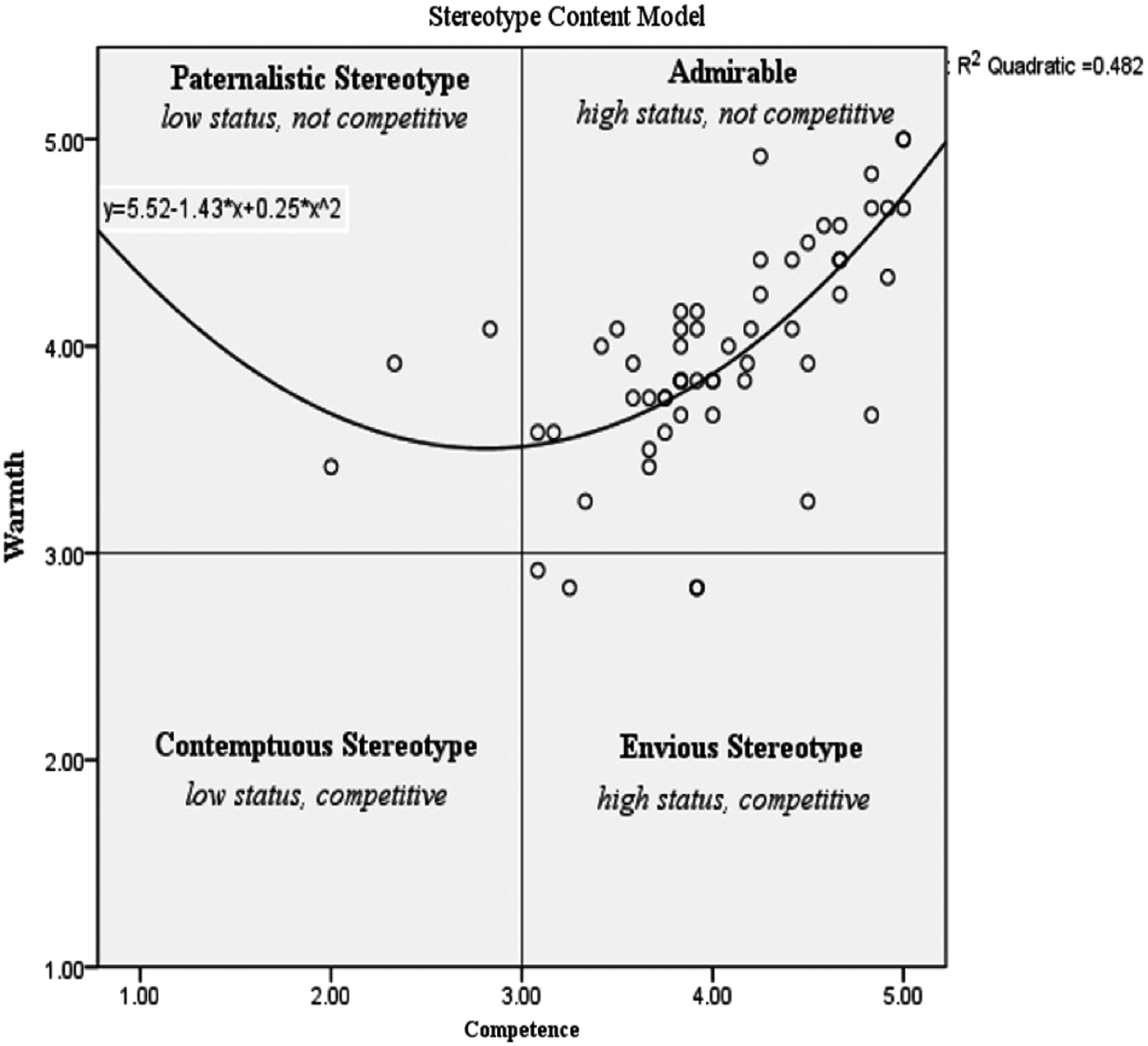
Participants reported that black women environmental engineers are admirable. Warmth and competence assessed on a Likert scale from 1 = “strongly disagree” to 5 = “strongly agree.” Four stereotypes: Admiration = admiring, fond, inspired, proud, and respectful; contempt = angry, ashamed, contemptuous, disgusted, frustrated, hateful, resentful, and uneasy; Envy = envious and jealous; paternalistic = pity and sympathetic (Fiske et al. 2018).
The black women assessed in this study were ranked higher (4.0/5.0) in warmth compared to businesswomen and black professionals (3.12/5.0), as well as poor black people (2.6/5.0) in the Fiske et al. (2018) study. The data reported may be due to participants' previous interactions with BioGals. A trend was apparent, indicating that Sittee River villagers are responsive to black women who demonstrate warm and competent qualities. The questionnaire results show that warmth and competence scores are moderately correlated, r = 0.63, (Fig. 4). When comparing participants' educational histories, a t-test found no significant difference between the two samples in regard to warmth and competence (results not shown). However, the t-test revealed strong evidence that the male participants perceived the black woman who gave Speech 1 to be warmer and more competent than the female participants (Appendix Table A3). In addition, participants in the age range of 18–34 perceived the woman who gave the speech to be warmer than participants older than 35 years.
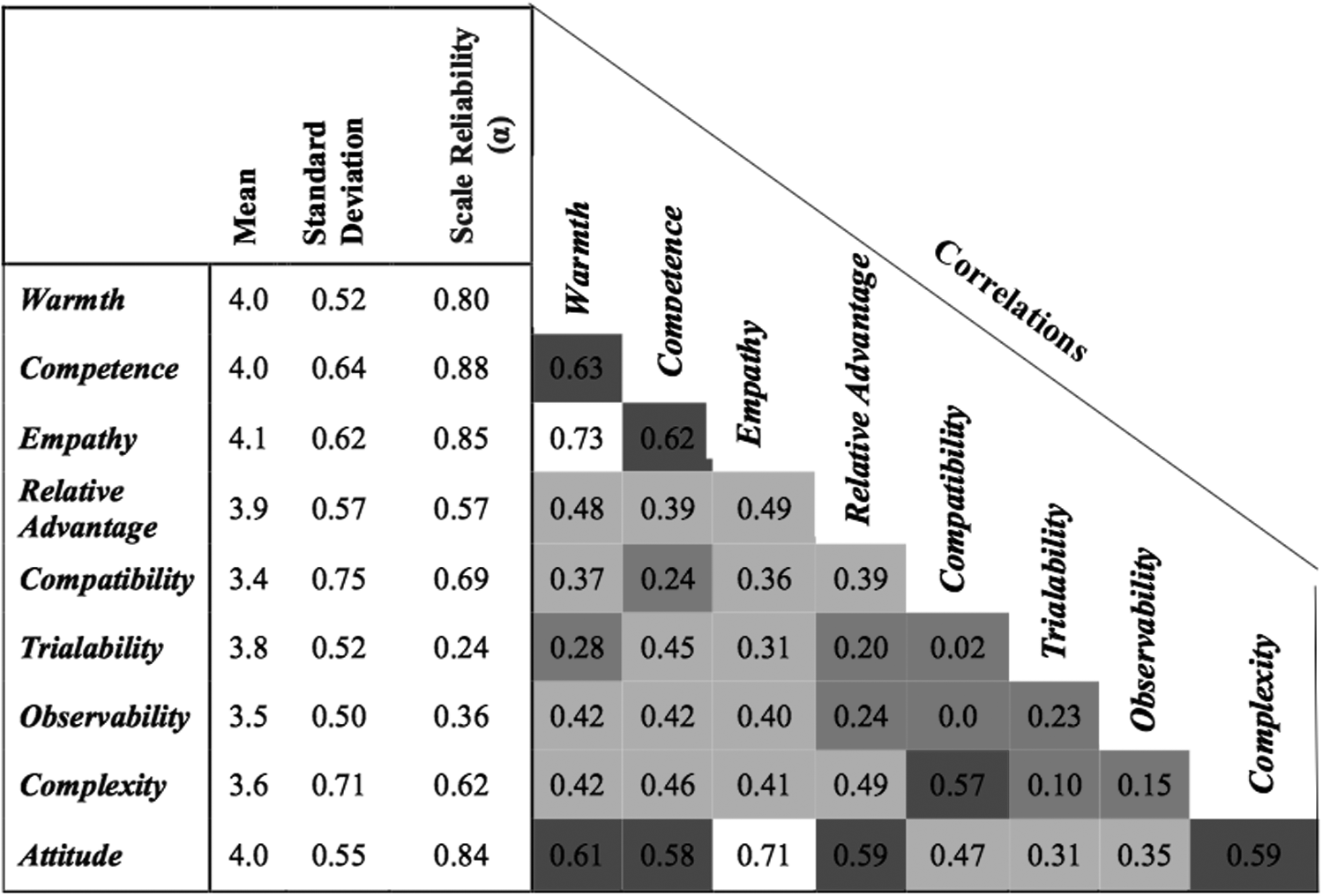
Participants' responses showed a high positive relationship between warmth and empathy as well as empathy and attitude. Two-tailed interconstruct Pearson correlations. Correlations are demonstrated by pairing horizontal and vertical variables. The Likert scores are used to calculate the mean. White = Very high positive correlation; Light gray = High positive correlations; Medium gray = moderate positive correlation; Dark gray = low positive correlation; Gray = negligible correlation.
As a quality control precaution, the survey had several questions where respondents could express perceived lack of warmth as “strongly agree” and “agree.” In postsurvey analysis, all items were aligned so that a score of “<3” expressed low warmth and a score of “≥3” expressed high warmth. Results show that four males had scores of <3 for warmth (Table 2). Of those four males, all were between the age of 25 and 34, three had a fifth grade education and one earned a college degree. In addition, two males and one female had scores of <3 for competence. Of the two males and one female, one was between the age of 18–24, one between the age of 25–34, and one was older than 55 years. Also, the three participants who scored <3 for perceived competence had a fifth and eighth grade and college education.
Frequency Tables for Perceived Warmth, Competence, Empathy, and Likelihood of Adopting Technology, as Well as Demographic Details of Responses
All items were aligned so that a score of “<3” expressed as low and a score of “≥3” expressed as high.
The empathy data suggest that black women working on environmental engineering projects would care about community members and therefore would be able to talk openly with them (Table 3). The lowest-scored item, “The person who gave the speech would give me personal attention,” received more neutral responses than any other question. The highest-scored item, “The person who gave the speech gives me hope,” was the only question on the empathy unit where no community member disagreed. Respondents who disagreed and strongly disagreed with perceived empathy were two males and one female between the age of 25 and 35 (Table 2). Like the warmth responses, these participants had a fifth grade education and one earned a college degree.
Majority of the Participants Believed That Black Women Environmental Engineers Empathize with Them
n = 59
Measured perceived support/empathy frequency; a Likert scale from 1 = “strongly disagree” to 5 = “strongly agree.”
When comparing participants' educational histories, gender, and age, a t-test found no significant difference between the two samples in regard to perceived empathy (results not shown). In addition, the perceived empathy was moderately correlated, r = 0.62, with competence (Fig 4). Finally, perceived empathy was highly correlated, r = 0.71, with attitude. This finding is important since attitude is a key factor associated with adoption of technology.
Of the five Adoption of Innovation categories—relative advantage, compatibility, trialability, observability, and complexity—only complexity and relative advantage were statistically significant (p-values <0.01) (Table 4 and Appendix Table A4). One statement from observability was omitted due to possible user fatigue impacting the scale reliability and resulting in a negative covariance. The t-tests for adoption of innovation showed that relative advantage and observability scores were positively affected by participants with an education above eighth grade (p < 0.02) (Appendix Table A5). Those with at least an eighth grade education saw the technology as more advantageous and were influenced by people using the anaerobic digester.
Of the Five Independent Variables, Only Complexity and Relative Advantage Were Statically Significant
Stepwise Multiple Regression of statistically relevant adoption of innovation categories.
Note: Dependent variable attitude.
The negative responses relating to compatibility were the highest of any category in the survey and the concerns spanned every age group, educational level, and gender (Table 2 and Appendix Table A6). The questionnaire assessed ease of use and safety of the anaerobic digester technology. A primary challenge of implementing anaerobic digestion into the community is continued maintenance. In addition, community members have raised concerns about the time it takes to operate the digester. The safety concerns could come from managing waste or harvesting the gas that is intended to replace cooking fuel. A follow-up survey or a focus group could help clarify these concerns.
Discussion
This study not only captures the contributions of black women environmental engineers but also highlights the importance of global competency for today's professionals
This research shows that there is an association between Sittee River community members and black women environmental engineers who share similar cultural and demographic backgrounds. Although personal information about the black women who gave the speeches was not explicitly stated (i.e., whether or not they were poor or professionals), it was clear that the black women were foreigners and assumed status led to perceived competence and ultimately respect (Lee, 2006). In addition, these findings suggest that survey participants from Sittee River Village perceived foreign black women working on environmental engineering projects there as competent, warm, and empathetic. Despite the requirements of global competency for today's professionals (NSF, 2018), community assessments of a foreigner's professional competency are not usually reported. Although the impact of working international with black communities on retaining the black American environmental engineering women of this study in academia was not formally evaluated, all authors agree that the impact has been significant and should continue in the field. Given the importance of role models to broadening participation in Science Technology Engineering and Mathematics, this information could assist academia and professional societies with the design of programs and funding opportunities to ensure it attracts and retains its faculty.
The positive characteristics of BioGals work identified by the community influence the likelihood of villagers adopting the technology. Introducing and encouraging people to use biodigesters require a radical change in how waste is currently managed and cooking needs are met. About 40% of the world relies on energy sources for cooking that contribute to indoor and outdoor air pollution, despite being aware of cooking technology that reduces exposure (DfID, 2002). In addition, due to lack of resources, unsafe methods of waste disposal in underserved communities produce leachate, particulate matter, and excess nitrate that threaten drinking water supply, human health, and aquatic ecosystems, respectively (Blacksmith Institute, 2000; Babayemi and Dauda, 2009; Wiedinmyer et al., 2014). Still, adoption of a new technology, even one that addresses these issues, can be a particularly sensitive point of discussion between engineers and community members because it involves bringing community members familiar, but potentially outdated, routines to the foreground (Wells et al. 2016).
However, this discussion cannot be overlooked by engineers. Environmental engineers who solely focus on technical objectives lack understanding of community members' perceptions of researchers and usability of proposed techniques (Thacker et al., 2017). For example, in our study, community members expressed great concerns about the maintenance of, safety of, and time needed for the anaerobic digester. Not addressing these concerns leads to misalignment and missed potential opportunities for sustainable development. Hence, it is imperative that needs are balanced to effectively enhance human life and explore knowledge gaps that manage complex problems.
Environmental engineers should continuously consider community engagement in the design and implementation process
Community engagement is increasingly recognized as essential to the long-term success of environmental engineering projects (Amadei et al., 2009). With increased recognition of this need, there is increased attention to discover effective ways to engage with communities (Vanasupa and Schlemer, 2014). In fact, engagement can determine the success or failure of projects (Mazzurco and Jesiek, 2017). For example, smokeless ethanol stoves in Ghana did not work because community members were not involved in identifying the problem and engineering the solution (Mazzurco and Jesiek, 2014). However, effective engagement can lead to more comprehensive projects than would have been realized by environmental engineers working alone (Lucena et al., 2010). This study very much aligns with shifts in training needs of our discipline as evidenced by the criteria needed to meet ENVISION certification of infrastructure as endorsed by American Society of Civil Engineers (ASCE, 2019).
Life experience and identity affect our perceptions, assumptions, and interactions with the community throughout each day. Effective communication and successful adoption of innovation hinge on enough of those interactions going well that the community trusts the engineer on a personal and a professional level, enough to change their way of life. While there is much more to any engineer or community than race or gender, these factors inevitably shape the way we approach work and community engagement.
Sittee River Village is a strong and motivated community. They take great pride in maintaining the cleanliness of their village and initiated the relationship with BioGals by asking for environmentally friendly technology. While Sittee River was an ideal community for initial assessment of these concepts, we recognize several limitations. Self-selection is a relevant factor in these experiments. We encountered several community members who were not literate and chose not to participate for that reason. Afolabi et al. (2014) used audio-recorded questionnaires to accommodate for illiteracy and avoid discrimination of those without an education. For inclusivity and diversity of all, future work is needed to include participants who are unable to read. It is possible that our results on the perceived empathy, warmth, and competence of professionals in Sittee River community adoption of anaerobic digesters, which show higher results on average compared to previous studies, are influenced by the factors of nationality and race. This necessitates future work to explore if these heightened perceptions of warmth and competence are caused primarily by nationality, race, community engagement, or perhaps a confounding variable.
Conclusion
This study is the first to provide qualitative and quantitative results of the perception of black women working on international environmental engineering projects. Qualitative results reveal that BioGals plays a role in gaining trust from the community by participating in communal activities involving communities throughout the entire research project and maintaining consistent engagement. Our quantitative work has shown the success and importance of introducing empathy into research. Specifically, the questionnaire and focus groups have shown that warmth, competence, and perceived empathy of environmental engineers have a direct relationship on how proposed technology is viewed. These factors also allow the community to build a stronger, more trusting relationship with the research team, which influences the adoption of the anaerobic digester and the success of its implementation. These findings present a great opportunity to increase the number of black women in environmental engineering, especially in work that affects other black communities. These results provide suggestions for organizations that currently work on developing solutions to environmental challenges with and in communities around the world.
Footnotes
Acknowledgments
Special thanks to Sittee River Village Council and community members for participating in focus groups and questionnaires. We would also like to extend special thanks to BioGals, Myrtede Alfred, and Katrina Black for help with data collection.
Author Disclosure Statement
No competing financial interests exist.
Measured Adoption of Technology Frequency; a Likert Scale from 1 = “Strongly Disagree” to 5 = “Strongly Agree”
| Strongly disagree/disagree, n (%) | Neutral, n (%) | Strongly agree/agree, n (%) | |
|---|---|---|---|
| Anaerobic digesters will improve waste management when I use it | 3 (5.1) | 4 (6.8) | 52 (88.1) |
| Mistakes with anaerobic digestion are easier to correct than burning, burying, or throwing waste in the river | 9 (15.3) | 5 (8.5) | 45 (76.3) |
| There are enough advantages of anaerobic digesters for me to consider using it a | 5 (8.6) | 5 (8.6) | 48 (82.8) |
| Mistakes are more likely to occur with anaerobic digester usage than burning, burying, or throwing waste in the river | 18 (30.5) | 13 (22.0) | 28 (47.5) |
| Anaerobic digesters will improve waste management when I use it | 0 (0.0) | 5 (8.5) | 54 (91.5) |
| I do not need the anaerobic digester to manage waste | 28 (47.5) | 12 (20.3) | 19 (32.2) |
| Anaerobic digesters make managing waste difficult | 42 (71.2) | 9 (15.3) | 8 (13.6) |
| It will bother me to use anaerobic digesters when I could burn, bury, or throw my waste in the river | 43 (72.9) | 5 (8.5) | 11 (18.6) |
| I worry about the safety of the anaerobic digester when using it | 13 (22.0) | 13 (22.0) | 33 (55.9) |
| I worry that the anaerobic digester is not safe enough to manage waste | 33 (55.9) | 10 (16.9) | 16 (27.1) |
| I think it will be easy to use anaerobic digester once I try it out | 3 (5.1) | 7 (11.9) | 49 (83.1) |
| A trial will convince me to use anaerobic digester versus burning, burying, or throwing waste in the river | 8 (13.6) | 5 (8.5) | 46 (78.0) |
| I do not need a trial to be convinced anaerobic digesters are better than burning, burying, or throwing in the river | 22 (37.3) | 3 (5.1) | 34 (57.6) |
| It will not take me much time to try the anaerobic digester before I finally accept the use of it to manage waste | 5 (8.5) | 6 (10.2) | 48 (81.4) |
| It is better to experiment with anaerobic digester before using it | 3 (5.1) | 5 (8.5) | 51 (86.4) |
| I was influenced by what I heard as the benefits of using the anaerobic digester | 7 (11.9) | 9 (15.3) | 43 (72.9) |
| I heard others talking about the anaerobic digester and heard the advantages of doing so | 6 (10.2) | 11 (18.6) | 42 (71.2) |
| Hearing about others using the anaerobic digester is not necessary before I use the anaerobic digester | 14 (23.7) | 15 (25.4) | 30 (50.8) |
| I need to hear how others use the anaerobic digester before using it | 13 (22.0) | 11 (18.6) | 35 (59.3) |
| Anaerobic digester is complicated to learn | 34 (57.6) | 11 (18.6) | 14 (23.7) |
| Anaerobic digester is difficult to understand and use | 37 (62.7) | 9 (15.3) | 13 (22.0) |
| Anaerobic digester is convenient to use | 10 (16.9) | 9 (15.3) | 40 (67.8) |
| Anaerobic digester is confusing | 39 (66.1) | 7 (11.9) | 13 (22.0) |
| It is easy to use anaerobic digester even if one has not used them before a | 11 (19.0) | 14 (24.1) | 33 (56.9) |
| The benefits of anaerobic digester will make me continue to use them in the future | 1 (1.7) | 5 (8.5) | 53 (89.8) |
| I intend to continue to use anaerobic digester because it helps manage waste better | 2 (3.4) | 10 (16.9) | 47 (79.7) |
| Because anaerobic digester is appropriate to my life, I will use them in the future | 2 (3.4) | 6 (10.2) | 51 (86.4) |
| Anaerobic digestion usage is appropriate for the way I manage waste and I will use it | 2 (3.4) | 7 (11.9) | 50 (84.7) |
| The ease of use of anaerobic digester will make me continue to use it | 1 (1.7) | 12 (20.3) | 46 (78.0) |
| The difficulty in learning to use anaerobic digester will make me not use them in the future | 34 (57.6) | 7 (11.9) | 18 (30.5) |
| Seeing other villagers use the anaerobic digester will make me use it | 4 (6.8) | 4 (6.8) | 51 (86.4) |
| What I have heard about the use of the anaerobic digester from the person giving the speech will make me use it | 2 (3.4) | 8 (13.6) | 49 (83.1) |
| Trying out opportunities for using the anaerobic digestion in my village will make me use it in the future | 1 (1.7) | 5 (8.5) | 53 (89.8) |
n = 58, for all others n = 59.