




Abstract
Abstract
Excessive release of heavy metals in ecosystem poses a serious threat to human beings and food security. Remediation of metals from contaminated soils is considered a complicated task for environmental safety. Among different techniques, immobilization of heavy metals using soil amendments has attained a greater attention as a promising solution for heavy metal remediation. A column leaching experiment was planned to estimate the influence of biochar (BC), slag (SL), and ferrous manganese ore (FMO) at 3% and 6% application rate on lead (Pb) and cadmium (Cd) leaching behavior and chemical fractionation in artificially contaminated soil. A sequential extraction procedure (Community Bureau of Reference), toxicity characteristic leaching procedure, and CaCl2 were performed after leaching was completed. Results showed that metal movements in the control soil were increased drastically, while with the addition of BC at 6% rate significantly reduced the Cd and Pb contents in the leachate. Greater reduction in acid soluble portion was observed in Cd by 35% and in Pb by 52% in the upper layer (L1) at 6% BC rate, while in L2 Cd was decreased by 32% and Pb by 51% when BC was added at 6% application rate. Similarly, CaCl2 extractable Pb (30.5%) and Cd (27.2%) in the upper soil layer were decreased with BC at a 6% rate. The application of SL also showed prominent reduction in heavy metal mobility. However, FMO incorporation showed the slight decrease in Pb and Cd mobility in contaminated soil. Overall, BC can be considered an efficient soil amendment to reduce Pb and Cd leaching, as well as increased stabilization within the soil profile.
Introduction
Rapid dissemination of heavy metals in cultivated lands has been substantially increased and poses the severe stress on ecosystems and societies (Grimm et al., 2008; Alloway, 2013). The great exposure of agricultural lands to heavy metals can cause food security risk through the soil-plant-food chain transfers (Chaney et al., 2004). To know the potential of these heavy metals under the changing environmental conditions, sequential extraction has attained much attention to examine their fate and behavior in contaminated soils (Cappuyns et al., 2007). Among the remediation strategies of heavy metals, many techniques have been suggested; soil column leaching along with passivators is the common and easily accessible strategy. Adding reagents to the contaminated soils can decrease the migration of heavy metals to water, plants, and other environmental media (Zhou and Haynes, 2011). Passivators can bind heavy metals on their surfaces and make them unavailable to the plants. Therefore, passivators like biochar (BC), slag (SL), and ferrous manganese ore (FMO) were used as soil amendments to alleviate heavy metal mobility in contaminated soil because they are readily available in large quantities.
BC is highly enriched with carbon, fine-grained, and porous material, which produce through pyrolysis under the limited oxygen environment (Li and Ju, 2017). BC is receiving much attention for heavy metal remediation because of its porous structure and the presence of functional groups on its surface (Park et al., 2011; Salam et al., 2018). It can be produced from almost all the feedstocks under various temperatures to hinder the mobility of heavy metals, including lead (Pb) and cadmium (Cd) in polluted soils (Xie et al., 2015). The basic principle of metal immobilization by BC in soil includes increase in soil pH, ion exchange, physical sorption, and precipitation as oxi-hydroxides, with carbonate or phosphate (Cao et al., 2009; Park et al., 2011; Uchimiya et al., 2012).
SL is an industrial waste product, which has been found as a remediator for heavy metals and also has the tendency to enhance soil pH and nutrients due to alkaline nature (Masud et al., 2014; Ho et al., 2017). It has also been found to have the greatest absorption capacity (Gong et al., 2009), which can be attained by grinding it into small particles to increase its surface area (Xue et al., 2009a). Lately, it was transformed into an active economical scavenger and applied for the remediation of metals in the soil solution (Ahn et al., 2003; Zhang et al., 2008).
FMO becomes a novel absorbent for heavy metals like Cd and Pb. A low-cost FMO has ability to detach metals from groundwater without any pretreatment (Chakravarty et al., 2002). The main inorganic phases present on the FMO are pyrolusite (−MnO2) and goethite [−FeO(OH)], which could enhance the heavy metal adsorption through precipitation. Metal adsorption on the surface of FMO is pH dependent. However, a few studies have been investigated about this before, to the best of our knowledge.
In the recent years, China's environment has faced serious contamination due to continuous toxin loading from the terrestrial system (Xin et al., 2015). Column leaching experiments are an essential means to assess the metal mobility in soils, but it is considered as a limited option for heavy metal fractionation (Puga et al., 2016).
It is worth mentioning that there is no research work that has been reported regarding the application and comparative effectiveness of BC, SL, and FMO for the remediation of Pb and copper in co-contaminated acidic soil through leaching process. The present study describes a column experiment, in which the efficiencies of BC, SL, and FMO as passivators were assessed for Pb and Cd leaching through soil washing, as well as fractionation in different soil layers, from an artificially contaminated silty clay loam.
Materials and Methods
Preparation of soil and BC
Soil samples were collected from Wuhan, China at (0–20 cm) depth and artificially spiked with 1000 mg/kg Pb and 20 mg/kg Cd. The metal spiked soil samples were incubated for 30 days, and moisture content was maintained at 70% water holding capacity. After 1-month incubation, spiked soil was homogeneously amended with passivators (BC, SL, and FMO) with 3% and 6% application levels. Passivator amended soil moisture was maintained at 70% throughout the incubation period. All the experiments were arranged with seven treatments and three replicates with complete randomized design.
Rice straw was collected from the research area of Huazhong Agricultural University. The rice straw samples were cleaned, dried, and chopped to pass through 10 mm mesh sieve. The ground samples were used to produce BC through pyrolysis at 500°C for 3 h under limited oxygen supply.
After incubation, soil pH and electrical conductivity (EC) from the top (5.54 and 1.3 mS/cm) and from bottom (5.6 and 1.4 mS/cm) layer of soil column were measured at ratio of 1:2.5 and 1:5 (soil/water), respectively. Cation exchange capacity (CEC) of passivators was measured by NH4CH3COO (pH 7.0) method. The total metal contents of Pb and Cd from both the layers of the studied soil were determined after digestion by aqua regia HCl: HNO3 at a ratio of 3:1 (ISO11466, 1995). Soil texture (silty clay loam) was measured with the method described by Lu (2000). The basic attributes of soil and passivators are presented in Table 1.
Basic Attributes of Soil and Passivators
BC, biochar; Cd, cadmium; CEC, cation exchange capacity; EC, electrical conductivity; FMO, ferrous manganese ore; Nd*, not detected; Pb, lead; SL, slag.
Soil column construction
Plastic Tubes (4 cm diameter and 40 cm height) made of polyvinyl chloride (PVC) were used as a soil column. The top and bottom (5 cm) of soil column was filled with sand, separated by mesh (74 μm) to avoid the soil loss (Fig. 1). After setting, soil columns were saturated with distilled water; water was added from the top and collected at the bottom of columns in 50 mL Erlenmeyer flask after every 2-day interval throughout the experiment. At the end of the experiment, the soil columns were cut along with PVC tubes: 0–15 cm layer (L1) and 15–30 cm layer (L2). Soil collected from both layers was air dried, grounded, sieved through 0.15 mm, and stored for the analysis.
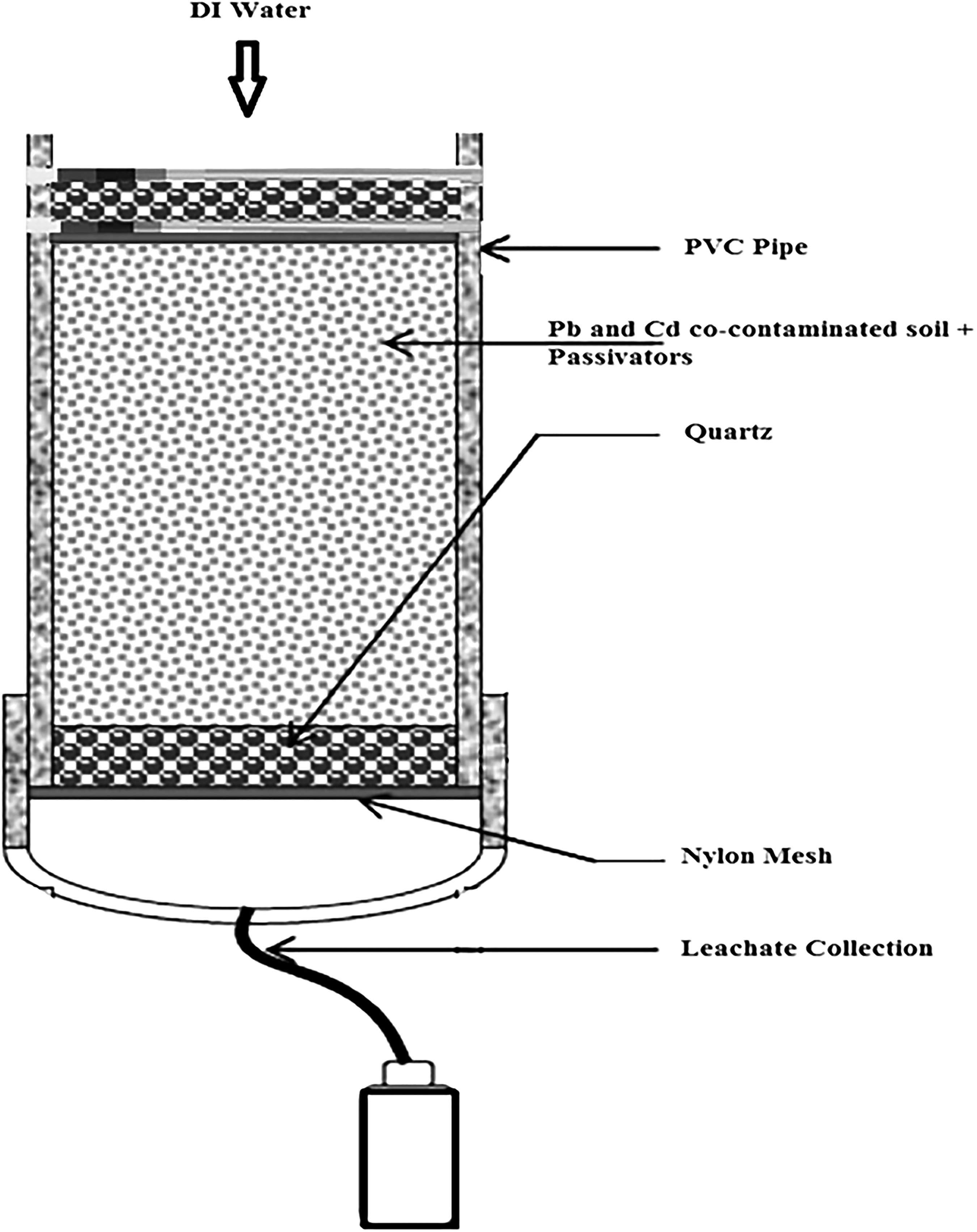
Column having Cd and Pb co-contaminated soil and passivators (BC, SL, and FMO). BC, biochar; Cd, cadmium; DI, deionized; FMO, ferrous manganese ore; Pb, lead; PVC, polyvinyl chloride; SL, slag.
Analytical analysis
Fractions of Pb and Cd in both soil layers were examined using Community Bureau of Reference (BCR) as described in detail by Rauret et al. (1999). In the first step (acid extractable fraction), the soil was extracted by 0.11 M C2H4O2, in the second step (reducible fraction) soil was extracted by 0.5 M NH2OH, and in the oxidizable fraction (step 3) soil was treated with 8.8 M ammonium acetate. In the fourth stage, the residual soil was digested using aqua regia procedure (Chen and Ma, 2001).
Solubility of Pb and Cd in both soil layers was examined by the toxicity characteristic leaching procedure (TCLP) method USEPA 1311 (USEPA, 1992). Briefly, 1.0 g of incubated soil was extracted with 20 mL of C2H4O2 solution and then shaken for 16 h and centrifuged at 4000 rpm for 20 min. After centrifugation supernatants were analyzed by AAS (AA-240FS Varian, United States).
The effect of all the passivators on the Pb and Cd mobility and bioavailability of heavy metals in both layers were monitored by CaCl2 extraction as proposed by Houben et al. (2013). Briefly, 2 g of studied soil was extracted with 0.01 mol CaCl2 and then shaken for 2 h at 20°C. After shaking, samples were centrifuged to separate from the solid residue; supernatant was filtered and stored for the analyses of Pb and Cd by AAS. The concentration of Pb and Cd in the solution was determined by ICP-OES (Perkin-Elmer SCIEX, Optima 5300 DV).
Results
Total metal contents of corresponding soil column layers
Contents of heavy metals in both soil layers after column leaching are shown in Fig. 2. Pb and Cd contents in both soil column layers (L1 and L2) showed the slight difference from each other. The contents of the Cd and Pb in the bottom soil layer were slightly higher than that in the control when BC was added at 6% application rate. The application of BC, SL, and FMO reduced Cd (4.35%, 0.37%, and 1.98%) and Pb (3.21%, 2.04%, and 2.83%) at 6% rates in L2 after the soil column leaching process.
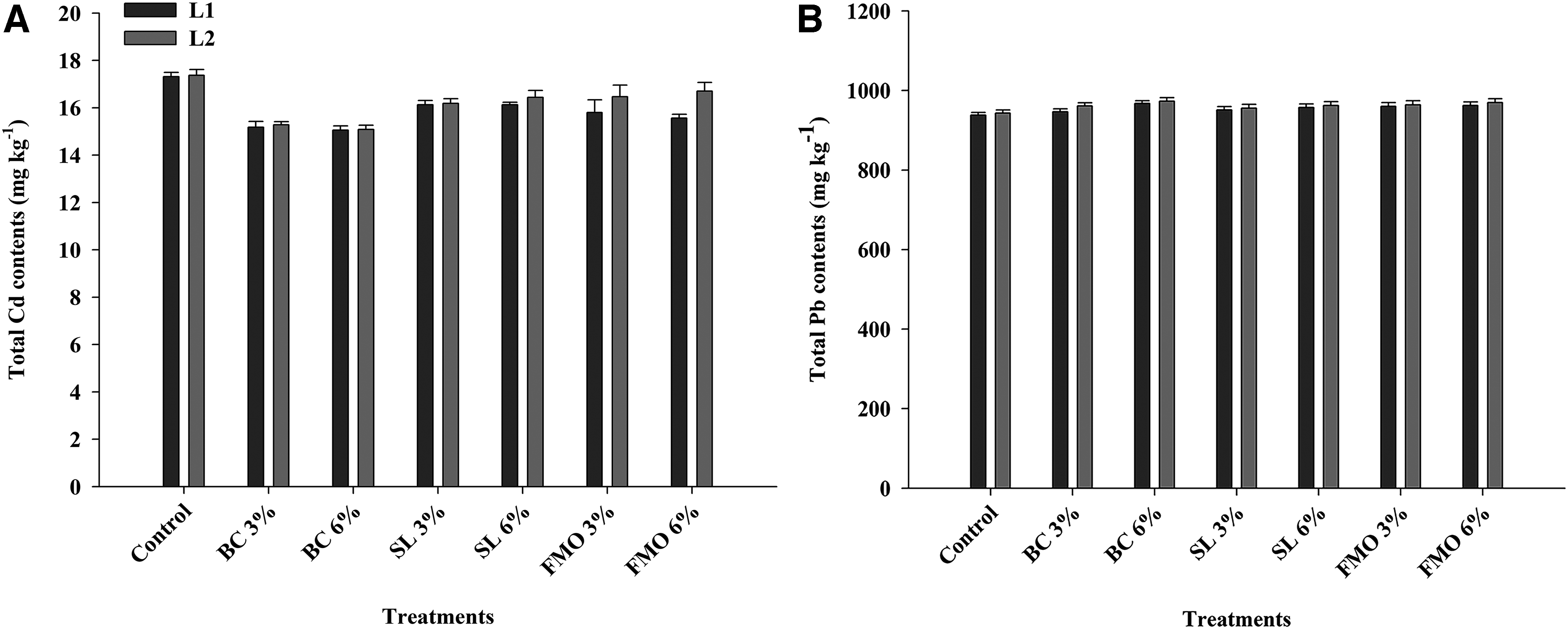
Passivators effect on total Pb and Cd contents in top (L1) and bottom (L2) of soil layers after column leaching.
pH and EC of corresponding soil column layers
Influence of passivators on the soil pH and EC of both layers after column leaching was analyzed as shown in Fig. 3. According to the obtained findings, soil pH showed a slight increase in the top layer (L1) than the bottom layer (L2). Compared to control, soil pH in both layers showed the significant difference when treated with BC and SL. The higher soil pH was observed in the soil layers when BC was added at 6% compared to control, followed by BC at 3% in the top and bottom layer of the soil column. Parallel to control results, BC at 6% treatment showed an increase in soil pH from 5.54 to 9.6 in L1 and 5.6 to 8.98 in L2 of the soil column, while soil pH increased by 7.94, 6.61 in L1 and 7.96, 6.72 in L2 with SL and FMO at 6% application rate, respectively, than control.

Passivator effect on soil pH and EC in top (L1) and bottom (L2) layers after column leaching.
Similarly, soil EC was also improved with the application of BC at 6% rate from 1.4 mS/cm to 2.7 mS/cm in L2 and 1.3 mS/cm to 2.6 mS/cm in L1 layer of the soil column. FMO showed a slight difference in pH and EC of both layers after soil column experiment. In contrast, a parallel trend was observed with the addition of SL in acid soil inducing significant increment in soil pH and EC.
Fractionation of Pb and Cd of corresponding soil column layers
Application of amendments showed a significant increase in Pb and Cd geochemical distribution with the addition of BC, SL, and FMO as presented in Fig. 4. Results indicated that the contents of the acid soluble fraction of Pb and Cd were higher in L2 than L1. The maximum reduction in Cd and Pb contents in both layers was observed with the incorporation of BC at 6% application level. The acid soluble portion was significantly decreased among all the amendments, but the addition of BC at 6% prominently decreased Pb (52–51%) and Cd (33–35%) in the top and bottom layers of the soil column, respectively, compared to controls. Meanwhile, application of SL also revealed a decrease in acid-soluble portion of Pb and Cd in top (29.4–26.5%) and bottom (27–27.7%) layers of soil column at 6% application rate than control. However, the incorporation of FMO showed the slight decrease in the acid-soluble fraction of both Pb and Cd, over control. Prominently, BC at 6% dose showed a great amount of Pb and Cd contents in a reducible fraction of both layers than controls after soil column leaching. Similarly, contents of Pb (58.7–54.2%) and Cd (20.9–18.2%) in the top and bottom layers, respectively, were higher in an oxidizable fraction under BC 6% treatment. However, all the passivators showed a positive increment in residual portion, but BC at the rate of 6% also offered greater increment in residual portion contents of Pb and Cd in both layers of the soil column. The measured amount of residual Pb and Cd in both soil layers for all treatments followed the following order: BC>SL>FMO>control.
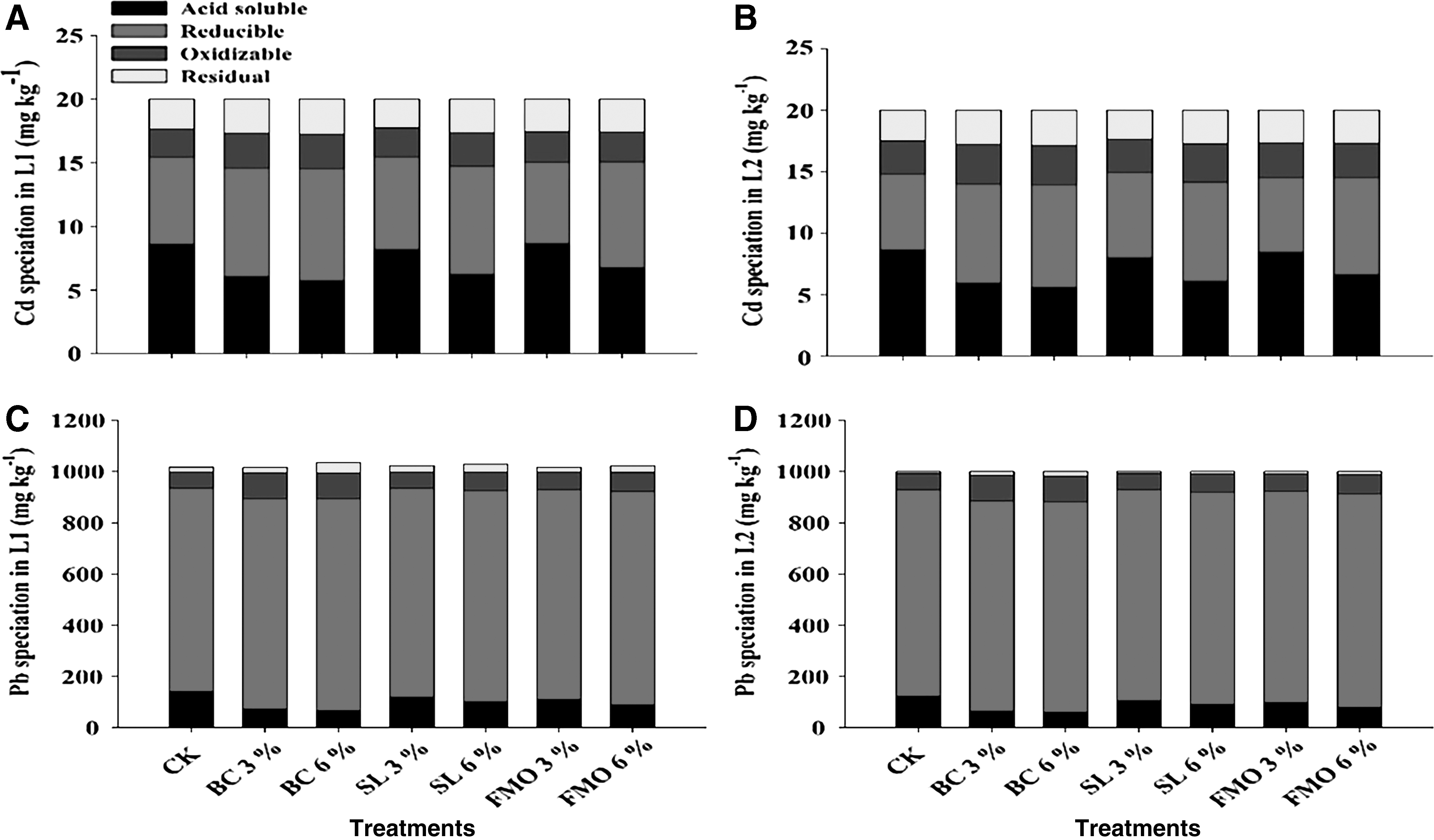
Passivator effect on Pb and Cd speciation in top and bottom of soil column.
CaCl2 extractable Pb and Cd of corresponding soil column layers
In general, BC application significantly reduced Pb and Cd in the CaCl2-extracted soil fraction compared to the control (Fig. 5). The concentrations of Pb and Cd as measured by CaCl2 extraction were reduced by the increasing application rate of passivators from 3% to 6%. In control treatment, CaCl2 extractable Pb and Cd results indicated that the contents of both metals were higher in L2 than L1. Metal contents after CaCl2 extraction in both layers (L1 and L2) of untreated soil were Cd 6.4 mg/kg, Pb 12.79 mg/kg in L1 and Cd 8.38 mg/kg, Pb 19.01 mg/kg in L2 of the column. Cd and Pb contents were decreased effectively by all the treatments compared to control, but BC at 6% showed a higher reduction in Cd (26.8–27.2%) and Pb (28.7–30.5%) contents in both soil layers of the column, respectively. Soil amended with SL showed the reduction in Pb and Cd contents in both of soil column layers (p < 0.05; Figs. 8 and 9). However, in case of FMO at 3% and 6% application rate, the contents of CaCl2-extractable Pb reduced from 14.3% to 21.9% and Cd from 2.85% to 14.7% in L1 and 12.1% to 19.9% and 3.5% to 15.2% in L2 of the soil column.
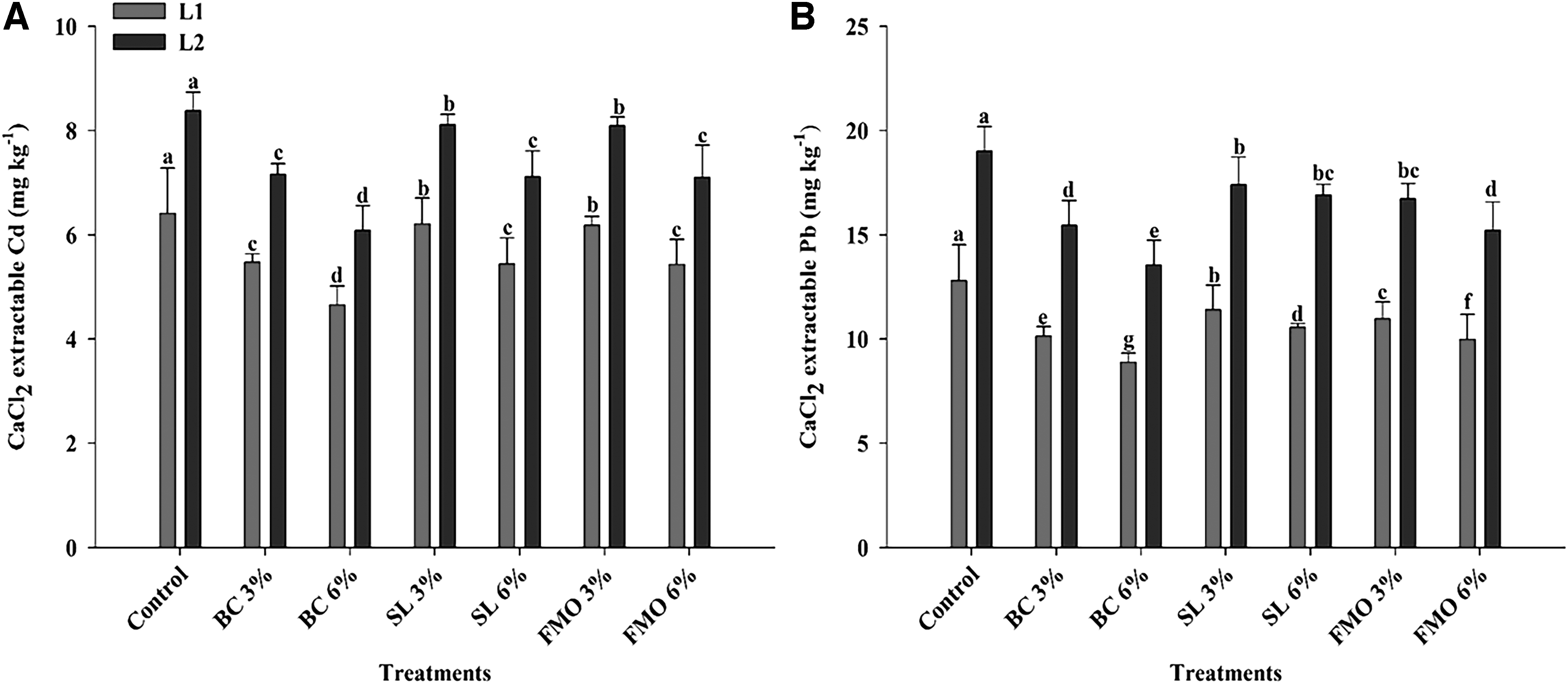
Passivator effect on CaCl2 extractable Pb and Cd of soil in top (L1) and bottom (L2) layers after column leaching.
TCLP extractable Pb and Cd of corresponding soil column layers
TCLP extractable Cd and Pb contents in both soil layers decreased prominently with BC and SL incorporation (Fig. 6). Cd and Pb contents were higher in the bottom layer (L2) than the top layer (L1). BC and SL incorporation at the rate of 6% showed a significant reduction in TCLP extractable Cd (27.3–15.15%) and Pb (28.7–15.3%) in L2 and 26.8–14.5% (Cd), 30.5–17.5% (Pb) in L1 of soil column compared to controls, respectively. FMO showed less reduction in both soil layers than other amendments (BC and SL). While SL also showed a significant reduction in both soil layers, it was higher in L2 of the soil column. These results were not in prop up with the standard of USEPA (1992). The order trailed by treatments on the overall decrease of TCLP-extractable Pb and Cd in both layers of soil column was the following: BC>SL>FMO>control.
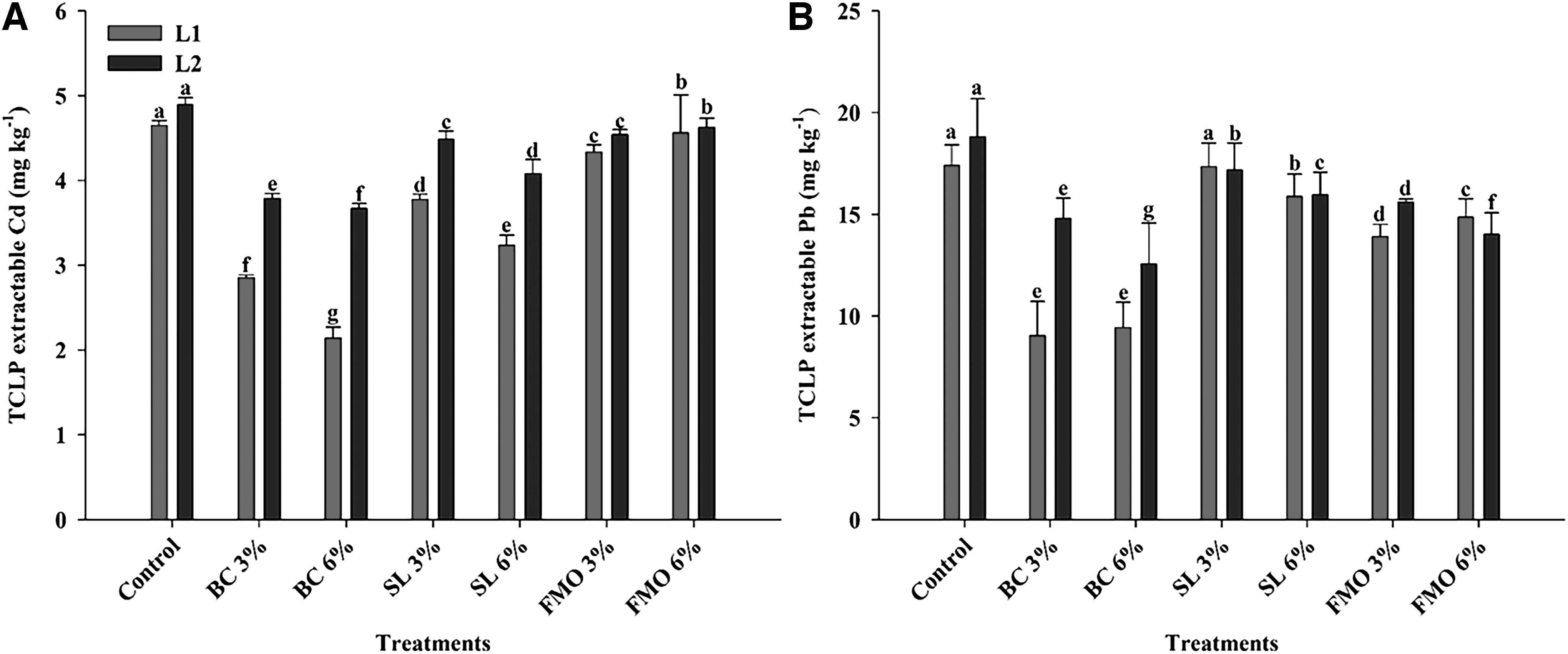
Passivator effect on TCLP extractable Pb and Cd of soil in top (L1) and bottom (L2) layers after column leaching.
pH and metal contents in leachate
In general, BC application at 6% rate significantly increased soil pH in the number of leachates collected, compared to the control (Fig. 7). Furthermore, SL and FMO were also effective in increasing soil pH, compared to control. However, the total contents of heavy metals in the leachate collected during column leaching are shown in Fig. 8. Pb and Cd contents showed a slight decrease with the increase in leaching, but the metal was mostly bounded with passivators. The first collected leachate showed the higher contents of Pb and Cd. Overall, BC at 6% showed less leachability of Pb and Cd, compared to control. Figures 9 and 10 showed correlation coefficients between parameters and hierarchical clustering analysis between soil parameters, respectively.
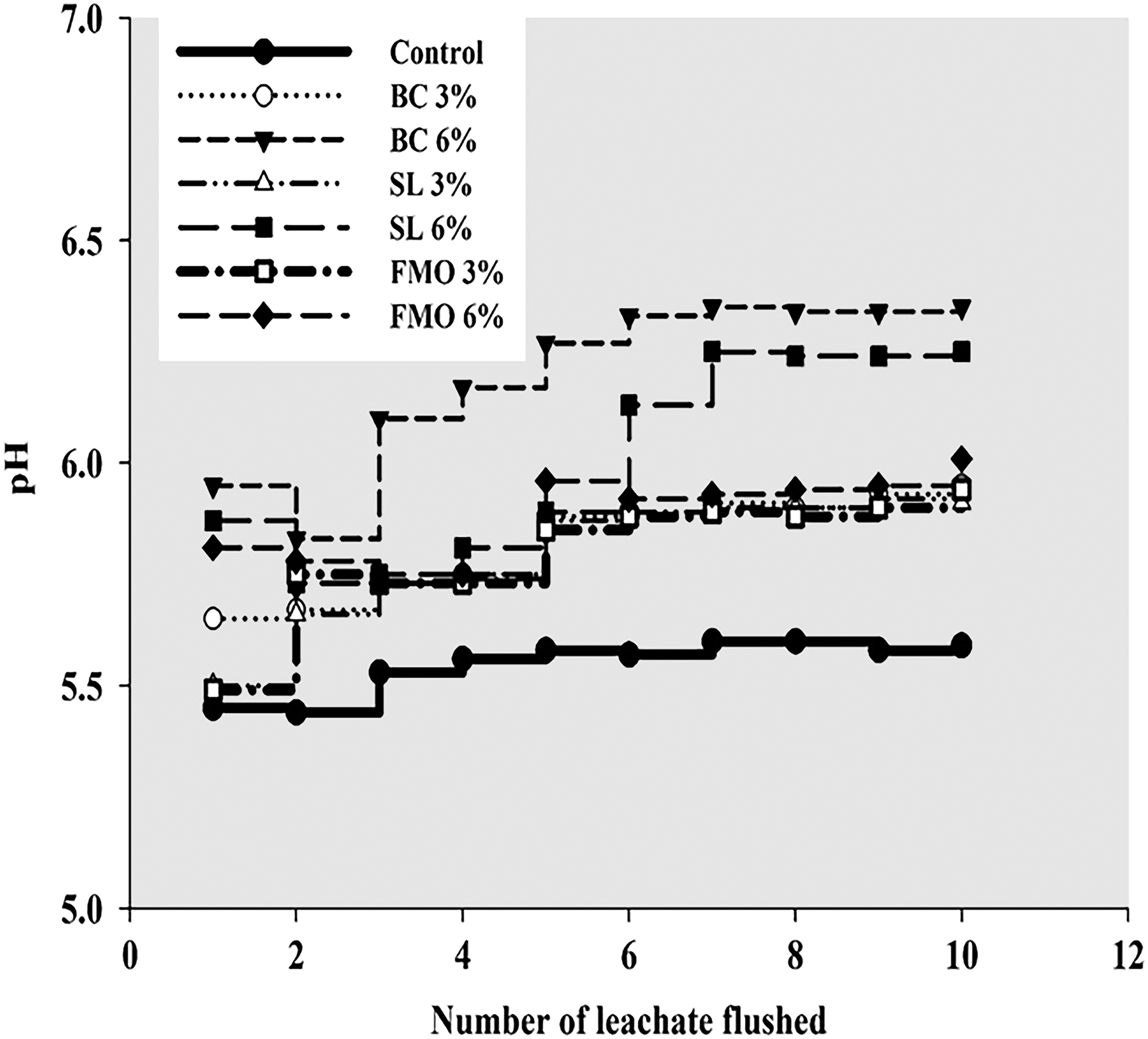
pH of the leachate per batch.
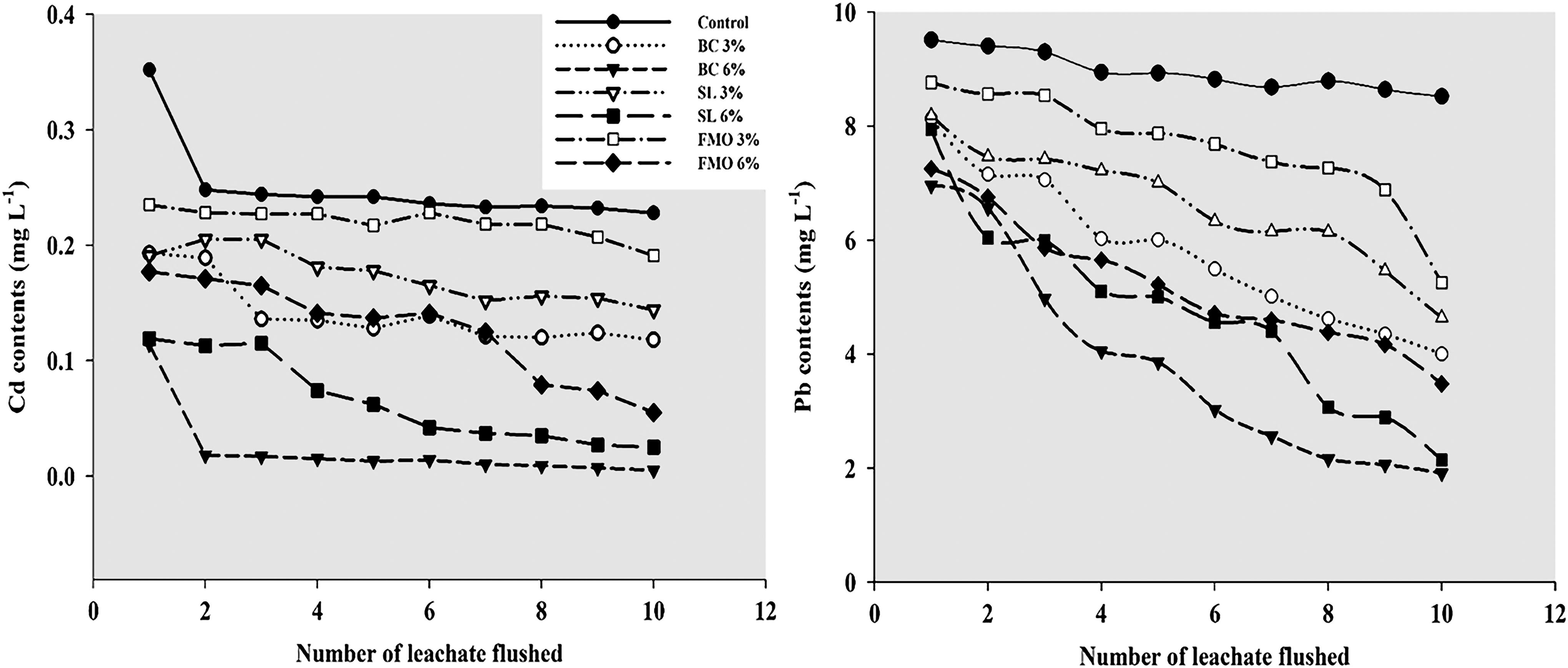
Contents of Pb and Cd leached out per batch.
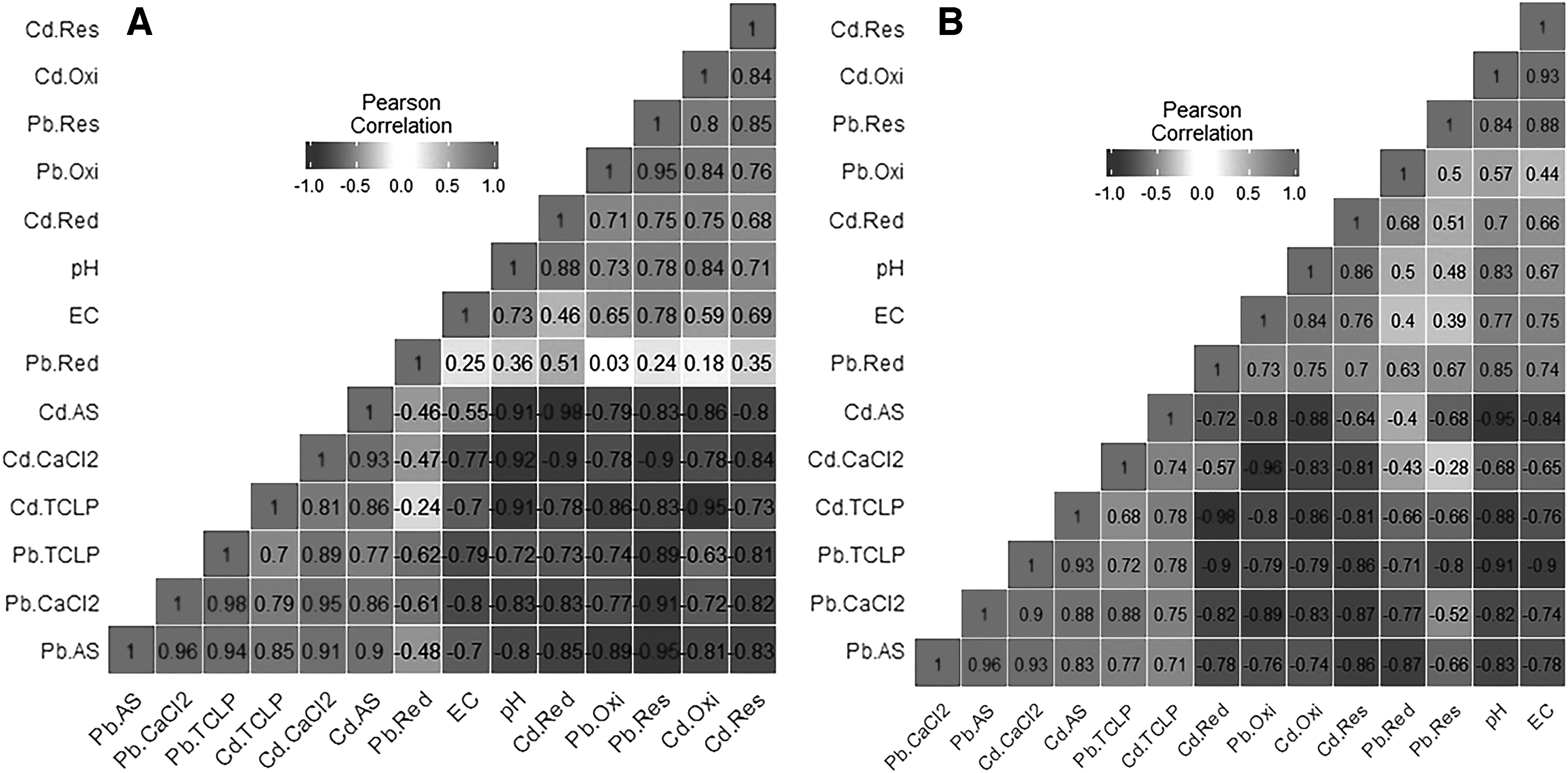
Correlation coefficients between parameters,
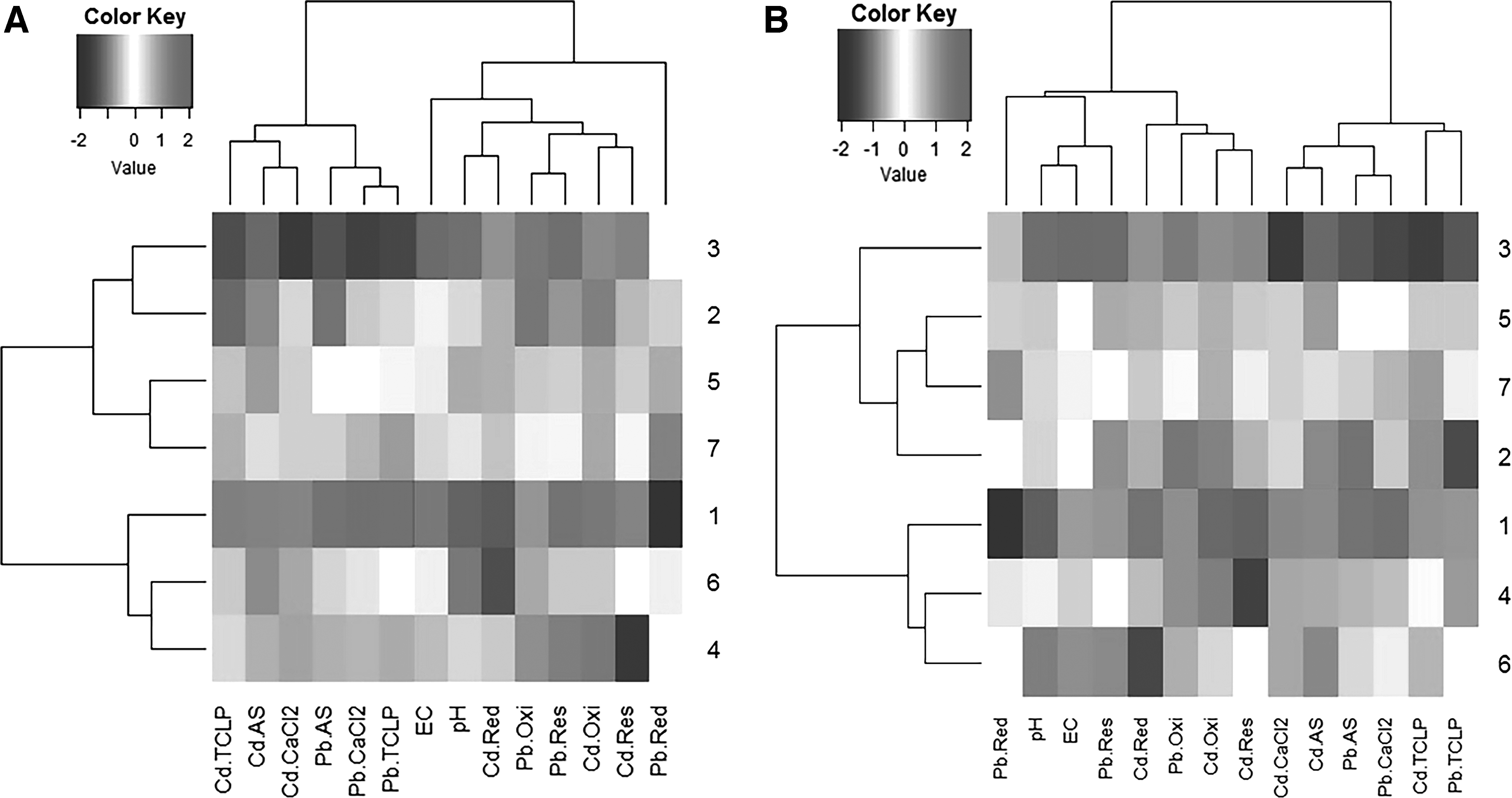
Hierarchical clustering analysis between soil parameters,
Discussion
In the present study, application of alkaline amendments confirmed that fractionations of both Pb and Cd were changed significantly with the significant increase in soil pH. Application of BC and SL significantly enhanced soil pH, which might be due to the alkaline nature of these passivators. The presence of base cations and metal oxides on the surface of these passivators might have contributed to increase in soil pH. BC is a carbon-rich material made under no or limited oxygen conditions and includes carbonates, hydroxides, oxides, and higher ash contents, which in result cause a significant increase in the soil pH (Houben et al., 2013; Mehmood et al., 2017, 2018). Parallel to this, SL also has basic cation and a variety of ions (CaO, MgO, and SiO2), which after dissolution produce OH− ions and liming effect and ultimately increase soil pH (Ning et al., 2016). Agreeing to the acquired results, application of BC and SL considerably enhances the pH of the soil, which was in line with the current study by Bian et al. (2013) and Mehmood et al. (2017, 2018). According to Ning et al. (2016), the prominent release of OH− ions occurred in soil solution when SL was added into contaminated soil which could increase soil pH.
BCR extraction in both layers of soil column (Fig. 4) was noticeably altered after the addition of amendments. But the greatest reduction in both Cd and Pb solubility significantly occurred after the addition of BC at 6% application rate. The soluble portion of Cd and Pb was significantly decreased in the top layer (L1) compared to lower layer (L2), which might be due to the prominent changes in soil pH, CEC, and total organic carbon (TOC) upon BC addition (Mohamed et al., 2015; Mehmood et al., 2017, 2018). Higher pH offers more negative surface charge, a higher density of pH-dependent exchange sites, and increased hydrolysis of Cd (NAIDU et al., 1994; Jiang et al., 2016; Liu et al., 2013). Trakal et al. (2014) reported that BC can sorb metals due to higher ash contents and through the surface precipitation of metals. Parallel to our findings, Liang et al. (2014) reported that BC has large surface area and several surface functional groups, which might be the possible reason for an increase in oxidizable and residual portions through complexation and precipitation. According to our findings, the soluble fraction of Cd and Pb in co-contaminated soil under soil column study was significantly influenced after the addition of SL in the bottom layer of the soil column. Nonetheless, Cd and Pb contents were reduced in the soluble portion, but the increase in oxidizable and reducible fractions might be due to the rise in the soil pH with the addition of SL in L2 of the soil column. Barca et al. (2012) reported that the dissolution of lime (CaO) in the SL leads to increase in the pH, and thus, it is believed that the depletion of CaO caused the shorter replacement period of the SL. With the rise in the soil pH, Cd and Pb form their insoluble complexes due to the presence of Ca, Fe, and Mn oxides on the SL surface, and ultimately, precipitation of metals occur (Liang et al., 2005). Exchangeable Cd contents decreased by 100% with the application of SL than control (Aboulroos et al., 2006). In addition, steel SL has larger surface area and higher pore space, which might be supportive to enhance the Cd and Pb immobilization over adsorption on its surface (Xue et al., 2009b). These results were also in accordance with Ning et al. (2016) that addition of steel SL prominently decreased heavy metals in exchangeable portion and increased its concentration into reducible and carbonate bound fraction through adsorption and precipitation. All the alkaline amendments after the incorporation in the soil cause immobilization of heavy metals by the process of hydrolysis which might precipitate as CdCO3 and Pb5 (PO4)3Cl (Cao et al., 2009; Mousavi et al., 2010; Lu et al., 2014).
Moreover, geochemical fractionations of Pb and Cd were slightly influenced with the addition of FMO. With increasing doses of FMO, soil Pb and Cd contents were maximally reduced in the soluble fraction, while the opposite trend was examined in reducible and oxidizable fractions, may be due to an oxidizing process in which formation of amorphous iron oxides occurs (Houben et al., 2012). Our findings were in line with Bashir et al. (2018), who proposed that the application of FMO in Cd contaminated soil can reduce its contents in exchangeable portion. FMO due to the presence of OH− groups increases surface adsorption of Cd in soil (NAIDU et al., 1994). Reduction of soluble form of Cd in Fe-treatment might be due to the formation of iron oxide which increased the sorption or coprecipitation of Cd in soils (Rees et al., 2014).
TCLP was used to assess the kinesis of Pb and Cd under column leaching. TCLP extractable Pb and Cd contents were significantly decreased in L2 at 6% BC treatment. This may be due to improved pH, CEC, TOC, and additionally functional groups (Uchimiya et al., 2012; Houben et al., 2013). The drop of TCLP-extractable Cd after the incorporation of corn straw and hardwood derived BCs throughout a 3-year pot culture trial may be due to the presence of oxygen-containing group (−COO−) and soil chemical properties, including pH, SOM, and DOC (Li et al., 2016).
Cd and Pb bioaccessibility was assessed by quantifying solubility of Cd and Pb in an artificially prepared stomach solution at pH 1.5. In present results, we assumed that the prominent reduction of Cd and Pb concentration in an surface Brunauer–Emmett–Teller solution after BC incorporation was due to the increased soil pH and the significant reduction in the soluble portion of soil Cd and Pb. These results were in line with those of Jiang et al. (2012). It was interesting to mention that the soil incubation period might be another reason to justify its reduction, which was consistent with the study (Bashir et al., 2018). Xu et al. (2016) concluded that incorporation of BC and BC composite mixture with Fe3 (PO4)2 significantly decreased the concentration of Cd in bioaccessible solution by 35.7% and 53.9%, respectively, relative to the control soil.
In the similar manner, the application of SL showed also a slight reduction in Cd and Pb content in bioaccessible solution, relative to control after incubation period. It can be demonstrated that this reduction might have occurred due to the prominent increment in soil pH after SL incorporation. The greater surface area of SL might also play an important role to reduce Cd and Pb concentration through adsorption. This significant reduction also coincided with the reduction of Pb and Cd in CaCl2 and TCLP extract after the incorporation of passivators. Therefore, results confirmed that the real health risks (bioaccessibility) of Cd and Pb in ingested soil were strongly dependent on the significant reduction of soluble or bioavailable portion of Cd and Pb in polluted soils. Masud et al. (2014) concluded that a concentration of bioaccessible Cd was significantly correlated with the concentrations of bioavailable metal concentration. Furthermore, our BCR results also confirmed the prominent reduction in Cd and Pb contents in exchangeable portion (Fig. 4), which might be the main reason for Cd and Pb bioaccessible reduction in polluted soil. In addition, several other soil factors, such as CEC, particle size, and soil organic carbon, may have ability to manipulate bioaccessible metal contents because of metal interaction with soil constituents (Luo et al., 2017).
Conclusion
The present research study about the short-term soil column leaching of heavy metals, that is, Pb and Cd using alkaline nature passivators (BC, SL, and FMO) in China, was undertaken to evaluate the effect of amendments on metal leachability. The different leaching tests like BCR sequential extraction, TCLP, and CaCl2 extractions were conducted to simulate wide variation of environmental condition influenced by the leaching of hazardous heavy metals. Among all the applied passivators, BC 6% showed relatively lower leaching of heavy metals in BCR, TCLP, and CaCl2 tests for both the heavy metals. The results showed minimum heavy metal leaching by all the applied tests reflecting low risk of heavy metal pollution. The leaching of heavy metals increased from top to bottom of soil column, but was held up by passivators. BC with its high alkalinity and the presence of various mineral elements may be used as soil amendment. In addition, the study showed that Cd was desorbed easily than Pb, but Pb removal efficiency was higher compared to Cd. According to the TCLP, CaCl2 extraction, and fractionation of the soils after leaching, for Pb and Cd, the reducible fraction was the main fraction that was improved mainly by 6% BC. The metal fractionation analysis can help us not only to understand the sources of metals removed but also be supportive to assess the mobility of potential bioavailability of Pb and Cd in the soils after leaching.
Footnotes
Acknowledgments
This research was economically supported by Hubei Major Project of Technique Innovation (2017ABA154), Guangxi Major Project of Technique Innovation (GuiKe AA17202026), National Key Technology Research & Development Program (2015BAD05B02), The Project of Guangdong Provincial Key Laboratory of radioactive contamination control and resources (2017B030314182), and Science and Technology Program of Guangzhou, China (201804020072).
Author Disclosure Statement
The authors affirm no conflict of interest.