




Abstract
Abstract
The objective of this study was to characterize nitrogen removal through nitrite when treating oil shale retorting wastewater by dosing methanoic acid and hydrazine as inhibitors in moving bed biofilm reactors. Molecular operating environment (MOE) simulation showed in the presence of methanoic acid, ammonia oxidizing bacteria (AOB), and denitrifying bacteria would gradually increase and become dominant bacteria. However, the effect of hydrazine on shortcut nitrification might only be that the toxicity of hydrazine had a strong inhibitory effect on nitrite oxidizing bacteria. A series of comparative experiments showed the best dosing method of inhibitor was methanoic acid-hydrazine2 and full nitrification–denitrification through nitrate shifted to shortcut nitrification–denitrification through nitrite successfully by dosing the combined inhibitor. When the influent was twofold dilution of the oil shale retorting wastewater, the average removal efficiency of ammonium and total nitrogen were 85.2% and 59.8%, respectively. Throughout the experiment, the nitrite accumulation efficiency remained >90% and was almost unaffected by changes of influent water, so methanoic acid-hydrazine2 was considered to be responsible for the shortcut nitrification–denitrification process in this study. High-throughput analysis of biofilm samples showed the enrichment of AOB in the system, which was the same as the results of MOE simulation. Dosing methanoic acid-hydrazine2 could quickly start shortcut nitrification and methanoic acid-hydrazine2 was the best dosing mode to control and maintain shortcut nitrification. The obtained results could provide further information for oil shale retorting wastewater treatment and provide an alternative process for the treatment of high-strength ammonia wastewater.
Introduction
Oil shale resources are considered one of the world's largest fossil energy reserves (Matouq et al., 2010), and they are very abundant in China. Oil shale is a type of fine-grained sedimentary rock that contains organic matter. Components of organic matter trapped in oil shale can yield significant amounts of oil and combustible gas when they undergo destructive distillation (Dyni, 2003; Jiang et al., 2016). Oil shale is seen as an important alternative to petroleum resources, considering reducing petroleum resources and increasing prices (Kamenev et al., 2003; Jiang et al., 2016). However, the amount of oil shale retorting wastewater produced during the process of refining is hard to treat because it contains complex composition and high ammonia content (Guan et al., 2012; Wang et al., 2013). The retorting wastewater has become a stumbling block to the utilization of oil shale resources. The development of low water investment, low operating costs, and high-efficiency treatment technology is the core to solve the difficult problem of oil shale retorting wastewater treatment.
In recent years, nitrification and denitrification through nitrite technology has received much attention because they offer several advantages over conventional biological nitrogen removal through nitrate, such as saving about 25% supply of oxygen; saving about 40% carbon source for denitrification (An et al., 2008; Xu et al., 2015); reducing sludge production and CO2 emission; requiring less alkalinity in the nitrification process; shortening the reaction time (Gao et al., 2014; Peng and Zhu, 2014). Therefore, it could improve the treatment efficiency and reduce the cost of biological wastewater treatment (Zhang et al., 2014). Shortcut nitrification process was reported to be technically feasible and economically favorable, especially when wastewater with high ammonium concentration or low C/N ratio is treated (Wu et al., 2016).
Nitrite accumulation is critical to achieving shortcut nitrification; it can be obtained by selectively inhibiting the activity and the growth of nitrite oxidizing bacteria (NOB) and by providing growth advantages to ammonia oxidizing bacteria (AOB) (Fang et al., 2018). To achieve shortcut nitrification, various control strategies have been investigated, including pH values, dissolved oxygen (DO), temperature, free ammonia (FA), and free nitrous acid (FNA) (Capodici et al., 2018) and inhibitors.
The study of the effect of volatile fatty acids on the nitrification and denitrification process when it was using as carbon source (Elefsiniotis and Li, 2006) or contained in the effluent of the anaerobic treatment (Delgado et al., 2004) showed that methanoic acid is feasible as an inhibitor of shortcut nitrification. Strous et al. (2006) reported that the external added hydrazine catalyzed by hydrazine dehydrogenase to N2 release electrons instead of NO2− oxidation to NO3−, which complements the electrons consumed in the anammox process, enhanced the proliferation of bacteria and reduced the production of NO3−. The study of Strous et al. (2006) indicates hydrazine has a controlling effect on shortcut nitrification. However, dosing methanoic acid and hydrazine as inhibitors of shortcut nitrification in the process of wastewater treatment still needs further study.
AOB ammonia monooxygenase (AMO) and AOB hydroxylamine oxidoreductase (HAO) are the key enzymes of almost all AOBs and dominate the metabolic process of the whole bacteria (Junier et al., 2008; Nishigaya et al., 2016). Nir-Cu is the key enzyme of denitrifying bacteria, which dominates the metabolic process of denitrifying bacteria (Suzuki et al., 1999) and NXR is the key enzyme of NOB. So, to study the effect of methanoic acid and hydrazine on AOB and NOB, we used molecular operating environment (MOE) to estimate the binding tightness of the key enzymes and ligands (methanoic acid and hydrazine) to study the inhibition mechanism of methanoic acid and hydrazine. Then the optimal dosing amount and method must be determined.
The objective of this study was to characterize nitrogen removal through nitrite when treating oil shale retorting wastewater by dosing methanoic acid and hydrazine as inhibitors in the moving bed biofilm reactor (MBBR) process, to achieve a stable shortcut nitrification and denitrification and to attain the purpose of ammonia nitrogen reduction. The obtained results could provide further information for oil shale retorting wastewater treatment and provide an alternative process for the treatment of high-strength ammonia wastewater.
Materials and Methods
Configuration of the MBBR
To conduct a comparative experiment of biofilm domestication for oil shale retorting wastewater treatment by shortcut nitrification and denitrification, the experiment was carried out in two identical laboratory-scale MBBRs made of organic glass (Fig. 1). The two MBBRs were named reactor1 and reactor2, respectively. The effective volume of the reactors was 14 L, the internal diameter and working height were 18 and 56 cm, respectively. The influent wastewater was prepared in storage tanks (50 L) and introduced to the reactors by water pumps. Oxygen was supplied by air pumps through microporous sand core aeration heads at the bottom of reactors to ensure sufficient DO and to make the carrier fluidized. To prevent the carrier from clogging the outlets, partitions were provided at the bottom and top of the reactors. There was a detachable layered structure inside each reactor. The carrier used in this experiment is Dalian Yudu (China) modified biosuspended carrier made of high-density polyethylene and has a density slightly less than water. The carrier element has an inner surface area of 620 m2/m3. The filling volume was 50% (Martínpascual et al., 2015) and the carrier was evenly distributed in each partition. The experiment was carried out at room temperature (about 25°C). During the contrast experiment of biofilm domestication for oil shale retorting wastewater treatment, reactor1 was operated with a hydraulic retention time (HRT) of 8 h during the first 20 days, and it was subsequently increased to 14 h for the last 15 days. Reactor2 was operated with an HRT of 14 h. The pH of both reactors was maintained between 7 and 8 and the DO concentration maintained >2.0 mg/L.
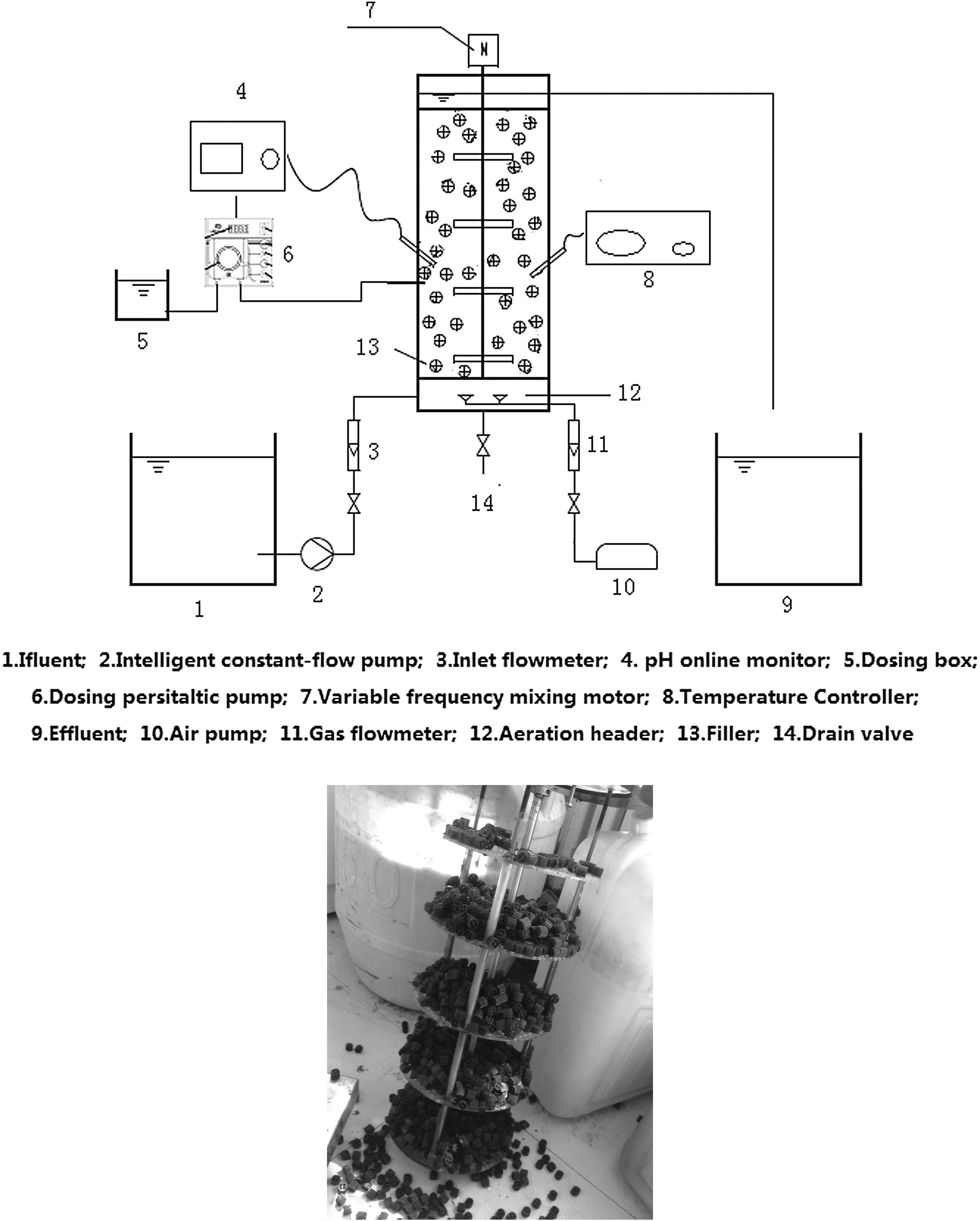
Schematic diagram of MBBR. MBBR, moving bed biofilm reactor.
After culturing biofilm, the experiment was carried out in reactor2, and the reactor was run in four stages. The first stage was operated with an HRT of 14 h, the influent was the oil shale retorting wastewater diluted 10 times with the simulated domestic sewage. The second stage was operated with an HRT of 20 h, the influent was the oil shale retorting wastewater diluted five times with the simulated domestic sewage. The third stage was operated with an HRT of 40 h, the influent was the oil shale retorting wastewater diluted twice with the simulated domestic sewage. During the fourth stage the HRT was prolonged to 60 h and the influent was the same as that of the third stage.
Synthetic wastewater and oil shale retorting wastewater
Simulated domestic wastewater and oil shale retorting wastewater were used in the experiment. NH4Cl and glucose were, respectively, used as nitrogen and carbon source in the synthetic wastewater. The synthetic wastewater also contained NaHCO3 (400 mg/L), CaCl2 (4 mg/L), KH2PO4 (40 mg/L), MgSO4·7H2O (40 mg/L), and trace elements: FeCl3 (375 mg/L), H3BO3 (37.5 mg/L), CuSO4·5H2O (7.5 mg/L), KI (45 mg/L), MnSO4·H2O (25.69 mg/L), ZnSO4·7H2O (30 mg/L), EDTA (2,500 mg/L), CoCl2·6H2O (50 mg/L), and Na2MoO4·2H2O (20 mg/L) (Wei et al., 2014a). The oil shale retorting wastewater was taken from shale oil plant (Fushun Mining Group Co., Ltd., Liaoning China) and the characteristics were as follows: pH 7–7.5; chemical oxygen demand 3,500–4,200 mg/L; NH4+-N 3,500–4,000 mg/L; total nitrogen (TN) 4,300–4,800 mg/L; oil 230–260 mg/L; volatile phenol 145–168 mg/L; total phosphorus (TP) 0.3–0.6 mg/L.
The oil shale retorting wastewater used in the experiment was pretreated by stripping method, which is one of the commonly used pretreatment methods. The stripping method, on the one hand, breaks the emulsified oil in the waste water by high temperature and strong aeration, and then removes the oil to achieve the purpose of degreasing. On the other hand, the concentration of ammonia in the wastewater is reduced was aerated to a suitable concentration for biological treatment. After pretreatment, the ammonia concentration in the wastewater was about 300 mg/L, the petroleum was about 3.44 mg/L, and other indicators were basically unchanged.
Inoculated sludge characteristics
The inoculated sludge was taken from aerobic tank of Shenyang Southern Sewage Treatment Plant. Sludge volume index (SVI), mixed liquor suspended solids (MLSS), and volatile suspended solids (VSS) of inoculated sludge were 67.72 mL/g, 4,430 mg/L, and 3,340 mg/L, respectively. The microscopic examination of activated sludge showed that the biofacies was abundant and contained vorticella, epistylis, and so on.
MOE simulation
AOB AMO and AOB HAO are the key enzymes of almost all AOBs and dominate the metabolic process of the whole bacteria (Junier et al., 2008; Nishigaya et al., 2016). Nir-Cu is the key enzyme of denitrifying bacteria, which dominates the metabolic process of denitrifying bacteria (Suzuki et al., 1999). The X-ray crystal structures of AMO and HAO were retrieved from the Research Collaboratory for Structural Bioinformatics (RCSB) Protein Data Bank (PDB) (Tocheva et al., 2004; Lawton et al., 2014; Maalcke et al., 2014). NXR is the key enzyme of NOB, but its crystal structure of X-ray has not been obtained at present. Because β-subunit is its main functional structure, we simulate its β-structure by Swiss-model (Guex et al., 2009; Biasini et al., 2014). The X-ray crystal structures of the AMO (PDB ID: 4O65), HAO (PDB ID: 4N4N), and Nir-Cu (PDB ID:1sjm) were all retrieved from the RCSB PDB (Tocheva et al., 2004; Lawton et al., 2014; Maalcke et al., 2014). The three-dimensional structure of NXRβ was simulated by Swiss-model (Protein Structure Bioinformatics Group, Swiss Institute of Bioinformatics Biozentrum, University of Basel Klingelbergstrasse) (Guex et al., 2009; Biasini et al., 2014). Molecular modeling of proteins with methanoic acid and hydrazine was performed on MOE platform. Protein and small organic molecules docking will produce a variety of binding methods, and by examining the number of bonds, distance, and energy to assess its comprehensive combination of tightness.
Scanning electron microscopy of biofilm
Microbial morphology and structure of the biofilm from reactors were investigated by scanning electron microscopy (SEM). Representative samples from the end of some experimental phases were collected from all reactors. Initially, a piece of the plastic carrier was cut carefully with a razor blade to keep the original biofilm structure. Furthermore, preparation of the sample was performed as follows: fixation with 2.5% glutaraldehyde at 4°C for 3 h and rinsed in 0.2 M phosphate buffered saline (pH 7.4) for three times. Then, the samples were dehydrated with series of ethanol (50%, 70%, 80%, 90%, and 100%). After rinsing two times with tert butyl alcohol the dewatered samples were dried in vacuum drying cabinet, and then the samples were gold coated by a sputter and then observed with SEM (ULTRA PLUS) (Luo et al., 2014).
High-throughput sequencing analysis
During the experiment the biofilm samples was taken for high-throughput sequencing analysis, which can obtain microbial community structure during different experiment stage. And different community structure was compared for discussing the effect of different experiment stage on biofilm microbial community.
Bacterial 16S ribosomal RNA (rRNA) genes were amplified from activated sludge samples by PCR (polymerase chain reaction) using TransGen AP221-02 reaction system (TransStart Fastpfu DNA Polymerase). PCR primer pairs were 338F (ACTCCTACGGGAGGCAGCAG) and 806R (GGACTACHVGGGTWTCTAAT) (Dennis et al., 2013). PCR conditions were set as follows: 95°C for 3 min, then 27 cycles of 95°C for 30 s, 55°C for 30 s, and 72°C for 45 s, finally 10 min at 72°C, 10°C until halted by user. Activated sludge samples were visualized in a 2% agarose gel after electrophoresis (Biswas et al., 2014; Huang et al., 2014). Then, the products were purified with a PCR production purification kit. PCR amplicons were then quantitatively checked by QuantiFluor™-ST (Promega) and sequencing was performed using the Illumina Miseq platform at Majorbio BioPharm Technology Co., Ltd. (Shanghai, China).
Before analysis, sequences were demultiplexed and quality filtered using USEARCH (version 7.1). Sets of sequences with at least 97% identified nucleotides were defined as an operational taxonomic unit (OTU), and chimeric sequences were identified and removed. The taxonomy of each 16S rRNA gene sequence was analyzed using RDP Classifier (http://rdp.cme.msu.edu) against the SILVA rRNA gene database using a confidence threshold of 70% (Song et al., 2017).
Analytical methods
To monitor the samples of influent and effluent of reactor, NH4+-N, NO2−-N, NO3−-N, MLSS, MLVSS, and SVI30 were analyzed using the standard methods (Chinese State Environmental Protection Administration, 2002). The pH values and DO concentrations were determined using a pH meter (FE20 pH meter; METTLER TOLEDO) and a DO meter (HQ30d DO meter; HACH Company), respectively.
Results and Discussion
MOE molecular simulation
According to the MOE molecular simulation results shown in Fig. 2, methanoic acid is easily associated with enzymes, because it is a small-molecule organic substance, which can be used as a carbon source for microbial growth (Elefsiniotis and Li, 2006), and the hydroxyl group on it that belongs to an active group can easily bind to various amino acid residues. We chose the case where methanoic acid had the strongest binding (the closest binding distance and the largest absolute value of binding energy) when binding with the four enzymes for comparison, and the results showed that the binding degree of each enzyme to formic acid should be in order of HAO > AMO > Nir > NXR. From the simulation point of view, in the presence of methanoic acid, AOB, and denitrifying bacteria would gradually increase and become dominant bacteria. However, hydrazine cannot bind to the four enzymes. Hydrazine is far away from the protease and cannot find the proper site binding to the enzyme. The reason for this may be the N-N structure of hydrazine is a relatively stable planar rigid structure that cannot be folded or converted into a suitable shape for docking with a protein when simulated. From this result, we speculated that hydrazine will not affect the functional metabolism of bacteria through binding to proteins, so the effect of hydrazine on shortcut nitrification may only be that hydrazine toxicity has a strong inhibitory effect on NOB as reported by Tomlinson et al. (2010).
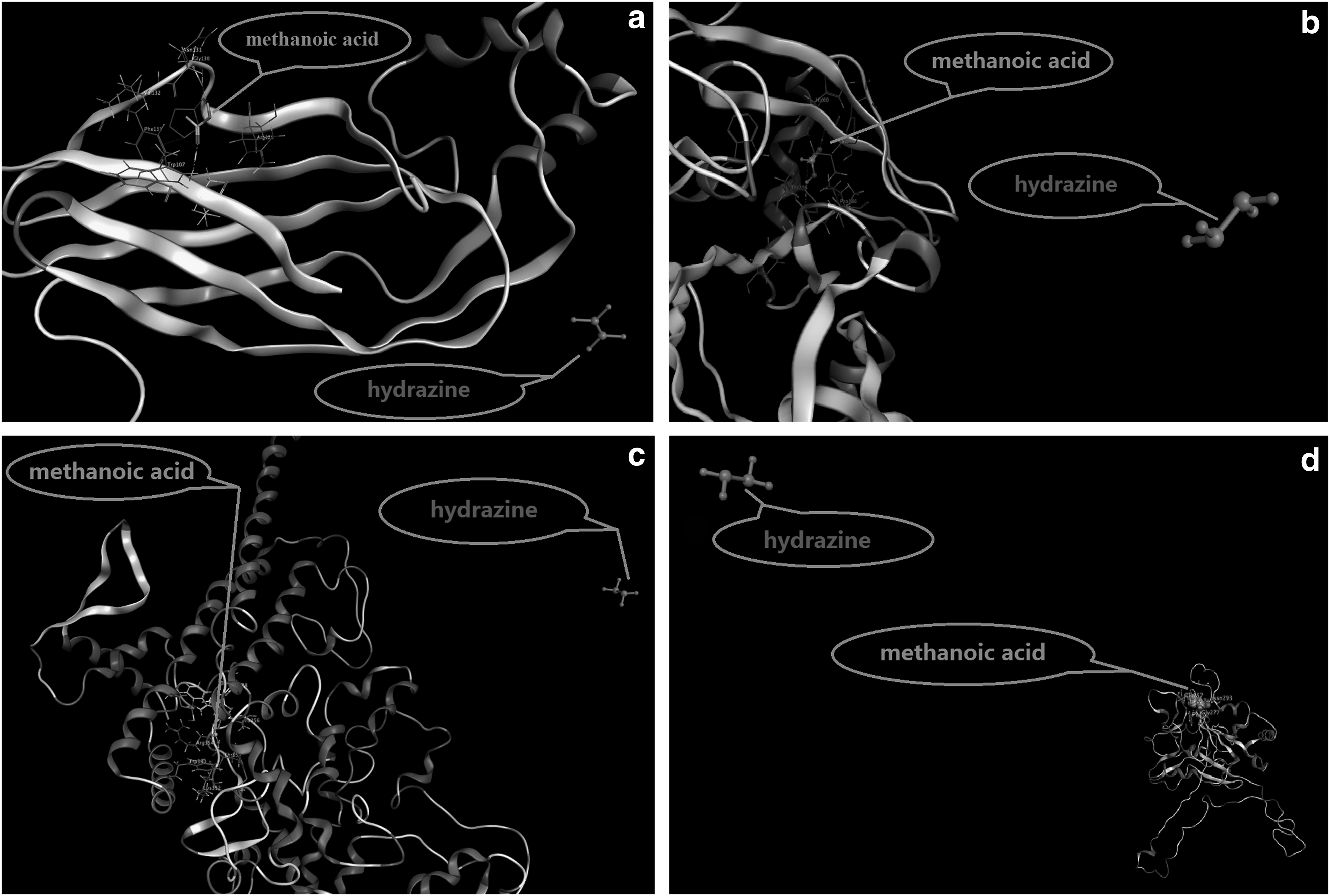
Diagram of 3D structure of methanoic acid and hydrazine binding to the key enzymes active groups acceptor.
Inhibitor dosing method
Shortcut nitrification can be obtained by selectively inhibiting or activating the activity and the growth of NOB and by providing growth advantages to AOB (Fang et al., 2018). According to the results of MOE simulations, the inhibition and activation mechanisms of methanoic acid and hydrazine on AOB and NOB were different. MOE simulation confirmed that methanoic acid could increase AOB activity and hydrazine could inhibit the activity and growth of NOB. In view of the differences in the inhibition mechanism of shortcut nitrification by methanoic acid and hydrazine, it was envisaged whether the combination of the two would have a better effect on shortcut nitrification. With simulated domestic wastewater as treatment object, a series of comparative experiments was conducted to investigate if the combination of the two inhibitors were more beneficial for shortcut nitrification. The experiment results confirmed that the combined use of methanoic acid and hydrazine was more conducive to shortcut nitrification and the best dosing method was methanoic acid-hydrazine2 (dosing 0.25 mL/L methanoic acid first, then at the intervals of 24 h dosing 7.5 mg/L hydrazine, and at intervals of 24 h dosing 7.5 mg/L hydrazine again, repeat the aforementioned dosing process at intervals of 24 h). Next, a further study would be conducted on the nitrogen removal of oil shale retorting wastewater using this combined inhibitor.
Starting up and acclimation
The quick discharge method was taken to make the biofilm formation and domestication was carried out in two ways. Reactor1 adopted simulated domestic wastewater to make the biofilm formation, and then uses the diluted oil shale retorting wastewater to domesticate. Continuous flow biofilm domestication process was conducted using diluted oil shale retorting wastewater in reactor2 to perform biofilm formation and domestication simultaneously.
Ammonia removal and nitrite accumulation during the start-up period in the two reactors are shown in Fig. 3. When the water was changed from simulated domestic wastewater to diluted oil shale retorting wastewater, the oil shale retorting wastewater had brought a great impact on reactor1. At the beginning, due to the shedding of some biofilms and the incompatibility of microorganisms to the influent water quality, the effluent ammonia was greatly increased. With the biofilm gradually started to acclimate to the influent, the ammonia removal efficiency showed an upward trend at the end of the experiment. Methanoic acid-hydrazine2 was dosed throughout the experiment of reactor1, so in the case of oil shale retorting wastewater impacting on the reactor it was still able to maintain a high nitrite accumulation efficiency, which implied a high activity of AOB by dosing methanoic acid—hydrazine2.

Ammonia removal and shortcut nitrification during the start-up period in reactor1 and reactor2 (reactor1—the first 20 days simulated domestic sewage was stably treated with an HRT of 8 h, the next 15 days the influent was changed to diluted oil shale retorting wastewater and HRT was prolonged to 14 h. Methanoic acid-hydrazine2 was dosed throughout the experiment; reactor2—the influent was diluted oil shale retorting wastewater throughout the experiment with an HRT of 14 h. Methanoic acid-hydrazine2 was dosed after running 20 days). HRT, hydraulic retention time.
After reactor2 has been operated for 20 days to form a stable biofilm, we began to dose methanoic acid-hydrazine2. The ammonia removal efficiency was >85% and tended to be stable after reactor2 had been running for 20 days, the effluent was mainly nitrate; however, by dosing methanoic acid-hydrazine2 the average nitrite accumulation efficiency was up to 97% and nitrate was no longer accumulated, which indicated that full nitrification–denitrification through nitrate turned to shortcut nitrification–denitrification through nitrite in the system (Wei et al., 2014b).
The operation of shortcut nitrification and denitrification and the change of nitrogen during oil shale retorting wastewater treatment
The change of nitrogen in reactor2 at each stage of the experiment is shown in Fig. 4. The fluctuation of effluent ammonia was very large at the beginning of each stage, and the ammonia removal efficiency decreased obviously (Fu et al., 2009). In the first stage, the effluent ammonia descended faster, indicating that the system acclimated to the water quickly, at the end of the first stage the ammonia removal efficiency reached 89%. The removal efficiency of ammonia was about 25% at the beginning of the second stage. Although the removal efficiency of ammonia was improved with the gradual adaptation of biofilm to the influent water, the ammonia removal efficiency was only about 55% at the end of the second stage. At the beginning of the third stage the fluctuation of the effluent ammonia was not large, and the removal efficiency dropped to about 40%, which may be the result of the enhanced adaptability to adapt to influent water through previous experiments. As the influent water of the fourth stage was the same as that of the third stage, with the experiment going on the effluent tended to be stable, and the average removal efficiency of ammonia reached about 85% when the system was stable. During the whole experiment, the accumulation efficiency of nitrite maintained >90%, which was almost not affected by the change of influent water quality.
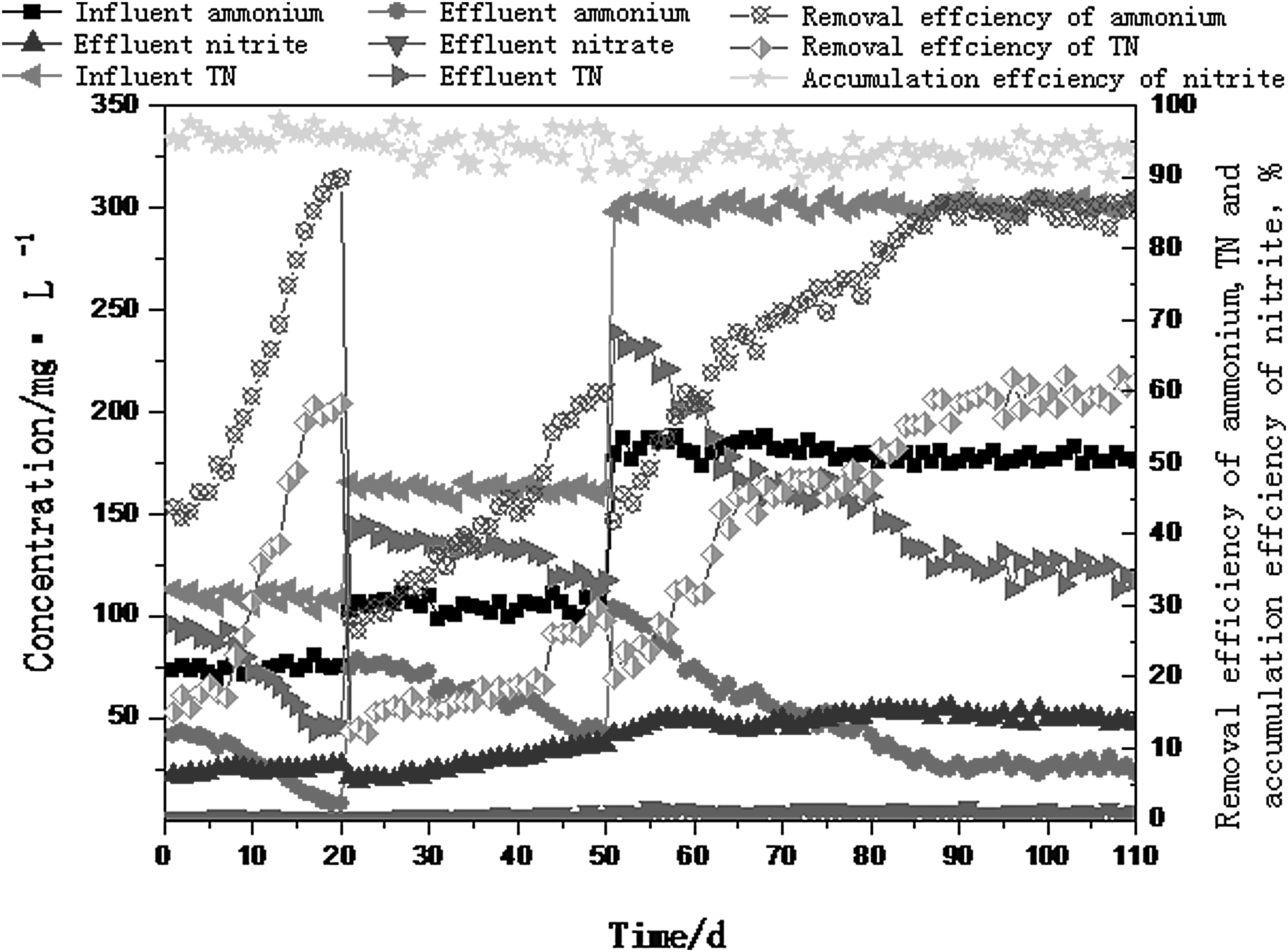
Nitrogen changes with time in reactor2 during different stages (stage 1—oil shale retorting wastewater diluted 10 times with an HRT of 14 h; stage 2—oil shale retorting wastewater diluted five times with an HRT of 20 h; stage 3—oil shale retorting wastewater diluted two times with an HRT of 40 h; stage 4—oil shale retorting wastewater diluted two times with an HRT of 60 h).
The change of TN is shown in Fig. 4. The total nitrogen removal efficiency was the lowest at the beginning of each stage, and then with the experiment going on the removal efficiency of TN showed the tendency to ascend (Fu et al., 2009). The total nitrogen removal efficiency was 47.5% at the end of the third stage. In the fourth stage, as the HRT was prolonged, at the end of the experiment, the average removal efficiency of total nitrogen reached 59.8%.
Stable operation of oil shale retorting wastewater treatment
The effect of layered MBBR on shortcut nitrification and denitrification was studied. The influent oil shale retorting wastewater diluted two times in this experiment. The experimental results showed that the average ammonia removal efficiency, average total nitrogen removal efficiency, and average nitrite accumulation efficiency of layered MBBR were 88.9%, 62.5%, and 96.5%, respectively, which were, respectively, 3.7, 3.1, and 2.6 percentage points higher than that of not layered MBBR. The experimental results showed that the layered MBBR also had a positive effect on nitrite accumulation.
Analysis of morphology and community
SEM allowed us to monitor the distribution of the biofilm on carriers in different experimental runs of moving-bed biofilm systems. As shown in Fig. 5, a slight change in biofilm morphology was observed between the two different experiment stages, which indicated that the biofilm has been adapted to the treatment of oil shale retorting wastewater. There were many bacilli and cocci, and thus, there were ample biofacies in the biofilms. However, it could not identify these bacteria by scanning electron microscope presentation alone. To investigate the bacteria community structure, high-throughput sequencing analysis was used.
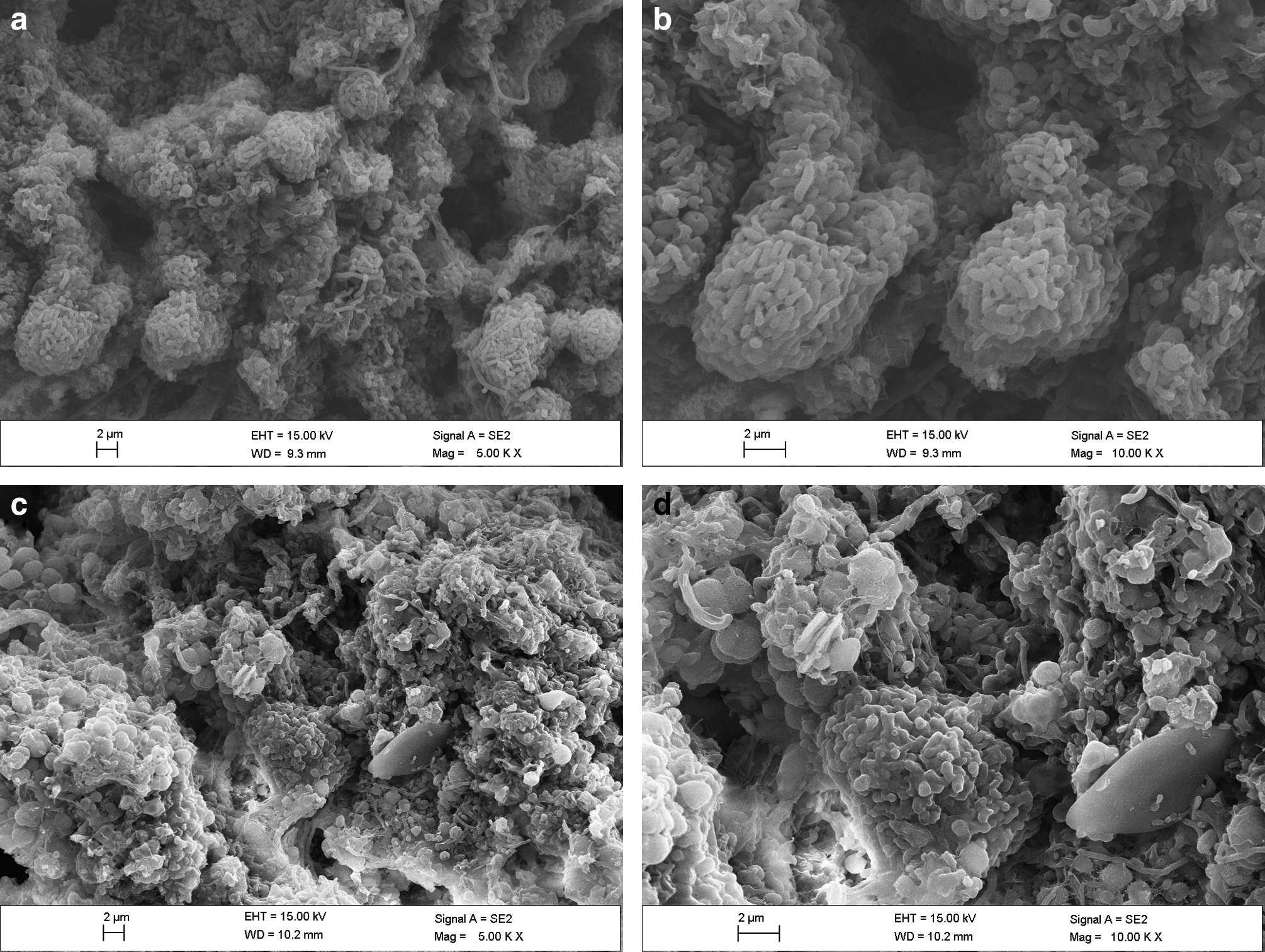
The SEM analysis of the microbial in the biofilm of reactor2 at different stages.
Biofilm samples were used for high-throughput sequencing analysis, respectively, at the end of the acclimation, the end of the second stage, and the end of the fourth stage. The samples were named Lnz0, Lnz2, and Lnz22, respectively. The microbial community structure of biofilm samples is shown in Fig. 6.
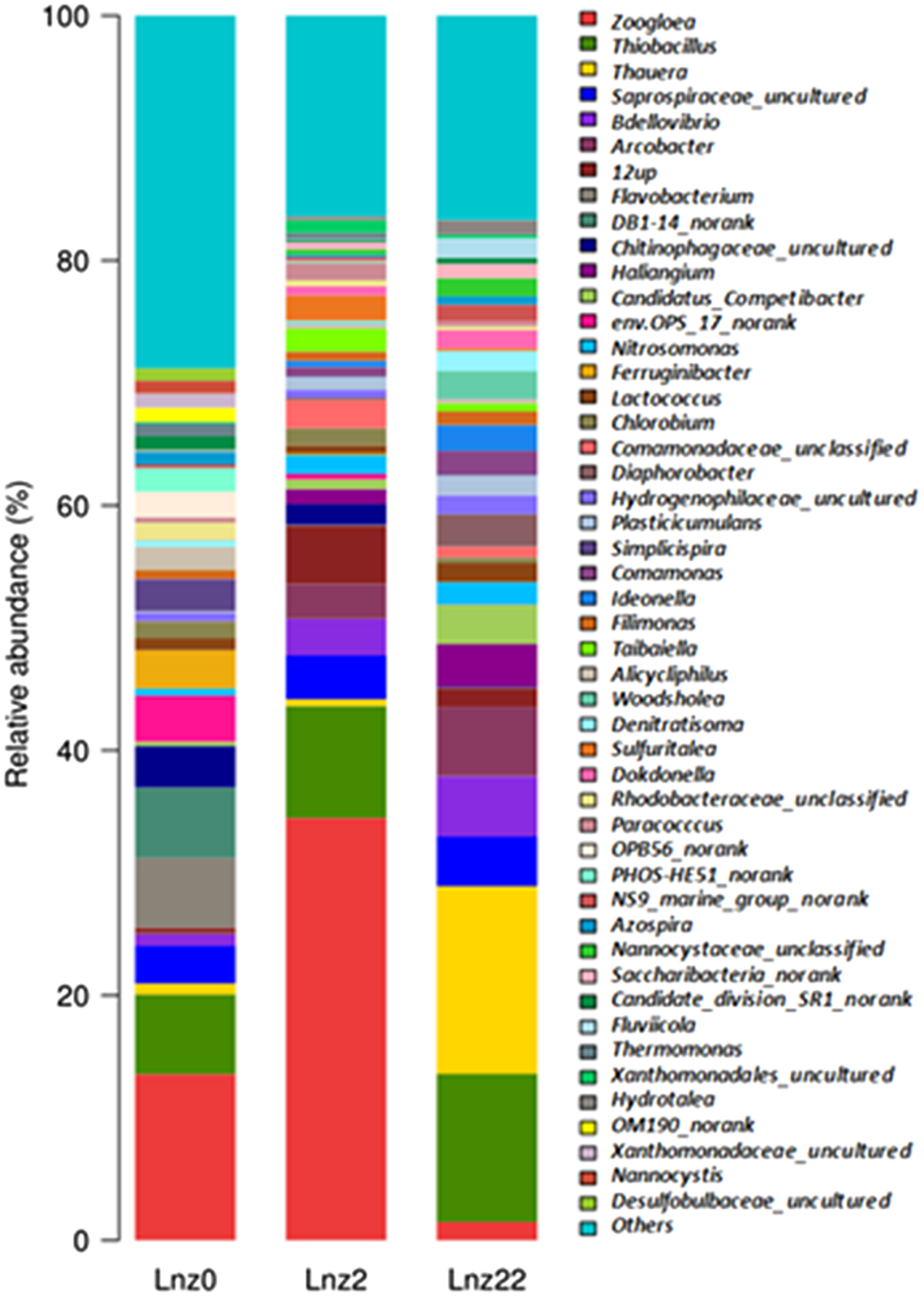
Analysis of microorganism community structure. Lnz0, end of acclimation; Lnz2, end of the second stage; Lnz22, end of the fourth stage.
It can be seen from the high-throughput analysis of biofilm samples, with the stable operation of each experimental stage, although the species abundance and diversity of microorganisms in the biofilm decreased gradually, the number of dominant bacteria did not decrease. Nitrosomonas, Thiobacillus, Parcubacteria_norank, Comamonas, Ferruginibacter, and Diaphorobacter were the dominant bacteria only at the end of the fourth stage. Nitrosomonas became the dominant bacteria in the system indicating a relatively high fraction of AOB in the reactor as reported by Park et al. (2010). Thauera and Hydrogenophilaceae_uncultured are the dominant bacteria in all the three biofilm samples, both of which are responsible for nitrogen removal as retorted by Chen et al. (2016; Wang et al., 2014), and Thauera has the ability to degrade aromatic contaminants (Ma et al., 2015), indicating that the system always has a strong ability to degrade nitrogen and organic matter.
Conclusions
In this research full nitrification–denitrification through nitrate shifted to shortcut nitrification–denitrification through nitrite successfully by dosing methanoic acid-hydrazine2 in MBBR. Shortcut nitrification and denitrification was also achieved and maintained when this combined inhibitor used for nitrogen removal of oil shale retorting wastewater. The accumulation efficiency of nitrite was kept >90% during the whole experiment, which was almost not affected by the change of influent water. Methanoic acid-hydrazine2 was considered to be responsible for the shortcut nitrification–denitrification process in this study. High-throughput analysis of biofilm samples showed the enrichment of AOB in the system, which was the same as the results of MOE simulation.
Footnotes
Acknowledgments
This study was supported by the Major Science and Technology Program for Water Pollution Control and Treatment (grant No. 2013ZX07202-010), Liaoning Provincial Natural Science Foundation Project (grant No. 201602683), National College Students Innovation and Entrepreneurship Training Program (grant No. 201810166006), and University Student Fund [grant No. L(A)2018030].
Author Disclosure Statement
No competing financial interests exist.