




Abstract
Abstract
Passivation leads to low leaching efficiency of heavy metals from electroplating sludge (EPS). The main objective of this study was to improve acid leaching of valuable metals from EPS by optimizing operational parameters (including process pH, dosage of Fe3+, and solution oxidation-reduction (redox) potential) and form an advanced hydrometallurgical process capable of high co-extraction efficiency, and compare the transformations of heavy metal speciation in feed sludge and leaching residue by using four-stage sequential Community Bureau of Reference. Results indicated that a low pH (≤2.2) was advantageous and accounted for most of the Cu, Zn, Cr, and Ni release. Acid leaching efficiency of the four metals was further increased (by 6.3%–9.1%) when 1 g/L Fe3+ was added, which mainly promoted the extraction of Cu, Zn, Cr, and Ni from residual and organic matter- and sulfide-bound fractions that resisted dissolution by H+. However, further increase in the initial Fe3+ dosage led to additional iron precipitation and inhibited the metal extraction. In addition, leaching of Cu, Zn, Cr, and Ni was more efficient when the solution redox potential was controlled at an appropriate level (≤500 mV). This study has important implication in enhancing the dissolution rate and final recovery of metals from the sludge, and the findings also have great significance in direct guidance for improving the recycling and re-utilization of electroplating waste.
Introduction
In China, approximately 15,000 electroplating enterprises discharge about 4 billion m3 of heavy metal-bearing wastewater annually (Li and Li, 2015). Several techniques have been routinely employed to treat this type of effluent, including neutralization, precipitation, electrochemical reduction, ion exchange, and adsorption (Liu et al., 2018b). However, these methods always generate a huge quantity of metal-bearing precipitation sludge that leads to secondary pollution. Approximately, 10 million tonnes of electroplating sludge (EPS) is produced annually in China. Due to the high concentration of toxic metals (such as Cu, Ni, Fe, Cr, Zn, and Ag), the EPS has been categorized as a typical hazardous waste in The National List of Hazardous Wastes in China (2016) (PRC, 2016a).
Because the composition of EPS is very complex and the components are highly toxic, several conventional treatment methods (such as landfilling, ocean dumping, incineration, or stabilization/solidification) cannot manage this sludge effectively (Ramachandran and Kikukawa, 2016; Tang et al., 2016; Vinter et al., 2016; Castaneda et al., 2017; Wang and Hu, 2018; Zhang et al., 2018). Therefore, it is essential to identify their forms and determine their concentrations as early as sewage sludge treatment stage. This approach allows an early response when permissible standards are exceeded and may help make new regulations facilitating the management of sewage sludge (Li et al., 2014).
Various methods have been developed over the last two decades involving both single and sequential extraction schemes. Although some schemes have received wide acceptance, none of them has evolved into a commonly accepted procedure (Qi et al., 2014). In this context, the sequential Community Bureau of Reference (BCR) started in 1987 a program to harmonize the methodology used in sequential extraction schemes for the determination of extractable trace elements in soils and sediments, and also to produce certified reference materials. After a thorough study of the state of the art, a single scheme was suggested and accepted in an intercomparative study (Yuan et al., 2016).
After the method of morphological analysis of heavy metals was established, recovery of metals from EPS is generally accomplished through hydrometallurgical routes, such as ammoniacal or acid leaching. Ammoniacal leaching allows the selective extraction of Cu or Ni without removing Cr and Fe species, but the overall leaching efficiency for valuable metals is low (Silva et al., 2005). Moreover, because ammonia is volatile, the leaching equipment must be strictly sealed. Generally, acidification of sludge involves addition of inorganic or organic acid into the waste followed by mixing. A higher release efficiency of metals can be obtained by using strong inorganic acids (such as H2SO4, HCl, or HNO3) rather than organic acids (such as citric acid and oxalic acid) (Siqueria and Carlos, 2007; Ozbas et al., 2013). During acidification of EPS, the initial pH is always controlled at 1.0–3.0; much of the heavy metal in the sludge will dissolve synchronously.
Previous studies have indicated that low pH and high pulp density of the sludge, high temperature, and long contact time improve metal extraction (Cordoba et al., 2008; Bavat and Sari, 2010; Li et al., 2010; Mirella et al., 2010; Nguyen et al., 2015). However, metals existing in the passive fractions such as sulfides and organic matter and residual states cannot be easily dissolved by acid (Nazari et al., 2011). The leached residuum containing high concentrations of toxic metals will be also categorized as a hazardous waste. Fe3+, belongs to a strong oxidant (0.77 V), which is capable of oxidizing most metals and minerals at atmospheric conditions, has been successfully used to extract copper minerals at both pilot and industrial scales (Daoud and Karamanev, 2014; Ballal et al., 2011; Yazici and Deveci, 2014). Notably, Fe3+ is unstable and easily precipitates as jarosite (i.e., AFe3(SO4)2(OH)6, in which A = K+, Na+, NH4+, or H3O+), the formation of which is closely related to the dissolved Fe3+ concentration and solution redox potential (Liu et al., 2018a, 2018b). To date, ferric leaching of EPS has received very limited interest and no detailed studies of this technique have been published. Moreover, the complex relationship among metal extraction, Fe3+ dosage, and solution redox potential is poorly understood.
Thus, the objective of this study was to examine the use of Fe3+ and develop a more effective acid leaching process for application to EPS. To obtain a high co-extraction efficiency of valuable metals (including Cu, Zn, Cr, and Ni), the acid leaching process was modified by adding Fe3+ and regulating the solution redox potential. Three approaches were investigated: (I) optimizing the operational conditions for maximum Cu, Zn, Cr, and Ni extraction efficiency, including process pH value, dosage of Fe3+, and solution redox potential; (II) investigating the chemical forms of the heavy metals in EPS and leaching residue by using the BCR sequential extraction procedure, aimed to assess the mobility of elements; and (III) understanding the mechanisms of improving Cu, Zn, Cr, and Ni co-extraction by the addition of Fe3+ and regulation of the solution redox potential. The results were expected to provide direct guidance for improving the recycling and re-utilization of electroplating waste.
Materials and Methods
Electroplating sludge
Samples of EPS were obtained from the Wuxi metal-plating industrial park in Jiangsu province (China). The dewatered EPS cake was first homogenized by milling, and then sieved to obtain a particle size of less than 200 mm (Van and Lee, 2015; Mohammad et al., 2018). The pH of dewatered EPS was measured after mixing the sludge with distilled water in the ratio 1:10. The moisture content of sludge was determined by the weight lost following overnight drying at 105°C. The organic matter content was determined as the weight lost during heating at 600°C, respectively, HJ 613–2011 (PRC, 2015) and HJ 765–2015 (PRC, 2016b). The resulting powder was digested in an HF–HNO3–HCl mixed solution, and afterward its elemental composition was determined using an inductively coupled plasma optical emission spectrometer (ICP–OES) (Mirella et al., 2010; PRC, 2016b).
Optimization of operational parameters in acid leaching processes
Three important operational parameters in the acid leaching system (bulk pH, initial Fe3+ concentration (dosage), and solution redox potential) were optimized for maximum Cu, Zn, Cr, and Ni co-extraction from the EPS. The bulk pH was adjusted to 2.0, 2.2, 2.5, 3.0, and 3.5 throughout the leaching process by continuously adding H2SO4 (ω = 98%); this identified the effect of bulk pH control on Cu, Zn, Cr, and Ni co-release yield. The initial Fe3+ concentration was set at 0, 1, 3, and 6 g/L to examine the effect of Fe3+ dosage at the initial stage on Cu, Zn, Cr, and Ni co-extraction efficiency. The solution redox potential was set at 380, 450, 480, 500, and 550 mV by adding Fe2+ (FeSO4·7H2O) and H2O2 (ω = 30%); this highlighted the influence of solution redox potential on mobilization of Cu, Zn, Cr, and Ni.
All acid leaching experiments were performed in 1 L glass stirred tank reactors (working volume of 0.5 L) mixed at 400 rpm, at room temperature (30°C ± 0.5°C), and pulp density 8% (w/v). Leaching experiments lasted for 24 h. Sterile distilled water was added into the reactor through a peristaltic pump to compensate for evaporation losses. Samples were withdrawn at regular intervals and analyzed for determination of released Cu, Zn, Cr, and Ni in solution. The leached solid residues were filtered and analyzed to determine the bound forms of heavy metals and predict their potential transfers.
Analytical methods
Dissolved Cu, Ni, Zn, Cr, and total Fe concentrations in the leachates were determined using an inductively coupled plasma optical emission spectrometer (ICP–OES, Optima 5300 DV; PerkinElmer). Ferrous iron concentration in solution was analyzed by titration with potassium dichromate (Tao and Zheng, 2009), while ferric iron concentration was determined as the difference between the concentrations of total iron and ferrous iron. Both pH and redox potential were measured directly in the pulp of the sludge using a pH S–3C acid meter and a Pt electrode in reference to an Ag/AgCl electrode, respectively (INESA Scientific Instrument Co. Ltd, China). The leaching efficiency was calculated using Equation (1).
Note: y is leaching efficiency, %; c is concentration of heavy metals in leachate, g/L; V is working volume, L; m is total wet sludge weight, g; n is moisture content, %; and M is mass fraction of heavy metals in raw sludge, %.
In this experiment, Equation (1) can be simplified to Equation (2).
Note: y is leaching efficiency, %; c is concentration of heavy metals in leachate, g/L; and M is mass fraction of heavy metals in raw sludge, %.
The leached solid residues were characterized by X–ray diffraction (XRD, Smartlab 9KW, KAZUMA, Japan) analysis. Fractions of heavy metals present in the seed sludge or leaching residues were carried out by a modified BCR four-stage sequential extraction procedure. The successive extractions were conducted in a mechanical shaker at room temperature, 280 rpm and 16 h. Also, separation was done by centrifugation at 12,000 rpm for 20 min to minimize loss of sludge. The details of extraction steps are as described by Malwina et al. (2016) and Pedra et al. (2016); according to this method, metal forms in sludge were categorized into four fractions, including acid-soluble fraction (0.11 M acetic acid), iron/manganese oxyhydroxides (0.5 M hydroxylamine hydrochloride), organic matter-/sulfide-bound fraction (8.8 M hydrogen peroxide; 1.0 M ammonium acetate), and residual fraction (HCl-HNO3, v/v = 3:1). The heavy metals were determined in the water extracts by ICP–OES.
Results and Discussion
Physical-chemical characteristics of EPS
Some physical-chemical characteristics of the dewatered EPS sample are presented in Table 1. The sludge mostly contained Cu (1.48%), Zn (6.66%), Cr (15.5%), Ni (0.85%), Fe (4.35%), and Ca (11.19%). The concentrations of the hazardous heavy metals in the sludge significantly exceeded the risk control standard for contamination of soil on agricultural land and development land in China, respectively, GB 15618–2018 (PRC, 2018a) and GB 36600–2018 (PRC, 2018b). In addition, the moisture content and organic matter content were lower than for typical wastewater treatment sludge. The sludge samples contained traces of essential elements (Na, P, and K).
Physical-Chemical Characteristics of Dewatered Electroplating Sludge
water: sludge = 10:1.
The mineral phase of the raw dewatered EPS that was analyzed by XRD (Fig. 1A) indicated that only CaSO4.2H2O existed in crystalline form; all other substances (including Cu, Zn, Cr, and Ni compounds) existed as amorphous matter. The amorphous matter might be linked to the formation conditions of EPS, that is, rapid neutralization or precipitation under room temperature and atmospheric pressure (Davidson et al., 1998). The distribution patterns of Cu, Zn, Cr, Ni, and Fe in the raw EPS (as identified using the modified BCR three-stage sequential extraction procedure) are illustrated in Fig. 1B. The patterns revealed that Cu, Zn, Cr, and Ni were distributed in all four fractions. However, the dominant portions (in total about 97%) of Zn and Ni were in the acid-soluble fraction (10.9%–27.8%), Fe and Mn oxide-bound fraction (36.0%–40.2%), and residual fraction (29.1%–50.2%). The dominant phases (exceeding 92%) of Cu and Cr were in the Fe and Mn oxide-bound fraction (47.0%–53.9%) and residual fraction (37.9%–45.0%); the least amounts (3.0%–5.1%) were present in the organic matter- and sulfide-bound fraction.
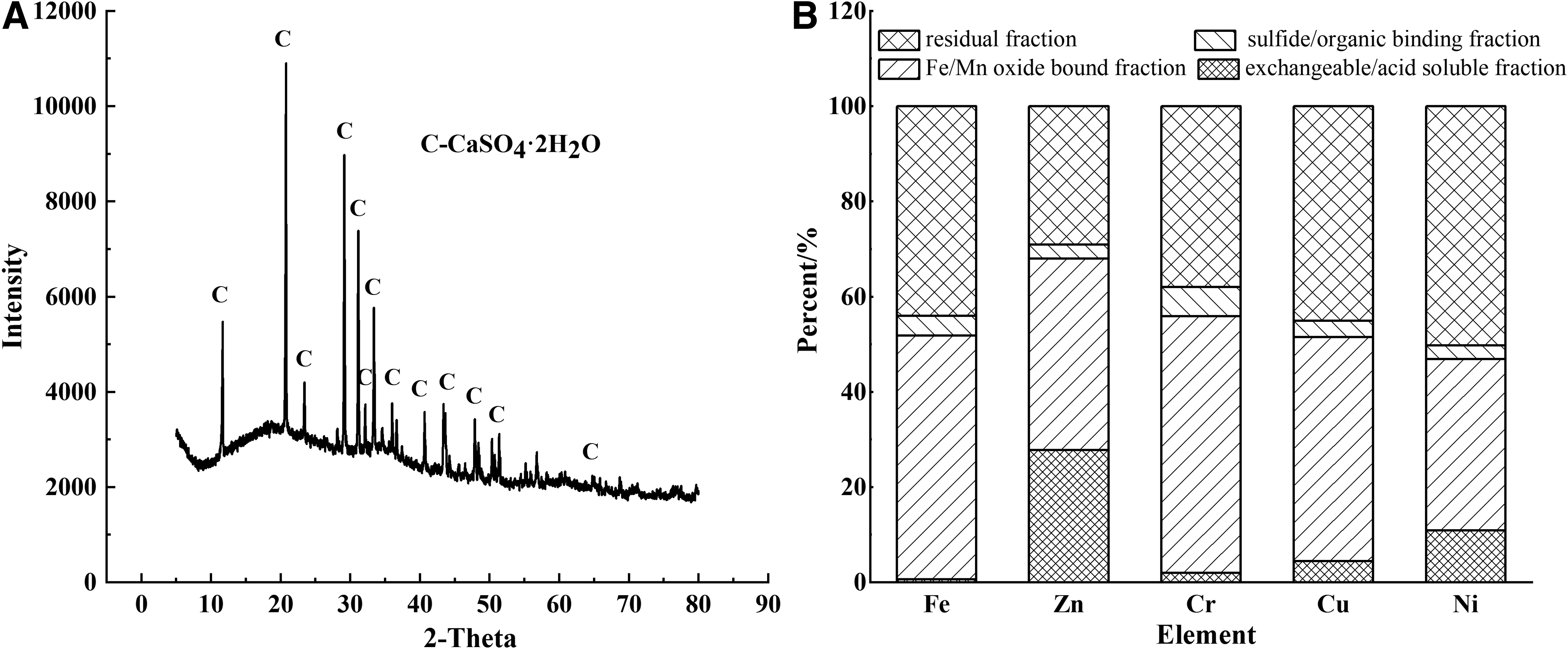
X-ray diffraction patterns
The distribution of metals in the sludge after leaching not only showed the stability and bioavailability of metals that remained in the sludge but also represented the leaching efficiency of the process (Malwina et al., 2016). Generally, metals in the acid-soluble fraction (consisting of adsorbed ions on ion-exchangeable phases, and those associated with carbonate minerals and poorly crystallized minerals) and in the iron and manganese oxide-bound fraction are considered to be more mobile, dangerous, and bioavailable than other forms. In contrast, metals in the sulfide- and organic matter-bound fraction and residual fraction (associated with stable minerals such as silicates and crystallized oxides) are considered to have lower mobility and not to be bioavailable (Silva et al., 2005; Malwina et al., 2016). The sequential extraction (Fig. 1B) showed that high concentrations and proportions (46.9%–68.0%) of Cu, Zn, Cr, and Ni existed in the acid-soluble fraction and iron and manganese oxide-bound fraction, indicating that the dewatered EPS was not suitable for direct landfilling as a hazardous waste (Yang et al., 2016). In addition, the high proportion of Cu, Zn, Cr, and Ni in the residual fraction (32.0%–53.1%) showed that Cu, Zn, Cr, and Ni in the sludge might be difficult to fully extract by acid leaching alone.
Effect of bulk pH on multi-metal extraction during acid leaching
The impact of bulk pH on acid leaching was evaluated at pH of 2.0, 2.2, 2.5, 3.0, and 3.5. Figure 2 shows that leaching efficiencies and removal of Cu, Zn, Cr, and Ni increased obviously as pH decreased, owing to the rapid reaction between the high concentration of H+ and metals. The dissolution of Cu, Zn, Cr, and Ni increased quickly within the first 4 h of the experiment, and reached a relatively steady state when the bulk pH was regulated at ≤2.2. At pH ≥2.5, the Cu, Zn, Cr, and Ni dissolution were slower and the time required for the four heavy metals to reach stable release was about 9 h. As the pH declined from 3.5 to 2.0, the leaching efficiencies after 24-h leaching increased from 33.4% to 78.5% (Cu), from 64.8% to 87.2% (Zn), from 10.7% to 89.7% (Cr), and from 36.5% to 69.3% (Ni).

Variations of Cu extraction
Figures 3A and B show the changes in the concentrations of dissolved total iron and ferric iron over time. Coincident with the pH decline was an increase in the leaching rate of total iron (Fig. 3A). In comparison to leaching systems at pH ≥2.5 (in which the maximum dissolved total iron concentration was <0.6 g/L), the total iron concentrations in solution at pH of 2.2 and 2.0 were higher (1.2–2.2 g/L) (Fig. 3A). Moreover, the amount of Fe3+ was almost equal to that of total iron (Fig. 3A, B) and the Fe2+ concentration was less than 0.5 g/L in all experimental systems. As indicated by the trend of the Fe3+/Fe2+ ratio, higher solution redox potential was found at lower pH (Fig. 3C). In the leaching process, H+ consumption was caused by the direct reaction of these ions with substances in the sludge. The high level of acidity not only improved the leaching kinetics of metals (Fig. 2) but also increased the acid consumption, as shown in Fig. 3D. To gain the higher metal dissolution rate, a total of about 0.7 g of acid per gram of dry sludge over 24 h was added at the pH of 2.0 and 2.2.

Concentration variations of dissolved total iron
These results confirmed that acid dissolution accounted for most of the metal extraction from the EPS (Fernandez et al., 2017). Moreover, the low process pH (2.2 or 2.0) was advantageous for extracting the four heavy metals examined in the study. However, Fig. 4 shows a mass of metals remained in the sludge following leaching (approximately, Cu: 5.5–6.4 mg/g, Zn: 9.9–10.4 mg/g, Cr: 12.8–19.5 mg/g, and Ni: 3.8–4.2 mg/g), even under the low pH condition. Further analysis of heavy metal speciation using a modified BCR method indicated that the dominant portions of Cu, Zn, Cr, and Ni in the leached sludge existed in the residual fraction. Therefore, H+ favored the release of Cu, Zn, Cr, and Ni that existed in the acid-soluble fraction and Fe and Mn oxide-bound fraction, but could not dissolve metals in the residual fraction and organic matter and sulfide-bound fraction. The BCR results also identified the refractory degree of sludge to leaching. To increase the dissolution efficiency for the four heavy metals, the surface of sludge particles had to be activated by the addition of a catalyst, such as Fe3+.

Heavy metal speciation in the raw dewatered electroplating sludge and leached residues at pH of 2.0 and 2.2: Cu
Effect of Fe3+ addition on multi-metal extraction during acid leaching
Concentrated Fe2(SO4)3 solution was added into the leaching system at the beginning of each experiment to achieve final Fe3+ concentrations of 0, 1, 3, and 6 g/L. The extraction of Cu, Zn, Cr, and Ni at the different Fe3+ dosages in systems operated at pH 2.0 and pH 2.2 is presented in Fig. 5. As shown, the initial Fe3+ dosage (i.e., concentration) at the two-process pH (2.0 and 2.2) displayed a different influence on Cu, Zn, Cr, and Ni release. At pH 2.2, Fe3+ addition did not improve the dissolution of any of the four heavy metals (Fig. 5A–D). Moreover, the highest Fe3+ dosage (6 g/L) inhibited Cu, Zn, Cr, and Ni release from the sludge. At process pH 2.0, a complex influence on metal mobilization occurred, which depended on the presence or absence of Fe3+ (Fig. 5a–d). As shown in Fig. 5A–D, the leaching efficiencies and removals of Cu, Zn, Cr, and Ni were remarkably improved when the initial Fe3+ dosage increased from 0 g/L to 1 g/L. However, further improvement in extraction did not occur when the Fe3+ dosage increased further from 1 g/L to 6 g/L.

Variations of Cu, Zn, Cr, and Ni with time at pH 2.2
On the contrary, both the higher initial Fe3+ concentrations (3 and 6 g/L) were inhibitive to metal dissolution. The maximum metal extractions using 1 g/L Fe3+ were 87.4% (Cu), 96.3% (Zn), 97.4% (Cr), and 75.6% (Ni), and these were greater by 8.9%, 9.1%, 7.7%, and 6.3%, respectively, in comparison to removals in the control system without Fe3+ addition (0 g/L) and by 9.6%, 16.7%, 8.5%, and 11.4%, respectively, in comparison to the removals at Fe3+ dosage of 6 g/L. Hence, the enhanced acid leaching was optimized at 1 g/L initial Fe3+ concentration and pH 2.0. Figure 5 also indicates that leaching of Zn and Cr was more efficient than leaching of Cu and Ni, both of which were difficult to leach. Metal recovery is related to metal speciation, and the lower the proportion of a metal in the residual fraction and organic matter- and sulfide-bound fraction is, the easier it is for the metal to release and the higher is the leaching efficiency. Thus, Cu and Ni may be more strongly bound to the solid particles than Zn and Cr, as shown in Fig. 1B.
Variations in the concentrations of total iron and Fe3+ in solution with time at pH 2.2 and pH 2.0 are shown in Fig. 6A and B and in Fig. 6a and b, respectively. Fe3+ accounted for more than 80% of the total iron in all tests and its concentration in solution was significantly higher compared with Fe2+ (0.1 g/L–0.3 g/L, data not shown). Concentrations of total iron and Fe3+ at pH 2.0 were higher than those at pH 2.2. As indicated by the high Fe3+/Fe2+ ratio and described by the Nernst equation (Amir et al., 2005), the redox potential curves showed that the redox potential values during leaching exceeded 500 mV (vs. Pt and Ag/AgCl). Furthermore, the higher the initial Fe3+ dosage was, the higher was the solution redox potential (Fig. 6C, c). According to previous reports (Amir et al., 2005; Daond and Karamaney, 2006; Nazari et al., 2011), Fe3+ was easily converted into iron-bearing precipitate such as jarosite (3Fe3+ + X+ + 2HSO4− + 6H2O → XFe3(SO4)2(OH)6 + 8H+, in which A = K+, Na+, NH4+ or H3O+) when the redox potential exceeded a “critical value” (between 400 and 500 mV vs. Pt and Ag/AgCl). Iron precipitation released H+ after which a reduction of acid consumption was observed as Fe3+ dosage increased (Fig. 6D, d). However, jarosite formation caused both the removal of dissolved Fe3+ and the surface passivation of sludge particles. Passivation prevented transportation of both electrons and ion species between the surface of sludge particles and the leaching agents, such as H+ and Fe3+.

Variations of total iron concentration, Fe3+ concentration, solution potential, and acid consumption with time at pH 2.2
In addition, the co-precipitation of dissolved metal ions with jarosite might have occurred (Knop, 2002; Ballal et al., 2011; Zeng et al., 2010), and this phenomenon played a more important role in controlling the behavior of CrO4 than AsO4 in acid mine drainage (Kim, 2018). Except redox potential, Fe3+ stabilization was related to solution pH (Siqueira and Carlos, 2007). Hence, the reduced efficiencies of leaching Cu, Zn, Cr, and Ni after Fe3+ addition at pH 2.2 (Fig. 5A–D) could probably be attributed to the mass of Fe3+ that precipitated, as confirmed by the decreased Fe3+ concentration in solution (Fig. 6A, B).
The enhanced metal extraction with increasing Fe3+ dosage from 0 g/L to 1 g/L at pH 2.0 (Fig. 5a–d) indicated that the added ferric iron played an important role in the leaching process and participated in the metal dissolution from sludge. Analysis of heavy metal speciation in the leaching residues using a modified BCR four-stage sequential extraction procedure (Fig. 7) showed that Fe3+ addition (1 g/L) enhanced the release of Cu, Zn, Cr, and Ni that existed in the residual fraction and in the organic matter- and sulfide-bound fraction (compared to acid leaching without Fe3+ addition). These results led to the conclusion that Fe3+ mainly enhanced the release of the four heavy metals from the passive fractions. Figure 6a and b show that the maximum ferric concentration in solution increased from 2.1 g/L to 3.4 g/L when the Fe3+ dosage at the initial stage increased from 0 g/L to 1 g/L. The positive effect of the increased Fe3+ concentration in the acid leaching process (as dissolved iron from 2.1 g/L to 3.4 g/L) suggested that the process was at least partially controlled by the diffusion of Fe3+ toward the surface of sludge particles. However, improvement in metal extraction with further increasing Fe3+ dosage (3 and 6 g/L) was negligible, and even a notable decrease in metal dissolution occurred (Fig. 5). Dutrizac and Sunyer (2012) pointed out that the amount of jarosite formed increased as the ferric ion concentration increased. Cordoba et al. (2008) also indicated that an increase in ferric ion concentration provokes a “chemical instability” in the system that favors Fe3+ precipitation. In this study, Fe3+ precipitation as jarosite at the high Fe3+ concentration coated the sludge particles and then inhibited the diffusion of Fe3+ and H+ toward the surface of the particles, which might explain the poor metal extraction obtained at high Fe3+ dosages (3 and 6 g/L). XRD analysis indicated that a mass of jarosite existed in the leached solid residues at pH 2.0 and Fe3+ 6 g/L (Fig. 8).
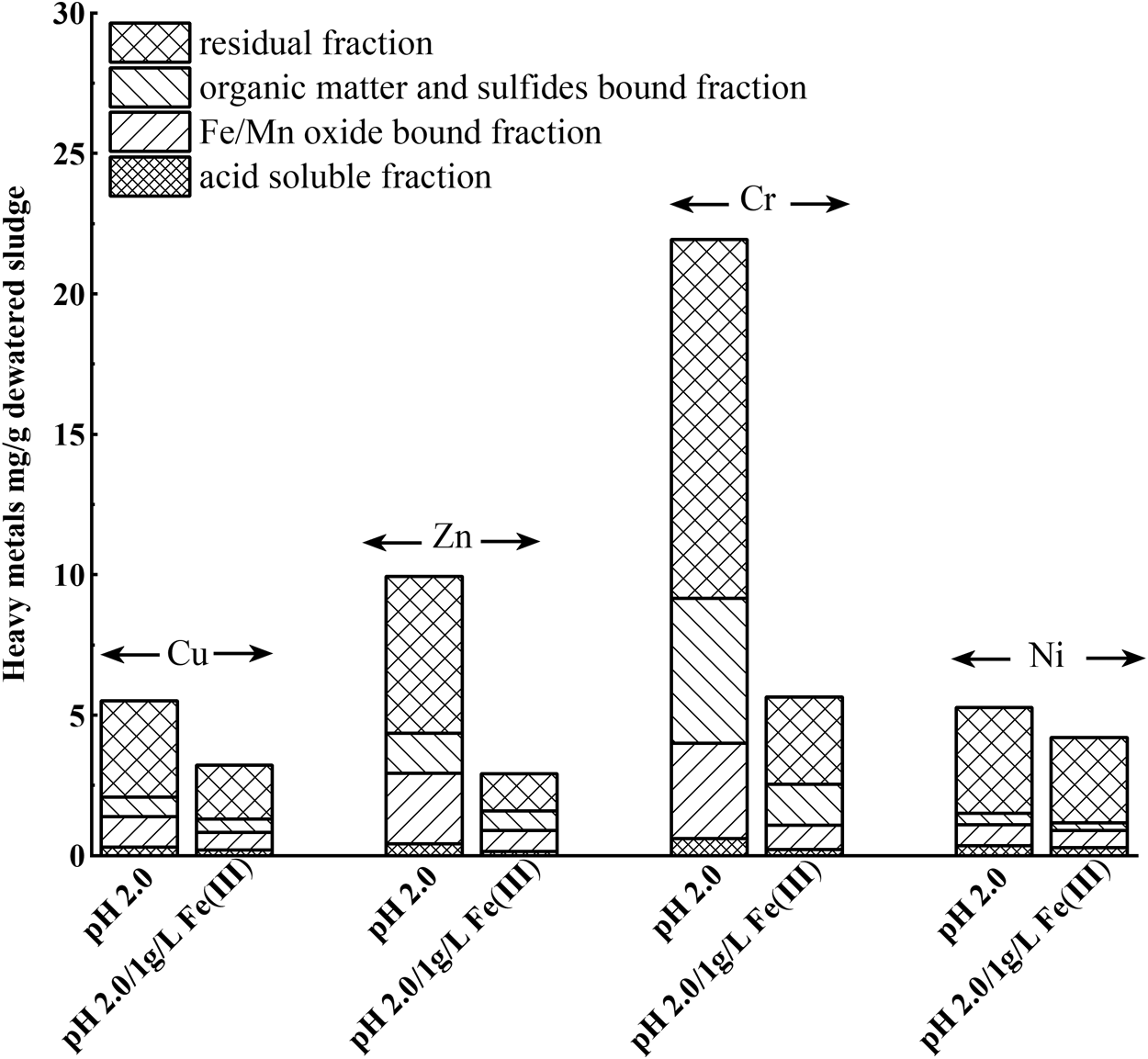
Heavy metal speciation in leached residues using 0 and 1 g/L Fe3+ at pH 2.0.

XRD images of the leached solid residues from the tests at pH 2.0 and Fe3+ 6g/L
In conclusion, the addition of Fe3+ for improving acid leaching of heavy metals from EPS was feasible, but the added Fe3+ enhanced metal dissolution only when a certain concentration of Fe3+ was added at the low pH of 2.0. In addition, these results also demonstrated that controlling the process pH at a relatively low value was not only favorable to metal leaching but also important for maintaining Fe3+ in the soluble state.
Effect of solution redox potential on multi-metal extraction during acid leaching
Different redox potentials of solutions (380, 450, 480, 500, and 550 mV vs. Pt and Ag/AgCl) were obtained by mixing ferrous sulfate and H2O2, while keeping initial Fe2+ concentration constant at 6 g/L. The extractions of Cu, Ni, Zn, and Cr with time in the different experiments are shown in Fig. 9.
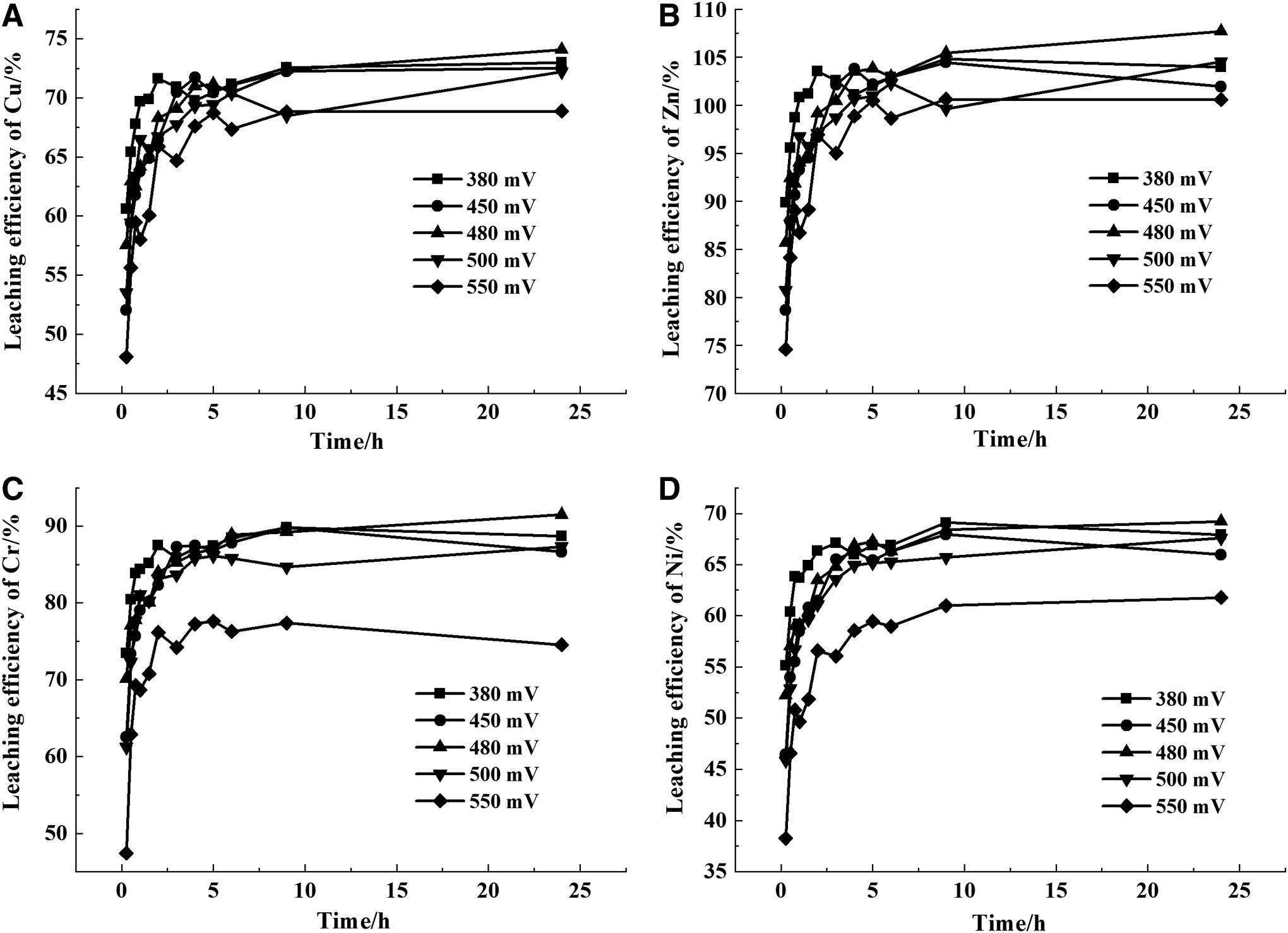
Effect of redox potential on extraction of Cu
The effect of the process redox potential on leaching was very pronounced (Fig. 9). The low redox potential ranging from 380 mV to 500 mV (vs. Pt and Ag/AgCl) had no effect on any of the four heavy metals. However, under higher oxidizing conditions (potential >500 mV), Cu, Zn, Cr, and Ni extractions were lower than those at lower redox potentials (potential ≤500 mV).
These results are consistent with previous findings that redox potentials higher than a “critical” value (between 400 and 500 mV) favor Fe3+ precipitation as jarosite and the subsequent passivation of sludge (Gan et al., 2017). Moreover, the higher the redox potential of the leaching solution than the “critical” value, the faster Fe3+ will precipitate. XRD analyses (Fig. 10) of that leached residue indicated an enrichment of jarosite at high redox potential of the solution. Karimian et al. (2017) pointed out that jarosite may undergo reductive dissolution when subject to reducing conditions, thereby releasing heave metals and Fe2+ coincident with a rise in pH, and these conditions can also trigger the Fe2+-induced transformation of jarosite to more stable Fe(III) minerals. Thus, the decrease in metal extraction was related to higher iron precipitation throughout the entire leaching process at high, rather than at low, redox potentials (Fig. 11B). At low redox potentials, an initial stage of rapid leaching kinetics was followed by a period of very slow kinetics (Fig. 9), which might have been due to the precipitation of iron and the formation of jarosite when Fe3+ concentration in solution was high (4.0–7.5 g/L, Fig. 11B).
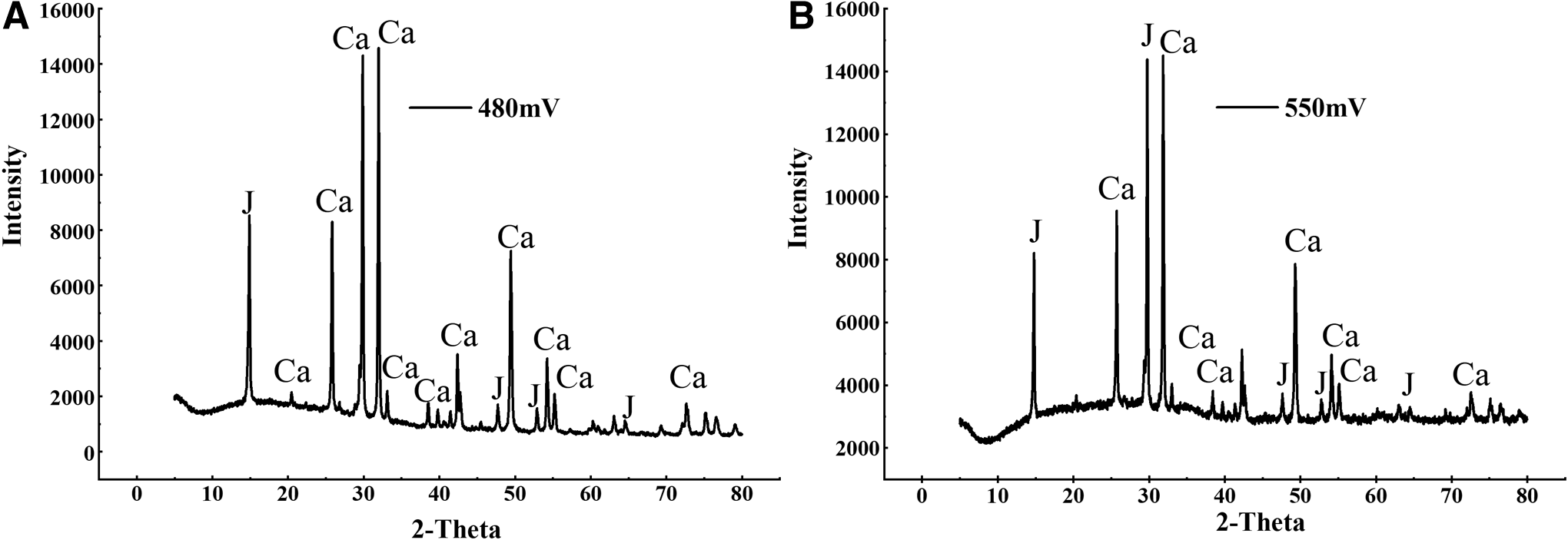
XRD images of leaching solid residues from tests with solution potential of 480 mV
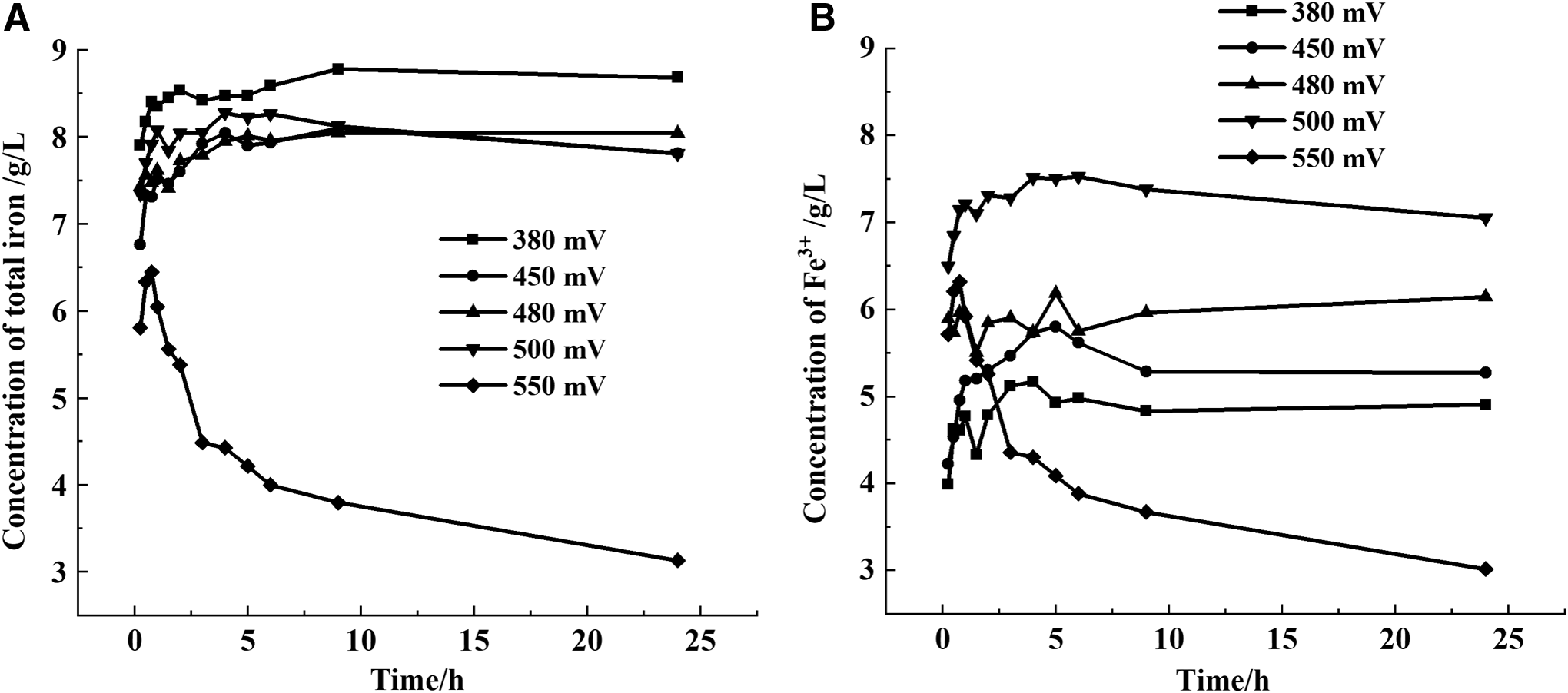
Variations of total iron concentration
In addition, the low reactivity of the surface of sludge particles was related to a mass of metals in the residual fraction and organic matter- and sulfide-bound fraction in the leached residues (Fig. 12). The proportion of metals in these two fractions accounted for 56.6%–81.3% of the total amount of metals in the residuum (Fig. 12). These results suggested that when leaching under low redox potential, the acid-soluble and iron/manganese oxyhydroxides fractions of heavy metals were significantly decreased more than 22.5% compared to seed sludge (Fig. 1B), which had the strongest bioavailability and mobility, while the organic matter-/sulfide-bound and residual fractions presented an increasing trend in Fig. 12 (Zn: 56.6%, Cr: 81.3%, Cu: 73.7%, and Ni: 75.6%). This phenomenon indicated that a reasonable redox potential to EPS could promote more mobile metals transform into stably fractions and reduce the toxicity of heavy metals to organisms (Dutrizac and Sunyer, 2012).
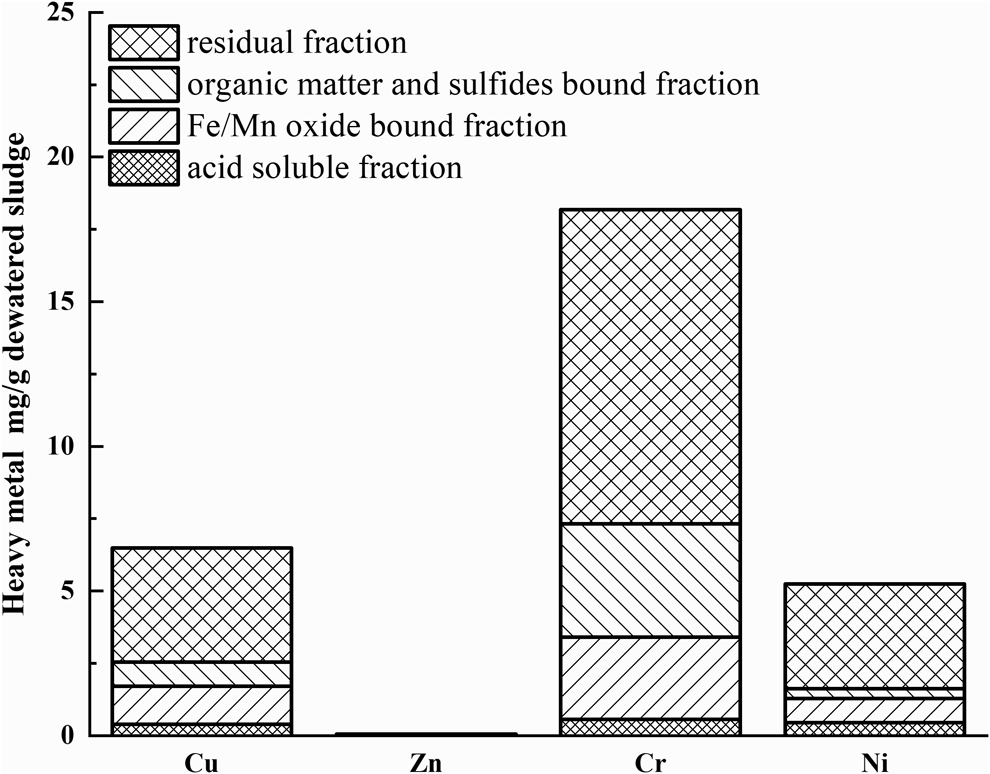
Heavy metal speciation in leaching residuum after 24-h leaching in the case of redox potential at 480 mV.
Conclusions and Prospects
EPS contains a great number of toxic and valuable metals, such as Cu, Zn, Cr, and Ni. From both environmental impact and resource conservation, metal removal and recovery of these metallic species from EPS are desirable. This study investigated the effects of processing pH value, ferric addition, and redox potential on Cu, Zn, Cr, and Ni co-extraction from EPS and evaluated the relationship between metal forms and acid leaching process. Continuously, we plan to utilize the less toxic leaching residual as a raw material, further dissolve heavy metals by bioleaching, and then recover valuable metals from leachate by electrowinning, precipitation, and extraction (Daoud and Karamanev, 2014; Ahmadi et al., 2011; Malwina et al., 2016). The prominent results obtained in this study are summarized as follows:
Generally, the process pH had a significant influence on Cu, Zn, Cr, and Ni dissolution. The high acidic condition (pH ≤2.2) was advantageous for the release of tested metals in the acid-soluble and Fe/Mn oxide-bound fractions, while a mass of metals in the residual and organic matter-/sulfide-bound fractions was hard to dissolve. Improvement in Cu, Zn, Cr and Ni extraction was accomplished by an initial addition of Fe3+ (1 g/L) at a process pH of 2.0. A certain concentration of Fe3+ added remarkably enhanced the release of metals in the residual and organic matter-/sulfide-bound fractions. Moreover, the redox potential is a key factor in the leaching of EPS. A high potential (>500 mV, vs. Pt, Ag/AgCl) during the leaching process favored Fe3+ precipitation as jarosite and provokes rapid passivation of EPS.
Footnotes
Acknowledgments
This work was supported by the Jiangsu Postdoctoral Science Foundation (1701136B), China Postdoctoral Science Foundation (2018M632298), and University Natural Science Research Project of Jiangsu Province (18KJB450001).
Author Disclosure Statement
The authors declare no conflict of interests.