




Abstract
A magnetic Fe-Mn-Y tri-metal composite served as an adsorbent for the arsenate [As(V)] removal, and it was synthesized by hydro-thermal synthesis for the first time. The adsorbent was further characterized by field emission scanning electron microscopy with an energy-dispersive X-ray spectrometer, vibrating sample magnetometer, Fourier transform infrared spectroscopy (FTIR), and X-ray photoelectron spectroscopy (XPS). The effect of solution chemistry, including different pH, different initial As(V) concentrations, as well as different coexisting ions on As(V) removal, was investigated. The maximum adsorption capacity of As(V) (135 mg/g) was obtained at pH 4.00. The adsorption isotherm was better fitted by Langmuir model, and the adsorption kinetics was well described by the pseudo-second-order model. Presence of NO3−, SO42−, or CO32− exerted a weak effect on the As(V) uptake, but PO43− greatly inhibited the As(V) removal. Combining the results of FTIR and XPS, it was concluded that the abundant hydroxyl groups existed on the surface of the Fe-Mn-Y tri-metal composite and they played a key role in the high uptake of As(V). In addition, the adsorbent was easily separated from the solution with a magnet and regenerated with 0.1 M NaOH. Removal efficiency of As(V) by the adsorbent for five times cycle-uses maintained >98.0%. Therefore, it is expected that the magnetic Fe-Mn-Y tri-metal composite is a promising novel adsorbent for As(V) removal.
Introduction
Pollution of arsenic in groundwater and surface water is an environmental problem in many parts of the world, and the long-term exposure to the water containing arsenic may cause serious health issues (Aredes et al., 2013; Wang et al., 2019). To decrease the health risk, the World Health Organization has set a strict standard of the arsenic concentration for drinking water to 10 μg/L (Erickson et al., 2019). The carcinogenicity of arsenic and its permissible limit in drinking water urge researchers to explore highly efficient approaches for arsenic removal from drinking water.
Present treatment techniques for arsenic removal mainly include adsorption, membrane technology, coagulation-flocculation, precipitation, ion exchange, and biological treatment (Mondal et al., 2013; Liu et al., 2018). Among these conventional approaches, adsorption technology for arsenic removal has been most widely employed because of its easy operation and high efficiency. Iron (hydr)oxides are regarded as promising adsorbent materials among numerous adsorbents for arsenic removal owing to their low cost, environmental friendliness, and strong affinities toward inorganic arsenic species (Zhang et al., 2014).
In recent years, bimetal oxide or hydroxide adsorbents were prepared for high sorption capacity and affinity of arsenic, resulting from the formation of mono- and bidentate inner-sphere complexes (Jais et al., 2016). Zhang et al. (2005) synthesized Fe-Ce bimetal oxide used as an adsorbent, which exhibited a significant increase of adsorption capacity for arsenic as compared with Fe or Ce oxide alone. Fe-Mn bimetal oxide adsorbent developed by Wen et al. (2014) markedly enhances arsenate [As(V)] removal by a combination of oxidization and adsorption. Besides, it has been found that several rare earth metal salts combined with heavy metal salts or their composites as adsorbents can effectively remove anionic contaminants from aqueous solution (Cui et al., 2012; Chen et al., 2017). For example, yttrium-manganese (Y-Mn) binary composite displays extremely high adsorption capacity for As(V) uptake (Yu et al., 2015a). Moreover, some novel adsorbents containing more metal elements have also attracted the attention of some researchers since these composites exhibit the advantages of both parent metal oxides and extra synergistic features (Yu et al., 2015b).
However, no report is available so far in the literature on As(V) removal by magnetic Fe-Mn-Y tri-metal composite, which is supposed to have not only good adsorption capacity for As(V) but also strong magnetism. The aim of this study was to synthesize magnetic Fe-Mn-Y tri-metal composite with a molar ratio (∼2:1:1) of Fe(III): Mn(II): Y(III) and examine its effectiveness in As(V) removal from aqueous solution.
In addition, the characterization of the synthesized Fe-Mn-Y tri-metal composite with a variety of techniques, and the investigation of As(V) removal mechanism were also included in the main objectives of this research. A study on the magnetic Fe-Mn-Y tri-metal composite may offer new insights to the development of novel adsorbents of high performance for As(V) removal, which could be easily separated for recycling.
Materials and Methods
Materials
All chemicals were of analytical grade and were used without further purification. The regents including Y(NO3)3·6H2O, FeCl3·7H2O, MnSO4·6H2O, Na2SO4, NaHCO3, NaOH, HNO3, Na2HPO4·12H2O, NaNO3, and HCl were purchased from Xilong Chemical Co., Ltd. Na2HAsO4·7H2O was provided by Sigma-Aldrich. The stock solution of As(V) was prepared by dissolving Na2HAsO4·7H2O in deionized water from STILL ACE SA-2100E1 Water-system (Tokyo Rikakikai). The standard solution of arsenic (1,000 mg/L) was obtained from the National Institute of Metrology of China. All reaction vessels used in this study were soaked in 1 M HNO3 solution for 12 h; next, they were rinsed thoroughly with tap water, and then with deionized water before use.
Synthesis of Fe-Mn-Y tri-metal composite
Fe-Mn-Y tri-metal composite was synthesized through hydro-thermal synthesis according to the following procedure. The desired FeCl3·7H2O and MnSO4·6H2O were dissolved in deionized water to form 1M Fe(III) and 1M Mn(II) solutions, respectively. Then, 14.15 g Y(NO3)3·6H2O was added to the reaction vessel, and 100 mL 1 M Fe(III) solution and 50 mL 1 M Mn(II) solution were introduced in turn to the reaction vessel. The mixed solution was strongly stirred up to the complete dissolution of Y(NO3)3·6H2O. Next, 5 M NaOH solution was added dropwise to the mixed solution until the solution pH came to around 8. The reaction vessel was put into an oven at 150°C for 12 h. The obtained precipitate was separated from the solution with a magnet, and the collected precipitate was washed repeatedly with deionized water and ethanol until pH ≈7.00. Finally, the precipitate was dried at 60°C for 24 h. The dried material was crushed into a fine powder and stored in a desiccator before use.
Characterization of Fe-Mn-Y tri-metal composite
The surface morphology and the element distribution of the adsorbent were investigated by field emission scanning electron microscopy (FESEM; Hitachi S-4800) equipped with an energy-dispersive X-ray spectrometer (EDS) and with a working distance of 2.5 μm as well as an accelerating voltage of 30.0 kV. Before observation, the sample was coated with a thin film of gold to improve electric conductivity.
Magnetic property and Fourier transform infrared spectroscopy (FTIR) spectra of the adsorbent were conducted by using a vibrating sample magnetometer (VSM; EV7) at room temperature and a Nicolet 380 FTIR spectrophotometer (Thermo Scientific), respectively. The point of zero charge (pHpzc) of the adsorbent was determined according to the modified method described by Yu et al. (2015a). Briefly, the Fe-Mn-Y tri-metal composite powder was suspended in 0.01 M NaNO3 for 24 h. A 50 mL of suspension was then adjusted to various pH values with diluted NaOH or HNO3 solution. The initial pH (pHi) was measured after agitation for 60 min for equilibrium; then, 1.5 g of NaNO3 was introduced into each suspension. After an additional 24 h, the final pH (pHf) was measured. The results, plotted as ΔpH (pHf − pHi) against pHf, yielded the pHpzc as the pH at which ΔpH equals to 0.
The related oxidation states on the surface of the adsorbent were also investigated by X-ray photoelectron spectroscopy (XPS), and the data were collected on an ESCALAB 250Xi (Thermo Scientific) with a monochromatic Al Ka X-ray source (1486.6 eV). The XPS results were displayed in binding energy forms and fitted by using a nonlinear least-square curve fitting program (XPSPEAK41 Software).
Batch adsorption experiments
Batch experiments were conducted at 25°C to investigate the influences of various parameters on the removal of As(V) by Fe-Mn-Y tri-metal composite. For adsorption kinetics experiments, 10 mg adsorbent was added into 100 mL solution with an initial concentration of 10 mg/L As(V) at pH 4.00. The suspension was vigorously stirred in a shaker at 180 rpm. At different time intervals, a 2 mL sample was taken and then filtered through a 0.45 μm polycarbonate filter membrane to determine the residual concentration of As(V). The adsorption capacity, q (mg/g), was calculated by (Lian et al., 2019):
Ci and Cf are the initial and final concentrations of As(V) (mg/L), respectively; V is the volume of the solution (L); and M is the mass of the adsorbent (g).
The solution initial pH ranging from 3 to 10 was adjusted with 0.1 M HCl and 0.1 M NaOH. After the adsorption experiment, the final pH of the solution was also determined to compare the variation of the solution pH before and after the adsorption. In the adsorption isotherm experiments, 10 mg adsorbent was introduced into the system with the initial As(V) concentration ranging from 10 to 100 mg/L at pH 4.00. To investigate the effect of coexisting anions on the removal of As(V), NO3−, SO42−, CO32−, and PO43− with a 2.5–50 times concentration as high as that of As(V) were added to the reaction system. In this study, experimental conditions were set according to the actual As(V)-bearing wastewater and previous studies; all the batch adsorption experiments were carried out in triplicate; and the average values were reported together with error bars.
Analytical methods
The solution pH values were measured with a Sartorius PB-10 acidity meter (Beijing) after three-point calibration. The concentration of As(V) was determined by an inductively coupled plasma optical emission spectrometer (ICP-OES, PerkinElmer Optima 3000). As(V) detection limit of this method was 7.9 μg/L, and the liner range was 0.05–10 mg/L. The recovery range and relative standard deviation was 97.23–101.57 and 0.12%, respectively.
Y(III) concentration was analyzed by a colorimetric method according to our previous report (Qin et al., 2016). Aluminon was adopted as a chromogenic agent, and the solution pH was adjusted by diluted NaOH and HCl solution for the color development. The absorbance was measured on an Alpha-1502 UV–Vis (ultraviolet–visible) spectrometer (Shanghai Puyuan) at 528 nm.
Results and Discussion
Characterization of adsorbent
The morphology of the Fe-Mn-Y tri-metal composite observed by FESEM is demonstrated in Fig. 1a. It is noted from Fig. 1a that the novel adsorbent is aggregated by spherical particles with nanograin sizes, which is similar to the pure Fe(hydr)oxide grains forming ball-like nanoparticles (Zhang et al., 2014), and the Fe-Y binary oxide with nanograins (Qin et al., 2016). This highly scattered morphology indicated the high potential of the Fe-Mn-Y tri-metal composite in terms of transportation and adsorption of As(V). The analysis of EDS corresponding to the FESEM images is illustrated in Fig. 1b, where the gold element was from the thin film of gold to improve electric conductivity before observation. Based on the EDS image, it is drawn that the adsorbent was mainly composed of three metal elements, including Fe, Mn, and Y, with a molar ratio of ∼2: 1: 1. The metal molar ratio of the adsorbent is basically in agreement with the added initial molar ratio of Fe/Mn/Y. In addition, the pHpzc of the adsorbent (6.95) was obtained from Fig. 1c.
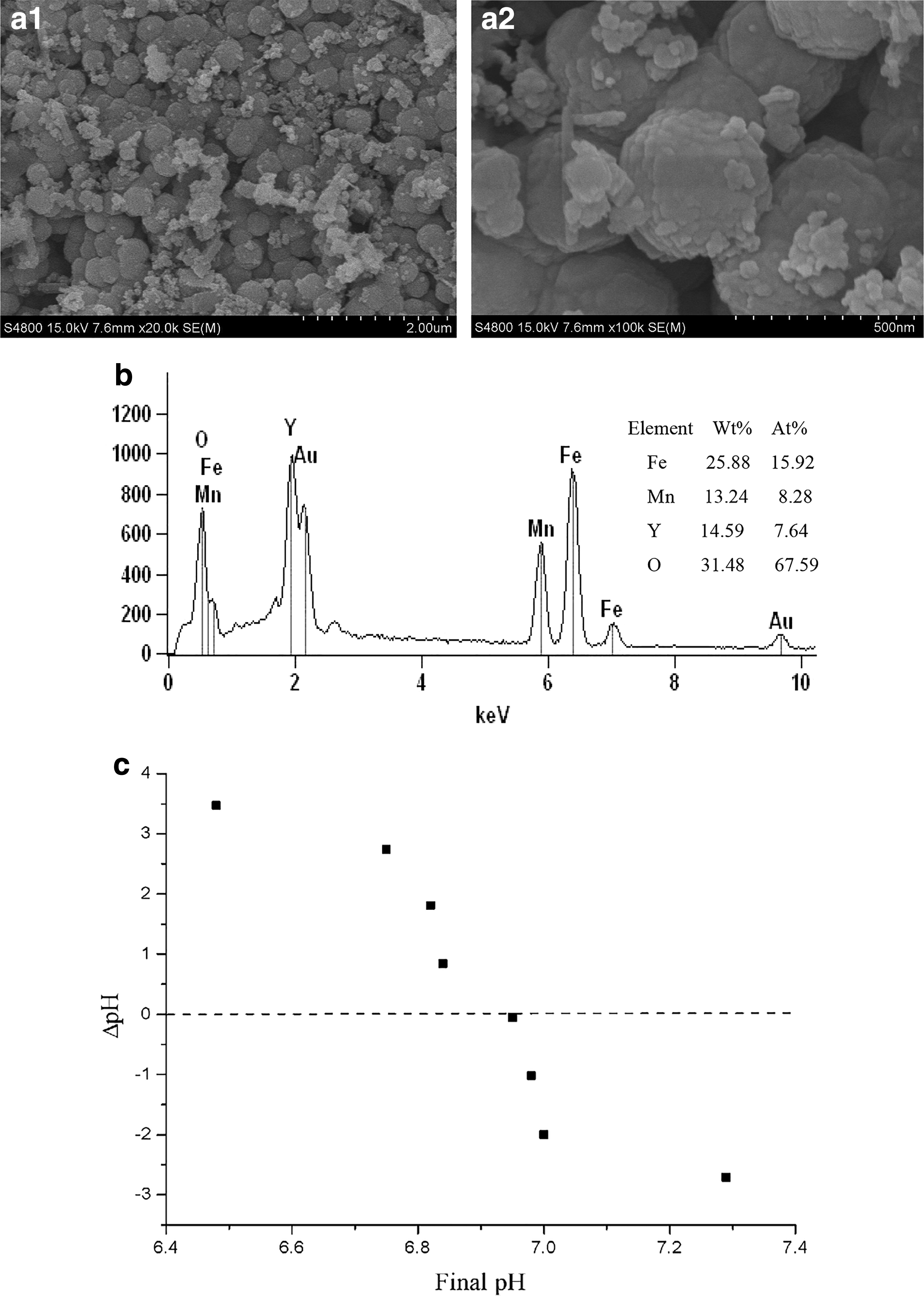
Characterization of Fe-Mn-Y tri-metal composite:
The magnetic property of the adsorbent was characterized by VSM with a magnetic field scope of −10,000 to 10,000 at room temperature, and the magnetic hysteresis loop is shown in Supplementary Fig. S1. The values of saturation magnetization (Ms) and remnant magnetization (Mr) for the adsorbent were determined to be 46.58 and 5.82 emu/g, respectively. The insert in Supplementary Fig. S1 displays that the adsorbent was strongly attracted to the wall of the bottle by a magnetic field in a few seconds, implying that the adsorbent particles can be easily separated from aqueous solution with a magnet.
Influence of pH
The solution pH affects not only the surface characterization of the adsorbent but also the species distribution of As(V). Therefore, the removal efficiency of As(V) by the adsorbent was examined in a pH range from 3 to 10 and the results are presented in Fig. 2. It is noted that the solution pH exerted a significant effect on the As(V) removal. The optimal As(V) removal was achieved at pH 4.00. In this case, the initial 10 mg/L As(V) was almost completely removed. With the pH increasing from 6 to 10 or decreasing from 4 to 3, As(V) removal efficiency obviously declined, suggesting that the ideal pH for As(V) removal by the adsorbent should be controlled in the range of 4–6. The effect of pH on As(V) removal observed in this study is similar to the results reported by Chen et al. (2013).
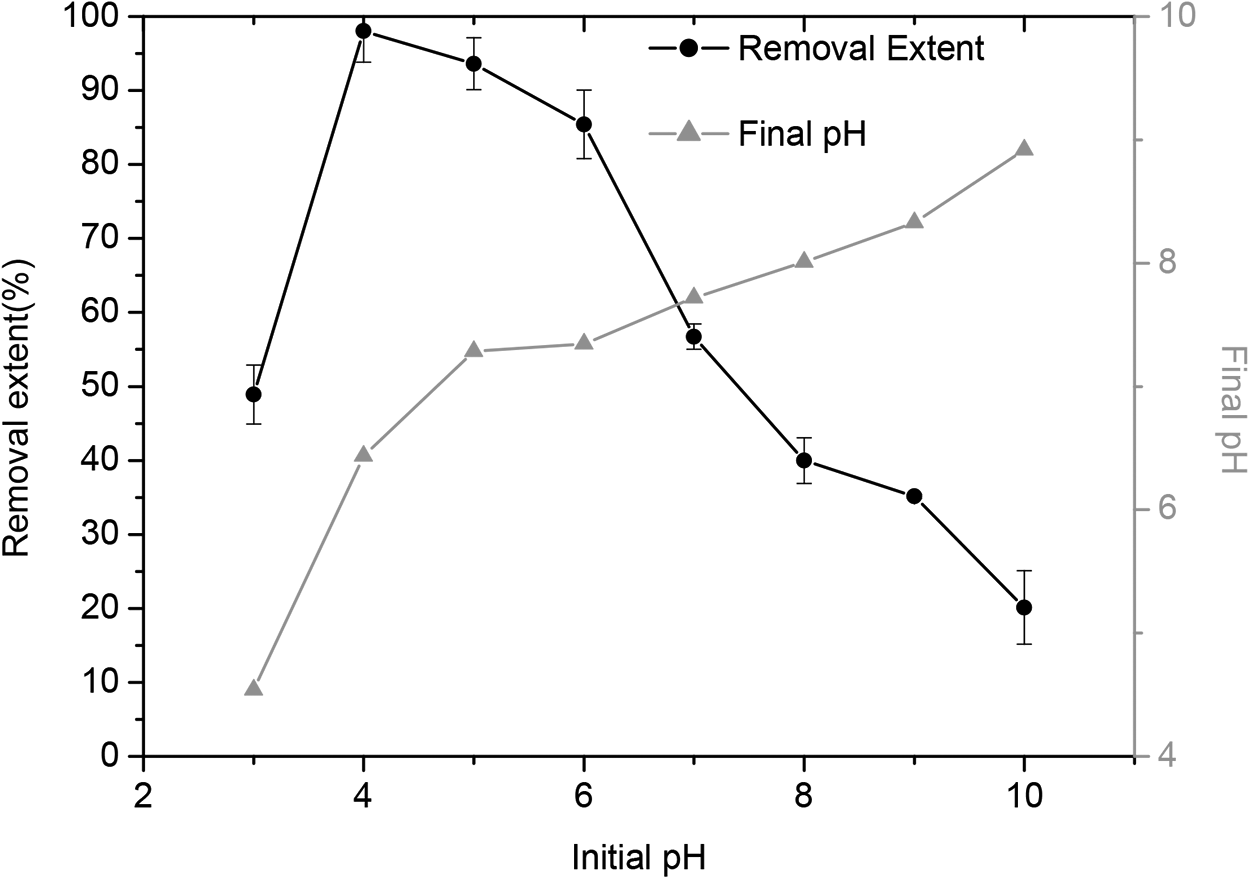
Effect of initial pH on arsenate adsorption by Fe-Mn-Y tri-metal composite and the final pH as a function of initial pH. The initial concentration of As(V) was 10 mg/L; the dosage of adsorbents was 200 mg/L. As(V), arsenate.
It is well known that four different As(V) species such as H3AsO4, H2AsO4−, HAsO42−, and AsO43− exist in the pH range of <2, 3–6, 8–10, and >12, respectively (Li et al., 2010). When the solution pH was <pHpzc (6.95) of the adsorbent, the surface charge of the adsorbent was positive, which strengthens the electrostatic attraction between the positive surface and H2AsO4− anions (pH 3–6). Therefore, in the initial pH range of 4–6, the removal efficiency of As(V) was high. It is also observed that the removal efficiency of As(V) increased with pH declining from 6 to 4, which is ascribed to the stronger protonation of the adsorbent surface under a lower pH condition. With the further decrease in solution pH (such as pH 3), however, it is found that the removal efficiency of As(V) abruptly dropped to ∼50.0%. The same phenomenon was also observed by Yu et al. (2015a) while they investigated the pH effect on the adsorption of As(V) by yttrium-manganese binary composite, which is due to the increase of H3AsO4 species at initial pH = 3 (Yu et al., 2015a). Consequently, the positively charged adsorbent exerted weak influence on As(V) adsorption. Another important reason leading to the low removal efficiency is that the adsorbent may become less stable at pH 3. A small quantity of Y(III) was detected in the adsorbent suspension at pH <3, implying the partial dissolution of the adsorbent at low pH. With the solution pH increasing (above the pHpzc of the adsorbent), the deprotonation of the surface hydroxyl groups makes the adsorbent negatively charged. Thus, the As(V) removal decreased greatly in the pH range of 7–10 since a strong electrostatic repulsion occurred between the negatively charged adsorbent surface and HAsO42− anions. Moreover, the competition adsorption between OH- and HAsO42− for active adsorption sites under high pH condition may also make a contribution to the low removal efficiency of As(V).
The final system pH after adsorption was measured and is also presented in Fig. 2. It is observed that the final pH was higher than the initial pH ranging from 3 to 7 and lower than the initial pH ranging from 8 to 10, which is similar to the report of Deng et al. (2010). The final pH rising after adsorption with an initial pH <7 may be related to the protonation of hydroxyl groups on the surface to form OH2+ (Sarkar et al., 2008). Another reason may be attributed to the ligand exchange between OH- on the adsorbent surface and H2AsO4− in the solution. As for the final pH decrease after adsorption with an initial pH >8, it is mainly associated with the strong deprotonation on the adsorbent surface.
Adsorption kinetics
The time dependence of As(V) adsorption onto Fe-Mn-Y tri-metal composite was investigated to determine the time required to reach equilibrium. Figure 3 illustrates the removal percentage of As(V) with the adsorption time in aqueous solution. It is noted that the adsorption procedure could be divided into two phases: the initial fast adsorption (0–5 h) and the later slow adsorption (5–24 h). The removal efficiency of As(V) could reach 99.5% after a 24-h adsorption, whereas almost 95.0% of As(V) was removed at the initial phase, which might be related to the highly scattered Fe-Mn-Y powder because the particles with smaller size are favorable to the transportation of As(V) from bulk solution onto the surface-active sites of the adsorbent (Zhang et al., 2007). The subsequent slow adsorption might be attributed to the intraparticle diffusion that dominantly controls the adsorption procedure.
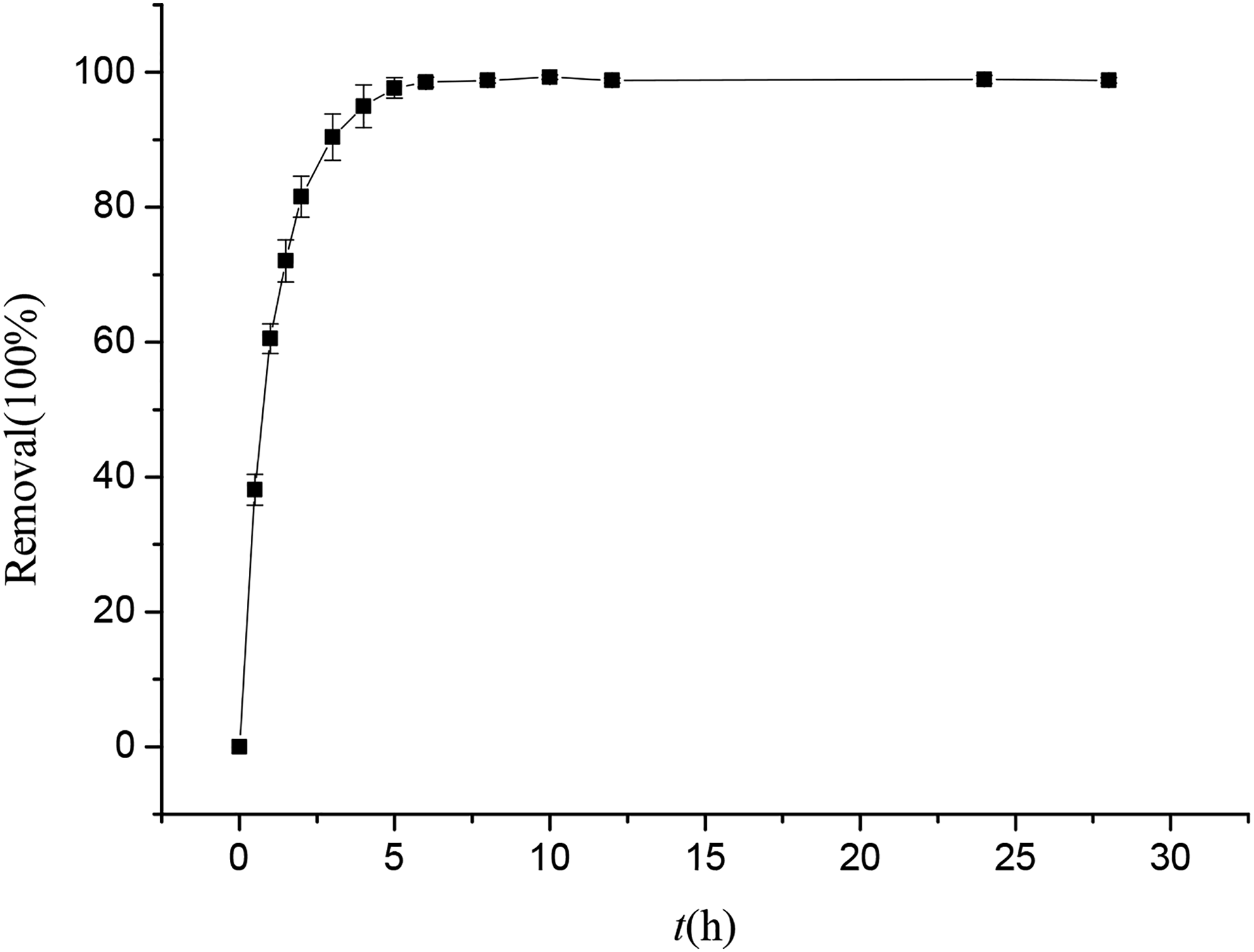
Adsorption kinetics of arsenate by Fe-Mn-Y tri-metal composite. The initial concentration of As(V) was 10 mg/L, the dosage of adsorbents was 200 mg/L, and the initial pH was 4.00.
To further investigate the adsorption kinetics, we employed the pseudo-first-order and pseudo-second-order models to fit the adsorption process, which are expressed in Equations (2) and (3), respectively:
where qe (mg/g) and qt (mg/g) stand for the adsorption capacity at equilibrium and any time t, respectively; t (h) represents the adsorption time; k1 (1/h) and k2 (mg/[g·min]) are the related adsorption rate constants for the pseudo-first-order and pseudo-second-order models, respectively (Konggidinata et al., 2017).
These kinetics parameters, including maximum uptake capacity, the kinetic constants, and correlation coefficients (R2), are summarized in Table 1. It is noted that the pseudo-second-order model (R2 = 0.9992) was much better to fit the adsorption procedure than the pseudo-first-order model (R2 = 0.2084). Besides, the experimental qe value obtained in this study was almost the same as the theoretical qe value calculated by Equation (3).
Kinetics Parameters of Pseudo-First- and Pseudo-Second-Order Equations at Initial Concentration of As(V) = 10 mg/L
The initial pH = 4; 25°C.
As(V), arsenate.
Adsorption isotherm
Figure 4 demonstrates the relationship between the adsorption capacity of As(V) and the equilibrium concentration of As(V) at 25°C and the initial pH 4.00. It is observed from Fig. 4 that the adsorption capacity of As(V) significantly increased with the equilibrium concentration of As(V).
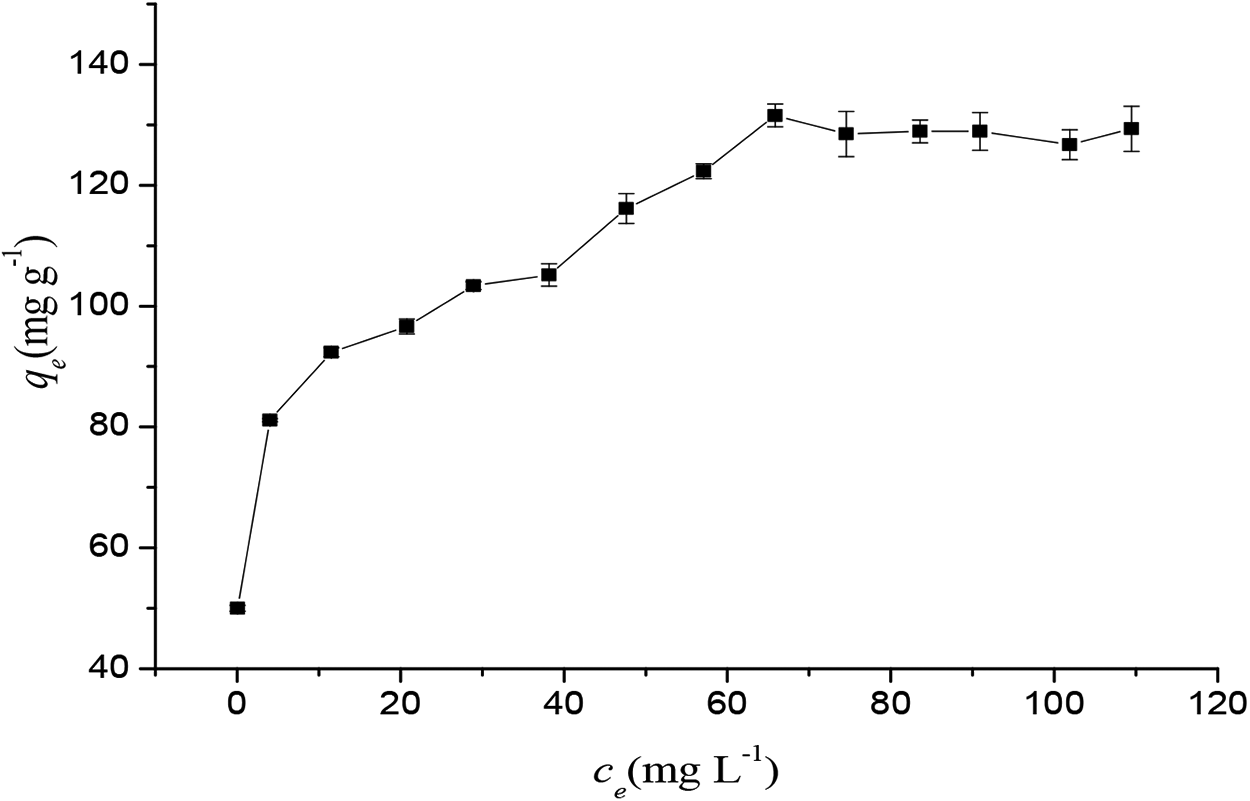
Adsorption isotherm of arsenate by Fe-Mn-Y tri-metal composite. The dosage of adsorbents was 200 mg/L; the initial pH was 4.00.
Both Langmuir and Freundlich isotherm models were adopted to further assess the variation of the adsorption capacity of As(V) with its equilibrium concentration.
where qe (mg/g) and ce (mg/L) are the adsorption capacity and the concentration of As(V) at equilibrium, respectively; qmax (mg/g) is the maximum adsorption capacity; b represents the equilibrium adsorption constant; KF is related to the adsorption capacity; and n is a Freundlich isotherm constant corresponding to the intensity of adsorption (Ahmad et al., 2019).
The obtained model parameters of the Langmuir and the Freundlich isotherms by the typical liner regression approach are listed in Table 2. These results clearly indicate that it is better to describe the adsorption behavior with the Langmuir model than with the Freundlich model. The calculated maximum adsorption capacity of As(V) by the Langmuir isotherm model is 135 mg/g, which is very close to the experimental value (130 mg/g) calculated by Equation (1). To estimate the performance of Fe-Mn-Y tri-metal composite for As(V) removal, the qmax value was compared with the results from literature (Manna et al., 2003; Zhang et al., 2007, 2012; Ren et al., 2011; Li et al., 2012; Yu et al., 2015a) for different adsorbents (Table 3). Though it is hard to make a direct comparison since the adsorption capacities of different adsorbents for As(V) were obtained under different conditions, it is concluded that the magnetic Fe-Mn-Y tri-metal composite in this study was quite efficient for As(V) removal from aquatic solution, except the removal system with Y-Mn binary composite (Yu et al., 2015a). However, the magnetic Fe-Mn-Y tri-metal composite has an advantage in easy magnetic separation than Y-Mn binary composite.
Estimated Isotherm Parameters for Arsenate Adsorption by Fe-Mn-Y Tri-Metal Composite Adsorbent at Initial pH 4 and 25°C
Comparison of the Maximum As(V) Adsorption Capacity (qmax) of Magnetic Fe-Mn-Y Tri-Metal Composite with Related Adsorbents
Effect of coexisting anions
Coexisting anions may compete for the active adsorption sites on the adsorbent surfaces with As(V). Therefore, the effect of some competing anions, including NO3−, SO42−, CO32−, and PO43−, on the adsorption of As(V) was investigated and the results are demonstrated in Fig. 5. It is clearly observed that NO3−, SO42−, and CO32− had a very limited effect on the As(V)uptake even if their concentrations were high up to 6.67 mM (50 times as high as As(V)). But the As(V) removal was evidently inhibited by PO43− with a concentration of 0.267–1.33 mM. Wen et al. (2018) pointed that both Cl− and NO3− are adsorbed by ferric hydroxides via outer-sphere complexes. SO42− predominantly forms outer-sphere complexation on the surface of absorbent at pH >6 (Qi et al., 2015). In this study, in spite of the initial pH = 4.00, the final pH increased up to 6.50 (Fig. 2). In this case, SO42− competes with As(V) via forming an outer-sphere complex for active sites on the surface of Fe-Mn-Y tri-metal composite, resulting in a weak effect on As(V) removal. Based on the fact that the effect of CO32− on the As(V) adsorption was negligible similar to NO3− and SO42−, it is likely that CO32− was also adsorbed by the adsorbent through outer-sphere complexation. However, the PO43− and As(V) are tetrahedral anions, both of which can form inner-sphere complexes with the hydroxyl groups on the adsorbent surface (Zeng et al., 2008). Therefore, the removal of As(V) is greatly weakened in the coexistence of As(V)and PO43−.
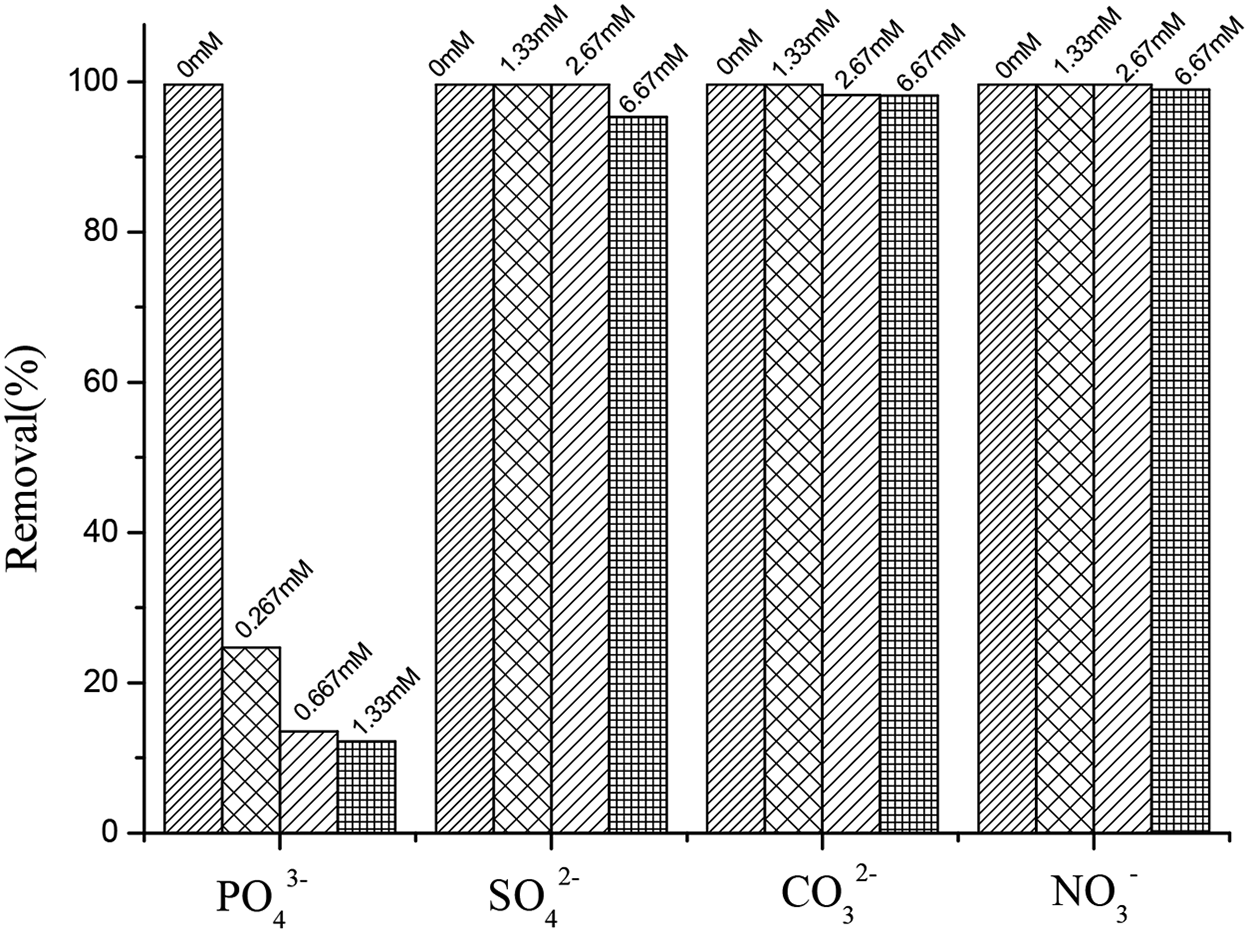
Effect of coexisting anions on arsenate adsorption by Fe-Mn-Y tri-metal composite. The initial concentration of As(V) was 10 mg/L, the dosage of adsorbents was 200 mg/L, and the initial pH was 4.00.
Regeneration of adsorbent
Good stability and regeneration of the adsorbent is important in the practical wastewater treatment to reduce operation cost. In this study, 0.1 M NaOH was utilized to treat the collected adsorbent after the saturated adsorption to investigate the removal efficiency of As(V) for cycle use (Supplementary Fig. S2). As compared with the fresh adsorbent, the removal efficiency of As(V) by the regenerated adsorbent kept almost constant. For instance, ∼98.0% of the initial As(V) was still removed for the fifth cycle use. It is higher than that of MPSAC–La, which had ∼75% of first As(V) adsorption capacity at the third cycle (Jais et al., 2016); also higher than Fe-La composite hydroxide, which achieved 75% adsorption rate at the fourth re-adsorption cycle reported by Zhang et al. (2014). Considering the facts that the Fe-Mn-Y tri-metal composite is easily separated from the solution with a magnet after adsorption or desorption and that the regenerated adsorbent still exhibits excellent adsorption capacity of As(V), it is anticipated that the magnetic Fe-Mn-Y triple-metal composite is a very promising adsorbent for As(V) removal from aqueous solution.
Spectroscopic analysis
The transmission FTIR spectra of virgin and As(V)-loaded adsorbents are shown in Fig. 6. The peaks at 3,640 and 1,635 cm−1 were assigned to O-H stretching vibration and bending vibration, respectively, indicating the presence of physisorbed interstitial water molecules on the surface of the adsorbent (Zhou et al., 2011). The new presence of two additional peaks at 867 and 822 cm−1 appeared on the spectrum of As-loaded adsorbent, which were assigned to the stretching vibrations of As-O for adsorbed As(V) species in the form of the monodentate complex and bidentate complex (Guan et al., 2008). The two peaks at ∼1,521 and 1,384 cm−1 in the adsorbent might be attributed the vibration of carbonate group due to the solution for adsorbent exposure to the air (Aghazadeh et al., 2013).
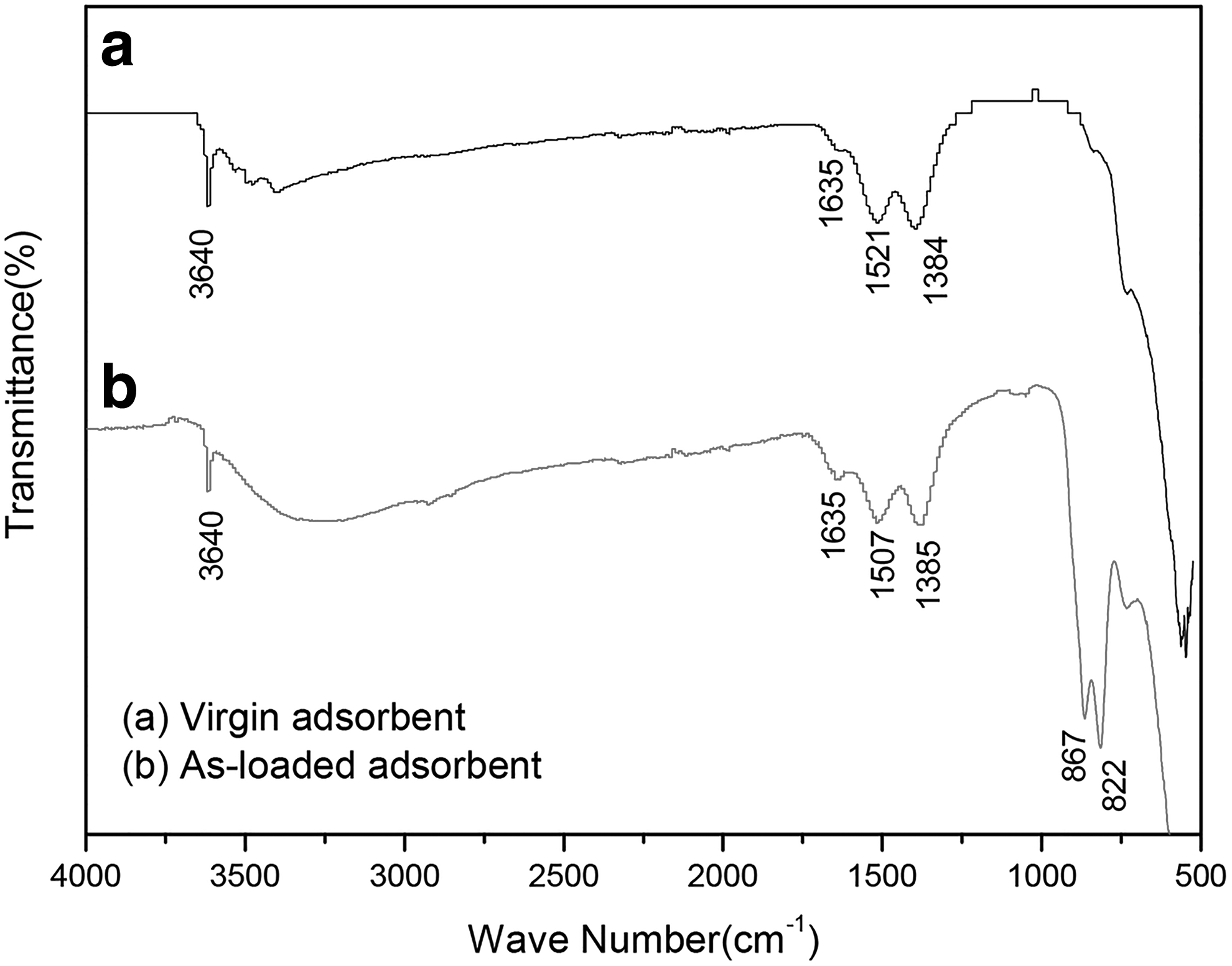
FTIR spectra of Fe-Mn-Y adsorbents before and after arsenate adsorption. FTIR, Fourier transform infrared spectroscopy.
The adsorbent before and after adsorption was investigated with XPS, and the results of full-range survey scan spectra of the virgin and the As-loaded adsorbent are illustrated in Fig. 7a and b, respectively. It is observed that Fe, Mn, Y, O, and C were the main element composition of the adsorbent. The peak of C1s with the binding energy of 289.43 eV appearing on the spectrum is attributed to the presence of carbonate group. As previously mentioned, this is because the preparing procedure of the adsorbent was exposed to air. As a result, carbonate was introduced into the reaction system and precipitated with the metal ions. A similar result was also reported by Yu et al. (2015a). The peak of the As3d appearing on the full-range survey spectrum of As-loaded Fe-Mn-Y triple-metal composite revealed that As(V) in aqueous solution was successfully adsorbed onto the adsorbent. Moreover, the high-resolution XPS spectrum of As3d of the adsorbent after adsorbing As(V) is illustrated in Supplementary Fig. S3. It has been reported that the binding energy of the As3d core level for As(V) is 45.20–45.60 eV (Zhang et al., 2010). The appearance of As3d peak with a binging energy at 45.88 eV was attributed to the presence of As(V) on the Fe-Mn-Y tri-metal composite.
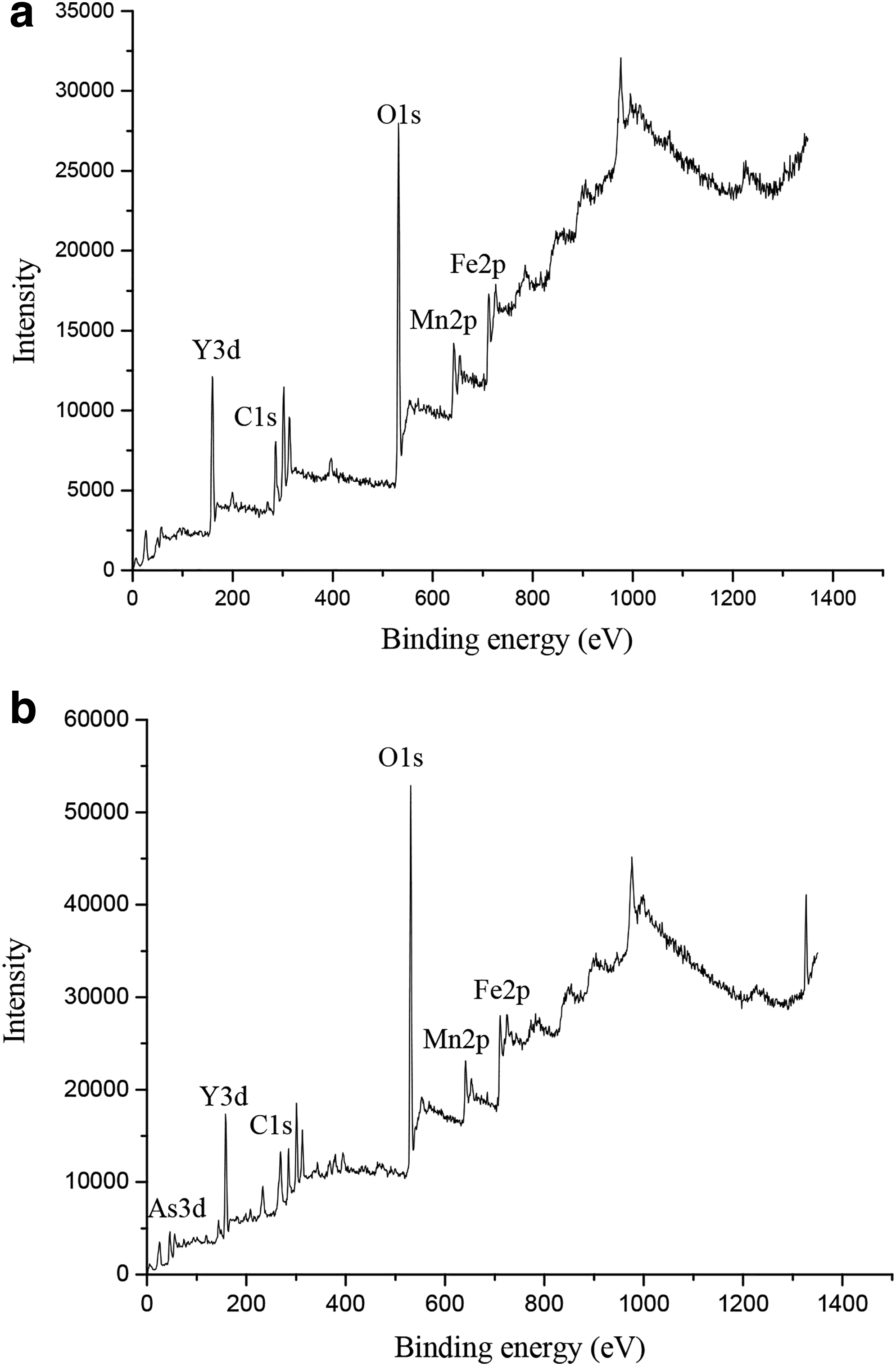
XPS wide-scan spectra of the Fe-Mn-Y tri-metal composite:
The high-resolution XPS spectra of Mn2p of the adsorbent before and after adsorption were investigated, and the results are shown in Supplementary Fig. S4a and b, respectively. Based on the binding energies of 642.15 and 642.45 eV, it is inferred that manganese existed in the adsorbent mainly as MnO (Zhang et al., 2018). The nonsymmetrical peak at 641.90 eV indicates the probable coexistence of MnO, MnO2, and/or Mn2O3. It is also noted that the intensity of Mn2p significantly increased after adsorption, which is ascribed to the re-adsorption of Mn(II) resulting from the adsorbent (Wu et al., 2012). The oxidation states of yttrium and iron in the adsorbent were also examined and presented in Supplementary Fig. S4c and d, respectively. The peaks with a binding energy of 158.00 eV (Y3d) and with a binding energy of 711.92 eV (Fe2p) are assigned to Y(III) and Fe(III), respectively. Spectrum S4c is an overlapping of multiple peaks, indicating the probable presence of multiple chemical states of yttrium (Y2O3 and YCO3) in the composite.
From the O1s spectra before and after adsorption shown in Supplementary Fig. S5a and b, it is found that the spectra were different. As compared with Supplementary Fig. S3, the peak intensity of O1s in Supplementary Fig. S5b increased greatly, which is attributed to the presence of As-O on the adsorbent surface due to adsorption. In addition, it should be pointed out that the peak appearing in Supplementary Fig. S3 corresponds to an overlapping of multiple peaks belonging to metal hydroxide, metal oxide, and metal carbonate. This is in agreement with previous analytical results.
Based on the earlier discussions, it is concluded that the adsorption of As(V) by Fe-Mn-Y tri-metal composite consists of both the physical and chemical procedures. First, the As(V)anions in aqueous solution were transported to the surface of the adsorbent by the electrostatic attraction or diffusion, and then the As(V)anions reacted with the hydroxyl groups on the adsorbent surface via ion exchange. For clarity, the possible adsorption mechanism is summarized in Fig. 8.
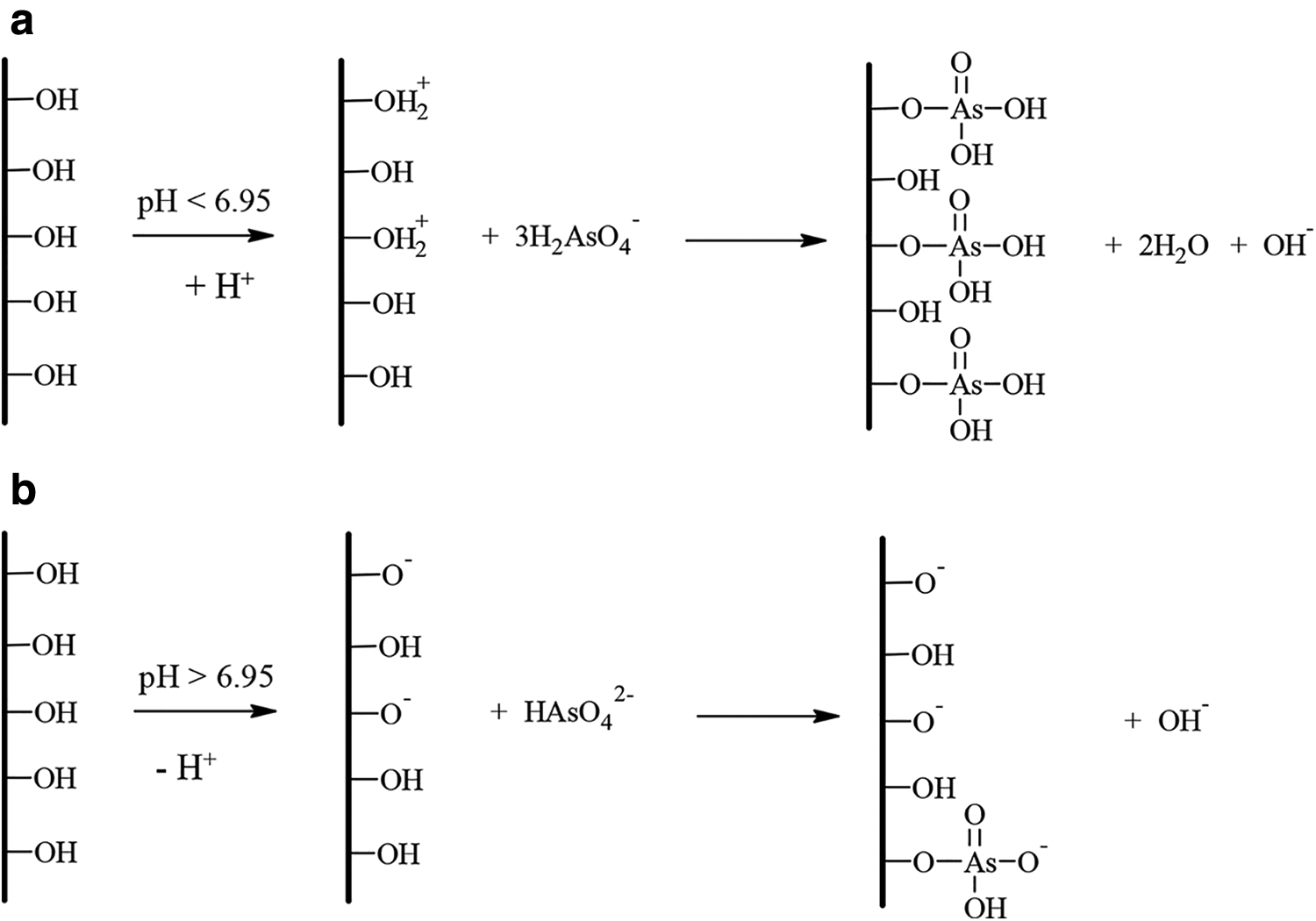
Schematic diagram of adsorption mechanism of arsenate:
Conclusions
A novel magnetic adsorbent composed of Fe-Mn-Y tri-metal oxides for As(V) removal was successfully prepared by hydro-thermal synthesis. The adsorption isotherm is better fitted by the Langmuir model, and the calculated maximum adsorption capacity of As(V) was 135 mg/g. The adsorption kinetics was well described by the pseudo-second-order model. The As(V) adsorption by the adsorbent was greatly pH dependent, and the optimal removal efficiency of As(V) was achieved at pH 4.00. The coexistence ions such as SO42−, NO3−, and CO32− exhibited a very limited effect on As(V) removal, but PO43− strongly competed with As(V) for active sites on the adsorbent surface and suppressed the adsorption of As(V) greatly. FTIR and XPS were used to investigate the surface change of the adsorbent before and after reaction with As(V), revealing that As(V) adsorption was mainly achieved through electrostatic attraction or diffusion, and ion exchange with the hydroxyl groups on the surface of the Fe-Mn-Y tri-metal composite. Considering that the adsorbent can be easily separated from aqueous solution with a magnet and regenerated with 0.1 M NaOH, it is concluded that the Fe-Mn-Y tri-metal composite synthesized in this study is a promising adsorbent for As(V) removal in water treatment. Further, we will put our effort into the thermodynamics and kinetics study, and the material modification to achieve more efficient removal of both As(V) and As(III) in the next study.
Footnotes
Author Disclosure Statement
No competing financial interests exist.
Funding Information
This study was supported by the National Natural Science Foundation of China (Grant Nos. 21637003, 21607076, and 21407078) and by the Fundamental Research Funds for the Central Universities (Grant No. KJQN201722).

References
Supplementary Material
Please find the following supplemental material available below.
For Open Access articles published under a Creative Commons License, all supplemental material carries the same license as the article it is associated with.
For non-Open Access articles published, all supplemental material carries a non-exclusive license, and permission requests for re-use of supplemental material or any part of supplemental material shall be sent directly to the copyright owner as specified in the copyright notice associated with the article.
