




Abstract
High concentration of nitrogen and phosphorus (above 20 and 1.5 mg/L, respectively, for TN and TP) and low ratio of nitrogen to phosphorus (10–15 for N/P) in secondary effluent of cities in China are easy to stimulate the malignant proliferation of toxic microalgae in receiving water. Accordingly, this study proposes a combination process of anoxic–oxic (A/O)+subsurface flow constructed wetland (SSFCW)+surface flow constructed wetland (SFCW) with N/P regulation as the core. The combination process parameters are optimized through the feedback regulation mechanism of the N/P ratio and the level of the terminal effluent, so that the N/P ratio and level of the terminal effluent are conducive to restraining eutrophication and stimulating the growth of nontoxic green algae. Compared with toxic green algae, nontoxic green algae had more growth advantages when N/P was 15 (mg/L):0.3 (mg/L). Based on technical and economic indicators, sludge retention time (SRT) and hydraulic retention time (HRT) of A/O system were 25 days and 15 h, respectively, and TN and TP concentrations of effluent treated by A/O system were 15–20 and 0.5–1.0 mg/L, respectively. Based on the effluent quality of A/O and the target N/P and level required by the terminal effluent of combined process, the quantitative phosphorus removal and N/P regulation of effluent were realized by the quantitative mixing of phosphorus removal functional filler steel slag and common filler ceramsite in SSFCW. When HRT of SSFCW is 12 h and surface hydraulic load is 0.69 m3/(m2·days), the effluent TN and TP concentrations are 15 and 0.3 mg/L, respectively. In this study, through the dual control of target water quality feedback regulation and technical and economic indicators, the optimal treatment process of urban sewage for the purpose of ecological resources was determined.
Introduction
The concentration of nitrogen and phosphorus (TN and TP are above 20 and 1.5 mg/L, respectively) in the secondary effluent of cities in China and the imbalance of N/P ratio (N/P is 10–15) tend to stimulate the malignant proliferation of toxic microalgae in the receiving water. If the effluent is discharged directly into the receiving water body, the eutrophication of the water body will lead to the outbreak of cyanobacteria, which is the direct reflection of the competition of toxic microalgae for nontoxic green algae (Gao et al., 2013; Zhang et al., 2016). In recent years, there have been many studies on the effects of N/P ratio on the growth and competition of nontoxic green algae and toxic blue algae (Levich, 1996; Xie et al., 2003; Fortin et al., 2015; Ma et al., 2015). Smith (1983) found that when the ratio of nitrogen to phosphorus was as low as 29:1, the water quality was conducive to the growth of blue-green algae. Zhou et al. (2009) found that the ratio of nitrogen and phosphorus concentration was closely related to algae proliferation in the process of studying the eutrophication of nitrogen and phosphorus substances and water quality. It was pointed out that when the ratio of total nitrogen and phosphorus concentration in lake water ranged from 10:1 to 15:1, algae growth was positively correlated with nitrogen and phosphorus concentration (Zhou et al., 2009). The N/P ratio in lake water is 12:1 to 13:1, which is most suitable for algae multiplication. Feng et al., 2008 found that when the ratio of nitrogen to phosphorus was 40:1, Microcystis aeruginosa could multiply in large numbers to form water blooms. When the ratio of nitrogen to phosphorus was 40–50:1, it was beneficial to the growth and reproduction of some beneficial algae with economic value, such as Chlorella pyrenoidosa (Fei et al., 2015). The ratio of N/P without nitrogen and phosphorus concentration levels is not sufficient to indicate the optimum conditions for the growth of nontoxic green algae. According to our study, in addition to the ratio of N/P, nitrogen and phosphorus concentration levels are also the influencing factors for nontoxic green algae. Therefore, based on both the optimal ratio of nitrogen and phosphorus and the level of nitrogen and phosphorus, this study explores the optimal treatment of the whole process of urban sewage and the overall plan of resource utilization. Therefore, while removing the total amount of nitrogen and phosphorus from secondary effluent, the N/P ratio is 15:0.3 to inhibit the growth of toxic microalgae and strengthen the competition of nontoxic green algae for the growth of toxic microalgae. In this way, the ecological utilization of secondary effluent from urban sewage treatment plant can be realized.
The common secondary denitrification processes of municipal wastewater include A2/O and A/O (anoxic–oxic) processes (Chen et al., 2011; Xing et al., 2017). For municipal wastewater with low organic carbon source content (COD is generally below 200 mg/L and C/N is 3–5 or lower), if A2/O process is adopted, the competition between phosphorus accumulating bacteria and denitrifying bacteria is fierce due to lack of carbon source, which greatly affects the effect of denitrification and phosphorus removal (Baeza et al., 2002). To achieve full biological denitrification, the organic carbon source of test water is often used as much as possible in the secondary treatment of municipal wastewater, rather than the secondary treatment process such as A2/O, which takes both nitrogen and phosphorus removal into account. In biological denitrification process, AO process is simple and easy to control, low cost of investment and operation, and shock load resistance (Shen et al., 2009). Through parameter optimization, good denitrification efficiency can be achieved. Therefore, AO process is widely used in biological denitrification process of municipal wastewater (Wang et al., 2007). At present, to optimize the effluent quality of biological treatment, people often take the way of prolonging hydraulic retention time (HRT) and sludge retention time (SRT), but it will increase the amount of sludge and the volume of the structure by 30–50% or more than before, which will lead to a significant increase in the investment cost of the project. Therefore, through the task division and overall adjustment of each unit in the whole process of municipal wastewater treatment, this study intends to adopt A/O process as the main biological denitrification process, and on the premise of double optimization of technology and economy, appropriate process parameters are selected to effectively remove total nitrogen.
At present, in the process of deep removal of nitrogen and phosphorus from secondary effluent, constructed wetlands rely on medium-microorganism-plant to achieve deep removal of nitrogen and phosphorus. Constructed wetlands are widely used because of their low consumption and stability (Greenway, 2005). They are often the first choice for advanced treatment of secondary effluent. With the increasingly stringent requirements of urban effluent discharge, conventional constructed wetland systems are facing many challenges, and more and more attention has been paid to the combination of various types of constructed wetland systems (Xiong et al., 2011). The combined constructed wetlands of surface flow constructed wetlands (SFCWs) and subsurface flow constructed wetlands (SSFCWs) have obvious advantages in removing suspended solids, COD and TN from secondary effluent, and have high environmental benefits. They have become a kind of combined constructed wetland system, which has been studied and applied widely at present (Neralla et al., 2000). In the study of advanced treatment of secondary effluent by constructed wetlands, people have been paying attention to reducing the levels of COD, nitrogen, and phosphorus as much as possible. As a result, the terminal effluent is characterized by high nitrogen and low phosphorus. Generally, the ratio of nitrogen to phosphorus is more than 20–50:1, which often results in the malignant proliferation of toxic microalgae in the receiving water (Kang et al., 2007; Tunçsiper, 2009; Abou-Elela et al., 2013; Qin et al., 2013; Adrados et al., 2014). Nitrate nitrogen is the main form of nitrogen in secondary effluent (Li et al., 2017), so nitrate nitrogen in secondary effluent can be effectively removed by denitrification in subsurface wetland. However, because of the low COD level of secondary effluent, denitrification and denitrification efficiency of subsurface wetland are often limited by the influent COD level, which makes it difficult to improve significantly. Low influent COD/N ratio leads to incomplete denitrification, which greatly affects the denitrification efficiency of constructed wetlands (Ding et al., 2012).
Phosphorus in secondary effluent is mainly orthophosphate (Feng et al., 2008). Chemical phosphorus removal is often achieved using phosphorus removal functional fillers in subsurface wetlands. Shuangjun (2014) found that steel slag, limestone, and zeolite are more suitable as constructed wetland fillers for treating dispersed domestic sewage because of their higher adsorption capacity of phosphorus and nitrogen and lower cost through the study of constructed wetland fillers with high phosphorus saturation adsorption capacity such as zeolite, ceramsite, and steel slag. When Jianfeng et al. (2006) used steel slag as phosphorus removal filler in vertical subsurface constructed wetland, it was found that the average removal rate of TP reached 91.90% under the load of 0.5 m3/(m2·days) when domestic sewage was treated. It has been pointed out that phosphorus removal from steel slag is a combination of chemical adsorption and coprecipitation (Drizo et al., 2002). Bowden et al. (2009) found that when the pH value was 4–7.5, the phosphorus removal process from steel slag was mainly chemical adsorption, whereas when the pH value was above 8, the phosphorus removal from steel slag was mainly due to chemical precipitation. Therefore, in this study, steel slag was used as functional filler for phosphorus removal, and steel slag and ceramsite were mixed quantitatively in horizontal subsurface flow wetland. On the premise of not considering the purification of aquatic plants, optimizing the proportion of fillers, realizing the quantitative removal of phosphorus, and quantitatively regulating the ratio of nitrogen to phosphorus in wetland effluent were carried out to realize the cultivation of nontoxic green algae and the inhibition of toxic microalgae in the follow-up process. In this study, based on the study of subsurface flow wetland, suitable surface flow wetland was selected. Based on the target effluent nitrogen-phosphorus ratio and nitrogen-phosphorus level, the parameters of AO+SSFCW+SFCW combination process were optimized through feedback regulation mechanism. Finally, the ecological resource utilization of wetland effluent was realized, and the crisis of malignant proliferation of toxic microalgae in receiving water was alleviated.
Research Method and Technology Pathway
Structure diagram of A/O and constructed wetland
This article chooses A/O+SSFCW+SFCW combination treatment process to ensure ecological utilization of municipal wastewater. In the A/O process, the anoxic tanks and aerobic tanks are alternately arranged, and the effluent of grit chamber is divided into anaerobic tanks. Then, part of the effluent of the end of the aerobic tank is returned into anaerobic tanks, and the effluent of A/O flows into secondary sedimentation tank, the influent of SSFCW comes from the effluent of secondary sedimentation tank, and the effluent of SSFCW overflow into SFCW. A/O was used to remove nitrogen and constructed wetland to remove ecological phosphorus. The quantitative removal of TP in mixed medium SFCW is to use steel slag as phosphorus removal functional filler. The SFCW is similar to natural wetland. Ultimately, the effluent is used to cultivate the nontoxic green algae. The technology pathway of municipal wastewater treatment is shown in Fig. 2.
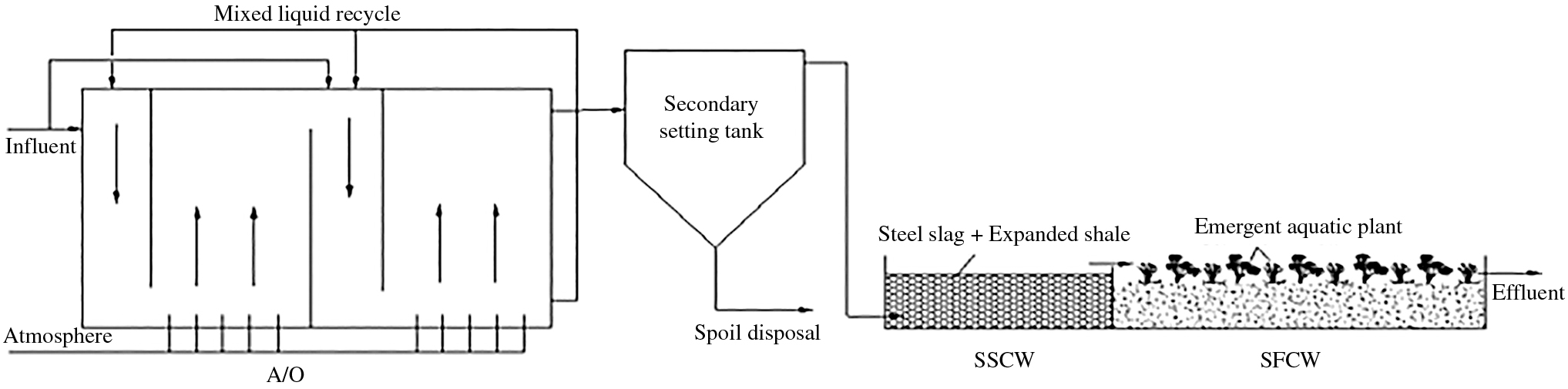
Structure diagram of A/O and constructed wetland. A/O, Anoxic–Oxic.

The technology pathway of municipal wastewater treatment for restoring the water quality of the receiving water. SFCW, surface flow constructed wetland; SSCW, surface flow constructed wetland.
Wastewater quality
The test water was taken from Shanghai East China University of Science and Technology wastewater plant, through the small and pilot scale test was carried out. Test water quality is shown in Table 1.
Raw Water Quality
COD, carbon source content; SS, suspended solids.
Analysis items and methods
Determination of conventional pollutants
COD, TN, TP, mixed liquor suspended solids (MLSS), and some other water quality indexes were analyzed in this study. The determination of these indicators shall be carried out in accordance with the “Water and Wastewater Monitoring and Analysis Methods” (Fourth Edition) promulgated by the State Environmental Protection Administration. The water quality analysis items, analysis methods, and relative equipment are shown in Table 2. Unless otherwise specified, the drugs used in this study are analytical reagents.
Water Quality Analysis Items, Methods, and Instruments
MLSS, mixed liquor suspended solids.
Determination of dehydrogenase activity
Dehydrogenase activity can be detected by addition of artificially hydrogenated TTC (2,3,5-triphenyltetrazolium chloride, 2,3,5-triphenyltetrazolium chloride). The most important advantage is the color enhancement and the irreversibility under biological conditions during the reaction: when the microbial cells have biological oxidation (dehydrogenation), TTC will accept hydrogen atoms and be reduced to red TF (Triphenyl Formazan, triphenyl methyl). Then, the dehydrogenase activity could be determined by the red TF generation rate.
Algal cell density
The algae solution is tanked after 10 days of light autotrophic cultivation. Then, it is randomly diluted and the optical density (OD) value would distribute between 0 and 1. The OD value at 540 mm was measured, and algal cells could be counted with microscopy.
Technology pathway
To adjust the concentration and ratio of nitrogen and phosphorus and to reduce the proliferation of toxic microalgae, we aim to examine the water quality of the terminal after changing the operating parameters of A/O unit, and the research plan is shown in Fig. 2.
① Results showed that when the inoculation cell density ratio of nontoxic green algae to M. aeruginosa was 10:1, and N/P was 15:0.3, the nontoxic green algae had the most competitive advantage. So the target water quality of municipal wastewater treatment plant (MWTP) effluent was N/P as 15:0.3, COD as 30–50 mg/L.
② The test water of wastewater treatment plant of East China University of Science and Technology in Shanghai was taken as the investigation object; the A/O process was used for biological nitrogen and phosphorus removal. Performances of A/O with two kinds of parameters were compared, for example, conventional parameters (HRT = 15 h, SRT = 25 days) and extended parameters (HRT = 25–30 h, SRT = 40–50 days).
③ With regard to the two kinds of levels of TN, TP, and N/P of A/O effluent, the test water of SSFCW was divided into two types: (1) COD, TN, and TP were, respectively, 50, 20, and 1.5 mg/L; (2) COD, TN, and TP were, respectively, 50, 15, and 1.0 mg/L. Then, the effluent COD, nitrogen and phosphorus concentration, and N/P were compared.
④ N/P of wetland effluent could reach 15:0.3. When the nitrogen and phosphorus concentration of A/O effluent is relatively high, N/P of SSFCW effluent was 15:0.3. This level of N/P was more favorable to the growth of nontoxic green algae. So this result indicated that the effluent of A/O did not need to be improved with high level of aeration energy consumption.
Results and Discussion
In this research, the nontoxic green algae were cultivated with SSFCW effluent to inhibit the growth of toxic microalgae. C. pyrenoidosa and Scenedesmus obliquus are two kinds of the common nontoxic microalgae in freshwater, and M. aeruginosa is one of the common toxic cyanobacteria in freshwater, which can secrete algal toxin and inhibit the growth of nontoxic microalgae in freshwater. Algal toxins can also enter the human body through the food chain and impact on human health. Therefore, the Chlorella albicans and S. obliquus were, respectively, cultivated with M. aeruginosa to determine the optimal conditions for nontoxic green algae outcompeting toxic microalgae.
Semicontinuous mixed cultivation of nontoxic green algae and M. aeruginosa
The secondary effluent of MWTP was taken as the cultivation medium. Based on the literature results (Lin et al., 2013; Zhang et al., 2015), N/P was fixed to be 15:0.3, and the nitrogen and phosphorus concentrations were determined according to the extent of denitrification and dephosphorization of MWTP. Microcystis and S. obliquus were, respectively, cultured with M. aeruginosa. The initial inoculation ratio of nontoxic green algae to toxic microalgae was 10:1. Table 3 shows the vaccination regimen for each trial group.
Cultivating Modes of Microalgae
The variation of biomass with cultivation time is shown in Fig. 3a and b. During the semicontinuous mixed cultivation of C. pyrenoidosa and M. aeruginosa, the M. aeruginosa was significantly inhibited in groups with nitrogen and phosphorus concentrations changing from low to high level. When nitrogen and phosphorus concentrations were 15 and 0.3 mg/L, C. pyrenoidosa and S. obliquus had the most significant competitive advantage to M. aeruginosa.
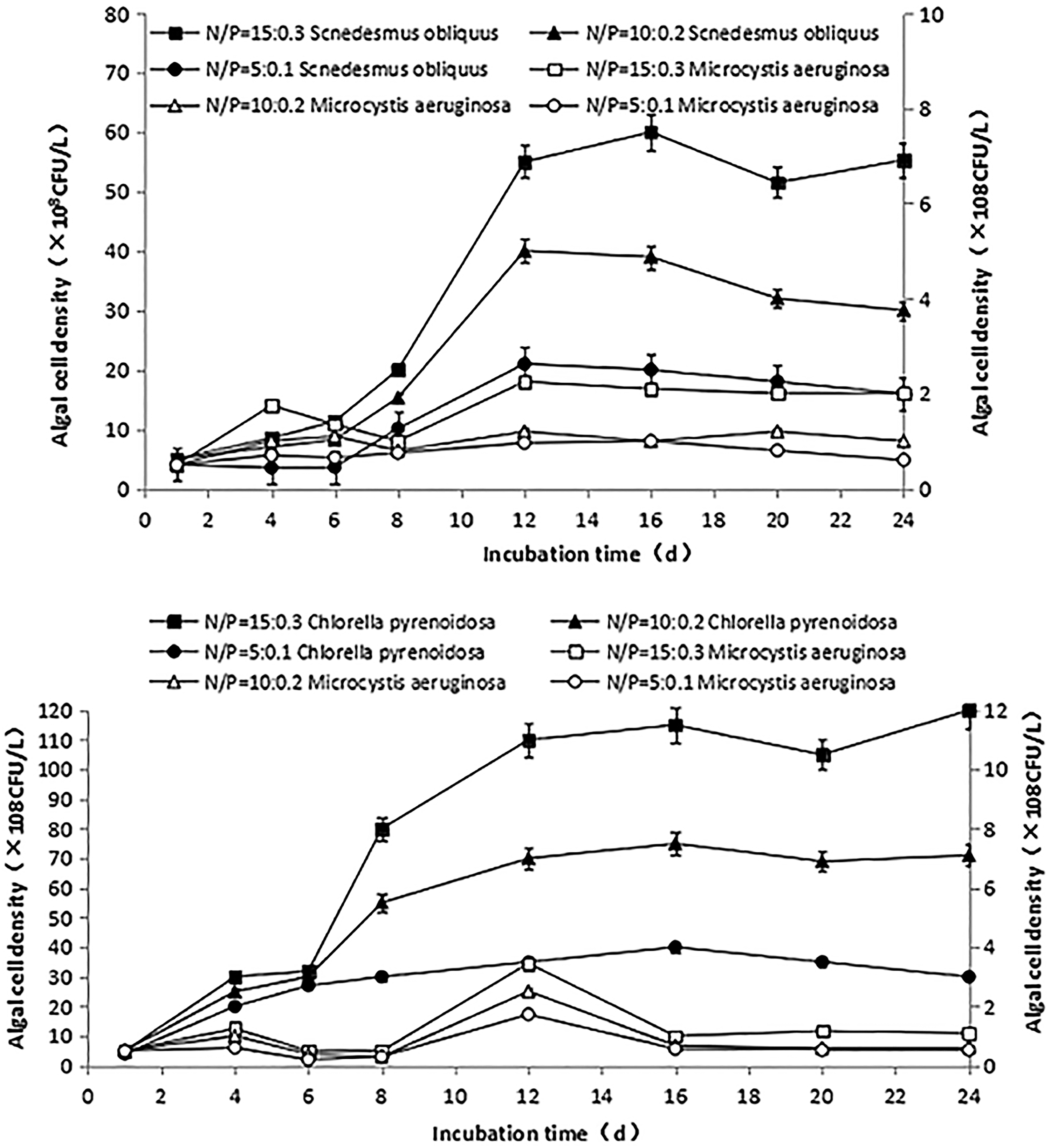
The biomass accumulation of nontoxic green algae and Microcystis aeruginosa in semicontinuous cultivation.
According to the research results, under the conditions that the initial inoculation ratio of nontoxic green algae to toxic microalgae was 10:1 and N/P was 15:0.3, the nitrogen and phosphorus levels for most significant inhibition to toxic microalgae were, respectively, 15 and 0.3 mg/L, which was taken as the effluent quality target of MWTP and as the regulation factor for optimization of the whole treatment process.
Effective removal of TN and TP by regulation of A/O parameters
The test wastewater of the MWTP of East China University of Science and Technology in Shanghai was taken as the investigation object in this article. The denitrification and phosphorus removal process was carried out in the traditional A/O process (Li, 2012). Many researchers reported that there was a significant endogenous denitrification process at the expense of endogenous respiration of active sludge when the original organic carbon source was deficient (Moriyama et al., 2010). So the feasibility of improving A/O effluent quality under the normal operation mode and in the mode of “extension HRT and SRT for promoting the endogenous respiration of active sludge” was investigated.
The influence on effluent quality due to A/O parameters
HRT and SRT were controlled for 15 h and 25 days, respectively, in the traditional A/O. Dissolved oxygen (DO) was kept <0.5 mg/L in anoxic tank (A stage) and between 2 and 3.5 mg/L in aerobic tank (O stage). Under the above conditions, the effluent COD, ammonia, nitrate nitrogen, TN, and TP concentration with time are shown in Fig. 4. It can be seen from Fig. 4 that, after about 60 days of acclimated process, effluent indexes, including COD, were all stably kept at low level. Effluent COD, ammonia nitrogen, nitrate nitrogen, TN, and TP concentration were stable at 40–50, <1.0, 13–18, 15–20, and 1.5–2.0 mg/L, respectively.
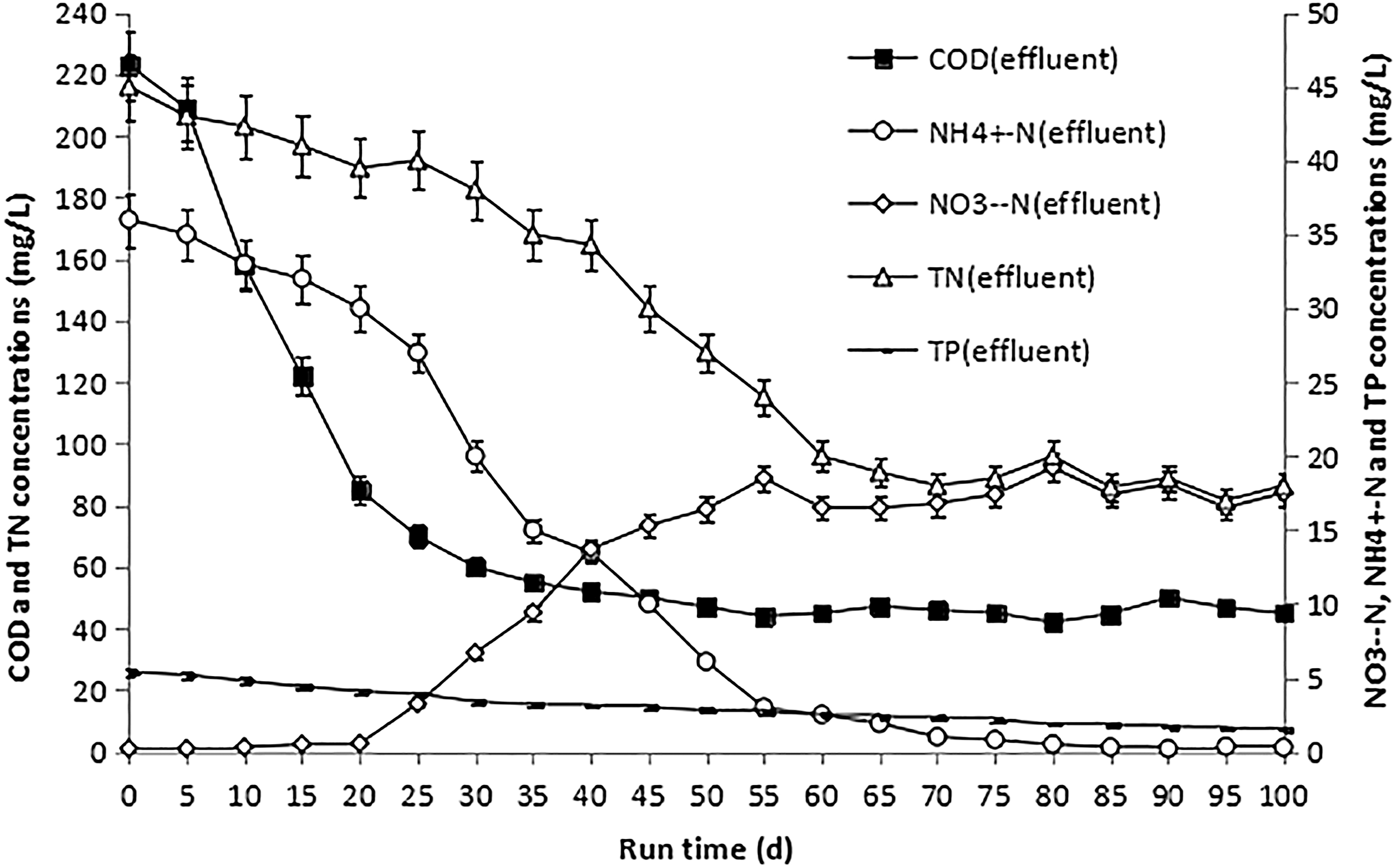
Variation of COD, Ammonia, Nitrate, TN, and TP concentration with time in traditional A/O effluent. COD, carbon source content; TN, total nitrogen; TP, total phosphorus.
The concentration levels of COD, TN, and TP along the traditional A/O process (HRT: 15 h) were analyzed, and the ΔCOD/ΔTN and ΔCOD/ΔTP both in A stage and O stage were summarized as well. The results are shown in Fig. 5.
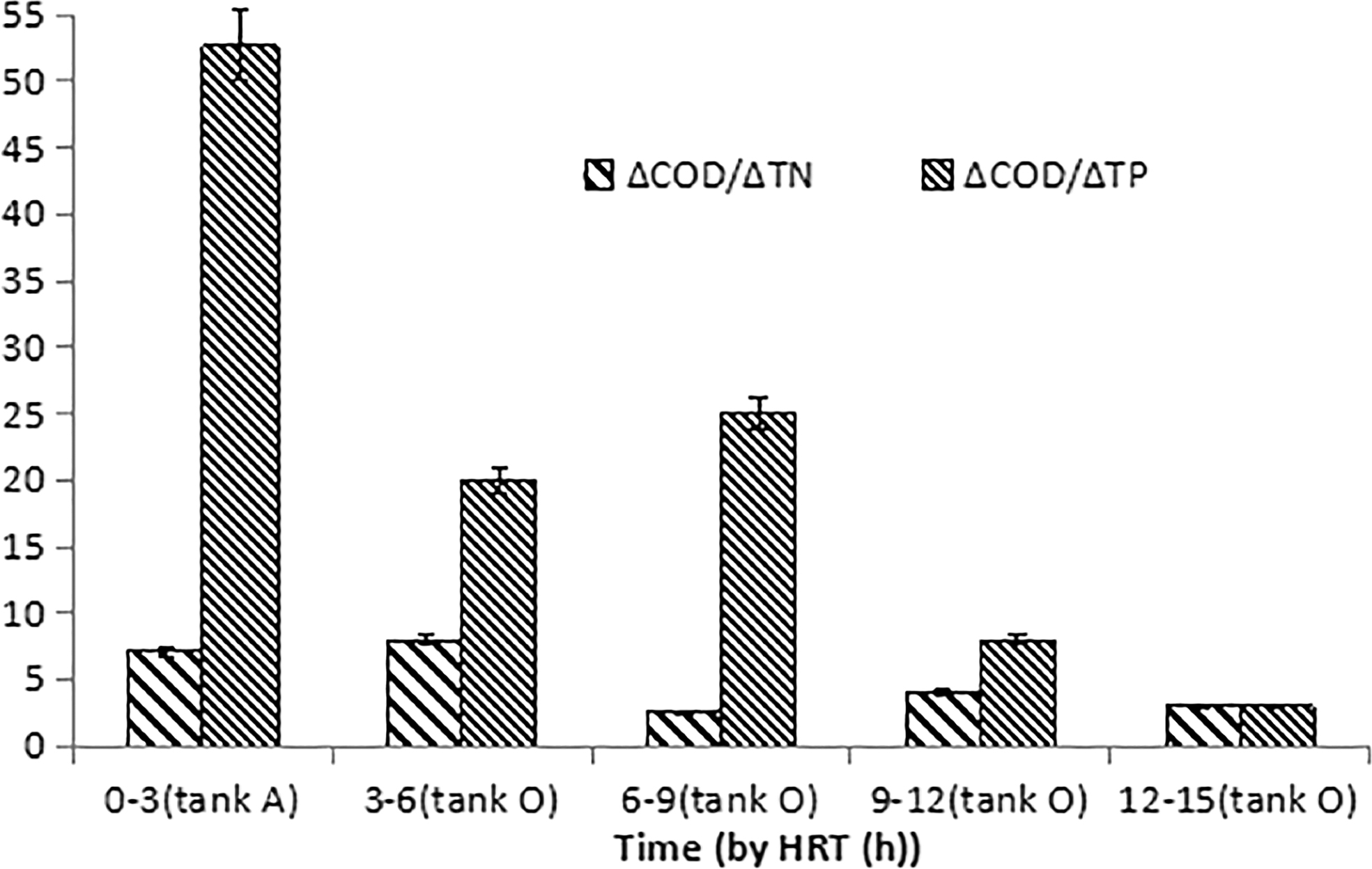
Variation of ΔCOD/ΔTN and ΔCOD/ΔTP along the traditional A/O process. HRT, hydraulic retention time.
It can be seen from Fig. 5 that ΔCOD/ΔTN in tank A was 7.18. The ΔCOD/ΔTN in the head of tank O (3–6 h) was 8.0, which was close to that in tank A. And then the ΔCOD/ΔTN gradually decreased to 3.0. In the traditional denitrification process, when the COD/TN in municipal wastewater is not <10, the organic carbon for traditional denitrification is considered to be sufficient (Ciudad et al., 2006; Xu et al., 2013). In this research, the ΔCOD/ΔTN was <10, so there may be an endogenous denitrification process in the A/O process, in which the sludge was biodegraded using the endogenous respiration to supply organic carbon source for denitrification. Therefore, in the traditional A/O process of municipal wastewater treatment, to strengthen the nitrogen and phosphorus removal performance, the key parameters such as HRT and SRT have to be extended to enhance the endogenous denitrification. The following is a comprehensive assessment of the feasibility of A/O parameter regulation to improve effluent quality.
Technical and economic analysis of A/O with different parameters
Technical analysis
In the traditional A/O process, HRT and SRT were, respectively, controlled as 15 h and 25 days, while in the extended A/O process, HRT and SRT were extended to 25–30 h and 40–50 days, respectively. The effluent COD and TN concentration of two A/O processes with different parameters were compared. And the reduction of dehydrogenase activity and the sludge concentration (MLSS) along A/O process were summarized. The results are shown in Figs. 6 and 7a and b.
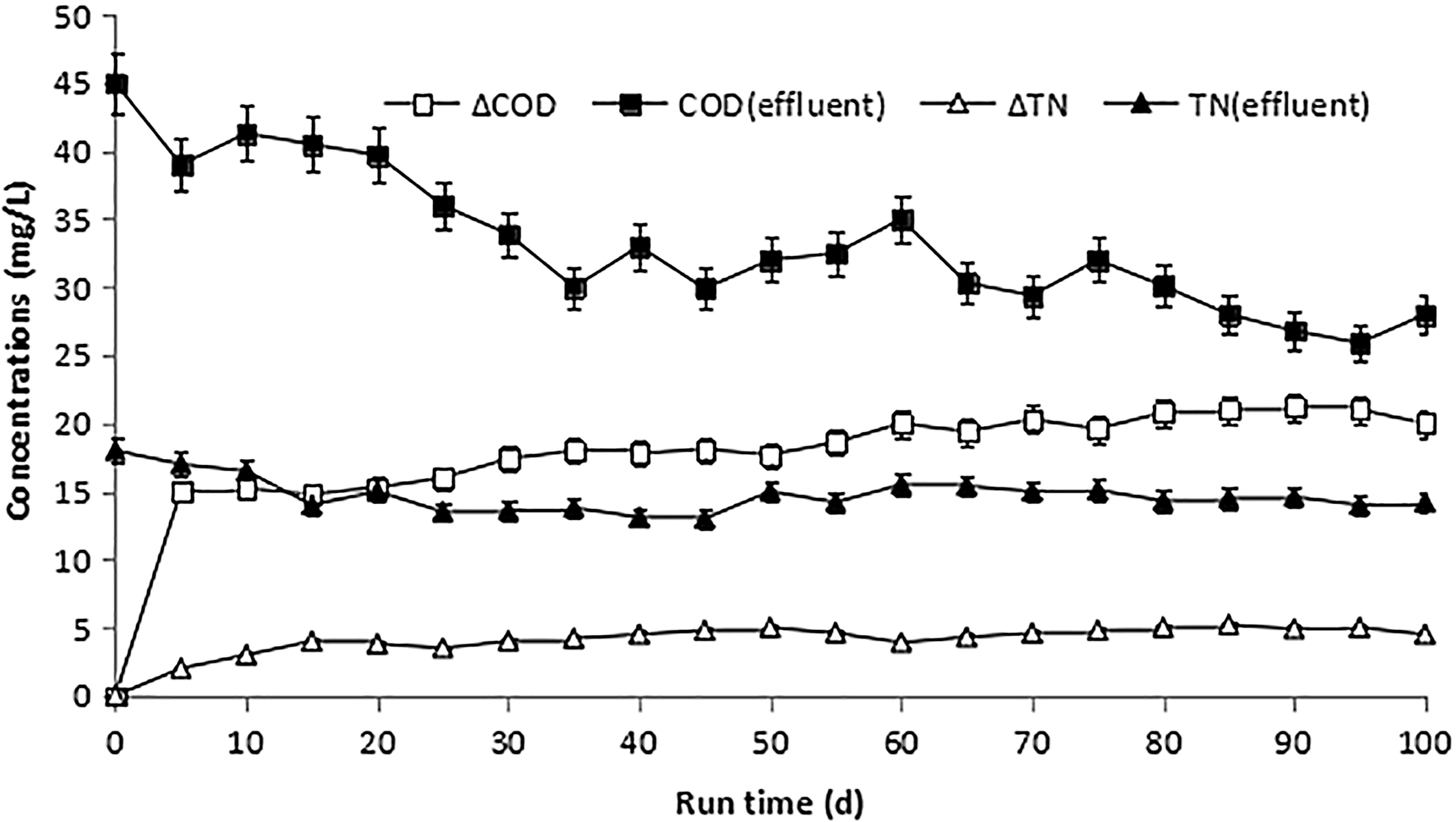
Variation of effluent COD and TN with time in A/O with extended parameters.
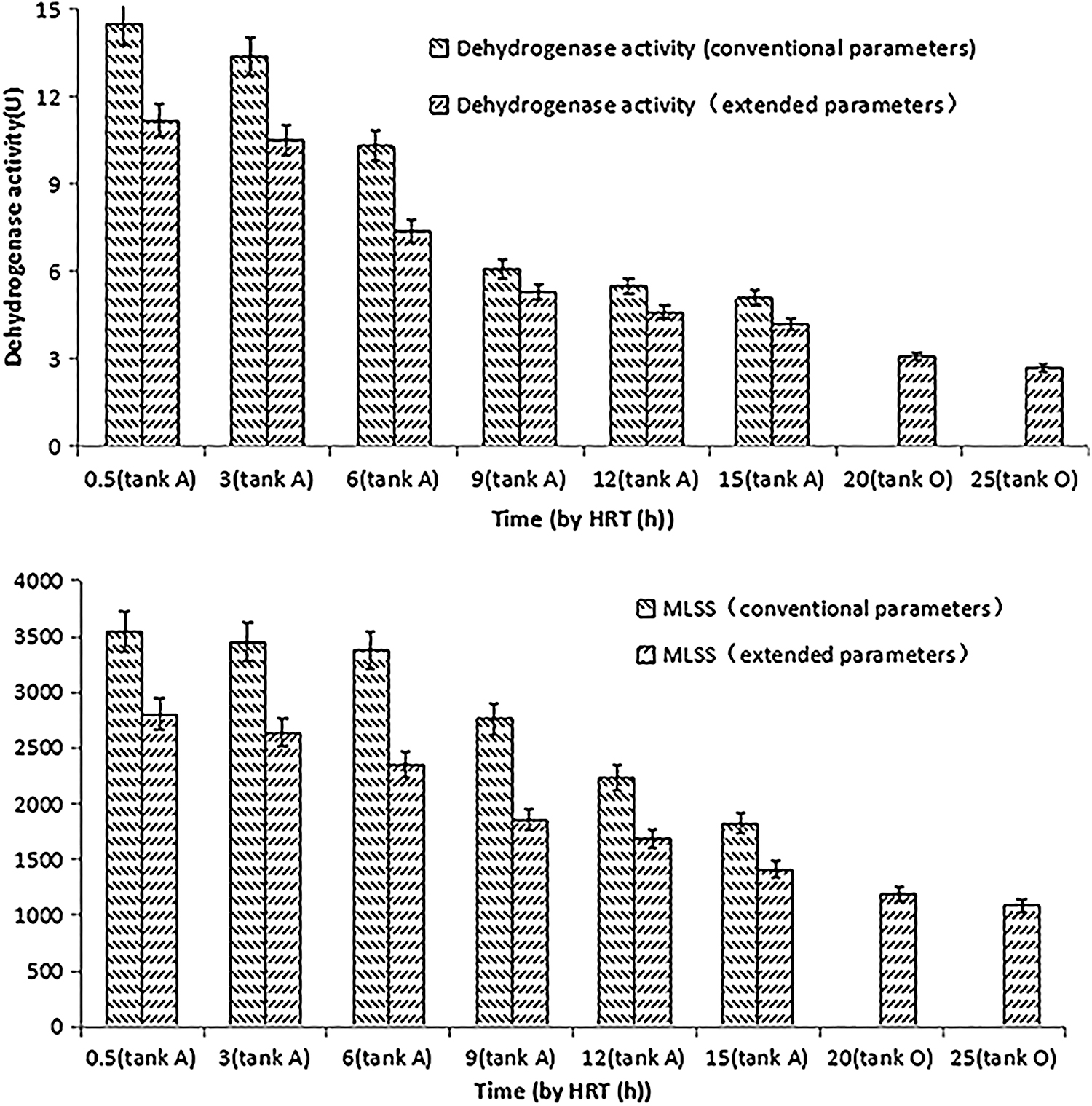
Comparison of dehydrogenase activity and the sludge concentration (MLSS) along A/O process with different parameters. MLSS, mixed liquor suspended solids.
It can be seen from Fig. 6 that, when the HRT and SRT were extended to 25 h and 40–50 days, effluent COD and TN were stable at 30 and 13–15 mg/L after 20 days. Compared with the A/O process with the conventional parameters, the effluent COD and TN were reduced by about 15–20 and 4–5 mg/L in the A/O with the extended parameters.
As shown in Fig. 7a and b, the activity of sludge dehydrogenase was similar to the variation trend of the sludge concentration. That is, the dehydrogenase activity and MLSS were significantly decreased after the extension of the parameters, and they decreased drastically in tank A and at the head of tank O and decreased gradually at the end of tank O. It was analyzed that extension of HRT and SRT was similar to the situation that organic load of A/O reduced by 2/3. As a result, the heterotrophic denitrifying bacterial activity was significantly reduced, which was correlated positively to dehydrogenase activity reduction. Since there was strong correlation between MLSS reduction and decreasing of sludge caused by the endogenous respiration, MLSS was at relatively low level at the back of the tank O where the endogenous respiration of the sludge was also evident.
Economic analysis
For the traditional A/O process, in the case of normal aeration, the average power consumption per ton of wastewater is 0.342 kW/h (Cheng et al., 2015). If the aeration energy consumption accounted for 55% of the whole energy consumption of MWTP (50–60%), the aeration energy consumption of every ton of wastewater is 0.188 kW/h. When the aeration period was extended by 70–100%, the aeration energy consumption was considered increasing by 70–100% in case of the same aeration status in tank O. That is, the aeration energy consumption is 0.320–0.376 kW/(h·twater) for extended A/O parameters. Then the power consumption of every ton wastewater increased by about 0.01–0.12 dollar/twater as the Industrial electricity costs at 0.1 dollar per degree.
Under conventional parameters, the aeration energy consumption per kilogram of COD removed was about 1.06 kW/h. The increase on COD removal due to the extension of A/O parameters (ΔCOD = 18.36 mg/L) showed that the aeration energy consumption per kilogram of COD was 1.48–1.68 kW/h. Similarly, the aeration energy consumption was varied from 6.96 kW/(h·kgTN) under the conventional parameters to 9.10–10.32 kW/(h·kgTN) under the extended parameters. It could be concluded from above that it would cause drastic energy waste to improve COD and TN removal by extending the parameters in terms of tonnage aeration energy consumption and electricity consumption per kilogram of removed COD or TN.
Therefore, after technical and economic analysis, it could be concluded that there was a significant endogenous denitrification process at the expense of activated sludge endogenous respiration in the traditional A/O process when the influent organic carbon was deficient; compared with the A/O with conventional operating parameters (HRT = 15 h, SRT = 25 days), the levels and ratio of nitrogen to phosphorus could not be regulated optimally through extending A/O process operating parameters (HRT = 25 h, SRT = 40 days).
Terminal regulation of TN and TP in SSFCW using quantitative TP removal
To realize stable nutrient removal and regulation of N/P in the secondary treatment effluent with low energy consumption, the traditional A/O was combined with mixed medium SSFCW so as to optimize the terminal effluent N/P and to further remove nitrogen, phosphorus, and COD. Therefore, the competitive advantage of nontoxic green algae could be strengthened when the effluent was used as culture (Fu et al., 2012; Chen et al., 2014a; Masi et al., 2014).
Quantitative removal of TP from mixed media SSFCW
The steel slag was adopted as the functional filler for phosphorus removal in this research. The dynamic adsorption experiment of phosphorus (PO43−) by steel slag indicated that the phosphorus adsorption rate fluctuated little in the short time (4 h) when initial TP concentrations were, respectively, 1.5, 1.0, and 0.5 mg/L, and the average adsorption rates were 1.8, 1.1, and 0.6 mgTP/(kgsteel slag·h). The mixed medium SSFCW was constructed by the mixed packing medium with steel slag and ceramsite. The HRT and the surface hydraulic load of the SSFCW were, respectively, kept as 12 h and 0.69 m3/(m2·days), and the total surface area of the SSFCW was 36 m2. There were four identical SSFCW units; each unit surface area is 9 m2 with the ratio of length to width as 4:1 and depth as 1 m. The hydraulic gradient was 1% to ensure the flow distribution. Every 4 h length of the SSFCW was classified as a phosphorus removal partition. According to the levels of nitrogen and phosphorus and N/P of influent and effluent, the phosphorus removal mission of each partition and the amount of steel slag were determined. The steel slag filled in the 0–4, 4–8, and 8–12 h partitions are 34.78, 56.52, and 29.35 kgsteel slag/(twater·days) in the SSFCW in this research.
With regard to two kinds of nitrogen and phosphorus levels and proportions of the A/O effluent, the influents of SSFCW were divided into two types: (1) COD, TN, and TP were 50, 20, and 1.5 mg/L, respectively. (2) COD, TN, and TP were 50, 15, and 1.0 mg/L, respectively. The former was called the high nitrogen and phosphorus influent; the latter was called the low nitrogen and phosphorus influent. The operation performance of the wetland within 1 year is shown in Fig. 8.
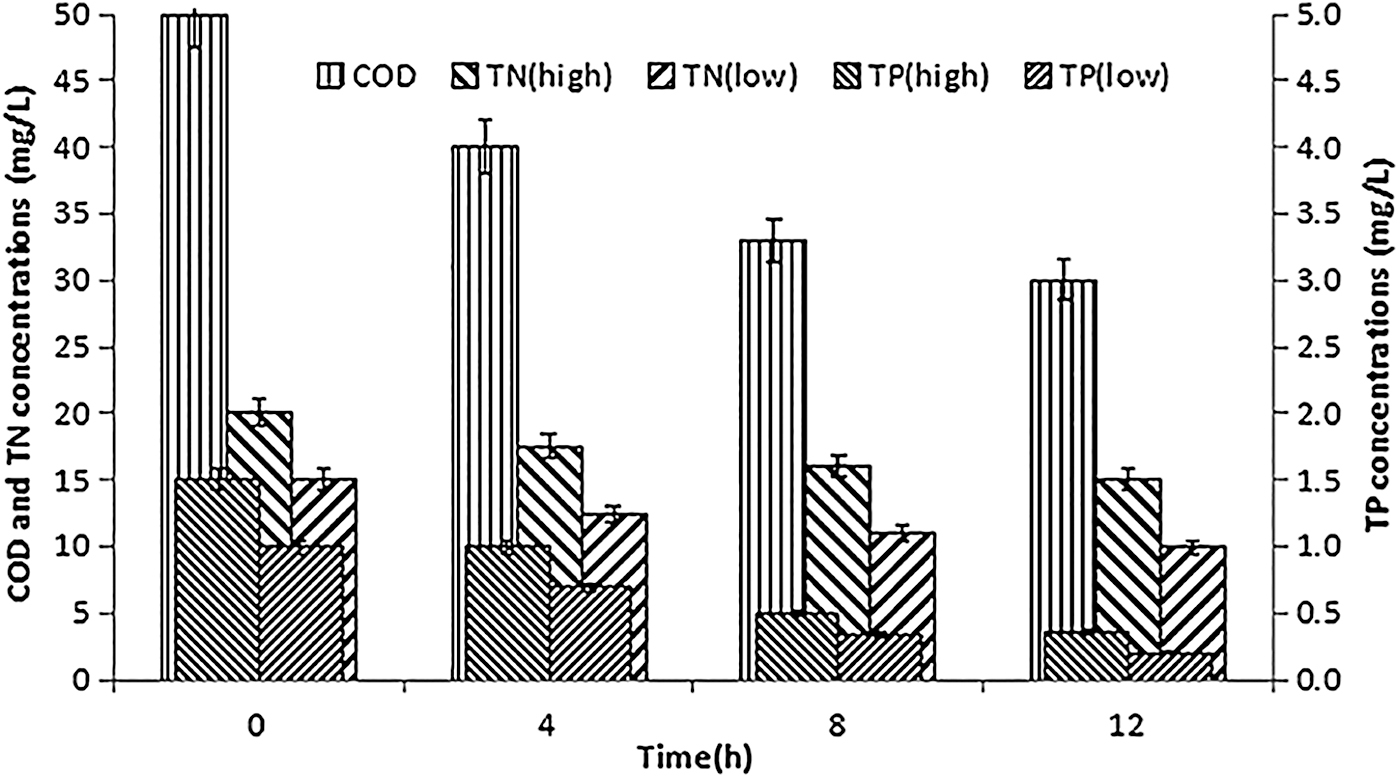
Variation of COD, TN, and TP concentrations along SSCW.
Fig. 8 shows that COD and TN of the secondary treatment effluent could be continually removed to 20 and 5 mg/L in SSFCW, and the removal extent of TP was related to the phosphorus adsorption rate of steel slag corresponding to various initial TP concentrations. The TP could be reduced from the original 1.5 to 0.3 mg/L in the SSFCW. In summary, the N/P of SSFCW effluent could reach 15:0.3. By contrast, when nitrogen and phosphorus concentrations of the A/O effluent were relatively high, N/P of the SSFCW effluent was 15:0.3, which was favorable for the growth of nontoxic green algae. The results above provided a proof for “no necessary for A/O effluent quality improvement with drastic aeration energy consumption.”
Treatment performance and cost analysis of SSFCW+SFCW
SFCW is similar to natural wetlands. The wastewater passes through the surface of the base layer, and the water flows forward in plug flow manner. The water depth is generally 0.3–0.5 m. The portion close to surface is aerobic layer; the deeper part and the bottom are usually anaerobic layer. At present, the vegetation of the SFCW mainly consists of emergent aquatic plant, such as cattails, reeds, rushes grass, water onions, and so on. The purification capacity of SFCW is relatively low with regard to SSFCW. The coverage area of SFCW was larger compared with SSFCW when their pollutants' removal performance is same. Although SFCW has disadvantages above, as well as difficulty to operate at low temperature, it needs low investment, low operating costs, and easy maintenance (Ding and Shen, 2006), and it can also be used for some special occasions (such as polluted river in situ repair). Therefore, to treat wastewater more effectively, some of the more complex multistage combination processes were used more and more widely. These multistage constructed wetlands, which combine series and parallel methods, show a particularly high level of nitrogen and phosphorus removal.
In the whole year, the removal performances of COD, TN, and TP in the SSFCW+SFCW were investigated within 1 month of each quarter. The results are shown in Table 4.
Variations of Influent and Effluent Indexes of SSCW+Surface Flow Constructed Wetland Throughout the Year (mg/L)
SSCW, surface flow constructed wetland.
It can be seen from Table 4 that the removal performances of COD and TN in wetlands were correlated positively to temperature, while the removal efficiency of TP by wetland is weakly influenced by temperature. From N/P variations of wetlands effluent in different seasons, the N/P could be stabilized at (13–15):(0.3–0.36) in spring and autumn, at (10–12):(0.28–0.32) in summer, and at (15–16):(0.31–0.4) in winter. In summary, the wetland effluent could promote the competitive advantage of nontoxic green algae against M. aeruginosa.
The demonstration project of this research (Size: 2000 t/days) was taken as an example; the treatment cost of SSFCW+SFCW was analyzed in detail. The power equipments of the combined process are mainly water lifting pump in the inlet of the wetlands. When the water quantity was 2000 t/days, the power was 5.5 kW/h as the lifting height was 1 m, and the treatment cost of per ton water was 0.007 dollar (Wang et al., 2013; Chen et al., 2014b).
Based on the investigation of the quantitative removal of phosphorus in the mixed medium SSFCW, the treatment performance, and cost analysis of the combined wetland, it could be seen that the N/P of the effluent after the SSFCW was 15:0.3 when the influent nitrogen and phosphorus concentrations were at high levels, which could promote the growth of nontoxic green algae; when the treatment capacity is 2000 t/days, the treatment cost of per ton water for SSFCW+SFCW was 0.007 dollar.
Optimization of municipal wastewater treatment process
According to the results of this research, the optimal combination process for municipal wastewater treatment was determined on basis of the principle of low consumption, stability, and ecological resource.
According to the combination mode of this process, in the higher temperature period, for example, the season when wetland has effective performance, the treatment cost of A/O process with conventional parameters+combined wetlands is lower than A/O process with extension parameters+combined wetland in terms of aeration power consumption of per ton water. The former process also has advantages of the energy saving, nitrogen and phosphorus ecological resource utilization, and promotion of the follow-up ecological food chain. So the ecological function of receiving water could be restored.
Conclusions
The typical toxic microalgae (M. aeruginosa) and nontoxic green algae (Chlorella globosa and S. obliquus) were taken as the research object. The TN, TP, and N/P suitable for nontoxic green algae growth were used as the target water quality, and the optimization of municipal wastewater treatment strategy was determined to ensure the ecological health of receiving water. The main conclusions are as follows:
The semicontinuous cultivation showed that the competitive advantage of nontoxic green algae to M. aeruginosa was improved when N/P was 15/0.3; TN and TP levels were 15 (mg/L) and 0.3 (mg/L), respectively; Compared with the A/O with conventional parameters, the way that A/O parameters were extended (HRT extended from 15 to 30 h, and SRT extended from 25 to 50 days) to obtain further removal of COD and TN could cause significant waste of energy consumption and could not ensure the optimal regulation of N/P of effluent; When the effluent of A/O with the conventional parameters (HRT and SRT were 15 h and 25 days, respectively) was treated by SSCW, N/P was 15:0.3, which is conducive to the growth of nontoxic green algae; In the recommended process for municipal wastewater treatment, in the high temperature period, the tonnage water treatment costs of the whole combination process were close to the aeration power consumption of A/O with extended parameters; Through the long-term investigation of multistage process, the low-consumption and stable treatment process of municipal wastewater treatment with the aim of “ecological resource utilization” is as follows: the A/O with conventional parameters (nitrogen and phosphorus concentration of effluent are 15–20 and 0.5–1.0 mg/L, respectively, HRT = 15 h, SRT = 25 days)+mixed medium SSCW (nitrogen and phosphorus concentration of effluent are 15 and 0.3 mg/L, respectively, HRT = 12 h)+SFCW.
Footnotes
Author Disclosure Statement
No competing financial interests exist.
Funding Information
This work was supported by the National Science and Technology Major Project of the Ministry of Science and Technology of China (Grant No. 2014ZX07202-011-002) and the Natural Science Foundation of China (Grant No. 51378207).