




Abstract
In this work, a novel up-flow anaerobic sludge blanket solid-state reactor was proposed for the degradation of fruit and vegetable wastes, RAFAELL for its acronym in Spanish (Reactor Anaerobio de Flujo Ascendente Empacado con Lecho de Lodos). The design considers a solid-state section: This is a pre-treatment stage (disintegration) in which organic solid wastes are subjected to shear to increase both the number of particles smaller than 105 μm and the concentration of dissolved solids (particles smaller than 2.5 μm). Hydrolysis and acidogenesis reactions are also presented in the solid-state section. The design also considers a section of sludge blanket to increase the residence time of the cells. The recirculation stream transports the faster biodegradable fraction from the solid-state section to the sludge blanket section, favoring methane productivity. The design includes a buffer section, where the alkalinity leaving the sludge bed consumes the acidity produced in the solid-state section, allowing greater stability of the pH in the reactor. In assessing the behavior of the proposed digester, good volatile solid removal efficiencies (67%) were obtained in 4 days of solids retention time, with an acceptable methane productivity between 0.5 and 3.6 LCH4/(L · day) for loads between 1 and 10 g VS/(L · day). The productivity expressed in LCH4/(g SVconsumed · day) was between 0.027 and 0.116 LCH4/(g SVconsumed · day).
Introduction
In Mexico, 42
Due to its characteristics, there are some important technical problems that have been solved for the AD of FVW.
In FVW, the carbohydrates, lipids, and proteins are forming a solid matrix, so the particle size has a significant effect on the rate of disintegration of the physical structure of the waste and on the rate of hydrolysis of polysaccharides, long chain fatty acids, and proteins present in the waste (Mata-Alvarez et al., 2000; Zhang and Banks, 2013). For example, Izumi et al. (2010) report 28% of solubilization of FVW sugars with a particle size of 0.84 mm and 40% of solubilization, reducing the particle size to 0.36 mm. Thus, the disintegration
Once the components of the FVW have been solubilized, they are an excellent substrate for AD processes because this type of waste is characterized by the high percentage of moisture (>80%) and high organic matter content (volatile solids >95% of total solids [TS] content) of easy biodegradation (56–75% of sugars and hemicellulose), as well as of difficult biodegradation (9–16% cellulose and 5–6.4% lignin) (Edwiges et al., 2018). The high percentage of sugars of easy biodegradation in the FVW causes a very fast production and accumulation of VFA during the AD, and a rapid pH drop (<5) of the medium. This phenomenon destabilizes the anaerobic process by inhibiting the methanogenic activity (Bouallagui et al., 2005). Hence, some works have focused on minimizing the effect of the organic loading rate on methane production. The solution that has been proposed is the physical separation of the acidogenic and methanogenic stages (use of two reactors and a homogenizer tank for pH control) to provide the appropriate physicochemical conditions to the dominant microbial consortiums in each stage, increasing the stability of the process (Nasir et al., 2012; Grimberg et al., 2015). However, this solution causes an increase in operating and maintenance costs.
In general, for the treatment of solid wastes, many technologies have been developed, which have been classified based on different criteria: wet or dry systems depending on solids concentration, <16% or >22%, respectively. Dry technologies are more suitable because they have shown better removal efficiencies, but they require recirculation systems of the liquid phase to reduce the resistance to mass transfer (Li et al., 2011; Di María et al., 2017). According to the operating temperature, there are mesophilic (35°C) or thermophilic (55°C) systems; the last technologies offer advantages such as higher gas production and higher degradation rates, but with overproduction of VFA and ammonium, which can destabilize the process (Fernández-Rodríguez et al., 2013; Kim et al., 2017). According to the feeding way, reactors can be batch or continuous. Continuous systems can be at a single stage if the disintegration, hydrolysis, acidogenesis, and methanogenesis are carried out in a single reactor; or in two stages, if the disintegration, hydrolysis, and acidogenesis are separated spatially from the methanogenesis stage, and are achieved in different reactors (Khalid et al., 2011). In particular, for the AD of FVW, systems of two stages have shown better performance because the conditions in the acidogenic reactor (pH = 4) promote the conversion of sugars (95% conversion to VFA) and the conditions in the methanogenic reactor (pH = 7) allow 60.9–89.1% of these VFA to be transformed to methane (Carvalheira et al., 2018). Therefore, the two-stage systems can support organic loading rate of 11 g VS/(L · day) for the acidogenic reactor and 5 g chemical oxygen demand (COD)/(L · day) for the methanogenic reactor; these organic loading rates are greater than those applied to one-stage systems (3.6 g VS/[L · day]) (Ganesh et al., 2014; Wu et al., 2016). However, two reaction units are needed, increasing the investment and operation costs, as well as leading to energy consumption.
According to Mata-Alvarez et al. (2000), an anaerobic reactor must be designed to achieve high methane yields, treating high organic loading rate in short hydraulic retention times (HRTs). To reach this, it is necessary that the AD be carried out in a balanced form, that is, all the products of the previous stage must be metabolized in the subsequent stage without significant accumulation of intermediaries (Xu et al., 2018).
Based on these considerations, we established as a goal: to design a high-rate anaerobic reactor that improves the efficiency of solids removal and methane productivity. The design is based on the improvement of the disintegration stage, the separation of waste fractions of different biodegradability, and the spatial separation of the acidogenic and methanogenic stages by using a single reactor.
Materials and Methods
Waste characterization
A mixture of FVW was obtained from different homes in the city of Ecatepec in Mexico (Table 1). The waste was used after chopping it to attain an average size of 1 cm. Due to the variable composition of the mixture of FVW and the duration of 100 days of the study, the physicochemical characterization was assessed at different moments (Table 2). Conductivity and pH were determined according to Fernández (2006). Moisture content, TS, and total volatile solids were estimated according to standard methods (Eaton et al., 1998). The packing density is determined by weighing 100 mL of the mixture.
Composition of Different Mixtures of Fruit and Vegetable Waste Fed to the Reactor
FVW, fruit and vegetable waste.
Physicochemical Characterization of Fruit and Vegetable Wastes Used in This Study
TS, total solids; VS, volatile solids; COD, chemical oxygen demand.
The quantification of COD, proteins, and carbohydrates was performed with standard methods reported by Eaton et al. (1998), Lowry et al. (1951), and Goel et al. (1998), respectively. To this end, the FVW was dried in an oven at 105°C; then, the particle size was reduced and homogenized by using mechanical crushing and screening until having particle sizes <500 μm. The sample was re-suspended in distilled water to give a final concentration of 1 g/L. The colorimetric techniques mentioned earlier were applied to this solution.
Inoculum adaptation
An up-flow anaerobic sludge blanket (UASB) reactor (Fig. 1A) was inoculated with a mixture of anaerobically stabilized activated sludge and cow manure at a 1:1 volumetric ratio. The reactor involved feeding with leachate, obtained from a column packed with FVW (Fig. 1A), through which a water recirculation current was passed. The water:FVW ratio in the column was 1:1 (v:v). The feed of the UASB reactor was prepared, adjusting the organic matter concentration by diluting the leachate with tap water. The organic loading rate was gradually increased as the efficiency of the reactor improved (0.1–1.0 g COD/[L · day]).
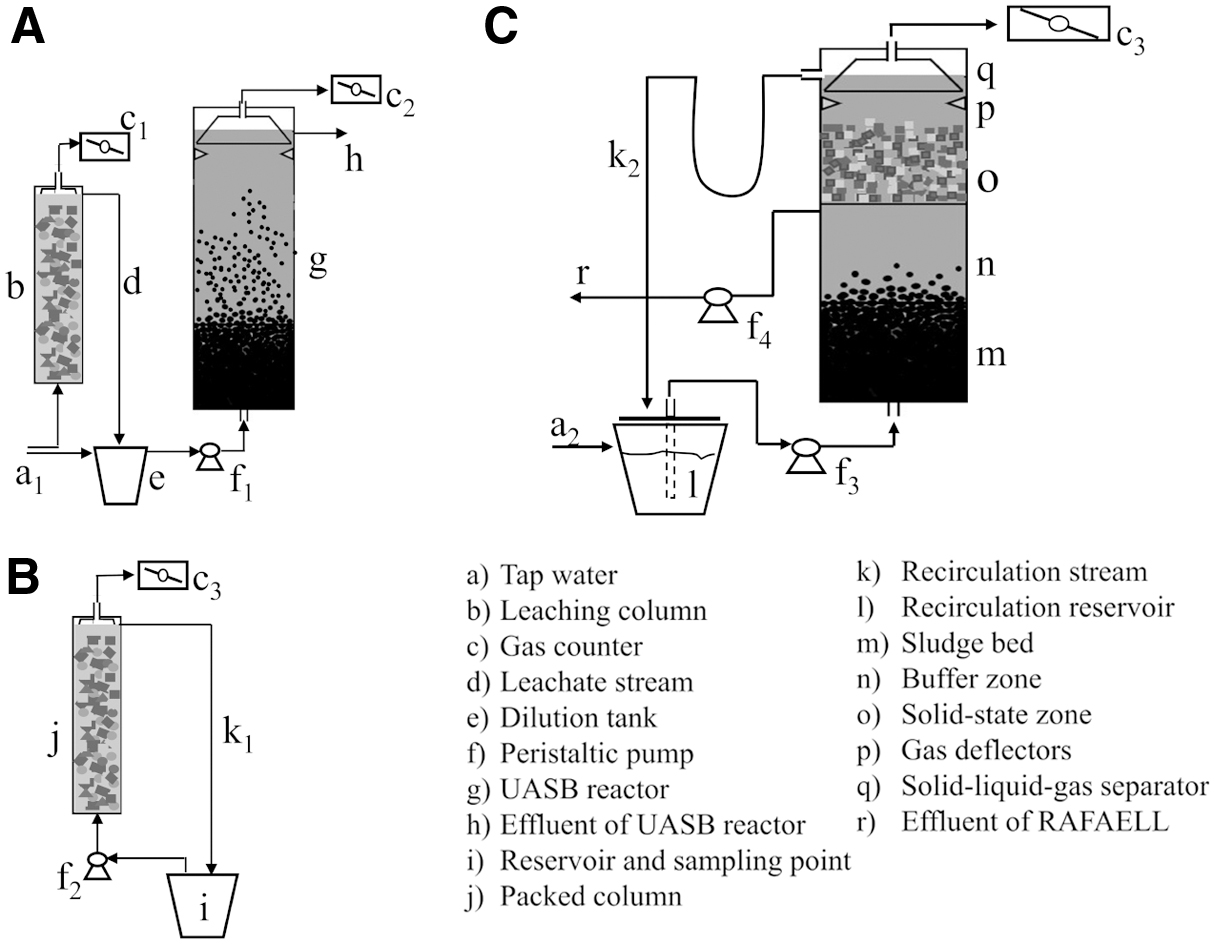
Scheme of the experimental units for
At the beginning of the UASB operation (Fig. 1A), the methanogenic activity of the inoculum was 0.12 ± 0.03 g CODCH4/(g VSS · day), and thus its quality was similar to a digested waste-activated sludge, 0.020–0.20 g CODCH4/(g VSS · day) (van Lier, 2013). After 90 days of operation, a COD removal efficiency higher than 80% was reached and the sludge showed a methanogenic activity of 0.43 g CODCH4/(g VSS · day) and a VSS concentration of 64.7 g VSS/L.
Biogas composition was determined by using a gas chromatograph (GowMAC 580 series, Gow-Mac, Inc., Bethlehem, PA) with a thermal conductivity detector operating at a polarity of 120 mA with a Carbosphere 80/100 packed column. The temperatures of the column, detector, and injector were: 140°C, 190°C, and 170°C, respectively, with a ramp of 25°C/min, using helium as carrier gas (25 mL/min at 40 psi).
Design parameters
The design criteria for the RAFAELL were: (i) the up-flow velocity, and (ii) the HRT. The up-flow velocity was established to promote particle size reduction and to maintain the sludge bed in the methanogenesis section. On the other hand, the value of the HRT was based on the information generated in the biodegradability tests of the waste, which corresponds to achieving a removal of at least 80% of the COD.
The up-flow velocity was established by using assays to determine the solubilization of the FVW and its particle size distribution. In these experiments, a vertical column was utilized (Fig. 1B). A mixture of waste was packed, and the wastewater (0.05 g VS/L) was the influent to promote particle size reduction. The concentration of solids and the particle size distribution were determined.
Solubilization of the FVW
FVW with an average particle size of 1 cm was packed into an 8 L vertical column (Fig. 1B). Once the waste was packed, the wastewater was recycled through the bed, setting an up-flow velocity of 1 m/h. A sample (100 mL) was taken daily and replaced in the wastewater reservoir that fed the column (Fig. 1B). The concentrations of TS and VS in the sample were determined. Once the wastewater was saturated with solids it was replaced by wastewater; the period between each change of wastewater was called the recirculation cycle.
Particle size distribution
A packed column (Fig. 1B) was subjected to recirculation of wastewater at four different up-flow velocities, 0.5, 1, 1.4, and 2 m/h. Particle size distribution was determined for the effluent. It was performed by passing samples of 50 mL through sieves with pore sizes of 105, 74, 62, 54, and 37 μm, and filtering them through pore size papers of 25, 16, 11, 8, 6, 3, and 2.5 μm. Thus, there were 12 liquid samples with solids of particle size (STø) <105, <74, <62, <54, <37, <25, <16, <11, <8, <6, <3, and <2.5 μm, respectively. The TS concentration was determined by the gravimetric test. Subsequently, the amount of solids in each sample was compared with the solids content in the unscreened effluent (TS) to obtain the fraction of solids for each one of the different particle sizes, according to the following equation:

where TS are the total solids in the original sample, TSøi is the fraction of solids for each size particle, and TS < øi are the solids with particle size below each pore size of the sieve and filter papers.
Anaerobic biodegradability of waste
According to Field (2002), the anaerobic biodegradability of soluble solids (<2.5 μm) and suspended solids (>2.5 μm) was determined for a mixture of FVW subjected to water recirculation. The tests were carried out in 120-mL serological bottles with a reaction volume of 80 mL. The concentration of the inoculum was 2.5 g VSS/L, with a specific methanogenic activity of 0.43 ± 0.06 g CODCH4/(g VSS · day). The substrates for this test were the solids dissolved and suspended, respectively. The effluent concentration was diluted to obtain a substrate-inoculum ratio of 2 g CODacetate/gVSSinoculum in the test.
The bottles were hermetically closed and purged with nitrogen, and then they were incubated for 7 days at 35°C. The biogas produced was measured daily, using a 250-mL glass column with a brine solution of pH 3.5. The composition of the biogas was determined by gas chromatography (see section of “Inoculum adaptation”).
The biodegradability was calculated with Equation (2):

where %M is 100(CODCH4/COD0), %CODr is 100(COD7/COD0). COD0 is the initial filterable COD, and COD7 is the COD filterable after 7 days; CODCH4 is calculated with Equation (3):

where VCH4 is the cumulative volume of methane (L) in 7 days of digestion, and FC is the conversion factor (0.418 L CH4/g COD, at 35°C); this factor depends on the temperature and moisture of gas and is calculated assuming that 1 g CODCH4 is equal to 0.35 L CH4 at 0°C and an elevation to sea level (Soto et al., 1993), and V is the volume of the liquid in the reactor.
Reactor description and operation
Reactor anaerobio de flujo ascendente empacado con lecho de lodos (spanish)
The reactor scheme is shown in Fig. 1C and consists of an acrylic tubular vertical device with 24 L of working volume. It consists of four sections, each one with a volume of 8 L and each one with an area of 400 cm2. The first section is located in the lower part of the tank, where the anaerobic sludge was inoculated (sludge blanket section, Fig. 1C[m]). The second section (buffer section, Fig. 1C[n]) is used for the transport of materials and where the alkalinity leaving the sludge bed consumes the acidity produced is the third section, the solid-state section (Fig. 1C[o]), where the FVW mixture was packed. The upper part (fourth section) of the reactor has a solid
The sludge density allows it to remain at the bottom of the tank, whereas the packed FVW are retained between two plates that have holes of 3 mm diameter, distributed equidistantly in the area of the plate (361 holes). The hydraulic flow of the reactor is controlled by two peristaltic pumps, one controlling the up-flow velocity (f3) and the other the HRT (f4). The biogas is quantified by using an electromagnetic pulse counter (Fig. 1C[c3]). The reactor is inside a room of controlled temperature (35°C).
RAFAELL operation
The reactor operation was started by using 8 L of the previously adapted inoculum (with a methanogenic activity of 0.43 ± 0.06 g CODCH4/[g VSS · day]), which was inoculated in the sludge blanket section (Fig. 1C[m]) of the reactor. The solid-state section (Fig. 1C[o]) of the reactor was packed with FVW with an average particle size of 1 cm. The reactor is filled with wastewater that is recirculated to pass through the anaerobic sludge bed, then rises through the buffer section (Fig. 1C[n]), and finally reaches the solid-state section where the wastewater shear stress causes the reduction of particle size. Biogas is continuously removed from the reactor by using a solid–liquid–gas separator (Fig. 1C[q]) and quantified by a magnetic pulse counter (Fig. 1C[c3]).
First, the effect of the up-flow velocity on the solids removal was evaluated; for this, the reactor was operated at 10 days of HRT with an organic loading rate of 1 g VSS/(L · day) with increasing velocities of 0.5, 1.0, 1.4, and 2.0 m/h. Subsequently, the efficiency of the reactor was evaluated by determining methane productivity (LCH4/[LR · day]) dependent on the load. The response parameters were solids concentration, methane productivity, and VFA. The concentration of VFA was measured by the titration method, and it is expressed as meq VFA/L (van Lier, 2013).
Results and Discussion
Waste characterization
The characteristics of the packaging mixture (Table 1) are shown in Table 2. The values obtained are within the range reported in previous studies for similar mixtures of FVW (Bouallagui et al., 2009; Fernández-Güelfo et al., 2012). As observed in Table 2, the physicochemical characteristics of the mixtures are modified by the composition of the residues (Table 1); these changes may involve the modification of the operating conditions of the anaerobic reactor. For example, acid mixtures (I, IV, V) imply the need to modify the alkalinity of the liquid effluent to prevent pH drops during the process. On the other hand, C/N ratios <20 (Visvanathan et al., 2012) in the mixtures (I, III, IV, V) imply the reduction in the organic loading rate of entry to the reactor to avoid the accumulation of ammonia (most of the organic nitrogen passes to ammoniacal nitrogen). These two examples illustrate the importance of knowing the physicochemical characteristics of the mixtures during the operation of AD systems.
Solubilization of the FVW
In this study, the objective of the pretreatment was to promote the disintegration of FVW via the shear stresses of the water up-flow. The up-flow velocity recommended for the operation of UASB is 1 m/h; thus, this value was used for this first experiment. Figure 2 shows the solubilization of the solids in the wastewater (initial solids concentration of 0.05 g VS/L). The maximum concentration of solids in the water is achieved during the first 6 days (6.75 g VS/L). In the second recirculation cycle, the effluent reaches its maximum on day 17 (3.12 g VS/L). The third recirculation cycle starts on day 19, reaching its maximum on day 23 (3.45 g VS/L). The last recirculation cycle begins on day 24 and reaches a maximum concentration on day 32 (2.13 g VS/L). It is also observed that the wastewater is rapidly saturated with solids in each recirculation cycle.

Volatile solids in the recirculation effluent of a column packed with FVW.
During the process, there was a change in the packing density of the waste from 0.9 to 0.5 kg/L. The volume of the waste at the end of the experiment was 40% of the initial volume, and the average particle size of the package was <5 mm. This decrease was achieved over a period of 35 days, comparing this time with the time of composting, which is one of the traditional technologies of FVW stabilization; it represents about 3.5 less time than is required in traditional composting to reduce at a similar magnitude the volume of treated wastes. For example, in the studies of Breitenbeck and Schellinger (2004), and Guidoni et al. (2018), volume reductions of 40.7% and 36.2% were achieved after 100 and 60 days of composting, respectively.
During the evaluation of the solubilization of the residue, the effect of the up-flow velocity on the particle size of the solids was evaluated. In Fig. 3, it is observed that as the up-flow velocity increases, the fraction of particles smaller than 20 μm increases, which implies that the shear stresses lead to a modification of the structure of the FVW that causes the reduction of the particle size. It is observed that 93% of the particles have sizes smaller than 20 μm when the up-flow velocity is >1.4 m/h.
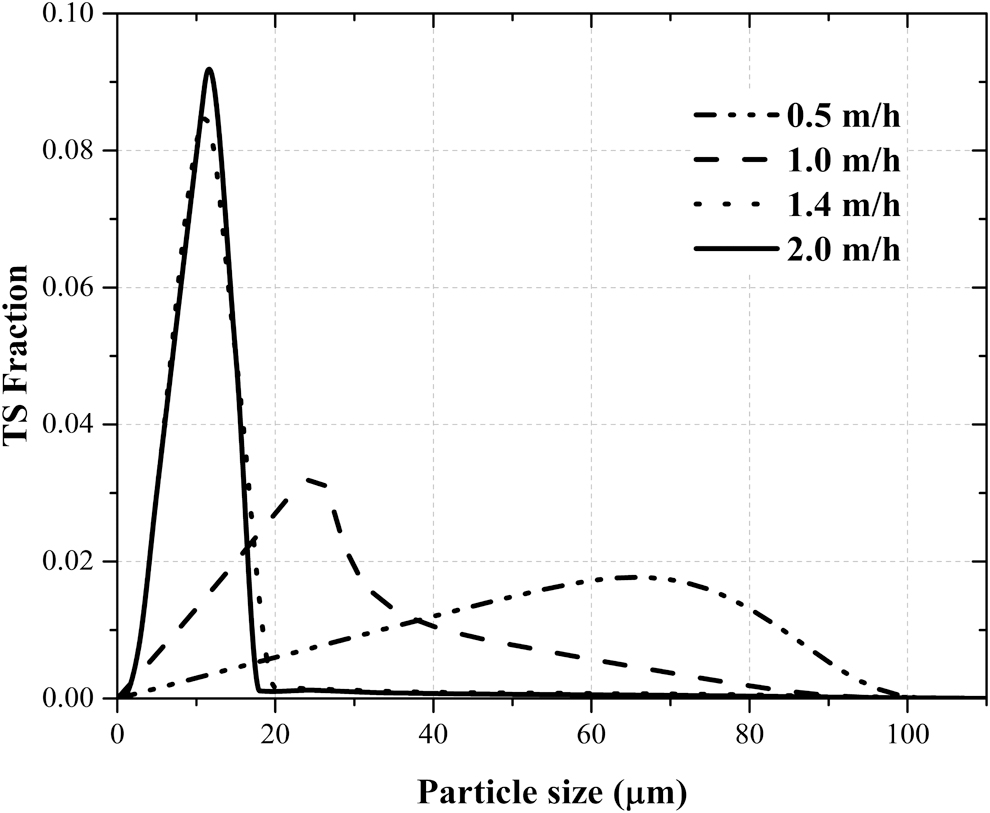
Distribution of particle size of effluent from a column packed with fruit and vegetable waste with average particle size of 1 cm.
Anaerobic biodegradability was also measured for the effluent obtained in each of the recirculation cycles (Table 3). The effluent biodegradability decreased as the recirculation cycles progressed (around 56%). The low biodegradability of FVW (around 37%) after recirculation can be associated with its composition (polysaccharides, such as celluloses), in agreement with several authors (Mosier et al., 2005; Igoni et al., 2008) working with materials that are rich in cellulose (38.81%), hemicellulose (29.5%), and lignin (7.1%); the percentage of biodegradability was closer to 40% or less.
Biodegradability of the Recirculation Effluent from a Packed Column with Fruit and Vegetable Waste
Up-flow velocity and HRT
To establish the HRT in the reactor, methane production was analyzed for the effluent from the first recirculation cycle of the packed column (Fig. 4). Eighty-eight percent of methane production was achieved at around 5 days of digestion. It is also observed that at between 7 and 10 days, the methane production decreased, but after the 10th day there was an increase in methane production. This last behavior may be associated with the hydrolysis of substrates of lesser availability (with particle sizes >2.5 μm) or with hydrolyzed polymers due to the increase of hydrolytic enzymes in the system. The removal of COD after the 10th day was close to 95 ± 3%. Therefore, it was established that the HRT at which the reactor must operate is 10 days.
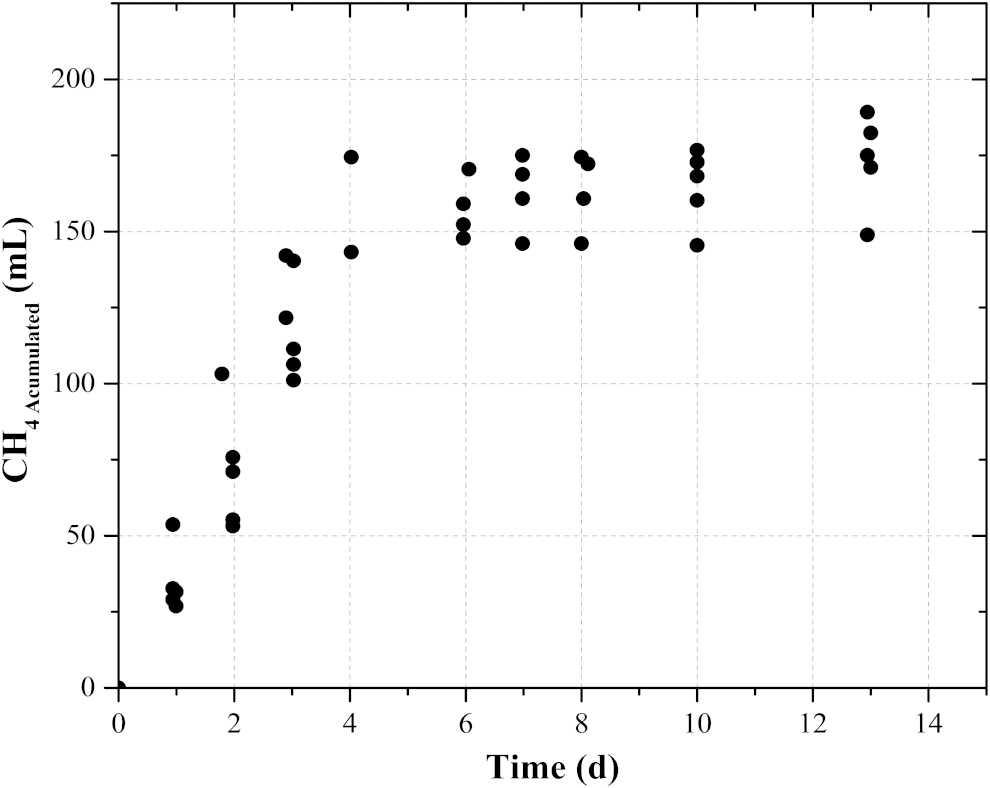
Methane production during the biodegradability assay of the first recirculation cycle of the packed column.
To establish the up-flow velocity that promotes the solubilization of the FVW in the package, the ascending velocity in the packed column was modified; Fig. 5 shows the value of the TS in the reactor effluent at different up-flow velocities. It is observed that from 0.5 to 1.4 m/h the solids concentration in the effluent is below 0.15 g TS/L. The solids concentration increases to 0.33 g TS/L at the rate of 2 m/h, with a higher standard deviation, implying that the solids output can reach up to 0.45 g TS/L. Thus, an up-flow velocity of 1.4 m/h was established, since at this speed a better quality of the effluent leaving the reactor is obtained.
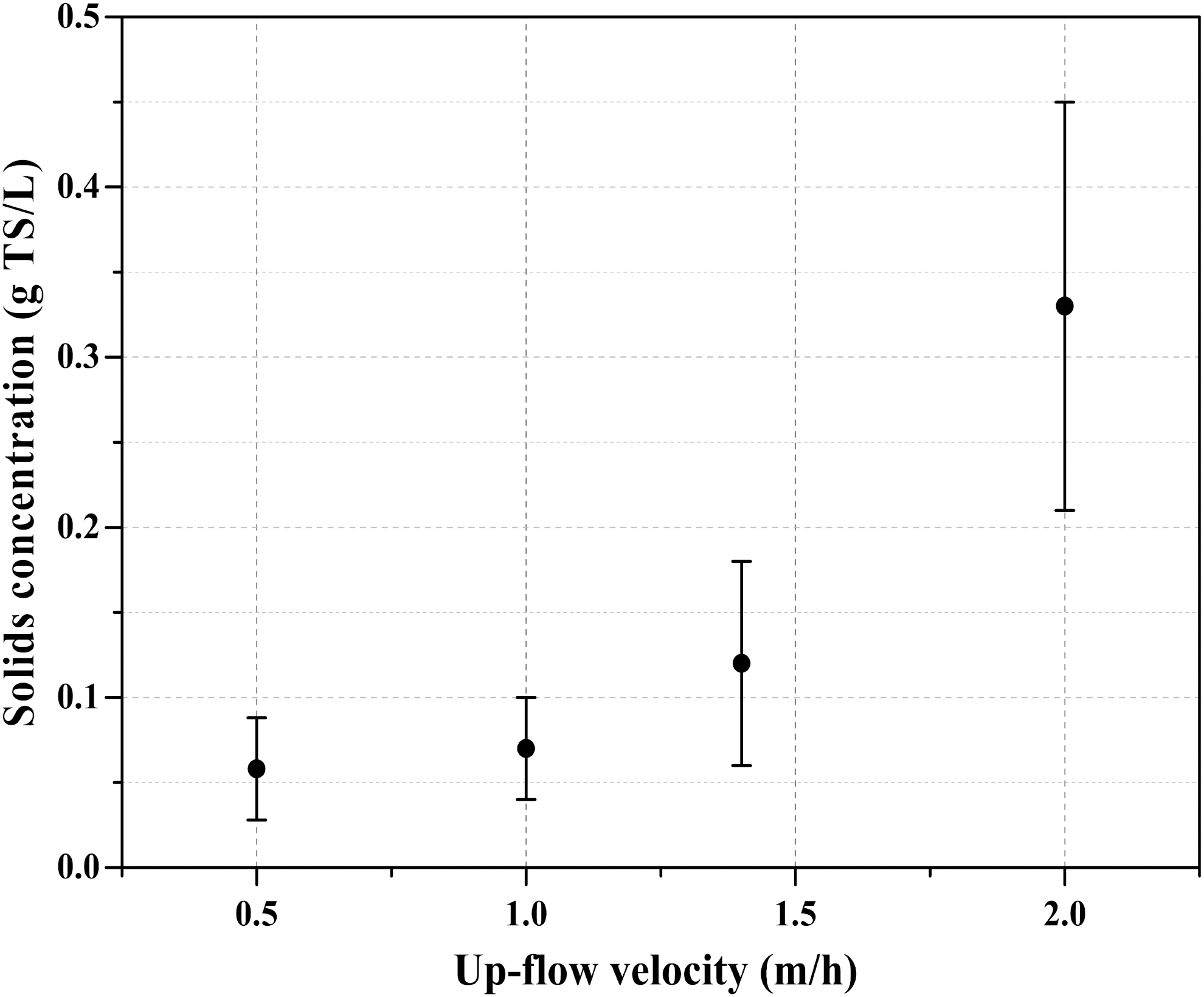
Total solids concentration in the effluent of the up-flow anaerobic sludge blanket reactor at different surface velocities.
Performance of the anaerobic bioreactor
Figure 6 shows the productivity of the proposed digester regarding the organic loading rate. RAFAELL operated with an HRT of 10 days and an up-flow velocity of 1.4 m/h. In the interval tested (0.66–10 g VS/[L · day]), the methanogenic productivity increased proportionally as the organic loading rate increased, reaching a maximum value 3.6 LCH4/(L · day). The values of methane productivity reported for one-stage systems treating FVW are 1.25 and 1.0 LCH4/(L · day), operating at an organic loading rate of 2.46 and 2.1 g VS/(L · day), respectively (Mata-Alvarez et al., 1992; Bouallagui et al., 2009). Two-stage systems support an organic loading rate of 5.65 and 7 g VS/(L · day), but their productivity is in the range of 2.1 and 2.3 LCH4/(L · day) (Verrier et al., 1987; Ganesh et al., 2014).
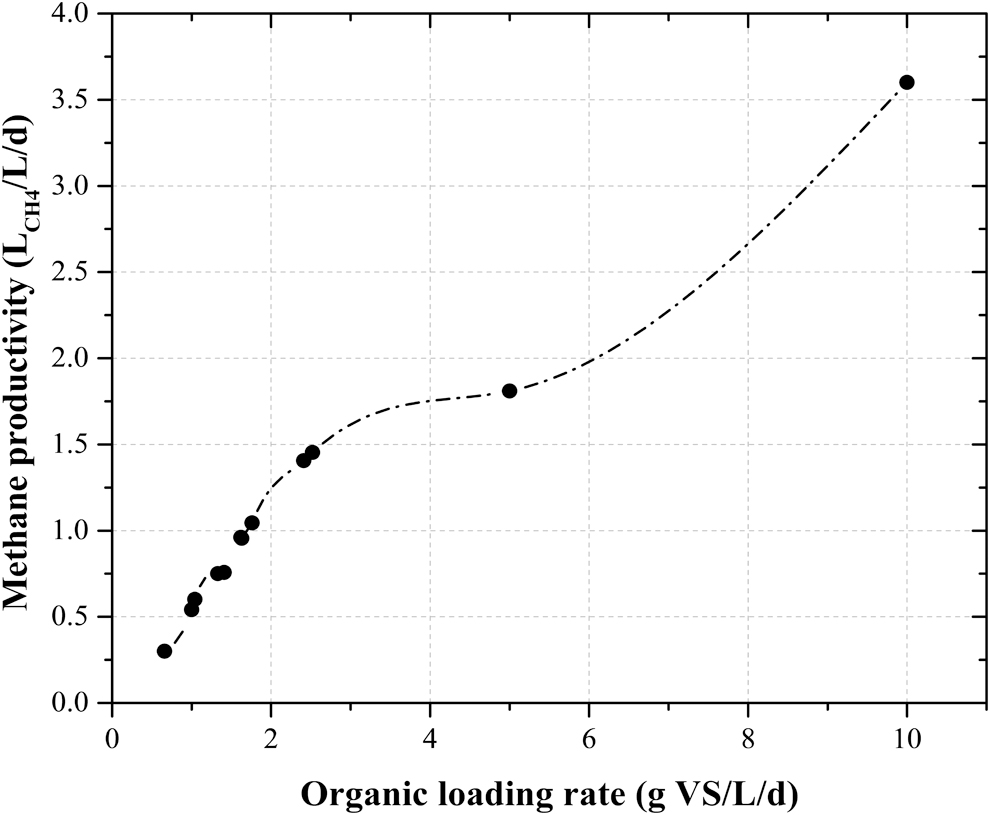
Methanogenic productivity in the reactor with respect to the organic loading rate.
RAFAELL presents good removal efficiency of volatile solids at the loads tested (67%). However, work must still be done to determine the maximum load that the reactor can withstand.
During the first period of operation (50 days) of the reactor, whenever the organic loading rate increased, a high concentration of VFA (until 40 meq/L) was observed (Fig. 7), compared with the VFA concentration (10.1–31 meq/L) in a stable methanogenic reactor (Bouallagui et al., 2009). Nevertheless, there was an efficient consumption of these VFA, and their accumulation was avoided. In the second period (50–100 days), the concentration of VFA when the organic loading rate was increased was less than the first one (30 meq/L) despite that the organic loading rate was 500% higher than at the initial condition. Also, in the third period of operation, a rapid VFA consumption was observed, although this parameter reached a maximum value of 65 meq/L when the organic loading rate applied was 10 g VS/(L · day). The latter suggests that as the operating time progresses the buffer zone contributes better to the control of the pH (Fig. 8). Whenever the load increased, VFA concentration was high (>30 meq/L), decreasing the pH (<6); however, it is observed that the alkalinity in the buffer section managed to control this decrease, returning to values of pH around 7. Even in the last period of operation, although the VFA concentration was 65 meq/L, there was no inhibition because the pH remained above 7. This result is consistent with that of Yang et al. (2015), who report a stable performance of the anaerobic process at VFA concentrations up to 66 meq/L, as long as the pH remains neutral, because, in these conditions, VFA are dissociated and, therefore, are not toxic for methanogenic archaea.
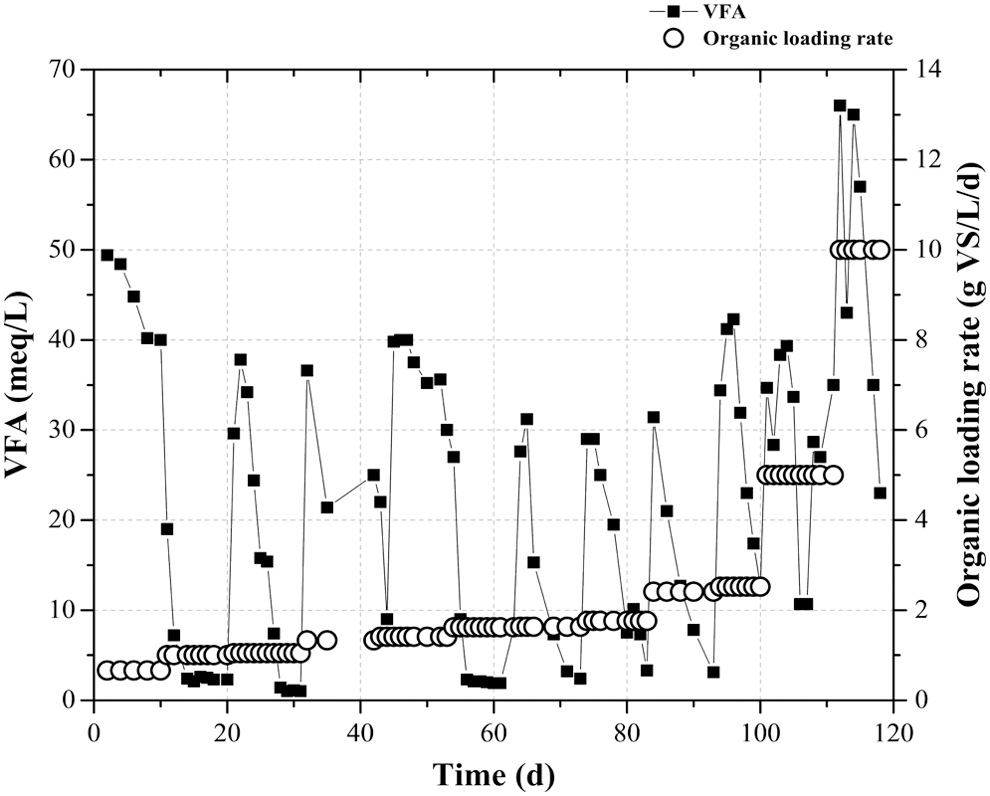
Behavior of the concentration of VFA with respect to the organic loading rate. VFA, volatile fatty acids.

Behavior of VFA concentration and pH in the RAFAELL.
The reactor proposed in this work showed a stable performance operating with 10 g VS/(L · day) of organic loading rate; its value was higher than the organic loading rate applied to two-stage systems used for FVW treatment (5.65–7 g VS/[L · day]) (Verrier et al., 1987; Ganesh et al., 2014). Regarding the methane productivity achieved with RAFAELL, it was proportional to the organic loading rate applied.
Conclusions
The overall results of AD of FVW suggest that the RAFAELL is a promising process to treat these wastes with high efficiency in terms of degradation and biogas productivity. This efficiency is possible by integrating a pretreatment; the solid-state section, where the wastewater shear stress causes the reduction of particle size, also contributes toward separating the easy and difficult to biodegrade substrates.
The hydrolysis and acidification process in the solid-state section was revealed by the increase of VFA, which are removed in the sludge blanket section of the reactor by the action of methanogenic consortia that, in turn, generate biogas.
In general, the RAFAELL presents good removal efficiency of volatile solids (67%), at the loads tested and its methane productivity is similar to the values reported for two-stage systems that treat FVW with organic loads >5 g VS/(L · day).
The optimal performance of the up-flow anaerobic sludge blanket solid-state reactor was reached at an up-flow velocity of 1.4 m/h, and HRT of 10 days, with operation and control parameters of pH 6.5–8, temperature 35°C, and organic loading rate of 10 g VS/(L · day). Methane productivity obtained in these conditions was 3.6 LCH4/(L · day).
Footnotes
Author Disclosure Statement
No competing financial interests exist.
Funding Information
Funded by the National Technological Institute of Mexico, Key 661.18-PD.