




Abstract
Antibiotic resistance genes (ARGs), as emerging environmental contaminants, have become a threat to human health. Studies have shown that secondary effluent from wastewater treatment plants was an important source of ARGs, and the horizontal transfer of ARGs that took place in secondary effluent has increased its pollution to the water environment; the conjugative transfer is the main form of horizontal transfer. Powdered activated carbon was widely used in advanced wastewater treatment, it would gradually be converted into biological powdered activated carbon (BPAC) during long-term use, there was still no related research on whether the microorganisms on BPAC could promote horizontal transfer of ARGs. In this article, the system between S17-1 lamp pir Escherichia coli and MG1655-chl E. coli was constructed to explore the effect of BPAC on the conjugative transfer of resistance plasmid pHS-AVC-LW1144. The main results were as follows: the conjugative transfer of resistance plasmid could take place without and with BPAC, the effect was better with added BPAC, and the BPAC effect of promoting the conjugative transfer was strongest at 20 mg/L. When incubation time was 24 h and the BPAC dosage was 20 mg/L, the zygote concentrations and conjugative transfer frequency were the highest. The zygote concentrations were higher at low temperature (4°C) than normal (25°C) and high temperature (50°C) conditions. The zygote concentrations under alkaline (pH = 9) were higher than acidic (pH = 5) and neutral (pH = 7). Therefore, within a certain range, the longer the incubation time, the better the effect of promoting the conjugative transfer of resistance plasmid, and in low temperature and alkaline conditions, the effect of promoting the conjugative transfer were also better. Based on this study, we hoped to provide basic support for advanced treatment of reclaimed water and risk control of ARGs.
Introduction
At present, because of the large-scale application of antibiotics, the spread of antibiotic resistance genes (ARGs) has accelerated (Knapp et al., 2010; Zhang et al., 2015), ARGs were found in surface water, groundwater, municipal sewage, secondary effluent from sewage plants, and even in drinking water (Munir et al., 2011; Gao et al., 2012). There are many kinds of ARGs in urban sewage. For example, >40 kinds of tetracycline ARGs were reported, in addition to ARGs for sulfonamides and β-lactams (Thompson et al., 2007). ARGs in the water environment and the resistance they encode for in bacteria is one of the important environmental problems that threaten human health and ecological security in the future (Baquero et al., 2008).
Urban sewage treatment plants are important gathering places for antibiotics, and important places for gathering, evolution, horizontal transfer, and proliferation of ARGs (Baquero et al., 2008). The horizontal transfer of ARGs between microorganisms was an important way to spread resistance genes (Rhodes et al., 2000; Luo and Cheng, 2010). The main mechanisms include the conjugative transfer of plasmids, transposons or integrons, the transformation of naked DNA, and the transduction of phages (Zhang et al., 2009). The sewage treatment system was found to contain a large number of resistance plasmids to facilitate the horizontal transfer of ARGs (Zhang et al., 2011). Studies showed that sewage treatment systems with high biological diversity and rich bacterial communities could effectively diminish pollutants such as Chemical Oxygen Demand (COD),
In the reclaimed water treatment process, the process of powdered activated carbon (PAC) was an effective process. Not only was adsorption by activated carbon one of the most cost-effective techniques (Gupta et al., 2012), but also PAC would gradually be converted into biological powdered activated carbon (BPAC) during long-term use, enabling microbial degradation of pollutants (Liang et al., 2012; Li et al., 2015). In drinking water treatment and municipal wastewater treatment, the residence time of PAC was ∼15–30 min, and some can reach several days or 10 days (Liu et al., 2006; Boehler et al., 2012; Margot et al., 2013). Recent study found that BPAC had a good removal effect on ARGs in secondary effluent (Sun et al., 2019). However, it was not clear whether the microorganisms on the surface of BPAC would promote the horizontal transfer of ARGs, with few studies only in this area in China and abroad. Although Ravasi et al. (2019) studied the effects of PAC on antibiotic resistance bacteria, the effect of PAC on the horizontal transfer of resistance genes was not explored. In addition, PAC was also used in drinking water applications, both in centralized treatment plants and in point-of-use devices. Studies have shown that resistance genes could also be detected in drinking water (Pruden et al., 2006). If the conjugative transfer of resistance genes could take place in the process of PAC treatment of drinking water, it will have greater impact on public health, so researchers need to do further research in this area, and the results of this study will become an important reference.
In this study, the system of conjugative transfer between S17-1 lamp pir Escherichia coli and MG1655-chl E. coli was constructed to explore the effect of BPAC on the conjugative transfer of the resistance plasmid pHS-AVC-LW1144, and investigate the conjugative transfer of the resistance plasmid as influenced by the incubation time, temperature, and pH. The aim was to provide some reference value for the study of the conjugative transfer between the same and different species of bacteria in the secondary effluent.
Experimental Materials and Methods
Experimental materials
The secondary effluent from a sewage treatment plant in Beijing was used to prepare BPAC; sampling time was autumn. The sewage plant used traditional activated sludge to treat urban sewage. Take samples once every 3 h, once 4,000 mL, the water samples were stored in a 4°C constant temperature freezer in a polyethylene bucket to ensure the water quality of the raw water was unchanged, and the sample was pretreated within 24 h.
Kanamycin sulfate and chloramphenicol were purchased from Shanghai Bioengineering Co., Ltd. to screen zygotes (The resistance plasmid with a red fluorescence element [RFE] in the donor bacteria transferred to the recipient bacteria and successfully expressed. Such recipient bacteria was called zygote) that were resistant to kanamycin sulfate and chloramphenicol.
Preparation of BPAC
Four liters of secondary effluent was placed in a beaker, 8 g of PAC was added, and the suspension was stirred on a magnetic stirrer with continuous aeration (aeration volume 4 L/min). In the later stages of cultivation, the secondary effluent was regularly added to ensure BPAC concentrations of 2 g/L. After ∼30 days of cultivation, stable and mature BPAC could be obtained. The PAC used in the experiment was purchased from Shanghai XiTan Environmental Protection Technology Co., Ltd. The specific properties of PAC were as follows: the material was apricot shells, the particle size was 200–300 mesh, the average pore diameter was 3.35 nm, specific surface area was ∼587.38 m2/g, and the iodine value was 2–13 mL/g.
The differences between PAC and BPAC
The main difference between PAC and BPAC was whether the surface contained microorganisms. The BPAC in this study was obtained by adding PAC to secondary effluent. It was not chemically or physically modified, so there was almost no difference in functional groups between the PAC and BPAC. In general, the pH value of the effluent from the wastewater treatment plant is 7–8 (7.46 in this study), which is higher than the isoelectric point of the bacterial cells (pH 2–3 or 4–5) (Chubar et al., 2008; Hadjoudja et al., 2010). Therefore, bacteria in the secondary effluent will be negatively charged. Because of the large number of microorganisms accumulated on BPAC, the surface charge of BPAC was more than that of PAC. In previous experiment, it was found that the particle size of BPAC was larger and the specific surface area was smaller when BPAC and PAC were used to remove Dissolved Organic Carbon (DOC) in secondary effluent, so the adsorption performance of BPAC was worse than PAC, but BPAC had strong biodegradability.
Plasmid and bacteria used in the experiment
The plasmid used for the conjugative transfer was pHS-AVC-LW1144, constructed by Beijing Hesheng Gene Co., Ltd. It carried kanamycin resistance and had initial gene sequence (incP origin of transfer oriT) for conjugative transfer to ensure self-replication after transfer. The plasmid was modified to add an RFE with fluorescence wavelength of 584 nm. When the plasmid successfully transferred to the recipient bacteria by conjugative transfer, the recipient bacteria showed red fluorescence.
Donor bacteria
S17-1 lamp pir E. coli was used as donor bacteria from ATCC28188 provided by Beijing Hesheng Gene Co., Ltd. S17-1 lamp pir E. coli was a conjugative transfer strain containing pir gene that determined whether the plasmid could replicate in bacterial cells and ensured that the artificially engineered plasmid could be normally expressed after being introduced into the donor bacteria.
Recipient bacteria
MG1655-chl E. coli was used as recipient bacteria from the engineered strain series, provided by Beijing Hesheng Gene Co., Ltd. Recipient bacteria carried chloramphenicol resistance.
Experimental methods
Preparation of medium and solution reagents
LB medium
The 5 g of yeast powder, 10 g of tryptone, 10 g of sodium chloride, and 800 mL of distilled water were stirred well until they were fully dissolved, added distilled water to a volume of 1,000 mL, and then dispensed into 500 mL conical flask and 5 mL test tube, sterilized at a high temperature of 121°C for 20 min, and then stored at 4°C for use.
LB agar medium
The main components were the same as the LB medium. Agar powder was added to the fully dissolved LB medium at a concentration of 12 g/L, sterilized at a high temperature of 121°C for 20 min, and then stored at 4°C for use. When used to screen the zygotes, the LB agar medium was sterilized, and when the temperature was lowered to 50°C, the antibiotic solution was added and mixed, and the mixture was stored at 4° C for use.
Preparation of antibiotic solution
(1) Weigh the appropriate amount of kanamycin sulfate powder in a 100 mL beaker, then pour it into a beaker containing 30 mL of sterilized water, and shake the mixture on a magnetic stirrer; (2) add sterilized water to a volume of 50 mL; (3) the kanamycin sulfate solution was aspirated using a syringe equipped with a 0.22 μm filter, and the solution was injected into a sterilized 10 mL centrifuge tube and frozen in a −20°C refrigerator. The solvent of the chloramphenicol solution was anhydrous ethanol, and the operation method was the same as the kanamycin sulfate solution, but it needed to be packaged in tin foil paper to protect from light. The solution concentrations of kanamycin sulfate and chloramphenicol were 50 and 25 mg/mL, respectively. Before using the antibiotic solution, it needed to be melted and diluted to the experimental concentration.
Construction of conjugative transfer system for resistance plasmid
In this study, the effect of BPAC on the conjugative transfer of the resistance plasmid pHS-AVC-LW1144 was studied. The resistance plasmid was first modified to carry an RFE, then the S17-1 lamp pir E. coli was transformed into competent state, and the resistance plasmid was transferred into S17-1 lamp pir E. coli. The S17-1 lamp pir E. coli were inoculated on LB medium containing kanamycin sulfate, and cultured overnight at constant temperature of 37°C with appropriate shaking. Red colonies appeared on the medium, indicating that the plasmid was introduced into the donor bacteria and successfully expressed. At the same time, MG1655-chl recipient bacteria was activated and inoculated in LB medium containing chloramphenicol, cultured overnight at constant temperature of 37°C with appropriate shaking.
After the donor and recipient bacteria have been cultured, the suspensions of donor and recipient bacteria were centrifuged (2,000 g) for 10 min, then washed three times with phosphate-buffered saline and the supernatant was removed every time, and finally each strain was resuspended in LB agar medium, and the value of OD600 was adjusted to 0.4 (the concentration of each strain was ∼108 colony forming unit [CFU]/mL). About 2.5 mL each of donor bacteria and recipient bacteria were mixed to carry out the conjugation experiment, 20 or 80 mg/L BPAC was added, and incubated at 37°C for 16 h. The mixed bacteria suspension was shaken and spread on an LB agar medium containing kanamycin sulfate and chloramphenicol using a 10-fold gradient dilution method, followed by incubation at 37°C for 16 h. The growth of erythema bacterial strains on the LB agar medium was observed and the number of zygotes counted to calculate the conjugative transfer frequency. The conjugative transfer frequency was the ratio of the zygote numbers (N1) to the numbers of the recipient bacteria (N2). The formula is as follows: ƒ = N1 (CFU/mL)/N2 (CFU/mL).
The observation of the transfer phenomenon of resistance plasmid
When BPAC was not added, after mixing 2.5 mL of donor bacteria and 2.5 mL of recipient bacteria, shaken quickly and mixed well, followed by placing 1–2 drops of the mixture on a slide using a pipette, the process of conjugative transfer of plasmid (marked by red fluorescence) to surrounding bacteria was observed under a laser confocal fluorescence microscope (FV1000; Olympus Co., Ltd.). When the transfer phenomenon of resistance plasmid in the BPAC treatment was observed, after placing 1–2 drops of the mixture on a slide using a pipette, followed by adding 2.5 mg of BPAC, than using a laser confocal fluorescence microscope to observe.
Results and Discussion
The phenomenon of conjugative transfer of resistance plasmid between bacteria without BPAC
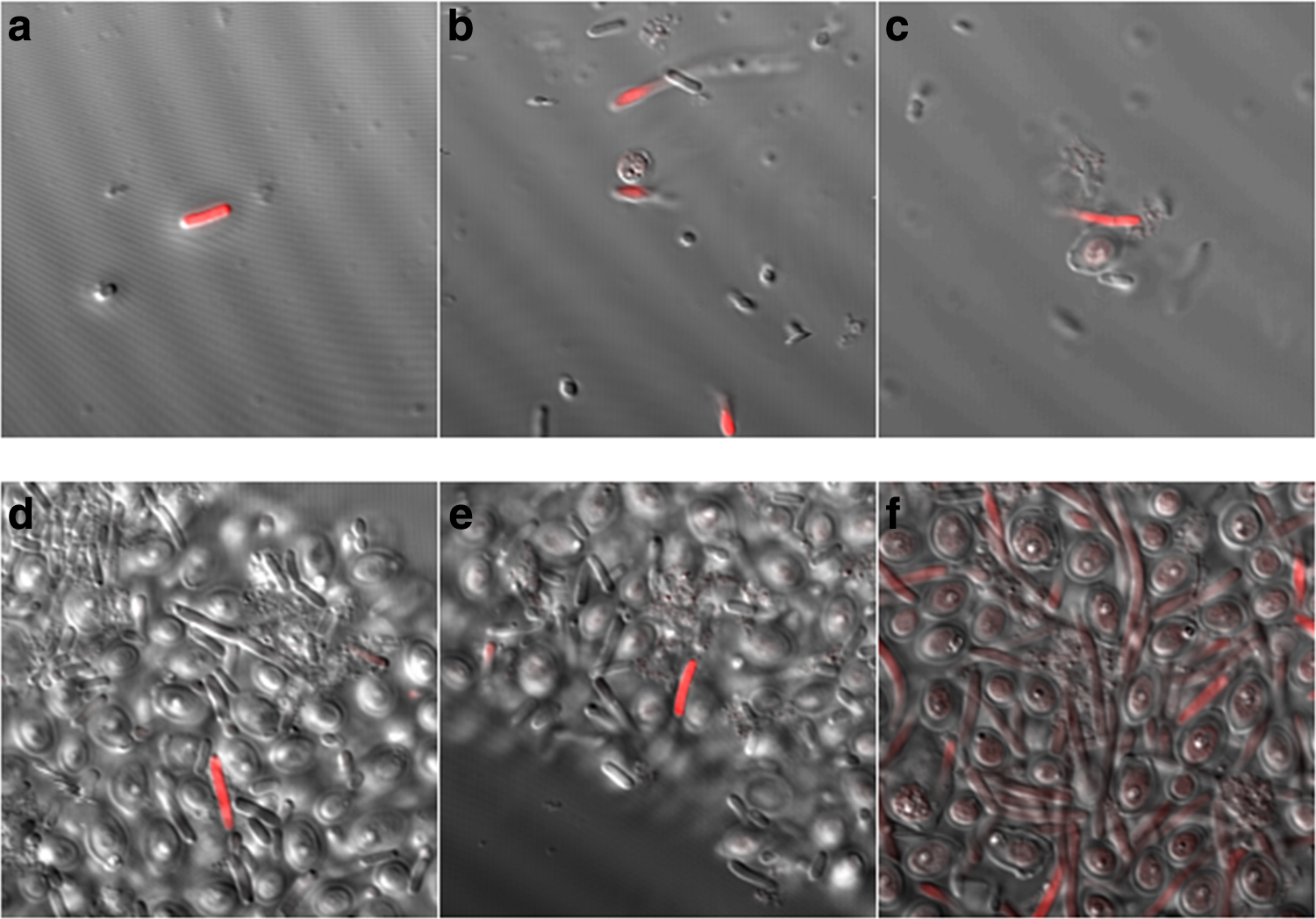
The process of conjugative transfer of the resistance plasmid between bacteria without BPAC is given in Fig. 1. The rod-shaped bacteria in the figure were donor and recipient bacteria, and the round bacteria were other species of bacteria, which may be mixed into the mixture during the experiment. As given in Fig. 1a, S17-1 lamp pir E. coli showed red color, indicating that the resistance plasmid was successfully expressed in the donor bacteria. Figure 1b shows that the donor bacteria carrying the red fluorescence was in contact with the recipient bacteria (MG1655-chl E. coli). Figure 1c shows that the donor bacteria was in contact with other bacteria, and red fluorescence was also found in other bacteria, indicating that the resistance plasmid has undergone conjugative transfer between different species of bacteria. Figure 1d–f shows the conjugative transfer of resistance plasmid at 20, 40, and 60 min in mixed bacteria solution, respectively. It was obvious that only one to two red-fluorescent donor bacteria were exposed to the recipient bacteria and other bacteria at 20 min. After 20 min of conjugative transfer, bacteria around the donor bacteria showed weak red fluorescence, indicating that the resistance plasmid successfully transferred to other bacteria. At the 60th minute, more E. coli and other bacteria showed red fluorescence. From a microscopic point of view, the conjugative transfer between the donor bacteria and the recipient bacteria and other species of bacteria confirmed that the resistance genes could be transferred horizontally between the same species or across the species.
The phenomenon of conjugative transfer of resistance plasmid between bacteria without BPAC:
The phenomenon of resistance plasmid transferred in the BPAC treatment
The process of conjugative transfer of the resistance plasmid between bacteria with BPAC is given in Fig. 2.

Conjugative transfer of resistance plasmid between bacteria under the influence of BPAC:
After adding BPAC, a lot of bacterial zoogloea appeared, which led to a cell membrane contact between different species of bacteria, and provided a good environment for the conjugative transfer of the resistance genes through plasmid from the donor bacteria to the recipient or other bacteria, resulting in a large area of red fluorescence (Fig. 2a–c). Babic et al. (2011) used integrative and conjugative elements (ICEs) to observe the transfer of ICEs from Bacillus subtilis donors to recipients, confirming that the ICEs was transferred from the donor cell pole or along the cell surface to the recipient cell by means of conjugation, and this phenomenon could occur between various strains, including pathogenic and symbiotic ones.
Figure 2d–f provides the trend of spread of plasmid in donor bacteria at different time periods (20, 40, and 60 min). After 20 min, a small number of donor bacteria with red fluorescence was observed to start contacting the zoogloea. After 40 min, the red fluorescence of the flaky region appeared, suggesting the transfer of the resistance plasmid; as the bacteria in the zoogloea got in contact, the transfer of the resistance plasmid between different species of bacteria was promoted further. After 60 min, the fluorescence intensity increased and the number of successful plasmid transfers increased, indicating that the presence of BPAC promoted conjugative transfer of the resistance plasmid.
Effect of BPAC dosage on the conjugative transfer of resistance plasmid
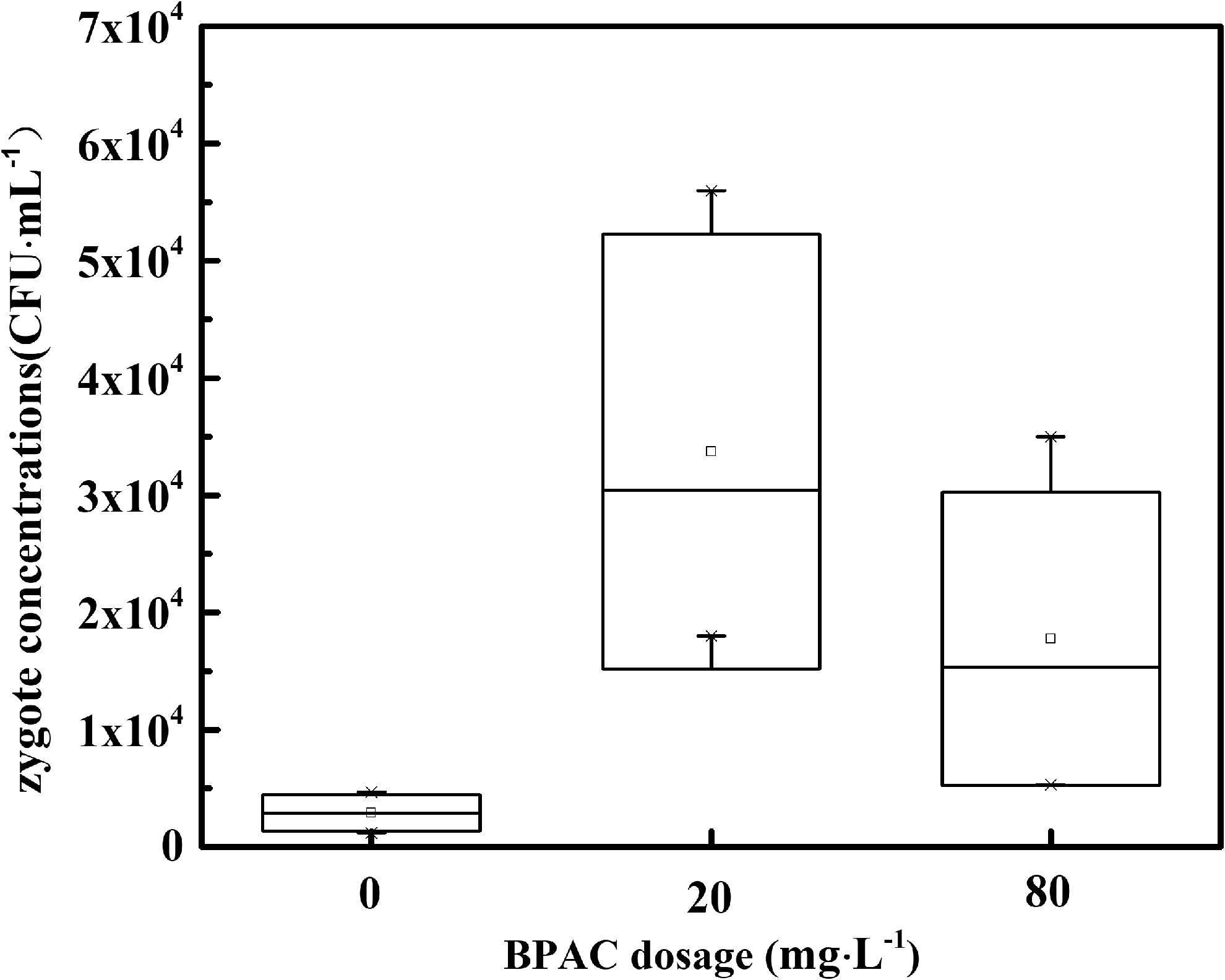
In this experiment, the effect of BPAC dosage on the conjugative transfer of resistance plasmid was investigated further. Different concentrations of BPAC (0, 20, or 80 mg/L) were added to the mixture of donor and recipient bacteria, the mixture was shaken and placed in a constant temperature incubator at 25°C for 16 h; then, the zygote concentrations were recorded, and the conjugative transfer frequency was calculated. The results are given in Fig. 3.
The effect of BPAC dosage on conjugative transfer of resistance plasmid.
As shown in Fig. 3, when the initial concentration of mixed bacteria solution was 108 CFU/mL, the concentrations of zygote were higher with than without BPAC added, indicating that the presence of BPAC promoted the conjugative transfer of resistance plasmid. The conjugative transfer frequency when BPAC dosage was 0 mg/L was only (2.90 ± 1.5) × 10−5, which was consistent with a conclusion drawn by Inoue et al. (2005) that the conjugative transfer frequency of ARGs in the natural environment was low. In the treatment with 20 mg/L BPAC, the concentration of zygote was (3.37 ± 1.0) × 104 CFU/mL, which was ∼12 times that of the 0 mg/L BPAC. The conjugative transfer frequency was (3.37 ± 0.9) × 10−4, suggesting the BPAC effect in promoting conjugative transfer was very significant. With an increase in BPAC dosage, the concentrations of zygote decreased. At higher BPAC concentrations, the adsorption of PAC would remove some resistance plasmids, resulting in a reduction in the number of resistance plasmids. When the BPAC dosage was 80 mg/L, the zygotes concentration was (1.78 ± 0.5) × 104 CFU/mL, which was still significantly higher than in the 0 mg/L BPAC treatment. It was inferred that because of the abundant microbial biomass on BPAC, the conjugative transfer took place not only between E. coli of the same strain, but also between strains of different species, therefore increasing the conjugative transfer frequency. In addition, the porous surface and large internal space of BPAC provided the sites for donor and recipient bacteria, promoting the conjugative transfer of resistance plasmid.
Effects of different environmental factors on the conjugative transfer of resistance plasmid under the influence of BPAC
Effect of incubation time on the conjugative transfer of resistance plasmid
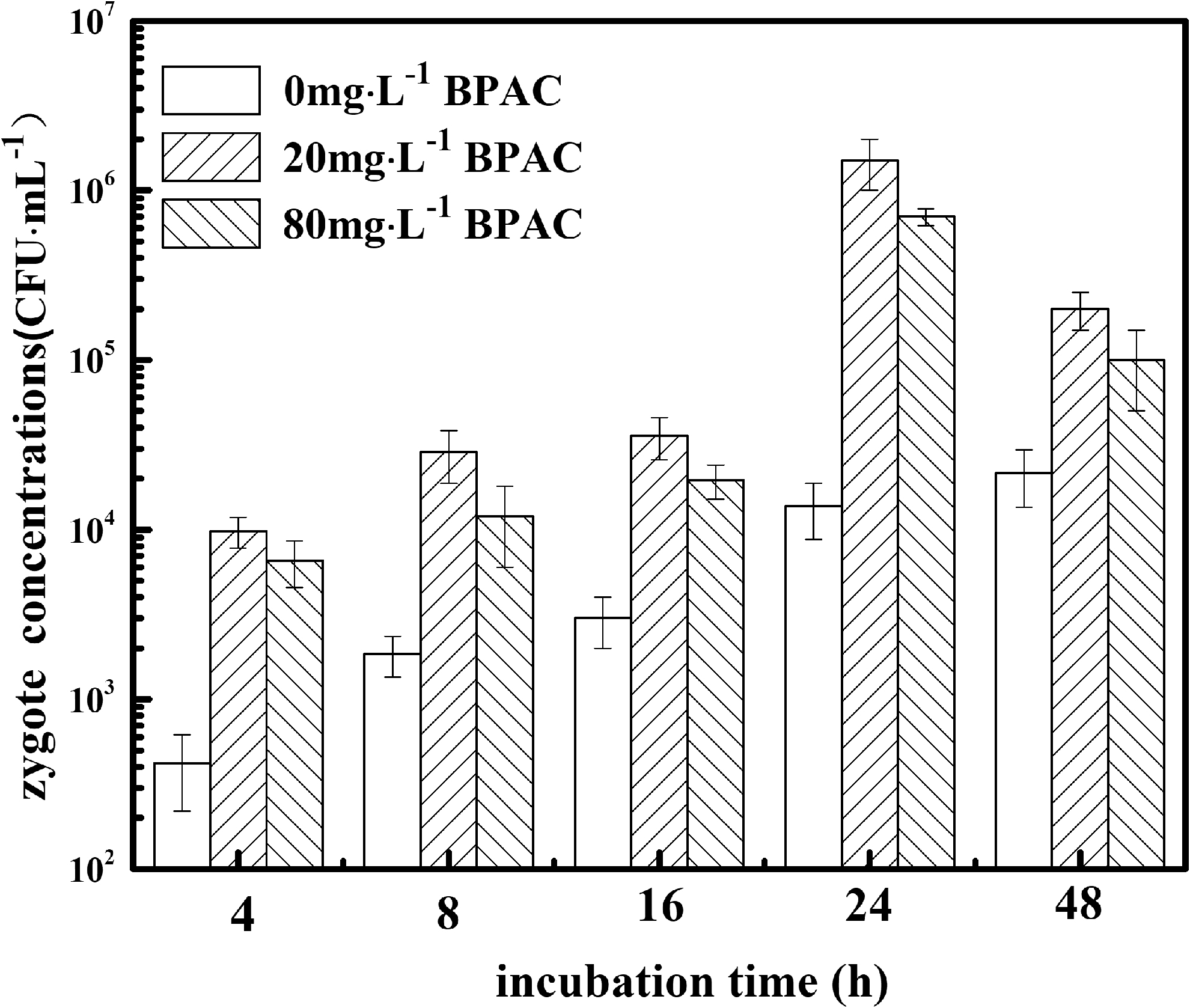
The effect of the incubation time on the conjugative transfer of plasmid as influenced by BPAC was investigated. The concentrations of BPAC were 0, 20 and 80 mg/L. The incubation time was 4, 8, 16, 24, and 48 h. The concentrations of zygote were recorded and the conjugative transfer frequency was calculated. The results are given in Fig. 4 and Table 1.
The effect of incubation time on conjugative transfer of resistance plasmid under the influence of BPAC.
The Effect of Incubation Time on Conjugative Transfer Frequency of Resistance Plasmid Under the Influence of Biological Powdered Activated Carbon
BPAC, biological powdered activated carbon.
When the initial concentration of mixed bacterial solution was 108 CFU/mL, the concentrations of zygote increased with the incubation time from 4 to 24 h (Fig. 4). The concentrations of zygote were higher with than without BPAC, and were higher when the BPAC dosage was 20 mg/L than 80 mg/L. In the 20 mg/L BPAC treatment, the zygote concentrations and conjugative transfer frequency reached the maximum [(1.50 ± 0.50) × 106 CFU/mL and (1.50 ± 0.45) × 10−2, respectively] after 24 h. However, in the period between 24 and 48 h, the concentrations of zygote decreased with time in the BPAC treatments more than in the 0 BPAC treatment. Under the conditions of BPAC added, the abundance of microorganisms was much larger than in the control group (0 BPAC) in the 24–48 h period; hence, the consumption of nutrients was accelerated by the BPAC supplementation, resulting in a decreasing trend of the number of zygotes.
Effect of temperature on the conjugative transfer of resistance plasmid
To study the effect of temperature on the conjugative transfer of plasmid under the influence of BPAC, the donor and recipient bacteria were mixed and placed at low temperature (4°C), normal temperature (25°C), and high temperature (50°C) for 16 h. The concentrations of zygote were recorded and the conjugative transfer frequency was calculated. The experimental results are given in Fig. 5 and Table 2.

The effect of temperature on conjugative transfer of resistance plasmid under the influence of BPAC.
The Effect of Temperature on Conjugative Transfer Frequency of Resistance Plasmid Under the Influence of Biological Powdered Activated Carbon
When the initial concentration of the mixed bacterial solution was 108 CFU/mL, the concentrations of zygote and the conjugative transfer frequency were higher under low temperature than normal and high temperature. Han et al. (2003) studied the effect of low temperature on the electroporation conversion rate of E. coli, and found it was more conducive to the plasmid transformation at a temperature of 15°C or even lower. The concentrations of zygote in the low temperature and normal temperature treatments increased significantly by the addition of BPAC. The concentrations of zygote were higher at 20 mg/L BPAC than 80 mg/L BPAC. The concentrations of zygote at 20 and 80 mg/L BPAC were (2.92 ± 0.23) × 104 CFU/mL and (2.68 ± 0.31) × 106 CFU/mL, respectively, at 4°C, and (2.53 ± 0.18) × 104 CFU/mL and (2.32 ± 0.10) × 104 CFU/mL, respectively, at 25°C. In the high temperature (50°C) treatment, most bacteria were inactivated, resulting in extremely low concentrations of zygote. Ding et al. (2006) studied the effect of temperature on the copy number of recombinant E. coli plasmid, and found that the high temperature (42°C) aggravated the metabolic load of the cells and decreased cell activity, resulting in a decrease in the plasmid copy number.
The above experimental results showed that the addition of an appropriate amount of BPAC under low and normal temperature conditions could increase the conjugative transfer frequency of the resistance plasmid, whereas high temperature was not conducive to the conjugative transfer of the resistance plasmid. In general, the higher the temperature, the higher the activity of the enzymes related to bacterial growth, which is more conducive to the conjugative transfer of bacteria. However, the conjugative transfer frequency at the low temperature was the highest in this study, which indicated that the effect of temperature on the conjugative transfer was very complicated and needed further investigation. In addition, it has also shown that some microorganisms living on BPAC had strong vitality, and even at low temperature, they could still have a high transfer frequency.
Effect of pH on the conjugative transfer of resistance plasmid
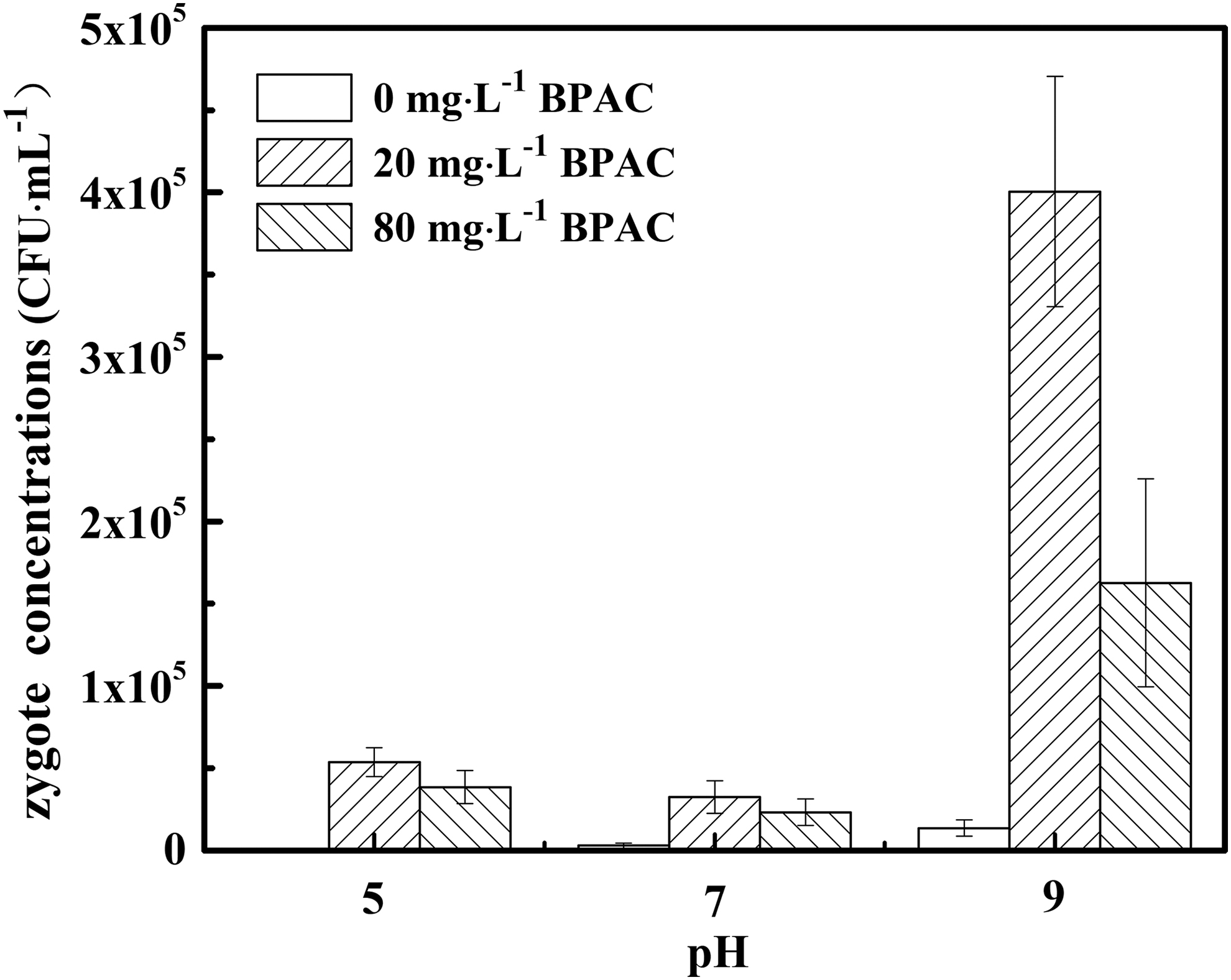
The effect of acidic (pH = 5), neutral (pH = 7), and alkaline (pH = 9) environment on the conjugative transfer of plasmid with BPAC added at 20 mg/L and 80 mg/L was explored by recording the concentrations of zygote and calculating the conjugative transfer frequency. The experimental results are given in Fig. 6 and Table 3.
The effect of pH on conjugative transfer of resistance plasmid under the influence of BPAC.
The Effect of pH on Conjugative Transfer Frequency of Resistance Plasmid Under the Influence of Biological Powdered Activated Carbon
When the initial concentration of the mixed bacterial solution was 108 CFU/mL, the concentrations of zygote increased and the conjugative transfer of resistance plasmid was promoted by the addition of BPAC compared with the 0 BPAC treatment. The order of the concentrations of zygote in the treatments with BPAC added was alkaline environment > acidic environment > neutral environment, suggesting that some acid-resistant and alkaline-resistant strains might be attached to BPAC, which promoted the conjugative transfer of plasmid between different strains. In the alkaline environment at 20 mg/L BPAC, the concentration of zygote was (4.01 ± 0.7) × 105 CFU/mL, which was ∼29 times that of the 0 BPAC control group, indicating a strong stimulating effect of BPAC in alkaline environment on the conjugative transfer of plasmid in E. coli. Müller and Pietsch (2015) studied the effect of environment and metabolic acids on the growth behavior of E. coli, finding that the higher pH value significantly promoted the growth rate of the 188 strains of E. coli tested. Zhang et al. (2000) studied the conformational change of alkaline phosphatase in E. coli and found that the fluorescence intensity of alkaline phosphatase increased with an increase in pH value, which promoted the growth rate of E. coli. The pH value of secondary effluent in this study was 7.46, so the conjugative transfer of resistance genes were easy to take place during the process of BPAC treatment of secondary effluent. In contrast, under acidic condition, it was generally considered that the electrostatic activity of the tertiary structure of the stabilized protein was disturbed, resulting in a decrease in bacterial activity.
Conclusions
The conjugative transfer of the resistance plasmid between the same species or different species could take place with and without the addition of BPAC.
The addition of BPAC could promote the conjugative transfer of the resistance plasmid, the strongest effect on the conjugative transfer of resistance plasmid was found at 20 mg/L BPAC.
Under the influence of BPAC, the effects of incubation time, temperature, and pH on the conjugative transfer of resistance plasmid were tested. Within 0–24 h, the concentrations of zygote and the conjugative transfer frequency increased with time, whereas in the 24–48 h period, the concentrations of zygote showed a decreasing trend, and reached the maximum after 24 h. The concentrations of zygote were higher at low temperature (4°C) than normal (25°C) and high temperature (50°C). The alkalinity (pH = 9) and acidicity (pH = 5) promoted the conjugative transfer of the resistance plasmid better than the neutral conditions (pH = 7), with the alkaline conditions more favorable than acidic conditions for the conjugative transfer of resistance plasmid.
Footnotes
Author Disclosure Statement
There are no conflicts of interest to declare.
Funding Information
This study was supported by the National Natural Science Foundation of China (Grant No. 51678027).