




Abstract
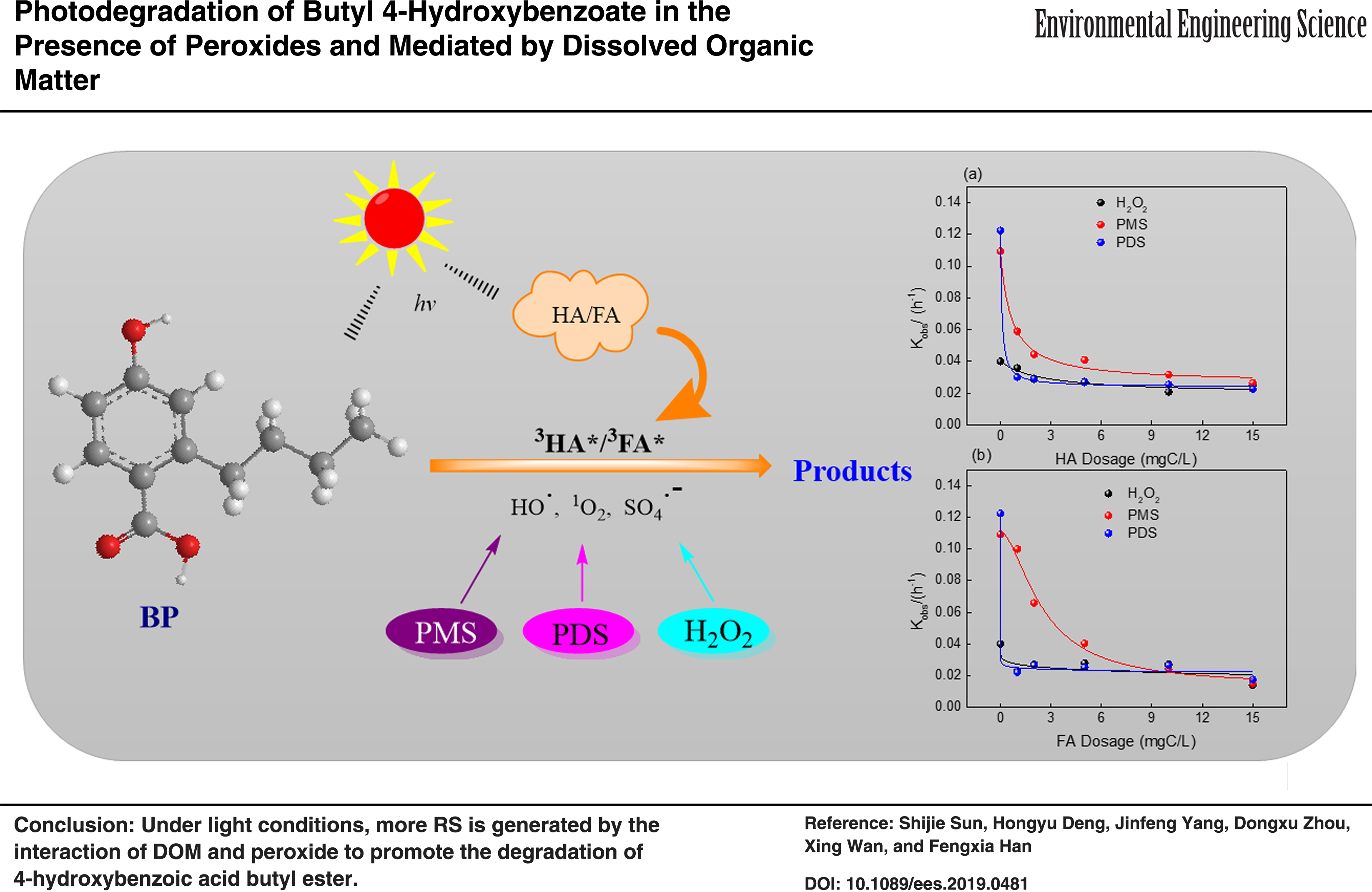
Dissolved organic matter can be a photosensitizer in photodegradation processes. It can produce hydroxyl radicals, singlet oxygen, and triplet-state dissolved organic matter, which promote pollutant degradation. This study investigated to what extent the triplet substances and other active substances can, under irradiation, stimulate peroxides to produce more reactive species (RS), which accelerate the degradation of pollutants. The photodegradation of butyl 4-hydroxybenzoate (BP) was studied in the presence of dissolved organic matter (DOM) and persulfate (PDS), peroxymonosulfate (PMS), or hydrogen peroxide (H2O2). The peroxides promoted the photodegradation in the order PDS > H2O2 > PMS. The degradation rates were peroxide > DOM-mediated peroxide > DOM. The interaction of DOM with peroxide produced more RS to promote the degradation. Chlorella vulgaris were used to evaluate the toxicity of the treated effluent and the ecological risk was found to be low. The findings explain the mechanism of the photodegradation of BP in the presence of dissolved organics and peroxides.
Graphical abstract
Introduction
Butyl 4
The ubiquity and toxicity of BP motivated this study's investigation of the dynamics and mechanisms of remediation treatments. It is known that BP can be oxidized using a platinum on glassy carbon electrode or in a combined ultrasonic/photochemical process (Daghrir et al., 2014; Gomes et al., 2016). Rose bengal and aluminum phthalocyanine chloride tetrasulfonic acid is a photosensitizer, which generates singlet oxygen (1O2) and a triplet-state sensitizer to promote BP degradation (Gryglik et al., 2009). In addition, it is known that electron transfer, photo-generated holes, and superoxide radicals are the main active species in the photocatalytic degradation of BP by I-doped Bi4O5Br2 and ultraviolet (UV)-A in the presence of noble metal-doped TiO2 (Gomes et al., 2017; Xiao et al., 2017). CoFe2O4 microspheres with a yolk–shell structure have been shown to activate peroxymonosulfate (PMS) and produce hydroxyl and sulfate radicals to accelerate BP degradation (Chen et al., 2016). Although treatment with nanoscale materials can effectively remove BP, it is difficult to recover all the nanoscale catalyst afterward, which has its own impact on water quality.
UV/hydrogen peroxide (H2O2) is widely used to degrade refractory contaminants due to its effectiveness and practicality (Ghanbari et al., 2017; Zinatloo-Ajabshir et al., 2017). UV/H2O2 has good contaminant removal performance due to the production of large amounts of hydroxyl radical (•OH), which can destroy the structure of organic compounds and even mineralized them as a nonselective reactive species (RS). However, other studies have found that UV/H2O2 decontamination also can involve other processes apart from •OH oxidation, such as mineralization and polymerization (Benito et al., 2017). For example, bond cleavage and intramolecular electron rearrangement of nitrogen atoms are the main reactions of microcystin-LR in UV-B photolysis and UV-B/H2O2 treatment processes (Moon et al., 2017). The antibiotic sulfadiazine is hydroxylated and desulfonated during UV/H2O2 treatment (Jesus Garcia-Galan et al., 2016).
SO4−• produced by UV from persulfate (S2O82−, PDS) or peroxymonosulfate (HSO5−, PMS) has the better selectivity and oxidation efficiency for unsaturated or aromatic ring contaminants than •OH (Wang and Wang, 2018). Conventional water technologies based on •OH have difficulty degrading perfluorinated organic compounds, but the chain reaction initiated by SO4−• can partially mineralize perfluorinated carboxylic acids (Lutze et al., 2015). SO4−• and •OH are the main RSs in UV/PMS systems. Reactions of flusilazole with SO4−• or •OH involve charge transfer from the flusilazole to RSs, which then attack amide nitrogen sites on the contaminants (Fabio Mercado et al., 2018). SO4−• attacks the −NH2 group of sulfamethoxazole as the main RS in UV/PDS treatment (Yang et al., 2017). Also, SO4− oxidizes phenoxy radicals from salbutamol and adds −OSO3H to the aromatic ring of terbutaline during UV/PDS treatment (Zhou et al., 2017). Some nanoscale materials have excellent photocatalytic effectiveness (Mortazavi-Derazkola et al., 2017; Rostami-Vartooni et al., 2016), but their preparation is complex and it is difficult to recover them completely. There have been few published studies related to BP's degradation in either a UV/PMS or a UV/PDS process. The main reactions involved are diverse due to the different RSs involved.
Dissolved organic matter (DOM), principally humic acids (HAs) and fulvic acids (FAs), is ubiquitous in natural waters. It is known to act as a photosensitizer by producing HO•, 1O2, triplet-state dissolved organic matter (3DOM*), and other RSs, which promote pollutants' photodegradation (Caupos et al., 2011). However, beyond a certain concentration, DOM begins to quench RSs and inhibit photodegradation (Canonica and Laubscher, 2008). The physicochemical properties and light-induced effects of DOM are diverse due to its multiple sources. The RSs produced in UV/peroxide treatment can effectively degrade diethyl phthalate, propranolol, and atrazine, but DOM inhibits pollutant degradation during peroxidation. This suggests that DOM and peroxide contend in UV absorption. The presence of DOM reduces UV transmittance. At the same time, DOM could compete with RSs for contaminants (Gao et al., 2018; Luo et al., 2015; Wang et al., 2018).
Those prior studies have shown that DOM inhibits peroxidation, but have not explained how in sufficient detail. This study was designed to investigate to what extent triplet substances and other active substances produced by DOM under irradiation can stimulate PMS or PDS to produce more RSs to accelerate the degradation of pollutants. The study's objective was to investigate the mechanism of BP's photodegradation in a DOM-mediated peroxide system. The effects of light source, pH, DOM, and peroxide on the BP photodegradation kinetics were explored. The contribution of the main RSs to photodegradation was analyzed. The compositions and properties of the DOM before and after the reaction were analyzed using UV and fluorescence spectroscopy. The findings provide theoretical support for using BP photodegradation with the addition of peroxides in water treatment.
Chemicals and equipment
Potassium persulfate (PDS ≥99.0%), potassium peroxymonosulfate (KHSO5·0.5KHSO4·0.5K2SO4 as oxone, HSO5−, PMS), butyl 4-hydroxybenzoate (BP, 99%), and sorbic acid (SA, 99.8%) were purchased from Aladdin. Tert-butanol (TBA, ≥99.0%), furfuryl alcohol (FFA, 98.0%), methanol (MeOH, high-performance liquid chromatography [HPLC], ≥99.9%), trifluoroacetic acid (HPLC, ≥99.0%), and acetonitrile (HPLC, ≥99.9%) were obtained from Sigma-Aldrich. Hydrogen peroxide (H2O2, GR, 30%) was obtained from Sinopharm Chemical Reagent Co., Ltd. Sulfuric acid (H2SO4, 95–98%) and sodium hydroxide (NaOH, ≥96.0%) were obtained from Chengdu Kelong Chemical Reagent Factory. The HAs and FAs used were extracted from sediment collected from China's Erhai Lake using the alkali-acid treatment method recommended by the International Humic Substances Society. All of the solutions were prepared using UPH-I-60 L ultrapure water (18.25 ΩM·cm) supplied by Millipore. The stock solutions of BP, HAs, and FAs were filtered with a 0.45 μm filter membrane (Whatman, GF/F), and the filtrates were stored at 4°C.
The residual BP concentrations were determined using a liquid chromatograph equipped with a UV-visible detector at λ = 256 nm (Supplementary Fig. S1a in the Supplementary Data) and a C18 column (120 mm × 4.6 mm, 5 μm; Waters) at the retention time of 4.0 min. The injection volume was 30 μL with at 1 mL/min. The mobile phase was a 40/60 (v/v) mixture of Milli-Q water and acetonitrile. The mobile phase also contained trifluoroacetic acid (0.1%) to overcome peak broadening and tailing problems.
The HA and FA concentrations were determined with an Elementar Vario TOC analyzer. The HA and FA were scanned over the range 200–700 nm with a UV-2600 spectrometer (Shimadzu). The solutions were also scanned using a fluorescence spectrophotometer (F-7000; Hitachi) with a bandpass slit width of 5 nm for both excitation and emission at a scanning speed of 1,200 nm/min (He et al., 2018).
Dissolved oxygen was detected using an MP516 dissolved oxygen meter (San-Xin). The amounts of algae were determined by measuring the solutions' absorbances at 680 nm with an UV spectrophotometer.
Photochemical experiments
The experiments were carried out in an XPA Series-7 multitube lighting instrument manufactured by China's Nanjing Xujiang Power Plant Co. It was equipped with a 300 W mercury lamp and a 290 nm cutoff filter (He et al., 2018). The 350 W xenon lamps, 500 W xenon lamps, 300 W mercury lamps, and 500 W mercury lamps were also tested. The 50 mL quartz sample tube (with an available volume of 35 mL) was continuously rotated during the experiments for uniform illumination. The temperature of the device and the experimental sample was controlled at 25 ± 1°C using a recirculating cooling water system (DLSB-5720). The pH of the samples was adjusted to 7 ± 0.2 using 1 M H2SO4 and NaOH (pH was measured a UB-7 Denver Instrument pH meter). pH of 4, 6, 7, 8, 9, and 11 was also tested using 300 W mercury lamps.
The HPLC (on an Agilent Technologies 1260 Infinity instrument) was always completed within 24 h. The effects of three different oxidants (H2O2, PMS, and PDS) on the degradation efficiency were also investigated. The quenchers TBA, FFA, and MeOH were added to the system to investigate the contribution of RSs to the photodegradation process. Also, the effects of different concentrations of HA and FA on the degradation of BP were investigated in conjunction with the quenchers TBA, FFA, and SA. Peroxide and DOM were separately added to explore the effect of each on the system. Subsequently, the quenchers were added to a system containing both to investigate the role of RSs in these processes. A semiqualitative analysis of DOM in these processes was performed using three-dimensional (3D) fluorescence.
Toxicity experiments of photodegradation products
The samples after 5 h of illumination were added to an algal suspension to test the toxicity of the photodegradation products. Sterilized BG11 medium containing ∼1.2 × 10⁶ cell/mL of chlorella algae was held at 20 ± 1°C for the testing. A 13 W Philips LED lamp was to simulate diurnal illumination. The bottle was shaken three times a day. Triplicate algal suspensions were used. Cells were counted and optical densities measured using techniques previously described in detail (Huang et al., 2019).
Results and Discussion
Direct photodegradation
The BP photodegradation process studied is well described by pseudo-first-order kinetics [Eq. (1)].
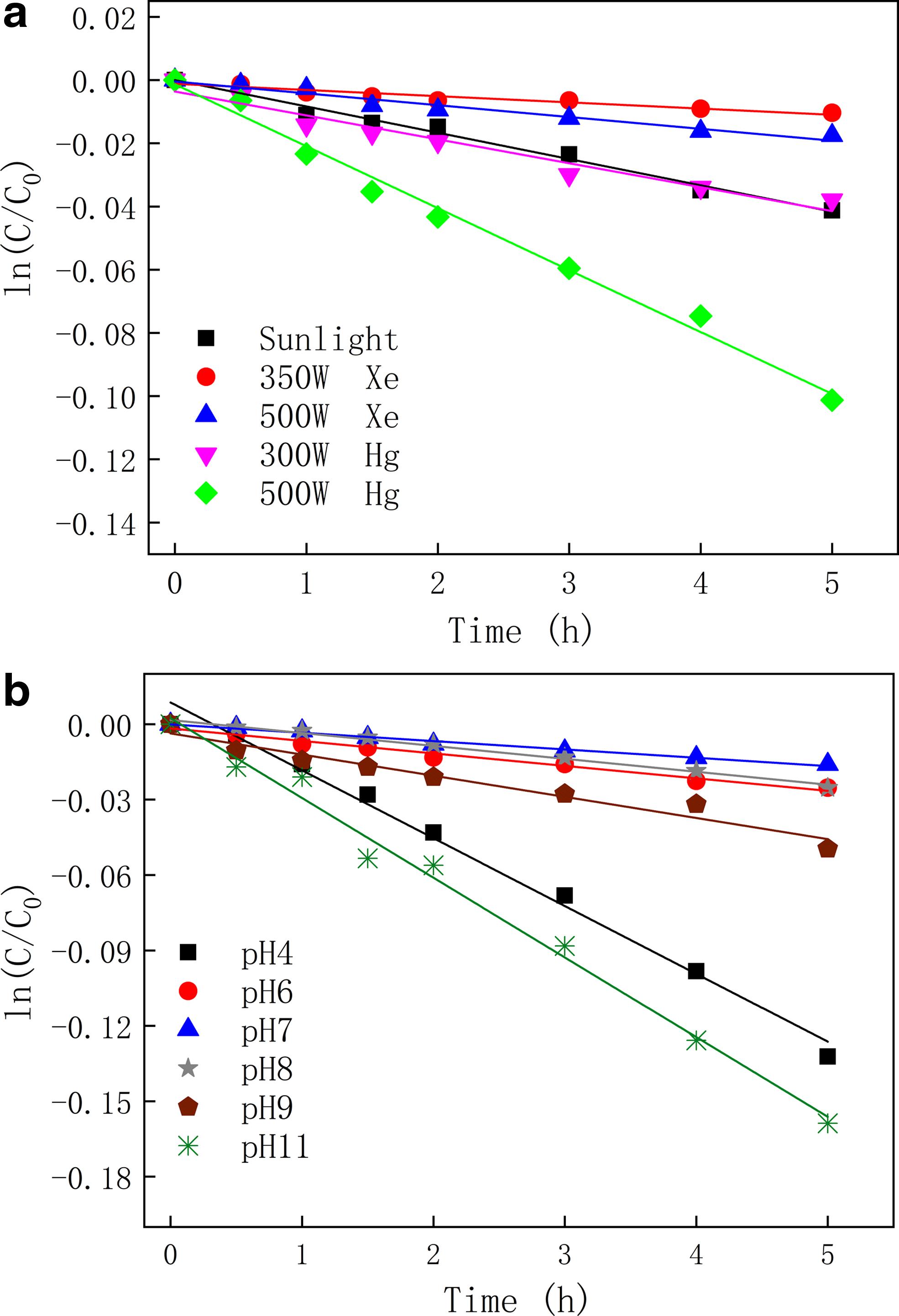
where C is the concentration of BP at time t, C0 is the initial concentration, and kobs is the pseudo-first-order rate constant (Fig. 1a). Table 1 presents some other BP photodegradation data in other systems. As Fig. 1a shows, BP was not degraded obviously even under 500 W xenon lamps, but it did react under a 500 W mercury lamp due to the optical energy transmitted by the strong flow of optical quanta. In fact, 8 W low-pressure Hg lamps, 125 W medium-voltage Hg lamps, and 1,000 W xenon arc lamps are more typically applied in contaminant degradation (Chowdhury et al., 2010; Franquet-Griell et al., 2017; Matykiewiczova et al., 2007). In this study, the photodegradation system was equipped with a 290 nm cutoff filter and the 300 W Hg lamp was used to simulate the natural light in the subsequent experiments.
Rate Constants of Butyl 4-Hydroxybenzoate Reaction in Other System from the Previous Reference
BP, butyl 4-hydroxybenzoate; H2O2, hydrogen peroxide; UV, ultraviolet.
The pH has always been one of the important factors affecting such processes. Figure 1b presents the direct photodegradation of BP at different pH levels. Clearly, BP degradation is promoted significantly in acidic or alkaline conditions compared to neutrality. The effect of pH on BP's direct photodegradation is independent of the electric field and the RSs. It relates to changes in BP's molecular configuration and light absorption at different values of pH (Challis et al., 2014). As Supplementary Fig. S1b in the Supplementary Data makes clear, the UV-visible spectra of the BP solutions were obviously different at different pH values before the illumination. The UV spectra have a red shift at pH 9 and 11, resulting in differences in the photodegradation rate. The pH of natural waters and sewage treatment plant effluent tends to be about 6–8, so pH = 7 ± 0.2 was used in these experiments.
Peroxide-promoted BP photodegradation
The pollutants were slightly degraded in pure water, but the advanced oxidation technology significantly improved their degradation rate. Figure 2a shows the BP degradation markedly promoted with the addition of trace amounts of H2O2, PMS, and PDS. The promoted rates were in the order PDS > H2O2 > PMS, and all increased with increasing peroxide concentration due to the production of RSs. Similar experiments with atrazine produced degradation rate improvements in the order PDS > PMS > H2O2 (Luo et al., 2015). The difference may be caused by the initial pH of the reaction system and the different structures and properties of the pollutants. In the mechanism experiments, the original concentration of H2O2 and PMS was 30 μM, and that of PDS was 15 μM.
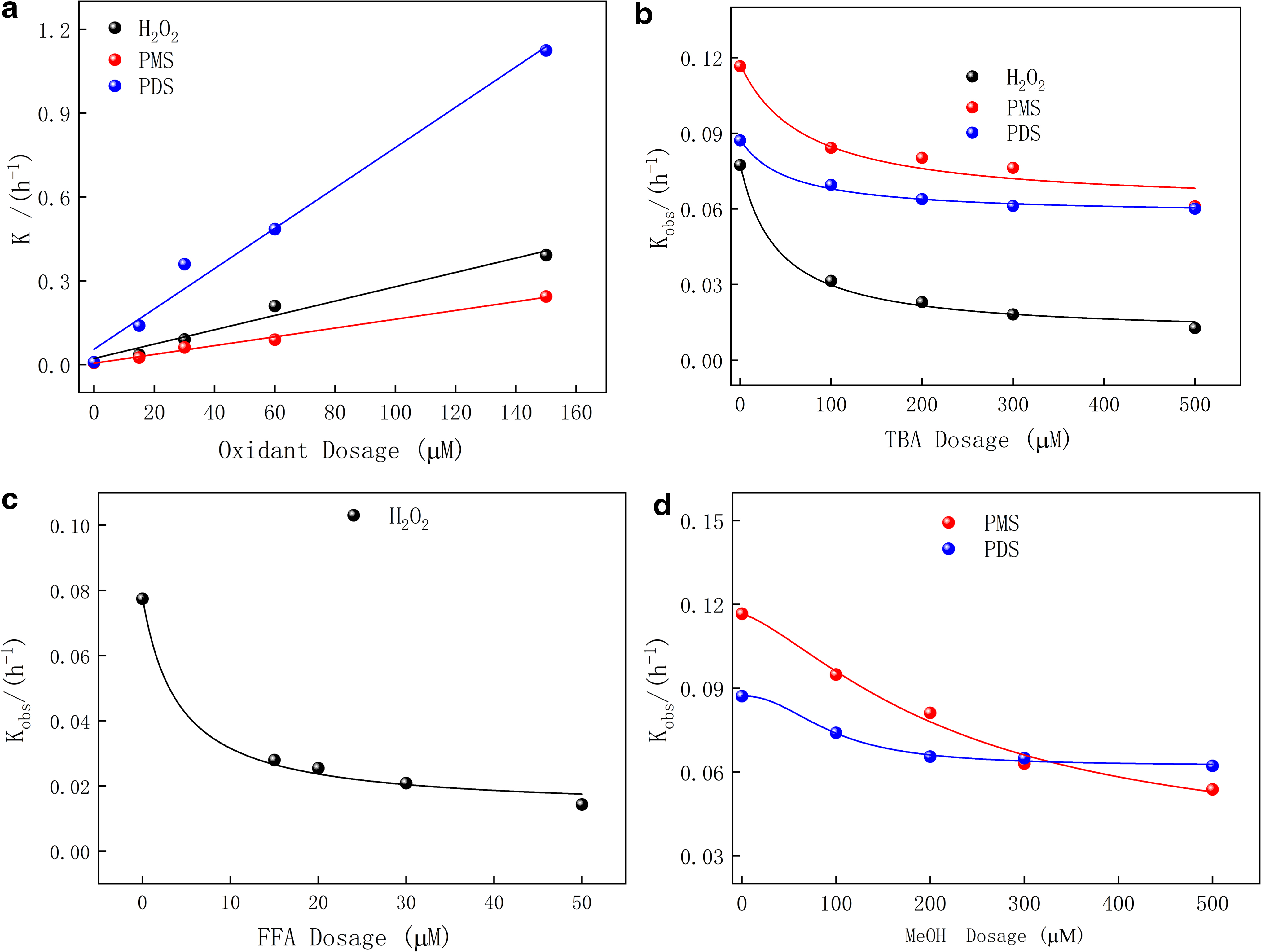
The experiments used scavengers to quench RSs in the three light and peroxide systems, as shown in Fig. 2b–d. TBA, FFA, and MeOH were used to quench •OH, 1O2, and SO4−•, respectively (Grebel et al., 2012; Lutze et al., 2015; Parker et al., 2013). The degradation rate constant of BP decreased with increasing scavenger dose, but when the concentrations of TBA, FFA, and MeOH exceeded 200, 30, and 200 μM, respectively, the rate constants tended to stabilize. That indicates that the stable concentrations of scavengers mostly quenched RSs in the peroxide system. Therefore, the TBA, FFA, and MeOH concentrations of 300, 30, and 300 μM, respectively, were used in the experiments to completely quench the RSs.
Supplementary Table S1 shows that the pH of all three systems decreased after the reaction. The dissolved oxygen level changed within the error range shown in Supplementary Table S1. The H2O2 quenching experiments showed that •OH played a major role in BP degradation, followed by 1O2. The processes by which H2O2 generated •OH and 1O2 under illumination are proposed in Eqs. (2) and (3).
The PMS system mainly produced SO4−• and •OH [Eq. (4)] to degrade the BP. Supplementary Table S1 shows the system when the reaction was acidic. That implies another important reaction in the PMS system [Eq. (5)]. The quenching experiments showed that the quenching effect of MeOH was stronger compared with TBA. MeOH could quench SO4−• and •OH simultaneously (Liu et al., 2018; Wang et al., 2018).
The main reaction of an RS in the PDS system is that of SO4−• generated by S2O82− as shown in Eq. (6). However, both SO4−• and •OH participate in the photodegradation of BP. Previous research has shown that SO4−• and •OH exist in the light/PDS and light/PM systems at neutral pH (Dhaka et al., 2017; Ma et al., 2018). The pH changes of the two systems after the reaction were different, as shown in Supplementary Table S1. It can be inferred S2O82− and SO4−• were consumed to produce •OH in the light/PDS process [Eqs. (7)–(9)] (Dong et al., 2019).
DOM-mediated BP photodegradation
That DOM is ubiquitous in natural waters and has a major impact on the transformation and fate of pollutants (Chu et al., 2016; Parker et al., 2016). The phenolic components of humic substances donate electrons to oxidize intermediates of the pollutants resulting in the indirect photoconversion of organic pollutants being inhibited by DOM (Aeschbacher et al., 2012). The antioxidant component of DOM inhibits formation of the excited triplet states needed to oxidize pollutants (Wenk and Canonica, 2012; Wenk et al., 2011). DOM competes with pollutants for photons, and that too slows down the degradation (Klapstein et al., 2018).
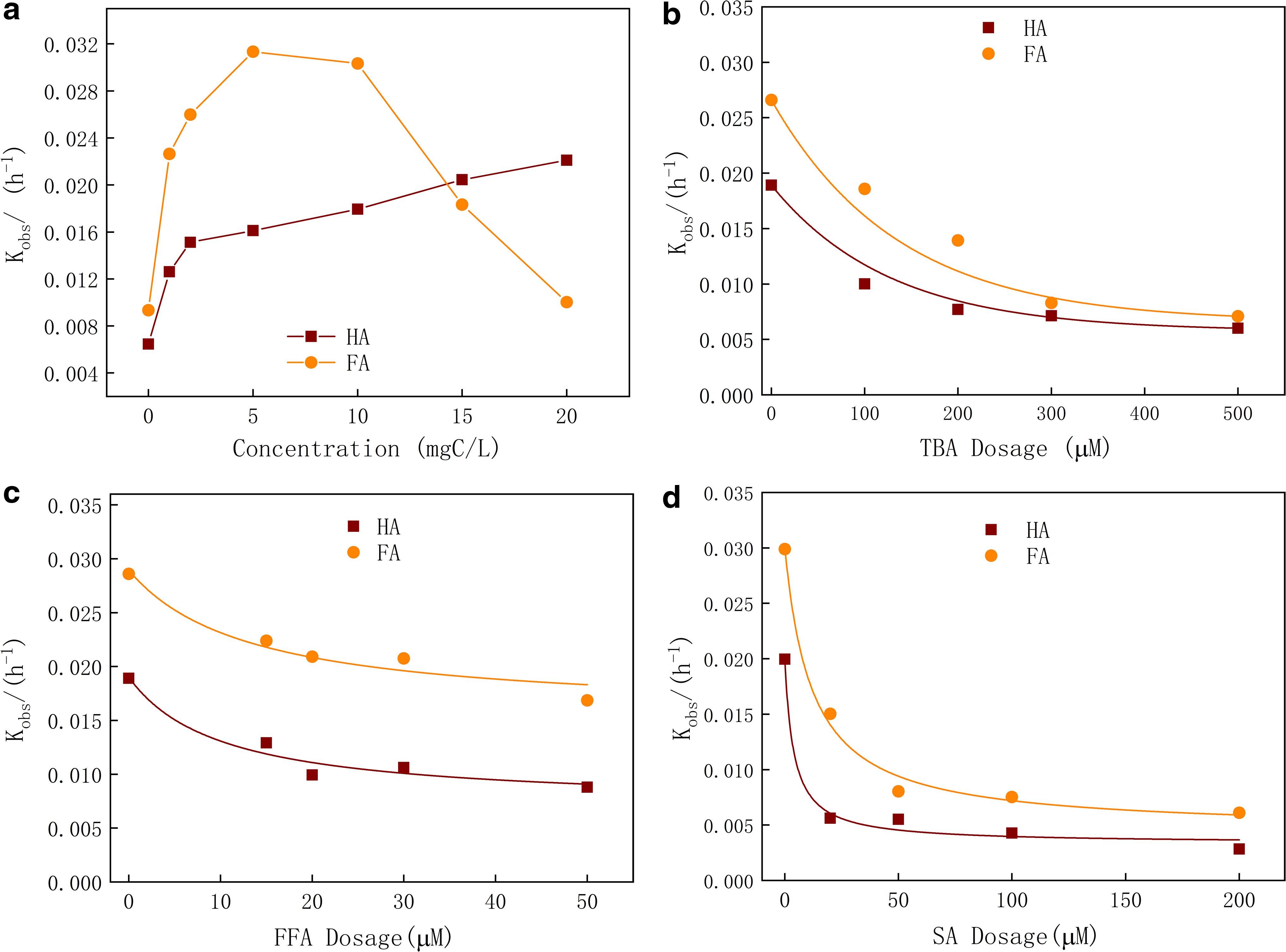
However, Fig. 3a indicates that in these experiments, BP's degradation was promoted with the addition of HA or FA at low concentration. FA was more effective than HA at DOM concentrations <10 mgC/L. A previous study has shown that imazosulfuron is degraded by reacting with 3DOM* (Rering et al., 2017). The degradation of BP increased rapidly as the concentration of HA increased to 2 mgC/L, but then more slowly beyond that concentration due to the light absorption of HA. There was also a threshold (5 mgC/L) in FA-mediated BP degradation.
The different effects of HA and FA on BP photodegradation relate to their composition and functional groups. These were characterized by 3D fluorescence, as shown in Fig. 6. HAs in nature contain aromatic proteins, while FAs contain soluble microbial products and FA-like component. Table 2 shows that HAs and FAs from different sources have different electron transfer capacity and degrees of humification. The UV-visible spectra of the HA and FA used in this study indicate they had different photochemical characteristics (Supplementary Fig. S2a). The experimental DOM concentration of 5 mgC/L was selected as resembling that found in natural waters.
The Changes of the Solution Before and After the Degradation
Calculation process in Supplementary Data text.
FA, fulvic acid; HA, humic acid; PDS, persulfate; PMS, peroxymonosulfate.
The DOM's aromatic chromophoric groups absorbed UV light to produce RSs such as •OH, 1O2, and 3DOM*, which in turn degraded the pollutants (Bahnmueller et al., 2014; Dalrymple et al., 2010; Qian et al., 2014). Figure 3b–d present the results with different quencher doses. The results show that 300 μM TBA, 30 μM FFA, or 100 μM SA effectively quenched •OH, 1O2, and 3DOM*. The RSs contribution to BP photodegradation in the presence of DOM was in the order 3DOM* > •OH > 1O2. The degradation mechanisms might perhaps be those shown in Eqs. (10–12).
However, the contributions of each RS mediated by HA and FA were different. The discrepancy between 3DOM* and •OH was small, but the contribution of 1O2 in the presence of HA was larger than that with FA.
The impact of DOM on peroxidation
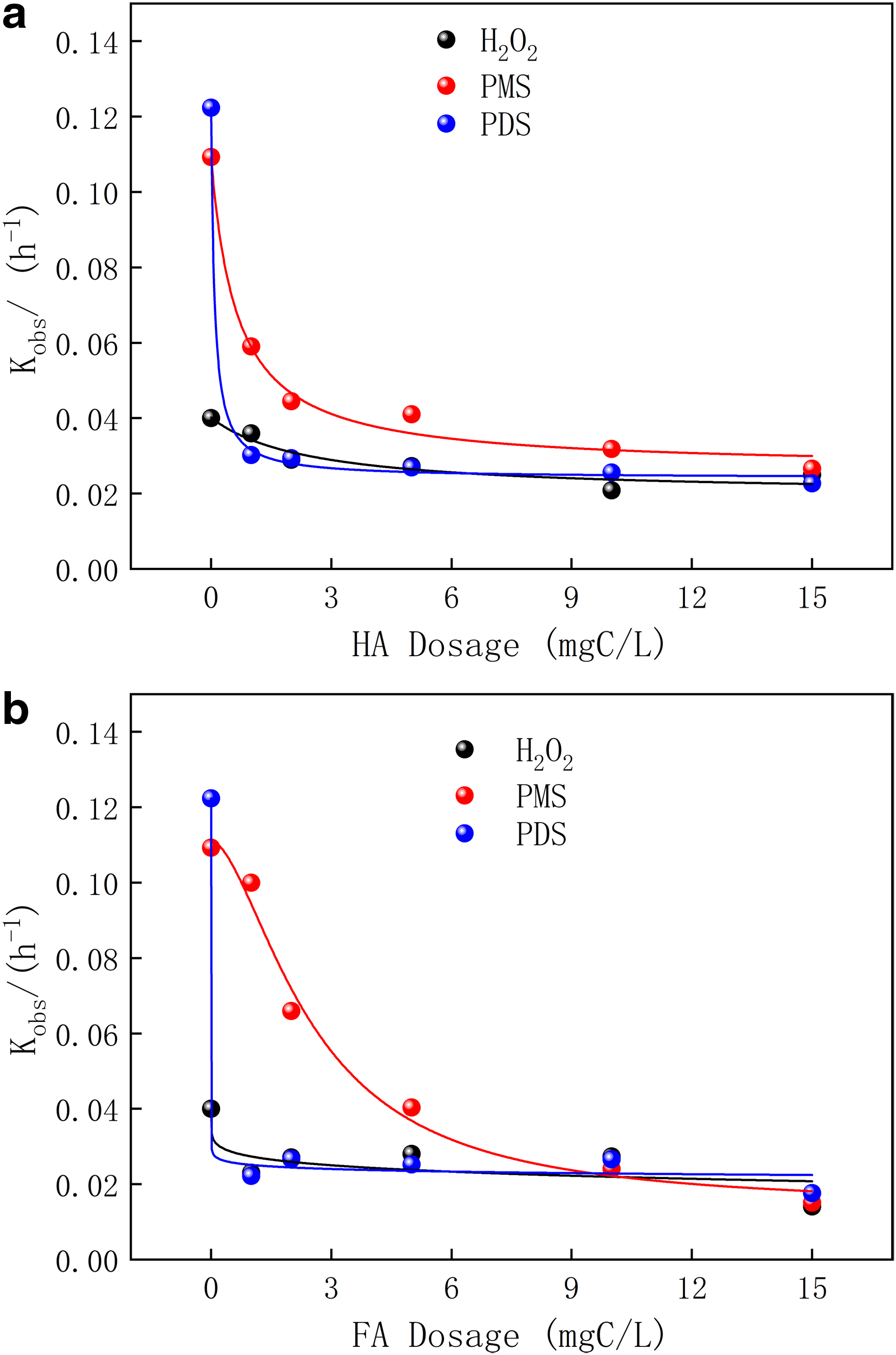
Effects of different DOM concentrations on BP photodegradation in peroxide systems were explored, with the results shown in Fig. 4. The presence of DOM greatly inhibited BP's degradation in peroxide systems. An HA-mediated PMS system could degrade BP more effectively than an H2O2 or PDS system with the same peroxidant concentration. That could be because PMS affects properties of the HA such as its molecular weight, the formation of electron transfer complexes, and the degree of humification (Table 2). The RS speciation of PMS is pH dependent, and the percentage of each RS in solution also changes with the pH (Guan et al., 2011). FA's inhibition was stronger compared with HA in H2O2 and PDS systems (DOM <5 mgC/L), probably because the peroxide had greater influence on the FA-mediated system than with HA (Table 3; Supplementary Fig. S3). The related HA reaction under acidic conditions was weakened, but that of FA was not affected. In addition, the asymmetric structure of PMS is more likely to experience heterolytic cleavage under illumination. PDS and H2O2 may be more susceptible to generating RSs by homolysis (Yang et al., 2010). The BP degradation tended to be stable with the concentration of DOM beyond 5 mgC/L.
The Degradation Constant of Butyl 4-Hydroxybenzoate Degradation in Each System (k/h−1)
OH, hydroxyl radical; 1O2, singlet oxygen; 3DOM*, triplet-state dissolved organic matter; SO4−•, sulfate radical.
It can be seen from Fig. 5 that the BP degradation rates in different systems were in the order of the peroxide system > the DOM-mediated peroxide system > the DOM system. DOM inhibited BP photodegradation in the peroxide system, which indicates that DOM reacted with peroxide or •OH and SO4−• (Lutze et al., 2015). The RS quenchers were added to the DOM-mediated peroxide system to investigate the contributions of various RSs, as shown in Fig. 5. The addition of a quencher slowed the original degradation processes of the DOM-mediated peroxide system. RSs were an important factor affecting BP degradation. The reaction of DOM and the RSs may be related to the system's pH. DOM reacts easily with •OH in near neutral environments, but it combines with SO4−• in acid ones. HA mainly produces 3HA* in the photodegradation process, but FA generates 3FA* and 1O2. Therefore, the DOM competed with the BP for peroxide and/or the peroxide reacted with the DOM to produce more RSs (3HA*, 3FA*, and 1O2). Since only a trace amount of peroxide was added to the mediated system, the controlling process is more likely to have been the second.

The fluorescence scanning of the DOM-mediated peroxide system showed that there were three fluorescence response peaks in the HA samples before the reaction (Fig. 6). They contained an FA-like component and a soluble microbial product component. The response of the soluble microbial product component decreased after the reaction. Furthermore, the fluorescence intensity indicated that terrestrial and soil input dominated in the HA-mediated peroxide system. The water and intrinsic source contributions were less, as can be seen in Table 2. The BI analyses show that the terrestrial input of FA is greater compared with HA. It is clear that the DOM-mediated peroxide and DOM samples were different, indicating that the peroxide changed the DOM's composition.
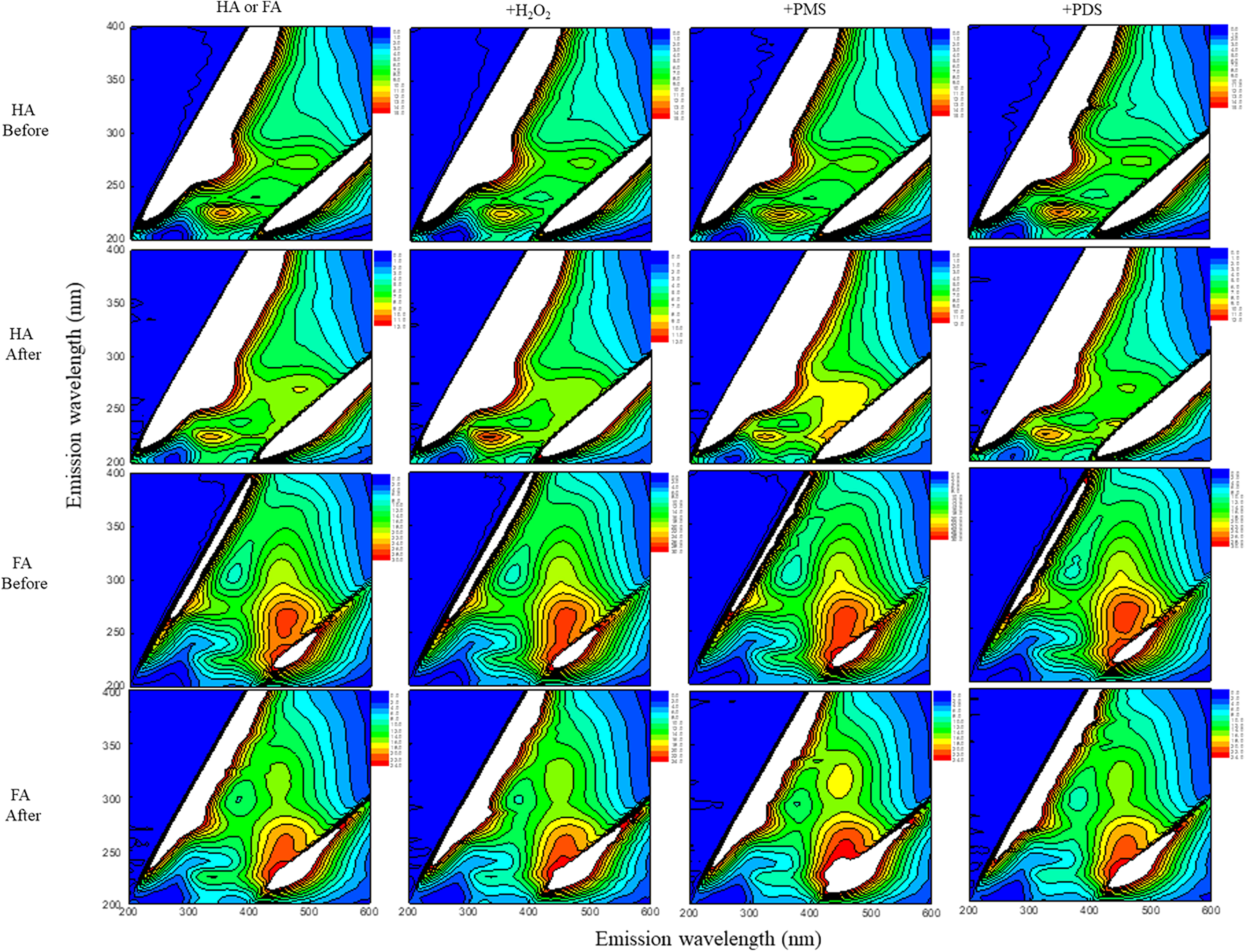
Three-dimensional fluorescence scanning of DOM-mediated peroxide system before and after the reaction (BP+HA, BP+H+H2O2, BP+HA+PMS, BP+HA+PDS, BP+FA, BP+FA +H2O2, BP+FA+PMS, and BP+FA+PDS).
Effluent toxicity
Chlorella vulgaris was used as a representative organism to test the toxicity of the purified solutions. The effect of the solution after 5 h of illumination on the growth of C. vulgaris is shown in Fig. 7. The BP, BP + H2O2, and BP+PMS samples after illumination promoted the growth of Chlorella, but the BP+PDS and BP+FA products inhibited it. The BP+HA and DOM-mediated peroxide systems had no significant effect. The BP treated in a DOM-mediated peroxide system seems to have little residual ecological risk.
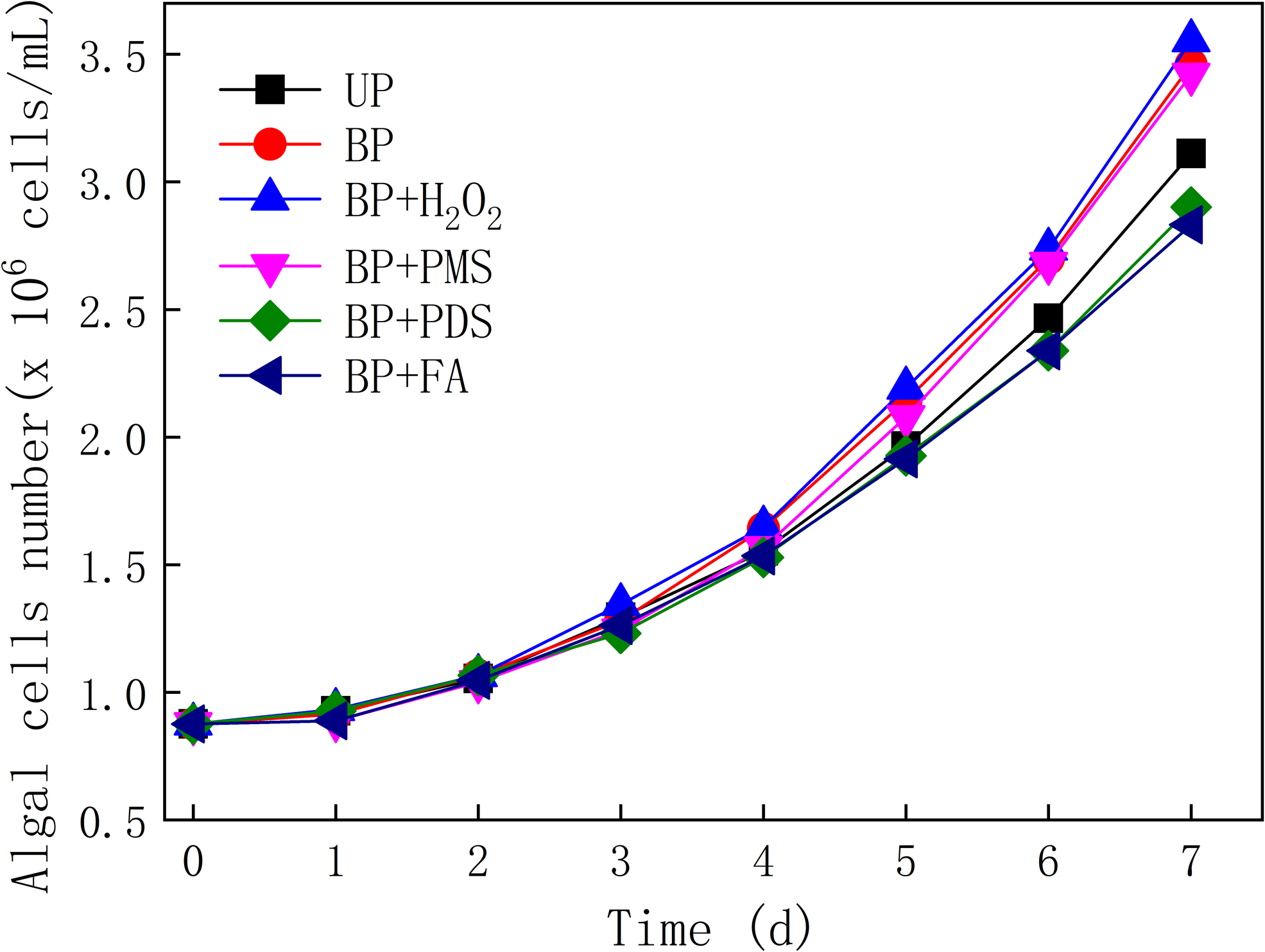
The effect of solution after 5 h of illumination on the growth of Chlorella vulgaris. Experimental conditions: 20°C, 12-h light/12-h dark, and 7 days culturing time.
Conclusions
The photodegradation of BP in DOM-mediated peroxide systems was investigated, along with the mechanisms involved. DOM was found to promote BP photodegradation by producing 3DOM*, •OH, and 1O2. The importance of each RS was 3DOM* > •OH > 1O2. The degradation efficiencies of PDS, PMS, and H2O2 under the same conditions were PDS > H2O2 > PMS. The degradation rate of BP in each system was peroxide > DOM-mediated peroxide > DOM. The interaction of DOM with peroxide produced more RSs (3HA*, 3FA*, and 1O2) to promote BP degradation under irradiation. However, DOM also can compete with the RSs generated in the peroxide systems. Most importantly, treating BP in a DOM-mediated peroxide system produces effluent with little ecological risk. These findings explain the mechanism of BP photodegradation in the presence of peroxides.
Footnotes
Author Disclosure Statement
The authors declare that there are no potential conflicts of interest with respect to the research, authorship, or publication of this article.
Funding Information
This research was sponsored by China's National Natural Science Foundation (Grant No. 21866017) and by the Applied Basic Research Foundation of China's Yunnan Province (Grant No. 2019FB015).

References
Supplementary Material
Please find the following supplemental material available below.
For Open Access articles published under a Creative Commons License, all supplemental material carries the same license as the article it is associated with.
For non-Open Access articles published, all supplemental material carries a non-exclusive license, and permission requests for re-use of supplemental material or any part of supplemental material shall be sent directly to the copyright owner as specified in the copyright notice associated with the article.
