




Abstract
Ashes from excess sludge incineration plants contain a high content of phosphorous (P). Taking H2SO4 as an extraction agent, this study investigated the P recovery potential of sludge incinerated bottom ash (SIBA) and sludge incinerated fly ash (SIFA) from an incineration plant in China. The results showed that P contents of SIBA and SIFA were 70,200 and 9,100 mg/kg, respectively, which indicated that SIBA had greater recycling potential of P. The reaction temperature played a significant role in P extraction process. The extraction yields were 99% and 98% from SIBA and SIFA at 45°C, and it also demonstrated that raising the temperature could extract P almost entirely from both SIBA and SIFA. Considering the cost-effective consumption, P extraction yields obtained from SIBA and SIFA were 89% and 90% under the optimized conditions (reaction time of 30 min, H2SO4 dosage of 12 mmol, the reaction temperature of 25°C, and a ratio of leachate/solid ash of 35). The contents of Cu, Zn, Pb, Cr, and Ni in the leaching solution from SIBA and SIFA met the requirements of U.S. AAPFCO and Chinese national regulatory of P fertilizer production. Based on an approximate estimate, a total of 6.27 kg of P would be extracted from 1,000 kg of sludge (about 6.25 kg of P was extracted from SIBA and 0.02 kg of P was extracted from SIFA). It would provide a reference for the recovery of P from sludge incinerated ash worldwide.
Introduction
With the acceleration of the urbanization process, the discharge of sewage is increasing each year in China. Meanwhile, excess sludge had been produced along with sewage treatment (Kurt et al., 2008). It could be predicted that the excess sludge production would exceed 70 million tons (moisture content 80%) by 2020 (Yang et al., 2015; Li et al., 2018). Most phosphorus (P) had transferred into the excess sludge. The mass ratio of total P in excess sludge reached up to 3.7%, with an average of 2.2% (Saleh et al., 2018). Therefore, excess sludge was considered as the largest secondary P resource all over the world (Herzel et al., 2016). Moreover, large amount of excess sludge with toxic substances will cause environmental impact if the excess sludge is not properly treated (Dong et al., 2013; Mahon et al., 2017). This prompts us to find a high-efficiency way to dispose of the excess sludge.
Although incineration consumed more costs for construction and energy than other methods, it was a well-proven technology of sludge disposal method that was adopted in many countries (Ottosen et al., 2013). The proportion of burning sludge in waste incineration plants could vary from country to country. Almost all of the municipal and industrial wastewater sludge was incinerated in the Netherlands and Switzerland (Milieu et al., 2010). Incineration was also a common method adopted in Japan, which counted for 62.7% of all sludge in the country (Lundin et al., 2004). While, only 0.36% of municipal and industrial wastewater sludge was incinerated in China (Yang et al., 2015). Actually, incineration has many advantages, such as its small floor area, a high degree of harmlessness, unaffected operating conditions, and stable sludge incinerated ash (Mattenberger et al., 2008; Karamalidis and Voudrias, 2009; Murakami et al., 2009). Incineration is the method that can meet the Chinese national standards (CN-GB, 2009), which sets the threshold limits of less than 60% moisture content of sludge requirement to enter the landfill in China. Incineration can greatly reduce the volume of excess sludge, which avoids the problem of huge land resource occupation and environmental pollution. With the increase of sludge production and the more strict requirements set by the Chinese government for environment, the incineration technology dealing with municipal and industrial wastewater sludge shows a great potential in sludge disposal.
Incineration is a heat treatment process using high-reaction temperature to treat wastes under aerobic conditions. A considerable amount of sludge incinerated ash is produced in the process (Huang et al., 2018). When the fluidized bed incinerator reaction temperature is 950°C, organic P in P-accumulating bacteria is completely converted into inorganic P by the thermal decomposition temperatures (Li et al., 2015). In the incineration process, there are usually two flows of P. One flow is the combustion products of excess sludge that remained in an incinerator. This portion is called sludge incinerated bottom ash (SIBA). It is mainly composed of inorganic minerals that do not participate in physical and chemical reactions in the sludge. The other flow of P is the particulate matter in the flue gas trapped by the dust collector, mainly composed of silicate and calcium, and other metal elements (Yvonne et al., 2018). This portion is called sludge incinerated fly ash (SIFA). Further exploration into simple P extraction methods should be performed separately from SIBA and SIFA.
In recent years, P recovery from sludge incinerated ash has become a hot issue. Various methods can extract P from SIBA, including thermochemical (Adam et al., 2009; Nowak et al., 2011), electrodialytic (Ottosen et al., 2016; Parés et al., 2017), and wet chemical methods (Xu et al., 2012; Lee and Kim, 2017; Fang et al., 2018). Because of high-efficiency and low energy consumption, the wet chemical extraction has become the most popular method recently. The wet chemical method refers to extract P from the material by extraction agents to obtain P-rich solution, which is the most concerned by scholars (Meng et al., 2018; Wang et al., 2018). After that, the P-rich solution can be subsequently used in the general phosphate fertilizer production process. Thus, properly choosing the right extraction agents under a good condition is worth noting.
The composition of ashes and the extract conditions of excess sludge incineration varies with different wastewater source. Therefore, choosing a proper extraction agent is critical for a successful P extraction using wet chemical methods. There are many different types of agents, such as H2SO4 (Ottosen et al., 2016; Liang et al., 2019), HCl (Xu et al., 2012), HNO3 (Sano et al., 2012; Gorazda et al., 2016), and oxalic acid (Liang et al., 2019). Among these extractants, H2SO4 is widely used because of its low cost and high-efficiency extraction yield. Atienza-Martinez et al. (2014) used H2SO4 as the extraction agent, and the extraction yield of P from SIBA was 85% after 2 h reaction. Donatello et al. (2010) extracted P from SIBA with H2SO4 and obtained a P extraction yield more than 80%. Based on these facts, H2SO4 was selected as the extraction agent in this study. The factors affecting extraction of P by H2SO4 include reaction time, H2SO4 dosages, reaction temperature, and ratio of leachate/solid ash (Shiba and Ntuli, 2017; Fang et al., 2018). Nevertheless, previous studies only focused on the extraction from SIBA. To the best of our knowledge, there was little literature regarding P extraction from SIFA. Yvonne et al. (2018) only demonstrated that the leaching solution of SIBA and SIFA was harmless to terrestrial insects and marine organisms, but did not mention P extraction from SIFA.
The aim of this study was to extract P from SIBA and SIFA using H2SO4 as an extraction agent, investigate the content of P in SIBA and SIFA, and discuss the feasibility of P recovery from SIBA and SIFA. In this study, the initial contents of each component and physical properties of SIBA and SIFA were analyzed. Extraction experiments with different reaction time, H2SO4 concentration, reaction temperature, and ratio of leachate/solid ash were conducted both on SIBA and SIFA. The contents of metals in the leaching solution were analyzed to determine whether it is suitable for agricultural uses. Combined with P extraction yield, the potential of P recovery from the wet sludge was approximately estimated in this study.
Materials and Methods
Source of SIBA and SIFA samples
The experimental samples (SIBA and SIFA) were obtained from an excess sludge incineration plant in Sichuan province, China. Before testing, the collected samples of SIBA and SIFA were dried at 105°C for 2 h. The samples were cooled to room temperature in a drying dish and then weighed for the experiment.
P extraction and experimental design of influencing factors
The same extracting process was applied to all extracting experiments. The sample of SIBA (or SIFA) and H2SO4 solution were added to a 250 mL conical flask. Then the flask was rotated at 150 rpm for a period of reaction time under different reaction temperatures. After stirring, the mixture was filtered with a 0.45 μm filter so that the leaching solution and solid residue of SIBA (or SIFA) were obtained. The detailed parameters of extracting experiments were selected based on lots of pre-experiments about SIBA and SIFA. The specific condition parameters were different leachate/solid ash ratios (25, 35, and 45), H2SO4 dosages (9, 10, 11, 12, and 13 mmol), reaction time (5, 10, 15, 20, 30, 45, and 60 min), and temperatures (25°C, 35°C and 45°C). The study was performed as above to obtain the optimal conditions.
Calculation methods
Three sets of parallels were performed for each experiment, and the results were averaged. P extraction yield (XP) from SIBA (SIFA) was calculated in Equation (1).
where ωP is the mass ratio of P in the SIBA (SIFA) sample before extraction; M (mg) is the quality of the sample before extraction; V (L) is the volume of the leaching solution; CP (mg/L) is the P concentration of the leaching solution.
Analytical methods
For determining the chemical compositions of SIBA and SIFA samples, the samples were acid digested using HCl, H2SO4, HNO3, and aqua regia (Biswas et al., 2009), then followed by inductively coupled plasma optical emission spectrometer (ICP-OES) analysis (Avio 200; PerkinElmer). Morphology of SIBA and SIFA was determined by using an SEM observation (JSM-7500F; Jeol, Japan). After P extraction, the leaching solution samples were filtered through 0.45-μm membrane filters. The concentration of P in the leaching solution was measured by a molybdenum-blue ascorbic acid method (APHA et al., 2005). The metals in the leaching solutions were measured by ICP-OES analysis after P extraction from SIBA and SIFA (5110; Agilent Technology).
Results and Discussion
Elemental compositions of SIBA and SIFA
The elemental compositions of SIBA and SIFA are shown in Table 1. As shown in Table 1, P level in SIBA was 70,200 mg/kg, equivalent to 32% P2O5 in phosphate ores, which was higher than those measured by most of the other scholars, such as Kleemann et al. (2017), Ottosen et al. (2013), Fang et al. (2018), and Biswas et al. (2009). Furthermore, P contents in SIBA could be compared with P contents of phosphate ore used for superphosphate production (>30% P2O5) (Xu et al., 2014; Nie et al., 2019). It indicated that the SIBA had a great potential for P recovery. The P level in SIFA was 9,100 mg/kg as shown in Table 1. In addition to recovering P from SIBA, it was also worth to recover P from SIFA as the phosphate rock resources were exhausted.
Elemental Compositions and Contents of Sludge Incinerated Bottom Ash, Sludge Incinerated Fly Ash, and Samples in Other Reports
“-”, undetected; “—”, not involved.
SIBA, sludge incinerated bottom ash; SIFA, sludge incinerated fly ash.
The Ca level in SIBA and SIFA were 43,750 and 311,191 mg/kg, respectively, which counted for seven times in SIFA than that in SIBA. The large difference of Ca contents between those two may affect P extraction process from SIBA and SIFA. Especially, Ca may play an important role in reaction with H2SO4 and SIFA. S content of 81,003 mg/kg made S the second most abundant element in SIFA. While, S was not detected in SIBA. It could be considered to recover S from SIFA in the future.
In addition, SIBA and SIFA contained six common elements of P, Ca, Fe, K, Zn, and Cu. Figure 1 demonstrated the proportion distribution of these six elements in SIBA and SIFA respectively. Overall, for the total P content in the sludge incinerated ash, SIBA accounted for 88% and SIFA accounted for 12%, as shown in Fig. 1. It illustrated that most of P remained in the sludge had entered into the SIBA during the sludge incineration process, while a small part of P had entered into the SIFA as fine particles. It further indicated that SIBA had a greater possibility of P extraction than SIFA. In contrast to the P distribution, Ca accounted for 88% in SIFA and 12% in SIBA. Ca and P showed completely different distribution patterns when incinerated. Most of the Ca was accompanied by small particles into the SIFA, which indicated that the Ca-P compounds may be rare in SIBA and SIFA. Other elements such as Fe, K, Zn, and Cu all accounted for more than 80% in SIBA, which were similar to P. It illustrated that these elements were more likely to react with P to form metals-P compounds. From the perspective of resource recovery, SIBA was more valuable to recycle than SIFA.
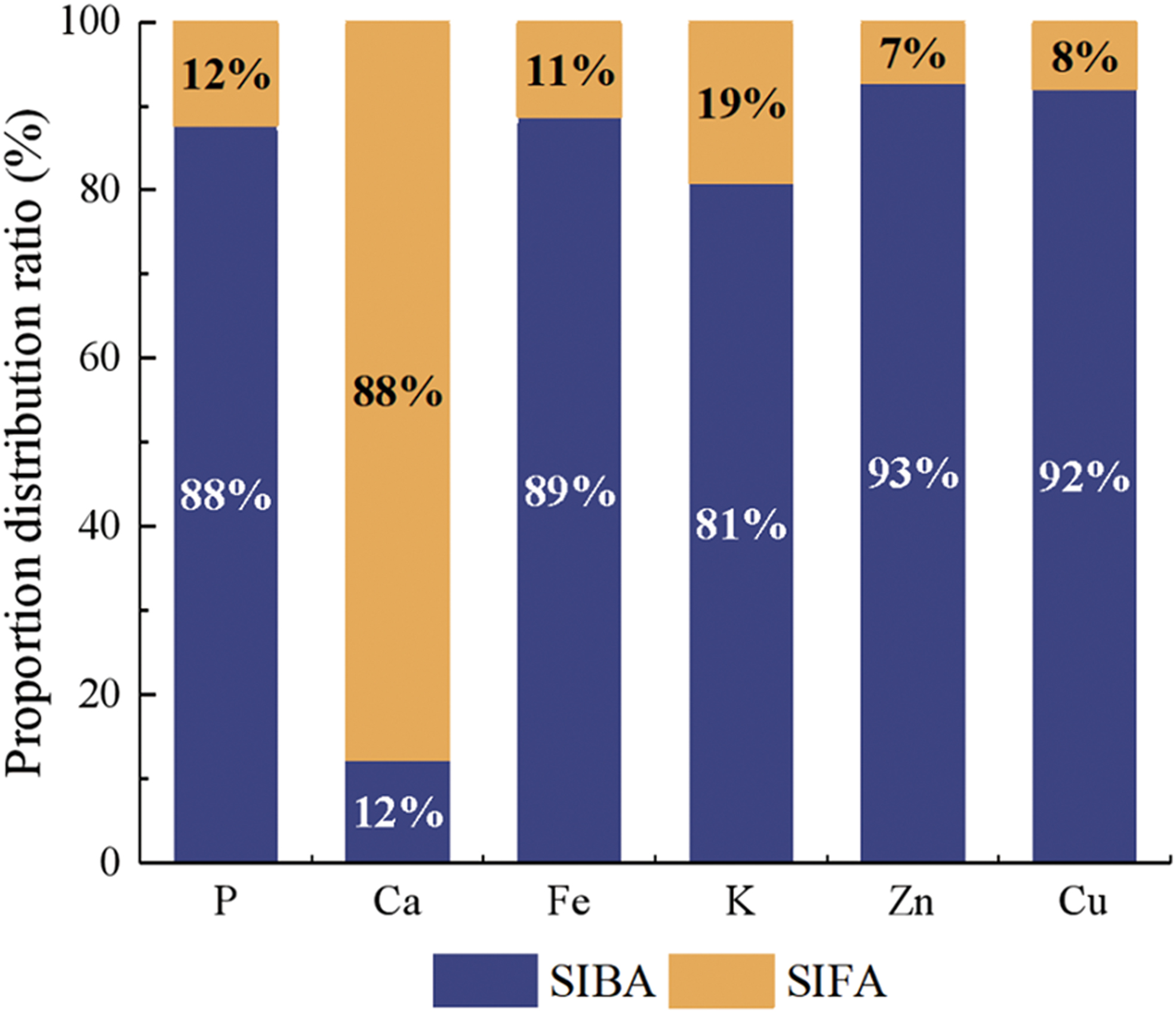
Proportion distribution of common elements between SIBA and SIFA. SIBA, sludge incinerated bottom ash; SIFA, sludge incinerated fly ash.
Physical properties of SIBA and SIFA
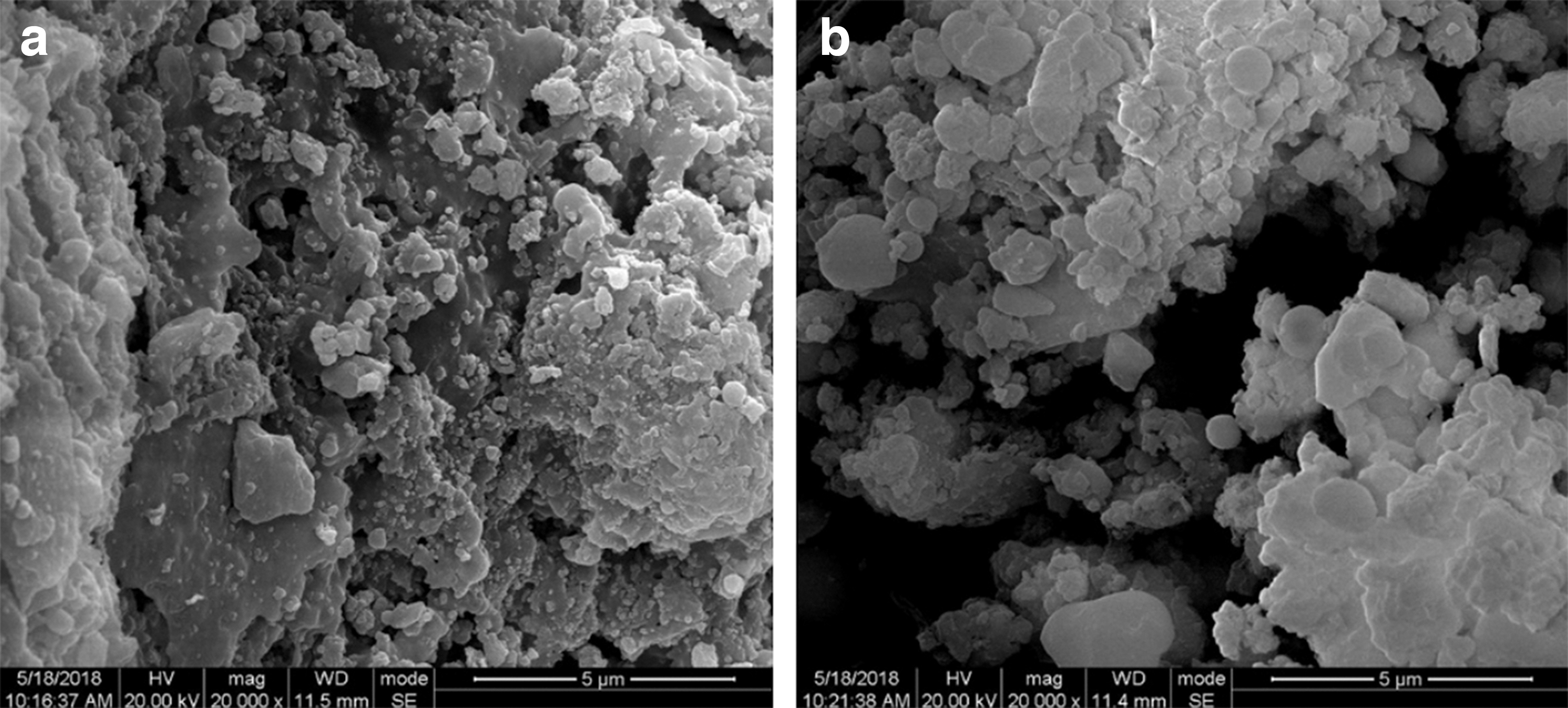
Figure 2a shows the surface morphology of SIBA. Most particles were stacked together to form a structure with a rough and porous surface. Figure 2b shows the surface morphology of SIFA. Most particles were connected together to form a structure with a relatively smooth surface. The difference in surface morphology between SIBA and SIFA may affect P extraction of the two samples.
Effect of P extraction conditions for SIBA and SIFA
Effect of reaction time on the extraction efficiency of P
P was extracted from SIBA and SIFA samples using 12 mmol H2SO4 at a ratio of leachate/solid ash of 45 under 25°C for a range of reaction time (5, 10, 15, 20, 30, 45, and 60 min). Figure 3a demonstrated that the longer the reaction time the more P extracted from the samples. When the reaction time was 5 min, only 47% of P was extracted from SIBA. With the elongation of reaction time, the extraction yield rapidly increased, reaching to 91% at 30 min, and then increased slowly. Nevertheless, the effect was not so significant when testing samples from SIFA. In the first 5 min, the yield of P extracted from SIFA reached 81%. As the reaction time continued to be increased, P extraction yield reached 90% in 30 min. The results indicated that most P was extracted within 30 min, consistent with other reports (Donatello et al., 2010; Kleemann et al., 2017).

P extraction yield from SIBA was lower with the same reaction time within 30 min, comparing those with SIFA. Increasing reaction time, both samples had ∼90% of P extraction yields. Kleemann et al. (2017) obtained an 83% P extraction yield at the optimal reaction time of 30 min. Donatello et al. (2010) also obtained an 85% P extraction yield at 30 min. In this study, the 90% of P extraction yield obtained at 30 min was obviously better than previous studies. The purpose of P extraction was to produce agricultural fertilizer. If the toxic metal contents in the extraction were higher than required by the National Standards, it would bring potential risks and affect the application of P extraction technology. Therefore, the contents of metals in the leaching solution were detected in this study, and the results were shown in Table 2. The heavy metals in the leaching solution at 30 min reaction time were far lower than the standards of risk-based concentrations for inorganic fertilizers set by Association of American Plant Food Control Officials (U.S. AAPFCO, 2018), and Control standards of pollutants in sludge for agriculture use (CN-GB, 2018). Taking into account that the amount of toxic metals in the leaching solution would increase with increasing reaction time (Fang et al., 2018), the optimum reaction time for P extraction from SIBA and SIFA was designed as 30 min.
Comparison of Toxic Metals Contents from Sludge Incinerated Bottom Ash and Sludge Incinerated Fly Ash Between Leaching Solutions and Standards
“-”, undetected; “—”, not involved.
Effect of H2SO4 dosage on the extraction efficiency of P
In this study, P was extracted from SIBA and SIFA samples using a range of H2SO4 dosage (9, 10, 11, 12, and 13 mmol) at a ratio of leachate/solid ash of 45 under 25°C for 30 min. H2SO4 dosage was one of the leading factors controlled the extraction process. As shown in Fig. 3b, the extracted P gradually increased as H2SO4 dosage increased from 9 to 12 mmol in SIBA. The same discovery that the extraction yield of P increased with the increase of H2SO4 dosage was also demonstrated in other studies (Xu et al., 2012; Ottosen et al., 2013; Kleemann et al., 2017).
Different from SIBA, Fig. 3b shows a steep rise trend of P concentration in SIFA. It is obvious that higher H2SO4 dosage could promote the extraction yield of P from SIFA. When H2SO4 dosage was below 10 mmol, P extraction yield was less than 20%. While, P extraction yield reached to 80% when H2SO4 dosage was 11 mmol, which was about 60% higher than that of 10 mmol. Comparing SIBA with SIFA, P was more easily extracted from SIBA than SIFA with similar experimental conditions. Especially when H2SO4 dosage was below 10 mmol, P extraction yield of SIBA was about four times that of SIFA. From Table 1, it can conclude that Ca level in SIFA was about seven times as much as that of SIBA. When H2SO4 dosage was low (≤10 mmol), H2SO4 might react with the abundant calcium compounds and produced CaSO4. Fang et al. (2018) detected CaSO4 in the production, when using H2SO4 as a reagent to extract P from sludge incinerated ash. The occurrences of CaSO4 inhibited the P extraction process, which leads to low P yield in SIFA. Increasing H2SO4 dosage (>10 mmol), the remaining H2SO4 reacted with P compounds in SIFA, so P extraction yield significantly increased. When H2SO4 dosage was 12 mmol, P extraction yield was 91% in SIFA, the same situation with SIBA. Therefore, the optimum H2SO4 dosage for SIBA and SIFA was determined to be 12 mmol.
Effect of reaction temperature on the extraction efficiency of P
Properly controlling the temperature during the extraction process is one of the critical factors to ensure a better result. In this study, P was extracted from SIBA and SIFA samples respectively, under the same experimental conditions (12 mmol H2SO4 dosage, a ratio of leachate/solid ash = 45, 30 min), but with various reaction temperature (25°C, 35°C, and 45°C). Figure 3c showed that increasing the reaction temperature could extract more P from SIBA and SIFA. P extraction yields of SIBA and SIFA were 91% and 90%, respectively at 25°C. Increasing reaction temperature to 35°C, 92% and 91% of P were extracted from SIBA and SIFA, respectively. There was almost no difference of P extraction yields between the two samples when the reaction temperature reached 35°C. However, almost all of P was extracted from SIBA and SIFA, 98% and 99%, respectively under 45°C. It indicated that reaction temperature was the most significant factor controlling P extraction yield than other parameters. Higher reaction temperature could promote the reaction between the H2SO4 solution and incinerated ash particles. Nevertheless, higher reaction temperature indicated more energy consumed. Therefore, P extraction of SIBA and SIFA were advised to carry out at 25°C (Xu et al., 2012; Fang et al., 2018).
Effect of ratio of leachate/solid ash on the extraction efficiency of P
Another parameter that needs to be determined is the ratio of leachate and solid ash. In this study, P was extracted from SIBA and SIFA samples using various ratios of leahcate and solid ash (25, 35, and 45), under the same experimental conditions (12 mmol H2SO4 dosage, 25°C, 30 min). Figure 3d showed that the extraction yield increased smoothly with increasing ratio of leachate/solid ash from SIBA. When the ratios of leachate/solid ash were 25, 35, and 45, the corresponding P extraction yields were 87%, 89%, and 91%, respectively. A relatively consistent P extraction yield was obtained regardless of the ratio of leachate/solid ash and the dosages of H2SO4. H2SO4 solution and SIBA particles were fully reacted under the H2SO4 dosage of 12 mmol.
Different from SIBA, P extraction yields were 76%, 90%, and 90% when the ratios of leachate/solid ash in SIFA were 25, 35, and 45, respectively. P extraction yields of SIBA and SIFA was different when the ratio of leachate/solid ash was 25. As shown in Fig. 2b, SIFA had a relatively smooth surface. This type of structure was resistant to the reaction between the extraction agent and ash because of a lower surface of interphase contact (Gorazda et al., 2016). Therefore, the SIBA with a rough and porous surface showed a higher efficiency to extract P than SIFA with the relatively smooth surface when the ratio of leachate/solid ash was relatively low.
Nevertheless, the highest ratio of leachate/solid ash was not the most suitable condition for practical engineering because of low P concentration and production of waste liquid (Xu et al., 2012; Ottosen et al., 2013; Kleemann et al., 2017). To ensure high P extractions yield and low amount of waste liquid produced, 35 was the optimal ratio of leachate/solid ash of SIBA and SIFA chosen in the actual process. Under optimized conditions (30 min reaction time, 12 mmol H2SO4 25°C, and 35 ratio of leachate/solid ash), P extraction yield of SIBA and SIFA were 89% and 90%, respectively.
Metals distribution between the leaching solution and solid residue of SIBA and SIFA after P extraction
During phosphorous extraction process, most P (PO43−) entered into the leaching solution. At the same time, some metals in SIBA and SIFA moved to the leaching solution too, while others remained in the solid residues of SIBA and SIFA. It was beneficial to explore the distribution of metals for subsequent targeted resource recovery of the leaching solution and solid residue. Therefore, it was necessary to analyze the difference in metals distribution. Under optimal experimental conditions (30 min reaction time, 12 mmol H2SO4 dosage, 25°C, and 35 ratio of leachate/solid ash), the metals in the leaching solution from SIBA and SIFA were measured.
Metals distribution between the leaching solution and solid residue of SIBA after P extraction
Metals in the leaching solution from SIBA were measured. Combined with the total amount of each metal in SIBA, the leaching rate of each metal was calculated. Therefore, the distribution of each metal in the leaching solution and residue can be obtained, as shown in Fig. 4.
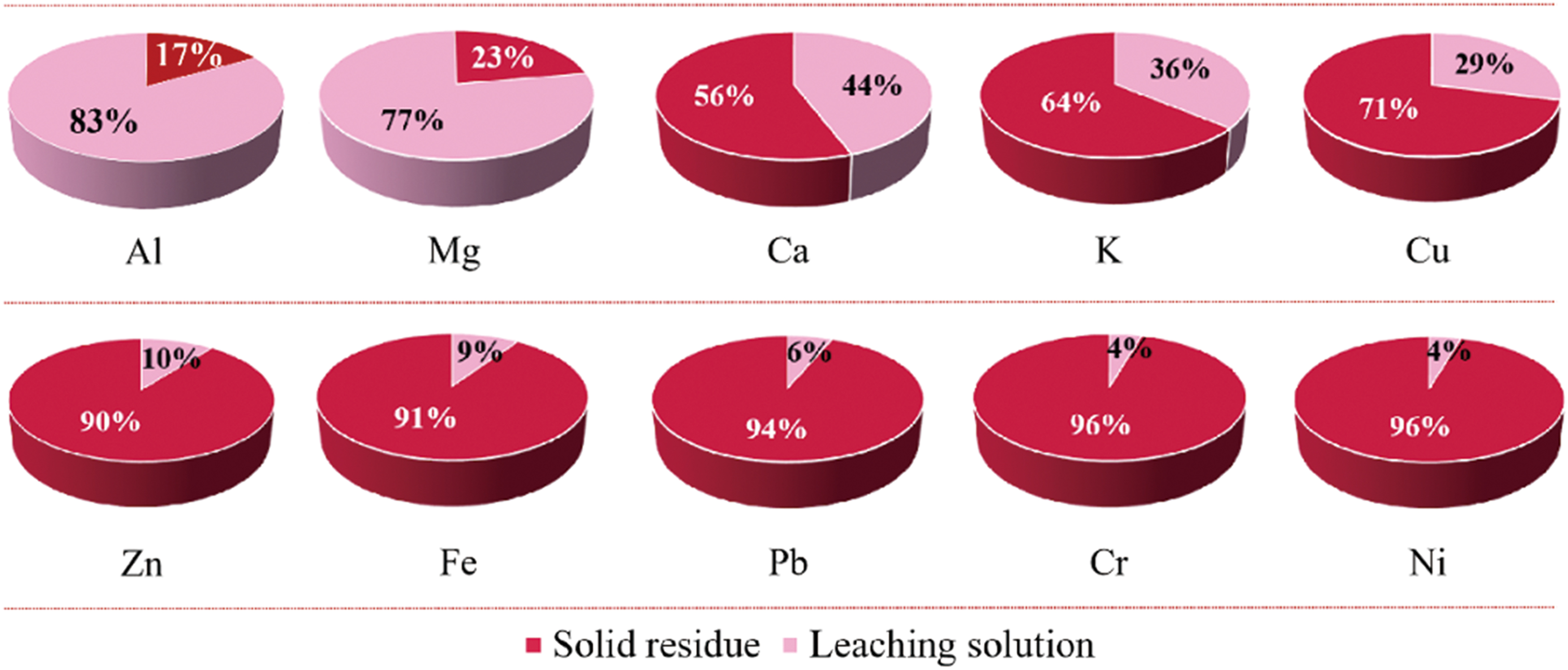
Metals distribution between the leaching solution and solid residue of SIBA after P extraction.
As shown in Fig. 4, the proportions of Al and Mg entering the leaching solution were 83% and 77%, respectively. Al content in the original SIBA sample was 30,425 mg/kg, which was higher than any other elements. This result was similar to the conclusion made by Gorazda et al. (2016), who found that the proportions of Mg from three types of incinerated ash in solution were all above 50%. It indicated that compounds containing Mg and P in the incinerated ash could reacted quickly with H2SO4. Possible reactions between metal compounds in incinerated ash and H2SO4 were shown in Equations (2) to (5).
About 50% of Ca entered into the solution, indicating that H2SO4 had an average ability to extract Ca from SIBA. The reason might be the gypsum formed by Ca and H2SO4. Equation (5) described the process. However, CaSO4 would prevent the further reaction of H2SO4 and SIBA particles (Cohen, 2009; Fang et al., 2018). While most of Cu, Zn, Pb, Cr, and Ni in SIBA stayed in the solid residue, and showed a low ability to enter the solution. The proportions of them entering into the solution were 29%, 10%, 6%, 4%, and 4%, respectively. It could be inferred that these elements were not easily extracted by H2SO4 and low content of these elements in the solution.
Metals distribution between the leaching solution and solid residue of SIFA after P extraction
Under optimal experiment conditions, metals distribution between the leaching solution and solid residue of SIFA after P extraction was shown in Fig. 5. As shown in Fig. 5, 51% of Cu entered into the leaching solution. Only 16% of Fe in SIFA entered into the leaching solution after H2SO4 extraction. The proportion of Fe in SIBA entering into the leaching solution was 9% as shown in Fig. 4. Low amount of Fe leaching yields from SIFA and SIBA were favorable to further production of P fertilizer, because the presence of Fe increased the viscosity of the leaching solution and changed the color of the P fertilizer (Gorazda et al., 2016).
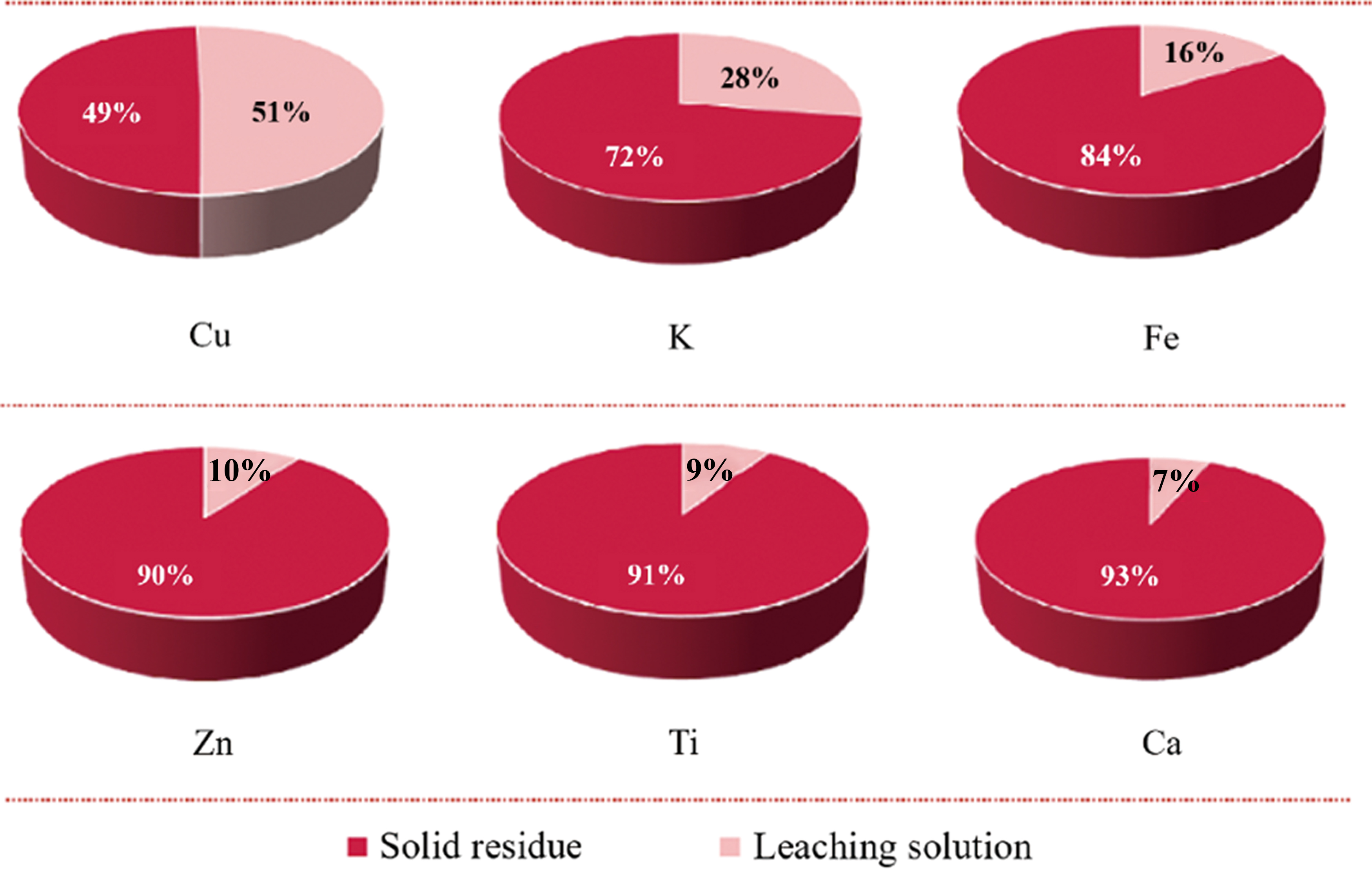
Metals distribution between the leaching solution and solid residue of SIFA after P extraction.
Different from SIBA, only 7% of Ca in SIFA entered into the solution. The reason might be that Ca has the highest amount comparing with others in SIFA shown in Table 1. At the same time, Ca2+ also reacted with SO42− to form CaSO4. Ottosen et al. (2013) also found large amount of gypsum crystals by H2SO4. Therefore, almost all of Ca still stayed in the solid residue. From this perspective, it suggested that solid residue had the potential to recover Ca.
Comparison of toxic metals contents between leaching solutions and standards
Using leaching solution for subsequent production of P fertilizer had strict limits. It is important to detect the toxic metals contents in the leaching solution of SIBA and SIFA. The toxic metals of Cu, Zn, Pb, Cr, and Ni in the leaching solution were strictly restricted by Chinese National standards. The measuring data of the five toxic metals were recorded and compared with the standards of China and USA, as shown in Table 2.
U.S. AAPFCO (2018) set limits for the content of heavy metals in NPK fertilizers with the basic unit of 1% P2O5 in Table 2. For example, if a fertilizer product contains 10% P2O5, the toxic metal contents of Zn, Ni, and Pb should not exceed 4,200, 2,500, and 610 mg/kg in fertilizer, respectively. Chinese National Standard of CN-GB (2018) offered guidance on thresholds and limits for key pollutants in sludge that poses health risks for agriculture use in Table 2. By comparison, Table 2 showed that Cu, Zn, Pb, Cr, and Ni in the leaching solution from SIBA and SIFA did not exceed the U.S. AAPFCO and Chinese national regulatory levels in this study. It indicated that leaching solutions of SIBA and SIFA would meet the requirements for the production of P fertilizers.
P recovery potential of sludge by incineration
Based on investigations, proportions of SIBA and SIFA mass to wet sludge (moisture content 80%) mass were 10% and 0.25–0.33%, respectively. It indicated that 1,000 kg of wet sludge could produce about 100 kg of SIBA and 2.5–3.3 kg of SIFA through the incineration process. In this study, P contents were 70,200 and 9,100 mg/kg of SIBA, and in SIFA, respectively. When the optimal experimental condition was carried out (reaction time of 30 min, H2SO4 dosage of 12 mmol, the reaction temperature of 25°C, and a ratio of leachate/solid ash of 35), P extraction yields were 89% from SIBA and 90% from SIFA. Based on the obtained extraction yields, it would be calculated that 6.25 kg of P was extracted from 100 kg of SIBA and 0.02 kg of P was extracted from 2.5 to 3.3 kg of SIFA. Combined with the investigations, an approximate estimate was made. A total of 6.27 kg of P would be extracted from 1,000 kg of wet sludge. P extraction process of SIBA and SIFA by H2SO4 was drawn in Fig. 6.
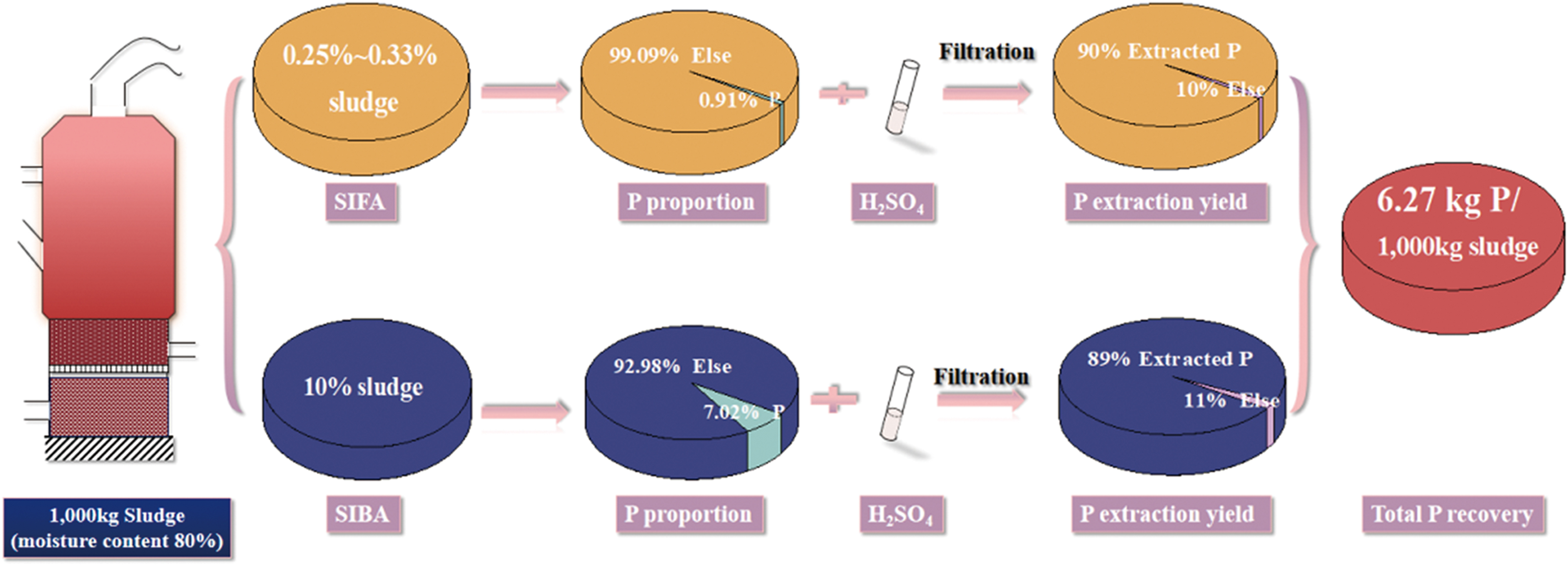
Phosphorus recovery potential of 1,000 kg of sludge (moisture content 80%).
Conclusions
The effects of P extraction from SIBA and SIFA were compared. P contents of SIBA and SIFA were 70,200 and 9,100 mg/kg, respectively. It indicated that SIBA had greater potential for P recovery than SIFA. With the depletion of phosphate resources, SIFA could also be used for P recovery. The reaction temperature was an important factor in P extraction. Using H2SO4 as the extracting agent, P extraction yields were obtained more than 98% for both SIBA and SIFA at 45°C. Taking consideration of the costs, 89% and 90% of P recovered from SIBA and SIFA under the optimal conditions of the reaction time of 30 min, H2SO4 dosage of 12 mmol, the reaction temperature of 25°C, and a ratio of leachate/solid ash of 35. The contents of Cu, Zn, Pb, Cr, and Ni in the leaching solution from SIBA and SIFA met the standards of production of P fertilizer. The leaching solution was suitable for P fertilizer production. Based on investigations and calculations, a total of 6.27 kg of P would be extracted from 1,000 kg of sludge (6.25 kg of P was extracted from SIBA and 0.02 kg of P was extracted from SIFA).
Footnotes
Author Disclosure Statement
No competing financial interests exist.
Funding Information
This work was supported by the Science and Technology Major Projects of Sichuan Province “Technology Integration and Demonstration of Stability and Standard Achievement in Urban Sewage Treatment Plant” (No. 2019YFS0501) and the “Special Funds for Basic Research Funding of Central Colleges and Universities.”