




Abstract
This study detected modest radioactive contamination at Olympic venues in Japan, and found significant alpha-, beta-, and gamma-emitter contamination at Japan's National Training Center. A total of 146 independent soil and dust samples were collected from sites in Fukushima Prefecture, Greater Tokyo, and the heavily traveled corridors between these northern Japan locations to assess radiological contamination related to the Fukushima meltdowns. Thirty-six samples were collected from 2020 Olympic/Paralympic venues, including Yoyogi National Stadium, Shiokaze Park, Olympic Village, Imperial Palace Gardens (all in Tokyo), Azuma Stadium in Fukushima, and the J-Village Olympic and Paralympic National Training Center. Samples were analyzed for beta activity and alpha activity per unit area (Bq/cm2), supplemented by gamma and alpha spectroscopy, with scanning electron microscopy/energy-dispersive X-ray analysis. Mean beta activity was two orders of magnitude greater than mean alpha activity, 459 ± 36 net Becquerel per square meter (Bq/m2) versus 5.20 ± 2.00 Bq/m2, respectively. Alpha and beta activities were not correlated, with a Pearson product moment correlation coefficient (RSQ) of 0.063. Greater Tokyo Olympic venues showed activities similar to those in the USA control set. In contrast to the Tokyo venues, the mean beta activity for J-Village Training Center samples was 2.4 times higher than for the Greater Tokyo samples. Azuma Park, the Fukushima Baseball venue, was 1.6 times higher than Greater Tokyo venues. The overall Northern Japan sample set displayed an average of 7.0 times greater beta activity than the Tokyo Olympic venues, evidencing the relative success of remediation at Olympic/Paralympic venues compared with other parts of Japan.
Introduction
The Fukushima Dai-ichi Nuclear Power Station in Japan is the site of six nuclear power reactors constructed in Japan's Fukushima Prefecture. On March 11, 2011, four of the reactors were catastrophically damaged by the Great East Japan Earthquake and the ensuing tsunami. The earthquake and tsunami caused a station blackout due to the loss of offsite electrical power. The tsunami destroyed the shoreline cooling pumps and led to a series of loss of coolant accidents that left all three operating reactor cores unable to be cooled (TEPCO, 2012). Left without a means of reducing reactor temperatures, the Fukushima Dai-ichi atomic reactors melted down and experienced hydrogen explosions (Saji, 2016). These cataclysmic events released significant quantities of radioactive gases, dusts, and debris into the atmosphere (Shozugawa et al., 2012).
The primary radioactive isotopes released by these meltdowns and explosions were the uranium and plutonium in the nuclear fuel and accumulated nuclear fission waste products, such as cesium-134, cesium-137, and iodine-131 (Kato et al., 2011; Hirose, 2011; Kaltofen and Gundersen, 2018). The releases of radioactive contaminants from the Fukushima Dai-ichi Nuclear Power Station resulted in widespread dispersal of cesium-134 and cesium-137 in northern prefectures in Japan (Orita et al., 2014; Mikami et al., 2015). While the total amount of radiocesium in particulate material released was less than that released at the earlier Chernobyl explosion and fires, the impacted area surrounding the destroyed power station was densely populated and included two working Olympic/Paralympic venues (Kato et al., 2011).
Cesium-134 has a half-life of ∼2 years, while that of cesium-137 is closer to 30 years (JAEA, 2019). In the 9 years since the March 2011 earthquake, tsunami, and meltdowns that afflicted Fukushima Prefecture, cesium-134 has decayed to about 5% of its original activity, whereas cesium-137 has not yet decayed by half. Iodine-131, with its half-life of only 8 days, is no longer routinely detected. Due to this differential decay rate, cesium-137 is now the most prevalent isotope indicating Fukushima-related surface contamination in Northern Japan.
Cesium-137 and the remaining cesium-134 are prevalent in contaminated surface soils as well as in indoor dusts in Northern Japan (Hirose, 2011; Kaltofen and Gundersen, 2018). Approximately 80% of deposited radiocesium was absorbed by the uppermost 2 cm of surface soils (Kato et al., 2011). Over time, these radioactively contaminated microparticles of surficial soil and dust particles have been subject to typical environmental processes such as transport through surface water runoff, sedimentation in waterways, and resuspension of dry dusts, surface soils, and exposed sediments, including transport by regular weather events like wind, rain, and snowmelt (Yamazaki et al., 2018). Consequently, considering that these radioactive contaminants are known to be a potential source of human exposure to radiation with its negative impact on health, the government of Japan has made concerted efforts to secure Olympic sport venues from nuclear and radioactive materials (IAEA, 2020).
Refractory alpha-emitting radioactive isotopes such as isotopes of uranium and plutonium, while present in nuclear power station reactors, are not good indicators for tracing the environmental transport of the Fukushima-related radioactive contamination in Japan (Sakaguchi et al., 2014). This challenge is primarily due to the low mass of transuranics emitted relative to radiocesium and radioiodine. The isolated nature of the detection of these alpha-emitting nuclides is evidence of this differential. Transuranics such as plutonium and americium were identified at lower activities in a few locations in northern Japan, compared with the ubiquitous detection of radiocesium (Kaltofen, 2011; Kato et al., 2011; Schneider et al., 2013; Kaltofen and Gundersen, 2018).
Unlike radiocesium, uranium and its daughters (radium, thorium, and polonium) are naturally occurring radioactive isotopes, meaning that detections of uranium and daughters may be unrelated to Fukushima. Alpha-emitting uranium and its daughters are only sporadically detected above natural and atomic detonation-related background activities in northern Japan. All told, Fukushima-related alpha-emitting isotopes, while found in contaminated areas adjacent to the Fukushima Dai-ichi Power Station, were rarely detected elsewhere in Fukushima Prefecture (Hirose, 2011; Shozugawa et al., 2012; Orita et al., 2014; Mikami et al., 2015; Kaltofen and Gundersen, 2018; Martin et al., 2019).
Despite the isolated nature of detections of alpha-emitting contaminants (uranium, plutonium, and decay daughters), alpha-contaminated dust particles are still of public health significance because alpha radioisotopes have a substantially higher potential for causing biological damage when absorbed internally than do a similar quantity beta-emitters, such as radiocesium (Chambers, 2006; NRC, 2020). Uranium compounds and cesium compounds have differing chemical properties, leading to potential differences in environmental transport properties and biological absorption for the alpha versus the beta-emitting materials. Finally, alpha and primary beta emitters have different sources within the reactor, with alpha emitters associated with nuclear fuel materials, and beta emitters primarily associated with fission wastes.
Most of the 2020 Summer Olympic and Paralympic venues are located in the Greater Tokyo area. The 2020 Summer Olympic and Paralympic Games are rescheduled for 2021 following a 1-year delay due to the SARS-CoV-2 pandemic (Tokyo 2020, 2020a). Baseball and softball events will be at the Fukushima Azuma Baseball Stadium, as well as training events at the Japan J-Village National Training Center, and portions of the Olympic Torch Relay Route (Tokyo 2020, 2020b). These venues that are in Fukushima Prefecture are nearer to the areas of the highest environmental radioisotope levels.
Given the potential for exposure of visitors and athletes to radioactive environmental contaminants emanating from the three meltdowns at the Fukushima Dai-ichi site, and the potential for differential environmental transport, the objective of this study was to separately measure alpha and beta activities in soils and dusts at Olympic and Paralympic venues in Japan. Soils and dusts were collected as these samples represent a significant vector for internal human exposure to environmental radioactive contaminants by visitors, staff, and athletes. These results were compared with a similarly collected United States-based control sample set. Alpha, beta, and gamma spectroscopy identified the specific radioisotopes contributing to environmental contamination and exposure. Scanning electron microscopy/energy-dispersive X-ray (SEM/EDS) analyses were performed to identify whether the source of alpha contamination was likely a naturally occurring material, or material emanating from the atomic disaster at the Fukushima Dai-ichi site (McGuire et al., 2020).
Materials and Methods
Samples consisted of 5–10 g bulk samples of surface soils or bulk indoor dust samples, and 4.0 cm2 lift tape samples from exposed indoor and outdoor surfaces. The bulk samples were collected using a clean plastic spoon or trowel. Lift-tape samples were collected using Zefon® adhesive Bio-Tape® slides. These slides had a 4.0 cm2 adhesive surface and were stored in individual protective cases. Lift-tape samples were collected by contacting the sampled surface with the adhesive portion of the Bio-Tape slide, removing, and then returning the slide to its individual case (Barbeiri, 2009). No prescreening devices were used before sample collection. The latitude and longitude of each sample were recorded by a portable GPS device. An International Medcom® rate-counter was used (after sampling was complete) to record the sample activity for safety and shipping purposes.
A total of 146 independent samples were collected from sites in Fukushima Prefecture, Greater Tokyo, and the heavily traveled corridors between these two locations (Fig. 1). These include 36 samples from different 2020 Olympic/Paralympic venues, including Azuma Stadium in Fukushima (baseball), Yoyogi National Stadium in Tokyo (handball, badminton, wheelchair rugby), Meiji Jingu Stadium, Tokyo (baseball), Shiokaze park, Tokyo (beach volleyball), Tokyo Olympic Village (West Harumi 5-Chome District), the Imperial Palace gardens (race-walking), and the J-Village Olympic and Paralympic National Training Facility in Naraha-Town, Fukushima Prefecture. Each sample was analyzed for total beta activity and total alpha activity per unit area (Bq/cm2).

Sampling locus map.
Of the 146 samples collected in Japan, 110 were collected from non-Olympic sites. Considering that the Olympic and Paralympic sites have undergone significant remediation for radioactive contamination, one of the hypotheses for this study is that samples from the non-Olympic sites might be expected to contain a much greater range of beta activities than the Olympic site sample set. Radioactive isotopes migrate in microparticles of soil and dust (Kaltofen and Gundersen, 2018). Therefore, a larger sample set was collected to account for the suspected significant variability in activities outside of the remediated Olympic venues. This rationale was reasonable, given that the ratio of maximum beta activities was found to be 22:1 between the two sets. Olympic venues are more likely to have undergone some form of remediation for radioactive contaminant reduction before sampling, while many of the non-Olympic sites, such as open fields or forested hillsides, have undergone only sporadic remediation. A variety of methods for decontamination and remediation, including surface soil removal, concrete ablation and washing, and dust control, occurred at the Olympic sites (JAEA, 2017).
All samples were analyzed using the same geometry by preparing lift-tape (Bio-Tape) samples. The samples were collected directly onto lift-tapes in the field, or as a monolayer from the air-dried and homogenized bulk samples in the laboratory. There was no sieving or other type of particle size adjustment during preparation. Before SEM analysis, slides were weighed, preloaded, and postloaded, and were found to contain (on average) 4.4 ± 2.1 mg of the material, based on the mass gain over the tare value for the Bio-Tape slides.
In general, the mass of material on each slide was related to the particle size. For example, silts produced thicker (more massive) monolayers on the lift-tapes than clay-sized materials and dusts. Following mounting, the layer of particulate materials on slides was <1 mm in thickness. Thickness measurements were made with a loupe with 0.1 mm divisions. Due to self-absorption, the data collected are effectively counts per unit area rather than mass. Self-absorption is significant for beta emissions that have linear ranges in solids of a few millimeters (NIST, 2020a), and even more so for alpha emissions with linear ranges in micrometers (NIST, 202a).
Analytical results for the slides are reported on a per-sample area basis, as Becquerel per square meter (Bq/m2; example conversion in Table 1). All 146 field samples and the 64 U.S. control samples (soils and dusts collected from urban, rural, and suburban locations in California) were collected within the same 18-month timeframe, were identically prepared, and then measured contemporaneously on the same instruments. No decay corrections were made before comparing the two datasets given the similar timeframes of the analyses. No geometry or detection efficiency correction was made so that the results reflect the actual measured exposed comparison between Olympic/Paralympic and control sites.
Dust and Soil Results (n = 146) Analyzed as Counts per Hour for a 4 cm2 Sample Reported as Net Becquerel per Square Meter
CPHr/3,600shr−1/4 cm2 × 104 cm2/m2 = Bq/m2. The conversion is above, with no efficiency correction.
Bq/m2, Becquerel per square meter.
The sample results reflect the sample area as prepared for analyses with unit sample thickness, either in the field or in laboratory-prepared samples. For bulk samples, the result is not necessarily a reflection of expected unit area results in the field. Given the greater linear range of gamma radiation in soil, any difference between field and as-prepared measurements would potentially be very large for gamma photon analyses. Quantitative gamma measurements were therefore not made for these slide analyses, although quantitative gamma and alpha spectrometry measurements were conducted using the dried, homogenized bulk samples from which the slides were prepared.
Analyses were performed by counting each slide sample using a Ludlum Model 3030 two-channel alpha beta counter. The device has a rated beta-counting efficiency of 0.29 at 662 keV (the energy line for Cs-137) and was counted against a certified Eckert & Ziegler Isotopic Products Cs-137 calibration standard set by the manufacturer, an alpha-counting efficiency of 0.32 at 4.7 MeV (the energy line for Th-230), and uses a shielded ZnS(Ag) plastic scintillator detector. Three counts were made per sample, with each count requiring 1 h (3 h total). The average beta counts per 3 h total count time was 8,901 ± 1,983 counts, which meets and exceeds IAEA recommendations for minimum counts per measurement (IAEA, 1989). Results are reported as an average of three counts, with accompanying sigma data. Twelve randomly selected slides were reanalyzed using an Ortech NaI well detector, with a region of interest (ROI) centered on 662 keV and with a measured counting efficiency of 0.30 at 662 keV. The Pearson Product Moment Correlation Coefficient (RSQ) between the NaI well detector 662 keV ROI data and the Ludlum beta rate counter data was 0.981.
The method applied produces data that are proportional to the actual total activities of alpha and beta-emitting material in the original bulk samples. The proportionality constant was expected to vary from sample to sample, depending on the degree of self-absorption of beta and alpha particles within each prepared slide sample, and therefore it was not measured. Furthermore, this variation is acceptable for the objective of comparing potential Olympic/Paralympic site exposures versus control site exposures, given that this same attenuation exists under field conditions, just as it does in the laboratory (NIST, 2020a, 2020b).
Quantitative gamma spectroscopy (for cesium-137, cesium-134, and uranium/thorium decay products using high-resolution high-purity Germanium [HPGe] spectroscopy on air-dried bulk samples) and alpha spectroscopy (with pretreatment by digestion and chemical separation of ∼1.0 g samples, followed by planchet counting for radium, plutonium, thorium, and uranium alpha decays) were performed at Eberline Analytical Corp., a commercial testing laboratory in Oak Ridge, TN. SEM/EDS was performed by Microvision Laboratories (Chelmsford, MA), using a Bruker® X-Flash® Peltier-cooled silicon drift detector. The electron beam current was 0.6 nA, accelerated to a voltage of 0.5–60 keV. Air-dried Biotape® slides were carbon coated before X-ray analyses. A Robinson Detector was used to scan for high-Z materials in particles. The detector can quantify the elemental composition of particles with an approximate limit of detection of 0.2%. SEM/EDS does not detect radioactive decays, but can very efficiently detect high-Z elements such as uranium, thorium, and plutonium that contribute to alpha activity. Considering that all isotopes of these elements are unstable, the SEM/EDS data assist in determining which elements are responsible for the alpha activity in the samples. Lighter elements, such as cesium, have both stable and radioactive isotopes. Accordingly, gamma spectroscopy is required to determine whether the particles containing these lighter elements are radioactive.
Different radioactive isotopes contribute to any measured alpha and beta activities in slides of soils and dusts. It is important to note that the fission products cesium-137 (Cs-137) and strontium-90 (Sr-90) do not have alpha decay modes, for example, while lead (Pb-212), uranium-238 (U-238), and other higher atomic number nuclides and their progeny can have both alpha and beta decay modes. These differences imply the potential for spatial variations in the distribution of alpha versus beta activity in soil and dust samples, based on a differential release or transport of fission wastes (primarily beta emitters) and fuel-related materials (primarily alpha emitters). If alpha and beta activities are independently variable, this would suggest that cesium-137 activity alone is not sufficient to map contamination related to the Fukushima meltdowns.
Results and Discussion
Beta activity counting
Beta activity for the complete sample set was, on average, two orders of magnitude greater than alpha activity, with a mean of 459 ± 36 net Bq/m2 versus 5.20 ± 2.00 Bq/m2, respectively. Alpha and beta activities in the 146 samples were not correlated, with an RSQ of 0.063. While beta activity was, on average, 88 times greater than alpha activity for the full set of samples in this study, this ratio was as high as >2,700 times. The highest beta activity measured in a single sample was 12,686 ± 153 Bq/m2, which is similar in magnitude to the highest cesium-137 activities in soils found in the same region by Hirose et al., which was in the range of 10,000–11,000 Bq/m2 (Hirose, 2011). The alpha activity for this same sample was 4.6 ± 2.6 Bq/m2, giving a ratio of beta:alpha of 2,739:1. At the other end of the scale, a sample from Minamisoma City was found to have a beta activity of 100 ± 33 Bq/m2 and an alpha activity of 15.3 ± 2.6 Bq/m2, a ratio of 6:1.
It was not surprising that the most highly beta-contaminated samples were found in different geographical locations than the most highly contaminated locations based on alpha activity, due to the lack of correlation between beta and alpha activities (Fig. 2). The highest beta activity samples (as high as 12,686 ± 153 Bq/m2) came from Namie, Fukushima Prefecture; the highest alpha activity samples (as high as 66 ± 3.1 Bq/m2) came from Minamisoma City, Fukushima Prefecture. Five of the 10 highest alpha activity samples came from Minamisoma City. These five Minamisoma samples were more than 4σ above the mean alpha activity for the full sample set. All five were samples of rooftop dusts and sediments collected from rain gutters. The locations had been previously decontaminated, and appear to be impacted by remobilized contaminants.
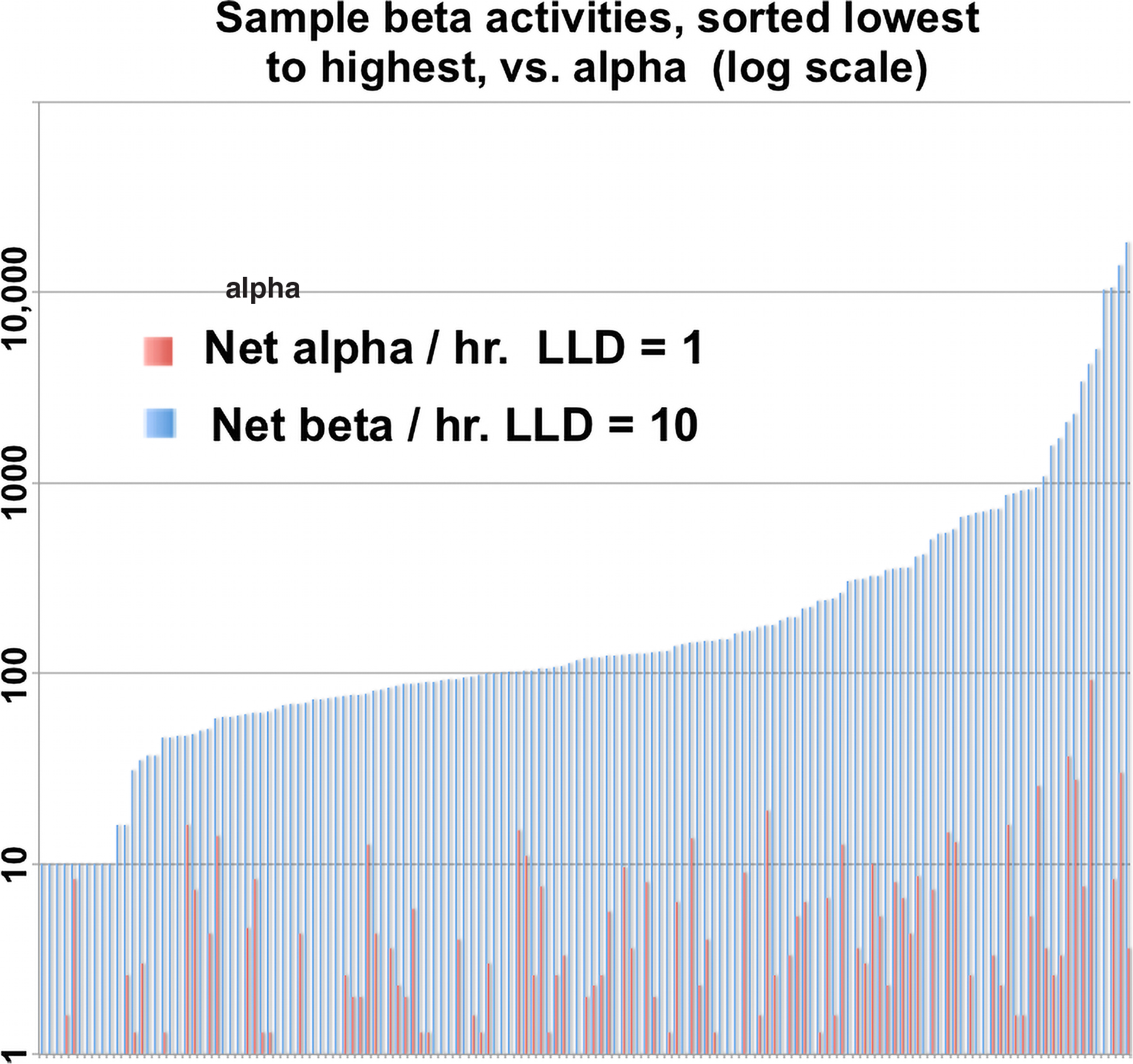
Chart of alpha and beta count results in order based on beta counts.
Beta activity in the Olympic venue sample set was generally much lower than the non-Olympic sample set, possibly due to remedial measures taken at the Olympic sites (Table 1). All but one of the 36 Olympic venue samples were 3σ or more below the mean net beta activity (459 ± 36 Bq/m2) for the entire sample set. The mean net beta count rate for Olympic venue samples was 88.2 ± 21 Bq/m2, whereas for the remaining non-Olympic samples, the mean net beta activity was 571 ± 41 Bq/m2. The greater Tokyo Olympic venues had activities similar to those in the U.S. control set, implying less public health risk from the beta contamination at the Tokyo Olympic venue sites compared with U.S. control sites (Tokyo mean of 66 ± 15 vs. U.S. controls mean of 72 ± 8.5, in Bq/m2). Azuma Park, the Fukushima Baseball venue, was (on average) 1.6 times higher in beta activity than Greater Tokyo venues (108 ± 68 vs. 66 ± 15, in Bq/m2).
However, alpha count rates in Olympic venue samples were similar to the non-Olympic sample set, with 15 of 36 Olympic venue sample alpha activities greater than the mean of net alpha counts (5.20 ± 2.00 Bq/m2) for the entire 146-sample set. The mean alpha count rate for Olympic venue samples was 5.12 ± 1.72 Bq/m2 compared with an alpha activity for non-Olympic samples of 5.07 ± 2.10 Bq/m2. The maximum net alpha activity in the Olympic sample set (n = 36) was 15.3 ± 2.6 Bq/m2 compared with a maximum net activity of 66.2 ± 3.1 Bq/m2 in the non-Olympic set (n = 110). Furthermore, 2 of the 10 highest alpha activity samples were Olympic venue samples (1 in Tokyo and 1 at the J-Village National Training Center).
The mean beta activity for the J-Village Training Facility samples was 2.4 times higher than for the greater Tokyo samples (158 ± 162 vs. 66 ± 15, in Bq/m2). The high beta sample from the J-Village was also the highest beta activity sample from the Olympic set (2.6 times the Olympic venue mean at 226 ± 8.1 vs. 88.2 ± 21, in Bq/m2). While elevated, this value is still much lower than portions of its host region that are highly contaminated, many of which, like woods, large former agricultural fields, and mountains, are among the areas Japan has been unable to remediate at this time. Nevertheless, the site remains at a higher activity than other venue sites both within and outside its host region, and the positive plutonium finding is alarming given its high radiotoxicity. This more significant contaminant burden may reflect a lesser degree of remedial activity and also could reflect recontamination after initial construction or remediation, as was noted at some of the sampling sites. In either case, the National Training Center data show a serious need for ongoing environmental monitoring and contamination management to reduce exposure risks to the same degree as the Tokyo sports venues.
More specifically, the highest beta activity sample showed unusually high beta activity two orders of magnitude greater than the mean net beta activity for the entire dataset of 459 ± 36 Bq/m2. The data, therefore, imply there is a risk of increased exposure to radioactive contamination for users of the training facility. Additionally, the sample, analyzed by alpha and gamma spectrometry at the Eberline commercial laboratory, was found to contain alpha emitters with measured activities of 63 ± 19 Bq/kg thorium, 2.8 ± 2.1 Bq/kg plutonium-239, 42 ± 16 Bq/kg uranium, 10 ± 7 Bq/kg radium-226, 7,570 ± 860 Bq/kg cesium-134, and 67,200 ± 7,800 Bq/kg cesium-137. Note that the bulk analyses were recorded in units of Bq/kg. For comparison, a 2004 study of the former Rocky Flats nuclear weapons facility in Golden, CO (where plutonium-239 is the primary constituent of concern) found a median of 1.3 Bq/kg of Pu-239 in soils and a range from 0.3 to 166.5 Bq/kg (Margulies et al., 2004). Plutonium also exists in soils due to atomic test detonations, with an average U.S. background activity of 0.38 Bq/kg (EPA, 2012). Thus, the plutonium activity in this sample from the National Training Center is higher than the background and higher than the median found at the remediated U.S. Rocky Flats plutonium weapons facility.
Alpha and gamma spectrometry
Alpha spectrometry detected thorium and uranium and their daughters in the sample set. These were the only alpha emitters detected in the sample set, except for a single soil sample at one site. These detections were confirmed by gamma spectroscopy. Plutonium was detected by alpha spectroscopy at trace levels (2.8 ± 2.1 Bq/kg) in a sample from the J-Village Olympic training site in Fukushima Prefecture. This sample was the only alpha-emitting nuclide detected that was not part of the thorium or uranium decay chain. Plutonium is a transuranic isotope that is only created by nuclear fission from either the reaction inside an atomic reactor core or rarely due to residual contamination from nuclear test detonations. This isolated finding of plutonium is consistent with results by previous investigators. A soil and vegetation study (Schneider et al., 2013) found reactor-related plutonium in 2 of its 20 samples.
Gamma spectroscopy analyses of samples from Minamisoma City (Fukushima Prefecture) also determined that the samples from the zone of higher-than-average alpha count rates contained the beta and gamma emitters, cesium-137 and cesium-134, and also detected decay products of thorium and uranium (lead-210, lead-212, lead-214 and similar). The gamma spectroscopic findings confirmed the results of the alpha spectroscopy data, namely that beta contamination was primarily due to radiocesium, and that alpha contamination was due to thorium, uranium, and their decay products. Although the elevated alpha activities at Minamisoma City were associated with elevated beta activity from radiocesium contaminants, most likely from Fukushima, the gamma analyses do not provide data explicitly detailing whether this alpha activity is of natural or human-made origin. Further analysis of this material by SEM/EDS did suggest, however that the alpha contaminants originated, at least in part, from a nuclear chain reaction.
Scanning electron microscopy/energy-dispersive X-ray analyses
Nine samples with alpha counts greater than 2σ above the median were further analyzed by SEM/EDS. The SEM/EDS analyses of the Azuma Park and Tokyo Olympic/Paralympic venues detected no particles containing uranium, plutonium, or other alpha-emitting nuclides, except for a single thorium monazite particle from the area around the Tokyo Field Events venue. Thorium monazites are a naturally occurring form of radioactive thorium (Kato, 1958). Naturally occurring radioactive material can be associated with some industrial activity; however, there was no evidence that this particle was of an industrial nature.
The SEM/EDS results for the Minamisoma, Fukushima Prefecture samples with elevated alpha count rates were very distinct from the Tokyo results. The higher alpha count rate samples came from the roof of the previously decontaminated Minamisoma City Offices, yet multiple forms of thorium and uranium were detected. This finding suggests that airborne resuspension and deposition of radiologically contaminated particulate matter is taking place at this location.
A dust sample collected from the Minamisoma Municipal Office contained thorium and thorium/uranium particles that did not contain the element phosphorous and did not contain rare earths (Fig. 3). Phosphorus and rare earths would have been diagnostic for naturally occurring monazites (Kato, 1958). SEM/EDS analysis found cesium in the thorium and uranium-containing particles. While SEM/EDS cannot distinguish between stable and radioactive forms of cesium, cesium-137 is the most important remaining fission product found in radioactive contamination found in Northern Japan (Kaltofen and Gundersen, 2018). This City Offices dust sample also contained a 5 μm thorium particle that also contained titanium, cadmium, and zirconium (Th 0.43% ± 0.05%, Cd 0.17% ± 0.03%, Ti 10.8% ± 0.3%, Zr 14.8% ± 0.47%). This particle did not contain phosphorous, lanthanum, or cerium, elements common to monazite (Fig. 3). Cadmium, zirconium, and titanium are metals often associated with the nuclear industry (MacLean, 2012). Unlike the Tokyo-area samples, the Minamisoma samples contained multiple types of thorium/uranium particles, including those with evidence of association with contaminants from the Fukushima releases.
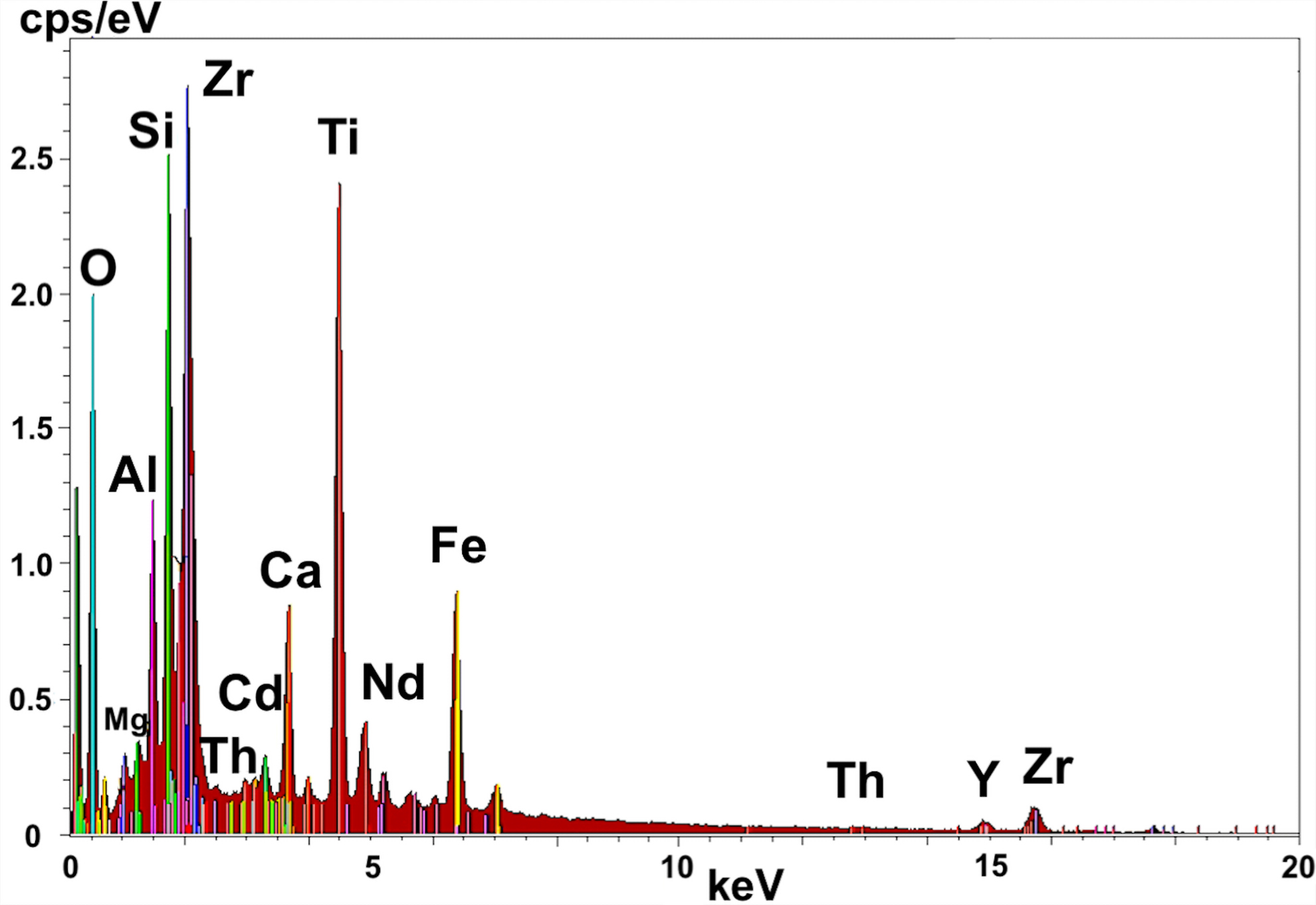
SEM/EDS spectrum of a metallic (industrial) thorium particle from Minamisoma. SEM/EDS, scanning electron microscopy/energy dispersive X-ray analysis.
The SEM/EDS evidence shows that thorium-containing radioactive particulate matter from an industrial source is present in the same samples that have the highest alpha activities for the study. This particulate matter is a potential source of human exposure to radioactive contamination that is not necessarily correlated with the more commonly measured cesium-137 contamination in northern Japan. After reviewing the data, the evidence shows that the existing assessment programs for the Olympic and Paralympic venues (that rely solely on radiocesium as a contamination indicator) are an incomplete basis for determining the remedial methods needed to prevent increased human exposure to radioactive materials that have migrated from Fukushima. Moreover, the data show that the remediation program for these sports facilities should include assessments that target alpha-emitting nuclides, such as uranium, thorium, and plutonium (and not solely beta-emitting nuclides such as cesium-137 and cesium-134). A program to investigate alpha-emitting nuclides could include wipe samples or Biotape slides for SEM/EDS analyses. This investigative technique identified the presence of industrial thorium or plutonium at Minamisoma City and the J-Village National Training Center. The rapid turnaround for this laboratory method would allow fast confirmation of the effectiveness of remedial activities.
Conclusions
Soil and dust samples from Fukushima Prefecture and Tokyo, Japan, have varying ratios of alpha versus beta radiological contamination. The peak beta activity samples came from Namie (Fukushima Prefecture); the peak alpha activity samples came from Minamisoma City (Fukushima Prefecture). Thus, the varying ratios of alpha versus beta radiological contamination are evidence that alpha and beta-emitting isotopes from the meltdowns were not necessarily released proportionally in time and space. The exclusive use of cesium-137 beta activity levels as a proxy for total internal and external exposure, therefore, introduces dose assessment errors. Exclusive use of cesium-137 as a proxy for total internal and external exposure is especially important given the higher biological damage weighting given to alpha emitters compared with beta emitters.
The evidence also shows that rooftops previously decontaminated in Minamisoma are recontaminated by airborne atmospheric dust containing radionuclides that most likely emanated from the Fukushima meltdowns. The data show a need for continuing reassessment and potentially, additional remedial work on many sites in Fukushima Prefecture.
The greater Tokyo Olympic venues had activities similar to those in the U.S. control set, implying little or no public health risks if the Tokyo Olympic venues are compared with U.S. control sites. Azuma Park, the Fukushima Baseball venue, was (on average) 1.6 times higher in beta activity than Greater Tokyo venues. The J-Village National Training Center had the highest net beta activity value for the Olympic set. J-Village displayed on average 2.4 times greater beta activities than Tokyo venues, and had a single low-level but confirmed plutonium-239 detection in one soil sample.
The overall sample set displayed an average of 7.0 times greater beta activity than the Tokyo Olympic venues, meaning that the Olympic/Paralympic sample set yielded significantly lower beta activities than the non-Olympic sample set. These data show the relative success of remediation at Olympic/paralympic venues compared with other parts of Japan.
Footnotes
Acknowledgments
Additional sampling assistance was provided by Maggie Gundersen of Fairewinds Energy Education, Safecast, and a group of volunteer scientists and citizen scientists living in Japan.
Author Disclosure Statement
The authors disclose no financial conflicts of interest.
Funding Information
This study received support or funding from Jeff Ubois and the John D. and Catherine T. MacArthur Foundation; Hanford Challenge, the Fairewinds Energy Education Corp, the Hiroshima Peace Culture Foundation, the Cynthia and George Mitchell Foundation of Austin, TX, and Mr. Jun Ohnishi, who provided the Namie, Japan samples. Additionally, while the authors were sampling in Japan, individual citizens of Japan who coordinated with Fairewinds Energy Education also contributed out-of-pocket funds.